Saturday, January 31, 2026
Home Blog Page 15

Trump and Netanyahu Issue ‘Accept or be Finished’ Warning to Hamas Over New US Peace Plan

In a dramatic show of unified resolve, U.S. President Donald Trump and Israeli Prime Minister Benjamin Netanyahu unveiled a comprehensive new peace proposal for Gaza on Monday, delivering an immediate and stark ultimatum to the Hamas militant group: accept the terms to end the conflict or face the full force of a final Israeli offensive with unconditional American backing.

Following a pivotal meeting at the White House, the two leaders presented a 20-point plan they called a decisive path to security and stability. While President Trump declared the deal “beyond very close,” Prime Minister Netanyahu’s words were laced with menace for the rulers of Gaza.

“If Hamas rejects your plan, Mr. President, or if they supposedly accept it and then basically do everything to counter it, then Israel will finish the job by itself,” Netanyahu stated at a joint press conference, adding, “This can be done the easy way or it can be done the hard way, but it will be done.”

President Trump echoed the warning, affirming that if Hamas refused the deal, Israel would have “our full backing to do what you would have to do” to “finish the job of destroying the threat of Hamas.”

The Core of the 20-Point Plan

The proposal, which has been circulated among regional partners, is an ambitious framework that seeks to achieve Israel’s core war aims while providing a pathway for Gaza’s reconstruction:

  1. Immediate Ceasefire and Hostage Release: The plan calls for an immediate end to all military operations and the return of all remaining Israeli hostages, living or deceased, within 72 hours of Israel’s public acceptance. In return, Israel would release a significant number of Palestinian prisoners.
  2. Hamas Disarmament and Exclusion: The deal explicitly demands the complete disarmament of Hamas, the destruction of all its military infrastructure (including tunnels), and a renunciation of any future role in the governance of Gaza. Hamas members who agree to peaceful coexistence would be granted amnesty; others would be offered safe passage to receiving countries.
  3. Transitional Governance: The plan bypasses the current Palestinian Authority, establishing a “Board of Peace”—a new international body to oversee Gaza’s reconstruction and a temporary, technocratic Palestinian committee to run daily public services. Critically, President Trump announced that he himself would chair this new oversight board, which would also include former British Prime Minister Tony Blair.
  4. Economic Reconstruction and Security: It promises a major “Trump economic development plan” to rebuild the devastated territory and includes provisions for a special economic zone. On the security front, Israel would withdraw its forces in stages as a Temporary International Stabilization Force (ISF) deploys to oversee security.
  5. A Path to Statehood: While Prime Minister Netanyahu remains publicly opposed to a Palestinian state, the U.S. plan carefully notes that “conditions may finally be in place for a credible pathway to Palestinian Statehood” once all political and demilitarization reforms are faithfully carried out.

Netanyahu’s Political Coup

For Prime Minister Netanyahu, whose government has faced growing international isolation, the agreement is a major political victory. He enthusiastically endorsed the proposal, stating it “achieves our war aims” by guaranteeing the return of hostages, dismantling Hamas, and ensuring Gaza “never again poses a threat to Israel.”

The joint announcement puts the focus squarely on the militant group. With the plan already reportedly presented to Hamas officials in Doha via mediators, the ball is now in their court. If they reject the terms—especially the demand to disarm and relinquish power—the U.S. has signaled an unprecedented green light for a final Israeli operation, shifting the burden of responsibility for the war’s continuation directly onto the militant organization.

The ultimatum has set the stage for one of the most consequential decisions of the conflict, holding the future of a decimated Gaza and the fate of remaining hostages in the balance. The world now waits for Hamas’s reply to the proposal that the White House has framed as the only choice left between peace and annihilation.
Taliban Plunges Afghanistan into Nationwide Telecom Blackout to Combat ‘Immorality’

KABUL, Afghanistan — Afghanistan has been severed from the global internet, as Taliban authorities moved aggressively to enforce a sweeping, nationwide telecommunications blackout that critics warn is a calculated attempt to tighten the regime’s control and isolate the country from the world.

The blackout, which began as a phased shutdown in various provinces, culminated on Monday in a near-total communications collapse, with connectivity plummeting to as low as 1% of ordinary levels, according to internet watchdog NetBlocks. The disruption has cut off not just high-speed internet, but also severely impacted mobile and fixed-line telephone services that rely on the same vital fiber-optic infrastructure.

The order to pull the plug came directly from the Taliban’s reclusive Supreme Leader, Hibatullah Akhundzada, who decreed the ban on fiber-optic networks to “prevent immoral activities.”

The Reason: A War on ‘Vice’

Since seizing power in August 2021, the Taliban has systematically rolled back freedoms, but this move marks the first time the regime has targeted the country’s core communications backbone—a network largely built with international aid money and previously touted as a key to national development.

Taliban officials in northern provinces confirmed the initial shutdown was aimed at curbing what they termed “vice,” including concerns over pornography and improper online interactions between men and women.

However, media and human rights organizations have universally condemned the action as a brazen escalation of censorship and an attempt to stifle the free flow of information. The Afghanistan Media Support Organization stated the ban “poses a grave threat to freedom of expression and the work of the media.”
None

The Devastating Impact: Isolation of Women and Collapse of Commerce

The ramifications of the blackout are immediate and devastating, threatening to push a country already grappling with a humanitarian crisis further into isolation.
  • A Final Lifeline Cut for Women: For thousands of Afghan women and girls banned from secondary schools and universities, the internet had become the last remaining lifeline for education, online work, and communication with the outside world. The high-speed fiber lines were essential for online courses and virtual book clubs, which are now instantly inaccessible.

  • Economic Paralysis: The banking sector, private businesses, and crucial humanitarian aid operations depend on stable, fast internet. Aid workers rely on digital platforms for payments, logistics, and coordinating relief. Business owners across major cities like Mazar-i-Sharif and Kandahar are already reporting a complete standstill, unable to communicate with international partners or manage supply chains.
  • A Deliberate ‘Blind Spot’: Torek Farhadi, a former senior advisor to the IMF and World Bank, described the move as a “deliberate decision to lead society to a blind spot,” warning that it “closes the door on online education [and] severely handicaps business owners.”

The sheer scale of the disruption has prompted fears that the Taliban is moving to create a state-controlled “national intranet,” a walled-off digital space that would be far easier to monitor and censor than the global web.

As the country remains dark, the silence from Afghanistan is the clearest sign yet of the regime’s increasing confidence in enforcing its rigid interpretation of social and digital order, effectively drawing a new “digital iron curtain” around its 40 million citizens.

Ryder Cup: European Victorious Over US, Taunts President Trump in Locker Room Video

Team Europe capped off their stunning 15-13 victory over the United States in the Ryder Cup by delivering a viral, champagne-soaked taunt directly to a high-profile spectator: U.S. President Donald Trump.

In a scene that perfectly encapsulated the fiery drama of the New York-hosted tournament, Europe’s victorious players, led by an exhilarated Rory McIlroy, filmed themselves holding the coveted trophy and chanting a message straight at the commander-in-chief.

The chant—a playful, yet pointed, dig at the President who had flown into Bethpage Black to support the American team—came moments after McIlroy, a close acquaintance of Mr. Trump’s, revealed he had received a congratulatory text message from the golf-loving President.

The Viral Reply

European Captain Luke Donald confirmed that the spontaneous moment of celebration was a direct response to the incoming text. As the team gathered in the locker room following the dramatic Sunday singles matches, which secured Europe’s first victory on American soil since 2012, McIlroy raised his phone and the entire squad joined in the chorus.

“Are you watching? Are you watching? Are you watching, Donald Trump?” the players sang, with McIlroy filming the joyful chaos.

The video was quickly shared across social media, ensuring the message landed precisely where it was intended.

The Gracious Response

The exchange, however, ended not in political friction, but in a surprisingly good-natured reply from the President himself.

Shortly after the video went viral, President Trump responded on his Truth Social platform with a concise, four-word message that earned praise for its unexpected graciousness:

“Yes, I’m watching. Congratulations!”

The lighthearted digital exchange provided a final, humorous twist to a highly tense and often hostile weekend at Bethpage Black. European players, particularly McIlroy and Shane Lowry, had faced a torrent of verbal abuse from the partisan New York crowds over the three days.

The moment underscored a theme that often runs through the Ryder Cup: intense competition quickly gives way to mutual respect—even across the deepest political and geographic divides. While the Americans were left to dissect a disappointing home defeat, Europe celebrated their history-making win with a jibe that instantly became part of Ryder Cup legend.

White House Weighs Arming Kyiv with Tomahawk Missiles, Signaling Major Policy Shift

The White House is actively considering a request to supply Ukraine with the long-range Tomahawk cruise missile, a move that would represent a seismic shift in U.S. policy and dramatically escalate the pressure on Russia, Vice President J.D. Vance confirmed on Sunday.

The powerful statement from the Vice President, made during a televised interview, follows a request by Ukrainian President Volodymyr Zelensky to secure the weapons system, which boasts a strike range of up to 2,500 kilometers (1,550 miles)—a distance capable of placing Moscow and other deep-inland Russian targets within Kyiv’s reach.

“We’re certainly looking at a number of requests from the Europeans,” Vice President Vance said, confirming the administration is reviewing the deal, which would involve the U.S. selling the Tomahawks to European allies for eventual transfer to Ukraine. He stressed that President Donald Trump would make the “final determination” on the matter.

The Leverage of Escalation

The revelation comes amid a noticeable hardening of the administration’s stance on the conflict. After a recent meeting with President Trump, President Zelensky reportedly framed the possession of such a capability as the ultimate leverage to force Russian President Vladimir Putin to the negotiating table.

This potential policy reversal contrasts sharply with the White House’s earlier resistance to providing long-range weapons, rooted in fears of escalating the war into a direct confrontation between NATO and Russia.

However, after what U.S. officials described as President Trump’s growing frustration with Putin’s refusal to engage in meaningful peace talks and the continuation of what the U.S. President has called a “war that should have taken a Real Military Power less than a week to win,” the appetite for a bolder strategy appears to be growing.

Image source: Wikimedia Commons

Kremlin’s Warning: An Escalatory Step

Russia’s reaction was swift and pointed. Kremlin spokesman Dmitry Peskov immediately warned that the potential delivery of Tomahawks would constitute a “major escalation.”

“Moscow has heard Washington’s statements about possible Tomahawk deliveries to Ukraine and is carefully analyzing them,” Peskov said, raising pointed questions about who would be responsible for operating and targeting the missiles. “It is important to understand who will be directing and launching the Tomahawk missiles from Ukrainian territory—the Americans or the Ukrainians themselves.”

Despite the threat of escalation, former National Security Adviser and current U.S. Special Envoy to Ukraine, Keith Kellogg, appeared to green-light the concept of deeper strikes. Speaking on the same day as Vance, Kellogg asserted that Ukraine must have the ability to “hit deep” into Russian territory. “There are no such things as sanctuaries” in war, he added, providing further evidence of a dramatic change in White House posture.

The U.S.-made Tomahawk, a precision-guided munition carrying a formidable warhead, would offer a significant strategic upgrade to Ukraine’s current long-range arsenal, which is limited by the range of existing ATACMS and Anglo-French Storm Shadow missiles. For Kyiv, the transfer would be a game-changer; for the Kremlin, it presents a challenge to the perceived security of its command centers and military infrastructure far from the front lines.

As the request enters its final review stage, the potential introduction of the Tomahawk into the war zone looms as a decisive test of how far the U.S. is willing to go to force a diplomatic resolution to the conflict.

Zelensky Condemns ‘Vile’ Russian Barrage That Rocked Seven Regions

President Volodymyr Zelensky of Ukraine has condemned the latest Russian aerial assault as “vile and inhumane,” after an unprecedented bombardment of drones and missiles slammed into the country for over 12 consecutive hours, leaving a trail of civilian casualties and destruction across multiple regions.

The attack, described by Ukrainian officials as one of the largest and most intense strikes since the start of the full-scale invasion, saw nearly 500 Iranian-made strike drones and more than 40 missiles, including Kinzhal hypersonic weapons, target cities from the capital to the Black Sea coast.

Civilian Carnage in Kyiv

The capital, Kyiv, bore the heaviest burden of the overnight assault, with officials confirming at least four civilian fatalities, including a 12-year-old girl. The violence extended into daybreak, forcing residents across the city to take cover in metro stations as air raid sirens blared incessantly.

“The Russians have restarted the child death counter,” Tymur Tkachenko, head of the Kyiv City Administration, wrote on Telegram, noting that the strikes deliberately targeted civilian areas, damaging multi-storey apartment buildings, private homes, and a local bread-production facility. The blast damage was also reported at the Institute of Cardiology, a grim testament to Moscow’s disregard for non-military infrastructure.

Across the country, at least 40 people, including children, were reported injured, with blasts and wreckage confirmed in Zaporizhzhia, Khmelnytskyi, Sumy, Mykolaiv, Chernihiv, and Odesa regions.

A Statement at the UNGA’s Close

In a furious post on social media, President Zelensky linked the timing of the massive bombardment directly to international diplomacy, calling it Russia’s true declaration to the world.

“This vile attack came virtually as the close of UN General Assembly week, and this is exactly how Russia declares its true position,” Zelensky wrote. “Moscow wants to keep fighting and killing, and it deserves only the harshest pressure from the world.”

He accused the Kremlin of using the attacks as a calculated campaign of “deliberate and targeted terror against ordinary cities” designed to sow fear and compel Ukraine towards disadvantageous peace talks.

The President’s message was a stark appeal to international allies, urging them to sever Russia’s financial lifelines. “The Kremlin benefits from continuing this war and terror as long as it earns revenue from energy and operates a shadow fleet,” he stated. “We will continue to strike back to deprive Russia of those revenue streams and to compel it toward diplomacy.”

The magnitude of the aerial assault has triggered a ripple effect across Europe. Neighboring Poland scrambled its air force and allied jets in a preventative measure as the Russian missiles and drones approached the Ukrainian border, highlighting the ever-present risk of regional escalation posed by the indiscriminate strikes.

As emergency services work through the rubble to assess the full toll of the 12-hour blitz, the message from Kyiv is clear: Russia has responded to a week of global diplomacy with its most savage act of terror yet, daring the international community to meet the violence with decisive, punitive action.

Trump Orders Troops to Portland, Escalating Federal Power Standoff with Oregon

President Donald Trump announced Saturday he is ordering the deployment of U.S. troops to Portland, Oregon, with a chilling authorization to use “Full Force, if necessary,” escalating an already intense confrontation between the federal government and local officials.

The unilateral order, posted to the President’s social media platform, directs the Secretary of Defense, Pete Hegseth, to provide “all necessary Troops to protect War ravaged Portland, and any of our ICE Facilities under siege from attack by Antifa, and other domestic terrorists.”

The announcement immediately sparked outrage from Oregon’s Governor and Portland’s Mayor, who deny the President’s assessment of the city and vow to fight the deployment through legal and political channels.

A ‘Fable’ Versus ‘Full Force’

The President’s directive hinges on a depiction of Portland as a city in a state of anarchy—a characterization local leaders call grossly inaccurate. Recent protest activity in the city, centered around a federal Immigration and Customs Enforcement (ICE) facility, has been small-scale and peaceful compared to the intense racial justice demonstrations of 2020.

“The number of necessary troops is zero,” declared Portland Mayor Keith Wilson in a press conference that was hastily assembled hours after the announcement. “We did not ask for them to come. They are here without clear precedent or purpose.”

Oregon Governor Tina Kotek, who spoke directly with the President following the post, emphatically rejected the notion of an emergency. “There is no insurrection. There is no threat to national security,” Kotek stated. “I have been abundantly clear that Oregon believes in the rule of law and can manage our own local public safety needs.”

The deployment follows a controversial executive order signed by President Trump this week, which formally designated the anti-fascist movement “Antifa” as a domestic terrorist organization, providing an expanded mandate for federal agencies to target and disrupt the group.

The Return of Federalized Force

The order carries profound constitutional implications, reigniting the contentious debate over the Posse Comitatus Act, which severely restricts the use of U.S. military forces for domestic law enforcement.

While the President did not specify the legal mechanism for the deployment, such an action typically relies on the Insurrection Act of 1807, a rarely used law that allows a president to deploy the military for domestic purposes without the consent of a state governor. Legal analysts, however, are questioning whether the current level of protest activity meets the threshold for an “insurrection” or an “obstruction to the laws” that cannot be managed by local authorities.

The Department of Defense issued a brief statement confirming they “stand ready to mobilize U.S. military personnel in support of DHS operations in Portland at the President’s direction,” but offered no clarity on the timeline, troop numbers, or the specific rules of engagement that would define “Full Force.”

Oregon’s entire Democratic congressional delegation released a joint letter demanding the order be rescinded. “This unilateral action represents an egregious abuse of executive authority, seeks to incite violence, and undermines the constitutional balance of power between the federal government and states,” the lawmakers wrote.

For Portland residents, the order conjures dark memories of 2020, when unmarked federal agents were deployed, resulting in the violent suppression of protests, including the use of tear gas and the indiscriminate detainment of demonstrators. With federal forces on a collision course with a city determined to resist federal intervention, the conflict now stands as a test of states’ rights versus unchecked executive power.

FBI Fires Agents Photographed Kneeling at George Floyd Protest

In a dramatic escalation of the political tensions swirling around the nation’s top law enforcement agency, the FBI has fired a group of agents who were photographed kneeling alongside racial justice demonstrators during the tumultuous summer of 2020.

Sources familiar with the matter, speaking on condition of anonymity due to the sensitivity of the personnel actions, indicate that roughly 15 to 20 agents were summarily dismissed this week, four years after the images of them taking a knee during a Washington, D.C. protest went viral.

While the FBI has officially declined to comment on the internal personnel actions, the dismissals have ignited a fierce political and legal firestorm, with the FBI Agents Association (FBIAA) condemning the move as “unlawful” and a severe violation of the agents’ due process rights.

The Defining Image of 2020

The agents in question, many attached to the FBI’s Washington Field Office, were deployed to the city in the wake of George Floyd’s murder, tasked with protecting federal property amid widespread demonstrations. Photos and videos from June 2020 captured the agents, in uniform, taking a knee on Pennsylvania Avenue.

At the time, the gesture was understood by many on the ground as a calculated effort to de-escalate a tense standoff between law enforcement and protesters. However, it immediately drew blistering criticism from conservative commentators and political figures who viewed the act as a partisan endorsement of the Black Lives Matter movement, violating the strict non-political standards required of federal agents.

Internal reviews under the previous FBI Director, Christopher Wray, reportedly concluded the agents had not violated specific bureau policy, and no disciplinary action was taken. The firings this week represent a stark reversal of that initial decision.

Lack of Judgement’ Cited in Purge

The termination letters to the agents reportedly cited a “lack of judgement” in their actions, suggesting the bureau now views the public demonstration of solidarity—whether intended as a political statement or a de-escalation tactic—as incompatible with the impartiality required of an FBI agent.

However, the FBIAA views the move as part of a broader, politically motivated purge under the leadership of current FBI Director Kash Patel, a Trump appointee.

In a scathing public statement, the FBIAA confirmed the terminations, including several military veterans with statutory protections, and called on Congress to launch an immediate investigation. “Patel’s dangerous new pattern of actions are weakening the Bureau because they eliminate valuable expertise and damage trust between leadership and the workforce,” the association declared, accusing the Director of ignoring agents’ constitutional and legal rights.

The firings of the kneeling agents come amid a wave of high-profile departures at the FBI, including senior executives involved in politically sensitive investigations, such as those related to the January 6th Capitol riot. Several recently terminated agents have filed lawsuits alleging they were illegally fired based on their previous case assignments or perceived political leanings.

The move throws the already embattled bureau deeper into the political arena, raising profound questions about the limits of an agent’s right to expression, and whether the FBI’s long-standing tradition of non-partisan enforcement can withstand the pressures of Washington’s fractured political climate.

Epstein Files Name Elon Musk and Prince Andrew, Revealing Financier’s Elite Network

The fallout from Jeffrey Epstein’s sprawling network broadened dramatically on Friday after Democratic lawmakers on the House Oversight Committee released a new batch of documents revealing the disgraced financier’s contact with some of the world’s most powerful figures, including billionaire Elon Musk and Britain’s Prince Andrew.

The documents, a partial release from the third tranche of records subpoenaed from the Epstein estate, include flight manifests, financial ledgers, and the late sex offender’s daily schedules, painting a chilling portrait of his access to the global elite even after his 2008 conviction.

While the inclusion of Prince Andrew merely reinforces his well-documented association with the convicted sex trafficker, the mention of Musk represents a seismic new revelation, bringing the crisis of complicity directly into the world of Big Tech.

Musk’s Tentative Island Visit

The most startling entry involving the tech mogul is a notation in Epstein’s schedule from December 2014, a time when Epstein was a registered sex offender. The entry reads: “Reminder: Elon Musk to island Dec. 6 (is this still happening?).”

The notation refers to Little St. James, Epstein’s notorious private island in the Caribbean. While the document does not confirm whether Musk ultimately made the trip, or what the nature of the visit would have been, the record of a planned visit years after Epstein’s plea deal is highly damaging.

The inclusion of Musk is particularly notable given his recent public clashes with political figures over the release of the Epstein files, where he previously claimed—without evidence—that a specific rival politician was named in the sealed documents.

The Duke and the Flight Log

For the Duke of York, the new documents offer fresh evidence regarding his long-standing ties to Epstein. A flight manifest was released showing Prince Andrew as a passenger on Epstein’s private jet, the “Lolita Express,” on a flight from New Jersey to Florida in May 2000. The manifest also lists Epstein and his former associate and convicted sex trafficker, Ghislaine Maxwell.

The documents further included a financial disclosure showing a payment from Epstein to someone named “Andrew” for “Massage, Exercise, Yoga” that same year. The Duke has long denied any wrongdoing in connection with Epstein, and has settled a civil lawsuit brought by a woman who claimed she was trafficked to him by Epstein.

Elon Musk America Party

A Network of Power

Beyond Musk and Prince Andrew, the newly unsealed records name other influential figures with scheduled contact, including former White House strategist Steve Bannon and tech titan Peter Thiel. Bannon’s calendar showed a scheduled breakfast with Epstein in February 2019, just months before Epstein was re-arrested on sex trafficking charges.

The Oversight Democrats, who pushed for the release, stated the goal was to provide justice for victims and identify those complicit. “It should be clear to every American that Jeffrey Epstein was friends with some of the most powerful and wealthiest men in the world,” said a spokesperson for the Committee.

The documents, heavily redacted to protect the identities of survivors, have intensified the political fight over transparency. Republican members of the committee immediately accused Democrats of “cherry-picking” files to maximize political damage while concealing documents that might implicate their own allies.

The release marks a continuing, painful process of uncovering the truth behind Epstein’s orbit, ensuring that the shame of association will continue to plague the world’s highest echelons for years to come.

ICE Officer Relieved of Duties After Video Shows Him Slamming Mother to Manhattan Courthouse Floor

NEW YORK, NY — A federal immigration officer has been stripped of his duties and placed under investigation after viral video captured him violently shoving an Ecuadorian woman to the floor of a crowded Manhattan courthouse, moments after agents detained her husband.

The highly volatile incident, which unfolded on Thursday at 26 Federal Plaza, a key immigration court in Lower Manhattan, has ignited a fresh firestorm over the aggressive tactics used by Immigration and Customs Enforcement (ICE) inside sensitive legal spaces.

The Courthouse Collision

The woman, identified by reports as Monica Moreta-Galarza, was distraught after ICE agents arrested her husband during his appearance at the asylum court. Video footage, quickly shared across social media, showed Moreta-Galarza and her young children desperately clinging to the detained man and then pleading with the agents.

As one officer attempted to walk away, Moreta-Galarza approached him, crying and demanding answers in Spanish. The agent, in clear view of several witnesses and cameras, is seen yelling “Adios” (Goodbye) before forcibly grabbing her, pushing her against a wall, and then forcefully slamming her to the marble floor. Reports indicate she hit her head and was later taken to a hospital for treatment.

The confrontation instantly drew fierce condemnation from city officials. Democratic Congressman Dan Goldman, whose district includes the courthouse, called the act an “egregious act of excessive force” and, along with New York City Comptroller Brad Lander, submitted a formal referral to federal prosecutors demanding a felony prosecution of the officer.

A Rare and Rapid Rebuke

In a rare move of public accountability for the agency, the Department of Homeland Security (DHS), which oversees ICE, issued a swift and stern statement regarding the incident.

“The officer’s conduct in this video is unacceptable and beneath the men and women of ICE,” said Tricia McLaughlin, Assistant Secretary for Public Affairs at DHS. “Our ICE law enforcement are held to the highest professional standards and this officer is being relieved of current duties as we conduct a full investigation.”

The administrative action marks a notable departure from the Trump administration’s usual defense of aggressive immigration enforcement tactics and underscores the public pressure generated by the clear video evidence. The officer in question has reportedly been the subject of prior complaints concerning his physical conduct in the courthouse.

The incident is the latest flashpoint in the national debate over the escalating presence of ICE agents in courthouses—which advocates argue are sensitive areas that should be off-limits to enforcement actions, as they discourage immigrants from pursuing legal protection or cooperating with local courts.

Moreta-Galarza, an immigrant from Ecuador, reportedly told journalists after the incident, “Over [in Ecuador], they beat us there too. I didn’t think I’d come here to the United States and the same thing would happen to me.”

While the officer is currently relieved of duty, it remains unclear whether the full investigation will lead to a permanent firing or criminal charges. For now, the image of a mother being violently subdued in a temple of justice serves as a searing metaphor for the deepening tensions of America’s immigration crackdown.

Netanyahu’s UN Attack on Palestine Recognition Sparks Mass Diplomatic Walkout

UNITED NATIONS, NEW YORK — Israeli Prime Minister Benjamin Netanyahu used the world stage of the United Nations General Assembly (UNGA) on Friday to deliver a fiery, defiant address that launched a frontal assault on the international push for a Palestinian state, a move that was met with a dramatic mass walkout of over 100 diplomats and left the hall visibly fractured.

In a speech meant to project resolve amid mounting international isolation, the Israeli leader sharply denounced key Western allies—including the UK, France, Canada, and Australia—for their recent decisions to recognize Palestinian statehood.

“This week, the leaders of these countries unconditionally recognized a Palestinian state,” Netanyahu said, referring to the diplomatic flurry that has intensified since the war in Gaza began. “You know what message the leaders who recognize the Palestinian state this week sent to the Palestinians? It’s a very clear message: murdering Jews pays off.

Netanyahu did not stop there, calling the very idea of a post-Gaza two-state solution “sheer madness” and “insane,” famously claiming, “Giving the Palestinians a state one mile from Jerusalem after October 7 is like giving al-Qaeda a state one mile from New York City after September 11.”

The Silence of the Empty Seats

The most striking moment of the session was the silent, coordinated protest that began as Netanyahu approached the podium. Scores of delegates from more than 50 countries, primarily from the Arab League, the Organisation of Islamic Cooperation (OIC), and the Global South, rose from their seats and streamed out of the General Assembly hall, leaving the grand chamber peppered with empty chairs.

The visual act of mass repudiation, which stood in stark contrast to the rousing applause Palestinian Authority President Mahmoud Abbas had received the previous day, highlighted the widening chasm between Israel and the international community over the conduct of the nearly two-year war in Gaza and the future of the Israeli-Palestinian conflict. While the U.S. delegation remained seated in solidarity with Israel, its representation, along with that of the UK, was notably junior-level, a subtle yet unmistakable sign of diplomatic discomfort even among its closest allies.

Finishing the Job: A Vow of Unilateral Action

Netanyahu, currently facing an International Criminal Court arrest warrant for alleged war crimes, was unapologetic in his stance that Israel would “finish the job” in Gaza to eliminate the final remnants of Hamas, regardless of the humanitarian crisis or global pressure.

His speech served as a powerful declaration of an unwavering, unilateral policy. He explicitly vowed to block any external effort to impose a Palestinian state on Israel, stating, “Israel will not allow you to shove a terror state down our throats.”

The prime minister even turned his speech into a broadcast, announcing that his remarks were being played on loudspeakers positioned at the Gaza border and, allegedly, streamed to mobile phones across the territory. He used this platform to issue a stark ultimatum to Hamas: “Lay down your arms. Free the hostages. All of them. If you do, you will live. If you don’t, Israel will hunt you down.”

The speech, punctuated by boos and cheers, was less an exercise in diplomacy and more a political rallying cry. It firmly cemented the Israeli government’s position as being at direct loggerheads with a growing international consensus, signaling a protracted diplomatic battle ahead that could further isolate Israel on the world stage.

James Comey’s Indictment: What Comes Next After Former FBI’s Director Charges?

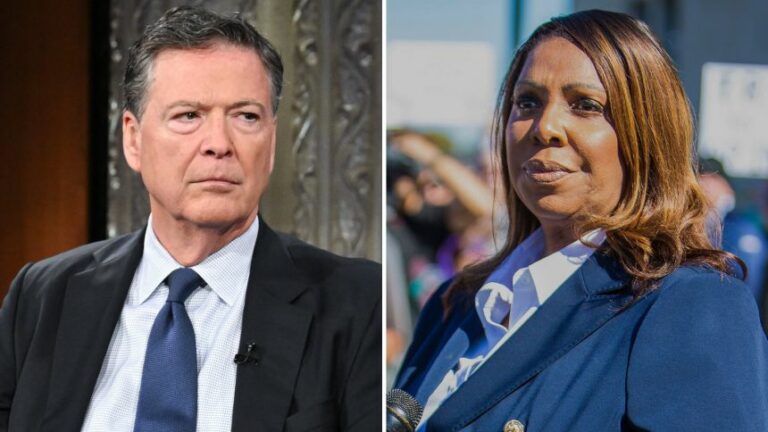
ALEXANDRIA, VA — Former FBI Director James B. Comey, a man synonymous with the political and legal turbulence of the last decade, was indicted late Thursday on charges of lying to Congress and obstruction of a congressional proceeding. The grand jury’s decision, which came after an extraordinary public pressure campaign by President Donald Trump, marks the most significant step yet in the administration’s effort to use the Justice Department to prosecute its political foes.

The two-count indictment, filed in the Eastern District of Virginia, accuses Comey of knowingly making false statements during a September 2020 testimony before the Senate Judiciary Committee regarding the FBI’s investigation into Russian election interference. Specifically, prosecutors allege Comey lied when he stated he never authorized anyone at the FBI to serve as an anonymous source in news reports about the investigation, a claim that contradicted other testimony.

The charges—which carry a potential sentence of up to five years in prison—have been widely condemned by former Justice Department officials and political opponents as a case of “selective prosecution” and a dangerous breach of norms designed to shield the Justice Department from direct political interference. Comey, who was represented by high-profile defense attorney Patrick Fitzgerald, responded with characteristic defiance.

“My heart is broken for the Department of Justice, but I have great confidence in the federal judicial system, and I’m innocent,” Comey said in a video statement, adding, “Let’s have a trial and keep the faith.”

The Road Ahead: Arraignment, Discovery, and a High-Stakes Trial

The indictment is merely the opening salvo in what is expected to be a tumultuous, politically charged legal battle. The next steps will determine the shape of the case:

  1. Surrender and Arraignment (October 9): Comey is expected to surrender to authorities in the coming days. His formal arraignment is scheduled for October 9 before U.S. District Judge Michael S. Nachmanoff. At this hearing, Comey will formally enter his plea of Not Guilty, and the court will set the terms of his bail, which, given his ties and standing, is likely to be a personal recognizance bond.
  2. Motions and Discovery: The defense team is expected to immediately file a flurry of motions challenging the indictment, including a motion to dismiss based on selective prosecution or insufficient evidence. The discovery process will commence, with prosecutors handing over all evidence, transcripts, and internal Justice Department memos related to the case. This stage could prove explosive, potentially revealing internal discord among career prosecutors who reportedly objected to the charges.
  3. The Trial: The ultimate showdown will be a jury trial, likely to take place in Alexandria, Virginia. To secure a conviction on the false statements charge, prosecutors must prove not only that Comey’s statement was untrue, but that he knowingly and willfully lied, and that the lie was material to the Senate’s investigation. Proving intent in such a high-profile case is often the highest hurdle for the prosecution.
James Comey Trump

The Political Fallout and The Rule of Law

The indictment’s political backdrop—filed just days after President Trump publicly urged his Attorney General, Pam Bondi, to “move now” to prosecute his perceived foes—has cast a long shadow over the Justice Department’s independence. The appointment of Lindsey Halligan, a former personal lawyer to Trump, as interim U.S. Attorney for the Eastern District of Virginia to present the case solidified the perception of weaponization.

Attorney General Bondi defended the charges, stating, “No one is above the law. Today’s indictment reflects this Department of Justice’s commitment to holding those who abuse positions of power accountable…”

Conversely, Comey’s former colleagues and Democratic leaders have denounced the charges as a “disgraceful attack on the rule of law.” The immediate resignation of Comey’s son-in-law, a federal prosecutor in the same office, minutes after the indictment, with a stated purpose “to uphold my oath to the Constitution,” underscores the profound crisis of conscience now gripping the Department. The trial will thus become more than a criminal proceeding; it will be a landmark test of the political limits placed on the nation’s justice system.

Houthi Drone from Yemen Strikes Israel’s Eilat, Injuring Twenty

EILAT, ISRAEL — A drone launched from Yemen has struck the southern Israeli city of Eilat, injuring at least 20 people and opening a dangerous new front in the already volatile Middle East. The strike, claimed by the Iranian-backed Houthi rebels, signals a significant escalation of regional tensions and a direct challenge to Israel’s military dominance, demonstrating a new vulnerability in its advanced air defense systems.

The attack occurred on Wednesday afternoon when the drone, flying a flight path designed to evade radar, successfully penetrated Israel’s multi-layered air defenses. It slammed into the ground near a bustling hotel and shopping district in Eilat, a popular resort city on the Red Sea. Medics from the Magen David Adom rescue service confirmed that at least 20 people were injured by shrapnel, with two in serious condition and others suffering moderate to light wounds.

The Iran-backed Houthi rebels, who control large parts of Yemen, were quick to claim responsibility for the attack, stating it was carried out in solidarity with Palestinians in Gaza. The group has been launching drones and missiles at Israel since the beginning of the war, but the vast majority have either been intercepted by Israeli defenses or landed in open areas. This latest strike, with its high casualty count, marks a significant and worrying development.

Adding to the gravity of the incident, the Israeli military confirmed that a drone launched from Yemen was responsible and that “interception attempts were made.” Local reports, however, were more specific, citing initial investigations that confirmed the Iron Dome air defense system had failed to stop the drone. The failure of the advanced defense system to neutralize the threat has prompted a formal investigation and raised questions about the system’s effectiveness against the low-altitude, long-range drones now being deployed by the Houthis.

The attack drew a swift and angry response from Israeli officials. Defense Minister Israel Katz vowed a response on social media, warning that “anyone who harms Israel will be harmed sevenfold.” The mayor of Eilat, Eli Lankri, called on the government to “strike the Houthis hard” in retaliation. For years, Israel has retaliated for Houthi aggression with targeted airstrikes on military infrastructure in Yemen. But this latest, more damaging strike, suggests a new and more dangerous phase of the conflict has begun, one that underscores the regional nature of the war and the constant threat of a wider confrontation.

Artemis II Mission: Meet the Crew Returning to the Moon

HOUSTON — They are a crew of four trailblazers, a diverse group of astronauts chosen to lead humanity’s long-awaited return to the Moon. On Sunday, NASA officially announced the crew for the Artemis II mission, a historic journey that will mark the first time a crewed vessel has ventured to the Moon in over half a century. But this is not just a return to the past; it is a giant leap into the future, led by a crew that redefines what it means to be a space explorer.

The crew is a group of seasoned veterans and international partners, each bringing a unique set of skills and a history-making distinction to the mission:

  • Reid Wiseman, Commander: A decorated U.S. Navy aviator, Commander Wiseman will lead the mission. A veteran of a 165-day mission on the International Space Station, he has served as the Chief of the Astronaut Office, overseeing all flight operations and training. His steady leadership and deep experience in deep space are crucial for the high-stakes journey ahead.
  • Victor Glover, Pilot: A U.S. Navy captain and veteran of a 168-day mission on the International Space Station, Glover will pilot the Orion spacecraft. His role is particularly historic: he will become the first person of color to fly on a lunar mission. His extensive background as a test pilot, with over 40 aircraft under his belt, makes him uniquely qualified for the challenges of this inaugural flight.
  • Christina Koch, Mission Specialist: An electrical engineer and veteran of a record-setting 328-day mission on the International Space Station, the longest single spaceflight by a woman. Koch will become the first woman to fly on a lunar mission, a monumental step forward for gender equality in space. Her scientific expertise and extensive experience in the harsh environment of orbit make her an invaluable member of the crew.
  • Jeremy Hansen, Mission Specialist: A colonel in the Royal Canadian Air Force, Hansen is a fighter pilot and the first Canadian to venture to the Moon. His inclusion in the crew is a testament to the international collaboration that underpins the Artemis program. His deep experience in astronaut training and mission planning will be critical in ensuring a successful flight.

The Artemis II mission, currently scheduled for a February 2026 launch, will not land on the lunar surface. Instead, the crew will fly a 10-day test mission around the Moon, journeying farther than any human has before. The purpose is to test the Orion spacecraft’s life support systems and to confirm that the vehicle can safely carry a crew in deep space before a future landing mission.

This diverse crew is a clear statement that the future of space exploration will not be the exclusive domain of any single nation or demographic. They are not only a symbol of humanity’s enduring quest to explore, but also a beacon of hope for a future where the boundless expanse of space is open to all who dare to dream.

Jimmy Kimmel Sends a Defiant Message to Trump in Fiery Return

In a highly anticipated and emotional return to his show, Jimmy Kimmel pulled no punches in sending a clear and defiant message to President Donald Trump, directly addressing the political firestorm that led to his controversial suspension. Back on the air after a six-day hiatus, Kimmel used his opening monologue not only to offer a heartfelt apology but also to lay down a marker for the future of late-night comedy in a polarized America.

“I’m happy to be here tonight,” a visibly emotional Kimmel told his audience, opening with a raw and personal reflection on the events that led to his temporary removal. He clarified that it was “never my intention to make light of the murder of a young man” and said he understood how his initial comments about the killing of Charlie Kirk might have been perceived as “ill-timed or unclear.”

But what followed was a direct and unsparing message to the President. Kimmel took aim at Trump’s social media posts celebrating his suspension and ridiculing his ratings. “You almost have to feel sorry for him,” Kimmel said. “He tried his best to cancel me. Instead, he forced millions of people to watch the show. That backfired bigly.”

Jimmy Kimmel returns

Kimmel did not stop there. He criticized the President for “celebrating Americans losing their livelihoods because he can’t take a joke,” a clear reference to Trump’s continued pressure on other networks to fire late-night hosts. The monologue was a powerful defense of the First Amendment, with Kimmel showing a social media post from FCC Chairman Brendan Carr—a key figure in the pressure campaign—that ironically celebrated free speech and political satire.

While Kimmel’s return was a victory, it was not a clean one. He noted that some local ABC affiliates, particularly those owned by Sinclair and Nexstar, were still refusing to air his show. This continued boycott underscores the high-stakes battle between national networks and politically-motivated affiliate groups, a new front in the culture war that threatens to fragment the media landscape.

The emotional and defiant monologue served as a powerful statement that Kimmel and his fellow hosts will not be silenced. In a week that saw a President take on a comedian, it was clear by the end of the broadcast that the comedian was not only unbowed, but also ready for the next round.

Doctors Push Back on White House Claim Linking Tylenol and Autism

In a rare and unified response, major medical organizations are forcefully pushing back against President Trump’s assertion that a common pain reliever is linked to autism, with many accusing the administration of promoting dangerous misinformation and risking a public health crisis. The rebuke from the medical community is not just a scientific correction, but a desperate effort to prevent a wave of misinformation from causing real harm.

On Monday, President Trump, speaking at a White House press conference, urged pregnant women to avoid taking acetaminophen, the active ingredient in Tylenol. He also discouraged giving the medication to young children, suggesting a connection between the drug and rising autism rates. The announcement was met with immediate alarm from doctors and scientists around the world.

The Scientific Consensus

Leading organizations, including the American Academy of Pediatrics (AAP) and the American College of Obstetricians and Gynecologists (ACOG), immediately released statements condemning the claims. The ACOG, which represents over 60,000 physicians, called the suggestions “irresponsible” and stated they send a “harmful and confusing message to pregnant patients.” The AAP was just as direct, stating that “studies do not point to a causal link between the use of acetaminophen and autism.”

This pushback is rooted in decades of research. While some small, observational studies have shown a weak association between acetaminophen use and autism, the overwhelming scientific consensus, supported by larger and more robust studies, has found no such link. For example, a major 2024 analysis of 2.4 million children in Sweden found no connection when researchers controlled for familial and genetic factors, which are known to play a large role in autism. Many scientists say that the “association” seen in some studies is likely due to familial confounding, where the same genetic tendencies that increase a person’s risk for autism also increase their likelihood of experiencing conditions that require pain medication.

Trump Tylenol autism

The Public Health Warning

The medical community’s primary fear is not just the spread of bad science, but the real-world consequences of it. Doctors are concerned that pregnant women, terrified by the warning, will stop taking a medication that is considered one of the safest for treating fever and pain. Untreated high fevers during pregnancy can be dangerous, leading to risks of birth defects, premature birth, and even miscarriage.

“Not treating the fever probably has more adverse effects that you need to worry about than taking the medication,” said Steven J. Fleischman, president of ACOG. . His words, echoed by countless other doctors, highlight the very real dangers that the President’s statements could create.

The Food and Drug Administration (FDA) and other global health bodies, including the World Health Organization (WHO) and the European Medicines Agency (EMA), have also affirmed that the evidence for a causal link is inconsistent and that the drug remains safe for use as directed. For now, the medical community’s response is a unified front against a claim it views as not only baseless but actively harmful to public health.

Dua Lipa Denies Firing Agent in Palestine-Israel Row

In a furious pushback against what she called a “malicious and false narrative,” pop superstar Dua Lipa has vehemently denied a report that she fired her longtime agent over his pro-Israel views, accusing her critics of exploiting a global tragedy for clickbait. The incident, born of a tabloid rumor, has exposed the raw, polarizing tensions of the Israel-Palestine conflict within the entertainment industry.

The controversy erupted earlier this week when a report from the Daily Mail claimed that Lipa had dismissed her agent, David Levy, after learning he had allegedly signed a private letter urging organizers of the Glastonbury music festival to drop the Irish rap trio Kneecap from its lineup. The reason for the purported letter was Kneecap’s vocal and defiant pro-Palestinian stance. The story quickly went viral, amplified by social media and other outlets, painting a picture of an artist taking a drastic professional step over a political disagreement.

Dua Lipa Kosovo citizenship

But on Tuesday, Lipa set the record straight on her Instagram story, dismantling the rumor piece by piece. She confirmed that while she “does not condone the actions of David Levy or other music executives toward an artist speaking their truth,” the firing story was “completely false.” The singer clarified that her professional relationship with Levy had been in flux for years and that he had not been involved in her day-to-day business since 2019.

Her talent agency, William Morris Endeavour (WME), corroborated her statement, calling the tabloid narrative “categorically false.” A WME spokesperson clarified that Levy had officially “removed himself from the project among others earlier this year,” a long-planned professional move unrelated to the Kneecap controversy or the current geopolitical climate.

Dua Lipa, who is of Albanian descent, has been one of the few global pop stars of her stature to speak openly and consistently about the conflict. She has repeatedly called for a ceasefire in Gaza, signed open letters demanding an end to UK arms sales to Israel, and posted to her millions of followers, “Burning children alive can never be justified.” The incident highlights how the Israel-Palestine conflict has become a political minefield for public figures, where even routine business decisions can be twisted into a charged political statement, forcing celebrities to not only pick a side but also to defend themselves from fabricated narratives.

The Last Italian Diva: Claudia Cardinale, Luminous Star of ‘The Leopard,’ Dies at 87

PARIS — Claudia Cardinale, the iconic Italian actress and the luminous star of cinematic masterpieces that defined the golden age of European cinema, has died. She was 87. The news, confirmed by her family, marks the passing of a legend whose career spanned over 100 films and a life that was as complex and compelling as the characters she portrayed.

Cardinale died on Tuesday in her home in Nemours, France, a quiet end to a career that was anything but. Born to Sicilian parents in Tunisia, her rise to stardom began almost by accident when she won a beauty contest, which earned her a trip to the Venice Film Festival. There, her striking beauty and independent spirit captivated legendary directors who would make her an international star.

She was most famous for her collaborations with two giants of Italian cinema. In Federico Fellini’s surrealist masterpiece , she was the ethereal, dreamlike muse, the unattainable ideal of womanhood. In the very same year, she gave an entirely different, but equally powerful, performance in Luchino Visconti’s lavish period epic The Leopard, in which she played the fiery and rebellious Angelica, the peasant girl whose beauty upends the old aristocratic order. Her effortless ability to be both an object of desire and a woman of substance set her apart from her contemporaries.

Her allure was not confined to Italy. In Hollywood, she starred in the original The Pink Panther and the classic western Once Upon a Time in the West, where she played a world-weary and tough-as-nails prostitute, a role that was a testament to her versatility. She worked alongside cinematic titans, from Marcello Mastroianni to Burt Lancaster to Charles Bronson, but she was never simply a leading lady; she was a force in her own right, famously returning to European cinema to pursue more complex roles and artistic freedom.

Tributes have poured in from around the world. French President Emmanuel Macron said, “We French will always carry this Italian and global star in our hearts, in the eternity of cinema.” The mayor of Cannes, David Lisnard, called her a “masterpiece in herself.” Beyond her iconic on-screen presence, she was a lifelong advocate for women’s rights and a UNESCO Goodwill Ambassador, a legacy of activism she pursued with the same passion she brought to the silver screen.

With the passing of Claudia Cardinale, a luminous chapter in the history of cinema has come to a close. She was more than a star; she was the embodiment of a defiant and beautiful femininity that left an indelible mark on cinema, and she will be remembered as a true icon of a golden age.

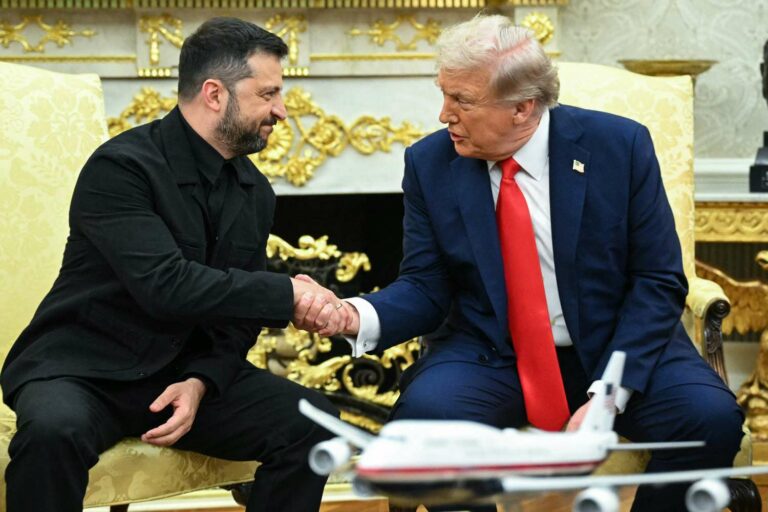
Trump Declares Kyiv Can Win Back ‘All of Ukraine’ After Talks with Zelensky

In a stunning and dramatic reversal of his long-held skepticism, President Donald Trump has declared that Ukraine can “absolutely” win back all of its territory from Russia, a powerful new message delivered after his first face-to-face meeting with Ukrainian President Volodymyr Zelenskyy on the sidelines of the United Nations General Assembly.

The declaration marks a significant pivot from Trump’s past policy of a negotiated settlement, which often suggested Ukraine might have to cede territory to end the war. In a statement on his social media platform following the meeting, Trump wrote: “I think Ukraine, with the support of the European Union, is in a position to fight and WIN all of Ukraine back in its original form.” He dismissed Russia’s military as a “paper tiger” and said the Russian economy was in “BIG Economic trouble,” concluding that “this is the time for Ukraine to act.”

For Ukrainian President Zelenskyy, the shift was a major diplomatic victory. Their past encounters, including a highly contentious meeting in the Oval Office earlier this year, have been marked by tension. But on Tuesday, the two leaders exchanged warm greetings, and Zelenskyy later told reporters that Trump’s new stance could be a “game-changer” for Ukraine. He thanked the U.S. President for his “personal efforts to stop this war,” and echoed Trump’s call for European nations to stop buying Russian oil.

While the new rhetoric offers a glimmer of hope for Kyiv, it remains to be seen if it will be followed by a concrete and sustained change in policy. Trump’s statement did not include a commitment to new U.S. direct financial or military aid, instead suggesting that future weapons supplies would be provided to NATO, who would then be responsible for getting them to Ukraine.

The declaration also comes amid a complex and evolving political landscape. Trump, who has frequently boasted of his ability to negotiate an end to the conflict, has seen his peace efforts stall in recent months. Russian President Vladimir Putin has refused to meet with Zelenskyy, and the war has only intensified. The President’s new message puts the ball squarely in Europe’s court and signals that he believes the time for negotiations has passed, and the time for action has arrived.

Trump UN Remarks: From Laughter to Sobering Attention, the World Re-learns a President

UNITED NATIONS — Six years ago, President Donald Trump stood before the United Nations General Assembly and was met with a ripple of mocking laughter after declaring his administration had “accomplished more than almost any administration in the history of our country.” This year, as he delivered a fiery, hour-long assault on global institutions, the silence was deafening. It was a powerful and somber testament to a world that has grown from amusement to an uncomfortable, sobered acceptance of his rhetoric.

The scene in 2018 was one of disbelief. Delegates and world leaders, many of whom saw his election as a passing aberration, tittered openly at the American President’s boast. Trump, seemingly taken aback, remarked, “I didn’t expect that reaction, but that’s okay,” a moment that was replayed endlessly as a symbol of his unconventional approach to diplomacy. He was the outsider, the showman, a curiosity on the global stage.

But on Tuesday, as he returned to the world’s most prominent diplomatic forum, the theatricality was gone, replaced by a grim resolve. His speech was a blistering repudiation of multilateralism and global cooperation. He called on nations to close their borders, warning that their countries were “going to hell” due to immigration and “green energy” policies. He dismissed the United Nations as a feckless institution that only offers “empty words” and “strongly worded letters” that “don’t solve war.”

The delegates listened, pens poised, faces largely expressionless. There was no mirth, no nervous chuckles. The laughter of 2018 was a luxury born of a belief that his presidency was an anomaly, a passing storm. The silence of 2025 is the sound of a world that knows better. They are no longer a disbelieving audience; they are an audience that has come to terms with an enduring reality.

The shift in reception reflects a deeper transformation in the international system. In his first term, world leaders held out hope that the United States would soon return to its more familiar internationalist role. Now, as Trump embarks on his second term, they recognize that his “America First” agenda is a foundational principle of his administration, and they must now engage with it as such. The laughter of 2018 was the sound of a world that didn’t know what to make of Trump. The silence of today is the sound of a world that has come to terms with it, for better or worse.

Jimmy Kimmel’s Return Hits a Roadblock as TV Stations Refuse to Air His Show

ust as Jimmy Kimmel’s show was set to return to the air following a brief but controversial suspension, major TV station groups across the country have refused to carry the broadcast, a stunning act of defiance that has plunged ABC into a new and complex power struggle. The decision by two of the nation’s largest affiliate owners to preempt the program has effectively put the late-night host back in a state of indefinite limbo for a quarter of his potential audience.

Sinclair Broadcast Group and Nexstar Media Group, which collectively operate over 70 ABC affiliates in major markets like Washington, D.C., Seattle, and Nashville, announced they would not air the show despite Disney’s decision to reinstate it. Both companies had initially pulled the show last week after Kimmel’s monologue about the assassination of conservative activist Charlie Kirk was deemed “ill-timed and insensitive.”

In a statement, Nexstar said it stands by its decision to preempt the show, “pending assurance that all parties are committed to fostering an environment of respectful, constructive dialogue.” Sinclair, for its part, has been even more explicit in its demands, calling for Kimmel to issue a public apology to the Kirk family and make a “meaningful personal donation” to their organization. Sinclair is replacing the show with local news and other programming.

The affiliate rebellion presents a new and significant challenge for ABC and its parent company, Disney. While ABC can distribute the show through its own streaming platforms, the refusal by these station groups means the show will lose millions of viewers in key markets, a blow to its ratings and ad revenue. The move also serves as a powerful reminder of the ongoing power struggle between national networks and their local partners. For years, the networks have held most of the leverage, but with the rise of media consolidation, these large affiliate groups have found new power to push back on programming they deem controversial or not in line with their local values.

The conflict has also become a political flashpoint. FCC Chairman Brendan Carr, who had previously warned of regulatory action against ABC, praised the affiliates’ decision to push back on what they saw as inappropriate content. The clash over Kimmel’s future is no longer just about a television show; it has become a central battle in a broader war over free speech, political pressure, and the very future of the American media landscape.

The Man Who Tried to Kill the President: Jury Convicts Ryan Routh of Trump Assassination Attempt

FORT PIERCE, FL — In a landmark verdict that concludes a highly publicized trial, a federal jury in Florida has found Ryan Routh guilty of attempting to assassinate President Donald Trump, a crime that sent shockwaves through the nation during the 2024 presidential election campaign. The conviction, delivered after less than three hours of deliberation, closes the legal chapter on an attack that could have altered the course of American history.

Routh, 59, who represented himself in the two-week trial, was convicted on all five charges, including attempted assassination of a major presidential candidate, possessing a firearm in furtherance of a crime of violence, and assaulting a Secret Service agent. Prosecutors successfully argued that Routh had spent weeks meticulously plotting to kill Trump, using burner phones and making 17 reconnaissance trips to Trump’s West Palm Beach golf course.

The failed assassination attempt took place on September 15, 2024, as Trump was playing golf. Routh, a self-styled mercenary leader with a history of erratic behavior, was discovered hiding in shrubbery with a high-powered SKS rifle. According to testimony from a Secret Service agent, Routh aimed his rifle at the agent, who then fired on Routh, causing him to drop his weapon and flee without firing a shot. Routh was arrested shortly after after a witness who saw him flee provided law enforcement with a description of his vehicle. A 12-page letter found at his residence, in which he wrote, “This was an assassination attempt on Donald Trump, but I failed you,” sealed the prosecution’s case.

The verdict was met with a dramatic scene in the courtroom as Routh, after being found guilty, attempted to stab himself in the neck with a pen. He was quickly subdued by U.S. Marshals and removed from the courtroom. The incident, which left him unharmed, served as a harrowing end to a trial marked by his rambling and at times bizarre statements.

The verdict was celebrated by the Department of Justice, with Attorney General Pam Bondi stating on social media that it “illustrates the Department of Justice’s commitment to punishing those who engage in political violence.” For the Secret Service, who also thwarted a separate assassination attempt on Trump in Pennsylvania just two months prior, the verdict is a powerful affirmation of their work.

Routh faces a possible sentence of life in prison when he is sentenced on December 18. The jury’s swift decision serves as a powerful reminder of the deep divisions in the country and the constant threats to high-profile political figures, reinforcing the notion that in the current political climate, every day brings a new and unpredictable challenge to national security.

Super Typhoon Ragasa’s Fury Bursts Taiwan Lake as China Braces for Impact

TAIPEI — In a tragic display of a super typhoon’s destructive power, a decades-old barrier lake in eastern Taiwan has burst its banks, unleashing a torrent of floodwaters that left at least two people dead and dozens missing. The powerful storm, named Ragasa, is now barreling towards China, where authorities are bracing for what is being called the strongest storm to hit the mainland in a decade.

The catastrophe unfolded in Taiwan’s Hualien County, where torrential rains from the outer bands of Super Typhoon Ragasa caused the Mataian Creek barrier lake to overflow. The surge of water was so powerful it washed away a bridge and submerged the nearby town of Guangfu, with water levels reaching the second floor of some homes. Rescuers are now in a frantic search for the missing, and over 260 people were trapped on higher ground.

Typhoon Ragasa, which has been described as the most powerful storm of the year, has already left a trail of destruction across the Philippines, where it has killed at least three people. Now, with sustained winds of 220 kilometers per hour (137 mph), it is on a direct path towards southern China’s densely populated Guangdong province. Authorities in Hong Kong, a global financial hub in the storm’s path, have issued their highest storm warning, comparing the approaching threat to some of the most destructive storms in the city’s recent history.

In response, China has launched a massive, coordinated effort to prepare for the storm’s arrival. Over 400,000 residents in Guangdong province, particularly those in low-lying and flood-prone areas, are being relocated to safety. Schools and businesses have been shuttered, and flights and train services have been canceled. The measures underscore the immense scale of the threat and the government’s resolve to minimize casualties.

The storm’s fury in Taiwan and its looming presence in China serve as a grim reminder of the increasing intensity of extreme weather events. While the people of Taiwan begin the long process of recovery, China is facing a monumental challenge that will test its infrastructure and emergency response capabilities in a way not seen in years.

NASA Sets Date for First Crewed Lunar Mission in 50 Years

In a historic announcement that signals the dawn of a new era of space exploration, NASA has set a firm date for its return to the Moon, targeting a February 2026 launch for its first crewed mission in over half a century. The flight, known as Artemis II, will not land astronauts on the lunar surface, but it represents a crucial and long-awaited step in a global race back to our celestial neighbor.

The mission will send four astronauts aboard the Orion spacecraft on a 10-day journey around the Moon, flying farther from Earth than any human has been since the Apollo program ended in 1972. The crew—Commander Reid Wiseman, Pilot Victor Glover, and Mission Specialist Christina Koch from NASA, along with Canadian Space Agency astronaut Jeremy Hansen—will serve as test subjects for the new era of deep space travel, confirming that the spacecraft’s systems can support human life in the unforgiving environment of deep space.

NASA Moon
Image source: picryl.com

The Artemis II flight will be a test of the most powerful rocket in the world, the Space Launch System (SLS). Standing taller than the Statue of Liberty, the mega-rocket will propel the Orion capsule out of Earth’s orbit and onto a “free-return trajectory” around the Moon, a path that will slingshot it back to Earth using the Moon’s gravity. It is the first major step since the uncrewed Artemis I mission in 2022, and its success is a non-negotiable prerequisite for future lunar landings.

While the mission is a testament to scientific ingenuity, it also carries profound geopolitical significance. It places the United States in direct competition with a resurgent Chinese space program, which has a stated goal of landing its own astronauts on the Moon by 2030. NASA officials have stressed that safety is their top priority, even as they face pressure to move quickly to regain a leadership position in space exploration.

The ultimate goal of the Artemis program, beyond this initial flyby, is to establish a sustainable human presence on the Moon and use it as a proving ground for the next great journey: a crewed mission to Mars. But for now, the focus is on a single, historic moment. Over 50 years after humanity last left Earth’s orbit, the world will once again watch as astronauts venture into the deep abyss, on a path that is both a tribute to the past and a bold promise for the future.

Disney Reverses Course, Kimmel’s Show to Return After Uproar

Just days after its sudden and controversial suspension, Jimmy Kimmel Live! is set to return to the air, Disney announced on Monday, a dramatic reversal that follows a storm of public outrage, a unified show of support from his fellow hosts, and immense pressure on the network from across the industry. The decision marks a victory for free expression advocates and ends a six-day hiatus that sparked a national debate over corporate capitulation and government censorship.

In a statement, the Walt Disney Company confirmed the show would resume production on Tuesday, a week after it was “pre-empted indefinitely” following comments Kimmel made about the assassination of conservative activist Charlie Kirk. The company’s statement said the temporary pause was “to avoid further inflaming a tense situation” but that “thoughtful conversations” with Kimmel had led to the decision to bring him back.

Jimmy Kimmel Live suspended

The abrupt return is a clear sign that the network caved to pressure—but not from the government. The suspension itself, which followed threats from FCC Chairman Brendan Carr and a public cheer from President Trump, triggered a furious backlash from Hollywood. Over 400 celebrities, including Meryl Streep, Ben Affleck, and Tom Hanks, signed an open letter condemning the move as a “dark moment for freedom of speech.” Fellow late-night hosts like Stephen Colbert, Jon Stewart, and Jimmy Fallon publicly rallied to Kimmel’s defense, and the Writers Guild of America (WGA) called the suspension an act of “corporate cowardice.”

While the return is a clear victory, the fight is not over. The suspension was initially triggered when Nexstar and Sinclair, two of the largest owners of ABC affiliate stations, preempted the show. On Monday, a Sinclair representative stated that the network would not air Kimmel’s show on its local stations, including in the key Washington, D.C. market, until the host apologizes to the Kirk family and makes a “meaningful personal donation” to them.

The ongoing battle between national broadcasters and local affiliates, amplified by political pressure, underscores the precarious state of late-night television. For now, a voice that was silenced has returned to the air. But the conditions of that return—and the power struggle it lays bare—ensure that the future of late-night comedy will remain a subject of both laughter and fear.

France Joins Historic Wave of Nations Recognizing Palestinian State

UNITED NATIONS — In a major and symbolic diplomatic break from its traditional policy, France has officially recognized a Palestinian state, joining a growing wave of European and Western nations that are shifting their position in a move that has outraged Israel and energized the Palestinian cause. The historic announcement, made by French President Emmanuel Macron at a high-level United Nations meeting, cements a new and increasingly united front against Israel’s ongoing offensive in Gaza and its rejection of a two-state solution.

The decision by France, a permanent member of the UN Security Council, follows the formal recognition of Palestinian statehood by the United Kingdom, Canada, Australia, and Portugal just a day earlier. In his address at the UN General Assembly, Macron declared, “True to the historic commitment of my country to the Middle East, to peace between the Israelis and the Palestinians, this is why I declare that today, France recognizes the state of Palestine.” The announcement was met with a standing ovation from a majority of the 140-plus delegations in attendance.

The coordinated move is a direct response to a two-fold reality on the ground: the intensifying humanitarian catastrophe in Gaza and Israel’s accelerated expansion of settlements in the West Bank. European leaders, including Macron and UK Prime Minister Keir Starmer, argue that their recognitions are not a reward for Hamas but a necessary step to keep the peace process from collapsing entirely. The hope is that by empowering the Palestinian Authority and offering a political horizon, it will strengthen moderate voices and provide a viable path to a peaceful resolution.

The diplomatic unity, however, was met with a fierce and predictable backlash. Israeli Prime Minister Benjamin Netanyahu condemned the recognitions as “appeasement towards jihadist terrorists” and vowed retaliation, a sentiment echoed by his government. An Israeli official confirmed that annexing parts of the West Bank is a retaliatory option being considered, a move that would further deepen Israel’s isolation. For its part, the Trump administration made it clear it opposes the recognitions, with U.S. and Israeli delegations pointedly absent from the UN summit where Macron made his announcement.

For the Palestinian people, the recognition is a major diplomatic victory. The Palestinian Authority’s Ministry of Foreign Affairs welcomed the move as a “historic and courageous decision” that aligns with international law. While largely symbolic, the declarations by these major world powers serve to delegitimize the Israeli occupation and put pressure on the United States, which has consistently used its veto power to block full UN membership for a Palestinian state.

The wave of recognitions, led by France, signals a tectonic shift in global diplomacy. It marks a clear break from decades of a U.S.-led policy and ushers in a new and uncertain chapter in the Middle East. With key allies like the UK and France now charting their own course, the U.S. is finding itself increasingly alone in its approach to one of the world’s most intractable conflicts.