Monday, December 8, 2025
Home Blog Page 14

A Controversial ‘Birthday Book’ Fuels New Political Firestorm Over Trump and Epstein

A new and explosive chapter in the Jeffrey Epstein saga has opened, with the White House launching a forceful denial of a sexually suggestive letter and drawing allegedly sent by President Donald Trump to the late financier. The document, released by House Democrats from a “birthday book” compiled for Epstein’s 50th birthday, has reignited the firestorm around the President’s past ties to the convicted sex offender, prompting a furious political and legal battle over its authenticity.

The controversial note, published on the official account of the House Oversight Democrats, is an imagined dialogue between “Donald” and “Jeffrey,” framed within a hand-drawn outline of a nude woman’s body. It concludes with the cryptic message, “A pal is a wonderful thing. Happy Birthday — and may every day be another wonderful secret.” Below the text is a signature reading “Donald.”

The document was one of a trove of records that lawyers for Epstein’s estate handed over to the House committee in response to a subpoena. In a statement, Representative Robert Garcia, the top Democrat on the committee, declared that the committee had “secured the infamous ‘Birthday Book’ that contains a note from President Trump that he has said does not exist.”

Jeffrey Epstein files

But the White House was swift and unsparing in its counterattack. White House press secretary Karoline Leavitt took to social media to call the document “FAKE NEWS” and a “disgraceful forgery,” repeating a claim President Trump made in July when The Wall Street Journal first reported the note’s existence. “It’s very clear President Trump did not draw this picture, and he did not sign it,” Leavitt said, adding that the President’s legal team would “continue to aggressively pursue litigation” against the news outlet that first broke the story.

The latest development in the Epstein case underscores the persistent and politically charged nature of the scandal that has haunted multiple high-profile figures. While Democrats are pointing to the document as definitive proof of a relationship Trump has long tried to downplay, Republican allies, including Vice President J.D. Vance, have accused Democrats of “concocting another fake scandal” to “smear president Trump with lies.”

As arguments over the document’s authenticity continue to rage, forensic handwriting experts are likely to be called upon to settle the debate. The release of the book, which also reportedly contains messages from former President Bill Clinton, confirms that the fallout from the Epstein scandal is far from over, and that the intersection of power, wealth, and depravity will continue to shape American politics for years to come.

Greta Thunberg’s Gaza Flotilla Arrives in Tunisia, Drawing a Line in the Sand

A humanitarian flotilla led by climate activist Greta Thunberg has arrived in Tunisia to a jubilant welcome from thousands of supporters, marking the latest front in a global campaign to break Israel’s long-standing naval blockade of Gaza. The “Global Sumud Flotilla,” carrying hundreds of activists and desperately needed aid, is now poised for its final, perilous leg of a journey that has transformed a humanitarian mission into a high-stakes diplomatic confrontation.

The atmosphere at the port of Sidi Bou Said was electric as crowds chanted and waved Palestinian flags to greet the boats. Onboard, Thunberg, speaking to a throng of supporters, delivered a blistering condemnation of Israel’s policies. “Just across the water there’s a genocide going on, a mass starvation by Israel’s murder machine,” she said, using the kind of stark language that has become her trademark.

The flotilla’s journey began in Barcelona, where over 20 vessels and participants from more than 40 countries set sail with a simple, yet defiant, mission: to open a “humanitarian corridor” to a population that a UN-backed body has officially declared to be in a state of famine. It is Thunberg’s second attempt to reach the besieged territory this year, after a previous mission in June was intercepted by the Israeli military, which detained and deported her.

Israeli officials have consistently dismissed such flotillas as political stunts that offer no genuine humanitarian assistance and serve only to legitimize a terrorist organization. Their stance is that all aid must pass through land crossings, where it can be inspected to ensure it does not contain weapons or materials for Hamas. The flotilla’s organizers, however, say that the overland route is too slow and unreliable to meet the catastrophic needs of a starving population.

As the flotilla now re-supplies and prepares for the final stage of its voyage, the question of its fate looms large. Israel has a clear history of intercepting such vessels, and officials have indicated they will not tolerate a breach of their naval blockade. For the hundreds of activists on board, including Thunberg, the journey is not just about delivering aid—it is about challenging the legality and morality of a siege they say is causing unimaginable suffering. The eyes of the world are now on the stretch of water between Tunisia and Gaza, where a new chapter of an old conflict is about to begin.

The War Comes to the Capital: Zelensky Condemns ‘Ruthless Attack’ as Russia Strikes Kyiv’s Seat of Power

KYIV, UKRAINE – In a dramatic and chilling escalation of its war on Ukraine, Russia has for the first time struck a key government building in the heart of Kyiv, drawing a furious condemnation from Ukrainian President Volodymyr Zelensky. The “ruthless attack,” part of a massive aerial assault that saw Russia launch its largest barrage of missiles and drones of the war, has brought the conflict to the very center of the nation’s political life.

The attack unfolded in the early hours of Sunday, as a record-breaking number of Russian munitions—totaling over 800 drones and 13 missiles—rained down on cities across Ukraine. In Kyiv, an air-raid siren blared for over 11 hours as air defenses intercepted a majority of the projectiles. But some got through, with one striking the roof and upper floors of the Cabinet of Ministers building, a historic structure that houses the offices of Ukraine’s top ministers.

Ukraine Zelensky

“Such killings now, when real diplomacy could have already begun, are a deliberate crime and a prolongation of the war,” President Zelensky said in a statement on social media. “The world can force the Kremlin’s criminals to stop killing; all that is needed is political will.”

The strike on a building that had been spared throughout the war is a clear message from Moscow. It comes just weeks after U.S. President Donald Trump and Russian President Vladimir Putin met for peace talks in Alaska, which failed to yield a breakthrough. For many, the attack serves as a stark signal that Russia has no intention of de-escalating the conflict.

The human cost of the barrage was immediate and tragic. Ukrainian officials reported at least four people killed nationwide, including a young woman and an infant in Kyiv, whose bodies were pulled from the rubble of a residential building. Plumes of smoke were seen rising from the damaged government building as emergency crews battled a blaze on its upper floors.

While a spokesperson for the Russian Defense Ministry said that its forces had struck “high-precision weapons” and “no strikes were carried out on other objects within the boundaries of Kyiv,” Ukrainian Prime Minister Yulia Svyrydenko posted a video of the damage on social media and vowed, “We will rebuild the buildings, but lost lives cannot be returned.”

As investigators sift through the wreckage of both the government building and residential areas, the attack has reignited international outrage and fresh calls for tougher sanctions on Russia. For the citizens of Kyiv, who have grown accustomed to the daily reality of war, the strike on their government’s headquarters is a grim reminder that no part of their country is safe, and that the fight is far from over.

A Digital Saint for a Digital Age: Thousands Throng Vatican as Teenager Carlo Acutis is Canonized

VATICAN CITY – A wave of jubilant, youthful energy swept through St. Peter’s Square today as Pope Leo XIV canonized Carlo Acutis, an Italian teenager who died in 2006, as the Catholic Church’s first millennial saint. The historic ceremony, attended by more than 80,000 pilgrims from across the globe, elevates a tech-savvy, jeans-wearing teen to the hallowed ranks of the saints, offering a new, relatable model of holiness for a digital generation.

The atmosphere in the square was one of joyous celebration, a stark contrast to the solemnity of past canonizations. Thousands of young people, many holding signs with Acutis’s image and slogans like “God’s Influencer,” chanted and cheered as Pope Leo XIV, in his first canonization ceremony as Pope, formally declared him a saint. The pontiff also canonized Pier Giorgio Frassati, another young Italian known for his piety and charity, who died a century ago.

“The greatest risk in life is to waste it outside of God’s plan,” Pope Leo said in his homily, holding up Acutis as a witness to how an ordinary life can be made a “masterpiece.”

Acutis, born in London in 1991, was a computer whiz known for his profound devotion to the Eucharist. He was a normal teenager who loved video games, but with a remarkable sense of discipline, limiting his gaming to just one hour a week. He used his coding skills not for personal gain, but to build websites documenting Eucharistic miracles and Marian apparitions, earning him the nickname “God’s influencer” and “cyber-apostle.” He died in 2006 at the age of 15 from an aggressive form of leukemia.

His journey to sainthood was unusually fast-tracked by the Church, which attributed two miracles to him. One involved the healing of a Brazilian child with a congenital pancreatic disease, and a second miracle was credited with the unexplained recovery of a university student who suffered a severe brain bleed.

For the young faithful, Acutis’s canonization is a powerful symbol of the Church’s attempt to bridge the gap between tradition and the modern world. His tomb in Assisi, where his body lies in a glass-sided coffin dressed in his everyday clothes, has become a pilgrimage site, attracting millions who see in him a saint who lived and died in their own time.

As the ceremony concluded and the crowd dispersed, the message was clear: The Catholic Church is embracing a new kind of saint—one who used a laptop and a rosary to find heaven, proving that holiness is not confined to the past but can be found in the everyday life of the 21st century.

US Open 2025: Trump’s Arrival Delays Alcaraz and Sinner Final as Security Measures Disrupt Grand Slam

FLUSHING MEADOWS, N.Y. – The US Open men’s final, the pinnacle of American tennis, was delayed by 30 minutes today as President Donald Trump’s arrival at Arthur Ashe Stadium triggered an unprecedented level of security that gridlocked the venue and left thousands of fans waiting to get into their seats. The disruption, which unfolded just before the start of the highly anticipated match between Jannik Sinner and Carlos Alcaraz, injected a new, chaotic political dimension into a marquee sporting event.

Originally scheduled for a 2 p.m. start, the match was pushed back to 2:30 p.m. as the United States Tennis Association (USTA) and the Secret Service implemented a series of heightened security protocols. The measures, which included additional screenings, a heavy police presence, and sniffer dogs, created long queues at every entrance to the USTA Billie Jean King National Tennis Center. Even as the players took to the court, hundreds of seats in the massive 24,000-capacity stadium remained empty.

A statement from the USTA said the delay was “to ensure that fans have additional time to get to their seats,” but the reason for the enhanced security was clear. Air Force One had landed at nearby LaGuardia Airport just hours earlier, and roads around the stadium were closed to accommodate the President’s motorcade.

Upon his arrival, Trump, seated in a private suite, was met with a mix of cheers and boos from the crowd. His presence at the event marks the first time a sitting U.S. President has attended the US Open since Bill Clinton in 2000. It is also his first time back at Flushing Meadows since 2015 when, as a presidential candidate, he was met with a similarly mixed reception.

The day’s political undertones were not confined to the stadium’s interior. Outside the grounds, the activist group “Refuse Fascism” staged a protest, adding a political edge to an event typically known for its celebrity-filled, star-studded ambiance. The USTA, in an unusual move, reportedly sent a memo to broadcasters requesting that they “refrain from showcasing any disruptions or reactions in response to the President’s attendance in any capacity.”

While the on-court rivalry between Sinner and Alcaraz was the focus of the day, the 2025 US Open final will be remembered as much for the off-court drama as the match itself. The delay served as a stark reminder of the immense logistical and political challenges that accompany a presidential presence at major public events, proving that even on the world’s grandest sporting stage, politics can still steal the show.

A Human Tide of Grief and Rage: Protests Swell in Jerusalem to Force Hostage Deal

In a powerful and emotional act of defiance, tens of thousands of Israelis filled the streets of Jerusalem this weekend, besieging the residences of Prime Minister Benjamin Netanyahu and other top officials with a single, desperate demand: Secure a deal to bring home the remaining hostages held in Gaza. The mass protest, which has become a weekly ritual, has taken on a new, feverish urgency as fears grow that an intensified military assault on Gaza City could endanger the lives of the captives.

Driven by a collective sense of despair after more than 700 days of captivity, the demonstrators marched from the Chords Bridge to Paris Square, just a short distance from Netanyahu’s home. They carried banners emblazoned with the words “Government of the Shadow of Death” and “Why are they still in Gaza?” The crowd, a mix of families of the hostages and ordinary citizens, chanted, “Traitor,” directly at the prime minister, accusing him of sacrificing the lives of the captives to prolong his political power.

The moral core of the protest was the Hostages and Missing Families Forum, which has shifted its strategy from Tel Aviv to Jerusalem to apply direct pressure on key decision-makers. Family members, including the mothers of abducted IDF soldiers Matan Angrest and Nimrod Cohen, delivered raw, unfiltered speeches that captivated the crowds. “My child will not be sacrificed on the altar of politics,” Viki Cohen, Nimrod’s mother, declared to a roar of support.

The protest unfolded against a backdrop of conflicting signals from the Israeli government and a failed round of negotiations. While Hamas has reportedly accepted a phased deal that would see the release of 10 living hostages and 18 deceased in exchange for a 60-day ceasefire, the Israeli government has dismissed the offer, with Prime Minister Netanyahu now demanding a comprehensive, all-or-nothing agreement that would lead to a complete victory and the disarmament of Hamas.

The demonstration also comes in the wake of the latest propaganda video released by Hamas, which showed two hostages who are believed to be in Gaza City, intensifying the families’ fears. U.S. President Donald Trump has also weighed in on the crisis, noting the size of the protests and raising new concerns about the hostages’ well-being.

As the sun set on Jerusalem, the city’s streets remained a sea of anguished faces, all united in a single, desperate plea. The protests have become a national referendum on Netanyahu’s leadership and his handling of the war, but for the families of the hostages, the political stakes are overshadowed by a far more personal and devastating reality: the life of a loved one hangs in the balance, and time is running out.

A Strike at the Heart of the State: Russia Hits Main Government Building in Kyiv for First Time

KYIV, UKRAINE – In a dramatic escalation of its war on Ukraine, Russia has for the first time struck the main government building in Kyiv, a symbolic and strategic act that has brought the conflict to the very heart of the capital. The attack, part of a record-breaking overnight aerial assault, damaged the roof and upper floors of the Cabinet of Ministers building and sent a clear, chilling message to Ukraine’s leadership.

The assault, which unfolded in the early hours of Sunday morning, was Russia’s largest since the start of the full-scale invasion in February 2022, according to Ukrainian officials. Ukraine’s air force reported that Russia launched more than 800 drones and 13 missiles, with smoke seen rising over the Maidan Square as emergency services rushed to the scene. While the extent of the damage to the historic building is still being assessed, the attack marks a significant shift in Russia’s targeting strategy, which had largely avoided Kyiv’s core government infrastructure.

“For the first time, the government building was damaged by an enemy attack, including the roof and upper floors,” Ukrainian Prime Minister Yulia Svyrydenko said on Telegram. “We will restore the buildings, but lost lives cannot be returned.”

The strike on a building that houses the offices of Ukraine’s top ministers is an unmistakable signal from the Kremlin that no target is off-limits. It comes at a particularly sensitive moment, as diplomatic efforts to end the war have lost momentum. While President Donald Trump has been trying to broker a peace deal, the attack demonstrates that Russia is intent on pressing its military advantage on the battlefield.

Kyiv Mayor Vitali Klitschko confirmed that the attack had also killed at least two people, including a young woman and an infant, and injured more than a dozen others as drone debris struck residential buildings in the city’s west and east. A spokesperson for the head of Kyiv’s military administration stated that Russia was “deliberately and consciously striking civilian targets.”

The brazen assault has prompted renewed international outrage. Ukrainian officials have called for stronger sanctions against Russian oil and gas and a renewed push for more air defense systems. The attack serves as a stark reminder that despite years of fighting, the war is far from a stalemate, and a peaceful resolution remains a distant hope.

Egypt: Mount Sinai is Being Transformed into a Luxury Mega-Resort

In a development that has triggered a global outcry, one of the world’s most sacred places—the site where Moses is said to have received the Ten Commandments—is being irrevocably transformed into a luxury mega-resort. The ambitious, state-backed project, dubbed “The Great Transfiguration,” is erecting villas, a massive conference center, and a cable car to the mountain’s summit, sparking a fierce debate over the clash between religious heritage and commercial ambition.

The massive project, launched by the Egyptian government, is framed as a long-overdue economic development for the remote Sinai region. Officials have spoken of their vision to turn the area, which includes the revered St. Catherine’s Monastery, into a “world-class spiritual tourism destination.” But for religious leaders, historians, and local communities, the transformation is a monstrous desecration.

The plan, set for completion by 2026, includes the construction of new hotels, shopping complexes, and expanded airport facilities. A highlight of the development is a proposed cable car that will whisk tourists to the top of Mount Sinai, a journey of profound spiritual significance that has been undertaken for centuries on foot. Critics argue this modernization will shatter the solitude and spiritual atmosphere that has drawn countless pilgrims and seekers to the mountain.

“This is not development as the local people see it,” said Ben Hoffler, a British travel writer and advocate for the indigenous Bedouin communities in the area. “It is how it looks when imposed top-down to serve the interests of outsiders over those of the local community.”

The Bedouin Jebeleya tribe, known for centuries as the guardians of the monastery and its surrounding land, have been particularly vocal about their displacement. Reports from human rights groups allege that homes and even ancient tribal graves have been bulldozed to make way for new roads and infrastructure, with little to no compensation offered to the indigenous people who have lived there for generations.

The controversy has also drawn the attention of international organizations, with UNESCO repeatedly urging Egypt to halt construction and submit conservation plans for the World Heritage site. To date, no such plan has been submitted, prompting some heritage groups to call for the site to be declared endangered.

As bulldozers carve new roads into the desert landscape, and the half-finished concrete shells of hotels rise in the shadow of the mountain, the future of this ancient landscape hangs in the balance. The Egyptian government has made its economic vision clear, but its critics believe it is a vision that risks destroying the very soul of a place revered by billions. The fate of Mount Sinai will ultimately be a test of whether a nation’s development goals can be achieved without sacrificing the integrity of its most sacred spiritual treasures.

A New Battlefront: Trump Vows to Deploy National Guard to Chicago, Setting Up Showdown with Mayor

The long-simmering tension between the federal government and Chicago’s Democratic leadership has reached a fever pitch, with President Donald Trump vowing to deploy the National Guard to the city to combat what he called “out-of-control crime.” The declaration, made Tuesday, sets the stage for a dramatic constitutional and political showdown, as Mayor Brandon Johnson and Governor J.B. Pritzker have both vowed to block the move.

“We’re going in,” President Trump told reporters, calling Chicago “the worst and most dangerous city in the world.” The President, who has already ordered Guard troops into Washington, D.C., and Los Angeles in recent months, rejected claims that his focus on Democratic-run cities is politically motivated, insisting, “I have an obligation to protect this country.” He cited recent crime data, noting that “when 20 people are killed over the last two and a half weeks and 75 are shot with bullets, I have an obligation.”

But Chicago’s leadership has not only pushed back—it has actively prepared to resist. At a Labor Day rally this week, Mayor Johnson declared, “No federal troops in the city of Chicago! No militarized force in the city of Chicago!” He has since signed an executive order barring city agencies and police from cooperating with any “unlawful or unconstitutional actions” from federal forces.

The legal authority for the President’s actions is far from clear. His comments came just hours after a federal judge in San Francisco ruled that his earlier use of the military in Los Angeles violated the law, cautioning that the President appeared intent on “creating a national police force with the President as its chief.” While that injunction is set to take effect on September 12, the President’s lawyers have already appealed to the Supreme Court.

Legal experts say a deployment to Chicago would be on even thinner legal ice. Unlike in Washington, D.C., which has a unique relationship with the federal government, the President would have to federalize the Illinois National Guard, an action that typically requires the governor’s consent. Governor Pritzker has repeatedly and forcefully stated, “do not come.”

As Chicago residents brace for the potential arrival of troops, the city’s political leaders and community organizations are preparing for a difficult period. Protest groups have begun mobilizing, and civic leaders have warned that a federal deployment could heighten, rather than curb, tensions. For now, the battle lines have been drawn, turning the streets of Chicago into the latest front in a constitutional struggle over the limits of presidential power.

Elevador da Gloria: Lisbon’s Historic Funicular Crashes, Killing 16 and Leaving a City in Mourning

The familiar sight and sound of Lisbon’s beloved Gloria funicular, a century-old symbol of the city’s steep hills and winding streets, was shattered today as a catastrophic crash left at least 16 dead and more than 20 injured. The accident, which occurred during a bustling rush hour, has plunged the Portuguese capital into a state of shock and grief, prompting a day of national mourning.

The tragedy unfolded just after 6 p.m. local time on the Elevador da Glória, a funicular that links the Restauradores Square with the scenic Bairro Alto neighborhood. Witnesses told local media that the ascending carriage, packed with a mix of tourists and residents, suddenly began to lurch backward before the descending car appeared to lose all control. It reportedly careened down the steep slope, derailed, and slammed with brutal force into a building just yards from the end of the line.

“It hit the building and fell apart like a cardboard box,” one witness told Portuguese television.

Emergency services, including firefighters and paramedics, swarmed the narrow street, pulling mangled wreckage from the site and a grim procession of victims from the wreckage. Officials confirmed that both Portuguese citizens and foreign nationals were among the dead and injured, highlighting the global scale of the tragedy. Among the injured were people from Spain, Germany, Italy, and South Korea, underscoring the funicular’s status as a major tourist attraction.

The cause of the crash is not yet known. Portuguese authorities have launched a formal investigation, and officials are reportedly looking into claims of a snapped cable and potential brake failure. The municipal public transport company, Carris, which operates the line, said in a statement that “all maintenance protocols have been carried out” and that daily inspections had been completed, but the city’s mayor, Carlos Moedas, said, “The city needs answers.”

In response to the disaster, Lisbon has suspended all other funiculars and a major historic elevator for urgent safety inspections. The crash has cast a shadow over a city that has become a major destination for tourism, raising profound questions about the safety of its historic transportation systems.

As families gathered at local hospitals to seek news of loved ones, a sense of collective sorrow settled over Lisbon. The city’s mayor declared three days of municipal mourning, and President Marcelo Rebelo de Sousa expressed hope that the cause of the “tragic accident” would soon be established, but for now, the shock of a city’s a tragic moment for a city that has always prided itself on its charm and resilience.

Israel Destroys Second High-Rise as Gaza Assault Intensifies

GAZA CITY – In a dramatic escalation of its military offensive, Israel has leveled a second high-rise building in Gaza City, turning a 15-story residential tower into a cloud of dust and smoke as its forces press deeper into the urban heart of the enclave. The strike on the Sussi Tower, which followed a similar attack on a separate high-rise just a day earlier, has erased a significant piece of the city’s skyline and intensified fears of a coming ground invasion.

The Israeli military, in a statement posted on social media, claimed the building was being used by the Hamas terrorist organization for “intelligence-gathering equipment and observation posts to monitor Israeli troop movements.” Defense Minister Israel Katz posted a video of the collapsing tower with a simple, defiant message: “We’re continuing.”

But for Palestinians and international observers, the strikes represent a chilling and systematic campaign to render Gaza City uninhabitable. The Mushtaha Tower, which was destroyed on Friday, was a bustling commercial and residential hub. The Sussi Tower, a day later, housed dozens of families and displaced individuals who had nowhere else to go. Witnesses said the collapse of the tower shook the surrounding neighborhoods and left nearby streets and homes heavily damaged, but it was not immediately clear if there were casualties.

The strikes follow urgent warnings from the Israel Defense Forces (IDF) calling on residents to evacuate. As Israeli forces have pushed to seize control of Gaza City, they have issued maps of “red zones” and urged a civilian population of nearly one million to move south to a designated humanitarian zone.

However, many Palestinians have refused to leave, citing a lack of safe routes and the grim reality that nowhere in Gaza has proven to be secure. The United Nations has warned that a mass evacuation would create a humanitarian disaster in an area already suffering from famine.

The assault has sparked a new wave of international condemnation. The Palestinian Foreign Ministry said the attacks were part of a “systematic plan” to forcibly displace the population. Analysts believe the leveling of high-rises is not only a tactical move to destroy alleged militant infrastructure but also a psychological one, designed to break the will of a population already reeling from nearly two years of brutal conflict.

As the sun set over Gaza City, the sounds of air raids and explosions continued, leaving residents to contemplate a future without homes and an assault that shows no signs of slowing down.

Seoul Holds Emergency Meeting After Mass Arrests in U.S. Hyundai Raid

In an incident that has shaken the foundation of the U.S.-South Korea alliance, the South Korean government has convened an emergency meeting after a massive immigration raid on a Hyundai factory in Georgia led to the detention of hundreds of its citizens. The operation, described by U.S. officials as the largest single-site enforcement action in history, has ignited a diplomatic firestorm and prompted an immediate and furious response from Seoul.

South Korean President Lee Jae Myung, in a televised statement, pledged “all-out efforts” to protect his nationals, stating that the “rights of our people and the economic activities of our companies must not be unjustly infringed upon.” The rare rebuke of a key ally came after U.S. Immigration and Customs Enforcement (ICE), along with multiple federal agencies, descended on a new Hyundai electric vehicle plant near Savannah, detaining nearly 500 workers.

According to South Korea’s Foreign Minister Cho Hyun, more than 300 of those arrested are believed to be South Korean nationals. Officials said the raid was the culmination of a months-long criminal investigation into alleged unlawful employment practices. While U.S. authorities have stated that many of the detainees were in the country illegally, had overstayed their visas, or were working in violation of their statuses, the raid’s scale and the targeting of workers from a key ally has sent shockwaves through the region.

Hyundai logo outside a dealership. Netherlands – April 30, 2017

More:

Original public domain image from Flickr

The timing of the raid is particularly sensitive. It comes just weeks after President Lee pledged an additional $150 billion in investment to the U.S., a gesture meant to ease tensions over tariffs and bolster the economic alliance. The Hyundai factory, a joint venture with LG Energy Solution, represents a $7.6 billion investment and is considered the largest economic development project in Georgia’s history.

For Hyundai, the incident has created a public relations crisis. The company released a statement saying it was “closely monitoring the situation” and that none of those detained were directly employed by the firm, which it said relied on subcontractors. But for South Korean opposition leader Jang Dong-hyuk, the arrests have created a “national-level risk” for the country’s firms, warning that the incident proves the Trump administration’s “America First” policies supersede even its closest relationships.

As South Korean diplomats are being dispatched to the detention facility to assist their citizens, the incident remains a major test of the U.S.-South Korea alliance. The raid has not only put a spotlight on the Trump administration’s sweeping immigration crackdown but also raised profound questions about the trust and stability of a partnership that has long been a cornerstone of American foreign policy in Asia.

U.S. Strike on Venezuelan Drug Boat Kills 11, Igniting a New Crisis

In a dramatic escalation of the U.S. counter-narcotics mission, President Donald Trump confirmed today that the U.S. military has conducted a “kinetic strike” on a Venezuelan drug-smuggling vessel in the Caribbean, killing all 11 people on board. The unprecedented operation, which the President hailed as a lethal warning to cartels, has ignited a fresh crisis between Washington and Caracas and drawn a swift, furious response from the regime of Nicolás Maduro.

In a post on his Truth Social platform, President Trump released a video showing a small, fast-moving boat exploding in a ball of fire at sea. He stated the strike targeted members of the Tren de Aragua gang, a Venezuelan-based criminal organization he has designated a “narco-terrorist” group. “The strike occurred while the terrorists were at sea in International waters transporting illegal narcotics, heading to the United States,” Trump wrote. “Please let this serve as notice to anybody even thinking about bringing drugs into the United States of America.”

Defense Secretary Pete Hegseth later confirmed the strike, telling reporters that it was a “precision” operation and a direct message to President Maduro, who the U.S. has accused of running a narco-state. “This won’t stop with just this strike,” Hegseth warned. “Anyone else trafficking in those waters, who we know is a designated narco-terrorist, will face the same fate.”

The bombing adds a volatile new dimension to the already tense relationship between the U.S. and Venezuela. The Trump administration has in recent months deployed a formidable naval presence to the Caribbean, including multiple destroyers, an amphibious assault group, and thousands of Marines, ostensibly to combat drug trafficking. The Maduro regime has consistently condemned the military buildup as a pretext for a U.S. invasion.

Venezuelan President Maduro responded to the strike by mobilizing troops along the coast and urging citizens to join a civilian militia. Maduro’s communications minister, Freddy Ñáñez, dismissed the video released by the White House as a “cartoonish animation” and AI-generated. The Venezuelan government has long maintained that the U.S. is exaggerating the country’s role in drug trafficking to justify regime change.

While the U.S. has not officially signaled a planned ground incursion into Venezuela, the latest strike signals a significant shift in tactics. For decades, U.S. forces have focused on interdiction and capture, but the use of lethal force marks a new and more aggressive strategy. The incident sets a dangerous precedent and raises the stakes for every vessel operating in the region, bringing the drug war to the brink of a full-scale military confrontation.

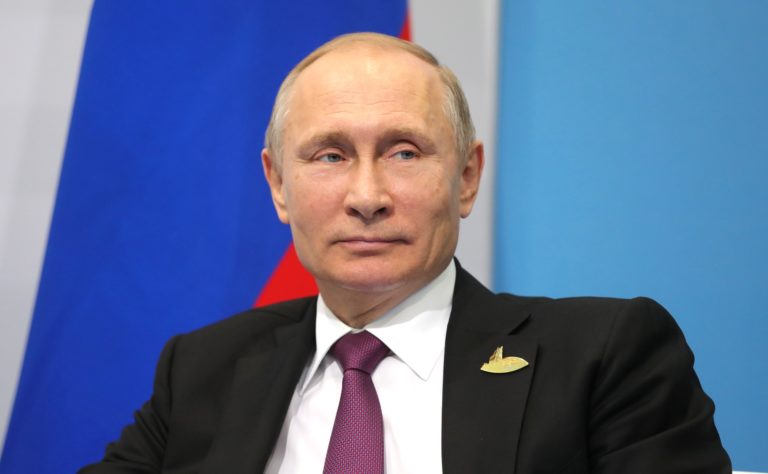
Putin Vows to Achieve Aims Militarily if Ukraine Rejects Peace Deal

In a blunt ultimatum delivered on the world stage, Russian President Vladimir Putin stated today that Moscow will achieve all of its military objectives in Ukraine if Kyiv refuses to agree to a peace deal on the Kremlin’s terms. The defiant declaration, made during a press conference in Beijing, signals that Russia is not prepared to back down and is intent on prosecuting the war until its demands are met, no matter the human cost.

Speaking after a military parade in the Chinese capital, Putin said that while he saw a “light at the end of the tunnel” in peace negotiations, Russia would not halt its offensive without significant progress. “Let’s see how the situation develops,” Putin told reporters. “If not, then we will have to resolve all our tasks by military means.”

The statement came amid an intensified push by U.S. President Donald Trump to mediate a resolution to the conflict. Putin’s remarks, however, appear to put the ball squarely in Ukraine’s court, but on terms Kyiv has repeatedly rejected. The Russian president reiterated that any peace deal would require Ukraine to recognize the “new territorial realities” of the annexed regions and accept its de-facto loss of Crimea, conditions that Ukrainian officials have called “unacceptable.”

Image source: Wikimedia Commons

In a swift and angry response, Ukrainian Foreign Minister Andriy Sybiga dismissed Putin’s offer as a “cynical ploy” designed to buy time for the Russian army. “Putin continues to mess around with everyone by making knowingly unacceptable proposals,” Sybiga wrote on X, urging the international community to impose “severe new sanctions” to force Moscow to the negotiating table on more equitable terms.

Military analysts noted that the statement is a classic piece of Kremlin psychological warfare, meant to demoralize Ukraine and convince Western allies that their support is futile. While Russia has struggled to make major battlefield advances, its superior resources and relentless air campaigns have continued to take a devastating toll.

As Putin spoke of a potential diplomatic solution, heavy fighting raged on the ground. Ukrainian officials reported a new wave of Russian drone attacks that targeted energy infrastructure and killed civilians across multiple regions. The message from the battlefield was clear: for all the talk of peace, Russia’s war machine has not slowed.

For now, the two sides remain a world apart. Putin’s latest comments have removed any ambiguity about Russia’s intentions, suggesting that the war will not end until Kyiv either surrenders to Moscow’s demands or manages to turn the military tide—a daunting task that seems more distant than ever.

“The Secretive Pursuit of Immortality”: Hot Mic Captures Xi and Putin in Bizarre Exchange

In a stunning and bizarre moment on the global stage, a live state-media broadcast has allegedly captured a private conversation between Chinese President Xi Jinping and Russian President Vladimir Putin, where the two authoritarian leaders were heard discussing human organ transplants and their collective pursuit of immortality.

The unscripted exchange, which lasted less than a minute, took place as Xi and Putin—walking shoulder-to-shoulder with North Korean leader Kim Jong Un—made their way to the podium at a massive military parade in Beijing. The event, which officially marked the 80th anniversary of the end of World War II, quickly became a display of a burgeoning new alliance between the three nations.

According to a translation of the hot mic audio, which has since gone viral on social media, Putin’s translator can be heard saying in Chinese: “Biotechnology is continuously developing… Human organs can be continuously transplanted. The longer you live, the younger you become, and [you can] even achieve immortality.” Xi, who was not on camera, reportedly replied that some scientists predict humans may live to “150 years old” within this century.

Putin Xi Jinping Beijing parade

The conversation, which Kim Jong Un observed with a slight smile, has sent shockwaves through the diplomatic community. While both leaders are known for their secretive nature and health-conscious lifestyles, the open discussion of such a topic on a public broadcast has raised a new level of scrutiny.

A Chinese foreign ministry spokesperson quickly dismissed the report as “absurd” and “Western propaganda.” However, Putin later confirmed to reporters in Beijing that the two leaders had discussed the topic of longevity, stating, “Modern means of health improvement… even surgical ones related to organ replacement, they allow humanity to hope that active life will continue differently than it does today.”

The exchange has given new life to long-standing allegations of forced organ harvesting in China, which has been the subject of numerous international human rights reports. For critics, the conversation is a chilling confirmation of a dark truth, while for supporters, it is a testament to the leaders’ interest in cutting-edge science and technology.

The surreal moment has provided an unfiltered glimpse into the private obsessions of two of the world’s most powerful men. In a world fraught with geopolitical tensions, the two leaders, who have long been accused of seeking to extend their political lives, now appear to be discussing the very real possibility of extending their physical ones, leaving the rest of the world to wonder what they might be willing to do to achieve it.

‘Ketamine Queen’ Pleads Guilty in Matthew Perry’s Death, Ending a Year-Long Pursuit

In a final act of accountability for the death of “Friends” star Matthew Perry, the woman known as the “Ketamine Queen” pleaded guilty today to selling the lethal dose of the drug that killed the actor. The plea agreement, which brings the year-long federal investigation to a close, marks a tragic final chapter in the addiction struggles that haunted one of Hollywood’s most beloved figures.

Jasveen Sangha, a 42-year-old drug dealer who prosecutors say ran a sophisticated operation catering to the rich and famous, changed her not-guilty plea in a Los Angeles federal court. In doing so, she became the fifth and final defendant charged in the case to admit guilt, removing the need for a high-profile trial that had been set to begin later this month.

Wearing a tan jail uniform and flanked by her attorneys, Sangha answered “guilty” to five federal counts, including distribution of ketamine resulting in death. Her attorney, Mark Geragos, stated that his client “feels horrible about all of this” and is “taking responsibility for her actions.”

Matthew Perry dead
Image source: Wikimedia Commons

The plea deal concludes a sweeping federal investigation into the underground network that supplied Perry with ketamine in the weeks leading up to his death on October 28, 2023. According to court documents and previous plea agreements from her co-defendants, Sangha was the primary source of the drugs, providing dozens of vials to Perry’s friend and assistant. Prosecutors allege that just four days before he died, Perry paid Sangha $6,000 in cash for 25 vials of ketamine.

The case has exposed a dark underbelly of Hollywood’s drug culture and the ease with which powerful prescription drugs can be obtained illegally. While Perry had been receiving legal ketamine infusions for depression, authorities said he began seeking out illicit sources when his doctor limited his supply.

Sangha, who is also under investigation for a similar overdose death in 2019, now faces up to 65 years in prison, with sentencing scheduled for December 10. For the family of Matthew Perry, who were present in the courtroom, the plea provides a measure of closure to a painful legal saga that began shortly after the actor was found unresponsive in his hot tub.

The case stands as a grim warning about the dangers of the illicit drug trade and the human cost of a thriving underground market. The guilty plea of the “Ketamine Queen” may close one chapter, but for the millions who mourned the loss of Chandler Bing, it can never erase the tragic and avoidable end to the life of Matthew Perry.

‘A World at a Crossroads’: Xi Jinping Leads a Defiant Push Against the U.S.-Led Order

In a week of high-stakes diplomatic theater, Chinese President Xi Jinping has openly cast aside a decades-old policy of quiet ambition, positioning himself as the defiant anchor of a new, multipolar world. With a series of carefully choreographed events, from a massive military parade to a summit for a China-led bloc, Xi has stolen the global limelight and directly challenged the U.S.-led order with a simple but powerful message: America is no longer the sole superpower, and the future belongs to Beijing.

The shift in tone was most evident at a military parade marking the 80th anniversary of the end of World War II, where Xi was flanked by Russian President Vladimir Putin and North Korean leader Kim Jong Un—a triumvirate of leaders who stand in direct opposition to Washington. Standing before thousands of troops and a display of advanced weaponry, Xi said the world was facing a choice between “peace or war, dialogue or confrontation, win-win or zero-sum.”

The event was the climax of a week of diplomatic grandstanding that began with the Shanghai Cooperation Organization (SCO) summit, a group dominated by China and its allies. There, Xi and Putin issued a joint call to “reject Cold War thinking” and “bullying” from the West. For the first time in seven years, Indian Prime Minister Narendra Modi attended a meeting in China, a symbolic rapprochement seen as a direct result of President Trump’s trade tariffs and “America First” policies that have alienated allies and rivals alike.

The message is clear, according to experts: China is not just reacting to American pressure but is actively building a parallel world order. “The architecture replacing unipolarity is already taking shape,” said one analyst from the Atlantic Council’s Global China Hub. “Xi isn’t just building influence. He’s building institutions, from a new SCO development bank to visa-free travel between China and Russia, all designed to circumvent Western vetoes and sanctions.”

While the Trump administration has framed the gatherings as a hostile “conspiracy against the United States,” European and other analysts have pointed to the vacuum created by U.S. foreign policy as the main catalyst. As one European diplomat stated, the meeting of the three leaders was a “direct challenge to the international system built on rules,” adding, “It’s not just symbolic.”

For now, the world remains at a crossroads. The display of unity in Beijing has given a new level of credibility to China’s vision for a “just and equitable global governance system.” But the real test will be whether Beijing can sustain this momentum and translate its new diplomatic clout into long-term global power, or if its newfound defiance will ultimately be met with a more unified and forceful response from the West.

North Korea’s Kim Jong Un Arrives in Beijing with Daughter, Cementing a New Axis

In a highly symbolic and unprecedented diplomatic move, North Korean leader Kim Jong Un has arrived in Beijing with his daughter, Kim Ju Ae, to attend a massive military parade. The appearance of the young heir-apparent on the international stage alongside her father, Chinese President Xi Jinping, and Russian President Vladimir Putin, has sent a powerful signal that the hermit kingdom is preparing for a dynastic succession while solidifying a new, anti-Western alliance.

Kim’s arrival on his signature armored train was met with high-level Chinese officials, including Cai Qi, a senior member of the Communist Party, and Foreign Minister Wang Yi. Kim is expected to stand on the podium at Tiananmen Square, marking his first-ever appearance at a major multilateral event and his first trip to China in more than six years.

But it is the presence of his daughter, Kim Ju Ae, who is believed to be about 13 years old, that has drawn the most intense scrutiny. Her public profile has been steadily rising since late 2022, with North Korean state media now referring to her as the “most beloved” and “respected” child of the leader. Her presence in Beijing, a city that holds immense geopolitical importance, is a powerful sign that she is being groomed for a future leadership role and a clear message to the international community that the Kim dynasty is preparing to endure.

The military parade, which commemorates the 80th anniversary of the end of World War II and China’s resistance against Japanese aggression, is a clear show of force by Beijing. Experts say the event is being used by the three leaders to project an image of unity against Western influence. The three leaders, all seen as major challengers to U.S. power, have never before gathered at the same venue.

“The gathering in Beijing is a clear challenge to President Trump’s claim to be fostering close working relationships with Xi, Putin and Kim,” said one political analyst. “Xi is bringing together the leaders of some of the most heavily sanctioned nations in the world to make a statement about a new, multipolar world order.”

While the three countries have not confirmed a formal trilateral meeting, the sheer optics of the event are a strong message to the international community. North Korea is using the event to showcase its diplomatic partnerships and break out of its isolation, while China and Russia are demonstrating their support for North Korea’s nuclear ambitions. The outcome of the event is likely to further strain relations between the U.S. and its allies, and it is a stark reminder of the shifting dynamics of power on the global stage.

From Real Estate to the Digital Realm: Trump Family’s Crypto Wealth Soars to $5 Billion

In a staggering display of a family fortune transformed, the personal crypto holdings of President Donald Trump and his sons are now valued at more than $5 billion, a stunning leap that has created a new class of wealth for the Trumps and ignited a firestorm of questions over conflicts of interest. The explosive valuation comes as the family’s flagship crypto venture, World Liberty Financial, saw its namesake digital token, WLFI, begin trading on major exchanges this week.

The financial windfall stems from the Trumps’ significant stake in the World Liberty Financial (WLF) platform, a decentralized finance (DeFi) project they launched during the 2024 presidential campaign. According to public filings, the family holds 22.5 billion WLFI tokens, which accounts for nearly a quarter of the total token supply. With WLFI’s trading debut at around $0.25 per token, the Trumps’ allocation is now theoretically worth $5.6 billion, eclipsing the value of their decades-old real estate empire.

The unprecedented development puts the President and his family in a unique and fraught position. While the White House has repeatedly stated that President Trump has a hands-off approach to the family’s business dealings, their enormous personal stake in a volatile, largely unregulated market is now a central part of his presidency. Critics, including ethics watchdogs and Democratic lawmakers, have pointed to a profound conflict of interest, arguing that the President’s personal wealth is now tied directly to his administration’s crypto-friendly policy decisions.

Trump Turnberry golf

“The Wall Street Journal just measured the size of the greatest corruption in presidential history — up to $5 billion, and counting,” said Bartlett Naylor, a financial reform advocate with the non-profit consumer advocacy organization Public Citizen.

The Trumps, for their part, are not yet able to cash out their holdings. The WLFI tokens held by the founders remain “locked” under a vesting schedule, meaning the value exists only on paper for the time being. However, the trading has allowed for a market-based valuation, a crucial step for any new digital asset.

The valuation comes amidst a significant shift in President Trump’s public stance on crypto. Once a skeptic who called Bitcoin a “scam,” the President has in recent months championed the digital asset, vowing to make the U.S. the “crypto capital of the world.” His administration has signed several crypto-friendly bills into law, including the so-called “Genius Act,” a federal law governing stablecoins.

For now, the Trumps’ newfound digital fortune has become a new front in the political and financial world. The massive value of the holdings could be a source of immense power, but it also opens the door to a level of scrutiny from regulators and the public that the family has never before experienced.

“No President Is a King”: Judge Rules Trump’s LA National Guard Deployment Illegal

In a landmark legal decision, a federal judge today ruled that President Donald Trump’s use of the National Guard to enforce immigration law and quell protests in Los Angeles was illegal, a stinging rebuke to the President’s “law and order” agenda. The ruling, a victory for a lawsuit brought by California Governor Gavin Newsom, affirms the constitutional limits on a President’s power and delivers a blow to the White House’s ability to unilaterally deploy military forces on American soil.

U.S. District Judge Charles Breyer, in a lengthy and detailed opinion, found that the administration had “willfully” violated the Posse Comitatus Act of 1878, a law designed to prevent the military from acting as a domestic police force. Judge Breyer’s ruling states that the administration “systematically used armed soldiers and military vehicles to set up protective perimeters and traffic blockades, engage in crowd control, and otherwise demonstrate a military presence in and around Los Angeles.”

Image source: rawpixel.com

The judge’s decision came after California sued the administration, arguing that the deployment of thousands of National Guard troops and U.S. Marines to the Los Angeles area in June was an unconstitutional overreach. The Trump administration had justified the deployment by claiming it was necessary to protect federal personnel and property, but Judge Breyer’s ruling was skeptical, noting that “there was no rebellion, nor was civilian law enforcement unable to respond.”

“No president is a king—not even Trump—and no president can trample a state’s power to protect its people,” Governor Newsom said in a statement posted on X, calling the decision a win for democracy.

The ruling has been met with immediate defiance from the White House, which has vowed to appeal the decision. A White House spokesperson blasted the ruling as a politically motivated attack from a “far-left court” and insisted that the deployment was well within the President’s authority. The administration’s lawyers have argued that the Posse Comitatus Act does not apply to the National Guard when federalized under a specific provision, a claim that Judge Breyer rejected.

Legal experts say the ruling could have far-reaching implications, potentially setting a precedent that will limit the President’s ability to deploy military and federal law enforcement forces against the wishes of a state’s governor. For now, the injunction is paused until September 12, giving the administration time to appeal, but the ruling has already set off a national debate on the use of federal military power in American cities.

Ex-CDC Bosses Accuse RFK Jr. of ‘Endangering Every American’

In an unprecedented act of public defiance, nine former directors of the Centers for Disease Control and Prevention (CDC) have issued a scathing rebuke of Health and Human Services Secretary Robert F. Kennedy Jr., accusing him of a “war on science” that is “endangering every American’s health.” The condemnation came in a guest essay published by The New York Times, adding fuel to a growing crisis of confidence in the nation’s public health institutions.

The group of nine former directors and acting chiefs, who served under both Republican and Democratic presidents, wrote that Kennedy’s leadership has been “unlike anything our country has ever experienced.” The essay points to Kennedy’s actions since taking office, including the mass firings of experienced public health staff, a sudden halt to federally funded mRNA vaccine research, and the replacement of scientific experts with “unqualified individuals who share his dangerous and unscientific views.”

The open letter comes days after the firing of CDC Director Susan Monarez, a longtime government scientist who had reportedly clashed with Kennedy over his directives to “rubber-stamp unscientific, reckless directives.” Monarez’s ouster, which was followed by a wave of resignations among senior CDC officials, was described by her lawyers as an illegal dismissal.

“We are alarmed by Mr. Kennedy’s focus on unproven ‘treatments’ while downplaying vaccines and cancelling medical research,” the former directors wrote. “These are not typical requests from a health secretary to a CDC director. Not even close. None of us would have agreed to the secretary’s demands, and we applaud Dr. Monarez for standing up for the agency and the health of our communities.”

The signers of the essay, which include former directors Tom Frieden, Julie Gerberding, and Rochelle Walensky, rarely make such public statements. Their unified voice—representing a consensus of scientific expertise across political divides—is a direct challenge to the Trump administration and its new approach to public health.

The White House has defended Kennedy, stating he is “strengthening our public health system and restoring it to its core mission of protecting Americans from communicable diseases.” But for the former CDC leaders, the stakes are too high. They warned that Kennedy’s leadership has left the agency “hurting badly” and unable to fulfill its core mission of protecting Americans from health threats, leaving the country vulnerable to both everyday health challenges and future pandemics.

A New Era for an Icon: Chloe Malle Named Top Editor at American Vogue

After a seismic, 37-year reign, Anna Wintour has passed the torch of American Vogue, anointing Chloe Malle as the new head of editorial content. The appointment, announced Tuesday, marks a profound generational shift for the world’s most influential fashion magazine, signaling a future that will be rooted in its storied legacy but defined by a new, digitally-native vision.

Malle, 39, a long-time Vogue insider and daughter of actress Candice Bergen and the late French film director Louis Malle, will take the helm of the U.S. edition, a role she assumes just weeks before the start of New York Fashion Week. Wintour, 75, who has served as editor-in-chief since 1988, will retain her powerful roles as Condé Nast’s global chief content officer and Vogue’s global editorial director, a move that provides continuity while paving the way for a new creative leader.

In a statement, Malle acknowledged the magnitude of the moment, saying she was “thrilled, and awed” to be a part of the magazine’s next chapter. Her appointment, which comes after months of intense industry speculation, is widely seen as a pragmatic and forward-looking choice by Wintour. Malle, who previously served as the editor of Vogue.com and co-hosted the magazine’s popular podcast, “The Run-Through,” is credited with doubling Vogue.com’s traffic in just two years.

“Chloe has proven often that she can find the balance between American Vogue’s long, singular history and its future on the front lines of the new,” Wintour said. “I am so excited to continue working with her, as her mentor but also as her student, while she leads us and our audiences where we’ve never been before.”

Malle’s ascent to one of the most powerful jobs in media is not without its own unique narrative. As the daughter of two industry titans, Malle has been a subject of the “nepo baby” debate, but her colleagues and peers have consistently pointed to her deep understanding of the magazine’s inner workings, her strong journalistic pedigree, and her ability to navigate the complex world of high-profile exclusives.

The appointment closes a historic chapter in fashion history. For nearly four decades, Anna Wintour was not just an editor, but the undisputed face of Vogue. Her trademark bob, sunglasses, and fierce reputation became synonymous with the magazine, and her every move was watched with intense scrutiny. Malle, who will not be using the “editor-in-chief” title, is stepping into an enormous shadow, but she has stated that her goal is to put her own stamp on the publication.

For now, the fashion world will be watching to see how Malle will guide the iconic brand into the future, and whether she can transform a legendary legacy into a new and enduring vision.

Tragedy Plagues the Far-Right: Series of Candidate Deaths Rattles Germany’s AfD

A cloud of grief and suspicion hangs over Germany’s political landscape as the far-right Alternative for Germany (AfD) party grapples with a series of sudden deaths among its local election candidates. With a crucial vote just weeks away, the string of tragedies has cast a pall over the AfD’s campaign and raised troubling questions about whether the deaths are a bizarre coincidence or something more sinister.

In what a German economist on social media called a “statistically almost impossible” coincidence, six AfD candidates in the western state of North Rhine-Westphalia have died in recent weeks. The deaths, all of which occurred unexpectedly, have fueled a firestorm of speculation, particularly on social media, where a narrative of foul play is rapidly taking hold.

The victims include Ralph Lange, 66, who died suddenly in his home in Blomberg, and Stefan Berendes, who also passed away unexpectedly in Bad Lippspringe. In both cases, the deaths automatically invalidated polling cards and forced the local election commission to reprint and resend thousands of ballots. The local elections, which are scheduled for September 14, will now proceed as by-elections in the affected constituencies.

Germany AfD
Image source Wikimedia

While police have stated there is no evidence of foul play and have urged calm, the AfD has publicly raised the specter of a political motive. “Our members and representatives are the most common victims of political violence,” said the party’s national co-leader, Tino Chrupalla, in a statement. “These incidents cannot stop us.”

The deaths come at a critical time for the AfD, which has been making historic gains and is seen by many as a powerful political force in Germany. The party, which is under surveillance by Germany’s domestic intelligence service for suspected right-wing extremism, has successfully tapped into public anger over migration, inflation, and a series of knife attacks by individuals with migrant backgrounds.

The series of tragedies has also exposed the deep political divides in Germany. While mainstream politicians have offered their condolences, some have warned against exploiting the deaths for political gain. As one German official said, “There is never a justification for violence, but there is also never a justification for creating a climate of hatred and fear. We must all be careful with our words.”

For now, the country is left with more questions than answers. The deaths of the AfD candidates have brought a new level of tension to a political season already marked by deep divisions. As the police investigation continues, the political fate of the party and the future of Germany’s democracy hang in the balance.

SCO Summit 2025: A New Era in Asia as Xi Jinping and Narendra Modi Vow to Mend Ties

In a move that could redefine the geopolitical landscape of Asia, Chinese President Xi Jinping and Indian Prime Minister Narendra Modi have publicly pledged to resolve their differences and build a new relationship based on cooperation, not rivalry. The joint declaration, made on the sidelines of a regional summit here, marks a significant thawing of relations between the two nuclear-armed powers, who have been locked in a decades-long rivalry.

The meeting took place during the Shanghai Cooperation Organization (SCO) summit, the first time Modi has visited China in seven years. The two leaders agreed that as “development partners, not rivals,” their shared goals for economic growth and regional stability far outweigh their historical disputes. The statement is a clear signal that both nations are seeking to ease tensions and present a united front in an increasingly volatile global environment.
“As long as they remain committed to the overarching goal of being partners, not rivals, and providing development opportunities, not threats, China-India relations will flourish and move forward steadily,” President Xi said.

The pledge comes as a surprise to many, given the long history of animosity and mistrust between the two countries. The 1962 war and the deadly border clash in 2020 have been a constant source of friction, with tens of thousands of troops still deployed along the contested Line of Actual Control (LAC). However, both leaders noted that “peace and tranquility” have been maintained since a disengagement agreement was reached last year.

Analysts say the rapprochement is a strategic move by both countries, fueled by a shared interest in strengthening economic ties and a desire to hedge against external pressure, especially from the United States. With the U.S. having recently imposed steep tariffs on Indian goods, both Beijing and New Delhi have a shared interest in fostering a more multipolar world.

While the new pledge is a significant step forward, experts warn that the road ahead is long and full of obstacles. The two nations still have to contend with a deeply entrenched trade imbalance, a lack of trust at the military level, and a number of unresolved border disputes. As one analyst from the Takshashila Institution in Bangalore put it, “This is not the end of the rivalry. It’s the beginning of a new phase, where both sides will try to define a new equilibrium.”

For now, the leaders of the world’s two most populous nations have made a profound statement. The success of their ambitious new path will depend on whether they can move beyond words and translate their pledge into concrete action, transforming a long-standing rivalry into a stable and prosperous partnership.

‘They Took Them Alive’: Thousands March Across Mexico, Demanding Answers for 130,000 Missing

In a somber and defiant display of collective grief, thousands of Mexicans marched in cities across the country today, carrying placards with the faces of their missing loved ones and demanding justice for the more than 130,000 people who have vanished. The demonstrations, held to mark the International Day of the Victims of Enforced Disappearances, highlight a national humanitarian crisis that activists say has been met with government inaction and a lack of political will.

The largest protest brought traffic to a standstill in Mexico City, where families and human rights activists moved down the main thoroughfare toward the National Palace. The air was thick with chants of “We are not one, we are not 100, damn government, count us well!” and “They took them alive! We want them back alive!”

The crisis of the disappeared in Mexico has grown exponentially since 2007, when then-President Felipe Calderón launched his “war on drugs.” While drug cartels and organized crime groups are widely seen as the main perpetrators, human rights groups and families of the missing have long accused security forces and government officials of complicity in the disappearances.

For many, the protests are a last resort. For years, mothers, fathers, and siblings have formed search teams known as “buscadores” (searchers), who risk their own lives to scour the countryside for clandestine graves. Their work has been made even more dangerous by a recent government review that activists claim was an attempt to artificially lower the number of missing people.


“We are here because the government has failed us,” said Maria Herrera Magdaleno, who has been searching for her four sons since they disappeared in 2008 and 2010. “They want to turn us into numbers, but we are people with names, with families who are looking for them.”

The issue of missing persons has become a major political liability for President Claudia Sheinbaum’s administration. While Sheinbaum’s predecessor, Andrés Manuel López Obrador, pledged to address the crisis, his administration faced widespread criticism for minimizing the official count and for a lack of concrete progress. Now, the burden of accountability rests on the new government, which has been urged to heed the United Nations, which has called the disappearances “a human tragedy of enormous proportions.”

As the marchers dispersed, their signs—with the faces of the missing—remained as a powerful reminder of the thousands of lives that have been cut short and the families still searching for answers. For a nation grappling with so much violence, the cries of the disappeared are a haunting reminder of the darkness that lies beneath its surface.