Tear gas has been fired by Hong Kong
riot police at protesters who are demonstrating for the ninth weekend in a row.
On August 3, groups rallied in the Mong Kok district before starting their march. They called on others to join a city-wide strike planned for August 5.
Beijing and the Chinese army have
issued stern warnings about the unrest.
Two months of Hong Kong demonstrations
sparked by a controversial extradition bill show no signs of abating, with both
sides hardening their stance.
Although the government has now suspended the controversial bill, which would have allowed extraditions to mainland China, demonstrators want the bill fully withdrawn.
Their demands have broadened to
include calls for more democracy and for Hong Kong’s leader Carrie Lam to
resign.
Hong Kong – a former British colony
– is part of China but enjoys unique freedoms not seen on the mainland.
Protesters initially gathered in Mong Kok, a Hong Kong district where
violent clashes took place during pro-democracy protests in 2014.
A group of demonstrators briefly blocked access to the Cross Harbour Tunnel,
causing traffic chaos, while others set up make-shift barricades on shopping
streets.
As the demonstrations dragged into the night, protesters gathered outside
the police station in Tsim Sha Tsui district. Officers then fired tear gas at
the activists.
The South China Morning Post published
a police statement saying the “radical” group had set fires nearby and
had thrown bricks into the building.
The march comes after a group of civil servants – ordered to be politically
neutral – joined demonstrations in their thousands on August 2.
The rally followed the publication of an anonymous letter on Facebook
complaining about “extreme oppression” and listing five key demands –
the complete withdrawal of the extradition bill; waiving charges against those
arrested; an end to descriptions of protests as “rioting”; an
independent inquiry into the unrest; and resuming political reforms.
Supporters of Hong Kong’s police force also gathered earlier for a rally in Victoria
Park.
Some unions and organizations have reportedly already agreed to take part in the strike planned for August 5. There are also further demonstrations planned for August 4.
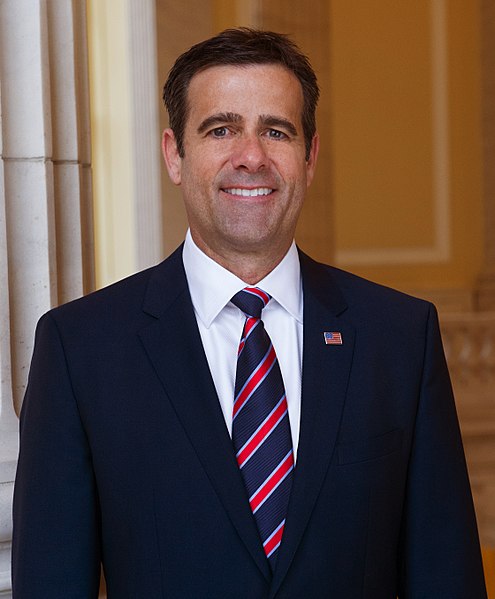
President Donald Trump has decided to withdraw his nominee for Director of National Intelligence (DNI) amid criticism that Texas congressman John Ratcliffe was under-qualified.
Critics have accused John Ratcliffe of padding his intelligence credentials.
The president tweeted: “Our
great Republican Congressman John Ratcliffe is being treated very unfairly by
the LameStream Media. Rather than going through months of slander and libel, I
explained to John how miserable it would be for him and his family to deal with
these people….”
He continued: “….John
has therefore decided to stay in Congress where he has done such an outstanding
job representing the people of Texas, and our Country. I will be announcing my
nomination for DNI shortly.”
John Ratcliffe thanked President Trump and said he did not want the job to
become “a purely political and partisan issue”.
He tweeted: “I was
humbled and honored that the President put his trust in me to lead our nation’s
intelligence operations and remain convinced that when confirmed, I would have
done so with the objectivity, fairness and integrity that our intelligence
agencies need and deserve.
“However, I do not
wish for a national security and intelligence debate surrounding my
confirmation, however untrue, to become a purely political and partisan issue.
The country we all love deserves that it be treated as an American issue.”
Image source Wikipedia
Speaking to reporters outside the White House on August 2,
President Trump said John Ratcliffe was “treated very badly, very harshly
by the press” and that he believes Ratcliffe “made the right
decision”.
John Ratcliffe was appointed by President Trump days after his aggressive
questioning of former-Special Counsel Robert Mueller, the ex-FBI director who
led an inquiry into alleged Russian meddling in the 2016 presidential election.
After he was picked, President Trump defended him as the best man to control
US intelligence agencies – a frequent target of criticism by the president.
President Trump said: “We need
somebody strong that can really rein it in, because as I think you’ve all
learned, the intelligence agencies have run amok.
“They run amok.”
The DNI is appointed by the president and must be confirmed by the US
Senate.
The position was created in the wake of the September 11, 2001, terror attacks. The DNI oversees the 16 civilian and military agencies that make up the US intelligence community.
If you are an avid golfer, chances are you have thought of setting up a little mashie course in your back yard. Designing and building a mini golf course in your back yard is easier than you think. All you need is a little imagination, a plan, and a few materials to build the course of your dreams.
Make a list of everything you may need to create your mini golf course. You will need grass (if you do not have) for the greens, sand for golf bunkers, materials for pathways, and plants to create a scenic course.
For an authentic feel, add flags and yard measurementsto your list too. Perhaps a small water feature to create the water hazard for your course?
Invest in proper measuring tools and gardening equipment that will make your course a reality. In addition to the tools needed, consider which months will be better to build your course; rainy and wet seasons will be more frustrating to work in than warmer and drier months.
Designing Your Home Golf Course
You will need to design your backyard golf course with a few things in mind besides just the cost involved.
Firstly, the lay of your land; how will you adapt your garden to include your course? Secondly, measure your yard, this will make designing it a lot quicker and easier. Finally, consider what impact the golf course will have on the fauna and flora that currently exists in your garden.
You can use many eco-friendly materials that will enhance your golf course and last for years to come. Sustainability is cost-efficient when planned properly. Think of using recycled materials or composite structures for any walkways, fences or supporting materials for the bunkers.
Drought-resistant grasses and plants that are indigenous to the area you live in are another great way to introduce sustainability. If you have a greywater system, hook that up to the irrigation for a greener green throughout the year. Use solar-powered walkway lights to brighten up your course as a feature at night.
Designing Software
When planning out your course, you will need to figure out where you want the holes, which obstructions should be included and where, and how long the course will be. This seems daunting but luckily technology is available to help you design the golf course you envision.
Golf course architecture and design software will take your design from paper to the computer to the garden effortlessly. When using the software, you can alter your designs or measure distances accurately according to the lay of your garden.
If you are new to the software, you will need to spend a few hours online getting to know the design program and going through some tutorials. You will be building and designing your golf course virtually, which can be a lot of fun and a gratifying way to see what your end product will look like.
Things seemed to be quite simple and categorized in the
early decades of the technology boom. When it came to any kind of product or
service offering, there was a business side to it as well as a technological
side. Both of them had a minimal overlap since governance was usually a one-way
street. Everything changed with the advent of the 21st century,
propelling us into an age where everything was interconnected, including these
two aspects as well.
Today, recruitments still happen for a lot of job roles that have traditionally existed for the longest time. These will rarely go out of style, which is why you will still see a lot of applicants for those roles since they bring in the standard skill set that is required to fulfill those responsibilities. But an urgent need today is to have a person who can harness technology to empower smarter and more intelligent business decisions. Someone who can use technology to process data and transform it into information that is relevant to the business. This is where Power BI professionals come into play. This has also led to the steady rise in the number of people enrolling for the Power BI course in recent years.
Once you are done with the course, here are some top
skills that you acquire which are in high demand in the market today.
Most systems in various corporations and enterprises
today are disparate. Sure, they might be connected better than before and
interfaced with numerous software that can talk to each other. But the data
that seemingly has some level of interdependency to it lies in different silos.
In order to recognize patterns between them and chart out insights, they need
to be brought together.
Power BI professionals excel at this task. They have the
skillset to make use of Power BI and create reports and viewing boards easily.
No matter what platform or person needs to view them, they can be provided
access with no hassles. As for data congregation, even large enterprises that
store data in numerous databases such as PostgreSQL, Salesforce, Adobe, Excel,
and so on can reap the benefits of Power BI without trouble.
2.Ability to perceive reports as per business needs
Power BI professionals are not hired as a mule horse to
just operate the software just because business leaders don’t have the time to
learn and operate it themselves. Knowing the business aspect of things, which
is what led to the conception of Power BI itself, plays a vital role as a major
skill to look out for as well.
When trained in Power BI, not only would you be able to
pull together data, but you would be able to read the business reports it
generates and predict if anything else might be required. Additional
functionalities or safeguards can be added to charts that allow restricted user
visibility or metric tweaking to see different insights within a singular
dashboard. All of this is possible only if you are able to understand business
needs beforehand.
3.Ability to stay in pace with evolution
Just like any other technology, the uses and techniques
of operating Power BI do keep improving on a daily basis. Thanks to a prevalent
community of users and experts out there, you can always have access to the
latest and smartest ways to use the tool in various scenarios.
As a professional, you can keep adding to your skill set
by adopting these techniques and understanding whether they bring value to the
current business needs of the company. If so, be ready to impress your leaders
with a report or a dashboard that provides them with something magnificent that
they never thought would be possible.
4.Ability to redesign aspects quickly
Business needs and perceptions rarely stay consistent
throughout the time period. Since they are highly dependent on a market that’s
constantly volatile, even the smallest changes out there could cause a tectonic
shift within the company, leading to rethinking some major decisions and
requiring new information or insights from a different perspective.
Power BI users are well-prepared for this. Since
dashboards and reports are configurable, these can be redesigned to suit the
new needs in minimal time. What matters is you already have access to all the
data. Knowing which ones to pull in for the revised requirements is a smart
skill to have.
Most business leaders still tend to rely on Excel as the
messiah that provides them with information and insights. Power BI provides
that level of interfacing and coordination as well, helping ease the change to
a smarter tool gradually.
With the right Power BI certification, you can be the professional who turns out to be the harbinger of change for a business, and usher in a new era of informed decision-making with great insights.
Machines have been an integral part of our lives for
years now. And now with machine learning and AI, it has become possible for
machines to work independent of human intervention. Progress in this space now allows machines to
carry out tasks as diligently and intelligently as humans do, with high
accuracy, if not completely perfect. We are quite literally trying to build a
brain for machines, and that can be done only if machines are taught to learn
the way we do. No wonder machine learning has found such a huge following in
the world today, both by its creators and the users.
As with any domain, there is always a tussle and debate
around the right way to build a particular software and the programming
language which is the best fit for it. The domain of machine learning is not an
exception either. And while the tide keeps shifting every once in a while,
major support for Python has stayed in place consistently through the years.
Here’s why aMachine learning with Python course is absolutely essential for you if you’re looking to make your mark in the machine learning space and get a job that helps you make it happen.
1.Reusability of code and ease of configuration
Machine learning, in itself, is quite a complex
challenge to begin with. Understanding the logic, recognizing patterns, and
developing code that can help keep it all together is even more difficult than
it might seem at the outset. The last thing any programmer would want is a
language that makes things even more complex than they need to be.
Python comes with a good collection of libraries that
serve a major purpose of code reusability. Not only are these libraries filled
with instructions of how to use them in the best way, but simple tweaks in
their modules can help them to be reused for different functionalities within
the same model. Configuring them is as easy as breaking them down, testing
them, making changes, and rebuilding them, all within a single space. Compare
this with other languages and many programmers struggle with challenges like
multiple structures, syntax differences, and so on.
We all know that machine learning is not going to be a
simple task. There will be multiple iterations of building the algorithm,
carrying out tests, and verifying results. What could be detrimental in this
aspect is if there’s no way to figure out why the results are incorrect and
trace them back to the code in order to understand the area responsible for the
failure. Even popular languages like R, that boast extensive application
capabilities, don’t make this an easy task, requiring hours and hours spent in
simply detecting a small error.
Contrast that with Python that is extremely handy with
error reporting which is specific and right on point. A few clicks can take you
right to the module that caused the error and allow you to get down to the root
cause in a considerably shorter period of time.
3.Machine learning, and not machine solving
The goal of machine learning is to create logic and
algorithms that help the machine to learn by itself. We are not looking for
results on what the machine is doing and what output it brings out. That enters
the realm of research in evaluating machine performance.
Python helps programmers focus on the core aspect of
machine learning. It is highly reliant on real-time processing and analysis of
data, which allows the machine to make changes in its behaviour. This aspect of
helping a machine gain insight into its own working is deftly achieved by using
Python than any other language.
4.Wider applications that support machine learning
Picking up Python as one of the primary programming
languages to be proficient in has a lot of advantages that go beyond the world
of machine learning, but ultimately feed right back into it. It helps you be
more aware of the different logic principles that govern code functionality and
make you a better programmer. This helps pick up other languages speedily and code
them in an effective manner.
A lot of other resources are also essential in
understanding the nuances of machine learning, and these may make use of
programming components that are independent of the domain. However, most of
these are also built using Python, so knowing the language beforehand can
always help you understand them better.
5.A high demand for Python in major job markets
Currently, the United States is one of the biggest
markets where machine learning developments are at an all-time high. A look at
job portals, makes it evident that many companies are on the lookout for good
Python programmers that understand the nitty-gritty of machine learning and can
develop excellent solutions.
In the coming years, this trend is just going to flow
over to markets all across the world. So even if you don’t have immediate plans
of going to the US and applying for a job, preparing for the inevitable boom in
the sector is always in your benefit.
Learning other languages like SAS or R is a good decision if you have set your mind to enter a specific retail space that makes use of them widely. However, a good Machine learning with Python training course is your best choice for staying in step with the changing times and being future ready.
Two short-range ballistic missiles
have been fired off North Korea’s east coast, according to South Korea’s
military, the second such launch in a week.
They were launched from the Wonsan
area on July 31.
Last week’s launch was the first
such action since President Donald Trump and North Korean leader Kim Jong-un
met in June.
North Korea called last week’s
launch a “solemn warning” to Seoul over its planned military
exercises with Washington.
Pyongyang has previously expressed
anger that the annual drills will go ahead next month- an event it sees as
preparation for war.
The missiles were launched at
05:06AM and 05:27 AM local time from the Kalma area near the port of Wonsan.
The missiles flew 155 miles and
reached a height of 20 miles before landing in the Sea of Japan, also known as
the East Sea, said South Korea’s Joint Chiefs of Staff (JCS).
The South Korean defense minister
Jeong Kyeong-doo said the missiles were identified as a different type from
previous models.
Japan’s PM Shinzo Abe confirmed that
there was no impact on Japan’s security following the launch.
Six days ago, North Korea fired two
short range missiles, one of which travelled about 425 miles and the other 268
miles.
That launch was the first since President Trump and Kim Jong-un held an
impromptu meeting in June at the demilitarized zone (DMZ), an area that divides
the two Koreas, where they agreed to restarted denuclearization talks.
North Korea has recently again voiced anger over planned military exercises
between South Korea and the US, an annual event which the allies have refused
to cancel but have scaled back significantly.
One analyst said more missile tests could be expected.
North Korea called the drills a “violation of the spirit” of the
joint statement signed by President Trump and Kim Jong-un at their first
face-to-face talks in Singapore last year.
Pyongyang had warned the exercises could affect the resumption of
denuclearization talks.
On July 29, Secretary of State Mike Pompeo said that he hoped these talks
could start “very soon”, but that there were no further summits
planned.
Last year, Kim Jong-un said North Korea would stop nuclear testing and would no longer launch intercontinental ballistic missiles.
Car insurances give you the confidence and the much-needed protection when you are on the road. Depending on the age of the vehicle your needs might change, but no way does it negate the importance of auto insurance that you must have. For your own protection, as well as others around you, investing in a high-quality car insurance is imperative: insurance that would have your back when you would need it the most.
However, before you go looking
for an auto insurance, there are a few things you need to know first.
Car Insurance Rates Get Affected by Many Factors
You might not have known this, but there are plenty of factors that will come
to play a huge role in the car insurance deal you will finally get to sign on.
Some of them have been listed below for guidance:
Driving record: Your driving history, any previous violations or
accidents will be considered since they
put you at a higher risk
Age and gender: Men tend to have more accidents than women
Use of vehicle: People who have a higher annual mileage
automatically put their vehicles to more
risks
Model of the car: This is what would determine the number of claims
you will make in future
Each Auto Insurance Company is Different
Auto insurance is an extremely
competitive business where you would hardly ever find two companies offering
the same insurance price. Each one in the business
adopts its own policy for risks
calculations and can come up with a value that might vary by hundreds of
dollars from the others in the market. This
is why you need to be very careful about what you really want and research before you dive in.
Not All Coverages Are Expensive
The liability coverage that you
are bound to buy by law is the most expensive one of all followed by collision
coverage. The others that offer great
coverage without damaging your accounts include roadside assistance, gap
coverage and comprehensive coverage which covers the car you have for acts
involving fire, theft, and vandalism.
Ask for Discounts
There are a lot of things that you can do to earn some discount on the insurance package you are buying. Installing anti-theft devices, keeping a low mileage along with a good driving record, taking up education courses to improve your driving are just some of them. Make sure you discuss the prospects with your company and work to prove yourself as a better risk candidate to avail such offers.
Read Before You Sign
Since an auto insurance is a
legal contract, you should always review and thoroughly read it to make sure
that all that was discussed verbally has
made it to the final document. In case of any doubts, do discuss it with your
dealer without any delay.
If you are looking for a reliable company that would provide you with the best insurance deal, then, click “here” and find the answer you are looking for. Not only do they provide exemplary customer support but they also offer the lowest prices in town. Head over to the website today for more information.
Very few addictions only affect the person who is taking drugs, drinking, or gambling their money away. Their addictions also affect their friends and family too. If someone you love is abusing drugs, alcohol, or is gambling, use these ideas to help them.
Here are several ways to help your loved one through addiction
Know the
Difference Between Enabling and Helping
Well-meaning family
and friends can sometimes hurt their loved one more than helping them if they
don’t know the difference between enabling someone and helping them. Supporting
or helping someone means assisting them with things they may not be able to do.
Being supportive also encourages addicts to seek help to get better control of their lives. Enabling someone can keep them from dealing with the negative consequences of their addiction. If you’re lying for someone or making excuses for them, then you’re enabling them.
Learn about the Addiction
Being addicted to
alcohol, drugs, or gambling is a disease, and the more that loved ones learn
about it, the more helpful they can be. Take the time to learn the signs of
addiction and what drugs or alcohol can do to the body.
Find out how your
loved one can get help and where the nearest 12-step program or rehabilitation
center is, so they don’t have to wait another day to start recovering.
Family members can
also get help by going to a therapist or a program like Al-anon, Alateen, or
Nar-anon.
Helping Spouses Recover
Leaving rehab after
getting help with an addiction can be a frightening prospect, especially since
the person may be around the enablers in their lives. As their spouse, you
should learn how to assist your wife or husband with their recovery and be
supportive of them.
It can be stressful living with an addict, especially if abuse or other problems that occurred during the time your spouse was using drugs or alcohol. However, you don’t need to learn how to live with an alcoholic or a drug abuser if you can get them the help they need.
Hire an Intervention Professional
It can be frustrating when someone refuses to acknowledge their addiction and get help for it. While an intervention can sometimes get through to the addict, you shouldn’t stage one without help. Speak to an addiction or intervention professional to get help with planning one.
You should also get
help from people close to your loved one who is willing to be on the invention
team. There will be a treatment plan set-up for the person who needs help, so
it’s important to do an intervention properly.
Attend Couples Therapy
Drug, alcohol, and
other addictions can destroy relationships with friends and family and ruin
marriages. If you’re having a tough time reconciling with a spouse after they’ve
been to rehab, consider going to couples’ therapy to try to save your marriage
if you want to salvage it.
Couples’ therapy
will allow both of you to openly express the feelings and issues you both have
concerning your relationship. With a therapist helping, the discussions are
less likely devolve into shouting matches because you’ll have the tools to get
all the issues out in the open calmly.
Having the knowledge
to help a friend or family member admit their addiction and seek help to get
better can make their recovery successful.
However, it’s
important to learn the difference between supporting someone and enabling them,
so they don’t fail and start using or drinking again.
Here is why training and retraining regarding gun use is crucial
Gripping a gun, taking aim, proper stance for
taking a shot etc. These things sound pretty easy, don’t they?
Well, not quite. While watching Steven Seagall
movies or playing video games can give one the impression that all you have to
do is to press a trigger, handling a gun in real life is a different ballgame.
Owning or handling a gun is a great responsibility.
There are some gun owners who, after fulfilling all the requirements needed to
acquire a gun, rest on their oars and never go for any sort of training. That’s
a recipe for disaster. In fact, most accidents through guns can be blamed on
not adhering to basic gun safety rules.
While you can get an 80 percent lower receiver for sale here and then build your own firearm, the most crucial part of gun ownership is training and retraining regarding proper gun use, particularly in a generation where guns are everywhere.
How many Guns are in the US?
According to the Small Arms Survey, there are 393 million guns owned by civilians in the United States. This tallies to 120 guns per 100 people.
If you own a gun, whether for personal defense or
for recreational purposes, safety must be prioritized. I’m sure by now you’ve
tales of how a simple mistake in gun handling or storing wreaked havoc and
destroyed families.
Professional training would ensure that there are
no accidental discharges leading to tragic incidents or losses. And of course,
you wouldn’t want someone who shouldn’t be handling your gun coming close to
it. With professional training, you can learn tips, strategies and best
practices that ensure that your weapon is always safe.
Sharpen Your Skills
Without practice, your shooting skills would soon wear off
Nobody becomes good at handling a gun by
happenstance. It requires effort, time and commitment. Shooting is a skill that
must be honed over and over again. Without practice, your shooting skills would
soon wear off and you’d be rusty. Remember, you can never train enough for a
violent attacker.
Accuracy, speed, reaction time, awareness etc.,
are some of the skills that can be sharpened with training. Even if you have
trained before, a refresher course is crucial. The firearms training class you
took say, five years ago is woefully inadequate for today’s peculiar security
challenges.
Simulation of Real-Life Scenarios
The area of practice can be starkly different
from real life. That’s why in choosing a place to train, you need to consider
whether or not there are facilities and resources for real-life simulation.
Scour and find a gun range that affords you the opportunity to learn a wide range of tricks and techniques. For instance, if you’re looking for a Seattle gun range, the Bellevue range provides a great place to practice.
In a Sum
If you own a gun, you should prioritize firearm
training. If you know someone who owns a gun, you should recommend firearms
training for them as well. Never take your firearms training for granted. Aside
from helping to ensure safety, firearms training helps you improve your skills
and practice with real-life scenarios.
You probably already know how important it is
to maintain your oral health with the help of a dentist to avoid tooth decay
and for early disease detection. But which dentist should you trust with this
responsibility?
There are number of factors to consider when choosing a family dentist such as Shirer Family Dentistry, Aiken, SC. It comes down to more than just know-how – you have to be comfortable in their chair. Furthermore, if you’re not comfortable during check ups, the dentist should find ways to make that visit easier on you.
Of course, your dentist should be more than competent
and know how to handle a range of oral health issues, but there is more to
dentistry than that. Here are some other things to look for when it comes to
selecting a dentist that you can form a long-term professional relationship
with.
It’s
About Personal Connection
A good dentist shouldn’t make you dread your up
coming appointment. Going to the dentist doesn’t always have to fit the
definition of fun, but the dental team should do what it can to make you feel
welcome and comfortable in their practice.
It’s more than just how you feel while you’re
in the dentist’s chair. When you enter a dental office, you should be greeted
warmly – and by name if it’s not your first visit. That’s something Shirer
Family Dentistry takes very seriously. As one patient said about their
experience at this particular dental office, “From the moment you walk in
the door you feel welcomed and comfortable.”
Some dentists may take a clinical approach to
dentistry, meaning they’re focused on quickly diagnosing the problem and
applying a solution. While this isn’t a bad approach, it can also leave you
feeling a bit cold. Dentists that love what they’re doing not only apply their
technical skills, but their social skills as well. You should feel like you’re
having a conversation with a friend during a procedure! As another patient
pointed out about Shirer Family Dentistry, “Found a new home for all my
dental services and I am excited to now have a dentist that is sociable,
friendly, outgoing and truly loves interacting with patients.”
Speaking of connection, Shirer Family
Dentistry, has a husband and wife dentist team that brings their unique
personalities and skills to each patient. They consult with one another about
the best approaches and what’s best for patients.
Having a male and female dentist on staff also
allows patients to choose one based on their own comfort and preferences.
Aside from personable dentists and hygienists,
you should also choose a dentist that has a helpful front desk team. They
should be able to clearly communicate when your appointments are and work
around your schedule, while also making payment easy and helping you file an
insurance claim if need be.
Shirer Family Dentistry in Aiken, SC prides
themselves on their amazing team members. From their front office to the
hygienist and assistants, Drs. Michael and Susannah Shirer have often said they
are blessed to be surrounded by such an amazing and competent group of people.
The patients love seeing their friendly faces and it makes the office a fun
place hearing the team joke with each other and the dentists laughing and
having fun while working. It’s good to see so many smiles in a dental office –
in this one, it’s not only the patients who are smiling, it’s the team. They
truly love what they do!
Choose
a Dentist That Explains Procedures
When you know more about something, you’re less
likely to be afraid of it. That’s no different for dentists and dental
procedures. You should choose a dentist that not only knows how to perform
complicated dental procedures but can also inform you beforehand about why it’s
needed and what you can expect during your procedure.
Just like you will find at Shirer Family
Dentistry, many dentists now use digital on-screen displays so they can show
you detailed results of x-rays and where any problem areas are. That way, you
know they’re handling your personal oral care properly and not just delivering
a prescribed treatment without rationale.
Whether it’s simply a cavity that needs to be
filled or you need a complete reconstruction, you should know the work will be
explained to you and any of your questions answered. This is one thing that
sets Shirer Family Dentistry apart from the rest. They take copious amounts of
time to get to know their patients, what they want from their dental visit, and
how to best approach their unique dental situation to give them the best
outcome. Patients feel comfortable discussing things with the doctors at Shirer
Family Dentistry because they are approachable and connect with their patients.
They
Should Help Ease Dental Anxiety
You might be avoiding the dentist altogether,
as the case is for many people. In fact, some estimates say that almost 75
percent of Americans have some level of discomfort in the dental chair. You
might even have a dental phobia that makes it very uncomfortable during even
simple procedures, even when the dental team is friendly and gentle. Or you may
have a pronounced gag reflex that brands some procedures significantly harder
to deal with.
While staying with the same dentist over a
long-term period can help build some trust and help you feel more relaxed
during visits, sometimes other measures need to be taken to ensure you’re comfortable.
That’s where sedation dentistry comes in.
Some dental offices like Shirer Family Dentistry
offer you the option of being sedated during a procedure to ease your nerves. There
are a few ways a dentist can offer this including nitrous oxide and oral
sedation. The first option is a gas that wears off quickly when the mask is
removed. Oral sedation means you take medication to help you relax, but the
effects can last much longer than nitrous oxide.
With the right sedation technique, visits to
the dentist will become less scary (and you may even find yourself falling
asleep in the chair).
“I used to have a lot of dental anxiety,
and I don’t have that problem anymore since I’ve been going to this office,”
said a patient about Shirer Family Dentistry.
Shirer
Family Dentistry, Aiken, SC – Focuses on Prevention
There are a few more points to consider when
you’re choosing your dentist. How thoroughly do they clean your teeth? How much
education do they give you to maintain your oral health at home between visits?
How early do they detect potential issues?
Prevention means you’ll likely avoid more
complicated procedures, and you’ll have less chance of a dental emergency.
(Your dentist should be able to book you in promptly.)
Make sure your dentist is comfortable with all
age groups including children and seniors and can even provide orthodontic care
and dentures if necessary. All of this is the case at Shirer Family Dentistry
in Aiken, SC.
One thing is for sure – you should leave
feeling like you’ve just had a positive experience that’s beneficial for your
health.
To find out more about finding the right dentist or to book an appointment with the professionals at Shirer Family Dentistry, contact the office today.
How happy are you with your annual holiday
allowance? We’d all enjoy a couple of extra days-off a year of course, but what
if there were no restrictions on the amount of holiday you could take?
Although originally a US creation, it’s an
initiative that has proved popular in the UK too. In fact, research by jobsite
Total Jobs showed a 10% increase year-on-year of companies adopting unlimited
holiday policies, and unsurprisingly it’s tech focused startups who are
championing this new way of flexible working.
From an employee perspective, not putting a
number on holiday allowance sounds like a sweet deal. But why are organisations
so keen to adopt this new approach to leave?
Better
work/life balance
The industries which have adopted this new
approach to annual leave – digital, tech, design and media – often require
staff to work long hours to meet tight deadlines. Unlimited holiday is designed
to combat employee burnout by giving them more chance to recover, so that
they’ll be operating at full capacity when they return, benefiting both the
employee and the business.
To
attract the best talent
Unlimited holiday is also an attractive perk for potential candidates, particularly the younger ones. A recent survey by luxury travel providers eShores showed respondents considered holiday allowance as the second most important factor when job searching (after salary). Clearly then, having an unlimited holiday policy is worth shouting about if you want to attract the pick of the talent.
So, you’re allowed as many days off as you
like and the business benefits from
it? What’s not to love?
Well, a quick Google search of ‘unlimited
holiday’ shows it’s not without its problems. Many organisations have tried,
and failed, to implement an unlimited holiday policy, and reverted back to a
more traditional approach. Here’s why:
As you might expect, some people will take
liberties. Having an unlimited holiday policy requires employees not to take
‘unlimited’ too literally. A few days off here and there isn’t a problem, but jetting
off to Hawaii for a month and leaving your colleagues to pick up the slack,
won’t do much good for business productivity, or workplace
moral.
Employees
don’t take advantage
However, it’s far more likely employees won’t
take enough holiday. With no definitive
number of days to take, employees end up not valuing holiday in the same way. While
in the UK, employers are legally obliged to ensure that employees take their
minimum entitlement, the emphasis lies on the employee, rather than the
employer to define how much holiday they should have. This can lead to a
culture of anxiety and an environment where colleagues look to each other to
determine the amount of holiday they should book.
What’s more, the organisations who have
adopted unlimited holiday already tend to be those with the most demanding and
pressured workplaces. In these environments, employees can be made to feel
guilty or judged for taking time off, and so will be less likely to do so.
Adopting an unlimited holiday policy isn’t for everyone, and its success can largely hinge on a company’s culture and size. Bigger companies seem to have greater success – with more resources to put into making it work and employees feeling less exposed when taking time off. If you are thinking of giving unlimited holiday a go at your organisation, it’s important to make a clear annual leave policy to tell employees what you expect from them and to make sure that everyone can access this information easily, using an online HR system for example. And, if it doesn’t work out, there’s no harm in going back to more tried and tested methods of managing holiday.
For employers running a business, the risk of employing people includes the possibility of them getting injured on the job. Of course, there are safety procedures to adhere to which help to reduce the possibility of an injury but it’s never possible to reduce the risks to zero. Life is inherently unpredictable.
We’ll now explore the role of personal injury lawyers who seek to represent their clients to the best of their ability.
Who Should Handle Personal Injury Cases?
For an employee who’s been injured at work or while outside the premises operating on the behalf of the company (delivery driver, chauffeur, etc.) getting injured is a confusing time.
They usually never expected it to happen – it probably never has before – and they’re unsure what to do. Because they’re not a medical doctor, they cannot appreciate the extent of their injuries sustained nor whether treatment for them will be costly or prolonged. They’re at a knowledge disadvantage and often have advice flying at them from all directions, including from their concerned employer.
Why Do People Hire Personal Injury Lawyers?
Quite often, the information deficit causes an employer to seek out the services of personal injury lawyers in NYC (or elsewhere in the country).
Rather than see it as a personal affront or an attack on their employer, it’s important to realize that they are just trying to protect their interests at a difficult time. While dealing with pain, hospital appointments, and a disrupted work schedule, they’re concerned about what the medical bills will cost and how bad things are going to get as a result of the workplace accident.
Seeking out a personal injury attorney is also relevant because most people have no idea how much the final bill for their medical care will be. They don’t yet know if the injury has created nerve damage or other health issues that will not get resolved easily, if ever. An attorney that specializes in these types of cases will have a far better idea what the range of medical expenses is typical for certain injuries and whether compensation is likely.
Should a Company Take a Compensation Claim Seriously?
It stands to reason that all companies should take the health and safety of their employees seriously. Providing a safe and healthy work environment is expected and there are plenty of laws to back that up.
Whether there’s fault on the part of the company is a good question. That will need to be explored through lawyers once more facts are known about what caused the accident, the seriousness of the injury and what medical procedures are required.
At this point, it’ll enter into a negotiation phase. For the employee, it’s much better to allow a personal injury lawyer to represent them here because they’re too emotionally attached to be their own best representative. It’s certainly possible for companies to reach an acceptable settlement that helps cover or contribute towards medical expenses and other forms of compensation for pain and suffering caused without it getting rancorous.
Personal injury attorneys have a job to do like everyone else. They’re actually extremely useful for distressed employees who are in pain and don’t know what to do about their situation. When approached from that perspectives, companies affected by an injured employee should seek to work proactively towards a satisfactory solution.
So, you’ve recently set up your own business, and most entrepreneurs will agree that the actions you take during these early stages will be absolutely key to your success in the future. And, saving money when starting out will also be a large priority, so it’s no surprise that many small business owners get around this by doing as many things themselves as they can. Jobs like social media marketing, blogging, and even designing your own website can easily be done by yourself today, plus admin tasks, customer service and much more. But, one aspect of your business that can be very risky to do yourself is accounting. Keeping your own books might seem like an attractive way to save some money but it could end up costing you a lot more in the long run.
Before you decide whether or not it’s a good idea to do your own bookkeeping, you should ask yourself, how much experience do I have? If you have a degree in accountancy and experience in the field, then it might not be such a bad idea. But if you’re like most entrepreneurs and don’t really know the last thing about business accounting, then it’s best to leave it to the professionals. If the very idea of receipts, payments, numbers and tax audits is making you feel stressful, then this isn’t a job that you should try and tackle on your own.
Do You Have the Time?
Even if you have got some accounting experience and are confident that you can do the job well, another important question to ask is do you have the time to dedicate to bookkeeping? Going through all the numbers can be a pretty time-consuming job, and when you’ve got all the other areas of your business to deal with and customers to keep happy, the last thing that you want is for hours of your day to be taken up crunching numbers. Even if you’re using a good accounting software it can still cut into precious time that you could be using to market and grow your business further. And if you’re rushing, there’s more potential for mistakes to be made, which can have disastrous consequences. Whilst tax resolution services are available, you want to avoid putting yourself in a position where you need them because of a small mistake you made when you were pressed for time.
Do You Want Your Business to Grow?
If you’re starting out as a sole trader and running the business on your own, it might be easy for you to do your own bookkeeping during these early stages, as your overheads will not be as high as a larger company. However, if you want your business to grow and start taking on employees, doing your own bookkeeping will quickly become tedious and time-consuming, with more expenses to contend with and employee tax to consider. It might be worth doing your own bookkeeping until you take on your first employee, then consider hiring a professional accountant.
For many business owners, DIY bookkeeping can be a way to save money – but is it really worth it?
For many people, entrepreneurship is an alluring career choice – and it’s easy to see why. Running your own business means that you make all the decisions, and you’re your own boss. You can make as little or as much money as you like, you can take vacation days whenever you want, and choose your own working hours in line with your schedule. But, running a business isn’t for the faint-hearted. With competition fiercer than ever, being successful as an entrepreneur means being armed with a large amount of current business knowledge and being prepared to face whatever challenges the journey throws at you. So, you might be considering studying for a business degree before embarking on your new venture, but is it worth it?
If this is your first time running your own business then a business degree can certainly help you get the foundations of business knowledge that you’re going to need to become successful. Whilst anybody can learn enough about running a business to get by without studying at college, it’s certainly recommended if you want superior knowledge and an edge over your competition. You’ll not only study about the basics of business, but also learn more about important aspects such as marketing, business finances, and more, which will help you transition smoothly into entrepreneurship and avoid some common mistakes.
Boost Your Network:
One thing that any successful business owner needs is a strong network around them. A business network could consist of experienced professionals that you can turn to for advice and wisdom, investors who may be able to help your company financially, and other company owners who you can collaborate with to get better results for the both of you. Attending college is a great way to start building your network from the start. You’ll meet other students who may already have a background in business, plus professors and tutors who will be highly experienced, with connections of their own that they can put you in touch with.
It’s Easier:
Let’s not forget how much easier studying for a college degree is today, either. In fact, the fact that getting your degree has become so much more accessible is often enough for many would-be entrepreneurs to take the plunge. A range of on-campus, online, full-time and part-time degree programs from colleges like Everglades University have made it possible for aspiring business owners to get on with learning more about business and get a step further to their dream career without having to give up with job that they are currently working in, which can be very useful if you’re working full-time and considering making a transition into entrepreneurship.
It’s an Investment:
Last but not least, consider your college degree as the first investment that you’ll make in your business. Before all else, your entrepreneurship knowledge and skills will be the backbone of your young company and should be the first thing that you invest in, with a massive return on income potential.
If you’re considering starting your own business, studying it at college first can be a very useful idea.
Tear gas has been fired by Hong Kong riot police at an unauthorized protest held by tens of thousands of people to condemn an attack by armed masked men last week.
As a small group of protesters refused to disperse in the northern district
of Yuen Long, police fired rubber bullets.
The protest took place where pro-democracy protesters had been attacked by
suspected triad gang members.
Police have been accused of turning a blind eye and colluding with the
attackers, claims they deny.
There were seven weeks of anti-government and pro-democracy protests in Hong
Kong sparked by a controversial bill that would have enabled extraditions to
mainland China.
The government has since halted the legislation but protesters have demanded
its complete withdrawal, as well as an inquiry into police violence, democratic
reform, and that Hong Kong’s leader Carrie Lam resign.
The July 27 rally had been banned by
the police, a highly unusual move in the territory, where protests are usually
allowed.
Police say they refused permission
because they feared violent clashes between protesters and residents.
The march was planned as a response
to last Sunday’s attack, in which about 100 men descended on Yuen Long’s metro
station, beating protesters – as well as passersby and journalists – with
wooden and metal sticks.
The attack left 45 people injured
and was widely blamed on triad gang members. They appeared to target those
wearing black, the color people had been told to wear for the protest.
Triads are known to be active in Yuen Long – located in a rural northern
district in Hong Kong, near mainland China – and many local villagers have also
expressed opposition to the pro-democracy protests.
Tens of thousands defied the police ban and approached Yuen Long on July 27,
marching down some of the main roads.
Police observed and filmed the start of the protest, and riot police could
be seen on standby.
They said some protesters were holding iron poles and shields, and
“even removing fences from roads”.
Some protesters also surrounded and vandalized a police vehicle,
“causing danger to the life of the police officers on board”, they
said.
Shortly after 17:00 local time, police began firing several rounds of tear
gas in an attempt to disperse the crowd.
The protesters – most wearing masks and hard hats – threw projectiles and swore
at police – but also parted to allow ambulances to go through.
Later in the evening, in an attempt to clear several hundred demonstrators,
police fired rubber bullets, injuring at least nine people, according to the
AFP news agency.
Protesters have been demanding an independent inquiry into police violence,
saying police used excessive force in several anti-extradition bill and
pro-democracy protests.
Demonstrators and pro-democracy legislators have alleged that the
authorities – including the police and pro-government legislators – had advance
knowledge of the attack.
Police say suggestions that they colluded with criminal gangs were a
“smear”, and that 12 people have so far been arrested, including nine
men with links to triads.
There have also been growing tensions between protesters and pro-Beijing
groups.
Earlier this week, pro-Beijing legislator Junius Ho’s office was ransacked,
and his parents’ graves were vandalized.
Junius Ho had come under criticism after video footage showed him shaking
hands with white-shirted men on July 27 shortly before the attacks.
He said he did not know about the attack, but defended the men, saying they were simply “defending their home and people”.
The Supreme Court has ruled that
President Donald Trump can use $2.5 billion of Pentagon funds for a section of
wall on the southern border.
There were five votes to four to
block a ruling by a federal judge in California that barred President Trump
from spending the money on the Mexican wall.
The wall, dividing the US and
Mexico, was President Trump’s major campaign promise during the 2016 election.
The constructing of the wall is
fiercely opposed by Democrats.
The decision by the Supreme Court
means that the money will be used for wall projects in California, Arizona and
New Mexico.
The court in California had argued
that Congress had not specifically authorized the funds to be used for
constructing the wall.
In a tweet, President Trump
described the ruling as a “big victory”.
He tweeted: “Wow! Big VICTORY on the Wall. The United States Supreme Court overturns
lower court injunction, allows Southern Border Wall to proceed. Big WIN for
Border Security and the Rule of Law!”
President Trump has argued that a new wall would help to curb illegal
immigration, which he says is fuelling crime and placing a strain on the
economy.
Democrats say they are in favor of border security but the wall would be
expensive and ineffective. They argue that President Trump has manufactured the
border emergency and that the wall has become a symbol of Trump’s anti-immigration
platform.
On July 26, the US and Guatemala
signed a deal, under which migrants from Honduras and El Salvador who pass
through Guatemala will be required to stop and seek asylum there first, rather
than heading straight for the US.
The American Civil Liberties Union
(ACLU) has vowed to seek an expedited decision from the Ninth Circuit Court of
Appeals “to halt the irreversible and imminent damage from Trump’s border
wall”.
President Trump declared an emergency earlier this year, saying he needed
$6.7 billion to build the wall as a matter of national security. However, this
figure is far short of the estimated $23 billion cost of a barrier along the
whole 2,000 miles of border.
Democrats claimed President Trump’s decision to declare an emergency
exceeded his powers under the US constitution.
About 20 states, along with groups including the ACLU have filed lawsuits to
try and stop the president using the emergency declaration to bypass Congress.
The House of Representatives is also
taking legal action to stop the diversion of further funds for the wall
project.
According to US authorities, 104,344
people were arrested along the southwest border in June – a 28% drop from the
previous month.
The Trump administration claims the
decrease is due to new policies with Mexico to curb migration, including
increased security on the Mexican side of the border, and the expansion of a
scheme that makes asylum seekers wait in Mexico while their cases are being
processed.
However, experts say that reduced
migration is also typical during the hot summer months.
The number of people detained on the
US-Mexico border is far lower when compared with the previous decade.
The number fell in President Trump’s first year but rose again in 2018 – but even before the increase, when migration numbers were at historic lows, Donald Trump described the situation on the border as a national security crisis.
At least two people have died and more than 15
were injured, after an internal balcony collapsed at a nightclub in the South
Korean city of Gwangju on July 27, the local fire service says.
According to the South Korean news agency, Yonhap, several athletes at the
World Swimming Championships were slightly injured.
The athletes are from New Zealand, Italy, the US, Brazil and the Netherlands.
Two South Koreans were taken to hospital in a serious condition and later
died, Yonhap reports.
The deceased were 38 and 27, and were not competitors at the championships.
A balcony and staircase inside the Coyote Ugly nightclub collapsed at 02:29
AM on July 27, while about 370 people were inside.
North Korea tested two new missiles
on July 25, calling this action a “solemn warning” against what it
described as “South Korean warmongers”.
The short-range missiles were fired
into the Sea of Japan, also known as the East Sea, from Wonsan on North Korea’s
east coast.
The North Korean leader, Kim Jong-un,
said his country was forced to develop weapons to “eliminate potential and
direct threats”.
Kim Jong-un said the test involved a
new tactical guided weapons system.
His comments, reported in state
media, come after North Korea criticized a decision by South Korea and the US
to hold military drills next month.
North Korea has long regarded the
drills as preparation for an invasion.
Though the US and South Korea have
refused to cancel the annual military exercises, they have been scaled back
significantly.
South Korea’s Joint Chiefs of Staff
(JCS) said one of the new missiles traveled about 420 miles. The US also
confirmed that the missiles were “short-range”.
Kim Jong-un said he was
“satisfied” with the new weapons system’s response and claimed it
would “not be easy to defend against”.
The North Korean leader said that
South Korea should “not make a mistake of ignoring the warning”.
South Korea has urged the North to stop acts that are unhelpful to easing
tension and said the tests posed a military threat.
Secretary of State Mike Pompeo downplayed concerns about the launch,
however, calling them a negotiating tactic.
He told Bloomberg Television: “Everybody
tries to get ready for negotiations and create leverage and create risk for the
other side.
“We want diplomacy to work. If it
takes another two weeks or four weeks, so be it.”
The test is the first since Kim Jong-un and President Donald Trump met at
the Demilitarized Zone (DMZ), an area that divides the two Koreas, on June 30.
The missile launch also comes after anger from North Korea over planned
military exercises between South Korea and the US, an annual event. North Korea
warned they could affect the resumption of denuclearization talks.
About 29,000 US soldiers are based in South Korea, under a security
agreement reached after the war ended in 1953.
In 2018, Kim Jong-un said North Korea would stop nuclear testing and would
no longer launch intercontinental ballistic missiles.
Nuclear activity appears to be continuing, however, and satellite images of
North Korea’s main nuclear site last month showed movement, suggesting the
country could be reprocessing radioactive material into bomb fuel.
North Korea also continues to demonstrate its abilities to develop new
weapons despite strict economic sanctions. Earlier this week Kim Jong-un
inspected a new type of submarine, state media reported, which could be
developed to carry ballistic missiles, according to some analysts.
In May, Pyongyang also conducted a similar short-range missile launch, its
first such test since its intercontinental ballistic missile launch in 2017.
President Trump responded then by saying he believed Kim Jong-un would not do
anything that could jeopardize his country’s path towards better relations.
Donald Trump tweeted that Kim Jong-un “knows that I am with him and does not want to break his promise to me”.
The famous
motivational speaker, author and sales pundit with the absolute best name in quotable
history — Zig Ziglar — once said: “It’s not where you start or even what
happens to you along the way that’s important. What is important is that you
persevere and never give up on yourself”. And one of the most profound
applications of Mr. Ziglar’s advice has to do with building wealth.
Here’s the thing: the vast majority of wealthy people didn’t win the lottery. They cultivated shrewd wealth-building habits over time — and you can, too. Here are seven life hacks that you can adopt right now to increase the chances that you’ll become part of the 1% (or maybe even the 1% of the 1%, like Chinese mogul Li Jinyuan who took 6,400 of his employees on a vacation to France).
Build relationships with successful people. The law of proximity is powerful. Hang around four successful people, and you’ll be the fifth. Hang around four unsuccessful people who never learn from their mistakes and constantly blame others, and you’ll join their ranks sooner or later.
Spend your time wisely. This doesn’t mean that everything you do should be in the pursuit of wealth, because life is about balance. But it does mean that if you’re currently doing things that aren’t worthwhile on any level — emotionally, physically, psychologically, financially or spiritually — then stop doing them at your earliest possible opportunity, and start doing something more valuable and vital.
Always over-deliver and give more than you get. This may sound like spacey new-age rhetoric, but it’s something that all wealthy people understand and adopt.
Starting today — not tomorrow, not next week, not the start of next year, but today and ideally the moment you finish reading this article — figure out how you can start saving more money. If that’s not an option at the moment because you’re in debt, then figure out how you can speed up repayment.
Speaking of debt: it’s not a four-letter word that should fill you with dread. There is good debt and bad debt. Good debt is when you use someone else’s money to do something that you need (not just want) to do, like pay for your education to boost your long-term earning potential, or borrow against your home equity to pay for required foundation repair, etc. Bad debt is basically borrowing money to waste on something that might bring short-term pleasure, but causes long-term financial pain. Simply put, it’s a bad deal.
Continuously invest (both time and money) in your earning ability by, for example, learning a new skill or language. Look at this this way: you might save $500 a year by shrewdly shopping around for car and home insurance, which is great. But if you upgrade your skills and leverage your knowledge capital to get a promotion, you could make $10,000 more a year — which is amazing.
Make smart bets. Contrary to popular belief, wealthy people typically risk adverse and say “no” to far more deals and opportunities than they say “yes” to. However, when they do say yes, it is based on reliable information and not anecdotal assumptions.
The
Bottom Line
The road to wealth has many paths — and plenty
of twists and turns. There is no magic wand or crystal ball. And yes, timing
and luck are a big part of the story. However, one thing is universally true:
wealthy people don’t happen by accident (if they do, then it’s not long before
they are back to where they started — if not often worse off). They’re
disciplined, focused, driven, and have very strong impulse control that keeps
them from making reckless and regrettable decisions. Use the life hacks above
to journey forward on your road to wealth. And when you get there, remember to
pay it forward.
There are dozens of cosmetic procedures available
all across the world to make almost any type of adjustment a person could want.
Despite the popularity of cosmetic surgery, it’s still common to hear myths
about different procedures and the people who get them. For decades, people
looked down on plastic surgery and considered it to be a taboo topic. Because
of this attitude, it was incredibly easy to spread negative rumors about
plastic surgery. Choosing to get plastic surgery is a big decision to make, so it’s
important to have accurate information about it. False information could make
people afraid to get plastic surgery and create harmful stereotypes about those
who do. Anyone looking to get plastic surgery done should know the common myths
that people spread about plastic surgery.
If you’re thinking about getting plastic surgery,
here are 10 common myths debunked.
1. Myth: Cosmetic surgery is the same as plastic surgery
Fact: At some point, you’ve likely heard someone
use cosmetic surgery and plastic surgery about the same procedure. While these
are usually used interchangeably, they are actually two different types of
surgery. Although you likely won’t be
called out for using one instead of the other, it’s important to understand the
difference between the two. Cosmetic surgery typically refers to procedures to
enhance the appearance of the body and is usually done mostly for aesthetic
reasons. Plastic surgery tends to be more complicated surgeries. In plastic
surgery, body parts are reconstructed for many reasons, they could be cosmetic
or medical reasons. Additionally, anyone with a medical license can call
themselves a plastic surgeon, even if they have no specific training or
experience to perform it. You want the best care when you’re getting plastic
surgery, so it’s important that you get treatment from someone with the right
training.
2. Myth: Only women get plastic surgery
Fact: If you take a look at tabloid magazines,
you’ll find a woman in there somewhere with people speculating whether or not she’s
had work done. Something that would be difficult for you to find is anything
regarding a man getting plastic surgery. Many people would never suspect if a
man got plastic surgery because they assume that it’s something largely meant
only for women. In reality, more and more men are deciding to get plastic
surgery. There are very few plastic surgeries that are meant for only female
patients. For most procedures, they could be performed just as easily on men.
This is an important myth to get rid of so that men who want plastic surgery
feel just as comfortable getting it as a woman would.
3. Myth: Results from procedures last forever
Fact: You’ll find that with many plastic
surgeries you’ll have to get routine maintenance done to keep the same affect.
Most procedures aren’t intended to last forever. Procedures like dermal fillers
can only use a certain amount of injections to be safe. Also, many injections
are meant to be absorbed by your body. While this makes them safer for you to
have in your body, it does require you to get them more often if it’s something
you want to continue to keep up. A lot of common procedures will need touch ups
from anywhere between three months to a year. Some can even last for up to a
decade before you need to follow up. For some procedures, after the first few
treatments, the subsequent procedures typically require less to achieve the
same results.
4. Myth: Fat comes back after liposuction
Fact: While many procedures aren’t meant to last
forever, liposuction actually does give you permanent results. When you get
liposuction done, fat cells are being removed from your body. Early in our
lives, our body stops producing new fat cells, so while these cells can grow
and cause you to gain weight, your body won’t grow any new cells. This way,
when fat cells are removed with liposuction, those cells will never come back
to the body. However, if you were to have a substantial weight gain in the rest
of your body, the results of liposuction would be much less noticeable. Fat
cells remaining in that area can still grow if the person gained a lot of
weight after the procedure. A person can still gain a small amount of weight
after liposuction and still keep the same result.
5. Myth: Liposuction fixes cellulite
Fact: Cellulite is a common issue among people of
all different weights. More women have cellulite than men and its most commonly
found around the thighs. Cellulite is caused by fat deposits pushing through
the surface of the skin. Because of this, cellulite is typically associated
with having an excess of fat. Many people who have cellulite assume that once
they have liposuction done, the cellulite will be treated as well. If you think
that cellulite is only caused by fat, this makes sense. However, cellulite is
actually caused by the skin. This is also why older people are more likely to
have cellulite, as their skin loses elasticity as they age. When fat is removed
during liposuction, it doesn’t have any effect on the texture of your skin.
There are procedures that can help reduce the amount of cellulite someone has,
but thinking that liposuction will help it is an unrealistic expectation to
have.
6. Myth: Liposuction is good for weight loss
Fact: One of the most common misconceptions about
liposuction is that it’s intended for weight loss. Liposuction does remove fat
from the body, but only in small amounts. No one will have dramatic weight loss
results from liposuction. The weight of the fat being removed during
liposuction typically doesn’t exceed more than 11 pounds. You might choose to
get liposuction in multiple spots, but that will most likely be recommended
over time rather than all at once.
Liposuction is only intended to be used for body contouring and spot
reduction for small amounts of stubborn fat. Anyone looking to have liposuction
done should understand that the procedure won’t have any major impact over
their weight. If you’re considering getting liposuction, you should already be
at your goal weight.
Image source Wikimedia Commons
7. Myth: Recovery time from plastics surgery is long
Fact: In the past, recovering from plastic surgery was very time consuming and often painful. Due to less invasive procedures replacing very involved plastic surgeries, many plastic surgeries are actually very simple to recover from. The most amount of time most people need to take off from work for the majority of plastic surgery, including breast augmentation, is around two weeks, although it could take a few more weeks to be completely back to normal. There are many procedures that have no recovery time at all. Many are even dubbed as “lunchtime procedures” because they only take around an hour and you can get right back to your normal activities after.
8. Myth: Plastic surgery is best done outside of hospitals
Fact: When you’re having plastic surgery done,
you’ll find some doctors who will do procedures in their office and some who
perform in a hospital setting instead. Some doctors will make in-office
procedures out to be a more attractive option, as a hospital can seem too
clinical. For many types of plastic surgery, you might not see any reason to
have to go into a hospital if the procedure isn’t very invasive. While it might
not seem serious, you should receive plastic surgery in a hospital if you’re
able to. Anytime you’re undergoing a medical procedure, it’s important that you
have immediate access to the right medical care, which isn’t always available
to you in an office. This is especially important if you’re getting anesthesia
to ensure that it’s being properly administered.
9. Myth: Plastic surgery doesn’t leave any scars
Fact: Many people who get plastic surgery are
having it done for aesthetic reasons. Having a visible scar after plastic
surgery wouldn’t be beneficial for most patients. Most think that plastic
surgeries are designs to not leave any scar, but most procedures actually do
leave some type of scar. However, surgeons place the scar in less conspicuous
areas, so it’s easy to believe that there isn’t actually a scar there. For
example, scars from nose jobs are typically inside of the nose. More invasive
surgeries, like a tummy tuck, will leave a scar, but the scar is placed in an
area that will be covered by clothing. If you have plastic surgery, you’ll
probably end up with some type of scar, but most people will never know that
it’s there.
10. Myth: Getting plastic surgery makes you vain
Fact: People who have plastic surgery are often
looked down upon by others for it. Society’s perception of plastic surgery has
gotten better in the past few years, but a large majority of people still judge
others for it. Since the goal in many plastic surgery cases is to improve
someone’s appearance, they’re often thought of as being too concerned with
their looks. There are many reasons a person could want plastic surgery, some
even require them for medical reasons to improve problems like breathing issues
or to reconstruct damaged parts of the body. Even if plastic surgery is done
for cosmetic purposes, it could still be very beneficial for that person to
help the way they feel about their body.
Drug-resistant malaria parasites
have moved from Cambodia to Laos, Thailand and Vietnam, where half of patients
are not being cured by first-choice drugs, researchers from the UK and Thailand
say.
Researchers say the findings raise
the “terrifying prospect” drug-resistance could spread to Africa.
However, experts said the
implications may not be as severe as first thought.
Malaria is treated with a
combination of two drugs – artemisinin and piperaquine.
The drug combo was introduced in
Cambodia in 2008.
However, by 2013, the first cases of
the parasite mutating and developing resistance to both drugs were detected, in
western parts of the country.
In some regions, 80% of malaria
parasites were drug resistant.
However, it doesn’t mean the disease
is becoming untreatable.
A second study, published in the Lancet, showed half of patients were not being cured with standard therapy.
However, there are alternative drugs
that can be used instead.
That could include using different
drugs alongside artemisinin or using a combination of three drugs to overcome
resistance.
Huge progress has been made towards
eliminating malaria. However, the development of drug resistance threatens that
progress.
The other issue is if the resistance
spreads further and reaches Africa, where more than nine in 10 cases of the
disease are.
The findings will not change much in
people’s day-to-day life in the Greater Mekong Subregion, in South East Asia.
Tackling malaria is about more than
just picking the right treatment after an infection.
All the efforts around controlling
the mosquitoes that spread the disease will not change.
However, the researchers say the
drugs people are given after an infection should change.
The studies also show genetic
analysis of malaria parasites can help doctors keep one step ahead of emerging
drug-resistance in order to give patients the right treatment.
The spread of resistance is set
against the backdrop of falling cases in the region.
In Cambodia there were 262,000 cases
of malaria in 2008 and 36,900 in 2018.
There are about 219 million cases of
malaria around the world each year.
Symptoms include cycles of feeling
cold and shivering followed by a high temperature with severe sweating.
Without treatment, the parasite can
lead to breathing problems and organ failure.
Malaria kills about 435,000 people
every year – most of them are children under the age of five.
A massive power cut has plunged Venezuela into
darkness, with the capital Caracas among the areas affected.
It is believed at least 18 of Venezuela’s 23 states have lost power.
Information Minister Jorge Rodrigues claimed the power cut was caused by an
“electromagnetic attack” and officials were working to restore power.
Earlier this year, Venezuela was hit by a series of power cuts, including
one that affected all 23 states and lasted a week, leading to shortages and
riots.
Another outage in April plunged large swathes of the country into darkness;
however, that lasted hours rather than days.
Sporadic blackouts are common in
Venezuela, where the economy has collapsed amid a political crisis.
President Nicolás Maduro and other
state officials have in the past blamed “terrorism” and opposition
sabotage, often alleging US involvement.
The opposition has said the power
cuts are the result of years of corruption and underinvestment.
Venezuela’s state-owned power
company Corpolec earlier reported that a breakdown had only affected parts of
Caracas.
Opposition leader Juan Guaidó and President Nicolás Maduro have been at
loggerheads since January, when the former invoked the constitution and
declared himself interim president.
Juan Guaidó argued that the elections which had returned Nicolás Maduro to
power for a second term in 2018 had not been free and fair.
Since then, more than 50 countries, including the US and most nations in Latin
America, have recognized Juan Guaidó as Venezuela’s legitimate leader.
However, Venezuela’s military – a powerful force in the country – and
influential allies such as China and Russia have stuck by Nicolás Maduro.
An attempt by Juan Guaidó to get the military to switch allegiance to
him failed, and Venezuela remains in limbo with both men claiming to be the
legitimate president.
Meanwhile, a severe economic crisis has exacerbated and shortages of food
and medicines have grown even more acute.
According to UN figures, 4 million people have fled Venezuela since 2015.
The government blames the shortages on US sanctions but the opposition says
they are down to years of mismanagement.
Preliminary talks between Juan Guaidó and Nicolás Maduro were held in Oslo
in May, but they petered out without an agreement.
However, they resumed earlier this month, with the Norwegian foreign ministry again acting as a mediator.
Are you a real estate
agent trying to expand your reach? One of the best ways to do so is to build an
audience online. Not all of your audience members will become customers, of
course, but you can establish yourself as a thought leader in your field if you
create a variety of informational and compelling content that everyone can use
as a resource. The real estate world is complicated, so people will appreciate
anyone that helps them navigate it. Why not be that person? Here are a few ways
to build an audience:
Video is one of the most common and effective forms of content marketing. According to WordStream, people watch 500 million hours of video on YouTube every day—and YouTube has over one billion users, which is almost one-third of everyone who uses the internet. You cannot reach them all, obviously, but with such a vast user base, there is definitely a niche audience out there for you somewhere.
Ris Media reports that seven out of ten homeowners are more inclined to list with real estate agents that use video marketing to advertise their properties, so grab a camera and walk people through each home. Shoppers love to see in-depth looks at houses before they visit them in person—an air of mystery can make things fun, but it doesn’t really have a place in real estate.
You don’t have to limit
your video content to touring listings. Try starting a YouTube channel that
discusses issues in the real estate world that you are passionate about. The
odds are that many people have questions you can provide answers to, or maybe
they do not even realize certain aspects of the industry are abnormal until
they hear it from someone in-the-know. Consumers want to be as informed as
possible when it comes to potential living spaces, so offering education will
help attract interested “students.”
Not everyone has time or
availability to watch videos, though. But do you know what people can listen to
while they perform other tasks? Podcasts.
What are podcasts in
simple terms? Think of them as radio shows; only they are now audio files
downloadable online. People can listen to podcasts while they cook, while they
commute to work, or while they exercise, which means you have plenty of
opportunities to capture people’s attention and talk to them about a subject
you believe warrants further discussion. Forty-two million Americans listened
to podcasts weekly in 2017, so there is bound to be a few who will be
interested in what you have to say.
Publish a blog
Written content is
tried-and-true, and it’s still effective. Don’t you love that feeling of relief
when you have a problem, Google it, and a well-written and informative blog
post pops up that tells you exactly what you needed to know? Textual media is
still integral because it’s skimmable and searchable, which means people do not
have to read the entire piece in order to pick out the bit of information they
needed (and some people simply prefer reading instead of listening and
watching!).
Blogs are also beneficial for your SEO efforts. Conduct a bit of keyword research to learn what the most commonly searched terms in your industry are and incorporate them into your articles (without overstuffing, of course—making your content readable is more important). If you publish your posts regularly, provide valuable insight, and take care of other technical SEO aspects, you are more likely to appear on the first page of Google results when people search for queries related to your niche.
Leverage social media
Billions of people use
social media, which is perfect for sharing images, video, and other information
regarding properties and other topics you wish to share. Consider starting an
Instagram account where you post pictures of incredible interior design, or
maybe a Facebook or Twitter page where you discuss issues like housing
disparity, affordability, gentrification, and more.
Major social media
platforms are also advantageous places for people to contact you. If people
have a question, it might be easier to send you a direct message over Instagram
than to call and email you. You can also use social media to keep up with what
your competitors are doing. What issues are they talking about, what strategies
are they using to expand their reach, and how well are their efforts working?
You should never copy their content, of course, but you can learn from their
campaign failures and successes.
Distinguishing yourself from the crowd can be challenging on the real estate landscape, so it’s helpful to build a community of viewers, listeners, and readers by offering more value than information about particular listings. How will you grow your audience?
Be honest here. Is your company guilty of using outdated
technology? If so, it could be hurting your business more than you care to
realize – or admit.
According to a recent survey from Microsoft, approximately 91%
of consumers said they would stop doing business with a company due to outdated
technology.
How do we classify outdated anyway? Computers and its operating
systems are technologies are some important factors that can impact customer
experience. The survey said that “61% of consumers think a small business is
outdated if it has a five-to ten-year-old operating system, while about 60%
said the same for a five-to ten-year-old desktop computer.”
It’s important to understand the life expectancies of different technologies to help gauge when it is on its last legs. There are, of course, some general guidelines you can use to know the lifespans of tech. Intel, for instance, says that four years is typically the max before PCs start wearing out.
Here are a couple of ways you can determine if your business technology
is in fact outdated and will start negatively impacting your business.
Slowing speed
Computers taking forever to boot up or applications start so slowly?
Do websites take annoyingly long to load? Does using Internet-based software
feel like it’s got all the time in the world? If so, it’s the best time for an upgrade.
Slow speeds indicate a need new for hardware, software (or applications), a
better antivirus, a faster internet connection, or all of these.
Overspending
Another obvious sign of outdated technology is the wasted money you use
to keep your tech running smoothly. You might not be paying a ton in repair or maintenance
bills, but your older technology might still be holding you back from speed
advantage and cost savings of newer technology. Modern technology is often more
efficient (especially cloud-based technologies like cloud phone systems,
therefore if you’re noticing that other businesses around you pay less, it might
be time to upgrade.
Security concerns
Security vulnerabilities are exposed when technology ages, which can
mean that the older technology you’re using is already exposing you to security
vulnerabilities. Newer versions of software, for instance, usually include
security patches that fix previous and current issues. Over time, security gaps
occur, and in time can make your outdated technology vulnerable the longer you
hold onto it.
Downtime
Has it become normal for your point of sale (POS), phone system,
computers, or other systems crash regularly? Are you forced to reboot because
things “lock-up” or “freeze?” A potential culprit for downtime and crashes
could relate to outdated software, OS, or security issues, which point to
outdated technology. Regardless of the cause, downtime due to freezes or
crashes may be premonitions of worse problems so consider a technology update.
Falling behind competitors
Finally, if you’re beginning to lose business to your competitors because
of your outdated technology, it’s definitely the time for some upgrade. More
than 90% of people, according to Microsoft’s research, would consider
going elsewhere if they see that the small business is using outdated tech.
Shop visitors don’t visit as often
If you sell exclusively from your physical shop, then you’re losing a lot of leads and customers might prefer competitors with an online equivalent. This is especially true for merchants and service providers. It’s an e-commerce world and you need to be where your customers are – online. Get your business online by going to Crazy Domains and doing a domain name search to secure your very own unique domain name (identity).
Other steps will follow – hosting your domain, developing your
website, migrating everything to your virtual address – these things, while can
be long, will ensure that your business has a fighting chance in an
increasingly online world.
Most of these are common sense because outdated technology signals
customers that a business either isn’t serious enough to invest in improvements
or it doesn’t have the capability to do so. Whether you like it or not,
outdated technology can send the wrong message to potential customers, which is
why investing in up-to-date technology will benefit your business in the long
run.
Previously confined to actresses, breast augmentation surgeries are pretty common nowadays. The standards of beauty have risen higher to the point that almost every single woman out there plans to get cosmetic surgery done and breast augmentation is one of them. Women invest in such operations because of their physical insecurities. That is precisely how the beauty industry has grown – benefiting from their insecurities.
However, there
is nothing wrong with feeling good about yourself, and that is what breast
augmentation does to your body. While many women are getting their breasts
implanted, they need to understand several factors before going for breast
augmentation. So, without further delay, let talk about these factors.
Image source Wikipedia
Your saggy
breasts cannot be fixed with a breast augmentation
The breast augmentation will not help you in getting rid of the saggy breasts. It will lead to more saggy breasts because of the increased volume of the breasts. Be sure to know the type of surgery you need, when do you need it and why. Talking about sagginess, the best procedure for it is mastopexy or breast lift. Get your breast augmentation procedure done from a reputed cosmetic surgeon such as Absolute Cosmetics that deal with all types of surgeries.
Sooner or
later, you will need to replace breast implants
Even though
breast augmentation is a safe and generally thought to be a long-lasting
solution to your problem, it is not a permanent treatment. The breast implants
will only last for a decade or so, after which you have to replace them. People
who have gone through the surgery will have to go for annual checkups from time
to time. I recommend you do ample research before going through this
life-altering procedure.
Don’t think
this is a one-time job, expect another surgery in the future
Majority of the
people who have done breast augmentation believe that it is a one-time job.
Although there is a possibility that you will outlive your implants, you will
need another breast surgery in the future.
It isn’t as
simple as you think it is
There is a lot
of research that pertains to the breast augmentation. You will have to choose
several things and finalize the best. From selecting the shape of your breast
implants to its texture, you will have to dig into every minor detail before moving
ahead.
Breast
augmentation takes time to fully mature
What you will
see right after the surgery isn’t the final result. The whole procedure takes
time to settle down. Initially, you will experience swelling and bruising on
the breasts. These may last for a couple of weeks after which your breast
implants will fully heal and transform. So, be patient, wait for the desired
results, and follow your surgeon’s advice.