MasterCard has been indefinitely barred from issuing new debit or credit cards to domestic customers in India.
The Reserve Bank of India (RBI) has accused MasterCard of violating data storage laws.
India’s central bank said MasterCard had not complied with rules requiring foreign card networks to store data on Indian payments exclusively in India.
There has been no response from the global payments service provider.
The payments service provider will be prohibited from issuing debit, credit or prepaid cards to customers in India from July 22.
The RBI’s decision will not have any impact on MasterCard’s existing customers.
The bank said MasterCard had violated a 2018 order directing payments data to be stored in India. This would allow the regulator “unfettered supervisory access” to payment details.
“Notwithstanding (the) lapse of considerable time and adequate opportunities being given, the entity (MasterCard) has been found to be non-compliant with the directions of Storage Payment System Data,” the RBI said in a notification.
In 2020, MasterCard accounted for 33% of all card payments in India, according to London-based payments start-up PPRO quoted by AFP.
In 2019, MasterCard announced an investment of a billion dollars over the next five years as part of its expansion plans in India.
Earlier this year, American Express and Diners Club were blocked from issuing new cards due to similar violations.
US-based payment service providers have lobbied aggressively against the 2018 directive, saying such a move would increase their costs of doing business in India.
Tesla CEO Elon Musk’s decision to stop accepting BTC payments due to the digital currency’s “rapidly increasing use of fossil fuels for Bitcoin mining” has culminated into what could be the world’s most expensive breakup ever, with the BTC price dropping costing the cryptocurrency market more than $365 billion. Until now, BTC has not yet fully recovered from the price drop.
But the ramifications of these events did not stop here. Now, digital currencies are being seen as wasting a massive amount of energy like BTC. This is because Bitcoin mining uses Proof of Work algorithm (PoW), which is integral to the original Bitcoin design. According to the Bitcoin white paper published by Satoshi Nakamoto in 2008, all miners who act as nodes on the network must “vote with their CPU power,” expending a huge amount of electricity in the process. Now, all people are talking about is how Bitcoin is inefficient and not environment-friendly.
And this is where the big misunderstanding lies. While BTC is indeed wasting energy due to its massive energy consumption that only benefits the few rich who can afford to store it in order to sell it when its value goes up, the same is not true for all digital currencies, especially BSV, which can actually be considered the green Bitcoin.
“I think what [Elon] got right is that BTC is not efficient and it does not, I think, have a good ratio of what it costs to use and the environmental cost relative to its utility. I think what people get wrong though is then that’s true for all Proof-of-Work blockchains, that’s true for all versions of Bitcoin, that’s true for crypto in general,” Zach Resnick, managing partner of BSV-focused Unbounded Capital, said during a panel discussion at the CoinGeek Conference in Zurich that includes nChain CTO Steve Shadders, TAAL Distributed Information Technologies CMO Angela Holowaychuk and Kristeen Harrison, environmental & sustainability advisor to the board of UK-based wallet Zumo.
“You cannot just look at the power consumption in isolation, you have to look at what is the utility, what is this thing providing and how much power does that cost, and looking at the net metric—not just how much power, which I think is a pretty horrible metric for analyzing this,” Resnick added.
And in this true measure of sustainability, which accounts for the energy consumed in proportion to the benefit and utility it provides, it can be said that BSV is the real green Bitcoin. How so? BTC can only process five to seven transactions per second (tps) and its blockchain only has a maximum of 3MB block sizes due to its refusal to scale. At this rate, where one BTC is mined at 5,500 kilowatt-hours, half the consumption of an average American household in a year, it certainly is a waste of electricity.
Now, compare that to BSV, which continues to scale. At present, its test network has already surpassed 9,000 tps. Last March 14, TAAL mined 2,674 transactions in a 638MB block. And with the release of Teranode later this year, the BSV network can process more than 50,000 tps—a figure that rivals that of VISA. The numbers speak for themselves. And the conclusion can only go one way—BSV is the green Bitcoin and is energy efficient.
“And you know, 50,000 is just the starting point, we’re talking about millions, billions of transactions per second. It’s only one angle to it, but there’s this total energy aggregate cost for Bitcoin, which you can divide amongst five transactions per second, or you can divide that cost amongst millions or billions,” Shadders explained.
“I think there’s a meaningful chance that when we look back 20, 30 years in the future back to now or over the next five to 10 years, there’a a very good chance that BSV adoption is synonymous with our transition from fossil fuels to renewable energy and potentially the largest driver of that revolution,” Resnick concluded.
The science behind building construction has come a long way over the years, and today’s buildings tend to be much stronger and sturdier than those that have come before. However, there are still stories of recently-built buildings collapsing unexpectedly, such as the Champlain Towers condo building in Surfside, Florida.
In the wake of that collapse, scientists and engineers have suggested that attitudes towards infrastructure and construction may need to evolve drastically in the years to come in order to prevent similar tragedies from occurring. But this is far from a new phenomenon. Throughout history, mankind has consistently sought to find ways to make buildings better and stronger.
Different methods and materials have been used throughout the ages to protect buildings and safeguard their inhabitants, but it’s only recently, with the advent of modern technology, that big breakthroughs have started to be made. Thanks to these exciting advancements in engineering, the future looks bright for buildings worldwide. Here are some of the top technologies that can help to strengthen buildings and reduce the risk of collapse, earthquake damage, and other events.
Levitating Foundations
For many years, base isolation has been targeted by engineers as a key method to make buildings stronger. It’s all about isolating the substructure of a building from the superstructure above. Recently, Japanese engineers have built on this idea to give us the “levitating foundation”, in which the superstructure of the building is actually supported on a thin layer of air, effectively levitating above its base.
The concept is complex in theory, but relatively simple in action: the building’s base is fitted with a powerful air compressor and a series of sensors. If the sensors detect seismic activity, the air compressor activates, forcing air between the building and its base, lifting the mass of the structure to isolate it from the forces in the ground.
Shock Absorbers
Many people are familiar with the idea of shock absorbers. We often associate them with automobiles, where they are used to absorb the energy of impacts in crashes and collisions, thereby reducing the risk of injury to the people inside the car. Well, shock absorbers can also be used in building construction too, designed to absorb energy from seismic waves. They’re designed to essentially transform kinetic energy into heat energy, via a physical process known as damping.
Shock absorbers, or dampers, can be positioned on the different levels of multi-storey buildings, connected to cylinders filled with oil that can absorb the heat energy. If an earthquake or other seismic event occurs, the dampers push into the oil, transforming the energy of the quake into heat energy and thereby protecting the building.
Replaceable Fuses
Many people rely on fuses around the home in various devices and appliances. These little electrical components serve as a form of protection against electrical fires and overheating appliances; if the current in an electrical circuit gets too high, the fuse blows, breaking the flow of electricity to prevent any further damage or risk.
Well, scientists a Stanford University and the University of Illinois have been looking at ways in which fuses can actually be used to prevent buildings from falling down or getting damaged during earthquakes too. The fuses, made of steel, are positioned between the frames of the building or at the bases of columns of a specially designed, flexible structure. Then, if an earthquake occurs, the fuses are effectively able to absorb seismic energy, and even if they “blow”, they can be replaced quite easily and cheaply.
Carbon Fiber Wraps
In many cases, these new technologies are designed to be incorporated in the construction of brand new buildings, but what if there was a way to protect older buildings from future damages by providing them with some kind of shield or reinforcement against seismic waves and other effects? Well, scientists believe they might have the answer in the form of carbon-fiber wrap.
This special kind of wrap, known as FRP or fiber-reinforced plastic wrap, is made with different types of carbon fibers and binding polymers like epoxy and vinyl ester. It’s a very strong yet lightweight material that can be retrofitted around existing support columns of old buildings, giving them a new level of strength and durability.
Final Word
These are just some of the ways in which modern technologies are changing the game for construction engineering, helping to make current and future buildings safer, stronger, and more reliable than ever before, potentially saving lives and averting disasters in the process.
Richard Branson has successfully reached the edge of space on board his Virgin Galactic rocket plane.
The British billionaire flew high above New Mexico in the vehicle that his company has been developing for 17 years.
The trip was, Richard Branson said, the “experience of a lifetime”.
The entrepreneur returned safely to Earth just over an hour after leaving the ground.
He tweeted: “I was once a child with a dream looking up to the stars. Now I’m an adult in a spaceship looking down to our beautiful Earth. To the next generation of dreamers: if we can do this, just imagine what you can do https://virg.in/4wYm#Unity22@virgingalactic”
Sir Richard Branson also said in a press conference following the flight: “The whole thing was just magical.”
The trip also makes Richard Branson the first of the new space tourism pioneers to try out their own vehicles, beating Amazon’s Jeff Bezos and SpaceX’s Elon Musk.
The height reached by the billionaire in the rocket plane, known as Unity, was 85km (282,000ft).
Richard Branson was accompanied on the mission by the vehicle’s two pilots, Dave Mackay and Michael Masucci, and three Galactic employees – Beth Moses, Colin Bennett and Sirisha Bandla.
He billed the flight as a test of the space tourism experience he expects to begin selling to customers from next year.
“I’ve had my notebook with me and I’ve written down 30 or 40 little things that will make the experience for the next person who goes to space with us that much better,” he said.
“The only way sometimes you can find these little things is to get in a spaceship and go to space and experience it for yourself.”
Some 600 individuals have already paid deposits for tickets that will cost them up to $250,000.
These are all people who want to reach a height where they can see the sky turn black and marvel at the Earth’s horizon as it curves away into the distance. Such a flight should also afford them about five minutes of weightlessness during which they will be allowed to float around inside Unity’s cabin.
It’s been a long road for Richard Branson to get to this point. He first announced his intention to make a space plane in 2004, with the belief he could start a commercial service by 2007.
However, technical difficulties, including a fatal crash during a development flight in 2014, have made the space project one of the most challenging ventures of Richard Branson’s career.
According to Haitian police, a group of 28 foreign mercenaries, including retired Colombian soldiers, assassinated Haiti’s President Jovenel Moïse earlier this week.
After a gun battle in the capital Port-au-Prince, 17 were detained, some at the house they were using, others after entering Taiwan’s diplomatic compound.
Three suspects were killed by police and eight are still being sought.
Bloodied and bruised, arrested suspects were shown to the media on July 8, along with a slew of seized weapons.
It is still unclear who organized the attack and with what motive.
Also unclear is who is in charge of the country. On July 9, a group of political parties added to that uncertainty by nominating a president, although how much legitimacy that has is unknown.
The attack took place in the early hours of July 7, when gunmen broke into the president’s home in Port-au-Prince, shooting him dead and wounding his wife. President Moïse, 53, was found lying on his back with 12 bullet wounds and a gouged eye, according to authorities.
First Lady Martine Moïse, 47, was seriously wounded and is in a stable condition after being flown to Florida for treatment.
Police said the hit squad included mainly Colombians, along with two Haitian-Americans.
Found in the suspects’ possession were firearms, sets of US dollar bills, Jovenel Moïse’s personal chequebook and the server that held surveillance camera footage from his home, Le Nouvelliste newspaper reported.
Taiwan confirmed that 11 of the suspects were arrested after breaking into a courtyard at its compound.
Angry civilians had joined the search for the gunmen, and helped police track down some who were hiding in bushes. The crowd set fire to three of the suspects’ cars and destroyed evidence.
Police chief Léon Charles called for calm, saying the public should not take the law into their own hands.
At the news conference on July 8, police showed reporters Colombian passports.
Colombia’s government has pledged to assist Haiti with its investigation efforts.
Colombian police director, Gen. Jorge Luis Vargas, said 17 former Colombian soldiers were thought to be involved.
The US state department, meanwhile, said it could not confirm if any of its citizens had been detained.
However, US and Canadian media are reporting that one of the dual citizens arrested, James Solages, 35, is from Florida and was a former bodyguard at the Canadian embassy in Haiti.
An investigating judge told local media that James Solages and the other US citizen, named as Joseph Vincent, had said they were there as translators for the mercenaries, after finding the job on the internet.
“The mission was to arrest President Jovenel Moïse… and not to kill him,” Judge Clément Noël told Le Nouvelliste.
On July 9, the US said it was sending FBI and department of homeland security officials to Haiti following the nation’s request for help in the investigation.
Members of Jovenel Moïse’s security detail have been summoned before Haiti’s courts to answer questions about its failures.
Colombian daily El Tiempo said that it had seen confidential documents that named the Colombian suspects. The paper’s research suggests that four of them flew from Colombia to the Dominican Republic on June 4.
They crossed by land from there into Haiti two days later. The two countries share the island of Hispaniola.
According to El Tiempo, Colombian intelligence has seen photos posted on social media by members of the group, showing them posing at a popular tourist spot in the Dominican Republic.
The killing of President Moïse has triggered some civil unrest in Haiti, the poorest nation in the Americas.
A state of emergency remains in force across Haiti, while the Dominican Republic has closed its border.
President Joe Biden has signed an executive order aimed at cracking down on Big Tech and promoting competition.
The move points to President Biden’s desire for tougher scrutiny of Big Tech, which the administration has accused of “undermining competition”.
“Capitalism without competition isn’t capitalism. It’s exploitation,” he said at Friday’s signing event.
The order includes 72 actions and recommendations involving ten agencies.
It suggests that problems have arisen because of large tech firms collecting too much personal information, buying up potential competitors and competing unfairly with small businesses.
Several recommendations it sets out include:
Greater scrutiny of mergers in the tech sector
New rules to be set out by the Federal Trade Commission (FTC) on data collection
Barring unfair methods of competition on internet marketplaces.
The Biden administration is also targeting a number of other sectors with the order.
It encourages other government agencies to take action to improve competition across healthcare, travel and agriculture.
Once fully implemented, it would allow hearing aids to be sold over the counter, for example, as well as the ban of early exit fees from internet contracts. It also intends to make it easier for consumers to claim refunds from airlines.
President Biden said that the order seeks to limit the use of “non-compete agreements” as a condition of getting a job, which he claimed can make it harder for people to change jobs and therefore limits wages.
The executive order alone, however, does not mean these recommendations will come into force immediately.
The government agencies responsible will need to implement the changes, while some elements could be subject to court challenges.
The US Chamber of Commerce criticized the order, saying it was “built on the flawed belief that our economy is over-concentrated, stagnant and fails to generate private investment needed to spur innovation”.
It comes weeks after the House Judiciary Committee also voted to approve a series anti-trust bills, which could eventually become law and force big tech firms to transform or even break up their businesses.
Haitian President Jovenel Moïse has been murdered and the first lady injured in an attack on their home in Port-au-Prince.
Unidentified gunmen stormed the property at 01:00 local time, interim PM Claude Joseph said.
PM Joseph has called for calm and declared a state of emergency nationwide.
Jovenel Moïse, 53, had led Haiti, one of the poorest nations in the world, since 2017 but had faced widespread protests demanding his resignation.
Haiti’s recent history has been plagued by coups, political instability and widespread gang violence.
First Lady Martine Moïse later reportedly arrived by plane in Fort Lauderdale, south Florida, for treatment. There is no official word on her condition.
Claude Joseph called the shooting of the president a “heinous, inhuman and barbaric act”, saying the attackers were “foreigners who spoke English and Spanish”. Haiti’s official languages are Creole and French.
Some reports spoke of men dressed in black carrying high-powered weapons who may have pretended to be part of a US drug enforcement operation, although no official details have been given.
Haiti’s ambassador to the US, Bocchit Edmond, said there was “no way” US drugs agents carried out the attack. He believed it was the work of “professional mercenaries”.
Addressing the nation, PM Joseph vowed the killers would be brought to justice and said the security situation was “under control”.
The state of emergency, or “state of siege”, allows for the banning of gatherings and use of the military for police roles, along with other extensions of executive powers.
PM Joseph said that “all measures have been taken to ensure continuity” and that “democracy and the republic will win”.
But questions remain about how much control PM Joseph can assert.
Haiti’s constitution says ministers, under the leadership of the prime minister, take control in the event of presidential vacancy until elections can be called.
However, that also remains unclear, as a new prime minister, Ariel Henry, was named by Jovenel Moïse just this week but has yet to be sworn in.
The US later said it believed elections should go ahead this year, to bring about a peaceful transfer of power.
The US has been Haiti’s biggest donor for 50 years but has had a fractious relationship with some of its rulers and has carried out a number of blockades and interventions.
The country has also had strong counter-narcotics ties with Haiti to try to prevent South American drugs being shipped through the nation and on to the US.
The neighboring Dominican Republic ordered the “immediate closure” of its border with Haiti.
President Jovenel Moïse, 53, had been in power since February 2017.
His time in office was rocky as he faced accusations of corruption and there were widespread demonstrations in capital Port-au-Prince and other cities earlier this year.
Haiti’s opposition said that Jovenel Moïse’s five-year term should have ended on February 7, 2021, five years to the day since his predecessor, Michel Martelly, stepped down.
However, there had been a year’s delay to elections after Michel Martelly’s departure, and Jovenel Moïse insisted he had one more year to serve as he did not take office until February 7, 2017.
Parliamentary elections should have been held in October 2019 but disputes have delayed them, meaning Jovenel Moïse had been ruling by decree.
In February 2021, on the day the opposition wanted him to leave office, President Moïse said an attempt to kill him and overthrow the government had been foiled.
Donald Trump has filed a lawsuit against tech giants Google, Twitter and Facebook, claiming that he is the victim of censorship.
The class action lawsuit also targets the three companies’ CEOs.
The former president was suspended from his social accounts in January over public safety concerns in the wake of the Capitol riots, led by his supporters.
On July 7, Donald Trump called the lawsuit “a very beautiful development for our freedom of speech”.
In a news conference from his golf resort in Bedminster, New Jersey, Donald Trump railed against social media companies and Democrats, who he accused of espousing misinformation.
He said: “We are demanding an end to the shadow-banning, a stop to the silencing, and a stop to the blacklisting, banishing, and cancelling that you know so well.”
The suit requests a court order to end alleged censorship. Donald Trump added if they could ban a president, “they can do it to anyone”.
None of the tech companies named have yet responded to the lawsuit, which was filed to a federal court in Florida.
Donald Trump was joined at the announcement by former Trump officials who have since created the not-for-profit America First Policy Institute.
The former president called the post that got him banned from Twitter, “the most loving sentence”.
According to Twitter, the tweets that resulted in Donald Trump’s ban for “glorification of violence” were from 8 January, two days after the rioting in the nation’s capital. The riot followed his repeated claims, without evidence, that the election was rigged in Joe Biden’s favor.
Donald Trump wrote that the “great patriots” who voted for him will have “a giant voice” and “will not be disrespected or treated unfairly in any way, shape or form”, and in another post said he would not attend President Joe Biden’s inauguration.
At the same time on July 7, Donald Trump’s Republican allies in Congress released a memo describing their plan “to take on Big Tech”.
The agenda calls for antitrust measures to “break up” the companies, and a revamping of a law known as Section 230.
Section 230, which Donald Trump tried to repeal as president, essentially stops companies like Facebook and Twitter from being liable for the things that users post. It gives the companies “platform” rather than “publisher” status.
“It’s a liability protection the likes of which nobody in the history of our country has ever received,” he said, criticizing the law on July 7.
Donald Trump added that the law invalidates the companies’ statuses as private companies.
The lawsuit has been criticized by legal experts, who pointed to Donald Trump’s habit of issuing lawsuits for media attention but not aggressively defending the claims in court. His argument of free speech infringement has also been questioned by analysts, as the companies he accuses have those same First Amendment protections in determining content on their sites.
Search efforts for possible survivors in the rubble of a partially collapsed building in the Miami suburb of Surfside have been suspended ahead of the controlled demolition of the rest of the building.
Teams are preparing to bring down the remaining structure using explosives.
The demolition of Champlain Towers South was brought forward over safety fears due to approaching Tropical Storm Elsa.
Part of the 12-story block collapsed on June 24. Twenty-four people are known to have died and 121 are missing.
No survivors have been pulled from the rubble at the site in the Miami suburb of Surfside since the first few hours after the structure’s collapse.
The families of the missing were told in advance of the decision to pause the search effort, Miami-Dade County Mayor Daniella Cava Levine said.
The decision to bring forward the demolition of the remaining block was made after concerns were raised over the approaching Tropical Storm Elsa, which is expected to reach the west coast of Florida on July 6.
The mayor of Surfside, Charles Burkett, said strong winds in the coming days could bring down additional debris from the unstable structure, endangering the lives of the search teams.
“It was obvious that the building was a problem,” Charles Burkett said on July 3.
He added: “We agreed that the only solution for that problem was to eliminate it.”
Mayor Burkett said the controlled demolition could take place as early as July 4, and should be completed within days.
Announcing the temporary pause in the search operation, Mayor Cava Levine said the latest developments “do not signify that we are no longer focused on search and rescue”.
She said preparations for the demolition included “drilling into columns in the unsafe structure” and a pause was needed while the process was under way.
“We will begin the search and rescue once again on any sections of the pile that are safe to access as soon as we’re cleared,” she said.
Drones and 3D imaging equipment are being brought in to help those combing the rubble for signs of life.
The mayor signed a demolition order on July 2. She initially said she expected the demolition would not happen until late July.
There are no details so far about compensating the owners of the apartments. Meanwhile, officials are investigating other tower blocks in the area for structural faults.
What caused the 40-year-old Champlain Towers South to crumble remains unclear. A 2018 inspection, however, warned of “major” design flaws in the original design.
The building association’s board has said it will appoint an “independent receiver… to oversee the legal and claims process”.
According to recent reports, Donald Trump’s company, the Trump Organization, and its finance chief have been indicted in an investigation into alleged tax crimes.
Allen Weisselberg, 73, turned himself in to authorities in New York on July 1, ahead of the expected unsealing of as-yet-unknown charges.
The former president is not expected to be implicated personally in the case.
New York City has already cut business ties with the twice-impeached former president.
The Trump Organization is a family holding company that owns hotels, golf clubs and other properties.
Any criminal charges brought against the company would mark the first in long-running investigations on alleged fraud by both the Manhattan district attorney and the state attorney general.
Charges by District Attorney Cyrus Vance are expected to focus on whether Allen Weisselberg and other company executives received benefits such as apartment rentals or leased cars without reporting them properly on their tax returns.
Allen Weisselberg entered Manhattan’s criminal court building on July 1, the New York Times said. He and at least one other Trump Organization representative are expected to appear in court later in the day.
Donald Trump and his allies have said the investigations are politically motivated.
In a statement this week, Allen Weisselberg said the case was looking at “things that are standard practice throughout the US business community, and in no way a crime”.
If the company is found guilty, however, certain business partners might draw a line under their relationship with the Trump Organization and the company could face fines.
New York City has already announced it will terminate contracts with Donald Trump’s company to run skating rinks, a carousel and a golf course, in the aftermath of the Capitol riots.
Daniel Goldman, who was lead lawyer in the House of Representatives for the first impeachment of President Trump in 2019, tweeted that the indictment could spur lenders to call in their loans, driving the Trump Organization to bankruptcy.
The investigations will also take into account eight years of Donald Trump’s personal and corporate tax returns, obtained by prosecutors after a long legal battle, which ended in the Supreme Court in February.
Donald Trump, who inherited money from his father and went on to become a property developer, is the first president since Gerald Ford in the 1970s not to have made his tax returns public.
Despite facing a number of investigations, Donald Trump has denied any wrongdoing personally or in his business.
An LA court has denied Britney Spears’ request to remove her father from his role overseeing her conservatorship.
Britney Spears’ lawyer asked to end Jamie Spears control of the singer’s estate, in November 2020.
They said Britney was “afraid of her father” and wanted him removed as her sole conservator – a role he has carried out since 2008.
Although the request has been denied, the ruling is not a response to Britney Spears’ explosive testimony in court last week.
Speaking for 23 minutes, she said she had been drugged, forced to perform against her will and prevented from having children.
“I just want my life back,” the star said, via phone, as she asked the court to end her conservatorship.
However, the judge cannot make a ruling based on Britney Spears’ statement until she files a formal petition to terminate the arrangement.
The documents filed on June 30 refer only to the November request, in which Spears asked for the private wealth management firm the Bessemer Trust to be appointed as her “sole conservator”.
Although Judge Brenda Penny refused to remove Jamie Spears from his position, she did agree to the Bessemer Trust’s role as co-conservator of Britney’s multi-million dollar estate.
In a separate development, Jamie Spears’ lawyers have asked the court to investigate Britney’s claims of abuse.
The LA court system has also ended a scheme allowing members of the press to listen to court proceedings remotely, after audio of Spears testimony was recorded and leaked online.
The move comes a week after Britney Spears delivered a blistering attack on the “abusive” conservatorship that has controlled her life for 13 years.
She told a judge she was traumatized and cried every day, adding: “I deserve to have a life.”
Britney Spears also said she had been denied the right to have more children and was put on the psychiatric drug lithium against her wishes.
The mother of two said she wanted to marry her boyfriend and have another baby, but the conservatorship would not allow her to. She claimed she was prevented from having a contraceptive intrauterine device (IUD) removed so she could get pregnant.
Dozens of fans gathered outside court, holding signs that read “Free Britney now!” and “Get out of Britney’s life!”
Jamie Spears’ lawyers have denied he was responsible for the restrictions apparently placed on his daughter’s private life.
While the 68-year-old has overseen her estate for 13 years, he has not actually been in charge of her personal affairs since September 2019, when he stepped down from that role due to ill health.
He was replaced on a temporary basis by Jodi Montgomery, the singer’s care-giver.
On June 29, Jamie Spears’ lawyers requested an inquiry into his daughter’s testimony.
His lawyers said he had no intention of returning as Britney’s personal conservator, but said he was “concerned ” about her well-being.
Facebook’s shares jumped 4.2% to $355.64 after federal court has dismissed two separate anti-trust lawsuits filed against the social networking giant.
Judge James Boasberg ruled that the Federal Trade Commission (FTC)’s anti-trust complaint against the social networking giant was too vague.
Another separate anti-competition lawsuit filed by a coalition of states was thrown out because the alleged violations occurred too long ago.
This resulted in Facebook’s market value rising above $1trillion for the first time ever.
In the US District Court for the District of Columbia ruling, Judge Boasberg wrote that the FTC’s complaint was “legally insufficient” and had to be dismissed, because the FTC had “failed to plead enough facts” to back up its claim that Facebook was stifling competition.
The FTC’s lawsuit had requested that the technology giant, which also owns Instagram and WhatsApp, be broken up.
“The FTC’s complaint says almost nothing concrete on the key question of how much power Facebook actually had, and still has, in a properly defined anti-trust product market,” wrote Judge Boasberg.
“It is almost as if the agency expects the court to simply nod to the conventional wisdom that Facebook is a monopolist.”
While this is a setback for the FTC that some analysts say could have repercussions for the future of anti-competition law in the US, the watchdog can re-file the charges and has until July 28 to do so.
Separately, Judge Boasberg also dismissed an anti-competition lawsuit brought by a coalition of 45 US states together with the FTC.
This lawsuit had also sought to force Facebook to divest Instagram and WhatsApp. It related to Facebook’s acquisition of the two apps in 2012 and 2014.
In March, Facebook petitioned the federal court in the US to dismiss them, describing the FTC complaint as “nonsensical”.
The Miami building collapse death toll has risen to five, authorities say.
Miami-Dade Mayor Daniella Levine Cava said the number unaccounted for has now dropped to 156, with three more of the recovered bodies identified.
She told reporters: “Our top priority continues to be search and rescue and saving any lives that we can.”
Part of the building collapsed early on June 24 while many residents slept.
As yet the cause of the collapse remains unclear.
However, an engineer’s report from 2018 was made public on June 26, which highlighted “a major error” in the original design of the seafront Champlain Towers. It said the fault prevented water draining away from the base of the building.
President Joe Biden tweeted: “My heart is with the community of Surfside as they grieve their lost loved ones and wait anxiously as search and rescue efforts continue. Yesterday I spoke with Gov. DeSantis to let him know that we are ready to provide assistance as needed by state and local officials.”
Rescue teams have been using machines, drones and specially trained dogs in their efforts to find survivors. Rescue efforts were briefly hampered on June 26 after a fire broke out underneath the rubble.
According to reports, the missing include people from Israel and Latin America. Paraguay’s foreign ministry said six of its nationals had been registered as missing, including relatives of the country’s first lady.
Local officials have provided families with hotel rooms and food as they wait for news about their loved ones.
The building contained 136 apartments and 55 of them collapsed early on June 24, leaving piles of debris.
Ex-police officer Derek Chauvin has been sentenced to 22 years and six months in jail for murdering African-American man George Floyd in Minneapolis in May 2020.
The judge said Derek Chauvin’s sentence was based “on your abuse of a position of trust and authority, and also the particular cruelty shown” to George Floyd.
George Floyd, 48, died after Derek Chauvin knelt on his neck for nine minutes.
His murder caused global protests against racism and police brutality.
Derek Chauvin, 45, was convicted of second-degree murder and other charges last month. During his trial, his lawyer described the killing as “an error made in good faith”.
He was also told to register as a predatory offender and was barred from owning firearms for life.
Derek Chauvin and three other former officers are separately charged with violating George Floyd’s civil rights.
The Floyd family and their supporters welcomed the sentence.
Lawyer Ben Crump tweeted: “This historic sentence brings the Floyd family and our nation one step closer to healing by delivering closure and accountability.”
George Floyd’s sister Bridgett said the sentence “shows that matters of police brutality are finally being taken seriously” but there was still “a long way to go”.
President Joe Biden said the sentence “seemed to be appropriate” but admitted that he did not know all the details.
During the sentencing hearing, George Floyd’s brother Terrence Floyd demanded the maximum available, a sentence of 40 years.
“Why? What were you thinking? What was going through your head when you had your knee on my brother’s neck?” he said.
George Floyd’s daughter Gianna, aged seven, appeared in a video recording, saying she missed him and she loved him.
The judge said the case had been painful for the community and the country, but above all, for George Floyd’s family.
“What the sentence is not based on is emotion, or sympathy, but at the same time, I want to acknowledge the deep and tremendous pain that all the families are feeling, especially the Floyd family,” said Judge Peter Cahill.
Derek Chauvin told the court he offered his condolences to the Floyd family, saying there would be “some other information in the future” and he hoped “things will give you some peace of mind”.
However, he did not apologize.
In court, Derek Chauvin’s mother said he was a “good man”.
“I have always believed in your innocence and I will never waver from that,” said Carolyn Pawlenty.
Derek Chauvin’s sentence was “one of the longest a former police officer has ever received” for deadly force, said Minnesota Attorney General Keith Ellison.
At least four have been killed and 159 are still missing after a12-storey residential building north of Miami.
Rescuers are desperately searching for any survivors trapped in the rubble.
As families desperately wait for news, search teams have been working around the clock and have reported hearing people banging beneath the debris.
What caused the 40-year-old building to collapse early on June 24 remains unclear.
At least 102 people have now been accounted for, but it is uncertain how many were in the building when it came down. Dozens of people have been evacuated from what is left of the structure.
President Joe Biden has approved an emergency declaration for Florida, meaning the Federal Emergency Management Agency (FEMA) will help state agencies with the relief effort.
Overnight hundreds of rescuers used sonar cameras and specially trained dogs as they scoured the rubble for survivors. Teams were tunneling from an underground car park below the building in an effort to reach victims.
The mayor of Surfside, where the disaster happened, Charles Burkett, said at an early-morning news conference that some 15 families had walked out of the building.
Most residents would have been asleep when the collapse happened at about 01:00 AM local time.

Overnight, search teams detected sounds of banging and other noises, but no voices coming from the tonnes of debris. Officials say the efforts are dangerous as further rubble could collapse on them.
Constant rain and storms are further complicating an already difficult task for the search-and-rescue teams.
Authorities have begun taking DNA samples from relatives of those missing in case only remains of their family members are found in the rubble.
Relatives of the missing have been huddled around a community centre a few blocks away, waiting for information and fearing the worst. They have been putting out appeals on social media for information that could help them find their loved ones.
A 12-story residential building partially collapsed, killing at least one person in Miami, Dade County, Florida.
Rescuers are combing the rubble, searching for any trapped survivors, and were seen pulling a boy out alive.
Images from Surfside, north of Miami Beach, show a pile of debris on one side of the building. At least eight people have been injured.
The collapse is said to have occurred at about 02:00 local time.

It is unclear how many people were inside the building at the time.

Fifty-one people believed to have been living in the building have not been contacted and are as yet unaccounted for, said County Commissioner José Díaz.
Miami-Dade Fire Rescue said it had sent 80 vehicles to the scene. Police are also assisting with the rescue operation.
Rescuers pulled 35 people from the wreckage, officials said. Ten were assessed and treated, of whom two were sent to hospital.
“The back of the building, probably a third or more, is totally pancaked,” Surfside Mayor Charles Burkett told a news conference. At least one person had died, and about 30 units were affected, he said.
Florida Governor Ron DeSantis said he would travel to South Florida on June 24.
“We are bracing for some bad news just given the destruction that we’re seeing,” he warned, saying he thought the quick response from the emergency services had saved lives.
Police gave the building’s location as 8777 Collins Avenue, the address of the 12-story Champlain Towers, which contains more than 100 beachfront apartments and was built in 1981. Surfside runs along Collins Avenue, north of Miami Beach city limits.
Anti-virus creator John McAfee has been found dead in a Barcelona prison cell hours after a Spanish court agreed to extradite him to the US to face tax evasion charges.
The Catalan justice department said medics had tried to resuscitate John McAfee, but were not successful.
It added that “everything indicates” John McAfee had taken his own life.
A controversial figure in the tech world, John McAfee’s company released the first commercial anti-virus software.
McAfee VirusScan helped to spark a multi-billion dollar industry in the computer world, and was eventually sold to technology giant Intel for more than $7.6 billion.
In October 2020, John McAfee was arrested in Spain when he was about to board a plane to Turkey, and accused of failing to file tax returns for four years, despite earning millions from consulting work, speaking engagements, crypto-currencies and selling the rights to his life story.
The US justice department alleged that McAfee evaded tax liability by having his income paid into bank accounts and cryptocurrency exchange accounts in the names of nominees.
John McAfee was also accused of concealing assets, including a yacht and real estate property, also in other people’s names.
Spain’s National Court authorized McAfee’s extradition to the US to face the charges on June 23.
In recent years, John McAfee had repeatedly claimed that there was a plot to get him – however the court said there was “no revealing evidence” that he was being prosecuted for political or ideological reasons, Spanish newspaper El Pais reported.
He had argued in a hearing earlier this month that the charges against him were politically motivated and that he would spend the rest of his life in prison if returned to the US.
Nishay Sanan, McAfee’s lawyer, said he had intended to fight all the charges.
The entrepreneur, who was born in Gloucestershire, England first came to prominence in the 1980s when he founded his tech company and released McAfee VirusScan.
He also launched unsuccessful bids to become the Libertarian Party’s candidate for the presidential elections in 2016 and 2020.
In 2019 McAfee expressed his disdain for taxes, tweeting that he had not filed tax returns for eight years because “taxation is illegal.”
In the same year John McAfee was briefly detained in the Dominican Republic for allegedly bringing weapons into the country.
Morgan Stanley’s staff and clients will be barred from entering the investment bank’s New York offices if they are not fully vaccinated against Covid-19.
According to a person familiar with the matter, unvaccinated employees will need to work remotely.
The policy comes into effect next month, in a move aimed to allow the lifting of other Covid-related rules.
Last week, the Wall Street giant’s chief executive called on workers to return to the office.
An internal memo said: “Starting July 12 all employees, contingent workforce, clients and visitors will be required to attest to being fully vaccinated to access Morgan Stanley buildings in New York City and Westchester.”
The move will allow the company to remove restrictions in offices on face coverings and social distancing.
The policy currently operates on an honor system, but the bank may later decide to require proof of vaccination status.
Morgan Stanley had already implemented so-called “vaccine-only” workspaces in some departments, including institutional securities and wealth management.
Earlier this month, Morgan Stanley chief executive James Gorman said: “If you can go into a restaurant in New York City, you can come into the office.”
Speaking at a conference, James Gorman said he would be “very disappointed” if US-based workers had not returned by September.
It came as a number of banks are taking a tough position on home-working.
Jamie Dimon, the boss of America’s biggest bank JP Morgan, recently said he wanted US staff back in the office from July.
Meanwhile, Goldman Sachs bankers were instructed to report their vaccine status ahead of returning to their desks earlier this month.
In December, the US Equal Employment Opportunity Commission, a federal agency, gave the go-ahead for companies to bar unvaccinated staff from workplaces, subject to exceptions for religious and medical reasons.
Barclays’ chief executive Jes Staley, said in February that working from home was “not sustainable”. At a virtual meeting of the World Economic Forum, he said: “It will increasingly be a challenge to maintain the culture and collaboration that these large financial institutions seek to have and should have.”
With 2020 now over, people are ready to put the isolation factors associated with the COVID-19 pandemic behind them. For many, the first order of business is travel! Currently, the demand for travel in the U.S. is high. However, the industry has changed since the 2020 interim year of lockdown and this in turn is influencing traveler habits. Here’s what we can expect to see.
Travel is Booming
Once vaccination options were announced, people immediately began to think about summer travel. During the first week of March 2021, Airbnb and VRBO saw a surge in bookings that even exceeded pre-pandemic levels. Other travel companies, such as airlines, hotels and online travel platforms, were also the busiest they’d been since before the pandemic.
This trend hasn’t stopped, and industry experts are projecting summer travel could thrive. A Tripadvisor survey in April found more than half of Americans planned to travel, but 97% planned domestic travel. Travel agencies report that business is shaping up to exceed expectations. Rising airline prices, typical annual gas increases, and even difficulty securing rental cars (at higher than normal prices) are additional signs of increased travel.
Accommodation Preferences
For the most part, hotels are projected to make a big comeback as travelers become more comfortable and ready to explore beyond their backyards, but vacation rentals are still the accommodation of choice due to people preferring to avoid crowds and shared spaces. People have generally gotten used to enjoying certain aspects of social distancing and this may not change as things get back to normal.
Families especially like to avoid the cramped conditions of a hotel room, where the kids have to be taken everywhere to eat and to be entertained. They have long found that rental accommodations with their own kitchens and a washer/dryer, and loaded with in-house entertainments and attractions are the way to keep the whole family happy and actually let Mom get some rest. Others are catching on to this, and Gatlinburg cabins are booming this year, as nearby Great Smoky Mountains National Park, already America’s most visited national park, sees record-breaking numbers of visitors.
New Travel Trends
The COVID-19 pandemic has significantly impacted the way people live and this is undoubtedly overlapping with their travel preferences. Workcations have now become a thing, as many employers embrace work from home – having learned during the pandemic that productivity didn’t drop just because people were out of the office. As a result, up to 80% of employers plan to allow remote work at least part of the time.

Workers have grasped the options for workcation travel, such as working for an extended period of time at a beachfront rental, or spending a week or two in a cabin by a mountainside lake, or even moving to another city and exploring how the locals live for a month or two. The possibilities are endless as people discover new ways to tick off their bucket-list places without using up valuable vacation time.

Pod Travel happens when people plan secluded trips with others they trust, to minimize risks associated with group travel. Travel pods are groups consisting of two or more unrelated households, multigenerational groups, extended families, solo travelers, and friend groups.

The idea is that everyone agrees to specific health protocols before and during the trip, even including a rapid test before meeting up to assure self and others of a clean bill of health. On the trip, participants stay contained within their pod to reduce exposure to other travelers. Travelers going pod-style often rent large homes, or charter boats, reserve small hotels, arrange tours designed for large private groups, or go camping.
Staying near family has renewed interest from people largely separated from their loved ones during the pandemic. Family visits are increasingly popular and the next few years will likely be spent catching up with family. Travelers are likely to stay with family or reserve a nearby rental home where they can socialize more privately. Multi-generational living has already been on the rise in America, and the same may be true for vacationing.
Health and Budget-Conscious
Going forward, travelers are likely to be more focused on safety and budget. Increased vigilance about health protocols and being budget-minded are likely to be dominating factors for travel planning even after this initial travel rush (aka revenge travel) is over.
The COVID-19 pandemic was an eye-opener and people will be more conscious of sanitary practices and promoting good health. Consumers are also less likely to take anything for granted – a travel opportunity today may not be there tomorrow, as the pandemic showed us. On the other hand, many have noticed how much money they didn’t spend in 2020 and are likely to be less impulsive and, instead, be driven by price.
Consumer Expectations
Consumer expectations are also evolving, and the industry is changing to suit. Companies associated with travel have been making goodwill gestures to try and lure people back. Hotel chains charging resort and parking fees are now lifting them, while airlines are offering more promotions and easier ticket changes.
Cleanliness is now a high value: accommodations, rental cars and airlines are promoting deep cleaning protocols. Businesses are discouraging people from traveling while sick. And the industry as a whole is offering more flexible refund policies and better customer service across the board.
From the traveler’s point of view, touchless and digital experiences enhance just about any aspect of travel, because people like the ease and control they have from their phones. The pandemic brought to the fore many desires for improvement that travelers had long held. Now, as the travel industry embraces its returning wave of travelers, we could see many improvements that make the nuts and bolts of travel easier and more fun.
China has intensified its clampdown on cryptocurrencies, telling banks and payments platforms to stop supporting digital currency transactions.
That follows an order on June 18 to shut down Bitcoin mining operations in Sichuan province.
The price of Bitcoin slumped by more 10% on June 21 but stabilized in Asian trading on June 22.
The value of the cryptocurrency has fallen by around 50% since hitting a record high above $63,000 in April.
On June 21, China’s central bank, the People’s Bank of China (PBOC), said it had recently summoned several major banks and payments companies to call on them to take tougher action over the trading of cryptocurrencies.
In a statement, the PBOC asked banks not provide products or services such as trading, clearing and settlement for cryptocurrency transactions.
China’s third-largest lender by assets, the Agricultural Bank of China, said it was following the PBOC’s guidance and would conduct due diligence on clients to root out illegal activities involving cryptocurrency mining and transactions.
China’s Postal Savings Bank also said it would not facilitate any cryptocurrency transactions.
Mobile and online payments platform Alipay, which is owned by financial technology giant Ant Group, said it would set up a monitoring system to detect illegal cryptocurrency transactions.
The latest measure came after authorities in the southwest province of Sichuan on June 18 ordered Bitcoin mining operations to close down.
In 2020, China accounted for around 65% of global Bitcoin production, with Sichuan rating as its second largest producer, according to research by the University of Cambridge.
Last month, China’s cabinet, the State Council, said it would crack down on cryptocurrency mining and trading as part of a campaign to control financial risks.
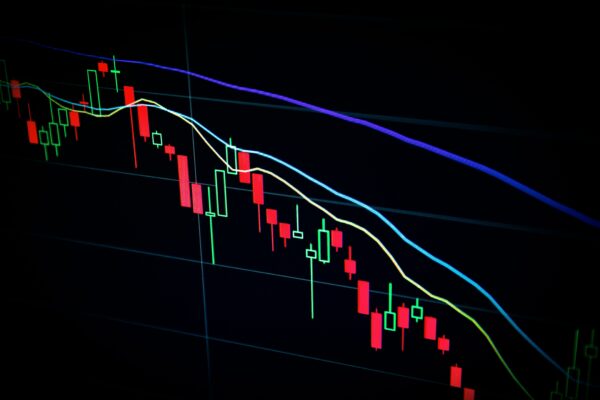
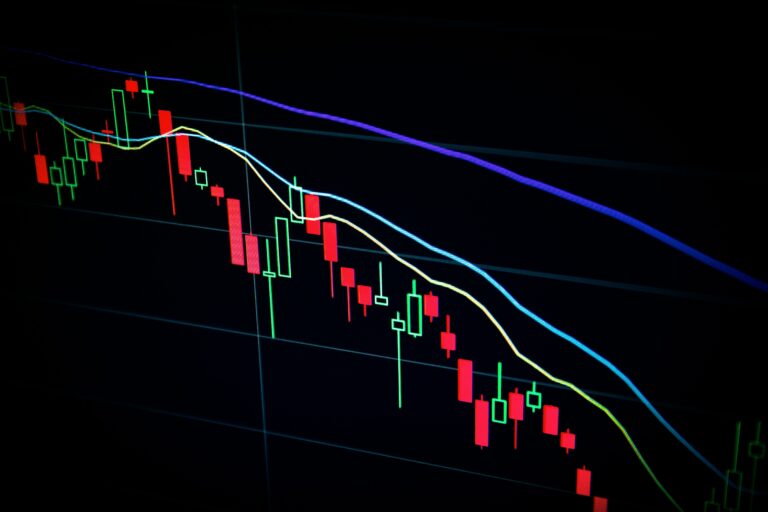
Some analysts have warned of potential further falls in the price of Bitcoin due to a price chart phenomenon known as a “death cross”, which occurs when a short-term average trendline crosses below a long-term average trendline.
Other cryptocurrencies also fell as investors worried about tougher regulation of digital currencies around the world.
Separately, the auction house Sotheby’s said that a rare pear-shaped diamond that is expected to sell for as much as $15 million can be bought at an auction next month using cryptocurrencies.
It is the first time that such a large diamond has been offered in a public sale with cryptocurrency.
Ebrahim Raisi has won Iran’s presidential election, following a race that was tightly controlled.
He thanked voters for their support, in a poll that was widely seen as being designed to favor him.
Ebrahim Raisi is Iran’s top judge and holds ultra-conservative views. He is under US sanctions and has been linked to past executions of political prisoners.
Iran’s president is the second-highest ranking official in the country, after the supreme leader.
Ebrahim Raisi will have significant influence over domestic policy and foreign affairs. But in Iran’s political system it is the country’s supreme leader, Ayatollah Ali Khamenei, the top religious cleric, who has the final say on all state matters.
Ebrahim Raisi, 60, has thanked the supreme leader for “creating the ground… that all people play a role in the formation of the new government.”
Iran is run according to conservative Shia Islamic values, and there have been curbs on political freedoms since its Islamic Revolution in 1979.
Many Iranians saw this latest election as having been engineered for Ebrahim Raisi to win, and shunned the poll.
The cleric has served as a prosecutor for most of his career. He was appointed head of the judiciary in 2019, two years after he lost by a landslide to Hassan Rouhani in the last presidential election.
Ebrahim Raisi has presented himself as the best person to fight corruption and solve Iran’s economic problems.
“Our people’s grievances over shortcomings are real,” he said as he cast his vote in Tehran.
He is fiercely loyal to Iran’s ruling clerics, and has even been seen as a possible successor to Ayatollah Khamenei as the country’s supreme leader.
Many Iranians and rights groups have pointed to Ebrahim Raisi’s role in the mass executions of political prisoners in the 1980s. He was one of four judges who oversaw death sentences for about 5,000 prisoners, according to Amnesty International.
“That Ebrahim Raisi has risen to the presidency instead of being investigated for the crimes against humanity of murder, enforced disappearance and torture, is a grim reminder that impunity reigns supreme in Iran,” said Amnesty chief Agnès Callamard.
Iran has never acknowledged the mass executions and Ebrahim Raisi has never addressed the allegations about his role in them.
Amnesty also says that as head of the judiciary Ebrahim Raisi oversaw impunity for officials and security forces accused of killing protesters during unrest in 2019.
He has promised to ease unemployment and work to remove US sanctions that have contributed to economic hardship for ordinary Iranians and caused widespread discontent.
The Joint Comprehensive Plan of Action, signed in 2015, gave Iran relief from Western sanctions in return for limiting its nuclear activities.
The US pulled out of the deal in 2018, and President Trump’s administration re-imposed crippling limits on Iran’s ability to trade. Ebrahim Raisi was among the officials sanctioned.
Iran has responded by re-starting nuclear operations that were banned under the deal.
Talks aimed at resurrecting the deal are ongoing in Vienna, with President Joe Biden also keen to revive it. But both sides say the other must make the first move.
Catholic bishops face clash with President Joe Biden after voting to commission a document that may call for him to be barred from Holy Communion.
The US Conference of Catholic Bishops (USCCB) clashed online over whether to draw up a teaching document on politicians who support abortion.
Holy Communion is the most important ritual in the Catholic Christian faith.
The Catholic president regularly attends Mass.
Responding to news of the bishops’ vote, President Biden said: “That’s a private matter and I don’t think that’s gonna happen.”
The Vatican has already indicated its opposition to the bishops’ move.
After the debate on June 17, the Most Reverend Allen H. Vigneron, vice-president of the USCCB, announced the move had passed by 168 to 55, with six abstentions.
The US clergy is deeply divided on the issue. The Most Rev Robert McElroy, bishop of San Diego, warned such a document would lead to the “weaponization” of the Eucharist (the more formal name for Holy Communion).
However, the Most Rev Liam Cary, the bishop of Baker, Oregon, said the Church was in an “unprecedented situation”, with “a Catholic president who is opposed to the teaching” of the Church.
The document will now be drafted by the doctrine committee of US bishops.
However, although it will be a form of national policy, it will not be binding. Each individual bishop has the right to decide who should be blocked from the Mass in his diocese.
The document will return for debate at the next bi-annual US Catholic Bishops Conference in November.
The controversial issue of whether politicians who support abortion should receive Mass has become more prominent with the election of Joe Biden as president.
Cardinal Blase Cupich, archbishop of Chicago, warned most priests would be “puzzled to hear that bishops now want to talk about excluding people at a time when the real challenge before them is welcoming people back to the regular practice of the faith and rebuilding their communities”.
However, proposing the motion, Bishop Kevin Roades, of Fort Wayne-South Bend, said: “We weren’t targeting particular individuals or limited to one issue, but I think we need to accept the [Church’s] discipline that those who obstinately persist in grave sin are not to be admitted to Holy Communion.”
Cardinal Luis Ladaria – the prefect for the Congregation for the Doctrine of the Faith, the Vatican’s theological watchdog – urged the US Catholic Bishops Conference to delay the debate.
He wrote to the conference saying it would be “misleading” to suggest abortion and euthanasia were “the only grave matters of Catholic moral and social teaching that demand the fullest level of accountability on the part of Catholics”.
Catholics for Choice, an abortion rights group, said it was profoundly saddened by the move.
IKEA France has been fined €1 million ($1.2 million) after it was found guilty of spying on staff, a Versailles court has ruled.
Meanwhile, the former CEO of Ikea France, Jean-Louis Baillot, was given a two-year suspended jail term and €50,000 fine.
The French subsidiary of the Swedish furniture chain was found to have used private detectives and police officers to collect private data on staff. Evidence came to light in 2012.
Stung by the affair, Ikea fired four managers and got a new code of conduct.
The 15 people in the dock at the Versailles court included top executives and former store managers.
Four police officers were also on trial for handing over confidential information.
The mass surveillance system was used by store managers to vet job applicants, as well as checking up on their staff.
Ikea’s annual bill for private investigators ran to as much as €600,000, AFP reports, citing court documents.
In one case, AFP reports, Ikea’s former head of risk wanted to know how an employee could afford a new BMW convertible; he also inquired why a staff member in Bordeaux had “suddenly become a protester”.
That executive, Jean-François Paris, was given an 18-month suspended sentence and a €10,000 fine.
The prosecution had called for a €2 million fine for Ikea and for Baillot to spend a year in prison, along with a further two years suspended.
The case centered on Ikea France’s surveillance of staff from 2009 to 2012. The scandal was exposed by journalists, then trade unions took legal action.
The illegal surveillance covered about 400 people, state prosecutor Pamela Tabardel said.
“What’s at stake is the protection of our private lives against the threat of mass surveillance,” she said when the trial opened in March.
Managers were found to have used a private security firm, Eirpace, which in turn collected personal data from the police. It included information about lifestyles and any previous criminal convictions.
The Eirpace boss, Jean-Pierre Fourès, was given a two-year suspended sentence and a €20,000 fine.
When the trial opened, Ikea France issued a statement saying it “strongly condemned” the privacy violations and it apologized for “this situation which does serious harm to the company’s values and ethical standards”.
China has accused the G7 of “political manipulation” after it criticized Beijing over a range of issues.
In a joint statement at the end of a three-day summit, G7 leaders urged China to “respect human rights and fundamental freedoms”.
Issues highlighted included abuses against the Uyghur Muslim minority group and the crackdown on Hong Kong pro-democracy activists.
China’s embassy in the UK accused the G7 of “baseless accusations”.
The statement by the G7 – the world’s seven largest so-called advanced economies – included pledges on a number of issues, such as ending the coronavirus pandemic and steps to tackle climate change, as well as references to China.
The G7 group, made up of Canada, France, Germany, Italy, Japan, the UK and the US, called on China to respect human rights in Xinjiang, a north-western region that is home to the Uyghurs and other Muslim minorities.
The G7 statement also called for rights and freedoms to be respected in Hong Kong. The leaders said Hong Kong should retain a “high degree of autonomy”, as established under agreements when it was handed back to China in 1997.
The statement underscored the “importance of peace and stability” across the Taiwan Strait – a heavily-policed waterway that separates China and Taiwan. China sees democratic Taiwan as a breakaway province, but Taiwan sees itself as a sovereign state.
It also demanded a new investigation in China into the origins of Covid-19.
President Joe Biden said he was “satisfied” with the statement’s language on China.
A stronger message on China is expected to be issued by leaders of the NATO military alliance at a meeting on June 14.
“We know that China does not share our values… we need to respond together as an alliance,” NATO Secretary-General Jens Stoltenberg said as he arrived at the one-day summit in Brussels.
White House national security adviser Jake Sullivan said the country would feature in NATO’s communiqué “in a more robust way than we’ve ever seen before”.
A private company – Luma Energy – took over operation and maintenance of Puerto Rico’s power system this month.
On June 10, Luma Energy said that the fire broke out at the Monacillo power distribution plant soon after the company website was hit with two million visits per second, in a cyber-attack known as a denial of service.
Outages have already affected more than one million households in Puerto Rico so far this month.