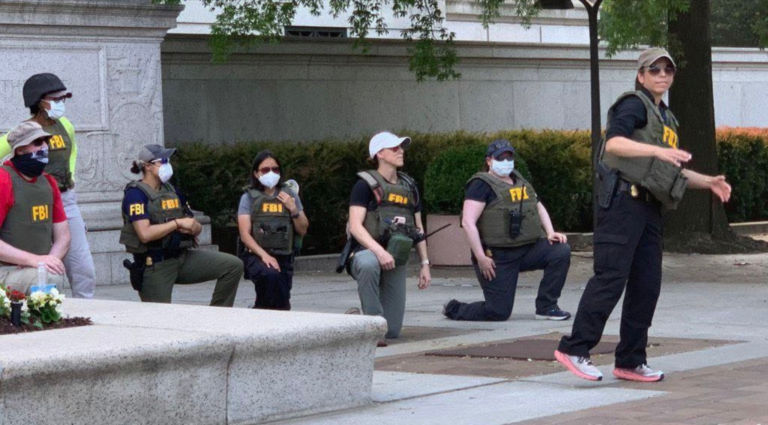
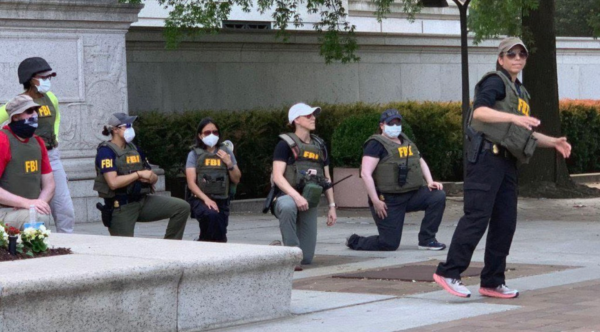
In a dramatic escalation of the political tensions swirling around the nation’s top law enforcement agency, the FBI has fired a group of agents who were photographed kneeling alongside racial justice demonstrators during the tumultuous summer of 2020.
Sources familiar with the matter, speaking on condition of anonymity due to the sensitivity of the personnel actions, indicate that roughly 15 to 20 agents were summarily dismissed this week, four years after the images of them taking a knee during a Washington, D.C. protest went viral.
While the FBI has officially declined to comment on the internal personnel actions, the dismissals have ignited a fierce political and legal firestorm, with the FBI Agents Association (FBIAA) condemning the move as “unlawful” and a severe violation of the agents’ due process rights.
The Defining Image of 2020
The agents in question, many attached to the FBI’s Washington Field Office, were deployed to the city in the wake of George Floyd’s murder, tasked with protecting federal property amid widespread demonstrations. Photos and videos from June 2020 captured the agents, in uniform, taking a knee on Pennsylvania Avenue.
At the time, the gesture was understood by many on the ground as a calculated effort to de-escalate a tense standoff between law enforcement and protesters. However, it immediately drew blistering criticism from conservative commentators and political figures who viewed the act as a partisan endorsement of the Black Lives Matter movement, violating the strict non-political standards required of federal agents.
Internal reviews under the previous FBI Director, Christopher Wray, reportedly concluded the agents had not violated specific bureau policy, and no disciplinary action was taken. The firings this week represent a stark reversal of that initial decision.
Lack of Judgement’ Cited in Purge
The termination letters to the agents reportedly cited a “lack of judgement” in their actions, suggesting the bureau now views the public demonstration of solidarity—whether intended as a political statement or a de-escalation tactic—as incompatible with the impartiality required of an FBI agent.
However, the FBIAA views the move as part of a broader, politically motivated purge under the leadership of current FBI Director Kash Patel, a Trump appointee.
In a scathing public statement, the FBIAA confirmed the terminations, including several military veterans with statutory protections, and called on Congress to launch an immediate investigation. “Patel’s dangerous new pattern of actions are weakening the Bureau because they eliminate valuable expertise and damage trust between leadership and the workforce,” the association declared, accusing the Director of ignoring agents’ constitutional and legal rights.
The firings of the kneeling agents come amid a wave of high-profile departures at the FBI, including senior executives involved in politically sensitive investigations, such as those related to the January 6th Capitol riot. Several recently terminated agents have filed lawsuits alleging they were illegally fired based on their previous case assignments or perceived political leanings.
The move throws the already embattled bureau deeper into the political arena, raising profound questions about the limits of an agent’s right to expression, and whether the FBI’s long-standing tradition of non-partisan enforcement can withstand the pressures of Washington’s fractured political climate.