Home Blog Page 94

Coronavirus: Germany Bans Public Gatherings Of More Than Two People

Germany has extended its restrictions on social interactions to try to contain the coronavirus outbreak, banning public gatherings of more than two people.

People will not be allowed to form groups of three or more in public unless they live together in the same household, or the gathering is work-related. Police will monitor and punish anyone infringing the new rules.

In a TV address, German Chancellor Angela Merkel said “our own behavior” was the “most effective way” of slowing the rate of infection.

The measures included closing hair, beauty and massage studios. Other non-essential shops had already been shut.

Restaurants will now only be allowed to open for takeaway service. All restrictions apply to every German state, and will be in place for at least the next two weeks.

Coronavirus: Australia in Nationwide Shutdown

Coronavirus: Italy’s Worst-Affected Region of Lombardy Imposes Stricter Measures

Coronavirus: India Observes 14-Hour Janata Curfew to Combat Pandemic

Shortly afterwards, Chancellor Merkel’s office said she would quarantine herself.

A doctor who vaccinated Angela Merkel on March 20 against pneumococcus, a pneumonia-causing bacteria, had tested positive for coronavirus.

The 65-year-old chancellor will be tested regularly in the next few days and work from home, her spokesman said.

Germany, Europe’s largest economy, has so far confirmed 18,610 cases and 55 deaths from Covid-19, the disease caused by the virus.

Chancellor Merkel urged citizens to keep contact outside their own household to an absolute minimum and to ensure a distance of at least 1.5m (5ft) from another person when in public.

She said: “The great aim is to gain time in the fight against the virus.”

Coronavirus: Australia in Nationwide Shutdown

0

Australia has announces a nationwide shutting down for non-essential services as coronavirus cases rise rapidly in the country.

Clubs, pubs, gyms, theaters and places of worship will be shut from midday on March 23, while restaurants and cafes will have to switch to takeaway only.

PM Scott Morrison announced the restrictions after a national cabinet meeting.

The number of cases in Australia has risen sharply in recent days, reaching 1,315.

New South Wales (NSW), home to Sydney, is the worst-affected state with 533 confirmed cases. Victoria, of which Melbourne is the capital, has 296 cases, while Queensland has 259.

The new measures will see many businesses close but supermarkets, oil stations, pharmacies and home delivery services will continue running.

PM Morrison said he wanted to keep schools open but parents would be able to keep their children at home if they wished to do so.

He said: “I don’t want to see our children lose an entire year of their education.”

Coronavirus: Italy’s Worst-Affected Region of Lombardy Imposes Stricter Measures

Coronavirus: India Observes 14-Hour Janata Curfew to Combat Pandemic

Coronavirus: California Puts 40 Million Residents Under Lockdown

Some states, including Victoria, have signaled that they want to close schools.

Seven people have died across Australia so far from Covid-19.
The new restrictions come after large crowds gathered on Sydney’s beaches including Bondi on March 21, flouting social distancing advice.

PM Morrison said that the federal and state governments had decided to act because Australians were not obeying guidelines.

However, the prime minister added: “We are not putting in place lockdowns that put people in and confine them to their homes.

“That is not a measure that has been contemplated at this point.”

Chief Medical Officer Brendan Murphy said people, especially the young, had to realize that they needed to live “very differently” and stop going out in order to control the virus.

PM Morrison also announced new stimulus measures to boost the country’s economy.

South Australia, Western Australia and the Northern Territory will close their borders from Tuesday. Under the new rules, anyone arriving will be forced to self-isolate for 14 days.

Tasmania, an island state, has already imposed similar travel restrictions.

The Australian Football League suspended its 2020 season, with no fixtures until at least May 31. The women’s league has also been halted. In contrast, the National Rugby League says it will carry on with matches as planned.

Coronavirus: Italy’s Worst-Affected Region of Lombardy Imposes Stricter Measures

Image by Fritz_the_Cat from Pixabay

Italy’s worst-hit region of Lombardy has introduced stricter measures in a bid to tackle the spread of coronavirus.

Under the new rules announced on March 21, sport and physical activity outside, even individually, is banned. Using vending machines is forbidden.

The move comes as Italy reported nearly 800 coronavirus deaths on March 21 and saw its toll for the past month reach 4,825, the highest in the world.

Lombardy is the worst-affected region in the country with 3,095 deaths.

The region’s President Attilio Fontana announced the new measures in a statement.

Businesses have been asked to close all operations excluding “essential” supply chains. Work on building sites will be stopped apart from those working on hospitals, roads and railways.

All open-air weekly markets have been suspended.

Coronavirus: India Observes 14-Hour Janata Curfew to Combat Pandemic

Coronavirus: California Puts 40 Million Residents Under Lockdown

Coronavirus: Global Death Toll Exceeds 10,000

Across Italy there have been 53,578 total cases to date, with about 6,000 people having recovered.

The region of Lombardy has been under a lockdown since March 8 and the government had hoped to see results there first.

On March 21, Italian PM Giuseppe Conte ordered the closure of all “non-essential” businesses in the country. However, the prime minister did not specify which businesses would be considered essential.

Supermarkets, pharmacies, post offices and banks will remain open and public transport will continue to run.

During a TV address to the nation, PM Conte said: “We will slow down the country’s productive engine, but we will not stop it.”

He described the situation as “the most difficult crisis in our post-war period”.

Despite the measures introduced so far, the number of new cases and deaths in Italy has continued to grow.

Meanwhile, Spain’s health ministry has reported a 32% spike in new deaths from Covid-19 with 1,326 confirmed deaths, the second highest in Europe after Italy.

In a news conference on March 21, PM Pedro Sánchez warned “the worst is yet to come” and that “very difficult days lay ahead”.

The Spanish government has issued a lockdown for some 46 million people who are only allowed to leave their homes for essential work, food shopping, medical reasons or to walk the dog.

Global cases pass 300,000 with more than 13,000 deaths around the world; 92,000 people have recovered.

Coronavirus: India Observes 14-Hour Janata Curfew to Combat Pandemic

0
Image source: indiatvnews.com

India is observing a 14-hour long curfew to try to combat the coronavirus pandemic.

PM Narendra Modi announced the Janata curfew last week, telling citizens that it would be a test in order to assess the country’s ability to fight the virus.

The prime minister urged citizens to stay indoors from 07:00 until 21:00 on March 22.

India has so far recorded 315 cases.

Narendra Modi tweet: “Let us all be a part of this curfew, which will add tremendous strength to the fight against Covid-19 menace. The steps we take now will help in the times to come.”

Coronavirus: California Puts 40 Million Residents Under Lockdown

Coronavirus: Global Death Toll Exceeds 10,000

Coronavirus: Mount Athos Closes for Pilgrims and Visitors until March 30

According to NDTV, transport across India has been affected by the curfew. No long-distance or suburban trains are running; however, those already running before the curfew will not be stopped.

Images from various cities in India show roads and towns mainly empty.

In Delhi, all stores were closed apart from those selling essentials, and pharmacies. Religious places canceled activities as part of the curfew.

PM Modi has asked people at 17:00 on March 22 to stand at balconies or near windows and clap or ring bells to show their appreciation for medical professionals and sanitation workers.

Some parts of India have already enforced shutdowns.

Rajasthan ordered a shutdown until March 31. Four cities in the state of Gujarat have introduced similar measures until March 25.

India has barred entry to everyone, including citizens, flying from certain countries, including most European nations. It has also canceled most entry visas for people flying in from other countries.

Popular Indian monuments – such as the 16th Century Red Fort in Delhi – have been shut to visitors to prevent large gatherings.

The Taj Mahal, India’s most iconic monument, closed its doors on March 17, along with more than 140 other monuments and museums.

North Korea Fires Two Short-Range Ballistic Missiles Into Sea of Japan

0

According to South Korea’s military, North Korea has fired two projectiles into the Sea of Japan.

The projectiles appeared to be short-range ballistic missiles.

They were launched early on March 21 from Pyongan province towards the East Sea, also known as the Sea of Japan.

North Korea launched multiple missiles as part of firing drills earlier this month. The US and China have called on North Korea to return to talks on ending its nuclear and missile programs.

On March 21, South Korea’s Joint Chief of Staff said it was monitoring the situation in case there are additional launches.

It described the actions as “extremely inappropriate” at a time when the world was dealing with the Covid-19 pandemic.

Samjiyon: North Korea Unveils Newly-Reconstructed “Utopia” Town

North Korea’s Food Shortages Exacerbated by Worse than Usual Harvest

Kim Jong-un Climbs Mount Paektu on Horseback

The projectiles flew for 255 miles with a maximum altitude of around 30 miles, the South Korean military said.

Japan’s coast guard confirmed a missile had landed outside the waters of its exclusive economic zone.

It comes as North Korea announced it would be holding a session of the Supreme People’s Assembly, the country’s parliament, on April 19. Analysts say the meeting will involve almost 700 of North Korea’s leaders in one spot.

There have been no reported cases of coronavirus in North Korea, though some experts have cast doubt on this.

North Korea borders China, where the virus emerged, and South Korea, where there has been a major outbreak.

A top US military official said last week he was “fairly certain” there were infections in North Korea.

However, North Korea quarantined around 380 foreigners – mostly diplomats and staff in Pyongyang – in their compounds for at least 30 days. The restrictions were lifted at the beginning of March. Around 80 foreigners, mainly diplomats, were flown out of Pyongyang on March 9.

Kenny Rogers Dies Aged 81

Image source: Wikimedia Commons

Country music legend Kenny Rogers has died at the age of 81.

He “passed away peacefully at home from natural causes”, a family representative said.

Kenny Rogers topped pop and country charts during the 1970s and 1980s, and won three Grammy awards.

Known for his husky voice and ballads including Lucille, The Gambler, and Coward Of The County, his career spanned more than six decades.

Kenny Rogers once summed up his popularity by explaining that he believed his songs “say what every man wants to say and that every woman wants to hear”.

After growing up in poverty on a federal housing estate in Houston, Texas, Kenny Rogers began recording with a string of bands before launching his solo career in 1976.

Kenny Rogers was never a favorite of music critics, but became one of the most successful pop-country crossover acts of all time, and the 10th best-selling male artist in US history in terms of album sales.

The musician collaborated with other country music legends during his career, including Dolly Parton and Willie Nelson.

Country Star Don Williams Dies Aged 78

In 2007, Kenny Rogers unexpectedly found himself back in the limelight in the UK when The Gambler became the unofficial World Cup anthem of England’s Rugby Team.

That same year, Kenny Rogers was inducted into the Country Music Hall of Fame and received a Lifetime Achievement Award from the Country Music Association.

A keen businessman, the singer led several ventures over the years, mainly in property and the restaurant sector.

Kenny Rogers also acted in several movies and TV shows, including starring as a race car driver in the 1982 movie Six Pack.

The country music legend was married five times and had five children.

What are the Current Hot Topics in Economics?

Image source: The Blue Diamond Gallery

Equal Pay

Women make up almost half of the workforce. In many instances, they are the sole or co-breadwinner in half of the American families with children. They receive more college and graduate degrees than men. Yet, on average, women continue to earn considerably less than men. Women, on average, earn less than men in nearly every single occupation for which there is sufficient earnings data for both men and women to calculate an earnings ratio.

Minimum Wage

The federal minimum wage is currently $7.25 an hour. There are 21 states and many cities that have a minimum wage higher than the federal level. Washington state has the highest at $9.32 and Oregon trails second at $9.10. Economic research firms have long argued that higher minimum wages cause firms to reduce employment, especially of low-wage workers, and thus they inflict damage on the U.S. economy. But two new papers provide powerful evidence that higher minimum wages in fact boost the conditions of workers—especially the least skilled and lowest paid among them—without doing broad economic harm.

Welfare Drug Testing

The goal of governments who provide these resources is to remove as much fraud as possible from the system. Then there is the eventual goal to help everyone find a meaningful job so that eventually the individual or household can be self-supportive.

Paid Sick Leave

A paid time off (PTO) policy combines vacation, sick time and personal time into a single bank of days for employees to use when they take paid time off from work. A PTO policy creates a pool of days that an employee may use at his or her discretion. At the height of the summer season, companies’ vacation plans are often put to the test. If your company experiences frequent issues when trying to handle the mass influx of requests that come in over the summer months, it may be time to consider a paid time off the bank as an alternative to a traditional vacation plan.

Welfare

In essence, welfare programs are a government subsidy that is paid directly to people with a qualifying income. In the United States, qualification requires a household income falls below a specific percentage of the poverty level. For several generations, benefits have been given out to people so they can have basic services, such as food access, without charge. The pros and cons of welfare show that it can be useful to help those who are in need, but there must be controls in place to limit abuse. There will always be a debate about who deserves to receive welfare benefits.

Coronavirus: California Puts 40 Million Residents Under Lockdown

0
Image source: Wikimedia Commons

California governor has issued a “stay at home” order to residents as the state tries to stem the march of the coronavirus across the most populous US state.

Governor Gavin Newsom told residents they should only leave their homes when necessary during the pandemic.

He earlier estimated more than half of the 40 million people in his state would contract Covid-19 in just the next two months.

Speaking from the state’s emergency operations centre in Sacramento – a place that is normally used to coordinate the response to wildfires or earthquakes – Governor Newsom called on people here to only leave their homes if it was absolutely necessary, to get food, collect medicines, or care for a friend or relative.

Citing a model that state planners here have been using, the governor predicted that more than half of California’s population will contract the virus over the course of the next eight weeks – a staggering total of around 25 million people.

Governor Newsom said that cases of the virus were doubling every four hours in some areas, and – based on projections – nearly 20,000 more hospital beds would be needed to deal with the effects of the outbreak than the state could currently provide.

The virus has claimed 205 lives in the US and infected more than 14,000.

Globally nearly 250,000 patients have tested positive for the respiratory illness and more than 10,000 have died.

Coronavirus: Global Death Toll Exceeds 10,000

Coronavirus: Two US Congressmen Test Positive for Covid-19

Coronavirus: Mount Athos Closes for Pilgrims and Visitors until March 30

Governor Newsom said on March 19: “This is a moment we need to make tough decisions. We need to recognize reality.”

California is among the first states to bring in blanket restrictions. Earlier this week Nevada said non-essential businesses should close for 30 days.

The governor’s order will allow residents to leave their homes to buy groceries or medicine, or walk a dog or take exercise, but seeks to limit public interactions.

It will force businesses deemed non-essential to close, while allowing others including grocery stores, pharmacies, banks and petrol stations to stay open.

About half of California’s population is already subject to similar stringent measures, including the city of San Francisco.

Speaking at a press conference in Sacramento, Governor Newsom said the virus “will impact about 56% of us – you do the math in the state of California, that’s a particularly large number”.

The governor did not clarify how his officials had calculated that figure, which would amount to nearly 22.5 million infected people.

However, his spokesman acknowledged the estimate did not take into account the mitigation measures being implemented state-wide.

Governor Newsom is asking Congress for a billion dollars in federal funding to support California’s response to the crisis, and calling for a navy hospital ship to be deployed to the Port of Los Angeles to help deal with the anticipated surge in patients.

Coronavirus: Global Death Toll Exceeds 10,000

According to Johns Hopkins University, the global coronavirus death toll has now exceeded 10,000.

There are 10,033 deaths from Covid-19 worldwide as of March 19.

Johns Hopkins University – which has been compiling its data soon after the outbreak began late last year – says the number of confirmed cases is fast approaching 250,000.

For the second day in a row, China has reported no new domestic cases.

Meanwhile, Italy has overtaken China’s death toll with 3,405 victims.

Argentina has imposed a nationwide lockdown, the first Latin American country to do so.

Coronavirus: WHO Labels Outbreak as A Pandemic

Coronavirus: Italy in Full Lockdown to Curb COVID-19 Spread

Coronavirus: Two US Congressmen Test Positive for Covid-19

Coronavirus: Mount Athos Closes for Pilgrims and Visitors until March 30

California is, nonetheless, one of the main centers of the coronavirus in the US, and the state’s Governor Gavin Newsom has issued an order covering virtually the entire population of 40 million people.

Speaking from the state’s emergency operations centre in Sacramento – a place that is normally used to coordinate the response to wildfires or earthquakes – Governor Newsom called on people here to only leave their homes if it was absolutely necessary, to get food, collect medicines, or care for a friend or relative.

Citing a model that state planners here have been using, the governor predicted that more than half of California’s population will contract the virus over the course of the next eight weeks – a staggering total of around 25 million people.

Governor Newsom said that cases of the virus were doubling every four hours in some areas, and – based on projections – nearly 20,000 more hospital beds would be needed to deal with the effects of the outbreak than the state could currently provide.

He is asking Congress for a billion dollars in federal funding to support California’s response to the crisis, and calling for a navy hospital ship to be deployed to the Port of Los Angeles to help deal with the anticipated surge in patients.

Coronavirus: Mount Athos Closes for Pilgrims and Visitors until March 30

Image source: Wikimedia Commons

As part of measures to fight the coronavirus pandemic, the Holly Mount Athos, Greece, announced on March 19 that it will not be receiving any visitors or pilgrims until March 30.

The all-male Orhodox enclave comprises several monasteries and hermitages, some of the oldest in the country, occupying the easternmost section of the Halkidiki peninsula in northern Greece.

Mount Athos is an enclave of 20 monasteries. Women have been banned for over 1,000 years.

Greece and Russia are both largely Orthodox Christian countries and have close religious ties.

Mount Athos is an autonomous and self-governed territory of Greece. It occupies the whole of the third peninsula of Halkidiki Greece, covering an area of 130 sq mile.

The Mount is the largest area in the world from which women, and female animals, are banned.

Each day, 100 Orthodox and 10 non-Orthodox male pilgrims are admitted for a three-night stay in one of the peninsula’s 20 monasteries. Mount Athos has barred women for more than 1,000 years – they are not allowed within 0.3 miles of the coast.

Coronavirus: EU Closes Its Borders for 30 Days

Coronavirus: WHO Labels Outbreak as A Pandemic

Coronavirus: Italy in Full Lockdown to Curb COVID-19 Spread

Coronavirus: Two US Congressmen Test Positive for Covid-19

0

Ben McAdams and Mario Diaz-Balart became the first members of Congress to test positive for the Covid-19.
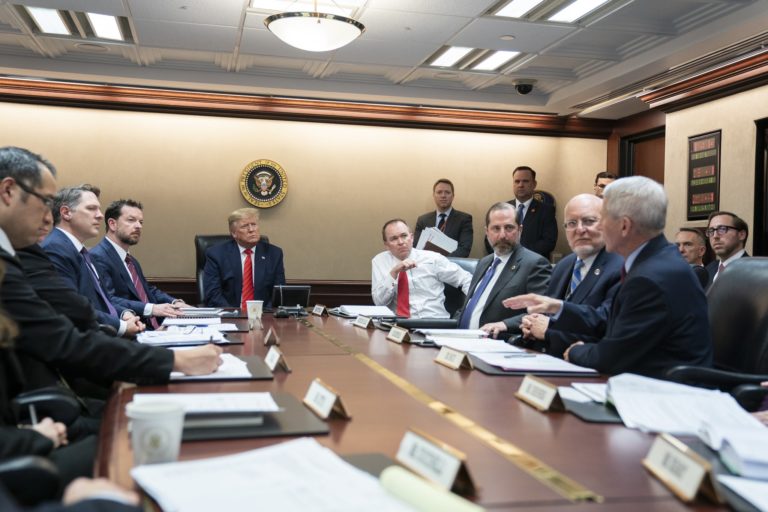
The office of Congressman Ben McAdams, a Utah Democrat, said on March 18 that he had tested positive for the virus.

The representative said he developed “mild cold-like symptoms” after returning from Washington DC on March 14.

Ben McAdams said he immediately self-isolated at home, but “my symptoms got worse and I developed a fever, a dry cough and labored breathing”.

According to the statement, his doctor referred him on March 17 for a Covid-19 test, which came back positive on March 18.

Ben McAdams, 45, said he would remain in self-quarantine until he had recovered.

Mario Diaz-Balart, a Florida Republican, also announced on March 18 that he had tested positive for coronavirus.

The 58-year-old tweeted from self-quarantine at his flat in Washington DC: “I’m feeling much better. However, it’s important that everyone take this seriously.”

Coronavirus: All 50 US States Now Have Confirmed Cases

Coronavirus: Americans May Get $1,000 from Government as Part of $1TN Stimulus

Donald Trump: “Coronavirus Crisis Could Last Until End of Summer”

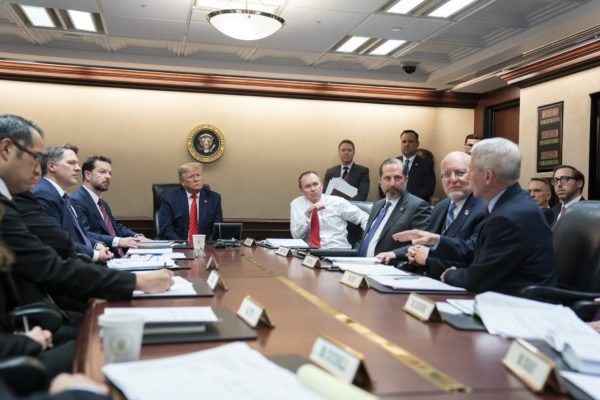
Meanwhile, President Donald Trump has vowed the US will achieve “total victory” over the coronavirus, describing himself as a “wartime president”.

At a White House press conference, the president was asked by a reporter whether he considered the country to be on a war footing in terms of fighting the virus.

He said: “It’s a war.

“I view it as a, in a sense, a wartime president.”

President Trump spoke as he revived a Korean War-era measure allowing the US to ramp up production of vital medical supplies.

According to estimates, the US has more than 9,300 cases of Covid-19 and has seen 150 deaths so far.

Globally there are some 220,000 confirmed cases and over 8,800 deaths.

President Trump has been holding daily briefings on the emergency this week after being accused of playing down the outbreak in its early stages.

He said: “We must sacrifice together, because we are all in this together, and we will come through together. It’s the invisible enemy. That’s always the toughest enemy.

“But we are going to defeat the invisible enemy. I think we are going to do it even faster than we thought, and it’ll be a complete victory. It’ll be a total victory.”

President Trump announced he was signing the 1950 Defense Production Act, which empowers the president to direct civilian businesses to help meet orders for products necessary for national security.

However, the president said later on Twitter that he would only invoke the measure “in a worst case scenario in the future”.

President Trump also described as an “absolute, total worst case scenario” a warning by his Treasury Secretary, Steve Mnuchin, that the pandemic could send US unemployment rocketing to 20%.

He said two US Navy hospitals ships would be pressed into service to help alleviate an expected shortage of sick beds.

The USNS Comfort is expected to be sent to New York Harbor, though defense officials said it is currently undergoing maintenance in Virginia.

The other vessel, USNS Mercy, is being prepared to deploy to a location on the West Coast.

During the press conference, President Trump again rejected suggestions that his use of the term “Chinese virus” to describe Covid-19 was racist.

The US-Canada border, the world’s longest, was effectively closed, except for essential travel and commerce.

President Trump also announced a new crackdown on immigrants or asylum seekers crossing the US-Mexico border.

The president said his administration would invoke a statute that allows people to be blocked in order to prevent the spread of communicable diseases.

Coronavirus: All 50 US States Now Have Confirmed Cases

0

All 50 states in the US have been hit by the deadly coronavirus as West Virginia reported its first case of the infection on March 17.

Announcing the state’s first Covid-19 patient, West Virginia Governor Jim Justice said: “We knew this was coming.”

So far, there are 108 deaths in the US from coronavirus and more than 6,300 confirmed cases nationwide.

Globally, there are 217,325 cases and 8,917 people have died as of March 18.

As the Trump administration seeks a $1 trillion stimulus package, Treasury Secretary Steven Mnuchin reportedly warned Republican senators privately on March 17 that if Congress failed to act, US unemployment could hit 20% – almost double the jobless rate during the Great Recession after the 2008 financial crisis.

Coronavirus: Americans May Get $1,000 from Government as Part of $1TN Stimulus

Donald Trump: “Coronavirus Crisis Could Last Until End of Summer”

Coronavirus: President Donald Trump Declares National State of Emergency

NYC Mayor Bill de Blasio said he would decide within two days whether to order the city’s 8.5 million residents to “shelter in place”.

Such a move could largely confine people to their homes, while allowing them to make necessary trips to buy groceries or medicine, walk a dog or exercise as long as they avoid public interaction.

The mayor said: “It’s a very, very difficult decision.

“We’ve never been here before. I have never heard of anything like this in the history of New York City.”

However, New York Governor Andrew Cuomo has suggested he would reject such a plan.

Meanwhile, officials in the San Francisco Bay area have already ordered 6.7 million residents to stay home for all but the most crucial outings until April 7.

4 Most Important Items for Your Business Casual Wardrobe

Business casual can be a confusing term, as it will tend to vary from one workplace to another. Ultimately though, as the savvy and style-conscious employee you are, erring on the side of business over casual is the way to go. Following are four items and accessories that highlight your professionalism while also leaving you looking cool and feeling comfortable for the day’s work ahead.

1. Pants – Wool, Khakis, and Denim

Image via Flickr by make65

For men, pants are essential for the business casual wardrobe. It may sound obvious, but yours truly showed up to my first ever job interview wearing a pair of shorts. I ended up getting the job, but the hiring manager informed me “don’t ever wear shorts to a job interview again.” Lesson learned.

When it comes to pants, wool and khaki are generally a good choice for business casual workplaces. Wool pants come in a variety of colors and styles, and they can really button down the professional end of the business casual look. Khakis are more on the casual side but are still generally considered a go-to in business casual workplace environments. Jeans, on the other hand, lie on the cusp between business casual and plain old casual. If you are going to wear jeans, go with dark wash and save the “distressed look” (store-bought or naturally acquired) for the weekends.

2. Button-Down Shirts

A button-down shirt will get you by in just about any workplace, but not all button-down shirts are created equal. Stay away from patterns that are too loud or designs that are overly trendy. Instead, stick with classic colors such as white or light blue, in either solid or subtle patterns. You can get away with other colors, but don’t go too big. Think light green or lavender. Keep in mind that your goal is to look professional, not necessarily to make a bold fashion statement.

3. To Tie or Not to Tie

One of the perceived benefits of the business casual wardrobe is the fact that you aren’t required to wear a tie. This doesn’t mean you can’t incorporate the tie into your more casual outfits to lend them a more professional look. For example, if your workplace allows jeans as part of your business casual wardrobe, combining a neat pair of dark-washed jeans with a sharp button-down shirt and tie, and adding a pullover sweater, can create a sophisticated, professional looking style.

4. Getting the Right Fit and Style

All the style elements in the world won’t create a sophisticated look if your clothing doesn’t fit properly. Working with a stylist can save you a ton of time putting together your wardrobe, and there are a number of websites that feature articles on seasonal and regional styles. Once a stylist understands your fashion sense and knows your measurements, they can put together new outfits for you with ease, and they can field questions you might have about the best way to rock a given look.

Putting together the right wardrobe might seem like a hassle, but once you’ve got it dialed in, understanding how to dress business casual for work will help you feel more professional, comfortable, and ready to dive in to the day’s work ahead.

Coronavirus: Americans May Get $1,000 from Government as Part of $1TN Stimulus

Image source Wikipedia

Treasury Secretary Steven Mnuchin has announced that he supports sending money directly to Americans as part of a $1 trillion stimulus aimed at averting an economic crisis caused by the coronavirus.

He said: “We’re looking at sending cheques to Americans immediately.”

The $250 billion in cheques are part of a huge aid package which the White House is discussing with Congress.

The move follows widespread school and store closures as the number of coronavirus cases in the US passes 5,200 people.

The US has been debating how to provide relief as activity grinds to a halt in response to curfews and other measures intended to slow the spread of the virus.

Details such as the size of the cheques, and who would qualify for them, are still under discussion.

Donald Trump: “Coronavirus Crisis Could Last Until End of Summer”

Coronavirus: President Donald Trump Declares National State of Emergency

A $1 trillion aid package would be larger than the US response to the 2008 financial crisis, amounting to nearly a quarter of what the federal government spent last year.

In addition to the $250 billion in cheques for families, the plan includes a bailout for airlines and hotels, among other measures. The proposal must be approved by Congress to move forward.

Separate from the $1 trillion package, Steve Mnuchin said the government would also allow companies and individuals to delay their tax payments for 90 days.

He said: “We look forward to having bipartisan support to pass this legislation very quickly.”

President Donald Trump initially proposed a payroll tax cut, which would reduce the money the government automatically withholds from worker pay to pay for social programs.

However, critics said that relief would come too slowly and leave out those without jobs. Several high-profile economists had urged more direct assistance, including $1,000 payments, winning support from lawmakers such as Republican Senator Mitt Romney.

President Trump said he had come round to the view that faster, more direct relief is necessary.

He said: “With this invisible enemy, we don’t want people losing their jobs and not having money to live.”

The president added that he wanted to target the relief to those who need it.

Steven Mnuchin said he hoped to send the cheques within two weeks.

He said: “Americans need cash now and the president wants to give cash now and I mean now, in the next two weeks.”

Coronavirus: EU Closes Its Borders for 30 Days

Senior EU officials are warning that it is proving harder than ever to reach an agreement on the European Union's next multi-annual budget

In an unprecedented move, the European Union will ban travelers from outside the bloc for 30 days in order to seal its borders amid the coronavirus crisis.

The measure is expected to apply to 26 EU states as well as Iceland, Liechtenstein, Norway and Switzerland. UK citizens will be unaffected.

The travel ban came as deaths continued to soar in Italy and Spain, and France began a strict lockdown.

Europe, which is now the “epicenter of pandemic”, has been badly hit by the coronavirus, which has killed 7,500 globally.

Meanwhile, the Euro 2020 soccer championship has been postponed by a year.

According to the WHO, the virus has infected more than 185,000 people worldwide.

Coronavirus: France and Spain in Partial Lockdown

Coronavirus: WHO Labels Outbreak as A Pandemic

Coronavirus: Italy in Full Lockdown to Curb COVID-19 Spread

The travel ban will affect all non-EU nationals from visiting the bloc, except long-term residents, family members of EU nationals and diplomats, cross-border and healthcare workers, and people transporting goods.

Free travel is a cherished principle within the European border-free Schengen area. However, in recent days many countries have unilaterally imposed full or partial border shutdowns in a bid to stop the spread of the coronavirus.

This prompted the EU Commission to propose that the bloc act in a more unified fashion and restrict entry to the union as a whole, at the urging of French President Emmanuel Macron.

The measures were agreed in a video-summit between EU leaders on March 17 and will now have to be implemented by member states.

EU Commission chief Ursula von der Leyen said at a press conference: “They said they will immediately do that.

“This is good, so that we have a unanimous and united approach [where] the external borders are concerned.”

The UK and the Republic of Ireland – which is part of the EU but not Schengen – will be invited to join the measure.

Coronavirus: What Is Self-Isolating?

0
Image by Vektor Kunst from Pixabay

Governments from around the world have asked people to stay at home to help preventing and slowing down the spread of coronavirus.

Self-isolating means cutting yourself off from the rest of the world.

From now on, if one person in a household starts to display flu-like symptoms – defined as a fever of above 100F (37.8C) or a persistent cough – everyone living there must stay at home for 14 days.

The person with the symptoms should stay in a well-ventilated room with a window that can be opened, and keep away from other people in the home.

They should ask for help for groceries, other shopping or medication, which can be dropped off on the doorstep by friends, family or delivery drivers.

The Covid-19 disease can cause a fever, cough and breathing problems. It takes five days on average for people to start showing the symptoms.

What if someone self-isolating shares a home?

If someone is self-isolating and shares a kitchen, they should try to avoid using it when other people are there and take meals back to their room to eat. Clean all the surfaces at home with household cleaning products daily.

Although they might not be able to entirely separate themselves from family members or flat-mates, the advice is to limit contact as much as possible.

If possible, stay at least 6ft from other people they live with and sleep alone. Keep away from vulnerable people.

Coronavirus: What Is Social Distancing?

Coronavirus: How to Effectively Wash Your Hands?

People living with someone in isolation should wash their hands often, using soap and water for at least 20 seconds – especially after coming into contact with them.

Other people shouldn’t share towels, toiletries or other household items with someone in isolation, who should have a separate bathroom. If that is not possible, the isolated person should use the bathroom last, cleaning it thoroughly afterwards if they are able.

Any rubbish that the isolated person has been in contact with should be double-bagged and kept.

Coronavirus: What Is Social Distancing?

0
Image by Vektor Kunst from Pixabay

Authorities in most of the coronavirus affected countries have asked people to stop non-essential contact with others and avoid all unnecessary travel. This is known as social distancing.

Social distancing means trying to avoid contact with other people.

It means spending less time in public places, where a lot of people are around.

Usually, governments want:

  • People to start working from home wherever possible
  • All unnecessary travel stopped
  • Restaurants, pubs, clubs, theatres and other such social venues to be avoided
  • Stay at least 6ft from other people
  • Keep away from vulnerable people
  • Anyone living with someone who has a cough or a temperature to stay at home for 14 days.

Coronavirus: How to Effectively Wash Your Hands?

Under the US coronavirus task force’s new guidelines, President Donald Trump has urged:

  • All older Americans to stay home
  • Work and schooling should be at home
  • Discretionary travel, shopping trips and social visits should be avoided
  • Anyone in a household who tests positive for the new coronavirus should stay at home along with everyone who lives there.

Donald Trump: “Coronavirus Crisis Could Last Until End of Summer”

0
Image source: Wikipedia

The US coronavirus emergency could last until the end of the summer or even longer, President Donald Trump told reporters at the White House on March 16.

The US has so far had 4,100 cases of the virus and 71 deaths.

The president said over the next 15 days, Americans should not gather in groups of more than 10 people and avoid bars, restaurants, food courts and crowds.

Donald Trump said the US is facing “an invisible enemy” that is “so contagious”.

According to a tally from Johns Hopkins University, there have been more than 174,000 confirmed cases of coronavirus globally and over 6,700 deaths.

Under the US coronavirus task force’s new guidelines, President Trump urged all older Americans to stay home.

Work and schooling should be at home.

Discretionary travel, shopping trips and social visits should be avoided.

Anyone in a household who tests positive for the virus should stay at home along with everyone who lives there.

First Coronavirus Vaccine to Be Tested on US Volunteers

Coronavirus: France and Spain in Partial Lockdown

Coronavirus: President Donald Trump Declares National State of Emergency

Asked how long the emergency will last, President Trump said: “People are talking about July, August, something like that, so it could be right in that period of time where I say, it washes through.”

The president continued: “They think August, could be July, could be longer than that.”

He said he was not considering a national curfew or lockdown, though added: “We may look at certain areas, certain hot spots as they call them.”

President Trump said he had not yet decided to close the US-Canada border, but told reporters it was something the administration was considering.

He also addressed issues of testing, as the US has been criticized for lagging far behind smaller countries in getting tests out to the states.

Officials said on March 16 that a million tests were currently available and more would be coming this week.

“A lot of testing has been going on,” President Trump said, though he also noted that those without symptoms should not get the test.

“Not everybody should run out and get the test, but we’re able to handle tremendous numbers.”

Health officials also said they are due to add 30 million masks to the US supply and are shipping out gear and health workers to bolster local testing efforts.

Asked how he would score his administration’s response to the crisis on a scale of one to 10, President Trump said: “I’d rate it a 10. I think we’ve done a great job.”

White House coronavirus response coordinator Dr. Deborah Birx, who joined the president, issued an appeal directly to millennials, asking them to limit social contact.

She said: “They are the core people that will stop this virus.

“We really want people to be separated.”

Dr. Birx also warned against socializing even if people feel well.

She said: “We know that there is a large group of infected people who are asymptomatic, who continue to spread the virus.”

VP Mike Pence, who is leading the coronavirus taskforce, told reporters he had not been tested yet.

He said: “I’m in regular consultation with the White House physician and he said I’ve not been exposed to anyone for any period of time that has had the coronavirus and that my wife and I have had no symptoms.”

Coronavirus: Global Stock Markets Sink Again Despite Central Banks’ Coordinated Efforts

Global stocks have plunged again despite central banks around the world announcing a coordinated effort to ease the effects of the new coronavirus.

The Dow Jones index closed 12.9% down after President Donald Trump said the economy “may be” heading for recession.

Meanwhile, London’s FTSE 100 ended 4% lower, and other major European markets saw similar slides.

On March 15, the Fed cut its interest rates by 100 basis points to a target range of 0% to 0.25% and said it would offer at least $700 billion for support to the markets in the coming weeks.

The move was part of coordinated action announced alongside the eurozone, the UK, Japan, Canada, and Switzerland.

It comes as local officials across the US shut schools, restaurants and bars, sports leagues cancel tournaments, and retailers such as Urban Outfitters, Nike, and Gap announce hundreds of temporary store closures.

Coronavirus: London’s FTSE 100 Index Faces Its Worst Day Since 2008 Financial Crisis

Coronavirus: Which Are the Worst-Affected Countries?

Coronavirus: Signs, Symptoms and Treatment

Speaking after the announcement, Fed chairman Jerome Powell said: “The virus is having a profound effect.”

Investors are worried that central banks now have few options left to combat the impact of the pandemic.

In New York, steep falls as markets opened triggered another automatic halt to trading, which is meant to curb panic selling. Before last week, such halts, known as circuit breakers, had not been used in more than two decades.

However, the sell-off continued after the 15-minute suspension, with the Dow losing nearly 3,000 points or 12.9%, its worst percentage drop since 1987.

The wider S&P 500 dropped 11.9%, while NASDAQ dropped 12.3%. All three indexes are now down more than 25% from their highs.

In London, companies in the travel sector saw big falls. Share in holiday company Tui sank more than 27% after it said it would suspend the “majority” of its operations. BA-owner IAG fell more than 25% after it said it would cut its flight capacity by at least 75% in April and May.

The FTSE 250, which includes a number of well-known UK-focused companies, ended down about 7.8%.

All the main European share indexes fell sharply, though they later regained some ground. France’s Cac 40 index fell more than 5.7% and Germany’s Dax dropped more than 5.3%.

In Asia, Japan’s benchmark Nikkei 225 closed down 2.5% and the Shanghai Composite in China ended the day 3.3% lower.

Oil prices, which have been shaken by a price war between exporters, fell again. Brent crude dropped by more than 10% to less than $32 a barrel while West Texas International crude fell more than 8% to less than $30 a barrel.

First Coronavirus Vaccine to Be Tested on US Volunteers

According to recent reports, the first human trial of a vaccine to protect against pandemic coronavirus is starting in the US on March 16.

Forty five healthy volunteers will have the jab, at the Kaiser Permanente research facility, in Seattle.

According to experts, the vaccine cannot cause Covid-19 but contains a harmless genetic code copied from the virus that causes the disease.

It will still take many months to know if this vaccine, or others also in research, will work, experts say.

Scientists around the world are fast-tracking research.

This first human trial, funded by the National Institutes of Health, sidesteps a check that would normally be conducted – making sure the vaccine can trigger an immune response in animals.

However, the biotechnology company behind the work, Moderna Therapeutics, says the vaccine has been made using a tried and tested process.

Coronavirus: France and Spain in Partial Lockdown

Coronavirus: President Donald Trump Declares National State of Emergency

Coronavirus: WHO Labels Outbreak as A Pandemic

Typical vaccines for viruses, such as measles, are made from a weakened or killed virus.

In this case, the mRNA-1273 vaccine is not made from the virus that causes Covid-19.
Instead, the vaccine includes a short segment of genetic code copied from the virus that scientists have been able to make in a laboratory.

This will hopefully prime the body’s own immune system to fight off the real infection.

The volunteers will be given different doses of the experimental vaccine.

They will each be given two jabs in total, 28 days apart, into the upper arm muscle.

Even if these initial safety tests go well, it could still take up to 18 months for any potential vaccine to become available for the public.

Hurricanes and Home Insurance – What All Homeowners Should Know

0

Don’t learn the hard way that your home insurance doesn’t cover the damage a hurricane or flood causes. If you just moved to a hurricane-prone area then you need to research the types of insurance that cover damage if one affects your property. In 2019, 18 named storms hit the USA, from which six became hurricanes and three reached Category 3 or higher intensity. Statistics show that a typical year has 12 named storms, six hurricanes, and 3 major hurricanes, so chances are your house to experience damage every year. If you lack comprehensive coverage, you’ll find difficult to handle the repairs, even if you have a high-paid job. And what’s the point of spending thousands of dollars annually when you can buy the insurance and have all the damage covered.

Most of the homeowners located in hurricane-prone areas buy flood insurance because it offers the greatest benefits. Here is what you should know.

Why should you get flood insurance?

Even if the local authorities don’t establish flood insurance mandatory for homes in your area, you should consider getting it. The hurricanes that move slowly often cause rains that generate damage by flooding. So, not only aggressive hurricanes destroy houses.

If you have a mortgage on the house, the lender will ask you to purchase flood insurance when the property is located in a flood hazard area. Do you still have doubts? Here are some reasons to consider buying comprehensive coverage.

It saves you money

It’s wise to be prepared for natural disasters, no matter if you live in a flood-prone area or not. If one damages your house you can spend thousands or even hundreds of dollars to repair it, if you lack insurance. FEMA states that 3 inches of floodwater can generate $8000 costs when you have no insurance. Only 3 inches of water require replacement of floors, carpets, furniture, baseboards, hardwood, and drywalls. It destroys everything that touches the floors.

An average storm or rain can cause 12 inches of water in a flood-prone area, so you’ll need to pay for more than floors and carpets, you need to repair the electrical system, buy new appliances, and install a new heating and cooling system. A serious flood can cost more than $30,000. 

Your standard insurance doesn’t protect you from flood

It may be surprising to find out that regular insurance doesn’t cover for hurricanes and flood, but usually homeowner’s insurance only protects you against water pouring from the sky.

This means that your insurance doesn’t cover floodwaters and you need to purchase one created for this specific damage.

Floods are the most common natural disaster

It’s terrifying to find out that floods are the most common natural disaster because it’s pricey to repair the damages they create. Americans pay annually $8.2 million to fix flood damages. And the bad news is that flooding doesn’t come alone, it’s often accompanied by other forms of natural disasters like hurricanes, tornadoes, storms and earthquakes.

Buying a comprehensive policy protects your house not only from flooding but also if your neighbour overflows your house.

Where to find it?

You need to contact the local insurance brokers to find out their offers and compare services. Run an Internet search to identify the most reliable brokers from your area. You can also find an agent through the National Flood Insurance Program managed by the Federal Emergency Management Agency. Flood insurance is available to all homeowners located in a hurricane-prone area.

You can also ask your neighbours to recommend an insurance provider they trust because they definitely have flood insurance in Florida if they live in the area for more than a year.

What flood insurance doesn’t cover

Each insurance provider offers different flood insurances, but most of them don’t include the following services in the flood policy.

Water from inside the house

To use the coverage to pay for flood damage the water must come from outside your home. If something breaks inside the house (a pipe for example) and it inundates one of the rooms, the flood coverage doesn’t pay for the repairs. You need to use the homeowner policy for these expenses.

It doesn’t cover landscaping and swimming pools

If your swimming pool breaks and drowns your property, you cannot use the insurance to repair the damage. And even if water outside your house destroys your property, the broker won’t reimburse for gardens, trees, and other landscaping elements.

It only covers big floods

Some companies cover only big floods that cover more than two acres or that affect at least two properties in the same area. Also, if your house experiences mould or mildew damage you could have prevented, it may not pay for the deterioration.

It doesn’t include money and important papers

Most policies don’t pay for the value of precious metals and stones, stock certificates, currency, and other valuable papers you may keep inside the house. It’s advisable to keep them in a safe place where natural disasters cannot destroy them.

It doesn’t pay for improvements made to below-ground areas

You may want to transform your basement in a man cave, but before doing it you should know that flood insurance doesn’t cover the improvements. When living in a hurricane-prone area it’s recommended to remove all personal property from the basement because water can inundate it. Store in the basement only items you can spare.

Buying home insurance

Before you purchase flood insurance, speak to your local broker to find out how much insurance you need and what it covers. Most companies have a waiting period before the policy is in force, so you shouldn’t wait until the first signs of a storm appear.

When your current provider doesn’t sell flood insurance you can buy a separate one from another one. But before contacting them, document all improvements you brought to your property. Last but not least, ask the broker what costs does the policy cover because the majority of them don’t pay all replacement costs. They usually focus on reimbursing your home’s structure and contents.

Is Debt Consolidation a Bad Thing?

0

When you’re looking at a whole heap of debt, anything promising to make it easier to manage is a good thing — right?

Well, yes and no.

Sometimes different isn’t good, bad, better — nor worse.

Different can be just different.

With that said, consolidating all your eligible debts into a single loan will make your situation different. That goes without question. However, whether that difference will be beneficial depends upon a number of circumstances.

Long story short, if you’re wondering if debt consolidation is a bad thing, the answer is — it depends.

Let’s look.

Image source Flickr

How Debt Consolidation Works

As the term implies, debt consolidation is the process of combining as many of your outstanding debts as possible into a single loan. The oft-touted advantages include the opportunity for a lower interest rate, a lower monthly payment, a more easily managed situation and the potential to raise your credit score.

“OK,” you say, “sounds good so far, so what’s there to consider?”

How’s Your Credit?

If you have a strong credit score, you’ll qualify for a debt consolidation loan at a lower interest rate than if you’re currently having credit issues. That lower interest rate will typically be the difference between making a consolidation loan a good deal and a bad deal.

After all, the goal is to reduce the amount of interest you must pay and ideally, your monthly payment as well. If you allow yourself to get locked into a high-interest loan because your credit score is low, you could make your situation worse — even with a lower monthly payment. You’ll have to accept a longer repayment term to make the payments reasonable, which means you’ll pay more.

What Kind of Loan Are We Talking About?

Some people refinance their homes or use home equity lines of credit to pay off debt. Most financial experts advise against this, as it’s effectively trading unsecured debt for secured debt. In other words, you’ll be putting your home at risk to pay off debt for which the worst consequence would otherwise be a negative mark on your credit report.

Credit card debt is the type most often consolidated, along with medical debt and student loans. These obligations are secured only by your promise to repay. If you trade them for debt secured by an interest in your home, you could be forced to sell your house to pay off the lender if you hit a rough patch and can’t make your payments.

Do You Have Self-Control?

Let’s say you have five credit card accounts, each one at or near its limit. The minimum payments on them are adding up to more than you will soon be able to continue to comfortably manage each month. However, your credit score is still pretty good.

You take a consolidation loan at a good interest rate with a reasonable term and things ease up considerably. The monthly payment is easy to manage. The interest rate is lower and you’re on track to come out ahead of the game.

Breathing a sigh of relief, you go back to spending the way you did before, falling back into the habits that loaded those cards up in the first place. You rationalize it as being no big deal because of all the money you’re saving each month, thanks to the consolidation loan.

Before you know it, all those cards that had zero balances are at or near their limits again and you have a consolidation loan to service each month too.

Simply put, a debt consolidation loan will only enable you to go farther into debt if you can’t stop charging.

The Verdict?

Is debt consolidation a bad thing? Well, like so many other things in life, it depends. Debt consolidation can be the solution you’ve been seeking if you choose your loan and lender carefully, your credit score is still strong, and you manage your money well. On the other hand, it could be the worst possible thing you could do for your finances if any of those parameters are unmet.

Coronavirus: France and Spain in Partial Lockdown

Image source France24

France has ordered the closure of all non-essential places used by the public from March 14 midnight as the coronavirus outbreak spreads.

Prime Minister Edouard Philippe said the number of people in intensive care was growing and earlier guidelines for the public were being ignored.

The measure applies to restaurants, cafes, cinemas and nightclubs as well as non-essential businesses.

It would not, the prime minister said, affect essential businesses which he listed as food shops, chemists, banks, tobacco shops and petrol stations.

Edouard Philippe also asked people to reduce their travel, especially between towns.

“The best way to slow down the epidemic is social distancing,” he said.

“I say this gravely – we must all together show greater discipline in the application of these measures,” the prime minister added.

However, local elections due on March 15 would also still go ahead, he said. Religious buildings would remain open but gatherings and ceremonies should be postponed.

France reported a sharp rise in cases on March 14, from 3,661 to 4,499. It recorded 12 more deaths, bringing the toll to 79.

Coronavirus: President Donald Trump Declares National State of Emergency

Coronavirus: WHO Labels Outbreak as A Pandemic

Coronavirus: Italy in Full Lockdown to Curb COVID-19 Spread

Meanwhile, Spain has confirmed a 15-day lockdown as part of emergency measures.

There will also be a reduction in medium-distance rail traffic to stem the spread of people around the country, and economic measures to support businesses and workers.

After a lengthy meeting of the country’s government cabinet, Spanish PM Pedro Sánchez said a partial lockdown would be in place across the country, with the armed forces on standby to assist with relief efforts.

All stores will be forced to close, except for those selling food and other basic necessities.

Pedro Sánchez said the state of emergency could be extended with congressional approval.

Authorities recorded 1,800 more cases since March 13 – many in the capital Madrid.

This will be the second state of emergency in the country since the transition to democracy began in 1975, the first being a 2010 air traffic controllers’ strike.

With 191 deaths and 6,046 infections, Spain is the worst-hit European country after Italy.

Rome declared a nationwide lockdown on March 16. More than 1,440 people have died in Italy.

Meanwhile, the US is extending its European coronavirus travel ban to include the UK and Republic of Ireland. The ban will begin at midnight EST on March 16, VP Mike Pence announced.

On March 13, the World Health Organization (WHO) said Europe was now the “epicenter” of the pandemic.

The WHO Director General, Dr. Tedros Adhanom Ghebreyesus, urged countries to use aggressive measures, community mobilization and social distancing to save lives.

Tokyo 2020 Olympic Games to Go Ahead Despite Coronavirus Concerns, Says Japan’s PM Shinzo Abe

0
Image source: Wikimedia Commons

The Tokyo Olympic Games will go ahead as planned in July, despite coronavirus concerns resulting in the postponement of sporting events, Japan PM Shinzo Abe said.

The prime minister added the International Olympic Committee (IOC) would have the final decision whether Tokyo 2020 goes ahead.

He said: “We will overcome the spread of the infection and host the Olympics without problem, as planned.”

Japan has had more than 1,400 cases and 28 deaths resulting from coronavirus.

According to organizers, the Tokyo Games is expected to cost about 1.35 trillion yen.

Tokyo 2020: Olympic Games Logo Scrapped over Plagiarism Allegations

The Japan section of the Olympic Torch relay is due to start in Fukushima on March 26. The recent torch-lighting ceremony in ancient Olympia was held without spectators, before the rest of the relay in Greece was suspended to avoid attracting crowds.

Tokyo governor Yuriko Koike said: “We’re taking thorough infection measures with regards to the torch relay domestically.”

Several Olympic trials events in the US have been postponed, including wrestling, rowing and diving.

The Tokyo Olympic Games will go ahead as planned in July, despite coronavirus concerns resulting in the postponement of sporting events, Japan PM Shinzo Abe said.

The prime minister added the International Olympic Committee (IOC) would have the final decision whether Tokyo 2020 goes ahead.

He said: “We will overcome the spread of the infection and host the Olympics without problem, as planned.”

Japan has had more than 1,400 cases and 28 deaths resulting from coronavirus.

According to organizers, the Tokyo Games is expected to cost about 1.35 trillion yen.

The Japan section of the Olympic Torch relay is due to start in Fukushima on March 26. The recent torch-lighting ceremony in ancient Olympia was held without spectators, before the rest of the relay in Greece was suspended to avoid attracting crowds.

Tokyo governor Yuriko Koike said: “We’re taking thorough infection measures with regards to the torch relay domestically.”

Several Olympic trials events in the US have been postponed, including wrestling, rowing and diving.

Coronavirus: President Donald Trump Declares National State of Emergency

0
Image source Wikipedia

President Donald Trump has declared a national emergency to help handle the growing outbreak of COVID-19.
The move allows the federal government to tap up to $50 billion in emergency relief funds.

It loosens regulations on the provision of healthcare and could speed up testing – the slow pace of which has been criticized widely.

There are 1,701 confirmed cases of Covid-19 in the US, and 41 deaths.

Several states have taken measures to stem the infections rate, including banning large gatherings, sporting events and closing schools.

The new coronavirus originated in China last December, but Europe is now the “epicenter” of the global pandemic, the head of the World Health Organization (WHO) said on March 13, as several European countries reported steep rises in infections and deaths.

Italy has recorded its highest daily toll yet – 250 over the past 24 hours, taking the total to 1,266, with 17,660 infections overall.

The Trump administration has come under recent scrutiny over its failure to provide Americans with widespread coronavirus testing.

Coronavirus: President Donald Trump Announces Travel Restrictions from Europe to US

Coronavirus: WHO Labels Outbreak as A Pandemic

Coronavirus: Italy in Full Lockdown to Curb COVID-19 Spread

The decision on the state of emergency was announced by President Trump in a live address from the White House Rose Garden.

The “next eight weeks are critical,” President Trump said.

What are the measures envisaged as part of the emergency response?

The US Health Secretary Alex Azar and health officials can waive certain laws and license requirements, giving more flexibility to healthcare providers.

Hospitals have been asked to activate their emergency preparedness plans.

Up to 500,000 additional coronavirus tests will be available by early next week, though authorities are not recommending tests without clear need; private labs and vaccine developers will be able to provide five million coronavirus tests within the month, though authorities are not recommending tests for those without symptoms.

Interest on all student loans is to be waived until further notice as a measure to ease the burden for students as universities and colleges across the country shut their doors.

Democrats in Congress and heavily-affected states had been urging President Trump to issue the order, which will also allow more people to qualify for government health insurance.

Urged again to explain why he hasn’t taken a coronavirus test following reports that he has been in the company of people who have tested positive recently, President Trump said he had no symptoms and there was no need for a test. But he added that he was likely to have one “fairly soon”, anyway.

President Trump’s travel ban on 26 European countries, which was met with anger and confusion this week, will go into effect on March 13 at midnight EDT.

The 1988 Stafford Act gives the president alone the ability to direct the Federal Emergency Management Agency (FEMA) to co-ordinate a national response to “natural catastrophes” within the US.

There are currently more than 30 national emergencies in effect.

President Trump has declared several national emergencies in his presidency, including one last year to redirect military funds to build a southern border wall to prevent illegal immigration.