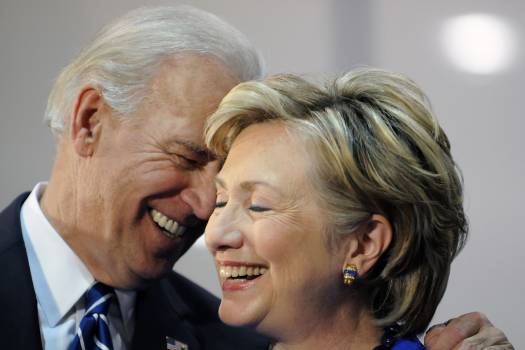
In a push for progressive immigration laws, California Governor Jerry Brown is removing the word “alien” from the state’s labor code. Brown contends the term has come to be used negatively as a pejorative.
“Alien is now commonly considered a derogatory term for a foreign-born person and has very negative connotations,” said Senator Tony Mendoza, author of the bill banning use of the term. “The United States is a country of immigrants who not only form an integral part of our culture and society, but are also critical contributors to our economic success.”
The move is just one in a host of progressive immigration reforms the state is making under Governor Brown, who has also signed into law legislation that protects the rights of immigrant minors in civil lawsuits. The move has been applauded by the more liberal-leaning portions of the state, but has, predictably, come under fire from some conservatives.
Photo Source: e3visa.com
The banning of the word “alien” comes amidst widespread abandonment of the term “illegal alien” in the media. A 2013 survey by the Pew Research Center found that use “illegal alien” among media outlets declined to just 5%, down from 21% usage six years ago.
“The concern is that the use of the word ‘alien’ would dehumanize the people affected” and lead to “lack of protections under the law,” Johnson said.
Noncitizens, who have historically had a difficult time utilizing the country’s legal system, may be afforded easier access to a personal injury attorney, family lawyer, or other legal representative in civil court cases.
In addition, Brown signed into law a bill allowing high-school aged immigrants to serve as poll workers. “Not only are we expanding our access to bilingual poll workers,” said Assemblyman Kevin Mullin, “we are providing high-school-aged lawful permanent residents firsthand experience with American democracy, hopefully inspiring them to become naturalized voting citizens in the future.”
After years of being a moderate state under the Governorship of Arnold Schwarzenegger, California is surging ahead as one of the country’s most progressive regions, especially on the issue of immigration. But immigration reform isn’t the embattled governor’s only concern. Environmental concerns in the state have risen over the last few years, and they reached an all-time high when California entered a state of severe drought.
Governor Brown is currently waging a political battle against the oil companies using California as a resource, saying they sell a “highly destructive” product and contribute to the kind of ecological decline that has put the state in the environmental spotlight. “The oil industry is in deep trouble,” Brown told reporters. “[Oil companies] have a product that is highly destructive, while highly valuable at the same time. And we’re trying to work out the right policies.” Brown proposed cutting the state’s gasoline consumption in half by 2030, but the plan isn’t without its critics.
Representatives of the oil industry say Brown’s plan would lead to gasoline rationing, and could lead the state further into debt. Supporters of the plan accuse the oil industry of “making things up”.
Whatever the truth of the matter is, Governor Brown says he won’t be intimidated. “I have no intention of backing down,” he said. “We’re going to intensify our efforts to do lower-carbon fuels and lower-carbon pollution, now and into the future.”
Governor Brown remains popular with California’s liberal population, and his progressive stances on immigration and the environment reflect a shift in the state’s politics—one that many predicted after the popular but right-leaning Governor Schwarzenegger left office and returned to the world of action movies and wonderfully over-the-top cinema.
Driving while intoxicated is one of the most serious criminal offenses in the United States. In some states, repeat offenders may even be considered felons. DUIs are also extremely common, with 200,000 more cases each year than all theft and larceny offenses combined. With the frequency of cases, a number of popular misconceptions about DUIs have arisen in recent years. Here are five of the biggest DUI myths, as revealed by DUI attorneys.
1. Most people accused of DUI are guilty, and DUI cases are unwinnable.
A popular conception of law enforcement is that if a person is arrested under suspicion of a crime, they are probably guilty. Attorneys note this is a troubling misconception that discourages individuals from defending themselves against accusations. Of particular note, the data police use when arresting someone on suspicion of DUI is oftentimes incomplete. Breathalyzers and field sobriety tests are considered inaccurate measurements of impairment, and a skilled defense lawyer can attack the prosecution’s case if authorities failed to take a blood sample. There are many instances of false positives and a DUI case can be won in favor of the defendant, contrary to popular belief.
Photo Source: duidirectory.wordpress.com
2. You Can “Beat” a Breathalyzer Test
As previously mentioned, Breathalyzers aren’t always an accurate way to determine someone’s blood alcohol content (BAC). However, that doesn’t mean they can be “fooled” by chewing a stick of gum, swilling some mouthwash, or sucking on a penny. What makes Breathalyzers inaccurate are instances of false positives, while false negatives are rare.
It’s best to request blood work be done if you believe you’re the victim of a false positive reading.
3. You Have to Do Everything the Officer Tells You
It might seem beneficial to fully comply with a police officer’s requests, but in cases of suspected DUI or DWI, it’s best to just shut up and call a lawyer. You have rights, and you don’t have to participate in a field sobriety test if you don’t want to. After all, many of us have a hard time balancing on one foot and reciting the alphabet backwards whether we’ve been drinking or not.
4. You Shouldn’t Tell Police You’ve Had Anything to Drink
If you aren’t legally drunk, you aren’t legally drunk. It’s perfectly acceptable to tell police if you’ve had a drink, and stress the time elapsed between having that drink and getting behind the wheel. If you’re caught in a lie, you could be slapped with an obstruction of justice charge, whether you’re guilty of DUI or not.
If you feel you may be legally intoxicated when you get pulled over, it’s best not to say much at all until your lawyer arrives. Remember your Miranda rights: you have the right to remain silent, and anything you say can and will be used against you in a court of law.
5. You Can Pass a Field Sobriety Test
Technically, there’s no such thing as “passing” a field sobriety test, because the tests are not intended to be “pass or fail”. Rather, they’re used as a way for an officer to assess your condition and determine if further testing is necessary. Many times, they’ll ask you to submit to a Breathalyzer test just to be sure. So, no matter how good you are at walking in a straight line or saying your ABCs, it doesn’t really mean much if the officer already suspects you may be intoxicated.
Remember, police can’t force motorists to take a field sobriety test, so it is entirely acceptable to respectfully decline if you’re asked to undergo one.
Egyptian security forces have mistakenly killed 12 people, including Mexican tourists, during an anti-terror operation, Egypt’s interior ministry says.
The tourists were travelling in four vehicles that entered a restricted zone in the Wahat area of the Western Desert, a ministry statement said.
Ten Mexicans and Egyptians were also injured and are being treated in a local hospital.
The ministry said it had formed a team to investigate the incident.
Mexico’s President Enrique Pena Nieto condemned the incident and said he had “demanded an exhaustive investigation by the Egyptian government”.
The Mexican foreign ministry confirmed that at least two of its nationals had been killed and said it was working to confirm the identities of the other victims.
In a statement, the foreign ministry said Mexico’s ambassador in Egypt, Jorge Alvarez Fuentes, had visited the local hospital and spoken to five Mexicans who were in a stable condition.
Photo Reuters
The statement from Egypt’s interior ministry said the four vehicles the tourists were travelling in were “mistakenly dealt with” during a joint military police and armed forces operation.
It said the incident happened on September 13 in an area that “was off limits to foreign tourists”, but it did not give an exact location.
The group of tourists was preparing to camp out in the vast Western Desert when they came under fire.
According to the interior ministry’s statement, the security forces were pursuing Islamic militants in the desert, and targeted the four vehicles which were away from the main road with an Apache helicopter, which shot and hit the four vehicles.
The tour company transporting the tourists “did not have permits and did not inform authorities”, tourism ministry spokesman Rasha Azaz told the Associated Press.
The vast Western Desert area is popular with foreign sightseers, but is also attractive to militants.
The area – which borders Libya – is a gateway to the long border and weapons are available on the other side.
On September 13, ISIS in Egypt claimed it had “resisted a military operation” in the desert.
A group claiming to be affiliated with ISIS also said on the same day that it was present in Farafra.
The insurgency in Egypt gathered momentum after the army overthrew Islamist President Mohamed Morsi of the Muslim Brotherhood in mid-2013 following protests against his rule.
The government says hundreds of police and soldiers have been killed, many of them in attacks claimed by ISIS’ Sinai Province affiliate.
Up until recently most of the fighting has taken place in the Sinai Peninsula with occasional attacks taking place in Cairo and other cities.
Two Malaysians and one Pakistani have been arrested in Malaysia in connection with last month’s deadly bombing at the Erawan shrine in Bangkok, Thailand.
Malaysian police chief Khalid Abu Bakar said they were detained a few days ago and were assisting with the investigation.
Thailand has launched a manhunt for those responsible for the bombing which killed 20 people and injured 120 on August 17.
Thai police have arrested two people and are searching for a third man, said to be from China’s Xinjiang region.
Khalid Abu Bakar told reporters on September 14 that the three suspects are a Pakistani man, a Malaysian man, and a Malaysian woman, who were arrested based on a tip-off from Thai authorities.
Photo Reuters
He said the suspects would not yet be transferred to Thailand, as Malaysian police are still investigating. He did not give further details on the reason for their detention.
No group has stepped forward to claim responsibility for the attack at the Erawan shrine, but Thailand has alleged that a network which includes foreigners was behind the bombing.
Over the weekend, Thailand issued an arrest warrant for a 27-year-old Muslim man called Abudusataer Abudureheman, also known as Ishan, from Xinjiang.
Abudusataer Abudureheman is reported to have left Bangkok for Bangladesh one day before the bomb blast, and is believed by police to have played a prominent role in the attack.
Thai authorities have already arrested two other suspects: Adem Karadag, whose nationality has yet to be verified, and Yusufu Meraili, who officials say is a Chinese national born in Xinjiang.
Xinjiang is home to a significant number of Uighur Muslims, and Chinese authorities have faced criticism for the perceived harsh restrictions placed on religion and culture in the region.
Thailand recently found itself in the spotlight following its forced repatriation of more than 100 Uighurs to China.
China’s stocks fell on September 14 after economic data released on the previous day underlined fears growth is slackening.
Growth in both fixed-asset investment, up 10.9% in August from a year ago, and factory output, at 6.1%, came in below expectations.
The Shanghai Composite index closed down 2.67% at 3,114.80, while Hong Kong’s Hang Seng was flat, up just 0.16% at 21,538.97.
The Shanghai index has lost nearly 40% since its peak in mid-June.
Shares of four of China’s largest brokerages tumbled as much as 7% following news of fines and penalties from the securities regulator for failing to conduct proper checks on clients.
The four were fined 178.5 million yuan ($28 million) and had 62.4 million yuan of profits confiscated, according to the securities filings by the companies.
Regulators have been cracking down on trading firms to stem the volatility that has rocked the markets for the past few months.
Photo Getty Images
The rest of Asian shares traded mixed, despite Friday’s positive finish on Wall Street, with investors cautious in advance of the Federal Reserve meeting this week.
All eyes are on the US policy meeting, which ends with a decision on September 17 on whether to raise interest rates for the first time in almost a decade.
Economists are split on whether the long-awaited move will happen.
Japan’s benchmark Nikkei 225 index finished down 1.6% to 17,965.70 points.
Japanese investors are also looking ahead to the conclusion of the Bank of Japan’s two-day policy meeting on Tuesday, where they are expected to maintain their easing program.
In Australia, the benchmark S&P/ASX 200 closed up 0.6% to 5,102.30.
Shares in Oil Search reversed earlier losses to close up 0.2% after it rejected an $8 billion takeover proposal from Australia’s biggest energy company Woodside Petroleum, saying the offer was too cheap.
South Korea’s benchmark Kospi ended down 0.5% to 1,931.46.
More than 50 activists who took part in a march calling on the Cuban government to release political prisoners have been detained in Havana.
The arrests come less than a week before a visit to Cuba by Pope Francis.
Most of the activists were members of the predominantly Catholic dissident group, Ladies in White.
They walked through the streets of Havana holding up pictures of political prisoners, before they were rounded up by police.
According to Cuba’s main dissident website, 14yMedio, members of Ladies in White and activists from other opposition groups were handcuffed and pushed into police cars and buses on September 13.
A number of them were released hours later, it said.
Cuba says the protesters are financed by right-wing American groups to destabilize the government.
Cuban dissidents are planning to protest during Pope Francis’ visit to Cuba, which begins on September 19.
They have accused the Cuban Catholic Church of becoming too cozy with the government of Raul Castro and failing to speak out against human rights abuses.
“The Church should be concerned about this or any time human rights are involved. It’s their duty,” said Jose Daniel Ferrer, head of leading dissident group Patriotic Union of Cuba.
Jose Daniel Ferrer told Reuters he was handcuffed and taken to a police station after Sunday’s protest.
Police later dropped him off at a bus terminal, he said.
The Cuban Catholic Church says it defends the respect of human rights but cannot take up individual political causes.
Pope Francis played a key role in facilitating the historic negotiations between Cuba and the US, which led to diplomatic relations being restored after more than five decades of hostilities.
Senior Cuban and American officials met in secrets for months at the Vatican before Presidents Barack Obama and Raul Castro surprised the world last December by announcing they had agreed to mend relations.
California Governor Jerry Brown has declared a state of emergency after wildfires forced thousands of people to flee their homes in the north of the state.
He said the fires had destroyed buildings in the Napa and Lake counties and threatened hundreds of others.
More than 1,300 people fled Middletown, north of San Francisco, as their homes were consumed by the flames.
Four firefighters who were badly burned are receiving treatment in hospital.
The fires across northern California are being blamed on high temperatures and years of drought.
California spent $212 million fighting the flames in July alone, California’s forestry and fire protection department spokesman Daniel Berlant told the AFP news agency.
Daniel Berlant said more than 275 homes and other buildings had been destroyed and the Red Cross is opening emergency shelters for evacuated residents.
One blaze, the Valley Fire, which started on September 12 in Lake County, is said to have burned 40,000 acres.
It was reported to have reached the center of the small town of Middletown on September 13. Its 1,500 residents had already been ordered to evacuate.
The fire spread quickly and witnesses saw flames reach up to 200ft in the air, according to local news reports.
Further east, in Amador and Calaveras counties, around 4,000 firefighters are battling the Butte Fire, which broke out on September 9.
That blaze has so far destroyed around 65,000 acres along with 86 homes and 51 outbuildings. It is only 15% contained and threatens more than 6,000 other buildings, officials say.
Further south, beyond Fresno, firefighters have been tackling the largest of the blazes, the so-called Rough Fire, which has claimed 128,800 acres since it began in late July.
Nearly 3,000 firefighters are tackling that blaze, which is now said to be 29% contained.
They have evacuated the Kings Canyon National Park and working to protect the park’s famous grove of Giant Sequoia trees.
Novak Djokovic beat Roger Federer in four sets to win his second US Open and 10th Grand Slam title.
The world No 1 won 6-4 5-7 6-4 6-4 in New York, and will end the year with three of the four tennis majors.
Novak Djokovic, 28, held his nerve in front of a heavily pro-Federer crowd at Flushing Meadows.
Roger Federer, 34, had been hoping to win his 18th major title and first for three years.
In a raucous night session on Arthur Ashe Stadium, after the start of play was delayed by more than three hours because of rain, the Swiss looked to have a real chance in the third set.
However, Novak Djokovic broke the Federer serve six times and saved 19 of 23 break points as he battled his way to a 27th win in 28 Grand Slam matches this year.
Novak Djokovic took another step towards joining the very best in history with a 10th major title, moving him within one of Bjorn Borg and Rod Laver in the all-time list.
Defeat by Stan Wawrinka in the French Open final in June means Novak Djokovic was just one win short of completing the first calendar Grand Slam in men’s tennis since Laver in 1969.
“It’s been an incredible season, next to 2011 the best of my life,” said Novak Djokovic.
He won three Grand Slam titles four years ago.
“I’m enjoying this year more than I did any previous one because I’m a husband and a father, and that makes it sweeter.”
Five-time champion Roger Federer was playing his first US Open final since 2009, and drew one of the loudest cheers of the night when he told the crowd: “I’ll see you guys next year.”
Roger Federer said it was “always tough” facing Novak Djokovic, adding: “I think we both walk away from it knowing more about our games and more about each other.
Paul Walker’s daughter, Meadow, has launched a foundation in the Fast and Furious actor’s memory to mark his birthday on September 12.
Meadow Walker, 16, tweeted that she wanted to start the Paul Walker Foundation to “share a piece of my father with the world”.
The foundation’s mission statement is “Do Good”, reflecting his passions for the ocean, for helping people and animals and “spontaneous goodwill”.
Paul Walker died in a car crash in 2013.
He was killed by impact and a fire in the crash in California.
Photo Facebook
Paul Walker, who was 40 when he died, was a passenger in the Porsche that a friend was driving when it hit a pole and burst into flames.
The foundation is aimed at “empowering future generations by providing grants, scholarship opportunities and spontaneous acts of goodwill”.
Meadow Walker wrote on Instagram: “I can’t think of a better way to celebrate my father.”
Paul Walker was also known for making documentaries about sharks with the National Geographic Channel, having studied marine biology before becoming an actor.
The actor’s death prompted a huge outpouring of tributes from fans and people who had worked with him, including his Fast and Furious co-star Vin Diesel, who went on to name his daughter Pauline in honor of his friend.
The posthumous release of Paul Walker’s Furious 7 took $384 million at the global box office in its opening weekend.
Venezuelan movie Desde Alla (From Afar) has won the top Golden Lion prize at this year’s Venice film festival.
In his debut feature film, director Lorenzo Vigas tells the story of a rich man who starts a relationship with a young man from one of Caracas’ gangs.
“I want to dedicate this prize to my amazing country, Venezuela.
“I know we have a few problems, but if we talk about them we will overcome them,” Lorenzo Vigas said.
Venezuela is going through a serious economic crisis, which led to months of street protests last year over the shortage of many goods.
On September 10, prominent Venezuelan opposition leader Leopoldo Lopez was sentenced to 13 years and nine months in prison for inciting violence during the protests.
Photo Reuters
Films should help Latin American countries “learn from the mistakes of the past,” Lorenzo Vigas added.
Meanwhile, Pablo Trapero’s Argentine crime thriller, The Clan, won the Silver Lion for best director.
The movie, which was a blockbuster in Argentina, tells the true story of an ordinary Buenos Aires family that abducted wealthy people for ransom and hid them in their house before killing them.
Mexican director Alfonso Cuaron was the president of this year’s Venice Film Festival jury.
He said he was pleased by the fact that a Latin American movie had won the top prize, but said it was “only a coincidence” that the jury had been led by a Mexican.
The runner-up Grand Jury Prize went to the American comedy fantasy Anomalisa, directed by Duke Johnson and Charlie Kaufman.
The best actor prize went to Fabrice Luchini, who played a judge in Christian Vincent’s L’Hermine (Courted).
Germany will introduce temporary controls on its border with Austria to cope with the influx of refugees, Interior Minister Thomas de Maiziere has announced.
Thomas de Maiziere said refugees could “not choose” their host countries and called on other EU states to do more.
Trains between Germany and Austria have been suspended for 12 hours.
Germany’s vice-chancellor has said his country is “at the limit of its capabilities” as more than 13,000 migrants arrived in Munich on September 12.
Germany expects 800,000 migrants to arrive this year.
Photo EPA
“The aim of these measures is to limit the current inflows to Germany and to return to orderly procedures when people enter the country,” Thomas de Maiziere told a news conference.
He gave no details. The move goes against the principle of the Schengen zone, which allows free movement between many European countries. However, the agreement does allow for temporary suspensions.
Germany’s rail service Deutsche Bahn said train services with Austria would be stopped until 03:00GMT on September 14.
Many refugees have been refusing to register in countries such as Greece or Hungary, fearing it will stop them being granted asylum in Germany or other EU states.
The city of Munich, in the German state of Bavaria, has taken the brunt of arrivals over the weekend.
Bavarian Premier Horst Seehofer said the controls sent an “important signal”.
Hungary’s PM Viktor Orban, who has taken a tough line on the migrant crisis, told Germany’s Bild newspaper he welcomed the new controls, saying they were “necessary to protect German and European values”.
On September 13, the Czech Republic also said it would boost border controls with Austria.
Europe as a whole is struggling to deal with an enormous influx of people, mostly from Syria but also Afghanistan, Eritrea and other countries, fleeing violence and poverty.
On the same day, Greek coastguards said at least 34 people, including 11 children, drowned when a boat carrying about 100 migrants capsized off the island of Farmakonisi in the southern Aegean Sea.
Earlier on Sunday, Germany’s Vice-Chancellor Sigmar Gabriel, who is also economy minister, warned his country was being stretched to its limits by the new arrivals.
“It is not just a question of the number of migrants, but also the speed at which they are arriving that makes the situation so difficult to handle,” he told the Tagesspiegel newspaper.
Sigmar Gabriel also called on European countries, Gulf states and the US to give billions of euros towards schools, accommodation and food in refugee camps in the Middle East.
A steady stream of refugees is travelling from Greece, through Macedonia, Serbia and Hungary, to Austria and Germany.
Hungary is aiming to complete a 13ft-high fence along the border with Serbia by September 15, when tougher measures, including arresting illegal immigrants, come into force.
The European Commission announced plans last week for mandatory quotas to share out 120,000 additional asylum seekers among 25 member countries.
The Czech Republic, Slovakia, Hungary and Romania are opposed to this.
Thousands of people in northern California have fled their homes as some 5,000 firefighters tackle wildfires.
One blaze, the Valley Fire, which started on September 12 in Lake County, north of San Francisco, has already burned 40,000 acres.
Four firefighters were injured and had to be airlifted to hospital, where they are said to be in a stable condition.
The fires across northern California are being blamed on high temperatures and years of drought.
California spent $212 million fighting the flames in July alone, California’s forestry and fire protection department spokesman Daniel Berlant told the AFP news agency.
Daniel Berlant said more than 275 homes and other buildings had been destroyed and the Red Cross is opening emergency shelters for evacuated residents.
The small town of Middletown looked to be under threat from the Valley Fire on September 13. Its 1,500 residents had already been ordered to evacuate.
Local media reported that the much of the town centre was ablaze.
The fire spread quickly and witnesses saw flames reach up to 200ft in the air, the local Press Democrat newspaper reports.
Further east, in Amador and Calaveras counties, around 4,000 firefighters are battling the Butte Fire, which broke out on Wednesday.
That blaze has so far destroyed around 65,000 acres along with 86 homes and 51 outbuildings. It is only 15% contained and threatens more than 6,000 other buildings, officials say.
Further south, beyond Fresno, firefighters have been tackling the largest of the blazes, the so-called Rough Fire, which has claimed 128,800 acres since it began in late July.
Nearly 3,000 firefighters are tackling that blaze, which is now said to be 29% contained.
They have evacuated the Kings Canyon National Park and working to protect the park’s famous grove of Giant Sequoia trees.
According to latest figures, growth in China’s investment and factory output in August 2015 has come in below forecasts, in a further indication that the world’s second-largest economy is losing steam.
Factory output grew by 6.1% from the year before – below forecasts of 6.4%.
Growth in fixed-asset investment – largely property – slowed to 10.9% for the year-to-date, a 15-year low.
Growing evidence that China’s economic powerhouse is slowing down has caused major investment market falls.
Other indications that China’s economy is weakening can be seen in falling car sales and lower imports and inflation.
Chinese manufacturers cut prices at their fastest pace in six years, largely on the back of a drop in commodity prices, which have dropped sharply over the past year as demand from China faltered.
Last week, Chinese PM Li Keqiang, said his country remained on track to meet all its economic targets for this year despite the economic data.
China has already cut interests rates five times since November 2014 to encourage lending and spur economic activity, along with other measures to boost growth.
PM Li Keqiang pledged that China would take more steps to boost domestic demand and that it would implement more policies designed to lift imports.
China recently revised down its 2014 growth figures from 7.4% to 7.3% – its weakest showing in nearly 25 years.
For 2015, the Chinese government is targeting annual economic growth of about 7%.
Meanwhile, the Chinese authorities said they would take new steps towards a more market-based economic system by offering shares in state-owned businesses to private investors.
The move, which they said would help improve corporate governance and asset management, is planned to take place before 2020.
China’s industrial economy is dominated by 111 conglomerates which are state owned.
NBA legend Moses Malone has died at the age of 60, according to multiple reports.
Moses Malone died in his sleep at a hotel in Virginia where he was set to play in a golf tournament, former teammate Calvin Murphy told Fox 26.
A three-time NBA MVP and one of the greatest players in professional basketball history, Moses Malone went straight to the ABA from high school in 1974 and starred in the startup league before becoming a legend when the ABA and NBA merged.
Photo ESPN
Moses Malone’s greatest achievement might have come in helping lead the 76ers to the 1983 NBA title during a season in which he won his second consecutive league MVP honor and third overall as the team went 12-1 in the playoffs.
The 76ers released a statement shortly after news of Moses Malone’s death broke: “It is with a deep sense of sadness that the Sixers family mourns the sudden loss of Moses Malone. It is difficult to express what his contributions to this organization – both as a friend and player – have meant to us, the city of Philadelphia and his faithful fans. Moses holds a special place in our hearts and will forever be remembered as a genuine icon and pillar of the most storied era in the history of Philadelphia 76ers basketball. No one person has ever conveyed more with so few words — including three of the most iconic in this city’s history. His generosity, towering personality and incomparable sense of humor will truly be missed. We will keep his family in our thoughts and prayers and as we are once again reminded of the preciousness of life.”
Moses Malone remained in the league for more than a decade after that, ending his career with a brief run as a backup to David Robinson in San Antonio in 1994-95 as a 39-year-old.
State-owned Japan Post is seeking to raise as much as 1.39 trillion yen ($11.5 billion) in a stock market listing that would be one of the world’s biggest this year.
The plan for the Japanese giant corporation would be one of the country’s largest public share sales in more than 30 years.
The share sale is aimed at boosting Japan’s economy and stock markets.
Japan’s economy shrank in Q2 2015 – a setback for the government’s reform policy.
“We are hopeful it will lead to a virtuous economic cycle,” a senior government official said.
Chief cabinet secretary Yoshihide Suga said the share offering would encourage a shift of savings out of bank deposits and into the stock market.
Earlier this month, Japan said its economy contracted by 0.3% in the three months to June, compared with original calculations of a 0.4% contraction.
The revision beat market expectations, which were for a contraction of 0.5%, but analysts said it had not eased concerns about the state of the economy.
Lagging exports and sluggish consumer spending were the biggest contributors to the drop in growth. Consumer spending makes up some 60% of Japan’s economy.
About 80% of the shares in Japan Post Holdings would go to domestic investors, reports said.
Japan Post is headed up by Toru Takahashi, employs some 195,000 people, and has 24,000 post offices.
The giant corporation also controls the country’s largest bank, Japan Post Bank, and Japan Post Insurance, the biggest insurer.
In February, Japan Post announced a $5.1 billion offer for Australia’s Toll Holdings, the largest transport and logistics company in the Asia-Pacific region.
The deal, which went through for $4.6 billion in May, has helped Japan Post become a leading global logistics player.
The Japan Post triple market debut, including its bank and insurance arms, is expected to occur in early November.
Google’s Android Pay is now available at more than one million locations in the US competing with Apple Pay in the burgeoning mobile payments market.
The mobile payments market is estimated to be worth $1trillion in 2017.
Technology companies are trying to convince shoppers to use their handsets, rather than plastic cards, to pay for purchases.
Android Pay can be used with smart phones that have near-field communication (NFC) capability and Google’s KitKat 4.4+ operating system.
Google’s mobile payment system will allow users to store their credit card details on their phones, as well as loyalty cards and other data.
Existing users of the Google Wallet app can access Android Pay through an update, while new users can download it from the Google Play app store in the coming days.
Retailers including Macy’s, Bloomingdale’s and Subway are among the first to participate in Android Pay, with more to come.
It will be extended to mobile checkouts in some apps later this year.
Android Pay will support credit and debit cards from providers including MasterCard, Visa and American Express, as well as banks including Bank of America, with Citigroup and Wells Fargo to follow.
Rather than passing users’ credit card details to a retailer, both the Google and Apple systems generate a “token” so the actual data is not revealed during a transaction, reducing the risk of data theft.
Last month, Samsung launched its own mobile wallet service, called Samsung Pay, in South Korea.
Samsung Pay will be available in the US from September 28, with countries including the UK, Spain and China to follow.
Google is yet to reveal when Android Pay will be available outside the US.
The foreign ministers of Hungary, Poland, the Czech Republic and Slovakia are to meet their counterpart from Germany and current EU presidency holder Luxembourg, amid a growing row over refugee quotas.
The Central European countries – the so-called Visegrad-four – reject quotas proposed by the EU Commission and backed by Germany.
The talks in Prague are expected to focus on this issue.
The European Commission wants 120,000 additional asylum seekers per year to be shared out between 28 EU members.
This would be a sharp increase from the current 40,000.
Photo Getty Images
In recent weeks, tens of thousands of migrants have been desperately trying to flee conflicts in countries like Syria and Libya. Many of them travel through Hungary to Germany, Austria and Sweden – wealthier EU nations with more liberal asylum laws.
The Central European nations have all rejected the proposed compulsory quotas.
This is despite the fact that each of them would take in far fewer refugees than Germany if the EU backs the proposals.
Ahead of the Prague meeting, the Czech Foreign Ministry said it was aimed at improving “better mutual understanding among EU member states… [in light of] some differing views”.
Hungary in particular has become a key point on the journey north for the migrants, with more than 150,000 people arriving this year.
On September 9, the Hungarian army started military exercises to prepare for a possible future role in guarding the border and stemming the flow of people – a move criticized by human rights groups.
A new razor-wire barrier is also being built along Hungary’s border with Serbia.
The authorities in Hungary have been told to expect 40,000 more migrants by next week.
At least three people have died in Japan’s severe flooding and hundreds of people are stranded.
The deaths were in the badly hit prefectures of Tochigi and Miyagi, both north of the capital, Tokyo.
According to officials, 26 people are still missing, 25 of them in or around Joso city in Ibaraki, where the Kinugawa River burst its banks on September 10.
Officials have warned of further heavy rain and the risk of mudslides.
The torrential rain comes in the wake of Typhoon Etau, which ploughed through Japan earlier this week.
Officials have confirmed that a 63-year-old woman was killed when her house was hit by a landslide in Kanuma City in Tochigi.
A second woman, 48, was killed after her car was swept away in Kurihara city in Miyagi. And in hot spring resort of Nikko in Tochigi, a man died after falling into a drain he was trying to clear.
At least 27 people have been injured, eight seriously.
In Joso, nearly 6,000 emergency service workers are trying to reach stranded people. Many rescuers had worked through the night.
Photo Reuters
Officials in the city of 60,000, about 30 miles northeast of Tokyo, said 22 people there had lost contact after requesting help. NHK reported that two eight-year-old children were believed to be among them.
Akira Motokawa, a Joso city evacuation official, told national broadcaster NHK that rescuers had been unable to keep up with the volume of calls for help.
Thousands have been taken to temporary shelters, many carrying almost nothing with them.
Floodwaters in Joso had subsided somewhat by September 11, but much of the city was still under water and it is not clear when evacuees will be able to return home.
Takuya Deshimaru, chief forecaster at the Japan Meteorological Agency (JMA), has said the rainfall over the past few days was “unprecedented”.
In Tochigi, more than 19 inches of rain fell in 24 hours in places, double the amount that normally falls there throughout the whole of September, according to NHK.
Parts of central Tochigi have seen almost 24in of rain since September 7, breaking records.
A severe rain warning remains in effect for large areas of northeastern Japan.
Venezuela’s opposition leader Leopoldo Lopez has been sentenced to 13 years and nine months in jail for inciting violence.
Leopoldo Lopez, 44, was found guilty of inciting violence during protests in 2014 in which 43 people – from both sides of the political divide – were killed.
He had been held in a military prison since February 2014.
While the court verdict was being awaited, fighting broke out between his supporters and pro-government activists outside the courthouse in Caracas.
Leopoldo Lopez’s supporters said one of them had suffered a heart-attack during the disturbances.
The court ruling was revealed by Leopoldo Lopez’s Voluntad Popular (Popular Will) political party and later confirmed by his lawyers.
Leopoldo Lopez’s defense team earlier said there had been serious irregularities in the trial, with the judge hearing 138 witnesses for the prosecution but only one of the 50 witnesses and pieces of evidence submitted by the defense.
His family says he has been in solitary confinement for most of his 19 months in prison and that his human rights have been violated.
Several other opposition leaders have also been held in detention and their fate has divided opinion in Venezuela.
The US government and the United Nations have called for their release.
Reacting to the court verdict, US Assistant Secretary of State for Western Hemisphere Affairs Roberta Jacobson said she was “deeply concerned” by the conviction.
Roberta Jacobson also urged the Venezuelan government to “protect democracy” in the country.
For many poorer Venezuelans, Leopoldo Lopez is seen as a dangerous figure who incites violence and coups against the government and who is out of touch with the needs of most ordinary people.
His critics point to his involvement in 2002 in a failed coup attempt against late President Hugo Chavez.
However, Leopoldo Lopez’s supporters say he is a scapegoat for current President Nicolas Maduro during Venezuela’s economic crisis that has led to shortages of basic goods.
South Korean Kim Ki-jong, who stabbed US Ambassador Mark Lippert earlier this year, has been sentenced to 12 years in jail for attempted murder.
Kim Ki-jong, 56, attacked Mark Lippert at a breakfast function in a Seoul hotel on March 5.
The US ambassador in South Korea needed 80 stitches in his face and hand and was left scarred.
Kim Ki-jong, a known Korean nationalist, had made multiple visits to North Korea.
He said he was protesting against joint South Korean-US military drills but did not intend to kill Mark Lippert.
The prosecution, however, argued the force of the attack was so great that it might well have been fatal. They had sought a 15-year prison term.
Kim Ki-jong was also convicted of assaulting a foreign envoy, but cleared of a charge under the National Security Law of assisting North Korea.
The Seoul Central District Court said he had “shown no repentance, attempting to justify his actions throughout the trial,” the AFP news agency reported.
Mark Lippert spent five days in hospital but has since returned to work and said the US mission in Seoul would remain “open and friendly”.
The US has some 28,000 military personnel based in South Korea, and the two militaries regularly carry out military exercises together.
The drills are an ongoing source of tensions with North Korea, which views them as preparation for war. They are also unpopular with many in South Korea, with demonstrations regularly staged against them.
Polls have opened in Singapore for an election that is widely expected to see the ruling People’s Action Party (PAP) stay in power.
However, for the first time ever, opposition candidates are running in all constituencies, and could gain seats.
It is also the first election since the death of long-term leader Lee Kuan Yew, founder of the ruling PAP and the prime minister’s father.
The PAP has won every election since Singapore’s independence in 1965.
The PAP’s success has been attributed to its widespread popularity among Singaporeans – who have seen their country rapidly evolve into a first-world economy – as well as its tight political control.
Government stumbles in managing immigration and infrastructure, coupled with a greater desire by younger Singaporeans for political plurality, has led to increasing gains by opposition parties over the years.
The PAP’s biggest competition is the Workers Party, which in the last parliament had seven members of parliament out of 87 seats, but a number of smaller parties are also running. The next parliament will have 89 seats.
In previous elections, the PAP has retained some of its seats without a vote – known as a walkover – as no opposition candidate ran against them. But this year every seat is being contested.
The voting comes at the end of a colorful but brief nine-day election campaign period.
At least two million Singaporeans are expected to cast their vote at polling stations which will close at 20:00 local time on September 11.
The elections department, for the first time, will be announcing sample counts soon after voting closes. Opinion and exit polls are not allowed in Singapore’s elections.
The head of a giant Lenin statue has been unearthed in Germany, 24 years after it was buried in a forest.
Workers dug up the granite structure from woodland outside capital Berlin, following a campaign by historians.
The head was once part of a 62ft monument to the Russian communist leader, which towered over the east of Berlin.
Lenin statue was dismantled in 1991 after the fall of the Berlin Wall and the pieces were buried in a secluded forest.
The structure famously featured in the 2003 film comedy, Good Bye Lenin, about German reunification. In one scene it was airlifted through the city by a helicopter.
Lenin’s 3.5 tonne head will now be transported from the forest to West Berlin’s Spandau Citadelle museum to be included in an exhibition about German monuments.
The head is the only part of the statue to be excavated.
According to the White House, President Barack Obama has called for the US to prepare to accept “at least” 10,000 Syrian refugees in 2016.
That number is significantly higher than the 1,500 Syrians that have been permitted to re-settle in the US since the start of the conflict.
The 10,000 figure is still much lower than the 340,000 asylum seekers who arrived in Europe this year.
Since the beginning of the conflict the US has given $4 billion in aid.
The increase in accepting refugees displays a “significant scaling up” of US commitment to accept people from conflict zones and help provide for their needs,” White House Press Secretary Josh Earnest said.
Photo Getty Images
Congress would have to make a “significant financial commitment” in order to allow for additional 10,000 refugees to the US, Josh Earnest said.
The United Nations High Commissioner for Refugees (UNHCR) has registered four million Syrians as refugees, and it has asked governments around the world to resettle 130,000 Syrian refugees by the end of 2016.
In May, 14 Senators penned a letter to President Barack Obama asking him to allow 65,000 Syrian refugees to settle inside the US.
Humanitarian aid money remains the most effective way to fight the problem for the US, Josh Earnest said, and it is “not feasible” for millions of Syrians to come to the country.
Asked at a press briefing why the US was not accepting as many refugees as the UK, as a larger country, Josh Earnest said the US wants to meet the “most urgent, immediate needs” of migrants like basic medical care, food, water and shelter.
The security screening migrants must go through when arriving in the US can take 12 to 18 months, and the “safety and security of the US homeland” comes first, he said.
There have been concerns expressed that terrorists could exploit the refugee system to enter the country and carry out an attack, but experts say that fear is overblown.
Stephen Colbert has made his debut as CBS’ Late Show host, succeeding David Letterman who retired in May after 33 years.
George Clooney and Republican White House contender Jeb Bush were among Stephen Colbert’s first guests.
The former Colbert Report host opened the show with a sketch, singing the national anthem around the country.
Stephen Colbert also paid tribute to his predecessor David Letterman, calling himself “a fan”.
“We will try to honor his achievement by doing the best show we can and occasionally making the network very mad at us,” he said.
“As long as I have nine months to make one hour of TV, I could do this forever,” Stephen Colbert added.
The comedian played a hardline conservative in his previous show, Comedy Central’s satirical news show The Colbert Report, but he appeared as himself for his mainstream debut.
Stephen Colbert presented his first guest George Clooney with a belated wedding gift for his marriage last year to human rights lawyer Amal Alamuddin – a Tiffany paperweight inscribed with the phrase: “I don’t know you.”
He also binged on a bag of Oreo cookies as he made jokes about Donald Trump, who recently vowed never to eat Oreos again after makers Nabisco Inc said it was opening a new plant in Mexico.
Fellow late-night TV figures also wished him well – including NBC rival Jimmy Fallon who said: “Have a good show, buddy. See you in the locker room.”
The broadcast ended with Stephen Colbert singing with his new house band, led by Jon Batiste, in a cover of Sly and the Family Stone’s Everyday People.
They were joined by Mavis Staples, Aloe Blacc, Ben Folds and Buddy Guy, amongst others.