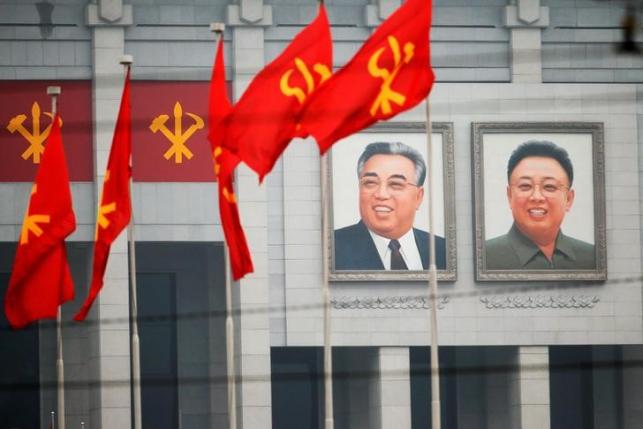
The head of South Korea’s 2018 Winter Olympics organizing committee, Cho Yang-ho, has resigned.
Cho Yang-ho said he wanted to focus on “urgent matters” with his business group, which includes the struggling Hanjin Shipping carrier, the Yonhap news agency reports.
Hanjin Shipping, South Korea’s largest shipper by assets, is facing severe financial difficulties and Cho Yang-ho needed to focus his efforts on restructuring and stabilizing the company.
Photo LA Times
Cho Yang-ho is the chairman of the Hanjin conglomerate, which also controls the nation’s flag carrier Korean Air, a corporate sponsor of the 2018 Games.
According to reports, Cho Yang-ho, who took on the role in 2014, was nearing the end of his two-year term.
The Winter Games are due to take place in Pyeongchang in February 2018.
In March, the International Olympic Committee (IOC) said it was confident South Korea’s preparations were “moving in the right direction”.
Cho Yang-ho said he had “truly put forward my very best efforts to work with every member of the organizing committee to prepare a successful Olympic and Paralympic Winter Games in 2018.”
He said he would “continue to support Pyeongchang through to the Games in 2018”.
In April, Hanjin Shipping said it would ask creditor banks to restructure its debt. It had debt of 5.6 trillion won ($4.92 billion) and a debt-to-equity ratio of nearly 850 percent as at the end of 2015, according to the company.
Brazil’s Supreme Court has been asked by Attorney General Rodrigo Janot to authorize the start of corruption investigations against prominent opposition leader Aecio Neves.
Senator Aecio Neves, who narrowly lost the 2014 election to President Dilma Rousseff, was previously included in a list of some 50 politicians thought to have taken bribes originating from state-run companies, including electricity company Furnas.
The case is linked to the huge corruption scandal that has rocked Brazilian politics over the past year.
Aecio Neves denies any wrongdoing.
If the Supreme Court agrees to open an investigation, the senator will be called to testify within 90 days, Folha de Sao Paulo newspaper reported.
The case is based on allegations made by Senator Delcidio Amaral as part of a plea bargain.
A former leader of the Workers’ Party in the Senate, Delcidio Amaral was arrested in November.
Senator Delcidio Amaral had been secretly recorded allegedly discussing plans to help a detained official flee Brazil in return for not implicating him in a major corruption scandal at Petrobras.
He was released in February after he agreed to testify against other suspects.
Delcidio Amaral said that Aecio Neves had received bribes from officials at Furnas.
He said the scheme was similar to that operated at Petrobras: Brazil’s top construction companies paid bribes to politicians, political parties and senior executives at the company in order to secure lucrative overpriced contracts.
Aecio Neves’s office rejected the allegations, with an aide telling reporters: “References to Senator Aecio’s name are all based on hearsay. There is no proof or evidence of any irregularity.
“These are old questions that have already been the subject of previous investigations, which were thrown out, or questions that have no relation to the senator.”
Rodrigo Janot has also requested the opening of a corruption probe against other senior politicians and officials, the Speaker of the lower house of Congress, Eduardo Cunha, and President Dilma Rousseff’s press secretary Edinho Silva.
Prince’s family has begun the process of dividing up the singer’s sizeable assets.
The iconic musician left no known will and his assets are estimated to be worth about $100 million.
Prince died at his Paisley Park compound outside Minneapolis, Minnesota, on April 21.
The singer’s sister, Tyka Nelson, and half-siblings are the apparent heirs to his estate, authorities have said.
Tyka Nelson and Prince’s half-sibling Alfred Jackson attended a hearing on May 2 at the Carver County courthouse in Minnesota, where lawyers began surveying the singer’s estate.
If no will is found, the state will determine how the money is divided up.
Photo Getty Images
During the short hearing, Judge Kevin Eide formally appointed Bremer Trust National Association as the special administration to oversee Prince’s probate case.
One attorney said there was an “ongoing search” for a will.
Investigators are still determining how Prince died at the age of 57.
Prescription painkillers were in Prince’s possession when he died. However, it is unclear what role, if any, those drugs may have played.
A law enforcement official confirmed to the Associated Press that investigators were looking into whether Prince died from a drug overdose and whether a doctor was prescribing him drugs in the weeks before his death.
According to ABC News, a vault containing unreleased Prince’s songs was found at his estate and will be drilled open by the company with temporary authority over his estate.
Prince told The View about his unreleased music in 2012.
Enough music was apparently left behind to release an album a year for the next century.
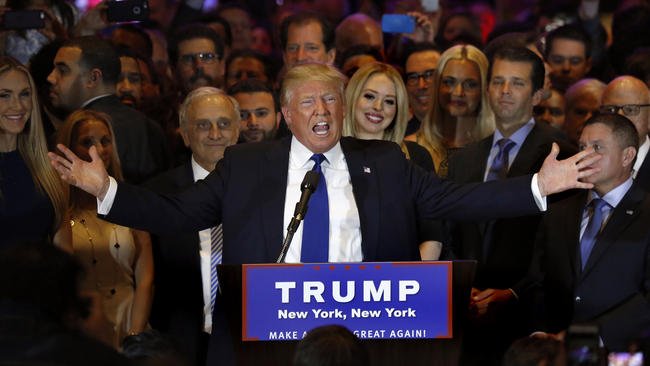
Donald Trump has accused China of “raping” the United States, in renewed criticism of the Asian country’s trade policy.
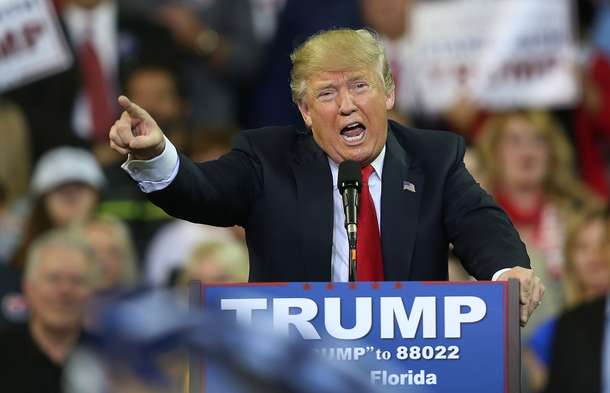
The Republican presidential front-runner told a rally in Indiana that China was responsible for “the greatest theft in the history of the world”.
Donald Trump has long accused China of manipulating its currency to make its exports more competitive globally.
This, the New York billionaire says, has badly damaged US businesses and workers.
On May 1, Donald Trump told the campaign rally: “We can’t continue to allow China to rape our country, and that’s what we’re doing.
“We’re going to turn it around, and we have the cards, don’t forget it,” he added. “We have a lot of power with China.”
Chinese PM Li Keqiang has said the US election “has been lively and has caught the eye”, but many in his country see it as more than that.
They consider Donald Trump an inspiration rather than an antagonist.
In his America First campaign manifesto, Donald Trump pledges to “cut a better deal with China that helps American businesses and workers compete”.
Donald Trump sets out four goals that include immediately declaring China “a currency manipulator” and putting “an end to China’s illegal export subsidies and lax labor and environmental standards”.
According to latest figures, the US trade deficit with China reached an all-time high of $365.7 billion in 2015. By February 2016 the trade deficit had already reached $57 billion.
This is the first time Donald Trump has used the word “rape” in the context of China and trade, but his campaign has been punctuated by inflammatory comments.
Australia stock market traded low on May 2 with the benchmark S&P ASX 200 finishing lower by 0.18% at 5,243 points.
Shares in Australia’s third largest lender, Westpac, closed down 3.54% on the Sydney stock market, after having lost as much as 5.7% earlier in the session.
Westpac reported a 3% rise in profits for the six months to March 2016.
Earnings rose to A$3.9 billion ($2.96 billion), however industry analysts were expecting the figure to come in just above A$4 billion.
Westpac has attributed the shortfall to higher debt charges.
Also in Australia, the country’s Treasurer Scott Morrison will deliver the federal budget for 2016-2017 on May 3. According to local media, there will be tax cuts for business in the budget.
However, ahead of the budget, the country’s central bank – The Reserve Bank of Australia – will hold its annual meeting on interest rates.
The key lending rate in Australia is at a record low of 2%.
Craig Wright has publicly identified himself as digital cash system Bitcoin creator Satoshi Nakamoto.
The Australian entrepreneur’s admission ends years of speculation about who came up with the original ideas underlying the virtual currency.
Craig Wright has provided technical proof to back up his claim using coins known to be owned by Bitcoin’s creator.
Prominent members of the Bitcoin community and its core development team have also confirmed Craig Wright’s claim.
He has revealed his identity to three media organizations – The Economist, the BBC and GQ magazine.
During a London proof session, Craig Wright digitally signed messages using cryptographic keys created during the early days of Bitcoin’s development, the BBC reported.
The keys are inextricably linked to blocks of Bitcoins known to have been created or “mined” by Satoshi Nakamoto.
Renowned cryptographer Hal Finney was one of the engineers who helped turn Craig Wright’s ideas into the Bitcoin protocol, he said.
Craig Wright said he planned to release information that would allow others to cryptographically verify that he is Satoshi Nakamoto.
Jon Matonis, an economist and one of the founding directors of the Bitcoin Foundation, said he was convinced that Craig Wright was who he claimed to be.
By going public, Craig Wright hopes to put an end to press speculation about the identity of Satoshi Nakamoto. Newsweek, The New Yorker, Fast Company and many other media organizations have all conducted long investigations seeking Bitcoin’s creator and named many different people as candidates.
In December 2015, two magazines, Gizmodo and Wired, named Craig Wright as a candidate after receiving documents believed to be stolen from him that revealed his involvement with the project.
Soon after these stories were published, authorities in Australia raided the home of Craig Wright. The Australian Taxation Office said the raid was linked to a long-running investigation into tax payments rather than Bitcoin.
The stories in December have led to many more journalists and others pursuing him and people he knows, Craig Wright said.
Bitcoins are now accepted as payment for a vast variety of goods and services.
There are currently about 15.5 million Bitcoins in circulation. Each one is worth about $449.
Satoshi Nakamoto is believed to amassed about one million Bitcoins which would give him a net worth, if all were converted to cash, of about $450 million.
Halliburton and Baker Hughes have abandoned their proposed merger after resistance from regulators in the US and Europe.
The deal would have seen a $34.6 billion takeover by Halliburton of Baker Hughes, creating a powerful rival to global leader Schlumberger.
The US companies are the second and third biggest oil services companies.
That raised concerns about higher prices and reduced competition.
Baker Hughes stands to receive a $3.5 billion break-up fee as a result of the deal falling through.
Failure to satisfy regulatory concerns was not the only reason for abandoning the merger.
The fall in the oil price since the proposal was announced in 2014 changed the financial attractiveness of the cash and shares deal.
The DoJ filed a lawsuit to stop the merger in April, arguing it would leave only two dominant suppliers in the well drilling and oil construction services industry.
The European Commission also expressed concerns that the deal might reduce competition and innovation.
Halliburton and Baker Hughes have been hit by a fall in business as oil and gas giants rein back on projects and investments.
Last week, Baker Hughes reported a bigger-than-expected loss for Q1 of 2016.
Puerto Rico has suspended a $422 million debt payment due on May 2 after talks to ease the state’s crisis ended without a deal, Governor Alejandro Garcia Padilla has announced.
In a TV address, the governor said he had issued an executive order suspending payments.
Alejandro Garcia Padilla described it as a “painful decision”, but had been warning since last year that the island’s public debt of more than $70 billion was unpayable.
The US Congress has tried without success to agree a solution.
Photo Reuters
The governor said: “Let me be very clear, this was a painful decision.
“We would have preferred to have had a legal framework to restructure our debts in an orderly manner.”
Alejandro Garcia Padilla acknowledged before the weekend that if the payment was not made, it was likely to spark legal action from creditors. A further debt payment of $1.9 billion is due in July.
Puerto Rico officials have held talks with groups holding some of its $4 billion in bonds to try to restructure the debt.
Some creditors have argued that the territory has exaggerated its crisis and that economic reforms would improve the island’s finances.
Congress is in recess until the week of May 9.
“If Congress fails to authorize a mechanism to restructure our debt, the 3.5 million American citizens who live in Puerto Rico will continue to suffer,” Governor Alejandro Garcia Padilla said.
Thirteen people have been injured and at least one person died in a car bomb blast near the main police station in the Turkish city of Gaziantep, officials say.
The explosion hit Gaziantep, 6 miles from the Syrian border, at about 09:30 local time.
CNN Turk said the explosion was heard several miles away.
Turkey has been hit by a series of deadly blasts over the past year, linked either to Kurdish militants or ISIS.
Ankara, Istanbul and Bursa are among cities that have been targeted by suicide bombings.
According to Gaziantep’s regional governor, nine of the injured were police officers.
Some reports said gunfire was heard after the blast. There was no immediate word on who is behind the latest blast.
Kate Middleton will feature on the cover of British Vogue to mark the magazine’s centenary.
Seven photographs taken in the Norfolk countryside by photographer Josh Olins will appear in the June edition.
The shoot was in collaboration with the National Portrait Gallery, where two images are being displayed in the Vogue 100: A Century of Style exhibition.
The Duchess of Cambridge, who has a keen interest in photography, has been patron of the National Portrait Gallery since 2012.
Other royal portraits to have featured in Vogue include Princess Diana – who graced the cover four times – and Princess Anne.
Kate Middleton will visit the exhibition at the National Portrait Gallery on May 4, Kensington Palace said.
Venezuela has reversed a half-hour time change that was one of the signature measures of former president Hugo Chávez’s idiosyncratic 14-year rule starting with May 1.
The former leader turned Venezuela’s clocks back 30 minutes in 2007 so that children could wake up for school in daylight.
However, President Nicolás Maduro has decided to return to the previous system, four hours behind GMT, to ensure more daylight in the evening when energy consumption peaks.
The government already ordered rolling blackouts and reduced the working week for public sector workers to two days.
Nicolas Maduro has blamed the energy crisis on a severe drought.
He says the drought has drained the country’s hydroelectric dams and its capacity to generate power. His critics say the crisis is due to mismanagement of the energy sector.
The government has also ordered schools to close on Fridays and shopping malls to open only half time and generate their own energy.
When he announced the time change, Science and Technology Minister Jorge Arreaza said the night-time use of lighting and air conditioning was especially draining for the national power grid.
Oil-rich Venezuela is in the middle of a deep economic crisis caused by a drop in global oil prices. The country is suffering from a shortage of basic goods and food.
Nicolas Maduro has said the situation has been caused by an “economic war” against his socialist government driven by Venezuela’s business elite and the United States.
The opposition in Congress which took over the legislature in December has accused Nicolas Maduro and his government of economic mismanagement and incompetence.
They have sworn to drive Nicolas Maduro from office and have begun gathering the signatures needed to begin organizing a referendum to remove him from the presidency.
Meanwhile, Venezuela’s economic crisis has claimed another victim as the country’s largest brewer, Polar, suspended its operations.
Polar, the largest private company in Venezuela, brews about 70% of the country’s beer and Venezuela is one of the highest consumers of the beverage in Latin America.
Polar has argued that the government has not released enough dollars to allow it to import malted barley, which Venezuela does not produce.
Orthodox Christians around the world are celebrating Easter Sunday.
While the majority of Christians celebrated Easter on March 27 based on the Gregorian calendar, for Orthodox followers who use the Julian calendar the date fell six weeks later this year.
Orthodox Easter also commemorates the resurrection of Jesus Christ and shares similarities with Western Christian celebrations.
Unique traditions from colorful eggs to palm fronds mark the holiday, which some refer to as Pascha from the Greek transliteration.
The large celebrations and prayers take place across Orthodox churches after the end of Lent to mark the ascension of Jesus Christ to heaven.
There are approximately 200 million to 300 million Orthodox Christians around the world, with large followings in Eastern Europe and the Balkans.
Thousands of people visit Jerusalem every year to take part in Holy Week ceremonies and processions from Palm Sunday until Easter. It is traditional for palm fronds or willow branches to be given out and blessed at church services on Palm Sunday.
In 2017, the Gregorian and Julian calendars align and Easter will fall on April 16 for both Orthodox and Western Christian churches.
Low crude oil prices and weak refining margins have hit ExxonMobil and rival Chevron’s profits in Q1 of 2016.
ExxonMobil reported a profit of $1.8 billion, a sharp decline from $4.94 billion for the same period in 2015 and its lowest quarterly profit since 1999.
Revenue dropped 28% to $48.7 billion, but it had strong results from its petrochemicals division.
Chevron has reported a quarterly net loss of $725 million.
That compared with a net profit of $2.57 billion for the same period in 2015 and was worse than analysts had expected.
Chevron CEO John Watson said: “We are controlling our spend and getting key projects under construction online, which will boost revenue.”
ExxonMobil shares rose 1.4% in New York on April 29, while Chevron fell 0.6%.
Meanwhile, oil prices hit their highest levels of the year on April 29, driven up by lower US production and a weak dollar.
Brent crude was up 12 cents at $48.26 a barrel in afternoon trading, while US oil rose 57 cents to $46.60.
US oil production has continued to fall in recent months, easing concerns about oversupply, while the dollar has lost almost 2% of its value against other global currencies in the past week.
A weaker US dollar typically contributes to a rise in oil prices, because oil is priced in dollars. When the dollar weakens against other currencies, oil becomes cheaper to buy, pushing up demand.
However, the latest rise in oil prices may be limited by a future increase in Middle East production, according to a note released by Deutsche Bank.
Iraq and the UAE are likely to raise production after maintenance issues are resolved, Deutsche indicated, and Saudi Arabia may also increase production significantly.
However, this may be tempered by events in Latin America, where Venezuela is struggling to maintain its crude output, according to a report from Eurasia Group.
Eurasia Group reported that low oil prices over the past two years have meant Venezuela’s government is running out of cash to keep its state-owned oil pumps operational.
Iraq’s parliament has been stormed by hundreds of Shia Muslim in protest against ongoing deadlock in approving a new cabinet.
Supporters of Shia cleric Moqtada al-Sadr broke through barricades of the protected Green Zone in Baghdad after lawmakers again failed to convene for a vote.
A state of emergency has been declared in Baghdad, but not a curfew.
Security forces near the US embassy later fired tear gas to stop more protesters entering the Green Zone.
Moqtada al-Sadr wants PM Haider al-Abadi to commit to a plan to replace ministers with non-partisan technocrats.
Powerful parties in parliament have refused to approve the change for several weeks.
Earlier this week, hundreds of thousands of people marched towards the Green Zone, the most secure part of Baghdad that houses embassies and government buildings, to protest against the political deadlock.
A new protest outside the zone escalated after parliament again failed to reach a quorum on April 30.
Photo Reuters
Groups marched on the district soon after the end of a televised appearance by Moqtada al-Sadr, although he did not call for the storming of parliament.
The protesters tried to topped lawmakers attempting to flee the building.
They are reported to have begun ransacking parliament buildings. UN and embassy staff were on lockdown inside their compounds, Reuters reported.
Iraq’s system of sharing government jobs has long been criticized for promoting unqualified candidates and encouraging corruption.
PM Haider al-Abadi, who came to power in 2014, has promised to stamp out corruption and ease sectarian tensions, but he has failed to far to introduce a new technocratic cabinet.
A survey by the Pew Research Centre in 2011 found that 51% of Iraqi Muslims identified themselves as Shia, compared with 42% Sunni.
Elsewhere in Baghdad, a car bomb targeted a group of Shia Muslim pilgrims on April 30, killing at least 21 people.
The Shia cleric and his militia group, the Mehdi Army, gained prominence after the US-led invasion of Iraq in 2003. galvanizing anti-US sentiment.
Moqtada al-Sadr’s followers clashed repeatedly with US forces, whose withdrawal the cleric consistently demanded.
An arrest warrant was issued for Moqtada Sadr in 2004 in connection with the murder of a rival cleric.
Moqtada al-Sadr’s militia was also blamed for the torture and killing of thousands of Sunnis in the sectarian carnage of 2006 and 2007.
On the last day of the first Giants Club summit, President Uhuru Kenyatta has set fire to a huge stockpile of ivory in an effort to show Kenya’s commitment to saving Africa’s elephants.
More than 100 tonnes of ivory was stacked up in pyres in Nairobi National Park where it is expected to burn for several days.
The ivory represents nearly the entire stock confiscated by Kenya, amounting to the tusks of about 6,700 elephants.
Some disagree with Kenya’s approach, saying it can encourage poaching.
Photo AP
Before igniting the first pyre, President Uhuru Kenyatta said: “The height of the pile of ivory before us marks the strength of our resolve.
“No-one, and I repeat no-one, has any business in trading in ivory, for this trade means death of our elephants and death of our natural heritage.”
The burning comes after African leaders meeting in Kenya urged an end to illegal trade in ivory.
Experts have warned Africa’s elephants could be extinct within decades.
However, some conservationists have expressed opposition to the ivory burn in Kenya, the biggest in history.
They say destroying so much of a rare commodity could increase its value and encourage more poaching rather than less.
Botswana, which is home to about half of Africa’s elephants, is opposed to the burn and its president did not attend the event in Nairobi.
Demand for ivory comes largely from Asia, with the main trafficking route being through the Kenyan port of Mombasa.
Africa is home to between 450,000 and 500,000 elephants but more than 30,000 are killed every year for their tusks. Tanzania has lost 65% of its elephant population in the past five years.
The Kenyan ivory pyres are seven times the size of any stockpile destruction so far, and represent about 5% of global ivory stores.
Some 1.35 tonnes of rhino horn will also be burned.
The street value of the ivory to be destroyed is estimated at more than $100 million, and the rhino horn at $80 million.
A new study has found that symptoms of depression that steadily increase over time in older age could indicate early signs of dementia.
According to Dutch scientists, other patterns of symptoms, such as chronic depression, appear not to be linked.
Researchers looked at different ways depression in older adults progressed over time and how this related to any risk.
They concluded worsening depression may signal dementia is taking hold.
The research, published in The Lancet Psychiatry, followed more than 3,000 adults aged 55 and over living in the Netherlands.
All had depression but no symptoms of dementia at the start of the study.
Dr. M. Arfan Ikram of the Erasmus University Medical Center in Rotterdam said depressive symptoms that gradually increase over time appear to be a better predictor of dementia later in life than other paths of depression.
“There are a number of potential explanations, including that depression and dementia may both be symptoms of a common underlying cause, or that increasing depressive symptoms are on the starting end of a dementia continuum in older adults,” he said.
Only the group whose symptoms of depression increased over time were found to be at increased risk of dementia – about one in five of people (55 out of 255) in this group developed dementia.
Others who had symptoms that waxed and waned or stayed the same were not at increased risk.
For example, in those who experienced low but stable levels of depression, around 10% went on to develop dementia.
However, the exact nature of depression on dementia risk remains unknown.
They often occur together, but the Dutch study is among the first to look at different patterns of depression symptoms.
German police clashed with hundreds of left-wing demonstrators trying to block the access of participants at a far-right party conference in Stuttgart.
At least 400 protesters have been arrested by riot police.
The right-wing populist Alternative fur Deutschland (AfD) party is expected to re-brand itself as openly anti-Islamic during the meeting.
Police, who surrounded several hundred protesters, fired pepper spray at crowds. Close to 1,000 officers were deployed.
The AfD wants to ban the burqa and outlaw minarets in Germany.
Despite the protest, the AfD conference began as planned on April 30.
Nearly 2,000 members of the AfD are registered to attend the conference. The party achieved gains in all three states taking part in regional elections in March, claiming almost a quarter of the vote in the relatively poor eastern state of Saxony-Anhalt.
The AfD had campaigned against what it called Chancellor Angela Merkel’s “catastrophic” decision to accept a million migrants and refugees in 2015.
In today’s conference, the party must agree a manifesto ahead of next year’s general election.
Proposals include withdrawal from the euro and the reintroduction of conscription, but there are splits within the party, including between its less hardline wing and the leadership.
Before the conference, police encircled groups of demonstrators in a technique known as kettling. Some protesters were seen being dragged away, with others chanting “Shame on you” at officers.
Dozens of people are feared trapped after the collapse of a seven-storey building in heavy rain in the Kenyan capital Nairobi, rescuers say.
Footages from the scene showed a crowd gathering at the Huruma residential estate as rescuers dug for survivors.
At least seven people are known to have died.
The Red Cross criticized “chaotic scenes” as rescuers arrived.
At least 121 people had been rescued, police told Kenya’s KTN network .
It is unclear how many people are trapped beneath seven floors of concrete.
The rainfall in addition has caused landslides, washed away houses and flooded roads.
Fourteen people died in the Nairobi rains, including those in the collapse, police told KTN. Another four died when a wall toppled over, officials said.
The Huruma neighborhood is a poor district on the outskirts of Nairobi made up of narrow streets, meaning firefighters struggled to get to the scene and were delayed by large crowds.
After some time, the army took charge of the rescue – with the help of the Kenyan Red Cross.
Residents said that the building shook violently in the rain before collapsing.
Poor building standards are a fact of life in Kenya, correspondents say. A survey carried out last year found that more than half the buildings in the capital were unfit for habitation.
The high demand for housing in Nairobi has led to some property developers bypassing building regulations to reduce costs and increase profits.
There has however been some good news for the rescuers who extracted a number of children from the wreckage.
In 2015, President Uhuru Kenyatta ordered an audit of all the buildings in Kenya after a spate of collapses.
Donald Trump’s speech in Burlingame, California, has been delayed after hundreds of protesters broke through barricades and threw eggs at police outside a hotel where the GOP front-runner was due to address the state’s Republican convention.
Because of the protest, Donald Trump had to enter the hotel via a rear entrance.
His rallies have been dogged by violence.
On April 28, a police car had its windows smashed as Donald Trump spoke inside a hall in the Orange County Fairgrounds in Costa Mesa. Some 20 arrests were made.
The Trump campaign had to cancel several rallies in March after hundreds of protesters threatened to disrupt events in Chicago and St Louis.
Before his speech on April 29, news helicopters showed Donald Trump and his security detail crossing a motorway before entering the hotel via a side door.
On stage, Donald Trump joked about the protesters, saying “that was not the easiest entrance I ever made.”
“I felt like I was crossing the border,” he said, and that he walked through “dirt and mud” to get to the building outside of San Francisco.
Many of the protesters outside Donald Trump’s speech were arguing against his positions on immigration. The billionaire has advocated building a border wall with Mexico which he says Mexico would pay for.
Donald Trump has also referred to Mexicans as “rapists” and criminals responsible for bringing illegal drugs into the US.
The New York businessman is extremely unpopular among Latino voters and California has a large Mexican-American population.
Protests are expected to continue until the California primary is held on June 7.
Donald Trump has called himself the Republican “presumptive nominee” after a string of primary wins.
In terms of delegate support, Donald Trump is far ahead of his nearest rivals, Texas Senator Ted Cruz and John Kasich, the governor of Ohio.
Roaming charges across the European Union are being capped starting with April 30, 2016.
Thanks to the new roaming rules, the cost of making and receiving calls when abroad in the EU is now substantially cheaper than in 2007, when the EU first started to tackle excessive roaming charges.
From June 2017, roaming charges in the EU will be abolished completely.
Those making calls, downloading data or texting would save millions of euros in charges following the latest changes.
Consumers pay roaming charges whenever they connect to an operator based abroad. The charges are in addition to the cost of the call itself, and for short calls they can make up a large proportion of the overall fee.
The biggest reductions will be for people downloading data – such as emails, pictures or social media – where the roaming charge will be cut by about 75%.
Charges for outgoing phone calls will be cut by a similar amount. The charge for texting will be reduced by about 66%.
From April 30, 2016, onwards, the roaming fee equal to domestic price + €0.05 may not exceed €0.19 for voice and €0.20 for data. The roaming fee equal to domestic price + €0.02 may not exceed €0.06 for SMS.
These price caps are the maximum permissible prices. Operators are free to offer cheaper rates, so be on the lookout for better deals.
Member States’ national telecoms regulators must ensure that mobile phone operators comply with the new rules on data roaming and the lower prices of voice calls. Consumers can contact the national regulator in the Member State where their mobile operator is based if they have any problems or questions about the new limits.
Audio recording is a standard practice done by several insurance companies and health care professionals to make important inputs about insurance claims and patient data respectively. These recorded statements carry a lot of relevant information and can even serve as a piece of evidence in a court of law. They cannot be taken lightly, which is why several insurance firms, hospitals and even independent physicians resort to engage audio transcription services to transform raw data into standardized documents.
Firms offering transcription services have a team of highly trained transcriptionists who ensure timely delivery of highly accurate transcribed files. However, the accuracy and effectiveness of audio transcription is determined by the quality of the audio recording. Eyered, a leading provider of high quality and cost-effective medical transcription services recommend the following best practices for efficient audio recording.
Try restricting background noises
When recording statement of an individual in person or over a speaking phone or self-recording an audio file make sure that there is minimal sound in the background. It’s best to perform any job related to audio recording in an empty room, however sometimes that’s impossible. Therefore, alert others present in the room when you are recording a statement. Remember that even background noises such as the sound of the printer, typing, telephone ringing can blur information. Also, make sure that all phones within the vicinity of the room are put on silent mode prior to recording.
Photo Flickr Ak-i
Use noise cancellation headsets
If you are recording statement over a phone call, make sure that you use a noise cancellation headset with a microphone that will help you focus on the job and enable you to hear the person on the other side of the phone better.
Seek consent from the participant or participants
It is always recommended to inform the participant or participants that their statements or interview is being recorded. The consent is taken so as to avoid any kind of legal complication. Some suggest that recording patient consultation by doctors is violation of HIPPA compliance, but it’s actually not if you take consent from the patient in advance.
Record time, date and name of participants
In order to maintain chronology of the data, make sure that you speak into the microphone or recorder the time and date of the recording. Mentioning the names of the participant(s) is also recommended for further streamlining of data.
Use good quality equipment’s
The quality of recording devices such as digital recorders, microphone can impact the quality of your recording. Thus, use only high quality equipment’s for all recording purposes.
Avoid the usage of abbreviations and acronyms
As a rule avoid the use of abbreviations. And if at all you use an acronym, do mention its full form a better understanding of the audio recording. Avoid using fillers such as “umm”, “ahh”, “like” etc.
Speak into the microphone or the recorder
While recording the statement, ensure that your voice is captured properly. Speak directly into the microphone. In case you are recording the statement of the participant, remind them to speak into the microphone. Clear speech is important for a well-recorded audio piece.
Speak coherently
While speaking, we tend to use a lot of connecting words like “but”, “and”, “so”, in order to make a point. Speaking in such a tone while recording an observation can sound incoherent, therefore try avoiding that. Instead speak in short sentences, good grammar and clear sound.
In conclusion we can say that besides ensuring highly accurate transcripts, adhering to the aforementioned practice will reduce the time and cost of audio transcription service. Often due to lack of clarity and recording of complete information you send the transcribed files again to the transcription agency to review or re-do work. However, this back and forth cycle will break, if the recording is done in a clean and precise manner.
Wayne State University professor Matthew Seeger, a crisis communications expert, predicts the Snyder Administration’s actions in Flint, Michigan, will long serve as a cautionary tale in university courses.
Photo Flintwaterstudy.org
In one notable case, Harvey Hollins III, Michigan Governor Rick Snyder’s director of Urban and Metropolitan Initiatives, was told in March 2015 about an increase in Legionnaire’s disease in Genesee County that appeared to correspond with the state’s decision to switch to the Flint River as a source of water for Flint, but didn’t tell Snyder.
Lynn Wooten, an associate dean at the Ross School of Business at the University of Michigan, and an expert on crisis leadership, said Governor Rick Snyder and other state officials should have been more open to the data of outside researchers, such as Dr. Mona Hanna-Atisha who found increased rates of lead poisoning in Flint children, and Virginia Tech’s Marc Edwards, who found dangerous levels of lead in the drinking water.