More than 6.6 million Americans filed jobless claims in the week ending April 4, the Department of Labor said.
The number of people seeking unemployment benefits has surged for a third week as the economic toll tied to the coronavirus pandemic intensifies.
To shore up the economy, the Fed said it would unleash an additional $2.3 trillion in lending.
The deepening economic crisis comes as the number of Covid-19 cases in the US soars to more than 430,000.
Over the last three weeks, more than 16 million people have made unemployment claims, as restrictions on activity to help contain the virus force most businesses to close and put about 95% of Americans on some form of lockdown.
Labor Secretary Eugene Scalia said: “Today’s report continues to reflect the personal sacrifice being made by America’s workers and their families to slow the spread of the coronavirus.”
The surging unemployment rate is a stark reversal for the world’s biggest economy where the unemployment rate had been hovering around 3.5%. Economists now expect that rate has hit the double digits.
The crisis has prompted dramatic government relief efforts.
The Fed programs on April 9, which include loans to local governments, are the latest actions by the central bank, which has also slashed interest rates, eased banking regulations and announced other programs aimed at supporting home loans, currency markets and small businesses.
Fed Chairman Jerome Powell said the bank is using its emergency powers to “unprecedented extent”.
He said: “We will continue to use these powers forcefully, proactively and aggressively until we’re solidly on the way to recovery.”
The Congress has also passed a roughly $2 trillion rescue bill, which funds direct payment for households, assistance for businesses and increased unemployment benefits. Lawmakers are now discussing further relief.
However, the number of people and companies seeking assistance has overwhelmed rescue efforts so far.
WHO Director-General Tedros Adhanom Ghebreyesus has urged unity, as the UN’s health agency comes under continued fire from President Donald Trump.
Speaking on April 8, Dr. Tedros Adhanom Ghebreyesus defended the WHO’s work and called for an end to the politicization of Covid-19.
The Ethiopian also said that he had received deaths threats and has been subjected to racist abuse.
President Trump said he would consider ending US funding for the World Health Organization.
The US president accused the WHO of being “very China-centric” and said they “really blew” their pandemic response.
Dr. Tedros has now dismissed the comments, insisting: “We are close to every nation, we are color-blind.”
Image source: Wikimedia Commons
After first attacking the WHO the previous day, President Trump renewed his criticism at his news briefing on April 8, saying the health agency must “get its priorities right”. He said the US would conduct a study to decide whether it would continue paying contributions,
Also answering questions at the briefing, Secretary of State Mike Pompeo said the administration was “re-evaluating our funding” of the WHO, adding: “Organizations have to work. They have to deliver the outcomes for which they were intended.”
The new coronavirus first emerged last December in the Chinese city of Wuhan, which has just ended an 11-week lockdown. An advisor to the WHO chief earlier said their close work with China had been “absolutely essential” in understanding the disease in its early stages.
President Trump’s attacks on the WHO come in the context of criticism of his own administration’s handling of the pandemic, especially early problems with testing.
The WHO approved a coronavirus test in January – but the US decided against using it, developing its own test instead. However, in February, when the testing kits were dispatched, some of them didn’t work properly and led to inconclusive results.
Public health experts say the delay enabled the virus to spread further within the US.
Dr. Tedros said: “Please, unity at national level, no using Covid or political points.
“Second, honest solidarity at the global level. And honest leadership from the US and China. “
“The most powerful should lead the way and please quarantine Covid politics,” he appealed, in comments seen as a response to President Trump, who said on Tuesday the WHO appeared to be “very biased toward China”.
President Trump said: “They called it wrong. They really – they missed the call.
“And we’re going to put a hold on money spent to the WHO. We’re going to put a very powerful hold on it, and we’re going to see.”
The US is one of the WHO’s largest voluntary funders, with WHO data suggesting they contribute 15% to its overall budget.
The WHO chief said that he had been at the receiving end of racist comments for the past two to three months.
He said: “Giving me names, black or negro.
“I’m proud of being black, or proud of being negro.”
Dr. Tedros then said he had got death threats, adding – “I don’t give a damn.”
Referring to the abuse, the WHO chief said it had originated from Taiwan, “and the foreign ministry didn’t disassociate” itself from it.
However, Taiwan’s President Tsai Ing-wen dismissed this, saying her country is against discrimination.
“For years, we have been excluded from international organizations, and we know better than anyone else what it feels like to be discriminated against and isolated,” Reuters quoted her as saying.
Taiwan, which is excluded from the WHO because of China’s objections to its membership, has said it has been unable to access important information during the coronavirus outbreak. The WHO denies this.
On April 8, Dr. Tedros played down the financial threat, saying he believed that US funding would continue.
UN Secretary-General António Guterres had earlier added his voice to the defense of the organization. He described the outbreak as “unprecedented” and said any assessment of how it was handled should be an issue for the future.
He said: “Now is the time for unity, for the international community to work together in solidarity to stop this virus and its shattering consequences.”
French President Emmanuel Macron also reportedly offered his support to the WHO in a call to Dr. Tedros on April 8.
“He reaffirmed his trust, his support for the institution and refuses to see it locked into a war between China and the USA,” a French presidency official told Reuters.
Bernie Sanders has decided to suspend his presidential campaign, clearing the way for former Vice-President Joe Biden to become the Democratic Party’s nominee.
The 78-year-old Vermont senator told supporters on April 8 he saw no feasible path to get enough votes to win the nomination.
An early front-runner, Bernie Sanders found success with young voters, but slipped behind Joe Biden in recent weeks.
Bernie Sanders helped make healthcare and income inequalities key election issues.
Among the most left-leaning candidates during this year’s election cycle, Bernie Sanders, a self-described “Democratic socialist”, campaigned on policies including healthcare for all, free public college, raising taxes on the wealthy and increasing minimum wage.
Bernie Sanders, an Independent, had sought the Democratic presidential nomination before, losing out in 2016 to Hillary Clinton.
In both elections, he found favor with young voters who embraced his calls for a political “revolution”.
Photo Getty Images
Bernie Sanders won endorsements from a number of celebrities, including Cardi B, Ariana Grande, Miley Cyrus, Mark Ruffalo and Dick Van Dyke.
He cemented his front-runner status at the start of the 2020 Democratic primary election season with wins in New Hampshire and Nevada, but his momentum lagged in later days.
Bernie Sanders failed to win key African-American voters across the southern states, who largely went for Joe Biden.
In recent weeks, Bernie Sanders had been hosting campaign events through online live streams due to health concerns from the Covid-19 outbreak.
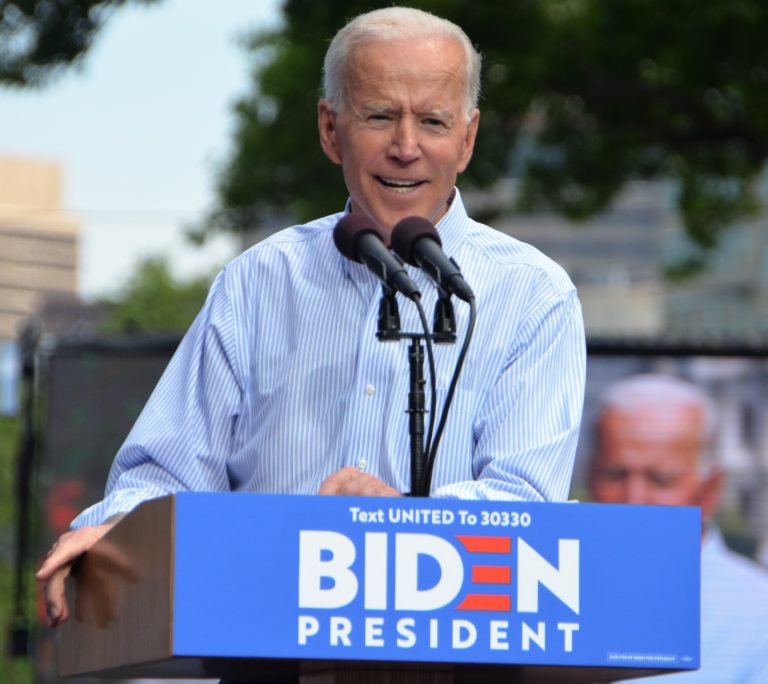
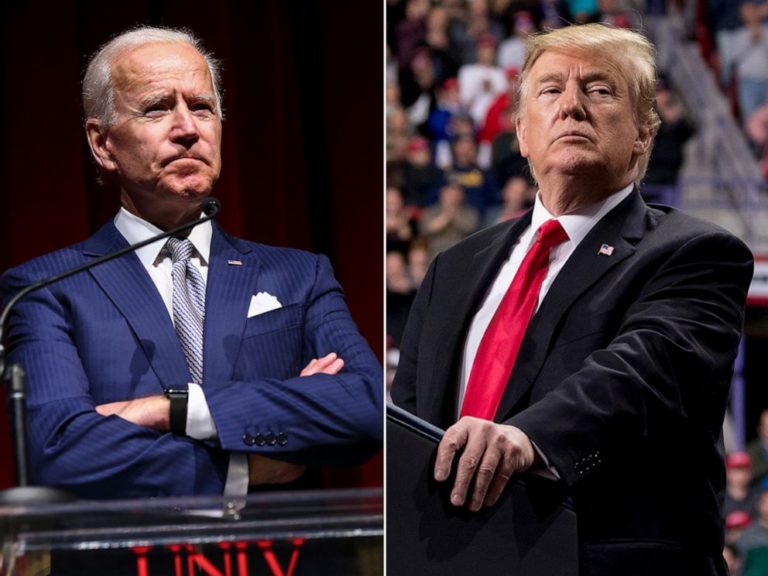
Joe Biden, 77, is now expected to be crowned the Democratic presidential nominee at the party’s convention in August. He will then face off against President Donald Trump during the November general election.
Bernie Sanders told supporters in a live stream that the decision to end his campaign was “very difficult and painful”, and acknowledged some of his supporters would have wished him to fight until the last state contest.
He said: “If I believed we had a feasible path to the nomination, I would certainly continue.”
Bernie Sanders added that the campaign has “transformed American consciousness as to what kind of nation we can become and have taken this country a major step forward in the never-ending struggle for economic justice, social justice, racial justice and environmental justice”.
He noted that across the country, his campaign received “a significant majority of the votes…from people not only 30 years or younger, but 50 years or younger”.
“The future of this country is with our ideas.”
Bernie Sanders also congratulated Joe Biden, and said that he will work with him to “move our progressive ideas forward”.
He added that he will still be on ballots in states that have yet to vote in the Democratic primary elections, in order to gather delegates and influence the party’s general election platform at the convention.
“Together, standing united, we will go forward to defeat Donald Trump, the most dangerous president in modern American history.”
Summer Worden was served on April 6 with a sealed criminal indictment issued by a federal grand jury in Houston, charging her with making false statements about her former spouse NASA astronaut Anne McClain.
“This is what happens when you try and fight the mob,” Worden says.
“The NASA Inspector General has no interest in justice and is there solely to cover up for misbehaving astronauts. They never even talked to me in person. They refused to send me a copy of their completed investigation.”
Summer Worden was in the heat of a nasty divorce and custody fight with Anne McClain when the astronaut logged into Worden’s personal bank account from the International Space Station. Worden filed a complaint with the NASA Inspector General after learning about McClain’s actions. The indictment claims Worden lied when she said she had changed the login information to keep McClain from seeing the information and lied about the dates the bank account was even created.
“The bizarre notion that it was okay for the woman trying to steal my son to look into my personal bank account that was set up after the divorce started is absurd. What person going through a divorce wants their spouse spying on them?” says Worden.
“This is pay back because NASA doesn’t like to be embarrassed.”
The notorious secrecy of the U.S. space agency reemerged as an issue after the international news coverage of Anne McClain and the possibility of the first crime committed in space.
The NASA Office of the Inspector General denied a request by Dolcefino Consulting to look at any completed investigations of astronauts to protect privacy interests of third parties. The agency also refused to provide us with a completed copy of their investigation in this case.
“This agency is given tens of billions of dollars from taxpayers every year and that makes them accountable to the public, period,” says Wayne Dolcefino, President of Dolcefino Consulting.
“The OIG’s job is not to protect NASA from scandal. It is to protect the public.”
Summer Worden will likely have to seek court appointed counsel after spending nearly $150,000 in legal fees during the fight over her son Briggs. Worden had the boy before she met and married Anne McClain but the NASA astronaut waged a war to get custody of Worden’s child. McClain dropped the custody fight but 309th District Court Judge Linda Dunson has never signed the final requests to drop the case.
Scrutiny over New York’s coronavirus outbreak response has deepened after Governor Andrew Cuomo announced that the state recorded its highest single-day increase in virus deaths on April 7.
New York reported 731 deaths bringing the total to 5,489 deaths and 138,836 infections.
Authorities faced questions over their actions for at-risk people after an infected inmate at Rikers Island jail died.
Michael Tyson, 53, died waiting for a hearing over a non-criminal offence.
As of April 5, 286 inmates and 331 staffers in New York City’s jails have tested positive for the coronavirus.
The outbreak in NYC’s jail system is one of the worst at correctional facilities throughout the US, just as New York state leads the country in both total coronavirus cases and deaths since the virus reached the US.
Photo: Marc A. Hermann / MTA New York City Transit
Governor Cuomo disclosed that New York, which has been the epicenter of the coronavirus outbreak in the US, saw its highest number of fatalities in a 24 hour period between April 6 and April 7.
The change came after New York had seen two days of slowing infection rates and fewer deaths.
However, Governor Cuomo said the three day average for cases had fallen. However, he warned that New Yorkers must continue to follow health guidelines to socially distance and stay indoors.
He also asked people to avoid large gatherings as religious holidays Passover and Easter approach.
Governor Cuomo has so far ordered the release of at least 1,100 prisoners. Responding to questions on Tuesday, an aide to the governor said the state was “continuing to evaluate” the situation in New York’s jails in relation to the virus.
World leaders – including President Donald Trump and French President Emmanuel Macron – have expressed their support for Boris Johnson.
On April 7, cabinet minister Michael Gove said the prime minister was not on a ventilator.
A Downing Street statement read: “The prime minister has been under the care of doctors at St Thomas’ Hospital, in London, after being admitted with persistent symptoms of coronavirus.
“Over the course of [April 6] afternoon, the condition of the prime minister has worsened and, on the advice of his medical team, he has been moved to the intensive care unit at the hospital.”
The staement continued: “The PM is receiving excellent care, and thanks all NHS staff for their hard work and dedication.”
Boris Johnson was initially taken to hospital for tests after announcing 11 days ago that he had the coronavirus. His symptoms included a high temperature and a cough.
President Trump said Americans “are all praying for his recovery”, describing Boris Johnson as “a very good friend of mine and a friend to our nation” who is “strong” and “doesn’t give up”.
Prsident Macron said he sent “all my support to Boris Johnson, to his family and to the British people at this difficult moment”.
President Donald Trump has warned Americans to prepare for the “toughest week” of the coronavirus pandemic yet, predicting a surge in deaths.
At his daily briefing, the president said “there will be death” in a grim assessment of the days ahead.
Donald Trump sought to reassure the worst-hit states, promising medical supplies and military personnel to combat the virus.
However, in contrast to his warning, President Trump suggested easing social-distancing guidelines for Easter.
At a news conference at the White House on April 4, he said: “We have to open our country again.
“We don’t want to be doing this for months and months and months.”
President Trump’s calls to relax restrictions on life came on the day confirmed coronavirus infections in the US surpassed 300,000, the highest number in the world.
As of April 4, there were almost 8,500 deaths from Covid-19 in the US, with most in New York state – the epicenter of the outbreak.
On the same day, New York state recorded 630 more Covid-19 deaths, another daily record that takes its toll to 3,565. New York state now has almost as many cases – over 113,000 – as the whole of Italy.
The president gave a candid assessment of what lies ahead for the US in the coming weeks.
He said: “This will be probably the toughest week between this week and next week, and there will be a lot of death, unfortunately, but a lot less death than if this wasn’t done but there will be death.”
To support states in their fight against Covid-19, President Trump said his administration would be deploying a “tremendous amount of military, thousands of soldiers, medical workers, professionals”.
The military personnel will “soon” be advised of their assignments, the president said, adding that “1,000 military personnel” were being deployed to New York City.
President Trump also addressed his use of the Defense Production Act, a Korean-War-era law which gives him powers to control the production and supply of US-made medical products.
He said he was “very disappointed” with 3M, a US company that makes masks, saying it “should be taking care of our country” instead of selling to others.
However, the president rejected accusations that the US had committed an act of “modern piracy” by redirecting 200,000 Germany-bound masks for its own use.
On the question of easing social-distancing restrictions, President Trump reiterated a familiar theme.
President Trump has said: “The cure cannot be worse than the problem itself.”
Elsewhere in the world, there has been cause for optimism as the number of new infections and deaths from coronavirus has started to gradually diminish.
Globally, more than 60,000 people have died and more than 1.1 million have been infected, Johns Hopkins University says.
President Donald Trump has said he will not wear a face mask despite new medical guidelines advising Americans to do so.
He said he could not see himself greeting “presidents, prime ministers, dictators, kings, queens” in the Oval Office while wearing one.
President Trump stressed that the guidance released on April 3 was “voluntary”.
“You do not have to do it,” he said.
“I don’t think I’m going to be doing it.”
The guidelines issued by the CDC came as the US reported more than 1,100 deaths in a single day – the highest total for a 24-hour period anywhere in the world.
According to Johns Hopkins University, the US has so far confirmed 278,458 cases of Covid-19 and more than 7,000 deaths.
New York state remains the worst affected area, with nearly 3,000 deaths, and state governor Andrew Cuomo has appealed for help from other parts of the US.
Until now, US health authorities had said that only the sick, or those caring for patients of coronavirus, should wear masks, but newer studies suggest that covering up one’s face is important to prevent inadvertent transmission.
President Trump said on April 2: “From recent studies we know that the transmission from individuals without symptoms is playing a more significant role in the spread of the virus than previously understood.”
However, the president told reporters after announcing the CDC’s new guidance: “I just don’t want to do it myself.”
“Sitting in the Oval Office… I somehow don’t see it for myself.”
Americans are now advised to use clean cloth or fabric to cover their faces whilst in public. Officials have stressed that medical masks remain in short supply, and should be left for healthcare workers.
The CDC guidance comes as the number of cases globally climbs past one million.
President Trump announced the guidance at the White House daily coronavirus briefing, but repeatedly emphasized that the advisory was “voluntary”.
In Wuhan, the epicenter of China’s outbreak, all traffic lights in urban areas were turned red at 10:00, ceasing traffic for three minutes.
The Chinese government said the event was a chance to pay respects to “martyrs”, a reference to the 14 medical workers who died battling the virus.
They include Li Wenliang, a doctor in Wuhan who died of Covid-19 after being reprimanded by the authorities for attempting to warn others about the disease.
Wearing white flowers pinned to their chest, China’s President Xi Jinping and other government officials paid silent tribute in Beijing.
The commemorations coincide with the annual Qingming festival, when millions of Chinese families pay respects to their ancestors.
China first informed the WHO about cases of pneumonia with unknown causes on December 31, 2019.
By January 18, 2020, the confirmed number of cases had risen to around 60 – but experts estimated the real figure was closer to 1,700.
Just two days later, as millions of people prepared to travel for the lunar new year, the number of cases more than tripled to more than 200 and the virus was detected in Beijing, Shanghai and Shenzhen.
From that point, the virus began to spread rapidly in Asia and then Europe, eventually reaching every corner of the globe.
However, in the past few weeks, China has started to ease travel and social-distancing restrictions, believing it has brought the health emergency under control.
Last week, Wuhan partially re-opened after more than two months of isolation.
On April 4, China reported 19 new confirmed cases of coronavirus, down from 31 a day earlier. China’s health commission said 18 of those cases involved travelers arriving from abroad.
As it battles to control cases coming from abroad, China temporarily banned all foreign visitors, even if they have visas or residence permits.
As the coronavirus crisis in China abates, the rest of the world remains firmly in the grip of the disease.
Peru has imposed strict new measures to stop the spread of the coronavirus disease, restricting public movement by gender.
According to new measures, men can only leave home on Mondays, Wednesdays and Fridays; women can do so on Tuesdays, Thursdays and Saturdays. On Sundays, no-one is allowed out.
Panama introduced similar restrictions earlier this week.
Peru has recorded more than 1,400 confirmed cases of Covid-19 and 55 related deaths.
On April 2, President Martín Vizcarra said that previous control measures had given good results “but not what was hoped for”.
Calling for an “extra effort to control this disease”, the president said the new gender-based restrictions should halve the number of people circulating in public at any one time.
He added: “We have to get fewer people on the streets every day.”
The new rules came into effect on April 3 and will last until April 12, when a nationwide lockdown imposed on March 16 is scheduled to be lifted.
Peru’s Interior Minister Carlos Morán warned that the police and armed forces would be enforcing the new measures.
He said: “On Sunday everyone has to be at home.
“Banks will not work and supermarkets, markets and shops will be closed. There will also be no pharmacies. No-one has justification for leaving.”
According to the latest figures from Johns Hopkins University, more than a million cases of coronavirus have been registered globally on April 2, 2020.
This is another grim milestone as the world grapples with the spreading pandemic.
More than 51,000 people have died and more than 208,000 have recovered.
The US accounts for the most cases and Italy has the highest death toll.
Covid-19 first emerged in central China three months ago.
Though the tally kept by Johns Hopkins records one million confirmed cases, the actual number is thought to be much higher.
It took a month and a half for the first 100,000 cases to be registered, but one million was reached after a doubling in cases over the past week.
Nearly a quarter of cases have been registered in the US, while Europe accounts for around half.
On April 2, Spain said 950 people had died in the previous 24 hours – thought to be the highest number of deaths of any country in one day.
The number of confirmed Spanish cases rose from 102,136 on April 1 to 110,238 – an 8% rise that is similar to the rate recorded in previous days. Spanish authorities believe the virus is now peaking and say they expect to see a drop in figures in the days ahead.
Spain is the second-worst hit nation in terms of deaths. It has also lost nearly 900,000 jobs.
More than 6.6 million Americans filed jobless claims in the week ended on March 28, the Department of Labor said.
The number of people seeking unemployment benefits has hit a record high for the second week in a row as the economic toll tied to the coronavirus intensifies.
Last week’s number is nearly double the week earlier, which was also a new record.
The deepening economic crisis comes as the number of cases in the US soars to more than 216,000.
With the death toll going above 5,000, the White House recently said it would retain restrictions on activity to try to curb the outbreak.
Analysts at Bank of America warned that the US could see “the deepest recession on record” amid forecasts that the unemployment rate could hit more than 15%.
The outlook is a stark reversal for the world’s biggest economy where the unemployment rate had been hovering around 3.5%.
However, more than 80% of Americans are now under some form of lockdown, which has forced the closure of most businesses.
More than 3.3 million people filed claims two weeks ago, eclipsing the previous record of 695,000, set in 1982 and bringing the two-week total to about 10 million.
The US death toll from the coronavirus pandemic has exceeded 5,000, while confirmed cases worldwide are reaching one million.
According to Johns Hopkins University, which tracks cornavirus figures globally, there were 884 deaths in the US in the last 24 hours, a new record.
The latest victims include a six-week-old baby. More than 216,000 are now infected, the world’s highest figure.
Reserves of protective equipment and medical supplies are almost exhausted.
The Trump administration says it can acquire adequate supplies, and has $16 billion available to do so. State and local officials have complained about insufficient protective equipment such as masks and gowns as well as ventilators, needed to help keep patients breathing.
Meanwhile, VP Mike Pence warned the US appeared to be on a similar trajectory as Italy where the death toll has exceeded 13,000 – the worst in the world.
The number of confirmed infections across the US rose by more than 25,000 in one day. The worst-hit place is New York City, where nearly 47,500 people have tested positive and more than 1,300 have died.
According to officials, as many as 240,000 people could die in the US from Covid-19 – the disease caused by the new coronavirus – even with the mitigation measures in place. In Connecticut, a six-week-old baby has died from coronavirus, believed to be America’s youngest victim of the virus so far.
Queens, New York City’s second-most populous borough, has the highest number of confirmed cases and deaths. The area is home to a large population of low-income workers employed by the service sector who live in close proximity, and social-distancing guidelines are hard to enforce.
New York City needed 2.1 million surgical masks, 100,000 surgical gowns and 400 ventilators, among other items, by Sunday, said Mayor Bill de Blasio, who has warned that April would be worse than March as the outbreak gathered pace. The NYC mayor said the goal was to triple the number of hospital beds, to 65,000.
Bill de Blasio tweeted: “This will be an epic process through the month of April. It’s herculean, but I believe it can be reached.”
US
infectious disease chief Anthony Fauci said that “as sobering a number as
that [100,000] is, we should be prepared for it. Is it going to be that much? I
hope not and the more we push on mitigation the less likely it would be that
number.
“But being realistic, we need to
prepare ourselves… it will be difficult – no one is denying we are going
through a very difficult time right now.”
President Donald Trump is expected to help businesses in America by allowing
them to delay payments on certain tariffs.
The
US imposes tariffs – fees for importing certain products from overseas – on a
raft of goods, including steel from China.
However,
the president is expected to waive payment of these fees for 90 days to help
improve US companies’ cashflows as they struggle with lockdowns.
The
90-day breathing space will apply to specific goods from “most-favored
nations”, although these are not expected to include imports from China or Europe.
Around
400 chief executives of small, medium, and large companies in the US urged
President Trump in a letter on March 31 to delay the collection of these fees
for up to 180 days.
The cash would normally be paid direct to the US government.
As more US states tighten measures to fight the
coronavirus, about three out of four Americans are now, or about to be, under
some form of lockdown.
The US has almost 175,000 confirmed virus cases and over 3,400 deaths.
It surpassed Italy last week as the country with the highest number of
people suffering from Covid-19, the disease caused by the virus.
Virginia, Maryland, Tennessee and Arizona became the latest states to order
citizens to stay at home, meaning 32 of 50 states have taken such steps.
Meanwhile governors are quarrelling with President Donald Trump about the
availability of testing kits.
New York City is the worst-hit place
in the US, with 914 confirmed fatalities, according to Johns Hopkins
University.
Some 245 million people are already
under orders to stay at home, or facing such orders which come into effect
later on March 31.
Almost two-thirds of states have
issued directives for their citizens to stay put, while the remaining states
have localized orders in effect.
Florida Governor Ron DeSantis, who
has been reluctant to impose a state-wide order, said he would instruct people
in four counties in the south – where more than half the state’s cases of the
virus exist – to stay at home. He said this would last until at least the
middle of May.
In general, the “lockdowns” allow people to only go out to get
essential supplies and medicines, or limited forms of exercise.
The economic consequences have been profound, with millions of people having
lost their jobs.
According to a Fed estimate, 47 million people could be out of work in the coming months, with the US still weeks away from the peak of infections.
According to CBS News, President Trump and state governors held a conference
call on March 30 in which the president suggested there was no longer a lack of
kits to test people for Covid-19.
In an audio recording obtained by CBS News, President Trump says he has not
“heard about testing in weeks.
He says: “We’ve tested more now
than any nation in the world. We’ve got these great tests and we’re coming out
with a faster one this week… I haven’t heard about testing being a problem.”
Montana Governor Steve Bullock is heard to say his state does not have
adequate numbers of kits.
He says: “Literally, we are one
day away, if we don’t get test kits from the CDC, that we wouldn’t be able to
do testing in Montana.”
Washington Governor Jay Inslee told the New York Times he was taken aback by President Trump’s assertion.
An Amazon spokesman said in a statement: “We
are going to great lengths to keep the buildings extremely clean and help
employees practice important precautions such as social distancing and other
measures.
“Those who don’t want to work are
welcome to use paid and unpaid time off options and we support them in doing so.”
Amazon said it had adjusted its practices, including increased cleaning of
its facilities and introducing staggered shift and break times.
In Italy, Amazon said it had reduced deliveries since March 22. However,
union leaders say workers need access to better protection.
“Several employees working at the
site use face masks for days instead of having new ones each day,” one
union representative told Reuters.
A group of workers at Whole Foods, which is owned by Amazon, plan to walk
out on March 31, citing similar problems.
Whole foods told NBC it has “taken extensive measures to keep people
safe.”
In 2019, the company faced criticism for cutting healthcare benefits for
1,900 part-time employees.
Earlier this month, Jeff Bezos – who is one of the world’s richest people with
an estimated $115.6 billion fortune – addressed the worries in an open letter
to staff, thanking them for their work.
Amazon, which is looking to hire 100,000 more warehouse workers in the US to
help address the surge in orders, has also said it would boost pay for
warehouse staff around the world, including by $2 per hour in the US and by £2
per hour in the UK, where staff have been told to work overtime.
However, US lawmakers have questioned Amazon over reports of shortages of
protective and cleaning supplies, as well as its sick leave policies.
Amazon earlier faced strikes by workers in France and Italy and has been hit
by legal complaints over the issues in Spain, according to a global alliance of
unions coordinated by UNI Global Union.
A strike on March 30 against Instacart was organized by the Instacart
Shoppers and Gig Workers collective, which had accused the company of profiting
by putting people making its deliveries “directly in harm’s way”.
They said the company should provide protective gear, offer hazard pay and
extend the pay for those unable to work because of the virus, whether due to a
required quarantine or pre-existing condition.
On March 29, after the call about March 30 strike, Instacart said it was working with a manufacturer to produce its own hand sanitizer and changing its tip policy. It had earlier said it would pay bonuses and provide 14 days of sick leave for its shoppers or part-time employees diagnosed with the virus or placed under isolation orders.
The IOC has decided that the Tokyo Olympic
Games will start on July 23, 2021 and run to August 8 after being postponed for
a year because of the coronavirus pandemic.
On March 30, the International Olympic Committee’s executive board met to
make the decision.
The Olympics will still be called Tokyo 2020 despite taking place in 2021.
The Paralympic Games, originally due to start on August 24, 2020, will now
take place between August 24 and September 5, 2021.
IOC president Thomas Bach said: “I
am confident that, working together with the Tokyo 2020 Organizing Committee,
the Tokyo Metropolitan Government, the Japanese Government and all our
stakeholders, we can master this unprecedented challenge.
“Humankind currently finds itself
in a dark tunnel. These Olympic Games Tokyo 2020 can be a light at the end of
this tunnel.”
The decision to postpone both events was taken to protect the health of the
athletes and everyone involved, and to support the containment of the new coronavirus.
The new dates also took into consideration the rest of the global sports calendar
after the men’s soccer European Championship was postponed to the summer of
2021.
The World Athletics Championships, originally set to take place in Oregon,
USA, between August 6 and August 15, 2021, will now be postponed until 2022.
Olympic organizers hope the delay will allow sufficient time to finish the
qualification process which will follow the same mitigation measures planned
for 2020.
It has previously been confirmed that all athletes already qualified and
quota places already assigned will remain unchanged.
Purchased tickets would be valid for rescheduled events or a refund could be
requested when the new dates were set, organizers previously confirmed.
On March 24, Japan’s PM Abe Shinzo said the Games would be held in their
“complete form” and no later than summer 2021.
Tokyo 2020 organizing committee president Yoshiro Mori said he had proposed
the July 23 to August 8 timeframe to the IOC, and that Thomas Bach had agreed,
following consultations with the international sports federations.
It is the first time in the Olympic Games’ 124-year modern history that they have been delayed, though they were cancelled altogether in 1916 because of World War One and again in 1940 and 1944 for World War Two. Cold War boycotts affected the summer Games in Moscow and Los Angeles in 1980 and 1984 respectively.
The US last week became the country with the most reported cases, ahead of
Italy and China.
Speaking during the latest Coronavirus Task Force press briefing at the
White House on March 29, President Trump said that measures such as social
distancing were “the way you win”, adding that the US “will be
well on our way to recovery” by June.
Suggesting that the “peak” of death rates in the US was likely to
hit in two weeks, President Trump said that “nothing would be worse than
declaring victory before victory is won – that would be the greatest loss of
all”.
Analysts suggest that when President Trump referred to a peak in the “death rate”, he probably meant the total number of recorded infections.
North Korea hailed a test of “super
large” multiple rocket launchers after two short-range missiles had been
fired, the latest in a flurry of tests this month.
Just hours before, South Korea condemned the
North as “inappropriate” for pursing tests amid the global
coronavirus outbreak.
North Korea generally ramps up missile tests in the spring and the global
virus outbreak has not deterred it.
The country has reported no virus cases, but experts have cast doubt on
this.
The March 29 test was of two short-range ballistic missiles fired from the
eastern city of Wonsan. They flew for 255 miles with a maximum altitude of
around 30 miles before falling into the sea, the South Korean military said.
On March 30, North Korean state media outlet KCNA reported that it had
successfully tested “super large” multiple rocket launchers.
By then South Korea had already
condemned the North’s actions in a harshly-worded statement.
South Korea’s Joint Chiefs of Staff
said: “In a situation where the
entire world is experiencing difficulties due to Covid-19, this kind of
military act by North Korea is very inappropriate and we call for an immediate
halt.”
According to Reuters, the latest
test marked the eighth and ninth missiles launched in four rounds of tests this
month.
North Korea had earlier announced it would be holding a
session of the Supreme People’s Assembly, the country’s parliament, on April 10.
Analysts say the meeting will involve almost 700 of North Korea’s leaders in
one spot.
President Trump tweeted that instead of quarantine, a “strong travel
advisory” would be issued to New York, New Jersey and Connecticut by the
CDC.
The CDC then published a statement urging residents of those three states to
“refrain” from all non-essential domestic travel for 14 days.
It said the advisory did not apply to “critical infrastructure” service
providers, including healthcare professionals and food suppliers.
Speaking to reporters on March 28
about the situation in New York, President Trump said: “We’d like to see [it] quarantined because it’s a hotspot… I’m
thinking about that.”
He said it would be aimed at slowing
the spread of the virus to other parts of the US.
He said: “They’re having problems down in Florida. A lot of New Yorkers are
going down. We don’t want that.”
Governor Andrew Cuomo responded by
saying that quarantining the state of New York would be
“preposterous” and “anti-American”.
“If you said we were geographically restricted from
leaving, that would be a lockdown.”
The governor said New York had already implemented “quarantine”
measures, such as banning major gatherings and ordering people to remain at
home, but that he would oppose any “lockdown” efforts.
Andrew Cuomo told CNN: “Then we
would be Wuhan, China, and that wouldn’t make any sense.”
He added that this would cause the stock market to crash in a way that would
make it impossible for the US economy to “recover for months, if not
years”.
“You would paralyze the financial
sector,” he said.
Governor Cuomo added later: “I
don’t know how that can be legally enforceable. And from a medical point of
view, I don’t know what you would be accomplishing.
“But I can tell you, I don’t even
like the sound of it.”
He also said he would sue nearby Rhode Island if the authorities there
continued targeting New Yorkers and threatening to punish them for failing to quarantine.
On March 27, Rhode Island Governor Gina Raimondo deployed National Guard
troops to stop cars with a New York license plate, to remind them of their
state’s advice that they quarantine.
Soldiers are going door-to-door in coastal vacation communities to ask if any residents have recently visited New York City.
Wuhan, the Chinese city where the coronavirus
pandemic began, has partially re-opened after more than two months of
isolation.
Crowds of passengers were pictured arriving at Wuhan train station on March
28.
According to reports, people are being allowed to enter but not leave.
Wuhan, the capital of Hubei province, saw more than 50,000 coronavirus cases.
At least 3,000 people in the province died from the disease.
However, numbers have fallen dramatically, according to China’s figures. On
March 28, the state reported 54 new cases emerging the previous day – which it
said were all imported.
As it battles to control cases coming from abroad, China has announced a
temporary ban on all foreign visitors, even if they have visas or residence
permits. It is also limiting Chinese and foreign airlines to one flight per
week, and flights must not be more than 75% full.
The new coronavirus is thought to
have originated in a seafood market in Wuhan that “conducted illegal
transactions of wild animals”.
Wuhan’s 11 million residents have
been shut off from the rest of the world since the middle of January, with
roadblocks around the outskirts and drastic restrictions on daily life.
However, roads reopened to incoming traffic late on March 27, according to
Reuters.
State media said the subway was open from March 28 and trains would be able
to arrive at the city’s 17 railway stations.
All arrivals in Wuhan have to show a green code on a mobile app to prove
that they are healthy.
Officials say restrictions on people leaving Wuhan will be lifted on April 8,
when domestic flights are also expected to restart.
The new coronavirus emerged in China in December 2019 and more than 3,300
people there have died from the infection – but both Italy and Spain now have
higher death tolls.
It is now battling to control a wave of imported cases as infections soar
abroad.
This so-called “second wave” of imported infections is also
affecting countries like South Korea and Singapore, which had been successful
in stopping the spread of disease in recent weeks.
Meanwhile, the virus continues to
spread rapidly in other countries around the world.
Nearly 600,000 infections have been confirmed globally and almost 28,000 deaths, according to figures collated by Johns Hopkins University.
As a measure to stop the spread of the new
coronavirus, Russia is beginning what President Vladimir Putin called a
“non-working week”.
The Russian government is urging people to stay at home, though mixed
messaging has left many people confused.
According to officials, the new restrictions could be extended beyond April
5, depending on the health situation.
The number of Russians infected with Covid-19 passed 1,000 on March 27, with
most cases detected in Moscow.
Based on that figure, the Kremlin spokesman has stressed that there is
“de facto no epidemic” here, comparing Russia’s position favorably
with the crisis in Europe.
Whilst state TV’s rolling news channel has changed its name to We’re Staying Home – broadcasting from
presenters’ living rooms – many people are struggling to adjust after its
previous insistence that Covid-19 was a “foreign threat”.
When President Putin announced a
paid week off work for all, there was a rush to book holidays.
The governor of Krasnodar region,
which includes the Black Sea resort of Sochi, had to order the closure of all
shopping centers, parks and restaurants – and limit flights – after hotel
reservations sky-rocketed.
Many Moscow residents have already
headed out of town to their dachas, or summer houses.
In the Russian capital, there has
been a noticeable increase in people in facemasks on the streets since
President Putin’s national address.
Supermarket staff have begun wearing
them and there are bottles of hand sanitizer in coffee shops.
Food stores will remain open, as well as other essential services, but from this weekend cafes and restaurants can offer takeaway only.
President Trump has signed into law the
largest-ever US financial stimulus package, worth $2 trillion, as the country
grapples with the coronavirus pandemic.
The House of Representatives passed
the cross-party bill two days after the Senate debated its provisions.
On March 25, the number of Americans
filing for unemployment surged to a record high of 3.3 million people.
As of March 27, the US has more
confirmed cases of coronavirus than any other country, with more than 100,000
positive tests.
No Democratic lawmakers were invited
to the historic signing ceremony, which was held at the White House, though the
president thanked both parties “for coming together, setting aside their
differences and putting America first”.
President Trump said the package was
“twice as large” as any prior relief bill.
He said: “This will deliver urgently needed relief to our nation’s families,
workers and businesses.”
Just before signing the act into
law, President Trump invoked the Defense Production Act (DPA), which gives the
president the power to force private industries to create items required for
national defense.
President Trump said the order will
compel General Motors (GM) to manufacture much-needed medical ventilators for
the federal government.
Earlier in the day, President Trump
tweeted that GM had promised to “give us 40,000 much needed Ventilators, very
quickly “.
“Now they are saying it will only be 6,000, in late
April, and they want top dollar,”
he said, threatening to invoke the DPA.
During the bill signing, President Trump
said that “tremendous [medical] supplies” would be coming soon,
adding: “We’ve had great results on
just about everything we’re talking about.”
On March 27, New York Governor
Andrew Cuomo announced eight temporary hospitals to meet an expected surge in
cases.
He said 519 people had died in the
state – the worst-hit in the US – and there were 44,635 confirmed cases.
Democrats and Republicans in the
Democratic-led House approved the stimulus package by voice vote on March 27
following a three-hour debate.
House Speaker Nancy Pelosi said: “Our nation faces an economic and
health emergency of historic proportions due to the coronavirus pandemic, the worst
pandemic in over 100 years.”
Members of the House had been ready
to conduct the vote at their homes but were forced to return to Washington at
the last minute after a Republican representative from Kentucky demanded a
quorum of half the chamber be present.
Thomas Massie – who objected to the
stimulus package saying it contained too much spending – also sought to delay
proceedings by demanding a formal recorded vote, as opposed to a voice vote,
but was overruled.
President Trump vented his fury at
Thomas Massie on Twitter, calling him a “third-rate grandstander” and
demanding he be thrown out of the Republican party.
The new law enables direct payments to individuals and companies whose
livelihoods and businesses have been affected by the pandemic.
It seeks to deliver $1,200 to every American earning less than $75,000 per
year and $500 to the parents of every child.
The law also gives money directly to state governments, and bolsters the
unemployment benefits program.
Under the law, jobless benefits will be extended to those not normally
covered, such as freelancers and workers in the gig economy.
It also offers loans and tax breaks to companies that face going out of
business, as one in every four Americans is ordered to remain at home and only
go outside for essential needs.
Officials across the US have closed restaurants, bars, cinemas, hotels and
gyms in an effort to slow the spread of the virus.
Auto companies have halted production and air travel has fallen
dramatically. According to economists, a fifth of the US workforce is on some
form of lockdown.
With almost 1,500 virus-related fatalities, the US death toll remains lower than those in Italy and China. But there are virus hotspots in New York, New Orleans and Detroit.
UK’s Prime Minister Boris Johnson and Health Secretary Matt
Hancock both tested positive for coronavirus, which causes the Covid-19
disease.
It comes after the UK government’s chief medical officer Professor Chris
Whitty has said he is self-isolating after experiencing symptoms of coronavirus
last night.
Prof.
Chris Whitty has led the UK’s medical response and appears in the government’s
public information films. Known symptoms of the virus include a persistent dry
cough and a raised temperature.
PM Boris Johnson has tested positive for coronavirus after displaying
“mild” symptoms.
He
is continuing to work in his Downing Street office although he will not be
taking part in March 27 daily government briefing.
Boris Johnson’s fiancée, Carrie Symonds, who is several months pregnant, is
self-isolating elsewhere.
A
total of 759 people have now died of the coronavirus in the UK, while 14,579
have tested positive.
The
death toll jumped by 181 on March 27 – a rise of 31% – making it the biggest
rise in deaths that the country has seen so far, surpassing March 26’s record
of 115.
In
England, patients were aged between 29 and 98 years old.
According
to health officials, all but four patients, aged between 82 and 91 years old,
had underlying health conditions.
The UK has the seventh highest number of recorded deaths in the world after Italy, Spain, China, Iran, France and the US.
The number of confirmed cases of
coronavirus in the US has surpassed any other affected country’s on March 26.
With more than 86,000 positive tests, the US has overtaken China (81,782 cases) and Italy (80,589), according to the latest figures collated by Johns Hopkins University.
However, with almost 1,300
Covid-19-related fatalities, the US death toll lags behind China (3,291) and
Italy (8,215).
The grim milestone came as President
Donald Trump predicted the nation would get back to work “pretty
quickly”.
Asked about the latest figures at a
White House briefing on March 26, President Trump said it was “a tribute
to the amount of testing that we’re doing”.
VP Mike Pence said coronavirus tests
were now available in all 50 states and more than 552,000 tests had been
conducted nationwide.
President Trump also cast doubt on
the figures coming out of Beijing, telling reporters: “You don’t know what the numbers are in China.”
Later, the president tweeted that he
had had a “very good conversation” with China’s President Xi Jinping.
He said: “China has been through much & has developed a strong
understanding of the Virus. We are working closely together. Much
respect!”
President Trump has set a
much-criticized goal of Easter Sunday, 12 April, for reopening the country.
That plan seemed to gather impetus on March 26 as it emerged an unprecedented
3.3 million Americans have been laid off because of the virus.
At March 26 briefing, he said: “They [the American people] have to go back to work, our country has to go back, our country is based on that and I think it’s going to happen pretty quickly.
“We may take sections of our
country, we may take large sections of our country that aren’t so seriously
affected and we may do it that way.”
He added: “A lot of people
misinterpret when I say go back – they’re going to be practicing as much as you
can social distancing, and washing your hands and not shaking hands and all of
the things we talked about.”
President Trump promised more details next week.
In a letter to state governors on
March 26, President Trump said his team plans to release federal social
distancing guidelines that may advise some regions to loosen restrictions.
He wrote of a “long battle
ahead” and said “robust” testing protocols might allow some
counties to lift their safeguards against the coronavirus.
President Trump said the “new
guidelines” would create low, medium and high risk zones that would allow
the government to advise on “maintaining, increasing, or relaxing social
distancing and other mitigation measures they have put in place”.
On March 26, President Trump phoned
in to Fox News host Sean Hannity’s program and said he believed Iowa, Idaho,
Nebraska and parts of Texas could reopen earlier than other states.

The plan emerged as new research on
March 26 estimated Covid-19-related deaths in the US could top 80,000 over the
coming four months – even if people observe strict social distancing.
According to the study from the Institute for Health Metrics and Evaluation at the University of Washington’s School of Medicine, as many as 2,300 patients could be dying every day by April.