When it comes to beauty, there are a few styles that will simply never go out of fashion. These timeless looks will allow you to stay beautiful, looking chic and feeling confident, no matter where you are or what you’re doing. While the 80’s shell suits and blue eyeshadow look of the 90’s will probably never venture into the beauty guide ever again (we hope), there are a number of timeless beauty trends that you should remember. Here, we’re taking a look at some of the most timeless makeup and beauty trends for you to consider.
Cat-Eye Liner
The beautiful cat-eye is a look that you can pull off no matter what you’re doing. Whether you’re on a night out and you want a dramatic look of heavy eyeliner and smoky eyes, or you want a day-to-day look to freshen up your face, the cat-eye should never be overlooked. An expertly flicked wing in the corner of your eye lid can really help to attract attention to your eyes and make you seem more awake too. There are a number of products on the market that can provide you with the look that you are looking for, and if you’re looking for something a little more outrageous, you can choose a colour or glitter style eyeliner to really change up your look!
Plastic Surgery
Plastic surgery is almost certain to never go out of style, and with breast augmentation having been the most popular cosmetic procedure for a number of years, it is a choice for you to consider if you are unhappy with the size of your breasts. However, you don’t always have to go for such an extreme plastic surgery option, as there are a number of minimally-invasive procedures that you can choose too, to help you feel more confident in your own skin.
Image source Pexels
Red Lipstick
This timeless classic really does have the power to enhance your facial features, and you can dress it up or dress it down. No matter how you decide to wear it, you’re certain to attract a lot of attention as it highlights all of the right areas of your face. The best part about red lipstick is that you can get in a shade that suits absolutely any skin tone, no matter how pale or tanned you are. Red lipstick is one of the most versatile colours out there, and it is a timeless staple for your make-up kit.
Soft Hair Waves
Sleek hair waves are an extremely important trend to make sure your hair looks gorgeous. Another option for you to dress up or dress down, soft hair waves really are a great option if you’re looking for a versatile look. You can leave your hair unwashed, style with oil, curlers, straighteners, however you wish to do it! All you need is a little bit of hairspray and your soft hair waves are certain to remain in style all year round. No matter the era, you can be sure that soft hair waves will stay in fashion at all times.
Air France-KLM is buying 31% of Virgin Atlantic, leaving Richard Branson’s parent company, Virgin Group, with a minority stake in the airline he founded.
Air France-KLM is taking the £220 million ($286 million)-stake in Virgin Atlantic as part of a four-way joint-venture with Delta.
Virgin Group’s share will fall from 51% to 20%, while Delta will retain 49%.
Richard Branson said he would remain “very much involved” after the deal.
In an open letter, he said that the new joint-venture would be “extremely beneficial” to the airline, customers and the brand, and recalled key moments in Virgin Atlantic’s history, striking a valedictory tone.
Air France-KLM CEO Jean-Marc Janaillac said the deal would give customers “even more choice between Europe, UK and the United States via twelve hubs on both sides of the Atlantic”.
Virgin and Delta have operated a joint-venture for almost five years, plying the busy routes between Europe and the US.
Competition has intensified in recent years, with newcomers including Norwegian and British Airways’ low-cost Level service offering no-frills long-haul flights.
The new venture, which will also include troubled Italian carrier Alitalia, will operate 300 transatlantic flights per day.
In a joint press release Virgin and its partners said the venture would offer “convenient flight schedules with competitive fares and reciprocal frequent flyer benefits, including the ability to earn and redeem miles across all carriers”.
Virgin Atlantic, set up in 1984, was one of the earliest companies in Richard Branson’s Virgin brand portfolio.
In his open letter, Richard Branson recalled its eventful rivalry with British Airways, the impact of the 9/11 terrorist attacks and the financial crisis.
Richard Branson wrote that as he got older he was keen to ensure that “all the necessary building blocks are in place for Virgin Atlantic to continue to prosper and grow for the next 50 years”.
While transatlantic routes are among the most lucrative, Virgin has had mixed fortunes in recent years.
In 2016, Virgin reported its best profits for five years, but the company warned earlier this year that it was likely to go into the red again in 2017 as the weaker pound pushed up costs and put off holiday-makers.
Porsche has been told by the German transport minister to recall of 22,000 cars to remove what he says is illegal emissions-controlling software.
He said that Porsche would bear the cost of the recalls of the affected 3-liter Cayenne models.
It comes as Porsche’s sister company Volkswagen says it will refit almost a million more diesel cars in Germany.
VW admitted in 2015 that some of its diesel cars were fitted with a “defeat device” to cheat on emissions tests.
Allegations about Porsche first emerged in German magazine Der Spiegel last month.
The magazine said it was told by a source that the Porsche Cayenne had a “warm up mode” whose true purpose was to comply with emissions requirements. It said tests showed that once the car was confronted with small bends or a slope it switched to a different mode and emissions were higher.
German Transport Minister Alexander Dobrindt said on July 27: “There is no explanation why this software was in this vehicle.
“These vehicles are equipped with modern emissions-controlling technology so we think these vehicles are technically able to stick to emissions limits and we therefore believe Porsche will quickly be in a position to bring the software into conformity (with the law).”
Meanwhile, VW will “offer to refit four million vehicles and thereby significantly reduce emissions,” CEO Matthias Mueller said on July 27 after meeting Environment Minister Barbara Hendricks.
Some 2.5 million VW cars are already covered by a recall of diesel vehicles introduced after the firm first owned up to cheating regulatory emissions tests.
Last week it was announced that VW subsidiary Audi would be offering a free software upgrade for 850,000 diesel cars across Europe, some 600,000 of them in Germany.
That leaves close to a million other cars to be included in the new refit plans. These include models from subsidiary Porsche, VW’s Touareg sport utility vehicles, and some of its Transporter vans.
Separately, VW has been forced to defend its record after allegations that it teamed up with other German car giants to breach EU cartel rules.
Volkswagen said it was normal for manufacturers to exchange technical information to speed up innovation.
However, the company declined to comment on specific allegations that five German auto makers colluded on price and technology.
Daimler has also called the allegations speculative.
EU and German anti-trust regulators are looking at allegations that BMW, Daimler and VW, including its subsidiaries Audi and Porsche, collaborated for decades on many aspects of development and production, disadvantaging customers and suppliers.
One person died and five others are critically injured after a reported ride malfunction at the Ohio State Fair in Columbus.
Fire chief Steve Martin told local media outlets that victims were thrown from the “fireball” spinning pendulum ride.
Ohio Governor John Kasich confirmed at least one death, and said he had ordered all fair rides shut until safety inspections were carried out.
The governor also said a full investigation would be carried out.
The fireball ride swings from side to side while simultaneously spinning passengers in circles at high speed. It is known by the name “afterburner” in European markets.
Speaking to reporters, a doctor treating some victims said: “Passengers were ejected at high speed with high energy, many feet – at least 20 or 30, if not more – into the air, and then crashed at a significant distance from the ride.”
He said the speed of the impact could be similar to a vehicle crash.
A video circulating online appeared to show one passenger carriage breaking loose near the bottom of its pendulum swing, tossing passengers into the air as it rose again.
The video has not been independently verified.
The Ohio State Fair confirmed on Twitter that there was “a report of a ride incident” but provided no further details.
Local NBC affiliate WCMH reported that one of the injured is a 13-year-old child. Multiple local news outlets have said the deceased is an 18-year-old.
The accident took place on July 26, the opening day of the fair.
The Columbus Dispatch reported that safety inspections of the rides had taken place earlier in the week.
Chief inspector Mike Vartorella said: “My grandchildren ride this equipment… our guys do not rush through this stuff. We look at it, we take care of it, we pretend it’s our own.”
Mike Vartorella said the ride was inspected “three or four times” in the past two days by both his own inspectors and a “third party”.
President Donald Trump has announced that the government will not accept or allow transgender people to serve in the US military.
The White House has not yet decided how it will implement the ban.
President Trump’s surprise Twitter announcement on July 26 has been met with criticism from rights groups.
Spokeswoman Sarah Sanders said the administration would work alongside the Pentagon to decide how to proceed.
It is not yet clear how the announcement will affect current transgender service personnel.
“The United States government will not accept or allow transgender individuals to serve in any capacity in the US military,” President Trump tweeted.
“Our military must be focused on decisive and overwhelming victory and cannot be burdened with the tremendous medical costs and disruption that transgender in the military would entail.”
Asked at a press briefing if troops on battlefields would be immediately sent back, White House spokeswoman Sarah Sanders said the policy had yet to be worked out.
She said: “The decision is based on a military decision. It’s not meant to be anything more than that.”
However, some media outlets questioned the spending justification. The Washington Post drew attention to an analysis that the US military spends almost $42 million a year on the erectile dysfunction medication Viagra – several times the total estimated cost of transgender medical support.
Meanwhile, Politico reports that the move was prompted by threats from Republican hardliners over a spending bill which would provide funding for President Trump’s promised military spending and border wall plans.
One Republican lawmaker had already tabled an amendment to the spending bill to prevent the military paying for transgender surgical procedures.
The decision to allow transgender people to serve openly in the military was made by the Obama administration in 2016, with a one-year review period allowed for its implementation.
The policy included a provision for the military to provide medical help for service members wanting to change gender.
However, last month, Defense Secretary James Mattis agreed to a further six-month delay.
In 2016, the independent Rand Corporation estimated that about 4,000 US active-duty and reserve service members are transgender, although some campaigners put the figure higher than 10,000.
Rand Corporation also predicted that the inclusion of transgender people in the military would lead to a 0.13% increase in healthcare spending (approximately $8.4 million).
President Trump said his decision was based on consultation with his generals, but there has been a mixed reaction.
The job market at the moment is unpredictable, we can all agree with that. Graduates are coming out with student debt only to find themselves unable to land a position where they want. People of all levels of experience and training are struggling to find the place for them and choosing to settle. Many want to change careers only to find their options seem limited. That doesn’t have to be the case, however. Let’s look at how savvy job seekers are broadening their horizons so that they don’t stay as job seekers for long.
We’re all aware of the most obvious of job-seeking methods: looking at listings and applying for whatever jobs appeal to you. However, if you relegate your job search to only those methods, you might be missing more opportunities than you find. There’s no reliable number as to how many jobs aren’t advertised, but it’s enough that taking a different approach can make a real difference. Networking, whether in your own personal group of past colleagues, family members, and alumni can open a lot of doors. Recruitment agencies can often help people with very specialized skills better find a position that suits those skills. If there’s an industry you want to work in, don’t be shy about simply asking to be considered for a place and leaving your resume with them, tailored to the skills relevant to what they do.
Look across the sea
If you have training in a specific industry or method of work, then you aren’t just limited to the market at home. It’s a good idea to look at the industries and skill sets that other countries are looking to build. You can find more job opportunities in a different locale and many are even willing to speed up the visa application and approval process to get you over there. Even the English language is proving a highly marketable skill, with an online ESL masters giving you the qualifications and opportunity to teach abroad. This could fulfill the dreams of many looking to teach in places like Japan, Korea, Italy, or Thailand. You could land safely in a career and experience a whole new culture at the same time.
If you have marketable skills, then you can go about selling them yourself. The internet has allowed more people than ever before to become their own boss and start a career in freelancing. In particular, freelance writers, marketers, graphic designers, web designers, and coders play an important part of the online economy. But your freelance career can involve you doing just about anything, even if it’s working in an administrative role as a virtual assistant for different companies and individuals. Not everyone is suited to the challenges of a freelancer’s career, but the freedom of working for yourself and the fact you can build your wealth solely off your own success makes it an increasingly attractive prospect.
Put the odds in your favor
There are, of course, careers that are always going to be more likely to land you a job. If you’re considering a career switch, then look at the jobs most in demand nowadays. For instance, many fear that we’re seeing a decrease of trained tradesmen, which could mean that plumbing, electrician work, and construction jobs could end up being more lucrative than in the past. As mentioned, marketing is also becoming a growing force thanks to the online world, but you don’t have to work for yourself if you don’t have the drive. There are plenty of marketing agencies, big and small, looking for creative people.
You might already have skills that make you a fit for more careers than you imagine. For instance, people who have enjoyed some success in engineering roles also tend to make for effective project managers in any other field. Teachers often go on to have a lot of success in corporate training. Managers in organizations can go on to become consultants. Besides evaluating your skills, you should look for opportunities to keep gathering new ones. If you’re unemployed and on the job search, consider looking for internships and apprenticeships. Many of them pay, but even if they don’t, they make sure you keep working on your employability with practical skills instead of just waiting to find a job.
With all the options, looking online can be your best friend. You can find remote working opportunities, networking groups, online learning services and much more. Stay connected and stay hungry. Take the initiative and your chances are a lot better of finding the career you want.
The House has voted to impose fresh sanctions on Russia, despite President Donald Trump objecting to the legislation.
Senior Russian officials will be targeted in retaliation for alleged Moscow interference in the US 2016 election.
The bill is likely to complicate President Trump’s hopes of improving relations with Russia.
Russia said the vote could destroy the possibility of “normalizing relations” between the two countries.
The bill needs to be passed through the Senate before it can be sent on to President Trump to be signed.
The White House says it is reviewing the bill, and it is unclear whether President Trump will veto it.
“While the president supports tough sanctions on North Korea, Iran and Russia, the White House is reviewing the House legislation and awaits a final legislative package for the president’s desk,” White House spokeswoman Sarah Huckabee Sanders said in a statement.
Russia’s relationship with President Trump has dogged his first six months in office, amid allegations Moscow interfered to help him get elected.
Donald Trump has also piled pressure on his attorney general over the Russia inquiry. He has publicly labeled Jeff Sessions “weak” and said he was “disappointed” in Sessions’ decision to recuse himself from the investigation.
Image NBC News
The legislation, which passed by 419 to three, was described by House Speaker Paul Ryan as a sanctions package that “tightens the screws on our most dangerous adversaries in order to keep Americans safe”.
The sanctions on Russia were drawn up in part to further punish its annexation of Crimea from Ukraine in 2014. If passed, they would:
Penalize companies, including those in Europe, that contribute to Russian energy development, affecting companies involved the Nord Stream 2 pipeline from Russia to Germany;
Shorten the duration of loans to Russian banks and Russian oil and gas companies;
Freeze assets of state-owned mining and railway companies;
Codify existing sanctions to make them more difficult to lift in the future;
Stop President Donald Trump being able to singlehandedly ease the sanctions.
The US already has a range of sanctions in place against Russian individuals and companies over Crimea.
The bill will also see fresh sanctions against North Korea and Iran over ballistic missile tests.
However, the new measures against Russia have been criticized in Europe. On July 26, a spokesman for the Germany foreign ministry expressed concern, saying US politicians were conducting industrial policy under the guise of sanctions, according to Reuters.
This version of the legislation still needs to be approved by the Senate, but it is not yet clear when it will consider the bill.
However, if it passes through the Senate mostly intact, the bill would provide a headache for President Trump, who has signaled a more conciliatory approach towards Moscow.
If the two chambers pass similar but slightly different bills, a committee will draw up a compromise version for approval.
Once both House and Senate have approved a bill, it goes to the president to be signed into law.
President Trump could veto the bill, but in doing so would fuel suspicion that he is too supportive of the Kremlin, correspondents say.
The bill has widespread support from both major parties in both Houses – making a veto a potentially unpopular political move.
Additionally, a presidential veto can be ignored if two thirds of both the House and Senate vote to override the president.
White House spokeswoman Sarah Huckabee Sanders said President Trump is “going to study that legislation and see what the final product looks like.”
The Kremlin continues to insist it did not interfere in the US elections. One Russian newspaper has described the latest sanctions as “punishment, without a crime”.
The UK’s government is set to announce that new diesel and gasoline cars and vans will be banned in the country from 2040 in a bid to tackle air pollution.
Ministers will also unveil a £255 million ($332 million) fund to help councils tackle emissions from diesel vehicles, as part of a £3 billion ($3.9 billion) package of spending on air quality.
The government will later publish its clean air strategy, favoring electric cars, before a High Court deadline.
Campaigners said the measures were promising, but more detail was needed.
They had wanted government-funded and mandated clean air zones, with charges for the most-polluting vehicles to enter areas with high pollution, included in the plans.
Image source Geograph
After a protracted legal battle, the UK’s government was ordered by the courts to produce new plans to tackle illegal levels of harmful pollutant nitrogen dioxide.
Judges agreed with environmental campaigners that previous plans were insufficient to meet EU pollution limits.
Ministers had to set out their draft clean air strategy plans in May, with the final measures due by July 31.
UK’s Environment Secretary Michael Gove said the government would give more than £200 million ($260 million) to local authorities to draw up plans to tackle particular roads with high pollution.
Local measures could include altering buses and other transport to make them cleaner, changing road layouts, altering features such as speed humps, and re-programming traffic lights to make vehicle-flow smoother.
It is thought ministers will consult on a scrappage scheme later this year, but there is no firm commitment.
Ministers have been wary of being seen to “punish” drivers of diesel cars, who, they argue, bought the vehicles after being encouraged to by the last Labour government because they produced lower carbon emissions.
The industry trade body, the Society of Motor Manufacturers and Traders, said it was important to avoid outright bans on diesels, which would hurt the sector.
SMMT chief executive Mike Hawes said demand for alternatively fuelled vehicles was growing but still at a very low level.
The AA said significant investment would be needed to install charging points across the UK and warned the National Grid would come under pressure with a mass switch-on of recharging after the rush hour.
The UK announcement comes amid signs of an accelerating shift towards electric cars instead of petrol and diesel ones, at home and abroad.
In a major step forward for President Donald Trump’s attempts to repeal ObamaCare, the Senate has voted to start debating a new Republican healthcare bill.
In a tight vote, several Republicans previously opposed to aspects of the plan changed their minds.
Prior attempts to replace ObamaCare have collapsed in recent weeks due to divisions in the GOP.
President Donald Trump had made scrapping the policy a key campaign pledge.
On July 25, the Senate began the debate-and-vote process which is expected to last a number of days. Nine Republicans voted against the first amendment – to repeal and replace ObamaCare – and it failed to pass.
Earlier, President Trump had warned GOP’s senators of the repercussions of not pushing through the measures to repeal and replace ObamaCare, known formally as the Affordable Care Act.
The GOP, which needed a majority for the motion to go ahead, secured 51 votes after Vice-President Mike Pence cast a tie-breaker in support of the legislation.
Senator John McCain, who was recently diagnosed with an aggressive brain tumor, received a standing ovation as he returned to Congress to cast his “Yes” vote.
Donald Trump tweeted his thanks to the Arizona senator for playing “such a vital role” in the vote: “Congrats to all Rep. We can now deliver grt [great] healthcare to all Americans.”
It remains unclear what measure senators will now debate and vote on.
There appear to be two choices – either a repeal-and-replace bill that has already struggled to win support across the party, or a bill that enacts repeal with a two-year delay, in the hope of finding agreement before that time elapses.
However, senators have also considered a “skinny bill”, a far narrower measure that would scale back some of the more controversial elements in an effort to get a wider consensus.
Republicans have long railed against ObamaCare as government overreach, criticizing the system for introducing government-run marketplaces, where premiums have risen sharply for some people.
The GOP’s proposed alternative includes steep cuts to Medicaid, a healthcare program for the poor and disabled.
It removes ObamaCare’s individual mandate requiring all Americans to have health insurance or pay a tax penalty.
About 20 million people gained health insurance under former President Barack Obama’s Affordable Care Act.
If Republican senators elect to repeal key provisions of ObamaCare without immediately replacing it, the CBO estimates about 32 million consumers would lose insurance over the next 10 years.
Over the past few months, criticism has been increasing through the UK job market over the so-called “gig economy”. With the UK focused on Brexit, many financial minds in the country have been obsessing over how robust the floundering economy as a whole can be, as they prepare to enter an incredibly turbulent period.
On the surface, everything looks fairly decent. Spending is down and growth is slowing for the UK, but it’s far from the immediate and catastrophic recession that many predicted a year ago in the wake of the Brexit vote. While it’s largely expected that things will get worse before they get better, there is still one great bastion for those who insist Brexit has been nothing but a good thing: the unemployment number.
UK Unemployment
The level of unemployment is usually a big signifier of how well an economy is performing. For the UK government, the current unemployment is an outrider, the one positive speck of financial hope in the midst of an otherwise unclear picture. The percentage of people who are unemployed has been primarily falling since 2012, with 4.5% the most recent figure, the same as the USA.
So what’s the problem? The more people employed, the higher the tax take, people spend more because they are earning, thus the better the economy will perform – right?
Not quite.
The Gig Economy
The problem comes with how people are technically defined as in employment. There has been a huge leap in insecure work in the UK, i.e. people who are defined as “self employed” who actually work for a company on a gig-by-gig basis.
Uber drivers, for example, are part of the gig economy. Deliveroo is another; motorcycle riders deliver food from restaurants direct to people’s doors. There’s no hourly rate; workers are only paid on each job.
From that payment, they have to be responsible for their own sick and holiday pay. They have to pay for their own insurance in case of a car or motorcycle accident while at work. They have to manage their own accounts and pay their own tax. For all this, they can also be fired with little to no notice due to the terms of employment.
Why Is This A Problem?
Capitalist economies – such as the one the UK has – depend heavily on people feeling that they have the freedom to spend money. If they don’t, the economy grinds to a halt – and there’s a sign that the UK consumer confidence is falling. This is due in no small part to the insecure nature of the work that millions of people find themselves in.
Then there is also the fact that while these people may be technically employed, they’re not necessarily earning much money. The UK’s personal income tax threshold is £11,500, so while many people may be employed, that doesn’t mean that they’re going to be paying income tax.
This is why the gig economy is under fire, with the UK – and other countries – examining the employment laws that gig businesses rely on to function. It seems that a low unemployment figure is far from a sign that a country’s economy is healthy, despite the fact it has always been portrayed as such.
As well as shoes, Jimmy Choo produces a range of luxury goods.
Its shoes featured the 90s TV hit show, Sex and the City, and are still seen on the feet of the famous, including Kate Middleton, Beyonce and Kendal Jenner.
Malaysian-born Jimmy Choo was trained at the renowned Cordwainers Technical College in London.
He founded the business in 1996 with former Vogue journalist Tamara Mellon.
In 2001, Tamara Mellon and private equity investors bought out Jimmy Choo.
Ten years later, Tamara Mellon left the business to launch her own clothing line.
In 2014, Jimmy Choo listed on the London Stock Exchange, by which time JAB, owned by the German billionaire Reimann family, was the main shareholder.
JAB Holdings is backing this deal.
Michael Kors describes itself as a luxury brand, and, like Jimmy Choo, it is named after its founder and creative force.
Its handbags are priced at between $200-600.
Recent years have been a struggle for Michael Kors, its most recent same-store sales figures were down 14%.
Michael Kors said the acquisition was expected to deliver a number of benefits, including “the opportunity to grow Jimmy Choo sales to one billion dollars” and “a more balanced portfolio with greater product diversification”.
It said Jimmy Choo would also have the opportunity to grow in the men’s luxury footwear category, as well as greater exposure to global markets, “particularly the fast-growing market in Asia”.
In a rare healthcare speech, President Donald Trump has issued a challenge to Republican senators to rally behind their bill, on the eve of a crucial vote.
“Now is the time for action,” he said.
A procedural vote is due on July 25 as Republicans push forward in their attempt to repeal ObamaCare, President Barack Obama’s signature law.
However, among Republicans there is confusion about the bill and it is unclear whether the healthcare will pass.
Senator Ron Johnson told reporters: “I don’t have a clue what we’re going to be voting on.”
Senators will vote on a procedural motion to start debate on a health care bill.
Republicans have a majority in the Senate but there are deep divisions in their party on the issue.
Republican Senate leader Mitch McConnell said on the Senate floor: “Many of us have waited literally years for this moment to arrive and, at long last, it finally has.”
However, several senators have expressed unhappiness over the process, because it is not clear what they will vote on if the procedure vote passes.
There appear to be two choices – either a repeal-and-replace bill that has already struggled to win support across the party, or a bill that enacts repeal with a two-year delay, in the hope of finding agreement before that time elapses.
Image source Flickr
Senator John McCain, recently diagnosed with an aggressive brain tumor, will return to Congress to cast his vote.
President Trump increased the pressure on his party by warning them they had a duty to adhere to seven years of promises.
In a White House speech laced with frustration, he said: “To every member of the Senate I say this: The American people have waited long enough.
“There’s been enough talk, and no action. Now is the time for action.”
The president lambasted his predecessor’s overhaul of healthcare and stood alongside people he said were “victims” of the 2010 law.
ObamaCare extended healthcare insurance to about 20 million people but Republicans hate the way it introduced government-run marketplaces, where premiums have risen sharply for some people.
The GOP’s proposed alternative includes steep cuts to Medicaid, a healthcare program for the poor and disabled.
It removes ObamaCare’s individual mandate requiring all Americans to have health insurance or pay a tax penalty.
The non-partisan Congressional Budgetary Office (CBO) found the bill would strip 22 million Americans of health insurance over the next decade.
However, if the bill gets to the floor of the Senate, amendments could be added to change the various provisions.
A Republican politician has blamed “female senators” for the spluttering efforts by his party to pass a healthcare bill.
Blake Farenthold, a congressman from Texas, told a local radio station if a man from his state was responsible, he would challenge him to a duel.
“Some of the people that are opposed to this, they’re some female senators from the North East.”
If it was “a guy from south Texas” who was generating so much discord in the party, he said, he would ask them to settle their differences in a gun fight.
Susan Collins of Maine was one of three female Republicans who said they could not back the Senate’s last healthcare plan, a repeal with two-year delay, which hit the buffers last week.

She has been strongly opposed to the Republican bill from the start over the cuts to Medicaid.
Republican Senators Lisa Murkowski of Alaska and Shelly Moore Capito of West Virginia also came out against the bill, expressing concerns over plans to weaken protections for people with pre-existing conditions and affordability.
There was an outcry when Republican Senate leader Mitch McConnell drafted the first healthcare bill in private among a group of 13 that did not include any women.
Puerto Rican stars Luis Fonsi and Daddy Yankee have lashed out against Venezuela’s President Nicolas Maduro, accusing him of using their song, global hit Despacito, for political gains.
President Nicolas Maduro presented an altered version of the song during his weekly TV show on July 23.
The reworked lyrics promoted Nicolas Maduro’s plans for a controversial new citizen’s assembly, which will be elected on July 30 to rewrite the constitution.
The singers branded it an outrage.
Nicolas Maduro was seen clapping along to the remix, as his audience danced.
“Our call to the <Constituent Assembly> only seeks to unite the country … Despacito!” go the new lyrics.
Luis Fonsi responded angrily on social media: “At no point was I asked, nor did I authorize, the use or the change in lyrics of Despacito for political means, and much less so in the middle of the deplorable situation experienced by Venezuela, a country I love so much.
“My music is for all those who want to listen to it and enjoy it, not to be used as propaganda that tries to manipulate the will of a people who are crying out for their freedom.”
Image source YouTube
Daddy Yankee posted a picture of President Maduro with a large red cross over it on Instagram and wrote: “That you illegally appropriate a song [Despacito] does not compare with the crimes you commit and have committed in Venezuela.
“Your dictatorial regime is a joke, not only for my Venezuelan brothers, but for the entire world.”
Despacito translates as “slowly”, referring to the speed of the lead singer’s seduction technique.
However, the Venezuelan version strips back the lyrics.
Instead, the new chorus runs: “Slowly, take your vote rather than weapons, and express your ideas. Always in peace and calm.”
Introducing the new take to an audience of supporters, Nicolas Maduro said a creative group had reworked it and he wanted to put it to the test.
“What do you think, eh?” the president asked the crowd.
Venezuela has been shaken by often violent protests in recent months, and millions joined a general strike last week.
Some 100 people have died in the unrest, which has further hammered an imploding economy that is running short of food and medicine.
The constituent assembly President Maduro wants to establish would have power to rewrite the constitution and bypass the opposition-controlled legislature.
Critics say the president is trying to cement a dictatorship. He argues it is the only way to bring peace back to the divided nation.
The original Puerto Rican version of Despacito has been a worldwide success, and a version featuring Justin Bieber recently became the most-streamed song of all time.
Another high-profile member of the governing Socialist Party, Diosdado Cabello, also drew on Despacito recently to score political points.
“As the song says, step by step, slowly and suavely, they [the critics] want to create a coup,” he said, according to local media.
A variety of opposition parodies have also gone viral on social media, including one called Madurito.
Another called Bien Flaquito(Very Skinny) played on Venezuela’s food shortages.
Three Square Market is to become the first US company to microchip its employees.
The Wisconsin company is offering to implant the tiny radio-frequency identification (RFID) chip into workers’ hands for free – and says everyone will soon be doing it.
The rice grain-sized $300 chip will allow them to open doors, log in to computers and even purchase food.
So far, 50 employees have signed up for the chance to become half-human, half-walking credit card.
Three Square Market, which provides self-service “micro markets” to businesses around the world, was inspired by the micro-chipping already taking place in Sweden, where so-called “bio-hackers” have been inserting the tiny devices into willing participants for at least three years.
Three Square Market are even working with a Swedish company, BioHax, to deliver the new technology, which they see as one day being simply another payment and identification method – only instead of a credit card or phone, there would be a microchip between your thumb and finger.
While a large proportion of the world might think twice before putting a tiny chip in their hand, it seems those at Three Square Market had no such worries.
The chip will replace everything you might have in your wallet – from your key fob to your credit card and ID. For now, it is just aiming to make life easier for those using Three Square Market’s facilities.
The tour grossed $93.2 million in the first half of 2017, with an average of almost 40,000 ticket sales per date.
Justin Bieber himself has not yet commented on the decision on social media, but unnamed sources told media the singer was “just over it”.
However, a statement on his website read: “Justin loves his fans and hates to disappoint them.
“He is grateful and honored to have shared that experience with his cast and crew for over 150 successful shows across six continents during this run.
“However, after careful consideration he has decided he will not be performing any further dates. Tickets will be refunded at point of purchase.”
Most of Justin Bieber’s remaining dates were in the US, but he was also due to play in Japan, Hong Kong, the Philippines, Singapore and Indonesia.
Chinese officials said last week that Justin Bieber had been banned from mainland China because he had engaged in what they described as “bad behavior”.
According to the International Monetary Fund, the US and UK economies will expand more slowly in 2017 than previously predicted.
The IMF said “weaker-than-expected activity” in Q1 of 2017 meant the UK would grow by 1.7%, compared with an earlier 2% forecast.
The IMF also revised down its US growth forecast from 2.3% to 2.1%.
However, the IMF’s overall global economic predictions – of 3.5% growth in 2017 and 3.6% in 2018 – remain unchanged.
The UK growth forecast for 2018 remains unchanged at 1.5%, but US growth for next year is now predicted to come in at 2.1%, instead of the 2.5% previously forecast.
In its latest World Economic Outlook, the IMF said the “pick-up in global growth” that it had anticipated in its previous survey in April remained “on track”.
However, the IMF added that while the global growth projection was unchanged that masked “somewhat different contributions at the country level”.
It said that the main factor behind its downward revision for US growth in 2018 was “the assumption that fiscal policy will be less expansionary than previously assumed, given the uncertainty about the timing and nature of US fiscal policy changes”.
“Market expectations of fiscal stimulus have also receded.”
President Donald Trump’s administration had been widely expected to pursue policies including tax cuts and infrastructure investment to try to boost the US economy.
However, the chances of Trump’s administration being able to push through these policies now appears less likely.
The IMF’s outlook for several eurozone economies was brighter than initially thought, with countries including France, Germany, Italy and Spain seeing growth forecasts revised up.
The biggest eurozone revisions were for the Spanish and Italian economies. Spain is now forecast to grow 3.1% in 2017, up from the previous prediction of 2.6%. Italy’s 2017 growth forecast has risen from 0.8% to 1.3%.
The euro area as a whole is expected to grow by 1.9% in 2017, up from 1.7%.
The IMF said first-quarter growth in many of those countries was better than expected, and that there was evidence of “stronger momentum in domestic demand than previously anticipated”.
China’s growth projections have also been revised up, reflecting, the IMF says, “a strong first quarter of 2017 and expectations of continued fiscal support”.
Its 2017 forecast has risen from 6.6% to 6.7%, while growth in 2018 is now expected to be 6.4% instead of 6.2%.
The IMF hailed China’s “policy easing and supply-side reforms”, including efforts to reduce excess capacity in the industrial sector.
Texas police have arrested a truck driver whose vehicle was found in a Walmart car park in San Antonio with dozens of people in the back of it.
Nine men had died inside, and 28 others, including children, were taken to hospital.
They were inside the trailer in San Antonio without access to air conditioning or water while outside temperatures hit 110F.
Police say they believe the incident is linked to people smuggling.
The truck’s driver, named by authorities as 60-year-old James Mathew Bradley Jr. from Clearwater, Florida, is expected to appear in court later.
Video footage from Walmart reportedly showed a number of vehicles arriving to pick up some of the survivors. Several others may have managed to escape on foot into the woods nearby.
One person found in the woods was being treated, local officials said.
Image source AP
Mexico’s government said it was working closely with US authorities to identify the nationalities of the victims.
San Antonio is a few hours’ drive from the border with Mexico, and the US immigration department is trying to establish the victims’ legal status.
Eight people were found to be dead at the scene while another died in hospital, immigration officials said.
Officials were brought to the trailer by a man who had approached an employee of the Walmart and asked for water.
The driver would be charged in connection with the “horrible tragedy”, said San Antonio police chief William McManus in a press briefing.
He said the people ranged from school age to in their 30s.
Local fire chief Charles Hood said the survivors had heart rates of over 130 beats per minute and were very hot to touch. In addition to the 20 people in a critical condition, eight others were taken to hospital in a less severe state.
The fire chief confirmed at least two of the victims were school-age children. Their condition is not clear.
“We’re very fortunate that there weren’t 38 of these people who were all locked inside this vehicle dead,” he added.
Richard Durbin, the US attorney for the Western District of Texas, said the authorities were working to identify those responsible for the incident.
“These people were helpless in the hands of their transporters. Imagine their suffering, trapped in a stifling trailer in 100-plus degree heat,” he said in a statement.
They were victims of “ruthless human smugglers indifferent to the wellbeing of their fragile cargo”, Richard Durbin added.
Seventeen employees of Turkish opposition newspaper Cumhuriyet are about to go on trial on charges of aiding a terrorist organization.
If found guilty, their sentence could be up to 43 years in jail.
A dozen of Cumhuriyet‘s journalists and managers are behind bars in pre-trial detention. Ten of them have been imprisoned for almost nine months.
On July 15, Turkey marked the first anniversary of a failed coup. There were massive commemorations held by thousands of jubilant people, hailing the day as the triumph of democracy.
However, critics argue that day – and the introduction of the state of emergency soon after – were actually the beginning of a massive crackdown, with more than 50,000 people arrested in the last year.
Image source Wikimedia
Press freedom groups say Turkish media has been particularly hard hit during this period, as about 150 media outlets have been shut down.
Turkey is currently listed as the country with the biggest number of imprisoned journalists. Journalism organizations say more than 150 journalists are behind bars, most of them accused of terror charges.
Can Dundar, the previous editor-in-chief of Cumhuriyet newspaper, is the number one suspect in the case starting on July 24.
He was give a three-month jail term last year for espionage in another case but was released on bail. He now lives in exile in Germany.
He too gives the figure of imprisoned journalists as more than 150.
In the indictment against Cumhuriyet, there are accusations such as “changing the paper’s editorial policy”, preparing “violent and divisive news” and “interviewing leaders of terrorist organizations”.
“This is an oddity, it is absurd,” says defense lawyer Adil Demirci.
“This is obviously a political case. They are targeting Cumhuriyet because it is an opposition paper.”
The head of media organization PEN Turkey, Zeynep Oral, believes the state of press freedom in the country is the worst it has been for decades.
“You never know what will happen tomorrow,” she says.
“Anybody can put anybody into jail these days. But even if a single journalist is behind bars for no reason, no-one will ever be free in this country.”
Journalists and press freedom activists all over the world will be watching the Cumhuriyet trial very closely. The hearings are expected to last all week.
Amid reports President Donald Trump is considering presidential pardons for family members, aides and even himself, he has insisted he has the “complete power” to pardon people.
Democratic Party spokesman Mark Warner has called the reports “extremely disturbing”.
The US authorities are probing possible collusion between the Trump team and Russia. Intelligence agencies think Russia tried to help Donald Trump to power.
Moscow denies this, and President Trump says there was no collusion.
The Washington Post reported on July 20 that Donald Trump and his team were looking at ways to pardon people close to him.
Presidents can pardon people before guilt is established or even before the person is charged with a crime.
Describing the reports as disturbing, Senator Mark Warner, who sits on the Senate Select Committee on Intelligence, said “pardoning any individuals who may have been involved would be crossing a fundamental line”.
Image source Wikipedia
On July 22, President Trump tweeted: “While all agree the U. S. President has the complete power to pardon, why think of that when only crime so far is LEAKS against us. FAKE NEWS.”
Donald Trump also attacked “illegal leaks” following reports his attorney general discussed campaign-related matters with a Russian envoy.
The Washington Post gave an account of meetings Attorney General Jeff Sessions held with the Russian ambassador to the US, Sergey Kislyak. The newspaper quoted current and former US officials who cited intelligence intercepts of Sergey Kislyak’s version of the encounter to his superiors.
One of those quoted said Ambassador Kislyak spoke to Jeff Sessions about key campaign issues, including Donald Trump’s positions on policies significant to Russia.
During his confirmation hearing earlier this year, Jeff Sessions said he had no contact with Russians during the election campaign. When it later emerged he had, he said the campaign was not discussed at the meetings.
An official confirmed to Reuters the detail of the intercepts, but there has been no independent corroboration.
The officials spoken to by the Post said that Sergey Kislyak could have exaggerated the account, and cited a Justice Department spokesperson who repeated that Jeff Sessions did not discuss interference in the election.
However, the Post‘s story was the focus of one of many tweets President Trump fired off on July 22.
“A new INTELLIGENCE LEAK from the Amazon Washington Post, this time against A.G. Jeff Sessions. These illegal leaks, like Comey’s, must stop!” the president said.
The Washington Post is owned by Amazon founder Jeff Bezos, who has been an occasional sparring partner for Donald Trump. “Comey” refers to James Comey, the former FBI director President Trump fired.
Earlier this week, President Trump told the New York Times he regretted hiring Jeff Sessions because he had stepped away from overseeing an inquiry into alleged Russian meddling in the US election.
Jeff Sessions recused himself in March amid pressure over his meetings with Sergey Kislyak. He says he plans to continue in his role as attorney general.
Several other regular targets for Donald Trump featured in his series of tweets.
The president accused the “failing” New York Times of foiling an attempt to assassinate ISIS leader Abu Bakr al-Baghdadi.
It is not clear what President Trump was referring to, but on July 22 a US general complained on Fox News that a “good lead” on Anu Nakr al-Baghdadi was leaked to a national newspaper in 2015.
A New York Times report at the time revealed that valuable information had been extracted from a raid, but the paper stressed on July 22 that no-one had taken issue with their reporting until now.
Donald Trump again urged Republicans to “step up to the plate” and repeal and replace President Obama’s healthcare reforms, a key campaign pledge of his that has collapsed in Congress.
Ben Affleck also addressed reports that Warner Bros was working on plans to “usher out” his Batman gracefully as he is getting too old.
“I still can’t believe that after two films [Warner Bros bosses] Kevin Tsujihara, Sue Kroll and Toby Emmerich have said, <We want you to be our Batman> – and I believe them.”
Regarding War for the Planet of the Apes director Matt Reeves taking over his directing role and starting afresh with scripting, Ben Affleck said: “I would be an ape on the ground for Matt Reeves, never mind Batman.
“It’s a great time in the DC universe, so you can see why I am so excited to be Batman.”
The Warner Bros panel also featured a new Justice League trailer and confirmed that Gal Gadot’s Wonder Woman would be getting a sequel.
It’s unsurprising as Patty Jenkins’ movie is the biggest of the summer, taking $386 million so far in the US and $771 million around the world.
It is also the third highest-grossing Warner Bros movie ever, behind The Dark Knight and The Dark Knight Rises – and the highest-grossing live action movie by a female director.
Warner Bros also confirmed it intends to make a standalone Batgirl movie and a new Green Lantern movie.
Home Alone star John Heard has died at the age of 72.
According to TMZ, the actor was found dead on July 21 in his hotel room in Palo Alto, California.
The Santa Clara medical examiner’s office confirmed the death. The cause of death is unknown.
John Heard had reportedly been staying at the hotel after “minor back surgery” this week.
Image source IMDb
The Palo Alto police department said: “Our officers responded with the Fire Department to a hotel in our city on a report of a person in need of medical aid.
“The person was determined to be deceased. While still under investigation, the death is not considered suspicious at this time.”
Last week China issued data suggesting trade with North Korea was not as strong as implied by President Donald Trump.
However, while China has stopped coal imports from North Korea, it has continued to trade iron, iron ore and other commodities.
Although North Korea doesn’t publish economic data, South Korea’s central bank releases GDP figures every year, based on data from its Ministry of Unification and the National Intelligence Service.
The 2016 GDP data is the highest growth rate since the 6.1% recorded in 1999.
The last year’s performance is a turnaround from 2015, when the North Korean economy contracted by 1.1% after a fall global commodity prices hit the value of its coal and iron ore exports.
North Korea is among the world’s poorest countries with per capita gross national income standing at 1.5 million won ($1136) a year. South Korea’s per capita income is more than twenty times that.
International tensions over North Korea’s were ramped up further last week after the test of a long-range missile, which it is believed was capable of reaching Alaska.
The Audi recall affects cars fitted with six- and eight-cylinder diesel motors meeting the Euro 5 and Euro 6 emissions criteria, including some models made by parent company Volkswagen and sister company Porsche.
The upgrade is available for Audi cars with affected engines in Europe and other markets outside North America.
The Reuters news agency reported that German car industry officials and politicians had agreed to improve diesel vehicles’ emissions through software updates in order to avoid diesel bans in cities.
The thriving economies of countries in the Asia Pacific region remain threatened by political tensions that surface every time a sticky issue comes up. Japan and South Korea ties are less than friendly, despite both being US allies. China is at loggerheads with many of its smaller neighbors over territorial disputes and its aggressive militarization of the contested islands.
With President Trump scrapping the Trans-Pacific Partnership deal done by the previous administration, it would be wise for these Asian nations to band together, not to fight a superpower, but to find alternative solutions that would be favorable for them in light of the uncertainty of US policies that affect them.
Japan and China are two of the richest countries in the world, with the former generally viewed as “old money” and the latter as “nouveau riche.” Flattering or derogatory implications aside, it cannot be denied that both are the chief entities that make this once destitute eastern region now a powerful force in the international economic landscape.
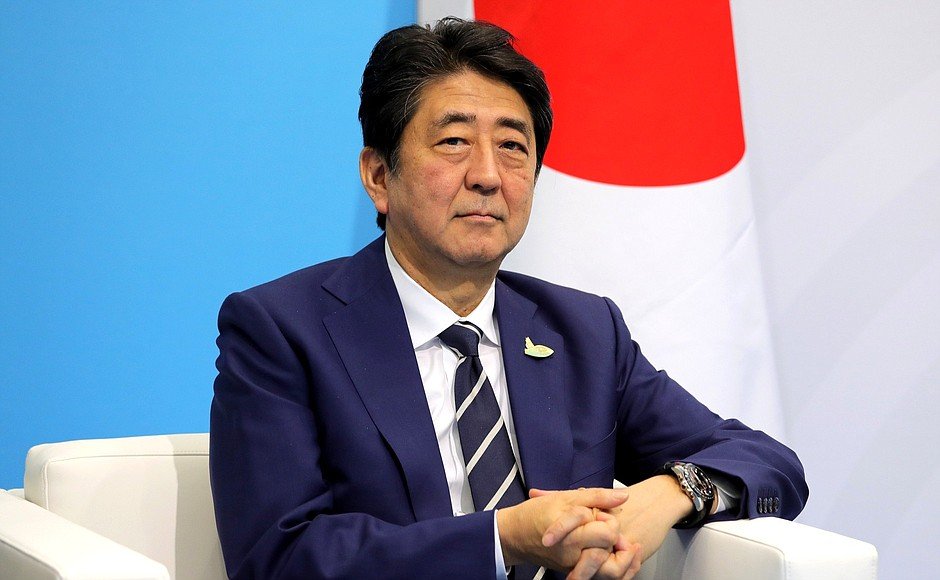
It is therefore incumbent upon these countries’ leaders to rethink their differences and find ways to improve their relations. Achieving respectful politeness will pave the way for productive dialogues that will protect their solid global standing and safeguard the fiscal and defense forces’ stability not only for themselves but also for the other emerging Asian economies. Other than China’s military belligerence, the delusional leader of rogue nation North Korea is proceeding with his nuclearization goals, causing global agitation. Tokyo’s Abe Shinzo wields more influence in fixing the strained ties with China, his country being a long-time major US ally and a seemingly unsinkable force. But it won’t be an easy job for Abe, with the sitting US president flip-flopping on his views of Beijing’s Xi Jinping and giving the Japanese Prime Minister a politically induced headache.
Historical accounts allege that the fight for regional supremacy between the two countries already existed 1,500 years ago. China had the upper hand in geographical dimensions but Japan’s innovative progress in the 19th century and its victories in the Japan-Qing War in 1895 and over Russia in 1905 solidified its superiority over its Goliath-size neighbor. The Sino-Japanese bond was on friendlier footing in the mid-1970s to the ‘80s but events in the following decade cropped up that led to tensions that have not abated since then.
In the 1990s, nationalistic Japanese historians revised school textbooks to cast the nation in a better light and instill patriotism in the minds of the young children. Among the revisions were the downplaying of the crimes committed by the Japanese Imperial Army against its enemies in World War ll, including China, and the purported sanitization of the events that occurred in the Rape of Nanking in 1937. The number of people killed in that massacre has never been factually established and various counts put them between 40,000 and 300,000.
A thorny issue that has hounded the two countries is China’s insistence that Japan apologize for its WWll atrocities through financial compensation. But a book by author June Dreyer mentions an incontestable fact – 70 percent of Japanese aid in the 1980s went to China. The never-ending demand for apologies now does not solicit sympathy from the Japanese but has the opposite effect of annoying them.
Adding to the tensions is the continuing dispute between Tokyo and Beijing of ownership of the Senkaku Islands, or Diaoyu Islands as China calls them. The United States had given back control of the islands to Japan under the Okinawa Reversion Agreement. China, however, does not honor the agreement, insisting that the islands belongs to them. The long-held animosity escalated in 2012 when Japan purchased the set if islands from a private individual for more than 2 billion yen.
An accord that is mutually acceptable can put to rest these contentious issues if leaders Abe and Xi are open to rebuilding the damaged lines of communication. Further, Japan’s prime minister should nurture its relations with the new US administration and maintain the cordial ties it had with the previous resident of the White House. Pres. Trump’s vacillating moods now has him favoring Pres. Xi, and Abe must be careful not to offend him. Japan needs Washington and Beijing for economic and security soundness.
Image source Flickr
For its part, China should keep in mind that its current economic strength cannot continue if it repeatedly provokes other nations with its combative and hostile behavior. It should learn to respect the ruling of the Permanent Court of Arbitration denying its rights to the Spratly Islands in favor of the Philippines. Despite the court’s ruling in July 2016, China continued building artificial reefs and a military airfield on the contested land. and ignored several countries’ requests to abide by the legal decision.
Earlier this year, three China Coast Guard ships entered the waters around Senkaku Islands, which is the subject of a Japan-China territorial dispute. The move came days after US Secretary of State James Mattis paid a visit to Japan and reaffirmed its government’s support for Japan’s claim.
Notwithstanding the recent chill in relations, Abe and Xi have vowed to resume communication and restore healthy ties when the two met on the sidelines at the G20 summit in Hamburg earlier this month.