At least 340 people have been injured in a commuter train crash at a station in Buenos Aires, Argentina.
The train is reported to have slammed into the barrier at the end of the platform at the Once station in the west of the city.
The injured driver and some passengers were taken away on stretchers, with the first carriage the worst affected.
The ministry of transport said it could not rule out fatalities, with many people still said to be trapped.
At least 340 people have been injured in a commuter train crash at a station in Buenos Aires, Argentina
The transportation secretary, JP Schiavi, told reporters at the station that the commuter train had hit the barrier at about 12 mph (20km/h), destroying the front of the engine and crunching the carriages behind it.
One of the carriages was driven nearly six metres (20ft) into the next, he said.
“There are people still trapped, people alive, and there may have been fatalities. We don’t know if there are dead people in the wreckage,” JP Schiavi said.
Survivors told the TeleNoticias channel that many people had been injured in a jumble of metal and glass.
In September 2011 eleven people died when another commuter train in Buenos Aires hit a bus crossing the tracks and then hit a second train coming into a station.
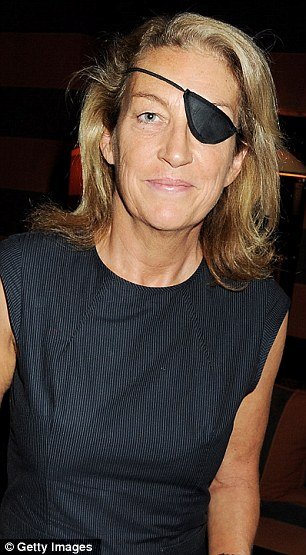
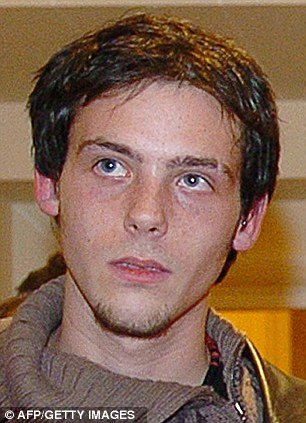
Western journalists Marie Colvin and Remi Ochlik have been killed in the Syrian city of Homs when shells hit the building they were staying in, according to opposition activists.
Marie Colvin was an American Sunday Times reporter, and Remi Ochlik, a French photographer.
Several other people were reportedly killed when the shell hit the makeshift media centre in the Baba Amr area.
Opposition-held districts have been under siege by security forces for more than two weeks, leaving hundreds dead.
Activists said more than 40 people died on Tuesday, including Rami al-Sayed, a man who broadcast a live video stream from Homs used by world media.
Rami al-Sayed was fatally wounded by shrapnel during the shelling of Baba Amr. His brother posted a video of his body in a makeshift hospital.
The Red Cross has called on the government and rebels to agree to a daily ceasefire, to allow medical supplies to reach the worst affected areas and get civilians out, but there is no sign yet of this being agreed.
Marie Colvin, Sunday Times reporter
Marie Colvin and Remi Ochlik were reportedly staying in a house in Baba Amr that was being used by activists as a media centre when it was hit by a shell on Wednesday morning.
Rockets were also said to have hit the building’s garden when people tried to flee afterwards.
At least two other foreign journalists were wounded, activists said.
One was named as British freelance photographer Paul Conroy, who was working with Marie Colvin, and Edith Bouvier of the French newspaper, Le Figaro. Edith Bouvier was said to be in a serious condition.
French photojournalist Remi Ochlik
In Paris, French Foreign Minister Alain Juppe said the deaths would be investigated.
“It’s another demonstration of the degradation of the situation in Syria and of a repression that is more and more intolerable,” he told reporters.
“I hope that on Friday at the <<Friends of Syria>> meeting in Tunis we will be able to move towards a peaceful solution of the situation.”
UK Prime Minister David Cameron told parliament: “This is a desperately sad reminder of the risks that journalists take to inform the world of what is happening, and the dreadful events in Syria.”
The editor of the Sunday Times, John Witherow, said the newspaper was doing what it could to recover Marie Colvin’s body and get Paul Conroy to safety.
“Marie was an extraordinary figure in the life of the Sunday Times, driven by a passion to cover wars in the belief that what she did mattered,” a statement said. “She believed profoundly that reporting could curtail the excesses of brutal regimes and make the international community take notice.”
There was no immediate comment from Remi Ochlik’s agency, IP3 Press.
Remi Ochlik, 28, had reported from Haiti and covered many of the recent uprisings in the Arab world.
Marie Colvin, in her 50s, had been a foreign correspondent for the Sunday Times for two decades, and had reported from several war zones. She lost the sight in one eye in Sri Lanka in 2001 after being hit by shrapnel.
On Tuesday, Marie Colvin told the BBC the bombardment of Baba Amr by Syrian government artillery and tanks had been “unrelenting”.
“I watched a little baby die today, absolutely horrific, a two year old – found the shrapnel had gone into the left chest and the doctor said: <<I can’t do anything>>,and his little tummy just kept heaving until he died. That is happening over and over and over.”
“There are 28,000 people in Baba Amr,” she added. “The Syrians will not let them out and are shelling all the civilian areas.”
“There is Free Syrian Army here. They’re very, very lightly armed. People are terrified they will leave.”
Western journalists have mostly been barred from Syria since the uprising against President Bashar al-Assad began last March.
But increasingly, they have risked entering the country undercover, helped by networks of activists, to report from flashpoints.
Last month, the French television journalist, Gilles Jacquier, was killed in Homs while visiting the city on a government-organized trip.
Anthony Shadid, of the New York Times, died of an apparent asthma attack in Syria last week.
In the northern province of Idlib, reports put Tuesday’s death toll there at more than 50.
New videos posted online by activists there suggest opponents of President Assad were the victims of summary executions.
One shows residents of the village of Abdita looking at a row of about a dozen dead bodies laid out on the ground.
There was similar footage from the nearby village of Balshun showing bodies scattered around in an open field.
Some had their hands bound and had died from a bullet wound to the head.
State media said security forces had been operating in the area, pursuing “armed terrorist gangs” and that a number had been killed.
In another video from Idlib, about 500 Syrian troops appear to announce their defection from the army to join the Free Syrian Army. The footage cannot be independently confirmed.
Kim Kardashian and his best friend Jonathan Cheban headed off to Miami for some rest and relaxation few days ago.
Kim Kardashian, 31, appeared sizzling in a selection of simple and beautifully flattering bikinis.
The reality star seemed happy to be spotted in tasteful swimwear, but according to Life and Style, Kim Kardashian is devastated that by not settling out of court, Kris Humphries has opened their divorce up to the cameras.
California allows filming as part of an open policy on popular cases.
Kim Kardashian and his best friend Jonathan Cheban headed off to Miami for some rest and relaxation few days ago
A source told Life and Style magazine: “Kim’s freaking out, she has no interest in dragging out the divorce or having it play out on TV.
“Believe or not she’s a private person.”
“All of her dirty laundry will be aired, and there is a lot to air,” the mole continued.
Kris Humphries wants to prove that Kim Kardashian never intended to marry him and therefore committed fraud.
Jonathan Cheban may have to testify in court, he revealed: “I hope it doesn’t come down to that but I’ll do what I need to do.”
Scientists have discovered a new family of caecilians, the most enigmatic branch of the amphibians, in northeastern India.
Caecilians, which at first glance resemble worms, live in forest soil and are most closely related to an African group of caecilians.
The females incubate their young for several months without eating.
Writing in the Royal Society Journal Proceedings B, the scientists say the animals may be threatened by population growth and slash-and-burn agriculture.
Caecilians are very hard to spot as they live either underground or under leaf litter that lies on the soil.
The new discovery was the result of about 250 soil-digging expeditions over five years that covered every northeast Indian state.
“Caecilians are the most cryptic group of animals, and it’s not possible to identify whether it’s a new species or genus or family just after collecting it,” said SD Biju from the University of Delhi, who led the project.
“We studied the molecules (DNA) and the morphology, both internal and external, to identify the species,” he said.
Scientists have discovered a new family of caecilians, the most enigmatic branch of the amphibians, in northeastern India
When the analysis was complete, the researchers found they had not only a new species on their hands, but the first representative of a hitherto unknown family.
This is the 10th caecilian family to be identified, and the team named it Chikilidae, derived from the name used in the local Garo tongue.
DNA evidence suggests the family split from its closest African relatives more than 140 million years ago, when the ancient super-continent of Gondwana fragmented, separating present-day India and Africa.
Unlike the familiar frogs and salamanders, caecilians are limbless and smooth.
Their eyesight is very limited and their skulls adapted for burrowing.
Reproduction and rearing of the young are varied. The most unusual known example is a species where the babies eat the mother’s skin, which she sheds for the purpose.
Chikilidae’s habits are not quite so spectacular, though the mothers stay wrapped around their developing eggs for 2-3 months at a time, apparently not eating at all during this period.
Although Chikilidae turned up in about a quarter of the survey sites and so might be quite abundant, Prof. SD Biju believes its future is not assured.
“We found them not only in the forest area but also very close to human settlement,” he said.
“So conservation of this group is extremely challenging.”
Some of the animals have reportedly been killed by villagers who mistook them for poisonous snakes. In fact, they carry no venom.
One positive point for the new discoveries is that the region seems to be free of the fungal disease chytridiomycosis, which has devastated amphibian populations in many parts of the world.
Globally, amphibians are the most threatened group of animals, with about 40% of species on the internationally-recognized Red List.
But new discoveries are regularly made, though most come from rarely-visited regions of rainforest rather than quite densely-populated areas.
Prof. SD Biju has been involved in discovering scores of other new amphibian species in India, where he has been dubbed “FrogMan”.
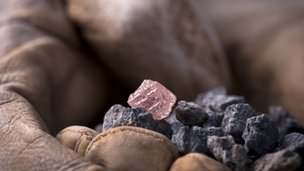
A 12.76-carat pink diamond, found by an Australian mining company, is believed to be the largest rough pink diamond found in the country.
The rare diamond was found at Rio Tinto’s Argyle diamond mine in Western Australia’s East Kimberly region.
Estimated to be worth millions, it has been named the Argyle Pink Jubilee, and is being cut and polished in Perth.
The diamond will be sold later this year after being shown around the world, including in New York and Hong Kong.
The process of polishing and cutting, which began in Perth on Tuesday, is expected to take about 10 days. The diamond will then be graded by a team of international experts.
More than 90% of the pink diamonds in the world come from the Argyle mine, a Rio Tinto statement said.
The rare pink diamond was found at Rio Tinto's Argyle diamond mine in Western Australia's East Kimberly region
The Argyle Pink Jubilee is a light pink diamond, the company said. It is similar in color to The Williamson Pink – the diamond found in Tanzania that Queen Elizabeth II received as a wedding gift and which was subsequently set into a brooch for her coronation.
A Rio Tinto spokesperson said that a diamond of this calibre was ”unprecedented”.
”It has taken 26 years of Argyle production to unearth this stone and we may never see one like this again,” said Argyle Pink Diamonds Manager Josephine Johnson.
In 2010, a rare 24.78-carat “fancy intense pink” diamond was sold for a record-breaking $46 million, the highest price ever paid for a jewel, to a well-known British dealer at an auction in Geneva.
That diamond had been in a private collection for 60 years.
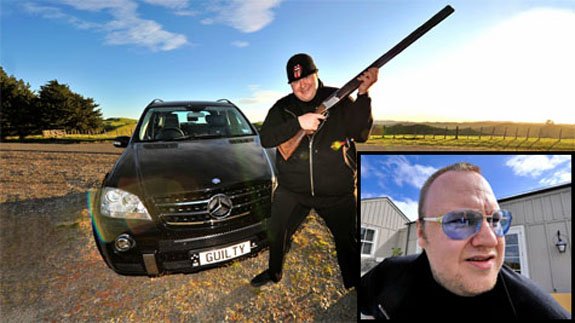
Kim Dotcom, Megaupload founder, has been granted bail by a New Zealand court.
Kim Dotcom, 38, has been in prison since 20 January at the request of the US authorities.
Megaupload founder faces charges in the US for one of the biggest copyright infringement cases in the country’s history.
The file-sharing site is accused of costing copyright holders more than $500 million in lost revenue.
North Shore District Court Judge Nevin Dawson overturned two previous rulings that Kim Dotcom, who is a German national, was an “extreme flight risk” because he had the money and connections to get out of the country.
The judge said the risk had diminished because all his funds were seized and no new assets or bank accounts had been uncovered.
Kim Dotcom, Megaupload founder, has been granted bail by a New Zealand court
Speaking to reporters in Auckland, Kim Dotcom said he was “relieved to go home to see my family, my three little kids and my pregnant wife”.
On 17 February Kim Dotcom was charged with three new criminal copyright counts and five new wire fraud counts.
That is on top of one count of racketeering, one count of conspiracy to commit money laundering and two counts of criminal copyright infringement charges.
US authorities are seeking to extradite Kim Dotcom, who changed his name legally from Schmitz, and three other co-defendants who had earlier been granted bail.
The US Justice Department and Federal Bureau of Investigation allege that Megaupload and its related sites made millions in ‘criminal proceeds’ by sharing pirated copies of movies, music and other content.
Founded in 2005, Megaupload was shut down by authorities last month.
They also seized millions of dollars worth of assets owned by Kim Dotcom including luxury cars, artwork and investments.
Kim Dotcom has denied any criminal misconduct and has said he will fight extradition to the US.
The BBC issued a statement in a lengthy defense of its decision to show extensive coverage of Whitney Houston’s funeral.
BBC was forced into the response after receiving 118 complaints about the way the broadcaster’s news channel had remained “glued” to the ceremony on Saturday, sparking accusations that it had been “voyeuristic”.
The British broadcaster admitted that the “duration” of its coverage was “too long” for some viewers and said it was “sorry” it was not to the “satisfaction” of all its audience.
However, BBC said the singer had made a “substantial impact on late twentieth century music” and that her death had come as “a great shock to the wider music industry and to her millions of fans”.
In its response,BBC admitted that the funeral service had lasted “significantly longer” than any broadcasters had expected and said once it had “committed” to showing the ceremony it would not have been “appropriate” to “opt out” any earlier than it did.
For some viewers BBC’s decision to focus so much time on the ceremony sparked concerns that other events were not being given enough coverage.
One said: “Yes, Whitney was wonderful singer but hours and hours of live broadcast of funerals on CNN and BBC and wherever is getting to feel kind of strange.”
Another viewer said: “Much as I understand sadness at the death of Whitney Houston would BBC and Sky kindly get on to some real news.”
“Kinda weird that Sky News and BBC News 24 are live streaming Whitney Houston’s Funeral. Feels voyeuristic,” added another viewer.
Stevie Wonder, Alicia Keys, R Kelly and a host of gospel stars performed at Saturday’s service at New Hope Baptist Church in Newark, New Jersey.
Actor Kevin Costner, who starred with Houston in The Bodyguard, fought back tears as he gave a moving eulogy.
The BBC issued a statement in a lengthy defense of its decision to show extensive coverage of Whitney Houston’s funeral
The BBC, which is also understood to have received about 35 complaints that it had interrupted coverage of the service, said the decision to air the funeral had been made “very carefully”.
BBC statement said: “We know from our audiences across the BBC as a whole that there was significant interest in the death of Whitney Houston, and we wanted to provide for that audience full, live coverage of the occasion.
“This was the funeral of a recording artist who had a substantial impact on late twentieth century music and whose death had come as a great shock to the wider music industry and to her millions of fans.
“This was reflected in our viewing figures and they show that the coverage of the funeral drove significantly higher audiences for the News Channel during this period compared to the rest of Saturday.
“We recognize that the duration of the coverage was too long for some viewers, but we kept the news ticker going on screen throughout and those who wanted other news of the day could have turned over to BBC 1 for the main tea time bulletin there.
“The funeral of Whitney Houston gave us an opportunity to bring a significant and moving story live to our audience. We are sorry if this wasn’t to the satisfaction of all our viewers but it is part of the News Channel function to be there when major stories take place, and we felt that this was such an occasion.”
A BBC spokeswoman said: “The News Channel’s coverage of Whitney Houston’s funeral reflected the significant interest in her sudden death as well as acknowledging the impact she had as a global recording artist.
“While some people felt there was too much coverage, we kept the news ticker going throughout, BBC1 ran the main teatime bulletin and there were normal radio bulletins along with the website and mobile app services, providing viewers with the best access to the day’s other news stories.”
Whitney Houston will always be remembered for her beautiful singing voice, but the late singer, in fact began her career as a model.
Images of Whitney Houston modelling for Seventeen Magazine in 1981 show a fresh-faced and hopeful young girl who had her whole life ahead of her.
The beautiful model, who was 18 at the time, can be seen smiling as she looks out to sea in a fuchsia swimsuit, while another photograph shows her running along the edge of the water in a pink and white striped romper suit.
Two of the shots show Whitney Houston sporting a red one-piece along with a snorkelling mask as she carries flippers before heading out into the surf with her fellow models.
Another image sees the angelic-faced Whitney Houston sat on the edge of a sunbed while wearing a red dress as she throws her head back in laughter.
Images of Whitney Houston modelling for Seventeen Magazine in 1981 show a fresh-faced and hopeful young girl who had her whole life ahead of her
Fashion editor Diane Forden, who worked with Whitney Houston during her modelling days, has spoken out to tell of how the future superstar was just as sweet in person as she appears in the beach shots.
Diane Forden wrote on the website BridalGuide.com: “I had the pleasure of working with Whitney during her high school years when she was a teen model.
“She was a delightful, sweet, wonderful person, and all of us who worked with her loved her. She was truly beautiful inside and out.”
Whitney Houston sporting a red one-piece along with a snorkelling mask as she carries flippers before heading out into the surf
The fashion editor also took to the website to tell of how professional Whitney Houston was, despite her young years.
Diane Forden wrote: “Anytime we were booking models for a photo shoot, we would always say, <<Let’s book Whitney>>, <<See if Whitney is available>>, <<Whitney would be great for this story>>.
“She was never a diva and she was always professional. She showed up on time and made our jobs easier by doing her best in front of the camera. She never complained if days ran long and cheerfully did whatever was expected.”
Two years after Whitney Houston graced the cover of the teen magazine, she landed a record deal with Arista and began putting together her first album.
Whitney Houston released her self-titled debut album two years later, in 1985, which sold more than 25 million copies internationally and paved the way for her to hit the big-time.
The touching photographs only make the star’s untimely death seem even more tragic, and they are unearthed as it is reported by Radar Online that she allegedly died from a deadly concoction of Valium, Xanax and alcohol.
However the cause of death is yet to be confirmed, pending toxicology reports which are expected to be released in a few weeks.
Whitney Houston was laid to rest on Sunday in her homeland of Newark, New Jersey, following her funeral the day before.
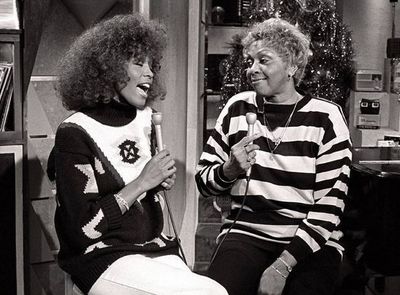
Whitney Houston and her mother Cissy shared an unbreakable bond, and the legendary star attributed her passion for singing to her mother, the acclaimed Gospel star.
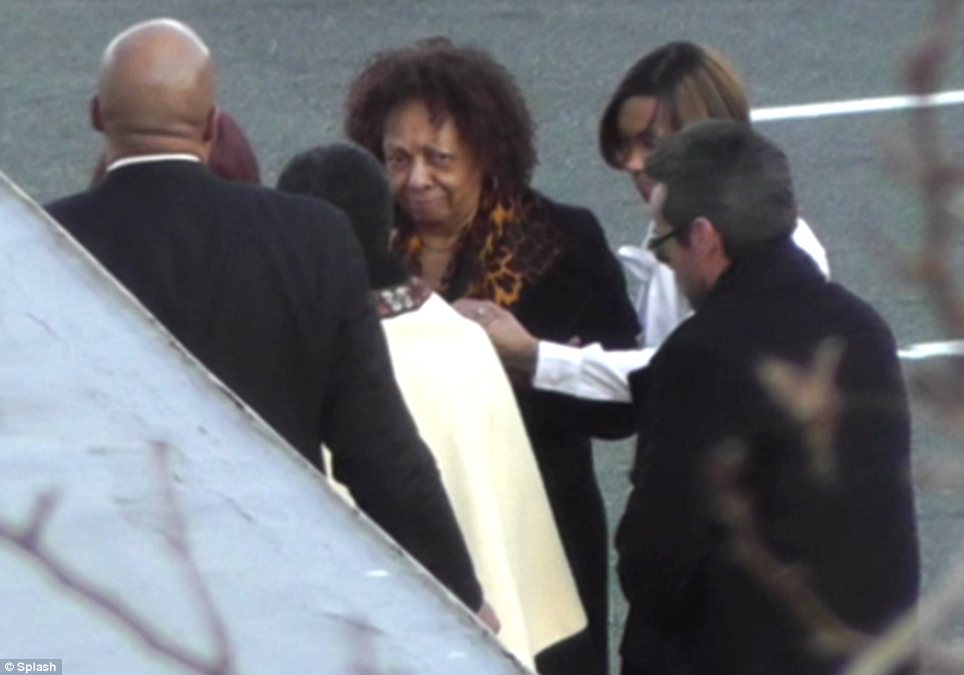
Though Cissy Houston has remained private about her grieving, she penned an open letter to her daughter Whitney that was placed in the program of her home-going service, according to TMZ.
Whitney Houston and her mother Cissy shared an unbreakable bond, and the legendary star attributed her passion for singing to her mother
“Dearest Whitney:
The presence of God blessed our home with life, love, joy and peace. You and your brothers were the center of divine love attracting God’s richest blessings. You were a child of God. We had so much love in our home that was truly from on high.
You always gave without expecting anything in return and our love was the force that multiplied these blessings higher and higher. I never told you that when you were born the Holy Spirit told me that you would not be with me long and I thank God for the beautiful flower he allowed me to raise and cherish for 48 years.
God said it’s time Nippy; your work is done. The other day on February 11th He came for you. But not without warning. For two months now I have been depressed, crying, lonesome and sad not knowing why.
On Saturday, before I found out about your transition, my doorbell rang. I went to answer it but there was no one there. It rang again and again, no one was there so I called the concierge to tell him someone was ringing my doorbell. He checked the cameras and told me that no one was there. You promised me you were coming to spend time with me after the Grammys. I believe the spirits allowed you to come after all.
How I love you Nippy and how I miss you, your beautiful smile, your special little things you used to say to me and sometimes you’d call just to say “hi Mommie, I love you so much,” I loved you so much more.
I love you,
I’ll miss you,
Thank you for being such a wonderful daughter.
Rest my baby girl in Peace, you’re now in the arms of Jesus.
Cissy Houston is determined to help turn granddaughter Bobbi Kristina’s life around as she enters the most difficult period in her life.
According to New York Daily New, Cissy Houston, 78, mother of Whitney Houston and grandmother to Bobbi Kristina declared: “I’ll be damned if I’m burying my grandbaby.”
A source told NY Daily News: “In the aftermath of Whitney’s death, she’s running the show.”
Cissy Houston “couldn’t do nothing with Whitney and the hangers-on, moochers and enablers that sucked the life out of her,” a second source continued. But “she has the reins of this now.”
Cissy Houston is determined to help turn granddaughter Bobbi Kristina’s life around as she enters the most difficult period in her life
It was previously reported that Bobbi Kristina was found doing drugs after her mother’s funeral, but that’s not the case. Now that Cissy Houston has stepped in, you can bet things are going to be different.
“She was with the family the whole time,” Darlene Love tells Access Hollywood.
“We all went to a restaurant we call after a funeral or home celebration, a repast, where everybody goes and sits and talks and eats. She was there, she was there yesterday, she’s been with the family these last couple of days.”
Whitney Houston treated her daughter more like a friend, since she was “absent” through most of Bobbi Kristina’s childhood years.
“Whitney felt bad that she wasn’t present as a mother” in Bobbi Kristina’s life, the source told NY Daily News, “so she treated her like a friend. That was her way to be close to her.”
Mother and daughter were extremely close, seen partying just a few days before Whitney Houston’s death.
The Fairview Cemetery in Westfield, where Whitney Houston was laid to rest in a private ceremony Sunday was closed to fans on Monday amid a crush of visitors eager to catch a glimpse of the fallen superstar’s grave.
As news helicopters idled overhead, more than 100 vehicles clogged Fairview Cemetery’s narrow lanes, the traffic spilling from the entrances to the streets outside.
“Someway, somehow, word got out that the cemetery was open to the public,” Westfield police Capt. Cliff Auchter said.
“And in the early afternoon, there was a tremendous increase in visitors that created tremendous traffic problems.”
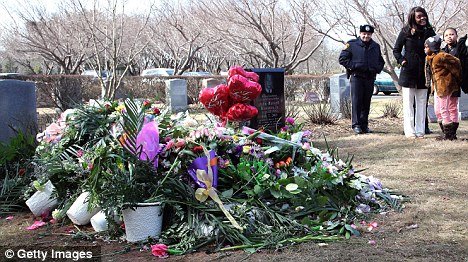
Early in the day, cemetery personnel and police allowed small groups of visitors to approach the grave site, its bare earth heaped with flowers. Two officers stood watch nearby, ensuring nothing was taken.
But as morning blended into afternoon, the number of visitors grew, causing gridlock on the unmarked paths and on roads outside the cemetery.
In addition, according to a Westfield police officer at the scene, members of the singer’s family arrived to pay their respects and were troubled by the crowds. The relatives requested that access to the site be restricted, said the officer, who declined to give his name.
A day after Whitney Houston was buried at Fairview Cemetery in New Jersey her grave appeared covered by flower
Police closed the cemetery gates shortly after 2:00 p.m., allowing passage only to those with loved ones inside. Whitney Houston, who died on February 11 at age 48, is buried near her father, John Russell Houston, Jr.
Monday’s spectacle brought some substance to the fears voiced by Westfield residents leading up to the burial. They said they worried Fairview would become a tourist attraction, transforming a place of reverence into a carnival.
Ted Simpson, a resident of neighboring Garwood, posted a hand-made sign across the street from the cemetery, urging the public to stay away.
“Please let Whitney rest in peace,” the sign read.
“If you want to show your love, buy her music.”
Whitney Houston’s family has struggled to maintain its privacy, no small task given the public interest in the death of one of the world’s top-selling female vocalists and the scores of celebrities who attended her funeral in Newark Saturday.
Cliff Auchter, the Westfield police captain, said that until further notice, the cemetery will be open only to those with family buried there.
“I don’t know how long this is going to go on for,” he said.
“People will always be trying to pull a fast one to get in. We have to be attuned.”
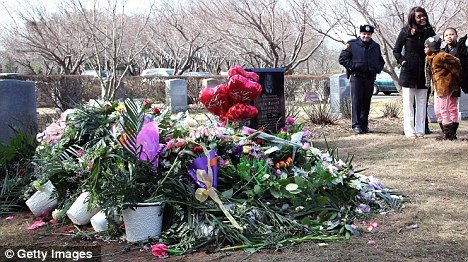
A day after Whitney Houston was buried at Fairview Cemetery in New Jersey her grave appeared covered by flower.
Following a very public farewell to Whitney Houston at a funeral attended by thousands yesterday, the late singer was laid to rest surrounded by just a select few in New Jersey on Sunday.
Whitney Houston was buried in a private ceremony at the Fairview Cemetery in Westfield, New Jersey, where her father, John Russell Houston Jr., was interred in 2003.
A day after Whitney Houston was buried at Fairview Cemetery in New Jersey her grave appeared covered by flower
An eyewitness has claimed that Bobbi Kristina Brown’s eyes were “glassy” and she appeared to be “wasted” during Whitney Houston’s burial.
According to RadarOnline.com, Bobbi Kristina Brown almost didn’t make it to the cemetery on Sunday.
“Bobbi Kristina didn’t want to be at the burial, and she looked wasted,” a source close to the situation told RadarOnline.com.
“Krissy’s eyes were glassy, and she seemed to be very disconnected from the service. Krissy hasn’t been eating or sleeping and just can’t stand to be around her family right now. Krissy’s group of friends appear to be much older, and don’t seem to have her best interests at heart.”
Bobbi Kristina was hospitalized at Cedars-Sinai Medical Center before and after her mother was found dead in a bathtub at the Beverly Hilton hotel on February 11.
“Krissy has taken her mother’s death really hard, not surprisingly, and Bobby is terrified she’s going to do something stupid. He wants her in a treatment center, getting professional help to get her through the grieving process without falling back on alcohol or drugs to mask her pain,” an insider told Radar Online.
“The true cause for concern is that the Houstons feel absolutely powerless to do anything about Krissy because she is an adult and they are afraid to push her too hard for fear of driving her away.”
“Krissy’s Aunt Pat [Whitney Houston’s sister-in-law], who spoke at the service on Saturday, is truly frightened of the toll all of this is going to take on Cissy, who is also taking her daughter’s death extremely hard.
“Pat seems to be the only one who isn’t afraid to get in Krissy’s face and physically haul her to rehab, but they know if they take her unwillingly, she will bolt.”
An eyewitness has claimed that Bobbi Kristina Brown's eyes were “glassy” and she appeared to be “wasted” during Whitney Houston’s burial
The Daily Beast originally reported that Bobbi Kristina Brown had vanished following the four-hour service in Newark, New Jersey. A report on Sunday claimed the mourning teenager was later found “getting high” by concerned family members.
It also claimed there were conflicts between family members on whether Bobbi Kristina should be taken to rehab straight away or left to mourn with them. Darlene Love, Whitney Houston’s godmother, told Access Hollywood that Bobbi Kristina was with the family the whole time and they are keeping a close-eye on her.
“She was with us and she was with the family the whole time… She’s been with the family these last couple of days. We all know where she is, she’s not missing.”
Darlene Love’s denial appears to contradict a family statement on Sunday, conceding the teen had some time out.
A family spokesperson told The Daily Beast: “There was some confusion about Bobbi Kristina’s whereabouts last night for a short time, but she’s OK. She needed some time alone.”
The Houston family rep denied that Bobbi Kristina was on drugs and said that she was just going through a “very hard time as you can expect”.
Bobbi Kristina Brown was admitted to a psychiatric ward in 2008 after she tried to stab her mother during an argument before turning the blade on herself and trying to slit her wrists. She had apparently grown up seeing her mother doing drugs and her family is concerned that she may follow in the singer’s footsteps in the more negative aspects of her life.
In 2011, Bobbi Kristina ‘s ex-boyfriend of more than two years was so concerned he spoke to Radar Online about her growing cocaine addiction that he says is due, in part, to her parents enabling her habits.
“I’ve tried to stop her, but all she said was, <<I’m just like my mother!>>” he said.
“It was difficult to stop her from buying alcohol and drugs because her mother gave her $1,000 a week. I saw Krissi do an eight ball – an eighth of an ounce – of cocaine in just two days with friends. One time Whitney bought a case of beer for Krissi and her friends to drink in front of her. I couldn’t believe it!”
Last March, Bobbi Kristina Brown took to Twitter to deny claims she had checked into rehab after The National Enquirer published pictures that allegedly showed her snorting lines of cocaine.
Bobbi Kristina Tweeted: “Excuse me, but I’d like to say that I am NOT going to rehab? I’m perfectly healthy and I am not addicted to anything but life.”
Long-time family friend BeBe Winans said he wasn’t aware of any alleged drug problems Bobbi Kristina was facing. He told Access Hollywood:
“I don’t know anything about rehab. I can tell you from being around her, pretty much all her life, and at the same time being around her in this dark valley, she’s doing wonderful. She’s doing wonderful.”
When asked about what part her father Bobby Brown would play in her life, Darlene Love added: “That’s really going to have to be her choice whether she wants him in her life… and I don’t think nobody is going to give her any information or try to move her one way or the other.
“That’s one decision she’s definitely going to have to make on her own.”
Although there are no custody issues because Bobbi Kristina is 18, her grandmother Cissy Houston is determined to keep a close eye on the teen.
Whitney Houston was pictured just five days before her tragic death dancing to Madonna’s Super Bowl half-time performance.
Whitney Houston watched the game at a bar in the Regent Beverly Wilshire hotel in Los Angeles with close family and friends.
TMZ reports Whitney Houston did not touch a drop of alcohol during the screening.
The website reports Whitney Houston sang along as Madonna, 53, performed her famous Vogue track as part of a medley of songs.
Source revealed Whitney Houston was a huge fan of Madonna’s performance and went on to reminisce about the days when they used to compete in the charts.
Whitney Houston was laid to rest on Sunday in her homeland of Newark, New Jersey, following her funeral the day before.
Stars including Mariah Carey, Oprah Winfrey and her co-star from The Bodyguard Kevin Costner attended the service at the New Hope Baptist Church.
Whitney Houston was pictured just five days before her tragic death dancing to Madonna's Super Bowl half-time performance
Kevin Costner was among the speakers and paid a moving tribute to the singer.
Whitney Houston was found dead in the bathtub of her Beverly Hilton hotel in LA on February 11, the eve of the Grammy Awards.
The cause of death is yet to be confirmed, pending toxicology reports, although today, Radar reported Whitney Houston had a deadly mixture of Valium, Xanax and alcohol in her system when she was found at the Beverly Hilton.
“Whitney had taken Valium, Xanax, and alcohol, which led to her death,” a source close to the situation tells RadarOnline.com. The coroner is waiting on final toxicology results to determine which one of the three was the major contributing factor of her demise.
“The coroner will be closely examining Whitney’s blood alcohol content at the time she died as well. The sedatives and alcohol will almost certainly be the cause of death, and not drowning.
“Her heart stopped beating because her respiratory system was suppressed because of the anti-anxiety meds, and combined with the booze it probably happened very quickly before she was found partially submerged in the bathtub,” they said.
The final toxicology results for Whitney Houston should be released in the next several weeks.
Earlier reports claimed that Elton John was to attend his friend Whitney Houston’s funeral and, when he cancelled his Friday and Saturday concerts at Caesar’s Palace in Las Vegas, many fans thought that’s where he was.
But Sir Elton John has responded to the reports, saying the shows were cut because he was sick with food poisoning, not because he was bidding farewell to the troubled star.
A statement on Elton John’s official website said: “Elton’s management would like to apologize to all the ticket buyers who were disappointed over this unavoidable cancellation.
“Also, they would like to respond to various online rumors that Elton attended the funeral of Whitney Houston on Saturday.
“This is completely untrue. The only reason Elton did not play his concerts over the weekend is because he was too ill.”
Elton John said his shows in Las Vegas were cut because he was sick with food poisoning, not because he was attending Whitney Houston’s funeral
Elton John had been due to perform as part of his residency at the Caesar’s Palace.
The statement also promised full refunds to fans.
A spokesperson for Elton John told website TMZ he is feeling “much better now” and will be ready for his next concert later this week, in Guadalajara, Mexico.
Elton John was performing in Las Vegas on the previous Saturday when he heard about Whitney Houston’s death.
The singer dedicated his track Don’t Let the Sun Go Down On Me to Whitney Houston.
Addressing the crowd that night Elton John said: “This is a sad day today, most of you must know by now the news of Whitney Houston passing away.
“About six years ago I was here in Vegas with some friends and we spent the whole afternoon on YouTube looking at Whitney’s work from a long time ago, and you forget – with all the troubles she went through – how brilliant, she was.
“So, my dearest, gorgeous, lovely angel, we want to do this song for you. Thank you for giving us your talent and one of the most beautiful voices I’ve ever heard in my life.”
Astronomers using Hubble Space Telescope have confirmed the existence of a new class of planet: a waterworld with a thick, steamy atmosphere.
The exoplanet GJ 1214b is a so-called “Super Earth” – bigger than our planet, but smaller than gas giants such as Jupiter.
Observations using the Hubble telescope now seem to confirm that a large fraction of its mass is water.
The planet’s high temperatures suggest exotic materials might exist there.
“GJ 1214b is like no planet we know of,” said lead author Zachory Berta, from the Harvard Smithsonian Center for Astrophysics.
The planet was discovered in 2009 by ground-based telescopes. It is about 2.7 times the Earth’s diameter, but weighs almost seven times as much. It orbits its red-dwarf star at a distance of just two million km, meaning temperatures on GJ 1214b probably reach above 200C.
In 2010, astronomers released measurements of its atmosphere. These suggested that GJ 1214b’s atmosphere was probably made up of water, but there was another possibility – that the planet was covered in a haze, of the type that envelopes Saturn’s moon Titan.
Exoplanet GJ 1214b, so-called "Super Earth”, is bigger than our planet, but smaller than gas giants such as Jupiter
Zachory Berta and his colleagues used the Hubble Space Telescope’s wide-field camera to study the planet as it crossed in front of its star – a transit. During these transits, the star’s light is filtered through the planet’s atmosphere, giving clues to the mixture of gases present.
The researchers said their results are more consistent with a dense atmosphere of water vapor, than one with a haze.
Calculations of the planet’s density also suggest that GJ 1214b has more water than Earth. This means the internal structure of this world would be very different to that of our own.
“The high temperatures and pressures would form exotic materials like <<hot ice>> or <<superfluid water>>, substances that are completely alien to our everyday experience,” said Dr. Zachory Berta.
The planet’s short distance from Earth makes it a likely candidate for follow-up observations with the James Webb Space Telescope, which may launch by the end of this decade.
The study has been accepted for publication by the Astrophysical Journal.
Jennifer Lopez and boyfriend Casper Smart spent a holiday in Brazil surrounded by the frenzy of the Rio de Janeiro carnival.
After a day surrounded by loud music and dancing, the couple enjoyed some quiet time as they relaxed at their hotel before catching an evening flight back to the U.S.
As they watched the sunset over Rio’s coastline, dancer Casper Smart, 24, planted a tender kiss on Jennifer Lopez, 42, as she relaxed on a chair.
A few hours earlier, Casper Smart was spotted working on his tan at the rooftop bar of the exclusive Fasano Hotel in Ipanema, while J.Lo enjoyed the privacy of her suite’s ocean view balcony.
Earlier on Monday, they were joined by the American Idol judge’s entourage as they enjoyed a cruise.
Jennifer Lopez and Casper Smart checked into a deluxe suite at the Fasano boutique hotel on Saturday, where they spent two nights before flying out of the city on Monday night.
Their deluxe suite includes a king-sized bed with 300-thread count Egyptian cotton sheets, a bathroom including marble bath and ocean-view shower and a walk-in wardrobe.
Jennifer Lopez and boyfriend Casper Smart in the Brahma VIP box at the Sambadrome during the carnival on Sunday
Last night, Jennifer Lopez stopped her bodyguard from blocking a 12-year-old girl from trying to get an autograph from the singer.
On Sunday, Jennifer Lopez was the special guest of the Brahma beer company at their private VIP box in the Sambadrome for the annual Rio carnival.
She wore a red Brahma T-shirt as she danced along to the music and watched the spectacle.
Jennifer Lopez was invited by the Brazilian beer firm after appearing in the recent advertising campaign.
She filmed the Brahma beer ad in Los Angeles last month, she sees the Wedding Planner star turn down invitations for European dignitaries in favor of one to the carnival.
Brahma is the latest company to feature Jennifer Lopez in their advertising – she’s also one of the faces of L’Oreal and Fiat 500.
Danielle Maudsley, a 20-year-old woman has been left brain dead – after she was Tasered by police and smacked her head on the ground.
Danielle Maudsley had been taken to a Florida Highway Patrol Station after being arrested for a suspected hit-and-run in September. Handcuffed, she ran out of the door.
But as footage from a police cruiser dashboard camera reveals, Trooper Daniel Cole, who this week was cleared of any wrongdoing, fired a Taser’s electric probes into her back.
Danielle Maudsley spun, fell backwards and hit her head on the ground. Bleeding and crying she tried to get up. She then blacked out and has remained unconscious ever since.
Doctors say Danielle Maudsley, who was found to have cocaine and oxycodone in her system at the time, is unlikely to ever wake up.
Danielle Maudsley has been left brain dead after she was Tasered by police and smacked her head on the ground
Her mother Cheryl Maudsleyhas slammed the Department of Highway Safety and Motor Vehicles and Florida Department of Law Enforcement for its reports that both cleared Cole.
Cheryl Maudsley told the Tampa Bay Times she was suing FHP, and added: “Tell me that’s not excessive force. I’m not saying she was an angel, but she didn’t deserve that.
“He couldn’t reach out and grab her? He was an arm’s length away. My daughter is dead because of this. She won’t come back.”
Danielle Maudsley, who had a suspended driving license, was arrested earlier that day for allegedly leaving the scene of two traffic accidents.
At the station, the woman tried to escape. Daniel Cole, worried she would be hit by a car as she ran towards the direction of U.S. 19, gave chase.
Daniel Cole said that because of the immediacy of the situation, and the fact he feared one or both of them would be injured if he tackled her, he went for his Taser.
When asked if he would have done anything differently, Daniel Cole said: “No, I would not have.”
Experts have now questioned the use of the Taser.
Greg Connor, professor at the University of Illinois Police Training Institute who specialises in use of force, said: “It just doesn’t make any sense. I don’t see where it’s going to be that hard to apprehend her.”
And nationally known use-of-force expert Dave Klinger, a retired Los Angeles police officer and professor at the University of Missouri-St. Louis, said it was an “inappropriate” police tactic.
But Sgt Steve Gaskins said: “The Florida Department of Law Enforcement conducted an independent review. FDLE’s investigation found the trooper’s actions were legal and within the scope of his duties.”
CEO’s participants at CBS’ show “Undercover Boss” are supposed to stay “undercover” as they work in the trenches of their own companies with their identities hidden from their employees.
However, in a recent edition of the show, Rick Silva, the head of Checkers & Rally’s drive-in hamburger restaurants, was so horrified at the abusive tone of one of his managers in Homestead, Florida, that he broke character and revealed himself in the middle of the episode.
And then Rick Silva shut down the restaurant for the night, stunning the employees and shocking the manager, known only in show as “Stevens”.
Rick Silva’s undercover name was Alex Garcia, and he posed as a failed pharmacy owner from Philadelphia.
While working alongside an employee named Todd at the fry station of the restaurant, Todd is in the middle of telling Rick Silva about his ambitions to be a chef, when Stevens yells at him to stop talking and cook the meat.
At one point, Stevens threatened Todd outside and beat him for not working hard enough.
When Rick Silva questioned the employee about why he allowed himself to be treated so badly, Todd replied that he had to keep his job so he could support his mother and he worried that if he stood up for himself, he would be fired.
In response to Steven’s abusive behavior and barking orders at his employees, Rick Silva responds by asking Stevens to speak with him outside.
Rick Silva, Checkers&Rally’s CEO, takes manager Stevens outside to talk about his behavior
When Rick Silva asked why Stevens yelled at his employees, the manager explains: “If I don’t scream at them, they don’t listen to me.”
Gaining confidence, the manager added: “I’m not going to let you continue telling me I’m disrespecting my crew. Have you been in the fast food business before?”
After initially attempting to not answer the question directly, Rick Silva, who manages one of the largest fast food chains in the country with more than 800 stores in 28 states, shot back:
“I have been in the restaurant business for over 20 years. And I’ve been in the fast food business for over 20 years. I’m CEO for this company.”
Stevens’ face shows that he is clearly stunned and he opens his mouth in disbelief, looking away.
“Right here, right now, we’re going to shut the restaurant down,” Rick Silva says.
When Rick Silva calls the employees out to inform them of the news, they are afraid the closing will be permanent and their jobs are lost.
Rick Silva, the CEO of the Rally's&Checkers hamburger restaurants chain
However, Rick Silva reopened the store with a new general manager the next morning and sent the offending manager in for more training.
“I came to the conclusion that he wasn’t prepared to run that shift and wasn’t convinced that when I walked away the restaurant would provide the level of service we need,” Rick Silva told the trade magazine Nation’s Restaurant News later.
Rick Silva also accepted responsibility for the manager’s poor behavior, saying it was his own fault as CEO that the company didn’t have the proper training procedures in place.
As for Todd, at the end of the show, Rick Silva awarded him with $15,000 to take care of his mother and money to finish culinary school.
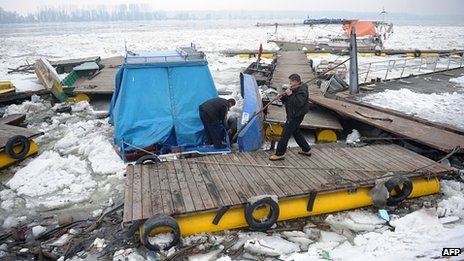
A rapid thaw caused a real chaos on the River Danube in the Serbian capital Belgrade, where ice damaged boats, pontoons and floating restaurants.
The thick ice covered one of Europe’s busiest waterways during the recent freeze, but began to break up on Sunday as temperatures rose.
In Belgrade, boats crashed into each other but there were no immediate reports of casualties.
One boat owner said the ice had moved so fast, boats could not be saved.
“The damage will be hundreds of thousands of Euros for sure,” Dragan Jovanovic was quoted as saying by Reuters news agency.
Another boat owner, Mihailo Svilaric, told Reuters only a “handful” of boats remained intact out of about 100 moored in the Serbian capital’s Kapetanija marina.
A rapid thaw caused a real chaos on the River Danube in the Serbian capital Belgrade
Debris was scattered among the breaking ice for hundreds of metres along the river, and several floating restaurants, barges and boats were beached on river banks after the ice snapped anchor lines.
Local media reported that Belgrade emergency services said there was no ice risk to bridges and other infrastructure in the city, and there was no threat of flooding.
The Danube flows 2,860km (1,777 miles) through nine countries and is vital for transport, power and industry.
It has been almost entirely frozen from Austria to the Black Sea, in Romania, the Associated Press news agency reports.
Ice more than 30cm (11in) thick in places broke up over the weekend as temperatures rose.
Belgrade river officials advised boat owners to constantly monitor their property but not to try to recover it from the water as of Monday morning.
Belgrade resident Miroslav Jagas told AP he believed that complacency had aggravated the problems caused by the freezing weather.
“We have not seen weather like this in a long time,” he said.
“People were relaxed, the boats stayed there, the icebreakers did not remove the ice on time.”
At least 20 people have died from the cold in Serbia in recent weeks and economists say damage from the cold snap may cost Serbia as much as 500 million Euros ($660 million).
Some 3,300 people remain stranded by snow and ice in rural areas, where they can only be reached by helicopter.
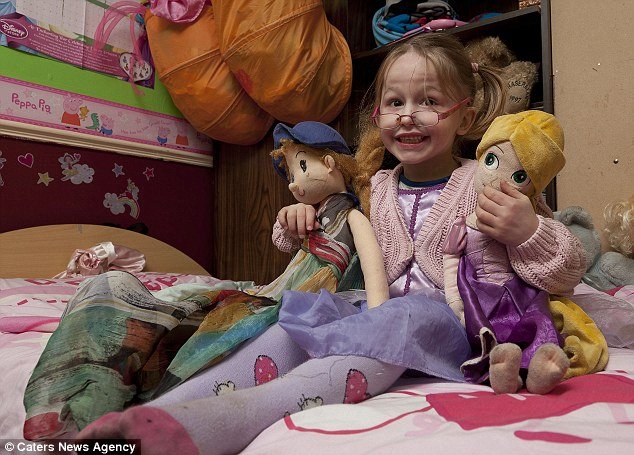
Five-year-old Zachery Jack Avery’s wardrobe contains a purple tutu, a silky mauve blouse and a floral patterned skirt.
Zachery Jack Avery is one of the youngest known children to be backed by the NHS in UK after being diagnosed with Gender Identity Disorder (GID).
The boy has a long fair hair done up in bunches as he has been insisting on living as a member of the opposite sex.
The extraordinary conclusion that he is a girl trapped inside a boy’s body is being backed by medical experts and supported by his school, which has made a lavatory block “gender neutral” to accommodate his needs.
Until shortly before his fourth birthday in December 2010, Zachy, as his mother Theresa calls him, was “a normal little boy”. He loved to play with his Thomas the Tank Engine train set alongside his brother Alex.
Suddenly, however, Zachery Avery became obsessed with the children’s TV cartoon character Dora the Explorer, and started to dress in girls’ clothes.
Theresa Avery, who has two other children, said: “He just turned round to me one day and said, <<Mummy, I’m a girl>>. I assumed he was just going through a phase and left it at that. But then it got serious and he would become upset if anyone referred to him as a boy. He used to cry and try to cut off his willy out of frustration.”
Theresa Avery, 32, and husband Darren, 41, became increasingly worried by their son’s behavior and took him to a doctor, then to a child psychologist.
Zachery Jack Avery is one of the youngest known children to be backed by the NHS in UK after being diagnosed with Gender Identity Disorder
At the Tavistock and Portman NHS Foundation Trust in London, which specializes in the disorder, Zachery Avery was diagnosed as having GID.
His mother said: “They told us that although he had a male body, his brain was telling him he was a girl.”
At home in Purfleet, Essex, a first-floor flat in a block on a 1980’s estate, Darren and Theresa Avery continued to allow Zach to dress in girls’ clothes and play with his sister’s dolls.
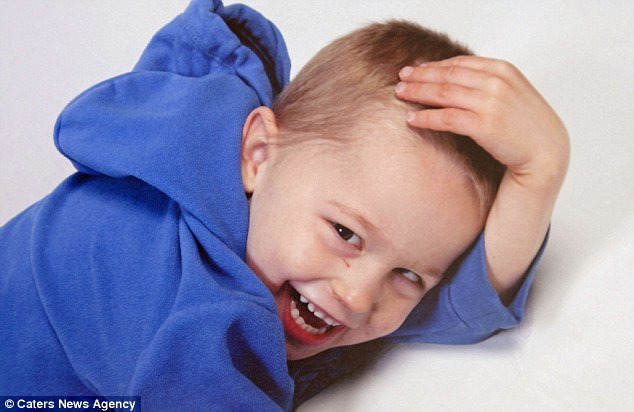
Zachery Avery pictured shortly before his fourth birthday in December 2010, when he was a normal little boy
Meanwhile at the boy’s school, Purfleet Primary, they have applied themselves to what Theresa Avery calls “the bathroom issue” and are hoping Zach can use the staff toilets when he gets older.
About the other pupils, she said: “We explained to the other kids that Zach’s body was that of a boy but in his brain he was a girl. We said Zach was just happier being a girl than a boy. They haven’t batted an eyelid. They’ve accepted Zach as Zach and there’s been no problems at the school with bullying. The school has been brilliant and really, really supportive.”
Purfleet Primary, which has 350 pupils up to age 11, was given the lowest “inadequate” rating in December after an Ofsted inspection. Teachers allow Zachery Avery to wear a girl’s trouser uniform and black boots with pink trim, which his mother says is female but still neutral.
Theresa Avery admits she misses her little boy, but she adds: “He just wants to be like a little girl. He’s very happy with his long hair, pink-and-red bedroom and a wardrobe full of girls’ clothes.
“He likes playing with his sister’s old toys but he still loves Doctor Who and playing with his brother. And we still put some neutral clothes in his wardrobe if he ever decides he wants to wear them. We leave it up to him to decide what he wants to do – if he changes his mind and wants to be a boy again then he does, but if he doesn’t, he doesn’t.”
The mother added: “I would love to have my son back, but I want him to be happy. If this is the route he wants to take – if this is what makes him happy – then so be it. I would rather him have my full support. People need to be aware of this condition because it’s very common but even many family-support workers have never heard of cases in children. There are people out there but they don’t want to talk about it.”
On his Facebook page, Darren Avery describes himself as an artist and “dad of four starting my own business drawing pictures from photos’. Sketches he has uploaded include a reclining nude woman wearing a necklace with a large, heart-shaped pendant, based on Kate Winslet in Titanic. Others include a blonde girl striking a provocative pose in a figure-hugging top, and a faceless female wearing only a Mickey Mouse T-shirt.
Zachery Avery (right) with his mother Theresa, father Darren and brother Alex
Yesterday Darren and Theresa Avery were negotiating with a tabloid newspaper to sell Zachery’s story for a five-figure sum.
Figures from the Tavistock and Patman clinic – the national body for GID – revealed that 165 children have been diagnosed with the condition this year.
A spokesman said they were unable to comment on individual cases, but only seven children under five were diagnosed last year – making Zach one of the youngest.
“Tavistock Clinic had 97 referrals in 2009/2010; 139 in 2010/2011 and 165 thus far this year.
“The trend in referrals has been up over the years – this may reflect greater awareness.
“We see children and young people up to the age of 18, from across the UK, who are experiencing difficulties in the development of their gender identity.
“This includes children who are unhappy with their biological sex. Some may be boys who prefer activities and roles associated with the opposite sex, some may also identify as the opposite sex and vice versa for girls. In general when younger children are referred it is in relation to cross-gender preferences in play, playmates and activities. It is more unusual for children of this age to express cross-gender identification – that is the wish or belief that they belong to the opposite sex.
“The diagnosis of GID is made by the key workers working with the young person. We will also assess their general well-being. We remain in contact with young people often for many years.
“Our aim is not to predict or direct the outcome, but rather to support the young person in their general development as well as develop a trusting collaborative therapeutic relationship in which it is possible to openly explore their feelings about their gender.”
British scientists at University of Cambridge say they may have found a more efficient treatment of pancreatic cancer after promising early trial results of an experimental drug combination.
Giving the chemotherapy agent gemcitabine with an experimental drug called MRK003 sets off a chain of events that ultimately kills cancer cells, studies in mice show.
Patients are now testing the treatment to see if it will work for them.
The Cancer Research UK-funded trials are being carried out in Cambridge.
Father-of-two Richard Griffiths, 41, from Coventry, has been on the trial since being diagnosed with pancreatic cancer in May 2011.
“After six cycles of treatment, a scan showed the tumours had reduced and so I have continued with the treatment,” Richard Griffiths said.
“The trial gives you hope – I really feel I can do this with the science behind me.”
Cancer Research UK says it is prioritizing research into pancreatic cancer because the survival rate still remains dismally low.
Survival rates in pancreatic cancer are very low in relation to other cancers, and the length of time between diagnosis and death is typically short, usually less than six months.
The most recent data for UK show that about 16% of patients survive the disease beyond 12 months after diagnosis – prompting the need for new treatments.
Professor Duncan Jodrell, who is leading the trials at the University of Cambridge, said: “We’re delighted that the results of this important research are now being evaluated in a clinical trial, to test whether this might be a new treatment approach for patients with pancreatic cancer, although it will be some time before we’re able to say how successful this will be in patients.”
In total, about 60 patients with advanced pancreatic cancer will be recruited for the first Phase I/II clinical trial.
Beyoncé and Jay-Z made their first public appearance together since their daughter Blue Ivy was born at a basketball game yesterday.
Beyoncé and Jay-Z enjoyed cheering on the New Jersey Nets, a team that Jay-Z co-owns, from their courtside seats and looked extremely loved up as they cuddled together.
The R&B star whispered into his wife’s ear and kissed her cheek while keeping an arm protectively around her as they watched the game.
Beyoncé wore an eye-catching yellow blazer over a simple white top and proved just how quickly she has regained her fantastic figure as she slipped on some skinny jeans.
The singer also wore a pair of sky high patterned platform heels by Christian Louboutin, large gold hoop earrings and had a black bag with a chain slung over her shoulder.
She was sporting blue nail varnish, which she has been seen showing off since the birth of her baby girl, seemingly in honor of her daughter Blue Ivy.
Jay-Z wore a grey jumper over a white T-shirt, khaki trousers and brown boots.
The couple was sat next to actress and fashion designer Chloe Sevigny as they cheered on their team, and was also seen applauding the dancers who warmed up the match.
Beyoncé and Jay-Z made their first public appearance together since their daughter Blue Ivy was born at a basketball game
Beyoncé and Jay-Z surprised fans earlier this month when they decided to forgo any magazine deals and released the first images of Blue Ivy to the world via Beyoncé’s website.
A series of intimate family snaps showing the youngster and her parents was accompanied by the message: “We welcome you to share in our joy. Thank you for respecting our privacy during this beautiful time in our lives. The Carter Family.”
Beyoncé stepped out twice in as many nights earlier this month and in her form-fitting outfits, it was almost unbelievable to think she gave birth a few weeks earlier on January 7.
It wasn’t just her figure she was showing off as Beyoncé was also seen sporting a chunky piece of bling which she was given as a “push present”.
Jay-Z is believed to have bought the blue ring, in honor of their daughter’s name, in a tradition that sees new fathers reward the mother after she gives birth to their child.
Beyoncé’s first “stepping out” was last Monday night as she showcased her post-baby curves in a red Alice Temperley cocktail dress, which was undeniably striking.
It was a wise move as she looked picture perfect for the first night of Jay-Z’s two-legged occupation of NYC’s Carnegie Hall.
Meanwhile Jay Z made his first debut two weeks after little Blue Ivy’s birth when he attended the reopening of his nightclub 40/40 in New York.
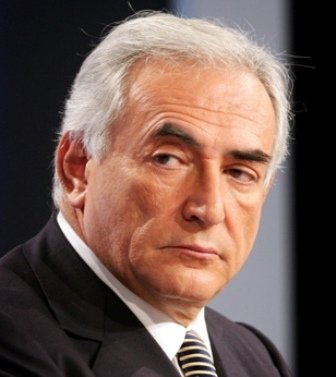
Dominique Strauss-Kahn, the former IMF boss, is being questioned by French police as a suspect in a prostitution ring inquiry, a prosecutor announced today.
Dominique Strauss-Kahn, once a front-runner for the French presidency, is being held in custody at a police station in Lille, northern France.
Police have questioned a number of prostitutes who have admitted having sex with Dominique Strauss-Kahn.
DSK insists he did not know that the women were prostitutes.
DSK is being held in custody at a police station in Lille as a suspect in a prostitution ring inquiry
“I challenge you to distinguish a naked prostitute from any other naked woman,” dominique Strauss-Kahn’s lawyer Henri Leclerc has told French television.
DSK resigned as head of the International Monetary Fund (IMF) in May 2011 after he was charged in New York with the attempted rape of a hotel maid. The case was later dropped.
In this separate inquiry, French police have already arrested eight men on suspicion of organizing a prostitution ring and misusing corporate funds to pay for sex in a scandal known as the “Carlton affair” because of a Lille hotel where clients were allegedly supplied with call-girls.
Three of the suspects were said to have been close to DSK, who is said to have taken part in sex parties in Paris and Washington in late 2010 and early 2011.
Dominique Strauss-Kahn could be held by police for up to 48 hours, French media say.
Although consorting with prostitutes is legal in France, supplying them to others and misusing company funds to pay for them are not.
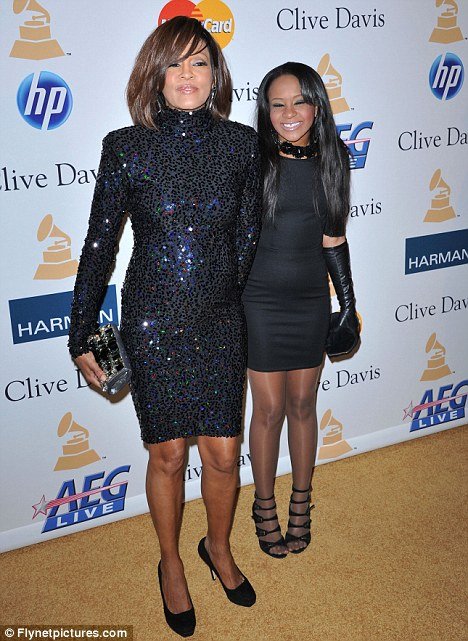
Darlene Love, Whitney Houston’s godmother, has hit out at reports the late singer’s daughter Bobbi Kristina Brown went “missing” following the funeral and allegedly was “doing drugs”.
Bobbi Kristina Brown, 18, was reported to have vanished following the four-hour service in Newark, New Jersey on Saturday.
A report on Sunday claimed Bobbi Kristina was later found “getting high” by concerned family members.
However, Darlene Love, 70, insisted Bobbi Kristina was with the family the whole time and they are keeping a close-eye on her.
Darlene Love told U.S. TV show Access Hollywood last night: “Not true. Not true.
“She was with us and she was with the family the whole time… She’s been with the family these last couple of days. We all know where she is, she’s not missing.”
The Sixties singer’s denial comes after The Daily Beast website claimed Bobbi Kristina Brown failed to join the family at a Newark restaurant following the funeral at the New Hope Baptist Church.
“Everyone was freaking out and calling Bobbi Kristina’s cell,” a family friend told The Daily Beast.
“It was so much commotion and activity after the funeral that Bobbi Kristina just slipped away. [Her grandmother] Ms. Cissy [Houston] was beside herself.”
Darlene Love, Whitney Houston's godmother, has hit out at reports Bobbi Kristina Brown went “missing” following the funeral
Bobbi Kristina Brown was understandably left devastated when her 48-year-old mother was found dead in a bathtub at the Beverly Hilton hotel on February 11.
The teenager was also apparently found “getting high” after she received the news her mother had passed away and there were conflicts between family members on whether she should be taken to rehab straight away or left to mourn with them.
Darlene Love’s denial appear to contradict a family statement on Sunday, conceding the teen had some time out.
A Houston family spokesperson told The Daily Beast: “There was some confusion about Bobbi Kristina’s whereabouts last night for a short time, but she’s OK. She needed some time alone.”
The Houston family rep denied that Bobbi Kristina Brown was on drugs and said that she was just going through a “very hard time as you can expect”.
Long-time family friend BeBe Winans said he wasn’t aware of any alleged drug problems Bobbi Kristina was facing.
BeBe Winans told Access Hollywood: “I don’t know anything about rehab. I can tell you from being around her, pretty much all her life, and at the same time being around her in this dark valley, she’s doing wonderful. She’s doing wonderful.”
When asked about what part her father Bobby Brown would play in her life, Darlene Love added: “That’s really going to have to be her choice whether she wants him in her life… and I don’t think nobody is going to give her any information or try to move her one way or the other.
“That’s one decision she’s definitely going to have to make on her own.”
Bobbi Kristina is said to be upset following her parents’ divorce in 2007 and how quickly Bobby Brown moved on.
Bobby Brown, 43, has become engaged and has a two-year-old son Cassius with fiancée Alicia Etheredge.