ARM Holdings, one of the leaders in microprocessor Intellectual Property, has unveiled what it describes as the “world’s most energy-efficient microprocessor” design.
ARM Holdings says that microcontrollers based on the “Flycatcher” architecture will pave the way for the “internet of things” – the spread of the net to a wider range of devices.
It suggests that fridges and other white goods, medical equipment, energy meters, and home and office lighting will all benefit from the innovation.
Two companies have licensed the technology.
They are NXP Semiconductors and Freescale.
“It opens up all devices to the potential of being connected all the time,” said Freescale’s Geoff Lees.
“It’s allowing us to provide connectivity everywhere. So anything from consumer appliances, MP3-music audio docks, kitchen equipment with displays right through to remote sensors in rain monitoring equipment or personal medical devices – an area where ultra-long battery life allied to high performance and safety is becoming more and more important.”
The Flycatcher chip is the most energy efficient in the world and works on ultra-low power
The Cortex -M0+ architecture is designed to provide chip-makers with the means to build microcontrollers that require “ultra low power” but are capable of 32-bit processing.
ARM says it went back to the drawing board to create the new processor cores which measure 1mm by 1mm in size.
It says the microcontrollers should draw around a third less energy than their predecessors, which only offered 8 and 16-bit capabilities.
It adds that its design has been created to be a low leakage part – meaning it consumes almost no power when it is in sleep mode. The firm says that means devices can offer wireless connectivity when paired with modern bluetooth or radio equipment, offering years of life from a single battery-pack rather than months.
ARM’s director of embedded marketing Gary Atkinson says it could herald a new generation of smart energy systems.
“Every developed nation country has a graph showing electricity demand is going to outstrip supply at some point in the next 20 years unless we do something different,” Gary Atkinson said.
“What we need to do is something called design response – where all the devices on the network can make a decision as to whether or not to come on in order to smooth out peaks and troughs in electricity demand.
“So you should add connectivity to things like fridges, washing machines, freezers and dishwashers. If the wider electricity network is being very heavily used and if the element in your dishwasher could go off for two or three minutes to alleviate that – well then that would make a big difference.”
ARM says it expects the microcontrollers will sell for around 13-20 pence per device – and it will charge its clients about a 1-2% royalty fee from that price on top of a license charge.
Although the sums may appear small, the firm notes that Ericsson recently forecast there would be 50 billion connected devices by 2020 compared to 10-15 billion at present.
ARM says much of that growth will come from types of equipment that are not connected to the net at present – presenting the firm and its customers with a huge growth opportunity.
However the Cambridge-based company does not have the market to itself.
Arizona-headquartered Microchip Technology designs and builds a rival range of 32-bit “Pic” microcontroller, while California-based Atmel offers 32-bit “Avr” products.
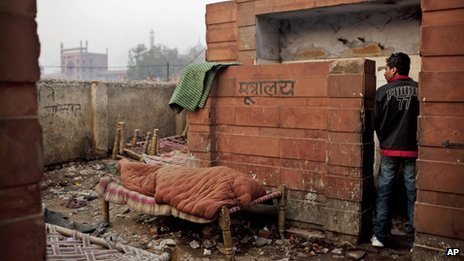
Almost half of India’s 1.2 billion people have no toilet at home, but more people own a mobile phone, according to the latest census data.
Only 46.9% of the 246.6 million households have lavatories while 49.8% defecate in the open. The remaining 3.2% use public toilets.
Census 2011 data on houses, household amenities and assets reveal that 63.2% of homes have a telephone.
Analysts say the data show the complex contradictions of the Indian system.
They say the census reveals a country where millions have access to cutting-edge technology and consumer goods but a larger number of poor who lack access to even basic facilities.
About 77% of homes in the eastern state of Jharkhand have no toilet facilities, while the figure is 76.6% for Orissa and 75.8% in Bihar. All three are among India’s poorest states with huge populations which live on less than a dollar.
“Open defecation continues to be a big concern for the country as almost half of the population do it,” Registrar General and Census Commissioner C. Chandramouli said while releasing the latest data.
“Cultural and traditional reasons and a lack of education are the prime reasons for this unhygienic practice. We have to do a lot in these fronts,” he said.
Almost half of India's 1.2 billion people have no toilet at home, but more people own a mobile phone, according to the latest census data
The data also reveal that Indians now largely live in nuclear families with 70% of homes consisting of only one couple – a dramatic change in a country where joint families were always the norm.
The census figures also show changes in how people access information and entertainment.
More than half of population – 53.2% – has a mobile phone.
There has been a 16% rise in the number of homes with television sets, while the use of radios has declined by 15%.
The data show that 47.2% of households have a television while only 19.9% have a radio.
And the reach of computers with internet access is still miniscule, with only 3.1% of the population connected.
Bobby Brown earned a fortune after his album Don’t Be Cruel became one of the biggest hits of the 80’s, but now it appears he has fallen on hard times, as he was forced to use an airport shuttle bus in Los Angeles yesterday.
Bobby Brown, 43, also had to push his own luggage when he touched down at LAX airport with his current squeeze Alicia Etheridge.
It would be no surprise if Bobby Brown, who looked decidedly grumpy when he climbed on the bus, is struggling financially.
For it was revealed earlier this week Bobby Brown had claimed in court that possession he owned, which were kept in a storage facility he shared with ex-wife Whitney Houston, had to be auctioned off because they could not afford the bill.
Bobby Brown was forced to use an airport shuttle bus in Los Angeles yesterday, as he is struggling financially
In a sworn declaration submitted during their contentious divorce in 2007, Bobby Brown said the former couple had mounting cash worries.
He said: “It was no secret that I (as well as Whitney) had financial commitments we could not meet.
“In fact, just after the first of the year, our possessions held in storage were auctioned off due to a default judgement obtained for unpaid fees.
“Additionally, after Whitney and I separated I had no where to go and very little money to live on. I was for all intents and purposes, homeless.”
However, money troubles are not the only worries Bobby Brown will have on his mind at the moment.
For it has also emerged his daughter Bobbi Kristina Brown wants to change her surname to Houston and write him out of her life completely.
Whitney Houston left all of her estate to her daughter Bobbi Kristina, 19, and left nothing to her former husband Bobby Brown.
Thomas Lubanga, the Congolese warlord, has been found guilty of recruiting and using child soldiers between 2002 and 2003 by the International Criminal Court (ICC).
It is the court’s first verdict since it was set up 10 years ago.
Thomas Lubanga will be sentenced at a later hearing.
The warlord headed a rebel group during an inter-ethnic conflict in a gold-rich region of Democratic Republic of Congo.
Thomas Lubanga, the Congolese warlord, has been found guilty of recruiting and using child soldiers between 2002 and 2003 by the International Criminal Court
The prosecution accused Thomas Lubanga of using children as young as nine as bodyguards, sex slaves and fighters.
In a unanimous decision, the three judges said evidence proved that as head of the Union of Congolese Patriots (UPC) and its armed wing, Thomas Lubanga bore responsibility for the recruitment of child soldiers who had participated actively on the frontline.
Thomas Lubanga, who was arrested in 2005, could face a maximum sentence of life imprisonment. The court cannot impose the death penalty.
US Defense Secretary Leon Panetta has arrived in Afghanistan in a surprise visit after a NATO soldier shot dead 16 civilians.
According to the officials, Leon Panetta’s trip to Afghanistan was planned before 16 Afghan civilians were shot dead by an American soldier on Sunday.
Leon Panetta is due to have talks with President Hamid Karzai, provincial leaders and senior officials.
Correspondents say his visit has taken on a new meaning as political pressure mounts on Afghan and US officials over the unpopular war.
Leon Panetta is also due to speak with US troops in Afghanistan as fears mount that they could be the victims of a Taliban-led backlash over the killings of villagers, including nine children, by the rogue US soldier.
His arrival at Bastion Airfield in Helmand province came a day after protests over the massacre flared in the eastern city of Jalalabad.
US Defense Secretary Leon Panetta has arrived in Afghanistan in a surprise visit after a NATO soldier shot dead 16 civilians
Leon Panetta is the most senior US official to visit Afghanistan since the shootings.
He told reporters ahead of his trip that he believed that American strategy in Afghanistan was working and would withstand repercussions from the killings.
“I think we’re on the right path now and what we’ve got to do is convince people that despite these kinds of events we ought not to allow [them] to undermine that strategy,” Leon Panetta said on Monday.
“It’s important that we push on, and that we bring this war to a responsible end and achieve the mission that all of us are embarked on,” he said.
Leon Panetta’s trip coincides with discussions in the US between UK Prime Minster David Cameron and President Barack Obama over a possible “endgame” to the war in Afghanistan.
The leaders are expected to agree that Afghan forces should take over a lead combat role by mid-2013 – earlier than planned – but the US president has said there will be no “rush for the exits”.
Correspondents say that anti-Americanism was rampant in Afghanistan even before the shootings.
Last month there was outrage over US troops inadvertently burning Korans on an American base.
Fury also followed the posting of a video on the internet in January apparently showing four US marines urinating on Taliban corpses.
Blue Ivy was wearing a pair of golden booties as her mother Beyoncé walked her around Manhattan yesterday.
Tucked up in her Baby Bjorn, two-month-old Blue Ivy was safe and warm as she discovered the streets of the city she’ll soon call home.
The only hint of Beyoncé’s fabulous stage presence were those sparkling shoes which dangled from Blue Ivy’s warm cocoon, hinting at the fabulous outfits to come.
Beyoncé, 30, was fashionable even in the final stages of her pregnancy, so it isn’t a shock that she could turn a baby sling into a sensational accessory.
The singer also took baby Blue Ivy for a stroll around New York City the day before yesterday with her mother, Tina Knowles.
She’s been giving her beloved high heels a rest in recent weeks, and taken to wearing a flattering sort of footwear.
It isn’t easy to stroll in sky-high stilettos, which is why Beyoncé wore a pair of black leather penny loafers for her walk around her neighborhood of TriBeCa on Monday, and a pair of Charlotte Olympia Kitty flats on Tuesday.
Blue Ivy was wearing a pair of golden booties as her mother Beyoncé walked her around Manhattan yesterday
On Monday, Beyoncé looked glam in a black tuxedo blazer, enormous gold hoop earring and oversized glamorous shades, and she opted for muted tones on Tuesday, when she stepped out in funky triangle pattern trousers, and though she looked city chic, her best accessory, of course, was her newborn daughter.
Beyoncé gave birth to her little one on January 7 at New York City’s Lenox Hospital, it is the first child for the singer with hip-hop superstar Jay-Z.
Blue Ivy is already following in her famous parents’ footsteps, as well.
At two days old, Blue Ivy’s cries were included on her father’s hit single, Glory.
Blue Ivy officially became the youngest person to ever appear on a Billboard chart when the single debuted at number 74 on the Hot R&B/Hip-Hop Songs chart.
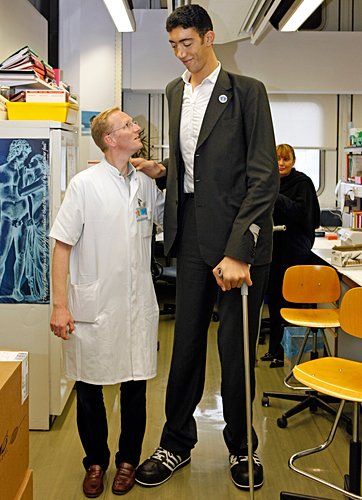
Sultan Kosen, the world’s tallest man, may have finally stopped growing at a towering 8ft 3ins (251.4 cm) thanks to a pioneering new treatment.
Turkish farmer Sultan Kosen, 29, suffers from the rare disorder acromegaly which causes his body to continually produce the growth hormone.
Sultan Kosen’s condition was thought to have been caused by a tumor in the pituitary gland which is located in bottom of the hypothalamus at the base of the brain.
Doctors though they had cured him in 2008 when they removed the tumor but he continued to grow at a rate of half of inch a year.
Sultan Kosen, the world's tallest man, may have finally stopped growing at a towering 8ft 3ins (251.4 cm) thanks to a pioneering new treatment
However, researchers at the University of Virginia Medical Center, who have developed a new treatment after he visited in 2010, say Sultan Kosen has finally stopped growing.
Sultan Kosen’s hands measure 10.8 in across and his feet are 13.7 in long – which are also world records.
The man, who wears size 28 shoes, is one of only ten people ever to top 8 ft and the first in a decade.
Sultan Kosen grew normally until he was ten but the tumor then caused him to develop the medical condition.
When other children were little more than 4 ft, he was already well over 6 ft.
“The kids used to tease me and I found that very difficult,” Sultan Kosen said on a trip to the UK in 2010.
Reference book firm Encyclopaedia Britannica has decided to stop publishing its famous and weighty 32-volume print edition after 244 years of tradition.
Encyclopaedia Britannica will now focus on digital expansion amid rising competition from websites such as Wikipedia.
The company, which used to sell its encyclopedias door-to-door, now generates almost 85% its revenue from online sales.
It recently launched a digital version of its encyclopedias for tablet PCs.
“The sales of printed encyclopedias have been negligible for several years,” said Jorge Cauz president of Encyclopaedia Britannica.
“We knew this was going to come.”
Encyclopaedia Britannica has decided to stop publishing its famous and weighty 32-volume print edition after 244 years of tradition
Companies across the globe have been trying to boost their online presence in a bid to cash in on the fast-growing market.
Various newspapers, magazines and even book publishers have been coming up with online versions of their products as an increasing number of readers access information on high-tech gadgets such as tablet PCs and smartphones.
Britannica said while its decision to focus on online editions was influenced by the shift in consumer pattern, the ability to update content at a short notice also played a big role.
“A printed encyclopedia is obsolete the minute that you print it,” Jorge Cauz said.
“Whereas our online edition is updated continuously.”
At the same time, frequent users of the encyclopedia said they preferred using the online version more than the print one.
“We have to answer thousands of questions each month through chat, through telephone, through email and we have to do that as quickly as humanly possible,” said Richard Reyes-Gavilan of Brooklyn Public Library.
“In many instances doing a keyword search in an online resource is simply a lot faster then standing up looking at the index of the Britannica and then finding the appropriate volume.”
Encyclopaedia Britannica, the company, has largely moved away from its encyclopedia work focusing most of its energies in recent years on educational software.
At least 28 people, including 22 children, have been killed after a Belgian coach crashed in a tunnel in the canton of Valais, Switzerland.
Another 24 children were injured in the crash near Sierre, close to the border with Italy. The children were travelling from Val d’Anniviers and were returning to Belgium.
The coach, carrying 52 people back to Belgium, hit a wall in the tunnel head-on. Both of the coach’s drivers were among those killed.
The children, from the Belgian villages of Lommel and Heverlee, were returning home after a skiing holiday.
Belgium’s Prime Minister Elio Di Rupo, who is travelling to the scene of the crash, said: “This is a tragic day for all of Belgium.”
The bus crashed shortly after 9:00 p.m. on Tuesday.
At least 28 people, including 22 children, have been killed after a Belgian coach crashed in a tunnel in the canton of Valais, Switzerland
In Brussels, the Belgian foreign ministry said most of the children were aged around 12, and the bus was one of three hired by a Christian group, AFP news agency reports.
The two classes of schoolchildren, from two schools in the Flemish-speaking part of Belgium, had spent a week skiing in Val d’Anniviers, in the Swiss Alps.
Some of the injured were flown by helicopters to hospitals in Lausanne, Bern and other Swiss cities.
Swiss prosecutor Olivier Elsig told a news conference the bus was new, or nearly new, and was equipped with safety belts.
In a tunnel where the speed limit is 100km/h (62 mph), Olivier Elsig said the bus collided with the right-hand side and then hit a concrete wall head-on. An investigation is under way.
Swiss journalist Ruth Seeholzer said some 300 rescuers were working at the scene of the crash.
She said that the two-lane tunnel was not busy with traffic when the accident happened and driving conditions were normal.
Belgian Foreign Minister Didier Reynders said: “It is incomprehensible. There were three buses and only one was in an accident, without any contact with another vehicle.”
The coach, carrying 52 people back to Belgium, hit a wall in the tunnel head-on
A helpline for families has been set up, and many relatives are expected to arrive in Switzerland later.
Belgium has made two aircraft available to take them to Switzerland.
Belgium’s ambassador to Switzerland, Jan Luykx, has travelled to the crash site.
Jan Luykx said: “This tragedy will hit the whole of Belgium. The magnitude of the accident is difficult to take in. For the moment I am concentrating on the practical aspects. The emotional side will come when we meet the families.”
The head of the Valais region, Jacques Melly, expressed his deep sadness at the accident, sending his condolences to the families of the victims and praising the rescuers for their work in “extremely difficult conditions”.
The White House has announced today that First Lady Michelle Obama will lead the official U.S. delegation to the opening ceremonies of the 2012 Summer Olympic Games in London.
It has become somewhat of a tradition for first ladies to lead the U.S. delegation.
Laura Bush performed the duty at the 2006 Winter Olympics in Torino, Italy, and Hillary Rodham Clinton headed up the delegation at the 1994 Winter Olympics in Lillehammer, Norway.
First Lady Michelle Obama will lead the official U.S. delegation to the opening ceremonies of the 2012 Summer Olympic Games in London
The announcement comes during a three-day visit to the U.S. by Prime Minister David Cameron and his wife Samantha Cameron, in which he and President Barack Obama intend to focus on foreign policy issues.
Michelle Obama will host a mini-Olympic competition with physical activities for D.C.-area children at American University today.
The competition is part of her “Let’s Move!” initiative promoting fitness and healthy eating.
Michelle Obama will be joined by Samantha Cameron.
Olympians and Paralympians expected to attend the event include: Kortney Clemons, Dominique Dawes, April Holmes, Lisa Leslie, Lori Ann Lindsey, Dan O’Brien, Becky Sauerbrunn and David Wagner.
The Olympics opening ceremony will take place in London on July 27.
New reports claim that Demi Moore is struggling following her discharge from the rehab centre and is attempting to win her estranged husband Ashton Kutcher back.
It was previously reported that Demi Moore’s split from Ashton Kutcher after claims of his infidelity was the reason for her plummeting weight and the eventual hospitalization which led to her going to rehab.
And now Demi Moore’s friends are said to be concerned that the actress is following a similar path once more, after setting her sights on reuniting with her estranged husband.
One friend told Grazia magazine: “Demi definitely isn’t over him yet. Her mood right now relies solely on Ashton and how responsive he is to her messages and phone calls.
“If he doesn’t message her back for a couple of hours or seems distant in a text, she starts freaking out. While she won’t admit it, she is still completely infatuated with him and it’s clear she wants him back.”
Demi Moore, 49, is also said to have been thrown off after Ashton Kutcher visited her in rehab.
The friend added: “Demi is her own worst enemy, because she was doing great in rehab until Ashton came to visit her.
“He didn’t actually make it down until a couple of weeks ago, after promising to go numerous times before that. As everyone expected, his visit really threw her off and she went from being relatively calm to very anxious and edgy.”
Demi Moore is struggling following her discharge from the rehab centre and is attempting to win her estranged husband Ashton Kutcher back
Meanwhile, it has also been claimed that Demi Moore is “in denial” over Ashton Kutcher’s reported relationship with Lorene Scafaria, after the pair made their public debut heading to a game of laser tag in Los Angeles on March 3rd.
A source told Grazia magazine: “Demi doesn’t know much about Lorene, as she’s been shielded from the media while in rehab. Demi and Ashton have been texting regularly. She seems to be in denial about the fact he is thinking of settling down with another woman and is looking forward to seeing him. Demi’s friends are worried she doesn’t seem to have acknowledged Ashton’s new relationship.”
Despite the fact that Ashton Kutcher and Lorene Scafaria looked very friendly as they stepped out in LA earlier this month, a representative for the actor has maintained the pair are “just friends”.
Demi Moore’s return from rehab was the first time the actress has been seen in public since she was hospitalized after having a seizure and collapsing in January.
She had reportedly been smoking “an incense-like substance” as well as inhaling nitrous oxide, better known as laughing gas.
Dionne Warwick, Whitney Houston’s cousin, is opening up to Entertainment Tonight about the singer’s death and reveals what she thinks killed the pop superstar.
When asked what she expects to hear when authorities issue a final cause of death for Whitney Houston following the results of toxicology tests, Dionne Warwick said: “You know, in all honesty, I think she had a heart attack, that’s what I think happened to her.”
Dionne Warwick, 71, also spoke about the feelings she had while accompanying Whitney Houston’s body aboard the plane that transported the Grammy winner back to her native New Jersey.
“It was a combination of things, stories, laughter, tears. All the emotions that you feel when somebody very near to you passes.”
Dionne Warwick, Whitney Houston’s cousin, is opening up about the singer’s death and reveals what she thinks killed the pop superstar
When asked about possible drug use playing a role, Dionne Warwick added: “I don’t know if it’s that or not. I think her heart just gave out.”
Dionne Warwick said she felt Whitney Houston “had everything in the world to live for.”
NBC News has reportedly licensed photos from Whitney Houston’s hairstylist Tiffanie Dixon for two of its shows.
The network nabbed an exclusive interview with Tiffanie Dixon, one of the few people present in Whitney Houston’s hotel room at the time of her death.
NBC News, which has spoken out against the practice of “paying” for interviews, reportedly licensed photos from Tiffanie Dixon, Whitney Houston’s hairstylist, when they interviewed her for two of its shows, “Dateline” and “Today.”
NBC‘s Tamron Hall had said that they were licensed when they appeared on-screen.
NBC News has reportedly licensed photos from Whitney Houston's hairstylist Tiffanie Dixon for two of its shows
While American networks forbid “paying” people for interviews, they sometimes pay individuals licensing fees for their photos or videos in exchange for exclusive interviews. The controversial practice is seen as unethical by some.
Rival news bureaus NBC and ABC had a rather testy exchange about this very subject in July 2011. ABC News announced that the network was suspending the practice after some heated criticism.
The declaration opened up a war of words with NBC, which said: “We agree that their recent activity has been bad for journalism and the news industry. And we welcome them back to the practices that we work hard to uphold.”
ABC‘s Barbara Walters recently stuck to the new standard after rumors swirled that she was reportedly asking ABC News to pay Pippa Middleton a six-figure sum for an exclusive interview.
“ABC News does not pay for interviews,” Barbara Walters pressed during her daytime talk show “The View.”
A new world speed record for creation of a 3D-printed nano-object has been claimed by researchers at Vienna University of Technology in Austria.
The Austrian team is able to create sculptures as small as a grain of sand in a fraction of the time than had previously been required.
To demonstrate the process the group created a model of a Formula 1 racing car 0.285 mm (0.011in) in length in just over four minutes.
The scientists said the technique could be used to make small biomedical parts.
To produce the car about 100 layers, each consisting of 200 single printed lines, were created by Vienna University of Technology’s equipment.
“The technology itself is quite well known in the science arena, but the problem was that it was always extremely slow,” said Prof. Jurgen Stampfl.
“It was good as a showcase, but for real world applications it was much too time-consuming. Making complex large 3D structures would take hours or even days.
“Using our set-up and materials, we can speed that up by a factor of 500 or in some cases 1,000 times.”
The formal name for the process is “two-photon lithography”.
It involves focusing a laser beam onto liquid resin to harden it, leaving behind a line of solid polymer just a few nanometres wide.
A new world speed record for creation of a 3D-printed nano-object has been claimed by researchers at Vienna University of Technology in Austria
Unlike traditional 3D-printing techniques which build up an object by adding layers to its surface, the laser can create solid material anywhere within the liquid material.
The process gets its name because the resin only sets if the molecules within it absorb two photons of the laser beam at once – which only happens at the very centre of the beam.
The team’s breakthrough involved improving the control mechanism for mirrors used to focus the laser, and developing the special type of resin involved in the process.
The researchers are now developing bio-compatible resins so that the objects they create can have be used by doctors.
One suggested application is to create scaffolds which cells could use to build new biological tissues.
Engineers at Washington State University have already shown how 3D-printers can be used to build scaffolds to promote the regrowth of damaged bone.
Prof. Jurgen Stampfl said his team’s technique can work in water-based environments meaning it is also capable of creating scaffolds suitable for softer tissues such as cartilage and muscle tissue.
“We can also <<write>> these structures in the presence of cells as we use an infrared laser which is completely harmless for biological tissue,” Prof. Jurgen Stampfl added.
“This is not possible with other 3D-printing techniques which first rely on making the scaffolds and then seed the cells, or use a thin inkjet nozzle to push through the cells which may damage them.
“The two-photon lithography technique lets us do the writing in the same space as the cells – what we call in-vivo writing.”
Jessica Simpson looks like she’s ready to drop, but she says she still has a few weeks to go until she gives birth.
Jessica Simpson, 31, also admitted she had the fright of her life recently during a bout of contractions which seemed like her first child was about to be welcomed into the world early.
Speaking on an episode of The Ellen DeGeneres Show, which aired today, Jessica Simpson shared that she “freaked out” when the pains started.
“I had contractions last night and I freaked out a little bit. You know those Braxton Hicks things?”
Jessica Simpson went on to explain the special terminology: “Like these contractions that pregnant woman has towards the end. It prepares your body for delivery. I’m prepared. It’s scary. It’s like, <<Oh God, this can happen right now.>>”
Jessica Simpson also told Ellen DeGeneres that she and her fiancé Eric Johnson are surprised that when they call her bump by the name they wish to give their daughter, she responds by kicking.
However amid promotion for her Fashion Star show, which also stars Nicole Richie and Elle Macpherson and begins on NBC tonight, JessicaSimpson is keeping mum about the moniker their first baby will receive.
Jessica Simpson is refusing to put her feet up as she does the rounds for her newest career venture.
She donned a red pair of wedges on to join the comedienne on the famous red guest chair and looked stunning as she did it.
The blonde teamed her daring footwear choice with a demure cream frock with graduated hemline and the mother-to-be looked over-excited to show the studio audience her size of her burgeoning belly.
Jessica Simpson even joked about donning high heel slippers in the delivery room and spoke of a special gown for the occasion.
The star can be seen caressing her stomach as the comedian looks shocked at the sheer size of it.
Jessica Simpson looks like she's ready to drop, but she says she still has a few weeks to go until she gives birth
However, Jessica Simpson confirmed that definitely was not expecting twins despite what it may look like when she appeared with Jay Leno yesterday.
Jessica Simpson said: “No, it’s not twins I know it looks like it.”
Earlier in the show before she stepped on the stage Jay Leno introduced her by saying: “She’s about to have a baby at any minute.”
Jessica Simpson strutted out onto the stage in a black dress, an animal print cardigan and a pair of sky-high heels.
After greeting the co-host she said: “We’re waddling at this point.”
And while Jay Leno joked she might give birth any minute she replied: “Not quite yet we have some time.”
Speaking about the upcoming birth of Jessica Simpson said: “Labor is really going to hurt I have so much respect for my mom and all the women across the world.
“It’s a tough thing here and I’m wearing six inch heels, it’s a lot of weight to carry on six inches.”
While Jessica Simpson was discussing her size she also revealed some of her pregnancy cravings which included something she described as “slutty brownies”.
They are three layer desert which include a layer of cookie dough and a layer of oreo cookie too.
When asked why they are called “slutty brownies” Jessica Simpson replied: “I don’t know I guess a lot goes into them I guess.”
Jessica Simpson also spoke about how she found out she was pregnant – she had a feeling of guilt over plans to drink cocktails with friends so she decided to take a test.
She joked: “We weren’t trying but we were practicising.”
Learning she was pregnant Jessica Simpson said: “I freaked out I was so excited, Eric didn’t even know I was doing it, he was completely shocked. He cried.”
When asked if she had set a wedding date Jessica Simpson replied: “I want him to be my husband so bad. I do still want to wear the pretty gown so I have to wait.”
Before adding: “Now she’ll just be in the wedding.”
Dionne Warwick is opening up about the death of her cousin Whitney Houston, revealing to ABC’s Good Morning America that she spoke to the pop superstar the day she died.
Dionne Warwick, 71, said she felt Whitney Houston “had everything in the world to live for”.
“I spoke to Whitney the day that she passed,” Dionne Warwick GMA’s Robin Roberts on Thursday.
“I spoke to her that morning. She said, <<You’re here, aren’t you? You’re coming to the party, aren’t you?>> I said, <<Yeah, I’m going to be there>> and she said, <<Thank you, I want you to be here. You’ve got to be here for me.>>”
Dionne Warwick said she felt her cousin Whitney Houston "had everything in the world to live for"
“I spoke to her that afternoon once I landed in L.A. and that was it,” Dionne Warwick revealed.
“She was so up and ready and happy. She had everything in the world to live for. She had a new film that was an absolute dream to make and do. She was getting ready to go back into the studio to record. She was getting her vocals together.”
Dionne Warwick said she is still struggling to cope with the untimely death of her cousin Whitney Houston, whom she called “the little girl I never had”.
“It’s very, very surreal. It hasn’t really sunk in yet. I have not had an opportunity to really mourn or completely break down, which I will do, I know that.”
The United States, EU and Japan have filed a case against China at the World Trade Organization (WTO), challenging its restrictions on rare earth exports.
US President Barack Obama announced the filing at the White House, accusing China of breaking agreed WTO rules.
Beijing has set quotas for exports of rare earths, which are critical to the manufacture of high-tech products from hybrid cars, to flat-screen TVs.
It is the first WTO case to be filed jointly by the US, EU and Japan.
They argue that by limiting exports, China, which produces more than 95% of the world’s rare earth metals, has pushed up prices.
“We’ve got to take control of our energy future and we cannot let that energy industry take root in some other country because they were allowed to break the rules,” President Barack Obama said in a Rose Garden press conference.
“If China would simply let the market work on its own we would have no objections.”
In the press conference, Barack Obama also said his newly established trade enforcement unit was ramping up operations.
Barack Obama announced the new unit in January.
The US, EU and Japan have filed a case against China at the WTO, challenging its restrictions on rare earth exports
China has denied the allegations in the WTO case, saying that it had enforced the quotas to ensure there was no environmental damage caused due to excessive mining.
“We think the policy is in line with WTO rules,” said Chinese foreign ministry spokesman Liu Weimin.
“Exports have been stable. China will continue to export, and will manage rare earths based on WTO rules,” he said.
The 17 metals are used in electrical products, as well as many renewable energy devices.
There have been concerns that Beijing has implemented the quotas in a bid to ensure that prices remain low within China, which would give its manufacturers an advantage.
But Ivor Shrago, chairman of the mining services firm Rare Earths Global, said the US was in trouble because it took the wrong decisions in the past.
“They took a deliberate decision about 20 years ago not to develop [rare earth mining] and instead to buy the completed products,” he said.
“Because of the deliberate decision that was taken, in China we have developed skills and expertise that the others do not have.”
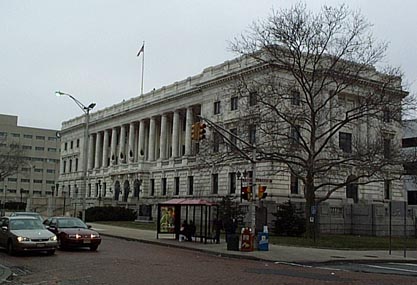
Public buildings in Trenton City, the capital of the US state of New Jersey, face running out of toilet paper following a row.
Trenton’s city council has refused to approve a $42,000 contract for paper products after baulking at its $4,000 charge for paper cups.
The toilet paper, along with other supplies, is to be used in government buildings such as city hall.
Removing the cups from the contract has not allayed the council’s suspicions over the bidding process.
One council member told Bloomberg News that “we’re not going to send out any blank cheques”.
George Muschal said the council did not want to approve Mayor Tony Mack’s decision to include $4,000 of paper cups designed for hot drinks, citing unreasonably high costs for the items.
It voted down the contract three separate times, most recently in January.
According to reports, the paper cups were removed without a new bidding process. Council members have also questioned why the city did not solicit bids from Trenton-based suppliers.
Public buildings in Trenton City, the capital of the US state of New Jersey, face running out of toilet paper following a row
Fellow council member Kathy McBride, who voted for the contract during the January vote, said that move further raised the council’s suspicions.
“There’s enough blame to go around on both sides,” she said.
“I always have to function with one goal in mind, and that’s I represent the residents of the city.”
However, Kathy McBride told the Times of Trenton that the city council still had an obligation to keep the city running.
Mayor Tony Mack, who began his term in 2010, almost faced a recall election in 2011, following questions about his hiring practices.
The city has lost seven business administrators since the beginning of his term, including one who resigned pending an investigation of allegedly mishandling campaign money, and one who resigned before his first day of work.
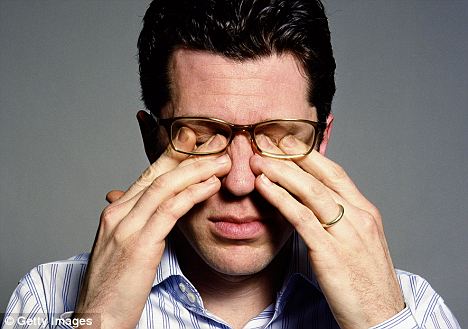
Sometimes your eye symptoms could point to a deeper problem than you thought, so is important to know their potential causes.
Red eyes
Cold sore: Viruses or localized infections can cause the eye to redden – the problem usually starts in one eye, but can spread to both.
The cold sore virus, which 90% of us carry, can sometimes also infect the eye, causing inflammation. Other symptoms of an eye infection include throbbing pain around your eye, sensitivity to light, (photophobia) and a watery eye. You may need antiviral drops or ointment from your GP. If you have a cold sore on your mouth, always wash your hands after touching it.
Iritis: If the eye turns a deep red and you have throbbing pain at the front, this could be iritis or anterior uveitis – inflammation of the iris, the colored part of the eye. This is triggered by an over-reaction of the immune system, though its exact cause isn’t known. The redness tends to start at the centre of the eye and spreads in a red ring around the centre within 24 to 48 hours. It doesn’t usually spread to the other eye. Treatment initially involves corticosteroid eye drops, though if there is infection, you may need antibiotics.
High blood pressure: Persistent red blotches on the whites of both eyes can be a sign of hypertension, explains Ian Grierson, professor of ophthalmology at the University of Liverpool. High pressure causes the blood vessels to expand or even burst, leaving red marks across the white of the eye (but not the colored part).
Haemorrhage: If one eye suddenly becomes red without any other symptoms, then it could be a subconjunctival haemorrhage – where blood leaks in the thin layer of skin at the front of the eyeball. This is very common, particularly in older people. It can be brought on by a violent coughing fit, vomiting, or if you are prone to nose bleeds or bruising. It should clear up by itself within a couple of weeks, says Prof. Ian Grierson.
Dry eyes
The menopause: This causes changes in hormone levels, affecting, among other things, the lubrication mechanisms of the eye, says David Allamby, an ophthalmic surgeon and medical director of the Focus Laser Eye Clinic in London. There is less fluid for the tear film which washes over the surface of the eye – so leading to dry eyes. To tackle the problem, close your eyes for 20 seconds every ten minutes, suggests James Ball, consultant ophthalmic surgeon at St James’s Hospital in Leeds. Working in an air-conditioned office, or leaving contact lenses in for too long can also cause dry eyes (air conditioning is drying, while contact lenses absorb a lot of moisture in the eyes).
If you need eye drops for dry eyes – known as artificial tears – choose a brand without the preservative benzalkonium chloride, which can cause irritation, says Andrew Lotery, professor of ophthalmology at the University of Southampton. “You tend to find it in eye drops that come in bottles,” he says. Most eye drops contain preservatives to inhibit bacteria because they are used again and again. Eye drops without preservatives come in one-dose tubes – once they’re opened, they should be used up or thrown away after one day. As well as using eye drops, dry eyes can be helped by taking a supplement of omega 3, 6 and 9.
Sjogren’s syndrome: An auto-immune condition that causes the body to attack its own moisture-producing glands, leading to abnormal dryness of the eyes, says Dr. David Allamby. Other symptoms include extreme dry mouth and muscle fatigue. The slow-onset condition affects women more than men, and is typically diagnosed in your 40’s and 50’s. The symptoms can be eased with artificial tears.
Exposure keratitis: Here the cornea, the dome at the front of the eye, has become dry. It can be caused by not closing the eyes properly during sleep. “You wouldn’t notice this yourself, but a loved one might,” adds James Ball. Other causes include injury to the eye or not blinking enough which leads to dryness of the cornea. Treat with artificial tears.
Sometimes your eye symptoms could point to a deeper problem than you thought, so is important to know their potential causes
Itchy eyes
Blepharitis: This is an irritation and infection of the skin of the inner eye lids. Sometimes flakes appear on the eyelids which look like dandruff but are actually flakes of skin from the eyelid. It can be caused by a bacterial infection, but is also associated with rosacea, a skin condition which causes the face to redden, explains Robert Scott, consultant ophthalmologist at the NHS Birmingham and Midland Eye Centre and the BMI Priory Hospital, Birmingham.
There’s no cure for blepharitis – Robert Scott advises treating it by putting a tiny pinch of bicarbonate of soda in a cup of hot water, dipping in a cotton wool bud and then running this along the eye lash margin. Do this twice a day to reduce irritation.
Allergy: Itchy eyes are often a symptom of allergies, a problem known as allergic conjunctivitis. There are two types: seasonal allergic conjunctivitis (which typically happens because of exposure to grass, pollen, trees and weeds), and perennial allergic conjunctivitis (which happens all year long due to the exposure to household allergens such as mould, dust and pet hair). Symptoms may subside when away from the cause. Antihistamines and steroid nasal sprays can often control the eye symptoms.
Colored rings round the iris
High cholesterol: A milky-white ring around the iris can be a sign of high cholesterol. Known as arcus senilis, this white ring is caused by the deposition of fat in the cornea, the clear area at the front of the eye, explains ophthalmic surgeon Oliver Backhouse, of the Yorkshire Eye Hospital. The ring should disappear with treatment and lifestyle changes. Not everyone with high cholesterol will develop this symptom.
Wilson’s disease: A coppery-colored ring round the eye can be a sign of Wilson’s disease, a rare genetic disorder which causes too much copper to build up in the body. Untreated it can cause damage to the liver and brain. Treatment is through medication and avoiding foods with a high concentration of copper such as liver, chocolate, nuts and mushrooms.
Watery eyes
Blocked tear ducts: If the tear ducts are blocked, this means fluid can’t drain away. As the fluid stagnates, it can lead to infection and a sticky discharge in the duct, making the eyes water. You may also develop a painful swelling on the side of the nose next to the eye. The problem is more common with age, because collagen – a protein in skin – can shrink within the tear duct, blocking it off, says Dr. David Allamby. It can also be caused by a cold. If the problem is caused by a chronic blockage, a common option is surgery.
Dry eyes: Dry eyes can also cause watery eyes. When eyes are dry, this acts as an irritant, which will produce watering.
Droopy eye
Cysts: Another potential cause of a droopy eye is a large, internal cyst which is not necessarily painful, says Robert Scott. Known as a chalazion, it is caused by a blockage of one of the oil glands in the eye. Fluid can’t drain properly, so it builds up to form a smooth pea in the eyelid. Hot compresses can soothe the area and may help the duct drain. Sometimes, chalazions need to be surgically removed. Always see your doctor to have it checked out.
Diabetes: Drooping can sometimes be a sign of muscular problem or nerve damage elsewhere in the body, says Robert Scott. “Diabetes can damage the fine blood vessels that support the nerves at the back of the eye. However, if it comes on suddenly, it could be a caused by a small aneurysm (bulge in a blood vessel) in the brain, a brain tumor or a tumor on the top of the lung, so seek medical attention immediately.”
Eye pain
Scratch to the eye: A corneal abrasion, as it is known, causes a very sharp pain and instinctively the eye lid will close to protect the cornea from bright light says Dr. Oliver Backhouse. These kinds of injury usually heal by themselves, although antibiotic eye drops from your pharmacist can prevent further infection. If you are still in pain after a week, see your GP.
Ulcer: A corneal ulcer can cause a sharp, constant pain in the eye but also make the brightness of the eye look dull. The ulcer itself can look like a speck of cottage cheese. The condition mostly affects contact lens wearers, as these might cause a slight breach on the surface of the cornea when inserted and removed, but ulcers can also be the result of an eye infection. It is important to get help quickly – treatment involves antibiotic drops or steroids – to avoid damage.
Glaucoma: A deep-boring pain can be a sign of glaucoma, which occurs when the eye’s drainage tubes become blocked, explains James Ball. This tends to affect the elderly, particularly women “but only half are diagnosed because they don’t go to the opticians regularly”, he says. Left untreated it can lead to blindness. Drugs such as prostaglandin analogues increase the flow of fluid out of your eye, while beta blockers can reduce fluid production.
Polish born Pawel Kuczynski (Pawła Kuczyńskiego) was born in 1976 in Szczecin. He graduated the Fine Arts Academy in Poznan with specialization in graphics.
You can see more of Paul Kuczinski’s images on capu.pl, and below you can see some samples from that site. These images definitely make you think about what’s going on in the world today.
Visitors to London in 2012 will pay twice as much to stay in the city as last year, according to an annual survey of hotel room prices.
The new study ran by Hotels.com found prices for booking in March this year for August are 102% higher than for the same months last year.
The website, which is part of the Expedia group of companies, says the average price of a hotel room in London will be £213 ($337) this summer.
Between 2010 and 2011 room prices worldwide rose 4%.
UK travelers generally saw rises in prices in more than two thirds of popular destinations, with increases in 69 of the 88 city or resort locations analyzed across the world, one of the main reasons for the rise was currency movements.
The survey, of 142,000 properties in almost 20,000 locations found political events had a marked impact.
Visitors to London will find hotel prices higher this year thanks to the 2012 Olympics
Greece’s economic woes led to a 10% fall in the price of a hotel room in Athens.
Elsewhere there were sharp movements in accommodation prices as a result of the Arab Spring and prices in Japan were affected by the earthquake.
Japan’s earthquake and subsequent tsunami in March 2011 saw price cuts in Hiroshima by 16% to $106 and in Kyoto by 11% to $144.
The Arab Spring protests and war in Libya hit prices across the Middle East and North Africa with average rates falling in Egypt by 22%, in Tunisia by 9%, in Lebanon, which borders Syria, by 21% and in Qatar by 27%.
Last year, prices fell 2% in Asia year-on-year but rose in all other areas: 8% in the Pacific, 5% in North America, 4% in Latin America, 3% in the Caribbean and 2% in Europe and the Middle East.
The average hotel price in Australia rose 13% to $171 reflecting the country’s strong currency and robust economy and other fast-growing economies registered similar rises, with Rio de Janeiro in Brazil up 13% and Hong Kong up 18% thanks to growth within China’s economy.
David Roche, president of Hotels.com, said: “Price volatility in 2011 meant UK travelers found it more expensive to stay in the majority of their favorite destinations abroad.
“A variety of factors, including currency movements and a growth in corporate travel, pushed up prices at a time when many consumers were already struggling to pay their bills at home.”
David Roche added though that room rates were still generally lower than they were in 2005.
Whitney Houston’s daughter Bobbi Kristina Brown, sat down with Oprah Winfrey on Sunday on “Oprah’s Next Chapter,” where she opened up about her mother’s death and how she’s coping.
Here are some highlights of Bobbi Kristina Brown interview with Oprah Winfrey:
Whitney Houston’s last moments
Whitney Houston was found in a bathtub at the Beverly Hilton Hotel in Beverly Hills, California, on February 11. Bobbi Kristina Brown, 19, said the night before Whitney Houston’s death, she asked her mother to spend the night with her. “I slept in her arms all day, all night long.”
Whitney Houston is always there for Bobbi Kristina
“She’s always with me,” said Bobbi Kristina. “Her spirit is strong, it’s a strong spirit. I feel her pass through me all the time. I can hear her voice in spirit talking to me.”
Bobbi Kristina Brown sat down with Oprah Winfrey and she opened up about Whitney Houston's death and how she's coping
Bobbi Kristina’s family is helping her to cope
Bobbi Kristina credited her family and God for helping her cope. “It comes in waves. One moment I can be happy and laughing, but then it comes over me. It’s my mom,” she said.
Coming Home
Bobbi Kristina has been spending time in her mother’s Atlanta mansion. The 19-year-old explained: “Sometimes, it’s so surreal. I still walk into the house like, <<Mom?>> But I’ve accepted it.”
Carrying on Her Mother’s Talent
“I have to carry on the legacy,” says Bobbi Kristina. “We’re going to do the singing thing. Some acting, some dancing.”
Oprah Winfrey’s interview with Whitney Houston’s daughter Bobbi Kristina Brown on Sunday gave OWN network its biggest viewership yet.
Whitney Houston’s family interview, which aired on OWN’s “Oprah’s Next Chapter” from 9:00 to 10:30 p.m., racked up 3.5 million total viewers, according to the network.
That’s a dramatic improvement over OWN’s previously most-watched program Oprah Winfrey’s January 8 interview with celebrity pastor Joel Osteen, which drew 1.6 million total viewers.
Oprah Winfrey's interview with Whitney Houston's daughter Bobbi Kristina Brown on Sunday gave OWN network its biggest viewership yet
Oprah Winfrey’s Bobbi Kristina Brown interview also drew a 3.1 rating in the key women 25-54 demographic, with a 3.3 household rating.
Sunday’s installment in “Oprah’s Next Chapter” represented a 444 percent increase over the season average in the key demographic. It jumped 417 percent boost in total viewership and 378 percent in the household rating.
Courtney Love moved out of her West Village, New York townhouse, last month, after winning her vicious, legal battle with her ex-landlord.
Now, Courtney Love, 47, is hoping to a smoother domestic situation in her new home.
Courtney Love is now living in a rented condominium in the Nolita district of Manhattan and is getting on famously with her new landlords.
The singer revealed she is now living in “the Lafayette building – everyone calls it that – near the New Museum”.
When Courtney Love moved in last month, she even got U2 rocker Bono to write her a character reference.
The singer told the New York Daily News: “They didn’t even credit-check. They chose Bono (from my character references). And he wrote me a paragraph.”
So far, Courtney Love was only run into one clash with neighbors, when she was playing loud music, but has vowed to keep the volume down from now on after finding out one was pregnant.
The singer said: “It’s all good now. I didn’t know! I don’t do noise complaints.”
Courtney Love moved out of her West Village, New York townhouse, last month, after winning her vicious, legal battle with her ex-landlord
In January, Courtney Love won her legal battle against her Chicago-based landlady Donna Lyons, who had accused the singer of owing her $50,000 in rent.
Judge Jean Schneider of New York County Housing cancelled the case saying Donna Lyons had improperly relied on outdated lease provisions.
Courtney Love had been renting the $27,000-a-month townhouse on West 10th Street for 11 months, but has apparently not been missing payments.
Her lawyer Eric Sherman said: “We are pleased with the court’s decision.
“The judge decided there was no <<non>> in the non-payment. She has always paid her rent on time, in fact sometimes in advance of when it was due.”
Given her recent tweeting, Courtney Love is very happy in her new abode.
She wrote on March 10: “I like this pad better – and my landlord teddy and mrs teddy are so very very cool and chic and live next-door – not a nasty fatty from Chi.”