Henry River Mill Village, the American village used to portray District 12 in the film version of The Hunger Games, is going up for sale.
The run-down, coal-mining area is an abandoned textile mill from the 1920s called Henry River Mill Village in North Carolina.
The Profiles in History auction house says it will be sold for at least $1.2 million in July.
District 12 is home to the heroes of The Hunger Games, Katniss Everdeen, Peeta Mellark and Gale Hawthorne.
The 72 acres of land includes 22 buildings, woodlands, hills and a pond.
It is being sold by its owner, 83-year-old Wade Shepherd, who said he had become overwhelmed when the property turned into a hot spot for Hunger Games fans coming to see the Everdeens’ shanty home and the Mellark family bakery.
Henry River Mill Village, the American village used to portray District 12 in the film version of The Hunger Games, is going up for sale
Profiles in History, which specialises in auctioning Hollywood memorabilia, says its estimate is based on the land’s value and doesn’t include any mark-up based on its ties with the film.
“It’s a really unique opportunity to take people behind the scenes of the film and book,” said auctioneer Joe Maddalena.
“When Lionsgate came to film, they didn’t have to change a thing.
“The buildings are identical and it’s really eerie when you’re there, standing in Katniss’ house.”
The uninhabited village is listed as a private property on North Carolina’s official tourism site, which promotes a four-day Hunger Games tour that includes a visit to District 12.
Visitors, however, are not allowed to explore the land on their own.
The Hunger Games is based on the first book of a science-fiction trilogy by Suzanne Collins.
It sees 24 children sent to fight to the death in an annual televised event in future nation of Panem, in which Katniss Everdeen becomes an unlikely heroine for the oppressed.
The film, starring Jennifer Lawrence, Josh Hutcherson and Liam Hemsworth, broke box office records after its release in March.
District 12 also plays a key role in the second book of the trilogy, Catching Fire.
The auctioneer said future owners of the village may have the opportunity to work with Lionsgate for shooting the next film.
Jose Mourinho has signed a new four-year contract to remain as manager of Real Madrid until 2016.
Jose Mourinho, 49, took over at Real in 2010 and guided his team to success in the Copa del Rey in his first campaign in charge.
This season, the Portuguese led Real Madrid to their first league title in four years.
Jose Mourinho has signed a new four-year contract to remain as manager of Real Madrid until 2016
Jose Mourinho won the Premier League twice with Chelsea and has won domestic and Champions League titles with both Porto and Inter Milan.
Real went out of their domestic cup competition at the quarter-final stage this season, losing 4-3 on aggregate to Barcelona and lost on penalties in the Champions League semi-finals to defeated finalists Bayern Munich.
But they won La Liga by nine points, their 32nd title in all but their first since 2007-08. Their totals of 100 points and 121 goals were new Primera Division records.
A man in his 40s survived and was lifted to safety during a harrowing rescue after he plunged at least 180 feet over Niagara Falls in an apparent suicide attempt.
The unidentified man was only the third person known to have gone over the falls without a safety device and lived.
Niagara Parks Police say witnesses reported seeing the man climb over a railing at 10:20 a.m. on Monday and “deliberately jump” above Horseshoe Falls and into the Niagara River.
Parks police Sgt. Chris Gallagher, the first rescuer to reach the man, told the Toronto Sun: “We have confirmed reports from witnesses that he entered [the water] above the Canadian Horseshoe Falls and was swept over the falls.”
A man in his 40s survived and was lifted to safety during a harrowing rescue after he plunged at least 180 feet over Niagara Falls in an apparent suicide attempt
He surfaced in the river basin near an observation platform.
“He waded ashore,” said Platoon Chief Dan Orescanin of the Niagara Falls, Ontario, Fire Department.
“He must have gotten swept into an eddy, floated over there and was able to get out on his own.”
“That’s another stroke of luck,” Dan Orescanin said.
“If he was in the main current, he would have been swept down river.”
Dan Orescanin said the man was conscious and talking at first but got quiet. He appeared to have chest injuries, including broken ribs and a collapsed lung, Dan Orescanin said.
Breathtaking images showed the victim and his rescuer dangling high above the falls by an aerial fire truck.
A waiting helicopter flew him to a hospital, where a spokeswoman said he has critical but non-life-threatening injuries, which was echoed by rescue personnel.
Dan Orescanin told the Sun: “He had some abrasions to the head and rest of his body. He was in good condition, considering.”
Niagara Parks Police say it appears the jump was a suicide attempt.
It was the first time since March 11, 2009 that someone survived a jump into the falls.
On that day, the 30-year-old Canadian man, who was never identified, survived after he plummeted into the water, but suffered from a contusion on his head and severe hypothermia.
Kirk Jones of Michigan became the first person to survive the leap on October 20, 2003, suffering only bruises, scrapes and battered ribs.
Whitney Houston’s final record, a duet with American Idol winner Jordin Sparks, has been released.
The disco-inspired track, Celebrate, came out on Monday ahead of the late singer’s upcoming film, Sparkle.
Sparkle, which tells the story of three sisters who become Motown stars, is a re-make of the 1976 film of the same name.
Whitney Houston plays Jordin Sparks’s mother in the movie, which will be released in August in the US.
Whitney Houston's final record, a duet with American Idol winner Jordin Sparks, has been released
The film also stars singer Cee Lo Green.
Jordin Sparks paid tribute to Whitney Houston at the Billboard Music Awards on Sunday, with a rendition of I Will Always Love You.
She presented a posthumous award to Whitney Houston’s daughter, Bobbi Kristina Brown.
Whitney Houston’s last big movie was The Preacher’s Wife in 1996.
She also had leading roles in Waiting to Exhale and The Bodyguard, opposite Kevin Costner.
Whitney Houston, one of the world’s best known singers in the ’80s and ’90s, was found dead in a Los Angeles hotel room on the eve of the Grammy Awards in February.
The European Commission has said Google has “a matter of weeks” to allay concerns it is abusing its dominant position in the search engine market.
An investigation by Europe’s antitrust head Joaquin Almunia looked at whether Google gave preferential treatment to its own services in its search results.
Joaquin Almunia said the company must now “offer remedies” swiftly.
A Google spokesman said the company disagreed with the conclusions, but would work to resolve the matter.
“We’re happy to discuss any concerns they might have,” Google spokesman Al Verney said.
“Competition on the web has increased dramatically in the last two years since the commission started looking at this and the competitive pressures Google faces are tremendous.”
An investigation by Europe's antitrust head Joaquin Almunia looked at whether Google gave preferential treatment to its own services in its search results
The commission had been investigating Google since November 2010 following complaints from several rivals.
In a statement, Joaquin Almunia said Google had the chance to outline steps to address the claims, rather than face formal action.
“Should this process fail to deliver a satisfactory set of remedies, the ongoing formal proceedings will of course continue,” he said.
The investigation outlined four areas where Google’s practices “may be considered as abuses of dominance”, Joaquin Almunia said.
Those practices are:
• The manner in which Google displays “its own vertical search services differently” from other, competing products.
• How Google “copies content” from other websites – such as restaurant reviews – to include within their own services.
• The “exclusivity” Google has to sell advertising around search terms people use.
• Restrictions surrounding portability of advertising content which prevents “seamless transfer” to other non-Google platforms.
Joaquin Almunia said he had outlined these concerns in a letter to Google’s executive chairman Eric Schmidt.
The body of climber missing on Mountain Everest has been found today, bringing the death toll from the weekend to four, Nepali officials say.
The body of Chinese climber Ha Wenyi, 55, was spotted close to where three others died at the weekend, mountaineering official Gyanendra Shrestha told news agency AP.
The three were from South Korea, Germany and Canada.
All died while returning from the mountain’s summit, officials say.
The body of climber missing on Mountain Everest has been found today, bringing the death toll from the weekend to four
Ha Wenyi’s body was found by climbers in an area near the top of the 8,848-metre peak where Nepali-born Canadian Shriya Shah, 32, German Eberhard Schaaf, 61, and South Korean Song Won-bin, 44, also died.
But a Nepalese guide who was previously reported missing had reached the base camp, Gyanendra Shrestha said.
More than 300 climbers belonging to 33 different teams have received official permits to climb the mountain from the Nepali side this season, said mountaineering official Dipendra Poudel.
That figure does not include local Nepalese who are assisting the climbers, working as porters or helpers.
The mountain’s worst-ever climbing season was in 1996, when 15 climbers died, eight of them in one day.
A key US Senate committee has reported a vast numbers of counterfeit Chinese electronic parts are being used in the country’s military equipment.
A year-long probe found 1,800 cases of fake parts in US military aircraft, the Senate Armed Services Committee found.
More than 70% of an estimated one million suspect parts were traced back to China, the report said.
The report blamed weaknesses in the US supply chain, and China’s failure to curb the counterfeit market.
The failure of a key part could pose safety and national security risks and lead to higher costs for the Pentagon, the committee said.
US servicemen rely on a variety of “small, incredibly sophisticated electronic components” found in night vision systems, radios and GPS devices and the failure of a single part could put a soldier at risk, the report said.
It highlighted suspect counterfeit parts in SH-60B helicopters used by the Navy, in C-130J and C-27J cargo planes and in the Navy’s P-8A Poseidon plane.
A key US Senate committee has reported a vast numbers of counterfeit Chinese electronic parts are being used in the country’s military equipment
After China, the UK and Canada were found to be the next-largest source countries for fake parts.
The committee criticized China for failing to shut down counterfeit manufacturers and said that committee staff wanting to travel to China for the investigation had not been granted visas.
“Counterfeit electronic parts are sold openly in public markets in China,” the report said.
“Rather than acknowledging the problem and moving aggressively to shut down counterfeiters, the Chinese government has tried to avoid scrutiny,” it added.
But the report said that use of Department of Defense programmes such as the Government-Industry Data Exchange Program (GIDEP), designed to log suspected fake parts, were “woefully lacking”.
Between 2009 and 2010 the GIDEP only received 217 reports relating to suspected fake counterfeit components, the majority of which were filed by just six companies, it said. Only 13 reports came from government agencies.
The report also said that in some cases the US defense department had reimbursed contractors for the costs they incurred as a result of their failure to spot fake components in their own supply chain – giving companies no incentive to weed out counterfeits themselves.
But it praised the National Defense Authorization Act, signed into law on 31 December 2011 by President Barack Obama, which aims to stop counterfeit parts from entering the country and would cut down on sourcing components from unknown suppliers.
The report’s focus on China comes as the US is beginning the task of “pivoting” its defense strategy towards the Asia-Pacific region.
The Pentagon is also preparing to absorb about $450 billion of cuts over the next decade.
But it could face cutbacks of a further $500 billion if mandatory across-the-board spending cuts come into effect at the end of 2012, after Congress failed to reach a deficit reduction plan last year.
SpaceX has successfully launched Dragon mission to re-supply the space station, the first cargo delivery to the orbiting outpost by a private company.
The firm’s Falcon rocket, topped by an unmanned Dragon freight capsule, lifted clear of its Florida pad at 03:44 EDT.
The initial climb to an altitude some 340 km above the Earth lasted a little under 10 minutes.
Within moments of being ejected, Dragon opened its solar panels.
SpaceX has successfully launched Dragon mission to re-supply the space station, the first cargo delivery to the orbiting outpost by a private company
It will take a couple of days to reach the station. The plan currently is for the vessel to demonstrate its guidance, control and communications systems on Thursday, at a distance of 2.5 km from the International Space Station (ISS).
If those practice proximity manoeuvres go well, Dragon will be allowed to drive to within 10 m of the station on Friday. Astronauts inside the platform will then grab the ship with a robotic arm and berth it to the 400 km-high structure.
They will empty Dragon of its 500 kg of food, water and equipment, before releasing it for a return to Earth at the end of the month.
The mission has major significance because it marks a big change in the way the US wants to conduct its space operations.
NASA is attempting to offload routine human spaceflight operations in low-Earth orbit to commercial industry in a way similar to how some large organizations contract out their IT or payroll.
The carriage of freight will be the first service to be bought in from external suppliers; the transport of astronauts to and from the station will be the second, later this decade.
The US agency hopes these changes will save it money that can then be invested in exploration missions far beyond Earth, at destinations such as asteroids and Mars.
SpaceX has many new systems it has to demonstrate in the coming days, and has tried to lower expectations ahead of the mission.
NASA has set the California company a series of development milestones. Only when those have been met fully will a $1.6 billion ISS re-supply contract kick in.
The agency is also looking to engage a second cargo partner. Orbital Sciences Corporation of Virginia is slightly behind SpaceX in its development schedule, although it started work on its Antares rocket and Cygnus capsule system later. Orbital expects to fly a first mission to the vicinity of the ISS later this year or early in 2013.
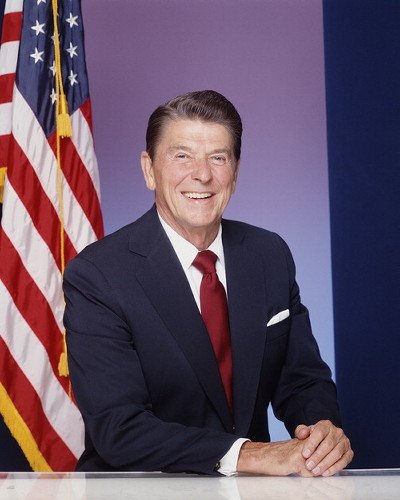
Ronald Reagan Foundation has expressed outrage after a vial said to contain the former US president’s blood was put on sale in an online auction.
British-based PFC Auctions says the blood sample was taken from Ronald Reagan after the failed 1981 assassination attempt against him.
The PFC website put the latest bid for the vial at £6,270 ($9,910) on Tuesday.
John Heubusch, executive director of the foundation, said that, if true, it would fight to stop “this craven act”.
“If indeed this story is true, it’s a craven act and we will use every legal means to stop its sale or purchase,” he said.
British-based PFC Auctions says the blood sample was taken from Ronald Reagan after the failed 1981 assassination attempt against him
John Heubusch said the hospital where Ronald Reagan had been treated had assured the foundation that an inquiry was under way into “how something like this could possibly happen”.
PFC Auctions, based on Guernsey in the British Channel Islands, displayed a picture of the vial on its website bearing a label showing the president’s name.
The lot includes a letter of provenance from the seller who says their late mother worked at the laboratory which carried out blood testing for George Washington University Hospital after Mr Reagan was shot.
“These articles have actually been in my family’s possession since… the day that President Reagan was shot in Washington DC,” the letter reads.
Ronald Reagan suffered a punctured lung and internal bleeding when he was shot by John Hinckley Jr. outside the Washington Hilton Hotel.
John Hinckley Jr. was later found not guilty by reason of insanity and is being treated at a psychiatric hospital.
Ronald Reagan, who went on to serve two terms as president, died at the age of 93 in 2004.
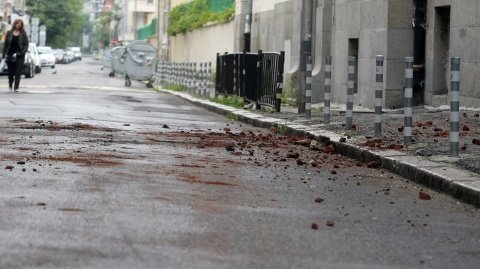
A 5.6 magnitude earthquake struck Bulgaria’s capital Sofia early on Tuesday, causing residents to rush into the streets, the civil defense office said.
The quake, which occurred at 3 a.m. local time, shook apartment buildings and rattled windows but caused no casualties or damage, Nikolay Nikolov, an official from the office was quoted as saying by the national radio, citing initial reports.
The U.S. Geological Survey said the temblor was centered about 23 km (14 miles) west of Sofia and occurred at a relatively shallow depth of 9 Km (5.8 miles).
USGS initially reported the magnitude as 5.8.
A 5.6 magnitude earthquake struck Bulgaria's capital Sofia early on Tuesday, causing residents to rush into the streets
The civil defense office said the quake’s epicenter was near the western town of Pernik.
Pernik Mayor Rositsa Yanakieva told the national radio the quake caused chimneys to topple and an old house to collapse. Some 30 people in Pernik have sought medical help, complaining mainly of high blood pressure, she said.
Many people in the Bulgarian capital fled their homes and gathered in the streets.
“I’ve never experienced anything like this,” Ivanka Georgieva, who lives on the eighth floor in a residential block, told Reuters.
“It was very strong and it was frightening.”
The quake was felt across the southwestern part of Bulgaria.
The country of fewer than 8 million people lies in Europe’s earthquake-prone Balkan region.
Lindsay Lohan was snapped sampling various Elizabeth Taylor-inspired costumes for her role in the biopic Liz And Dick – her first leading lady part since the rather abysmal 2009 flop Labor Pains.
However, Lindsay Lohan, 25, didn’t bother to brush her hair for the wardrobe fitting, instead just scraping her messy locks back into scruffy bun.
A source told TMZ that Lindsay Lohan has been granted the “final say on all wardrobe decisions” and she has been relishing the opportunity to “perfect Liz’s looks”.
The website also claims LiLo has been “obsessing” with “getting into the Hollywood legend’s head”.
During the wardrobe fitting, Lindsay Lohan drew attention to her slender frame in a summery aquamarine cocktail dress, selected solely to recreate a famous snapshot from when Elizabeth Taylor was a teenager.
Lindsay Lohan was snapped sampling various Elizabeth Taylor-inspired costumes for her role in the biopic Liz And Dick
LiLo is also captured in a red dress, which is said to be based on a Valentino dress Liz Taylor once wore.
Speaking of her role, Lindsay Lohan revealed in a statement: “I have always admired and had enormous respect for Elizabeth Taylor. She was not only an incredible actress but an amazing woman as well.
“I am very honored to have been asked to play this role.”
The television movie, which will feature on the Lifetime Network, will tell the true tale of Elizabeth Taylor and her romance with actor, and fifth husband, Richard Burton.
Their relationship was considered somewhat of a scandal in the Sixties, with both parties already married as they embarked on their affair.
While a director is yet to be announced for the June shoot, Christopher Monger has been confirmed as the writer (Temple Grandin), and Larry A. Thompson (Amish Grace) will play executive producer.
Anne Taylor’s LOFT line has given its shoppers an obvious and embarrassing Photoshop fail.
In product shots for Ann Taylor’s LOFT line, two models sport extremely bent out of shape and misplaced thumbs.
Advertising the brand’s Linen Twill Shorts, the model appears to have a jarring thumb popping straight out of her wrist, with the rest of her hand in the front pocket.
In a shot for LOFT’s Marisa Cargo Pants in White Cotton Poplin, the model seems to have her whole hand in the pant pocket, with a foreign thumb poking out from her wrist.
Advertising the brand's Linen Twill Shorts, the model appears to have a jarring thumb popping straight out of her wrist, with the rest of her hand in the front pocket
One can only assume the models stuffed their whole hands into the pockets for the shoot – forgetting to place their thumbs naturally outside the fold.
Instead it appears the digital team has added two thumbs in post-production, in an effort to get rid of the “disappearing hand” syndrome often seen in shoots.
This is not Ann Taylor’s first Photoshop fail, however.
The brand’s most famous airbrushing mishap was featured on its website a year ago, when a model’s entire arm was removed.
Anne Taylor eventually pulled the image from its website, replacing it with a variety of T-shirt color options.
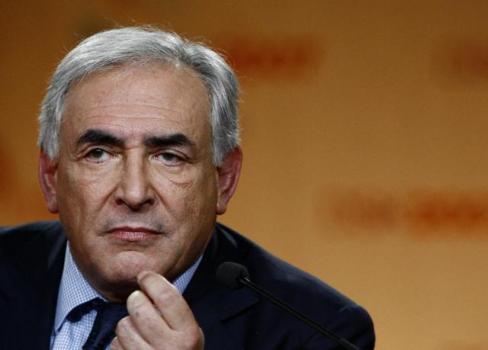
A French prosecutor has ordered an initial inquiry into claims that Dominique Strauss-Kahn was involved in “gang rape” in Washington.
The allegations come from a Belgian prostitute who said she was at a hotel sex party in the city in December 2010.
Former IMF head Dominique Strauss-Kahn, 63, is already under investigation with three other men over their alleged roles in a prostitution ring. He denies the allegations.
A charge that he attempted to rape a US hotel maid was dropped last year.
But the case put an end to DSK’s career at the International Monetary Fund and dashed his hopes of running as Socialist candidate for the French presidency.
A French prosecutor has ordered an initial inquiry into claims that Dominique Strauss-Kahn was involved in "gang rape" in Washington
In March, prosecutors in the northern French city of Lille placed him under formal investigation in connection with what has become known as the Carlton affair, after the Lille hotel in which several orgies are alleged to have taken place.
Businessmen Fabrice Paszkowski and David Roquet and policeman Jean-Christophe Lagarde, who were named with DSK as part of the Carlton affair, have also been implicated in the Washington hotel investigation.
It is claimed that the men hired prostitutes for sex parties in France and the United States while DSK was in charge of the IMF.
According to a statement from the Lille prosecutor, the investigation centres on an incident “that could be described as gang rape”.
The allegations are said to have come to light from evidence given by a Belgian prostitute who told Belgian police that she was forced into certain acts of non-consensual sex while in Washington on 16 December 2010. She has not filed a complaint.
“I didn’t scream but I said clearly and loudly that I didn’t want to,” the woman is said to have testified.
But a second Belgian prostitute has called her account of events into question, in an interview with French media.
Police in Washington say they have checked their records for 16 December at the city’s W hotel, named by media as the hotel involved, and have found no reports detailing allegations of such activity.
Earlier this month, the former IMF managing director’s lawyers denied the accusations against him, saying he was the victim of a “lynching campaign”.
The initial charge of “aggravated pimping as part an organized gang” carries a potential prison term of 20 years. A rape conviction can prompt a similar sentence.
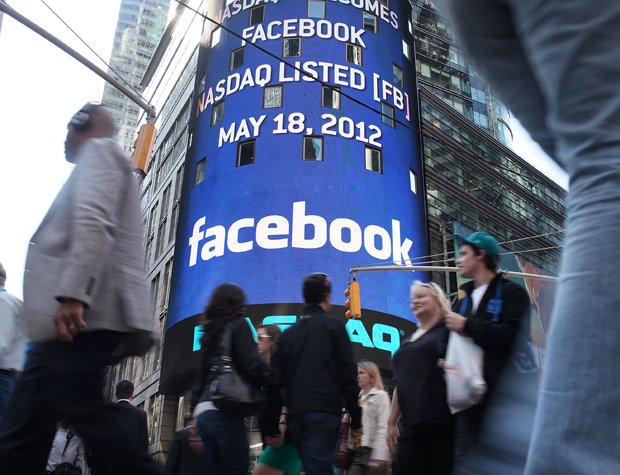
Facebook shares have fallen in early trading on Wall Street to below the price at which they were floated.
Despite the wider market in buoyant mood, Facebook slid 12% immediately at the opening bell and were still 11% down at $33.92 more than one hour into the trading day.
Facebook’s flotation on Friday at $38 a share was delayed by technical problems on the NASDAQ stock exchange.
NASDAQ boss Robert Greifeld said he was “humbly embarrassed” by the glitch.
Facebook shares have fallen in early trading on Wall Street to below the price at which they were floated
Trading was delayed by 30 minutes due to late order cancellations, and the shares closed on Friday at $38.23, having hit $45 earlier in the day.
The offer price valued the site at $104 billion.
Analysts said Facebook shares were the most frequently traded on Wall Street, but sentiment had changed since Friday.
“One of the things that we are seeing in Facebook is a lot of emotional trading, in that over the weekend much of the media coverage was negative, and that could be weighing on investors’ decisions to get out of the stock,” said JJ Kinahan from stockbrokers TD Ameritrade.
“This was not our finest hour,” said Robert Greifeld.
As a result of the glitch, a number of investors were unsure whether their buy and sell orders had actually gone through.
However, Robert Greifeld said that once the glitch had been fixed, trading had been “successful”.
More than 566 million shares in the company changed hands, a record volume for US market debuts.
Some analysts suggested the share price would have fallen on Friday had it not been for underwriters stepping in to buy up stock.
Strong demand in the run-up to the flotation had led the company to increase both the price and the number of shares available for sale.
Other internet companies have had mixed experiences recently when they have started selling shares.
Online games maker Zynga’s shares fell 5% on their first day of trading in December 2011. However, shares in business networking site LinkedIn more than doubled on their debut in May last year, while Groupon shares jumped 30% on their debut in November.
Auranofin, a cheap drug, which is already prescribed for arthritis, could fight amoebic dysentery, according to researchers in the US.
They were testing old drugs to see if any killed the dysentery bug.
Tests on animals, published in Nature Medicine, showed that auranofin was 10 times more effective than the best drug currently available.
Further studies will be needed in humans, but researchers say it holds great promise.
Amoebic dysentery is caused by Entamoeba histolytica, which infects the bowels. It results in severe diarrhoea including bloody stools. More than 70,000 people are thought to die from the disease each year – most are in developing countries.
US researchers tested 910 drugs, some of which had already been shown to be safe for human use, on amoebas in the laboratory.
It showed that auranofin was much better than the current treatment, metronidazole, at killing Entamoeba histolytica.
Tests on animals, published in Nature Medicine, showed that auranofin was 10 times more effective than the best drug currently available
Follow-up experiments showed that it was also more effective at treating mice and hamsters which had been infected with the ameoba.
It has been prescribed to patients with rheumatoid arthritis since 1985.
One of the researchers, Prof. James McKerrow, from the Sandler Center for Drug Discovery at the University of California, San Francisco, said: “When we’re looking for new treatments for the developing world, we start with drugs that have already been approved.
“If we can find an approved drug that happens to kill these organisms, we’ve leapfrogged the development process that goes into assessing whether they are safe, which also makes them affordable throughout the world.”
Prof. Sharon Reed, from the University of California, San Diego, said: “Because auranofin has already been approved for use in humans, we can save years of expensive development.
“This new use of an old drug represents a promising therapy for a major health threat.”
Dr. Graham Clark, a reader in molecular parasitology at the London School of Hygiene & Tropical Medicine, said metronidazole was very effective, but it did have side effects and was not always successful.
He said: “The work presented in this paper is particularly useful as it identifies an existing drug, auranofin, that has already been tested and approved for use in humans, which seems to be at least as effective as metronidazole.
“Although auranofin has to date only been tested in animal models of amoebic disease, this means that there is now a potential alternative treatment for individual cases where metronidazole fails to cure the infection or in the event resistance to metronidazole emerge as a clinical problem in the future.”
Kris Jenner was feeling the pressure tonight in the hotly-anticipated seventh season of Keeping Up With The Kardashians – as a result of the media frenzy concerning Khloe Kardashian’s biological father.
Kris Jenner revealed in her memoir that she had an affair around the time her daughter Khloe Kardashian was conceived.
Regardless of Khloe Kardashian’s feelings on the matter, Kris Jenner looks into paternity testing in order to quash the rumors that she’s not a Kardashian once and for all.
Bruce Jenner doesn’t think Kris needs to prove anything to Khloe Kardashian concerning her biological father but the momanager organizes for DNA samples to be taken from the whole family.
“Khloe has had it with me torturing he over this swab test,” says Kris Jenner, but it seems that in fact she is more worried about vindicating herself and that is why she will not drop the issue.
Meanwhile the sister’s are having a power struggle over the operation of DASH as Kourtney Kardashian has been looking at spaces for a new store and going to buying appointments without telling Kim or Khloe.
“She thinks she’s the president of DASH and that just isn’t the case,” says Kim Kardashian. But Kourtney counters that Kim is always too busy to help so she ends up doing everything by herself.
Kris Jenner steps in and points out to Kourtney Kardashian that she is being a control freak and the business belongs to all three of them.
This spurs Kourtney Kardashian into inviting her sisters to a design meeting for the new store prompting Kim to say: “I’m going to make myself more available.”
Kris Jenner and Khloe Kardashian make up and agree to drop the DNA test and forget about it
Khloe Kardashian also promises to fly in from Texas whenever she’s needed.
“I almost forgot how much fun we have at Dash when the three of us are together,” Kourtney Kardashian admits.
Back at home Kris Jenner is alienating Bruce with her busy schedule and controlling ways causing him to take up Khloe’s offer to move into her empty house.
Scott Disick comes over and hangs out with Bruce Jenner.
“This is an experiment to see if anyone misses me. I don’t think anyone could live with Kris,” Bruce Jenner tells him.
Scott Disick admits that he doesn’t sleep in the same bed as Kourtney Kardashian anymore either leaving them both mulling over what has just happened.
Bruce Jenner goes home and realizes that Kris has not even noticed that he’s been gone for two days.
“No one shows me any respect around here. Either it’s going to change or I’m the hell out of here,” he threatens.
But Kris Jenner is having none of it and replies: “You haven’t been part of the team for a very long time. Speak up once in a while and act like you care about what’s going on here.”
Bruce Jenner realizes that if he is to get some family time with Kylie and Kendall he needs to confiscate their cell phones for the evening and go out for ice cream and Bruce is thrilled that they have really communicated.
Kris Jenner has planned a family dinner at home to try and get the whole family on side to persuade Khloe Kardashian to have a DNA test.
Kim Kardashian thinks she should saying: “Khloe call me crying hysterically looking for answers.”
But Kourtney Kardashian does not think Khloe should be pressured into anything and Rob thinks the whole situation is absurd.
Khloe Kardashian refuses to take a DNA test when she is ambushed by a doctor showing up the dinner.
“It’s not about me. It’s actually about Mom,” Khloe Kardashian reasons.
The next day at lunch Kim Kardashian confronts Kris Jenner about the fact that she is actually worried about preserving her own reputation and she decides to write Khloe a letter to explain how she feels.
After reading the letter Khloe Kardashian sticks by her decision not to take the test saying: “I don’t need someone to tell me who my family is. I have had the blessing of having two phenomenal fathers. I don’t need a DNA test to prove who my father is.”
Mother and daughter make up and agree to drop the matter and forget about it.
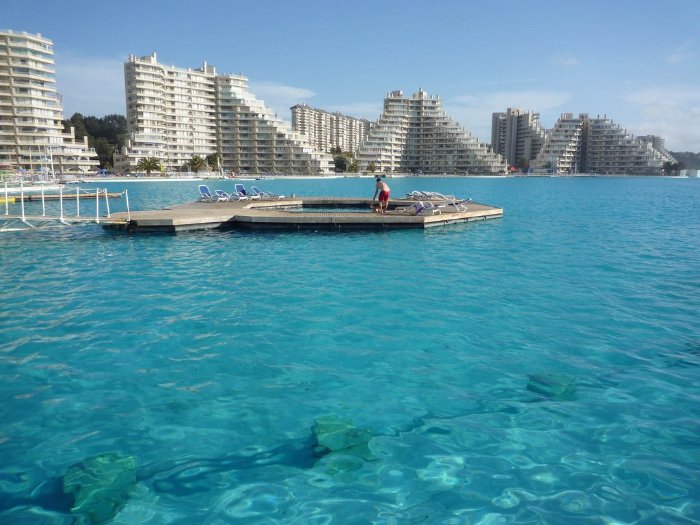
Crystal Lagoons at the San Alfonso del Mar resort in Chile is the world’s largest outdoor pool with more than three fifths of a mile in length, that’s 20 Olympic-size swimming pools.
The enormous man-made lagoon is set halfway up the country’s Pacific coast, in the city of Algarrobo, and is filled with 66 million gallons of crystal clear seawater.
It also hold the Guinness record for the world’s deepest – so if you don’t feel like diving 115 ft to the bottom, it might be best to bring some spare goggles.
The pool opened in December 2006 after nearly five years of construction work and is said to have set developers back as much as $1.6 billion.
And on top of that eye-watering initial cost, it takes a further $3.2 million a year to keep it in working order.
Crystal Lagoons at the San Alfonso del Mar resort in Chile is the world's largest outdoor pool with more than three fifths of a mile in length
It uses a computer-controlled suction and filtration system to suck water in from the ocean at one end and pump it out at the other, while the sun warms it to 26C – nine degrees higher than the sea.
The pool’s incredible dimensions leave the next biggest floundering in its wake, with the Orthlieb in Morocco measuring a mere 1,575 ft long.
Crystal Lagoons in numbers:
• Capacity: 66 million gallons
• Length: 3,323 ft
• Area: 20 acres
• Depth: Up to 115 ft
• Temperature: heated to 26C
• Estimated cost of construction: $1.6 billion
• Cost of upkeep: $3.2 million a year
• Construction time: almost 5 years
• Completed: December 2006
• The competition: More than twice the length of the next biggest outdoor pool
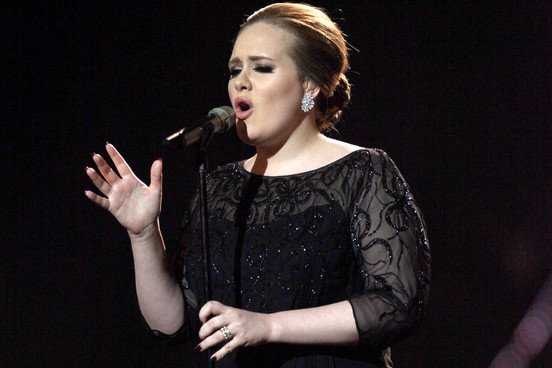
Adele was the clear winner at last tonight’s Billboard Music Awards as she scooped a whopping 12 gongs.
Unfortunately, Adele wasn’t present at the Las Vegas event to collect her trophies.
However there were plenty of other winners on hand to celebrate their achievements at the bash, including Justin Bieber, Katy Perry and Taylor Swift.
LMFAO came second top with 6 awards, and opened the show with a medley before hosts and Modern Family stars Ty Burrell and Julie Bowen took to the stage.
The pair poked fun at their wholesome images and even appeared in a couple of videos showing them depicting different music genres.
Justin Bieber scooped the first award, for Social Artist, presented to him by Julianne Hough.
“First if all I just want to say how much of a blessing it’s been the past three or for years growing up in front of everybody,” Justin Bieber said.
He went on: “I just want to thank all my fans because, you know, the internet is where I got my start and all my fans have helped me get to this position.”
Adele was the clear winner at last tonight’s Billboard Music Awards as she scooped a whopping 12 gongs
Justin Bieber then thanked his manager Scooter Braun and Usher, “for not only saying, <<OK, I can sign him and just let him be>>, but instead he takes the time to really care”.
The singer later performed his new single Boyfriend for the excited audience.
Lisa Marie Presley then awarded the special Spotlight gong to Katy Perry, who said: “This is cool! They told me the only other person who’s received this award is Michael Jackson, so I feel incredibly honored to be in that same category – although I don’t compare at all.”
Katy Perry thanked her record label EMI, radio stations for playing her songs, and the “glittering gorgeous community of fans out there”.
She added: “These songs have been kind of like the diary of the last few years for me,” before thanking her 91-year-old grandmother, who accompanied her to the event.
Katy Perry later returned to the stage to perform Wide Awake, which saw her suspended from the ceiling against a sky backdrop.
Robin Thicke introduced his Duets co-star Kelly Clarkson, who gave the first ever performance of her new song Dark Side.
The Wanted were next up to perform after being introduced by Ty Burrell and Julie Bowen, and then Brandy gave an introduction to Chris Brown.
Taylor Swift was honored with a Woman of the Year Award by Zooey Deschanel who described her as “as lovely as everything she stands for”.
Meanwhile Lil Wayne, who was also not present, won Best Rap Artist.
Chris Brown was awarded four gongs, and also performed during the evening.
Miley Cyrus presented the Top New Artist award to Wiz Khalifa, who thanked his “beautiful fiancée” Amber Rose in his acceptance speech.
There were also performances by Carly Rae Jepson, Carrie Underwood, Linkin Park, Cee Lo Green and Nelly Furtado.
And Alicia Keys and Stevie Wonder performed a duet together before she presented the music legend with the Billboard Icon Award.
The awards ceremony also saw tributes to those in the singing world who have died recently, and the audience held a moment of silence for Robin Gibb.
Julie Bowen said: “His voice and the music of the Bee Gees will live on forever.”
Natasha Bedingfield paid tribute to Donna Summer by performing Last Dance, and John Legend and Jordin Sparks performed Whitney Houston tracks.
Whitney Houston’s daughter Bobbi Kristina Brown then delivered a poignant speech when she accepted the Millennium Award on behalf of her late mother.
Bobbi Kristina Brown said: “I just really want to say thank you to everyone who supported us through it all. Not just from when it was good, but when it was bad too.
“Thank you so much for showing that much love, because she deserved it. She did. I’m just blessed to have been in such an incredible woman’s life.
“There will never be another one ever, and I thank you, all of you – the fans, everyone. Thank you so much.”
A picture of France’s First Lady Valerie Trierweiler taken on the beach when she was just 16 year-old reveals the natural elegance that has captivated new French President Francois Hollande.
Dressed in only a swimming costume with a silver chain around her neck and a hand in her chestnut brown hair, Valerie Trierweiler was renowned for her good looks and her ambition even as a school-girl.
Old friends remember Valerie Trierweiler, born Massonneau, as a girl used to turning heads but disinterested in the attention her looks brought her.
Instead she relished being independent and was one of only a few girls at school to own a moped which she enjoyed using to get around.
Valerie Trierweiler appeared to have set her sights firmly on rising from her humble origins and putting her difficult childhood behind her.
Raised in the town of Angers in the Loire Valley, she was brought up in a council house.
Valerie’s father, a clerk, had lost a leg after standing on a Second World War landmine in 1944 when he was 12.
His disability combined with being one of six children meant Valerie Trierweiler’s childhood was not easy and she appears to have adopted a steely manner which has been criticized.
A picture of Valerie Trierweiler taken on the beach when she was just 16 reveals the natural elegance that has captivated French President Francois Hollande
However old school friends defended the twice-divorced mother-of-three who is the First Lady in the Elysee Palace to be unmarried and have a job – she is a political journalist for Paris Match.
An old classmate from Joachim du Bellay High School recalled: “She was always very attractive and very pleasant with it.
“She had a lot of ambition. She knew where she wanted to go in life. She was one of the few girls at school to own a moped!
“Life was not easy at home, being one of six children but she never complained. She does not have a bad part to her character, she just has a lot of character!
“She has been described as cold but that is not the case she is simply reserved, protective. You could tell she had a promising future,” said Florence Pellé, Valerie Trierweler’s best friend at school.
“And she turned all of the boys’ heads as well! But she wasn’t really interested in the good-looking boys. She was looking for something else, someone more intellectual, deep.
“She always had a lot of charm. And notoriety has not changed her, she has remained the same, straight-forward.”
Old friend Loick Berrou added: “Valerie was fresh and full of life. Her beauty and charm shone through.”
Another old friend added: “She loved being outside. She would ride her bike, swim in the river and help out at a local farm.
“And she also did synchronized swimming!”
Residents in Angers are proud of Valerie Trierweiler’s elevation to the Elyse Palace.
Her face is displayed on the front cover of many of France’s magazines and proudly displayed in news agents across the town.
Her uncle Florent Massonneau said yesterday: “I am proud that that Valerie has become the first lady.
“As a young woman she had it all – beauty and intelligence.”
Florent Massonneau added: “Valerie did not have an easy childhood. Her father loved her very much but he was disabled. He lost a leg in the war.
“And he died young, too young. She was not even 21.”
Florent Massonneau lives around the corner from the council house that was Valerie Trierweiler’s childhood home, in the working class district of Monplaisir.
Her mother Jeanne still lives there.
Valerie’s mother, who worked as a cashier at the local ice-rink to make ends meet after her husband died, continues to play an important role in her daughter’s life.
Valerie Trierweiler has three sons, aged 15, 17 and 19 from her marriage to her second husband Denis Trierweiler, a sub-editor at glossy French magazine Paris Match.
Tomislav Nikolic is the newly-elected president of Serbia, with liberal incumbent Boris Tadic admitting defeat soon after polls closed.
Nationalist Tomislav Nikolic has 50.21% of the vote, against 46.77% for Boris Tadic, with 40% of votes counted.
The contest had been seen as a vote on EU membership and the newly-elected president promised that “Serbia will not stray from its European path”.
Boris Tadic appealed to keep “Serbia’s strategic orientation towards the EU”.
“It would be a tragic mistake if Serbia changes its orientation. It is a matter of peace and economic development,” he said.
Tomislav Nikolic is the newly-elected president of Serbia, with liberal incumbent Boris Tadic admitting defeat soon after polls closed
Speaking of Tomislav Nikolic, he added: “I congratulate him on the victory, it was a fair and well-earned victory and I wish him luck.”
As he confirmed his commitment to Europe, Tomislav Nikolic claimed: “This is a turning point for Serbia… these elections were not about who will take Serbia to the EU, but who will solve the economic problems created by the Democratic Party (of Boris Tadic).”
Serbia is plagued by unemployment of 24% and foreign debt of 24 billion Euros ($31.5 billion).
In the past Tomislav Nikolic served as a deputy prime minister under the former Yugoslav President Slobodan Milosevic, who was put on trial for genocide at The Hague.
He was in government when NATO bombed Serbia in 1999 and once said he would rather see the country ally itself with Russia than join the EU but he has softened his rhetoric in recent years.
He has tried to rebrand himself, and his Progressive Party has vowed to invest in agriculture and industry and tax the rich to fund a rise in pensions.
The election result is something of a surprise as the incumbent had been expected to win.
Speaking on RTS state television in Serbia political analyst Slobodan Antonic explained “this was an electoral earthquake, a totally unexpected result”.
A low turnout of below 45% is thought to have damaged Boris Tadic’s chances.
The outcome of the vote may affect both Serbia’s EU prospects and the future of Kosovo, the breakaway Serbian province which declared independence in 2008.
A bitter row erupted after the first round of the election on 6 May, when the nationalists accused Boris Tadic’s supporters of rigging the ballot.
Electoral officials found no evidence that 500,000 votes had been falsified, as Tomislav Nikolic alleged, while foreign monitors declared the vote to have been fair.
As president, Boris Tadic oversaw the EU candidacy negotiations and had argued that success for him and his Democratic Party was vital for development and stability in Serbia over the next decade.
Under his leadership, Serbia captured Bosnian Serb war crimes suspects Radovan Karadzic and Gen Ratko Mladic, and handed them over to international prosecutors at The Hague.
Bobbi Kristina Brown last night delivered a touching tribute to Whitney Houston at the Billboard Music Awards 2012.
Bobbi Kristina Brown, 19, accepted the special Millennium Award on behalf of her late mother, after she was escorted onto the stage by her adopted brother Nick Gordon and received a quick kiss from him.
Whitney Houston’s daughter had been reduced to tears while watching an emotional video dedicated to the singer.
But Bobbi Kristina was well-spoken and composed when it came to delivering her poignant speech, with Whitney Houston’s sister-in-law and manager Pat Houston by her side, who also gave an introduction.
Bobbi Kristina was well-spoken and composed when it came to delivering her poignant speech, with Whitney Houston’s sister-in-law and manager Pat Houston by her side, who also gave an introduction
Bobbi Kristina Brown said: “I just really want to say thank you to everyone who supported us through it all. Not just from when it was good, but when it was bad too.
“Thank you so much for showing that much love, because she deserved it. She did. I’m just blessed to have been in such an incredible woman’s life.”
The teenager added: “There will never be another one ever, and I thank you, all of you – the fans, everyone. Thank you so much.”
During the speech, the camera cut to Brandy, the sister of Whitney Houston’s former partner Ray J.
Brandy could be seen mouthing the words “never ever” while Bobbi Kristina spoke about her mother’s uniqueness.
There were also tributes to Whitney Houston, who died aged 48 on February 11, in the form of performances.
After an introduction by Whoopi Goldberg, John Legend sang Greatest Love of All while Jordin Sparks delivered an emotional rendition of I Will Always Love You.
During Jordin Sparks’ performance, cameras followed Bobbi Kristina Brown who was seen sobbing at the tribute.
There is more and more speculation that Greece is about to leave the euro.
Greece has been unable to form a government, and new elections seem set to give power to parties that reject the spending cuts that have been agreed with other eurozone governments and the International Monetary Fund.
But without those spending cuts, the Greek government will receive no more bailout loans, it won’t have the money to pay its debts, the Greek banks will probably go bust, and the European Central Bank may be forced to cut Greece loose from the single currency.
What would this mean for Greece and the rest of Europe?
1. Greek meltdown
Greece’s banks would be facing collapse. People’s savings would be frozen. Many businesses would go bankrupt. The cost of imports – which in Greece includes a lot of its food and medicine – could double, triple or even quadruple as the new drachma currency plummets in value. With their banks bust, Greeks would find it impossible to borrow, making it impossible for a while to finance the import of some goods at all. One of Greece’s biggest industries, tourism, could be disrupted by political and social turmoil.
In the longer run, Greece’s economy should benefit from having a much more competitive exchange rate. But its underlying problems, including the government’s chronic overspending, may not go away.
2. Bank runs
Ordinary Greeks may queue up to empty their bank accounts before they get frozen and converted into drachmas that lose half or more of their value. Depositors in other eurozone countries seen as being at risk of leaving the euro – Spain, Italy – may also move their money to the safety of a German bank account, sparking a banking crisis in southern Europe.
Confidence in other banks that have lent heavily to southern Europe- such as the French banks – may also collapse. The banking crisis could spread worldwide, just like in 2008. The European Central Bank may have to provide trillions of Euros in rescue loans to the banks. Some governments may not have enough money to prop up their banks with the extra capital needed to absorb losses and restore confidence; the banks could then go bankrupt.
Greece has been unable to form a government, and new elections seem set to give power to parties that reject the spending cuts that have been agreed with other eurozone governments and the International Monetary Fund
3. Business bankruptcies
Greek businesses face a legal and financial disaster. Some contracts governed by Greek law are converted into drachmas, while other foreign law contracts remain in Euros. Many contracts could end up in litigation over whether they should be converted or not.
Greek companies who still owe big debts in Euros to foreign lenders, but whose main sources of income are converted to devalued drachmas, will be unable to repay their debts. Many businesses will be left insolvent – their debts worth more than the value of everything they own – and will be facing bankruptcy. Foreign lenders and business partners of Greek companies will be looking at big losses.
4. Sovereign debt crisis
Sovereign debt is the money a government borrows from its own citizens or from investors around the world. But if Greece leaves the eurozone, setting a precedent that such a thing can happen, then investors will become very nervous about lending to other struggling eurozone countries.
This could leave the governments of Spain and Italy short of money and in need of a bailout. These two huge countries together account for 28% of the eurozone’s total economy, but the EU’s bailout fund currently doesn’t have enough money to prop both of them up. Even France’s government could get into trouble if it needed to bail out its enormous banking sector.
5. Market turmoil
Nervous investors and lenders around the world may start selling off risky investments and move their money into safe havens. Stock markets may plunge. High-risk borrowers could face sharply higher borrowing costs, if they can borrow at all.
Meanwhile, safe investments such as the dollar, the yen, the Swiss franc, gold and perhaps even the pound would rise, while safe governments such as those of the US, Japan, Germany and even the UK could borrow more cheaply. And it’s not all bad news – the oil price may well fall sharply.
6. Political backlash
As eurozone governments and the European Central Bank face enormous losses on the loans they gave to Greece, public opinion in Germany may turn against providing the even larger bailouts probably now needed by big countries like Italy and Spain. The ECB’s role of quietly providing rescue loans to these countries in recent months would be exposed and could become politically explosive, making it harder for the ECB to continue to prop up their economies.
However, the threat of a meltdown might push Europe’s or the eurozone’s governments to agree a comprehensive solution – either dissolution of the single currency, or more integration, perhaps through a democratically-elected European presidency tasked with overseeing a massive round of bank rescues, government guarantees and growth-stimulating infrastructure investment.
7. Recession
Crisis-stricken eurozone banks may be forced to slash their lending. Businesses, afraid for the euro’s future, may cut investment. Faced with a barrage of bad news in the press, ordinary people may cut back their own spending. All of this could push the eurozone into a deep recession.
The euro would lose value in the currency markets, providing some relief for the eurozone by making its exports more competitive in international trade. But the flipside is that the rest of the world will become less competitive – especially the US, UK and Japan – undermining their own weak economies. Even China, whose economy is already slowing sharply, could be pushed into a recession.
8. Greek debt default
Unable to borrow from anyone (not even other European governments), the Greek government simply runs out of Euros. It has to pay social benefits and civil servants’ wages in IOUs (if it pays them at all) until the new drachma currency can be introduced. The government stops all repayments on its debts, which include 240 billion Euros of bailout loans it has already received from the IMF and EU. The Greek banks – who are big lenders to the government – would go bust.
Meanwhile, the Greek central bank may be unable to repay the 100 billion Euros or more it has borrowed from the European Central Bank to help prop up the Greek banks. Indeed, by the time Greece leaves the euro, the central bank may have borrowed even more from the ECB in a last ditch effort to stop the Greek banks collapsing.