Princess Caroline of Monaco has announced the engagement of her eldest son and second in line to the throne of the principality, Andrea Casiraghi, to the Swiss born heiress and socialite Tatiana Santo Domingo.
Tatiana Santo Domingo is the daughter of the late Julio Santo Domingo, named by Forbes in 2011 as the second richest man in Colombia, and Vera Rechulski , a former Brazilian socialite from Sao Paolo currently living in Paris.
In a statement yesterday, Princess Caroline declared that she “had the joy” to announce the engagement of Andrea Casiraghi and Tatiana Santo Domingo, who are both 28.
They have known each other for seven years and met whilst studying at the same school in Paris. No date has been fixed for the royal wedding but it is understood it will take place next year.
Andrea Casiraghi, the grandson of Grace Kelly is the son of the late Stefano Casiraghi, the second husband of Caroline, who died in a boating accident off Monte Carlo in 1990.
Princess Caroline of Monaco declared that she “had the joy” to announce the engagement of Andrea Casiraghi and Tatiana Santo Domingo
The Monaco princes’ lives are not without recent controversy.
Last December Andrea Casiraghi was stopped by Police for speeding at 170 mph. His Audi 6 was immobilized, his driving license seized and he had to return to Paris by train.
In February this year his younger brother Pierre, 24, allegedly got into a fight with a stranger at an exclusive New York nightclub because he was “jealous” of him.
Pierre Casiraghi was punched and sent flying into a table on the other side of the room, landing with blood pouring from his face.
French media have dubbed elder brother Andrea Casiraghi as an “enfant terrible” and the “angel rebel”.
In 1999 Andrea Casiraghi was included on the 50 most beautiful people list. Four years later, he was voted the most stylish royal man by readers of Hello magazine, and in 2008, Forbes placed him tenth on its 20 Hottest Young Royals list.
In 2011, Tatiana Santo Domingo launched the Muzungu Sisters fashion venture in partnership with Dana Alikhani.
Both Tatiana and Lauren Santo Domingo, the 36-year-old co-founder of ModaOperandi, a Vogue contributing editor and married to Tatiana’s half-uncle, are prominent socialites in New York.
Tatiana Santo Domingo is internationally known for her unique fashion sense, said to vary from the elegant to the vintage and boho chic.
She has cited Loulou de la Falaise as her style guru. Tatiana Santo Domingo was included in 2010 on the international best dressed list.
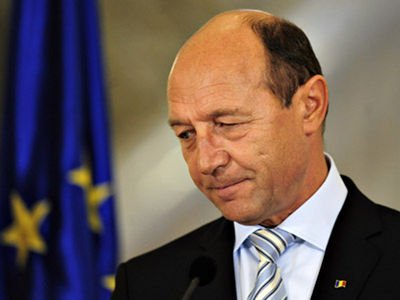
Romanian MPs have voted with a large majority to impeach the country’s president, Traian Basescu.
President Traian Basescu faced allegations of encroaching on the prime minister’s role and violating citizens’ rights.
Traian Basescu has been suspended and a national poll on his impeachment will be organized most probably on July 29th.
A total of 256 members of parliament of 432 voted in favour of the move against Traian Basescu, according to an official count.
The impeachment will only take effect if approved in the referendum.
The president is in conflict with Prime Minister Victor Ponta, who is the co-leader of the Social Liberal Union (USL), which has a majority in parliament.
The European Commission voiced concern about the political turmoil on Friday. Romania joined the EU in 2007 but Brussels has demanded more reforms to stamp out official corruption.
Romanian MPs have voted with a large majority to impeach the country's president, Traian Basescu
PM Victor Ponta, who came to power in May, says President Traian Basescu has too much influence over Romania’s Constitutional Court, which is due to consider new impeachment legislation.
Yesterday, USL asked parliament to hold an extraordinary meeting to suspend Traian Basescu.
Victor Ponta himself is currently under pressure to resign over allegations of plagiarism regarding a doctoral thesis he wrote.
President Traian Basescu has accused him of trying to impeach him as a way of taking control of state institutions.
The president has suffered a slump in his popularity since pushing through tough austerity measures demanded by international lenders in 2010.
The political rivalry has stalled decision-making processes in Romania at a time when it is finalizing agreements on an IMF-backed aid package for its economy.
The European Commission says it is “concerned about current developments in Romania, especially regarding actions that appear to reduce the effective powers of independent institutions like the Constitutional Court”.
“The rule of law, the democratic checks and balances and the independence of the judiciary are cornerstones of European democracy… Government policy and political action must respect these principles and values.”
Recently has been reported that Demi Moore’s daughters have become estranged from their mother.
Daughter Rumer Willis, 23, was by her mother’s side when she was rushed to hospital following a binge on nitrous oxide in January and in the weeks that followed.
But now it has been alleged that she and her sisters Scout and Tallulah have stopped talking to Demi Moore.
It appears that the girls have “broken all ties” with Demi Moore,49, due to her emotional breakdown in the wake of her split from Ashton Kutcher.
“Demi is very messy right now and the girls have been waiting to get out and move on and now they’re being sucked back in, and they’re all getting into various kinds of trouble.”
Demi Moore's daughters have become estranged from their mother
The Willis girls, Rumer, Scout, 20 and Tallulah, 18, also appear to be struggling to cope with life without Ashton Kutcher.
A source closed to the family said: “The girls loved him because he actually took parenting seriously even though he was younger and they miss him.”
Apart from Tallulah’s graduation ceremony, Demi Moore has not been seen out with her daughters much in recent months.
Sources close to the family told RadarOnline that the family has reached”’breaking point” following a series of fights.
“Rumer, Scout and Tallulah just don’t want to deal with the drama at the moment,” the source said.
“Since breaking up with Ashton, Demi Moore has been a mess.
“The girls were there for her through it all – the split and the rehab but now they just feel like they need a little distance.”
Things were said to have come to a head when Demi Moore attended Tallulah’s high school graduation.
The trio of sisters allegedly did not want their mother there. Demi Moore arrived alone looking miserable, while the girls looked happier with father Bruce Willis, and they were not pictured with their mother.
There have also been reports that the girls continued relationship with Ashton Kutcher has caused tensions.
Ashton Kutcher was present at a nightclub to see Rumer sing back in April and the pair were also seen meeting up in May.
A source told the gossip site: “They [Rumer, Tallulah and Scout] all adore him and talk to him regularly which Demi hates, but he was a huge part of their lives when they were growing up and they don’t want to break off all contact with him.”
The family has had their fair share of drama of late. Earlier this week Tallulah was at the centre of nude photo scandal. And sister Rumer is lamenting the disappearance of her dog.
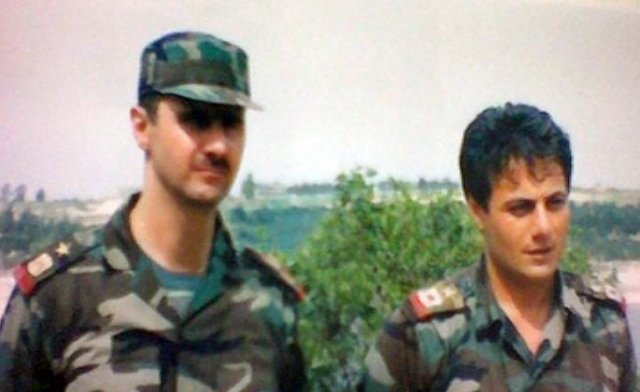
Manaf Tlas, a Syrian general from a powerful family close to President Bashar al-Assad, has defected and is on his way to Paris, French Foreign Minister Laurent Fabius has said.
Laurent Fabius described it as a “hard blow for the regime” that showed Bashar al-Assad’s entourage was beginning to realise the regime was unsustainable.
Brig. Gen. Manaf Tlas fled Syria via Turkey, his family confirmed.
If confirmed, it would be the highest-level defection since the unrest began.
Pro-government website Syriasteps said earlier Gen. Manaf Tlas had made an “escape”, adding the move was “insignificant”.
Earlier rumors about his possible defection in March proved to be false.
Speaking at a meeting of Friends of Syria in Paris, Laurent Fabius said: “A senior official from the Syrian regime, a commander in the Republican Guard, has defected and is headed to Paris.”
“[Bashar al- Assad’s] close entourage is beginning to understand that the regime is unsustainable,” he added.
“Even those close to Assad have begun to understand that one cannot support a slaughterer like Bashar al-Assad.”
His father, former Defence Minister Mustafa Tlas, is reportedly living in France.
Manaf Tlas, a Syrian general from a powerful family close to President Bashar al-Assad, has defected and is on his way to Paris
Brig. Gen. Manaf Tlas’s intentions may only become clear if and when he appears in public to outline his plans.
Amer al-Sadeq, a member of a Damascus-based opposition group, described the latest development as “a good sign”.
“Defecting soldiers, we see many of them, defecting officers, the more they come the better it is to make the regime weaker,” said Amer al-Sadeq.
Brig. Gen. Manaf Tlas, believed to be in his mid-40s, is a commander of a unit of the elite Republican Guard. As a young man he attended military training with President Bashar al-Assad.
Gen. Manaf Tlas has been under a form of home arrest since May 2011 because he opposed the security solution that the regime has been implementing, sources say.
He also was the first government official to meet the opposition back last year to try to start a dialogue and find a political solution to the 16-month crisis.
Unlike most of Syria’s Alawite leaders, the son of former Defence Minister Mustafa Tlas is a Sunni Muslim.
Syria’s majority Sunni community has been at the forefront of the revolt against the president and has borne the brunt of the state’s crackdown, which the UN estimates has left at least 10,000 people dead.
For decades, the Tlas family has given support to the Assad family, helping to ensure Bashar al-Assad’s succession to the presidency 12 years ago.
If Manaf Tlas’ permanent departure from Syria is confirmed, it would mark the first break of a member of President Bashar al-Assad’s close circle, correspondents say.
Observers believe that the move may encourage other Sunni officers to consider their allegiances.
Gen. Manaf Tlas’s departure comes as French President Francois Hollande is hosting a Paris Friends of Syria conference with representatives of more than 100 countries to try to find a way to end the violence in Syria.
US Secretary of State Hillary Clinton urged the representatives to persuade Russia and China to end their support for the Syrian regime.
“I ask you to reach out to Russia and China and to not only urge but demand that they get off the sidelines and begin to support the legitimate aspirations of the Syrian people,” she said.
“I don’t think Russia and China believe they are paying any price at all, nothing at all, for standing up on behalf of the Assad regime.”
She also called on the UN Security Council to pass a resolution imposing immediate sanctions on Syria, including under Chapter 7 of the UN Charter, allowing for the possibility of military force.
The Paris meeting follows similar events in Tunis and Istanbul which demanded tougher action against the Assad regime.
Russia and China, which both hold vetoes in the Security Council, are not at the meeting.
UN diplomats are working on a document calling for restrictions on commercial activity if Mr Assad fails to abide by UN and Arab League envoy Kofi Annan’s ceasefire plan and roadmap for a political transition.
The roadmap – announced last weekend by Annan after a meeting of world powers in Geneva – includes an interim government to enable the Syrian people to live ”independently and democratically”.
The Western powers believe that Bashar al-Assad should play no part in Syria’s future, but the roadmap allows President Assad an effective veto over any interim candidate he opposes.
Some 15,800 people have died in more than a year of violence in Syria, activists say.
Tom Cruise’s lawyers have taken at a swipe at Katie Holmes, accusing her and her legal team of “playing the media”.
While Tom Cruise, 50, has kept silent save for the statement he issued immediately after Katie Holmes made her announcement, his lawyer Bert Fields spoke to the BBC yesterday about the impending battle between the couple and their fight for custody of Suri, 6.
In a thinly veiled attack on Katie Holmes, he said: “We are letting <<the other side>> [Katie and her team], play the media until they wear everyone out and then we’ll have something to say.”
Bert Fields added: “Tactically we can’t say where Tom will file a divorce case and if he’ll be seeking joint custody of Suri.”
It was certainly an unprecedented broadside intended to draw sympathy away from Tom Cruise’s estranged wife, and all the more notable as the actor, who celebrated turning 50 this week is notoriously private.
Bert Fields, who spoke to BBC Radio 1’s Newsbeat, would not be drawn on specific details of the divorce – but did use his opportunity to express that his client was “really sad about what’s happening”.
The lawyer added: “It’s not Tom’s style to do this publicly. He is really sad about what’s happening.”
It is believed Katie Holmes wants legal custody because she is worried about Tom’s devotion to sci-fi cult Scientology and the effect the quasi-religious sect may have on their six-year-old daughter.
However a source told TMZ: “[Katie] was totally committed to Scientology. She had enthusiasm for it and would voluntarily and gladly participate in it when Tom was off shooting movies.
“This is not a fight over religion. It’s being used as a way to hurt Tom.”
Tom Cruise's lawyers have taken at a swipe at Katie Holmes, accusing her and her legal team of “playing the media
The now warring spouses are not speaking, but Tom Cruise is reportedly calling Suri “several times a day”.
Tom Cruise has borne the brunt of the negative publicity surrounding the divorce, and it seems his lawyer is keen to redress the balance.
But yet more revelations emerged today claiming Tom Cruise controlled Katie Holmes “like a puppetmaster making every major and minor decision in her personal and professional life”, wrote TMZ.
And sources close to Katie Holmes claimed: “In the end, she felt like she couldn’t breathe without his permission.”
In 2005, early in the couple’s relationship, during filming of Thank You for Smoking, Tom Cruise allegedly instructed producers to “kill” any promotional photos which showed Katie Holmes and co-star Aaron Eckhart engaged in kissing or “anything else compromising”.
Tom Cruise is also said to have imposed his will during her stint on Batman Begins to prevent Katie Holmes from flying with the rest of the cast. Instead, Katie Holmes was made to travel to set on Tom Cruise’s private jet.
A source told TMZ actor Morgan Freeman was supposedly “disgusted” by the situation.
Bert Field’s attack came as Katie Holmes stepped out looking worryingly thin with a tired looking Suri.
Katie carried her daughter during a trip with friends – accompanied by security – to the Children’s Museum of the Arts in the Soho area of New York City.
It emerged yesterday that Katie Holmes had been secretly planning her divorce assault for several weeks with the help of her father Martin Holmes.
The secretive plan included switching all her cell phones and email addresses.
Katie Holmes was said to be contact with Tom Cruise, right up until last week, playing the role of doting wife.
“She was talking to Tom on the phone up until last week saying, <<I love you>>,” a source told People magazine.
But the escape plan was well underway when Katie Holmes recently visited China for work commitments.
“Her inner circle has been planning this and switching out cell phones since she was in China [in mid-June],” the source said.
“When new cell phones arrived, then nobody could reach her. Her old best friends from last week don’t have her new number, no e-mail. She’s unreachable.”
Katie Holmes even allegedly bent the truth to Tom Cruise about her new Chelsea apartment.
“[Tom] knew that she moved there, but [he thought it was] for different reasons,” the source told People.
“She said she moved there to drive into the underground garage. There are fewer paparazzi and it’s less intrusive for her,” the source continued.
“It was the first phase of getting everything out of the house, and that’s why she was able to say she’s moving without giving an indication that she was going to divorce him.”
Katie Holmes’ father also fired some of his daughter’s assistants and hired new ones in place to help out with the grand plan.
In their new apartment building, neighbors say mother and daughter are a joy to have.
“Katie and Suri have been very friendly to everyone they see in the building,” a source told Radaronline.
“But they mostly keep to themselves.”
However the pair has been spotted using the communal children’s playroom.
“Suri was there playing. Katie was with her and they were very sweet to the other people in the room.
“There were a few other kids there and Suri quietly played with them. She seemed like a nice little girl and the other kids looked like they were having fun with her.”
Tom Cruise, who has kept busy by shooting his latest movie Oblivion in Iceland, returned to Los Angeles earlier this week where he marked his 50th birthday with a quiet lunch alongside adopted children Connor and Isabella, but not Suri.
He is said to have made it his “first priority” to get temporary visitation rights to his daughter Suri.
Tom Cruise intends to go to court in Los Angeles in person to ensure he is legally allowed to see the youngster.
Katie Holmes filed for the divorce in New York because she believes she has a better chance of winning sole custody, and although Tom Cruise was encouraged to file in California, the law states divorce cannot be filed in separate states at the same time.
A source said: “Tom has told Dennis Wasser and Bert Fields, his long-time entertainment lawyer, that his first priority is getting a court order in place, obviously a temporary one, that will allow him to legally see his daughter.
“Team Cruise has extensive documentation to prove that Los Angeles is where the case should proceed, because this is where he says they have lived.
“Tom is extremely disappointed that Katie filed in New York, and he feels that she is trying to cut him out of their daughter’s life.
“Tom won’t tolerate it and told his lawyers that if he personally needs to go to court and make a plea in front of the judge for an order allowing him to see his daughter, he will.”
Despite her smiling exterior the strain of Katie Holmes’ break-up from Tom Cruise is showing itself in other ways – most notably her rail-thin body.
Katie Holmes, 33, failed to hide her shrinking frame when she spent the day with her and Tom Cruise’s only child, daughter Suri.
Her blue and orange halterneck top clearly displayed her bony back and angular collarbone and her blue jeans seemed to hang off her.
Katie Holmes’ outing came as Tom Cruise’s lawyer lashed out at the actress and her legal team, accusing them of “playing the media”.
High profile lawyer Bert Fields spoke to BBC Radio 1’s Newsbeat. He would not be drawn on specific details of the divorce – but did stick the knife in and insisted Tom Cruise was “really sad about what’s happening”.
While Katie Holmes attempted a steely resolve yesterday, Suri Cruise looked tired and strained by the emotional custody battle her parents are to embark on.
Katie Holmes failed to hide her shrinking frame when she spent the day with her daughter Suri
The six-year-old is currently dealing with the news that her parents are set for a high-profile divorce.
Katie Holmes held her daughter tenderly in her arms during a trip with friends – and of course security – to the Children’s Museum of the Arts in the Soho area of New York City.
Little Suri, dressed in a pink dress and holding onto a cuddly toy, clung to her mother.
On Fourth of July, Katie Holmes – who filed for divorce from the Hollywood star last week – spent American holiday Independence Day as a single mother for the first time.
Katie Holmes was seen at Wholefoods supermarket near her Chelsea apartment stocking up on food supplies.
Making her way to the store, dressed casually in a denim shirt and a floral summery skirt, the mother-of-one looked feminine and pretty as she skipped along with Suri, who was in the same multi-coloured poppy dress she was in the night before.
Inside the market, Suri rode in the front of the shopping cart playing with a pale pink cowboy hat, with Katie Holmes photographing her wearing it.
The mother and daughter duo were accompanied by one of Katie Holmes’ bodyguards from her top heavy security team.
During the outing Katie Holmes reassured fans that she is coping following the split from Tom Cruise.
Approached as she stocked up on food, Katie Holmes told a New York Daily News reporter: “I’m alright. Thank you.”
Meanwhile it emerged that Katie Holmes is set to show her label Holmes & Yang at New York Fashion Week this September for the first time.
A spokesperson for Katie Holmes told WWD that her personal life would not impact her fashion label, despite her high-profile split from Tom Cruise last week.
It appears that the signs of Katie Holmes and Tom Cruise split were there six weeks before the actress revealed she was filing for divorce from her husband of five years.
In an interview conducted for an upcoming issue of America’s Elle magazine, Katie Holmes told the publication that she was entering a “new phase” of her life.
Talking about being in her 30s, Katie Holmes is quoted as saying: “I definitely feel much more comfortable in my own skin. I feel sexier. I think in my 20s, it’s like you’re trying too hard to figure everything out.
“I’m starting to come into my own. It’s like a new phase.”
It is worth noting that Katie Holmes seductively flashes her sheer black bra in an unbuttoned top – as she appears to be rebelling against reports that Tom controlled even her wardrobe choices.
In an interview conducted for an upcoming issue of Elle magazine, Katie Holmes said she was entering a “new phase” of her life
Also in the interview, which took place in mid-May and appears in the magazine on sale on July 17th, Katie Holmes appeared to respond negatively to a question about being “Mrs. Tom Cruise”.
Katie Holmes, 33, said: “He has been Tom Cruise for 30 years. I know who I am and where I am and where I want to go, so I want to focus on that.”
And a source present at the interview told the New York Post that Katie Holmes didn’t appear to be happy in her relationship with Tom Cruise at the time.
The source said: “Katie didn’t speak about Tom in a lovey-dovey way at all. She deflected the Tom questions and brought them around to herself.”
Her interview with Elle took place six weeks before she filed for divorce from Tom Cruise on June 29th.
While the pair are now gearing up for a big divorce battle, as well as what is expected to be a bitter fight over custody of their six-year-old daughter Suri cruise, Katie Holmes yesterday reassured fans that she is coping following the split.
Approached as she stocked up on food at Whole Foods in Manhattan, Katie Holmes told a New York Daily News reporter: “I’m alright. Thank you.”
Meanwhile, Tom Cruise, who has been kept busy shooting his latest movie Oblivion in Iceland, on Wednesday returned to Los Angeles where he marked his 50th birthday with a quiet lunch alongside adopted children Connor and Isabella Cruise.
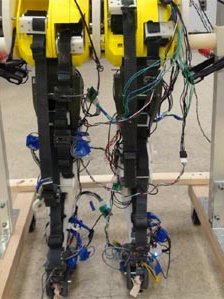
The most biologically-accurate robotic legs yet has been developed by US experts.
Writing in the Journal of Neural Engineering, US experts said the work could help understanding of how babies learn to walk – and spinal-injury treatment.
They created a version of the message system that generates the rhythmic muscle signals that control walking.
The team, from the University of Arizona, were able to replicate the central pattern generator (CPG) – a nerve cell (neuronal) network in the lumbar region of the spinal cord that generates rhythmic muscle signals.
The most biologically-accurate robotic legs yet has been developed by US experts
The CPG produces, and then controls, these signals by gathering information from different parts of the body involved in walking, responding to the environment.
This is what allows people to walk without thinking about it.
The simplest form of a CPG is called a half-centre, which consists of just two neurons that fire signals alternatively, producing a rhythm, as well as sensors that deliver information, such as when a leg meets a surface, back to the half-centre.
The University of Arizona team suggests babies start off with this simplistic set-up – and then over time develop a more complex walking pattern.
They say this could explain why babies put onto a treadmill have been seen to take steps – even before they have learnt to walk.
Writing in the journal, the team says: “This robot represents a complete physical, or <<neurorobotic>> model of the system, demonstrating the usefulness of this type of robotics research for investigating the neuropsychological processes underlying walking in humans and animals.”
Dr. Theresa Klein, who worked on the study, said: “Interestingly, we were able to produce a walking gait, without balance, which mimicked human walking with only a simple half-centre controlling the hips and a set of reflex responses controlling the lower limb.
“This underlying network may also form the core of the CPG and may explain how people with spinal cord injuries can regain walking ability if properly stimulated in the months after the injury.”
Sony Pictures has confirmed that The Amazing Spider-Man is the first film in a new trilogy for the franchise.
A sequel to the reboot, starring British actor Andrew Garfield as Peter Parker, has already been given the go-ahead for release in May 2014.
Sony revealed news of a third new installment on the film’s Facebook page earlier this week.
The Amazing Spider-Man, directed by Marc Webb, was released in the UK and the US on Tuesday.
The new film broke US box office records for a Tuesday opening taking $35 million, and went on to take another $23.4 million on Wednesday’s Fourth of July holiday.
Sony Pictures has confirmed that The Amazing Spider-Man is the first film in a new trilogy for the franchise
The fourth Spider-Man marks a new start for the franchise, after director Sam Raimi’s three record-breaking films between 2002 and 2007, starring Toby Maguire in the title role.
By Friday, more than 11,800 fans had “liked” the Facebook announcement confirming another two films.
The post read: “It’s finally here. The Amazing Spider-Man is the first instalment in a movie trilogy that will explore how our fave hero’s journey was shaped by the disappearance of his parents.”
Co-starring Emma Stone, Rhys Ifans, Martin Sheen and Sally Field, the film retells the story of how a radioactive spider bite enhances teenager Peter Parker’s strength, agility and senses.
It is thought the franchise could expand further, with a spin-off in development for Spider-Man baddie Venom and reports that Marvel Comics’ supervillains, the Sinister Six, could also feature.
This year has already seen box office success for Disney and Marvel’s The Avengers, which has taken $1.45 billion worldwide so far.
Another comic book hero returns on 20 July, when Warner Bros release the third and final Batman film from director Christopher Nolan.
The Dark Knight Rises sees Christian Bale back in the lead role, with co-stars Anne Hathaway, Joseph Gordon-Levitt and Tom Hardy.
Myla Sinanaj, Kris Humphries ex-girlfriend, is pregnant with NBA star’s baby, it has been reported.
Myla Sinanaj is believed to have dated Kris Humphries, 27, following his split from wife of 72 days Kim Kardashian.
She is allegedly three months along and has claimed she is certain that Kris Humphries is the father, according to TMZ.
TMZ claims that Myla Sinanaj is planning on keeping the baby, but reportedly does not want Kris Humphries to play a part in the child’s life.
Myla Sinanaj allegedly feels Kris Humphries has betrayed her by speaking about their relationship in the past.
Myla Sinanaj, Kris Humphries ex-girlfriend, is pregnant with NBA star’s baby, it has been reported
As Kim Kardashian, 31, and Kris Humphries’ divorce disposition gets underway, the reality star could utilize the news of Myla Sinanaj’s pregnancy to her benefit in proceedings.
Kris Humphries has stated that he suffered emotionally following the break-up, but Myla Sinanaj’s pregnancy serves to show that he in fact moved on quickly.
While Myla Sinanaj has apparently claimed she wants to raise the child alone, she has reportedly been having lots of contact with her former flame in recent weeks.
But TMZ alleges that Myla Sinanaj is yet to tell Kris Humphries about her pregnancy.
Kris Humphries and Kim Kardashian’s divorce is already getting messy and the athlete has been grilled by Kim’s legal team as he pursues claims she defrauded him for publicity.
He is said to have denied allegations he confided in Myla Sinanaj following the breakdown of the former couple’s marriage.
Sources connected to Myla Sinanaj told TMZ he confided to her about his relationship with Kim Kardashian.
The source said Kris Humphries claimed he “knew” that Kim Kardashian had “cheated” on him with new boyfriend Kanye West when the rapper failed to make their wedding guest list.
According to TMZ, Kris Humphries also told Myla Sinanaj that Kim Kardashian’s mother instructed her to make the sex tape with her ex-boyfriend Ray J in 2007 that launched her to fame.
Robot avatars have got a step closer to being the real world doubles of those who are paralyzed or have locked-in-syndrome.
Scientists have made a robot move on a human’s behalf by monitoring thoughts about movement, reports New Scientist.
The man-machine link joined a man in a brain scanner in Israel and a robot wandering a laboratory in France.
The person controlling the robot could also see through the eyes of his electronic surrogate.
The researchers are now working on ways to make the man-machine link more sensitive and to let people speak via the robot.
Robot avatars have got a step closer to being the real world doubles of those who are paralyzed or have locked-in-syndrome
The research project connected a robot to a man having his brain scanned using fMRI (Functional Magnetic Resonance Imaging). This monitors blood flowing through the brain and can spot when areas associated with certain actions, such as movement, are in use.
Using brain scanners is a step beyond current efforts to link up men and machines. Much recent work involved teleoperated robots in which humans manipulate controls, such as joysticks, to make a robot move.
By contrast, the scanning approach is more subtle and attempts to fool the human subject into thinking that they are embodied in the robot.
The experiment helping to prove the technology works linked up student Tirosh Shapira who was in a lab at Bar-Ilan University, Israel, with a small two-legged robot thousands of kilometres away at Beziers Technology Institute in France.
Prior to connecting the two, researchers made Tirosh Shapira think about different sorts of movements and developed software that could quickly spot his intention.
The result, reported the magazine, was that he could control the robot in almost real time.
The illusion of embodiment was tested by surprising Tirosh Shapira with a mirror so he could see his robot self – a test that convinced him he was present in the French lab.
The next step for the research is to refine it to use a different type of scanning that can work using a skull cap rather than an fMRI machine that a person has to lie in. The robot used to represent a human is to be upgraded to a version that has a similar stature and gait to a real person.
The research is part of an international project called Virtual Embodiment and Robotic Re-Embodiment that aims to refine ways to link people and surrogates in both virtual environments and the real world.
Work is being done on medical applications of the technology but the researchers warned that it was a long way from being able to help anyone yet.
The latest spacecraft in Europe’s long-running Meteosat series has just gone into orbit on an Ariane rocket.
It is now being manoeuvred into a position some 36,000 km above the Earth from where it can keep a constant watch on developing weather systems.
The spacecraft is the 10th Meteosat platform to go into service since 1977.
Its pictures will soon be feeding into the daily forecasts provided to the public by national meteorological agencies right across Europe.
“Verification and testing of the satellite’s systems will take two months. We expect to publish the first image on 6 August,” said Alain Ratier, the director-general of Eumetsat, the intergovernmental organization based in Darmstadt, Germany, that is charged with operating Europe’s weather platforms.
Thursday’s ascent to orbit from the Kourou spaceport in French Guiana lasted some 34 minutes.
When it came off the Ariane’s upper-stage, the satellite was moving in a stretched ellipse around the planet, running from an altitude of 250 km out to 35,950 km.
The latest spacecraft in Europe's long-running Meteosat series has just gone into orbit on an Ariane rocket
Controllers at the European Space Operations Centre (ESOC), also in Darmstadt, will need to circularise that path in the coming 10 days.
They are targeting a geostationary observing position at zero degrees longitude, over the Gulf of Guinea on the Equator.
The satellite’s orbital speed will be matched to that of the Earth’s rotation, giving the platform’s sensors a constant view of Europe and Africa.
The Meteosats are now into the “second generation” (MSG) of design. This was introduced in 2002 to substantially increase the flow and quality of information to Europe’s forecasters. And Meteosat-10 is the third in that particular series (MSG-3).
As on the two antecedents, the primary instrument on Meteosat-10 is the Spinning Enhanced Visible and Infrared Imager, or Seviri.
It builds its pictures of evolving meteorological systems, line by line, by spinning across the field of view.
Data is acquired at 12 different wavelengths, tracing information such as cloud movement and changing temperature.
The two currently operational MSGs are used in distinct ways.
Meteosat-9 builds images of the entire field of view – a full Earth disc – in 15 minutes, while Meteosat-8 rapidly scans a smaller area covering Europe, to provide imagery in just five minutes.
This allows the weather agencies to better follow the development of powerful and potentially dangerous thunderstorms in Eumetsat member states.
“Assuming it comes through its commissioning, Metosat-10 is destined to image the full Earth disc, and that means Meteosat-9 will then take on the rapid scan role,” said Michael Williams, who heads Eumetsat’s control centre division.
“It’s possible Meteosat-8 may eventually be moved to the Indian Ocean to assume observing duties there, if that’s what our member states decide.”
This is a big year for Europe’s weather agencies. Not only are they getting a new geostationary Meteosat, they will also see the launch a new polar orbiting meteorological platform in September called Metop-B.
This spacecraft is arguably even more important than Meteosat-10. Metop will circle the Earth a few hundred kilometres above the ground, sampling the different layers in the atmosphere. Its data will feed into the numerical models that forecast likely weather conditions 24 hours to a few days ahead.
Its antecedent, Metop-A has made a major contribution to the improvement of these predictions, and Metop-B will maintain the data stream.
Eumetsat and its R&D partner, the European Space Agency, are also putting in place the 3bn-euro programme to succeed Metop at the end of the decade.
The Eumetsat Council has been meeting in Darmstadt to finalise details of the scientific instrumentation that will fly on the next-generation spacecraft.
Thursday’s gathering decided to include an Ice Cloud Imager (ICI) among the 10-instrument payload.
This will have been most keenly in the UK and in Spain where industrial consortia are very interested in building the instrument.
Britain’s Met Office has already been engaged in the design of prototype technology that can be tested on a plane.
ICI will see ice crystals forming in the high atmosphere, a phenomenon that influences the amount of solar radiation reflected back into space.
“This microwave imager will see ice crystals in cirrus clouds, which have a critical impact on the greenhouse effect,” said Alain Ratier.
“These crystals are semi-transparent and are therefore very difficult to see with Meteosat and infrared techniques. This instrument will be important for climate studies,” he said.
• Meteosats are spin stabilised spacecraft, and their visible and infrared imagers build up pictures line by line, south to north
• One platform – currently Meteosat-8, which was launched in 2002 – makes an image of Europe (A) every five minutes
• Meteosat-9 (B), launched in 2005, scans the full Earth disc. One image every 15 minutes comes down to controllers
• The satellites report the current status of the weather. Forecasters use this information as a check against modeled predictions
A ballot measure proposing that adult production actors in Los Angeles County wear condoms during filming will be put to voters in November’s election.
The measure gathered enough signatures to qualify, election officials said.
AIDS Healthcare Foundation, a supporter of the petition, says the move would shield porn actors from HIV.
If passed, it would expand to county level an ordinance requiring condom use as a condition of receiving a filming permit within the city of Los Angeles.
Mayor Antonio Villaraigosa signed that measure into law in January after the AIDS Healthcare Foundation (AHF) brought a similar petition to city government.
The city is still studying how to enforce the ordinance.
A ballot measure proposing that adult production actors in Los Angeles County wear condoms during filming will be put to voters in November's election
A spokeswoman for the Free Speech Coalition, an industry group, told the Los Angles Times in February that such measures were “government overreach”.
“It’s clearly the government interfering where it really doesn’t belong,” Diane Duke told the Times.
Adult production companies are threatening to move out of California because of the requirement, but face legal difficulties.
A 1988 ruling prevented producers from being prosecuted under anti-prostitution laws, and only one other state – New Hampshire – has a similar ruling.
Adult film productions in the area have been suspended in the past because of HIV scares.
The ballot measure would require adult film producers to obtain a permit from the county’s public health department, requiring actors to use condoms for penetrative sex.
Lori Yeghiayan, a spokeswoman for AHF, said the ballot measure would be similar to health permits for beauty salons and tattoo parlors, with possible regular inspections.
Breaking the conditions of the potential permit could res¬ult in fines or mis¬de¬mean¬or charges.
Lori Yeghiayan added that condom use “is the law of California” under the state’s division of Occupational Safety and Health, where it is covered under protections regarding bodily fluids, but “the issue has been enforcement”.
Critics of the condom requirement say actors are regularly tested, and such a requirement would hurt business and push production studios underground.
“We found that a lot of viewers at home don’t want to see condom porn,” said Keiran Lee, a British porn actor in Los Angeles.
Governing body FIFA found that international football transfer numbers and player buying fees have fallen sharply worldwide in the past six months.
Completed player deals fell by 9% in the first six months of 2012, but their total financial value plunged by more than a third, falling by 34%.
Total income from 4,973 transfers around the globe was $576 million.
The drop may be due to continued global economic problems and the forthcoming UEFA financial fair play rules.
The data was revealed by FIFA’s Transfer Matching System (TMS) organization, which uses modern electronic technology with the aim of making international football transfers more transparent and legally compliant.
“We still have to see what happens in July and August, when European transfer windows are open, to see if this [drop] is just a dip or part of a continuing trend,” said Isabelle Solal, head of integrity and compliance at FIFA TMS.
Governing body FIFA found that international football transfer numbers and player buying fees have fallen sharply worldwide in the past six months
“However, if I personally was asked to pick reasons, I would say it is still because of economic recession and the impact of the UEFA financial fair play sanctions.
“Clubs are making an effort to balance their books, but things should be clearer by September,” said Isabelle Solal.
The figures refer to international transfers and do not cover “domestic” transfers between two clubs in the same country.
The big five European leagues – England, Germany, France, Italy and Spain – have transfer windows that run from 1 July to 31 August.
And with most of the deals done in the first half of the year taking place during the January transfer windows in Europe, these are the two months when most global trading for the second half of the year will take place.
The financial fair play rules have been introduced by European football’s governing body to ensure that clubs only spend cash, including on big-name star signings, from revenues that they have created, rather than through borrowing or handouts from rich owners.
The TMS is an online system for registering international transfers and has replaced the old set-up of documents based on paper.
In order for a transfer to be validated, the two clubs involved must enter the relevant information on the deal into the TMS system.
However, in the first six months of 2012, the amount of fines that FIFA TMS has imposed on clubs for not complying properly with transfer regulations has almost reached the total for the whole of 2011,
“We are much more effective as a compliance department, and despite the number of transfers being down, we are finding more infringements as we grow into our role,” said Isabelle Solal.
“We have a big focus on compliance education,” she added.
“We spend a lot of time trying to help clubs and associations understand the transfer market better.
“We have the technology that allows the information necessary for each transfer to be accessible to both parties, even if they are at other ends of the globe.
“It is great that sport is using the sort of technology that is widely used in business, and it is enabling us to become even more professional in our operations.”
Samsung Electronics says that it expects its profits to surge 79% in the second quarter as sales of its smartphones continue to grow.
It has forecast an operating profit of 6.7 trillion won ($5.9 billion) for the period, its highest quarterly profit since 2008.
Samsung overtook Nokia as the world’s biggest maker of mobile phones earlier this year.
Analysts said its profits may rise even further in the coming months.
“Earnings will be stronger in the current quarter as sales of the high-end Galaxy S III will increase dramatically and drive the telecom division’s earnings to above 5 trillion won,” said Nho Geun-Chang an analyst with HMC Investment Securities.
“We estimate shipments of the Galaxy S III will reach 19 million units in the third quarter.”
Samsung Electronics expects its profits to surge 79 percent in the second quarter as sales of its smartphones continue to grow
Samsung launched the Galaxy S III, the latest version of its Galaxy range of smartphones, in May this year, and the gadget has been well received in the market.
Last month, the head of Samsung’s mobile phone division Shin Jong-kyun said that the firm expects to sell 10 million units of the model by July.
While it has enjoyed early success, some analysts were of the view that its sales may slow towards the end of the year due to the widely-expected launch of the latest version of the Apple iPhone.
The iPhone is seen by most analysts as the biggest rival to Samsung’s smartphones.
“We expect a correction in Samsung’s earnings in the fourth quarter, as the launch of the new iPhone will lead to a decline in Samsung’s profit in the high-end smartphone business,” said Park Jong-Min a fund manager with ING Investment Management.
Increased competition from the iPhone is not the only challenge Samsung has to deal with in the coming months.
It is also involved in a number of legal disputes over patent infringements with Apple in various countries across the world.
Earlier this month, a court banned sales of Samsung’s Galaxy Nexus smartphone and also its Galaxy Tab 10.1 tablet PC in the US, until it decides on the continuing patent case between the two firms.
There are concerns that the ban may hurt Samsung’s sales in one of its key markets.
Analysts said the biggest fear for Samsung is that the dispute may become bigger and impact other Samsung products, including the Galaxy S III.
“What they are worried about are the legal spill over effects,” said Jasper Kim of Asia Pacific Global Research Group.
“How Judge Lucy Koh’s decision to block some of these Samsung smartphones into the US market, which is Samsung’s largest mobile carrier market, will effect Galaxy S III sales. That’s what Samsung is really worried about.”
Mitt Romney and the Republicans raised a combined $100 million in June, laying down the gauntlet to a Barack Obama campaign that is scrambling to keep pace.
The figure excludes the millions raised by groups that support the Republican presidential candidate.
President Barack Obama and the Democratic Party have not yet released their fundraising results for June.
Barack Obama spent the day in Ohio as he launched the first bus tour of his campaign for re-election in November.
In May, the Romney campaign out-fundraised its rival, attracting $77 million against the Obama team’s $60 million.
Barack Obama has been warning supporters that he is in danger of becoming the first sitting president in history to be outspent by his opponent.
Mitt Romney and the Republicans raised a combined $100 million in June
According to Mitt Romney’s campaign aides, much of the money raised in June came from new donors, Politico reported.
Several states, including the key battlegrounds of Colorado, Michigan and Ohio, exceeded their fundraising goals, they added.
Meanwhile, Barack Obama pitched a positive message on Ohio’s economic recovery and the comeback of the state’s car industry.
Ohio’s unemployment rate of 7.3% compares with a national average of 8.2%.
Ohio is a key battleground in presidential elections – no Republican has ever won the White House without capturing it.
A Quinnipiac University poll of Ohio voters last week had Barack Obama leading his rival by 47% to 38% in the state. Earlier, the Obama campaign had run a barrage of attacks on Mitt Romney’s business record.
“I’m betting you’re not going to lose interest,” Barack Obama told voters in Maumee, Ohio.
“I’m betting you’re not going to lose heart. I still believe in you, I’m betting on you.”
The president also touched on his landmark healthcare reform act, which was upheld by the Supreme Court last week.
“It is going to make the vast majority of Americans more secure,” he told supporters. Mitt Romney has pledged to repeal the law if he wins office.
On Friday, Barack Obama will finish his bus tour with appearances in Poland, Ohio, and Pittsburgh, Pennsylvania.
Mitt Romney, a former Massachusetts governor, said the president had “no new answers” for the economy.
Despite its fundraising bonanza, correspondents say the Romney campaign has struggled recently to gain the initiative.
His team was seen as having been put on the back foot by the president’s order last month halting deportations for children of illegal immigrants.
The Romney camp also delivered conflicting responses to Supreme Court ruling last week on healthcare.
And there were negative headlines this week over a Vanity Fair investigation reporting that much of Mitt Romney’s personal fortune was hidden in a network of opaque offshore investment havens.
Conservative concerns over the former private equity chief’s campaign were vented in an editorial in the Wall Street Journal on Wednesday.
It accused Mitt Romney’s staff of “slowly squandering an historic opportunity”. The newspaper is owned by Rupert Murdoch, who called for a Romney campaign shake-up, in a tweet earlier this week.
Meanwhile, pictures of Mitt Romney on holiday with his family this week in New Hampshire prompted conservative radio talk host Laura Ingraham to tell listeners:
“There’s no week to spare, we have a country to save.”
With the economy such a major issue in the coming election, both campaigns will be eagerly awaiting figures due on Friday showing if there was any rise in hiring by US employers during June.
Former leaders during Argentina’s military rule Jorge Videla and Reynaldo Bignone have been found guilty of overseeing the systematic theft of babies from political prisoners.
A court in Buenos Aires sentenced Jorge Videla to 50 years in prison and Reynaldo Bignone to 15 years.
They are already serving lengthy jail sentences for crimes committed under military rule, between 1976 and 1983.
At least 400 babies are thought to have been taken from their parents while they were held in detention centres.
The verdict is the culmination of a trial that began in February 2011.
In total, 11 people, most of them former military and police officials, were facing charges.
Nine, including Jorge Videla and Reynaldo Bignone, were convicted in the case over the theft of 34 babies. Two were found not guilty.
Jorge Videla, 86, received the maximum sentence as he was held criminally responsible for 20 of the thefts.
The court said Jorge Videla was guilty of the “systematic abduction, detention and hiding of minors under the age of 10”.
Jorge Videla listened to the verdict without showing any visible emotion. Both he and Reynaldo Bignone were already serving time in prison.
Former leaders during Argentina's military rule Jorge Videla and Reynaldo Bignone have been found guilty of overseeing the systematic theft of babies from political prisoners
Jorge Videla was sentenced to life imprisonment in 2010 for the torture and deaths of 31 dissidents during his rule.
Reynaldo Bignone was also given a life sentence in April 2011 for the torture and murder of political opponents.
Victims’ groups nevertheless welcomed the latest verdicts as a confirmation of the defendants’ guilt for what many consider as the most heinous crimes committed under military rule.
Relatives of the stolen babies, and those who were abducted themselves, cheered as the verdicts were read out.
One of the victims, Macarena Gelman, said the conviction was “historic”.
“To see the faces of those responsible is a sign that justice is making progress,” she told Efe news agency.
Macarena Gelman was raised by a police officer in Uruguay after her Argentine parents were abducted by the military in 1976.
Her mother was taken to a clandestine prison in Uruguay and disappeared. Her father’s body was later found in a cement-filled drum dumped in a river.
Macarena Gelman has since been re-united with her grandfather, Argentine poet Juan Gelman.
More than 100 children given for adoption to military or police couples have been reunited with their biological families.
The Grandmothers of the Plaza de Mayo, an association that works to uncover the real identities of the stolen children, believes several hundred babies were abducted.
However, some of the children have said they would rather not know their origins, especially if the information implicates their adoptive parents in illegal acts.
Human rights groups say that during military rule, known as the “Dirty War”, some 30,000 people were killed or made to disappear by the armed forces in their campaign against opposition activists and left-wing guerrillas.
Baby theft convictions:
• Jorge Videla, ex-leader 1976-1981: 50 years
• Reynaldo Bignone, ex-leader 1982-1983: 15 years
• Antonio Vanek, ex-navy attache in Washington: 40 years
• Jorge Eduardo Acosta, in charge of ESMA detention centre: 30 years
• Santiago Riveros, in charge of a military hospital: 20 years
• Victor Gallo, army Captain: 15 years
• Juan Antonio Azic, intelligence officer at the ESMA detention centre: 14 years
• Jorge Magnacco, obstetrician at ESMA detention centre: 10 years
• Susana Ines Colombo, Victor Gallo’s ex-wife: 5 years
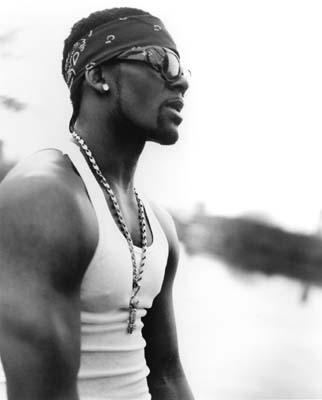
MTV has gotten their paws on R. Kelly’s new memoir Soulacoaster, The Diary of Me, and the most surprising detail is that the King of R&B needed a hanky after watching The Notebook movie.
The cheesy 2004 romance movie was the final spark to push R. Kelly to divorce wife and former back up dancer Andrea Kelly, inciting an intense period of introspection about the woman he married in 1996 and had three children with.
“As the film credits started to roll, I couldn’t move,” wrote R. Kelly.
The Notebook movie was the final spark to push R. Kelly to divorce wife and former back up dancer Andrea Kelly
“I burst into tears. People walking past me patted me on the back, trying to console me. <<The Notebook>> was beautiful, and I was crying because its hero and heroine had died together. But I was also crying because I remembered a Valentine’s Day when a helicopter dropped a rainfall of roses. That had come and gone… My marriage had died. And there was nothing I could do to bring it back.”
The couple divorced in January 2009, a mere six months after R. Kelly, real name Robert Sylvester Kelly, was exonerated of all 14 counts of videotaping himself having sex with an underage girl. Talk about a Pyrrhic victory.
R. Kelly’s music will next be heard in this summer’s Whitney Houston starrer Sparkle, which he composed several new tracks for.
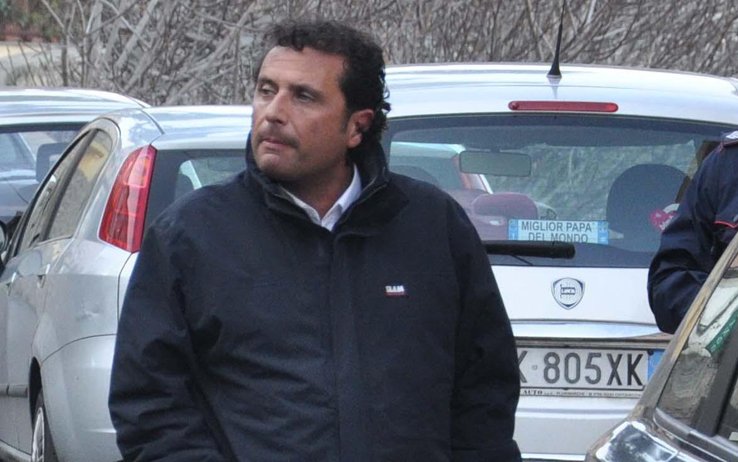
Francesco Schettino, captain of the Costa Concordia ship which ran aground killing more than 30 people, has said a “divine hand” guided him, preventing greater tragedy.
Francesco Schettino has released a letter, published in Italy’s La Corriere della Sera newspaper, explaining his version of events.
The ship struck rocks and capsized near the island of Giglio, off the coast of Tuscany, in January.
The letter comes as an Italian judge lifted Francesco Schettino’s house arrest.
Francesco Schettino has released a letter, published in Italy's La Corriere della Sera newspaper, explaining his version of events
The judge said that Francesco Schettino must not leave his hometown, near Naples, while the investigation continues.
The cruise firm contends that Francesco Schettino steered the vessel too close to shore.
But, in his letter, Francesco Schettino argues that he avoided sailing head-on into the rocks, and saved many lives by steering the stricken vessel into shallow water.
Francesco Schettino denies the charges against him which include manslaughter, causing a shipwreck and abandoning ship.
“I created the best possible circumstances to save everyone, regardless of how events subsequently unfolded,” he wrote.
He also defended the speed of his decision-making on the night of the crash.
“A captain can take the time required to evaluate the emergency without creating panic. Only he is responsible, first before God, and then before men,” he wrote.
He said that no-one advised him that they were off the ship’s predetermined route and it was only when he saw “white foam” to his left that he realized how close to the rocks they were sailing.
“That was the sign that led me to give the order to steer starboard, by pure instinct. In that moment a divine hand no doubt rested upon my head. If I had continued on that path we would have hit the rocks with the bow. It would have been a catastrophe.”
Italian investigators are holding an inquiry into the cause of the Costa Concordia disaster and a court hearing is due on 21 July at which the full results of technical analysis will be heard.
Goal-line technology could be introduced in the Premier League midway through the 2012-13 season after it was approved by the International Football Association Board (IFAB) in Zurich.
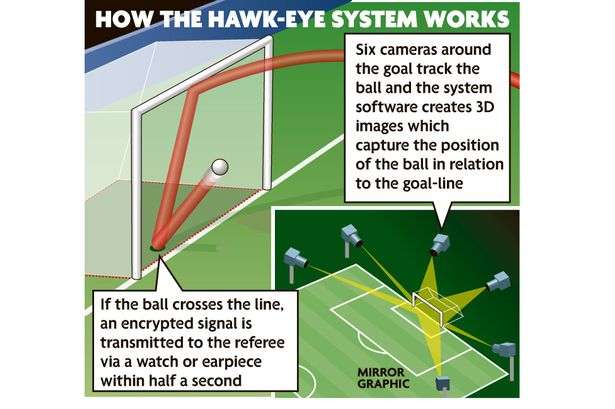
Two systems – Hawk-Eye and GoalRef – have passed FIFA’s criteria for use.
The technology will first be used at December’s FIFA Club World Cup and, if successful, at the 2013 Confederations Cup and 2014 World Cup.
The Premier League said it wanted it “as soon as practically possible.”
A statement following IFAB’s announcement added: “The Premier League has been a long-term advocate of goal-line technology.
“We welcome today’s decision by IFAB and will engage in discussions with both Hawkeye and GoalRef in the near future with a view to introducing goal-line technology as soon as is practically possible.”
Goal-line technology approved by International Football Association Board, with first use to be at Club World Cup
FA general secretary Alex Horne said it was up to the Premier League to decide on a timescale for implementation.
“It may be December until the technology is absolutely finally approved and installed in stadia,” he said at a press conference in Zurich.
“Priority is given to the Fifa Club World Cup in Japan.
“The Premier League need to talk to the two [technology providers] and the clubs. My understanding is that clubs are supportive and, in principle, as long as all clubs agree it could be introduced part-way through the season, it could be before the start of 2013-14 season, it could be part way through.
“It might be that it is possible to have it part way through the [2012-13] season. If all 20 clubs agree a switch-on weekend I don’t think anyone is disadvantaged.”
Alex Horne added that he felt it was “a hugely important day” for football.
“We believe that it is a great day for football. From an English perspective, today is a hugely important day. It is a cause we have had on our agenda for a number of years.
“This is about having the right technology helping the referee in a relatively rare occurrence.”
The systems will require testing after they are installed in each stadium to ensure they are working properly before they can be used, with licenses lasting for 12 months.
Hawk-Eye was tested at Southampton’s St Mary’s Stadium in May and FIFA thanked the FA for its assistance.
A FIFA spokesman said: “We would like to place on record our sincere thanks to the Football Association for their willingness to support the live match tests, a critical part of Test Phase 2 for goal-line technology.”
IFAB was keen to stress that technology will not be used to help referees make any other decisions.
The desire to bring in goal-line technology increased after Ukraine were denied an equaliser after the ball appeared to cross the line in a 1-0 defeat by England at Euro 2012.
That incident led to FIFA president Sepp Blatter throwing his weight behind calls for goal-line technology.
Chelsea manager Roberto Di Matteo said: “We see every season, every big tournament, we need it because there are some crucial moments within those games where you could find the right solution with a bit of technology.”
UEFA president Michel Platini is believed to prefer the use of five match officials, something which was also approved by FIFA on Thursday.
The system, which sees an extra official posted behind each goal-line to monitor action in and around the penalty box, has been on trial since 2008 and was in use during Euro 2012 as well as last season’s Champions League.
Football’s governing body also lifted a ban on women wearing headscarves during games, clearing the way for the participation of many Islamic nations in top-flight competition.
Police in northern Spain have recovered one of the country’s great cultural treasures – Codex Calixtinus – a 12th-Century religious manuscript stolen a year ago.
The Codex Calixtinus was found in a garage near Santiago de Compostela and four people were arrested over the theft from the city’s cathedral.
The richly decorated book is considered the first guide for those following the ancient pilgrimage route to Santiago.
The Codex Calixtinus was found in a garage near Santiago de Compostela and four people were arrested over the theft from the city's cathedral
Police arrested a technician who worked at the cathedral and three relatives.
Christians believe the Santiago de Compostela cathedral to be the burial place of St James the Greater, one of Jesus’s apostles.
The manuscript was found after the technician and three members of his family were arrested on Wednesday.
Besides the Codex, police also found other valuable old books stolen from the cathedral and at least 1.2 million Euros in cash.
A replica of the Codex is on display in a glass case at the cathedral.
Only a handful of people had access to the room in which the original was kept. It is thought to date from around 1150.
Lady Gaga is well used to turning heads with her crazy outfits, but there were two reason people were stopping and staring yesterday.
The singer’s assets were on full view as she made her way to the airport yesterday.
Oozing with the usual confidence, the superstar strutted around the Australian city unflustered by the fact she seemed to have forgotten half her outfit.
Wearing a decidedly I Dream Of Jeannie look, Lady Gaga looked magic in her high pony tail plunging bra, black velvet harem pants, gold-studded belts and trademark towering stilettos.
The matching black velvet cloak-come-jacket meanwhile wasn’t doing much to maintain her modesty, as she proudly displayed her cleavage.
Lady Gaga walked out of her hotel in Melbourne to say goodbye to fans, before stopping into the Flavour cafe and bar with her entourage for a coffee en route to the airport.
Next it was onto her private jet at Melbourne Airport to make her way to Perth for the final show in her Australian tour.
Lady Gaga walked out of her hotel in Melbourne to say goodbye to fans
At this stage she was an old pro at handling those sky-high shoes, jumping out of the transfer vehicle without even a wobble.
Just before boarding the plane she seemed to consider for a moment if what she was wearing (or wasn’t wearing) was appropriate flying attire. But then she remembered who she was and continued on beaming.
Her fashion sense even seems to be rubbing of on her entourage, as one of her crew can be seen wearing an equally impressive set of red heels, although she’s clearly not allowed to have a pair as big the Lady’s.
After arriving in Perth, Lady Gaga headed straight for the Crown Metropol Hotel for a quick wardrobe change, where she exchanged bare arms for her bare torso – although she made sure her impressive cleavage was still on show.
She emerged shortly afterwards much to the delight of the Little Monsters who had gathered outside in the hopes of catching a glimpse.
Lady Gaga is now preparing for the final show of her Australian tour on Saturday night, having stormed through Auckland, Brisbane, Sydney and Melbourne.
Thousands of fans have traveled from all over the country for the past month to catch her performances and her legendary wardrobe changes, one of which is a version of her famous meat dress.
Lady Gaga, 26, caused a stir in 2010 when she arrived at the MTV Video Music Awards completely draped in raw flesh. Although the new version doesn’t appear to be made out of real meat.
No stranger to controversy, she angers many with her use of religious icons and contentious issues such as animal rights in her costumes and performances.
Recently Lady Gaga has been displaying a slightly curvier figure as she shows off her stage get-ups.
One person who seems to prefer her new look over her famously toned body is boyfriend Taylor Kinney, whom she recently got back together with.
Following the Australian leg of her Born This Way Ball Tour, Lady Gaga will head to Europe in August where she will perform in Finland, Sweden and Germany as well as in the UK.
Ticket holders may well get to hear her new song Princess Die which she debuted at her Melbourne concert this week.
The song has outraged fans of the late Princess Diana, who believe the lyrics refer to her tragic death in 1997.
China’s central bank has cut its benchmark interest rates for the second time in two months, in a bid to arrest slowing economic growth.
Benchmark lending rates will be cut from 6.31% to 6%, while deposit rates will fall from 3.25% to 3%.
The rate cuts will come into force on Friday and closely follow on from the last cuts made on 7 June.
Before these moves, the People’s Bank of China had not cut interest rates since 2008.
China’s central bank has cut its benchmark interest rates for the second time in two months
Commenting on the move, Rupert Armitage, director at Shore Capital, said: “China are cutting rates because they’re experiencing a slowdown.
“Everybody’s been concerned about the economy, but now they’re actually doing something about it.”
The central bank’s rate cuts come on the back of a gradual liberalization of China’s banking system.
Banks can now compete on the interest rates they offer customers, within a stipulated range.
China’s export growth has been hit by a fall in demand from two of its biggest markets, the US and Europe, still struggling with the global debt crisis.
China’s economy grew at an annual rate of 8.1% in the first quarter, the slowest pace in almost three years.
It hopes lower interest rates will help boost domestic demand.
Hyloscirtus princecharlesi, a newly discovered tree frog, has been named after Prince Charles in recognition of his charity work to protect their rainforest homes.
Hyloscirtus princecharlesi, or the Prince Charles stream tree frog, was first discovered by Dr. Luis A. Coloma in 2008 amongst specimens collected for a museum.
Hyloscirtus princecharlesi, or the Prince Charles stream tree frog, was first discovered by Dr. Luis A. Coloma in 2008 amongst specimens collected for a museum
A subsequent expedition in the Cotacachi-Cayapas National Park, Ecuador, found limited numbers of the frogs after areas of the forest were cleared for agriculture.
Two juvenile frogs are now being raised in captivity as part of the Amphibian Ark project in the hope they will breed and eventually boost populations in the wild.
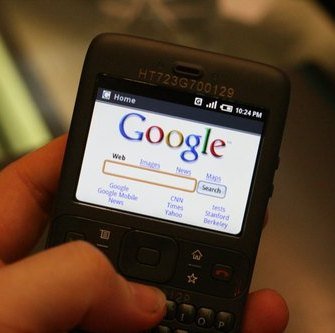
A Microsoft researcher says Smartphones running Google’s Android software have been hijacked by an illegal botnet.
Botnets are large illegal networks of infected machines – usually desktop or laptop computers – typically used to send out masses of spam email.
Researcher Terry Zink said there was evidence of spam being sent from Yahoo mail servers by Android devices.
Microsoft’s own platform, Windows Phone, is a key competitor to Android.
The Google platform has suffered from several high-profile issues with malware affected apps in recent months.
The official store – Google Play – has had issues with fake apps, often pirated free versions of popular paid products like Angry Birds or Fruit Ninja.
Smartphones running Google's Android software have been hijacked by an illegal botnet
This latest discovery has been seen as a change of direction for attackers.
“We’ve all heard the rumors,” Terry Zink wrote in a blog post.
“But this is the first time I have seen it – a spammer has control of a botnet that lives on Android devices.
“These devices login to the user’s Yahoo Mail account and send spam.”
He said analysis of the IP addresses used to send the email revealed the spam had originated from Android devices being used in Chile, Indonesia, Lebanon, Oman, Philippines, Russia, Saudi Arabia, Thailand, Ukraine, and Venezuela.
As is typical, the spam email looks to tempt people into buying products like prescription drugs.
Security expert Graham Cluley, from anti-virus firm Sophos, said it was highly likely the attacks originated from Android devices, given all available information, but this could not be proven.
This was the first time smartphones had been exploited in this way, he said.
“We’ve seen it done experimentally to prove that it’s possible by researchers, but not done by the bad guys,” he said.
“We are seeing a lot of activity from cybercriminals on the Android platform.
“The best thing you can do right now is upgrade your operating system, if that’s possible.
“And before you install apps onto your device, look at the reviews, because there are many bogus apps out there.”
Google said it did not respond to queries about specific apps but was working to improve security on the Android platform.
“We are committed to providing a secure experience for consumers in Google Play, and in fact our data shows between the first and second halves of 2011, we saw a 40% decrease in the number of potentially malicious downloads from Google Play,” a spokesman said.
“Last year we also introduced a new service into Google Play that provides automated scanning for potentially malicious software without disrupting the user experience or requiring developers to go through an application approval process.”