Forty-two people have been killed and more than 130 others wounded in a series of suicide attacks in the south-west and north of Afghanistan.
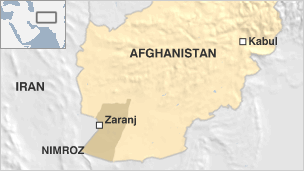
At least 11 bombers targeted the city of Zaranj, police said, but not all had been able to blow themselves up.
Shortly afterwards, police in the northern province of Kunduz said 12 people were killed by another bomb.
The bombers had reportedly attacked crowded markets.
Forty-two people have been killed and more than 130 others wounded in a series of suicide attacks in the south-west and north of Afghanistan
The district governor of Dashte Arche district in Kunduz said the bomb had been placed on a motorbike and had gone off shortly before the end of the day’s fast for the Muslim holy month of Ramadan.
Many of the victims were thought to be civilians, including food-sellers, he said.
In the south-western province of Nimroz, deputy police chief Mujibullah Latifi told AFP that some of the attackers had been killed by police.
“There have been heavy casualties; the majority of them are civilians,” he said.
Reports say two of the bombers’ explosives were detonated when police fired on them.
Afghan intelligence officials have said a number of potential suicide bombers infiltrated Zaranj.
Some were arrested on Monday, with further arrests early on Tuesday.
One official said he had been searching for further suspected insurgents in a crowded marketplace when the attacks began.
An eyewitness, Mohammad Zalmay, said: “I was buying sweets with my sons and daughters when I heard a bang. I fell to the ground. When I woke up, I saw blood all over.”
Zaranj, near the Iranian border, is a relatively affluent and peaceful city.
The police will be extremely concerned that there will be further attacks, he says.
International troops are gradually handing over responsibilities to Afghan security forces, as NATO prepares to pull out of the country by the end of 2014.
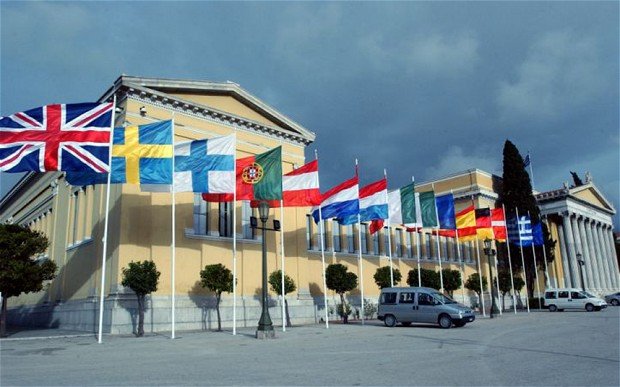
The economy of the eurozone shrank 0.2% in the three months from April to June compared with the previous quarter.
The figures from Eurostat covering the 17 countries that use the euro followed zero growth in the previous quarter.
Europe’s biggest economy, Germany, grew by 0.3% in the second quarter, helped by exports and domestic consumption.
France announced its economy had recorded zero growth in the period, which was better than had been expected.
The French economy had also posted zero growth in the previous two quarters.
GDP measures the total amount of goods and services produced by an economy.
The economy of the eurozone shrank 0.2 percent in the three months from April to June compared with the previous quarter
“Germany has asserted itself thanks to growing exports to countries outside the eurozone,” said Christian Schulz at Berenberg Bank.
“It’s hardly a surprise that consumption has increased due to low unemployment, rising wages and a low rate of inflation.”
The economies of the 27 members of the EU also contracted by 0.2%.
Among the eurozone’s biggest contractions, Portugal’s GDP shrank 1.2%, Cyprus recorded a 0.8% contraction and Italy was down 0.7%.
Comparable figures from Ireland and Greece are not yet available.
On Monday, Greece released GDP figures that showed its economy contracted by 6.2% in the second quarter, compared with the same period a year earlier, but did not provide figures for the quarter compared with the previous quarter.
The first quarter’s zero growth means the eurozone is still not in recession on the generally accepted definition of two consecutive quarters of negative growth, but the outlook for the rest of the year is gloomy.
“What we see is a vicious circle of budget cuts, high interest rates in the periphery and sovereign debt rising,” said Aline Schuiling at ABN Amro.
“Policymakers are moving very slowly. We expect another contraction in Q3.”
Greece, Spain, Italy, Cyprus and Portugal, all of which are receiving assistance from European bailout funds, are in recession.
“Overall, the story of a resilient core and a floundering periphery continues,” said Azad Zangana at Schroders.
“The resilience of the core economies is likely to be tested in the coming quarters, with leading indicators suggesting slowing order books and falling business confidence.”
An example of the leading indicators was the ZEW index of investor sentiment in Germany, which has declined for the fourth consecutive month to its lowest level this year.
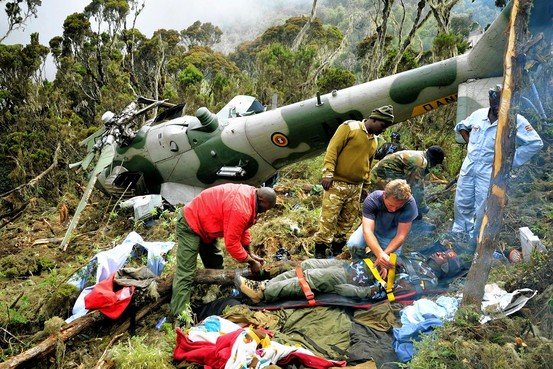
The wreckage of two Ugandan helicopters that went missing on Sunday has been found in a remote area of Kenya, a Kenyan army spokesman has said.
The fate of those on board – believed to be 14 people – is unknown, Colonel Cyrus Oguna said.
Both aircraft were part of a contingent being sent to reinforce the African Union (AU) force in Somalia.
A third helicopter on the same mission made an emergency landing in Mount Kenya on Sunday.
Its passengers have been rescued, Col. Cyrus Oguna said.
The wreckage of two Ugandan helicopters that went missing on Sunday has been found in a remote area of Kenya
Only one of the four Russian-made helicopters en route to Somalia had made a scheduled refuelling stop on Sunday in the Kenyan town of Garissa.
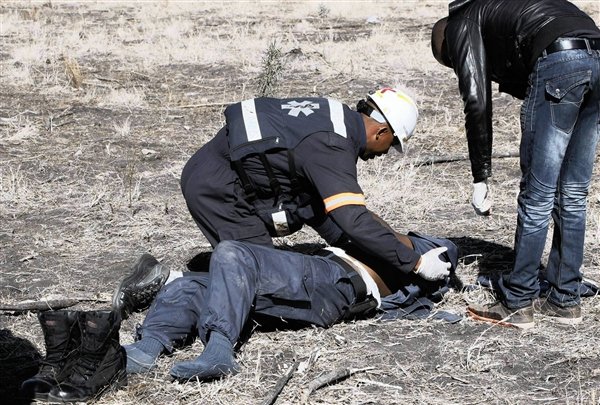
The wreckage of the two missing helicopters was spotted on Mount Kenya – Africa’s second-highest peak at 5,199 metres (17,057 feet) – by wildlife officers, Kenya’s Daily Nation newspaper reports.
A Kenyan army team is on the way to the site of the crash, said Col. Cyrus Oguna.
One helicopter has been completely destroyed and the other partially, he said.
The combat helicopters came down as they were flying from Uganda to Somalia to take part in an AU-led offensive to capture the port city of Kismayo from the militant Islamist group al-Shabab, correspondents say.
Ugandan troops form the bulk of the nearly 17,000-strong AU force in Somalia, where they are supporting the UN-backed government.
Although it has lost ground in the past year, al-Shabab, which has joined al-Qaeda, still controls many southern and central areas.
A new research has found that getting enough exercise in midlife will help protect your heart.
Even those who make the switch in their late 40s and 50s can still benefit, the study of over 4,000 people suggests.
And it need not be hard toil in a gym – gardening and brisk walks count towards the required 2.5 hours of moderate activity per week, say experts.
But more work is needed since the study looked at markers linked to heart problems and not heart disease itself.
A new research has found that getting enough exercise in midlife will help protect your heart
And it relied on people accurately reporting how much exercise they did – something people tend to overestimate rather than underestimate.
In the study, which is published in the journal Circulation, people who did the recommended 2.5 hours of exercise a week had the lower levels of inflammatory markers in their blood.
Inflammatory markers are important, say experts, because high levels have been linked to increased heart risk.
People who said they consistently stuck to the recommended amount of exercise for the entire 10-year study had the lowest inflammatory levels overall.
But even those who said they only started doing the recommended amount of exercise when they were well into their 40s saw an improvement and had lower levels of inflammation than people who said they never did enough exercise.
The findings were unchanged when the researchers took into consideration other factors, such as obesity and smoking, that could have influenced the results.
Dr. Mark Hamer, of University College London, who led the research, said: “We should be encouraging more people to get active – for example, walking instead of taking the bus. You can gain health benefits from moderate activity at any time in your life.”
Maureen Talbot of the British Heart Foundation, which funded the work, said: “Donning your gardening gloves or picking up a paint brush can still go a long way to help look after your heart health, as exercise can have a big impact on how well your heart ages.
“This research highlights the positive impact changing your exercise habits can have on the future of your heart health – and that it’s never too late to re-energize your life.
“However it’s important not to wait until you retire to get off the couch, as being active for life is a great way to keep your heart healthy.”
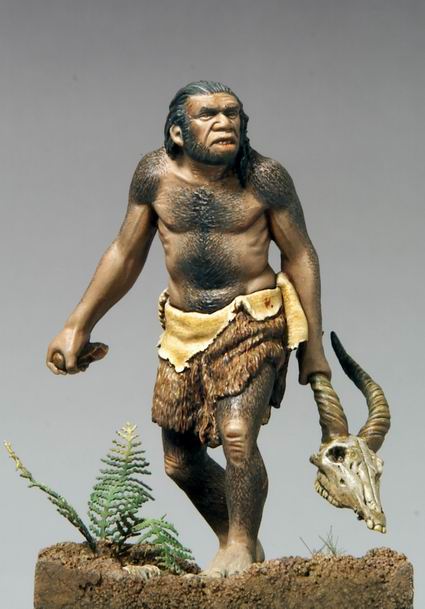
A new study found that similarities between the DNA of modern people and Neanderthals are more likely to have arisen from shared ancestry than interbreeding.
That is according to research carried out at the University of Cambridge and published this week in PNAS journal.
Previously, it had been suggested that shared parts of the genomes of these two populations were the result of interbreeding.
However, the newly published research proposes a different explanation.
The origin of modern humans is a hotly debated topic; four main theories have arisen to describe the evolution of Homo sapiens.
A new study found that similarities between the DNA of modern people and Neanderthals are more likely to have arisen from shared ancestry than interbreeding
All argue for an African origin, but an important distinction in these competing theories is whether or not interbreeding – or “hybridization” – between modern and ancient humans has occurred.
In the current study, Cambridge evolutionary biologists Dr. Anders Eriksson and Dr. Andrea Manica used computer simulations to reassess the strength of evidence supporting hybridization events.
They argue that the amount of DNA shared between modern Eurasian humans and Neanderthals – estimated at between 1-4% – can be explained if both arose from a geographically isolated population, most likely in North Africa, which shared a common ancestor around 300-350 thousand years ago.
When modern humans expanded out of Africa, around 60-70,000 years ago, they took that genetic similarity with them.
By contrast, previous ancient DNA studies of Neanderthal remains have shown that their genomes harbor genetic signatures – polymorphisms – that are also seen in the genomes of modern Europeans, East Asians and Oceanians (from Papua New Guinea) but not in modern African populations.
The findings challenged previously held views – based on several lines of evidence – that modern humans had replaced the Neanderthals with little or no gene flow occurring between the two groups.
The observations from the Neanderthal genome led some evolutionary biologists to argue that this genetic similarity had arisen through hybridization between Neanderthals – already resident in Europe and western Asia – and the ancestors of present-day non-Africans.
Prof. David Reich, from Harvard University in Cambridge, US – an exponent of the hybridization theory – is not convinced that the data represents a powerful argument against interbreeding.
By using methods that are able to differentiate between genetic similarity caused by gene flow via hybridization vs. shared ancestry, he argues that “the patterns observed [in our analyses] are exactly what one would expect from recent gene flow” – a view shared by his collaborator Professor Svante Paabo from the Max Planck Institute for Evolutionary Anthropology in Leipzig, Germany.
Prof. David Reich went on to say that their data shows that Neanderthals and non-Africans last exchanged genetic material 47-65,000 years ago.
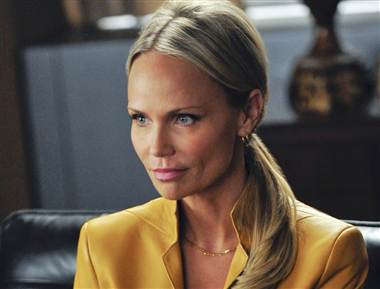
Actress Kristin Chenoweth has left The Good Wife to recover from injuries she sustained after being struck by a piece of lighting equipment on the set.
Kristin Chenoweth, 44, best known for The West Wing, Glee and stage hit Wicked, spent a short time in hospital after being hit on the head last month.
The actress was put in a neck brace and taken away in an ambulance.
Kristin Chenoweth, who played a reporter in the US TV drama, said in a statement she was leaving “with deep regret”.
Kristin Chenoweth has left The Good Wife to recover from injuries she sustained after being struck by a piece of lighting equipment on the set
“It is with deep regret I inform everyone that due to my injuries I am unable to return to The Good Wife at this time,” Kristin Chenoweth said.
“Getting better slowly and thank you everyone for your concern.”
At the time of the accident the CBS network said a gust of wind blew a lighting silk out of place, hitting Kristin Chenoweth.
Lighting silk is cloth used to soften or deflect artificial light or sunlight during shooting and is sometimes stretched over a lightweight metal or plastic frame.
Kristin Chenoweth joined hit legal drama The Good Wife in a recurring role for its fourth season.
She will be seen playing a political journalist who tries to uncover dirt on the lead character, Alicia Florrick, and her estranged husband who is running for governor.
Kristin Chenoweth is also a renowned Broadway actress, having originated the role of Glinda in hit musical Wicked. In 1999 she won a Tony award for You’re a Good Man, Charlie Brown.
She also won a best supporting actress Emmy in 2009 for Pushing Up Daisies.
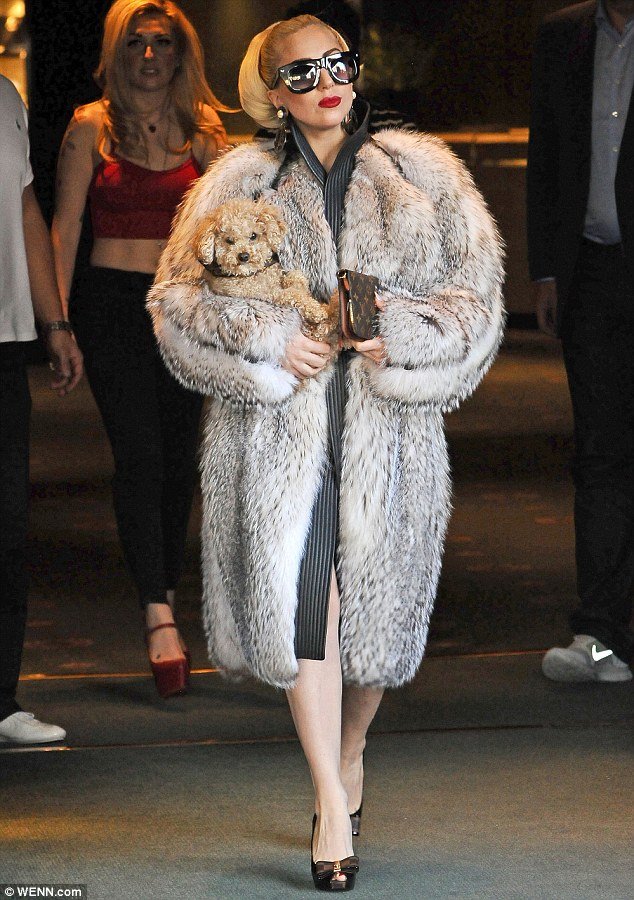
Lady Gaga stepped out in Bulgaria wearing what appeared to be a real fur coat as she left her hotel carrying a puppy.
Lady Gaga, 26, who was recently slammed by animal charity PETA for wearing a pink fur coat, then took to her Twitter account just to confirm that the garment she was wearing was real.
In a rather sarcastic manner, the pop star wrote: “For those press and such who are writing about whether or not my fur is actually real, please don’t forget to credit the designer HERMES. Thank You! LOVE, gaga.”
Her latest tweet is no doubt going to receive a backlash worldwide, but as she stepped out in Sofia yesterday, Lady Gaga didn’t seem to care what anyone thought of her attire.
Lady Gaga stepped out in Bulgaria wearing what appeared to be a real fur coat as she left her hotel carrying a puppy
The quirky star teamed the large grey coat with a pinstriped dress that was slit right up to her hips and almost revealed her underwear.
Lady Gaga completed her look with a pair of patent heels and large dark sunglasses while carrying the pooch and a small designer handbag.
As she left her hotel, Lady Gaga waved to her waiting fans and even stopped to sign autographs for them.
Lady Gaga is in Sofia for the start of the European leg of her Born This Way Ball world tour which kicks off tonight at the Armeets Arena.
Her arrival in the capital comes as RadarOnline revealed that PETA has targeted the singer by writing her a personal letter and begging her to no longer wear fur.
“Many of your gay fans, I among them, have long admired what you told Ellen: <<I hate fur, and I don’t wear fur>>,” wrote Dan Mathews, Senior Vice President of PETA.
“What happened? Are your stylists telling you that it’s fake, or are you a turncoat?” Dan Mathews asked.
“Many gays are animal advocates because we recognize that the same arrogance and indifference that some have toward animal suffering has at times been directed toward us personally because of our orientation,” he went on to say.
“By wearing those dumb furs in a heat wave, you’re making yourself a target just like the mindless Kim Kardashian. As we plan our fall campaigns, please tell us whether what you gracefully told Ellen was heartfelt or just a pose.”
In a new interview Kim Kardashian revealed that she sees herself and Kanye West at 80, sitting together talking.
“When this whole life is done, and it’s just the two of us sitting somewhere when we’re 80, you want to have things to talk about that you have in common,” Kim Kardashian told New York magazine.
“I think that’s something maybe I didn’t value as highly as a quality I cared about in someone.”
The “things” that the pair have in common include their shared passion for fashion, which last week saw Kanye West present Kim Kardashian with a $6,000 pair of shoes he had designed, decorated with strands of pearls.
Kim Kardashian explained: “If I have a design meeting, or he has one, we come back and talk about how our meetings went. It’s cool, because you can definitely get more in-depth with someone who actually knows what you’re talking about.
“So that’s been a fun similarity we have. I think it’s essential to have similarities.”
In a new interview Kim Kardashian revealed that she sees herself and Kanye West at 80, sitting together talking.
Kim Kardashian also revealed that since her 30th birthday she had started drinking, having previously refused all alcohol.
She claimed she needed to “lighten up”.
Despite her high-profile, Kim Kardashian insists her goals don’t centre around fame, but she is focused on building and bettering her business empire.
She added: “I don’t really have goals as far as, I want to be on a cover or something like that.
“I think my goals are more just expanding my line, and having my line be really successful. That’s the ultimate goal, I think, for me.
“I don’t say, <<Oh, I want to be on this magazine or I want to do this>>. It’s all fun.
“And I love, definitely, turning into a different character. I think each shoot has a different personality.”
New York magazine also gave readers an insight into Kim Kardashian and Kanye West’s relationship after they published Kim’s half of a conversation between the lovers.
“Hello? Hey. Just leaving the zoo. I’m finished with my shoot and I’m just finishing up. I’m heading actually to your place right now.
“Where are you? Okay. So maybe I’ll go in and change and then I’ll eat… What time is that at? Seven? Will you be done?… Okay, so, that’s an hour.
“So I’ll just wait at the place. Will you come get me? Okay, well, I don’t have a car. Do you want me to just take a cab? Or can your car come get me first?…
“Where is <<up here>>? Is it far? Okay, well, um, maybe…”
The conversation continues until Kim Kardashian ends with a “Love you, too. Bye.”
Before Kim Kardashian and Kanye West can commit to one another, however, there is the little matter of her divorce from her second husband Kris Humphries, following their 72-day marriage.
RadarOnline reported yesterday that Kris Humphries’ determination to see the divorce end up in court was distressing Kim Kardashian, who wanted to end it quickly.
“Kim has told her lawyer that the case is dragging because Kris is determined to keep his name in the press and drag her name through the mud,” a source told the site.
“Kim is ready to get engaged to Kanye, but doesn’t want to until her divorce is finalized.”
Meanwhile Kris Humphries is hoping that “the truth” will come out.
“Kris is in no rush at all for the divorce to be finalized, he just wants the truth to come out,” an insider told the site.
“Kris will see this through to the end, which for him, will be a very public divorce trial, and this isn’t about the money.”
Groupon has swung into profit but weaker-than-expected revenue figures sent shares in the voucher firm sharply lower in after-hours trading.
Net income for the three months to the end of June was $28.4 million, against a loss of $107.4 million a year ago.
Revenue rose 45% to $568.3 million, and would have been higher but for a $32.4 million hit on exchange rates, the company said.
But investors had expected a higher figure and shares in the firm fell more than 10% in after-hours trading.
Groupon has swung into profit but weaker-than-expected revenue figures sent shares in the voucher firm sharply lower in after-hours trading
“Revenue was at the lower end of where they guided,” said Herman Leung, an analyst at Susquehanna Financial Group.
Groupon said it now had 38 million active customers, an increase of 65% on a year earlier.
It performed particularly well in North America, where revenues surged 66%.
“We had a solid quarter despite challenges in Europe and continued investment in technology and infrastructure,” said Andrew Mason, Groupon’s chief executive.
The company said total revenues would continue to grow, forecasting between $580 million and $620 million for the current quarter.
Groupon made its stock market debut in November at $20 per share and peaked above $31 a share.
They closed on Monday at $7.55, but fell below $6.50 in after-hours trading.
Chang Song-Taek, uncle of North Korean leader Kim Jong-Un, is visiting Beijing, amid signs the impoverished state wants to tackle its economic problems.
Chang Song-Taek, who some observers believe is the key power behind Kim Jong-Un, arrived in Beijing on Monday, state media said.
He will discuss joint development of two special economic zones, KCNA news agency said.
Chang Song-Taek is married to late leader Kim Jong-Il’s sister.
He was named a vice-chairman of the powerful National Defence Commission in 2009, and before that had a number of high-profile roles in the party. He accompanied Kim Jong-Il, who died in December 2011, on several of his foreign trips.
Chang Song-Taek, uncle of North Korean leader Kim Jong-Un, is visiting Beijing, amid signs the impoverished state wants to tackle its economic problems
North Korean state media said Chang Song-Taek would be discussing joint economic projects in Rason, on North Korea’s east coast, and Hwanggumphyong, on the border with China.
No further details were given. The two Koreas currently have a joint industrial zone running in Kaesong, which helps boost the state-run North Korean economy.
North Korea has been hit by flooding in recent months and has appealed for food aid. It suffered a famine in the mid-1990s which is believed to have killed hundreds of thousands of people.
Since then, it has remained unable to grow enough food to feed its people.
The visit comes after senior Chinese diplomat Wang Jiarui visited Pyongyang earlier this month, the China Daily said.
It also follows the removal in July of army chief Ri Yong-Ho in a high-level military reshuffle. A previously little-known general, Hyon Yong-Chol, was named as his replacement.
Ri Yong-Ho’s demotion was attributed to illness, but has been widely interpreted by analysts as a move aimed at stamping the authority of the new leader on North Korea’s powerful army.
German economy grew by 0.3% in the second quarter of 2012, helped by exports and domestic consumption.
Earlier, France announced its economy had recorded zero growth in the period, which was better than had been expected.
The French economy had also posted zero growth in the previous two quarters.
Official gross domestic product (GDP) figures from the whole of the eurozone are due out from the statistics agency Eurostat later in the day.
German economy grew by 0.3 percent in the second quarter of 2012, helped by exports and domestic consumption
GDP measures the total amount of goods and services produced by an economy.
German growth was slower than the 0.5% recorded for the first three months of the year, but is still expected to be one of the strongest figures for the eurozone.
“Germany has asserted itself thanks to growing exports to countries outside the eurozone,” said Christian Schulz at Berenberg Bank.
“It’s hardly a surprise that consumption has increased due to low unemployment, rising wages and a low rate of inflation.”
Despite growth in Europe’s largest economy, GDP for the whole eurozone is expected to have shrunk.
“We do not think that Germany on its own can keep the entire eurozone afloat,” said Aline Schuiling at ABN Amro.
“Despite the positive growth number for Germany, we expect total eurozone GDP to have contracted by around 0.4% as severe fiscal austerity is pulling most economies into recession.”
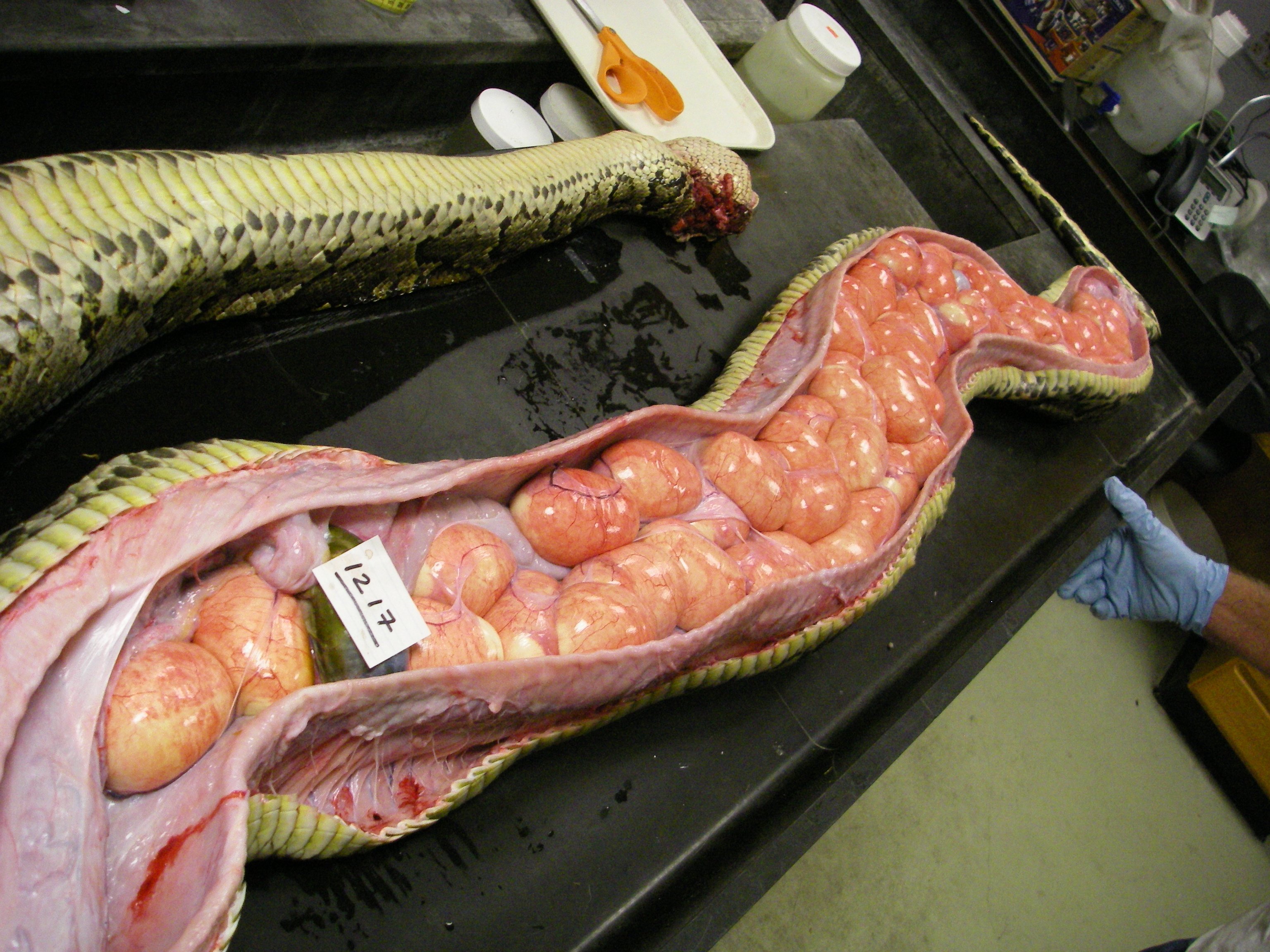
US scientists have announced that the biggest Burmese python ever recorded in Florida has been caught in the Everglades.
The snake measuring 17 ft 7 in (5.18 m) and weighing 164 lbs (74 kg) was found in Everglades National Park, the University of Florida announced.
The python – now dead – was pregnant with 87 eggs, also believed to be a record.
Non-native Burmese pythons have been blamed for a staggering decline of mammals in Florida’s Everglades.
The giant Burmese python measuring 17 ft 7 in (5.18 m) and weighing 164 lbs (74 kg) was pregnant with 87 eggs
Scientists say the latest discovery shows just how pervasive the snakes – native to South East Asia – have become in South Florida.
“It means these snakes are surviving a long time in the wild,” said Kenneth Krysko, at the Florida Museum of Natural History.
“There’s nothing stopping them, and the native wildlife are in trouble.”
He said that the snake had feathers in its stomach that would help to identify the types of wildlife it was eating.
“A 17-and-a-half-foot snake could eat anything it wants,” he added.
Pythons kill their prey by coiling around it and suffocating it.
They have been known to swallow animals as large as deer and alligators.
After scientific investigation, the snake will be exhibited at the museum on the University of Florida campus for five years before being returned to the Everglades National Park.
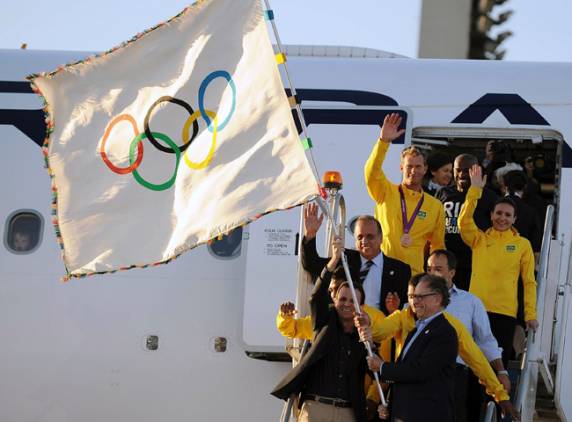
The official Olympic flag has arrived in the Brazilian city of Rio de Janeiro, the host city of 2016 Games.
Rio Mayor Eduardo Paes waved the flag after stepping off the plane with other officials and Brazilian athletes who competed in London.
The flag was handed to Eduardo Paes on Sunday in London before the flame at the Olympic Stadium was extinguished.
The move marks the official start of Rio’s preparations for the 2016 Games.
Arriving on Monday with the flag, Eduardo Paes was accompanied by Carlos Arthur Nuzman, president of the 2016 Games Organising Committee, Rio Governor Sergio Cabral, and the country’s team of athletes.
The official Olympic flag has arrived in the Brazilian city of Rio de Janeiro, the host city of 2016 Games
Brazil finished 22nd in London 2012, winning 17 medals, two more than its previous best in Beijing.
Rio de Janeiro will be the first South American city to host the Olympics. The city has yet to construct the Olympic Park and other venues, and many have expressed concern about how much work there is to do ahead of the event.
During a visit in June, members of the International Olympic Committee (IOC) said that timelines were “already very tight” and that “the amount of work to be completed is considerable”.
Worries about Olympic readiness are not new, but that not since Athens have there been so many questions about a host’s ability to stage the Olympics.
The transport system in Rio already struggles to serve its six million people.
But Eduardo Paes has promised to transform the city’s infrastructure, and the government says all of the Olympic venues will be finished a year before the games start.
They will be helped by the fact that they have something of a dress rehearsal, when the World Cup arrives in Brazil in 2014.
As the delegation touched down, a group of demonstrators were gathered outside the airport in Rio to protest against planned evictions connected to the Olympics planning, according to the Associated Press.
The London Olympics were brought to a close on Sunday night with a spectacular musical ceremony, featuring some of the biggest names of British pop, including the Spice Girls, George Michael and Elbow.
In a separate development on Monday, a female athlete from Belarus was stripped of her gold medal in the London Olympics after failing two drugs tests.
The shot putter, Nadzeya Ostapchuk, was the first athlete to lose a medal in the 2012 Games due to doping.
Helen Gurley Brown, the editor-in-chief of Cosmopolitan Magazine and author of Sex and the Single Girl, has died at 90 at a New York hospital, magazine publisher Hearst says.
Helen Gurley Brown died on Monday in New York after being admitted to hospital.
She edited Cosmopolitan for 32 years after being hired by Hearst to turn around the magazine three years after her 1962 best-selling book.
Helen Gurley Brown, the editor-in-chief of Cosmopolitan Magazine and author of Sex and the Single Girl, has died at 90 at a New York hospital
Under her, the magazine became famous for encouraging women to have sex, regardless of marital status.
Helen Gurley Brown said her aim was to tell readers “how to get everything out of life”.
“Helen was one of the world’s most recognized magazine editors and book authors, and a true pioneer for women in journalism,” Frank Bennack Jr., chief executive of Hearst, wrote in a statement confirming her death.
Nine people have been killed in clashes between rival unions at a South African mine owned by leading platinum producer Lonmin, police have said.
The dead included two policemen attacked by a mob, and three workers killed by officers, at the mine in North West province, police said.
The violence is linked to a battle for membership between a new and a long-established trade union.
South Africa has most one of the most unionized work forces in the world.
It is also the world’s biggest platinum producer, accounting for three quarters of global output.
Nine people have been killed in clashes between rival unions at a South African mine owned by leading platinum producer Lonmin
There has been a surge in inter-union violence at mines recently.
Earlier this month, another firm, Aquarius Platinum, briefly shut one of its shafts after an attack that left three dead and at least 20 injured, Reuters news agency reports.
Police spokesman Brigadier Thulani Ngubane said the attackers were deploying “guerrilla tactics”, rapidly forming crowds to carry out attacks – in 5,000-strong mobs – before dispersing.
Lonmin said the situation was “volatile” at its Western Platinum mine, 100 km (60 miles) north-west of Johannesburg.
The plant was operating at reduced capacity and was under heavy police guard, it added.
Police spokesman Brigadier Lindela Mashigo said the two policemen were killed after a mob attacked them near the mine with machetes, Reuters reports.
Police responded by opening fire, killing three protesters, he said.
“We came under attack. The suspects took our weapons. A shoot-out ensued and during that incident three suspects were fatally injured,” the spokesman said.
The violence has been triggered by a turf war between the long-established National Union of Mineworkers (NUM) and a newcomer, the Association of Mineworkers and Construction Union (AMCU), which is more militant, analysts say.
In other cases of union violence at Western Platinum mine, two security guards were hacked to death on Sunday and another two had recently been burnt to death, said Brigadier Thulani Ngubane.
At least three people were killed in a similar round of violence in January that led to a six-week closure of the world’s largest platinum mine, run by Impala Platinum, Reuters reports.
Regularly sipping water can reduce the severity of headaches and migraines, reducing the need for painkillers.
Scientists found drinking around seven glasses a day was enough to ease pain and improve the quality of life in patients who regularly suffer headaches.
Researchers from the University of Maastricht, the Netherlands, noticed in 2005 that a patient told to drink more for a bladder problem saw his migraines get better.
Scientists found drinking around seven glasses a day was enough to ease pain and improve the quality of life in patients who regularly suffer headaches
Lead researcher Dr. Mark Spigt and his team recruited more than 100 patients who frequently suffered from severe or mild headaches.
The team instructed them on how to ease their discomfort, including reducing stress, improving sleep and avoiding caffeine.
But half the patients were also told to drink 1.5 litres of water a day for three months, on top of their normal liquid intake.
At the end of the study, patients filled out a questionnaire called the Migraine-Specific Quality of Life index to say how they felt. The results, published in journal Family Practice, showed those drinking extra water scored far higher on the questionnaire.
The researchers said: “We suspect that some headache patients may benefit from drinking more water and it seems reasonable to recommend they try drinking more for a short period of time to see if they experience an improvement.”
Dr. Fayyaz Ahmed, of the Migraine Trust, said the benefits of drinking water could be due to the placebo effect.
But he added: “However, regular intake of water and adequately hydrating is healthy, and a lot of people feel better.”
The most decorated Olympian of all time Michael Phelps has hit the big time, landing a spot in the latest Louis Vuitton Core Values campaign.
Following in the footsteps of Sean Connery and Catherine Deneuve, Michael Phelps, 27, poses with one of the French label’s famous monogrammed bags.
He stars alongside former Soviet gymnast Larisa Latynina, 77, also an Olympic champion many times over, having won 18 medals in her impressive career.
The caption beneath, which is written in Italian, bears the words: “Due percorsi straordinari. Uno stesso destino”, which translates as: “Two extraordinary paths. The same fate.”
Michael Phelps stars alongside former Soviet gymnast Larisa Latynina in Louis Vuitton's latest Core Values campaign
The new Core Values campaign image was released at the same time as another image of the swimming star, wearing trunks and goggles in a bath, with an LV-monogrammed bag beside the tub.
Though it is designed to look like it too is for Louis Vuitton, the luxury label said: “It is not an official Louis Vuitton image.”
The official new advertisement is the latest in an ongoing series, all shot by celebrated U.S. portrait photographer Annie Leibowitz.
The campaign has also featured images of Francis Ford Coppola with his daughter Sofia, Rolling Stones rocker Keith Richards and even Mikhail Gorbachev.
The purpose of the Louis Vuitton series runs deeper than straightforward promotion however.
The Core Values campaign supports Al Gore’s Climate Change project.
“We are delighted with its success” says Pietro Beccari, Louis Vuitton’s Senior Vice-President of Communication and Marketing.
“Our aim was to broaden the idea of travel beyond its geographical dimension, and the campaign has achieved this in a truly remarkable way. We are particularly proud of the acclaim it has received from within the advertising industry, witnessed by numerous awards.”
“This is a good example of how a business can be innovative and successful, and at the same time environmentally responsible,” said Al Gore on the project.
It has been revealed that Katherine Jackson does not want to see her children Janet, Randy and Rebbie anyway.
According to a source, Katherine Jackson is so upset with her children’s recent behavior she will not see them, even if it is at another location other than the Calabasas property they are banned from.
“For the time being, Janet, Rebbie, and Randy aren’t allowed at the home,” a source told Radaronline.
“The executors were asked to send a letter to Katherine’s children after the trio, plus Jermaine, descended onto the house while Katherine was in Tucson, Arizona unaware that her grandchildren had been trying to reach her, and an altercation ensued.
“Katherine is free to see Janet, Rebbie, or Randy, just not at that house.
“However Katherine has absolutely no desire to see them right now because she is just heartbroken that they betrayed her trust and didn’t tell her that Michael’s children had been trying to contact her,” added the source.
The insider says Katharine Jackson will forgive but she will most definitely not forget.
“[She will] never publicly say anything negative about her children, it’s just not who she is. However, she is just absolutely disappointed that Janet, Randy, Rebbie, and Jermaine would keep her in the dark like that.
“Jermaine has apologized, but Katherine can’t forget it,” the sourced added.
“Katherine recognizes that Randy was behind all of this, and wishes he would stop spouting off to the press about their family business. She isn’t having any contact with him especially right now.”
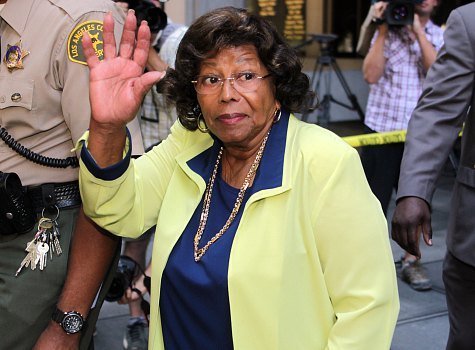
Katherine Jackson is so upset with her children's recent behavior she will not see them, even if it is at another location other than the Calabasas property they are banned from
Last week Janet Jackson broke her silence after weeks of highly-publicized disputes with her relatives over the validity of her late brother Michael’s will.
The singer, in a statement released on behalf of herself and siblings Randy and Rebbie Jackson, claimed the executors of Michael’s will were causing harm by damaging “fundamental family relationships”.
The statement, released through Janet Jackson’s attorney, Blair G Brown, also accused executors John Branca and John McClain of isolating matriarch Katherine Jackson “from anyone questioning the validity of Michael’s will”.
At the start of this month a judge named TJ Jackson, a cousin to Michael Jackson’s three minor children, as co-guardian with Katherine, who was named their sole caretaker in the disputed will.
Janet, Randy and Rebbie Jackson in the statement accused John Branca and John McClain of a “relentless” negative media campaign and said that they were barred from visiting their 82-year-old mother or Jackson’s children, Prince, 15, Paris, 14, and Blanket, 10.
“The effect of that notice not only is to damage fundamental family relationships, it is also to isolate Katherine Jackson from anyone questioning the validity of Michael’s will,” the statement read.
“Since the loss of Michael, Janet, Randy, and Rebbie‘s principal concern has been and continues to be for the safety and well-being of Michael‘s children, their mother Katherine Jackson, and the entire family.
“Unfortunately, those people have been harmed by the actions of the executors of Michael‘s estate, the estate’s lawyer, and those installed and paid to do their bidding,” it continued.
They said they would continue to contest Michael Jackson’s will because “the executors have never explained how Michael could have signed his will in California on a date that irrefutable evidence establishes that he was in New York”.
Representatives for executors John Branca and John McClain released a statement some weeks ago saying: “Any doubts about the validity of Michael’s will and his selection of Executors were thoroughly and completely debunked two years ago when a challenge was rejected by the Los Angeles County Superior Court, the California Court of Appeals and, finally, the California Supreme Court.”
Janet, Randy and Rebbie Jackson said that they will continue to contest Michael’s will, and added, “they stand nothing to gain financially by a finding that the will is invalid”.
“The individuals who have the most to lose by a finding that the will is invalid are, of course, the executors and those on the executors’ payroll.”
The siblings said they would “press forward in their search for the truth in order to carry out the wishes of their brother Michael”.
The Jackson siblings’ statement came days after their mother Katherine was stripped of her guardianship after she was reported missing by a family member following a sudden absence from the Calabasas home she shares with her late son’s children.
Katherine Jackson was determined to be staying at an Arizona resort while Prince and Paris made claims on Twitter they were barred from contacting their grandmother – leading to a driveway dispute between the siblings and their older relatives.
During bizarre scenes Randy, Janet and Jermaine Jackson apparently burst into the home, reportedly demanding that the children come with them to Arizona where their grandmother was staying. Police were called and “two male adults became violent”, according to police officers.
The dispute prompted Katherine Jackson to make a televised statement last week – with Janet, Jermaine, Rebbie, Rebbie’s daughter, and a manager of the resort where she was staying – to reassure the public she was fine.
However, in a court deposition released within days of that interview, she revealed she was unaware the children were trying to reach her, and that her mobile devices were taken during her time away, preventing her from contacting them.
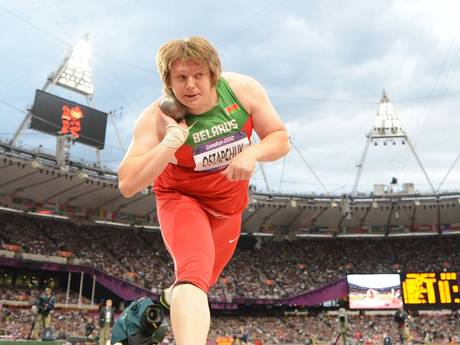
Nadzeya Ostapchuk, women’s shot put Olympic gold medalist, has been stripped of her title after failing a doping test, the International Olympic Committee has announced.
Belarusian Nadzeya Ostapchuk, 31, threw 21.36 m with her third attempt to win in the Olympic Stadium last week.
But Nadzeya Ostapchuk has now been disqualified after officials said metenolone was found in a urine sample she provided.
New Zealand’s Valerie Adams, who was second, has now been awarded gold.
Nadzeya Ostapchuk, women's shot put Olympic gold medalist, has been stripped of her title after failing a doping test
An IOC statement said: “The athlete was first requested to provide a urine sample for a doping control on 5 August.
“She competed the next day in the women’s shot put event, where she placed first, and was asked to provide a sample straight after her competition.
“Both samples indicated the presence of metenolone, which is classified as anabolic agent under the 2012 prohibited list.”
Nadzeya Ostapchuk won gold at the 2010 European Championships, but was second to Adams at the 2011 World Championships.
London 2012 saw the biggest anti-doping operation in the history of the Olympic Games.
Before the start of the Olympics, those competing were warned that 150 scientists were set to take 6,000 samples between now and the end of the Paralympic Games.
Every competitor who won a medal at the Olympics was tested.
British discus thrower Brett Morse apologized to his Twitter followers after accusing Nadzeya Ostapchuk of doping last week.
Brett Morse made the claim after he failed to qualify for the Olympics discus final and also tweeted: “I’ve had a bad day but it could be worse, I could look like Ostaptchuk [sic].”
Syrian rebels have produced footage of a man they claim is the captured pilot of a fighter jet that went down in the east of the country.
The rebel Free Syrian Army (FSA) say they shot a military aircraft down near the Iraqi border.
But state media say the plane crashed because of “technical problems” and a search is under way to find the pilot.
Government forces have continued their advance in Aleppo, with reports of clashes in the west of the city.
According to Syria’s state-run news agency Sana, the plane that went down had suffered a fault with its “control mechanisms” during a routine training mission, forcing the pilot to abandon the aircraft.
Syrian rebels have produced footage of a man they claim is the captured pilot of a fighter jet that went down in the east of the country
The aircraft was shot down near the town of al-Muhassan, around 120 km (75 miles) from the Iraqi border in Deir al-Zour province, the rebels say.
The FSA says that one of the two-man crew died and that another has been captured.
A group calling itself the “Revolutionary Youth of the Land of the Euphrates” uploaded a video to YouTube purporting to show the captured pilot surrounded by three armed rebels, saying that his mission was to “bomb the town of al-Muhassan”.
In the video, which cannot be independently verified, the seemingly middle-aged man identifies himself as a pilot, Col. Fareer Mohammad Suleiman. He appears to have minor bruising to his face which he attributes to the plane crash.
In other footage provided by the rebels, what appears to be a Russian-built MiG-23 fighter jet is shown carrying two under-wing weapons pods thought to be loaded with air-to-ground missiles.
Anti-aircraft fire can be heard before the jet bursts into flames.
Rebel gunners are then heard on the footage celebrating.
If the rebels have succeeded in downing a MiG-23, it would be a significant moment in the conflict.
Reports have emerged recently of anti-aircraft weapons reaching rebels in Syria.
Earlier this week, photos were posted online by rebels showing them with a full surface-to-air missile system. This would pose a potential threat to the regime’s air power, correspondents say.
Meanwhile, activists say government forces have begun a new advance against rebels in Aleppo, Syria’s largest city. Aleppo has seen fierce clashes between the two sides in recent weeks.
Government forces entered the Saif al-Dawla neighborhood with tanks and armored vehicles, according to the UK-based Syrian Observatory for Human Rights.
The strategic northern district of Salah al-Din had been coming under bombardment since the morning, the Observatory said.
State media also said Syrian armed forces in central Homs province had killed a large number of “mercenary terrorists”.
NASA has released the first full color mosaic from its Curiosity rover on the surface of Mars.
Scientists have remarked that the rover’s surroundings resembled parts of the southwestern US.
Curiosity’s ultimate goal is to drive towards a peak – informally known as Mount Sharp – to study its rocks.
NASA has released the first full color mosaic from its Curiosity rover on the surface of Mars
Shown in the mosaic is a section on the crater wall where a network of valleys is believed to have formed through water entering from the outside.
This is the first view scientists have had of a fluvial system – one relating to a river or stream – from the surface of Mars.
Team members are also studying a section looking south of the landing site that provides an overview of the eventual geological targets Curiosity will explore, including the rock-strewn, gravelly surface nearby, a dark dune field and the sedimentary rock of Mount Sharp.
The rover will also study a patch of ground where rocks have been uncovered by the blast of the rockets used on the “sky crane”, which lowered Curiosity to the surface.
Jennifer Aniston got engaged to partner Justin Theroux on Friday, after he popped the question during his birthday celebrations.
Justin Theroux’ spokesperson confirmed to People: “Justin Theroux had an amazing birthday on Friday, receiving an extraordinary gift when his girlfriend, Jennifer Aniston, accepted his proposal of marriage.”
“They’re great friends,” the spokesperson added – a cheeky reference to the sitcom that made Jennifer Aniston famous in the Nineties.
The engagement news comes on the weekend rumors swirled that Jennifer Aniston’s ex-husband Brad Pitt set to be marry Angelina Jolie, his partner of seven years and the mother of his six children, at their French home.
Their romance was infamously shrouded in whispers that they embarked on a relationship while Brad Pitt was still married to Jennifer Aniston – having met on the set of Mr. & Mrs. Smith in 2004.
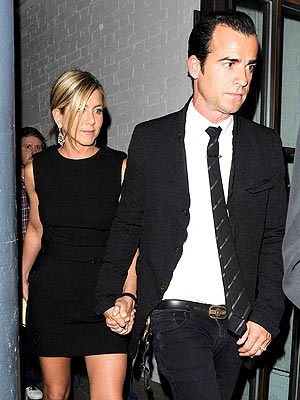
Jennifer Aniston got engaged to partner Justin Theroux on Friday, after he popped the question during his birthday celebrations
However, as news of the wedding has still not been confirmed and insiders are claiming that next weekend is “a far more likely date”, Jennifer Aniston and Justin Theroux have stolen their thunder.
The couple, who has been dating for more than a year, was first seen together in May 2011.
Just two months later, Jennifer Aniston placed her Beverly Hills mansion on the market for $38 million, before buying a palatial LA Bel-Air home with Justin Theroux in January of this year – for a reported $22 million.
Jennifer Aniston, 43, and Justin Theroux, 41, both starred in Wanderlust together, a comedy flop with Paul Rudd about a modern New York couple trying to escape society by moving to a commune in Georgia.
However, while the news will come as a surprise to her fans – it seems that it came as an even bigger one to her father, John Aniston.
The veteran Days of Our Lives actor, 79, was apparently not aware that actor-screenwriter Justin Theroux had proposed to his daughter on the North Carolina set of her new film, We’re the Millers, on August 10.
He told celebrity website Celebuzz: “It’s the first I’ve heard about it. It’s a surprise to me. I’ll have to look online. When I find out more, I guess I’ll tell you!”
When it was explained that Justin Theroux proposed to Jennifer on his birthday, John Aniston added: “It sounds very romantic.”
John Aniston has described Justin Theroux as a “charming young man”, and gave his seal of approval saying: “I think they make a wonderful couple.”
Paolo Gabriele, former butler to Pope Benedict XVI, will stand trial for stealing confidential papers and leaking them to the press, a magistrate has ruled.
Paolo Gabriele was arrested in May after police found confidential documents at his Vatican flat.
He has been charged with aggravated theft while another Vatican employee, a computer analyst, faces complicity charges.
The Vatican says it is continuing to investigate the leaks.
Paolo Gabriele told investigators he acted because he saw “evil and corruption everywhere in the church”, according to Reuters.
If convicted, he faces up to six years in prison.
Paolo Gabriele, former butler to Pope Benedict XVI, will stand trial for stealing confidential papers and leaking them to the press
The Vatican also accuses computer analyst Claudio Sciarpelletti of acting as Paolo Gabriele’s accomplice.
The trial will not take place until October at the earliest, Judge Piero Bonnet has told the press.
Earlier this year a series of media leaks, dubbed “Vatileaks”, exposed alleged corruption and conflicts at the Holy See.
In April, the Pope set up a special commission of cardinals to find the source of the leaks.
As the Pope’s butler and personal assistant, Paolo Gabriele, 46, was one of a select few lay people with access to the papal apartments.
He has been living under house arrest at his family’s Vatican flat, where police discovered a stash of confidential correspondence taken from the Pope’s Secretariat of State.
Paolo Gabriele’s lawyer said his client confessed to stealing the papers but told investigators he thought he was acting in the interests of the Catholic Church.
His arrest took place shortly after the publication of a controversial book, entitled His Holiness, by Italian investigative journalist Gianluigi Nuzzi.
The bestseller featured reproductions of private correspondence between the Pope and his personal secretary discussing corruption and malpractice among Vatican administrators.
The Vatican called the book “criminal” and vowed to take legal action against the author, publisher, and whoever leaked the documents.
Gianluigi Nuzzi has refused to divulge whether Paolo Gabriele was one of his sources.
Some Vatican observers believe Paolo Gabriele may be the scapegoat for a wider conspiracy to smear certain of the Pope’s top aides.
The highly sensitive media leaks have been an evident embarrassment to the Pope, prompting the rare investigation.
The Vatileaks scandal has dominated the columns of Italian newspapers, filling TV programmes and magazines.
The controversy began in January, when Gianluigi Nuzzi published letters from a former top Vatican administrator begging the Pope not to transfer him for having exposed alleged corruption.
Other leaked documents concerned “poison pen” memos criticizing Cardinal Tarcisio Bertone, the pope’s number two, and the reporting of suspicious payments by the Vatican Bank.
Motorola Mobility is to cut 4,000 staff worldwide as part of efforts to return to profitability.
The job losses are the equivalent of 20% of its workforce.
The firm, bought by Google last year, said it planned to close or merge about one third of its 90 facilities which include offices and factories.
US-based Motorola also announced a shift in emphasis away from low-cost non-smartphones to “more innovative and profitable devices”.
Motorola Mobility is to cut 4,000 staff worldwide as part of efforts to return to profitability
Two-thirds of the jobs will go outside of the US, Google said. It expects the cost of severance packages to be $275 million.
“Motorola is committed to helping them through this difficult transition and will be providing generous severance packages, as well as outplacement services to help people find new jobs,” a statement said.
Motorola has lost money in 14 of the past 16 quarters, Google said.
The company, which once dominated the mobile phone market, has fallen behind its competitors, including Apple and Samsung.
According to one industry watcher, Strategy Analytics, Samsung overtook Nokia as the world’s biggest seller of mobile phones earlier this year.
Samsung sold more than 93 million handsets in the first three months of 2012, giving it a 25% market share. By contrast, Motorola said it had sold almost 9 million mobile devices over the same period, including 5.1 million smartphones.
Its most recent financial results showed that Motorola Mobility recorded a loss of $86 million in the first quarter of the year. That was greater than the $81m net loss it made in the same period a year earlier.
Google bought Motorola Mobility last year in a $12.5 billion deal, giving it access to more than 17,000 technology patents.