Friday, January 30, 2026
Home Blog Page 10

Trump Presides Over Historic Thai-Cambodia Border Accord, Claiming Role as Global Pacifier

KUALA LUMPUR, Malaysia— US President Donald Trump stood at the center of a major diplomatic event on Sunday, presiding over the signing of an agreement between Thailand and Cambodia intended to resolve a long-running and recently deadly border conflict.

The event, staged on the sidelines of the annual ASEAN summit in Kuala Lumpur, was immediately hailed by the President as the “Kuala Lumpur Peace Accords” and a “historic agreement to end the military conflict,” which he dramatically claimed could save “millions of lives.”

The formal signing of what the countries’ own premiers called a “joint declaration” by Thai Prime Minister Anutin Charnvirakul and Cambodian Prime Minister Hun Manet marks a significant step toward solidifying a fragile ceasefire brokered in part by the White House earlier this year.


Tariffs and Truces: A New Form of Diplomacy

The White House quickly framed the accord as a major diplomatic victory for President Trump, who is keen to reinforce his image as an unparalleled global dealmaker. The President’s involvement in the détente traces back to the deadliest clashes in decades along the disputed 800-kilometre border in July.

Sources close to the negotiations confirmed that President Trump utilized his trademark economic leverage—specifically the threat of imposing or raising tariffs on both nations—to push the two sides toward a lasting truce.

The agreement signed today expands upon the July ceasefire, establishing concrete steps for de-escalation:

  • Cessation of Hostilities: Both nations committed to ending all armed confrontation in the disputed area.
  • Weapon Withdrawal: An immediate start to the removal of “heavy and destructive weapons and equipment” from the border areas.
  • Prisoner Release: Thailand is set to release 18 detained Cambodian soldiers.
  • Regional Oversight: ASEAN observers, including from host nation Malaysia, will be deployed to monitor compliance.

In a speech following the signing, President Trump lauded his personal involvement. “We did something that a lot of people said couldn’t be done,” he said. “I’m proud to help settle this conflict and forge a future for the region where proud independent nations can prosper and thrive.”

Peace Tied to Prosperity

The peace declaration was immediately followed by a flurry of economic announcements, underscoring the transactional nature of the US engagement in Southeast Asia. The President announced new trade agreements with both nations, including a “major trade deal” with Cambodia and a “very important” critical minerals agreement with Thailand.

The trade component secures crucial supply chain access for the U.S. and ties economic cooperation directly to the maintenance of peace.

While Thai officials were more cautious in their language, with their Foreign Minister calling the document a “pathway to peace” rather than a final peace deal, the political optics were undeniable. The Cambodian Prime Minister, Hun Manet, went as far as to express his gratitude for the President’s “decisive and steadfast actions,” which he said reaffirmed that “peace is always possible.”

For the Trump administration, the Kuala Lumpur signing ceremony serves as a powerful piece of foreign policy spectacle, allowing the President to contrast this diplomatic win with ongoing global trade friction and domestic political disputes. In the eyes of Washington, a long-simmering Southeast Asian conflict has been traded for peace—and a pair of new commercial arrangements.

Trump Slaps Canada with 10% Tariff Hike Over ‘Fraudulent’ Reagan Anti-Tariff Ad

The economic relationship between the United States and Canada plunged into a fresh crisis over the weekend, as President Donald Trump announced an immediate, additional 10% tariff on Canadian imports, citing a political advertisement as a “hostile act.”

The unprecedented escalation was sparked by a television commercial, paid for by the Canadian province of Ontario, which featured a 1987 speech by former Republican icon Ronald Reagan criticizing the economic damage caused by tariffs.

In a fiery post on his Truth Social platform late Saturday, President Trump confirmed the new levy, which is to be applied “over and above what they’re paying now.” The move comes just two days after the President abruptly “ended all trade negotiations” with Ottawa over the same ad.


The Airing of Grievances

The contentious commercial, broadcast on major US networks and reportedly aired during the World Series baseball championship, used excerpts from a Reagan radio address where the former President warned that trade barriers “hurt every American worker and consumer” and risk triggering “fierce trade wars.”

President Trump reacted with palpable fury, accusing the Canadian side of a “serious misrepresentation of the facts” and calling the ad a “FRAUD.”

“Their Advertisement was to be taken down, IMMEDIATELY, but they let it run last night during the World Series, knowing that it was a FRAUD,” the President wrote. He further alleged the ad’s “sole purpose” was to sway the ongoing US Supreme Court review of his administration’s tariff authority.

The Ronald Reagan Presidential Foundation and Institute also weighed in earlier this week, claiming the Ontario government used “selective audio and video” without permission, a statement that the President quickly weaponized in his critique.

Reagan Ontario anti tariff ad

An Alliance Under Attack

The tariff hike immediately sent shockwaves through the North American trade landscape. It is not yet clear precisely which Canadian goods the additional 10% will target, but it promises to further strain a trade relationship already under duress from existing US levies on Canadian steel, aluminum, and autos.

While the majority of cross-border trade remains tariff-free under the USMCA trade agreement, the new duties add another layer of volatility for manufacturers and consumers in both countries.

The Premier of Ontario, Doug Ford, whose government paid for the commercial, had previously announced the ad would be suspended starting Monday to allow trade talks to resume. However, its airing during the high-profile World Series—even after the initial backlash—was clearly interpreted by the White House as an act of diplomatic defiance, directly resulting in the punitive tariff escalation.

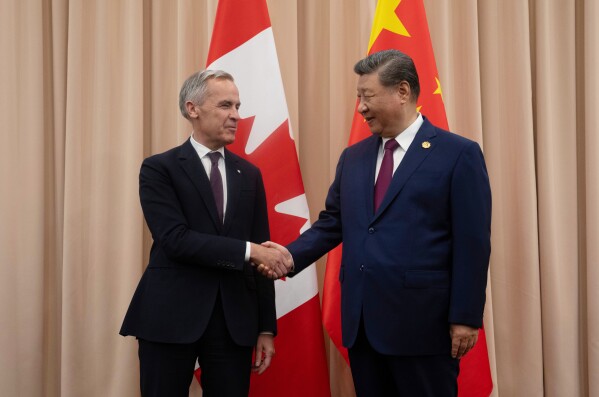
Canadian Prime Minister Mark Carney, who had expressed a readiness to resume constructive discussions, offered a measured response, stating that Canada must remain focused on trade diversification. “We cannot control the trade policy of the United States,” he said, emphasizing that his government remains prepared to re-engage when American officials are ready.

Yet, as the US-Canada relationship is now openly dictated by public opinion and political messaging—even the ghost of a Republican predecessor—the immediate future of North American commerce remains entirely beholden to the whims of presidential irritation. The latest tariff volley confirms that, in the current climate, even a one-minute commercial can become the equivalent of an act of economic war.

Louvre’s Remaining Crown Jewels Secretly Relocated to Bank of France After $102 Million Daylight Heist

PARIS— In a move of unprecedented urgency and secrecy, the Louvre Museum has quietly transferred its remaining collection of priceless jewels to the subterranean, ultra-secure vaults of the Bank of France, just days after a brazen daylight heist exposed what officials now admit were “woeful flaws” in the museum’s security apparatus.

The clandestine operation, carried out under heavy police escort late Friday, saw the un-stolen artifacts from the famed Galerie d’Apollon—home to the French Crown Jewels—whisked a mere 500 meters across the Right Bank of the Seine. Their new home is the central bank’s “Souterraine,” a massive, multi-level bunker 88 feet beneath the streets of Paris that famously houses 90% of France’s gold reserves.

The decision underscores a national crisis of confidence in the security of France’s cultural heritage, following the stunning October 19th robbery in which masked thieves made off with eight historical pieces, including items belonging to Empress Eugénie and Empress Marie-Louise, with an estimated value of $102 million.


The Shame of the Smash-and-Grab

The robbery was a cinematic humiliation for the world’s most-visited museum. Operating in broad daylight, the thieves used a truck-mounted mechanical lift to reach a first-floor window, then used an angle grinder to smash through a reinforced barrier. They were in and out in less than four minutes, a stunning speed that allowed them to bypass all immediate security responses and escape on motorbikes.

Louvre Director Laurence des Cars, facing intense public and political scrutiny, had already testified to lawmakers that the security system was plagued by “aging infrastructure” and “known and identified weaknesses.” Crucially, she admitted that the only security camera covering the exterior wall where the break-in occurred was pointed in the wrong direction, leaving the thieves an unmonitored blind spot.

The brazen efficiency of the heist, which one lawmaker branded “shameful for our country,” left the French government with one non-negotiable directive: protect what remains at all costs.

Louvre museum

An Impenetrable New Home

The transfer to the Bank of France—a highly guarded fortress that has long been a symbol of national fiscal stability—is a drastic but necessary measure. The Souterraine vault is considered one of the most secure places on earth, protected by a seven-ton, flame-resistant concrete door reinforced with steel, and a rotating 35-ton turret designed to prevent any forced entry.
By moving the jewels from the Apollo Gallery, a public exhibition space, to a national treasury vault, the French state is essentially declaring that the historical value of these assets far outweighs their immediate public display value. The move also highlights the unique risk profile of the Louvre, a former royal palace with vast perimeters and an inordinate daily flow of human traffic.

Investigators, meanwhile, remain locked in a “race against time” to recover the stolen objects, now analyzing over 150 DNA, fingerprint, and trace samples left at the crime scene. While they hold a “small hope” of catching the perpetrators before the jewels are disassembled and melted down for their raw materials, the official transfer of the remaining collection serves as a grim acknowledgement of the vulnerability of France’s artistic patrimony.

The treasures may have survived wars and revolutions in their centuries-long history, but a mere eight minutes of modern-day audacity was enough to send them from a museum floor to a bunker deep within the heart of the Republic’s financial might. Their return to public display, authorities concede, is now an open question.

“I Am Not Done”: Kamala Harris Leaves White House Door Open, Setting the Stage for a 2028 Democratic Duel

Former Vice President Kamala Harris has dropped the strongest hint yet of a third bid for the White House, declaring, “I am not done,” as she enters a new phase of political life following her 2024 defeat.

In a highly anticipated interview with the BBC on her international book tour, Harris left the door deliberately ajar for a 2028 presidential run, setting the stage for what is expected to be a wide-open, and potentially brutal, Democratic primary contest.

Asked if her grandnieces would see a woman president in their lifetime, Harris was unequivocal: “In their lifetime, for sure.” When pressed on whether that woman could be her, she simply replied: “Possibly.”

The comments confirm that, despite her loss in the last election, the former Vice President views herself as a central—if not the defining—figure in the Democratic Party’s post-Trump future.


The Path Through the Polls

Harris’s latest remarks arrive amidst the launch of her memoir, 107 Days, a candid account of her abbreviated 2024 campaign. The book tour has provided her with a crucial platform to reintroduce herself to the public, clarify her role in the circumstances that led to her nomination, and, crucially, signal her next move.

She was quick to dismiss early polls for the 2028 primary, which currently place her behind several potential rivals, including California Governor Gavin Newsom and even some unexpected celebrity names.

“I have never listened to polls,” Harris shot back. “If I listened to polls I would have not run for my first office, or my second office – and I certainly wouldn’t be sitting here.”

This defiance is a necessary shield. Within the Democratic base, the conversation about her future is complex. While her historic role as the first female Vice President is undeniable, the party has yet to conduct a full, unifying post-mortem on the 2024 loss, and many are eager for a clean break from the past. Harris, therefore, represents both the potential ceiling of the party’s progressive ambitions and the weight of its recent electoral disappointments.

Kamala Harris
Image source: Wikimedia Commons

The Looming Primary Battle

The former Vice President’s hint of a 2028 run officially draws a line in the sand for a rapidly coalescing field of Democratic contenders.

Harris’s decision earlier this year to forego a run for Governor of California had already cleared her calendar for a national effort, passing up a near-certain victory in her home state to keep her White House ambitions alive.

She is now poised to face a formidable challenge from within her own party. Governor Newsom, a rival with a high national profile, has been aggressively testing the waters and building a network of support. Other prominent figures, including term-limited state leaders and young Congressional stars, are also maneuvering for position.

The 2028 primary is shaping up to be an ideological and generational debate over the Democratic Party’s identity, and Harris—the former prosecutor and centrist-progressive—will have to prove she can unite its disparate wings and articulate a compelling vision that moves beyond the trauma of the previous cycle. Her current book tour is the opening volley in a campaign that may already be underway, a direct challenge to any Democrat who might believe her time is past.

As the former Vice President makes clear, she may have lost the last battle, but she has no intention of ceding the war.

Trump’s Urgent Gambit to Enlist China in the Ukraine Peace Push

ON BOARD AIR FORCE ONE— In a significant diplomatic maneuver that underscores Washington’s growing frustration with the stalled Ukraine peace process, President Donald Trump has publicly appealed to Chinese President Xi Jinping to leverage Beijing’s “very big influence” to push Russia toward a negotiated settlement.

As he embarked on a crucial trip to Asia, culminating in a meeting with the Chinese leader, the President recast Beijing—long viewed by the West as an enabler of Moscow’s war effort—as a potential off-ramp provider for Vladimir Putin.

“I’d like China to help us out with Russia,” President Trump told reporters, adding that he has a “very good relationship with President Xi” and believes the Chinese leader “can have a big influence on Putin.” The remarks signal a tactical pivot by the Trump administration, acknowledging that the path to ending the bloody, multi-year conflict may run not through Moscow alone, but through its most powerful ally.


The Diplomatic Deadlock

The White House’s increasingly open reliance on Beijing’s potential influence comes on the heels of several diplomatic setbacks. The President has expressed deep frustration that his personal rapport with President Putin has failed to translate into concrete peace movement. Just days ago, a planned summit with the Russian leader was scuttled, with the administration signaling a “wasted meeting” was not an option.

This disappointment has been followed by the imposition of the administration’s first direct sanctions on major Russian oil companies, a significant financial squeeze designed to increase the cost of the war for the Kremlin. The President’s new strategy appears to be a two-pronged approach: economic pressure on Moscow, paired with high-level diplomatic pressure from Beijing.

The logic is evident: China remains Russia’s indispensable economic lifeline. Its soaring purchases of discounted Russian energy and its supply of critical dual-use materials have cushioned the Kremlin from the full impact of Western sanctions. This massive trade relationship is seen by Washington as Beijing’s ultimate leverage.

China US

The Problem of “Pro-Russian Neutrality”

The effectiveness of the Trump administration’s China appeal, however, is heavily debated in capitals from Kyiv to Brussels.

China has consistently maintained a stance of “neutrality,” while simultaneously deepening its “no-limits partnership” with Russia. Top Chinese officials have even been quoted privately expressing a desire not to see Russia lose, fearing that a swift Russian collapse would allow the United States to shift its full strategic focus toward Asia.

For Beijing, cooperating with Washington to halt the war is a diplomatic high-wire act. On one hand, brokering a high-profile peace deal would elevate China’s status as a global superpower and responsible actor. On the other, overtly forcing Putin’s hand risks damaging its relationship with a crucial strategic partner that shares Beijing’s goal of challenging the U.S.-led international order.

A Deal for Peace, or a Deal for Trade?

The upcoming meeting between President Trump and President Xi is nominally focused on resolving the contentious trade war, with the threat of severe, looming tariffs on Chinese goods hanging over the negotiations.

This backdrop creates a transactional dynamic in the talks: Could Washington offer concessions on trade or tariffs in exchange for a meaningful Chinese commitment to press the Kremlin?

For President Trump, a quick, negotiated end to the conflict—a goal he promised to achieve on the campaign trail—would be a monumental foreign policy win. The question facing Mr. Xi is whether that win is worth expending the hard-won leverage he holds over his ally in Moscow.

The price of peace in Ukraine, it seems, will be negotiated not in Kyiv or Moscow, but in the tense, high-stakes summit rooms of Asia, with the world watching to see if Beijing will finally move from bystander to indispensable broker.

How Record US Beef Prices Became the New Political Barometer

In the labyrinth of American politics, few issues cut as sharply as the cost of a basic dinner staple. Today, that staple is beef, and its searingly high price has jumped from an uncomfortable grocery expense to a full-blown political liability, forcing the administration into an emergency market intervention that has enraged a core domestic constituency: the American cattle rancher.

The latest Bureau of Labor Statistics data shows beef prices soaring, with some cuts up nearly 15% year-over-year. For the average American consumer, the cost of ground beef has become a daily reminder of stubborn inflation, transforming the humble backyard burger into a flashpoint for economic anxiety.


The Perfect Storm: A 70-Year Supply Squeeze

The primary driver of the crisis is a classic supply-and-demand mismatch, catalyzed by a confluence of long-term and recent shocks.

1. The Smallest Herd Since 1951

The U.S. cattle inventory is currently at its lowest level in over seven decades. This dramatic contraction is the result of years of punishing drought across the Great Plains, which forced ranchers to sell off their herds, including breeding stock, simply because they couldn’t afford the skyrocketing cost of feed.

  • Drought and Input Costs: Persistent drought conditions have withered grazing pastures, forcing producers to buy expensive supplemental feed. This, coupled with general inflation driving up the cost of fuel, labor, and interest rates, made it economically rational for many to reduce their herds or leave the business entirely.
  • The Cattle Cycle Lag: Rebuilding the national herd is not a quick fix. It takes years for a cow to produce a calf, and another 18-24 months for that calf to reach market weight. Experts warn that high prices will likely persist for the next two to three years until herd expansion stabilizes the market.

2. Tariffs and Trade Turbulence

Adding complexity to the supply shortage are new tariffs on beef imports from key trading partners like Brazil. The U.S. relies heavily on imported lean beef trimmings to mix with domestic fattier beef for ground products. Tariffs increase the cost of these imports, directly driving up the price of one of the most popular and price-sensitive meats: ground beef.


The Political Response: An Emergency Import Gambit

Facing intense public criticism over grocery costs, the White House has chosen to bypass the slow, natural pace of the agricultural cycle with a bold, controversial political play: dramatically increasing low-tariff beef imports from Argentina.

The administration’s argument is simple: flood the market with foreign supply to ease price pain for consumers.

This move, however, has ignited a fierce political backlash from the National Cattlemen’s Beef Association (NCBA) and influential Republican lawmakers.

  • Rancher Fury: Domestic producers view the import boost as a direct threat, arguing that flooding the market with foreign beef will “undermine” U.S. cattle prices just as they are finally realizing profits after years of financial struggle and weather-related losses. They contend that the move is an attack on the American farmer and will do little to lower prices due to the limited volume of the imports.
  • Market Manipulation Accusations: Critics, including prominent agricultural economists, have cautioned the administration to “let the market work,” arguing that high prices are necessary right now to incentivize the long-term herd expansion that will eventually bring costs down. Intervening to artificially lower prices, they warn, will only prolong the scarcity.

The debate over the Argentine beef deal underscores the central political tightrope: balancing the consumer’s immediate desire for relief at the checkout line with the long-term health and stability of the American agricultural producer.

The price of beef is no longer just an economic indicator; it has become a powerful political symbol, capable of moving the needle in upcoming elections and highlighting the unpredictable trade-offs of an inflation-wracked economy. For the moment, Americans will continue to pay The Butcher’s Bill, with the hope that the costly cut will eventually lead to a calmer, more affordable market.

Reagan’s Ghost Haunts Trade Talks: The Canadian Ad That Drove the U.S. to the Brink

The fragile trade negotiations between the United States and Canada, already fraught with tension over escalating tariffs, have been spectacularly derailed by an unexpected adversary: the ghost of a Republican icon.

Late Thursday night, the U.S. abruptly “terminated” all trade talks with its northern neighbor, citing an anti-tariff television advertisement funded by the Canadian provincial government of Ontario. The ad’s offense? It featured the voice of former President Ronald Reagan, a hero to many U.S. conservatives, speaking out forcefully against the very trade barriers central to the current administration’s policy.

The Contentious Core: Reagan’s Own Words

The ad, a one-minute spot paid for by Ontario’s Progressive Conservative government under Premier Doug Ford, was launched to sway American public opinion, particularly among Republican voters, against U.S. tariffs on Canadian goods like steel, aluminum, and autos.

Its dramatic centerpiece is audio taken from Reagan’s April 1987 “Radio Address to the Nation on Free and Fair Trade.” Set against images of American workers, families, and cargo ships, the ad quotes Reagan warning starkly of the dangers of protectionism:

  • “When someone says: ‘Let’s impose tariffs on foreign imports,’ it looks like they’re doing the patriotic thing… And sometimes, for a short while it works, but only for a short time.”
  • “But over the long run, such trade barriers hurt every American worker and consumer.”
  • “High tariffs inevitably lead to retaliation by foreign countries and the triggering of fierce trade wars… Then the worst happens. Markets shrink and collapse. Businesses and industries shut down, and millions of people lose their jobs.”

The quotes themselves are authentic, directly lifted from Reagan’s speech. However, the controversy—and the trigger for the diplomatic meltdown—lies in the context and editing.

The “Fake” or the “Inconvenient Truth”?

Upon the ad’s wide distribution across U.S. television networks, President Donald Trump unleashed a furious social media broadside, declaring the advertisement “FAKE” and announcing, “ALL TRADE NEGOTIATIONS WITH CANADA ARE HEREBY TERMINATED.” He accused Canada of “fraudulently” using the ad in an attempt to influence U.S. Supreme Court decisions regarding the legality of his global tariffs.

The Ronald Reagan Presidential Foundation & Institute quickly issued a statement supporting the President’s anger, claiming the ad used “selective audio and video” and “misrepresents” Reagan’s address. The foundation also stated that the Ontario government did not seek permission to use the former president’s voice and image.

Fact-checkers and critics, however, were quick to point out that the ad’s quotes, though spliced together for brevity, were Reagan’s actual words from a speech that championed free trade and warned extensively against the dangers of protectionism, particularly recalling the Smoot-Hawley tariffs that exacerbated the Great Depression.

The core of the “misrepresentation” claim appears to be what the ad left out: the fact that Reagan delivered the 1987 speech to explain his reluctant decision to impose limited, targeted duties on certain Japanese products in response to a specific, alleged violation of a trade agreement. By focusing solely on Reagan’s powerful warning against broad protectionism, the Canadian ad framed the former president as an unequivocal opponent of all tariffs, challenging the current administration’s foundational trade philosophy.

A $75 Million Campaign Pays Off—A Little Too Well

The $75 million advertising campaign, targeting Republican districts in the U.S., was explicitly designed to leverage the powerful free-trade tradition within the Republican party against the administration’s more protectionist stance.

Ontario Premier Doug Ford, a conservative with a populist streak who has often sparred with Ottawa, defended the move, saying the goal was to “initiate a conversation” with the American people about the impact of tariffs on jobs and businesses.

The campaign has certainly achieved its goal of reaching the highest levels of the U.S. government, albeit at the catastrophic cost of freezing immediate trade talks. As Washington and Ottawa grapple with the fallout, the voice of the 40th U.S. President has unexpectedly become the central player in a 21st-century transatlantic trade war.

Ontario Pulls Reagan Anti-Tariff Ad After Trump Terminates Canada Trade Talks

In a significant concession aimed at salvaging fractured trade relations, the government of Ontario has announced it will suspend the controversial anti-tariff advertising campaign in the United States that enraged President Donald Trump and led to the abrupt termination of all trade negotiations with Canada.

Ontario Premier Doug Ford confirmed late Friday that the multi-million-dollar ad buy—which featured the voice of former Republican President Ronald Reagan denouncing protectionism—would be “paused” starting Monday to allow diplomatic channels to reopen.

The Trade War of Words

The move is a direct response to President Trump’s fiery declaration late Thursday that he was “terminating” all trade talks with Ottawa. On his Truth Social platform, Trump attacked the campaign as “FAKE” and “fraudulent,” and claimed it was an attempt to “illegally influence” an upcoming U.S. Supreme Court ruling on the legality of his sweeping global tariffs.

The one-minute spot, which the Ontario government reportedly paid up to $75 million to air widely across U.S. networks, particularly targeting Republican audiences, spliced together quotes from a 1987 Reagan radio address. In the excerpts, Reagan warned that “high tariffs inevitably lead to retaliation… and the triggering of fierce trade wars,” causing “markets shrink and collapse.”

The Reagan Presidential Foundation quickly complicated the narrative, issuing a statement that the ad “misrepresents” the late president’s remarks by using selective audio and confirming that no permission was sought to use or edit the address.

Mission Accomplished, Or Capitulation?

Premier Ford framed the decision as a successful completion of the campaign’s objective, rather than a forced retreat. “Our intention was always to initiate a conversation about the kind of economy that Americans want to build and the impact of tariffs on workers and businesses,” Ford wrote in a social media post. “We’ve achieved our goal, having reached U.S. audiences at the highest levels.”

Despite the decision to pause, Ford ordered the ads to run through the weekend, ensuring they would air during the first two games of the Major League Baseball World Series—a final, high-profile blast of the message to American viewers.

The aggressive, and ultimately costly, gambit by the leader of Canada’s most populous province marks a dramatic episode in the escalating trade war between the two staunch allies. While Canadian federal officials, led by Prime Minister Mark Carney, have maintained a calmer public posture, the Ontario ad was the most direct, high-stakes attempt by a Canadian politician to appeal over the President’s head to the American public.

Prime Minister Carney, who spoke with Ford before the decision was announced, stated Friday that Canada remains “ready to pick up” on negotiations “when the Americans are ready.”

Meanwhile, White House officials have dismissed the ad as the latest example of Canadian officials “playing games” rather than engaging constructively on trade. For now, the suspension of the controversial campaign is the first concrete step toward de-escalation, but it leaves the future of U.S.-Canada trade talks in a state of precarious limbo.

US Deploys World’s Largest Warship to Caribbean, Escalating Anti-Drug Campaign

In a dramatic escalation of the U.S. government’s campaign against drug trafficking, the USS Gerald R. Ford, the world’s largest and most advanced aircraft carrier, has been ordered to deploy to the waters off South America. The move, announced by the Pentagon, injects unprecedented military firepower into a region already experiencing an aggressive surge of American naval assets and targeted strikes against suspected narco-vessels.


A Massive Military Buildup

Defense Secretary Pete Hegseth directed the Ford Carrier Strike Group—a nuclear-powered supercarrier carrying its air wing and escorted by multiple destroyers—to move into the U.S. Southern Command (USSOUTHCOM) area of responsibility, which covers the Caribbean Sea and surrounding waters.

The official mandate is clear: to “detect, monitor, and disrupt illicit actors and activities” and to “degrade and dismantle” Transnational Criminal Organizations (TCOs). The Ford, a first-in-class supercarrier, will join an armada of U.S. vessels already assembled in the region, including destroyers, cruisers, and an amphibious ready group carrying thousands of Marines.

This deployment marks a significant shift, moving from traditional Coast Guard-led interdiction efforts to a full-scale military campaign likened by some administration officials to the post-9/11 “war on terror.”


Lethal Strikes and Political Tension

The deployment of the naval behemoth comes amid a recent flurry of lethal U.S. military strikes against suspected drug-smuggling boats in the Caribbean and Eastern Pacific.

  • Targeted Attacks: Since the campaign began, U.S. forces have conducted at least ten strikes against alleged narco-boats, resulting in the deaths of more than 40 individuals. The administration has explicitly linked some of these operations to the Tren de Aragua gang, which it has designated a foreign terrorist organization.
  • Legal Justification: The administration has sought to justify the use of lethal military force by informing Congress that it considers the cartels to be engaging in an “armed attack against the United States,” effectively labeling drug traffickers as “unlawful combatants.” This legal positioning has drawn immediate scrutiny and criticism from lawmakers and legal experts.
  • A “Next Phase”: The deployment suggests an intent to expand the scope of operations beyond maritime interdiction. President Donald Trump recently indicated that the next phase of the campaign would target the drug groups “on the ground,” suggesting potential land-based strikes—a major escalation.

Pacific narco boat

Tensions Mount with Regional Neighbors

The massive concentration of U.S. military hardware has dramatically raised the political temperature in the Western Hemisphere. The deployment is taking place near Venezuela, whose President Nicolás Maduro has been charged by the U.S. with “narcoterrorism.”

Venezuelan officials have denounced the military buildup, claiming it is merely a pretext for intervention or an attempt to destabilize the government. In response to earlier naval presence, the Venezuelan military reportedly flew supersonic fighter jets near a U.S. warship in a provocative show of force.

Analysts note that the presence of the Ford and its fighter jets provides the U.S. with vastly increased air superiority and strike capability, giving the administration options that go far beyond drug interdiction and fueling speculation that the broader objective is to exert maximum pressure on the Venezuelan regime.

The arrival of the world’s largest warship signals that the fight against transnational crime in the Caribbean has entered a new, far more aggressive, and politically charged chapter.

NBA Insiders, X-Ray Tables, and the Mafia: Inside the ‘Mind-Boggling’ Poker Fraud Scandal

A sprawling federal indictment has peeled back the curtain on a truly stunning gambling operation, revealing a conspiracy that allegedly combined National Basketball Association (NBA) star power, the brutal enforcement of the Mafia, and a cache of high-tech cheating equipment straight out of a Hollywood heist movie. Prosecutors have described the multi-million-dollar scheme as “mind-boggling,” a financial pipeline that used deception and gadgetry to fleece unsuspecting high-rollers.


The High-Tech Heist at the Poker Table

The core of the alleged fraud centers on underground, high-stakes poker games across the U.S.—from New York to Las Vegas—where wealthy victims, known to the operators as “fish,” were lured in with the promise of rubbing shoulders with celebrity “face cards.” These ‘face cards’ allegedly included Portland Trail Blazers head coach Chauncey Billups and former NBA player and coach Damon Jones.

Unbeknownst to the targets, the games were meticulously rigged using sophisticated technology:

  • X-Ray Tables: Some tables were reportedly fitted with X-ray technology that could read face-down cards, providing the conspirators with perfect knowledge of the victims’ hands.
  • High-Tech Glasses: Players on the inside allegedly wore specially designed contact lenses or glasses capable of reading pre-marked cards, giving them an unprecedented advantage.
  • Rigged Shuffling Machines: Authorities claim that automatic shuffling machines were tampered with to scan the deck, determine the exact order of the cards, and wirelessly transmit this information to an off-site operator. This operator would then relay the winning-hand information back to a co-conspirator at the table, who would communicate it to the team using subtle, pre-arranged signals, like touching specific poker chips.

The cheating technology, also including cameras built into chip trays, allowed the ring to consistently siphon off huge sums, defrauding victims of at least $7 million.


NBA Figures and Mob Ties

The investigation, which has resulted in the arrest of over 30 individuals, draws a stark connection between professional basketball and notorious organized crime. Members and associates of multiple New York Mafia families—including the Bonanno, Gambino, and Genovese crime families—allegedly backed the poker operation, taking a cut of the winnings and providing “muscle” to intimidate or physically threaten debtors to ensure repayment.

The roles of the high-profile NBA figures were critical:

  • Chauncey Billups is accused of participating in the rigged poker games as a “face card,” lending a veneer of legitimacy and celebrity appeal to attract victims.
  • Damon Jones is charged with acting as both a “face card” in the poker scheme and a key figure in a separate, related sports betting plot.

The Insider Betting Ring

The indictment also unsealed allegations of a separate, but connected, wire fraud scheme focused on manipulating bets on NBA games using insider information.

Miami Heat guard Terry Rozier is among those charged in this scheme. Prosecutors allege that players or coaches, including Rozier, would pass on non-public, confidential information about player injuries or availability to a network of professional bettors. One key example cited is an incident involving Rozier, then with the Charlotte Hornets, who allegedly informed co-conspirators of his plan to leave a 2023 game early due to a fabricated injury. This allowed the bettors to place large wagers on his low statistical output, netting significant profits.

The sheer audacity and technological sophistication of the fraud have placed the integrity of one of the world’s most prominent sports leagues into serious question. Both Billups and Rozier have been placed on immediate leave by the NBA as the league cooperates fully with the federal investigation, which FBI Director Kash Patel noted is “reminiscent of a Hollywood movie.” The charges now cast a dark shadow over the start of the NBA season, with athletes facing serious charges of wire fraud and money laundering conspiracy.

JD Vance Calls West Bank Annexation Vote a “Stupid Political Stunt” and “Insult”

JERUSALEM — The Trump administration delivered an unusually sharp public reprimand to Israel’s parliament this week after lawmakers passed a preliminary, symbolic vote in favor of annexing the occupied West Bank. Vice President JD Vance declared the move an “insult” to U.S. policy, while Secretary of State Marco Rubio warned that such steps could jeopardize the fragile ceasefire deal in Gaza.

The condemnations, issued during a high-stakes diplomatic visit by top U.S. officials, underscore the intense pressure Washington is exerting on its closest ally to avoid any action that could destabilize the region or derail efforts to reconstruct Gaza.


Vance: “I Personally Take Some Insult To It”

Vice President Vance, wrapping up his two-day visit to Israel, minced no words regarding the Knesset’s vote, which was spearheaded by far-right, hardline lawmakers in what was widely seen as a deliberate attempt to embarrass Prime Minister Benjamin Netanyahu.

Speaking on the tarmac of Tel Aviv’s international airport, Vance stressed the administration’s red line.The policy of the Trump administration is that the West Bank will not be annexed by Israel,” he stated firmly. “That will continue to be our policy. And if people want to take symbolic votes, they can do that, but we certainly weren’t happy about it.”

He went further, calling the measure a “very stupid political stunt” if its only intention was to sow discord. “I personally take some insult to it,” Vance added, highlighting the administration’s deep investment in securing the Gaza ceasefire and setting the groundwork for an international stabilization force.


Rubio Warns of Threat to Peace Deal

Vance’s strong language was immediately echoed by Secretary of State Marco Rubio, who arrived in Israel shortly after the Vice President’s departure to continue efforts to shore up the peace accord.

Rubio warned that the Knesset’s move was “potentially threatening to the peace deal” and could be “counterproductive” to the broader goal of stability. He stressed that while Israel is a democracy and lawmakers are free to take positions, the timing and substance of the vote risked undermining the entire diplomatic effort.

The U.S. opposition is driven by two critical concerns:

  1. Two-State Solution: Annexing the West Bank, a territory the Palestinians seek for a future independent state, would be widely viewed as eliminating any hope for a two-state solution, a policy goal supported by much of the international community.
  2. Arab Allies: The U.S. is currently seeking financial and logistical support from key Gulf Arab nations—including Saudi Arabia and the UAE—to fund and staff the post-war reconstruction and security force in Gaza. These nations have explicitly warned that Israeli annexation of the West Bank is a “red line,” making it nearly impossible for them to cooperate with a Washington-led initiative.

Netanyahu Orders Halt to Annexation Bills

The diplomatic pressure appears to have worked, at least for now. Following the vocal criticism from the White House, Prime Minister Netanyahu ordered a halt to the advancement of the controversial parliamentary bills.

Netanyahu’s office released a statement calling the Knesset’s vote a “deliberate political provocation” by the opposition. Although the move passed its preliminary reading with a narrow 25-24 margin, it would have required three additional votes to become law, a process that is now blocked by the Prime Minister.

The push for annexation reflects a deep internal rift within Israel’s ruling coalition, but the firm response from Washington makes clear that domestic politics will be quickly trumped by the administration’s resolve to maintain the fragile peace.

NBA Court of Corruption: Coach and Star Player Among 30 Arrested in FBI’s Sweeping Mafia-Linked Gambling Crackdown

In a devastating blow to the integrity of professional basketball, the FBI announced the arrests of more than 30 individuals, including a current NBA head coach, an All-Star guard, and a former player, on charges related to illegal gambling, sports-betting corruption, and a massive criminal network with ties to the Mafia.

The operation, which the FBI Director Kash Patel called “historic,” has exposed two separate but overlapping schemes: one involving the rigging of high-stakes, underground poker games, and another focused on exploiting confidential NBA insider information for illicit sports betting profits.

Among the high-profile defendants are:

  • Chauncey Billups, Head Coach of the Portland Trail Blazers and an NBA champion, charged in connection with operating illegal poker games allegedly backed by members of three notorious New York organized crime families—the Bonanno, Gambino, and Genovese families.
  • Terry Rozier, Guard for the Miami Heat, charged in a scheme to use non-public, “insider information” to influence player prop bets, including allegations that he faked an injury to benefit the betting ring.
  • Damon Jones, a former NBA player and assistant coach, also arrested and accused of having overlapping roles in both the sports-betting conspiracy and the Mafia-linked poker ring.

The Rigged Game: Insider Trading on the Hardwood

The charges against Rozier are particularly alarming to the league, which has already been grappling with the fallout from the Jontay Porter betting scandal. U.S. Attorney Joseph Nocella Jr. described the sports betting scheme as “one of the most brazen sports corruption schemes” since the rise of legalized betting.

Rozier and his co-conspirators allegedly had access to private information from players and coaches—such as injury details, lineup changes, and strategic plays—and then sold that knowledge to bettors for a cut of the profits.

A specific example cited by federal officials focuses on a March 2023 game where Rozier, then with the Charlotte Hornets, suddenly left the contest citing a foot injury. That departure, which effectively “killed” his player performance metrics, coincided with a massive, coordinated surge of bets on the ‘under’ for his statistical props, netting the ring thousands of dollars.

The Mob’s Grip: Billups and the Underground Poker Ring

In a separate indictment that echoes Cold War-era tales of organized crime infiltrating American sports, Head Coach Chauncey Billups, who had just coached the Trail Blazers in their season opener on Wednesday, was arrested for his alleged involvement in an underground poker operation.

According to the U.S. Attorney’s office, the operation utilized high-tech cheating technology to secretly fix games, robbing millions from unsuspecting victims. The indictment explicitly links the profits generated from the games in cities like Manhattan, Miami, and Las Vegas to the coffers of three major New York Mafia families. Both Billups and Jones were allegedly compensated for their participation.

The timing of the arrests—at the very start of the 2025-26 NBA season—appears carefully calculated to send a powerful message about the gravity of the case. Federal authorities emphasized that the criminal enterprise spanned years and involved “tens of millions of dollars in fraud.”

The NBA has yet to issue a formal statement, but the sheer scope of the investigation places the league under intense scrutiny. This latest crisis underscores the perilous intersection of professional sports, the multi-billion-dollar legal gambling industry, and the persistent threat of organized crime, forcing the league to immediately confront a massive internal breach of trust.

As federal authorities promise more names will be announced, the question is no longer who is gambling illegally, but how deeply the corruption has spread.

Trump Slaps Sanctions on Russian Oil Giants, Shelves Putin Summit

President Donald Trump, citing exasperation with the stalled process to end the war in Ukraine, imposed what he called “tremendous sanctions” on Russia’s two largest oil companies, a dramatic policy shift that came just a day after he cancelled a planned summit with Vladimir Putin.

The U.S. Treasury Department on Wednesday announced sanctions targeting Rosneft and Lukoil, a move Secretary Scott Bessent stated was necessary due to Russian President Vladimir Putin’s “refusal to end this senseless war.” The measures are designed to choke off a vital revenue stream—oil sales—that has funded the Kremlin’s military operations.

Speaking from the Oval Office, President Trump expressed his mounting frustration with his Russian counterpart.

“We cancelled the meeting with President Putin. It just, it didn’t feel right to me. It didn’t feel like we were going to get to the place we have to get,” Trump said, referring to a proposed summit in Budapest. “In terms of honesty, the only thing that I can say is, every time I speak with Vladimir, I have good conversations and then they don’t go anywhere. They just don’t go anywhere.”

The End of ‘Good Conversations’

The new sanctions mark a sharp departure from the administration’s previous reluctance to directly target Russia’s core energy sector. For months, the White House had held off on such comprehensive measures, relying on trade tariffs and diplomatic pressure in an attempt to broker a peace deal.

However, a week of intense, high-stakes diplomacy appears to have collapsed. The planned meeting in Budapest—which had already unnerved European allies fearful of a deal that would grant Moscow undue concessions—was abruptly put on hold after preparatory talks between the U.S. and Russian foreign ministers stalled.

The Treasury Department’s action blocks all U.S. assets of Rosneft and Lukoil, preventing American companies and citizens from conducting business with them. This financial pressure is widely seen as the strongest punitive step taken by the Trump administration against Moscow in the three-and-a-half-year conflict.

Image NBC News

A New Chapter of Coercion

Treasury Secretary Bessent, calling the sanctions “one of the largest” packages against the Russian Federation, stated the U.S. was “prepared to take further action if necessary” and encouraged allies to join the effort. The announcement coincided with the European Union approving its own 19th sanctions package, which included a ban on Russian liquefied natural gas (LNG) imports.

The move is a clear pivot from diplomacy to economic coercion, signaling a loss of patience from a president who has repeatedly touted his personal relationship with the Russian leader as the key to ending the war.

The administration is now hoping that this “tremendous” economic pressure will compel President Putin to abandon his maximalist demands and negotiate a ceasefire that is viewed as equitable by the international community.

“We hope that the war will be settled,” President Trump concluded, adding that he hoped the sanctions would be “swiftly withdrawn” if Russia agreed to end the fighting. But for now, the path to peace appears to have traded the negotiating table for the financial battlefield.

Trump Demolishes White House East Wing Façade to Build Grand Ballroom

In one of the most drastic physical alterations to the White House in decades, demolition crews have begun tearing down a section of the historic East Wing to make way for President Donald Trump’s long-desired, multi-million dollar “White House Ballroom.”

Images of excavators ripping into the 1942-era structure—the traditional home of the First Lady’s office and the main visitors’ entrance—have sparked immediate outrage from preservationists and political rivals, who decry the move as an “utter desecration” of a national landmark.

The President confirmed the start of the controversial $250 million project on his social media platform, announcing that “ground has been broken” on the “new, big, beautiful White House Ballroom.” He claimed the idea of such a space has been a presidential dream for over 150 years and vowed it would be completed at “zero cost to the American Taxpayer” through private donations.

A Contradictory Construction

The start of the demolition directly contradicts earlier promises from the White House. In July, President Trump had assured the public that the new structure would be “near it but not touching it” and would “pay total respect to the existing building.” White House Press Secretary Karoline Leavitt had previously stated, “Nothing will be torn down.”

However, photos distributed late Monday showed construction heavy machinery visibly gutting the façade of the East Wing, leaving the structure—which sits over the Presidential Emergency Operations Center (PEOC) bunker—compromised to clear the way for the massive 90,000-square-foot extension.

The enormous new venue, which is being designed with opulence reminiscent of the President’s private clubs and is planned to seat up to 999 guests, will dwarf the capacity of the current largest space, the historic East Room.

The Cost of Vision: Money, History, and Compliance

The project is being funded by an undisclosed list of wealthy corporate and individual “Patriots” who have contributed to the estimated $250 million price tag, a move that critics warn creates ethical gray areas regarding access and influence.

Beyond the aesthetics, the move raises serious questions about proper federal oversight. The demolition has commenced without explicit final sign-off from the National Capital Planning Commission (NCPC), the agency responsible for approving major construction on federal property in Washington. The head of the NCPC, a Trump appointee, had previously stated that the commission’s jurisdiction did not extend to demolition work.

The East Wing, originally added by Theodore Roosevelt in 1902 and substantially renovated in 1942 under Franklin D. Roosevelt, has served as a symbol of the First Lady’s expanded role. The displacement of the First Lady’s staff offices—the nerve center for initiatives pioneered by figures like Eleanor Roosevelt and Laura Bush—is seen by many as a symbolic erasure of that legacy.

As the sounds of construction now echo across the South Lawn, President Trump’s “visionary addition” has become the largest structural modification to the Executive Mansion since the Truman Reconstruction in the late 1940s, cementing his reputation not just as a president, but as the great rebuilder—or destroyer—of America’s most famous residence.

US Slams Sanctions on Russia’s Oil Giants Rosneft and Lukoil

The United States has delivered its most devastating economic blow yet to Moscow’s war machine, announcing sweeping sanctions against Russia’s two largest oil companies, Rosneft and Lukoil. The action, taken by the Treasury Department, targets the very foundation of the Kremlin’s revenue stream in a clear escalation of pressure over Russia’s war in Ukraine.

Treasury Secretary Scott Bessent, in a sharply worded statement, confirmed the new measures, explicitly linking the sanctions to Russian President Vladimir Putin’s “refusal to end this senseless war.”

“Now is the time to stop the killing and for an immediate ceasefire,” Secretary Bessent stated. “Given President Putin’s refusal to end this senseless war, Treasury is sanctioning Russia’s two largest oil companies that fund the Kremlin’s war machine.”

The Blacklist: Rosneft and Lukoil

The sanctions, designated under Executive Order 14024, immediately block all property and interests in property of the two energy giants—and dozens of their subsidiaries—that are within the United States or under the control of U.S. persons.

  • Rosneft: A state-linked, vertically integrated company responsible for nearly half of all Russian oil production and 6% of global output, its blacklisting is designed to cripple Moscow’s primary source of hard currency.
  • Lukoil: Russia’s largest privately held multinational oil company, also heavily involved in global exploration, production, and refining.

Critically, the new measures extend to all entities owned 50 percent or more by either Rosneft or Lukoil, automatically cutting off a vast network of global business dealings. Furthermore, the Treasury issued a clear warning of secondary sanctions, stating that foreign financial institutions conducting “significant transactions” with the designated Russian firms now risk being sanctioned themselves.

Escalation After Diplomatic Failure

The dramatic announcement comes just a day after a high-stakes planned meeting between President Donald Trump and President Putin was put on hold. Washington officials have expressed profound disappointment at Moscow’s “lack of serious commitment to a peace process.”

For months, the administration had resisted calls for a full-scale blacklisting of the oil sector, a move long seen as the “nuclear option” of financial warfare due to its potential to rattle global energy markets. With Rosneft and Lukoil exporting over 3 million barrels of oil per day combined, the sanctions are widely expected to inject new volatility into crude prices. Following the announcement, oil futures immediately extended their gains.

The move follows a similar, though less extensive, package of sanctions announced by the United Kingdom last week. Secretary Bessent encouraged U.S. allies to “join us in and adhere to these sanctions,” seeking a unified front to choke off the Kremlin’s financing.

By directly targeting the nation’s two most vital oil companies, the U.S. is signaling that its patience for a negotiated settlement has run out, opting instead for maximum economic strangulation to degrade Russia’s ability to sustain its costly military campaign in Ukraine. The question now remains whether this massive escalation will finally force a change in calculus at the highest levels of the Kremlin.

Pacific Kill Shot: US Military Expands Lethal Drug Campaign, Killing Two in Strike on Alleged Narco-Boat

The U.S. military has dramatically expanded its lethal counternarcotics campaign, executing a drone strike on a suspected drug-smuggling vessel in the eastern Pacific Ocean that left two people dead. The attack, confirmed by Defense Secretary Pete Hegseth, marks the first time U.S. forces have employed deadly force in this manner outside of the Caribbean Sea, signaling a major geographical shift in the administration’s aggressive policy.

The “lethal kinetic strike,” which occurred Tuesday night in international waters, was directed at a vessel allegedly carrying illicit narcotics along a known trafficking route. The two individuals aboard the boat were described by Secretary Hegseth on social media as “narco-terrorists” who were “killed” in the operation.

The Secretary further escalated the rhetoric by directly comparing the drug cartels to the terrorist organization responsible for the 9/11 attacks. “Narco-terrorists intending to bring poison to our shores, will find no safe harbor anywhere in our hemisphere,” Hegseth wrote, adding, “Just as Al Qaeda waged war on our homeland, these cartels are waging war on our border and our people.”

Widening the ‘Armed Conflict’

This latest operation is the eighth known strike since the beginning of September and brings the total death toll from the campaign to at least 34. The previous seven attacks had been exclusively focused on the Caribbean, primarily targeting vessels the administration alleged were linked to Venezuelan groups.

The shift to the Pacific signals a new front against drug trafficking originating from the world’s top cocaine producers, Colombia and Peru. The Pacific is the primary corridor for smuggling cocaine northward to the United States.

A brief, unclassified video shared by Hegseth showed a small vessel, seemingly loaded with brown packages, being struck and erupting in flames.

Legal and Diplomatic Controversy Intensifies

The deployment of the U.S. military—instead of the U.S. Coast Guard, the traditional maritime law enforcement agency—and the repeated use of lethal force without apprehension have generated intense scrutiny from legal experts and human rights organizations.

The administration has sought to justify the strikes by claiming an “armed conflict” exists with drug cartels, a legal framework critics argue unlawfully extends the bounds of war and sets a dangerous global precedent for the summary killing of suspected traffickers.

The concerns have been exacerbated by a recent incident where survivors of a previous Caribbean strike were repatriated to Ecuador and Colombia. Ecuadorian authorities subsequently released their citizen, stating they had “no evidence he committed a crime in their country,” further challenging the intelligence claims used to authorize the deadly strikes.

As the body count rises and the zone of engagement widens, the Trump administration remains unwavering in its militarized “war on drugs,” but its reliance on lethal force over law enforcement continues to provoke fierce debate on the legality, necessity, and transparency of the rapidly escalating campaign.

Louvre Director Admits ‘Terrible Failure’ as Thieves Exploited Camera Blind Spot in Daring €88 Million Heist

In a stunning revelation that underscores a critical security lapse at the world’s most-visited museum, the director of the Louvre, Laurence des Cars, has publicly acknowledged that the wall used by jewel thieves in Sunday’s audacious daylight break-in was dangerously unmonitored by surveillance cameras.

Appearing before a scrutinizing French Senate culture committee on Wednesday, Des Cars admitted to a “terrible failure,” conceding that the security camera coverage of the vast building’s exterior was “highly insufficient.” Her candid testimony came just days after a four-man gang, operating with shocking brazenness, used a truck-mounted extendable ladder to access a first-floor balcony and steal an estimated €88 million worth of priceless French crown jewels.

The Critical Blind Spot

The details of the breach are as simple as they are alarming. The professional thieves targeted a balcony giving access to the ornate Apollo Gallery, which houses the historic collection of crown jewels.

“The only camera installed is directed westward and therefore did not cover the balcony involved in the break-in,” Des Cars stated, detailing the fatal flaw in the museum’s perimeter defence. She further conceded that the few existing perimeter cameras were “ageing.” This critical blind spot allowed the perpetrators to position their equipment—a truck with a furniture hoist—virtually undetected on a busy main road near the Seine River.

The thieves, who reportedly spent two hours setting up, posed as maintenance workers before cutting through a window and smashing their way into high-end display cases. The entire, rapid-fire theft inside the gallery lasted less than seven minutes.

Scrutiny on Security and Staffing

Senators’ questions focused not only on the camera failure but also on how a large truck could be parked illegally against the museum wall for an extended period without drawing official attention. The heist, which saw the thieves make off with eight invaluable pieces, including a diamond-studded diadem and an emerald necklace gifted by Napoleon I, has sent a wave of shock across the international community.

While Des Cars stated that all internal alarms had functioned and security protocol was followed once the window was breached, the failure to stop the intruders at the perimeter level proved catastrophic. She disclosed that she had tendered her resignation to the Culture Ministry following the incident, but it was refused.

“Despite our efforts, despite our hard work on a daily basis, we failed,” she told the committee, adding that surveillance of the museum’s outside walls was “highly insufficient.”

The incident has reignited a fierce debate over understaffing and outdated security infrastructure at French cultural institutions. Union representatives have long warned of cuts to security staff and decaying equipment at the Louvre, the historic former royal palace that welcomes millions of visitors each year.

The Louvre director, however, defended an existing €80 million security plan while admitting the urgency of its implementation. French President Emmanuel Macron has since ordered a “speeding up” of security measures at the museum.

The priceless historical treasures, many of which belong to Napoleon I and Napoleon III’s imperial collections, are now the subject of a massive police investigation involving over 100 investigators. One item, an imperial crown, was recovered broken nearby, having been dropped during the thieves’ escape. Its fragile condition, resulting from its forceful extraction from the display case, suggests that the historical treasures’ fate now rests on delicate and uncertain restoration efforts.

UN’s Top Tribunal Finds Israel Obligated to Allow UN Relief, Rejects ‘Unsubstantiated’ Claims Against UNRWA

THE HAGUE, Netherlands – In a stinging rebuke of Israel’s policies on humanitarian access to the Gaza Strip, the International Court of Justice (ICJ)—the United Nations’ top legal body—issued an advisory opinion yesterday asserting that Israel is legally obligated to permit and facilitate the delivery of essential aid by the UN and its entities, including the beleaguered UN Palestinian refugee agency, UNRWA.

The ruling, though non-binding, carries immense legal and moral weight, directly challenging Israel’s stringent restrictions on relief efforts during the protracted conflict and amidst a catastrophic humanitarian crisis in the enclave. The Court emphatically stated that Israel, as the occupying power, must ensure the civilian population is provided with “the essential supplies of daily life,” and that the current supply to Gaza is “inadequate.”

UNRWA: ‘Indispensable Provider’

At the heart of the ICJ’s opinion was the status of UNRWA, the principal UN relief agency in Gaza, which Israel’s parliament has attempted to ban, claiming the organization is infiltrated by Hamas militants. The Court, by a vote of 10 to 1, dismissed these claims as “not substantiated,” finding the evidence presented by Israel to be insufficient to justify ending cooperation.

ICJ President Yuji Iwasawa declared that Israel is “under an obligation to agree to and facilitate relief schemes provided by the United Nations and its entities, including UNRWA.” The court deemed UNRWA an “indispensable provider of humanitarian relief in the Gaza Strip” whose capacity “it is not possible to replicate” on short notice.

An Unconditional Obligation

Drawing heavily on international humanitarian law, particularly the Fourth Geneva Convention, the judges determined that the obligation on the occupying power to “agree to and facilitate relief schemes if the local population is inadequately supplied” is “unconditional.” Furthermore, the Court reiterated the prohibition on the use of starvation as a method of warfare, a finding that adds significant gravity to the ongoing debate over the aid blockade.

The opinion was requested by the UN General Assembly late last year after Israel passed laws banning UNRWA’s activities in Israeli-controlled areas, including East Jerusalem, and barring official contact with the agency.

Israel Categorically Rejects Ruling

Israel’s Foreign Ministry swiftly issued a statement “categorically reject[ing]” the court’s findings, calling the advisory opinion “a politicization of International Law.” Jerusalem maintained that it “fully upholds its obligations under international law” but asserted it would not cooperate with an organization it claims is “infested with terror activities.”

The ruling comes at a critical juncture for Gaza’s 2.2 million Palestinians, many of whom face famine-like conditions despite a fragile ceasefire agreed to earlier this month. UN officials have consistently stated that the volume of aid entering Gaza remains far below the necessary level to avert a humanitarian catastrophe.

While the ICJ’s opinion does not carry the direct enforcement mechanism of a binding treaty, its powerful articulation of international law is expected to increase diplomatic and political pressure on Israel from world capitals and international bodies to comply immediately and ensure “unhindered provision of urgently needed supplies essential to the survival” of the Palestinian civilian population.

The decision stands as a clear legal affirmation that humanitarian imperatives must take precedence, irrespective of security concerns or political disagreements over the mandate of UN agencies on the ground. The world is now watching to see whether the ICJ’s powerful declaration will translate into an open and consistent flow of life-saving aid.

Graham Platner: Maine Senate Candidate Covers Up Tattoo Resembling SS Death’s Head Symbol

PORTLAND, ME—Maine Democratic U.S. Senate hopeful Graham Platner is battling a torrent of controversy after disclosing a tattoo on his chest that strongly resembles the Totenkopf—the “Death’s Head” symbol used by Hitler’s infamous SS (Schutzstaffel). Platner, a progressive candidate and decorated military veteran, has since covered up the image and issued fervent apologies, insisting he was unaware of its sinister historical connotations when he got it nearly two decades ago.

The political firestorm erupts at a critical time in the high-stakes Democratic primary race to challenge long-serving Republican Senator Susan Collins.


A Tattoo’s Resurgence and The Candidate’s Defense

The tattoo, a skull-and-crossbones design prominently placed on his upper chest, dates back to 2007 when Platner was a Marine in his 20s. He revealed the tattoo—and an accompanying, unrelated video of him dancing—during an appearance on the liberal podcast Pod Save America, a preemptive move to address what he anticipated would become opposition research.

Platner, a former Marine and U.S. Army veteran, maintains he and fellow Marines got the “terrifying looking skull and crossbones off the wall” at a tattoo parlor in Croatia while on leave and drinking, seeing it merely as a generic, tough-looking military emblem.

“It was not until I started hearing from reporters and DC insiders that I realized this tattoo resembled a Nazi symbol,” Platner said in a statement. He emphatically denied any Nazi or antisemitic beliefs, stating he is a “lifelong opponent” of such ideologies. “I absolutely would not have gone through life having this on my chest if I knew that—and to insinuate that I did is disgusting.”


The Totenkopf: A Symbol of Atrocity

The image, which has been identified by the Anti-Defamation League (ADL) as closely resembling the Nazi Totenkopf, is a deeply troubling symbol. The German “Death’s Head” was adopted by the SS-Totenkopfverbände, the unit responsible for guarding and administering the concentration and extermination camps where millions of Jews and others were systematically murdered during the Holocaust.

The ADL noted that while some people get tattoos without knowing their hateful association, the bearer should be asked to repudiate its meaning.


Rapid Response: Cover-Up and Continuing Doubts

In a swift effort to quell the escalating controversy, Platner announced he would remove the tattoo. However, due to the difficulty of finding a timely removal service in his rural Maine location, he opted for an immediate cover-up.

The new ink, completed just this week, is a dark design described as a Celtic knot with a dog-like creature at its center. Platner publicly displayed the new tattoo to a local news outlet, reiterating his desire to distance himself from the hateful association.

The candidate’s explanation has been met with skepticism from some critics, including his former political director, Genevieve McDonald, who resigned over a separate controversy involving Platner’s past inflammatory Reddit posts. McDonald, a former state representative, suggested it was “not plausible” that a military history buff like Platner remained ignorant of the symbol’s meaning for nearly 20 years. Platner has pushed back, citing his security clearances and enlistment in the Army after his Marine service—both processes that include checks for extremist symbols—as evidence that the Nazi connection was not obvious.

The tattoo controversy follows an apology Platner made last week for a trove of controversial and offensive Reddit posts made between 2013 and 2021, which included remarks on military sexual assault, race, and police. The ongoing revelations have transformed a burgeoning progressive campaign into a desperate scramble for survival.

FIDE Vows Action After Kramnik’s ‘Appalling’ Posts Follow GM Naroditsky’s Death

ZÜRICH— The International Chess Federation (FIDE) is launching a formal review into the online conduct of former World Champion Vladimir Kramnik following a torrent of public condemnation regarding his sustained accusations against late Grandmaster Daniel Naroditsky and his insensitive remarks immediately following the 29-year-old’s sudden death.

FIDE CEO Emil Sutovsky condemned Kramnik’s posts as “appalling and outright shameful,” signaling that the governing body will act within its jurisdiction to address a pattern of behavior that has cast a dark shadow over the global chess community.


The Cheating Allegations and Their Toll

The escalating tension between the two grandmasters began in 2024 when Kramnik—an outspoken anti-cheating crusader—repeatedly and publicly suggested, without concrete evidence, that Naroditsky was using a chess engine to achieve statistically improbable results in online games.

Naroditsky, a popular streamer and commentator, vehemently denied the accusations, calling Kramnik’s actions “worse than dirt” for the damage inflicted on his reputation and mental well-being. According to statements from other top players like GM Nihal Sarin and World Champion Magnus Carlsen, the relentless, baseless campaign of public accusations caused Naroditsky “immense pressure and pain,” contributing to a visible decline in his psychological health over the past year.

Naroditsky had reportedly stepped back from online commentary and streams in the months before his death, with his final broadcast showing a visibly distressed and exhausted player struggling to cope with the “lingering effect” of the cheating saga.


Kramnik’s Post-Mortem Outrage

The situation intensified dramatically after the Charlotte Chess Center announced Naroditsky’s unexpected passing on Monday. Instead of offering condolences, Kramnik posted a series of cryptic and inflammatory messages on social media platform X (formerly Twitter), questioning the circumstances of the death, suggesting possible substance abuse, and alleging that those close to Naroditsky were attempting to “erase evidence” by deleting his recent online content.

This latest volley of insinuations, coming hours after the tragedy, drew swift and fierce backlash from the international chess community, with Sutovsky pointing to the “appalling and outright shameful” nature of the remarks.


FIDE Promises Action

While FIDE has not specified the exact nature of the sanction, Sutovsky assured the community that the federation will not tolerate such conduct from a figure as influential as a former World Champion.

“One thing is clear: the way Kramnik approaches it, simply can’t be accepted… FIDE is not a court of justice, but we will act within our jurisdiction,” Sutovsky wrote, promising a review of Kramnik’s prior public statements. The case is expected to be handled by the FIDE Ethics Commission, which has the authority to issue suspensions and other disciplinary measures against members who violate ethical codes.

The incident highlights a growing call for accountability in the chess world for figures who leverage their status to launch unfounded accusations, with many now citing the tragic outcome as proof of the real-world harm caused by online defamation and harassment.

€88 Million and a 7-Minute Gap: Louvre Heist Exposes Cracks in France’s Security Crown

PARIS— The financial toll of one of France’s most brazen art heists in decades has been officially confirmed: €88 million (approximately $102 million USD). Paris Prosecutor Laure Beccuau revealed the staggering monetary valuation this week, placing a figure on the eight pieces of Napoleonic-era jewellery snatched in a lightning-fast Sunday morning raid on the world’s most-visited museum, the Louvre.

The number, however, does not capture the “inestimable historical value” of the stolen French Crown Jewels, making the loss a deep wound to the nation’s heritage.


The Brazen 420-Second Robbery

The audacious theft targeted the Louvre’s gilded Apollo Gallery, a treasure room housing a selection of the French Crown Jewels. The timeline of the robbery, as reconstructed by investigators, is shocking:

  • The Entry: A gang of what is believed to be four thieves used an extraordinary entry method—a basket lift (or vehicle-mounted ladder) from nearby construction work—to reach an upper-floor window on the façade facing the River Seine.
  • The Breach: Thieves reportedly used a disc cutter to break through the window and then smashed display cases protecting the treasures.
  • The Escape: The entire operation, from forced entry to flight on motorcycles, is estimated to have taken less than eight minutes—with the thieves spending under four minutes inside the gallery.

The stolen items are linked to 19th-century French royalty, including a sapphire diadem, necklace, and earring set worn by Queens Marie-Amélie and Hortense, and an emerald necklace and earrings that belonged to Empress Marie-Louise, Napoleon Bonaparte’s second wife.

In a small victory for authorities, the Crown of Empress Eugénie was reportedly dropped and recovered nearby, albeit damaged, alongside other crucial forensic evidence, including a yellow hi-vis vest with DNA traces.


The Security Scrutiny

The speed and success of the daylight robbery—occurring shortly after the museum opened to the public—have ignited an urgent and highly public inquiry into the Louvre’s security apparatus.

Prosecutor Beccuau, whose office is leading the investigation with approximately 100 officers, made a public plea to the thieves, stating: “The wrongdoers who took these gems won’t earn €88 million if they had the very bad idea of disassembling these jewels.” This widely reported warning suggests authorities hope the sheer value and fame of the intact pieces may dissuade the criminals from breaking them down for black market sale, a common fate for high-profile stolen gems.

Despite the obvious security failure, Culture Minister Rachida Dati maintained that the museum’s security system “did not fail” and “worked properly.” This statement has been met with skepticism as the museum’s director, Laurence des Cars, prepares to face difficult questioning from the parliament’s culture committee. The incident has cast a “deplorable” light on the nation, according to Justice Minister Gérald Darmanin, underscoring the political embarrassment of the national icon being so easily compromised.

The police manhunt, led by the specialized unit known as the BRB (Brigade de Répression du Banditisme), is now a “race against time,” as experts warn that if the thieves are not apprehended within the coming days, the priceless jewels may be dismantled and lost forever.

AWS Outage Exposes the West’s Perilous Reliance on U.S. Tech Monopolies

For nearly 15 hours this week, a massive outage at Amazon Web Services (AWS) didn’t just cause a technical hiccup; it paralyzed swaths of the global economy, government services, and vital social infrastructure. From major U.S. airlines and financial platforms like Robinhood to the U.K.’s tax authority (HMRC) and encrypted messaging apps like Signal, a failure originating in one of AWS’s most crucial U.S. data centers—US-EAST-1 in Northern Virginia—triggered a chilling, cross-continental digital freeze.

The incident, attributed to a complex Domain Name System (DNS) issue affecting a core database service, has reignited a critical and uncomfortable debate: Has the world become perilously over-reliant on a handful of U.S. Big Tech giants for its digital existence?


The Global Domino Effect

AWS is the world’s leading cloud computing provider, holding roughly a 30% market share of the global cloud infrastructure. Along with Microsoft Azure and Google Cloud, these three U.S.-based companies serve as the invisible backbone for millions of businesses, governments, and educational institutions worldwide. When their infrastructure falters, the resulting chaos is instantaneous and far-reaching.

In this latest outage, the sheer depth of this dependency was laid bare:

  • Financial Disruption: Banks and trading platforms reported system failures, potentially halting time-sensitive financial operations.
  • Critical Services: Public services, including government websites in the U.K. and essential educational platforms used by millions of students, became inaccessible.
  • The Irony of Resilience: Even services specifically designed for privacy and decentralization, like Signal, went offline because their foundational server infrastructure was rented from the very corporate giant they sought to avoid.

As one expert noted, the world has effectively placed all its digital eggs into three American baskets. When one basket drops—even if the fault is a seemingly minor internal configuration error—the entire digital ecosystem suffers temporary amnesia.


The Sovereignty Squeeze

Beyond the immediate operational nightmare, the concentration of global digital power in the hands of Uos companies raises profound geopolitical and legal questions—specifically concerning digital sovereignty and data privacy.

European policymakers, in particular, are growing louder in their concerns. Data stored on these massive systems, even when physically located in an overseas data center, can still be subject to U.S. laws, such as the CLOUD Act, which allows American authorities to compel U.S. companies to hand over data regardless of its location.

For non-U.S. entities, this creates a democratic and economic deficit: they are forced to use the most efficient, cost-effective infrastructure available—which happens to be overwhelmingly U.S.-owned—but must do so knowing their most sensitive data is governed by a foreign legal framework.


AWS

Diversify or Collapse

The consensus among cybersecurity and technology experts is that this high-stakes dependency is an unsustainable risk. The solution is not merely for AWS to have better internal protocols, but for client companies and governments to aggressively pursue diversification and resilience strategies.

Senator Elizabeth Warren renewed her call to “break up Big Tech,” arguing that the concentration of market power creates systemic failures that imperil the public. While political remedies remain fraught, the immediate technical imperative is clear:

  1. Multi-Cloud Strategy: Companies must adopt architectures that spread critical workloads across multiple independent cloud providers (AWS, Azure, Google, and others) to prevent a single failure from causing a total shutdown.
  2. Sovereign Alternatives: Governments must invest heavily in developing European and regional cloud solutions to safeguard data critical to national security and public services.
  3. Mandatory Preparedness: Stronger regulations are needed to force businesses to implement robust failover and disaster recovery systems, making them less reliant on the “always-on” narrative pushed by the monopolies.

The latest AWS blackout was a wake-up call with a global echo. Until a truly distributed and diversified internet infrastructure is built, the world’s digital life will continue to rest on the fragile, centralized foundations of a few U.S. behemoths. The price of convenience is, increasingly, the risk of total collapse.

Russia’s ‘Massive’ Drone Wave Plunges Chernihiv into Total Blackout on Eve of Winter

CHERNIHIV, UKRAINE—The northern Ukrainian city of Chernihiv has been plunged into a total blackout following a “massive” overnight assault by Russian missiles and strike drones targeting critical energy infrastructure. The attack, part of an intensifying Russian campaign to cripple Ukraine’s power grid ahead of winter, has left hundreds of thousands of residents without electricity and running water, with repair efforts dangerously hampered by the continued threat of aerial surveillance.


Zero Hour: Darkness Descends

The latest coordinated assault struck the regional power grid late on Tuesday night, with local officials confirming that the city and large parts of the surrounding region lost all electricity supply. The head of the regional military administration, Vyacheslav Chaus, reported a massive attack involving dozens of aerial targets, including both Shahed drones and ballistic missiles.

The immediate impact has been devastating for the civilian population. Chernihiv, a city with a pre-war population near 300,000, is now relying heavily on emergency generators to keep critical services—primarily hospitals and heating systems—partially operational. The municipal water company, Chernihivvodokanal, confirmed pumping stations were running on alternative power, but water pressure remains low, reaching only the lower floors of residential buildings.


The Weaponization of Winter

Ukrainian officials have unequivocally condemned the strikes, calling them a deliberate tactic to “weaponize winter” and terrorize the civilian population as temperatures drop near freezing. This new wave of attacks represents a shift in Russia’s strategy, moving from broad, nationwide strikes to concentrated campaigns targeting specific regional energy hubs, most notably in the border regions of Chernihiv and Sumy.

A particularly disturbing element of the assault is the reported Russian tactic of circling drones over damaged facilities. Ukraine’s Energy Ministry stated this is a deliberate effort to block emergency crews from safely approaching and beginning repair work, prolonging the humanitarian crisis and leaving vulnerable communities in the cold and dark for extended periods.


A Race Against the Cold

As residents scramble to gather water supplies and charge devices at public “Points of Invincibility”—emergency centers equipped with generators—the long-term outlook is grim. Energy workers are facing an almost impossible task: rushing to fix transmission lines and power stations that are repeatedly being targeted.

International humanitarian groups have swiftly condemned the attacks on civilian infrastructure, citing them as a clear violation of international law. As the war enters another winter, the destruction of essential services in Chernihiv serves as a stark warning of the humanitarian catastrophe that could unfold across Ukraine unless enhanced air defense capabilities are immediately provided to protect the nation’s fragile energy grid. The question for Chernihiv is no longer just when the power will be restored, but how many more times they will be forced to live through the cold silence of the blackout.

A Quarter-Billion-Dollar Question: Wealthy Corporations and ‘Patriots’ Fund Trump’s White House Ballroom

The excavators tearing into the White House East Wing are fueled not by taxpayer money, but by a select group of America’s wealthiest companies and individuals, creating an unprecedented confluence of private capital and presidential influence over the nation’s most symbolic residence.

President Donald Trump is forging ahead with his $250 million ballroom—a massive, 90,000-square-foot annex that will dwarf the Executive Mansion itself—by relying entirely on private donations. While the President has repeatedly promised the project will cost “zero cost to the American Taxpayer” and is being funded by “many generous Patriots, Great American Companies, and, yours truly,” the lack of full donor disclosure has fueled intense controversy over who, exactly, is getting access in return for footing the historic bill.


The New Architecture of Influence

The funding stream for the “Donald J. Trump Ballroom at the White House” is a complex web that has raised serious ethical concerns. Key takeaways on the funding include:

  • Corporate America: A dinner held at the White House last week by President Trump served as a direct thank-you to the project’s financiers. Attendees included representatives from corporate giants in the tech, defense, and finance sectors—companies like Apple, Amazon, Lockheed Martin, Coinbase, and Microsoft. Many of these corporations have significant government contracts or regulatory matters before the administration, leading ethics experts to warn that the project serves as a highly effective, if non-traditional, avenue for corporate lobbying.
  • Legal Settlements: A significant chunk of the money—some $22 million—came from a legal settlement reached between President Trump and YouTube, a subsidiary of Google, over the suspension of his account following the January 6th attack on the U.S. Capitol.
  • Presidential Contribution: President Trump has vaguely promised to contribute from his personal funds, stating he is also paying for it, but the White House has not disclosed the exact amount of his personal contribution.
  • In-Kind Donations: Beyond cash, companies are donating materials. Carrier Global Corp., a major HVAC manufacturer, publicly announced it is donating the world-class, energy-efficient air conditioning system for the new space.

A Secret Ledger and Donor Recognition

The fundraising for the quarter-billion-dollar project is being managed through a private entity, reportedly the Trust for the National Mall, a non-profit organization. Non-profits are typically not required to disclose their donors, providing a veil of secrecy over the corporate and individual backers of the presidential project.

While the White House has promised to release a list of contributors, no comprehensive disclosure has been made. However, documents reviewed by media outlets indicate that donors who pledge large sums, with some committing $5 million or more, may be eligible for “recognition associated with the White House Ballroom.” Sources suggest this recognition could include having their names etched in the ballroom’s stone or brick, securing a permanent, visible tribute inside one of the world’s most exclusive government buildings.


Unprecedented Blending of Politics and Real Estate

The construction is the most significant structural change to the Executive Mansion since the Truman Balcony was added in 1948. Critics, including Democrats and preservationists, have slammed the demolition of part of the East Wing to make way for a structure that will seat nearly 1,000 guests—a space the President has compared to the gilded ballroom at his Mar-a-Lago club.

The core of the controversy remains the blending of a non-disclosed private fundraising drive with a sitting President’s official acts. As the bulldozers continue to reshape the White House, the focus remains firmly on the unseen ledger that details the price of political access—and how a $250 million passion project is cementing the ties between powerful corporate interests and the nation’s highest office.

JD Vance Hails Gaza Ceasefire as ‘Better Than Expected’ Amid Flaring Tensions

Kiryat Gat, Israel — U.S. Vice President JD Vance declared a measured sense of success for the week-old Gaza ceasefire on Tuesday, stating during a visit to Israel that the fragile truce was “going frankly better than I expected.” Despite renewed outbreaks of violence and mutual accusations of violations over the weekend, the Vice President’s comments signaled the Trump administration’s commitment to maintaining momentum for the multi-phase, U.S.-brokered deal.

Vance, who toured a newly opened Civilian Military Coordination Center in the southern Israeli city of Kiryat Gat, projected “great optimism” that the October 10 ceasefire would hold, even as he cautioned that the complex path to peace requires patience and continued effort.


Navigating ‘Fits and Starts’

The Vice President’s visit comes at a delicate time, following Israeli airstrikes in Gaza and an attack on Israeli troops by Palestinian militants, demonstrating the volatile nature of the de-escalation. However, alongside U.S. Middle East envoy Steve Witkoff, who remarked that progress was “exceeding where we thought we would be at this time,” Vance sought to normalize the turbulence.

“This is exactly how this is going to have to happen when you have people who hate each other, who have been fighting against each other for a very long time,” Vance stated, urging observers not to get “hysterical” about the “fits and starts” of the truce. He noted that the primary achievement so far has been the transition from intense warfare to a more “peacetime posture.”


The Hostage Impasse and Disarmament Warning

A significant point of friction remains the pace of the return of deceased Israeli hostages, a key component of the first phase of the deal. While Hamas has returned some remains, Israel is pressing for the handover of more. Vice President Vance addressed the Israeli frustration directly, counseling “a little bit of patience.”

“Some of these hostages are buried under thousands of pounds of rubble. Some of the hostages, nobody even knows where they are,” he explained, noting the practical difficulties. Under the arrangement, Israel is returning Palestinian bodies for each deceased hostage’s remains received.

Looking ahead to the thornier second phase—which includes the disarmament of Hamas and the formation of a new governing body for Gaza—Vance issued a stark warning. He reiterated President Trump’s position, stating that if Hamas does not cooperate, the group will be “obliterated.” Yet, he refused to set an explicit deadline for disarmament, urging flexibility, as “a lot of this stuff is unpredictable.”


Aid and Governance Challenges

Beyond security, the humanitarian situation in Gaza continues to pose a major challenge. While aid shipments are increasing, officials from international organizations have voiced concern that the current flow is a fraction of the promised amount, severely limiting the ability to push back against famine in the north.

Regarding the long-term future, Vance was clear: the focus now must be on security, rebuilding, and getting food and medicine to the population. While U.S. troops have been sent to Israel to monitor the ceasefire, Vance stressed that there will be no American boots on the ground in Gaza. Instead, he confirmed that officials are beginning to conceptualize an international security force for the territory, naming Turkey and Indonesia as potential participating countries.

In summation, the Vice President’s visit served as a visible reassurance from the White House that it remains intensely focused on the success of its signature Middle East peace effort. Despite the inevitable setbacks, the administration’s message is one of determination: the ceasefire is tough, but it’s working better than anticipated, and with continued resolve, a “great outcome is possible.”