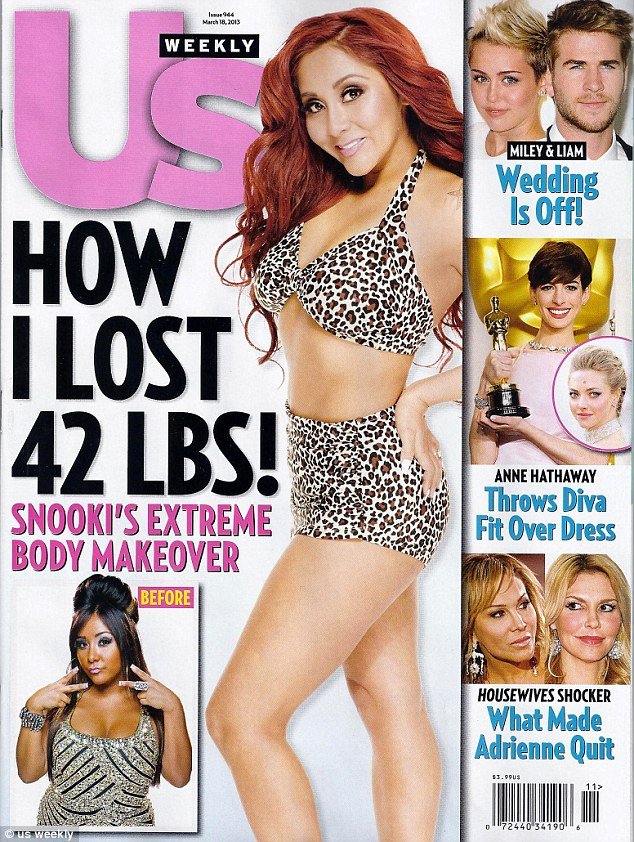
Snooki has revealed the secrets of her weight loss success, which led to the pint-sized reality star shedding 42 pounds after giving birth to her first baby Lorenzo just six months ago.
Snooki, 25, shows off the impressive results on the cover of Us Weekly, by slipping her newly svelte figure into a leopard print halterneck bikini.
The reality star says after initially losing weight from breastfeeding two months after Lorenzo was born, she began a 1,300 calorie a day diet and four day a week workout regime with her personal trainer.
Snooki says that while she wanted to slim down for herself, she also wanted to show her fiancé Jionni LaValle that she could still “be hot as a mom”.
“I lost the first 20 [pounds] in two months, just from breastfeeding. And then right when I was able to work out – after six weeks – I went into the gym with a new trainer Anthony Michael,” she explains.
“I was so excited because I hadn’t worked out in six months. When I go there, I was like <<Let’s do this!>>.”
Snooki, who is currently living in New Jersey with Jionni LaValle in his parent’s basement, says snapping back into her fitness regime wasn’t as hard as she thought it was despite having a long break whilst she was pregnant.
“I don’t like doing legs – that’s the worst. But I like when he works my arms. Now, when I hold Lorenzo, you can see my arm muscles. I’ve been trying go every day, but it’s usually four days a week,” Snooki explains.
“I feel great. I have a lot energy because I work out so much and the endorphins put me in a good mood. And when you’re skinnier, you feel so much better about yourself.”
Snooki has revealed the secrets of her weight loss success, which led to the pint-sized reality star shedding 42 pounds after giving birth to her first baby Lorenzo just six months ago
Snooki admits that during the final stages of her pregnancy she gorged herself with junk food in preparation for the diet she would be embarking on following Lorenzo’s arrived.
“The last three months of my pregnancy, I was like <<F*** it, I’ll eat what I want>>. So I ate everything: brownies, cookies, pasta and a lot of cheese,” she explains.
“But when I started working with Anthony, he put me on his Express Home Meals. I eat things like a burger wrapped in lettuce or a salad with strawberries and chicken.”
Snooki, who became notorious for her hard partying ways during her stint on her hit show Jersey Shore, has spoken out several times about turning over a new leaf when it comes to her wild ways.
The Jersey Shore star, who was once arrested for drunk and disorderly behavior, says these days she doesn’t “need to drink to have fun”.
“When you have a baby everything changes,” she explains.
“Instead of wanting to go out all the time to drink, I just want to stay at home and be with the baby.”
A new study findings reveal that a quick and simple breath test can diagnose stomach cancer.
Scientists from Israel and China found the test was 90% accurate at detecting and distinguishing cancers from other stomach complaints in 130 patients.
The British Journal of Cancer says the test could revolutionize and speed up the way this cancer is diagnosed.
Two-fifths of patients survive for at least a year, but only a fifth are still alive after five years, despite treatment.
Currently doctors diagnose stomach cancer by taking a biopsy of the stomach lining using a probe and a flexible camera passed via mouth and down the gullet.
The new test looks for chemical profiles in exhaled breath that are unique to patients with stomach cancer.
A quick and simple breath test can diagnose stomach cancer
Cancer appears to give off a signature smell of volatile organic compounds that can be detected using the right technical medical kit – and perhaps even dogs.
The science behind the test itself is not new – many researchers have been working on the possibility of breath tests for a number of cancers, including lung.
But the work by Prof. Hossam Haick, of the Technion-Israel Institute of Technology, suggests it is a good way to spot stomach cancer.
In the study, 37 of the patients had stomach cancer, 32 had stomach ulcers and 61 had other stomach complaints.
As well as accurately distinguishing between these conditions 90% of the time, the breath test could tell the difference between early and late-stage stomach cancers.
The team are now running a bigger study in more patients to validate their test.
Lamar Odom reportedly fell asleep during an on-going child custody case on Tuesday.
The court officer asked him: “Excuse me, are you OK?”
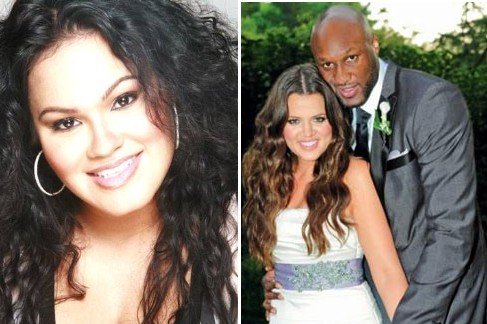
Lamar Odom, who is now married to Khloe Kardashian, is fighting his ex Liza Morales for custody of their daughter Destiny, 14 and son Lamar Jr., 11.
After being woken from his snooze in the New York courtroom, Lamar Odom replied to the officer that he was fine, reports the NY Post.
This prompted the officer to say to him: “I need you to sit up”, which Lamar Odom reportedly did do but continued to rest his head on his hand.
The visit to court came at the same time as his former long-term girlfriend Liza Morales published an open letter in The Daily Beast speaking of her devastation at his whirlwind romance and wedding to Khloe Kardashian.
Lamar Odom, who is now married to Khloe Kardashian, is fighting his ex Liza Morales for custody of their two children
Liza Morales, who had three children with Lamar Odom, one of whom passed away at just six months, has just started taking part in her own reality show called Starter Wives.
She writes: “I don’t think I’ll forget the tight knot I felt in the pit of my stomach the morning I received the text message with three simple words on the screen. It read <<I’m getting married>> and it was from the man I’d spent more than 10 years of my life with.
“Years that included us getting engaged in 2000 and becoming parents to one daughter and two sons. Yet not long after our separation Lamar Odom was getting married to Khloe Kardashian, a woman he’d met four weeks before.”
Liza Morales added: “How could the man who’d constantly given me reason after reason for why we couldn’t get married just yet now be ready to tie the knot so quickly? There aren’t words to explain how I felt that day.”
She also revealed that now she has no relationship at all with the man she met while a student at Christ The King HS in Queens.
“We kept things cordial for the children’s sake after the breakup, but that changed when he married Khloe.
“Now we only communicate through third parties and lawyers, which I regret deeply since it is exactly what we each experienced as children and said we wouldn’t do to our kids.”
Liza Morales went on to write that it is very hard to hear about Lamar Odom’s new relationship with Khloe Kardashian day in day out, as their lives are so wildly documented, due to Keeping Up With The Kardashians.
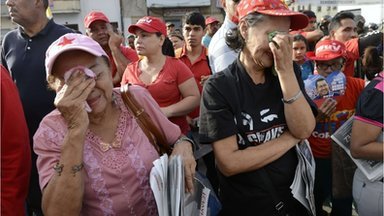
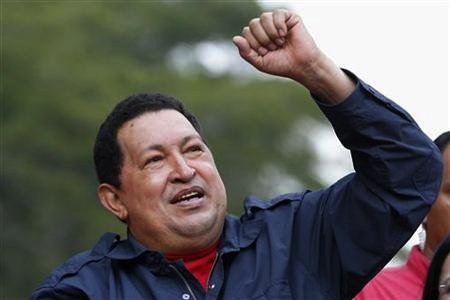
Thousands of Hugo Chavez’s supporters took to the streets of Caracas to express their grief.
Venezuela has announced seven days of mourning for Hugo Chavez, who has died aged 58 after 14 years as president.
Hugo Chavez had been seriously ill with cancer for more than a year.
A self-proclaimed revolutionary, Hugo Chavez was a controversial figure in Venezuela and on the world stage. A staunch critic of the US, he inspired a left-wing revival across Latin America.
Latin American leaders have begun arriving in Caracas to pay their respects – among them President Cristina Fernandez de Kirchner of Argentina, Jose Mujica of Uruguay and Evo Morales of Bolivia.
Hugo Chavez’s body will be taken in a procession with a mounted escort to the Military Academy in Caracas where it will lie in state until a funeral on Friday.
Military units across the country have fired a 21-gun salute in his honor.
They will fire another cannon shot each hour until he is buried, the armed forces said.
All schools and universities have been shut for the week.
Hugo Chavez’s illness prevented him from taking the oath of office after he was re-elected for a fourth term in October.
Announcing the president’s death on Tuesday, Vice-President Nicolas Maduro called on the nation to close ranks after its leader’s demise.
“Let there be no weakness, no violence. Let there be no hate. In our hearts there should only be one sentiment: Love.”
Police and troops would be deployed nationwide “to guarantee the peace”, Nicolas Maduro added.
Thousands of Hugo Chavez’s supporters took to the streets of Caracas to express their grief
A statement from the military said it would remain loyal to the vice-president and to parliament, it added, urging people to remain calm.
Crowds of supporters gathered outside the Caracas hospital where he died, chanting: “We are all Chavez!”
There were isolated reports of violence after the news, with attackers burning the tents of a group of students who had been demanding more information about Hugo Chavez’s condition. Nobody was injured in the incident.
Vice-President Nicolas Maduro will assume the presidency until an election is called within 30 days.
Foreign Minister Elias Jaua told state television that Nicolas Maduro would also be the candidate of the governing United Socialist Party (PSUV).
Opposition leader Henrique Capriles, whom Hugo Chavez defeated in October’s election, called on the government to “act in strict accordance with its constitutional duties”.
Henrique Capriles offered his condolences to Hugo Chavez’s family, saying “we were adversaries, but never enemies”.
The opposition has yet to confirm who will be its official candidate for the presidential election, but Henrique Capriles is widely expected to be chosen to stand against the vice-president.
Nicolas Maduro will probably win the presidential election, but the question remains whether he will be able to lead Venezuela following the loss of its charismatic president.
The exact nature of Hugo Chavez’s cancer was never officially disclosed, leading to continuing speculation about his health, and he had not been seen in public for several months.
Last May, Hugo Chavez, a former army paratrooper, said he had recovered from an unspecified cancer, after undergoing surgery and chemotherapy in 2011 and a further operation in February 2012.
Despite this, Hugo Chavez had most recently won another six-year presidential term in October 2012.
The vice-president has mentioned a plot against Venezuela, saying he had no doubt that Hugo Chavez’s cancer, first diagnosed in 2011, had been induced by foul play by Venezuela’s enemies. The US promptly rejected the accusations as “absurd”.
Nicolas Maduro said a scientific commission could one day investigate whether Hugo Chavez’s illness was brought about by what he called an enemy attack.
Two US diplomats had been expelled from the country for spying on Venezuela’s military, he added.
Hugo Chavez burst onto Venezuela’s national stage in 1992 when he led a failed military coup.
After two years in prison, he returned to politics and was swept to power in a 1998 election.
A self-proclaimed socialist and revolutionary, Hugo Chavez won enduring support among the poor and repeated election victories by using Venezuela’s oil wealth to pursue socialist policies.
His government has implemented a number of “missions” or social programmes, including education and health services for all.
Hugo Chavez’s opponents accused him of mishandling the economy and taking the country towards dictatorship. Inequality has been reduced but growth overall has been lower than in some other Latin American economies.
Internationally, Hugo Chavez was a staunch critic of US “imperialism” and accused Washington of backing a failed coup against him in 2002.
The US described the death as a “challenging time”, reaffirming what it described as its support for the Venezuelan people and its interest in developing a constructive relationship with Caracas.
Analysts say Hugo Chavez’s death could alter the political balance in Latin America – dealing a blow to leftist states while favoring more centrist countries.
There could also be an economic impact given that Venezuela sells oil at below market prices to some neighboring countries, especially in the Caribbean.
Microsoft has been fined 561 million euros ($731 million) for failing to promote a range of web browsers, rather than just Internet Explorer program, to users in the European Union.
It introduced a Browser Choice Screen pop-up in March 2010 as part of a settlement following an earlier EU competition investigation.
But Microsoft dropped the feature in a Windows 7 update in February 2011.
Microsoft said the omission had been the result of a “technical error”.
But competition commissioner Joaquin Almunia said the action was unprecedented, adding he wanted to deter any company from the “temptation” of reneging on such a promise.
In theory the watchdog could have fined the firm 10% of its global annual revenue, which would have totaled $7.4 billion based on its 2012 report.
“We take full responsibility for the technical error that caused this problem and have apologized for it,” a spokesman for Microsoft said following the announcement.
“We provided the Commission with a complete and candid assessment of the situation, and we have taken steps to strengthen our software development and other processes to help avoid this mistake – or anything similar – in the future.”
One lawyer said the ruling was also intended to send out a message to others.
“The European Commission is sending a firm signal in this first case of its type that it will not tolerate failure by a company to comply with the commitments it gave to settle an antitrust infringement procedure,” said Tony Woodgate from Simmons & Simmons.
“These <<commitments decisions>> are currently the European Commission’s favored mechanism to close abuse of dominance proceedings, saving enforcement resource and allowing for a speedy resolution.”
Microsoft has been fined 561 million euros for failing to promote a range of web browsers, rather than just Internet Explorer program, to users in the EU
The case dates back to 2007 when Opera – a Norwegian web-browser maker – complained Microsoft was stifling competition on PCs by bundling Internet Explorer with its operating system.
Microsoft initially argued that the move benefited users, but after the European Commission issued a preliminary report suggesting the firm had abused its position, the company agreed to offer a choice of browser until at least 2014 to avoid risking a fine.
However, this option was missing from its Windows 7 Service Pack 1 released in 2011 and it continued to be absent for 14 months.
During that time, Microsoft reported it was still complying with the agreement.
After the EU was alerted to the problem, it contacted Microsoft, which subsequently issued an apology suggesting its engineers had accidentally missed the issue.
It also acted to restore the facility. But the move was not enough to prevent an eight-month follow-up investigation by the commission into what punishment was needed.
At a press conference in Brussels, Joaquin Almunia said Microsoft’s lack of compliance represented a “serious breach” and was the first time a firm had failed to meet such a commitment.
He explained that he preferred negotiated settlements, rather than extended legal battles, when tackling competition complaints in the fast moving IT sector.
But he added that Microsoft’s willingness to co-operate with the EU’s subsequent investigation had acted as a mitigating factor when determining the level of the fine.
“I hope this will make companies think twice before they ever thinking of breaching their international obligations,” said the commissioner.
Microsoft’s chief executive Steve Ballmer and the former head of its Windows division Steven Sinofsky have already had their most recent bonuses docked, in part because of the browser affair.
The United Nations has announced that the number of Syrian refugees who have fled the conflict has reached a million.
The UN High Commissioner for Refugees said the number of people seeking haven in neighboring countries had jumped since the beginning of the year.
Half of the refugees were children, the UN said, most of them under 11 and often traumatized by their experiences.
The largest numbers of refugees were seeking shelter in Jordan, Lebanon, Turkey, Iraq and Egypt.
The figure includes registered refugees and newer arrivals awaiting registration.
“Syria is spiraling towards full-scale disaster,” the UN High Commissioner for Refugees Antonio Guterres said in a statement, warning that the international humanitarian response capacity was “dangerously stretched”.
“This tragedy has to be stopped,” he added, warning that the influx of people had also stretched the resources of Syria’s neighbors.
The millionth refugee recorded by UNHCR was a 19-year-old mother of two called Bushra.
“Our situation is so bad, everything is so expensive, we can’t find any work… The situation is so bad, I live with 20 other people in one room,” Bushra told reporters in the Lebanese city of Tripoli.
The number of Syrian refugees who have fled the conflict has reached a million
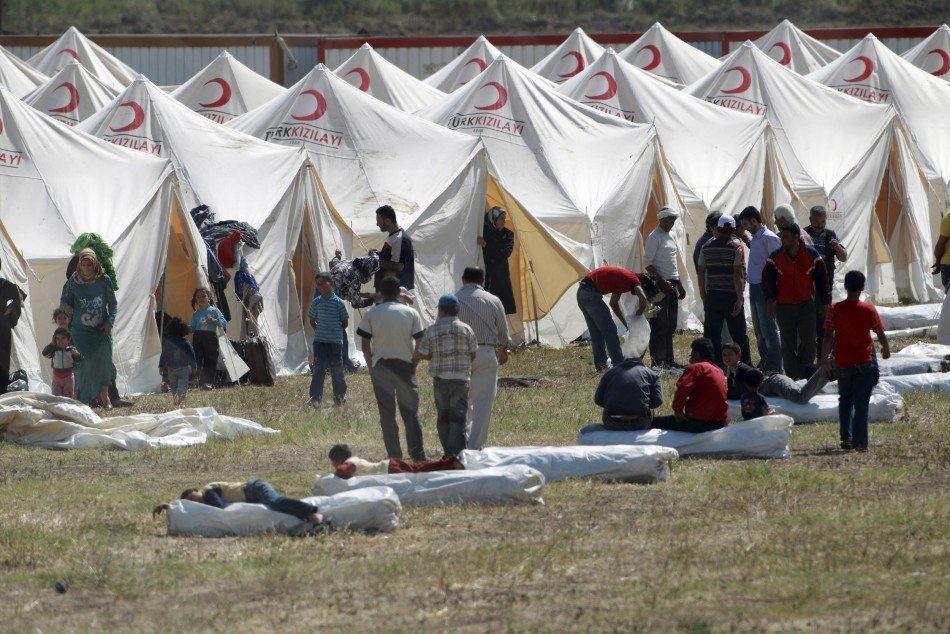
Many of those who have fled conflict now live in difficult conditions, with poor sanitation and insufficient resources to cope with the harsh winters.
In Lebanon, for example, the influx of almost a third of a million refugees since last February has swollen the country’s population by 10%.
Turkey, providing a temporary home for some 184,000 refugees, has spent more than $600 million setting up 17 refugee camps, and was building new ones to meet the increasing need, the UN said.
“These countries should not only be recognized for their unstinting commitment to keeping their borders open for Syrian refugees, they should be massively supported as well,” Antonio Guterres said.
On Tuesday, King Abdullah of Jordan called on world nations to help his country, Turkey and Lebanon to shoulder “the tremendous burden” of caring for the huge influx of people.
UK charity Oxfam says that only 20% of $1.5 billion promised by international donors in January has arrived, “leaving agencies struggling to respond to the urgent needs of refugees”.
The rush of refugees has surprised even UN experts, who had originally estimated that the one million figure would not be reached until the end of June 2013.
In effect, more than 400,000 have became refugees since 1 January 2013.
The UN’s emergency response plan for Syrian refugees, it said, currently lacked 75% of the funding required.
Jordan’s Petra news agency said that a total of 2,257 Syrian refugees had crossed into the country on Tuesday alone.
Some 110,000 of those who have sought shelter in Jordan are living in the desert camp of Zaatari, near its northern border with Syria.
The conflict in Syria began almost two years ago with demonstrations against the government of President Bashar al-Assad.
The protests quickly turned violent as opponents of Bashar al-Assad took up arms to try to resist a brutal crackdown by the authorities.
The conflict has left more than 70,000 people dead and two million internally displaced.
Also on Wednesday, the Commander of the rebel Free Syrian Army, General Selim Idriss, has called for the lifting of the EU arms embargo against Syria, saying it is having a much more negative effect on the opposition than on the Assad regime.
Gen. Selim Idriss said opposition forces desperately needed weapons and ammunition, and that the war would be longer and bloodier if the embargo remained in place.
Jessica Simpson admits on TheEllen show that was a surprise to learn she was expecting another baby when her daughter Maxwell was less than a year old.
“We were definitely extremely shocked,” Jessica Simpson tells Ellen DeGeneres on the Wednesday edition of her talk show.
“Apparently, protection just went out the window. I feel like I’m always pregnant. We’re very happy.
“Maxwell was our focus and then I was puking and lying on the couch,” Jessica Simpson adds, recalling the time she discovered she was pregnant again.
Jessica Simpson, 32, and her fiancé Eric Johnson confirmed they were expecting their second baby back in December.
Since then, reports have suggested Jessica Simpson is expecting a baby boy, something the star hints at on the talk show.
“Well I don’t know,” she says when Ellen DeGeneres quizzes her over the sex of the baby.
“I haven’t said what it’s going to be yet.”
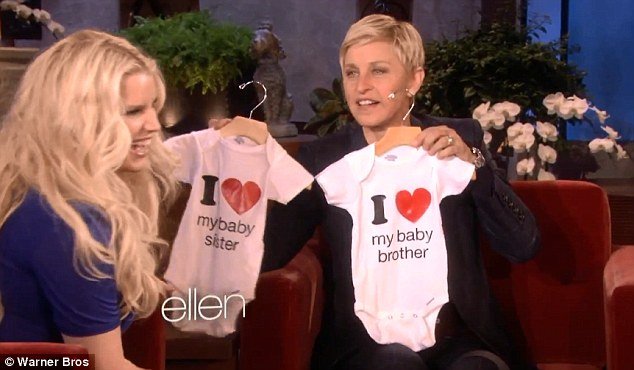
However, Jessica Simpson is forced into a corner when the talk show host holds up two different onesies as a gift for Maxwell, asking Jessica to choose between the “I <<heart>> my baby sister” or “I <<heart>> my baby brother”.
“You can’t have both,” Ellen DeGeneres tells her.
“You can only have one.”
Jessica Simpson admits on The Ellen show that was a surprise to learn she was expecting another baby when her daughter Maxwell was less than a year old
Luckily, Ellen DeGeneres makes the decision for her, handing Jessica Simpson the “brother” outfit telling the star “that’s my guess okay”.
“Maybe I’ll take this one,” Jessica Simpson hints.
“If it’s a girl, she might call him bro.”
Jessica Simpson also reveals that she is finding her second pregnancy much more tiring than her first.
“It’s the complete opposite,” Jessica Simpson says.
“Like with Maxwell, I felt amazing. Like I could do everything, eat everything. Do whatever I wanted.
“I had a lot of energy. This time around, I’m like exhausted. Eating Tums. That’s my snack of choice.”
But Jessica Simpson says she has learned to be healthier in contrast to her pregnancy with Maxwell.
“The first pregnancy I like let loose and I kind of ate everything that I wanted to eat and I just really enjoyed it,” she reveals.
“This time around I think because I was doing Weight Watchers and I felt super healthy.
“I’m not really craving as much and I know how hard it is to get off so I’m trying to make healthier, wiser decisions.”
Despite her weight gain, a glowing Jessica Simpson tells Ellen DeGeneres that “apparently Eric still wanted me. So I can gain as much weight and I will have a husband to be that loves me”.
“Apparently he did,” Ellen DeGeneres responds dryly, gesturing towards Jessica Simpson’s blossoming baby bump.
While promoting her latest movie Oz: The Great and Powerful, Mila Kunis sat down for an interview on Monday with Radio 1’s Chris Stark but she had no idea what she was letting herself in for.
Expecting the usual question and answer session, Mila Kunis, 29, ended up having what she described as “the best interview” after she was invited to watch Watford FC and tuck into some chicken at Nandos.
Getting off to an awkward start as Chris Stark rambled on about his nerves, Mila Kunis did her best to make him feel at ease.
For his first question, Chris Stark asked: “Did you enjoy being ugly for once because generally you’re hot?”
Retaining professionalism, Mila Kunis took on the role of interviewer to help Chris Stark get into the groove of things, telling him: “It’s not that bad, it’s not that scary.”
Feeling much more relaxed, Chris Stark bragged about how jealous his friends would be to find out he had met Mila, before inviting her to his local pub in Watford.
Accepting the offer, Mila Kunis said: “OK, I’m probably not going to do it today as I’m definitely ill but I will maybe come join you.”
Almost three minutes in and realizing that he hadn’t quite asked any questions about Mila Kunis’ latest film, Chris Stark tried to change the subject.
But protesting, Mila Kunis said: “Why? This is way more fun for me I have to tell you. Please?”
Moving on to sport, Chris Stark then outlined to Mila Kunis how a date watching his team Watford FC would go – starting with a trip to Nandos, steak and ale pie at half-time and ending with a few pints.
Mila Kunis sat down for an interview on Monday with Radio 1’s Chris Stark but she had no idea what she was letting herself in for
Cheeky Chris Stark even asked Mila Kunis if she would be his “plus one” to a wedding in June, but the actress said she had to decline as she would be making a film, although she joked that she had a reputation for “saying yes to everything” after accepting US serviceman Sergeant Scott Moore’s invitation to his Marine Corps ball in 2011.
As Chris Stark becomes even more worried that he has jeopardized his job, Mila Kunis, who is currently dating Ashton Kutcher, assures him: “This is the best interview I’ve had today!”
Prior to the video, which has been viewed over 540,000 times Chris Stark admitted that he was nervous to see the final edit of his interview.
On Sunday Chris Stark tweeted: “My interview with Mila Kunis tomo. Genuinely anxious about people hearing it. I panicked haha.”
And still getting to grips with the impact of the clip, on Tuesday Chris Stark wrote: “Well this interview has gone off hasnt it. Crazy. Have I actually made the front page of youtube? Ridic.”
Chris Stark then quipped: “Well… what a weird day. Pub soon anyone?”
Asian stock markets have continued a global rally after New York’s main Dow Jones share index hit a historical record high.
Equity markets in Asia, the US and Europe have been buoyed by central bank attempts to revive economic growth by pumping cash into the financial system.
Analysts said that this has helped ease fears of continuing political problems and slower corporate profit growth.
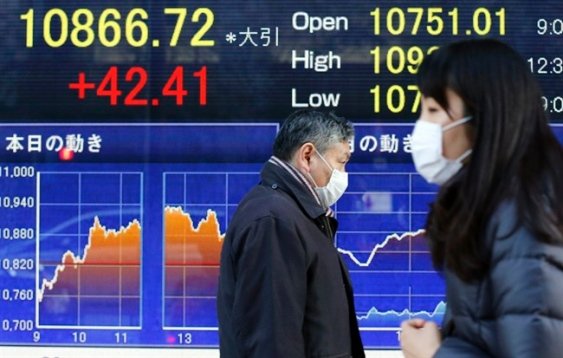
In Asia on Wednesday, the main indexes in Japan and Australia hit their highest levels since September 2008.
Japan’s Nikkei was 1.1% higher in early trading while Australian shares were up 0.9%. Shares in Hong Kong, Shanghai and Singapore also posted gains.
The dollar eased 0.2% against a basket of key currencies while copper and crude oil prices rose.
The rally on Wall Street means the main US indexes have erased the losses brought on by the global financial crisis.
Dow Jones closed at 14,256 after investors were buoyed by signs of recovery in the US housing market in recent months, and data showing growth in the services sector.
The share index ended the day more than double its low of 6,547 in March 2009.
London’s FTSE 100 closed at a five-year high on Tuesday.
Analysts said sentiment was being boosted mainly because of the stimulus programs being conducted by the US, Europe and Japan.
Asian stock markets have continued a global rally after New York’s main Dow Jones share index hit a historical record high
In the US, Federal Reserve chairman Ben Bernanke has engaged in a campaign of massive bond-buying while keeping interest rates at a record low to help support the world’s largest economy after the global financial crisis in 2008.
The program known as quantitative easing or QE3, is in its third phase, and has been made open ended.
“To be sure, it was Bernanke’s reassurance, at last week’s congressional testimonies on monetary policy, to keep QE3 on its present course that turned a worried stock market into a record high,” said analysts at DBS Bank in Singapore.
The European Central Bank and the Bank of Japan have also taken steps to boost liquidity.
However, despite the positive sentiment on the markets analysts said there were risks on the horizon.
China’s move to curb high property prices, the impact of the US spending cuts as well uncertainty after the elections in Italy could still weigh on investors.
These concerns, however, are for now being overshadowed by the notion that central banks will continue to support the fragile global economic recovery.
“That’s fantastic testament to the power of easy money, in the face of doubts about the US economy now that fiscal spending is being cut back,” said Kit Juckes, from Societe Generale.
The European Central Bank, the Bank of Japan and the Bank of England will hold their policy meetings on Thursday.
Most analysts expect the three central banks to continue their policies aimed at spurring growth in their economies.
A Norwegian study has found that people who have trouble drifting off to sleep may be at increased risk of heart failure.
The study, published in the European Heart Journal, followed more than 50,000 people for 11 years.
Scientists found those who suffered several nights of poor sleep were more likely to develop the condition, in which the heart fails to pump properly.
Experts say further research is needed to see if a lack of sleep causes heart failure or the link is more complex.
Scientists at the Norwegian University of Science and Technology looked at more than 50,000 people aged between 20 and 89. At the beginning of the study, none of them were known to have heart failure.
In this condition the muscles of the heart are often too out of shape to do their job properly – they may be too weak or too stiff to pump blood around the body at the right pressure.
People with the disorder may feel increasingly breathless and exhausted.
And as heart failure worsens, it can be difficult to get a full night’s rest – but the Norwegian study is one of few to investigate whether poor sleepers without the condition are at risk of getting it in later life.
A Norwegian study has found that people who have trouble drifting off to sleep may be at increased risk of heart failure
During the research, the participants were asked whether they had any difficulties getting to sleep or staying asleep and whether they felt fully restored after a night’s slumber.
People who had trouble falling asleep and remaining asleep each night were three times more likely to develop heart failure than those who reported no trouble sleeping.
Those who experienced substandard sleep that failed to leave them fully refreshed were also at risk.
And this link between a bad night’s sleep and heart failure remained true despite researchers taking smoking, obesity and other well known triggers of insomnia and heart problems into account.
The researchers say it is unclear exactly why poor sleep and heart failure are associated in this way.
Dr. Lars Erik Laugsand, lead author of the study, said: “We don’t know whether insomnia truly causes heart failure. But if it does, the good thing is it is a potentially treatable condition.
“So evaluating sleep problems might provide additional information in the prevention of heart failure.”
He suggests the lack of sleep may provoke harmful responses in the body.
“When you have insomnia your body releases stress hormones which in turn may effect the heart in a negative way,” he said.
The same team of researchers has previously reported a link between people prone to insomnia and heart attacks.
And diabetes, depression and poor brain function have all been linked to missing restful hours in bed.
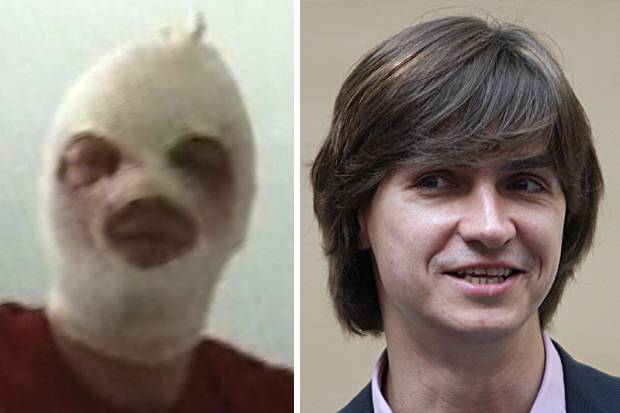
Bolshoi Ballet soloist Pavel Dmitrichenko and two other men have confessed to an acid attack on Sergei Filin, the company’s artistic director, say Moscow police.
Pavel Dmitrichenko – the alleged mastermind of the attack – was detained on Tuesday with Yuri Zarutsky, suspected of carrying it out.
A man accused of driving a getaway vehicle is also being held.
Sergei Filin’s eyesight was badly damaged when a masked attacker threw sulphuric acid in his face in January.
After a series of operations on his eyes, Sergei Filin has been moved to Germany, where doctors have expressed hope that months of further treatment may be able to restore good vision.
Sergei Filin, 42, also suffered facial disfigurement during the January 17 attack, outside his Moscow home.
It opened a window into bitter infighting and rivalries inside the Bolshoi theatre, shocking Russians, correspondents say.
Pavel Dmitrichenko’s flat was searched by Moscow police on Tuesday before all three suspects were confirmed as being detained. They have been held overnight.
“At the current time all three have signed confessions and have been placed under arrest,” Moscow police said on Wednesday.
“The necessary investigative work is being undertaken to establish all the circumstances of the crime.”
Bolshoi Ballet soloist Pavel Dmitrichenko and two other men have confessed to an acid attack on Sergei Filin
Confessions are common in Russia, though often the accused later complain of mistreatment.
Pavel Dmitrichenko, who has been with the troupe since 2002, is not one of the half-dozen very senior male dancers at the company, known as premiers, but he is a leading soloist one level down.
He has been performing the lead role in Sergei Prokofiev’s Ivan The Terrible.
It is unclear whether Yuri Zarutsky or the alleged driver, named as Andrei Lipatov, have any connection to the Bolshoi.
Police have questioned several Bolshoi employees as potential witnesses.
They are treating the attack as a premeditated act of grievous bodily harm, motivated by Sergei Filin’s professional activities.
Famously discreet Kate Middleton may have dropped her guard a little on a walkabout yesterday.
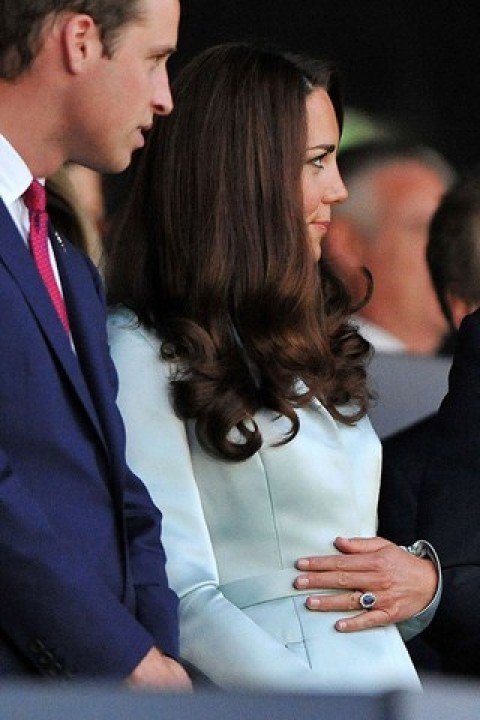
According to one member of the crowd, Kate Middleton, who is five months pregnant, appeared to hint she might be having a baby girl.
Sandra Cook, 67, was among the 2,000 wellwishers who greeted Kate Middleton on her visit to Grimsby.
She said: “The lady next to me gave her a teddy bear and I distinctly heard her say <<Thank you, I will take that for my d….>>.
“Then she stopped herself. I leant over and said to her: <<You were going to say daughter, weren’t you?>> She said: <<No, we don’t know!>> I said: <<Oh, I think you do>> to which she replied: <<We’re not telling!>>
“I have been here since 10 a.m. and it was worth every cold minute of the wait to see her. She is just beautiful and so lovely and friendly.”
Kate Middleton, who is five months pregnant, appeared to hint she might be having a baby girl
Diana Burton, 41, who gave the Duchess a teddy, was too shell-shocked to recall the conversation. But Sandra Cook, who works in a local charity shop and lives in Grimsby, was adamant about what she heard.
“I only hope that she doesn’t now give birth to a boy or I’m going to look pretty stupid,” she said.
“But she definitely said <<d——>>.”
St James’s Palace did not comment on the matter, although royal sources insisted Kate Middleton and Prince William had not yet found out the sex of the baby, which is due in July.
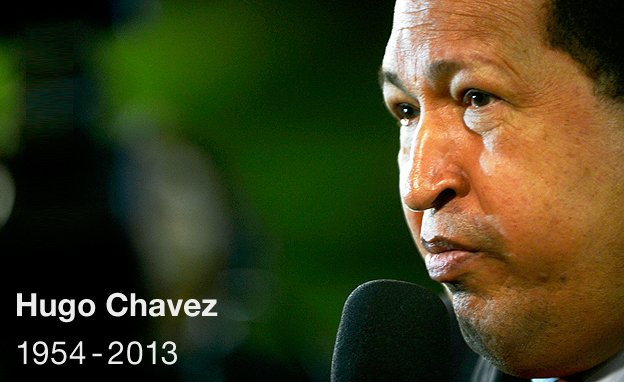
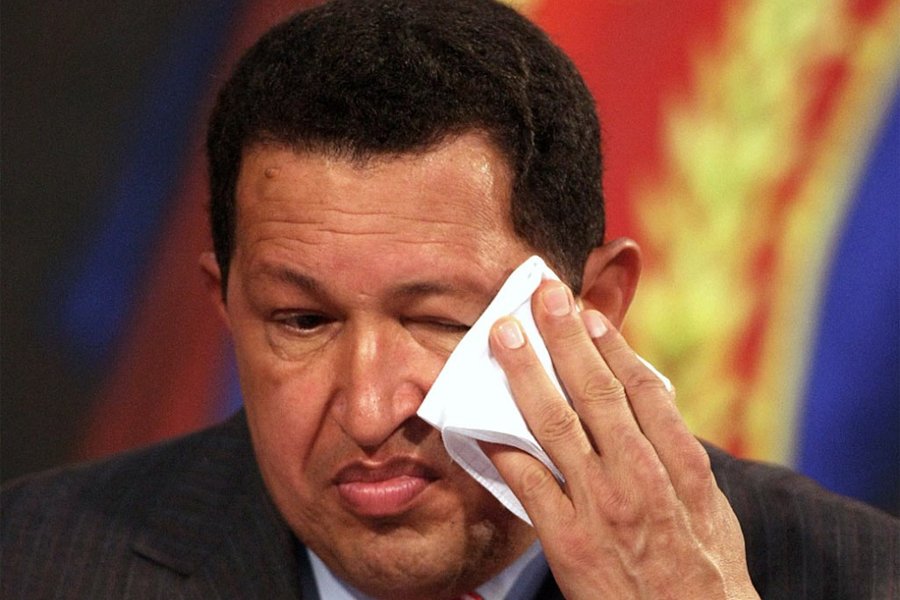
Venezuelan President Hugo Chavez has died aged 58, after 14 years in power.
Hugo Chavez had been seriously ill with cancer for more than a year, undergoing several operations in Cuba.
Crowds of supporters gathered outside the Caracas hospital where he died, chanting “We are all Chavez!”
A self-proclaimed revolutionary, Hugo Chavez was a controversial figure in Venezuela and on the world stage. A staunch critic of the US, he inspired a left-wing revival across Latin America.
Following Hugo Chavez’s death, Vice-President Nicolas Maduro will assume the presidency until an election is held within 30 days, Foreign Minister Elias Jaua said.
“It is the mandate that Comandante President Hugo Chavez gave us,” Elias Jaua told state television, adding that Nicolas Maduro would also be the candidate of the governing United Socialist Party (PSUV).
Seven days of national mourning have been declared after Hugo Chavez’s death and his body will lie in state until a funeral on Friday
It was not immediately clear when the election would take place.
Hugo Chavez’s illness prevented him from taking the oath of office after he was re-elected for a fourth term in October.
The exact nature of Hugo Chavez’s cancer was never officially disclosed, leading to continuing speculation about his health, and he had not been seen in public for several months.
Seven days of national mourning have been declared after Hugo Chavez’s death and his body will lie in state until a funeral on Friday.
Opposition leader Henrique Capriles, whom Hugo Chavez defeated in October’s election, called on the government to “act in strict accordance with its constitutional duties”.
Henrique Capriles offered his condolences to Hugo Chavez’s family, saying “we were adversaries, but never enemies”.
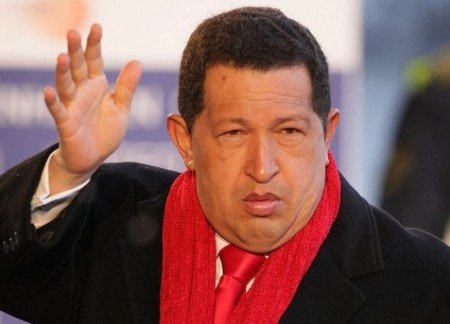
The tough and charismatic Venezuelan leader, Hugo Chavez, divided opinion both at home and abroad.
To his many supporters Hugo Chavez was the reforming president whose idiosyncratic brand of socialism defeated the political elite and gave hope to the poorest Venezuelans.
Hugo Chavez’s strident criticism of the United States won him many friends among the “pink tide” of political leaders in Latin America and he effectively used his country’s vast oil reserves to boost Venezuela’s international clout.
But to his political opponents Hugo Chavez was the worst type of autocrat, intent on building a one-party state and ruthlessly clamping down on any who opposed him.
Hugo Rafael Chavez Frias was born on July 28, 1954, in the Venezuelan state of Barinas, one of seven children. His parents were both school teachers and the family lived in relative poverty.
He attended the Daniel O’Leary High School in the city of Barinas before going to the Venezuelan Academy of Military Sciences in the capital, Caracas where, he later said, he found his true vocation.
Hugo Chavez also found time to play baseball and to study the lives of the 19th Century South American revolutionary leader Simon Bolivar and the Marxist Che Guevara.
He graduated with honors in 1975 but had already begun to form the political ideas that he would later put into practice as president, including the belief that the military had a duty to step in if a civilian government was deemed to have failed to protect the poorest in society.
Hugo Chavez was posted to one of the many counter-insurgency units that were tackling the various Marxist groups bent on overthrowing the presidency of Carlos Andres Perez but he saw very little action, spending his time reading a great deal of left-wing literature.
In 1981 Hugo Chavez was assigned to teach at the military academy where he had been a student and found himself in a position to indoctrinate the next generation of army officers with his political ideas.
His superiors became alarmed at the extent of his influence and he was posted to remote Apure state, where, it was assumed, he could do little damage.
Hugo Chavez busied himself by making contact with local tribes in the area, something that would influence his own policies towards indigenous people when he finally came to power.
In February 1992 Hugo Chavez led an attempt to overthrow the government of President Carlos Andres Perez amid growing anger at economic austerity measures that had led to widespread protests.
The revolt by members of the Revolutionary Bolivarian Movement claimed 18 lives and left 60 injured before Colonel Hugo Chavez gave himself up.
Hugo Chavez was languishing in a military jail when his associates tried again to seize power nine months later.
That second coup attempt in November 1992 was crushed as well, but only after the rebels had captured a TV station and broadcast a videotape of Hugo Chavez announcing the fall of the government.
To his many supporters Hugo Chavez was the reforming president whose idiosyncratic brand of socialism defeated the political elite and gave hope to the poorest Venezuelans
Hugo Chavez spent two years in prison before re-launching his party as the Movement of the Fifth Republic making the transition from soldier to politician.
With an eye to wider opinion he spent time canvassing a number of political leaders in Latin America finding strong support and friendship from Cuba’s revolutionary president, Fidel Castro.
Hugo Chavez firmly believed in overthrowing the government by force but was persuaded to change his mind and instead became a candidate in the 1998 presidential elections.
Unlike most of its neighbors, Venezuela had enjoyed an unbroken period of democratic government since 1958, but the two main parties, which had alternated in power, stood accused of presiding over a corrupt system and squandering the country’s vast oil wealth.
Hugo Chavez promised “revolutionary” social policies, and constantly abused the “predatory oligarchs” of the establishment as corrupt servants of international capital.
Never missing an opportunity to address the nation, Hugo Chavez once described oil executives as living in “luxury chalets where they perform orgies, drinking whisky”.
Hugo Chavez quickly gained widespread support, not just from the poorest in Venezuelan society but also from a middle class which had seen its standards of living eroded by economic mismanagement. It was these middle class votes that were instrumental in propelling Hugo Chavez into power with 56% of the vote.
Despite the revolutionary rhetoric he employed during the campaign his first government set out on a relatively moderate path appointing a number of conservative figures to political positions.
Hugo Chavez ran the economy largely according to guidelines set down by the International Monetary Fund and made a positive effort to encourage investment from global corporations.
He also began a programme of social reform, investing in the country’s crumbling infrastructure and setting up free medical care and subsidized food for the poor.
In order to stay in touch with his people Hugo Chavez set up weekly shows on radio and television where he explained his policies and encouraged citizens to phone in and question him directly.
In 1999 Hugo Chavez proposed setting up a new constitutional assembly, gaining overwhelming support for the idea in a public referendum, itself an unheard of feature in Venezuelan politics.
In subsequent elections to the new body, Hugo Chavez supporters won 95% of the seats and set about drafting a new constitution which was approved by an overwhelming majority of the population.
One stipulation of the new order was that presidential elections should be held in 2000 which Hugo Chavez duly won with 59% of the vote.
However, he soon faced opposition both from outside and inside Venezuela. Relations with Washington reached a low when he accused it of “fighting terror with terror” during the war in Afghanistan after the attacks on the US on September 11, 2001.
Opposition inside the country came from middle class groups who had seen their political power eroded by Hugo Chavez and who accused him of steering the country towards a one-party state.
In early 2002 the whole country was embroiled in a general strike and Hugo Chavez was pushed from office on April 12 after attempting to take control of the country’s oil industry.
But, just two days later, after his supporters – mainly Venezuela’s poor – took the streets, Hugo Chavez was back in the presidential palace.
The 2006 presidential elections saw Hugo Chavez gain 63% of the vote whereupon he announced that his revolutionary policies would now be expanded.
He brought forward proposals that would allow him to stand for the presidency indefinitely, a measure that was approved in a referendum by 54% of those voting.
Hugo Chavez also created economic and political ties with newly elected left-wing leaders in other South American countries including Daniel Ortega, who came to power in Nicaragua in 2007.
Relations with the US remained strained. While Hugo Chavez congratulated US President Barack Obama on his election victory in November 2008, he strongly condemned western military action in Libya in 2011.
“I am not Obama’s enemy but it’s difficult not to see imperialism in Washington,” he said.
“Those who don’t see it, don’t want to see it, like the ostrich.”
At home, his much-vaunted economic reforms were running out of steam. Domestic support for his “Bolivarian” socialism was being sorely tested by economic recession and inflation soared to 30% eroding the savings of the middle classes.
Hugo Chavez started as a reforming president, intent on addressing the inequalities in Venezuelan society giving food, medical care and, above all, a political voice to the poor.
Venezuela today has the fairest income distribution in Latin America.
President Hugo Chavez has died at the age of 58, Venezuela’s Vice-President Nicolas Maduro has announced.
Hugo Chavez had not appeared in public since he returned to Venezuela last month after cancer treatment in Cuba.
An emotional Nicolas Maduro made the announcement on Tuesday evening, flanked by leading Venezuelan political and military leaders.
He said that long-standing President Hugo Chavez died at 4:25 p.m. local time.
Earlier, Nicolas Maduro said Hugo Chavez had a new, severe respiratory infection and had entered “his most difficult hours”.
One of the most visible, vocal and controversial leaders in Latin America, Hugo Chavez, a former army paratrooper, won the presidency in 1998 and had most recently won another six-year presidential term in October 2012.
Last May, Hugo Chavez said he had recovered from an unspecified cancer, after undergoing surgery and chemotherapy in 2011 and a further operation in February 2012.
However, in December 2012, Hugo Chavez announced he needed further cancer surgery in Cuba, and named his Vice-President, Nicolas Maduro, as his preferred successor should the need arise.
Hugo Chavez remained out of public view, finally returning to Venezuela in February.
Hugo Chavez’s death is expected to trigger a snap election, though the opposition has argued that it should have been held after Chavez was unable to be sworn in on January 10.
The campaigning has already unofficially begun, with VP Nicolas Maduro, who Hugo Chavez has said should succeed him, frequently commandeering all broadcast channels to promote the “revolution” and vilify the opposition.
Bolshoi Ballet soloist Pavel Dmitrichenko has been detained by police, suspected of ordering an acid attack on artistic director Sergei Filin.
Dancer Pavel Dmitrichenko is being held along with Yuri Zarutsky, who is suspected of carrying out the attack, Russia’s interior ministry says.
Sergei Filin’s eyesight was badly damaged when a masked attacker threw sulphuric acid in his face in January.
A third person, suspected of being the attacker’s driver, is also being held.
He has been named as Andrei Lipatov.
It is not clear whether Yuri Zarutsky or Andrei Lipatov have any connection to the Bolshoi.
Pavel Dmitrichenko’s flat was searched by Moscow police on Tuesday before he was confirmed as being detained.
The dancer, who has been with the troupe since 2002, has been performing the lead role in Sergei Prokofiev’s Ivan The Terrible.
A spokeswoman for the Bolshoi Theatre, speaking before Pavel Dmitrichenko was detained, said the company was hopeful that the crime would be solved.
Bolshoi Ballet soloist Pavel Dmitrichenko has been detained by police, suspected of ordering an acid attack on artistic director Sergei Filin
Katerina Novikova said she did not know of any dispute between the dancer and Sergei Filin, Reuters reports.
The mid-January attack shocked the arts world. It came after a period of infighting at the Bolshoi, one of Russia’s most prestigious ballet companies.
Sergei Filin, 42, was released from hospital in Moscow last month for follow-up treatment in Germany. He will have further plastic surgery and a lengthy convalescence.
The artistic director was badly burned during the attack, which happened in the street as he returned to his home in Moscow late at night.
It appears the assailant called out to the artistic director by name, then splashed him before fleeing from the scene.
A security camera apparently captured grainy footage of the event.
Sergei Filin said later he was certain who was behind the attack, but would only speak after an announcement by investigators.
He argued the aim of the attack had been to remove him from his post, adding that he had long been the target of threats.
Police have questioned several Bolshoi employees as potential witnesses.
They are treating the attack as a premeditated act of grievous bodily harm, motivated by Sergei Filin’s professional activities.
German doctors think they can restore some of Sergei Filin’s sight.
A spokeswoman for the Bolshoi said they hoped Sergei Filin would return to the company for their trip to London this summer.
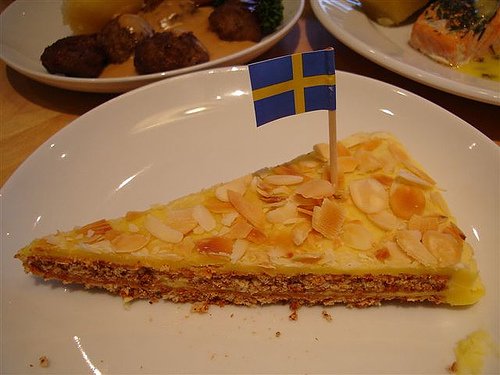
Ikea has decided to withdraw a type of almond cake from its restaurants after samples were found to be contaminated by coliform bacteria.
Traces of the bacteria were found in two batches of the cake that came from a Swedish supplier and went through Ikea’s health checks.
The cake has been withdrawn from 23 countries, said the furniture company.
None of the infected batches had gone on sale, Ikea said.
Ikea added that no pathogenic bacteria, such as E coli – which is considered dangerous to humans – had been found in the affected cake.
Last month Ikea withdrew meatballs from sale in some of its restaurants after it was suspected they contained traces of horse DNA.
The meatballs in 1kg packs were made in Sweden, and labelled as beef and pork.
Ikea has decided to withdraw a type of almond cake from its restaurants after samples were found to be contaminated by coliform bacteria
The latest withdrawal comes after Chinese quarantine officials confirmed that 1,872 kg of chocolate almond cake imported by the Swedish company had been destroyed.
The Swedish company said there was no health risk associated with consuming the contaminated product.
“Traces of coliform bacteria have been found in two isolated production batches of almond cake with chocolate and butterscotch, produced for the Restaurant, from one supplier in Sweden,” said an Ikea statement.
“The production batches have, as per safety and quality routines, been tested for bacteria that can cause health issues, such as E coli, and none of these pathogen bacteria have been found.
“However, since the product does not comply with our strict food quality standards we have decided to withdraw the concerned production batches from sale in the 23 affected countries.”
Ikea has stores in 38 countries. The company’s net profits rose 8% to 3.2 billion euros over the 2011-12 financial year.
President Hugo Chavez is undergoing his “most difficult hours”, Venezuela’s Vice-President Nicolas Maduro has said.
Nicolas Maduro spoke at length in a speech apparently designed to reassure citizens despite the failing health of Venezuela’s leader.
He accused the US of plotting against the Venezuelan government and said a US military attaché would be expelled.
On Monday officials said Hugo Chavez, 58, had a new, severe respiratory infection.
Dozens of people gathered to pray for his health at the hospital where Hugo Chavez is being treated.
He has not appeared in public since he returned to Venezuela last month after being treated for cancer in Cuba.
The address broadcast live on TV from the presidential Miraflores Palace showed Nicolas Maduro surrounded by political and military leaders in a display of solidarity.
Nicolas Maduro accused “enemies of the fatherland” in Venezuela and abroad, particularly the US, of seeking to undermine democracy in Venezuela.
Speaking in a room full of dignitaries including the defence minister and the president’s brother Adan Chavez, Nicolas Maduro said Hugo Chavez’s illness was an “attack” by his enemies and called for this to be investigated.
Nicolas Maduro said the US air force attaché, David Delmonaco, had been spying on Venezuela’s military and had 24 hours to leave the country: A US embassy spokesman said Washington was formulating a response.
President Hugo Chavez is undergoing his most difficult hours
In recent days, the opposition has condemned what they say is the lack of clarity surrounding his condition.
“The lack of precise information worries Venezuelans and fuels rumors,” said Ramon Guillermo Aveledo of the opposition Democratic Unity coalition.
At the weekend, hundreds of Venezuelan students and opposition members marched in Caracas demanding full details about Hugo Chavez’s health.
Information Minister Ernesto Villegas accused Hugo Chavez’s opponents of showing “the same hatred that they have shown towards Chavez all these years.
“It annoys them that he won’t give up and neither will the people!” he wrote on his Twitter account.
On Monday Ernesto Villegas announced from the military hospital where Hugo Chavez is being treated that he had suffered “a worsening of respiratory function” and that his condition continued to be “very delicate”.
He said Hugo Chavez was undergoing “intensive chemotherapy, as well as complementary treatments”.
“The commander-president remains clinging to Christ and to life, conscious of the difficulties that he is facing, and complying strictly with the programme designed by his medical team,” Ernesto Villegas said.
Hugo Chavez, who has been in office for 14 years, is believed to have cancer in his pelvic area, but his exact illness has never been disclosed.
He announced in June 2011 that he had cancer and has undergone four operations since then, as well as chemotherapy and radiation therapy.
The president was re-elected for another six-year term in October 2012, but the Supreme Court ruled that his swearing-in on January 10 could be delayed because of his illness.
Hugo Chavez is said to be taking decisions about the country from the hospital bed but there have been mixed messages from officials on his condition.
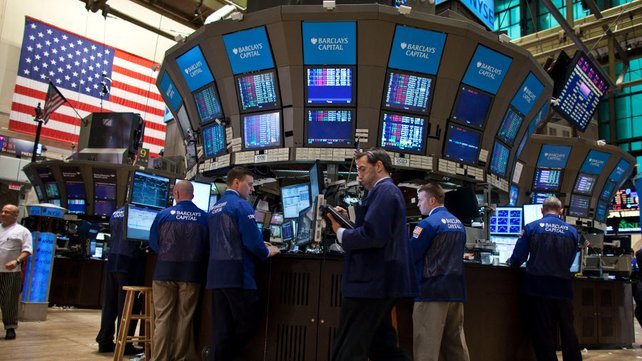
Dow Jones share index set a new all-time high on Tuesday, returning to levels not seen since before the global financial crisis.
The Wall Street index reached 14,273 in lunchtime trading, exceeding the previous record intra-day high of 14,198, set in October 2007.
The recovery in the market suggests investors are regaining confidence in the US economy.
That is despite the ongoing fiscal crisis in Washington.
Dow Jones index has more than doubled in value since it plummeted to less than 6,550 points in the depth of the crisis in March 2009.
Investors were encouraged by data released on Tuesday suggesting the US’s non-manufacturing industries, which account for about 90% of the economy, continued to expand last month.
The Institute for Supply Management said its services index rose to 56 in February from 55.2 in January – its highest level in a year.
More broadly investors have been encouraged by signs of recovery in the US housing market in recent months, and a return of consumer confidence.
“Key data is turning supportive. Companies are ready to re-invest and grow profitably. With luck, we will see a recovery take hold in the second half of the year,” said Paul Atkinson, head of North American equities at Aberdeen Asset Management.
“The question now is whether we are seeing a stealth rally in danger of running its course… or whether we have the conditions for further market gains.”
Other US indexes have also rallied in recent months.
The S&P 500 index – a broader index of US shares that is closely watched in the market – has risen by 125% since 2009, reaching 1,538 on Tuesday, but remains some way short of its pre-crisis high of 1,576.
By comparison the FTSE 100 index in London has risen by 68% from its 2009 low, but is some way off its all-time high, set in late 1999.
Dow Jones share index set a new all-time high on Tuesday, returning to levels not seen since before the global financial crisis
US consumer confidence rebounded unexpectedly in February, while data suggesting strong sales of new homes has been particularly encouraging, as housing construction has typically played a leading role in past US recoveries.
There are also signs big businesses are beginning to invest in capital spending rather than build up their cash piles, and are hiring more staff.
Analysts also say the commitment of central banks to quantitative easing (QE) and low interest rates has helped create optimism among investors, and made stocks and shares more attractive than bonds.
On Monday the vice chairman of the US Federal Reserve, Janet Yellen, said the central bank should press on with its QE programme, in which it spends $85 billion a month on buying bonds.
Its actions have outweighed concerns over the continued US fiscal crisis in Washington, where President Barack Obama has warned that “sequester” budget cuts will harm the economy.
Some investors also warn that the US recovery remains sluggish. The economy grew at an annualized rate of just 0.1% in the last three months of 2012, data published last week showed.
Dow Jones also only partially reflects the US economy, as it is made up of only 30 companies.
“What happens when this [QE programme] kind of evaporates or goes away, that’s the major question in the back of my mind,” said Anthony Conroy, head trader at brokerage BNY Convergex.
“But right now, the economy, the market, everything looks fairly healthy. Stocks still look fairly inexpensive.”
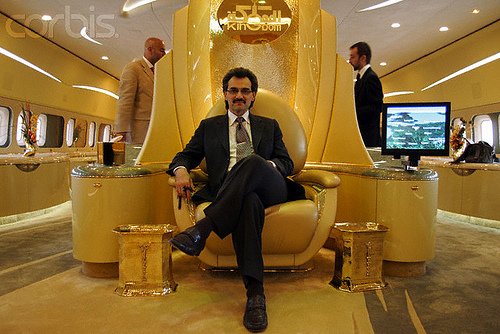
Saudi Arabia’s Prince Alwaleed Bin Talal has accused Forbes magazine of understating his wealth.
In Forbes 2013 list of the world’s richest people, the magazine estimated Prince Alwaleed Bin Talal’s net worth at $20 billion, putting him in 26th place.
According to reports, the prince estimates his net worth to be $29.6 billionn, which would put him in the top 10.
Forbes said it had examined the prince’s wealth “deeply” following claims he had exaggerated his fortune.
In an article published on its website, Forbes also said that the prince often went to great lengths to affect his ranking and had complained in previous years about the valuation Forbes had put on his wealth.
“Of the 1,426 billionaires on our list, not one – not even the vainglorious Donald Trump – goes to greater measure to try to affect his or her ranking,”Forbes magazine claimed.
Citing former associates of Prince Alwaleed Bin Talal, the magazine said his ranking was very important to the prince.
“This is how he wants the world to judge his success or his stature,” an anonymous source was quoted as saying.
The list, published on Monday, saw Mexico’s Carlos Slim retain the top slot for the fourth straight year with a net worth of $73 billion.
The 10th spot on the list went to Bernard Arnault and family of the luxury goods group LVMH, with a net worth of $29 billion.
Saudi Arabia’s Prince Alwaleed Bin Talal has accused Forbes magazine of understating his wealth
Prince Alwaleed Bin Talal’s office claimed Forbes used flawed valuation methods that were “designed to disadvantage” Middle Eastern investors.
It alleged that Forbes had refused to accept the valuations of the stocks listed on Tadawul, the Saudi Arabian Stock Exchange, while it had accepted valuations of listings on other emerging markets such as the Mexican Stock Exchange.
It said that Forbes had applied “differing standards of proof for different individuals”.
The prince’s office said that it had requested Forbes to remove the prince from its rich list. It added that it had severed all ties with the magazine and would no longer co-operate with the valuation teams.
“We have worked very openly with the Forbes team over the years and have on multiple occasions pointed out problems with their methodology that need correction,” Shadi Sanbar, chief financial officer of Kingdom Holding Company, which the prince owns, said in a statement.
“However, after several years of our efforts to correct mistakes falling on deaf ears, we have decided that Forbes has no intention of improving the accuracy of their valuation of our holdings and we have made the decision to move on.”
Prince Alwaleed Bin Talal’s Kingdom Holding Company, whose shares are traded on the Saudi stock exchange, owns stakes in hotel groups including Four Seasons and Fairmont Raffles and is a part-owner of the Savoy Hotel in London.
The prince is a major investor in News Corporation and, according to Forbes, he bought a 3% stake in Twitter last year for $300 million.
Russian police in Moscow have brought in for questioning a suspect in the acid attack on the Bolshoi Ballet’s artistic director, Sergei Filin.
A brief report on the police website said the unnamed person was “one of the suspects” in the attack on January 17, which shocked the arts world.
“The necessary investigative measures are now being taken,” it added.
Sergei Filin’s eyesight was damaged when a masked attacker threw sulphuric acid in his face.
He was released from hospital in Moscow last month for follow-up treatment in Germany.
Sergei Filin will have further plastic surgery and a lengthy convalescence.
The flat of a Bolshoi ballet dancer, soloist Pavel Dmitrichenko, was searched by Moscow police on Tuesday, a separate brief report on the police website said. There was no suggestion of a link to the detained suspect.
The attack on Sergei Filin came after a period of infighting at the Bolshoi, one of Russia’s most prestigious ballet companies.
Unnamed sources quoted by Russian media say the suspect is a man who was detained early on Tuesday in a town near Moscow. He is not connected to the Bolshoi, the Russian website Life News reports.
Searches are reported to be under way at the suspect’s home and other addresses connected to him.
Sergei Filin’s eyesight was damaged when a masked attacker threw sulphuric acid in his face
Sergei Filin, 42, was badly burned during the attack, which happened in the street as he returned to his home in Moscow late at night.
It appears the assailant called out to the artistic director by name, then splashed him before fleeing from the scene.
A security camera apparently captured grainy footage of the event.
The artistic director said later he was certain who was behind the attack, but would only speak after an announcement by investigators.
Sergei Filin argued the aim of the attack had been to remove him from his post, adding that he had long been the target of threats.
Police have questioned several Bolshoi employees as potential witnesses.
They are treating the attack as a premeditated act of grievous bodily harm, motivated by Sergei Filin’s professional activities.
German doctors think they can restore some of Sergei Filin’s sight.
A spokeswoman for the Bolshoi said they hoped Sergei Filin would return to the company for their trip to London this summer.
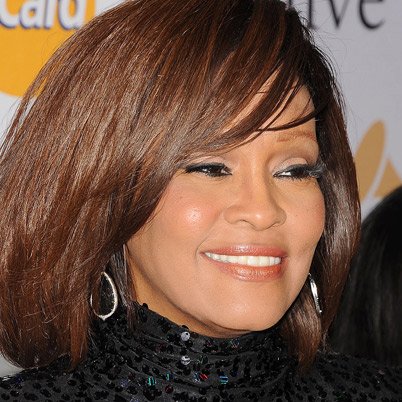
The Federal Bureau of Investigation has released files spanning a decade from 1988 to 1999 detailing three investigations it conducted on behalf of Whitney Houston.
Whitney Houston died in a hotel bathroom on February 11, 2012.
The records, numbering more than 120 pages, were posted online on Monday, showing letters from obsessed fans and an alleged extortion attempt in 1992.
The FBI found no crime actually occurred and there was no evidence of criminal threats in the fan mail.
Following Whitney Houston’s marriage to New Edition singer Bobby Brown in 1992, the files show someone considered to be a close friend and “privy to much personal information” had allegedly attempted to blackmail her to the tune of $250,000, threatening to put private information into the public arena unless she paid out.
Whitney Houston was interviewed by the FBI at the New Jersey offices of her management company about the extortion investigation, but the records are heavily redacted.
A fan in Vermont, New England proclaimed his love through more than 70 letters in a 17-month period, sent to Whitney Houston at the height of her fame.
One letter read: “I tried to ignore what I felt towards her. After five months I had to do something so I started writing letters.”
Later in the same letter, the fan referred to a plan to make his love for Whitney Houston’s public through the press, though he was afraid would hurt the singer’s reputation.
He wrote: “It scares me that I might come up with some crazy or stupid or really dumb idea that might be as bad as that or even worse than that. I might hurt someone with some crazy idea and not realize how stupid an idea is until I have done it.”
The FBI has released files spanning a decade from 1988 to 1999 detailing three investigations it conducted on behalf of Whitney Houston
The FBI decided no law was broken as he had not made any physical threats towards Whitney Houston.
The files were released through a Freedom of Information Act request, but contained no new personal details about Whitney Houston’s life.
In 1999, Whitney Houston received letters and recorded cassette tapes from the Netherlands, which she considered threatening.
In a subsequent FBI interview, the sender made outlandish claims, saying he was President of Europe, had bought Brazil for $66 billion and helped Nelson Mandela’s election campaign in South Africa
Whitney Houston’s death at the age of 48, the night before the Grammy Awards 2012, was as a result of accidental drowning due to cocaine use and heart disease, authorities said.
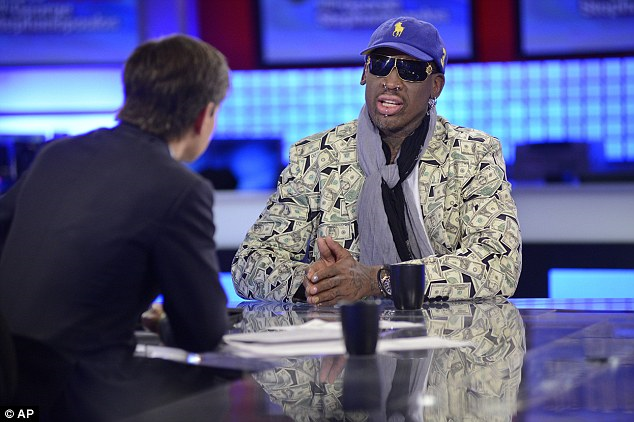
Dennis Rodman has decided to cancel his whirlwind tour of post-North Korea television appearances, causing curiosity and relief among political commentators and media observers.
The cancellations follow his bizarre and inflammatory interview with George Stephanopoulos on Sunday, in which Dennis Rodman called Kim Jung-un a “friend for life” and assured his host that the dictator just wants President Barack Obama to call him.
“He’s very humble,” Dennis Rodman told George Stephanopoulos during his appearance on ABC’s This Week.
“He’s a great guy, he’s a great guy.”
During an interview with the Associated Press after returning to the US Dennis Rodman said: “I love him.”
Dennis Rodman was getting ready to make appearances on ESPN’s Outside the Lines with Bob Ley and CNN’s The Situation Room with Wolf Blitzer, but aborted both scheduled interviews with little advance notice and little explanation.
“Rodman was supposed to be interviewed this a.m. by @BobLeyESPN for OTL after his interview w/ @GStephanopoulos but skipped out on @espn,” sports James Andrew Miller tweeted on Sunday at 3:11 pm.
CNN’s John Berman told viewers late Monday morning that Dennis Rodman “decided to cancel” his interview on The Situation Room, as TVNewser reported.
John Berman instead hosted former Homeland Security adviser Frances Townsend and journalist John Avlon, who chastised the retired basketball player for his praise of Kim Jong-un.
Following the news of Dennis Rodman’s trip to North Korea, including speculation as to whether he now has more first-hand knowledge of North Korea’s leader than the CIA, White House spokesman Jay Carney told White House reporters that the U.S. government disapproved of the flashy attempt at diplomacy.
“The United States has direct channels of communication with the DPRK and instead of spending money on celebrity sporting events to entertain the elites of that country, the North Korean regime should focus on the well-being of its own people, who have been starved, imprisoned and denied their human rights,” Jay Carney said Monday.
Dennis Rodman has decided to cancel his whirlwind tour of post-North Korea television appearances, causing curiosity and relief among political commentators and media observers
Since returning from North Korea, Dennis Rodman has been silent on Twitter, despite a promise on Friday to tell his followers “what is true and not true of what you have heard and read”.
Dennis Rodman tweeted several times while he was visiting North Korea with three members of the Harlem Globe Trotters and Vice Media’s film crew to work on an upcoming HBO series that will debut on April 5.
“It’s true, I’m in North Korea.Looking forward to sitting down with Kim Jung Un. I love the people of North Korea. #WORMinNorthKorea,” he tweeted just after 8 am EST on February 26, before meeting with Kim Jung-un.
“I’m not a politician. Kim Jung Un & North Korean people are basketball fans. I love everyone. Period. End of story. #WORMinNorthKorea,” Dennis Rodman tweeted after few minutes.
During his interview with George Stephanopoulos, Dennis Rodman said he may take another trip to North Korea in the future.
“The next time you go back you should take this report from Human Rights Watch and ask him about that,” the ABC host replied.
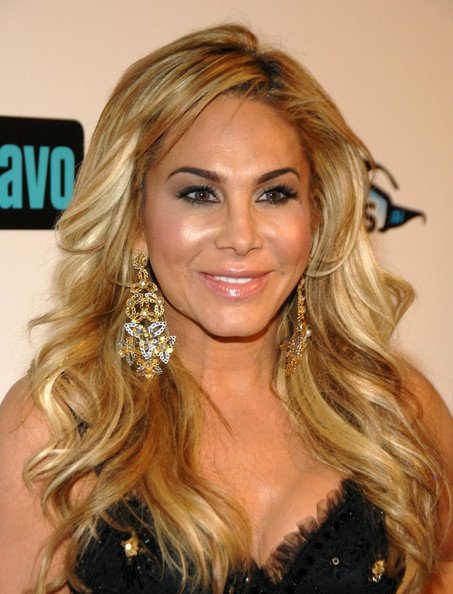
Adrienne Maloof has confirmed that she is leaving Real Housewives Of Beverly Hills after three seasons.
Adrienne Maloof, 51, took to her Twitter account to make the announcement following rumors that she had been fired from Real Housewives Of Beverly Hills.
In a message to her fans, Adrienne Maloof thanked them for their support and told them to “stay tuned”.
“To my loyal fans . . . It was time to exit RHOBH. The show served as a wonderful platform, stay tuned! xoxoA” she wrote.
Adrienne Maloof also linked to her blog which featured a longer message, stating that she had other ventures in the pipeline.
“The show served as a wonderful platform for all the amazing projects that I have in the works. I am forever grateful to my fans, thank you for your support, and stay tuned! xoxoA” she wrote.
The announcement came after reports suggested that Adrienne Maloof had been fired from the popular reality series after joining the show in season one.
According to sources who told People magazine, producers grew tired of her lateness for filming and her complex issues.
“She was let go,” the insider told the magazine.
“Producers were sick of her constant tardiness and her issues.”
Adrienne Maloof has confirmed that she is leaving Real Housewives Of Beverly Hills after three seasons
However, a friend of Adrienne Maloof’s insisted that it was Adrienne who made the choice to not take part in the upcoming season four.
“It was her decision to leave. Adrienne is very happy,” the friend claimed, who also added that producers were in fact pleading with the business mogul to return.
“The producers were begging Adrienne to come back to the show and the reunion right up until the last minute,” the source told the magazine.
Just a few days ago, it was reported that Adrienne Maloof was still making up her mind up about leaving the show for good.
Another member of the cast said Adrienne Maloof was “considering leaving the show… but has not made a definitive decision as of yet”.
Adrienne Maloof also did not appear for the taping of the reunion show last Friday, Life & Style reported.
“She doesn’t want to deal with the women. They are all going to just hash the same thing over and over again and she needs to be with her kids anyway,” a source told the publication last week.
“She’s headed to Mammoth Mountain in LA for a field trip with her children instead.
“She is always a mom first and foremost,’ added the source, ‘but she is also dodging the Housewives because she knows she’ll be attacked and doesn’t want to deal with it.”
Adrienne Maloof has been caught in a bitter feud and legal battle with castmate Brandi Glanville after the blonde blurted out during a taping last spring that Adrienne had used a surrogate to have her twins Christian and Colin, 6.
She was furious when she discovered Brandi Glanville had divulged the information on camera as she had not yet told her children.
The Bravo network was forced to cut the scenes from the final edit of the show due to legal reasons.
Meanwhile, Camille Grammer is also said to have grown tired of the show and quit.