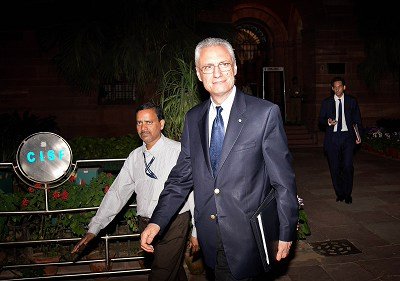
Daniele Mancini, Italy’s ambassador to India, has been ordered not to leave the country after Rome’s refusal to return two marines charged with the murder of two fishermen in Kerala last year.
The Indian court had allowed the marines to go home to vote in last month’s elections.
Ambassador Daniele Mancini had personally assured the court the marines would return by March 22.
On Wednesday, Indian PM Manmohan Singh warned that “there will be consequences” unless Italy returned the marines.
In unusually strong language, Manmohan Singh said that Italy’s refusal to send back the marines was “unacceptable”.
Rome’s decision has come as a major embarrassment for the Indian government and opposition parties have been demanding their immediate return.
On Thursday morning, the court headed by Chief Justice Altamas Kabir issued a notice to the Italian ambassador, restraining him from leaving without its permission.
Daniele Mancini has been asked to respond to the notice by March 18.
Daniele Mancini, Italy’s ambassador to India, has been ordered not to leave the country after Rome’s refusal to return two marines charged with the murder of two fishermen in Kerala last year
India’s Attorney General GE Vahanvati told the judges that Rome’s failure to return the two marines “is a breach of undertaking given to the highest court of the land and the government is extremely concerned about it”.
In February, the Supreme Court allowed Massimilian Latorre and Salvatore Girone to go home to vote in the Italian elections. They were ordered to return within four weeks.
But on Monday, Italy informed India that the marines would not be coming back, prompting a diplomatic row.
The marines are accused of shooting the fishermen in February 2012. They said they mistook them for pirates.
Italy argues that because the case is now the subject of international maritime law, it has been decided that the pair will not return to India “on the expiration of the permission granted to them”.
Rome says that it wants its nationals to be tried in Italy. Because the incident took place in international waters, Italy believes India has no jurisdiction in the case.
Pope Francis I has begun his first day at the helm of the Catholic Church, attempting to set out his vision for his papacy amid a testing schedule.
The Pope will lead cardinals in his first Mass, begin appointing senior Vatican staff and may visit his predecessor, Benedict XVI, Pope Emeritus.
Pope Francis I is the first Latin American and Jesuit pope and has received a flood of goodwill messages from around the world.
He also faces a series of tough challenges.
The Church has been dogged by infighting and scandals over clerical sex abuse and alleged corruption.
Thursday morning saw Pope Francis I beginning the day with a visit to Rome’s main basilica dedicated to the Virgin Mary, Santa Maria Maggiore, for a private prayer.
“He spoke to us cordially like a father,” Reuters news agency quoted Father Ludovico Melo, a priest who prayed with the Pope, as saying.
“We were given 10 minutes’ advance notice that the Pope was coming.”
The election of Cardinal Jorge Mario Bergoglio, Archbishop of Buenos Aires shocked many onlookers when it was revealed on Wednesday.
Although he reportedly came second to Pope Benedict XVI during the 2005 conclave, few had predicted the election of the first pope from outside Europe in 1,300 years.
Pope Francis I will return to the Sistine Chapel on Thursday afternoon, scene of his election, to celebrate Mass with the cardinals.
Over the weekend, he will meet the world’s media at a special papal audience, an opportunity perhaps to set out some of his global vision.
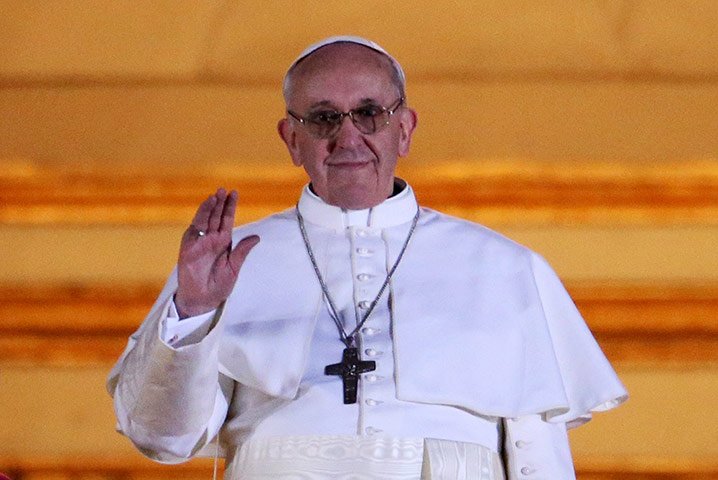
Pope Francis I has begun his first day at the helm of the Catholic Church, attempting to set out his vision for his papacy amid a testing schedule
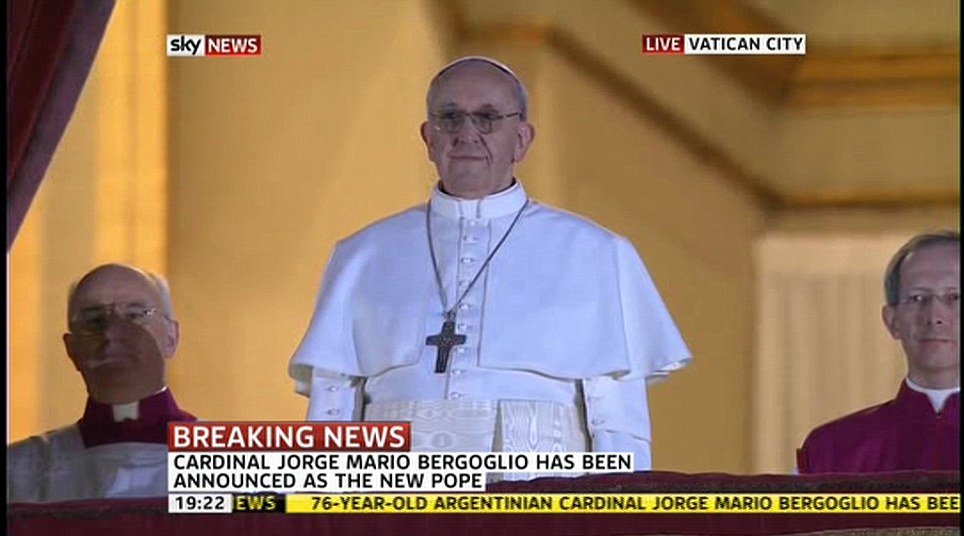
Pope Francis I had been greeted by crowds roaring their approval when he appeared at the balcony overlooking St Peter’s Square on Wednesday evening, about an hour after white smoke rose from the chimney of the Sistine Chapel to announce to the world that a new pontiff had been elected.
“It seems that my brother cardinals have gone to the ends of the earth [to find a pope],” Francis said wryly, referring to his native Argentina.
“Now, we take up this journey… A journey of fraternity, of love, of trust among us,” he said.
Pope Francis I endeared himself to the crowds – and underlined his reputation for humility – when he asked them to bless him before blessing them in return.
Later, according to the New York Archbishop Cardinal Timothy Dolan, Pope Francis I shunned a special car and security detail provided to take him to the Vatican – “I’ll just go with the guys [cardinals] on the bus,” Cardinal Dolan quoted him as saying.
At the dinner itself, Cardinal Timothy Dolan said the Pope had made the cardinals laugh when he referred to the seven days of meetings that led to his election, saying: “I am going to sleep well tonight and something tells me you are too.”
The 76-year-old from Buenos Aires is the first pope to take the name of Francis – reminiscent of Francis of Assisi, the 13th Century Italian reformer and patron saint of animals, who lived in poverty.
He faces a gruelling schedule over coming days, with a visit to his predecessor Benedict XVI at his retreat at Castel Gandolfo outside Rome reportedly planned, as well as audiences with his cardinals, the media and the faithful.
The visit to Benedict is important, correspondents say, as the existence of a living retired pope has prompted fears of a possible rival power.
The Pope will be installed officially in an inauguration Mass on Tuesday, March 19, the Vatican said.
His election was met with thunderous applause at the cathedral in Buenos Aires and with delight and surprise elsewhere in Latin America – home to 40% of the world’s 1.2 billion Catholics.
Guillermo Lopez Mirau from Salta, Argentina, said he was delighted with Cardinal Jorge Mario Bergoglio’s election.
“People here are overjoyed. You can hear sirens and church bells ringing in the air.”
President Barack Obama sent “warm wishes” on behalf of the American people to the newly elected pontiff, hailing the Argentine as “the first pope from the Americas”.
The new leader of the world’s Anglicans, Archbishop of Canterbury Justin Welby, said he was looking forward to “walking and working together”.
And Argentine President Cristina Fernandez de Kirchner – who is said to have clashed with the Argentine archbishop in the past over issues including gay marriage – wished the pontiff a “fruitful pastoral mission”.
Pope Francis I takes the helm at a difficult time for the Catholic Church, facing an array of challenges which include the role of women, interfaith tensions and dwindling congregations in some parts of the world.
Cardinal Jorge Mario Bergoglio, who was not among the frontrunners before the election, is regarded as a doctrinal conservative.
But he is also seen as a potential force for reform of the Vatican bureaucracy, which may have won the support of reforming cardinals.
Pope Francis I will come under strong pressure to reform the Curia, the governing body of the Church.
Pope Francis I’s next schedule:
Thursday, March 14: Pope celebrates Mass with cardinals in Sistine Chapel – closed to public but televised
Friday, March 15: Pope meets all cardinals, including those over 80 who did not take part in conclave
Saturday, March 16: Papal audience with media
Sunday, March 17: Pope recites Angelus with faithful in St Peter’s Square
Tuesday, March 19: Pope formally installed at Mass in St Peter’s Square
New court documents have emerged revealing Kris Humphries proposal to Kim Kardashian was reshot for her reality show and conversations about her marriage concerns were filmed after she’d already filed for divorce.
Kim Kardashian and Kris Humphries are currently embroiled in a bitter divorce battle as Kris attempts to prove that Kim married him for publicity.
Keeping Up With The Kardashians executive producer Russell Jay took part in a deposition last month and a transcript of his testimony has emerged.
In the exchange, Russell Jay also suggested Kim Kardashian has used a tear stick in crying scenes filmed for the show.
Life & Styleobtained court documents from the deposition as part of Kris Humphries’ fraud case against Kim Kardashian.
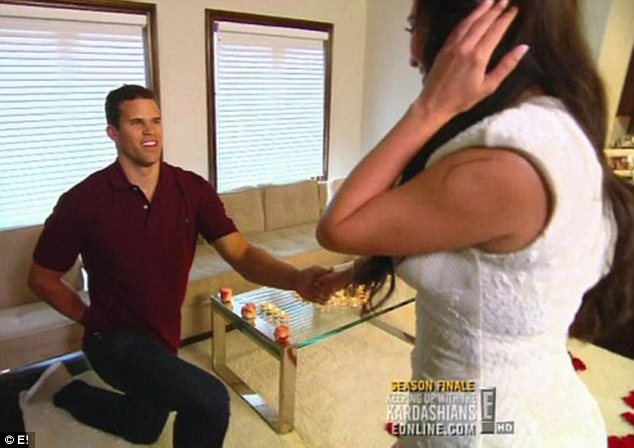
Russell Jay revealed Kim Kardashian didn’t like her reaction during Kris Humphries’ proposal so asked for the scene to be reshot.
“I remember, like, Kim – she didn’t know he was going to propose at that moment,” he said.
“And she came in and she was completely surprised, and I think she had a bad reaction or something and she was embarrassed.
“So she said can we just, like, have me come back in one more time and be, like, really surprised. Because she had no idea it was going to happen. It was in her bedroom.”
New court documents have emerged revealing Kris Humphries proposal to Kim Kardashian was reshot for her reality show
In addition, Russell Jay revealed that some scenes on the show were created entirely for entertainment purposes.
Russell Jay admitted that the scene in which Kim Kardashian confessed to mother Kris Jenner that she was struggling to make her marriage work was in fact filmed after Kim filed for divorce.
Life&Style reports that Kris Humphries “feels vindicated” by the revelations, quoting as source as saying: “It’s obvious they were trying to tarnish his reputation. This will prove how fake Kim and the show are.”
However, according to TMZ, Kim Kardashian was “completely surprised” by his proposal, which wouldn’t help Kris Humphries prove she fraudulently induced him to marry her.
Kim Kardashian is currently pregnant with Kanye West’s baby and had been hoping to have her divorce finalized before her early July due date.
On May 6 Kim Kardashian will appear in court to defend herself as the feud continues.
It comes after it was revealed that Kris Humphries’ lawyer Marshall Waller quit, blaming an “irremediable breakdown of the attorney-client relationship”.
Kris Humphries still has an out-of-state lawyer – Lee Hutton – but needs another California lawyer for the divorce case reports TMZ.
Kim Kardashian filed for divorce from Kris Humphries on October 21, 2011, after just 72 days of marriage.
Former Iron Maiden drummer Clive Burr has died at the age of 56 after suffering from multiple sclerosis.
Steve Harris, Iron Maiden’s founder and bass player, said it was “terribly sad news” in an announcement on the group’s website.
“He was a wonderful person and an amazing drummer who made a valuable contribution to Maiden in the early days when we were starting out.”
Clive Burr joined Iron Maiden in 1979 and played on their first three albums.
Lead singer Bruce Dickinson also paid tribute, saying: “Even during the darkest days of his MS, Clive never lost his sense of humor or irreverence.”
Clive Burr played on the band’s debut album Iron Maiden (1980), Killers (1981) and their number one 1982 album The Number of the Beast.
Megadeath bassist David Ellefson, who left his tribute on Facebook, said: “He was one of my all time favourite Metal drummers.”
“So sad,” said Brian Slagal, CEO of Metal Blade Records, on Twitter.
“Clive was a great guy.”
“Always remember CLIVE for eternity,” said Iron Maiden tribute band Coverslave in their own Twitter tribute.
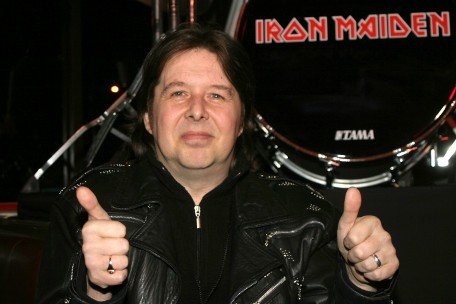
Former Iron Maiden drummer Clive Burr has died at the age of 56 after suffering from multiple sclerosis
Born in 1957 in east London, Clive Burr was a member of British metal band Samson before joining Iron Maiden.
“I first met Clive when he was leaving Samson and joining Iron Maiden,” said Bruce Dickinson.
“He was a great guy and a man who really lived his life to the full.”
Clive Burr left the band in December 1982, just as they were about to become a global stadium headliner.
When he was diagnosed with multiple sclerosis in 2001, his former Maiden bandmates formed the Clive Burr MS Trust Fund to help raise money for his living costs.
They performed a number of concerts in his honor when he struggled to keep up payments on his house.
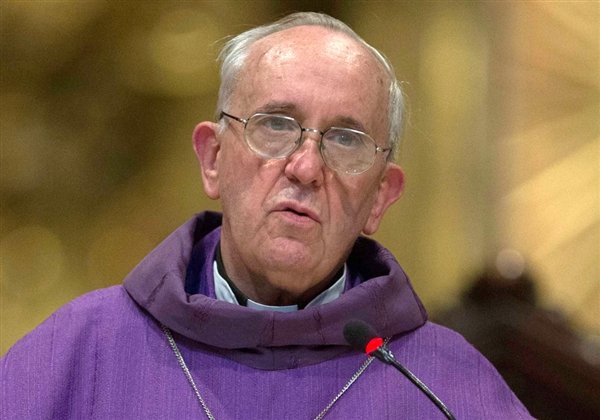
Pope Francis I, born Jorge Mario Bergoglio on 17 December 1936, is the 266th and current Pope of the Catholic Church, elected on 13 March 2013.
He is the first Pope born in the Americas, and the first Pope from the Southern Hemisphere.
Cardinal Jorge Mario Bergoglio, Archbishop of Buenos Aires has been mooted as a possible successor ever since John Paul II died.
Jorge Mario Bergoglio, 76, a trained chemist and son of a railway worker, has been a cardinal since 2001 and is widely seen as being open and compassionate.
He stands out for his humility, living in a modest apartment, rather than his luxury official residence.
“In favor of Bergoglio is his pastoral attitude, as they say in the Church – his relationship with the people,” said in 2005 Leandro Pastor, a philosophy professor at the University of Buenos Aires, who has known Cardinal Bergoglio for more than 30 years.
“He’s a very simple man. He’s very austere. And also, I think he’s an intelligent man and someone who is very good at communicating.”
Pope Francis I, born Jorge Mario Bergoglio, is the 266th and current Pope of the Catholic Church
Jorge Mario Bergoglio impressed fellow prelates in 2001 when he skilfully helped to manage a synod of bishops in Rome.
Buenos Aires’ cardinal is also a strong advocate for the poor. And, as a Latin American, he comes from a region which is home to around half the world’s billion or so Catholics.
He speaks Italian – the official language of the Church – and that he traces his ancestry back to Italy.
In the event that cardinals struggle to decide whether to maintain a non-Italian papacy or to return to its traditional roots, Jorge Mario Bergoglio could emerge as a choice of compromise.
For the past 28 years, Jorge Mario Bergoglio has lived with only one functioning lung, although he is said to be in good shape.
And then there is the fact that he is a Jesuit.
This order of the Church has never produced a Pope before.
Jorge Mario Bergoglio, the archbishop of Buenos Aires, has been elected the 266th Roman Catholic Church’s new Pope.
The Argentine cardinal is the first Latin American to be Pope.
He will call himself Francis I.
An hour earlier, white smoke billowing from the Sistine Chapel chimney announced to the world that cardinals gathered inside had made their choice.
Jorge Mario Bergoglio replaces Benedict XVI, who resigned last month saying he was not strong enough to lead the Church.
The 115 cardinals have been in isolation since Tuesday afternoon, and held four inconclusive votes.
Jorge Mario Bergoglio, the archbishop of Buenos Aires, has been elected the 266th Roman Catholic Church’s new Pope
At least 77 of them, or two-thirds, would have had to vote for a single candidate for him to be elected Pope.
Before the conclave began, there was no clear frontrunner to replace Benedict.
Crowds with umbrellas massed in the square flying flags from around the world.
The Catholic News Agency said people were running through the streets of Rome, hoping to reach St Peter’s Square in time for the appearance of the new Pope.
Twinkies could be back on sale in stores by the summer after manufacturer Hostess was bought in a $410 million deal.
The snacks, along with other Hostess products including Wonder bread, have not been produced since November when the company filed for liquidation following strike action by the Bakery Workers union.
The company announced to the bankruptcy court on Monday that a winning bid for Hostess had been tabled by private equity firms Apollo Global Management and Metropoulos & Co.
The winning bid also secured five of the company’s closed bakeries as part of the bid.
Hostess had forewarned the bankruptcy court in December that it was narrowing down the bids it received for its brands and expected to sell off its snack cakes and bread to separate buyers.
The company said then that a likely suitor had emerged for the brand, which includes Twinkies, Ding Dongs and Ho Hos, along with Dolly Madison cakes, which includes Coffee Cakes and Zingers, said Joshua Scherer of Perella Weinberg Partners.
They said at the time that another viable bid had been made for Drake’s cakes, which includes Devil Dogs, Funny Bones and Yodels. That bidder was also said to want to buy the Drake’s plant in Wayne, N.J., which Joshua Scherer said is the country’s only kosher bakery plant.
It had been predicted that the auctions could be very active for some of the brands, given the number of parties that had expressed interest.
About 30 plants were also likely to be sold with the brands with six plants, several warehouses and a fleet of trucks likely to be closed or scrapped.
Twinkies could be back on sale in stores by the summer after manufacturer Hostess was bought in a $410 million deal
Hostess hired a firm Hilco to act as a sales agent for those additional assets; the firm also gave Hostess a $30 million loan to maintain operations during its liquidation, which was expected to take about a year.
Hostess, based in Irving, Texas, had said potential buyers included major packaged food companies and national retailers, such as big-box retailers and supermarkets.
The company stressed it needs to move quickly in the sale process to capitalize on the outpouring of nostalgia sparked by its bankruptcy.
To begin winding down its operations in November, Hostess had said it would retain about 3,000 workers to shutter plants and perform other tasks.
The following month, an attorney for Hostess said in court that figure was down to about 1,100 employees.
The liquidation of Hostess ultimately means the loss of about 18,000 jobs, not including those shed in the years leading to the company’s failure.
The company’s demise came after years of management turmoil and turnover, with workers saying the company failed to invest in updating its snack cakes and breads.
Hostess filed for its second Chapter 11 bankruptcy in less than a decade last January, citing steep costs associated with its unionized workforce.
The company was able to reach a new contract agreement with its largest union, the Teamsters, but the bakers union rejected the terms and went on strike in early November. A week later, Hostess announced its plans to liquidate, saying the strike crippled its ability to maintain normal production.
Although Hostess sales have been declining over the years, they had still been clocking in at between $2.3 billion and $2.4 billion a year.
White smoke pouring from the Sistine Chapel chimney has announced to the world that cardinals gathered inside have elected a new Pope to head the Catholic Church.
Crowds in St Peter’s Square cheered and bells rang out as the smoke appeared.
The name of the new Pope is expected to be announced shortly.
The Catholic News Agency said people were running through the streets of Rome, hoping to reach St Peter’s Square in time for the appearance of the new Pope.
A troupe of Swiss Guards in silver helmets and full regalia marched to the Basilica in preparation for the announcement, as military bands played for the onlookers.
After his name is read out, the new Pope will emerge from the loggia overlooking the square to deliver his first speech.
He will have already accepted an invitation to become Pope and the cardinals will have sworn allegiance to him, after which he will have gone to pray alone.
White smoke pouring from the Sistine Chapel chimney has announced to the world that cardinals gathered inside have elected a new Pope to head the Catholic Church
New treatments that use extremely cold temperatures are the hottest beauty trend.
From reducing wrinkles and boosting radiance to firming the skin, exposing the body to plummeting temperatures can have multiple benefits, say the experts behind these procedures.
“Therapies that use cold temperature can stimulate circulation,” says Dr. Preema Vig, medical director of Beyond MediSpa at Harvey Nichols, UK.
“When used in the right way through the correct technology and methods, it’s possible to see benefits in fat reduction and skin toning.”
We’ve all heard of Botox, but a new technique set to become widely available this summer has earned the nickname “Frotox”.
Iovera – a toxin-free alternative to Botox – uses a technique called cryoneuromodulation to banish fine lines.
The 20-minute procedure involves placing a device filled with liquid nitrogen next to the nerves that control the muscles that cause wrinkles.
“The liquid nitrogen freezes the targeted nerves on the forehead and between the brows,” says Harley Street plastic surgeon Dr. Yannis Alexandrides, who has been trialing and refining the procedure developed by California-based lab Myoscience Inc. for more than a year.
“This puts the nerves into temporary hibernation, so muscles relax and wrinkles disappear.
“Unlike Botox, which takes four days to work, the effects can be seen immediately and last for up to four months. And as nitrogen occurs naturally in the body – unlike Botox – you aren’t putting a foreign substance in to your system.”
From reducing wrinkles and boosting radiance to firming the skin, exposing the body to plummeting temperatures can have multiple benefits
Cold therapy is also being used in a new generation of super-powered facials. The Cryoderm facial costs about $800, but practitioners say the price tag reflects the cutting-edge technologies used in the treatment.
The 75-minute session combines cold therapy with exfoliating microdermabrasion, lymphatic-drainage massage and collagen-boosting radio frequency.
“The cold causes the blood vessels to contract and then dilate, which improves the oxygen and nutrient supply to the skin’s surface, making it appear more radiant,” says facialist Rani Mirza, who has performed the treatment on celebrities including Anna Friel, Natalie Imbruglia and Erin O’Connor.
“My clients like it because it gives their skin a taut and more defined look,” she adds.
A more affordable option comes from Parisian brand Anne Semonin. Cheryl Cole is said to be keen on the “Ice” Cryotherapy Super Facial, which includes a cleanse and exfoliation followed by a puff-reducing massage using ice cubes made with marine spring water, moisturizing red algae and evening primrose oil.
Cold therapy is also being used to shift fat and cellulite. Jennifer Aniston and Jessica Alba are said to be fans of the Bioslimming Body Wrap.
Despite the trend, not everyone is warming to the idea of cold therapy.
“Some of these treatments can break down fat and tighten skin, but results are unpredictable,” says cosmetic doctor Mervyn Patterson.
“Treatments such as Frotox are at very early stages and we know little about its long-term safety and effectiveness.
“Low temperatures can be soothing after surgical procedures and temporarily rejuvenating, but there is no evidence to support claims that this type of therapy has lasting anti-ageing benefits.”
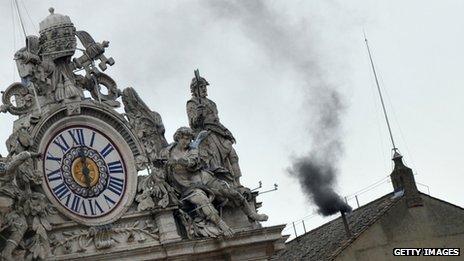
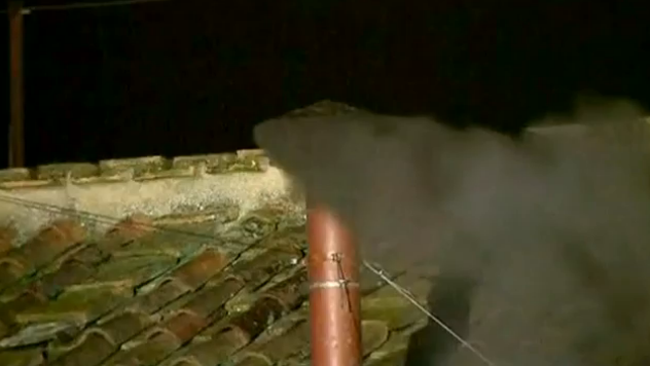
Black smoke has poured from Sistine Chapel chimney, signaling that the second and third votes in the Papal election have been inconclusive.
Cardinals have been meeting for a second day to choose a successor to Pope Benedict XVI, who resigned last month.
The 115 electors are shut off in Vatican’s Sistine Chapel and a nearby residence until two-thirds agree on a leader for the world’s 1.2 billion Catholics.
Further votes will be held this afternoon.
Starting with today, the cardinals will vote four times daily until a single candidate garners a two-thirds majority, at which point the smoke coming from the Sistine Chapel chimney will be white.
Before the conclave began there was no clear frontrunner to replace Pope Benedict.
Black smoke has poured from Sistine Chapel chimney, signaling that the second and third votes in the Papal election have been inconclusive
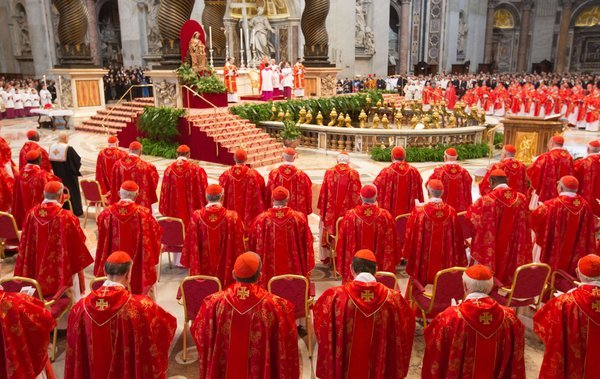
More than 100 cardinals of the Roman Catholic Church have gathered to Vatican for a new pope election. At some point, white smoke billowing from the Sistine Chapel will show that a decision has been made.
What goes on behind the closed doors before the smoke appears?
Here are 10 lesser-known facts about the papal conclave.
1. It’s a lock-in. Conclave comes from the Latin “cum-clave” meaning literally “with key” – the cardinal-electors will be locked in the Sistine Chapel each day until Benedict XVI’s successor is chosen. The tradition dates back to 1268, when after nearly three years of deliberation the cardinals had still not agreed on a new pope, prompting the people of Rome to hurry things up by locking them up and cutting their rations. Duly elected, the new pope, Gregory X, ruled that in future cardinals should be sequestered from the start of the conclave.
2. Spying is tricky. During the conclave they are allowed no contact with the outside the world – no papers, no TV, no phones, no Twitter. And the world is allowed no contact with them. The threat of excommunication hangs over any cardinal who breaks the rules.
Before the conclave starts, the Sistine Chapel is swept for recording equipment and hidden cameras. It is a myth that a fake floor is laid to cater for anti-bugging devices… Anti-bugging devices are used, and the floor is raised, but only to protect the marble mosaic floor.
3. Portable loos play an essential role. Until 2005, the cardinals endured Spartan conditions in makeshift “cells” close to the Sistine Chapel. They slept on hard beds and were issued with chamber pots. Pope John Paul II changed that with the construction of a five-storey 130-room guest house near St Peter’s – Domus Sanctae Marthae (St Martha’s House). But cardinals still have to rough it while voting. In an interview with the Catholic News Service last week, Antonio Paolucci, the director of the Vatican Museum said: “I believe they may be installing portable chemical toilets inside the chapel.”
4. An “interregnum” is ending. The pontificate used to be known as a “reign” – hence the period between two popes being called an interregnum (“between reigns”). Many of the regal trappings of the papacy were set aside by Pope Paul VI, who began his pontificate in 1963 with a coronation, but never wore the beehive-shaped papal tiara again.
More than 100 cardinals of the Roman Catholic Church have gathered to Vatican for a new pope election
5. Counted votes are sewn up. The cardinals hold one vote on day one and then two each morning and afternoon until a candidate wins a two-thirds majority. Each writes his choice on a slip of paper, in disguised handwriting, and folds it in half. Cardinals then process to the altar one by one and place the ballots in an urn. The papers are mixed, counted, opened and scrutinized by three cardinals, the third of whom passes a needle and thread through the counted votes. At the end of each morning and afternoon session the papers are burned.
6. Chemicals color the smoke. Those 115 ballot papers produce an unusual amount of smoke… which pours out of a chimney specially installed on the roof of the Sistine Chapel. A chemical is mixed with the paper to produce black smoke when voting is inconclusive, or white smoke when a pope has been elected. But even the white smoke looks dark against a bright sky, so to avoid any possible confusion, white smoke is accompanied by the pealing of bells. In 2005, though, the official responsible for authorizing the bells was temporarily occupied with other duties, so there was a period of confusion while white smoke billowed out, and the bells of St Peter’s remained silent.
7. Robes are prepared in S, M and L. The Pope has to look the part when he is presented to the faithful from a balcony overlooking St Peter’s Square. So papal tailors Gammarelli prepare three sets of vestments – in small, medium and large sizes. These will include a white cassock, a white silk sash, a white zucchetto (skullcap), red leather shoes and a red velvet mozzetta or capelet with ermine trim – a style revived by Benedict XVI. The Pope dresses by himself, donning a gold-corded pectoral cross and a red embroidered stole. (Popes traditionally wore red, but in 1566 St Pius V, a Dominican, decided to continue wearing his white robes. Only the Pope’s red mozzetta, capelet and shoes remain from the pre-1566 days.)
8. Huge bets are laid. Experts suggest more than $15 million will be wagered as people guess which cardinal will get the nod – making this the world’s most bet-upon non-sporting event. It’s not a new phenomenon. In 1503 betting on the pope was already referred to as “an old practice”. Pope Gregory XIV was so cheesed off that in 1591 he threatened punters with excommunication, but the gambling continues unabated. Prominent Italian and Latin American names currently lead the field.
9. Just say yes. Technically, an elected Pope can refuse to take up the position, but it’s not really done to turn down the Holy Spirit. That said, few relish the prospect of leading the world’s largest Church, beset as it is at the moment with falling congregation numbers, sex abuse scandals and internal wrangling. So many new popes are overcome with emotion after their election that the first room they enter, to dress for the balcony scene, is commonly known as the Room of Tears.
10. There is no gender test. Chairs with a large hole cut in the seat are sometimes thought to have been used to check the sex of a new Pope. The story goes that the aim of the checks was to prevent a repeat of the scandal of “Pope Joan”, a legendary female cardinal supposedly elected pope in the 14th Century. Most historians agree that the Joan story is nonsense. Examples of the chairs, the sedes stercoraria, are apparently held in museums, but their purpose is unclear. One unconfirmed theory is that they were used to check that the new pope had not been castrated.
After everyone assumed that Tiger Woods and Elin Nordegren had patched things up and revived their romance, a Tuesday piece by ShowBizSpy (SBS) refutes all previous reports.
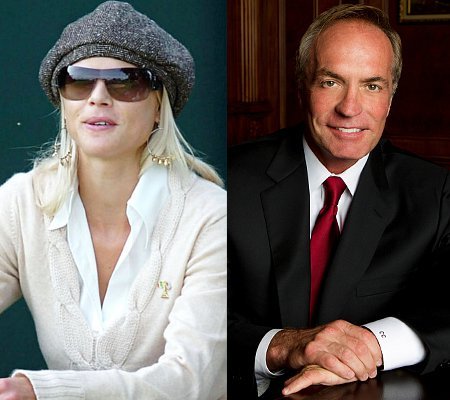
According to SBS, Elin Nordegren, 33, is not back to Tiger Woods like everyone suspects, and is in fact dating 54-year-old billionaire Chris Cline.
Coal magnate Chris Cline and the former Swedish model live in Florida’s exclusive North Palm Beach oceanfront community of Seminole Landing, which is where they reportedly met.
“Elin and Chris have been dating since the holidays,” said a source.
Born in Beckley, West Virginia, Christopher Cline is a coal-mining entrepreneur and a philanthropist. He’s the owner of Foresight Reserves LP and is regarded as the “New King Coal.”
According to Forbes, Chris Cline is worth an estimated $1.2 billion, which makes him the magazine’s billionaire #1175, #377 in United States, and #360 in Forbes 400.
Chris Cline has been married twice, with his most recent one ending in 2000, and is the proud father of four: two sons and two daughters.
Chris Cline currently resides in his 33-thousand-square-foot home in Palm Beach, Florida, which happens to be just around the corner from Elin Nordegren’s rebuilt mansion.
It appears that Elin Nordegren is not back to Tiger Woods like everyone suspects, and is in fact dating 54-year-old billionaire Chris Cline
Celebrities including Beyonce and Jay-Z have had private details of their finances posted online.
Hackers have also put up information, but not credit reports, about US Vice-President Joe Biden and former Secretary of State Hillary Clinton.
Los Angeles police say they are investigating how a police chief’s private details, including his address and a credit report, ended up online.
Police Cmdr. Andrew Smith described the site as “creepy”.
He said: “People get mad at us, go on the Internet and try to find information about us, and post it all on one site.
“The best word I can use to describe it is creepy.”
Andrew Smith also confirmed that police would be investigating the posting of information about any celebrities living in Los Angeles.
Other affected people include Paris Hilton and Kim Kardashian.
Celebrities including Beyonce and Jay-Z have had private details of their finances posted online
Some of the private financial information posted includes social security numbers, which could allow fraudsters to commit identity theft.
Actors Mel Gibson and Ashton Kutcher are also reported to have been targeted on the site.
Information about FBI Director Robert Mueller is thought to have been uploaded. The bureau says it is aware of the site but has not revealed whether they will be investigating.
More names were added throughout Monday, including Britney Spears and former presidential candidate Sarah Palin.
The website uses an internet suffix assigned to the Soviet Union and includes some unflattering pictures of the people who are mentioned.
It did not state how it sourced the information but did include an anti-police message written in Russian.
One of the site’s pages also made reference to the former police officer Christopher Dorner who apparently committed suicide during a large scale manhunt, after he killed four people.
So far representatives for each person targeted either declined to comment on the accuracy of the information that was posted, or they did not return messages seeking comment.
A Save the Children report has revealed that an increasing number of children in Syria are being recruited by armed groups on both sides of the conflict.
Children are being used as porters, guards, informers and fighters and, in some cases, as human shields, the charity said in Childhood Under Fire.
Some two million children are in need of assistance in Syria, Save the Children estimates.
It says the two-year conflict has affected all aspects of their lives.
Researchers from Turkey found that three in every four Syrian children they interviewed had lost a loved one because of the fighting, the report says.
Many have lost access to healthcare and are living in unsanitary conditions where the risk of disease is high. Their families are struggling for food as shortages send prices beyond the reach of poorer families.
Their education has been disrupted as some 2,000 schools have either been damaged by the fighting or become temporary shelters for displaced people.
Syria’s children are the conflict’s “forgotten victims – facing death, trauma and suffering, and deprived of basic humanitarian aid”, the report said.
A Save the Children report has revealed that an increasing number of children in Syria are being recruited by armed groups on both sides of the conflict
Save the Children has appealed for international help, but said: “The only way to stop their suffering is to bring an end to the war.”
The report said it had found a growing pattern of children under the age of 18 being used by armed groups on both sides in the conflict.
For many children and their families, it is seen as a source of pride, the report says, but some children are being forcibly recruited into military activities.
In some cases, children as young as eight have been used as human shields, the report says.
One group affiliated to the opposition has documented the deaths of at least 17 children associated with armed groups since the start of the conflict; many others have been severely injured and in some cases permanently disabled, the report also says.
The research team at Bahcesehir University in Turkey found that not only had three in every four children they spoke to had lost a loved one, but one in every three children had been hit, kicked or shot at in the course of the conflict.
“I don’t think there is a single child untouched by this war,” the report quotes a child called Safa as saying.
“Everyone has seen death, everyone has lost someone. I know no one who has not suffered as we have. It is on such a scale.”
The Save the Children report echoes similar findings made public by the UN children’s agency Unicef on Tuesday.
Unicef warned of a lost generation in Syria, saying children under the age of 18 were growing up knowing nothing but violence, were being deprived of a right to an education and were suffering traumas that could scar them for life.
As many as 70,000 people have died in the two-year conflict, the UN believes.
More than a million Syrians have now been registered as refugees by the UN in neighboring countries.
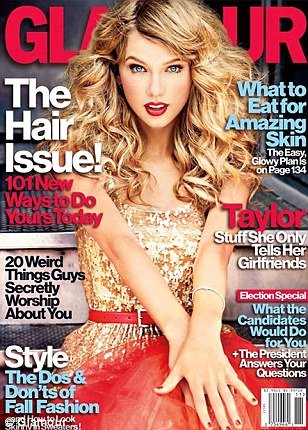
According to a report by Women’s Wear Daily (WWD), the magazines featuring Taylor Swift on the cover in 2012 sold less than those displaying less well known celebrities such as Lauren Conrad and Zooey Deschanel.
Taylor Swift cut a glamorous sight on the covers of Vogue, Glamour and Harper’s Bazaar last year, following the October release of her hugely successful album Red.
The report, by the Alliance for Audited Media, examined sales of the high end women’s monthly magazines in 2012.
Taylor Swift’s Vogue cover in February 2012 sold a solid 329,371 – a little over the magazine’s six month average – but the star was outsold to a large degree by Lady Gaga whose cover appearance moved almost double – shifting 602,000 copies.
However, Lady Gaga’s appearance in a pink gown and hair raising wig featured on the magazine’s September issue, which traditionally sells more.
Adele’s March cover also beat Taylor Swift, selling 410,343, and providing Vogue with its second best seller in 2012.
Although Taylor Swift performed acceptably for Glamour‘s November issue, selling 443,000 copies, she failed to beat Lauren Conrad who proved the year’s “runaway best seller” for the brand with a little over 500,000, while Victoria Beckham’s September edition moved an impressive 482,000.
According to a report by Women’s Wear Daily, the magazines featuring Taylor Swift on the cover in 2012 sold less than those displaying less well known celebrities
Glamour editor-in-chief Cindi Leive told WWD that she believed Taylor Swift’s relationship troubles with One Direction star Harry Styles could have caused her low sales.
“There may have been a little hiccup for her right around the 1-D relationship,” she said.
“But it’s nothing a pro can’t come back from. I’d put money on her for the long run.”
Taylor Swift was also Cosmopolitan magazine’s worst seller of the entire year, with her December cover selling 20% below the six-month average for the magazine.
Scarlett Johansson was Cosmopolitan‘s top performing star, with 1.5 million readers interested in an interview with the Lost in Translation star, with Scarlett discussing what she finds attractive in a man.
Even Ashley Greene outsold Taylor Swift, with the Twilight actress ranking second in the year’s sales.
All this despite Taylor Swift, who appeared on the cover of Harper’s Bazaar in December and Elle magazine in February 2013, usually giving good value in interviews.
She made headlines for her Vanity Fair interview for April in which she appears on the cover, where she criticizes Golden Globe hosts Tina Fey and Amy Poehler.
Gwen Stefani also beat Taylor Swift’s Harper’s Bazaar total of 138,412 copies, despite the No Doubt singer having a poor year in record sales.
Celebrities who performed well for the magazines in general include Katy Perry who sold best for Elle and Jennifer Aniston for In Style.
Kate Middleton’s cover was the top selling issue for Vanity Fair, with model Kate Moss also scoring well for Harper’s Bazaar and W magazine.
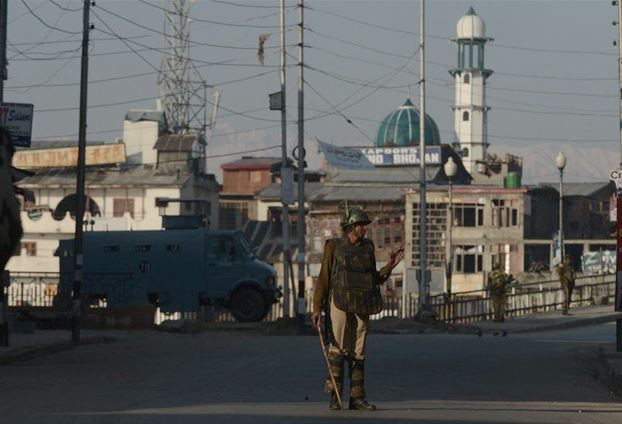
At least five Indian soldiers have been killed by gunmen who threw grenades near a school in Srinagar in Indian-administered Kashmir, police say.
Two gunmen have also been killed and at least five others, including three civilians were injured, police say.
The region has seen an insurgency against Indian rule since 1989, but violence has declined in recent years.
No group has said it carried out the attack.
This is the first major attack in three years in Indian-administered Kashmir which is claimed by both India and Pakistan.
The school was closed and no children were hurt in the attack, officials said. Security forces have cordoned off the area.
The gunmen attacked a security camp manned by the Central Reserve Police Force (CRPF) near a school run by the police in the Bemina district.
At least five Indian soldiers have been killed by gunmen who threw grenades near a school in Srinagar in Indian-administered Kashmir
A senior police official said the attackers had “mixed” with children playing cricket on a nearby field and were carrying arms in sports kits.
“They threw a grenade at the security forces, killing five of them. They also opened fire,” the official said.
Indian-administered Kashmir has been tense since the execution in February of Afzal Guru, a Kashmiri man convicted for plotting to attack India’s parliament in 2001.
Attacks in Srinagar have become rare – last October one person was killed by gunmen who opened fire in a hotel on the outskirts of Srinagar.
And in May last year seven paramilitary soldiers were injured after two men on a motorcycle fired at them in the city.
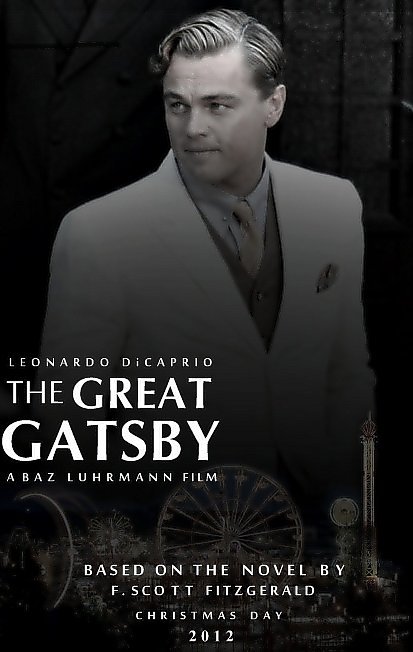
The 66th Cannes Film Festival will be opened by Baz Luhrmann’s adaptation of The Great Gatsby, starring Leonardo DiCaprio.
Based on F. Scott Fitzgerald’s 1925 classic novel, Toby Maguire and Carey Mulligan also star.
Baz Luhrmann – whose debut film Strictly Ballroom was screened at Cannes 21 years ago – said the festival had “always been so close to our hearts”.
His new film will be shown on May 15 at the Grand Theatre Lumiere of the Palais des Festivals.
“F. Scott Fitzgerald wrote some of the most poignant and beautiful passages of his extraordinary novel just a short distance away at a villa outside Saint-Raphael,” Baz Luhrmann said in a statement.
The Great Gatsby was scripted by Baz Luhrmann and co-writer Craig Pearce, who worked together eight-time Oscar nominated film, Moulin Rouge. That film also opened the Cannes Film Festival in 2001.
The 66th Cannes Film Festival will be opened by Baz Luhrmann’s adaptation of The Great Gatsby, starring Leonardo DiCaprio
Leonardo DiCaprio, who stars as the tragic romantic Jay Gatsby, last worked with the director on his 1996 film Romeo + Juliet, for which Baz Luhrmann won a BAFTA for best screenplay and best direction.
The actor is returning to Cannes for the first time since he presented the 2007 ecological documentary, The 11th Hour, which he produced.
The Great Gatsby features songs by Jack White and rapper Jay-Z – who is also due to attend the opening at Cannes.
It will also be screened in 3D – only the second time in the history of the festival a film has been shown in the format after Pixar’s Up opened in 2009.
The film had been due for release last Christmas but was pushed back by Warner Bros to ensure it “reaches the largest audience possible”.
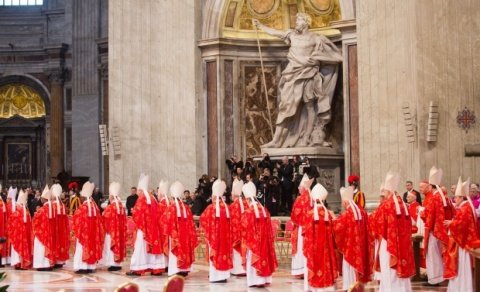
Cardinals are beginning their second day of deliberations in the Vatican conclave to elect a new pope, after an indecisive vote on Tuesday.
The 115 cardinal-electors are shut off in the Sistine Chapel and a nearby residence until two-thirds agree on a leader for the world’s 1.2 billion Catholics.
Black smoke signaling an inconclusive first vote drew cheers from crowds in St Peter’s Square on Tuesday evening.
There is no clear frontrunner to replace Pope Benedict XVI.
The cardinals will vote four times daily until a single candidate garners enough support – at which point the smoke coming from the Sistine Chapel chimney will be white.
After celebrating Mass this morning, they returned to the Sistine Chapel to resume voting.
They can vote twice in the morning. If those ballots are inconclusive, black smoke will once again rise from the chimney and the election will resume after lunch.
Voting takes place in silence, with no formal debate, until a decision is reached. If that does not happen after three days, there may be a pause for prayer and informal discussion for a maximum of one day.
Crowds who had braved rain and storms to watch the cardinals go into the conclave on big screens in St Peter’s Square cheered as the black smoke appeared at 19:41 on Tuesday.
“I thought it was going to be white, because they were late. I thought it was going to be white, but I was wrong,” said Paolo Paparini, a 76-year-old man waiting faithfully among the crowd told the Associated Press news agency.
“Without a pope I feel bereft, like an orphan. I pray to give the cardinals the strength to choose the right man to lead the Church,” French priest Guillaume Le Floch told the Agence France-Presse news agency.
“It cannot be an easy decision, but the Church needs a great leader now more than ever. The cardinals have a chance to astonish us,” he said.
Cardinals are beginning their second day of deliberations in the Vatican conclave to elect a new pope, after an indecisive vote on Tuesday
At one point feminist activists from the Ukrainian Femen group set off flares of pink smoke in the square to highlight what their website calls “the bloody violent history of Christianity” and the group’s “determination to combat sexism of religion”.
The topless protesters were dragged away by police.
From now on the cardinals – all under 80, as those over 80 are excluded – will eat, vote and sleep in closed-off areas until a new pope is chosen.
Jamming devices in the Sistine Chapel should block all electronic communication and anyone tweeting would in any case risk being excommunicated.
Papal conclave timetable – second day:
09:30 – Prayer followed by voting in the Sistine Chapel. Black smoke will emerge if two morning ballots are inconclusive. White smoke will appear as soon as there is a positive outcome
Smoke could come any time between about 10:30 and 12:30
12:30 – If no pope is elected, cardinals go back to their residence for lunch
16:00 – Cardinals return to the Sistine Chapel for another two rounds of voting – smoke expected between 17:30 and 19:30
If there is no result by Friday, they will hold a day of prayer and reflection on Saturday before resuming the election
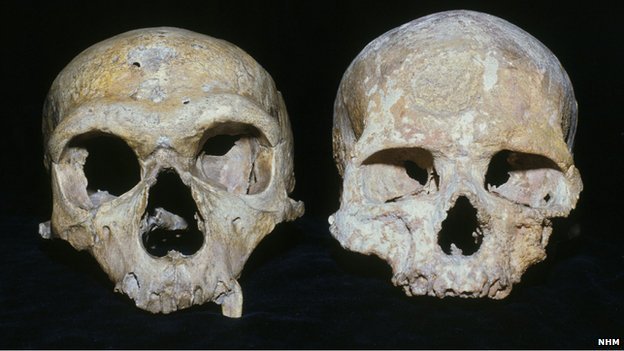
A new study of Neanderthal skulls suggests that they became extinct because they had larger eyes than our species.
As a result, more of their brain was devoted to seeing in the long, dark nights in Europe, at the expense of high-level processing.
This ability enabled our species, Homo Sapiens, to fashion warmer clothes and develop larger social networks, helping us to survive the ice age in Europe.
The study is published in Proceedings of the Royal Society B Journal.
Neanderthals are a closely related species of human that lived in Europe from around 250,000 years ago. They coexisted and interacted briefly with our species until they went extinct about 28,000 years ago, in part due to an ice age.
The research team explored the idea that the ancestor of Neanderthals left Africa and had to adapt to the longer, darker nights and murkier days of Europe. The result was that Neanderthals evolved larger eyes and a much larger visual processing area at the back of their brains.
The humans that stayed in Africa, on the other hand, continued to enjoy bright and beautiful days and so had no need for such an adaption. Instead, these people, our ancestors, evolved their frontal lobes, associated with higher level thinking, before they spread across the globe.
Eiluned Pearce of Oxford University decided to check this theory. She compared the skulls of 32 Homo sapiens and 13 Neanderthal skulls.
She found that Neanderthals had significantly larger eye sockets – on average 6 mm longer from top to bottom.
Although this seems like a small amount, she said that it was enough for Neanderthals to use significantly more of their brain to process visual information.
“Since Neanderthals evolved at higher latitudes, more of the Neanderthal brain would have been dedicated to vision and body control, leaving less brain to deal with other functions like social networking,” said Eiluned Pearce.
A new study of Neanderthal skulls suggests that they became extinct because they had larger eyes than our species
This is a view backed by Prof. Chris Stringer, who was also involved in the research and is an expert in human origins at the Natural History Museum in London.
“We infer that Neanderthals had a smaller cognitive part of the brain and this would have limited them, including their ability to form larger groups. If you live in a larger group, you need a larger brain in order to process all those extra relationships,” he explained.
The Neanderthals more visually focused brain structure might also have affected their ability to innovate and to adapt to the ice age that was thought to have contributed to their demise.
There is archaeological evidence, for example, that the Homo sapiens that coexisted with Neanderthals had needles which they used to make tailored clothing. This would have kept them much warmer than the wraps thought to have been worn by Neanderthals.
Prof. Chris Stringer said that all these factors together might have given our species a crucial advantage that enabled us to survive.
“Even if you had a small percent better ability to react quickly, to rely on your neighbors to help you survive and to pass on information – all these things together gave the edge to Homo sapiens over Neanderthals, and that may have made a difference to survival.”
The finding runs counter to emerging research that Neanderthals were not the stupid brutish creatures portrayed in Hollywood films, but may well have been as intelligent as our species.
Oxford University’s Prof. Robin Dunbar, who supervised the study, said that the team wanted to avoid restoring the stereotypical image of Neanderthals.
“They were very, very smart, but not quite in the same league as Homo sapiens.”
“That difference might have been enough to tip the balance when things were beginning to get tough at the end of the last ice age,” he said.
Up until now, researchers’ knowledge of Neanderthals’ brains has been based on casts of skulls. This has given an indication of brain size and structure, but has not given any real indication of how the Neanderthal brain functioned differently from ours. The latest study is an imaginative approach in trying to address this issue.
Previous research by Eiluned Pearce has shown that modern humans living at higher latitudes evolved bigger vision areas in the brain to cope with lower light levels. There is no suggestion though that their higher cognitive abilities suffered as a consequence.
Studies on primates have shown that eye size is proportional to the amount of brain space devoted to visual processing. So the researchers made the assumption that this would be true of Neanderthals.
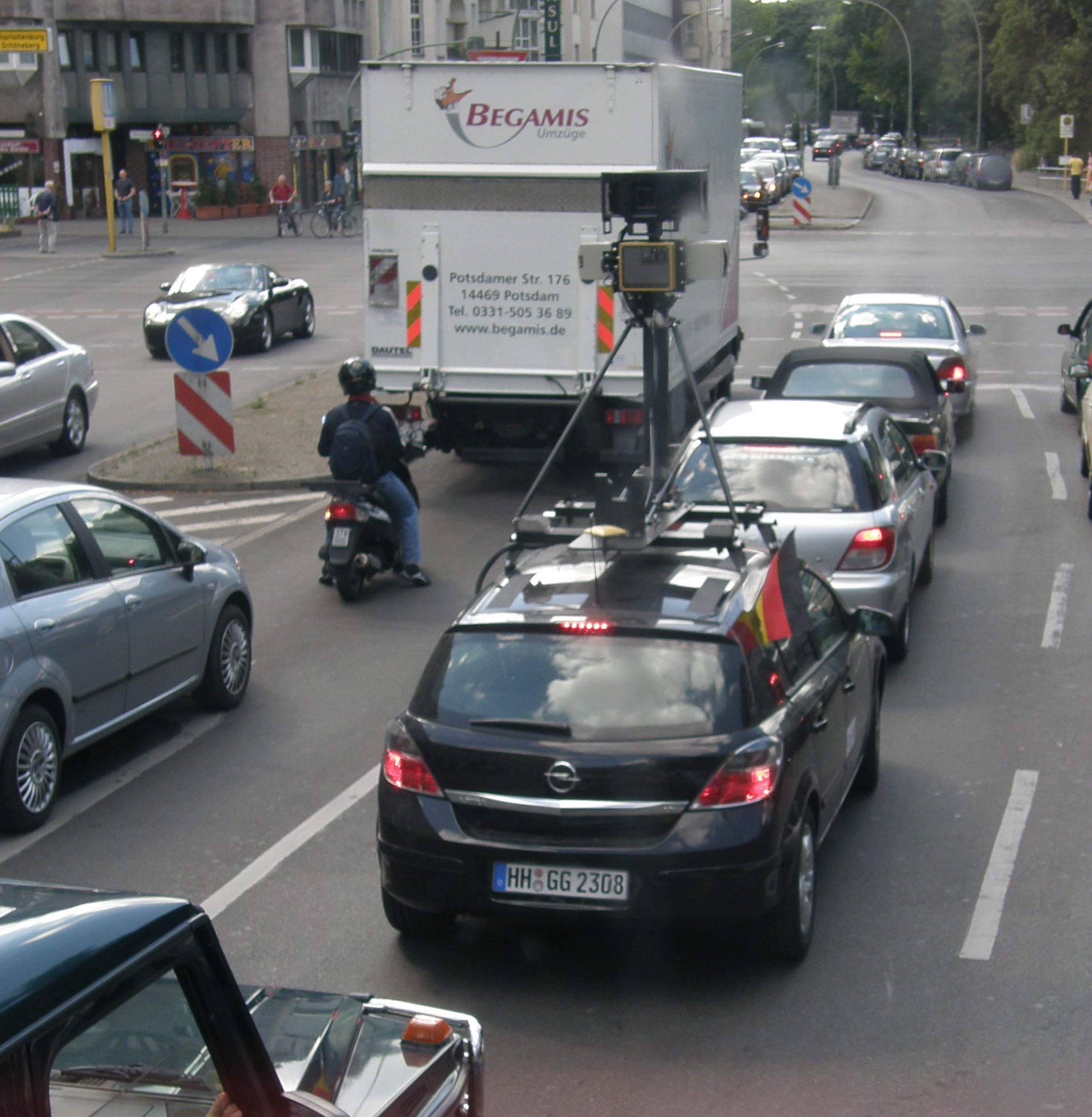
Google has been fined $7 million for collecting people’s personal data without authorization as part of its Street View service.
In a settlement with 38 US states, Google agreed to destroy emails, passwords, and web histories.
The data was harvested from home wireless networks as Street View cars photographed neighborhoods between 2008 and 2010.
Google said it was pleased to have resolved the issue.
“We work hard to get privacy right at Google. But in this case we didn’t, which is why we quickly tightened up our systems to address the issue,” Google said in a statement.
“The project leaders never wanted this data, and didn’t use it or even look at it. We’re pleased to have worked with Connecticut Attorney General George Jepsen and the other state attorneys general to reach this agreement.”
New York Attorney General Eric Schneiderman announced the legal settlement.
“Consumers have a right to protect their vital personal and financial information from improper and unwanted use by corporations like Google,” he said.
“This settlement addresses privacy issues and protects the rights of people whose information was collected without their permission.”
Google has been fined $7 million for collecting people’s personal data without authorization as part of its Street View service
As well as agreeing to delete all the harvested data, Google has also been required to launch an employee training program about privacy and data use which it must continue for at least ten years.
It must also launch a public service advertising campaign to educate consumers about how to secure their information on wireless networks.
Google claims it collected Wi-Fi data because of rogue code mistakenly included in the software by a lone engineer.
The controversy led data authorities around the world to demand Google made changes.
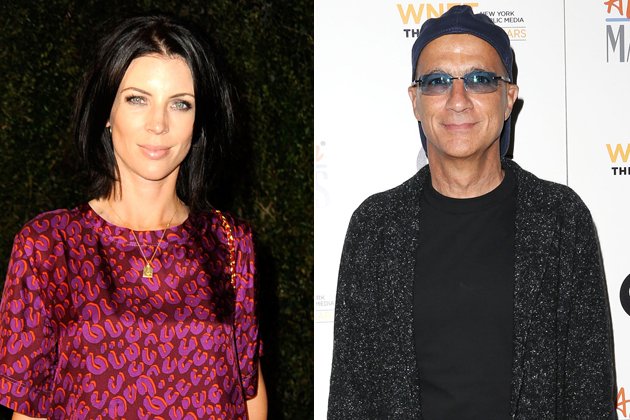
Liberty Ross appeared to confirm her romance with music producer Jimmy Iovine after her split from cheating husband Rupert Sanders as the couple walked hand-in-hand in New York on Tuesday night.
Liberty Ross and Jimmy Iovine were out on a date and heading to a Broadway preview night of Motown: The Musical at the Lunt-Fontanne Theatre in New York.
The couple were holding hands, before quickly breaking apart when they spotted photographers.
Liberty Ross, 34, rounded out the outfit with her favorite fur coat, which she has been seen wearing several times in the past few weeks.
Proudly striding alongside Jimmy Iovine, Liberty Ross was glowing and gorgeous with a big smile plastered across her face.
Liberty Ross appeared to confirm her romance with music producer Jimmy Iovine after her split from cheating husband Rupert Sanders
Liberty Ross and Jimmy Iovine were first spotted together in February when she was photographed leaving a New York hotel with the Interscope-Geffen label boss.
A source close to the model said they are “just getting to know each other better”.
Liberty Ross filed for divorce from husband Rupert Sanders following his affair with Kristen Stewart, last month, listing “irreconcilable differences” as the reason for their split.
She is seeking joint physical and legal custody of the couple’s two children, daughter Skyla, 8, and son Tennyson, 6, as well as requesting spousal support.
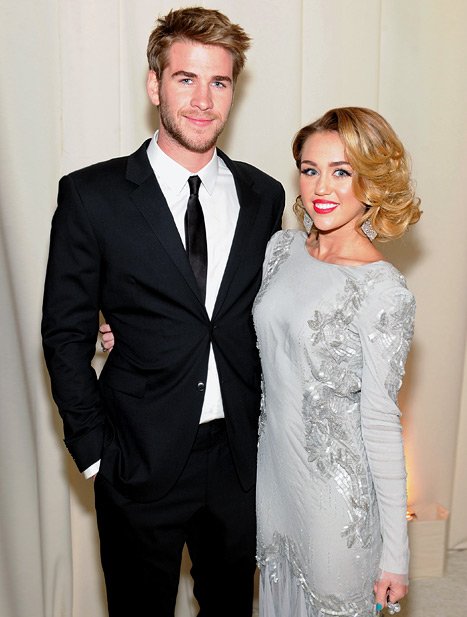
New reports claim that Miley Cyrus and Liam Hemsworth have split.
The news comes as Miley Cyrus, 20, had previously insisted that she and her 23-year-old fiancé were still together.
But sources have told the New York Post’s Page Six that Liam Hemsworth and Miley Cyrus have called time on their relationship.
Liam Hemsworth is currently in Australia spending time with his family, including his mother Leonie, whom he was spotted out shopping with on Wednesday.
“He needed to get away from Los Angeles and spend some time with his brother and friends,” a source told Page Six.
“Miley and Liam are done; it’s over. She likes to party really hard and can be pretty wild. It became a problem for him.”
Another source added that the couple parted ways because Miley Cyrus was worried that the actor had a “wandering eye”.
“They have broken up before, and are broken up again now. There was drama because she suspected he had a wandering eye,” the insider claimed.
“And she recently tweeted a denial that he cheated. While Miley has insisted they are still together, right now they are very, very much apart.”
Liam Hemsworth and Miley Cyrus have called time on their relationship
Liam Hemsworth flew to Australia late last week and has since been spotted out with friends and family during his stay.
On Wednesday, he was seen stocking up on supplies at the supermarket with his school teacher mother Leonie.
Liam Hemsworth’s trip to his native country came after it was first reported that even though he was still with Miley Cyrus, he “needed” a break from his fiancée.
A source said at the time: “Liam did fly home to Australia so they could have a break. He has been spending time with his brother Chris, with whom he is very close.
“Miley is still upset with Liam. She took her engagement ring off to make him mad.”
“But, it doesn’t mean that they have split. Miley says they are still together.
“She is crazy about Liam, but sometimes doesn’t treat him great. She likes things her way and tends to play games. Liam is also a strong person and that’s why they often butt heads.”
Reports that there was trouble in paradise first arose after it was alleged that Liam Hemsworth and actress January Jones reportedly got “hot and heavy” at a pre-Oscars party last month.
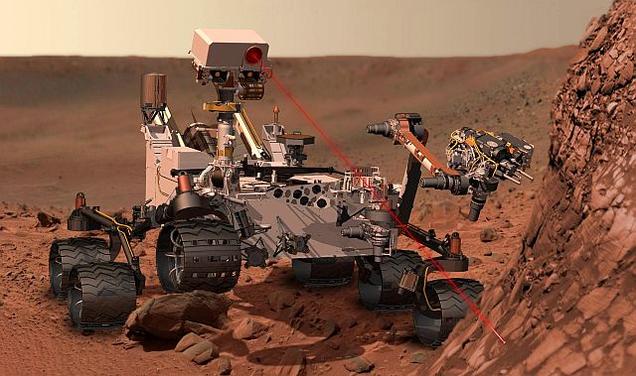
NASA has reported that its Curiosity rover has made another significant discovery on Mars.
Curiosity has drilled into a rock that contains clay minerals – an indication of formation in, or substantial alteration by, neutral water.
Scientists say the find is one more step towards showing conditions on Mars in the distant past could have supported life.
Many rocks studied previously were probably deposited in acidic water.
While this would not have precluded the possibility of micro-organisms taking hold on Mars, it would have been more challenging, scientists believe.
Identifying clays shows there were at least some locations on the planet billions of years ago where environments would have been much more favorable.
“We have found a habitable environment that is so benign and supportive of life that probably if this water was around and you had been there, you would have been able to drink it,” said John Grotzinger, Curiosity’s project scientist.
Curiosity rover drilled a powdered sample from a mudstone at its exploration site in Gale Crater, a deep impact bowl on Mars’ equator.
This was delivered to the two big onboard laboratories, Sam and Chemin, for analysis.
The rock sample was found to contain 20-30% smectite – a particular group of clay minerals.
Their high abundance and the relative lack of salt are strongly suggestive of a fresh-water environment for the mudstone’s formation.
The presence of calcium sulphates, rather than the magnesium or iron sulphates seen in previous rock analyses at other locations on the planet, adds to the evidence that the sampled rock in Gale was deposited in a neutral to mildly alkaline pH environment.
Mars Curiosity rover has drilled into a rock that contains clay minerals, an indication of formation in, or substantial alteration by, neutral water
Scientists think Curiosity probably drilled into an ancient lakebed.
The analysis also identified sulphur, nitrogen, hydrogen, oxygen, phosphorus and carbon – some of the key chemical elements for life.
Additionally, it found compounds in a range of oxidized states, meaning there were electrons moving through the environment. Those could have been co-opted as an energy source by simple life-forms, if they ever existed in Gale.
“What we’ve learned in the last 20 years of modern microbiology is that very primitive organisms – they can derive energy just by feeding on rocks,” explained Prof. John Grotzinger.
“Just like on [a] battery – you hook up the wires and it goes to a lightbulb and the lightbulb turns on. That’s kind of what a micro-organism would have done in this environment, if life had ever evolved on Mars and it was present here.”
Curiosity rover is assembling quite a catalogue of water evidence in the crater.
Already, it has seen the remains of an ancient riverbed system, where water once flowed perhaps a metre deep and quite vigorously.
The picture that seems to be emerging is one where sediments were transported downhill from the eroding crater rim into a network of streams that then flowed into the lake environment represented by the mudstone.
Curiosity is currently working in a small depression known as Yellowknife Bay, about half a kilometre from the location where it touched down last August.
NASA’s original mission plan was to head towards the big mountain that dominates the centre of Gale Crater, but the fascinating science at Yellowknife Bay has delayed this journey somewhat.
In recent days, operations have been slowed by a software glitch, requiring the vehicle to be run off its reserve computer.
There is also the imminent issue of solar conjunction, which will see Mars move behind the Sun as viewed from Earth, blocking communications.
All this means that Curiosity will be at Yellowknife Bay for a while yet.
“Basically, we can’t talk to the rover and the rover [can’t] talk to us for most of the month of April,” said Michael Meyer, the lead scientist on NASA’s Mars exploration programme.
“We’ll do some more science activities though the end of this month, [provided] the engineers confirm it’s safe for us to do those operations. But we will not do a second drill hole until after solar conjunction.”
When the rover does finally get to the mountain, known as Mount Sharp, the expectation, based on satellite imagery, is that it will again find clay minerals.
This will enable the robot to compare and contrast past environments.
The US space agency’s Opportunity rover, which continues to work nine years on from its landing, is also believed to be sitting on top of clay-bearing rocks at its exploration site far to the west of Gale. Opportunity, however, does not have Curiosity’s capability to assess those rocks.
Adrienne Maloof has split from toyboy Sean Stewart after just two months of relation.
Adrienne Maloof, 52, shocked fans of her reality show, The Real Housewives of Beverly Hills, when it emerged she was dating the rocker Rod Stewart’s son, Sean Stewart, 31.
A source told Us Weekly: “They’ve decided to distance themselves and become friends. Nothing bad happened. They’re still going to hang out as friends, they enjoy each other’s company.”
Adrienne Maloof began her relationship with Sean Stewart just a couple months after finalizing her divorce from her spouse of 10 years.
The insider continued to explain that there are no hard feelings between the pair and they will continue to see each other platonically, adding: “They’re still really good friends and they still hang out.
“She’s not looking to date anybody right now. She’s going to focus on her kids and brands.”
Adrienne Maloof has split from toyboy Sean Stewart after just two months of relation
Adrienne Maloof had previously claimed that the difference in age between her and Sean had no bearing on their connection.
She claimed: “Age is just a number. It’s about how good of a person you are . . . [Sean] is a very funny guy. He’s very giving, he mentors at the mission, works with at-risk children, and gives his time and money to get children off the streets.”
The papal conclave has failed to elect a new pope after first day of voting at Vatican.
Black smoke rising from a chimney above the Sistine Chapel indicated that their ballot had been inconclusive.
The 115 cardinal-electors will vote four times daily until two-thirds can agree on a single candidate.
The election was prompted by the surprise abdication of Benedict XVI. There is no clear frontrunner to take over from him as head of the Church.
The vote was the first held by the cardinals since they entered the conclave on Tuesday afternoon, and was not expected to produce a positive result.
Crowds who had braved rain and storms to watch the start of the conclave on big screens in St Peter’s Square cheered as the black smoke appeared.
The electors will now return to their hotel for the night and go back to the chapel on Wednesday morning to resume voting.
White smoke from the chimney will indicate that a new pope has been chosen.
Pope Benedict’s resignation and the recent damage to the Church’s reputation make the choice of the cardinal-electors especially hard to predict.
At 16:30 local time on Tuesday, 115 cardinal-electors – all under 80, as those over 80 are excluded – entered the Sistine Chapel, chanting the traditional Litany of the Saints.
The papal conclave has failed to elect a new pope after first day of voting at Vatican as black smoke rising from a chimney above the Sistine Chapel indicated that their ballot had been inconclusive
Each man in turn stepped up and placed his hands on the Gospel to swear an oath in Latin.
Afterwards Msgr Guido Marini, papal master of ceremonies, called out the words “Extra omnes” – “Everybody out” – and the chapel doors were locked to outsiders.
From now on the cardinals will eat, vote and sleep in closed-off areas until a new pope is chosen.
Jamming devices in the Sistine Chapel should block all electronic communication and anyone tweeting would in any case risk being excommunicated.
Earlier on Tuesday the cardinals attended a “Mass for the Election of the Supreme Pontiff” in St Peter’s Basilica.
In his homily, the Dean of the College of Cardinals, Cardinal Angelo Sodano, praised the “brilliant pontificate” of Pope Benedict and implored God to grant another “Good Shepherd” to lead the church.