LAPD gunned down a man who was preparing to swing a metal pipe at them in the parking lot of a Carl’s Jr. fast food restaurant.
The entire shooting – 10 shots in all – was captured on video by two teens with a cell phone camera, who watched as the man walked out of the Carl’s Jr. about 9:30 a.m. Monday and apparently refused officers’ commands to surrender.
The dead man’s name is unknown and the names of the officers involved in the shooting have not been released.
The man appears to be casually walking out of the burger joint after smashing windows at the restaurant.
Officers approach and shoot him in the face with a Taser stun gun.
The man pulls the electric probes and wires out, takes a step then turns toward one of the officers and swings the metal bar.
That’s when one officer, holding a pistol in one hand and the leash of a police dog in the other, opens fire, shooting five times.
The man stumbles backwards and spins. He is still on his feet with his back to the shooter when a second officer fires five more times.
He was taken to the hospital, where he died, police say.
One officer, holding a pistol in one hand and the leash of a police dog in the other, opens fire, shooting five times
The cameramen, who react with shock at what they see, apparently set up in their car to film the man’s encounter with officers after they saw him causing a disturbance in the restaurant.
“Dude they shot him so many times!” one of the onlookers says.
Before the video surfaced, police claimed the man had swung the pipe at officers. However, the footage does not show he actually took a swing.
Rather, it appears the man gripped the pipe like a baseball bat and was preparing to hit out with it.
The target of the man’s fury, the officer with the Taser, appearing to be fumbling in his pocket for a cartridge to reload the stun gun.
He backed up quickly to avoid the man’s swing.
Police were originally called to the restaurant on reports that a man was trying to break in. When they arrived, they spotted several people running from the restaurant.
The video shows police hide beside the door so the man will not see him until he walks outside.
“Get your cameras out, they’re gonna drop him right here,” one of the teens behind the camera says as the man steps out the door.
After the shooting, one of the teens comments: “They could have done something f**** different than f****** shoot him, use a baton or something.”
The video quickly became viral after the teens uploaded it to YouTube. It had more than 2600,000 views since it was uploaded Monday.
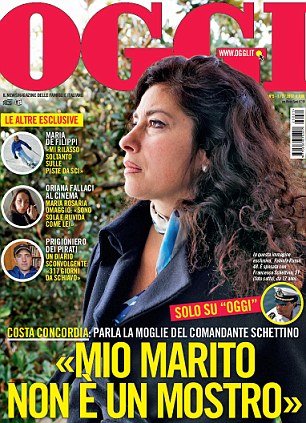
Fabiola Russo, the wife of Costa Concordia captain Francesco Schettino has defended her husband in the Italian magazine Oggi interview, claiming: “He is not a monster.”
Fabiola Russo spoke out as calls increased for prosecutors to widen their probe into the Costa Concordia luxury liner disaster, in which 16 people have been confirmed dead and another 16 people still are missing.
In an interview with glossy Italian weekly Oggi, Fabiola Russo said there was a witch-hunt against her husband – who is under investigation for multiple manslaughter, abandoning ship and causing a ship wreck.
Francesco Schettino is currently under house arrest following the disaster which happened earlier this month, after he recklessly steered his 114,000 tons ship, carrying more than 4,000 passengers and crew, on to rocks close to the island of Giglio in a “sail by” salute to impress a crew member.
Fabiola Russo, 48, who lives with Francesco Schettino and their 17-year-old daughter in Meta di Sorrento near Naples, said: “My husband is not a monster. He was always the go to guy for the crew.
“I am the wife of a seaman, so I am used to doing things on my own. I tackle situations and I resolve them.
“This is a witch hunt, everyone is out to get my husband. The media has made out he is to blame.
“He loves ships, he knows all about them and has never stopped studying them, to learn what they are capable of and what their limits are.
“He didn’t stop at just sailing ships. That’s why for his crew he was always the go to man, a maestro. He is decisive, stable and lucid, he analyses situations, understands them and then acts.
“At times Francesco seems arrogant because he puts himself above the people he is speaking to and often tells them to shut up.
“He wasn’t in charge of the Concordia by chance, he knows how to do his job but sometimes even those who know how to do their job can make mistakes – that’s if he did make a mistake.”
Fabiola Russo, the wife of Costa Concordia captain Francesco Schettino has defended her husband in the Italian magazine Oggi interview
Extracts from the interview were also posted on Oggi’s website along with a gallery of photographs provided by Fabiola Russo among them a series of pictures showing her husband giving a safety demonstration when he was a captain with Renaissance cruise lines in 2000.
Other pictures showed Francesco Schettino at a desk in his cabin on another ship, or where was sat on a lifeboat of a tanker while working for American petrol giants Sunoco.
Amazingly Fabiola Russo also revealed how they had once been fined for sailing too close to the shore in their sailing boat and added: “What we really like is canoeing and to row together you need to be in harmony and my husband and I are.”
It comes as Beniamino Deidda, prosecutor general of Tuscany, the Italian region Giglio is in, called for attention in the investigation to also focus on the Concordia’s owners Costa Cruises.
Beniamino Deiddo said: “For the time being the main focus of attention is the captain, who it has been shown was tragically inadequate but who chose him?
“The lifeboats did not lower properly, the crew didn’t know what to do, they were unprepared in dealing with an emergency, wrong orders were given such as being told to return to cabins.
“The confusion that has emerged shows that there was an incredible lack of attention to safety procedures. Safety should have been rehearsed beforehand.
“You cannot blame all of this carelessness on the conduct of the captain. That’s why this investigation cannot exclude others.”
Yesterday the death toll of Costa Concordia ship disaster rose to 16 as the body of a woman was found on deck three of the vessel after a hole had once again been blown into the side of the ship.
The victim was found with a life jacket and her body was taken to a mortuary on the mainland.
Mill Stream Corp. of Hancock, Maine, has destroyed its cold smoked salmon products after Listeria monocytogenes had been found in the manufacturing facility and on processing equipment.
The action was taken voluntarily under the supervision of the FDA. Mill Stream Corp. is a Maine food processing and storage company. Cold smoked salmon needs no cooking, being a ready-to-eat product and the presence of Listeria monocytogenes implies a high risk for public health.
Cold smoked salmon is a ready-to-eat food and has to be destroyed if Listeria monocytogenes is found.
The FDA has detected Listeria bacteria during an inspection in December 2011 and has ordered an administrative detention of the cold smoked salmon.
“FDA will not hesitate to take immediate steps to protect the public’s health. We will aggressively use our enforcement tools to prevent potentially adulterated food from reaching the public,” said Dara A. Corrigan, the FDA’s Associate Commissioner for Regulatory Affairs.
The FDA acts under the administrative detention authority for foods as amended as part of the FDA Food Safety and Modernization Act. When an investigator has a reason to believe that the food is adulterated or misbranded, the FDA may order the detention of food. A detention order may remain in place for up to 30 days.
No illnesses connected to Mill Stream’s cold smoked salmon products have been reported. Illnesses or adverse events related to use of these products should be reported to the FDA at http://www.foodsafety.gov/report/index.html.
Listeria monocytogenes is a bacterium that can cause listeriosis. The disease is rare, but severe and one can become ill by eating food contaminated with the bacteria.
In healthy persons only short-term symptoms (high fever, severe headache, stiffness, nausea, abdominal pain and diarrhea) may occur. In elders, in persons with an weak immune systems (such AIDS), or in persons suffering from cancer, or other chronic medical conditions Listeriosis can be fatal. Listeriosis can lead to miscarriage, stillbirth and serious illness or death in newborn babies. The mother herself rarely becomes seriously ill.
Demi Moore was rushed to hospital last night where is being treated for “exhaustion”.
Demi Moore, 49, who has appeared increasingly frail in recent weeks, was taken to a health facility by ambulance just before 11:00 p.m. last night.
The actress was with a female friend when she began shaking, it has been reported.
According to E! news, Demi Moore was “acting like she was suffering from a seizure”.
A spokesperson for the star said: “Because of the stresses in her life right now, Demi has chosen to seek professional assistance to treat her exhaustion and improve her overall health.
“She looks forward to getting well and is grateful for the support of her family and friends.”
Demi Moore, 49, who has appeared increasingly frail in recent weeks, was taken to a health facility by ambulance just before 11 pm last night
However, TMZ are reporting that Demi Moore is being treated for substance abuse.
Representatives for the star refused to comment on the allegations.
According to TMZ, a 911 call was placed at 10:45pm last night which resulted in an ambulance taking the star to hospital.
TMZ also reports that Demi Moore will now no longer be appearing in the film about porn star Linda Lovelace.
Demi Moore’s frail and gaunt and appearance in recent weeks has caused considerable concern.
The mother-of-three, who announced she was divorcing husband Ashton Kutcher last November, has lost a considerable amount of weight over the past four months.
Demi Moore last appeared in public on January 14 at the Cinema For Peace event at the Montage Hotel in Beverly Hills.
Her frail appearance shocked fans, although she appears to have been loosing weight steadily since claims emerged Ashton Kutcher had cheated on her with 22-year-old Sara Leal.
Demi Moore, who looked a shadow of her former self, wore a slim fitting black dress which showed just how much weight she had lost from her usually toned physique.
On November 17, 2011, Demi Moore announced that she was filing for divorce from Ashton Kutcher after six years of marriage.
In a statement Demi Moore said: “It is with great sadness and a heavy heart that I have decided to end my six-year marriage to Ashton.
“As a woman, a mother and a wife there are certain values and vows that I hold sacred, and it is in this spirit that I have chosen to move forward with my life.”
While Demi Moore is seeking treatment, Ashton Kutcher is currently in Sao Paulo where he has been attending the Fashion Week.
Yesterday Ashton Kutcher shared a snap of himself joking around pretending to surf on a street during a spot of rain.
Ashton Kutcher is also said to have moved on following the breakdown of his marriage to Demi Moore.
The actor is now reportedly dating screenwriter Lorene Scafaria, who, at 33, is his own age.
The pair spent Christmas together in Europe.
Earlier this month, Demi Moore was seen in a parking lot with a 26-year-old actor and personal trainer Blake Corl-Baietti.
Her reps refused to comment on speculation that the actress was in a relationship with the younger man.
Demi Moore recently opened up about her fears and heartache in an interview with US Harper’s Bazaar.
She admitted: “What scares me is that I’m going to ultimately find out at the end of my life that I’m really not lovable, that I’m not worthy of being loved.
“That there’s something fundamentally wrong with me.”
Experts say that eating fried food may not be bad for the heart, as long as you use olive or sunflower oil to make it.
The specialists found no heightened risk of heart disease or premature death linked to food that had been cooked in this way.
But the investigators stress that their findings, from studying the typical Spanish diet in which these “healthy” oils are found in abundance, do not apply to lard or other cooking oils.
So, traditional fry ups should not be the order of the day, according to a bmj.com report.
When food is fried it becomes more calorific because the food absorbs the fat of the oils.
And experts know that eating lots of fat-laden food can raise blood pressure and cause high cholesterol, which are risk factors for heart disease.
Experts say that eating fried food may not be bad for the heart, as long as you use olive or sunflower oil to make it
For the study, the researchers at the Autonomous University of Madrid surveyed 40,757 adults about their diet.
The participants were asked about what types of food they ate in a typical week and how that food was prepared and cooked.
None of the adults had any sign of heart disease at the start of the 11-year study, but by the end of it 606 heart disease events and 1,134 deaths had occurred.
When the researchers looked at these heart events in detail, they could find no link with fried food in the diet.
This, they believe, is down to the type of oil the food is cooked in.
In an accompanying editorial, Professor Michael Leitzmann from the University of Regensburg in Germany said: “Taken together, the myth that frying food is generally bad for the heart is not supported by available evidence.
“However, this does not mean that frequent meals of fish and chips will have no health consequences.
“The study suggests that specific aspects of frying food are relevant, such as the oil used, together with other aspects of the diet.”
Mediterranean diets have long been hailed as healthy, being packed full of low-fat, high-fibre fresh fruits and vegetables, as well as fresh fish.
And numerous studies have shown a balanced diet such as this can cut the risk of illnesses like cancer and heart disease.
Victoria Taylor, a senior heart health dietitian at the British Heart Foundation, said: “Before we all reach for the frying pan, it’s important to remember that this was a study of a Mediterranean diet rather than British fish and chips. Our diet in the UK will differ from Spain, so we cannot say that this result would be the same for us too.
“Participants in this study used unsaturated fats such as olive and sunflower oil to fry their food. We currently recommend swapping saturated fats like butter, lard or palm oil for unsaturated fats as a way of keeping your cholesterol down and this study gives further cause to make that switch.
“Regardless of the cooking methods used, consuming foods with high fat content means a high calorie intake. This can lead to weight gain and obesity, which is a risk factor for heart disease. A well-balanced diet, with plenty of fruit and veg and only a small amount of high fat foods, is best for a healthy heart.”
John F. Kennedy’s presidential library has released the final 45 hours of his private recordings, representing the last months of JFK’s life.
The recordings include discussions on the growing conflict in Vietnam and plans for the 1964 election.
JFK recorded many of his White House meetings secretly, keeping their existence away from top aides.
The library has declassified and released portions of the tapes since 1993.
John F. Kennedy's presidential library has released the final 45 hours of his private recordings, representing the last months of JFK's life
Among the conversations recorded is JFK discussing his ill-fated trip to Dallas, Texas in November 1963, and what would become the day of his funeral.
“Monday?” he asks during a discussion about scheduling. “Well that’s a tough day.”
“It’s a hell of a day, Mr. President,” a staffer replies.
“Although on the one hand releasing the final recordings is a bittersweet milestone, on the other, we hope that the public will appreciate having the opportunity to hear these important discussions first hand,” Maura Porter, the library’s archivist, said in a statement.
Maura Porter told the Associated Press news agency that Kennedy may have been saving the tapes for a potential memoir.
Another possible reason for making the tapes was JFK’s concern that US military leaders had given a different public account of a discussion over the botched Bay of Pigs invasion.
In a meeting between John F. Kennedy and advisers about developments in South Vietnam, the president seems both frustrated and amused that his military and diplomatic advisors have given him contradictory reports on the state of the country.
General Victor Krulak reported “the Viet Cong war will be won” with the US military and social programmes in place in the country at that time.
Meanwhile, state department advisor Joseph Mendenhall told the president that many in the South Vietnamese government considered the war against the Viet Cong “secondary” to concerns about the regime in Saigon, and that student groups were considering moving to Viet Cong’s side.
“You both went to the same country?” JFK asks.
By November 1963 Kennedy’s mind was already focusing on the 1964 presidential election that he would not live to campaign in. As the incumbent, he worried about how to bring young voters to the Democratic Party.
“The younger people, party label – what is it that’s going to make them go for us,” JFK asks. “What is it we have to sell them? We hope we have to sell them prosperity but for the average guy, the prosperity is nil… And the people who really are well off, hate our guts.”
There is also discussion about the impact of filming the Democratic convention in colour, even when most TV viewers would still see it in black and white.
“I don’t know if maybe they’d come over the NBC one in colour,” he says. “Probably a million watching it in colour and it would have an effect… Be quite an effect on the convention. The colour is so damn good. If you do it right.”
John F. Kennedy made over 260 hours of recordings of both meetings and telephone conversations during almost three years in office.
Of the final hours of recordings released on Tuesday, Maura Porter said officials excised about five to 10 minutes of family-related discussions and about 30 minutes because of national security concerns.
158 suspected members of the Islamist Boko Haram organization has been arrested in raids in the northern city of Kano by Nigerian forces.
Boko Haram said it carried out a series of bombings in Kano last Friday in which at least 185 people died.
The organization says it wants to overthrow the Nigerian government and impose Islamic law.
There were two casualties from Tuesday’s dawn raids, carried out by the Nigerian Joint Military Task Force.
One resident of Kano said officers had encircled a house where a Boko Haram suspect was believed to be hiding. The shoot-out lasted several hours.
“They began shooting, and he fired back… This was followed by a barrage of gunfire by the security men,” Mohammed Maikubi Bala told AFP news agency.
A man and his wife were killed in the raid, residents said.
158 suspected members of the Islamist Boko Haram organization has been arrested in raids in the northern city of Kano by Nigerian forces
Attacks by Boko Haram killed close to 1,000 people last year, according to campaign groups Amnesty International and Human Rights Watch.
In a statement released on Tuesday, Amnesty said the Nigerian government should do more to tackle the group.
“The Nigerian government has repeatedly failed to prevent, investigate, prosecute or punish these acts,” it said.
The key suspect in a Christmas Day bombing on a Catholic church – believed to be a member of the Islamist sect Boko Haram – escaped from police custody earlier this month.
At least 40 people died in that attack.
A top African Union official warned that the radical sect was escalating its activities.
“The possibility of this group expanding its activities into the neighboring countries, deep into the Central African region should not be discarded,” said Francisco Caetano Jose Madeira, in charge of counter terrorism co-operation for the AU.
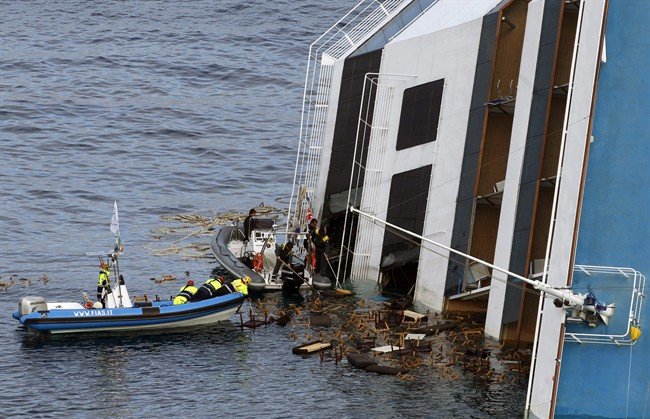
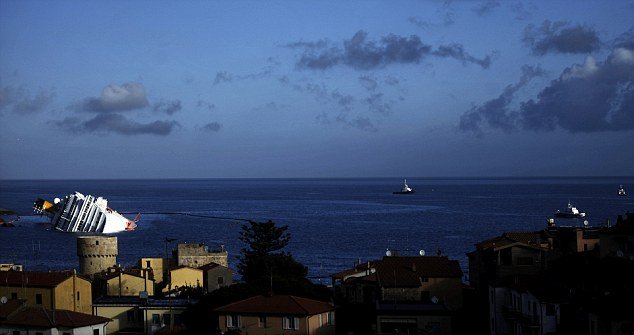
Costa Concordia cruise ship disaster is raised to 16 after another body has been found inside the wreck of the vessel, officials say.
Salvage crews have begun preparations to empty the ship’s fuel tanks but officials say it will be days before the actual pumping process can begin.
It is likely to take about four weeks to complete the operation.
The Costa Concordia hit rocks off the Tuscan coast on 13 January with more than 4,200 people on board.
Costa Concordia cruise ship disaster is raised to 16 after another body has been found inside the wreck of the vessel, officials say
Italian officials have not confirmed reports that the body was that of a woman.
Divers are continuing to search for at least 16 more missing people on the 290 m-long vessel.
Navy explosive experts have blasted a hole into the submerged third deck of the ship to allow the search to continue.
A Dutch salvage company has brought a barge alongside the giant hulk as divers install external tanks that will collect more than 2,300 tons of diesel to be pumped out of the Concordia.
“While this operation is under way, rescue efforts are continuing simultaneously,” fire services spokesman Claudio Chiavacci said, according to Reuters news agency.
The head of Italy’s civil protection agency, Franco Gabrielli, said the salvage workers were likely to begin collecting oil by Saturday.
They are expected to use a so-called “hot-tapping” operation, in which the fuel will be pumped out into a nearby ship and replaced with water so as not to affect the ship’s balance.
The captain of the Costa Concordia, Francesco Schettino, is under house arrest in his home town of Meta di Sorrento, near Naples, while his actions are investigated.
Francesco Schettino is accused of multiple manslaughter, causing a shipwreck, and abandoning ship before all passengers were evacuated. He denies the allegations.
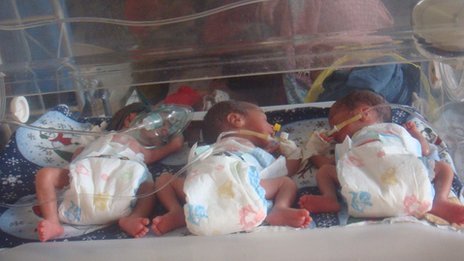
Sharah is an Afghan mother who has given birth to sextuplets at a hospital in the northern city of Mazar-e-Sharif.
The mother was not aware she was carrying more than one child and had not received fertility treatment.
Doctors say Sharah, 24, arrived in hospital on Monday and gave birth on the same day to three boys and three girls. It was her first pregnancy.
Doctors say that having six children without fertility treatment is extremely rare.
Afghanistan has one of the highest maternal and infant mortality rates in the world.
Sharah arrived in Mazar-e-Sharif hospital from a remote village in Balkh province.
Provincial Health Director Mirwais Rabi said that all six babies are well but under-weight, with one only weighing about 700g (25oz).
Mirwais Rabi said the sextuplets were being kept inside incubators and a special team of nurses and doctors are looking after them.
The sextuplets’ mother is said to be in good health but exhausted.
Doctors say that had they been aware that Sharah was carrying six children, she would have been in hospital at least several days in advance.
All six babies are well but under-weight, with one only weighing about 700g
Her story has made headlines on Afghan television and radio stations.
“She is brave, she is amazing,” one resident said.
“I don’t know how she carried six children. The government should help her now.”
A 2010 survey revealed that infant and under-fives mortality rates appeared to be decreasing.
Experts say that despite recent improvements, Afghanistan remains one of the most dangerous places in the world to be a pregnant woman or a young child.
One in 10 children in Afghanistan still dies before they are five years old, the survey said.
Over 36 people have died in the past four weeks from taking oral drugs in Punjab province, Pakistan.
The medicines were provided for free to cardiovascular patients at the government-owned Punjab Institute of Cardiology in Lahore city.
Thousands of prescriptions of these drugs were given to the patients during last month, said hospital officials.
“More than 100 patients brought to various hospitals in Lahore for suspected drug reactions have all been recently under treatment at Punjab Institute of Cardiology, and were given these drugs… We are trying to retrieve all the medicines given out at this hospital,” said Jehanzeb Khan, Punjab provincial Health Secretary.
One or more of at least four medicines taken by the patients caused their deaths.
These drugs include Alfagril (Clopidogrel), Cardiovestin (Simvastatin), Concort (Amlodipine) and Soloprin (Aspirin).
On or more drugs caused a rapid depletion of bone marrow, with a dramatic decrease in white cells and platelets counts that led to bleeding and death, Dr Javed Ikram of the Allama Iqbal Medical College told BBC.
Over 36 people have died from taking contaminated heart medicines in Punjab, Pakistan.
The presence of some bits of metal in the pills is presumed to be the cause of the symptoms.
The drugs by themselves can cause heavy bleeding if they are taken in high doses, if the patient has certain diseases (such ulcer or gastritis, renal failure) or a particular sensitivity to the substance (allergy). It is possible that the faulty pills to have had an improper dosage of the active substance.
A commission was formed by the provincial government to investigate the deaths. “Patients were coming in with symptoms similar to dengue fever. But then we realized it wasn’t that. The one thing common in all patients was heart disease, and that they were getting medicines from the Punjab Institute of Cardiology,” said Faisal Masood, member of the committee.
The owners of two local pharmaceutical firms were arrested. There have not been any comments from them.
One pharmaceutical firm has been sealed off and the drugs would be sent for testing abroad, officials said.
Pakistan Medical Association asked the government in a statement to buy life-saving drugs from other suppliers.
Pakistan’s government was accused of ineptitude and corruption, and of spending a small amount of funds on health. Apparently Pakistanis have little faith in state-run medical centers.
These oral drugs were purchased at competitive rates, said officials. Hospitals have to buy drugs from the lowest bidder, because if they do not, they can be sued by local pharmaceutical companies and even be issued with an injunction against all future purchases, hospital sources told BBC.
Hugo, the 3D epic adventure film directed by Martin Scorsese, leads the charge at 2012 Academy Awards with 11 nominations, including best film and director.
The second in line come The Artist, the French comedy which is up for 10 awards, including best film, director, actor and supporting actress.
Meryl Streep receives her 17th Oscar nomination for her portrayal of Margaret Thatcher, while George Clooney and Brad Pitt are up for best actor.
The winners will be announced in Los Angeles on 26 February.
Seven other films are in competition for the best picture prize alongside The Artist and Hugo.
They are War Horse, Moneyball, The Tree Of Life, Midnight In Paris, The Help, The Descendants, and Extremely Loud and Incredibly Close.
Both Hugo and The Artist are love-letters to cinema and reflect an appreciation for the silent era.
Hugo is a heartwarming family tale about an orphaned boy living in a French railway station.
Hugo, the 3D epic adventure film directed by Martin Scorsese, leads the charge at 2012 Academy Awards with 11 nominations
The Artist tells the story of an actor put out of work by the advent of the “talkies”.
Michel Hazanavicius received nods for writing and directing the comedy, while his wife Berenice Bejo was named in the best supporting actress category.
Berenice Bejo said she was “overjoyed and filled with happiness” after hearing of the nominations, while Michael Hazanavicius said the film’s impressive tally of nominations was “far beyond what I ever imagined”.
Jean Dujardin, who stars in the film, will compete for best actor along with George Clooney (The Descendants), Demian Bichir (A Better Life), Brad Pitt (Moneyball) and British actor Gary Oldman (Tinker Tailor Soldier Spy).
It is Gary Oldman’s first nomination, after more than 30 years on the big screen.
He said: “You may have heard this before, but it has never been truer than it is for me today: It is extremely humbling, gratifying, and delightful to have your work recognized by the Academy, and to join the celebrated ranks of previous nominees and colleagues. Amazing.”
Meryl Streep, 62, who is up for best actress, already had more Oscar nominations than any other actor before the Academy announced its 2012 shortlist.
She has now pulled further ahead from Katharine Hepburn and Jack Nicholson, who have 12 nods each and are in second place.
Meryl Streep won twice, for Kramer vs. Kramer and Sophie’s Choice.
Other contenders in this year’s best actress category are Glenn Close (Albert Nobbs), Viola Davis (The Help), Rooney Mara (The Girl with the Dragon Tattoo) and Michelle Williams (My Week With Marilyn).
Woody Allen picked up a best director nomination for his 41st movie Midnight In Paris. His competition comes from Martin Scorsese, Hazanavicius, Terrence Malick (The Tree Of Life) and Alexander Payne (The Descendants).
Co-stars of The Help Octavia Spencer and Jessica Chastain will go head to head for the best supporting actress prize.
Melissa McCarthy and Britain’s Janet McTeer complete the category for their roles in Bridesmaids and Albert Nobbs respectively.
It is Janet McTeer’s second Oscar nod, following recognition for 1999’s Tumbleweed.
British star Kenneth Branagh will vie for the best supporting actor title, after playing one of his childhood idols in My Week With Marilyn.
“It was a rare honor to play Sir Laurence Olivier,” he said. “To be recognized by the Academy for doing so is overwhelming. I’m absolutely thrilled.”
Kenneth Branagh’s challengers are Jonah Hill (Moneyball), Nick Nolte (Warrior), Max von Sydow (Extremely Loud And Incredibly Close).
Christopher Plummer, 82, is also on the shortlist for the movie Beginners, in which he plays an elderly father who comes out of the closet.
With a career that spans 60 years, Christopher Plummer’s work largely went unrecognized until two years ago, when he was nominated in the supporting actor category for his portrayal of Leo Tolstoy in The Last Station.
If he wins this time, Christopher Plummer will become the oldest ever actor to receive an Oscar, surpassing Jessica Tandy who was 80 when she was named best actress for Driving Miss Daisy.
The honor could alternatively go to supporting actor nominee Max von Sydow, who is also 82.
Kung Fu Panda 2 was recognized in the animated film category, along with A Cat In Paris, Chico And Rita, Puss In Boots and Rango.
Iranian film A Separation, which recently triumphed at the London Critics Circle awards, received two nods, including best foreign language movie and original screenplay.
As always, there were some surprises. Steve McQueen’s controversial film Shame, starring Michael Fassbender as a sex addict, was notably absent from the nominations.
We Need To Talk About Kevin and Drive, both of which have proven popular with voters at other awards ceremonies, were also missing from the Academy’s longlist.
A heard of grieving elephants gathers round the lifeless body of Lola, a three-month-old calf, after she died of a heart defect.
Lola was due to receive groundbreaking surgery for her condition but passed away during a preliminary scan.
Keepers at Munich’s Hellabrunn Zoo decided to return Lola’s body to the enclosure so mother Panang, 22, could say her goodbyes in peace.
Afterwards the rest of the herd gently nuzzled her body with their trunks before taking their leave of her.
Zoo director and veterinarian Dr. Andreas Knieriem explained how baby Lola died after three days of treatment by experts.
“Considering the pathology, it has to be said it’s a miracle that she lived as long as she did,” said Dr. Andreas Knieriem.
“Her arteries were so blocked that blood couldn’t flow through her lungs anymore.”
A heard of grieving elephants gathers round the lifeless body of Lola, a three-month-old calf, after she died of a heart defect
Elephants are widely believed to mourn the deaths of members of their herd, and even pay homage to long-dead elephants.
A 2005 study in the UK found the creatures displayed traits similar to humans and, coming across the remains of an elephant, would gently touch the skull and tusks with their trunks and feet.
They are also believed to display a ritual around death, with several elephants travelling to visit a dead body and touching the corpse with their trunks.
Some elephants have been seen to weep and others make sounds associated with grief as they cover the body with leaves and branches before keeping a silent vigil.
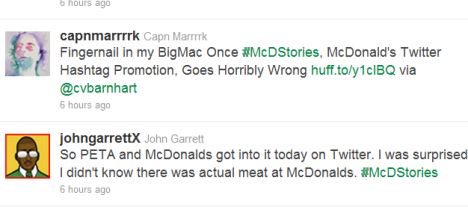
McDonald’s became the subject of an outburst of vitriolic hatred on Twitter when critics hijacked a promotional hash-tag created by the fast-food giant.
The critics accused McDonald’s of making customers vomit, serving pig meat from gestation crates and dishing up a burger containing a finger nail.
One fierce opponent claimed he would rather eat his own diarrhea than visit the famous Golden Arches.
Jumping on the social media bandwagon, McDonald’s last week launched a campaign featuring paid-for tweets, which would appear at the top of search results.
An initial hashtag, “#MeetTheFarmers”, meant to promote the corporation’s guarantee of fresh produce, concentrated on wholesome stories about farmers.
McDonald’s tweeted: “Meet Dirk Giannini, McDonald’s lettuce supplier, as he shows u his life on the farm #MeetTheFarmers http://mcd.to/AyvF4M”
All was humdrum until 2:00 p.m. last Wednesday when the global chain sent out two tweets with the more general hash-tag “#McDStories”.
Some marketing whizzkid proclaimed: “When u make something w/pride, people can taste it,” – “McD potato supplier #McDStories http://t.co/HaPM5G9F”
But within minutes the tweets began to go radically off message, as the hash-tag took on a life of its own.
McDonald's became the subject of an outburst of vitriolic hatred on Twitter when critics hijacked a promotional hash-tag created by the fast-food giant
Detractors seized on “#McDStories” as an opportunity to document their alleged horror stories at the Golden Arches.
@jfsmith23 wrote: “Watching a classmate projectile vomit his food all over the restaurant during a 6th grade trip. #McDStories”
One of the worst was @MuzzaFuzza who wrote: “I haven’t been to McDonalds in years, because I’d rather eat my own diarrhea.”
Followers chimed in including @nelo_taylor who wrote: “These #McDStories never get old, kinda like a box of McDonald’s 10 piece”
Social media director Rick Wion told paidcontent.org: “Within an hour, we saw that it wasn’t going as planned,
“It was negative enough that we set about a change of course.”
However the campaign wasn’t a complete failure.
The “#meetthefarmers” hashtag, which escaped the battering, stimulating mostly positive tweets, has stayed put.
Specialists announce that the sun is today bombarding Earth with radiation from the biggest solar storm in almost seven years, with more to come from the fast-moving eruption.
The solar storm occurred at about 11: 00 p.m. Eastern Time on Sunday and will hit Earth with three different effects at three different times.
The biggest issue is radiation, which is mostly a concern for satellite disruptions and astronauts in space. It can cause communication problems for polar-travelling aeroplanes, experts said.
Radiation from Sunday’s flare arrived at Earth an hour later and will probably continue through until Wednesday, experts say. Levels are considered strong but other storms have been more severe.
There are two higher levels of radiation on the National Oceanic and Atmospheric Administration’s storm scale of “severe” and “extreme”, space weather centre physicist Doug Biesecker said.
This storm is the strongest for radiation since May 2005. The radiation – in the form of protons – came flying out of the sun at 93 million miles per hour.
“The whole volume of space between here and Jupiter is just filled with protons and you just don’t get rid of them like that,” Doug Biesecker said, explaining why the effects will stick around for a couple of days.
Radiation from Sunday's flare arrived at Earth an hour later and will probably continue through until Wednesday
NASA’s flight surgeons and solar experts examined the solar flare’s expected effects.
They decided that the six astronauts on the International Space Station do not have to do anything to protect themselves from the radiation, spokesman Rob Navias said.
A solar eruption is followed by a one-two-three punch, said Antti Pulkkinen, a physicist at NASA’s Goddard Space Flight Center in Maryland and Catholic University.
First comes electromagnetic radiation, followed by radiation in the form of protons. Then, finally the coronal mass ejection – that’s the plasma from the sun itself – hits.
Usually that travels at about 1 or 2 million miles per hour, but this storm is particularly speedy and is shooting out at 4 million miles per hour, Doug Biesecker said.
Plasma causes much of the noticeable problems on Earth, such as electrical grid outages. In 1989, a solar storm caused a massive blackout in Quebec. It can also pull the northern lights further south.
But this coronal mass ejection seems likely to be only moderate, with a chance for becoming strong, Doug Biesecker said. The worst of the storm is likely to go north of Earth.
And unlike last October, when a freak solar storm caused auroras to be seen as far south as Alabama, the northern lights aren’t likely to dip too far south this time, Doug Biesecker said.
Parts of New England, upstate New York, northern Michigan, Montana and the Pacific Northwest could see an aurora but not until Tuesday evening, he said.
For the past several years the sun had been quiet. Part of that was the normal calm part of the sun’s 11-year cycle of activity.
Last year, scientists started to speculate that the sun was going into an unusually quiet cycle that seems to happen maybe once a century or so.
Now that super-quiet cycle doesn’t seem as likely, Doug Biesecker said. Scientists watching the sun with a new NASA satellite launched in 2010 – during the sun’s quiet period – are excited.
“We haven’t had anything like this for a number of years,” Antti Pulkkinen said. “It’s kind of special.”
Researchers say that interacting within a group, such as taking part in jury deliberations or mingling at a cocktail party, can lower your intelligence, with women being particularly susceptible.
Scientists at Virginia Tech Carilion Research Institute used magnetic resonance imaging (MRI) to investigate how the brain processes information about social status in small groups and how perceptions of that status affect expressions of cognitive capacity.
In other words, whether “feeling” less intelligent than others can affect your decision-making.
“You may joke about how committee meetings make you feel brain dead, but our findings suggest that they may make you act brain dead as well,” said Read Montague, director of the Human Neuroimaging Laboratory and the Computational Psychiatry Unit at the institute, who led the study.
Researchers say that interacting within a group, such as taking part in jury deliberations or mingling at a cocktail party, can lower your intelligence
Read Montague explained that when volunteers in a group were told how the others performed, it lowered their problem-solving abilities.
He said: “We started with individuals who were matched for their IQ.
“Yet when we placed them in small groups, ranked their performance on cognitive tasks against their peers, and broadcast those rankings to them, we saw dramatic drops in the ability of some study subjects to solve problems. The social feedback had a significant effect.”
What’s more, a pattern emerged along gender lines.
The women and men both had the same baseline IQ scores, but more women fell into the lower performing group.
Lead author Kenneth Kishida added: “Our study highlights the unexpected and dramatic consequences even subtle social signals in group settings may have on individual cognitive functioning.
“And, through neuroimaging, we were able to document the very strong neural responses that those social cues can elicit.”
Co-author Steven Quartz, a professor of philosophy in the Social Cognitive Neuroscience Laboratory of Caltech, said: “The idea of a division between social and cognitive processing in the brain is really pretty artificial. The two deeply interact with each other.”
The research appears in the January 23, 2012 issue of the journal Philosophical Transactions of the Royal Society B.
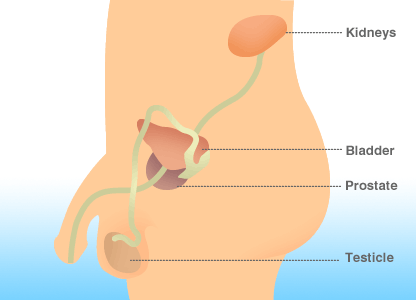
Recent studies emphasized the negative influence exerted by obesity on the risk to develop prostate cancer, the diagnostic and the recovery after surgical treatment.
A meta-analysis of 25 prostate cancer studies over a 14 years period detailed the association between body mass index (BMI) and prostate cancer risk. For every 5-point BMI increase, the risk to develop an aggressive form of prostate cancer is elevated with 9%. In the same time, for every 5-point BMI increase the risk to develop a less aggressive form of prostate cancer diminished with 6%. The study was published this month in the Annals of Oncology.
Body mass index shows the relation between how many kilograms has a person and his/her height (body weight in kilograms divided by the square of his/her height in meters). A normal BMI ranges from 18.5 to 25. For children there is another calculation that implies age and sex. A person under 20 with a BMI between the 85th and 95th percentile is overweight.
Another study showed that obesity multiplied the risk of metastases by 5 and prostate cancer grew 3 times faster in obese patients. The study was presented in 2011 at the American Urological Association annual meeting.
Other research reports the risk of death from prostate cancer is 25% higher for overweight men and to obese men the risk may be double than of normal-weight men.
Obesity raises the risk to develop prostate cancer.
There are reactions in the medical field: prostate cancer screening is increasing in obese men, according to the Journal of Obesity.
“This is good news. Physicians recognize increased risk factors in their obese patients and are encouraging vigilance when it comes to prostate cancer PSA testing,” said Dr. David Samadi, Chief of Robotics and Minimally Invasive Surgery at The Mount Sinai Medical Center.
An obese patient requires a much careful analysis of treatment options, because the common surgical complications can be more frequent and more severe in patients with high BMI. During the surgery, extended surgical time and increased hemorrhage (bleeding) are the main concerns regarding men with obesity.
The age of the patient and his general health combined with the experience and the skills of the surgeon have a great influence on prostate cancer outcomes.
“There’s so much we can’t yet control about our medical path, particularly in the area of cancers, but what we can do is optimize our general wellness. Maintaining a healthier weight, eating better, getting active, those are all places to start… Many health issues can be avoided through wellness, and for those that can’t, well, healthier men are certainly better equipped to withstand the rigors of prostate cancer treatment and recovery, if necessary,” said Dr. David Samadi.
Generally, prostate cancer causes no symptoms in the early stage.
In some cases, may occur frequent urination, nocturia (increased urination at night), difficulty starting and maintaining a steady stream of urine, hematuria (blood in the urine), dysuria (painful urination), difficulty achieving erection or painful ejaculation.
Prostate cancer screening is performed by two methods: the digital rectal examination (DRE), and the prostate-specific antigen (PSA) blood test.
A lot of prostate cancers are indolent and would never progress to a clinically meaningful stage, but there are other prostate cancers potentially lethal.
Prostate cancer screening is performed by two methods: the digital rectal examination (DRE), and the prostate-specific antigen (PSA) blood test.
Prostate test screening is controversial. The United States Preventive Services Task Force (USPSTF) concluded in 2011 that “prostate-specific antigen–based screening results in small or no reduction in prostate cancer–specific mortality and is associated with harms related to subsequent evaluation and treatments, some of which may be unnecessary.”
“Research has not yet proven that the potential benefits of testing outweigh the harms of testing and treatment. The American Cancer Society believes that men should not be tested without learning about what we know and don’t know about the risks and possible benefits of testing and treatment. Starting at age 50, (45 if African American or brother or father suffered from condition before age 65) talk to your doctor about the pros and cons of testing so you can decide if testing is the right choice for you.“
The diagnosis of prostate cancer can be confirm only by a biopsy.
During life time one in six Americans will be diagnosed with prostate cancer, it is estimated. One in three U.S. men are considered obese. Obesity is the second leading risk factor for developing cancer.
For the first time, Kim Kardashian spoke up publicly about her divorce from Kris Humphries, as she stepped in to perform co-hosting duties on Live with Kelly in New York City.
Kim Kardashian, 31, who wore a figure-hugging lace red dress, said: “It’s been a hard couple of months.”
The reality star hit back at claims the wedding was just a publicity stunt.
“If you really think about it, if this was a business decision and I really made all that money that everyone was claiming that we made off this wedding, and if the wedding was fake and just for TV, I’m a smart businesswoman, I would have stayed married longer.”
Kim Kardashian added: “I really didn’t think following my heart would create this much backlash.”
She insisted she “tried everythin” to make the relationship work, adding: “I want that forever love, and if I feel in my heart this isn’t right, then why wait years to have the same results?”
Kim Kardashian spoke up publicly about her divorce from Kris Humphries, as she stepped in to perform co-hosting duties on Live with Kelly in New York City
Kim Kardashian revealed that after the split, she packed “two pairs of sweatpants and a pair of pyjamas” and moved in with her mother, Kris Jenner, to do “some soul searching”.
The self-proclaimed “hopeless romantic” hasn’t give up on love though, adding: “I think I just learned that I need to rewrite my fairytale.”
Kim Kardashian was certainly excited about being asked to join Kelly Ripa on the show.
She tweeted today: “Up early glamming for @LiveKelly! Tune in this morning! Xo.”
Kim Kardashian later added: “Going live with @LiveKelly tun into ABC east coast!”
Kelly Ripa – who recently signed a new five-year deal to stay with the show – has had a succession of guest hosts since Regis Philbin’s departure in November. No full-time replacement has been appointed.
Meanwhile, Kim Kardashian has admitted that she broke down in tears while watching last night’s emotional episode of Kourtney and Kim Take New York.
Kim Kardashian – who filed for divorce from in October after just 72 days of marriage – has been seen constantly arguing with the basketball star during the current season of the reality show.
Researchers say that early results from the world’s first human trial using embryonic stem cells to treat diseases of the eye suggest the method is safe.
US firm Advanced Cell Technology told The Lancet how two patients who had received the retinal implants were doing well, four months on.
Trials of the same technique have also started at London’s Moorfields Eye Hospital.
But experts say it will be years before these treatments are proven.
The aim of these first human studies is to establish that the treatment is safe to use.
The treatment takes healthy immature cells from a human embryo, which are then manipulated to grow into the cells that line the back of the eye – the retina.
Experts hope that by injecting these cells into a diseased eye, they will be able to restore vision for people with currently incurable conditions such as Stargardt’s disease – one of the main causes of blindness in young people.
Advanced Cell Technology, along with the Jules Stein Eye Institute at the University of California, Los Angeles, are reporting their first experiences with this treatment in human trials.
The study involved one elderly patient in her 70’s with dry age-related macular degeneration – the leading cause of blindness in the developed world – and another female patient in her 50’s with Stargardt’s disease.
Both had very poor vision and were registered blind.
Each patient was given an injection containing 50,000 of the retinal pigment epithelium cells into one of their diseased eyes.
After surgery, structural evidence confirmed the cells had attached to the eye’s membrane as hoped, and continued to survive throughout the next 16 weeks of the study.
Furthermore, the procedure appeared to be safe, causing no signs of rejection or abnormal cell growth.
Although this study is not designed to see if the procedure actually works, the researchers say their results do suggest that their patients’ vision has improved slightly.
But they say it is still too soon to make any firm conclusions and that many more years of investigation will be needed to confirm that the treatment is both safe and effective.
The researchers told The Lancet: “The ultimate therapeutic goal will be to treat patients earlier in the disease processes, potentially increasing the likelihood of photoreceptor and central visual rescue.”
But even if this does become possible, such treatments would face stiff opposition by critics who say it is ethically wrong to use human embryonic tissue.
Dr. Dusko Ilic, Senior Lecturer in Stem Cell Science at Kings College London, said that these early findings did not necessarily hint towards a viable treatment.
“We should keep in mind that people are not rats.
“The number one priority of initial clinical trial is always patient safety. If everyone expects that the blind patients will see after being treated with human embryonic stem cell-derived retinal pigment epithelium, even if the treatment ends up being safe (which is what Advanced Cell Technology are trying to determine in this trial), they risk being unnecessarily disappointed.”
A huge dome of freshwater that is developing in the western Arctic Ocean has been detected by British scientists.
The bulge is some 8,000 cubic km in size and has risen by about 15 cm since 2002.
The scientists think it may be the result of strong winds whipping up a great clockwise current in the northern polar region called the Beaufort Gyre.
This would force the water together, raising sea surface height, the group tells the journal Nature Geoscience.
“In the western Arctic, the Beaufort Gyre is driven by a permanent anti-cyclonic wind circulation. It drives the water, forcing it to pile up in the centre of gyre, and this domes the sea surface,” explained lead author Dr. Katharine Giles from the Centre for Polar Observation and Modelling (CPOM) at University College London.
“In our data, we see the trend being biggest in the centre of the gyre and less around the edges,” said Dr. Katharine Giles.
Dr. Katharine Giles and colleagues made their discovery using radar satellites belonging to the European Space Agency (Esa).
These spacecraft can measure sea-surface height even when there is widespread ice cover because they are adept at picking out the cracks, or leads, that frequently appear in the frozen floes.
The data (1995-2010) indicates a significant swelling of water in the Beaufort Gyre, particularly since the early part of the 2000s. The rising trend has been running at 2 cm per year.
A lot of research from buoys and other in-situ sampling had already indicated that water in this region of the Arctic had been freshening.
This freshwater is coming in large part from the rivers running off the Eurasian (Russian) side of the Arctic basin.
Winds and currents have transported this freshwater around the ocean until it has been pulled into the gyre. The volume currently held in the circulation probably represents about 10% of all the freshwater in the Arctic.
Of interest to future observations is what might happen if the anticyclonic winds, which have been whipping up the bulge, change behavior.
“What we seen occurring is precisely what the climate models had predicted,” said Dr. Katharine Giles.
“When you have clockwise rotation – the freshwater is stored. If the wind goes the other way – and that has happened in the past – then the freshwater can be pushed to the margins of the Arctic Ocean.
“If the spin-up starts to spin down, the freshwater could be released. It could go to the rest of the Arctic Ocean or even leave the Arctic Ocean.”
If the freshwater were to enter the North Atlantic in large volumes, the concern would be that it might disturb the currents that have such a great influence on European weather patterns. These currents draw warm waters up from the tropics, maintaining milder temperatures in winter than would ordinarily be expected at northern European latitudes.
The creation of the Beaufort Gyre bulge is not a continuous development throughout the 15-year data-set, and only becomes a dominant feature in the latter half of the study period.
This may indicate a change in the relationship between the wind and the ocean in the Arctic brought about by the recent rapid decline in sea-ice cover, the CPOM team argues in its Nature Geoscience paper.
It is possible that the wind is now imparting momentum to the water in ways that were not possible when the sea-ice was thicker and more extensive.
“The ice is now much freer to move around,” said Dr. Katharine Giles.
“So, as the wind acts on the ice, it’s able to pull the water around with it. Depending on how ridged the surface of ice is or how smooth the bottom of the ice is – this will all affect the drag on the water. If you have more leads, this also might provide more vertical ice surfaces for the wind to blow against.”
One consequence of less sea-ice in the region is the possibility that winds could now initiate greater mixing of the different layers in the Arctic Ocean.
Scientists are aware that there is a lot of warm water at depth.
At present, this deep water’s energy is unable to influence the sea-ice because of a buffer of colder, less dense water lying between it and the floes above.
But if this warm water were made to well up because of wind-driven changes at the surface, it could further accelerate the loss of seasonal ice cover.
The CPOM team is now investigating the likelihood of this happening with Cryosat-2, Esa’s first radar satellite dedicated to the study of the Polar Regions.
“We now have the means to measure not only the ice thickness but also to monitor how the ocean under the ice is changing,” says Dr. Seymour Laxon, director of CPOM and co-author of the study, “and with CryoSat-2, we can now do so over the entire Arctic Ocean.”
Ankle has the most satisfying spot to scratch, according to researchers at the Wake Forest School of Medicine in North Carolina.
In a study, published in the British Journal of Dermatology, healthy volunteers were made to itch on the forearm, ankle and back by rubbing them with cowhage, a plant with tiny hairs that irritate the skin.
For five minutes they were banned from scratching, and asked to record how itchy they felt at each spot.
After scratching participants awarded marks out of ten for how pleasurable the sensation had been.
Fashion changes may mean the ankle is now more often exposed to itch-inducing insects and germs.
Relieving an itch on your back is one of life’s simple pleasures but now scientists have found that the ankle is the most satisfying spot to scratch.
Professor Francis McGlone, a member of the International Forum for the Study of Itch, said: “It was interesting that the ankle was the itchiest site and that the most pleasure came from scratching it, because the back has been well-known as a preferred site for scratching.”
Scientists believe the ankle has evolved as an itch-prone area because it comes into contact with insects and germs, which can be removed through scratching.
Powerful storms hit Alabama early this morning in an area that has not yet fully recovered from tornadoes that left the community in despair last year.
At least two people were killed and heavy damage was reported just hours after tornadoes struck portions of Arkansas, downing trees and power lines and leaving thousands without electricity there.
The predawn storms struck the Birmingham area, with the towns of Center Point and Trussville just to the northeast of the city being particularly hard hit, emergency management officials said.
The devastation prompted Alabama Governor Robert Bentley to declare a state of emergency for the entire state.
Fatalities were reported in the towns of Oak Grove and Clay, but those weren’t the only towns affected.
“Center Point was hit pretty badly,” Jefferson County Emergency Management Agency spokesman Mark Kelly said.
An emergency management spokesman told the Associated Press that more than 100 people have been injured in central Alabama by the line of storms.
Homes were flattened, windows were blown out of cars and roofs were peeled back in the middle of the night in the community of Oak Grove near Birmingham. As dawn broke, residents surveyed the damage and officials used chainsaws to clear fallen trees.
Powerful storms hit Alabama early this morning in an area that has not yet fully recovered from tornadoes that left the community in despair last year
Chief Deputy Randy Christian told the Birmingham News: “The hardest hit area at this time includes Oak Grove and Center Point through Clay and Trussville. Several homes are reported destroyed and numerous reports of injuries have come in to our call center.”
Jefferson County EMA official, Bob Ammons said: “We have major, major damage.”
Chief Deputy Coroner Pat Curry told The Birmingham News that those killed in the storms were identified as 16-year-old Christina Nicole Heichelbech of Clay, and 83-year-old Bobby Frank Sims of Oak Grove.
The Birmingham News reported that Christina Nicole Heichelbech’s body was found among debris next to her family’s pool after her house was destroyed.
Bobby Frank Sims was found dead after his entire home was flung about 200 feet away from its foundation by the force of the storms.
Oak Grove was hit hard in April when tornadoes ravaged Alabama, killing about 240 people, though officials said none of the same neighborhoods were struck again. Officials had to reschedule a meeting Monday to receive a study on Alabama’s response to the spring tornadoes.
Yasamie Richardson, a spokeswoman for the Alabama Emergency Management Agency, said: “Some roads are impassable, there are a number of county roads where you have either debris down, trees down, damage from homes.”
Stevie Sanders woke up around 3:30 a.m. and realized bad weather was on the way. She, her parents and sister hid in the laundry room of their brick home as the wind howled and trees started cracking outside.
“You could feel the walls shaking and you could hear a loud crash. After that it got quiet, and the tree had fallen through my sister’s roof,” said Stevie Sanders.
The family was OK, and her father, Greg Sanders, spent the next hours raking his roof and pulling away pieces of broken lumber.
“It could have been so much worse,” he said.
“It’s like they say, we were just blessed.”
In Clanton, about 50 miles south of Birmingham, rescuers were responding to reports of a trailer turned over with people trapped, City Clerk Debbie Orange said.
In Mississippi, the National Weather Service was tracking a thunderstorm to the southwest of Hattiesburg that was producing wind gusts of 40 to 50 miles per hour.
These were the latest in a series of powerful January storms to have torn through the Southeast.
On Sunday, twisters downed trees and power lines in Arkansas leaving thousands without power.
A tornado tore into an area outside of Fordyce, some 70 miles south of state capital Little Rock, damaging houses and felling trees and power lines as it moved, according to Accuweather.com.
Accuweather carried reports of five other twisters touching the ground in Arkansas, which was pelted by soft-ball sized hailstones and buffeted by winds gusting up to 70 miles per hour.
As of late Sunday, roughly 13,400 homes were without power across Arkansas as the storms intensified, according to utility provider Entergy Arkansas, Inc.
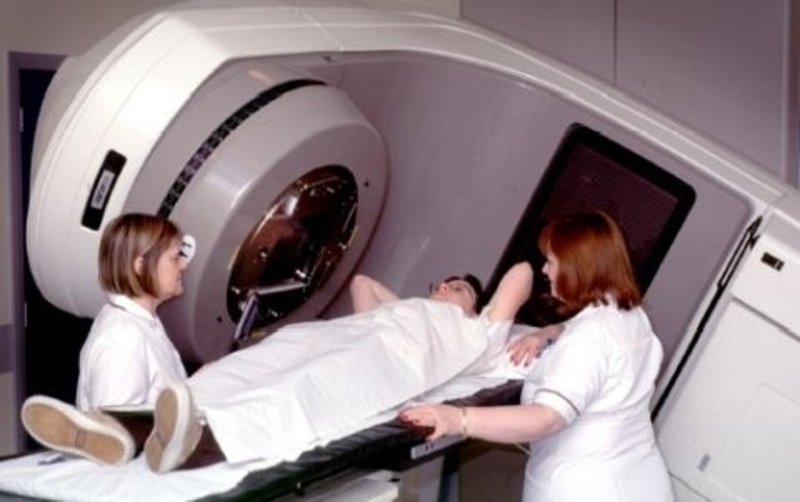
Chemotherapy added to radiation therapy almost doubled the median survival time in patients with a rare form of brain tumor (oligodendroglioma) that carries a chromosomal abnormality (the 1p19q co-deletion), a study presented at the annual meeting of the Radiation Therapy Oncology Group showed.
The clinical trial was led by the Radiation Therapy Oncology Group (RTOG) with the participation of the North Central Cancer Treatment Group, the National Cancer Institute of Canada Clinical Trials Group, the Eastern Cooperative Oncology Group, and SWOG (formerly the Southwest Oncology Group).
The study enrolled 286 patients with aggressive brain tumors, oligodendrogliomas, who were randomly and equally assigned to receive radiotherapy alone or radiotherapy plus PCV chemotherapy (with drugs procarbazine, lomustine and vincristine). Before and after around half of the patients had been followed for over 11 years, genetic analyses were performed.
The median overall survival time was similar for patients receiving radiotherapy alone or radiotherapy plus PCV chemotherapy.
The good news comes when it is about the patients with the rare form of brain tumor, 1p19q co-deleted tumors.
The 126 patients with co-deletion lived more (a median survival rate of 8.7 years) than the 135 patients with tumors without the co-deletion (2.7 years).
The 59 patients with co-deletion tumors who received PCV chemotherapy plus radiotherapy lived much longer, double time (14.7 years) than the 67 patients with co-deletion who received radiotherapy alone (median survival rate 7.3 years).
Where the tumors did not have the chromosomal abnormality, no improvement in survival from the addition of chemotherapy was found.
“The Radiation Therapy Oncology Group and other participating cooperative groups are to be congratulated for conducting this randomized clinical trial in a rare form of brain tumor that took many years. Their persistence and dedication was rewarded as this genetic abnormality has a powerful effect on survival, and the results will change how patients with this disease are treated. This clinical trial also highlights the necessity for collecting tumor tissue for genetic studies to define more precisely the patients who benefit most from specific therapies,” said Jeffrey Abrams, M.D., associate director, Cancer Therapy Evaluation Program, NCI.
“That’s remarkable when most new cancer therapies offer only a few more weeks or months of survival,” said Dr. Bhupinder Mann, National Cancer Institute scientist.
“It’s very gratifying and good news for the patients diagnosed with these types of tumors. But they are, unfortunately a minority,” said Dr. Steven Rosenfeld head of the brain tumor center at the Cleveland Clinic.
Radiation therapy alone has been the most common treatment used in brain tumor. Now the personalized medicine shows a benefit from adding chemotherapy in certain type of brain cancer.
The average age at diagnosis for this type of brain tumor, anaplastic oligodendroglioma, is 35.
These tumors represents 9.4% of all primary brain and central nervous system tumors.
Around 1,000 Americans a year develop oligodendrogliomas and co-deletion is found in around half of the cases.
Radiotherapy alone has been the common treatment used for oligodendrogliomas.
“This tumor hits people in their 30s and 40s, in the prime of life. It really highlights the importance of personalized medicine. We know these tumors are not all the same,” said Dr. David Reardon, clinical director of neuro-oncology at Boston’s Dana-Farber Cancer Institute.
Although this combination of therapies does not cure brain cancer, it gives a hope to young persons with certain brain tumor.
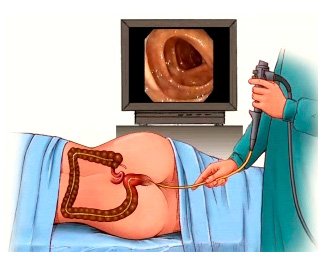
Mayo Clinic and Exact Sciences, Inc. have worked together to develop a non-invasive stool DNA screening test that can detect with high accuracy early-stage malignancies and precancerous tumors (adenomas) leading to an earlier identification of colorectal cancer.
Two studies have investigated this DNA screening test and the results will be published in Gastroenterology and Clinical Gastroenterology and Hepatology.
The Mayo Clinic has licensed intellectual property to and is a minor equity investor in Exact Sciences. Dr. David Ahlquist is one of the inventors and a scientific adviser to Exact Sciences.
Stool DNA tests target multiple markers to achieve high detection rates (DNA changes may differ between colorectal cancers) and very sensitive tests are required (DNA markers may be present in only trace quantities in stool).
This type of test has been shown to be more effective than fecal occult blood tests at detecting colon cancer and precancerous polyps.
The first study was a large blinded investigation and found out that stool DNA test detects with accuracy multiple markers for colorectal cancer. Among 400 people it detected 87 percent of curable-stage cancers and the test identified most of large precancerous polyps. It has a good sensitivity and could detect 64% of polyps larger than 1 centimeter (cm); 77% of polyps larger than 2 cm; and 92% of polyps larger than 4 cm.
The second study compared a plasma test for methylated Septin 9 (SEPT9) and the stool DNA test. SEPT9 detected 14 percent and the stool DNA test identified 82% of precancerous polyps. SEPT9’s detected 60% of cancers at any stage, while the stool DNA test identified 87%. SEPT9 identified 50% of curable stage (stage I-III) cancers and the stool DNA test detected 91%. SEPT9 had 27% false-positives results and the DNA stool test had 7%.
A false-positive result is a positive test for cancer when there is no cancer. The presence of tumors above the colon (intestinal, gastric cancers) or a problem with the test may lead to false-positive results. When the stool DNA test result is positive but a follow-up colonoscopy is normal, the doctor recommends evaluation of upper gastrointestinal tract, another stool DNA test, or another colonoscopy or a combination of these.
“Cancerous and pre-cancer cells are shed into the stool and detected by the stool DNA test long before tumors progress to invade the bloodstream for later detection by the plasma SEPT9 screening test,” said David Ahlquist, M.D., of Mayo Clinic, principal investigator of both studies.
“Along with its high accuracy, this test approach could improve participation rates due to its patient-friendly features… The test is non-invasive; requires no bowel preparation, medication restriction, or diet change; and can be performed on mailed-in samples without the need, expense, or inconvenience of a health care visit,” said Dr. David Ahlquist in a news release by the Mayo Clinic.
“This test appears to uniquely represent an accurate noninvasive approach to large polyp detection, which offers the promise of actually preventing cancers from developing,” said Stephen Thibodeau, Ph.D., genetics researcher at Mayo Clinic, co-investigator.
Colorectal cancer (bowel cancer) is an uncontrolled malignant growth of the glands of the colon, appendix, rectum (cancer of the anus is a separate entity).
The majority if colorectal cancers develops over a long period (years). They start from small benign growths, polyps or adenomas.
Common symptoms are worsening constipation, rectal bleeding (blood in the stool), anemia, weight loss, fever, changes in bowel habits, loss of appetite, nausea, vomiting. If the person is over 50, these signs are very alarming.
Fecal occult blood testing, flexible sigmoidoscopy and colonoscopy are the three main screening tests for colorectal cancer. The stool DNA test is a method to detect precancerous polyps and colorectal cancers in the early stages.
It is recommended that every person to start undergoing colonoscopy at the age of 50 for colorectal cancer screening and to continue it until the age of 75 (sigmoidoscopy every 5 years and colonoscopy every 10 years). Unfortunately, this is often ignored and the disease is identified at later, severe stages.
Older age, male gender and heredity are the risk factors for colorectal cancer that cannot be changed. However, obesity, red meat, a high fat or high alcohol intake (more than a drink per day) can be controlled. As well as smoking and a lack of physical exercise.
Increasing the consumption of whole grains, fruits and vegetables, and reducing the intake of red meat are recommended for colorectal cancer prevention. Physical activity can moderately reduce the risk of colorectal cancer.
Apparently the acetylsalicylic acid (aspirin) and celecoxib decrease the risk of colorectal cancer in those at high risk, but they are not recommended in those at average risk. While vitamin D intake and blood levels are associated with a lower risk of colorectal cancer, there was some evidence for calcium supplementation but it is not sufficient to make a recommendation.
According to the American Cancer Society the lifetime risk of developing colorectal cancer is one out of every twenty Americans. This there will be over 140,000 new cases of colorectal cancer, and around 50,000 deaths, it is estimated.
Italian divers have found the bodies of two women on the wreck of the cruise ship Costa Concordia, bringing the confirmed death toll of the disaster to 15.
Italian authorities say the pumping of fuel from the stricken Costa Concordia can proceed in tandem with the search of the wreck.
Costa Concordia ran aground off the Tuscan coast on 13 January with 4,200 people on board.
It is carrying about 1.9 million litres of fuel in 13 tanks.
An Italian naval vessel is on standby in case of oil leaks.
The bodies of the two women were found near the internet cafe, on the fourth deck.
The women’s families have been notified, officials say.
There is no decision yet on when fuel pumping will begin but the civil protection agency has said it is likely to start within the next 24 hours.
Italian divers have found the bodies of two women on the wreck of the cruise ship Costa Concordia, bringing the confirmed death toll of the disaster to 15
Civil protection official Franco Gabrielli told reporters on Giglio there was no risk the Costa Concordia would drop down to a lower seabed.
“We are ready to go,” an official from the Dutch salvage company Smit said.
“As soon as we get the green light, we start the work”.
The salvagers must first attach steel moorings to the front of the ship. They will not want to start pumping in the dark, she says, so work is likely to begin on Tuesday.
Although there has been no leak so far, the civil protection agency says there is pollution in the water from solvents and disinfectants which were on board the vessel.
Search and rescue work has been suspended several times owing to poor weather.
Coastguard and navy divers have been blasting their way into submerged areas of the vessel using explosives in an effort to find those unaccounted for.
Emergency officials said on Saturday they would not end the search until the whole ship had been examined.
The captain of the Costa Concordia, Francesco Schettino, is being detained under house arrest while his actions are investigated.
Francesco Schettino is accused of multiple manslaughter, causing a shipwreck, and abandoning ship before all passengers were evacuated. He denies the allegations.