According to Thai officials, a man thought to be Iranian has had both legs blown off after attempting to throw a bomb at police in the country’s capital Bangkok.
Two other explosions were reported in the same busy commercial district of Bangkok, injuring four other people.
Police said one blast took place at the house the injured man rented with other Iranians. One of those men also threw a bomb at a taxi in the capital.
Last month, the US embassy warned of possible attacks in Bangkok.
The warning over possible attacks last month was of attacks perhaps against Israeli and American interests, and a man has been arrested in connection with those and some materials were found.
The Bangkok blasts come just a day after two bomb attacks targeted Israeli diplomats in India and Georgia.
Israel has accused Iran and Lebanon’s Hezbollah of orchestrating the attacks. Iran denied the allegations.
According to Thai officials, a man thought to be Iranian has had both legs blown off after attempting to throw a bomb at police in the country’s capital Bangkok
There is no sign of who the attackers in Bangkok might have been targeting, but the timing and the link to Iran will raise suspicions that this might be part of a coordinated campaign.
Israel’s press says the attacks on embassy staff in India and Georgia raised fears they were the start of a wave of attacks on Israeli targets.
On Tuesday, Israeli defense minister Ehud Barak accused Iran of being behind the Bangkok blast, the AP news agency reports.
The explosion “proves once again that Iran and its proxies continue to perpetrate terror”, he is quoted as saying.
He said Iran and its Lebanese ally Hezbollah were “unrelenting terror elements endangering the stability of the region and endangering the stability of the world”.
Ehud Barak is on an official visit in Singapore. A statement issued by the Israeli defense ministry noted that Barak was in Bangkok on Sunday, AP reports.
Police said the first explosion happened around 14:20, local time, at a house in the Ekamai area in central Bangkok, which the three Iranians were believed to have rented for a month.
Two men managed to escape the explosion that severely damaged the house, according to police, but a third man who suffered minor injuries tried to hail a taxi. When the taxi refused to stop for him, he threw at least one bomb at it.
There was a third explosion when the same man then attempted to throw another bomb at police, but missed. The man lost his legs when the device blew up.
He is said to be receiving emergency treatment in hospital. Thai media said that an identity card found nearby indicated the man could be of Iranian origin.
A police forensics team was examining the house and reports said that police used a high pressure water cannon to defuse another explosive found there.
The Thai authorities say they have detained an Iranian man at Bangkok’s Airport for questioning, but it was not immediately clear if he was one of the two other suspects.
Thai Prime Minister Yingluck Shinawatra urged the public to remain calm.
On Monday, an Israeli diplomat was injured in a car bomb attack in the Indian capital, Delhi. It seems a motorcycle rider came from behind and attached an explosive device to the back door of the diplomat’s car.
At almost the same time, a bomb beneath an Israeli diplomat’s car in Tbilisi, Georgia, was found and defused.
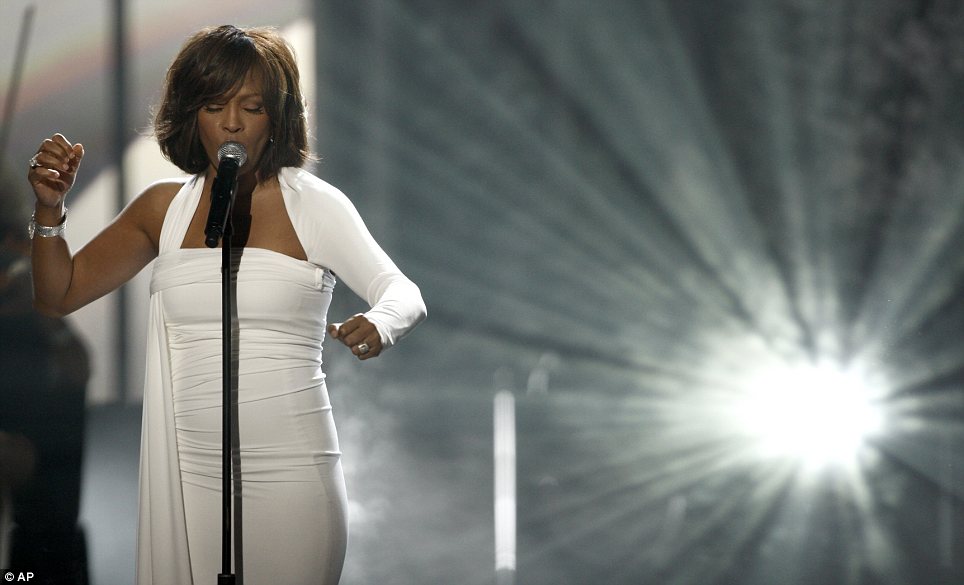
Whitney Houston will be laid to rest on Saturday, 18 February, in the New Jersey church where she sang as a child.
The owner of the Whigham Funeral Home in Newark said Whitney Houston funeral will be held at 12:00 EST at New Jersey’s New Hope Baptist Church.
Whitney Houston’s body was flown from Los Angeles to her home neighbourhood in New Jersey last night.
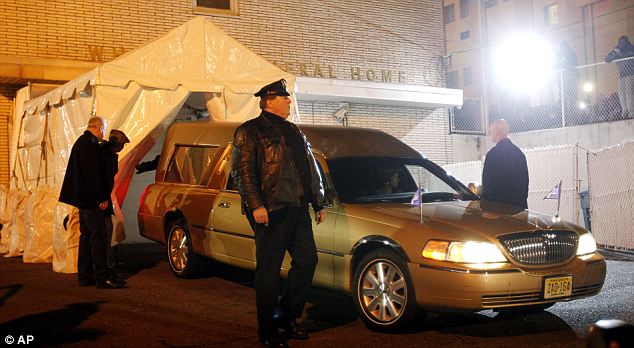
The late singer’s body was flown in a private jet reportedly owned by Tyler Perry and transported to Newark’s Whigham Funeral Home, which handled the 2003 funeral of her father.
The private jet was said to be chartered by the highest paid man in entertainment Tyler Perry.
The Atlanta-born actor is said to have rushed to the hospital when he heard about his close friend’s death and offered his plane to her family right away, according to sources.
Whitney Houston will be laid to rest on Saturday, 18 February, in the New Jersey church where she sang as a child
Whitney Houston’s body touched down at New Jersey’s Teterboro Airport at 10:30 p.m. last night after the Gulfstream III jet took off from California’s Van Nuys airport following its release from the LA County Department of Coroner.
The funeral home’s owner, Carolyn Whigham, said the funeral service would be by invitation only, adding it would be a “private time” for the Houston family.
“They have shared her for 30 some years with the city, with the state, with the world,” she told reporters. “This is their time now for their farewell.”
The body of the 48-year-old singer was found in a bathtub at her suite in Beverly Hilton hotel on Saturday, surrounded by different bottles of prescription pills including ibuprofen – a painkiller, Xanax – an anti-anxiety drug, Midol – for menstrual cramps, amoxicillin – for bacterial infections and several others.
Friends have spoken out to say Whitney Houston’s premature death was “not a great surprise” due to her “downward spiral” which was helped along by others.
“As sad as this sounds, it’s not a great surprise and yet, it’s unbelievable,” a music source told People magazine.
“There are demons she fought privately and publicly for many years… She’s been on a downward spiral for a long time and when you have those people around you that enable the behavior … she couldn’t shake those demons.”
According to one source, Whitney Houston spent her last days in a drug-fuelled trance. “She was like a zombie,” the source said.
It has also emerged that the Beverly Hilton Hotel management asked the coroner to leave Whitney Houston’s body in her hotel room until the Clive Davis’ pre-Grammy party finished, according to RadarOnline.
A source told the website the decision was made “out of respect for Whitney Houston” and amid security concerns.
But it was also reported that the management did not want to upset guests at the hotel either.
“It would be insensitive for the van to be driven out with her body as limos were pulling away with the A-list guests,” the source said.
Whitney Houston’s body was eventually removed after midnight, when officers had finished their on-scene work.
Toxicology tests are under way, following an autopsy on Sunday and the authorities say it may be up to eight weeks before they can confirm the cause of death.
No criminal probe is under way, police said, but the Los Angeles coroner said her room did contain some prescription drugs.
As speculation continues about the cause of Whitney Houston’s death, gossip website TMZ reported that some of her prescriptions were filled out at the infamous Mickey Fine pharmacy.
Mickey Fine pharmacy was raided in 2009 by the DEA for evidence of “improper dispensing of controlled substances”, in connection with the death of Michael Jackson.
These reports have yet to be confirmed.
Michael Jackson was said to have received from the Beverly Hills pharmacy the highly addictive Demerol – one of the drugs which was alleged to have contributed to his death – and agents believe it may have refilled prescriptions without a doctor’s authorization.
It took nearly three months for the coroner to officially rule on Michael Jackson’s death which was eventually determined to be from “acute propofol intoxication” and two other drugs.
Mickey Fine’s is thought to have been the go-to pharmacy for both singers who are believed to have spent thousands of dollars there.
US reports claim that some of Whitney Houston prescriptions were filled out at Mickey Fine pharmacy that was under investigation in connection with Michael Jackson’s death
Some of the prescriptions found in Whitney Houston’s hotel room were reportedly issued in 2011, but some were believed to have been more recent.
The amoxicillin was recently prescribed to Whitney Houston for a sore throat, sources told TMZ.
A coroner ruled today that it was impossible to ascertain the exact cause of Whitney Houston’s death but ruled out foul play.
The singer’s family was allegedly told by Los Angeles County Coroner officials there was not enough water in her lungs to conclude she had drowned in her luxury hotel bathtub and in fact died before her head went under water, said TMZ.
Los Angeles assistant chief coroner Ed Winter refused to go into details and said toxicology reports will not be available for several weeks, making it impossible to pinpoint the exact cause of death.
Ed Winter confirmed to ABC that officials found prescription bottles, but said there wasn’t anything “alarming” or “out of the ordinary” about them.
Though there were reports Whitney Houston had drowned, or overdosed, he said they won’t make a final determination until “all the tests are in”.
Ed Winter said: “No matter what medications they’re taking, until we run a (toxicology test) and see the level and what’s in the system, we’re not going to speculate.”
County coroners will request copies of her medical records and will compare them with prescription bottles found in the hotel room, a source told The Sun.
If anyone gave Whitney Houston the drugs illegally, they could be charged.
“[Authorities] need to determine that no one is criminally negligent. There still could be charges in this case,” the source said.
Coroners have still not ruled a cause of death but it is believed she died – perhaps from a mixture of drugs – before she became submerged in the bath where her body was found.
Law enforcement sources said it is possible Whitney Houston suffered a heart attack as a result of the cocktail of drugs she had taken.
While questions remain about what happened prior to her death, photographs shed some light on Whitney Houston’s last minutes.
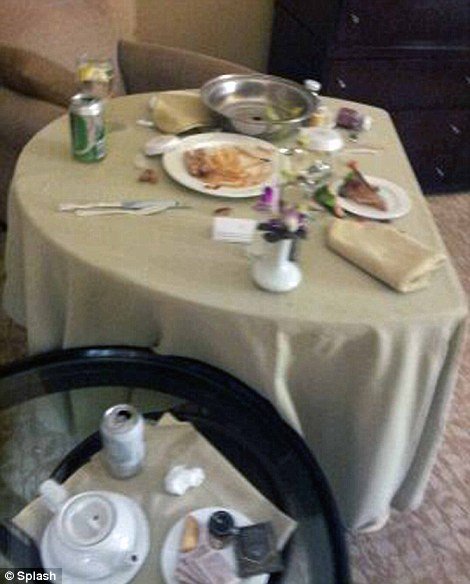
Pictures released of the hotel room in which Whitney Houston died show remains of her final meal – a hamburger, fries and a turkey sandwich – which she is said to have eaten in the bathroom immediately before she died.
The pictures also show Whitney Houston was drinking champagne and beer shortly before her death.
Though Whitney Houston sold more than 200 million albums – including The Bodyguard soundtrack which she earned $33million from – and singles during her career and commanded $10million per movie, the legendary singer was said to have been on the verge of bankruptcy when she died.
A messy divorce with Bobby Brown, addictions to alcohol and drugs are all said to have whittled away Whitney Houston’s multimillion dollar fortune over the years.
Forbes writer Zack O’Malley Greenburg told E! News: “There were certainly rumors that Whitney Houston died broke and she didn’t have any significant financial impact in the last couple years of her life.
“It’s been a while since she has put out an album and been on tour, so one could see why towards the end of her life she would be running a bit low on cash.”
A music insider claimed that Whitney Houston was flat broke and had been living off advances from her record label for “quite some time”
A music insider claimed that Whitney Houston was flat broke and had been living off advances from her record label for “quite some time”.
Property records show Whitney Houston had approximately $2.85 million worth of real estate in her name in the form of two homes in New Jersey. Daughter Bobbi Kristina Brown has listed her address as an Atlanta townhouse that was purchased in 2007 for $509,875.
Whitney Houston sold a house in Florida for $1.35 million back in 2005.
Sony Music are now expected to release some of Whitney Houston’s greatest hits but her estate may not receive a large payout from this, as her biggest hit I Will Always Love You was written by Dolly Parton – who is poised to cash in all over again.
Kyle Dyer, a veteran television anchor of Denver’s KUSA-TV, who was bitten in the face by an 85-pound dog during a live broadcast says she needed 70 stitches in her lips and nose and she still cannot talk.
Kyle Dyer wrote on her Facebook page over the weekend that she can’t talk because her mouth is stitched shut to let a skin graft take and so blood can circulate in her lips again.
The Facebook post says Kyle Dyer expects another procedure in the next few weeks.
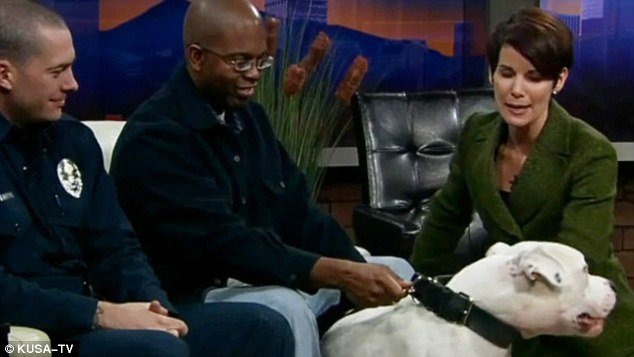
Kyle Dyer was injured last week while doing an on-air segment with the dog’s owner and a firefighter who had rescued the Argentine Mastiff from an icy pond in suburban Lakewood the day before.
The veteran TV anchor was petting the dog’s head seconds before it bit her.
Kyle Dyer, who had been working at the Denver, Colorado station for over 15 years, had reconstructive surgery last Wednesday afternoon following the attack, and was released from the hospital Thursday afternoon.
In order to communicate, Kyle Dyer is using tools on her iPad to type out messages to loved ones.
Kyle Dyer was injured last week while doing an on-air segment with the dog's owner and a firefighter who had rescued the Argentine Mastiff from an icy pond in suburban Lakewood the day before
The dog, whose full name is Warrior Maximus, recently survived a harrowing rescue from a freezing pond and was on the show as part of a mini-reunion between him and his rescuers.
A video of Max trying unsuccessfully to find a way out of the pond was released last week, and provides some context for the background which led him to lash out the next day.
Though immediate reports said that the dog was not properly vaccinated and his owners have put out a statement saying that he was up-to-date with all of his shots.
“Max is current in his vaccinations. Max has no history of aggression. Max is a gentle, loving, family dog. Max is well mannered and obedient and he hardly barks,” said the dog’s owners The Robinsons in a statement.
“This incident truly is unfortunate and does not reflect Max’s disposition towards people.”
Now, Max has been caged by animal control officers and his owner, Michael Robinson has been fined.
In addition to comments wishing Kyle Dyer well, most Facebook respondents left angry messages blaming her for getting too close to the dog.
“I totally agree with all those saying it was her own fault and she should have known better,” wrote Cassandra Hughes Kramer.
“The dog was being a dog, defending itself in a stressful situation. He didn’t jump on her and maul her, he nipped her lip… and she shouldn’t have been trying to kiss him. Maybe it’s a hard lesson to learn, but hopefully she learned it.”
A number of viewers also expressed concern that the dog would be euthanized as a result of the incident, which was something they appeared angry about.
“It was clearly human fault. Why should the animal be blamed for both the owner a Kyle’s mistake?
“Hope he isn’t put down, it would be a crime,” wrote Bruno Naletto.
Unless the dog has rabies – which it is not showing signs of – it will not be put down.
Even if the vaccinations are current, the owners will definitely face two charges from Denver Animal Care and Control: a penalty for having the dog bite someone and a second penalty for having the dog off its leash at the time.
“While we normally walk Max on-leash, we understand that by letting him off-leash in an open area away from anyone was still a mistake. We will never walk him off-leash in public areas after this,” the Robinsons said in their statement.
Max was brought into the studio after the station’s news chopper captured video footage of a firefighter rescuing Max from a freezing pond Monday after he fell through the ice and couldn’t make it out.
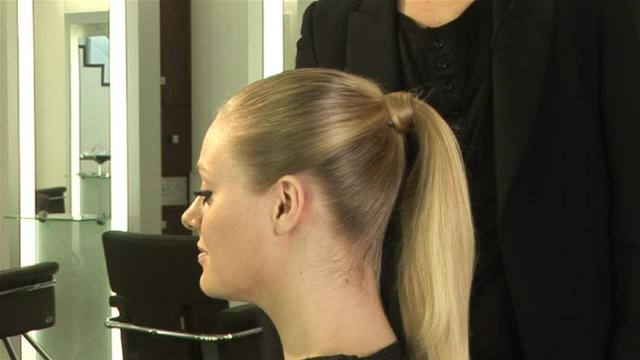
A British team of physicians have come up with an equation that explains and predicts the shape of a ponytail that could help scientists better understand natural materials, such as wool and fur.
The Ponytail Shape Equation findings have been published in Physical Review Letters journal.
The new equation takes into account the stiffness of hairs, the effects of gravity and the presence of random curliness or waviness.
“It’s a remarkably simple equation,” explained Prof. Raymond Goldstein, who is the Schlumberger Professor of Complex Physical Systems at Cambridge University.
He added that the findings showed how physics could be used to “solve a problem that has puzzled scientists and artists ever since Leonardo Da Vinci remarked on the fluid-like streamlines of hair in his notebooks 500 years ago”.
Prof. Raymond Goldstein worked on the equation with Professor Robin Ball from the University of Warwick and Patrick Warren, from Unilever’s Research and Development Centre.
The Ponytail Shape Equation represents the first scientific understanding of the distribution of hairs in a ponytail, say the researchers
The Ponytail Shape Equation represents the first scientific understanding of the distribution of hairs in a ponytail, say the researchers.
It provides new understanding of how a bundle is swelled by the outward pressure which arises from collisions between the component hairs.
Together with a new mathematical quantity known as the Rapunzel Number, the equation can – they say – be used to predict the shape of any ponytail.
It opens the way to a better understanding of materials made up of random fibres, say the researchers.
This will resonate with some in the computer graphics and animation industry, where a realistic representation of hair and fur has proven a tough challenge.
Prof. Raymond Goldstein is presenting the research at the American Physical Society meeting in Boston on 28 February.
Experts at the Cedars-Sinai Heart Institute in US say that damage caused by a heart attack has been healed using stem cells gathered from the patient’s own heart.
The amount of scar tissue was halved in the small safety trial reported in the Lancet medical journal.
According to the authors, there was also an “unprecedented” increase in new heart muscle.
A heart attack happens when the organ is starved of oxygen, such as a clot blocking the flow of blood to the heart.
As the heart heals, the dead muscle is replaced with scar tissue, but because this does not beat like heart muscle the ability to pump blood around the body is reduced.
Doctors around the world are looking at ways of “regenerating” the heart to replace the scar tissue with beating muscle. Stem cells, which can transform into any other type of specialized cell, figure prominently in their plans.
This trial, at the Cedars-Sinai Heart Institute, was designed to test the safety of using stem cells taken from a heart attack patient’s own heart.
Within a month of a heart attack, a tube was inserted into a vein in the patient’s neck and was pushed down towards the heart. A sample of heart tissue, about “half the size of a raisin”, was taken.
This was taken to the laboratory where the stem cells were isolated and grown. Up to 25 million of these stem cells were then put into the arteries surrounding the heart.
Twenty five patients took part in the trial. Before the treatment, scar tissue accounted for an average of 24% of their left ventricle, a major chamber of the heart. It went down to 16% after six months and 12% after a year.
Healthy heart muscle appeared to take its place. The study said the cells “have an unprecedented ability to reduce scar and simultaneously stimulate the re-growth of healthy [heart] tissue”.
One of the researchers Dr. Eduardo Marban said: “While the primary goal of our study was to verify safety, we also looked for evidence that the treatment might dissolve scar and re-grow lost heart muscle.
“This has never been accomplished before, despite a decade of cell therapy trials for patients with heart attacks. Now we have done it.
“The effects are substantial, and surprisingly larger in humans than they were in animal tests.”
However, there was no increase in a significant measure of the heart’s ability to pump – the left ventricle ejection fraction: the percentage of blood pumped out of the left ventricle.
Prof. Anthony Mathur, who is coordinating a stem cell trial involving 3,000 heart attack patients, said that even if the study found an increase in ejection fraction then it would be the source of much debate.
He argued that as it was a proof-of-concept study, with a small group of patients, “proving it is safe and feasible is all you can ask”.
“The findings would be very interesting, but obviously they need further clarification and evidence,” he added.
A plane believed to be carrying Whitney Houston’s body has landed in her home state of New Jersey, after leaving from LA.
In a news conference on Monday, Beverly Hills police spokesman Lt. Mark Rosen said fire department officials were told the singer was found unresponsive on Saturday morning.
“Ms. Houston was pulled from the tub by members of her staff and hotel security was promptly notified,” he said.
“First aid and CPR measures were performed in an attempt to revive her,” he said, adding that after unsuccessful attempts, Houston was pronounced dead at 15:55 local time.
The police spokesman played down reports that prescription drugs might have been involved in Whitney Houston’s death.
“Our intent at Beverly Hills Police Department is not to fuel the speculation or rumors that are circulating right now,” Lt. Mark Rosen said.
“We can’t comment on where those rumors have come from.”
However, the Los Angeles’s coroner’s office then said there were bottles of prescription medicine in the room, although it did not provide further details.
“There weren’t a lot of prescription bottles,” said Ed Winter, the coroner’s assistant chief.
“You probably have just as many prescription bottles in your medicine cabinet.”
Earlier, the coroner’s office confirmed Whitney Houston’s body was released to her family late on Monday morning.
Whitney Houston’s body arrived at Whigham Funeral Home, in Newark, New Jersey
Whitney Houston’s body was then flown from Van Nuys Airport in the Los Angeles area east to New Jersey, where a funeral will be held at the end of the week.
Sales of Whitney Houston’s albums have soared on both sides of the Atlantic following her death in Los Angeles.
Whitney – The Greatest Hits is at two on the US iTunes chart, while Whitney Houston – The Ultimate Collection is second in the UK iTunes chart.
Actor Matt Bomer has revealed he is gay and his partner is publicist Simon Halls.
Matt Bomer, 34, came out quietly at the weekend after accepting an award at Steve Chase Humanitarian Awards in California on Saturday.
White Collar actor has dodged questions in the past about his orientation – despite speculation about his sexuality.
While appearing at the Steve Chase Humanitarian Awards on Saturday – where he was honored with New Generation Arts and Activism Award for his activism against HIV/ AIDs – Matt Bomer thanked his partner, Hollywood publicist Simon Halls.
Matt Bomer also made reference to their three children in his speech, saying: “I’d really especially like to thank my beautiful family: Simon, Kit, Walker, Henry.
“Thank you for teaching me what unconditional love is. You will always be my proudest accomplishment.”
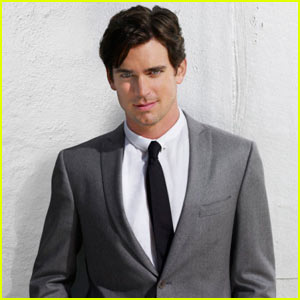
Actor Matt Bomer has revealed he is gay and his partner is publicist Simon Halls
Although Matt Bomer has not spoken about his family life in detail, three-year-old twins Walker and Henry are believed to be the sons of Simon Halls while five-year-old Kit is understood to be from a previous relationship of Bomer’s.
The actor only revealed he had children last March while co-hosting the Today Show.
When questioned about his love life during a 2010 interview with Details magazine, Matt Bomer said: “I don’t care about [rumors] at all. I’m completely happy and fulfilled in my personal life.”
Matt Bomer is set to appear in the upcoming stripper movie Steven Soderbergh-directed movie Magic Mike, alongside Channing Tatum and Alex Pettyfer.
He will also soon be seen in the film adaptation of Larry Kramer’s HIV/ AIDs play The Normal Heart.
Matt Bomer said of the movie at the awards show: “My world has really been rocked by doing research for Normal Heart, just in terms of the history of HIV and AIDS.”
“And so I’m very proud to receive this award from an organization that is at the forefront of carrying the torch into a very, very bright future.”
A TV biography of the former U.S. President Bill Clinton claims that he was already a huge hit with the ladies during his initial bid for governorship in his home state of Arkansas in the 1970’s.
Former senior aides said that women were “literally mesmerized” and swarmed around Bill Clinton “like flies to honey”.
Bill Clinton’s appeal only grew by the time he became president – during which time he admitted he had been forced to “shut down my body” to avoid multiple indiscretions.
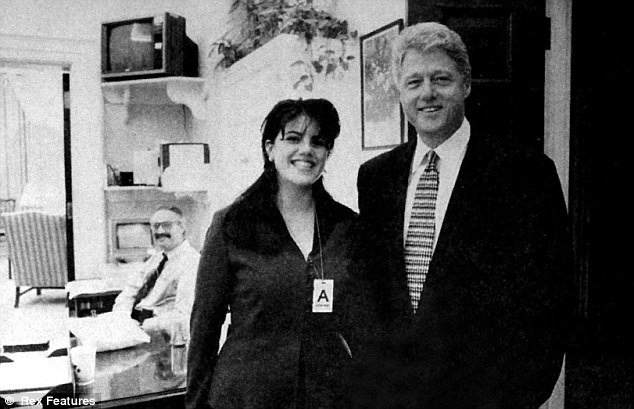
The disclosures were made in the forthcoming PBS documentary Clinton in which Bill Clinton’s former staffers speak for the first time about their sense of betrayal over his affair with Monica Lewinsky in 1998.
Long before that, however, Bill Clinton’s sexual appetite was causing problems.
According to the documentary, Bill Clinton’s political team realized it was a stumbling block during his failed run for Congress in 1974 in his home state of Arkansas.
Campaign manager Paul Fray said: “You got to understand that at one time there was at least 25 women per day coming through there trying to find him and I’d tell them he was out on the road.
“Lord it was bad. Bad, bad bad, bad bad.”
Marla Crider, who worked with Bill Clinton in Arkansas and had an affair with him, describes women as being “literally mesmerized”.
She says: “It was like flies to honey.
“He needed that, he needed that kind of adoration. I don’t think there was any question that Hillary was hurt whether it was me, or anyone else.”
In the forthcoming PBS documentary Clinton, Bill Clinton's former staffers speak for the first time about their sense of betrayal over his affair with Monica Lewinsky in 1998
Among those interviewed is Betsey Wright, Bill Clinton’s trusted political aide, who made a crucial intervention in his career in 1987 the day before he was due to announce his run for presidency.
Betsey Wright confronted Bill Clinton with a list of his previous girlfriends who he had to deal with.
Writer Gail Sheely said: “Just the day before the press conference he was going to announce that he was going to run, Betsey Wright, his ferociously protective campaign manager, sat him down with a list of names of women and went through one after the other
“How many times? Where did you meet her? How likely is she to talk?”
Bill Clinton said for each name that “she’ll never say anything”, but Betsey Wright replied: “But you don’t know that!”
Betsey Wright supposedly told Bill Clinton: “The problem is we’re not just talking about you, we’re talking about your wife, we’re talking about your child.
“She said I don’t think you can run.”
Betsey Wright tells the documentary: “It became clear it was not the time for him to do it. This was not the time.”
By the time he got to the White House in 1992, however, Bill Clinton appeared to be having even more difficulty controlling himself.
And when Monica Lewinsky arrived as one of his interns, his self-control evaporated completely.
Ken Gormley, a legal expert working in the White House, tells the documentary that there were “almost these sparks flying between them from the first moment when they saw each other”.
And when the affair became public Betsey Wright says that his staff was deeply upset because he had lied to them and lied “to a lot of people”.
On of Bill Clinton’s closest advisers, Dick Morris, tells the documentary: “When the Lewinsky scandal broke the president paged me and I returned the call.
“He said: <<Ever since I go here to the White House I’ve had to shut my body down, sexually I mean, but I screwed up with this girl. I didn’t do what they said I did but I may have done so much that I can’t prove my innocence.>>
“I said to him that the problem that presidents have is not the sin, it’s the cover-up and you should explore just telling the American people the truth.
“He said: <<Really, do you think I could do that?>>
“I said let me test it, let me run a poll, so I took a poll… and I called him back and I said they will forgive the adultery, but they won’t easily forgive that you lied.”
Bill Clinton, now 65, disregarded his advice and continued to conceal his relationship with Monica Lewinsky.
In the end Bill Clinton was impeached but acquitted.
The former president did however remain very popular and left office with a 65% approval rating, the highest exiting poll out of any U.S. President.
The documentary also features fascinating color about the Clinton White House with aides describing his first year as “chaos”.
The West Wing resembled a fraternity house with pizza boxes littering the floor as bullish young aides who did not even wear ties wandered in and out of meetings as and when they liked.
Summing up Bill Clinton’s presidency, U.S. journalist David Maraniss, tells the documentary: “People always try to separate the good from the bad in Clinton and say that, if he had not done certain things, he would have been a great president.
“But you can’t do that. Those were his major characteristics.”
Bill Clinton’s former press secretary Dee Dee Myers adds: “How many second chances does a person deserve? Clinton’s view is as many second chances as a person is willing to take.”
Hillary Clinton also features prominently in the film and she is credited with being the “mastermind” of reviving his career in its early days.
When Penthouse model Gennifer Flowers claimed to have had a 12-year affair with her husband, Bill Clinton “brought him back from the dead” with a robust TV interview in which she famously said she was not going to “stand by my man” like the Tammy Wynette song.
Bill Clinton political advisor Carol Willis says: “Bill Clinton is a smart guy, a very smart guy but he will tell you that Hillary is much smarter than he is, she’s much tougher than he is, she’s more of a pragmatist.”
Clinton documentary premieres on four consecutive nights from Monday, February 20 at 10:15 p.m. on PBS
Pictures of the hotel room in which Whitney Houston died show remnants of her last meal – a hamburger, fries and a turkey sandwich – which she is said to have eaten in the bathroom right before she died.
The images also Whitney Houston was drinking champagne and beer shortly before her death and it is suggested the lethal combination of alcohol with prescription drug Xanax – which was also found at the scene – could have been the cause of her death.
A tray can be seen on the floor of the bathroom which is said to have contained the turkey sandwich and jalapenos. A Gilette razor, glass of water and items of clothing are also strewn on the floor.
Family sources told TMZ Whitney Houston ate the burger and fries in the hotel suite before taking the turkey sandwich and jalapenos into the bathroom where she planned on eating them after her bath.
It also emerged today that drugs Whitney Houston allegedly took in the hours before her death were bought at the same pharmacy Michael Jackson frequently used, sources say.
Whitney Houston’s body was found in a bathtub at her suite in the Beverly Hills Hilton Hotel on Saturday, surrounded by different bottles of prescription pills including ibuprofen – a painkiller, Xanax – an anti-anxiety drug, Midol – for menstrual cramps, amoxicillin – for bacterial infections and several others.
TMZ reported that some of the prescriptions were filled out at the infamous Mickey Fine pharmacy, which was raided in 2009 by the DEA for evidence of “improper dispensing of controlled substances”, in connection with the death of Michael Jackson.
These reports have yet to be confirmed.
Whitney Houston ate the burger and fries in the hotel suite before taking the turkey sandwich and jalapenos into the bathroom where she planned on eating them after her bath
Mickey Fine’s is thought to have been the go-to pharmacy for both singers who are believed to have spent thousands of dollars there.
According to TMZ, Mickey Fine also sued Michael Jackson in 2007 for non-payment of a bill of more than $100,000.
Some of the prescriptions found in Whitney Houston’s hotel room were reportedly issued in 2011, but some were believed to have been more recent.
The amoxicillin was recently prescribed to the singer for a sore throat, sources told TMZ.
A tray can be seen on the floor of the hotel bathroom which is said to have contained a turkey sandwich and jalapenos, a Gilette razor, glass of water and items of clothing are also strewn on the floor
A coroner ruled today that it was impossible to ascertain the exact cause of the singer’s death but ruled out foul play.
A source close to the investigation said it was “from drugs and not from drowning”.
Police confirmed today that Whitney Houston’s body was found under water but that she may have died before being submersed.
A natural cause of death has not been ruled out either.
Los Angeles assistant chief coroner Ed Winter refused to go into details and said toxicology reports will not be available for several weeks, making it impossible to pinpoint the exact cause of death.
Ed Winter confirmed to ABC that officials found prescription bottles, but said there wasn’t anything “alarming” or “out of the ordinary” about them.
Though there were reports Whitney Houston had drowned, or overdosed, he said they won’t make a final determination until “all the tests are in”.
Ed Winter said: “I had a conversation with the family at the hotel and at no time did I discuss prescription meds or the drowning issue.
“I don’t know if the detectives discussed that with the family, but no, we have not released any information like that.”
Asked by reporters whether he ruled out drowning because there had not been enough water in the singer’s lungs, as was earlier reported, he said: “That did not come from us. It’s too early to say. The autopsy was done yesterday and there still is additional testing that is ongoing.
“You can look at a body and not know what the cause of death is. You might have a suspicion that person could have suffered a heart attack or something.
“No matter what medications they’re taking, until we run a (toxicology test) and see the level and what’s in the system, we’re not going to speculate.”
Law enforcement sources said it is possible Whitney Houston suffered a heart attack as a result of the cocktail of drugs she had taken.
Whitney Houston’s body was released to her family today.
The legendary singer’s funeral will be held in Newark, New Jersey, later this week, NBC New York reported, possibly on Friday.
Her body will be flown there later today and taken to Whigham Funeral Home.
Whitney Houston was born in Newark and raised in East Orange. She got her start as a singer in the choir at New Hope Baptist Church in Newark.
Mourners have been flocking to the church since her death, with local Shawn Cooper saying yesterday: “The Houston family means a lot to this community, they have done a lot for this community, and being there for them is the best thing we can do as a community today.”
Whitney Houston may be buried alongside her father, army serviceman and entertainment executive John Houston, who died in 2003 and was laid to rest at Fairview Cemetery, Westfield, New Jersey.
Meanwhile Whitney Houston’s brother-in-law Billy Watson insisted that the star would never have taken her own life. He told ABC: “Oh, no, this is accidental. She wouldn’t have left her daughter like that. She wouldn’t have done that to her daughter.”
Billy Watson, whose sister is married to Whitney Houston’s brother, Gary, also confirmed the family was taking her body to New Jersey from California today.
Whitney Houston’s mother, gospel singer Cissy Houston, issued the following statement: “We are devastated by the loss of our beloved Whitney. This is an unimaginable tragedy and we will miss her terribly. We appreciate the outpouring of love and support from her fans and friends.”
Since her mother’s death, Bobbi Kristina Brown was rushed to hospital twice and relatives now fear she has become suicidal.
Bobbi Kristina Brown was first admitted after allegedly passing out, after drinking alcohol and then taking a sedative pill given to her by one of her mother’s entourage to calm her down, upon learning of the devastating news.
Her father Bobby Brown cut short his reunion tour with New Edition to fly to Los Angeles to be by the 18-year-old’s side.
Bobby Brown said in a statement: “Obviously, the death of her mother is affecting her, however, we will get through this tragedy as a family. Again, I ask for privacy during this time.”
Bobbi Kristina Brown was pictured being taken out of the Beverly Hilton – the same hotel where her mother had died just hours earlier- on a stretcher at 10:30 a.m. yesterday and being rushed to Cedars-Sinai where she was treated for extreme anxiety.
The teenager was released several hours later, but friends and family are still very concerned about her mental state.
Bottles of Lorazepam, Valium, Xanax and a sleeping medication were found in Whitney Houston’s hotel room, it has been claimed.
The drugs were believed to have acted as sedatives, causing Whitney Houston to fall asleep in the bathtub once they had been mixed with alcohol from the previous evenings.
Whitney Houston was found underwater and unconscious in the bathtub of her Beverly Hilton hotel room on Saturday, according to Beverly Hills police.
Officials said they would not speculate on the cause of her death until toxicology tests are finished.
“Ms. Houston was pulled from the tub by members of her staff and hotel security was promptly notified,” said Beverly Hills police spokesman Lt. Mark Rosen.
A Los Angeles coroner said there were no signs of foul play.
It could take up to eight weeks before investigators know exactly why Whitney Houston died.
Whitney Houston was found underwater and unconscious in the bathtub of her Beverly Hilton hotel room on Saturday, according to Beverly Hills police
The Los Angeles coroner’s office said Whitney Houston’s body was released to her family late on Monday morning.
Whitney Houston’s body will be taken to New Jersey, where she lived, for a funeral to be held at the end of the week.
Born in Newark, Whitney Houston began her singing career as a child at the city’s New Hope Baptist Church. Her cousin, singer Dionne Warwick, also sang in its choir.
On Monday, mourners left tributes, including flowers, balloons and candles, alongside the church’s fence.
Whitney Houston was one of the world’s best-selling artists from the mid-1980’s to the late 1990’s, selling 170 million records worldwide.
But her later career was overshadowed by drug use and a turbulent marriage to singer Bobby Brown.
Whitney Houston, 48, was found in her hotel room just hours before she was supposed to appear at a gala before the Grammy awards show.
At the awards ceremony, Whitney Houston was remembered by the music world.
Host LL Cool J opened the event with a prayer for the legendary singer, who won six Grammys during her career.
The audience then gave a standing ovation after watching a clip of her hit I Will Always Love You.
Dressed in black and with a simple piano accompaniment, singer Jennifer Hudson later gave a rendition of the same song, ending with the line: “Whitney, we will always love you.”
Sales of Whitney Houston’s albums have soared on both sides of the Atlantic following her death in Los Angeles.
Whitney – The Greatest Hits is at two on the US iTunes chart, while Whitney Houston – The Ultimate Collection is second in the UK iTunes chart.
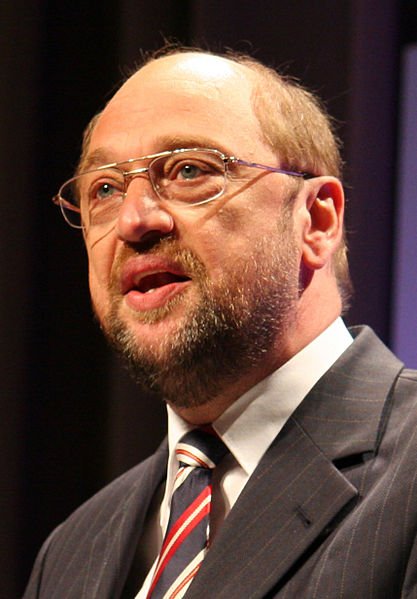
Martin Schulz, the current president of the European Parliament, has criticized the controversial Anti-Counterfeiting Trade Agreement (ACTA).
On German television network ARD, Martin Schulz said of the treaty: “I don’t find it good in its current form.”
Martin Schulz’s comments followed mass protests across Europe against the agreement.
Demonstrations took place at the weekend in various countries including Germany, Poland, UK and Romania.
Martin Schulz said that the balance between copyright protection and the individual rights of internet users “is only very inadequately anchored in this agreement”.
Supporters of the agreement insist it will not create new laws and is necessary to standardize copyright protection measures.
ACTA is set to be debated in the European Parliament in June.
Martin Schulz, the current president of the European Parliament, has criticized the controversial Anti-Counterfeiting Trade Agreement (ACTA)
Although countries can individually enforce the agreement, the EU will need to play a role if the treaty is to be effective in enforcing intellectual property protection across several countries.
So far, the treaty has been signed by 22 EU member states.
However, Germany has held off from backing the agreement, citing the need for “further discussion”.
Polish Prime Minister Donald Tusk said his country would wait for “sufficient consultation” before ratifying, following huge protests and disruption to several government websites.
Earlier this month, Slovenia’s ambassador to Japan, Helena Drnovsek Zorko, apologized for her “carelessness” in signing the treaty on behalf of her country.
Martin Schulz’s comments are a sign that ACTA is in “real political trouble”, according to Loz Kaye, leader of the Pirate Party UK.
“One of the things that’s very interesting is that now the ACTA agreement is coming under fire from all sides,” he said.
“It’s becoming clear that European citizens are very concerned about this agreement. It’s hard to find anyone who is standing up for it right now.”
A spokesperson for the International Trademark Association said that ACTA offers a chance for the EU to “thwart” the problem of counterfeit goods.
“ACTA is aimed at counterfeiters and pirates involved with commercial scale activities on the Internet, not the general user,” the spokeswoman said.
“Too many criminals profit from selling counterfeit goods on the Internet at the expense of consumers’ health and safety.
“The trade agreement is an opportunity for EU officials to help thwart this problem, and they can do so by adopting ACTA and joining the international battle against counterfeiting.”
Apple has been accused by Whitney Houston fans of exploiting the late singer’s death by increasing the cost of her in-demand albums on iTunes.
Whitney Houston’s Ultimate Collection album, released in 2007, has increased by $4.70 to $12.60, according to Digital Spy.
It comes after Whitney Houston, whose most famous hits include I Will Always Love You and I Wanna Dance With Somebody, was found dead in her Los Angeles hotel room on Saturday afternoon at the age of 48.
Users reportedly complained they were unable to download the Ultimate Collection while it was given the new price.
Some music fans accused Apple of “cashing in” on the singer’s death, while others said the company should be “ashamed”, Digital Spy reported.
One customer said: “To say I am angry is an understatement and I feel it is just a case of iTunes cashing in on the singer’s death, which in my opinion is totally parasitic.
“The album itself is great so please don’t be put off purchasing it, just [know] that you will merely be lining some fatcat’s pocket before Whitney’s lifeless body is cold.”
Whitney Houston’s Ultimate Collection album, released in 2007, has increased by $4.70 to $12.60 on iTunes after the singer’s death, according to Digital Spy
Despite the increase in cost of her albums, Whitney Houston is expected to dominate the singles and album charts next week.
Whitney Houston is currently top of the iTunes’ chart, with her 1992 smash hit I Will Always Love You.
The spring release was a massive worldwide success, and a tie in with her hugely successful film with Kevin Costner, The Bodyguard.
Whitney Houston’s albums also dominated Amazon’s CD best seller chart on Sunday, with The Greatest Hits at No. 1 and seven other Houston-related albums – including the soundtracks to The Bodyguard and Waiting to Exhale – in the top ten.
The Greatest Hits’ also topped Amazon’s MP3 sales chart, and several of Whitney Houston’s other releases filled the digital top 40.
On iTunes, eight of Whitney Houston’s albums were listed on the top 100 album sales chart, with The Greatest Hits once again taking the No. 1 slot and both the original and deluxe versions of her eponymous 1985 debut charting.
Whitney Houston sold more than 170 million albums and singles worldwide over the course of her career, winning two Emmy Awards, six Grammy Awards, 30 Billboard Music Awards and 22 American Music Awards along the way.
According to the latest reports, Whitney Houston’s body was found in the bathtub at the Beverly Hilton Hotel in Los Angeles.
Whitney Houston was allegedly in possession of prescription pills such as Xanax.
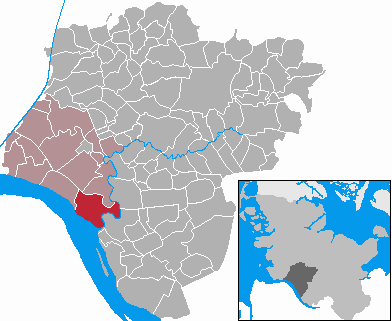
German health experts have been left baffled by a small village in their country where cancer has hit almost every household.
Wewelsfleth, the German village which has a population of 1,500, has been labeled the “village of the damned” as new cancer cases are 50% above average.
Researchers from the University of Lubeck who investigated the phenomenon, which includes breast, lung, oesophageal, womb and stomach cancers, could find no defining cause – although residents are blaming three nearby nuclear power plants and a shipyard where vessels used to be sprayed with highly toxic paint.
The villagers in Wewelsfleth are now demanding a government inquiry. They think authorities over the years have remained silent as wind and rain blew in cancer-causing particles into their homes.
But experts say this is not the case. Research by academics at the University of Lübeck probed the various cancers that had struck down the villagers.
Wewelsfleth, the German village which has a population of 1,500, has been labeled the “village of the damned” as new cancer cases are 50 per cent above average
As well as probing the nuclear plants it also looked into the nearby shipyard, asbestos sheeting used on garage roofs, electro-smog from power lines and the lifestyle of those who fell victim to the cancers.
The study could find no defining link to any one cause. The villagers are now asking health authorities in Berlin to commission another study to get to the bottom of the “plague of cancers”, as they call it.
Wewelsfleth mayor Ingo Karstens, who lost both of his wives to cancer, said: “It feels like a curse.”
Amsterdam’s Schiphol airport has been evacuated after Dutch police has arrested a man who locked himself in a toilet and claimed to have a bomb.
Schiphol’s two main international terminals were evacuated at about 11:30, as the bomb squad and scores of police arrived at the scene.
The terminals reopened about four hours later, after officers said the man posed no threat to the public.
However, delays continued to affect the airport – one of Europe’s busiest.
Dutch border police were investigating whether the suspect had explosives in his luggage.
Live television streams had shown police with guns, dogs and balaclavas outside the building, she added.
Amsterdam's Schiphol airport has been evacuated after Dutch police has arrested a man who locked himself in a toilet and claimed to have a bomb
By 16:00 local time, Schiphol’s website was showing 16 cancellations to inbound flights and 11 to departures. Dozens of flights were delayed.
A Schiphol spokesman said: “Things are not back to normal yet. The evacuation is over and we are busy getting operations back on track but there will be some delays and cancellations for the rest of the day.”
On 25 December 2009, a Nigerian student smuggled explosives on to a flight from Schiphol to Detroit in the US after flying into Amsterdam from Lagos.
He has pleaded guilty to trying to blow up the Northwest Airlines jet he boarded and is due to be sentenced on Thursday. He faces life imprisonment.
By the end of her life, Whitney Houston had thrown away every last scrap of the poise and beauty that had made her the ultimate diva of her generation.
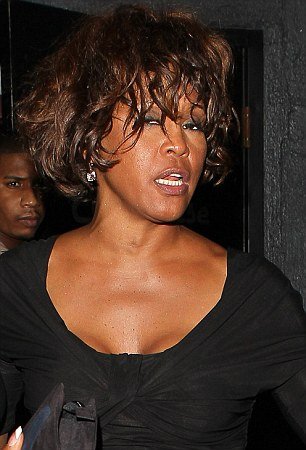
Leaving a Hollywood nightclub two days before her death, Whitney Houston was drenched in sweat and disoriented a wad of mint chewing gum visible in her gaping mouth.
Blood from a cut trickled down her leg, but the singer herself, surrounded by party-loving hangers-on, didn’t seem to notice.
Alternately waving and cursing, this was not the Whitney Houston who conquered the world – a church-going supermodel with a once-in-a-generation voice of exceptional power and sweetness.
This was a woman who, despite at least three attempts at rehab in the past eight years, appeared fully in the grip of drug addiction: wired, wrecked and out of control. Inside the club, it is claimed, Whitney Houston nearly came to blows with a partygoer who she felt had “got into her face”.
So why could nobody save Whitney Houston? In truth, having spent almost two decades destroying herself, she was past saving.
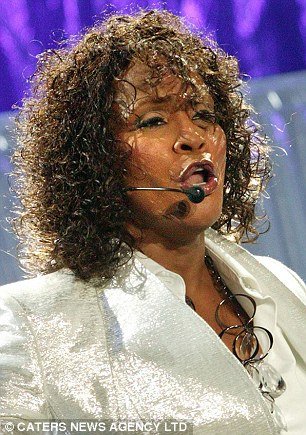
Her voice, with her signature, high-octave power note, had been pitifully diminished by years of abuse, particularly the smoking of crack cocaine. The soaring vocals had become a soft, whispery falsetto.
“She doesn’t want to come, my soprano friend,” Whitney Houston told a booing concert audience in London in 2010.
The years of material plenty were behind her, too. Whitney Houston was reportedly once again “flat broke”, even though she should have had a fortune well in excess of $160 million.
Indeed, despite earning up to $30 million with a colossal 50-date global tour only two years ago, she was reportedly this month reduced to asking her great benefactor, Clive Davis, the music mogul who “discovered” her, for hand-outs yet again.
Whitney Houston’s home in New Jersey was said to be in danger of being repossessed. Another home in Atlanta already had been.
The legendary singer was partying at the Beverly Hilton only because she was on someone else’s tab: the record label was paying for her to be with them in the run-up to last night’s Grammy awards.
There were hopes of yet another album from Whitney Houston, despite the relatively poor performance of her comeback in 2009, and she had recently been in the studio. She had also finished making a film, Sparkle, a showbiz saga about a trio of singers, which Sony has announced will still be released in August.
Whitney Houston’s most recent romantic partner was a 31-year-old rapper, Ray J, who is chiefly famous for being the man in a homemade sex tape shot in 2003, which made reality star Kim Kardashian famous.
Ray-J is also the cousin of rapper and drug advocate Snoop Dogg, so he was not the kind who might have been counted on to keep her on the straight and narrow.
Whitney Houston and Ray-J had an on-and-off four-year liaison, which her fans felt had depressing echoes of her mutually destructive marriage to “bad boy” rapper Bobby Brown, who she divorced in 2007.
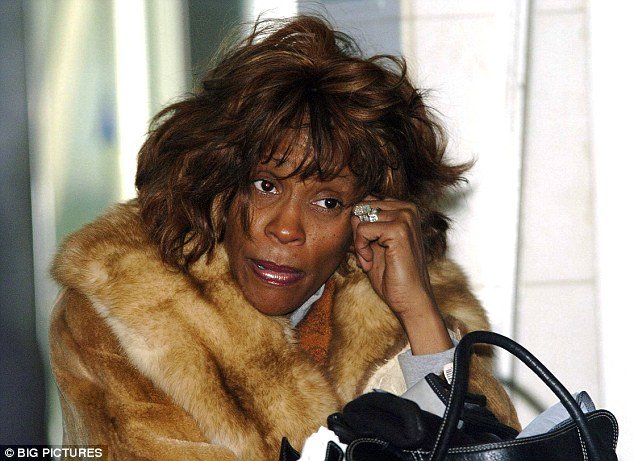
Whitney Houston pictured in 2006, sick and haggard
Whitney Elizabeth Houston was born in 1963 in Newark, New Jersey, and her mother was the successful gospel singer, Cissy Houston. Her cousin was Dionne Warwick and Aretha Franklin was her godmother.
Known as Nippy as a child, Whitney Houston was the youngest of three children. Her mother divorced John Houston, an Army serviceman, but Whitney remained close to both parents.
They supported her in her dreams of stardom – a fact she later said accounted for her enormous self-confidence.
From the age of five Whitney Houston would sing in the choir at the All Hope Baptist church in Newark, where the family worshipped.
As a teenager, Whitney Houston started to get involved in the music business. Aged 15, she sang backing vocals on the Chaka Khan hit I’m Every Woman.
Clive Davis of Arista records first laid eyes on her in 1983, when she was 20, and was bowled over.
Her first album, Whitney Houston, was released two years later, yielding the No 1 hits The Greatest Love Of All, How Will I Know and Saving All My Love For You. It remains the best-selling debut album by a female artist in music history.
Her second album, Whitney, released in 1987, included the hits I Wanna Dance With Somebody and Where Do Broken Hearts Go. It sold 25 million copies worldwide.
Whitney Houston would often travel with her mother. Also always present was her “executive assistant” Robyn Conway, her best friend at school, who she said was “like a sister” to her. She put Robyn Conway on her payroll, but was she something more?
Whitney Houston always denied the persistent rumors she was bisexual, and claimed people got the wrong impression only because she didn’t start dating until she was in her late 20’s.
In 1989, Whitney Houston met Bobby Brown at a music awards show, and they married in 1992. Daughter Bobbi Kristina was born a year later.
Whitney Houston was at the peak of her fame, thanks to the film The Bodyguard and the colossal cover version I Will Always Love You.
But outside the spotlight, her life was far from perfect. Whitney Houston and Bobby Brown had settled in a huge mansion in New Jersey, complete with a pool and recording studio, but the marriage was not happy. He was accused of domestic violence against her in 1993. Whitney Houston said he had slapped her during a jealous argument.
In his autobiography, Bobby Brown hints she deceived him about her true sexual orientation and that their marriage was designed to cover up her bisexuality.
“I realize Whitney had a different agenda than I did when we got married,” Bobby Brown said in his book. “I believe her agenda was to clean up her image; mine was to be loved and to have children.”
Talk of her impossible behavior began to circulate as Whitney Houston started failing to turn up to events, including a celebration of the career of her mentor, Clive Davis.
Whitney Houston admitted in a recent interview that she would take cocaine “every day” in the mid-Nineties.
The singer became skeletally thin and appeared disoriented at times. She was fired from a slot on the Oscars ceremony in 2000 after singing the wrong song at rehearsals.
Later that year, Whitney Houston and Bobby Brown were found to be carrying marijuana on a trip to Hawaii.
In 2002, Whitney Houston gave a notorious interview in which she denied taking crack, on the grounds that it was “too cheap” a drug for her.
“We don’t take crack. Crack is whack,” Whitney Houston said. Nobody was very convinced by her denial.
Clive Davis tried to get her into rehab in 2004, with an ultimatum that they could not work together again if she didn’t clean up.
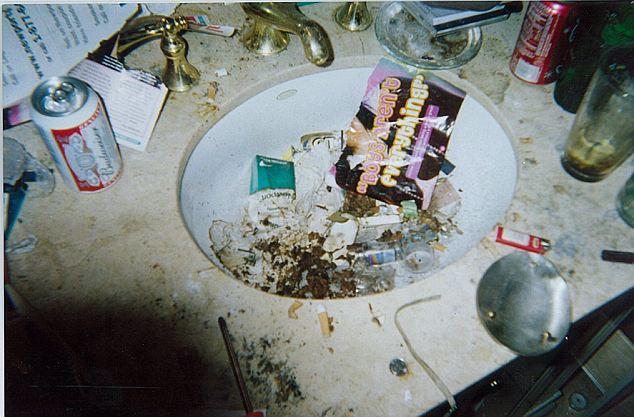
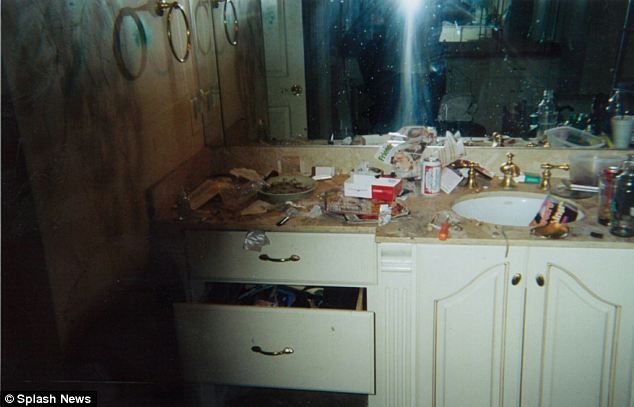
In 2005, Whitney Houston’ sister-in-law leaked pictures to the Press of her bathroom in Atlanta – a sordid, dirty space covered with crack pipes and other drug paraphernalia – to try to shock her into sobriety.
In 2005, Whitney Houston’ sister-in-law leaked pictures to the Press of her bathroom in Atlanta, a sordid, dirty space covered with crack pipes and other drug paraphernalia
In 2006, Clive Davis tried again. Whitney Houston recalled in an interview: “Clive called me one day and said: <<OK, are you ready now? I’m tired of seeing what I’m seeing. I want you back.>>”
In denial about her problems, Whitney Houston said she resisted because she was happy being a mum to Bobbi Kristina. Finally, though, Clive Davis persuaded her that she needed to conquer her addictions and attempt a professional comeback.
The singer Courtney Love had told Clive Davis that the one person who could help Whitney Houston was a former addict named Warren Boyd.
Fabled in Hollywood as the person who got actor Robert Downey Jr. off drugs, his view is that addicts need to have a sober coach to live with them 24/7.
After residential rehab for several months in Pennsylvania, Warren Boyd “secured the perimeter” around Whitney Houston, relocating her to a rented beachside shack in Laguna, Los Angeles, and keeping her away from family and friends – and dealers – in New Jersey for months at a time.
Eventually, Whitney Houston felt strong enough to end her marriage to Bobby Brown. It had been the unhappiest of unions, raven by jealousy and drug use. They were divorced in 2007.
Whitney Houston said she and Bobby Brown started doing drugs together daily around the time of The Bodyguard film, and that Brown couldn’t handle her stardom.
“I think somewhere inside, something happens to a man when a woman has that much control or that much fame.”
Whitney Houston also said that he was unfaithful. “The only thing I did was the drugs. He was too promiscuous, dragging dirt into my home. It disturbed me.”
Getting her off drugs cost more than $1,300 a day for three years – the bill being picked up by Clive Davis. He also paid off a $1.2 million debt on her home.
The debt was pretty extraordinary given that Whitney Houston had sold more than 140 million albums worldwide by then. In the event, the subsequent album, I Look To You, was a damp squib. Released in 2009, her five-octave vocal register was gone thanks to smoking and crack use.
And when she launched the album at a hotel in London, it appeared that without the help of Warren Boyd she had fallen back into her old ways. A nugget of what seemed to be crack cocaine fell from one of her pockets.
There were repeated problems on the tour. Whitney Houston couldn’t hit the high notes and seemed to struggle even to chat with the audience. High-profile promotional gigs – singing on TV chat shows – revealed her ragged form.
And there were still plenty of signs of her infamous temperament. She wouldn’t film in the mornings, and refused all offers of live televised interviews. Clive Davis called her “the most impossible person” he had ever worked with.
Whitney Houston said repeatedly that her teenage daughter Bobbi Kristina helped her to sobriety. In 2009, she said: “She was with me every step of the way.” But the truth seems rather darker.
Her daughter, Bobbi Kristina Brown, now 19, was pictured last year snorting lines of cocaine at a party, smoking joints and drinking beer.
A former boyfriend told the National Enquirer magazine: “Krissi is addicted to cocaine. I’ve tried to stop her, but all she said was: <<I’m just like my mother!>>
“It was difficult to stop her from buying alcohol and drugs because her mother gave her $1,000 a week.”
Last May, Whitney Houston entered rehab for one final time. Sadly, it appears not to have worked. She was out of control on an airplane to Houston in the autumn, when she narrowly avoided arrest after refusing to buckle her seatbelt.
It seems that despite global fame and a constantly supportive family, nothing was enough to keep her clean.
“I have a mother who is very strong and a family that surround me and constantly tell me they love me. And my daughter is my greatest inspiration. She loves me,” Whitney Houston said in an interview earlier this year.
There were no signs of foul play surrounding the death of legendary singer and actress Whitney Houston, according to a Los Angeles coroner.
After a post mortem examination, the coroner said there were no visible signs of trauma on Whitney Houston’s body and that foul play was “not suspected at this time”.
The coroner added officials were not ruling out any causes of death until they had the results of toxicology tests.
Whitney Houston was found dead in the bath in her Beverly Hilton hotel room in Los Angeles on Saturday afternoon.
The coroner said he would not release any more details on the post mortem performed on Sunday at the request of police detectives investigating Whitney Houston’s death.
There were no signs of foul play surrounding the death of legendary singer and actress Whitney Houston, according to a Los Angeles coroner
Meanwhile, the music world has been remembering Whitney Houston’s life and career at the Grammy Awards.
Host LL Cool J opened the event with a prayer for Whitney Houston, who won six Grammys during her career.
“There is no way around this. We’ve had a death in our family,” he said.
“The only thing that feels right is to begin with a prayer for a woman who we loved – for our fallen sister, Whitney Houston.”
The audience then gave a standing ovation after watching a clip of Whitney Houston’s hit I Will Always Love You.
Dressed in black and with a simple piano accompaniment, singer Jennifer Hudson later gave a moving rendition of the same song, ending with the line: “Whitney, we will always love you.”
Others paying tribute during the ceremony included singer Bruno Mars, who told the crowd: “Tonight we’re celebrating the beautiful Miss Whitney Houston.”
“To Whitney up in heaven, we all love you,” echoed Stevie Wonder.
Melanie Fiona, who won best traditional R&B vocal performance and best R&B song, said: “Whitney Houston, I would not be standing up here if it were not for you.”
Reactions to Whitney Houston’s death dominated the ceremony of the Grammy Awards, the most high-profile event in the US music calendar.
Before the show, Jimmy Jam, a friend and producer of Houston’s, said it was “a bitter-sweet occasion”.
“Anytime someone passes away, the thing you do is you gather your family together [and] tell stories,” he said.
“A little bit of mourning, little bit of celebrating – this is our family tonight and we’re going to do it the best that we can do it.”
Earlier on Sunday, the Reverend Al Sharpton paid tribute to Whitney Houston while preaching at the Second Baptist Church in Los Angeles.
“Yes, she had an outstanding range,” he said.
“Yes, she could hit notes no one else could reach.
“But what made her different was she was born and bred in the bosom of the black church.”
Meanwhile, Whitney Houston’s 18-year-old daughter Bobbi Kristina Brown has been released from hospital after being treated for stress and anxiety following her mother’s death.
Whitney Houston holds the record for having the most consecutive chart-topping singles in the US, reaching number one seven times between 1985 and 1988.
But her later career was overshadowed by substance abuse and her turbulent marriage to singer Bobby Brown.
In recent years drug use had taken its toll on Whitney Houston and her voice – once acknowledged as one of the finest in pop music – was badly damaged.
A man from Essex, UK, who stripped down to his underwear and crawled across a frozen river to rescue his trapped dog, has been condemned by firefighters.
According to an eyewitness, the man fell into the River Stour, in Dedham, Essex, at about 10:00 GMT on Sunday but managed to climb out with the animal.
Fellow dog walker Paul Wenborne, who witnessed the incident, described it as a “foolish act of bravery”.
An Essex Fire Service spokesman said: “This was extremely dangerous.”
According to an eyewitness, the man fell into the River Stour, in Dedham, Essex, on Sunday, but managed to climb out with the animal
Fish porter Paul Wenborne, 52, of Rayleigh, Essex, said he was amazed at the man’s actions.
“I was with two friends and we couldn’t believe what we were seeing,” he said.
“He stripped down to his pants and started crawling across the ice.
“About a yard or so from the dog, he fell in but managed to get hold of the dog and put it on the ice.
“He then had to swim two or three yards and then crawl back on the ice to dry land.
“He put his clothes back on and carried on. It was a foolish act of bravery.”
Essex Fire Service confirmed it was not called to the incident.
Last week, Essex assistant divisional officer Stuart McMillan issued a warning about icy lakes and ponds.
“Even though this ice appears to be strong it can be eggshell thin and anyone who falls through into the water below could get trapped under the ice and would only be able to survive for minutes in the freezing water,” he said.
“The most common cause is people chasing their dogs out on to the ice, and I urge people not to do this.
“It isn’t worth the risk. Dogs will normally make it safely off the ice and back to the shore – the same cannot be said for people.”
An explosion has hit an Israeli diplomat’s car outside the country’s embassy in Delhi, India, injuring one diplomat.
Police in Delhi said they were investigating “an incident” but could not confirm an attack had taken place.
The Israeli embassy in London said there had also been an attempted attack on a diplomat in Tbilisi, Georgia, but an explosive device had not gone off.
Israel’s Delhi embassy is defended by several layers of security.
David Goldfarb, the spokesman for Israel’s Delhi embassy, said the diplomat’s car was outside the embassy on Aurangzeb Road in central Delhi when the explosion went off.
He said they had no details as to who could have been behind it and the police have not given them any further information.
Indian TV showed pictures of a burning car outside Israel’s Delhi embassy.
In later images, the fire was extinguished and the car could be seen burnt out.
An explosion has hit an Israeli diplomat's car outside the country's embassy in Delhi, India, injuring one diplomat
The embassy is guarded by several layers of security and is in a well-defended area of central Delhi close to Prime Minister Manmohan Singh’s official residence.
Israel’s foreign ministry has condemned the attack and said that Israel had the ability to track down those who carried it out.
Police had cordoned off the scene. Forensic experts and members of the bomb disposal unit were examining the car.
Officials in Georgia said an explosive device was attached to the bottom of a diplomat’s car in the capital, Tbilisi, but was found and defused before it detonated.
Best Pop Solo Performance –Someone Like You, Adele
Best Pop Duo/Group Performance – Body And Soul , Tony Bennett & Amy Winehouse
Best Pop Vocal Album – 21, Adele
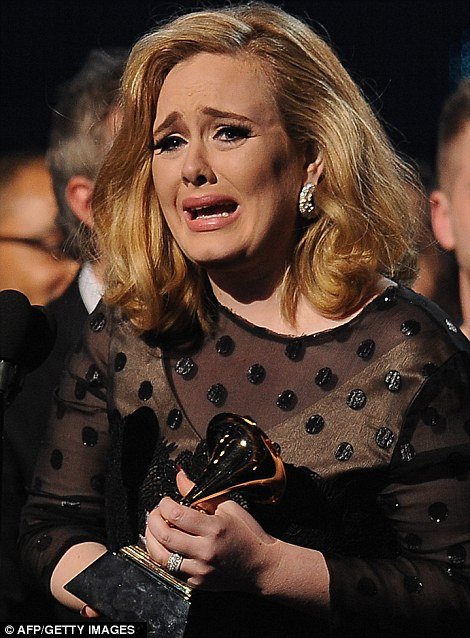
Adele won six Grammy Awards, including the big categories like Record of the Year and Song of the Year for Rolling In the Deep and Album of the Year for her smash hit 21
Best Dance Recording ¬- Scary Monsters and Nice Sprites, Skrillex
Best Dance/ Electronica Album – Scary Monsters and Nice Sprites, Skrillex
Best Traditional Pop Vocal Album – Duets II, Tony Bennett & Various Artists
Best Rock Performance – Walk, Foo Fighters
Best Rock Song – Walk, Foo Fighters
Best Rock Album – Waiting Light, Foo Fighters
Best R&B Performance – Is This Love, Corinne Bailey Rae
Best R&B Song – Fool For You
Best R&B Album – F.A.M.E., Chris Brown
Best Rap Performance – Otis, Jay-Z and Kanye West
Best Country Solo Performance – Mean, Taylor Swift
British singer Adele was the big winner at the Grammy Awards 2012 in Los Angeles, winning six prizes including record, song and album of the year.
Adele also made her live comeback at the ceremony, performing for the first time since having throat surgery last year.
Rock band Foo Fighters won five prizes, while rapper Kanye West scooped four.
The 54th edition of Grammy Awards ceremony saw heartfelt tributes to pop star Whitney Houston, who died on Saturday, while Amy Winehouse received a posthumous award.
Amy Winehouse’s parents accepted her prize for best pop duo/group performance for Body and Soul, her duet with Tony Bennett, which was the last recording the artist made before she died in July.
Adele won every award she was nominated for, including record of the year, song of the year and best short form music video for Rolling in the Deep. Her second album, 21, was named album of the year.
“This record is inspired by something that is really normal and everyone’s been through it, just a rubbish relationship,” Adele said.
“It’s gone on to do things I can’t tell you how I feel about it, it’s been the most life-changing year.”
British singer Adele was the big winner at the Grammy Awards 2012 in Los Angeles, winning six prizes including record, song and album of the year
Adele was forced to cancel all live dates last year but earned a standing ovation after her return to the stage with Rolling in the Deep.
Accepting the trophy for best pop solo performance for her song Someone Like You, Adele said: “Seeing as it’s a vocal performance, I need to thank my doctors, I suppose, who brought my voice back.”
The British artist’s producer Paul Epworth, who also worked with Foster the People, Florence and the Machine and Cee Lo Green, was named best non-classical producer.
Foo Fighters’ awards included best rock album, best rock song, best rock performance and best hard rock/metal performance.
“This is a great honour because this record was a special record for our band,” frontman Dave Grohl told the crowd.
“Rather than go to the best studio, we made this one in my garage with some microphones and a tape machine. It shows that the human element of making music is what’s most important.”
Kanye West’s solo album My Beautiful Dark Twisted Fantasy earned three awards, including best rap song and best rap album.
The track Otis – from Watch the Throne, his collaboration with Jay-Z – was named best rap performance.
The prize takes West’s total Grammy haul to 18. Neither he nor Jay-Z were present to pick up their awards.
Bon Iver, fronted by US singer-songwriter Justin Vernon, were named best new act, five years after their acclaimed debut album was released.
Their self-titled second LP also won best alternative album.
Other British victors included soul singer Corinne Bailey Rae, who scooped best R&B performance for Is This Love.
There was also success for Sir Paul McCartney, whose deluxe reissue of Wings’ Band on the Run was named best historial album.
US dance DJ Skrillex won three prizes, while double winners included folk duo The Civil Wars, country star Taylor Swift and gospel singer Kirk Franklin.
Chris Brown – returning to the event for the first time since 2009 – won the trophy for best R&B album for F.A.M.E.
Chris Brown was returning to the event for the first time since assaulting his then-girlfriend Rihanna before the 2009 ceremony.
Rihanna – the ex-girlfriend Chris Brown assaulted before the ceremony three years ago – was also present, taking to the stage with British band Coldplay.
Also playing live were Bruce Springsteen, McCartney, the Beach Boys and Kelly Clarkson.
Jennifer Hudson gave a rendition of Whitney Houston’s I Will Always Love You in a tribute to the late singer.
The ceremony also saw Alicia Keys and Bonnie Raitt sang a duet of A Sunday Kind of Love in tribute to Etta James, who died last month.
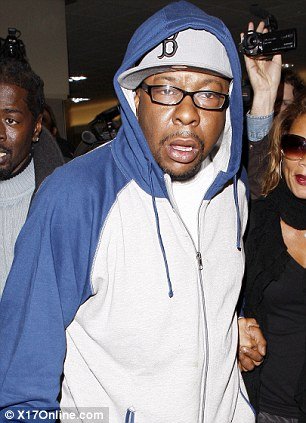
Bobby Brown broke down in tears onstage during a Mississippi concert just hours after hearing of his ex-wife Whitney Houston’s death.
Bobby Brown, 43, who was said to be “in and out of crying fits” after hearing about Whitney Houston’s death, wept during his performance, saying “I love you, Whitney”, as he blew kisses to the sky.
A relative of Bobby Brown said that he is “shattered and beyond devastated” at the news and had flown to be with his and Whitney Houston’s daughter Bobbi Kristina, who has reportedly checked herself into hospital after downing alcohol on hearing of her mother’s death.
Bobby Brown was spotted at Nashville airport yesterday with an entourage of people.
He is undoubtedly desperate to get to the bedside of his daughter after the teen was rushed to hospital earlier today.
Bobbi Kristina Brown’s initial trip to the hospital came after learning of the devastating news, when the teenager reportedly consumed alcoholic drinks and was then given a sedative to calm her down by one of her mother’s entourage. She ended up passing out, according to RadarOnline.
Bobby Brown arrived at LAX last night to take care of daughter Bobbi Kristina after Whitney Houston’s death
It is understood that Bobbi Kristina Brown was admitted to hospital again Sunday morning to be treated for anxiety and stress, before being released later in the day.
After he learned about his ex-wife’s death, Bobby Brown decided the show must go on and still took to the stage to perform with his band New Edition, just hours after the iconic singer’s sudden and tragic passing.
A video posted by an audience member to YouTube showed Bobby Brown struggling to perform and nervously pacing around the stage as he attempted to sing songs with his band.
According to Us Weekly, Bobby Brown received huge applause as he came onstage late, after apparently breaking down just before the show was due to begin.
A source told Us Weekly that Bobby Brown broke down during his performance of the ballad Tenderoni, and asked the audience to sing along as he sobbed.
He was then unable to finish the song and walked off, with the concert finishing shortly afterwards.
A source has said: “He wanted to tell everyone about it before it hit the news. He didn’t want any of us to hear about it on television.
“He could hardly get the words out when he called me. He was sobbing, and by the end of the call, I was sobbing too. He’s beside himself right now.”
Whitney Houston died Saturday afternoon at the Beverly Hilton hotel in Los Angeles, aged 48.
Bobby Brown and Whitney Houston had a notoriously turbulent relationship that was riddled with drug use and marital problems.
Whitney Houston admitted that she and Bobby Brown took cocaine and marijuana together through their 14 years of marriage.
During this tumultuous time, Bobby Brown was arrested for drugs and alcohol and Whitney Houston entered drug rehabilitation programs twice.
They wed in July 1992 and eventually separated in September 2006, before their divorce was finalized in April 2007.
WHITNEY HOUSTON: THE LIFE OF AN ICON
* Sold over 200 million albums worldwide
* First female artist to debut an album at No1 on the Billboard 200 Albums Chart
* Guinness World Records cited her as the most awarded female artist of all time
* Won six Grammy Awards and was nominated twenty-six times
* Only artist to chart seven consecutive No1 Billboard Hot 100 hits
* Appeared in four films, including 2012′s Sparkle with Jordin Sparks
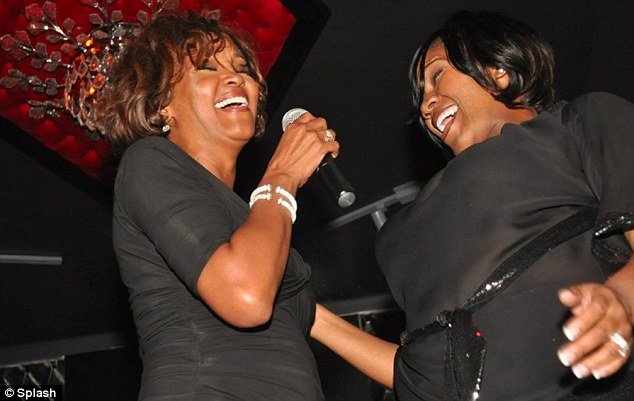
Whitney Houston sang her last ever song when she joined Kelly Price on stage on Thursday night – just two days before her untimely death.
Whitney Houston, who died on Saturday at the age of 48, gave an impromptu performance at the Kelly Price & Friends Unplugged: For The Love of R&B fete at Tru Hollywood earlier this week.
The star was not expected to perform at the event, but was captured on camera as she sang the song Yes, Jesus Loves Me.
Before the duet, Kelly Price, 38, was caught on video discussing how Whitney Houston had influenced her career with the audience.
Kelly Price said: “[Whitney] pushed me to sing to my limit’ before addressing the recently deceased songbird directly.”
“You are a class act, you are an icon,” she added.
Kelly Price was overcome with emotion when Whitney Houston then joined her on stage. They shared a tight embrace before Whitney Houston began belting out the soulful tune.
Whitney Houston managed to get through the performance successfully, though it has been reported that she was acting erratically in the days leading up to her death.
Whitney Houston sang her last ever song when she joined Kelly Price on stage on Thursday night, just two days before her untimely death
Though she was meant to attend Clive Davis’ pre-Grammy bash at the Beverly Hilton Hotel last night, she was found dead in the same hotel Saturday afternoon.
An emergency crew tried to resuscitate the singer in her room, but she was pronounced dead at 3:55 p.m.
Kelly Price, who attended last night’s Grammy Awards ceremony, broke down on the red carpet while discussing Whitney Houston’s final performance.
She said: “I was having a pre-Grammy party for the nominations [sic].
“I invited Whitney to come…
“We had a great time Thursday night. She came out. We hung out. We danced…
“I wasn’t expecting her to sing….She just walked up on the stage. We embraced each other and she said: <<Give me the mike…>>”
Kelly Price added: “Singing with Whitney has always been to me just an honor.”
The artist also talked about the moment she found out Whitney Houston was dead.
Kelly Price said: “In my heart I was praying it was an internet hoax…and to realize it wasn’t I just don’t know how to explain it.”
Countless other musicians and celebrities have come out last night to celebrate Whitney Houston’s life.
Jennifer Hudson sang a medley of Whitney Houston’s favorite hits in her honor.
One person who wasn’t at last night’s ceremony was Whitney Houston’s daughter, Bobbi Kristina Brown.
Bobbi Kristina Brown, 18, was rushed to the hospital once last night and again this morning.
According to TMZ.com, her family members fear that Bobbi Kristina is suicidal.
The site has been told that Bobbi Kristina was “hysterical, exhausted and inconsolable” and that “the family believes she might try and take her own life”.
Her loved ones are reportedly considering rehab as an option.
Bobbi Kristina got into an altercation with police officers last night when she wasn’t allowed to see her mother’s body.
A shocking picture of Whitney Houston’s bathroom took at her home in Atlanta, Georgia, shows how the star’s life spiraled into chaos at the height of her crack addiction.
The deplorable image, shot in 2006, shows a room littered with drug paraphernalia, including a crack-smoking pipe and spoons covered in white powder.
Despite her fame and wealth, Whitney Houston had descended into squalor, her sister in law Tina Brown, who took the photo, revealed at the time.
Drug paraphernalia can be seen in the room, where Whitney Houston holed up for days, according to Tina Brown, the sister of the singer’s husband Bobby Brown.
Whitney Houston, 48, smoked as much as an “eight-ball” (1/8 of an ounce) of crack at a go, blending it with marijuana inside in a cigar wrapper, Tina Brown, also a self-confessed former addict, told the National Enquirer.
Tina Brown said: “The truth needs to come out. Whitney won’t stay off the drugs. It’s every single day. It’s so ugly. Everyone is so scared she is going to overdose.”
A shocking picture of Whitney Houston's bathroom took at her home in Atlanta, Georgia, shows how the star's life spiraled into chaos at the height of her crack addiction
The drugs made Whitney Houston so paranoid she saw evil apparitions and once drilled a spy hole in her bathroom to keep an eye out for demons, Tina Brown claimed.
Whitney Houston at one time claimed she didn’t do crack, telling Diane Sawyer in 2002 that she made too much money to ever take the street drug. “Crack is whack,” she famously declared.
But her stunning looks later seemed to be ravaged by her habit.
And although Whitney Houston subsequently got clean, recording a comeback album in 2009, the years of abusing her body also took their toll on her voice.
At her comeback tour in Australia in 2010, Whitney Houston shocked fans when she had to take a 20 minute break to rest her voice.
Whitney Houston was set to make a return to the big screen later this year having filmed Sparkle, due to hit cinemas August 10. But the pressure to succeed was overwhelming.
“Her voice was ruined, and her comeback wasn’t what it was supposed to be, because her voice wasn’t what it used to be,” a friend told People.
Whitney Houston “was in pain from all the pressure she was facing”, the source said.
“I know from when she was recording her most recent album – her comeback album (I Look to You in 2009) – her voice was shot. That bothered her.”
“In the music industry, you’re only as good as your last hit, even if you are Whitney Houston. Then she had people gossiping about her … It was a lot to deal with.”
Whitney Houston had blown a massive fortune, earned over decades of royalties and concert tours on her drug habit and was “broke as a joke”, it was last week claimed.
“Whitney’s fortune is gone,” a source told Radar last week.
“Music industry heavy hitters are supporting her and her label is fronting her cash against her next album, but no one knows when that will be released.”
“She might be homeless if not for people saving her. She is broke as a joke.”
The legendary singer had been reduced to begging friends for help.
“She called someone to ask for $100,” the source said.
“It is so sad. She should have Mariah Carey money, and she’s flat broke.”