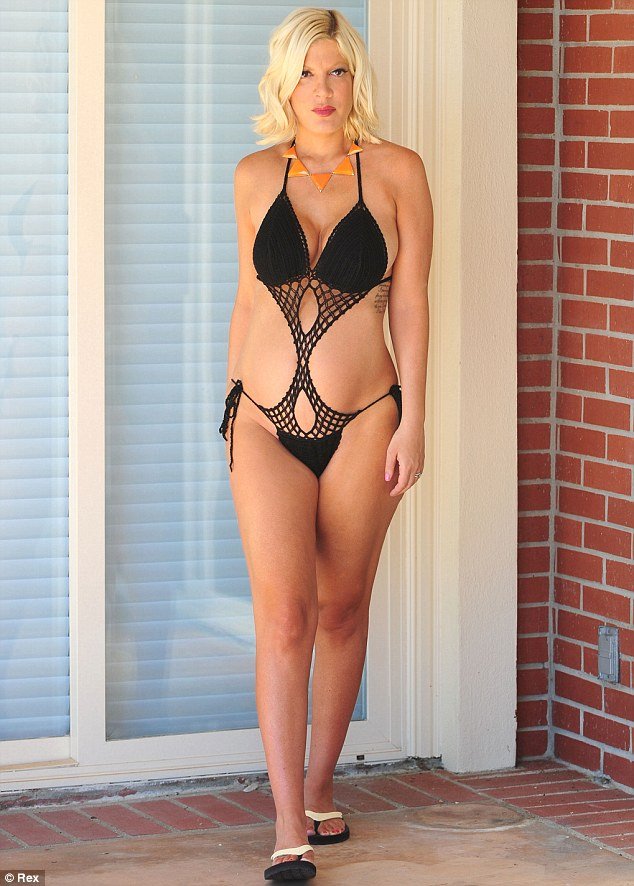
Pregnant Tori Spelling was spotted yesterday wearing a very daring monokini as she enjoyed a family BBQ in Los Angeles.
Tori Spelling, 39, who announced her fourth pregnancy in March, showed off her burgeoning belly in the black ensemble.
The swimsuit was held together by a stringy midsection, with the scant material barely able to save her blushes.
Tori Spelling was pictured with husband Dean McDermott, who went shirtless in a pair of shorts, and their youngest child, seven-month-old Hattie.
Hattie looked cute in a polka-dot swimsuit, complete with a floppy white hat to keep her shaded from the California sun.
Pregnant Tori Spelling was spotted yesterday wearing a very daring monokini as she enjoyed a family BBQ in Los Angeles
Mother and father were seen doting other their little daughter as they relaxed yesterday for the Memorial Day holiday in the U.S.
Dean McDermott and Tori Spelling also have two other children, five-year-old Liam and Stella, who turns four next month.
Tori Spelling became pregnant for the fourth time just a month after giving birth to Hattie – and Dean McDermott said in an interview at the time it is partly her fault that they ignored doctor’s orders and fell pregnant so soon after.
Dean Mcdermott told Celebuzz: “It’s so funny how everyone blames the man.
“It’s like, <<Oh my God, will you leave your wife alone?>> But it takes two to tango. She wasn’t putting up that much of a fight. But I have big shoulders. I’ll take it.”
Tori Spelling also revealed her latest pregnancy has been the easiest on her out of them all.
The actress said: “My pregnancy is going great. Knock on wood, this has been my best pregnancy. I’ve been feeling great. With the first three pregnancies, I was super sick all the time and nauseous.”
She added that her husband finds her sexy when she is pregnant.
“I’m never as happy as when I’m pregnant.
“And Dean can’t keep his hands off me! He’s like, <<You’re the sexiest pregnant woman>>.
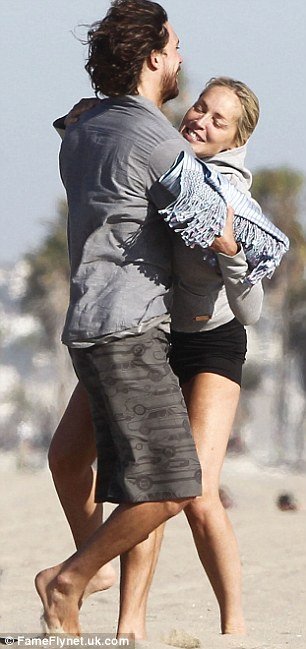
Sharon Stone was spotted getting more than a little frisky on the beach with her Argentinian boyfriend Martin Mica in Los Angeles yesterday.
Sharon Stone, 54, got carried away as she romped with her toyboy on Venice Beach.
It started off with an innocent looking back and neck massage, with the bearded beefcake straddling her back so he could rub her shoulders, with the pair looking even closer than when they left a Vogue party in Brazil together last month.
But it soon got steamier, with Sharon Stone turning around so they could share a sizzling kiss.
However their fun on the golden sands was far from over, as he tried to give the old warhorse a gymnastic lesson.
Martin Mica demonstrated how to do a handstand, and then tried to help her perform one of her own.
Unfortunately, while Sharon Stone earned top marks for effort she definitely needed more practice.
Sharon Stone was spotted getting more than a little frisky on the beach with her Argentinian boyfriend Martin Mica in Los Angeles
Afterwards they then went for a romantic beach side stroll, and he decided to pick her up and spin her round like a ragdoll.
Sharon Stone laughed as she was given a budget tilt-a-whirl by her long-haired lover Martin Mica.
Afterwards the adventurous pair went for a walk together, before stopping off for lunch.
And they were obviously not shy about being seen in public, for they even shared a passionate kiss as they stood in the street. It was a pleasant respite for Sharon Stone following revelations she is being sued by her former nanny.
According to the LA Times former live-in nanny filed suit against Sharon Stone in Los Angeles Superior Court on alleging she was fired for accepting overtime pay and repeatedly subjected to derogatory comments about her Filipino heritage and religious beliefs.
Erlinda Elemen was fired in February 2011 when Sharon Stone learned that she was paid overtime, the suit alleges.
State law requires that non-salaried employees must be paid for additional work over eight hours per day or 40 hours per week.
But the suit alleges Sharon Stone found out that her staff had paid her overtime and accused Erlinda Elemen of “stealing” and that it was “illegal” for her to have taken the pay, and asked for the money back.
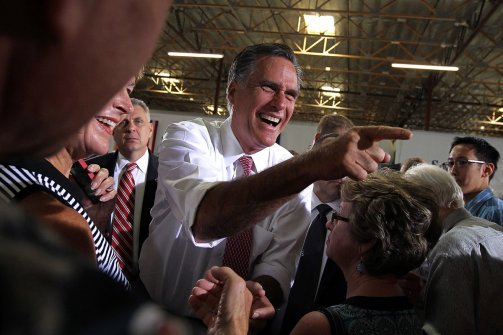
Republican Mitt Romney has secured his place as the challenger to Barack Obama in November’s US presidential election, following a primary in Texas.
Projections show Mitt Romney easily won enough votes to pass the threshold of 1,144 delegates needed for the nomination.
Mitt Romney said he was “humbled”. He is the first Mormon from a major party to contest the presidential election.
He is set to be officially anointed as the Republican nominee at the party convention in Florida in late August.
Mitt Romney has been the presumptive nominee for several weeks as his rivals withdrew or suspended campaigning.
With 1,086 delegates secured as he entered the Texas race, Mitt Romney only needed 58 to pass the 1,144 mark.
Republican Mitt Romney has secured his place as the challenger to Barack Obama in November's US presidential election, following a primary in Texas
In early returns, Mitt Romney had captured more than 70% of the vote. Texas awards 152 delegates proportionally.
He will surpass his father, George Romney, a former Michigan governor who ran unsuccessfully for the Republican nomination in 1968.
Opinion polls suggest Mitt Romney is locked in an extremely close race with Barack Obama in November.
“I am honored that Americans across the country have given their support to my candidacy and I am humbled to have won enough delegates to become the Republican Party’s 2012 presidential nominee,” Mitt Romney said in statement.
As polls closed, the former Massachusetts governor was attending a fundraiser in Las Vegas with real estate tycoon Donald Trump.
He spent the day campaigning in Colorado and Nevada.
Ahead of Tuesday’s private fundraiser, the Obama campaign released a video focusing on Donald Trump’s comments falsely alleging that the president was born in Kenya.
The video seeks to draw a contrast between Mitt Romney and Senator John McCain, the 2008 Republican nominee, who once corrected a woman after she called Barack Obama a Muslim.
“Why won’t Mitt Romney do the same?” asks the clip.
On Monday, Mitt Romney stopped short of condemning Donald Trump’s comments.
“I don’t agree with all the people who support me. And my guess is they don’t all agree with everything I believe in,” Mitt Romney told reporters.
The Obama campaign video against Donald Trump is the latest in a series of attack ads.
On Monday, the Romney campaign released an attack ad criticizing Barack Obama over a federal loan to a solar panel maker which later went bankrupt.
On Tuesday Mitt Romney also met casino tycoon Sheldon Adelson, who gave millions to supporters of Newt Gingrich’s campaign during the primary season.
Experts say the outcome of November’s election could depend on what happens in a handful of battleground states, including Colorado and Nevada, as the candidates vie for the support of independent voters.
The next question of the campaign is who Mitt Romney will pick as his vice-presidential running mate.
Research In Motion (RIM), the company behind the Blackberry smartphone, has warned it will make a loss in its latest quarter and make “significant” job cuts.
RIM also said it was hiring JPMorgan and RBC Capital Markets to help with a “strategic review” of the business.
It has lost ground as its traditional business clients have switched to iPhones or Android phones.
RIM shares fell 10% in after-hours trading.
Research In Motion (RIM), the company behind the Blackberry smartphone, has warned it will make a loss in its latest quarter and make "significant" job cuts
Some have speculated that the strategic review may lead to a sale of the firm.
“The on-going competitive environment is impacting our business in the form of lower volumes and highly competitive pricing dynamics in the marketplace, and we expect our first-quarter results to reflect this, and likely result in an operating loss for the quarter,” chief executive Thorsten Heins said.
“There will be significant spending reductions and headcount reductions in some areas throughout the remainder of the fiscal year,” he added.
In the last financial year, RIM made a net profit of $1.2 billion, down from $3.4 billion in the previous year.
Thorsten Heins added: “Our global subscriber base continued to grow this quarter to approximately 78 million, driven primarily by growth in international markets, which is partially offset by high churn in the United States.”
Once heralded as one of the fastest-growing companies in the world, RIM has struggled to keep up with rivals in the smartphone market, such as Apple’s iPhone and handsets running on Google’s Android operating system.
It has also struggled to gain a foothold in the tablet market.
The launch of Blackberry 10, expected later this year, and a much-delayed new operating system, are expected to be crucial to its turnaround plan.
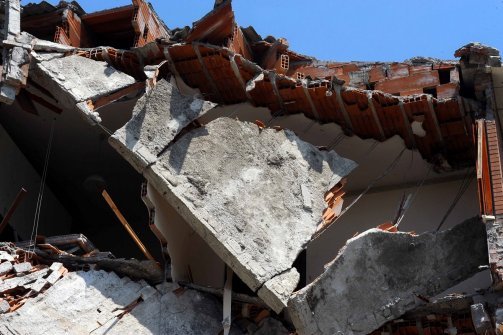
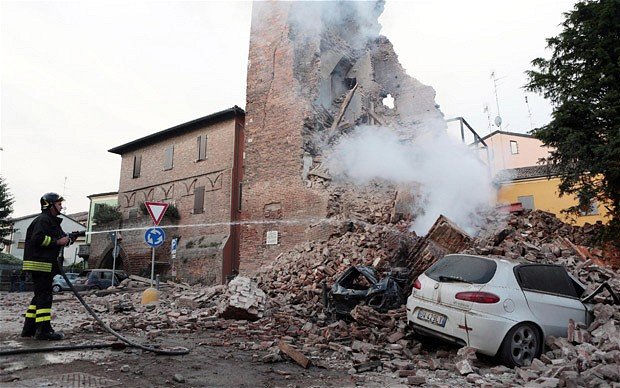
Seventeen people are now known to have died and another 350 were hurt in the 5.8 magnitude earthquake that hit northern Italy yesterday.
The tremor was the second in just over a week.
Dozens of aftershocks have shuddered through Italy’s northern Emilia Romagna region overnight.
The latest victim has been pulled from the rubble in the town of Medolla, some 27 miles (45km) north-west of Bologna, Italian media report.
Officials say the strongest overnight tremor had a magnitude of 3.54.
The first quake on May 20 killed seven people and left thousands homeless with the 6.0 magnitude tremor causing significant damage to the region’s cultural heritage, destroying churches and historic buildings.
Seventeen people are now known to have died and another 350 were hurt in the 5.8 magnitude earthquake that hit northern Italy yesterday
After the second quake, the number of people made homeless has now gone up from 6,000 to 14,000, the Italian government says.
A woman who was saved in the small town of Cavezzo reportedly spent 12 hours in the rubble in her kitchen. The 65-year-old managed to survive because a piece of furniture had toppled over, preventing her from being crushed by the wreckage.
She was taken to hospital.
Prime Minister Mario Monti has pledged that his government will do everything possible to restore normal life to the area, which he said was “so special, so important, so productive for Italy”.
Government troops are now deployed in the affected areas, and an emergency cabinet meeting will be held later on Wednesday.
The latest quake struck 40 km (25 miles) north of Bologna at a depth of 9.6 km (6 miles) at about 09:03 local.
Thousands of residents ran out of buildings after the tremor, which was felt as far away as Venice and the Austrian border.
The towns of Mirandola, Medolla and Cavezzo were closest to the epicentre, but the northern cities of Milan and Bologna were shaken too.
Among the dead were four people in Mirandola, including two who were in a factory that collapsed. Three people also died in San Felice, and two in Cavezzo.
In Mirandola, the San Francesco church collapsed, leaving only its facade standing.
Three people were killed at a factory that had only just been cleared for re-entry, following the earlier quake, reports said.
A parish priest in the town of Rovereto di Novi was said to have been killed by a falling beam when he went back into his church to save a Madonna statue.
“It’s a disaster, I’ve never seen anything like it,” Cavezzo Mayor Stefano Draghetti was quoted as saying by Reuters.
Emilia Romagna – one of Italy’s most agriculturally productive areas famous for many delicacies – has been struggling to recover from the previous quake.
Reports say that Tuesday’s tremor dealt a blow to the region’s world-famous balsamic vinegar industry – after the previous quake nine days ago hit Parmesan production.
In 2009, an earthquake in L’Aquila, central Italy, killed nearly 300 people.
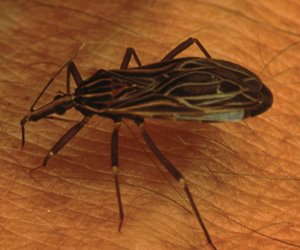
Chagas disease, a little-known illness caused by blood sucking insects, has been labeled the ”new AIDS of the Americas” by experts.
The parasitic illness has similarities to the early spread of HIV, according to a new study.
Similar to AIDS, Chagas disease is difficult to detect and it can take years for symptoms to emerge, according to experts writing in the journal PLOS Neglected Tropical Diseases.
An estimated 10 million people worldwide are infected with most sufferers in Bolivia, Mexico, Columbia and Central America, as well as approximately 30,000 people in the U.S., reported the New York Times.
Once largely contained to Latin America the disease has spread to the U.S due to increases in travel and immigration.
Due to the severity of the illness, the amount of people infected and the ability of prevention, Chagas disease is considered one of the Neglected Parasitic Infections, a group of five parasitic diseases that have been targeted by CDC for public health action.
Chagas disease commonly affects people in poverty-stricken areas and most U.S. cases are found in immigrants.
If caught early enough, the disease can be cured with an intense 3-month drug treatment. However, because of the lengthy incubation period, Chagas disease is often left untreated.
Also known as the American trypanosomiasis, the disease spreads easily either through blood transfusions or, less commonly, from mother to child.
All blood banks in the U.S. and Latin America screen for traces of the disease.
Most blood banks in the U.S began screening for it in 2007.
Chagas disease is usually transmitted from the bite of blood-sucking insects that release a parasite called Trypanosoma cruzi into the person’s bloodstream.
Chagas disease, a little-known illness caused by blood sucking insects, has been labeled the ”new AIDS of the Americas” by experts
The disease comes in two phases – acute and severe.
The acute phase may have no symptoms but can present a fever, general feeling of being unwell and swelling in one eye.
After the acute phase the disease goes into remission and it can take years before symptoms, such as constipation, abdomen pain and digestive problems, emerge again in the severe stage.
The parasite can eventually make its way to the heart, where it can live and multiply.
About a quarter of the people who contract Chagas disease, develop enlarged heart or intestines that can burst causing sudden death.
Although the drugs available are not as expensive as those for AIDS, there are shortages of the medication in poorer countries and little money is being spent on discovering new treatments.
Chagas disease is named after Carlos Ribeiro Justiniano Chagas, a Brazilian doctor who first discovered the disease in 1909.
Researchers from the University of Maryland School of Medicine said last year that they believed Charles Darwin suffered from three different illnesses, including a Chagas infection.
The experts believe he contracted the disease during a five-year trip around the globe on the HMS Beagle in his 20s – and attributed it to his death of heart failure 47 years later.
The father of modern life scientists wrote in his journal that he had been bitten by a “wingless black bug” during the expedition, where he visited South America.
CHAGAS DISEASE
Named after the Brazilian doctor who discovered it in 1909, Chagas disease is a potentially deadly illness spread by blood-sucking insects including Triatomids most commonly known as “kissing bugs”.
Like AIDS, the illness is difficult to detect and has a long remission period.
It spreads easily through blood transfusions and from mother to child.
Approximately a quarter of victims who contract the disease develop enlarged heart or intestines that can burst causing sudden death.
An estimated 10 million people worldwide are infected, including 30,000 people in the U.S.
Chagas disease is considered one of the Neglected Parasitic Infections, a group of five parasitic diseases that have been targeted by CDC for public health action.
It is estimated that in 2008 Chagas disease killed more than 10,000 people.
Google announces that Chromebook and Chromebox, its computers using Chrome operating system, have been updated with faster processors.
The Samsung-manufactured laptop and desktop PCs include processors based on Intel’s Sandy Bridge technology, addressing criticism that the launch models were underpowered.
Chrome-based computers run all their applications through the firm’s web browser and store their files online.
Google has not released sales numbers for the previous range, but analysts said demand had been very low.
Tech consultants IDC said that 50,000 Chromebooks had shipped in the US in the first three months of the year in a market that had absorbed about 10 million laptops over the same period.
An earlier study by Gartner suggested there would be fewer than 300,000 Chromebooks sold worldwide this year.
Google says software updates had helped boost the computers’ speed so that they ran 2.5 to 3.5 times faster than before. Improvements include greater use of the machines’ GPUs (graphic processing units) and tweaks to ensure the system runs Javascript more efficiently.
An upcoming software release will also enable the firm’s Google Drive cloud storage service to act as the computers’ file system, making it easier for users to manage their documents.
It will also allow users to edit Google Documents files when offline. The files will subsequently be synchronized when a network connection is restored tackling complaints that the machines were of limited use when not on the internet.
Google announces that Chromebook and Chromebox, its computers using Chrome operating system, have been updated with faster processors
The search giant’s decision to build in a limited 16 gigabyte hard drive has helped it keep costs relatively low.
The Chromebook laptop is marketed for $449 while the desktop Chromebox is $329.
The firm highlights the fact that the devices need “zero administration” because files are stored in the cloud, system updates are controlled by Google and the computers have virus protection built-in.
Linus Upson, Google’s vice president of engineering, said this had already encouraged more than 500 schools across 41 US states to “deploy” Chromebooks to their students. He said he hoped businesses would now follow.
“From a security standpoint just about every major corporation in the world is under continuous attack by various governments around the world as well as criminal enterprises,” he said.
“Probably the single most important thing companies can do to secure their network is to secure the PCs that their employees use because that’s normally the way in.
“Everything from a phishing email saying ‘hey install this thing’ to exploiting flaws in browsers or plug-ins. At Google we see deploying Chromebooks broadly as being one of the best ways we can protect our user data.”
He admitted that the computers were not suitable for people wanting to use traditional software packages such as Photoshop and Microsoft Office. But he suggested such programs were “legacy” products that would “decline over time” as users opted for the type of browser-based software available via the Chrome Webstore.
David Daoud, personal computing research director at IDC, is skeptical about the platform’s prospects.
“The issue with Chromebook is the fact that it is in a sort of grey zone,” he said.
“It has neither the power of a laptop in the productivity world, nor the appeal of an iPad or an Android tablet.
“It is confined to a web environment that may not be so appealing in emerging economies where the wireless infrastructure may be limited. In such environments, characterized by tight budgets, consumers do not see why they would spend some $400 on a system that does not fully deliver on a more comprehensive user experience.”
But Frank Gillett, principal analyst at Forrester Research, said he believed there was a niche for the machines: first-time users looking for a low-cost simple device.
“It’s cheap, good enough for most of the things you want to do when you’re starting out and it’s just less complicated to figure out than alternatives out there,” he said.
“This is the first interesting version of the product – the launch models were more proof of concept. The Google Drive capability clears the bar to making Chrome-based computers useful to enough of the population to keep it going.”
Google says the computers will go on sale in the US and UK, adding that devices would come to other European markets “soon”.
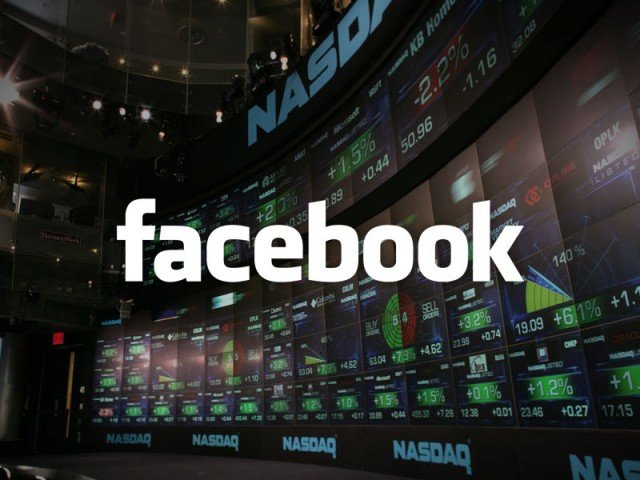
Facebook shares have fallen below $29 for the first time since their flotation to a new low.
The shares were launched at $38 less than two weeks ago during its high-profile flotation, which valued the firm at $104 billion.
Since then, Facebook’s shares have lost almost a quarter of their value.
Russia’s biggest social network, VKontakte, has now postponed its stock market launch, fearing a repeat of Facebook’s problems.
“The IPO of FB [Facebook] destroyed the faith of many private investors in social networks,” said chief executive Pavel Durov in a message posted on Twitter.
Facebook shares fell more than 9% to a low of $28.78.
Facebook shares have fallen below $29 for the first time since their flotation to a new low
One reason for the fall in shares since its initial public offering (IPO) is that Tuesday was the first day that options on Facebook stock began trading.
Options are a form of derivative, that allow bets on the future direction of the stock. It appears that most investors are betting Facebook shares will head lower.
The situation is a remarkable turnaround from recent weeks, when the eight-year-old firm’s share sale was over-subscribed.
The social networking site has transformed the way in which hundreds of millions of people around the world communicate. It is also transforming the way companies advertise to existing and potential customers.
But Facebook’s 900 million users helped the company generate just $1billion in profit last year, and there are concerns about its ability to increase profits in the future.
The flotation was disrupted on its first day of trading by technical glitches on the NASDAQ stock exchange. The share price has since slumped amid worries that the company was over-valued by advisers marketing the float.
Now, a group of investors has issued a class-action lawsuit alleging that Facebook revenues were revised down because of a surge in the number of people using mobile devices for apps and connection to websites.
The suit targets Facebook, its founder Mark Zuckerberg and the banks behind the flotation, including lead underwriter Morgan Stanley.
The share sale in New York raised $16 billion for Facebook.
Recent reports suggested that Facebook is to launch its own smartphone by next year.
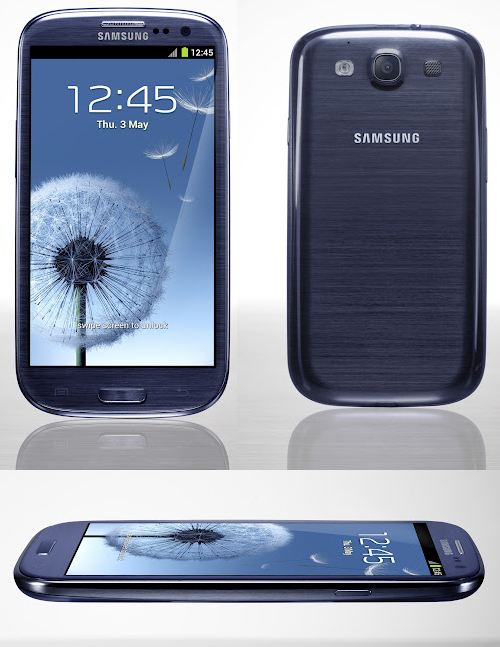
Customers who pre-ordered new smartphone Samsung Galaxy S3 face weeks of delays in receiving their handsets.
Samsung signalled that it had faced issues in manufacturing blue models of the Galaxy S3.
Vodafone added that it had also been advised of “shipping delays” to the 32GB version of the white version of the handset.
Available devices went on sale in 28 European and Middle Eastern countries earlier.
“Samsung’s Galaxy S3 Pebble Blue version comes with a newly invented blue colour and special hyperglaze material,” said a statement from Samsung.
“In order to meet the highest internal quality standards and to provide the best quality Galaxy S3 to customers, a short supply of [the] Pebble Blue version is expected in some regions in the next two to three weeks.”
Samsung signalled that it had faced issues in manufacturing blue models of the Galaxy S3
Vodafone – which has an exclusive deal to distribute white 32GB models in the UK for four weeks – noted that it might take up to that period for customers to receive the delayed models.
It added that “all customers who have pre-ordered the marble white 16GB version… should expect to receive their new phone on the UK launch date”.
O2, Everything Everywhere and Three also confirmed their customers would be affected by the “shortage of blue” models.
The Android-based phone is expected to prove highly popular. It features a 4.8 inch (12.2 cm) screen, a “natural language user interface” and can track users’ eye movements to ensure the screen does not dim while they are looking at it.
The success of its predecessor, the Galaxy S2, helped Samsung overtake Nokia as the world’s best-selling phone maker, according to the research firm Strategy Analytics.
Reviews have compared the device favorably with Apple’s smaller-screened iPhone.
The Verge declared it a “a technological triumph”, although Engadget suggested that HTC’s One X had a superior user-interface and design.
Samsung has said it expects the S3 to outsell the S2. It is scheduled for release in 145 countries by July.
Cassandra Bankson, a teenager from California, hoped that by sharing her problem with acne and how she has learnt make-up tricks to hide it would help at least one person going through the same ordeal, but she has actually reached out to millions thanks to bravely taking to the internet to show off her severe skin complaint.
Cassandra Bankson, 19, posted a video on YouTube showing her red and blemished skin before applying make-up – and how she managed to make her face look flawless in just ten minutes thanks to her beauty tricks.
The video has since had 7.6 million hits worldwide.
As a result of the success, Cassandra Bankson was asked to appeared on Good Morning America to share her story.
The teen explained how she was bullied at school for her acne but she learnt how to conceal it by practicing different make-up techniques. Her blemish-concealing make-up application became so expert that the teenager was able to become a model with her skin appearing flawless in her portfolio shots.
She eventually plucked up the courage to share her beauty tips via a YouTube video but she never expected the overwhelming response it received.
Cassandra Bankson explains: “I got my first pimple in the third grade and it progressively got worse, I had to work out how to deal with it.
“I filmed the video last November but it took me a month to post it, I thought I was going to get the same hate I got at school over my skin. But I thought if it could help one person, one girl or guy with the same condition, it would be worth it.”
Cassandra Bankson’s video went far beyond helping just one person as people clicked to view it in their millions. Viewers thanked her for sharing her story and urged her to share more of her tips on her You Tube channel “diamondsandheels14”.
Cassandra Bankson posted a video on YouTube showing her red and blemished skin before applying make-up and how she managed to make her face look flawless in just ten minutes thanks to her beauty tricks
Now Cassandra Bankson, who is studying to be a nurse, has uploaded other people beauty tips videos and writes her own blog. Her dream is to create her own skin care range.
She said the response to her first video was overwhelming.
“It was a real eye opener,” Cassandra Bankson told Good Morning America.
“It [acne] is such epidemic for adults as well as teens.”
At the start of her video, which was shot in her parent’s lounge, Cassandra Bankson is seen wearing full make-up and looking picture-perfect. It’s only as she starts stripping back the expert layers of primers, foundation, powders and setting sprays, that the true extent of her pimpled and blemished skin is revealed.
The teen, a horse-back riding and hiking fan, returns to the camera in a bathrobe at her ‘most insecure,’ with bare skin and looking a very different person.
“I feel really disgusting, this is probably the most nerve-wracking thing I could possibly do because it is my biggest insecurity… But this is my face.”
She goes to show the extent of the problem as the acne has spread to her neck, shoulders and back.
Cassandra Bankson admits: “The sad part is it’s a lot better than it used to be. I mean it’s still all over my chest, all over my back, it’s everywhere and you can see it goes down my neck, it’s all to the side, it even got on my ear. It’s gotten a lot better but it’s still really, really bad. It’s my biggest insecurity.”
It is a far cry from the modelling portfolio shots that can be seen on her YouTube channel, where the striking brunette lounges on car bonnets, takes to the catwalk and poses in cut-out swimsuits with flawless skin.
The teen, then takes viewers on a step-by-step lesson on how to achieve her look by applying foundation.
“I have extremely oily skin,” she says, giving tips about the primers and oil-reducing tricks.
Applying liberal amounts of cosmetics, Cassandra Bankson seems well ahead of her years, confident and knowledgeable about the complex potions upon which she relies.
She is frank, even wry, about her spots: “I always carry everything down my neck because, well, I have acne there.”
Cassandra Bankson has become something of a skin expert, with other videos explaining the physiology of skin and acne and the treatments that best target the skin condition.
By the end of the video, Cassandra Bankson is transformed – her flawless complexion giving no hint of the severe breakouts
“Voila! I have somewhat clear looking skin,” she tells the camera.
“I hope that you guys enjoy this. I hope you can have flawless skin too.”
George Lagen, a top traveller from Chicago, is protesting United Airlines after the airline company took away some of the “perks” that he became accustomed to while flying.
The man isn’t complaining about a lack of baggage room or having to pay for snacks, however.
George Lagen is one of the insightful few to buy an unlimited lifetime travel ticket that came fully-loaded with bonuses.
The tickets, originally sold by American Airlines in a push for instant cash, were bought by 66 passengers before they stopped the offer.
After paying $350,000 for the ticket in 1987, George Lagen and one other passenger were able to travel the world in first class on as many of the airline’s flights as he desired.
George Lagen, a top traveller from Chicago, is protesting United Airlines after the airline company took away some of the “perks” that he became accustomed to while flying
That he did, George Lagen took 1,000 trips to New York, 500 to Los Angeles, San Francisco and London. Another 80 of his trips landed in Sydney and 50 more in Hong Kong.
All told, George Lagen estimates that he has earned 40 million miles, deservedly earning him the status of a “Million Miler”.
Those select few to gain that elusive title were treated to seat upgrades, early boarding, and the second-highest status given to travellers: “premier executive”.
Additionally, for every flight Million Milers took, they were given the same amount back in frequent flier miles that they could then use towards future flights.
George Lagen told ABC that he is now suing the airline because a number of those perks, to which he had become accustomed, were taken away after United merged with Continental Airlines.
The Million Milers are now handled by the MileagePlus program which has demoted them to the third level of flier (called “Premier Gold” rather than “executive”), fewer upgrades, and half of the frequent flier miles per flight.
The suit alleges that the merger with Continental caused “immediate and significant retroactive demotion of benefits to Million Milers”.
“In stark contrast to the gutting of promised and bargained-for benefits for Million Milers, the new MileagePlus Program perversely and arbitrarily rewards former members of Continental Airlines former Continental One Pass frequent flier program.
“United’s egregious actions, if left unabated, will result in its unlawlly, not to mention immorally, retaining the millions upon millions of dollars it received from Million Miler members.”
In spite of the breach of contract, good faith and fair dealing suit, the company maintains that they have done nothing wrong and that the suit is meritless.
“We greatly value our Million Milers and are continuing to deliver valuable and highly competitive benefits with our lifetime program. One Million Milers receive benefits at the 50,000-mile premier status level – the same as before,” a spokesman for United Airlines said in a statement.
That means little to George Lagen, who puts it simply: “A deal’s a deal.”
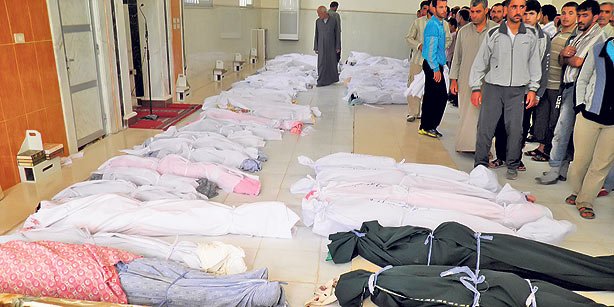
Major Western countries have decided to expel senior Syrian diplomats following the killing of 108 people in the Houla region of Syria on Friday.
France, the U.S., UK, Germany, Italy, Spain, Canada, Australia and the Netherlands all took action against Syria’s envoys.
Most of the victims in Houla were summarily executed, the UN says.
Residents said pro-government shabiha militia had entered homes and opened fire indiscriminately.
Syrian President Bashar al-Assad told UN-Arab League peace envoy Kofi Annan in Damascus that terrorists had stepped up their operations across Syria, including killing and kidnapping. His remarks were quoted by state TV.
UN human rights spokesman Rupert Colville said initial investigations had suggested that most of those killed in the village of Taldou, near Houla, were summarily executed.
Rupert Colville said 49 children and 34 women were among the victims. UN observers who visited Taldou said many of the victims had been killed by close-range gunfire or knife attacks.
Eyewitnesses said pro-government shabiha militiamen had carried out the killings. Survivors said they had hidden or played dead.
Syrian leaders insist that the massacre was the work of “terrorists”, aiming to derail the peace process and provoke intervention by Western powers.
Major Western countries have decided to expel senior Syrian diplomats following the killing of 108 people in the Houla region of Syria on Friday
US state department spokesperson Victoria Nuland announced that the Syrian charge d’affaires in Washington had been given 72 hours to leave the country.
“We hold the Syrian government responsible for this slaughter of innocent lives [in Houla],” Victoria Nuland said.
Canada denounced the Syrian government’s “heinous and murderous acts” while Australia described the Houla massacre as a “hideous and brutal crime”.
Spain talked of “unacceptable repression” and France’s new Foreign Minister, Laurent Fabius, described President Assad as “the murderer of his people”.
The French government said “the murderous folly” of the Damascus regime threatened regional security.
The Dutch declared Syria’s ambassador to the Netherlands, who is also ambassador to Belgium and lives in Brussels, as “persona non grata”.
Fellow EU state Bulgaria said it was expelling Syria’s interim ambassador and two other diplomats in protest at the killings in Houla.
Despite the show of protest, it is unclear whether the mass diplomatic expulsions will change much on the ground.
Syria’s charge d’affaires in London has been given seven days to leave.
“The international community is appalled by the violence that has continued, by the behavior of the regime, by the murder of so many innocent people,” British Foreign Secretary William Hague said.
President Assad said the success of Kofi Annan’s peace plan depended on halting what he called terrorist actions and stopping arms-smuggling.
Kofi Annan conveyed “the grave concern of the international community about the violence in Syria, including in particular the recent events in Houla”, the UN envoy’s office was quoted as saying by AFP news agency.
“He conveyed in frank terms his view to President Assad that the six-point plan cannot succeed without bold steps to stop the violence and release detainees, and stressed the importance of full implementation of the plan.”
Russia, which supplies arms to the Syrian government and has blocked UN resolutions calling for action against Damascus, has blamed both sides for Friday’s massacre.
Its Foreign Minister, Sergei Lavrov, expressed concern that “certain countries” were beginning to use the Houla massacre “as a pretext for voicing demands relating to the need for military measures to be taken”.
A meeting of the so-called Friends of Syria group is to meet in France in July, President Francois Hollande’s office said.
A new earthquake of 5.8-magnitude has struck the Emilia region in northern Italy, killing at least 10 people and burying several others under rubble, local media say.
All the deaths were in the Modena area.
Three were killed when an industrial shed collapsed in Medolla. Three also died in San Felice, two in Mirandola and one in Cavezzo.
Today’s tremor hit the same region where a quake 10 days ago killed seven people and destroyed many buildings.
Milan and Bologna were shaken too.
Some people fled from buildings when they felt the tremor, which struck at 09:03 local time.
A new earthquake of 5.8-magnitude has struck the Emilia region in northern Italy, killing at least 10 people and burying several others under rubble
There have been several aftershocks since, including a large one at about midday which sent people back out into the streets.
Italian media report that some buildings damaged by the larger May 20 quake have now collapsed in Mirandola, Finale Emilia, San Felice and Cavezzo. That quake measured 6.0.
Many historic buildings now lie in ruins in Cavezzo, where the roof of a church damaged by the earlier quake collapsed on Tuesday, Il Messaggero news website reports.
Calls to emergency services have overloaded the telephone network in some areas, causing a system blackout. Train services have been halted in some parts of northern Italy.
Office workers were evacuated in Bologna and there are reports of evacuations elsewhere too.
The quake struck 40 km north of Bologna and 60 km east of Parma, at a depth of 9.6 km (6 miles), Reuters reports. It was felt as far away as Venice, the Austrian border and Piedmont.
Last Sunday’s quake destroyed many centuries-old buildings of cultural value. It was the worst to hit Italy since the L’Aquila tremor that killed nearly 300 people in 2009.
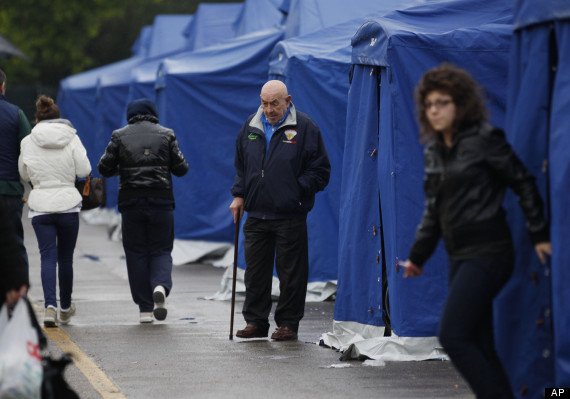
About 7,000 people who fled that quake are still living in dozens of tented camps erected in public spaces, AFP news agency reports. There have been many tremors in the region since that quake.
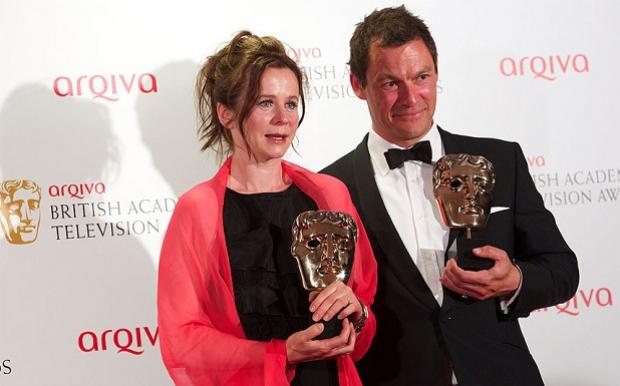
Dominic West and Emily Watson were among the big winners at the TV BAFTA Awards, winning for their powerful performances in Fred West drama Appropriate Adult.
Coronation Street has won the best soap and continuing drama award, beating last year’s winner EastEnders.
Andrew Scott won the best supporting actor for Sherlock, in which he plays Sherlock’s arch nemesis Moriarty.
In winning the award he beat co-star Martin Freeman, who won it last year.
Speaking before the ceremony, Benedict Cumberbatch – who plays Sherlock Holmes in the BBC series – said he was “keeping his fingers crossed for both Andrew and Martin”, but added: “I hope Andrew gets to share the glory that Martin had last year.”
Benedict Cumberbatch missed out in the best actor category to Dominic West, who played serial killer Fred West in the ITV drama.
Emily Watson, who collected best actress, played the volunteer companion to Fred West Janet Leach.
She said: “It was such a disturbing place to go. In my speech I was very overwhelmed I forgot to thank Janet Leach, she gave very generously to us.
“The public perception of the West case is a tabloid-driven view and then I read the script and it was a very intelligent piece full of integrity.
“It’s a deep abyss right in the middle of our society.”
Dominic West and Emily Watson were among the big winners at the TV BAFTA Awards, winning for their powerful performances in Fred West drama Appropriate Adult
Collecting his award, Dominic West said: “I hope she has had some closure and we have honored the suffering she endured and the suffering of all the West’s victims, living and dead.”
Appropriate Adult also saw Monica Dolan win best supporting actress for her portrayal of Rosemary West.
But it lost out in the best mini-series category to This is England ’88, written by Shane Meadows.
During the event both artist and presenter Rolf Harris and Doctor Who writer Steven Moffat received special awards.
Rolf Harris was presented with a BAFTA fellowship recognizing his “outstanding and exceptional contribution to television”.
He said: “It’s unbelievable for a start, it’s very humbling and thrilling. I can’t tell you how exciting it was when they asked if I would accept the award.”
Receiving his award, Steven Moffat said he owed a great deal to “the two best things the British have ever given to the world: Sherlock Holmes and Doctor Who”.
Speaking backstage Steven Moffat, who is head writer on Doctor Who and co-creator of Sherlock, also said he was delighted Andrew Scott had won the best supporting actor award.
“In the first series he was only Moriarty in the last scene, and he became a star from the last scene. It takes an extraordinary powerful actor to do that.”
The Great British Bake Off, which pits amateur cooks against each other, won the best feature category.
Presenter Mel Giedroyc said backstage: “We never realized there could be such drama in a quiche. It’s a gentle show – it’s not about trauma and backstories.”
New category reality and constructed factual was won by The Young Apprentice.
The best entertainment show went to Graham Norton for The Graham Norton Show. He was unable to collect the award himself as he was travelling back from Azerbaijan after presenting the Eurovision Song Contest.
The comedy performance awards went to Jennifer Saunders for Absolutely Fabulous, and Darren Boyd for Spy.
The International category was won by Danish political drama Borgen, shown on BBC Four, which beat Danish police drama The Killing, US comedy Modern Family and Australian drama The Slap.
And viewers voted for the audience award category which was won by Celebrity Juice.
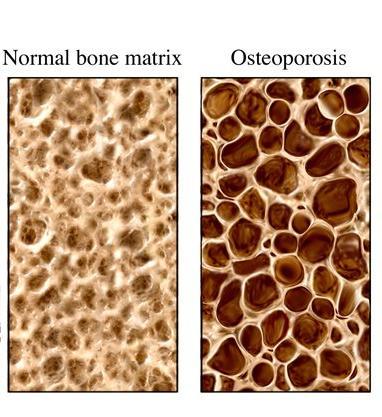
NASA scientists have discovered a new technique to detect osteoporosis bone loss at the earliest disease stages.
Currently, the condition can go undetected for years and may only be diagnosed with scans after weakening of the bones has led to a fracture.
The new test – designed partly with astronauts in mind as they too can suffer bone loss due to the microgravity of space – looks for traces of bone calcium in the urine.
The work is published in PNAS journal.
The technique developed by scientists at Arizona State University working with the US space agency analyses calcium isotopes – different atoms of the element calcium, derived from bone and each with their own specific number of neutrons.
NASA scientists have discovered a new technique to detect osteoporosis bone loss at the earliest disease stages
The balance or abundance of these different isotopes changes when bone is destroyed and formed and can therefore indicate early changes in bone density.
To put it to the test, the researchers studied a dozen healthy volunteers whom they confined to bed rest for 30 days. Prolonged bed rest triggers bone loss.
The technique was able to detect bone loss after as little as one week of bed rest – long before changes in bone density would be detectable on conventional medical scans such as dual-energy X-ray absorptiometry (DXA).
And, unlike other biochemical tests for bone loss that look for blood markers of increased bone turnover, it can give a direct measure of net bone loss.
Lead researcher Prof. Ariel Anbar said: “The next step is to see if it works as expected in patients with bone-altering diseases. That would open the door to clinical applications.”
As well as being useful for diagnosing osteoporosis it could help with monitoring other diseases that affect the bones, including cancer.
NASA nutritionist Scott Smith said: “NASA conducted these studies because astronauts in microgravity experience skeletal unloading and suffer bone loss. It’s one of the major problems in human spaceflight, and we need to find better ways to monitor and counteract it.”
“Tudor era” in history is a misleading invention, claims Cliff Davies, an Oxford University historian.
Cliff Davies says his research shows the term “Tudor” was barely ever used during the time of Tudor monarchs.
There are also suggestions the name was downplayed by Tudor royals because of its associations with Wales.
Dr. Cliff Davies says films and period dramas have reinforced the “myth” that people thought of themselves as living under a “Tudor” monarchy.
“The term is so convenient,” says Dr. Cliff Davies, of Wadham College and the university’s history faculty. But he says it is fundamentally “erroneous”.
"Tudor era" in history is a misleading invention, claims Cliff Davies, an Oxford University historian
During the reigns of Tudor monarchs – from Henry VII to Elizabeth I – he said there was no contemporary recognition of any common thread or even any recognition of the term “Tudor”.
Dr. Cliff Davies, who specializes in 16th-Century history, says “the rather obvious thought occurred to me” of investigating whether there had been any references to “Tudor” during the years of the Tudor monarchs.
His years of trawling through contemporary documents yielded almost no references – with only one poem on the accession of James I recognizing the transition from Tudor to Stuart.
Surprised by this absence of any contemporary usage, he says he expected “clever American professors to come up with examples to prove me wrong” – but so far there has been no such evidence.
There might also be suggestions that the use of “Tudor” was deliberately omitted – as monarchs, always sensitive to rival claims, wanted to assert their legitimacy.
“I do think that Henry VII was defensive about his past and wanted to downplay <<Tudor>>, which might have been used by his opponents.”
He says that in Welsh documents the name of Tudor is “celebrated” but it was “considered an embarrassment in England”.
Henry VIII preferred to represent himself as the embodiment of the “union of the families of Lancaster and York”, says Dr. Cliff Davies.
Dr. Cliff Davies suggests that the idea of a distinct Tudor period of history was first established in the 18th Century by the historian and philosopher, David Hume.
This has proved a very “seductive” way of approaching history, he argues. It also helps to create the idea of a separate historical period, different from what came before and after.
But the text-book writers and makers of period dramas should re-think their terminology, as he says that talking about “Tudor men and women” introduces an artificial concept which would have had no contemporary resonance.
If historians aim to “recover the thought processes” of past generations – he says it means understanding how they saw themselves and their own times.
Dr. Cliff Davies says that in the late 16th Century people in England would have understood the idea of living in the reign of Elizabeth I – but would not have identified her as a Tudor.
“The word <<Tudor>> is used obsessively by historians,” says Dr. Cliff Davies.
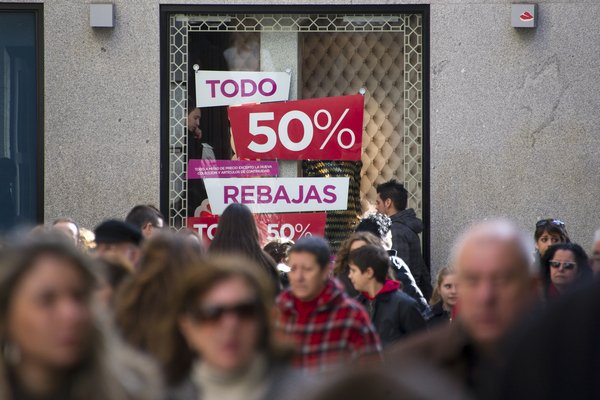
Spain’s retail sales dived in April, showing the biggest fall since the figures started being collected in 2003.
Sales fell 9.8% last month compared with the same month last year, after adjusting for calendar differences, according to official figures from the National Statistics Institute.
The fall was much worse than had been expected, and marked the 22nd consecutive month of declining sales.
Sales had fallen by 3.8% in March.
Spain’s retail sales dived in April, showing the biggest fall since the figures started being collected in 2003
Without adjusting for calendar effects, retail sales fell 11.3% in April having dropped 4% in March.
It is the latest bad news from the Spanish economy, which saw the level of risk attached to its government bonds hitting record levels on Monday after it emerged on Friday that banking group Bankia was going to need a bigger bail-out than had been expected.
Spanish shoppers are being discouraged by government austerity measures, rising taxes and Europe’s highest rate of unemployment.
Employment in the retail sector was down 1.2% in April from the same month in 2011.
The unemployment rate is over 24%, while the economy is back in recession having contracted in the last three months of 2011 and the first three months of 2012.
On Tuesday, a report from the Bank of Spain predicted that the recession would continue in the second quarter of 2012.
“Available indicators for the second quarter are still scarce but they do anticipate that activity will continue contracting in this period,” the report said.
Yesterday two pictures emerged of Mariah Carey’s 13-month-old twins, Monroe and Moroccan, as they hitched a ride on a red wagon, as well as their beaming mother.
Monroe and Moroccan looked absolutely adorable wearing matching white jumpers as they clung to either side of Mariah Carey’s slimmed-down figure in an image released by her fan site Team Mariah.
Mariah Carey, 42, carried her fraternal twins in a dark dress, black patent leather peep-toe heels, and bug-eyed sunglasses only a mega star could pull off.
Mariah Carey's 13-month-old twins, Monroe and Moroccan, as they hitched a ride on a red wagon
Her husband of four years, actor Nick Cannon, 31, shared the second image of little ‘Roc and ‘Roe riding in a red wagon near potted flowers on an outdoor patio.
“Ridin around and they gettin it!” Nick Cannon tweeted to his 3.4 million followers yesterday.
Riding “shotgun”, Monroe smiled in her hot pink tracksuit with brother Moroccan sat behind her in a striped hoodie and blue jeans.
Mariah Carey’s toddlers, also known as “Dem Babies” on their official website, are regularly seen wearing high-end Petit Trésor designer clothes.
The singer, whose net worth was estimated at more than $500 million last year, spares no expense when it comes to spoiling her ultra-cute babies.
At their lavish black-tie birthday party last month, the tots were gifted a toy Ferrari, rocking horse, and miniature white piano while celebrating at the Plaza Athenee in Paris.
Mariah Carey also reportedly spent millions of dollars creating a luxurious nursury for her little ones, including Chelsea Sleigh cribs, Clara changing table, 24-carat gold and onyx sofa, diamond-encrusted iPods, and a flatscreen TV that comes down from the ceiling.
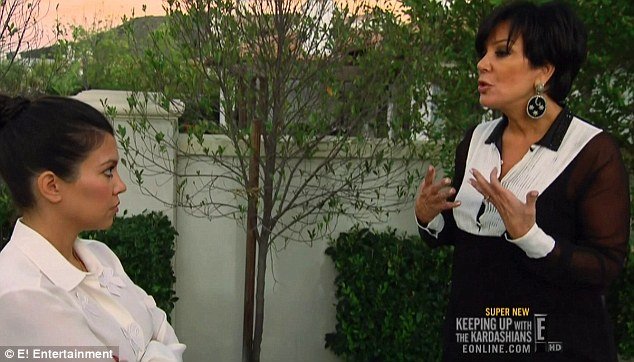
Kris Jenner and her daughter Kourtney Kardashian fought it out on latest episode of Keeping Up With The Kardashians, when Kourtney struggled to forgive her mother for cheating on her late father Robert.
Kourtney Kardashian, 32, even made a scathing remark at a lunch, when they discussed Kris Jenner’s recent meeting with a contestant from The Voice at an event.
She provoked a negative reaction when she asked Kris Jenner: “Did you bone him in the bathroom?”
Kourtney Kardashian added: “It’s not like that’s stopped you before,” in reference to Kris Jenner’s confession in her new book, in which she revealed that she had cheated on Kourtney’s father.
“Sometimes you can be really rude,” Kris Jenner pointed out as she tried to shift the subject and ignore her daughter’s resentment toward her.
Although she set aside the matter, Kourtney Kardashian brought the topic up again at another lunch with sister Kim, and when her younger sibling suggested confronting their mother about her resentment, she refused to make it that easy for the matriarch, saying: “I would rather die.”
Kim Kardashian confided in Khloe – who was at the time residing in Texas with husband Lamar Odom – about the ongoing spat via a video call.
As the matter was obviously effecting the whole clan, Khloe Kardashian agreed that Kourtney should learn to forgive.
But that just wasn’t the case, especially when Kourtney Kardashian hosted her first official family dinner since moving into her new house with boyfriend and father of her two-year-old son, Scott Disick.
Kris Jenner’s flirting with the chef in front of her husband Bruce Jenner less than impressed the party’s host.
Kourtney Kardashian said: “You’re so inappropriate and embarrassing. You have no shame in your game.”
“You’re so f***ing uptight,” Kris Jenner responded, before asking her to step outside.
After some serious words, the conversation didn’t seem to be helping ease any tensions.
“I don’t understand how you can do that to your family,” Kourtney Kardashian admitted as they stood away from the rest of the guests in the garden.
“Are you going to punish me for the rest of my life because of something I did 25 years ago?” Kris Jenner responded.
But Kourtney had heard the last she wanted on the matter and bluntly told her: “I don’t want to keep talking about this. I just don’t relate to this and I don’t understand it.”
Kris Jenner and her daughter Kourtney Kardashian fought it out on latest episode of Keeping Up With The Kardashians, when Kourtney struggled to forgive her mother for cheating on her late father Robert
Later Bruce Jenner found his wife hiding out in the backyard cabana and convinced her to spill the beans about what was bothering her.
Tears began to roll as she told him that it “honestly broke her heart” that her children were still hurt that she made a bad decision.
It was the first time Kris Jenner appeared to crack, but she admitted that if she didn’t have the courage to go astray with the affair, her youngest children Kylie and Kendall, and her husband would not be with her today.
The fact that Kris Jenner wasn’t as tough as she appeared hadn’t escaped Kourtney though and she began to soften up in an iChat conversation with Khloe.
She admitted that lately she had been meaner to Kris but that she couldn’t help it.
So she planned to go to therapy to deal with her issues thanks to advice from Khloe.
Her therapist Erica concluded that because Koutney was pregnant with a girl, she was especially emotional as the bond between mother and daughter is the strongest and she was subconsciously worried about disappointing her own little girl.
Kourtney Kardashian herself then broke down as she went over the details in her mother’s memoir and said: “I could never do that to my family.”
She admitted that she didn’t care about the fact that the world knows their family secrets, but she couldn’t see where Kris Jenner was coming from.
However, it emerged that because she had trust issues with her own partner Scott Disick, it made it more real for her as her mother chose to go down the unfaithful route at a time that was so crucial for her.
She finally opened up to Scott Disick about her family problems following the consultation.
Meanwhile, Kris Jenner’s plan to win Kourtney over wasn’t working as she decided to buy an early baby shower gift.
Kourtney Kardashian saw through her stunt and refused to open the adorable gift for her little girl at first.
Instead she said that she had gone to therapy after getting worried about the number of rude comments she had been making towards the woman that brought her into the world.
Her mother was shocked but thought it was fabulous that she told her.
“I’m going to communicate more about what I’m annoyed about instead of getting mad at you. Thank you for my present. I love it. I love you,” Kourtney Kardashian said before they enjoyed an embrace.
Elsewhere in the episode, Kim Kardashian and her younger siblings Kendall and Kylie Jenner spent some girly time together applying fake eyelashes.
Ever the joker, Kim Kardashian tricked them into thinking they had glued her eyes shut.
Also, the girls were thrilled to have landed jobs as West Coast fashion contributors to Seventeen magazine.
But they had problems with the fact that part of their job would be to approach strangers, in the street.
The girls headed out to a shopping mall and approached some women, but while younger Kylie was more confident about the task, Kendall quickly ran away biting her nails.
“It’s so annoying to work with you. Stand up and be professional,” the 14-year-old demanded from Kendall, 16.
The model retorted: “Just because I’m shy doesn’t mean I’m not professional. That had nothing to do with it, you don’t say that.”
When Kylie confided in Kim that she had to do that whole job alone, Kim agreed that it was annoying, but helped her see Kendall’s side because she also was shy when competing with outspoken Kourtney and Khloe as youngsters.
Kim Kardashian tagged along for their next outing to help Kendall come out of her shell.
Their older sister stood to the side as they approached young girls in a parking lot.
Kim and Kylie both gave Kendall words of support, and by the end of the day she admitted it wasn’t as hard as she thought it would be.
Spending even more time together, Kim, Kendall and Kylie went on a hike with Bruce Jenner and the girls freaked out over a spider, which he picked up and tried to scare them with.
They jumped in the car and left him with their dogs because they were not impressed with the funnyman.
They made the Olympic medal winner run home, which started a war between the group.
At dinner the fun and games continued as he threw an insect contained in a cup at her prompting Kim Kardashian to remove her clothes and leave the house almost in tears.
The next day they planned to scare Bruce Jenner and so with the help of half-brother Brandon, they devised a plan to steal the Ferrari, which Kim had a spare key to.
Brandon headed to the Go-Kart track with his dad and Kim and Scott secretly followed in a separate vehicle.
They watched in delight as he squirmed thinking the expensive car had been stolen before appearing in front of the worried father and revealed he was the subject of a joke for once.
A new earthquake has shaken northern Italy, centred on the Emilia region, where a quake on May 20 killed seven people and damaged many buildings.
Tuesday’s tremor was estimated at 5.8 and was felt in Milan and Bologna, where office workers were evacuated.
The quake struck 40 km north of Bologna and 60 km east of Parma, at a depth of 9.6 km (six miles), Reuters reports.
The tremor happened at 09:03 local time. There are no reports of major damage or injuries.
A new earthquake has shaken northern Italy, centred on the Emilia region, where a quake on May 20 killed seven people and damaged many buildings
But some buildings collapsed in areas hit by the larger May 20 quake, which was magnitude 6.0, the Associated Press said.
That quake destroyed many centuries-old buildings of cultural value. It was the worst to hit Italy since the L’Aquila tremor that killed nearly 300 people in 2009.
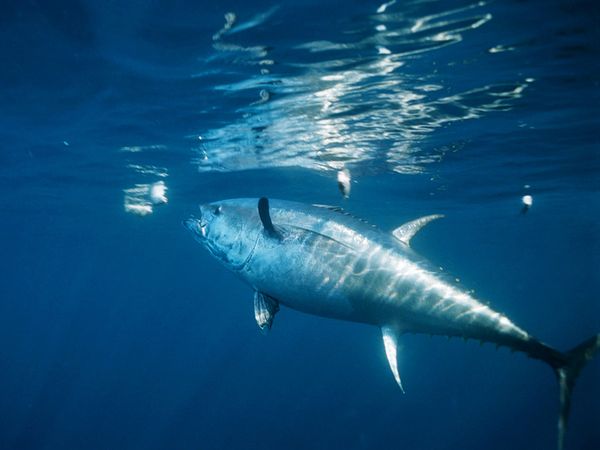
A record radioactive contamination from last year’s Fukushima nuclear accident has been detected in Pacific Bluefin tuna caught off the coast of California.
Bluefin tuna would have picked up the pollution while swimming in Japanese waters, before then moving to the far side of the ocean.
Scientists stress that the fish are still perfectly safe to eat.
However, the case does illustrate how migratory species can carry pollution over vast distances, they say.
“It’s a lesson to us in how interconnected eco-regions can be, even when they may be separated by thousands of miles,” said Nicholas Fisher, a professor of marine sciences at Stony Brook University, New York.
Fisher and colleagues report their study in the journal Proceedings of the National Academy of Sciences.
A record radioactive contamination from last year's Fukushima nuclear accident has been detected in Pacific Bluefin tuna caught off the coast of California
They examined the muscle tissues of 15 Bluefin tuna (Thunnus orientalis) taken from waters off San Diego in August 2011, just a few months after the accident at the Fukushima Daiichi nuclear plant.
These were animals whose parents would have spawned in Japanese waters and spent one to two years locally before heading to feeding grounds in the eastern Pacific.
All the fish examined in the study showed elevated levels of radioactive caesium – the isotopes 134 and 137.
Caesium-137 is present in seawater anyway as a result of the fallout from atomic weapons testing, but the short, two-year half-life of caesium-134 means the contamination can be tied directly to Fukushima. There is no other explanation for the isotope’s presence.
The measured concentrations were about 10 times the total caesium radioactivity seen in tuna specimens taken from before the accident.
As a control, the team also examined Yellowfin tuna, which are largely residential in the eastern Pacific.
These animals showed no difference in their pre- or post-Fukushima concentrations.
The research is likely to get attention because Bluefin tuna is an iconic species and a highly valuable fishery – thousands of tons are landed annually.
But consumers should have no health concerns about eating California-caught tuna from last year, the team says.
The levels of radioactivity are well within permitted limits, and below those from other radioisotopes that occur naturally in the environment, such as potassium-40.
“The potassium was about 30 times higher than the combined radio-caesium levels. If you calculate how much additional radioactivity there is in the Pacific Bluefin tuna caught in California relative to the natural background – it’s about 3%,” said Prof. Nicholas Fisher.
The scientists even calculated how much radioactivity might have been present in the fish before they swam across the Pacific (it would have fallen over time) and figured it could have been 50% above background levels; but, again, this would still have met the legal requirements for safe consumption.
Tuna caught in the coming months will be subjected to new tests. These animals would have spent much longer in Japanese waters and so conceivably could have a very different pollution load.
The team also believes the investigation should be extended to other migratory species that frequent Japanese waters.
Fukushima pollution is potentially a very useful tool to trace the origin and timing of animal movements. The ratio of caesium 134 to 137 could be used like a clock to work out when and how long a particular migration took.
“This information might be useful in conservation efforts or in managing fisheries,” said Prof. Nicholas Fisher.
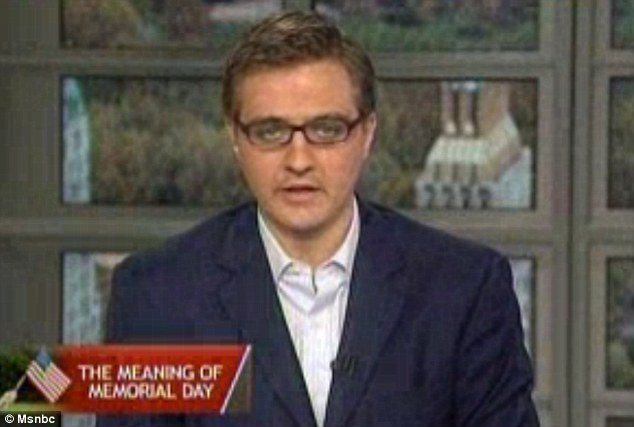
MSNBC broadcaster Chris Hayes has caused outrage on Memorial Day by saying he feels “uncomfortable” branding soldiers who have died in battle “heroes”.
Chris Hayes, a liberal commentator who hosts Up with Chris Hayes, said the word “heroes” is used to justify further war.
His stuttered comments have sparked outrage among veterans organizations and across the internet.
Chris Hayes said: “I think it is very difficult to talk about the war dead and the fallen without invoking valor, without invoking the words <<heroes>>.
“I feel… uncomfortable, about the word because it seems to me that it is so rhetorically proximate to justifications for more war.”
He went on: “I don’t want to obviously desecrate or disrespect memory of anyone that’s fallen, and obviously there are individual circumstances in which there is genuine, tremendous heroism: hail of gunfire, rescuing fellow soldiers and things like that.
“But it seems to me that we marshal this word in a way that is problematic.”
He then added: “But maybe I’m wrong about that.”
Chris Hayes has caused outrage on Memorial Day by saying he feels “uncomfortable” branding soldiers who have died in battle “heroes
A spokesman for a veterans organization, Veterans of Foreign Wars, suggested Chris Hayes put himself through the anguish of war before criticizing soldiers.
“If Mr. Hayes feels uncomfortable, I suggest he enlist, go to war, then come home to what he expects is a grateful nation but encounters the opposite,” Joe Davis told The Daily Caller.
“It’s far too easy to cast stones from inexperience.”
Bloggers and users of social networking sites also condemned the comments, with “Chris Hayes” trending on Twitter after the broadcast.
Newsbusters blogger Mark Finkelstein said Chris Hayes’s stuttered speech “almost seems a parody of the conflicted intellectual”.
“What does it say about the liberal chattering class, which Hayes epitomizes, that it chokes on calling America’s fallen what they rightly and surely are: heroes?”
Conservative commentator Warner Todd Huston wrote on blog Wizbang: “I’d like to remind you that many of those Neanderthals that you despise so much died for your right to hate them.”
“Fire Chris Hayes!” one Twitter user wrote on the site.
“His outright DISDAIN for our valiant men and women is disgusting!”
Chris Hayes, who has never served in the armed forces, has hosted his weekend show on MSNBC since last September.
He has appeared as a guest host and commentator on shows including The Last Word with Lawrence O’Donnell and The Rachel Maddow Show.
Chris Hayes also remains Editor-at-Large of the left-leaning The Nation.
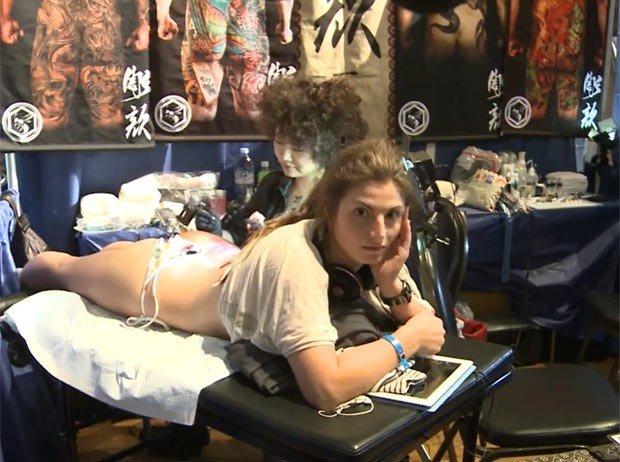
Lucy Challenger from London travelled all the way to New York to finish a tattoo that has taken two years to complete.
The tattoo tourist flew to the New York City Tattoo Convention so a famed artist could put the finishing touches on a huge phoenix design on her left buttock, at a cost of $1,000.
Lucy Challenger’s love of inkwork should come as no surprise, as growing numbers of women are getting tattooed – and now more females than males sport body art in the U.S.
“I’ve had about 35 hours of work so far, and I’ve got another eight hours to go,” the actress told AFP.
“So I’m it bringing home for the women that, you know, we can sit there and just take it.”
Lucy Challenger flew to the New York City Tattoo Convention so a famed artist could put the finishing touches on a huge phoenix design on her left buttock, at a cost of $1,000
The complex creation has cost Lucy Challenger thousands of dollars and two trips to Los Angeles and sessions in New York and London.
“It is a big investment. Not everyone can spend that amount of money, but it is once in a lifetime,” she added.
Lucy Challenger, 28, lay in a t-shirt and not much else while the artist, who had flown in from Los Angeles, perfected the design that stretched from the top of her thigh to her lower back.
She had an iPad to distract her while the tattooist worked on the phoenix for eight hours.
Lucy Challenger was just one of the many women who attended the convention last weekend, which attracted tattoo fans from across the globe.
Many travelled to be inked by some of the most famous artists in the world and pay thousands of dollars to go under the tattoo needle.
That is what drew Lucy Challenger to the show.
“Her work is unbelievable,” she said of her tattooist.
“And I was really attracted to the fact that she’s obviously a woman and I really wanted a feminine touch in my tattoo,” Lucy Challenger told AFP.
Many tattoo artists reported an upturn in the number of women looking for body art – and one parlor owner said he would be happy to turn his establishment into a female-only business.
“I like to do feminine and positive tattoo things,” said Billy Tarr of Totem Tattoo, who added that women usually picked inkings which are “not as violent” as men’s.
A recent survey even suggested that more women in the U.S. have tattoos than do men, with 23% going under the needle compared to 19% of males.
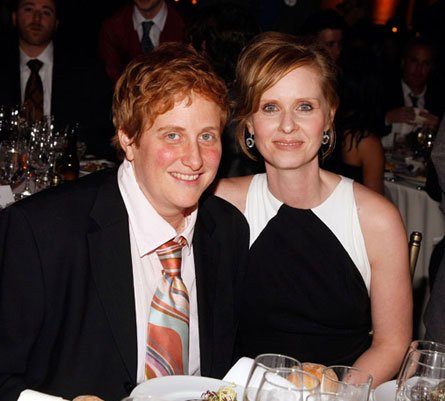
Cynthia Nixon has married her long-term partner Christine Marinoni.
Sex and the City actress wore a custom dress by Carolina Herrera for the ceremony, which was held in New York yesterday.
Cynthia Nixon’s publicist confirmed to People: “Cynthia Nixon and her girlfriend, Christine Marinoni, were legally married in the state of New York.”
No further details about the ceremony are currently available.
Cynthia Nixon, 46, have a son Max Ellington Nixon-Marinoni, 15 months, whom Christine Marinoni, 45, gave birth to last year.
They have not revealed the details of the child’s biological father.
The actress also has a daughter Samantha, 16, and 10-year-old son Charles with photographer Danny Mozes.
Cynthia Nixon has married her long-term partner Christine Marinoni
Cynthia Nixon ended her 15-year relationship with Danny Mozes in 2003.
She met Christine Marinoni at an education rally in 2002 and they became a couple two years later.
The actress and education activist got engaged in 2009 at a rally to support gay marriage in New York, which was not legal at that time.
Cynthia Nixon and Christine Marinoni decided to wait to marry until it was legal to do so in New York state, which occurred last summer.
Speaking in 2010, Cynthia Nixon said: “I’m enjoying being engaged very much.
“I don’t mind a long engagement, which this one is surely turning out to be.”
When asked about her sexuality, Cynthia Nixon once explained: “In terms of sexual orientation, I don’t feel I’ve changed.
“I’d been with men all my life and I’d never fallen in love with a woman. But when I did, it didn’t seem strange. I’m just a woman in love with another woman.”
In 2008, Cynthia Nixon revealed she had beaten breast cancer which was diagnosed during a routine mammogram two years earlier.
She went on to play a cancer patient on stage too, shaving her head for her role in Wit.
Cynthia Nixon will compete for a Tony Award next month after earning a nomination for best actress for the part.