
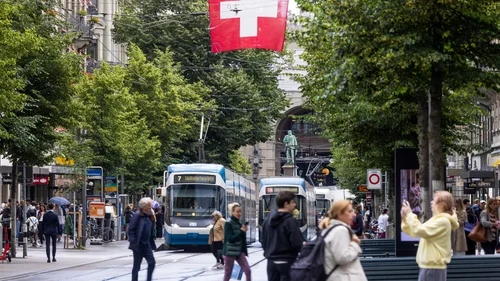
GENEVA — Switzerland stands at a historic crossroads as citizens cast their ballots in a high-stakes referendum that could fundamentally reshape the wealthy Alpine nation. The popular vote, dubbed the Sustainability Initiative, presents voters with a radical proposition: legally cap the permanent resident population at 10 million people until the year 2050. Driven by mounting anxiety over rapid demographic growth, the proposal has forced a profound national debate balancing local stability against global economic competitiveness.
The initiative is championed by the right-wing Swiss People’s Party, the largest faction in the federal parliament. To trigger this nationwide referendum under Switzerland’s direct-democracy system, organizers successfully gathered more than 100,000 citizen signatures. Supporters argue that unchecked migration is rapidly eroding the country’s famous quality of life, placing an unsustainable burden on public infrastructure, crowding public transit, driving up rental prices, and diminishing cherished green spaces.
The Mechanics of the Cap
With the current population already hovering above 9.1 million—a significant jump from 7.3 million at the turn of the century—the proposed constitutional amendment introduces strict, legally binding thresholds. If the permanent resident population crosses 9.5 million, the federal government and parliament would be constitutionally mandated to implement immediate emergency measures. These primary interventions would target sharp reductions in asylum approvals and severe restrictions on family reunification permits.
Should the population breach the definitive 10-million ceiling for two consecutive years, the legal ramifications would escalate dramatically. In that scenario, Bern would be legally obligated to terminate its free movement of persons agreement with the European Union. Because this labor pact is the cornerstone of a complex web of bilateral accords, tearing it up would effectively nullify Switzerland’s broader access to the EU single market, which serves as the country’s largest and most vital trading partner.
Economic Alarm Bells
The prospect of a hard population ceiling has sent shockwaves through the Swiss business community. Corporate leaders from global tech hubs and pharmaceutical giants warn that the measure could trigger a severe labor crisis. Multinationals based in Zurich and Basel heavily rely on highly skilled international professionals to maintain their competitive edge. Industry groups caution that cutting off access to the European talent pool would cripple export-oriented sectors and worsen existing workforce shortages in hospitals, care homes, and hospitality.
Independent economic think tanks have added to the urgency, releasing projections that suggest a rigid population cap could reduce Swiss total economic output by as much as 12 percent by the end of the century. The federal council and major business coalitions have strongly urged the public to reject the initiative, characterizing it as an economic self-sabotage that threatens national prosperity and critical European security agreements.
A Finely Balanced Electorate
Despite the warnings of financial isolation, public sentiment remains intensely divided. While initial polling in the spring indicated a comfortable majority in favor of the cap, the final surveys ahead of the vote revealed razor-thin margins as public opinion fluctuated. The debate has noticeably transcended traditional right-wing circles, capturing the attention of moderate and left-leaning voters who feel the tangible pressures of urban density and an escalating cost of living.
As the ballot boxes close across the cantons, the outcome represents far more than a simple adjustment to immigration policy. For the Swiss electorate, today’s verdict is a defining choice about national identity. It forces the country to decide whether it can maintain its status as an economic powerhouse while attempting to pull the brakes on globalization and close its borders to the outside world.