
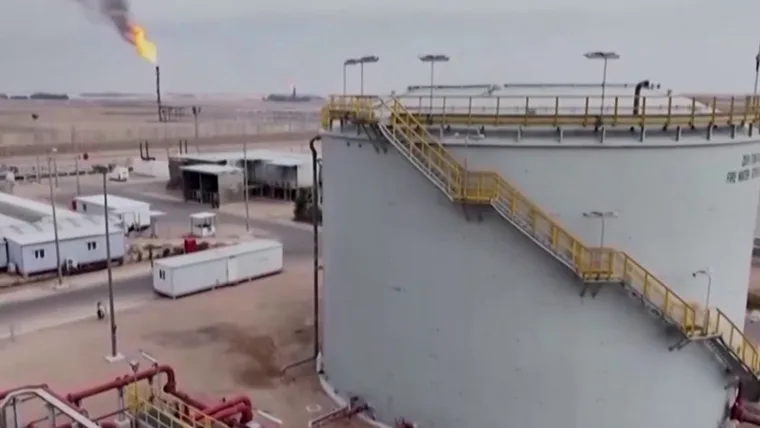
ABU DHABI — The walls of the world’s most powerful energy club just suffered a seismic fracture. On Tuesday, the United Arab Emirates (UAE) formally announced it will withdraw from OPEC and the wider OPEC+ alliance, effective May 1, 2026.
After nearly 60 years of membership, the Gulf’s third-largest producer is trading the safety of the herd for the agility of a sovereign sprinter. While official channels framed the move as a “strategic and economic vision,” the subtext is clear: Abu Dhabi is tired of being the anchor when it wants to be the engine.
The “Quota Ceiling” Shatters
For years, the UAE has been the cartel’s most frustrated high-achiever. While Saudi Arabia preached production restraint to keep prices high, the UAE—led by its state oil giant, ADNOC—has poured billions into expanding its capacity toward 5 million barrels per day.
Under OPEC’s strict quotas, that expensive new infrastructure was largely sitting idle. By walking away, the UAE regains the freedom to pump at its own pace, potentially generating upwards of $50 billion in additional annual revenue once global shipping lanes stabilize.
A Marriage of Convenience No More
The divorce isn’t just about barrels; it’s about a deepening rift with Riyadh. Tensions between the UAE and Saudi Arabia have boiled over in recent years, spanning from disagreements over production levels to divergent foreign policies and competing economic hubs.
The ties binding OPEC members together have loosened significantly. The UAE follows in the footsteps of Qatar and Angola, who both exited after finding the group’s constraints incompatible with their national goals. For Saudi Arabia, the loss of its most reliable partner is a devastating blow to its ability to act as the world’s “central stabilizer.”
Timing the Shockwave
The announcement arrives at a moment of extreme geopolitical volatility, with regional conflicts already straining energy markets and critical maritime corridors facing unprecedented blockades.
| Key Stat | Impact of UAE Exit |
|---|---|
| Capacity Loss | OPEC loses ~15% of its total production capacity. |
| Spare Capacity | Removes the group’s second-largest buffer for supply shocks. |
| Market Share | Weakens the cartel’s leverage over global oil prices. |
The Verdict
Is this the “beginning of the end” for OPEC? Many analysts believe so. Without the UAE’s compliance and spare capacity, the cartel is left looking less like a unified force and more like a legacy brand struggling for relevance in a “dog-eat-dog” energy market.
As the UAE pivots toward a future defined by strategic autonomy and massive diversified energy investments, it sends a clear signal to the world: the era of the oil collective is fading, replaced by a new age of national interest.