
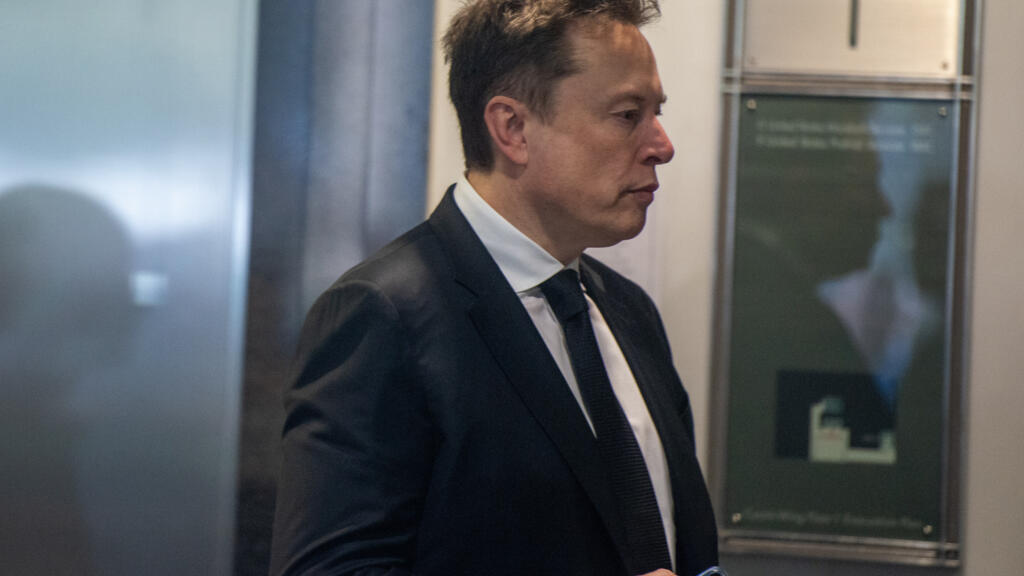
OAKLAND, CA — Standing before a federal jury on Tuesday, Elon Musk framed his high-stakes legal battle against OpenAI as something far greater than a Silicon Valley power struggle. For the billionaire plaintiff, the case is a defense of the very “foundation of charitable giving” in America.
“It’s not okay to steal a charity,” Musk testified, his tone deliberate as he addressed the nine jurors in the Oakland courtroom. “If it’s okay to loot a charity, the entire foundation of charitable giving will be destroyed.”
The “Charitable Trust” at the Core
The trial, which began its second day of testimony on April 28, 2026, centers on Musk’s allegation that Sam Altman and Greg Brockman manipulated him into co-founding OpenAI in 2015. Musk claims he donated roughly $44 million under the ironclad promise that the lab would remain a non-profit dedicated to developing safe AI for the benefit of humanity.
By transitioning into a for-profit “public benefit corporation” valued at over $850 billion, Musk argues the leadership committed a “breach of charitable trust.” His legal team is pushing to:
- Unwind the for-profit restructuring that has attracted billions from Microsoft and Amazon.
- Direct $134 billion in “ill-gotten gains” back to the organization’s original charitable arm.
- Oust Sam Altman from the board and his role as CEO.
OpenAI’s Defense: “Competitive Jealousy”
Attorneys for OpenAI and Microsoft have hit back with a narrative of their own, painting Musk as a disgruntled former partner who is using the court to “kneecap a competitor.”
“We’re here because Mr. Musk didn’t get his way,” argued OpenAI lawyer William Savitt during his opening statement. He claimed Musk’s own venture, xAI—which recently merged with SpaceX—is the true motivation behind the suit. Savitt pointed to internal emails suggesting Musk had once supported a for-profit pivot, provided he was the one in control.
A Trial of Egos and Precedents
The courtroom atmosphere has been tense. Judge Yvonne Gonzalez Rogers has already had to admonish Musk for his social media activity, specifically for referring to the OpenAI CEO as “Scam Altman” on X. Both Musk and Altman have since agreed to a “social media truce” for the duration of the trial.
The stakes extend far beyond the two titans. If the court sides with Musk, it could set a radical legal precedent, making it significantly harder for non-profits to pivot toward commercial models without the unanimous consent of early donors. For OpenAI, a loss would jeopardize its planned IPO and the $200 billion in investment commitments predicated on its current structure.
The Verdict Ahead
The jury will eventually deliver an advisory verdict on liability, but the final power rests with Judge Gonzalez Rogers, who will decide by late May whether to order a structural reversion.
As the tech world watches, the central question remains: Was OpenAI a charity that was “stolen,” or a research lab that evolved to survive an AI arms race?