
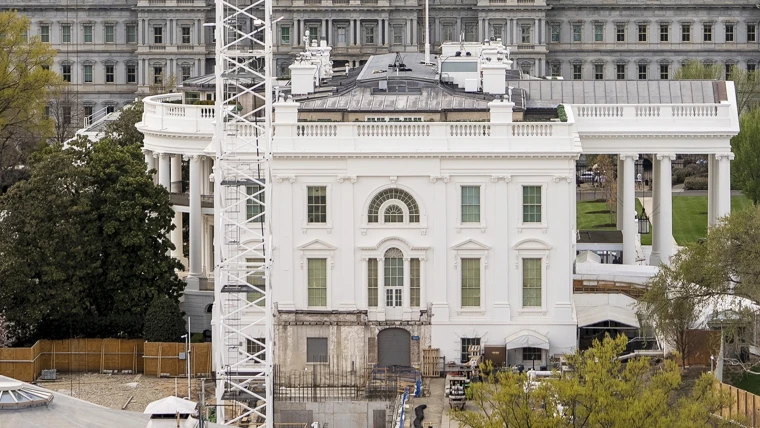
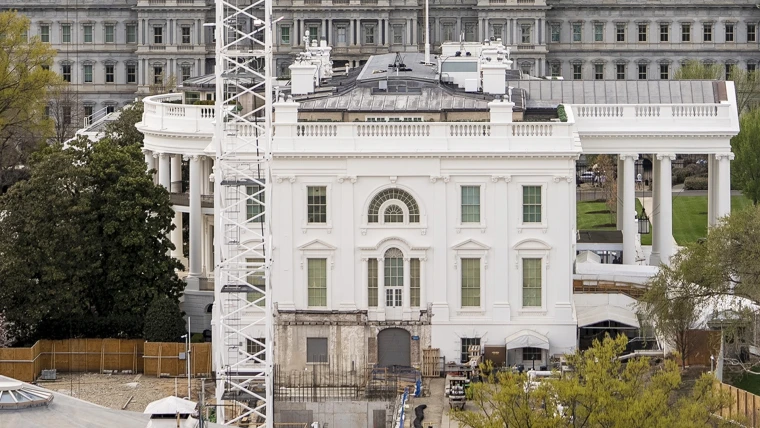
In a major legal victory for the Trump administration, the U.S. Court of Appeals for the D.C. Circuit has cleared the way for construction to resume in full on the President’s controversial $400 million White House ballroom. The ruling, issued late Friday, grants an administrative stay that effectively freezes a lower court’s attempt to halt the project, allowing cranes to keep swinging over the site where the East Wing once stood.
The decision marks the latest turn in a high-stakes battle between the executive branch and preservationists, revolving around a central, modern-day question of power: Is a massive neoclassical ballroom a luxury “vanity project” or a critical piece of national security infrastructure?
The “National Security” Loophole
The legal saga reached a fever pitch this week when U.S. District Judge Richard Leon attempted to bifurcate the project. Leon, who has repeatedly ruled that the demolition of the East Wing lacked necessary congressional approval, issued an order on Thursday that would have allowed below-ground work—such as the construction of a new presidential bunker and “military installations”—to continue, while strictly barring any “above-ground” ballroom construction.
However, the Trump administration successfully argued to the appeals court that the two are inseparable. Department of Justice lawyers contended that halting the ballroom would leave a “grave national security hole” beside the Executive Residence, exposing the underground secure facilities to satellite surveillance and the elements.
“The underground doesn’t work, isn’t necessary, and would indeed be useless without the above-ground sections,” President Trump posted on Truth Social shortly after the ruling. He hailed the appeals court for stopping what he called an “illegal overreach” by a “Trump-hating judge.”
A Private Ballroom for the Public Good?
The project, which has been under construction since the East Wing was reduced to rubble in October 2025, is designed to be a 90,000-square-foot facility capable of seating 1,000 guests. The President has long argued that the current practice of erecting “temporary tents” on the South Lawn for state dinners is “shabby” and “unfitting for a great nation.”
While the administration maintains the project is funded by a coalition of private donors—including tech giants and defense contractors like Meta, Lockheed Martin, and Palantir—the National Trust for Historic Preservation has raised alarms about the precedent being set.
“This isn’t about a ballroom; it’s about the law,” a spokesperson for the National Trust said in a statement. “The President is the steward of the White House, not the owner. Razing a historic wing without the consent of Congress is a violation of the public trust.”
The Reshaping of D.C.
The ballroom is just one piece of a broader “architectural takeover” of the capital spearheaded by the administration. Other projects currently in the pipeline include:
- The Triumphal Arch: A 250-foot monument that recently cleared a key agency review.
- The Kennedy Center Renovation: A multi-year overhaul of the nation’s premier performing arts complex.
- The “Zero-Entry” Security Zone: A permanent fortification of the streets immediately surrounding the White House complex.
Critics in Congress have labeled the push “Trump’s Trianon,” while supporters argue the President is simply returning a sense of “grandeur and permanence” to a city they claim had fallen into bureaucratic decay.
What Happens Next?
Friday’s ruling is an administrative stay, meaning it is not a final judgment on the merits of the case. However, it allows construction to proceed “unabated” while the court considers a more permanent stay. The next major hearing is tentatively scheduled for June 5, 2026.
Until then, the sounds of jackhammers and the sight of high-grade bulletproof glass being hoisted into place will remain a permanent fixture of Pennsylvania Avenue. For the White House, the “Big Complex” is back on schedule; for its detractors, the “wrecking ball” continues its work.