
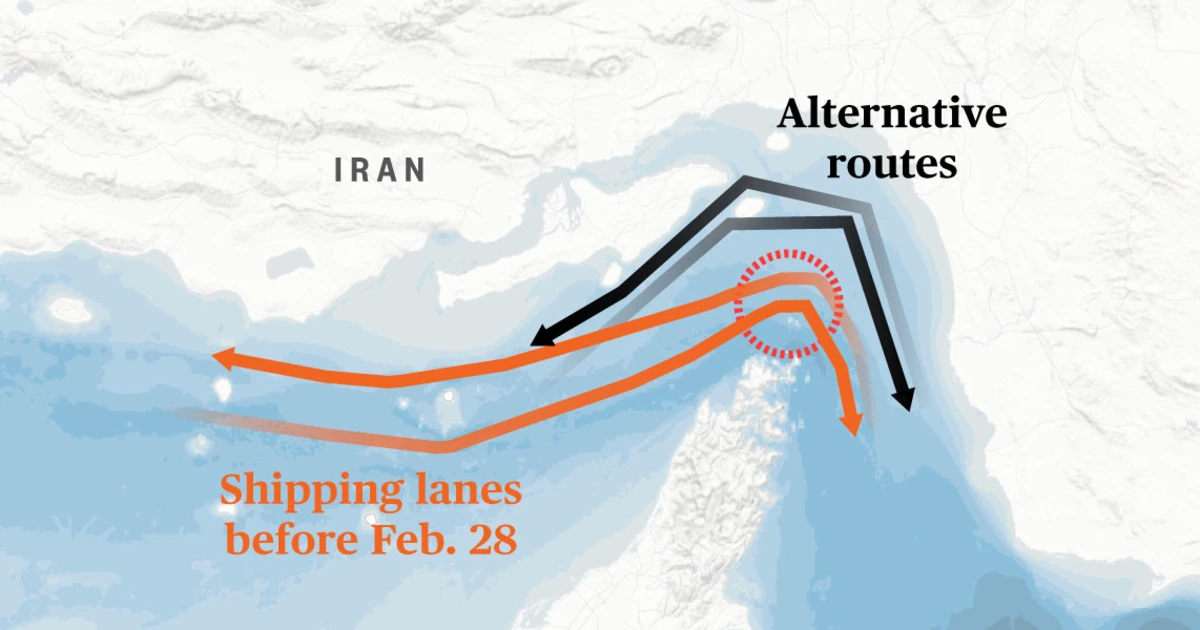
MANAMA — The global shipping industry’s 24-hour sigh of relief has been replaced by a scream. On Saturday, less than a day after the Strait of Hormuz was declared “completely open,” the Iranian military abruptly slammed the maritime gate shut, enforcing the closure with live fire against commercial vessels.
The reversal follows a deepening standoff over a U.S. naval blockade that President Donald Trump has refused to lift, despite a fragile regional ceasefire. As of Sunday morning, the world’s most critical energy artery is once again a “no-go zone,” with over 20 massive tankers and container ships performing frantic U-turns in the Gulf of Oman to escape Iranian gunboats.
“You Gave Me Clearance!”
The most chilling evidence of the renewed hostilities emerged from a radio recording obtained by maritime trackers. In the 31-second clip, the captain of the Sanmar Herald, an Indian-flagged Very Large Crude Carrier (VLCC), can be heard pleading with the Islamic Revolutionary Guard Corps (IRGC) Navy as they opened fire.
“Sepah Navy! You gave me clearance! My name is second on your list!” the captain shouts over the roar of engines. “You are firing now! Let me turn back!”
The UK Maritime Trade Operations (UKMTO) confirmed that two IRGC gunboats approached the tanker 20 nautical miles northeast of Oman, opening fire without establishing radio contact. Hours later, a second vessel—a container ship—was struck by an “unknown projectile,” likely a drone, causing significant damage to its cargo. No injuries have been reported among the crews, but the psychological and economic impact was immediate.
The Blockade Standoff
The sudden closure is a direct retaliation for President Trump’s Friday evening declaration that the U.S. naval blockade of Iranian ports will remain in “full force” until a permanent peace deal is signed. Tehran, which had briefly opened the strait as a gesture of goodwill following the Lebanon ceasefire, accused Washington of “maritime piracy.”
“As long as the movement of vessels to and from Iran is under threat, the status of the Strait of Hormuz will remain as it was,” the IRGC’s navy command posted on X.
The Iranian Supreme National Security Council characterized the U.S. blockade as a violation of the two-week truce, stating that Tehran would no longer permit “conditional or limited” reopening of the waterway.
Markets in Whiplash
The volatility of the last 48 hours has sent global energy markets into a tailspin. Oil prices, which plunged late Friday on news of the reopening, surged back toward $100 a barrel on Sunday as news of the attacks reached trading desks.
[Image: Map of the Strait of Hormuz showing the locations of the Sanmar Herald attack and the U.S. blockade line]
Logistics giants are now facing a grim reality: the brief window of passage was a “mirage.” Approximately 20% of the world’s oil and LNG passes through this 21-mile-wide choke point. With Iran now demanding transit fees and “security certificates” while the U.S. turns back ships paying those very fees, the strait has become a legal and military trap.
The Pakistan Connection
The escalation comes at a delicate moment for diplomacy. Pakistani mediators, led by Foreign Minister Ishaq Dar, are reportedly working around the clock to arrange a second round of direct talks in Islamabad before the current ceasefire expires on April 22.
While President Trump noted that “good conversations” are ongoing, his refusal to blink on the blockade has left Tehran’s hardliners with the upper hand. The “Hell” promised by the IRGC earlier this month appears to be the current operating procedure in the Gulf, leaving the global economy to pay the price of a diplomatic stalemate.
For now, the Strait of Hormuz is silent, save for the hum of U.S. drones and the occasional burst of gunfire from Iranian patrols—a “Gate of Tears” that has once again been locked from the inside.