ABU DHABI — The walls of the world’s most powerful energy club just suffered a seismic fracture. On Tuesday, the United Arab Emirates (UAE) formally announced it will withdraw from OPEC and the wider OPEC+ alliance, effective May 1, 2026.
After nearly 60 years of membership, the Gulf’s third-largest producer is trading the safety of the herd for the agility of a sovereign sprinter. While official channels framed the move as a “strategic and economic vision,” the subtext is clear: Abu Dhabi is tired of being the anchor when it wants to be the engine.
The “Quota Ceiling” Shatters
For years, the UAE has been the cartel’s most frustrated high-achiever. While Saudi Arabia preached production restraint to keep prices high, the UAE—led by its state oil giant, ADNOC—has poured billions into expanding its capacity toward 5 million barrels per day.
Under OPEC’s strict quotas, that expensive new infrastructure was largely sitting idle. By walking away, the UAE regains the freedom to pump at its own pace, potentially generating upwards of $50 billion in additional annual revenue once global shipping lanes stabilize.
A Marriage of Convenience No More
The divorce isn’t just about barrels; it’s about a deepening rift with Riyadh. Tensions between the UAE and Saudi Arabia have boiled over in recent years, spanning from disagreements over production levels to divergent foreign policies and competing economic hubs.
The ties binding OPEC members together have loosened significantly. The UAE follows in the footsteps of Qatar and Angola, who both exited after finding the group’s constraints incompatible with their national goals. For Saudi Arabia, the loss of its most reliable partner is a devastating blow to its ability to act as the world’s “central stabilizer.”
Timing the Shockwave
The announcement arrives at a moment of extreme geopolitical volatility, with regional conflicts already straining energy markets and critical maritime corridors facing unprecedented blockades.
Key Stat
Impact of UAE Exit
Capacity Loss
OPEC loses ~15% of its total production capacity.
Spare Capacity
Removes the group’s second-largest buffer for supply shocks.
Market Share
Weakens the cartel’s leverage over global oil prices.
The Verdict
Is this the “beginning of the end” for OPEC? Many analysts believe so. Without the UAE’s compliance and spare capacity, the cartel is left looking less like a unified force and more like a legacy brand struggling for relevance in a “dog-eat-dog” energy market.
As the UAE pivots toward a future defined by strategic autonomy and massive diversified energy investments, it sends a clear signal to the world: the era of the oil collective is fading, replaced by a new age of national interest.
STOCKHOLM — For over a century, aspirin has been the humble workhorse of the medicine cabinet, easing headaches and thinning blood to prevent strokes. But a growing mountain of clinical evidence now suggests this century-old pill may be one of our most potent weapons against cancer—and researchers are finally beginning to understand why.
The breakthrough comes as new guidelines start to reflect a shifting medical consensus: for specific high-risk groups, a “baby aspirin” a day is no longer just for the heart—it’s for the long-term war against tumors.
The “Eureka Moment” in the Blood
While the link between aspirin and reduced cancer risk has been observed for decades, the biological “how” remained a mystery. Recent research has pinpointed a critical mechanism involving the body’s immune surveillance.
Lifting the Veil: Cancer cells often use blood platelets as a “cloaking device” to hide from the immune system. Platelets release a clotting factor that effectively “turns off” T-cells—the body’s natural assassins.
The Aspirin Intervention: By inhibiting this clotting factor, aspirin prevents this immune suppression, essentially “unmasking” cancer cells so the immune system can identify and destroy them before they spread—a process known as metastasis.
Tailoring the Treatment: The Rise of Biomarkers
The most exciting frontier is the transition from “one-size-fits-all” to precision prevention. Findings presented at major oncology symposiums have shown that aspirin’s benefits are not universal, but are particularly powerful in patients with specific genetic profiles.
The PI3K Mutation: Patients with a mutation in the PI3K signaling pathway—found in about one-third of colorectal cancers—saw their risk of cancer recurrence slashed by more than 50% when taking daily low-dose aspirin.
Lynch Syndrome: For those with this genetic predisposition to colon cancer, long-term aspirin use has been shown to halve the risk of developing the disease, leading to updated clinical recommendations for these patients to start therapy as early as age 20.
The Risk-Benefit Balancing Act
Despite the optimism, experts warn that aspirin is not a “magic pill” for everyone. The drug carries a significant risk of internal bleeding and stomach ulcers, which can sometimes outweigh the preventative benefits for healthy individuals at average risk.
“The data is getting better every year,” say leading researchers in the field. “But the decision must be individualized. We are now at a point where we can begin to say who will benefit, rather than just guessing that everyone might.”
As massive international trials continue to monitor thousands of participants, the medical world is watching closely to see if this ancient remedy from willow bark will become the next gold standard in adjuvant cancer care.
In a move that sent fresh shockwaves through global capitals, President
Donald Trump has abruptly canceled a high-stakes diplomatic mission to Islamabad just as his top negotiators prepared to board an 18-hour flight for peace talks aimed at ending the two-month-old Iran war.
The delegation, led by Special Envoy Steve Witkoff and the President’s son-in-law Jared Kushner, was slated to arrive in the Pakistani capital on Saturday to engage in mediated negotiations with Tehran. However, in a signature pivot, Trump ordered the team to stand down, declaring the journey a “waste of time”.
The “18-Hour” Ultimatum
The President confirmed the cancellation via his Truth Social platform and subsequent comments to reporters, framing the decision as a refusal to engage in “unproductive” marathons of travel.
Logistical Dismissal: “You’re not making an 18-hour flight to sit around talking about nothing,” Trump told reporters, citing the immense distance and expense of the trip.
The Power Dynamic: Defiant in his stance, the President asserted that the United States holds “all the cards” in the conflict and that the onus is now entirely on Tehran.
Call Me: “If they want to talk, all they have to do is call,” Trump added, signaling a preference for telephone diplomacy over formal summits.
A Near Miss in Islamabad
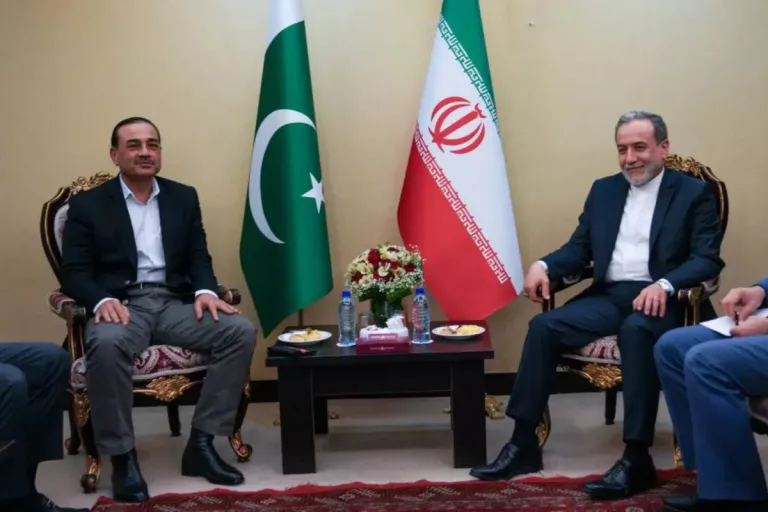
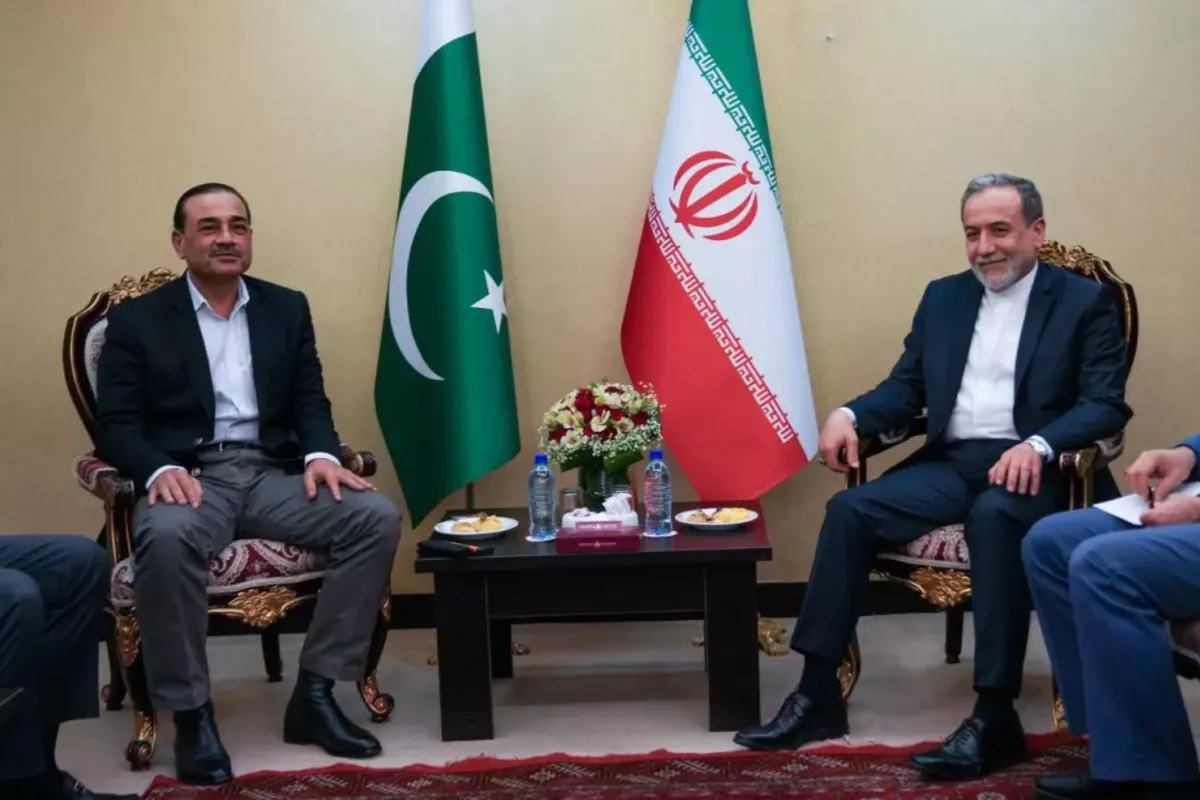
The cancellation followed minutes after Iranian Foreign Minister Abbas Araghchi departed Pakistan after his own meetings with Prime Minister Shehbaz Sharif and military officials. While Araghchi described his visit as “fruitful,” he expressed deep skepticism about Washington’s commitment to diplomacy.
According to sources, a fresh Iranian peace proposal—which Trump initially described as “not good enough”—was quickly followed by a revised “much better” offer just ten minutes after he went public with the cancellation. Despite this late-stage movement, Trump maintained that the terms still fell short of U.S. demands, particularly regarding Iran’s nuclear ambitions.
Stalemate in the Strait
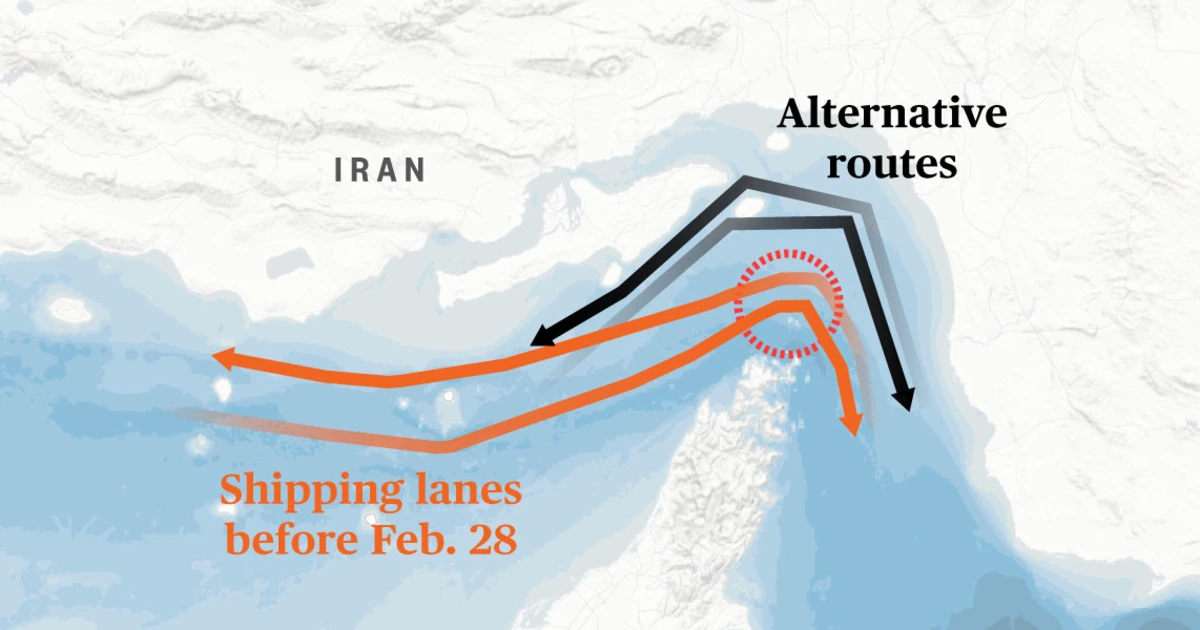
The diplomatic collapse leaves a fragile ceasefire in limbo as a U.S. naval blockade of Iranian ports continues. The conflict, which began in February with strikes by the U.S. and Israel, remains centered on the Strait of Hormuz, where roughly 20% of the world’s oil supply passes.
As of Sunday morning, Pakistani mediators—who have shut down sections of their capital for the expected talks—say they remain “committed” to facilitating peace, though the path forward is now decidedly digital and distant.
The annual White House Correspondents’ Dinner, a night typically reserved for political barbs and black-tie civility, descended into a scene of chaotic survival on Saturday evening after a gunman opened fire near a security checkpoint, forcing the emergency evacuation of President Donald Trump.
At approximately 8:40 p.m. EDT, as dinner was being served in the subterranean ballroom of the Washington Hilton, multiple gunshots rang out near the main magnetometer screening area. The suspect, identified by law enforcement as Cole Tomas Allen, 31, of Torrance, California, reportedly charged the checkpoint armed with a shotgun, a handgun, and multiple knives.
The Moments of Impact
Inside the ballroom, the sound of gunfire—initially mistaken by some, including the President, for a dropped tray—sent approximately 2,600 attendees, including senior Cabinet officials and media executives, diving under circular tables.
Evacuation: Secret Service agents swarmed the stage, whisking President Trump and First Lady Melania Trump to safety.
Tactical Response: Armed guards in tactical gear immediately took positions on the dais with rifles drawn as the room was placed under lockdown.
Casualties: One Secret Service officer was shot at close range during the altercation. President Trump later confirmed the officer was “doing great,” having been saved by his bulletproof vest.
The Suspect and Motive
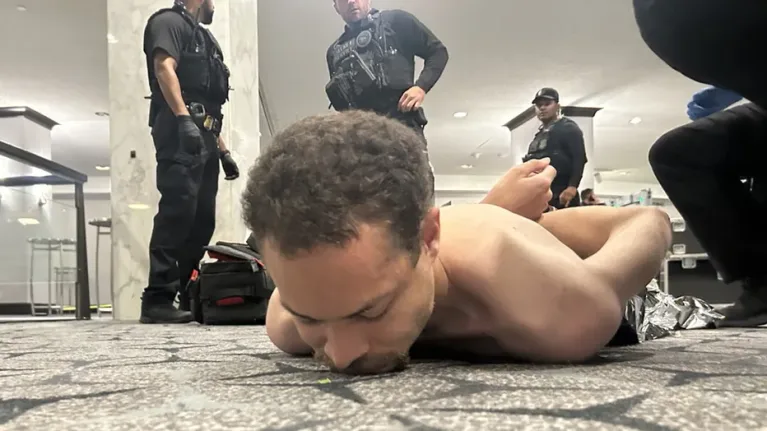
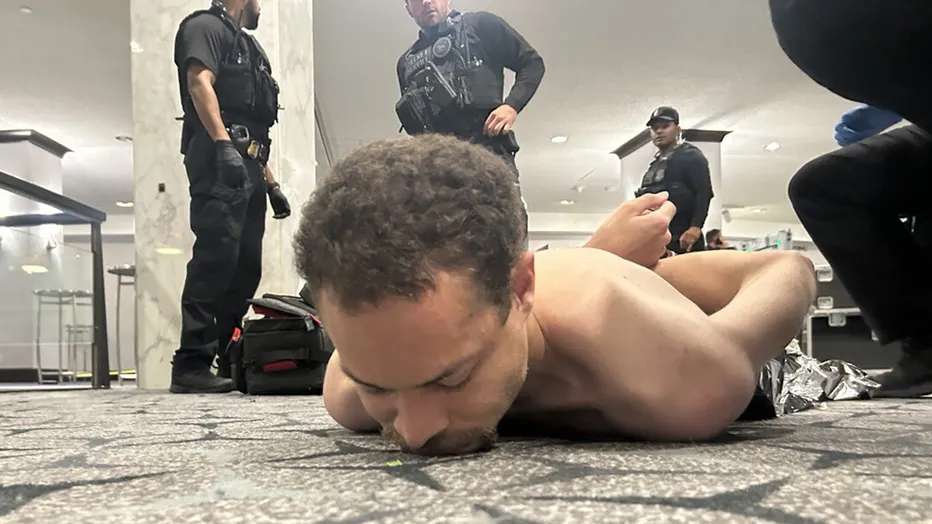
The suspect, a former teacher and Caltech graduate, was tackled to the ground by agents after a brief exchange of gunfire. While he was not struck by bullets, he was transported to a local hospital for evaluation.
According to law enforcement sources, Allen reportedly told investigators he was specifically targeting Trump administration officials. He is facing charges of using a firearm during a crime of violence and assault on a federal officer, with an arraignment scheduled for Monday.
“It Comes with the Territory”
Hours after the incident, a defiant President Trump addressed reporters from the White House briefing room, still flanked by Vice President JD Vance and members of his Cabinet who had also been evacuated.
“It’s always shocking when something like this happens,” Trump said, projecting a sense of calm. He praised the “brave” actions of the Secret Service and noted that while he had wanted the dinner to continue, protocol dictated his removal. This incident marks the third security threat involving a firearm directed at the President since 2024.
The White House Correspondents’ Association has announced that the dinner, which was cancelled mid-program, will be rescheduled within the next 30 days.
BRUSSELS — In a breakthrough that marries high-stakes energy logistics with continental security, the European Union has moved to finalize a €90 billion ($106 billion) loan for Ukraine, effectively ending a bitter, months-long deadlock that threatened to leave Kyiv solvent-dry by summer.
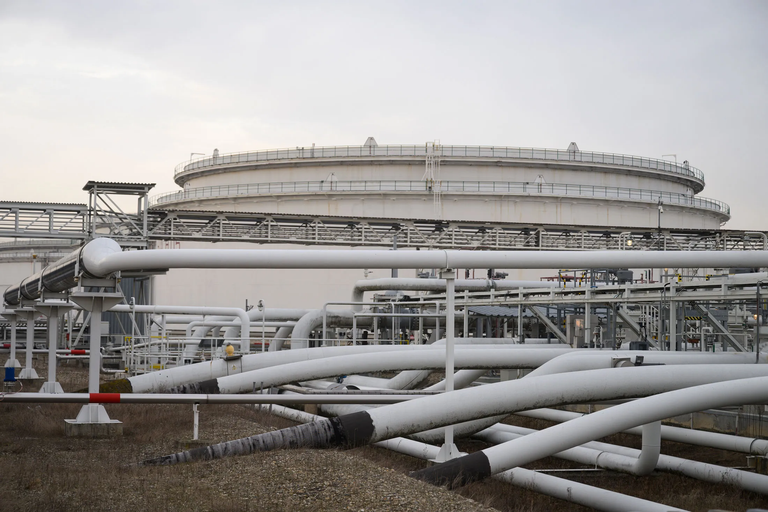
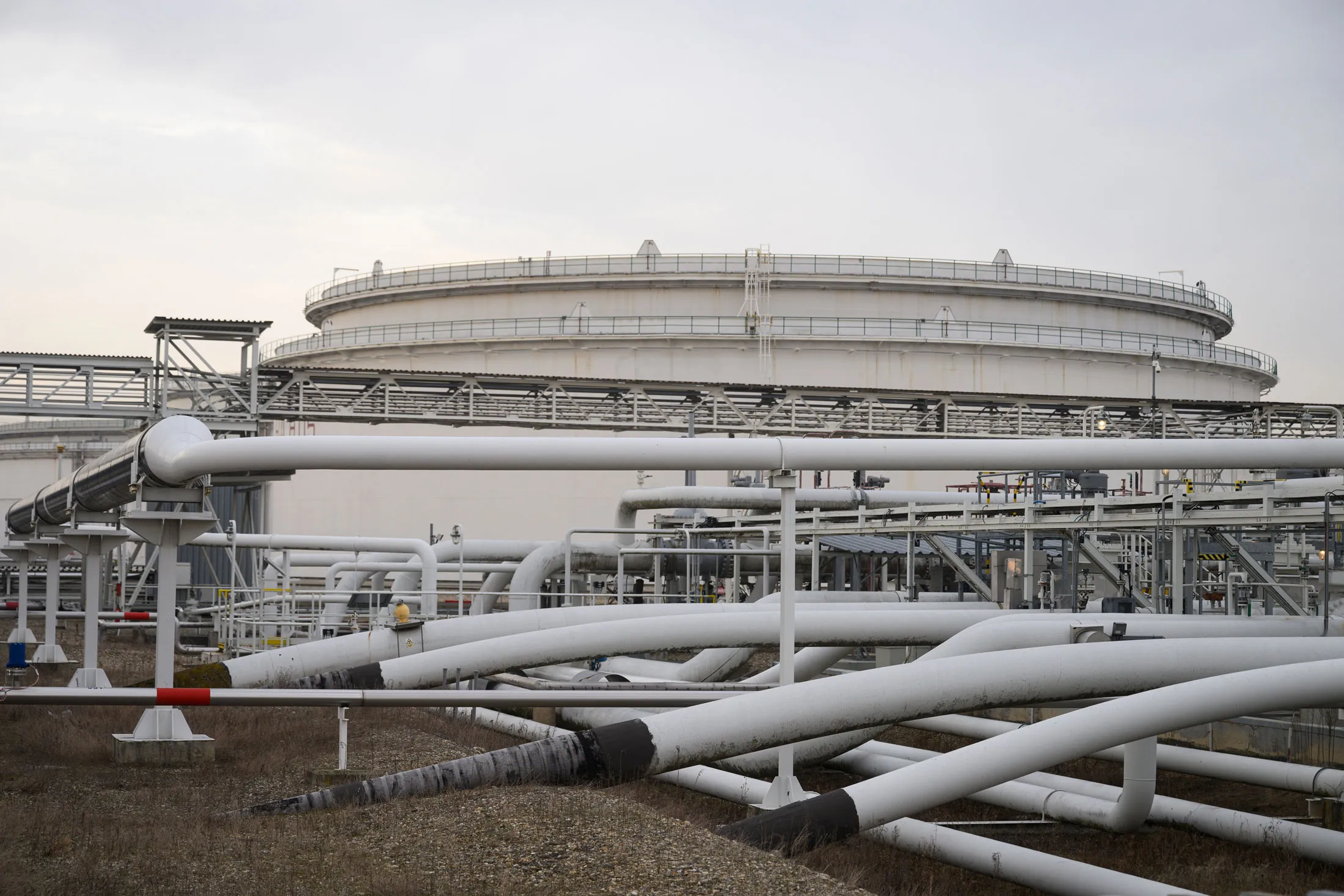
The diplomatic dam broke on Wednesday as engineers in Ukraine turned the valves on the war-damaged Druzhba pipeline, restoring the flow of Russian crude oil to Hungary and Slovakia. The resumption of deliveries prompted Budapest to finally withdraw its longstanding veto, clearing the path for the largest single financial support package in the bloc’s history.
The End of the “Energy Blackmail” Standoff
The standoff began in February when Hungary’s outgoing Prime Minister Viktor Orbán blocked the funds, accusing Kyiv of “energy blackmail” after a Russian missile strike shuttered the pipeline transit through Ukrainian territory. Kyiv maintained the delay was purely technical, caused by the difficulty of repairs under constant bombardment.
The political landscape shifted dramatically following Hungary’s April 12 general election, which saw the defeat of Orbán’s Fidesz party. While the incoming leader, Péter Magyar, is not yet in office, his public support for a reset in Brussels-Budapest relations—coupled with the physical return of oil—delivered the momentum needed to resolve the crisis.
A Multi-Year Lifeline for Kyiv
The €90 billion interest-free loan is designed to keep Ukraine liquid through 2026 and 2027. The funding structure is divided to meet the dual pressures of a nation at war:
Defense & Weapons: Approximately €60 billion is earmarked to strengthen military capabilities and support the procurement of equipment.
Budgetary Support: The remaining €30 billion will cover urgent macro-financial needs, including maintaining public services and infrastructure.
The loan is uniquely structured to be repayable only once Russia pays war reparations to Ukraine, essentially placing the long-term financial burden on the aggressor.
The “Right Signal”
“The unblocking is the right signal under the current circumstances,” Ukrainian President Volodymyr Zelenskyy posted online, confirming that implementation of the agreement is now effectively underway. EU foreign policy chief Kaja Kallas echoed the sentiment, noting the funds are a “decisive step” for economic resilience.
In addition to the loan, EU ambassadors also greenlit the 20th package of sanctions against Russia, which had been held hostage by the same energy dispute.
Final formal approval by all 27 member states is expected via a written procedure on Thursday afternoon. If the schedule holds, the first tranche of funds is slated to reach Kyiv by late May or early June 2026.
CHISINAU — For a decade, the “$1 Billion Theft of the Century” stood as a monument to impunity, a heist so audacious it vanished 12% of Moldova’s GDP overnight and pushed one of Europe’s poorest nations to the brink of collapse. Yesterday, that monument finally crumbled.
Vladimir Plahotniuc, the man once whispered to be the “Puppeteer” of Moldova, has been sentenced to 19 years in a closed-type penitentiary. The ruling, delivered by the Buiucani District Court on April 22, 2026, marks the most significant victory for justice in the country’s post-Soviet history.
The Shadow Kingpin Sentenced
Plahotniuc, who controlled the country as a “captured state” from 2013 to 2019, was convicted on multiple counts, including:
Creation and leadership of a criminal organization
Large-scale fraud
Money laundering
Though prosecutors had sought the maximum of 25 years, the 19-year term is a staggering fall for a man who once held de facto control over the nation’s judiciary, police, and legislative branches without ever holding a top government office.
A Heist That Broke a Country
In 2014, the equivalent of $1 billion was siphoned from three of Moldova’s largest banks—Banca de Economii, Unibank, and Banca Socială—into a web of offshore accounts in just two days. The government was forced to bail out the banks with public funds, creating a hole in national finances that citizens are still paying for today.
While fellow oligarch Ilan Shor was previously sentenced to 15 years in absentia for his role, Plahotniuc remained the elusive “big fish.” After fleeing the country in 2019, he spent six years evading justice across 22 countries before his arrest at Athens airport in July 2025 and subsequent extradition to Moldova in September.
The Reckoning
The court’s decision includes a massive financial penalty, ordering the seizure of $60 million from Plahotniuc’s accounts to begin repairing the state’s damages. Prosecutors successfully argued that the stolen funds were used for lavish personal gain, including:
The purchase of an Embraer Legacy 650 aircraft
Luxury real estate and medical expenses abroad
Funding business investments and paying for tourism services
A Milestone for Reform
“This is a milestone—and proof that judicial reform works,” said Iulian Groza, a leading expert on Moldovan reform. For President Maia Sandu, who rose to power on an anti-corruption ticket, the verdict is a vindication of her promise to root out the oligarchic “mafia” that had strangled the country for decades.
Plahotniuc’s legal team has already dismissed the ruling as “politically motivated” and vowed to appeal within the next 15 days. However, as he remains in detention in Chisinau, the message to the nation’s remaining power brokers is clear: the era of the untouchables is over.
Quick Stats: The Theft of the Century
Total Stolen: ~$1,000,000,000 (approx. 12% of GDP)
ISLAMABAD — The sun rises over a silent Serena Hotel, its fortified gates ready for a diplomatic breakthrough that refuses to arrive. In the waters of the Persian Gulf and the meeting rooms of Islamabad, the United States and Iran are locked in a high-stakes “war of blockades,” a trial of strength where global energy markets hang in the balance and Pakistan desperately tries to pull both sides back from the abyss.
The Standoff: Gunboat Diplomacy in the 21st Century
What began as a localized conflict on February 28 has mutated into a grinding naval siege. The U.S. Navy has effectively locked down trade to Iranian ports, an act Iran’s Foreign Ministry labels “no different than bombing.” In retaliation, Tehran has tightened its own grip on the Strait of Hormuz, seizing commercial vessels like the MSC Francesca and Epaminondas and threatening to “knock out” regional infrastructure if the siege continues.
The U.S. military’s Central Command reports intercepting dozens of vessels, while President Donald Trump insists the blockade will remain until a permanent peace deal is signed. “I expect to be bombing,” Trump warned recently, even as he indefinitely extended a ceasefire on April 21 to allow diplomacy “one last chance.”
Pakistan’s Tightrope Act
At the center of this geopolitical storm is Pakistan. Prime Minister Shehbaz Sharif and Army Chief Field Marshal Asim Munir have emerged as the primary intermediaries, engaging in frantic shuttle diplomacy between Washington and Tehran.
Pakistan’s mediation initially secured a fragile two-week ceasefire, but the momentum stalled when the U.S. seized the Iranian-flagged cargo ship Touska for allegedly running the blockade. Tehran reacted by vowing retaliation and signaling it would boycott the second round of talks in Islamabad.
Islamabad’s Efforts: Arranging a 15-point proposal from the U.S. and a 10-point counter-proposal from Iran.
The Stick: President Trump’s threat to destroy Iran’s infrastructure if a “deal” is not reached.
The Carrot: An indefinite ceasefire extension granted by the White House on April 21 at the specific request of Pakistani mediators.
A Fragile Peace in Limbo
The human and economic toll of the conflict is staggering, with over 5,000 dead since February and global energy prices soaring, with Brent crude nosediving over $100 per barrel. While Vice President JD Vance’s planned trip to lead negotiations in Islamabad was recently postponed due to Iranian reluctance, Pakistani officials remain “cautiously hopeful” that a second round of talks could happen within days.
For now, the world watches the Strait. As one senior Pakistani source noted, the achievement isn’t just a deal—it’s keeping the parties talking while their navies are at each other’s throats. The blockade remains, the ceasefire holds by a thread, and Pakistan remains the only bridge left standing in a region on fire.
SHREVEPORT, La. — A quiet Sunday morning in Northwest Louisiana was shattered by what local officials are calling the most “horrific” act of domestic violence in the state’s recent history. Eight children, ranging in age from just 1 to 14 years old, were killed in a series of shootings across multiple homes in Shreveport, sparking a high-speed manhunt that ended in the death of the suspect.
The massacre, which has left ten people shot in total, is the deadliest mass killing in the United States in over two years. As the community gathers for vigils across Louisiana, a grim picture is emerging of a domestic dispute that spiraled into a cross-neighborhood slaughter.
Four Locations, One Gunman
The violence erupted shortly before 6:00 AM on Sunday. Shreveport police officers responded to a “domestic disturbance” call and discovered a sprawling crime scene that eventually extended across four separate locations in the Linwood Avenue and Harrison Street areas.
According to police spokesperson Cpl. Christopher Bordelon, the suspect—identified as 31-year-old Shamar Elkins—began the rampage at one residence before moving to a second location “where this heinous act was carried out.”
The Victims: Eight children were killed. Investigators confirmed that seven of the children were believed to be “descendants of the gunman.”
The Survivors: Two adults were also shot. One woman remains in stable condition, while a teenager is recovering from a broken leg.
The Escape: One child’s body was discovered on the roof of a house, apparently killed while attempting to flee the gunman through a back exit.
A ‘Daring’ High-Speed Pursuit
Following the shootings, Elkins reportedly carjacked a vehicle at gunpoint to flee the scene. The subsequent pursuit involved the Shreveport Police Department and the Bossier City Police, spanning several miles across the Red River into neighboring Bossier City.
The chase ended when officers engaged the suspect near a local interchange. The Louisiana State Police, who are now leading the investigation into the officer-involved shooting, confirmed that Elkins was fatally shot by police during the confrontation. No officers were harmed during the exchange.
“My Heart is Taken Aback”
The scale of the tragedy has left veteran law enforcement officers and Louisiana leaders visibly shaken. During a Sunday news conference, Shreveport Police Chief Wayne Smith struggled to find words for the devastation his officers encountered inside the homes.
“I just don’t know what to say, my heart is just taken aback,” Smith said. “I cannot begin to imagine how such an event can occur.”
Mayor Tom Arceneaux echoed the sentiment, calling it “maybe the worst tragic situation we’ve ever had in Shreveport.” The city has already begun coordinating trauma counseling services for the classmates of the young victims and the first responders who arrived at the gruesome scenes.
The Investigation Continues
While the suspect’s identity and military background have been confirmed—Elkins served as an entry-level private in the Louisiana Army National Guard from 2013 to 2020—a specific motive for the targeted killings remains unclear. Public records indicate Elkins had a prior arrest in 2019 involving a firearms case, but local police were not aware of any recent domestic violence reports involving the family.
In Washington, House Speaker Mike Johnson, who represents the Shreveport area, called the incident a “heartbreaking tragedy” and stated his team is in close contact with Louisiana state investigators.
As forensic teams continue to process the four crime scenes, the city is preparing for a mass funeral for the eight young lives lost. “We’ve got to take our community back,” said Pastor Marty T. Johnson Sr., who owns one of the homes where the shootings occurred. “And we will.”
SANHE, China — In a windowless courtroom in Hebei Province, the decades-old bronze of a kneeling, repentant Mao Zedong has become the centerpiece of a trial that legal experts say represents the “final closing of the door” on Chinese dissent.
Gao Zhen, 69, one-half of the world-renowned Gao Brothers artistic duo, stood trial in a closed-door session at the Sanhe City People’s Court on March 30. The charge: “defaming national heroes and martyrs.” The evidence: satirical sculptures created nearly two decades ago—long before the law used to prosecute him even existed.
As the court deliberates on a verdict expected later this summer, the case has sent a shivering message to the global Chinese diaspora: the reach of Beijing’s “ideological purity” campaign no longer stops at the border, nor does it respect the passage of time.
A Trap Two Years in the Making
Gao Zhen had been living in self-imposed exile in New York since 2022. In August 2024, believing a brief family visit to his homeland would be safe, he returned to China. He was promptly detained at his studio on the outskirts of Beijing.
For over 18 months, Gao has been held in a detention center where family members say he is suffering from malnutrition and debilitating chronic health conditions. His wife, Zhao Yaliang, and their seven-year-old son—a U.S. citizen—have been slapped with “exit bans,” effectively held as collateral within Chinese borders.
“They are using a contrived, retroactively applied law to punish art that was once exhibited in the streets of Beijing,” said Shane Yi, a researcher at Chinese Human Rights Defenders. “This isn’t a trial; it’s a political kidnapping.”
The Sculptures of ‘Guilt’
The prosecution’s case rests on three specific works created between 2005 and 2009—a period of relative openness in China when the Gao Brothers were darlings of the avant-garde scene.
“Mao’s Guilt”: A life-sized bronze of the Great Helmsman kneeling in a gesture of apology for the millions who perished during the Cultural Revolution.
“Miss Mao”: A grotesque depiction of the leader with a Pinocchio nose and breasts, critiquing the “feminization” and deception of state propaganda.
“The Execution of Christ”: A surrealist scene featuring multiple figures of Mao aiming rifles at a kneeling Jesus.
Under the 2018 Law on the Protection of Heroes and Martyrs, which was significantly sharpened in 2021, any “tarnishing” of the reputation of historical Communist Party figures is a criminal offense punishable by up to three years in prison. By applying this law to works from 2005, Beijing is asserting that historical critique is now a permanent, retroactive crime.
The ‘New Normal’ for the Diaspora
The timing of Gao’s trial is no accident. It coincides with a broader crackdown on “overseas dissidents” who have sought refuge in the West. Analysts suggest the Gao case is intended to prove that moving to New York or London offers no immunity if an artist ever steps back onto Chinese soil.
“The state is now auditing the past to control the future,” says a Beijing-based art critic who requested anonymity. “In the early 2000s, we thought we were pushing boundaries. Now, those boundaries have moved behind us, and we are being arrested for where we stood twenty years ago.”
A Silent Courtroom
EU diplomats and international observers who attempted to attend the March 30 trial were barred from entering the building. According to Gao’s lawyers, the artist has refused to “confess” or plead guilty, a rare act of defiance in a system where a confession is often the only way to avoid the harshest sentencing.
While the world’s attention is often captured by the high-profile exile of Ai Weiwei—who recently released a book, On Censorship, in early April 2026—the Gao Zhen trial represents the grimmer reality for those without a global megaphone.
As Gao Zhen waits in a Hebei cell, tearing pieces of scrap paper to make portraits of the family he is forbidden to see, the “Kneeling Mao” remains locked in a government warehouse—a bronze witness to an era of Chinese art that has been officially declared a crime.
THE GULF OF OMAN — The high-stakes naval blockade of Iran turned kinetic on Sunday when a U.S. Navy destroyer fired upon and seized an Iranian-flagged cargo vessel that attempted to defy orders to halt. It is the first time American forces have used disabling fire to enforce the week-old “zero-entry” zone, signaling a definitive end to the diplomatic patience that has characterized the two-week regional ceasefire.
President Donald Trump announced the seizure on Truth Social, revealing that the USS Spruance (DDG 111) intercepted the merchant vessel Touska in the Gulf of Oman. “The Iranian crew refused to listen, so our Navy ship stopped them right in their tracks by blowing a hole in the engine room,” the President wrote. “Right now, U.S. Marines have custody of the vessel… NO MORE MR. NICE GUY!”
Six Hours of Warning
According to a detailed statement from U.S. Central Command (CENTCOM), the engagement followed a six-hour standoff in the North Arabian Sea. The Touska, which the U.S. Treasury Department notes has a history of sanctioned activity, was transiting toward the Iranian port of Bandar Abbas at 17 knots when it was intercepted.
Military footage released by the Pentagon late Sunday depicts the tense final moments before the shooting. In the audio, a U.S. sailor can be heard over the bridge-to-bridge radio warning the Iranian crew: “Vacate your engine room. We are prepared to subject you to disabling fire.”
When the vessel failed to comply, the Spruance fired several rounds from its 5-inch MK 45 gun into the Touska’s propulsion section. Shortly thereafter, Marines from the 31st Marine Expeditionary Unit (MEU) boarded the smoking vessel via fast-rope. No casualties were reported among the Iranian crew or American forces.
Diplomacy in the Crosshairs
The seizure comes at a perilous moment for the “Islamabad Process.” While President Trump told reporters earlier Sunday that a second round of peace talks could resume in Pakistan “over the next two days,” Tehran has since slammed the door.
Iran’s official news agency, IRNA, reported that the government has declined to join the planned talks, citing “Washington’s excessive demands” and the “continued violation of the ceasefire” represented by the naval blockade. Iranian President Masoud Pezeshkian reportedly characterized the attack on the Touska as an “act of blatant piracy” that makes further negotiation impossible.
A $400 Million-a-Day Stranglehold
The blockade, which began on April 13, has effectively halted Iran’s maritime trade. Financial analysts estimate the operation is costing the Iranian treasury $400 million per day in lost revenue. Experts warn that if the blockade is not lifted by April 26, Iran’s oil fields—currently over-pressurized due to a lack of export outlets—could suffer permanent geological damage.
“We’re offering a very fair and reasonable DEAL,” Trump posted on Sunday. “And I hope they take it because, if they don’t, the United States is going to knock out every single Power Plant, and every single Bridge, in Iran.”
The Narrowing Window
With the original two-week ceasefire set to expire on Tuesday, April 21, the seizure of the Touska serves as a grim punctuation mark to a month of erratic warfare. While Vice President JD Vance and special envoys Steve Witkoff and Jared Kushner remain on standby to travel to Pakistan, the “Islamabad path” appears to be narrowing as the “Hormuz path” grows increasingly violent.
As the Touska is towed toward an undisclosed port under American escort, the world watches the Iranian coastline for the next move. Tehran has vowed retaliation for the attack, raising the specter of a final, all-out confrontation before the Tuesday deadline.
KYIV, Ukraine — The moral fallout from Saturday’s supermarket massacre in Kyiv has claimed its first high-level casualty.Yevhen Zhukov, the decorated head of Ukraine’s Patrol Police Department, submitted his resignation Sunday evening, citing the “shameful” conduct of his subordinates who were caught on video fleeing the scene of a mass shooting that left six people dead.
The resignation follows a wave of public fury after social media footage appeared to show two uniformed patrol officers running away from a gunman in the Holosiivskyi district, leaving civilians—including a 12-year-old child—unprotected as the shooter opened fire with a carbine.
“I Think It Will Be Fair”
Zhukov, a former paratrooper and famed “Cyborg” defender of Donetsk Airport in 2014, addressed the media in a somber briefing. He did not mince words regarding the video evidence that has gripped a nation already hardened by years of war.
“As a combat officer, I have decided to submit a report for dismissal from the position I hold. I think it will be fair,” Zhukov said. “The actions of those two officers were shameful. ‘To serve and protect’ is not just a slogan; it is a duty that was failed.”
While Zhukov will remain in the law enforcement system—likely transitioning to a role more directly tied to the war effort—his departure marks a significant blow to a department he has led since 2015.
The Video That Sparked a Crisis
The controversy centers on a 45-second clip recorded by a resident from a nearby apartment. In the footage, the shooter—identified as 57-year-old Dmytro Vasylchenkov—can be seen firing a KelTec carbine on the street. As the shots ring out, two patrol officers are seen turning and sprinting in the opposite direction of the gunman, disappearing behind a building while bystanders scrambled for cover.
The State Bureau of Investigation (SBI) has launched a criminal inquiry into official negligence. Prosecutors are investigating whether the officers’ flight constituted a desertion of duty that directly led to the death of a fifth victim inside the Velmart supermarket, where the gunman subsequently barricaded himself with hostages.
Zelenskyy Orders a “Full Review”
The scandal has reached the highest levels of the Ukrainian government. In his nightly address, President Volodymyr Zelenskyy confirmed that he had received a detailed report from Interior Minister Ihor Klymenko and ordered an immediate overhaul of police protocols.
“They were required to act in those circumstances,” Zelenskyy said, referring to the officers who fled. “A full review of the work of the patrol officers will be conducted. This includes recruitment, training, and the chain of command. Every manager responsible for these individuals will be held accountable.”
Klymenko added that the response of the two officers was “a disgrace for the entire system,” though he praised the special tactical units that eventually stormed the supermarket and neutralized the killer.
A Community in Mourning
In the Holosiivskyi district, residents have turned the sidewalk outside the supermarket into a makeshift memorial of flowers and candles. For a city that has endured countless Russian drone and missile strikes, the internal failure of the police has proved uniquely painful.
“We expect the police to be our shield when the sky isn’t falling,” said one local resident. “To see them run while children were in the line of fire… it breaks something in the heart of the city.”
The 12-year-old boy wounded in the initial street shooting remains in stable condition, but doctors say his recovery will be long. As for the police force, the recovery may take even longer as the SBI prepares to file formal charges against the officers whose retreat became a national tragedy.
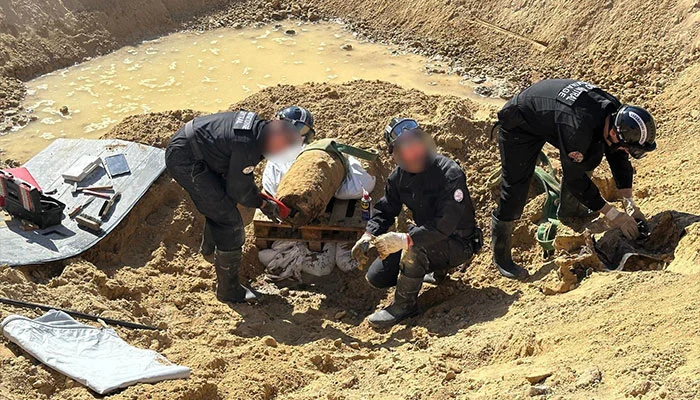
COLOMBES, France — For a few tense seconds on Sunday afternoon, the ground in the northwestern Parisian suburb of Colombes shuddered with the force of a conflict that ended eighty years ago. At precisely 3:20 PM, bomb disposal experts carried out a controlled underground detonation of a massive World War II-era explosive, ending a week-long standoff between modern urban life and the deadly debris of the 20th century.
The operation, described by local officials as “high-risk and surgical,” required the evacuation of more than a thousand residents and the deployment of nearly 800 police officers to maintain a strict 450-meter security cordon.
A Relic in the Garden
The device, a British-made aerial bomb measuring over one meter in length, was first discovered on April 10 during routine construction work in a residential area. For ten days, the neighborhood lived in a state of suspended animation as specialists from the Sécurité Civile assessed the volatile relic.
The decision to detonate the bomb in situ was made after experts failed in an initial attempt to unscrew the primary detonator. “The fuse was excessively degraded by eight decades of soil moisture,” explained Alexandre Brugere, a local official who oversaw the evacuation. “Moving a device of this magnitude with an active, unstable fuse was simply not an option for public safety.”
The Sunday Exodus
The evacuation began at dawn. Residents within the “red zone” were directed to local gymnasiums and reception centers, carrying pets, paperwork, and essentials. By noon, Colombes—usually a bustling suburban hub—resembled a ghost town. Public transport was halted, and several key access roads to the A86 motorway were sealed off.
To minimize the impact of the blast, engineers constructed a two-meter-deep sand pit reinforced with thick timber planks and concrete blast walls. The goal was to direct the energy of the explosion downward and stifle the spread of shrapnel.
When the charge finally blew, the muffled “thump” was heard blocks away, followed by a plume of dust. Preliminary inspections confirmed that the “controlled neutralization” was a success, with no damage reported to the surrounding residential blocks.
A Landscape of Unexploded History
The Colombes discovery is a vivid reminder of the Allied air campaign in the spring of 1944. During the lead-up to D-Day, the rail yards and factories of northwestern Paris were prime targets for the Royal Air Force and the U.S. Eighth Air Force.
Historians note that between 10% and 15% of the bombs dropped during these raids failed to explode upon impact, often sinking deep into the soft clay of the Seine valley. Since 1945, French disposal teams have neutralized over 700,000 air-dropped bombs, yet thousands more are believed to remain “sleeping” beneath the feet of modern Parisians.
“Every time we break ground in this region, we are shaking hands with history,” said a member of the EOD (Explosive Ordnance Disposal) unit. “Yesterday, that history almost bit back.”
Return to Normalcy
By Sunday evening, the evacuation orders were lifted, and families began returning to their homes. For the residents of Colombes, the day ended not with a tragedy, but with a profound sense of relief.
As the last of the police tape is cleared away, the “Leviathan of Colombes” has been reduced to rusted fragments in a sand pit—a final, silent casualty of a war that refuses to be completely buried.
EISENSTADT, Austria — A criminal investigation into a suspected extortion plot has sent a wave of panic through households across Central Europe after Austrian authorities confirmed that jars of baby food had been laced with rat poison.
The Burgenland State Criminal Investigation Office announced late Saturday that a 190-gram jar of HiPP “Carrot with Potato” puree, seized from a supermarket in the Eisenstadt-Umgebung district, tested positive for bromadiolone—a potent anticoagulant used in rodenticides. While no children have consumed the contaminated food to date, the discovery has triggered a massive precautionary recall across more than 1,500 SPAR, EUROSPAR, and INTERSPAR locations throughout Austria.
The ‘Red Circle’ Warning
The tampering appears to be deliberate and marked. According to the Austrian Agency for Health and Food Safety (AGES), the poisoned jar was identified by a specific, chilling detail: a white sticker featuring a red circle affixed to the base.
Police have warned parents to be vigilant for several “abnormalities” that indicate a jar has been compromised:
Visual Cues: A white sticker with a red circle on the bottom.
Seal Integrity: A damaged or previously opened lid that fails to make the characteristic “click” or “pop” sound upon opening.
Odor: A spoiled or “unusual” chemical smell emanating from the contents.
“This is a critical situation involving external criminal interference,” a spokesperson for HiPP stated, emphasizing that the company’s internal production and quality control processes remain fully intact.
A Regional Extortion Scheme?
The investigation, which began in Germany before spreading to Austria, is being treated as a high-stakes extortion case. Authorities in the Czech Republic and Slovakia have also joined the probe after similar “suspicious jars” were seized in those countries. Initial lab tests on samples from Brno and Bratislava have also indicated the presence of toxic substances, though the level of risk in those markets is currently categorized as “low” compared to the confirmed case in Burgenland.
The use of bromadiolone is particularly insidious. As a vitamin K antagonist, it inhibits blood clotting, but symptoms—such as bleeding gums, nosebleeds, or blood in the stool—often do not appear until two to five days after ingestion. Medical experts have urged any parents who suspect their child may have consumed a tampered jar to seek immediate medical attention, noting that the poisoning is treatable with high doses of Vitamin K.
The Logistics of a Recall
SPAR Austria has moved with “absolute caution,” removing all HiPP glass jars from its shelves regardless of the flavor. Customers who have purchased these products are being offered full refunds, even without a receipt.
“We are working hand-in-hand with the Burgenland Provincial Police,” a SPAR spokesperson said. “The safety of our youngest customers is our non-negotiable priority.”
The case echoes the 2017 “Friedrichshafen poisoning” in Germany, where an extortionist laced baby food with ethylene glycol. In that instance, the perpetrator was eventually caught and sentenced to life in prison. Austrian police are now following several leads and have established a 24-hour tip line for anyone who may have seen individuals tampering with products in the baby food aisles over the last week.
What Parents Should Do
If you have HiPP baby food at home:
Check the Base: Look for the white sticker with a red circle.
Listen for the Click: If the vacuum seal is broken, do not use the product.
Report it: If you find a suspicious jar, use gloves to handle it, store it away from other food, and call the Burgenland Police at +43 59133 10 – 3333.
As the manhunt for the “poisoner” continues, the aisles of Austrian supermarkets remain under heavy surveillance, a somber reminder of the vulnerability of the global food chain to a single criminal act.
CUMUTO, Trinidad — The Caribbean nation of Trinidad and Tobago is reeling following a “deeply troubling” discovery at a rural graveyard that has horrified the public and baffled investigators. On Saturday, April 18, police revealed they had uncovered the remains of 56 people—50 of whom were infants—discarded at the Cumuto Cemetery, approximately 25 miles east of the capital, Port of Spain.
The gruesome find has cast a shadow over a country already struggling with a surge in gang violence and a recently extended state of emergency. As forensic teams sift through the remains, the primary question remains: How did five dozen corpses, many seemingly from medical institutions, end up abandoned in a public burial ground?
The Scene at Cumuto
The discovery was made by local authorities in the town of Cumuto. While cemeteries are intended for the dignified rest of the deceased, police officials described a scene that suggested anything but.
Among the 56 sets of remains:
50 Infants: The vast majority of the discovery consisted of very small children and babies.
Adult Remains: Four men and two women were also found among the discarded corpses.
Morgue Markings: Five of the adults were still wearing “toe tags”—identification labels standard in morgues and hospitals.
Medical Evidence: Preliminary examinations indicated that at least one man and one woman had undergone an autopsy prior to their disposal.
[Image: Police cordons at the Cumuto Cemetery as forensic units conduct their investigation]
“Unlawful Disposal” or Institutional Failure?
While the imagery of “dumped” bodies initially sparked fears of mass murder, the Trinidad and Tobago Police Service (TTPS) has offered a more procedural, though still illegal, preliminary theory.
“Preliminary indications suggest that this may be a case involving the unlawful disposal of unclaimed corpses,” the TTPS said in a formal statement.
Police Commissioner Allister Guevarro has launched an urgent investigation into local morgues, funeral homes, and hospitals. The presence of identification tags and autopsy scars suggests the remains originated from a formal medical or state facility. Investigators are now scrutinizing logbooks and disposal contracts to determine which institution failed to provide these individuals with a lawful burial.
“The nature of this discovery is deeply troubling,” Guevarro said. “Every cadaver must be handled with dignity and lawful care. Any individual or institution found to have violated that duty will be held fully accountable.”
A Nation in Shock
The news has ignited a firestorm of grief and anger across the twin-island nation. For many, the discovery of 50 infants is a visceral blow to a society already feeling the strain of a 37-per-100,000 murder rate.
Social media has been flooded with calls for transparency, with many citizens questioning how such a large-scale breach of protocol could occur without detection. Under Trinidadian law, the improper disposal of human remains is a serious criminal offense, punishable by significant fines and imprisonment.
“These were children. They were someone’s babies,” said a local Cumuto resident who gathered near the cemetery gates. “Even if they were unclaimed, they deserved a name and a prayer, not to be thrown away like trash.”
The Forensic Trail
Specialized units, including homicide experts and forensic pathologists, remain on-site in Cumuto. Their immediate task is to cross-reference the identification tags found on the adult bodies with hospital records to trace the “chain of custody” for the remains.
As of Sunday, April 19, no arrests have been made, and no specific medical facility has been named. However, Commissioner Guevarro has promised a “sensitive and unwavering” commitment to uncovering the truth.
In a country currently defined by its fight against “visible” crime in the streets, the tragedy at Cumuto has exposed a potentially darker, more systemic failure within the institutions meant to care for the dead.
MANAMA — The global shipping industry’s 24-hour sigh of relief has been replaced by a scream. On Saturday, less than a day after the Strait of Hormuz was declared “completely open,” the Iranian military abruptly slammed the maritime gate shut, enforcing the closure with live fire against commercial vessels.
The reversal follows a deepening standoff over a U.S. naval blockade that President Donald Trump has refused to lift, despite a fragile regional ceasefire. As of Sunday morning, the world’s most critical energy artery is once again a “no-go zone,” with over 20 massive tankers and container ships performing frantic U-turns in the Gulf of Oman to escape Iranian gunboats.
“You Gave Me Clearance!”
The most chilling evidence of the renewed hostilities emerged from a radio recording obtained by maritime trackers. In the 31-second clip, the captain of the Sanmar Herald, an Indian-flagged Very Large Crude Carrier (VLCC), can be heard pleading with the Islamic Revolutionary Guard Corps (IRGC) Navy as they opened fire.
“Sepah Navy! You gave me clearance! My name is second on your list!” the captain shouts over the roar of engines. “You are firing now! Let me turn back!”
The UK Maritime Trade Operations (UKMTO) confirmed that two IRGC gunboats approached the tanker 20 nautical miles northeast of Oman, opening fire without establishing radio contact. Hours later, a second vessel—a container ship—was struck by an “unknown projectile,” likely a drone, causing significant damage to its cargo. No injuries have been reported among the crews, but the psychological and economic impact was immediate.
The Blockade Standoff
The sudden closure is a direct retaliation for President Trump’s Friday evening declaration that the U.S. naval blockade of Iranian ports will remain in “full force” until a permanent peace deal is signed. Tehran, which had briefly opened the strait as a gesture of goodwill following the Lebanon ceasefire, accused Washington of “maritime piracy.”
“As long as the movement of vessels to and from Iran is under threat, the status of the Strait of Hormuz will remain as it was,” the IRGC’s navy command posted on X.
The Iranian Supreme National Security Council characterized the U.S. blockade as a violation of the two-week truce, stating that Tehran would no longer permit “conditional or limited” reopening of the waterway.
Markets in Whiplash
The volatility of the last 48 hours has sent global energy markets into a tailspin. Oil prices, which plunged late Friday on news of the reopening, surged back toward $100 a barrel on Sunday as news of the attacks reached trading desks.
[Image: Map of the Strait of Hormuz showing the locations of the Sanmar Herald attack and the U.S. blockade line]
Logistics giants are now facing a grim reality: the brief window of passage was a “mirage.” Approximately 20% of the world’s oil and LNG passes through this 21-mile-wide choke point. With Iran now demanding transit fees and “security certificates” while the U.S. turns back ships paying those very fees, the strait has become a legal and military trap.
The Pakistan Connection
The escalation comes at a delicate moment for diplomacy. Pakistani mediators, led by Foreign Minister Ishaq Dar, are reportedly working around the clock to arrange a second round of direct talks in Islamabad before the current ceasefire expires on April 22.
While President Trump noted that “good conversations” are ongoing, his refusal to blink on the blockade has left Tehran’s hardliners with the upper hand. The “Hell” promised by the IRGC earlier this month appears to be the current operating procedure in the Gulf, leaving the global economy to pay the price of a diplomatic stalemate.
For now, the Strait of Hormuz is silent, save for the hum of U.S. drones and the occasional burst of gunfire from Iranian patrols—a “Gate of Tears” that has once again been locked from the inside.
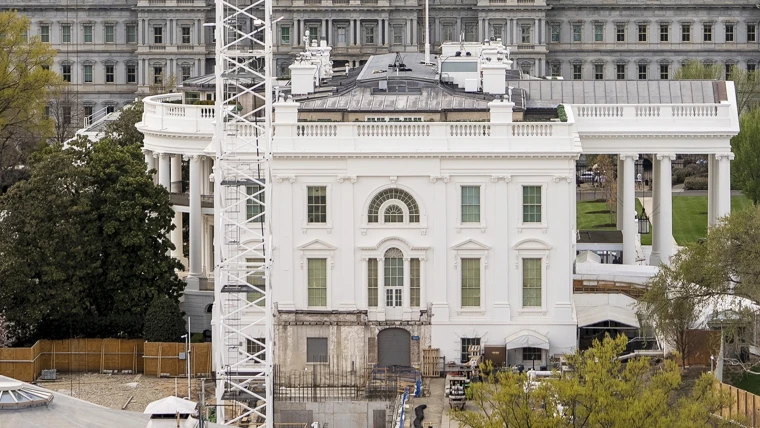
In a major legal victory for the Trump administration, the U.S. Court of Appeals for the D.C. Circuit has cleared the way for construction to resume in full on the President’s controversial $400 million White House ballroom. The ruling, issued late Friday, grants an administrative stay that effectively freezes a lower court’s attempt to halt the project, allowing cranes to keep swinging over the site where the East Wing once stood.
The decision marks the latest turn in a high-stakes battle between the executive branch and preservationists, revolving around a central, modern-day question of power: Is a massive neoclassical ballroom a luxury “vanity project” or a critical piece of national security infrastructure?
The “National Security” Loophole
The legal saga reached a fever pitch this week when U.S. District Judge Richard Leon attempted to bifurcate the project. Leon, who has repeatedly ruled that the demolition of the East Wing lacked necessary congressional approval, issued an order on Thursday that would have allowed below-ground work—such as the construction of a new presidential bunker and “military installations”—to continue, while strictly barring any “above-ground” ballroom construction.
However, the Trump administration successfully argued to the appeals court that the two are inseparable. Department of Justice lawyers contended that halting the ballroom would leave a “grave national security hole” beside the Executive Residence, exposing the underground secure facilities to satellite surveillance and the elements.
“The underground doesn’t work, isn’t necessary, and would indeed be useless without the above-ground sections,” President Trump posted on Truth Social shortly after the ruling. He hailed the appeals court for stopping what he called an “illegal overreach” by a “Trump-hating judge.”
A Private Ballroom for the Public Good?
The project, which has been under construction since the East Wing was reduced to rubble in October 2025, is designed to be a 90,000-square-foot facility capable of seating 1,000 guests. The President has long argued that the current practice of erecting “temporary tents” on the South Lawn for state dinners is “shabby” and “unfitting for a great nation.”
While the administration maintains the project is funded by a coalition of private donors—including tech giants and defense contractors like Meta, Lockheed Martin, and Palantir—the National Trust for Historic Preservation has raised alarms about the precedent being set.
“This isn’t about a ballroom; it’s about the law,” a spokesperson for the National Trust said in a statement. “The President is the steward of the White House, not the owner. Razing a historic wing without the consent of Congress is a violation of the public trust.”
The Reshaping of D.C.
The ballroom is just one piece of a broader “architectural takeover” of the capital spearheaded by the administration. Other projects currently in the pipeline include:
The Triumphal Arch: A 250-foot monument that recently cleared a key agency review.
The Kennedy Center Renovation: A multi-year overhaul of the nation’s premier performing arts complex.
The “Zero-Entry” Security Zone: A permanent fortification of the streets immediately surrounding the White House complex.
Critics in Congress have labeled the push “Trump’s Trianon,” while supporters argue the President is simply returning a sense of “grandeur and permanence” to a city they claim had fallen into bureaucratic decay.
What Happens Next?
Friday’s ruling is an administrative stay, meaning it is not a final judgment on the merits of the case. However, it allows construction to proceed “unabated” while the court considers a more permanent stay. The next major hearing is tentatively scheduled for June 5, 2026.
Until then, the sounds of jackhammers and the sight of high-grade bulletproof glass being hoisted into place will remain a permanent fixture of Pennsylvania Avenue. For the White House, the “Big Complex” is back on schedule; for its detractors, the “wrecking ball” continues its work.
ABOARD THE PAPAL PLANE — High above the Atlantic en route to Luanda, Angola, Pope Leo XIV sought to extinguish a firestorm of his own making. In an impromptu session with journalists late Saturday, the first American-born pontiff directly pushed back against a global media narrative that characterized his recent “handful of tyrants” speech in Cameroon as a veiled assault on President Donald Trump.
“There has been a certain narrative that has not been accurate in all its aspects,” the Pope said, his voice steady despite the political turbulence following him from Washington. “Dragging that which is sacred into darkness and filth is not my mission.”
The Bamenda Spark
The controversy ignited on April 16 in the conflict-stricken city of Bamenda, Cameroon. Speaking from the heart of the Anglophone crisis, Pope Leo delivered a blistering critique of global leadership, lamenting that “the world is being ravaged by a handful of tyrants” who spend billions on warfare while ignoring the cries of the poor.
While the speech was delivered in a region plagued by a decade of separatist violence, its timing proved explosive. It came just days after President Trump attacked the Pope on social media, labeling him “weak on crime and soft on foreign policy,” and briefly sharing an AI-generated image of himself as a Christ-like figure.
“Prepared Two Weeks Ago”
Aboard the flight to Angola, Leo XIV dismantled the timeline that had pitted the Vatican against the White House in a 24-hour news cycle. He revealed that the Bamenda address was finalized long before his departure from Rome.
“That speech was prepared two weeks ago, well before the person had ever commented on me or the message of peace I am promoting,” the Pope clarified. “And yet, as it happens, it was viewed as if I was trying to debate again with the President, which is not in my interest at all. Much of what has been written has been more commentary on commentary.”
The Pope’s clarification serves as a diplomatic “cool down” in what has become an increasingly personal exchange between the world’s two most prominent American leaders. Vice President JD Vance had also entered the fray earlier in the week, advising the Pope to “stay out of politics” and focus on matters of morality.
A Focus on the “Forgotten Heart”
The Pope’s primary frustration, he told reporters, was that the political spat had overshadowed the humanitarian crisis in Cameroon. The central African nation, often called “Africa in miniature” for its diversity, has been torn between French-speaking and English-speaking factions.
“The visit to Cameroon was significant because it represents the heart of Africa,” Leo said. He emphasized that his words were directed at the “masters of war” who exploit local resources and fuel corruption—a message he intended for regional autocrats as much as the global military-industrial complex.
By shifting the focus to the Anglophone crisis, the Pope sought to reclaim his role as a “pastor of the world” rather than a political foil for the Trump administration.
The Road to Angola
As the papal journey continues into its third leg in Luanda, the Vatican appears determined to keep the focus on “the Gospel and the poor.” The Pope highlighted his meetings with local imams and students, reaffirming his predecessor Pope Francis’s commitment to interfaith fraternity.
However, in a world where every papal utterance is scrutinized through the lens of the U.S.-Iran conflict and shifting global alliances, maintaining that pastoral distance remains a challenge. For now, Pope Leo XIV has made his position clear: he is in Africa to build bridges, not to enter the boxing ring with Washington.
“I hope that the Lord will continue to bless all of us on this trip,” he concluded. “See you in Angola!”
A war-weary Kyiv was plunged into a different kind of horror on Saturday when a 58-year-old gunman embarked on a daylight shooting spree through a busy central district, leaving at least six people dead and 14 others wounded. The rampage, which culminated in a tense 40-minute hostage standoff inside a supermarket, ended only when elite tactical units stormed the building and neutralized the assailant.
The incident, described by the Security Service of Ukraine (SBU) as a “terrorist act,” sent shockwaves through a capital more accustomed to the siren-wail of incoming drones than the staccato of domestic gun violence.
From Apartment Fire to Open Street
The chaos began in the leafy Holosiivskyi district on Saturday afternoon. According to President Volodymyr Zelenskyy, the suspect—a Russian-born man with a prior criminal record—allegedly set fire to an apartment before taking to the streets armed with a legally registered carbine.
The shooter first opened fire on random passersby, killing four people in the street. Among the victims was a young woman who later succumbed to her injuries in the hospital. The wounded include a 12-year-old boy, according to Mayor Vitali Klitschko.
“Bodies were left on a crowded street as bystanders fled for safety,” reported witnesses at the scene. An Associated Press reporter described the grim sight of victims covered by emergency blankets outside an apartment block as tactical police moved in.
The Supermarket Siege
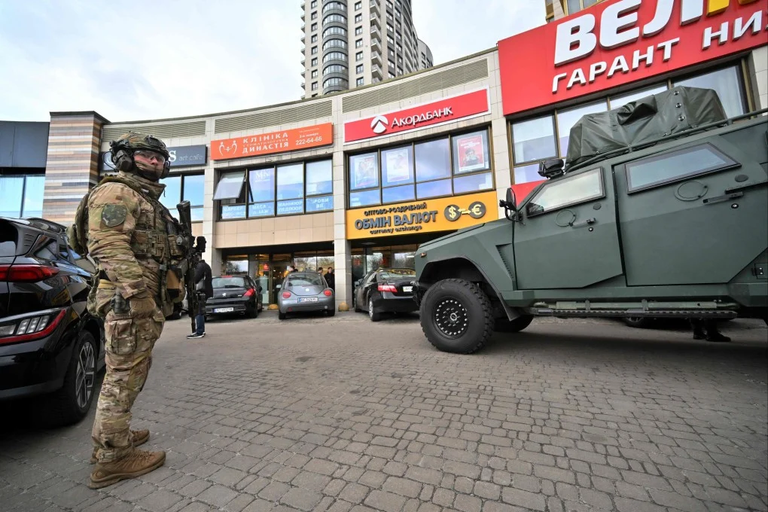
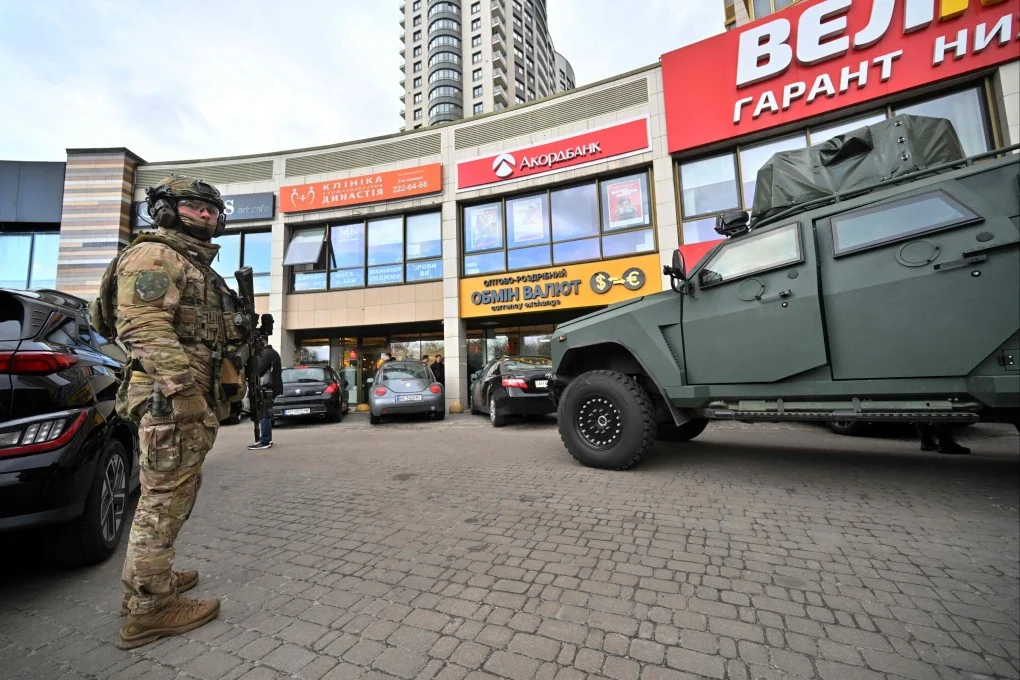
After the initial street shooting, the gunman burst into a Velmart supermarket, taking staff and customers hostage. Police negotiators, including a female officer behind an armored vehicle, used loudspeakers to plead for the release of the captives.
“The people are not to blame for this. Please, let them go and we will talk with you,” she called out.
Despite attempts to establish contact, Interior Minister Ihor Klymenko confirmed the gunman remained unresponsive. “We offered to bring in tourniquets to stop the bleeding of those inside, but he did not respond,” Klymenko told reporters. “Consequently, the order was given to neutralize him.”
The KORD (Rapid Operational Response Unit) special forces launched a high-precision assault, fatally shooting the attacker during the arrest. One hostage was found dead inside the store, bringing the total death toll to six.
A ‘Russian-Born’ Motive?
While the motive remains under investigation, President Zelenskyy emphasized the shooter’s background, noting he was born in Russia and had lived in the occupied Donetsk region for an extended period.
The SBU is currently investigating whether the attack was a lone-wolf incident or part of a broader destabilization effort. Notably, the gunman had a valid weapons permit that was recently renewed in December 2025. “He provided a medical certificate and a renewal application,” Klymenko noted, adding that the investigation will now scrutinize the medical institution that cleared him.
A City on Edge
Kyiv remains under a state of heightened security following the massacre. For residents of the Holosiivskyi district, the sound of gunfire in a “leafy” neighborhood usually synonymous with parks and students has left a deep psychological scar.
“This is unheard of in wartime Kyiv,” one local resident told Gemini News Service. “We are used to missiles from the sky, but not a neighbor with a rifle in the grocery store.”
As the 14 wounded continue to receive treatment in capital hospitals, the Ukrainian government has vowed a full audit of firearms permits and psychological screenings across the country.
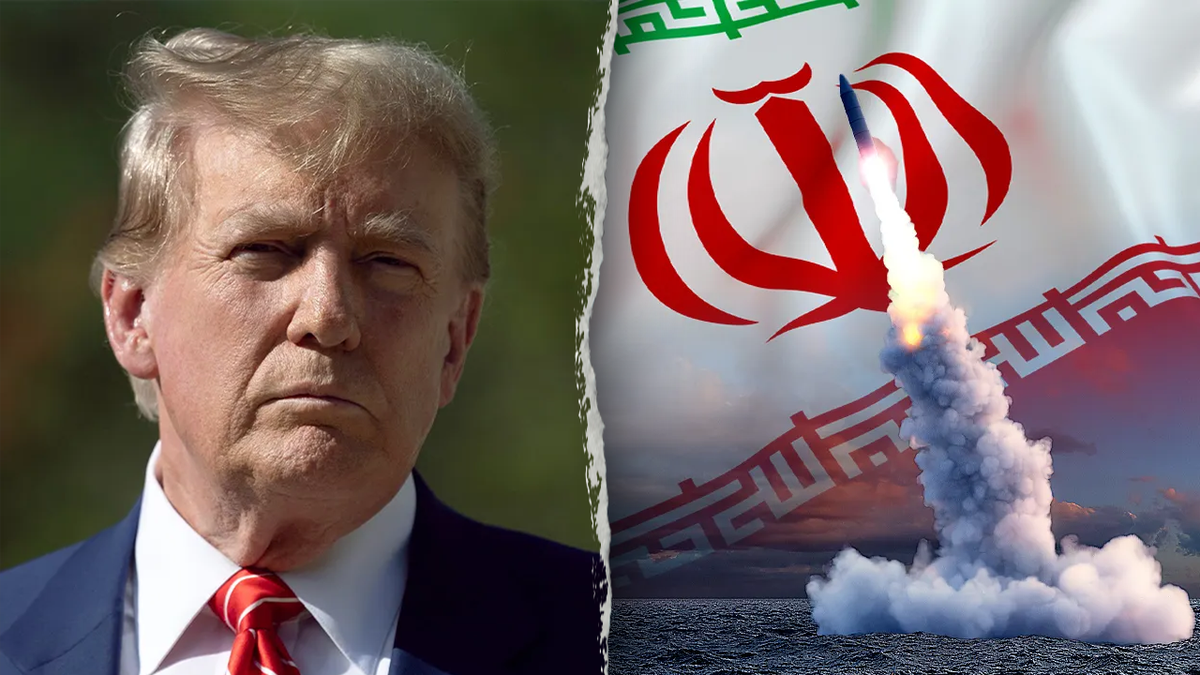
The “maximum pressure” campaign of the second Trump administration has moved from the ledger to the high seas. On Tuesday, President Donald Trump announced that direct negotiations with Tehran could resume “over the next two days,” even as the U.S. Navy reported that its newly established maritime blockade had successfully turned back the first wave of merchant vessels attempting to reach Iranian ports.
The whiplash of diplomacy and deterrence has become the hallmark of the current crisis. While the President struck an upbeat tone during a telephone interview with the New York Post, advising reporters to remain in Pakistan for a potential second summit, the reality in the Strait of Hormuz remained one of steel and standoffs.
“Six Ships Turned Back”
U.S. Central Command (CENTCOM) confirmed on Tuesday that the blockade, which began Monday morning, is fully operational. In the first 24 hours of enforcement, six merchant vessels—including a sanctioned tanker linked to Chinese interests—complied with orders to reverse course after being intercepted by U.S. guided-missile destroyers.
“No ships made it past the U.S. blockade,” a CENTCOM spokesperson stated. “Six merchant vessels complied with direction from U.S. forces to turn around and re-enter an Iranian port or remain in the Gulf of Oman.”
The blockade, enforced by over 10,000 personnel and a Nimitz-class carrier strike group, is designed to reduce Iran’s oil exports to zero and force a capitulation on the nuclear front. While humanitarian goods are technically permitted subject to inspection, the message from the White House is clear: the Iranian economy will remain under a “maritime chokehold” until a deal is signed.
The Pakistan Pivot
Despite the escalating naval pressure, the door to the “Grand Deal” remains cracked open. President Trump praised the mediation efforts of Pakistani Field Marshal Gen. Asim Munir, calling him “fantastic” and indicating that Islamabad remains the preferred venue for a second round of high-level talks.
“Something could be happening over the next two days,” Trump said. “We are more inclined to go there [Pakistan] because the field marshal is doing a great job.”
The initial round of talks in Islamabad last weekend, led by Vice President JD Vance and Iranian Foreign Minister Abbas Araghchi, ended in an impasse over the issue of uranium enrichment. While the U.S. proposed a 20-year suspension of enrichment, Tehran countered with a three-to-five-year moratorium. The President has since signaled his opposition to any compromise that allows Iran to keep even a fraction of its “nuclear dust.”
A Fragile Ceasefire
The diplomatic flurry is racing against a ticking clock. A temporary two-week ceasefire, which has largely held since April 7, is set to expire next Tuesday, April 21. If a second round of talks in Pakistan fails to produce a breakthrough, the “Operation Epic Fury” air campaign—which has already decimated significant portions of Iran’s military infrastructure—is expected to resume with renewed intensity.
The stakes extend far beyond the desert. The ongoing conflict and the subsequent blockade have sent Brent Crude soaring back above $100 a barrel, rattling global markets and putting immense pressure on the administration to find a resolution before the economic fallout becomes permanent.
The “Hell” and the “Hammer”
Tehran’s response to the blockade has been one of characteristic defiance. The Islamic Revolutionary Guard Corps (IRGC) warned on Tuesday that it views the U.S. naval presence as a violation of the ceasefire, hinting at potential retaliatory strikes against regional targets if the “siege” continues.
For President Trump, however, the blockade is the hammer intended to strike the anvil of diplomacy. “I don’t want them to feel like they have a win,” the President said of the Iranians. “I want them to never have a nuclear weapon. I think they will agree to it. In fact, I am sure of it.”
As the world watches the flight trackers for the return of the U.S. delegation to Islamabad, the waters of the Gulf remain a silent, high-stakes theater where the next 48 hours could determine the difference between a historic peace and a total regional war.
In a quiet conference room at the U.S. State Department on Tuesday, the long-standing “Gate of Tears” between Israel and Lebanon finally yielded to the weight of diplomacy. For the first time since the 1993 Madrid-era negotiations, representatives from the two neighboring nations—technically at war for 78 years—sat face-to-face for direct, in-person talks.
Hosted by Secretary of State Marco Rubio and U.S. Ambassador to the UN Mike Waltz, the summit brings together Israeli Ambassador Yechiel Leiter and Lebanese Ambassador Nada Hamadeh Moawad. The meeting is being hailed by the White House as a “historic opportunity” to decouple the sovereign state of Lebanon from the regional fires stoked by Hezbollah and its patrons in Tehran.
A New Voice in Beirut
The catalyst for this diplomatic shift is the emergence of a more assertive Lebanese presidency. President Joseph Aoun, who rose to power on a platform of restoring state sovereignty, has been vocal about the need for a direct channel.
“Diplomatic solutions have consistently proven to be the most effective means of resolving armed conflicts,” Aoun stated ahead of the talks. His administration has taken the unprecedented step of criminalizing non-state military activities, a direct shot across the bow of Hezbollah, which has faced significant military setbacks during the recent Israeli ground invasion of southern Lebanon.
For Israel, the goal is “normalization” rather than just a ceasefire. “We have no interest in your land,” Ambassador Leiter told his Lebanese counterparts, “only in our collective security.”
The Elephant Not at the Table
While the atmosphere in Washington was described as “serious and professional,” the reality on the ground remains jagged. Hezbollah, which was not represented in the talks, has dismissed the summit as “futile.”
As the ambassadors sat down in D.C., the northern border of Israel was hit by a barrage of 24 rockets, a reminder that the Lebanese government’s authority over its southern provinces remains aspirational. Hezbollah leader Naim Qassem has vowed that the group will not abide by any agreement reached in Washington, branding the Lebanese negotiators as “instruments of a foreign agenda.”
The Roadblocks to a Final Deal
Despite the symbolic power of the meeting, Secretary Rubio warned that these talks are a “process, not an event.” Several high-stakes hurdles remain:
The Disarmament Mandate: Israel is insisting on the full implementation of a demilitarized zone south of the Litani River, overseen by the Lebanese Armed Forces (LAF) rather than UNIFIL.
The “Iran Blockade”: The talks are occurring against the backdrop of a U.S. naval blockade in the Strait of Hormuz. Lebanon’s Prime Minister, Nawaf Salam, has rejected Iranian offers to negotiate on Beirut’s behalf, insisting that Lebanon will represent its own interests for the first time in decades.
The Return of the Displaced: Over a million Lebanese citizens and 100,000 Israelis remain displaced from their homes. Israel has stated that no returns will be permitted until a “permanent security framework” is signed.
A Fragile Hope
For a region that has spent three decades communicating through mediators, the mere sight of Israeli and Lebanese officials in the same room is a tectonic shift. It signals a growing appetite within Beirut to reclaim its political future from the “proxy war” cycle that has hollowed out the nation’s economy.
“We are working against decades of history and complexities,” Rubio admitted. But as the delegates prepare for a second day of deliberations, the world is watching to see if 2026 will be the year the “Blue Line” finally becomes a border of peace rather than a front of war.
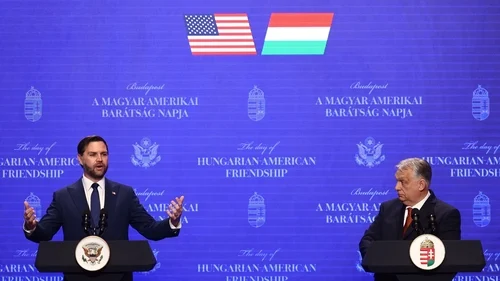
In the wake of a political earthquake that has rattled the foundations of the global populist movement, Vice President JD Vance is refusing to distance himself from the wreckage of the Hungary elections. Following Prime Minister Viktor Orbán’s shock landslide defeat on Sunday, Vance has emerged as the most vocal defender of the man he once called “the defense of Western civilization,” even as critics label the Vice President’s eleventh-hour intervention in the campaign a “crowning failure.”
Orbán, the self-styled champion of “illiberal democracy” who ruled Hungary for 16 consecutive years, conceded defeat late Sunday to Péter Magyar and his center-right Tisza Party. The margin was not just a loss; it was a total repudiation. Magyar’s party is projected to secure an extraordinary 138-seat supermajority in the 199-seat parliament, while Orbán’s Fidesz party plummeted to just 55 seats.
“A Model for the Continent”
The outcome of the Hungary elections is particularly stinging for the White House. Only days before the polls opened, Vice President Vance made a high-stakes, controversial trip to Budapest. Standing alongside the Prime Minister, Vance delivered an “Urbi et Orbán” blessing, declaring that Orbán’s leadership “can provide a model to the Continent” and labeling him “one of the only true statesmen in Europe.”
On Monday, speaking to Fox News, Vance was asked if he regretted stumping for a candidate who was ultimately rejected so decisively by his own people.
“I’m sad he lost,” Vance said, standing firm. “Viktor is a great guy who has done a very good job for the people of Hungary. If the media and the globalist elites in Brussels hate him, it usually means he’s on the side of the people. Our administration values strong, independent leaders, and that’s exactly what Viktor is.”
The “Magyar Moment”
The landslide suggests that Hungarian voters were focused on a very different reality than the one touted by Vance during his visit. Exit polls indicated that record-breaking turnout—just under 80%—was driven by fatigue over a stagnant economy, underfunded healthcare, and a series of corruption scandals that had finally pierced the Fidesz veil.
Péter Magyar, a former Fidesz insider who defected to lead the opposition, campaigned on a platform of restoring the rule of law and repairing Hungary’s fractured relationship with NATO and the European Union. “We did it,” Magyar told a cheering crowd beside the Danube. “Together we overthrew the Hungarian regime.”
A Warning for Washington?
While the White House remains defiant, the fallout in Washington has been swift. Critics suggest the results of the Hungary elections serve as a cautionary tale for the Trump-Vance ticket. “Wannabe dictators eventually wear out their welcome,” Senate Minority Leader Chuck Schumer said in a statement. “The Hungarian people have sent a message that reverberates all the way to Pennsylvania Avenue.”
Even within the Republican party, the reaction has been split. While MAGA-aligned figures lamented the loss of an ally, others noted that the results signify a rejection of Russian influence—noting Orbán’s long-standing ties to Vladimir Putin and his friction with Ukraine.
The Strategic Detour
For Vance, the Budapest trip was more than just a campaign stop; it was an ideological pilgrimage. Hungary has long served as a “Christian conservative sanctuary” for the American right, a testing ground for policies on immigration and media control.
By doubling down on his support for a deposed leader, Vance is signaling that the administration’s “sovereignty-first” foreign policy will not be swayed by electoral outcomes abroad. However, as the 2026 midterms approach at home, the “No Kings” sentiment seen in European streets is increasingly mirrored in American protests, leaving analysts to wonder if the “Budapest Model” has finally reached its expiration date.
Germany dropped its invoice retention period to eight years in January 2025, and barely 500 kilometers to the west, France still expects ten. Two years doesn’t sound like much of a gap. It is. A freelancer based in Berlin can shred anything from 2016, and that’s perfectly legal now, but somebody running a similar operation out of Lyon who tosses the same paperwork is violating the Code de commerce and risking fines that can run to 10000 euros if a tax inspector decides to look into it. The law behind the change, Germany’s Fourth Bureaucracy Relief Act from October 2024, was meant to lighten the load for small operations. Domestically, it probably has. But talk to anyone who invoices clients in Italy and buys materials from a supplier in Spain, and the reaction is closer to frustration, because what had been a mostly uniform ten year rule across the EU suddenly has holes in it that didn’t exist before.
Markus Feldmann is a Steuerberater in Munich who works mostly with small business clients, and he’s been dealing with the fallout from this change since it took effect. “We had a client last quarter who destroyed paper invoices for 2015 and 2016, thinking the new German rule applied retroactively to all their records, but about a third of those invoices were for services billed to Italian customers, and Italy still requires ten years,” Feldmann said. He estimated that maybe 40% of his clients with cross border activity have gotten at least one detail wrong about retention timelines in the past year. The problem is not that the rules are individually complicated. Each country publishes its requirements fairly clearly. A web designer in Hamburg billing clients in France, Poland, and Italy has to remember three separate retention deadlines for what is basically the same invoice, and nobody volunteers for that kind of bookkeeping. People figure it out after they’ve been caught.
HMRC tells UK businesses five years after the January 31 submission deadline for most records, six for some. Australia matches that five year baseline but adds a wrinkle for depreciating assets, where the clock won’t start ticking until you actually sell the thing or scrap it. A landscaper sitting on a truck she bought in 2015 would need the purchase receipt until five years after the truck is gone, which could easily be 2035 or later. Japan keeps it simple at seven years flat. Spain is the odd one because Hacienda’s audit window only goes back four years, but the commercial code insists on six years of records, and the Spanish Treasury actually had to publish a formal clarification in 2025 to sort out which rule applies to what. Put all those numbers next to each other, and you start to see why most small businesses just pick a number and hope for the best.
A receipt management specialist at MyReceiptMaker said that, from what they can see in user data, most people just follow whatever retention rule applies in their own country and ignore the rest. Something like 70% of users, the specialist said, just pick whatever their home country requires and use that number for everything, and that’s fine until an auditor pulls up a transaction with a client in a country that expects longer retention. Accountants in several countries have been making basically the same observation for years now. The real risk is not failing to keep receipts at all. Most business owners understand they need to keep records. The risk is holding them for the wrong amount of time. Three years, six years, ten years. It depends on where the customer sits, where the seller sits, what the transaction involves, and occasionally what category the goods fall into. Checking all four before tossing an old receipt is something that basically no one does.
The IRS in the United States takes a comparatively relaxed approach with a general three year retention period from the date a return is filed, but that number stretches to six years if the agency suspects underreported income and becomes indefinite in cases of suspected fraud. A tax preparer at a midsize firm in Chicago pointed out that the three year window creates a false sense of security for a lot of filers because the IRS can and does extend audits, and the burden of proof for deductions falls entirely on the taxpayer. The IRS isn’t going to help you reconstruct what’s missing. Paper gone, no scan saved, deduction gone. GAO compliance studies from earlier years found that sole proprietors misreported something like 57% of their net business income, and missing or inadequate records came up again and again as a primary factor in those numbers. The 75 dollar threshold below which the IRS does not require a physical receipt for reimbursement claims has also created confusion, because that rule applies to employee expense reports, not to sole proprietors claiming deductions on Schedule C, and the distinction gets blurred constantly.
Germany’s GoBD rules say you can destroy the paper original once you’ve scanned it, and on the surface, that’s a huge convenience. The catch is that your scan has to meet strict requirements around format, readability, and audit trail integrity. Miss any of those, and the scan is worthless in the eyes of an auditor. Feldmann said two of his clients got flagged during audits last year, and not because they were missing receipts. It turned out both had stored scans as compressed JPEGs, and the auditor ruled those insufficient. The receipts existed in a folder on somebody’s laptop, but legally, they were as good as gone. France’s digital archiving standards are just as demanding in their own way, and Italy skipped the debate entirely by making electronic invoicing mandatory years ago through the Sistema di Interscambio, long before the rest of Europe had even decided whether digital receipts should be encouraged or required. Between the retention timelines bouncing around and the digital standards disagreeing across borders, going paperless hasn’t necessarily simplified anything for businesses that operate in more than one country. The situation in the EU has been moving toward harmonization for years, but slowly and with plenty of exceptions carved out for individual member states. Brussels floated some proposals for standardized digital reporting in 2024, and a few tax advisors expected harmonized retention periods to follow, but nothing binding came of it. National governments don’t want to give up control over their own tax administration rules, and that hasn’t changed. And in the background, Etsy sellers, Shopify merchants, and Amazon third party vendors are all moving product across three, four, five countries at once, generating receipt volumes that would’ve been absurd for a small business in 2005. When a package leaves a fulfillment center in Poland, gets bought by someone in Lisbon, and the marketplace handling the transaction is registered in Luxembourg, whose retention rules apply to that receipt? That’s the question nobody seems to have a good answer to, and it’s not obvious that anyone’s working on one.
In a dramatic televised address from the Oval Office late Sunday morning, President Donald Trump announced that a missing U.S. Air Force crew member, whose aircraft was downed over southern Iran earlier this week, has been rescued in a “high-stakes, high-precision” special operations mission.
The aviator, whose identity is being withheld pending family notification, had been the subject of an intense 72-hour search-and-rescue effort after their F-35C went off-radar during a suppression mission against Iranian air defense batteries near Bandar Abbas.
“The Best of the Best”
Flanked by Joint Chiefs of Staff and senior military advisors, the President described a harrowing midnight extraction involving elite Navy SEALs and Army Rangers.
“Tonight, the American people can rest easy knowing that one of our bravest has been pulled from the clutches of a hostile regime,” the President said. “It was a daring operation, the kind you only see in the movies, but it was real. Our Special Forces went into a very dark, very dangerous place and they brought our hero home. They are the best of the best.”
While the White House remained light on specific tactical details to protect ongoing operations, Pentagon sources suggest the rescue took place in the rugged, mountainous terrain of the Hormozgan Province. The crew member had reportedly evaded Iranian capture for three days, utilizing survival, evasion, resistance, and escape (SERE) protocols while being hunted by IRGC ground units.
A “Zero-Margin” Extraction
The mission reportedly involved a “stealth insertion” using modified heavy-lift helicopters supported by a swarm of electronic warfare aircraft that blinded regional Iranian radar.
“The window for extraction was less than ten minutes,” a senior defense official told Gemini News Service on the condition of anonymity. “The Iranian military was closing in on the pilot’s localized beacon. If we had been five minutes later, we would be talking about a hostage situation rather than a rescue.”
The President noted that the “daring” nature of the mission was a direct message to Tehran. “We don’t leave our people behind. Not now, not ever. If you touch an American, we will find them, and we will bring them back.”
The Escalating Air War
The pilot’s jet was lost during the third week of “Operation Epic Fury,” the U.S.-led campaign to neutralize Iran’s long-range missile capabilities and drone factories. The loss of the F-35C—one of the most advanced stealth fighters in the American arsenal—had initially been hailed by Tehran as a “crushing blow” to U.S. air superiority.
Sunday’s rescue, however, has flipped the narrative. Military analysts suggest that the success of a ground extraction deep within Iranian territory demonstrates a significant degradation of Iran’s internal security and surveillance networks.
A Hero’s Return
The rescued aviator is currently aboard the USS Abraham Lincoln, undergoing medical evaluation and debriefing. Initial reports indicate the individual is in “stable condition” despite suffering from minor injuries sustained during the initial ejection and the subsequent three days in the wilderness.
The White House has indicated that the President plans to personally welcome the aviator back to U.S. soil at Andrews Air Force Base later this week.
“This is a great day for the United States Military,” the President concluded his address. “And it’s a very bad day for those who thought they could break us. We are just getting started.”
In a move that signaled a sharp expansion of the Trump administration’s domestic crackdown on Iranian influence, federal agents on Friday night arrested the niece and grand-niece of the late Iranian Major General Qasem Soleimani.
The arrests of Hamideh Soleimani Afshar and her daughter—whose name has not been released—followed the immediate termination of their Lawful Permanent Resident (LPR) status by Secretary of State Marco Rubio. The pair, who had reportedly been living a “lavish lifestyle” in Los Angeles, are now in the custody of U.S. Immigration and Customs Enforcement (ICE) pending deportation proceedings.
From “Lavish Lifestyle” to ICE Custody
The State Department’s justification for the move centered on what it described as “fraudulent” asylum claims and overt support for the Tehran government. According to a Saturday statement, Afshar had allegedly used her social media platforms—including a recently deleted Instagram account—to promote Iranian regime propaganda and celebrate attacks against American soldiers in the Middle East.
“The United States will not allow our country to become a home for foreign nationals who support anti-American terrorist regimes,” Secretary Rubio said in a post on X (formerly Twitter).
Department of Homeland Security (DHS) officials further alleged that Afshar’s 2019 asylum claim was built on a “false fear of persecution.” Investigators cited at least four trips Afshar made back to Iran after being issued her green card—a move typically seen as a violation of asylum status.
A Broader Purge of “Regime Elites”
The arrests appear to be part of a coordinated “cleansing” of individuals linked to the Iranian security establishment currently residing on U.S. soil. Earlier this month, the administration also revoked the legal status of Fatemeh Ardeshir-Larijani, the daughter of former Iranian security chief Ali Larijani, and her husband.
This domestic policy shift mirrors the escalating military conflict in the Persian Gulf. By targeting the family members of the very commanders the U.S. is currently engaging in the field, the administration is effectively treating the Iranian diaspora’s “elite tier” as an extension of the battlefield.
Tehran’s Denial and the Domestic Debate
The response from Iran was one of swift dismissal. Narjes Soleimani, the daughter of the late general, told Iranian news agencies on Saturday that her father “had two nephews, not nieces,” and claimed that no members of the Soleimani family have ever resided in the United States.
However, U.S. intelligence officials maintain that the familial link is documented and that Afshar’s public praise for “the new Supreme Leader” (a reference to Mojtaba Khamenei) made her presence in Southern California a matter of national security.
While supporters of the move argue that it closes a “hypocritical loophole” where regime-linked individuals enjoy American freedoms while cheering for their destruction, civil rights advocates have raised alarms. Legal experts suggest that revoking green cards based on social media commentary could set a precedent that challenges First Amendment protections for non-citizens.
The Road to Deportation
As of Sunday morning, Afshar and her daughter remain in administrative detention. While their lawyers are expected to file for an emergency stay of deportation, the administration’s “Fast-Track Security Removal” protocols—bolstered by recent executive orders—may leave little room for a lengthy judicial appeal.
With the U.S.-Israel war against Iran entering its second month, the arrest of Soleimani’s relatives serves as a potent message: the “shadow war” has officially crossed the Atlantic.
ABOARD THE ORION SPACECRAFT / HOUSTON — For the first time in fifty-four years, human eyes have looked upon the “Dark Side” of the Moon.
Late Sunday evening, as the Orion capsule Integrity crossed into the lunar sphere of influence, the four-person crew of the Artemis II mission caught their first direct glimpse of the moon’s rugged far side. It is a view that hasn’t been witnessed by a living soul since the departure of Apollo 17 in 1972—and for this crew, the moment was nothing short of transformative.
“We just cleared the limb, and there it is,” Mission Specialist Christina Koch radioed to Mission Control in Houston, her voice crackling with a mix of professional focus and raw wonder. “It’s not the smooth, ‘Man in the Moon’ face we see from home. It’s an absolute wilderness of craters. It looks like a battlefield of the solar system.”
A Record-Breaking Orbit
The milestone comes on Flight Day 5 of a mission that has, so far, been a masterclass in modern aerospace engineering. After a flawless launch from Kennedy Space Center on April 1, the crew—Commander Reid Wiseman, Pilot Victor Glover, and Mission Specialists Christina Koch and Jeremy Hansen—have traveled over 230,000 miles to reach this point.
The spacecraft is currently following a “free-return” trajectory, a cosmic slingshot that will take the crew approximately 4,700 miles beyond the lunar surface. At its furthest point, Orion will set a new record for the greatest distance from Earth ever traveled by a crewed vehicle, surpassing the legendary mark set by the crippled Apollo 13 mission in 1970.
Science Through Human Eyes
While robotic probes like the Lunar Reconnaissance Orbiter (LRO) have mapped every inch of the moon in high-resolution, NASA scientists emphasize that having humans on-site provides “contextual intelligence” that machines lack.
The crew is currently engaged in a seven-hour intensive observation period. Working in pairs to manage the limited window space of the Orion capsule, they are documenting specific geological features:
The Orientale Basin: One of the most striking “bullseye” impact craters, which straddles the western limb of the Moon.
The South Pole-Aitken Basin: A massive, dark depression that holds the secrets to the Moon’s earliest history and potential water ice.
Shadow Relief: Because the sun is hitting the far side at a low angle, the long shadows are revealing ridges and slopes that usually appear flat in satellite imagery.
“Human eyes can pick out subtle color variations in the regolith and the way light plays off the crater rims in ways a sensor can’t always prioritize,” said a NASA flight director during an afternoon briefing. “This isn’t just a sightseeing tour; it’s the ultimate scouting mission for the Artemis III landing.”
The Silent 40 Minutes
The most harrowing part of the journey is yet to come. Tomorrow, April 6, as Orion loops directly behind the Moon, the crew will enter a “Loss of Signal” (LOS) period. For approximately 40 minutes, the bulk of the Moon will block all radio communication with Earth.
During this silence, the crew will be more isolated than any humans in history, alone with the stark, monochromatic landscape of the lunar far side. When they emerge on the other side, they will witness the legendary “Earthrise”—the sight of our blue-and-white home cresting over the gray lunar horizon.
The Road Home
Once the flyby is complete, the Moon’s gravity will naturally pivot Orion back toward Earth. The crew is scheduled to splash down in the Pacific Ocean off the coast of San Diego on April 11.
For now, however, the mission is about the view. As Commander Reid Wiseman noted shortly after the first far-side sighting: “We’ve spent our whole lives looking up at the Moon. It’s a very different feeling when the Moon is the only thing you can see out the window.”