Apple has announced that will refund Australian customers who felt misled about the 4G capabilities of the new iPad.
The country’s consumer watchdog has taken Apple to court for false advertising because the tablet computer does not work on Australia’s 4G network.
Apple’s lawyers said they were willing to publish a clarification.
However, Appler the company does not accept that it misled customers.
Australia’s Competition and Consumer Commission (ACCC) said on Tuesday “that Apple’s recent promotion of the new <<iPad with wi-fi + 4G>> is misleading because it represents to Australian consumers that the product can, with a Sim card, connect to a 4G mobile data network in Australia, when this is not the case“.
Apple has announced that will refund Australian customers who felt misled about the 4G capabilities of the new iPad
The watchdog then lodged a complaint at the Federal Court in Melbourne.
At a preliminary hearing, Apple lawyer Paul Anastassiou said Apple had never claimed the device would work fully on the current 4G network operated by Telstra.
Apple says the new iPad works on what is globally accepted to be a 4G network.
The matter could go to full trial after the Easter break.
The Apple iPad’s third version went on sale earlier this month, with Australia the first country where it was available.
Shoppers lined up by the hundreds at Apple stores on opening day and the company said it had been its strongest iPad launch to date.
The ACCC said it was seeking an injunction on sales as well as a financial penalty against Apple, corrective advertising and refunds to consumers.
On its website, Apple does state that 4G LTE is only supported on selected networks in the US and Canada.
Beyonce has pimped baby Blue Ivy Carter’s ride to a glamorous effect, as it looks at first glance as though the superstar is just wearing an opulent, faux-fur stole to match her outfit.
It’s hard to discern that there is even a baby there, underneath all that fluff… but it is in fact her daughter’s sling.
But Blue Ivy is snuggled inside, enjoying the lap of luxury… or should that be the bosom?
Beyonce is already back to her glamorous best after going through the ordeal of giving birth.
Beyonce matches her outfit to baby Blue Ivy's faux-fur sling
Last week the singer revealed that she had plans to return to the stage
Beyonce announced her intention to perform three concerts in Atlantic City this coming May.
The singer will perform as part of the unveiling of the $2.4 billion Revel Resorts over Memorial Day weekend.
Jay-Z owns the 40/40 club in Atlantic City.
Meanwhile, Beyonce has fallen victim to an apparent swipe from fellow singer Katy Perry.
After singing a cover of a Jay-Z track it seems that Katy Perry took aim at his wife Beyonce.
The California Gurl singer was talking about her upcoming collaboration with Rihanna – saying she wanted their track to be “iconic”.
Katy Perry then went on to cite Beyonce and Shakira’s 2007 song Beautiful Liar – suggesting it would not stand the test of time.
Beyonce the dog could set the world’s record for tiniest puppy, as she was so small when she was born on March 8 that could fit onto a spoon.
Animal rescuers in Northern California, where the tiny pup was, say the female Dachshund mix is the smallest puppy in the world.
At two weeks, Beyonce about the size of a business card.
The rescue workers have submitted her details to the Guinness Book of Records and are waiting to hear she’s a mini-record breaker.
The Grace Foundation, based in El Dorado County, says animal control picked up Beyonce’s pregnant mother, and she gave birth to a litter of five on March 8.
Beyonce the dog could set the world's record for tiniest puppy, as she was so small when she was born that could fit onto a spoon
Animal shelter workers took her into the centre just before she gave birth to her litter of five.
Beyonce was the last pup to be delivered and was born without a heartbeat – but vets were able to get her heart started again.
Veterinarians managed to revive her through chest compressions and mouth-to-mouth resuscitation.
The foundation says she’ll be ready for adoption in about two weeks.
JetBlue domestic flight 191 from New York to Las Vegas has made an emergency landing amid a medical scare over the captain, the airline has said.
JetBlue 191 was carrying 135 passengers when it landed in Amarillo, Texas, about three-and-a-half hours into the flight.
One passenger said a man thought to be the flight captain began shouting, possibly about a bomb, and had to be restrained.
Local police and the FBI are said to be investigating the incident.
“We heard the word <<bomb>>,” passenger Heidi Karg told CNN.
“We didn’t know exactly what was going on.”
Heidi Karg said she heard the captain shout: “I need the code, gimme the code, I need to get in there.”
JetBlue domestic flight 191 from New York to Las Vegas has made an emergency landing amid a medical scare over the captain
Another passenger, Grant Heppes, told the Associated Press that he saw the man walk from the cockpit to the back of the plane. He was barred from going back in and then became disruptive.
Grant Heppes said many passengers were “shocked and confused”.
“Nobody was very loud except for the people trying to help out. Everybody just standing up and not really sure what was going on. It was very hard to tell,” he said.
JetBlue has said the pilot in charge of the plane decided to land at about 10:00 a.m local time.
Once on the ground in Amarillo the crew member was taken to a local medical facility and an off-duty captain who was on the flight by chance took over the role, JetBlue said.
According to Grant Heppes, the ambulance was parked beside the plane for about half an hour.
One man at the airport, Shane Helton, told the Associated Press that emergency personnel were on the tarmac.
“They pulled one guy out on a stretcher and put him in an ambulance,” he said.
Madonna hits back at DJ Deadmau5’s claims that she glamorized drug use during her performance at the Ultra Music Festival in Miami over the weekend.
DJ Deadmau5, the world-famous music guru, 31, branded the Madonna a “f****g idiot” after she asked the crowd how many of them had “met molly” as she introduced Swedish DJ Avicii to the stage at the Ultra Music Festival in Miami on Saturday.
While “molly” is a slang term for the active ingredient in ecstasy, Madonna insists her comments have been taken the wrong way.
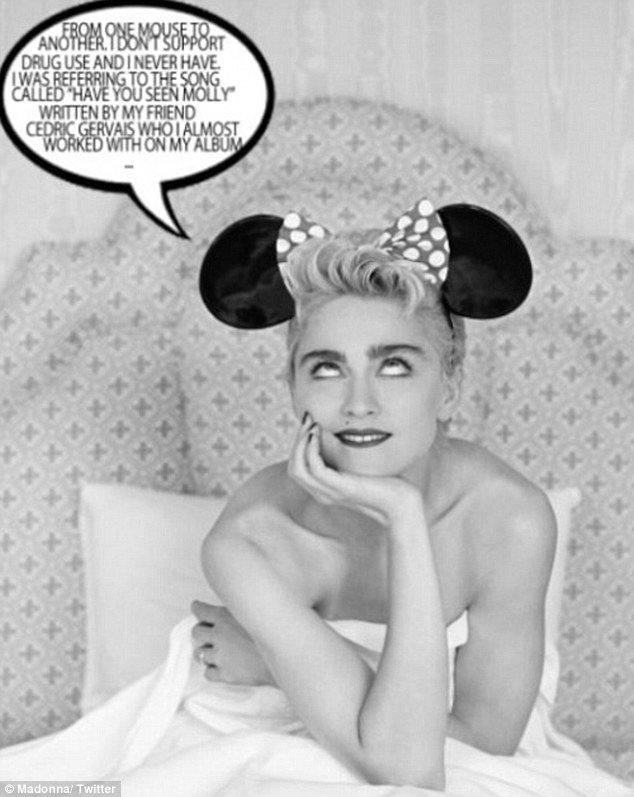
Madonna took to Twitter, posting a Photoshopped picture of herself wearing Minnie Mouse ears, writing: “From one mouse to another I don’t support drug use and I never have.
“I was referring to the song called Have You Seen Molly written by my friend Cedric Gervais who I almost worked with on my album.”
Deadmau5 – real name Joel Thomas Zimmerman – then responded to the tweet, conceding: “Fair enough, I was just voicing my concerns as I usually do. +1 respect for clearing it up personally… regardless, just be a little more aware of what you should represent at EDM events, and I’ll watch my mouth.”
Madonna – getting the final word – responded again, tweeting: “Communication is always best. You should have called me first, we could have cleared it up ‘privately.’ 😉 See you on the road.”
Madonna hits back at DJ Deadmau5’s claims that she glamorized drug use
DeadMau5, whose moniker is pronounced dead mouse, had initially tweeted: “Very classy there Madonna. <<HUR DUR HAS ANYONE SEEN MOLLY???>>
“Such a great message for the young music lovers at ultra. quite the f***n philanthropist. but hey, at least yer HIP AND TRENDY! F*****g cant smack my head hard enough right now.”
The star, who performs while wearing a plastic mouse head, continued to rant against the star’s behavior after receiving complaints from people defending her outburst.
He said: “seriously, I giveth not a f***ing single F*** for slating on Madonna for reaching an entirely NEW level of idiocy.
“I can appreciate her meteoric career, and all good deeds done, but WHAT THE F*** WAS THAT?
“That’s your big contribution to EDM [electronic dance music]?
“Thats your big message to ultra attendies? hipsterspeak for looking for drugs? f*** off you f***ing IDIOT.”
But the award winning house producer was not finished, and after calming down, wrote a lengthy blog entry where he explained he was unhappy she was abusing her power and not acting responsibly.
Deadmau5 said: “We have, and will always have personal choice. Thats how our lives are shaped… through the good or bad choices we make.
“We learn every day from them, but they’re ours to make, and its our responsibility to make the right ones for each of ourselves.
“Not to be pandered down to us in metaphorical pill form from BIG voices as a marketing scheme to <<fit in>> with todays young and <<hip>> crowd to sell a f***ing CD.
“So, if you can be pandered with MDNA references, then at least pander your own ass with a good sense of responsibility which will enable you to make the personal choices that are right for YOU.”
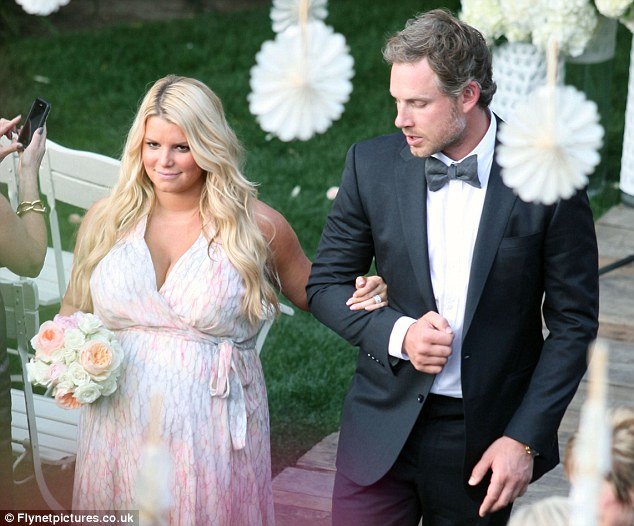
Jessica Simpson played bridesmaid to one of her closest friends and former assistant Lauren Zelman.
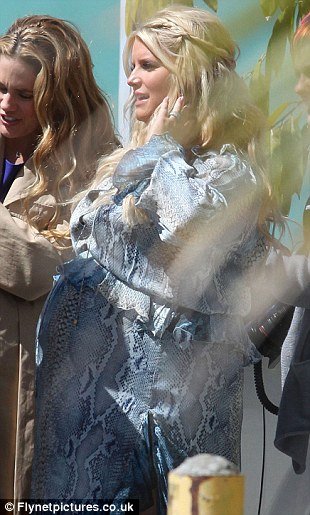
Jessica Simpson, 31, nearly upstaged the bride as all eyes were on her massive stomach as everyone waits with baited breath for her to finally have her baby.
She certainly looked radiant in her pink halterneck dress as she joined the ceremony at the Parker Palm Springs Resort in California.
Jessica Simpson was joined by her younger sister Ashlee at the sunset wedding of Lauren Zelman to Reaper actor Bret Harrison.
Jessica Simpson played bridesmaid to one of her closest friends and former assistant Lauren Zelman
Ashlee Simpson’s three-year-old son Bronx acted as ring bearer and one eyewitness told People: “He broke down in tears several times, but Ashlee was great and kept making him smile again.”
And the source added that Jessica Simpson needed a helping hand down the aisle so there was no danger of her falling over.
They said: “It was difficult for her to get around, but she was a great sport and kept smiling.
“Everyone at the wedding was doting on Jessica and seemed very understanding. And Lauren seemed very happy that Jessica was able to be a part of her wedding.”
Other wedding guests included actors Adam Brody, best known from The O.C, and screen Josh Schwartz, who were groomsmen, plus Jessica Simpson’s best friend CaCee Cobb and her fiancé, Scrubs star Donald Faison.
Al-Jazeera TV network has received a video apparently showing the attacks carried out by Islamist gunman Mohamed Merah in Toulouse, south-west France.
The Qatar-based satellite TV channel decided not to broadcast the contents, or circulate them to other media, after appeals from French President Nicolas Sarkozy and others.
Victims’ families believe its broadcast would give publicity to Mohamed Merah, who reportedly told police before he was killed in a siege that he identified with al-Qaeda.
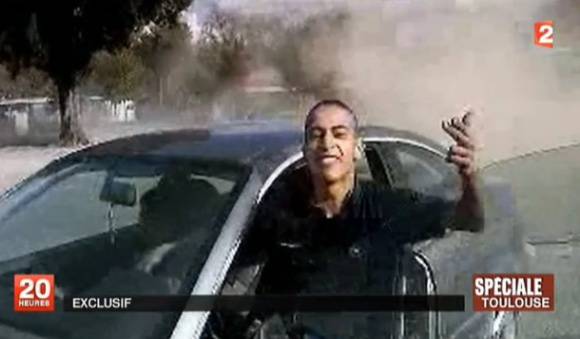
Over nine days, Mohamed Merah shot dead four defenseless adults and three small children, recording his attacks with a camera strapped to his chest.
Details of the footage were given both by Al-Jazeera and French judicial sources.
Entitled “Al-Qaeda attacks France”, the video posted to Al-Jazeera on a USB stick lasts about 25 minutes, a judicial source told French news website 20 Minutes.
“It’s very, very well produced,” the source said.
“This is not some muddy, grainy film. The editing is professional, with songs in between the events.”
Al-Jazeera TV has received a video apparently showing the attacks carried out by Islamist gunman Mohamed Merah in Toulouse
Zied Tarrouche, Al-Jazeera’s bureau chief in Paris, said he had watched the video and it showed all of the killings.
“You see all of the attacks carried out in Toulouse and Montauban, that’s to say the murder of the first soldier, then the three soldiers and finally the attack on the school,” he told French channel BFM TV.
“You hear the voice of the person who carried out the killings,” he added.
“You also hear the victims’ cries.
“My feelings are those of any human being who sees horrible things.”
Zied Tarrouche said the video also contained a mixture of religious songs, readings and Koranic verses.
Speaking to Le Figaro newspaper, Zied Tarrouche said the USB stick had come in the post on Monday along with a letter dated Wednesday 21 March.
The author of the letter, according to Zied Tarrouche, claimed the attacks in the name of al-Qaeda, writing in “passable French with lots of spelling mistakes”.
“The odd thing is that it was written in French when usually al-Qaeda claims are made in Arabic,” Zied Tarrouche added.
In a later statement, Al-Jazeera announced: “In accordance with Al-Jazeera’s code of ethics, given the video does not add any information that is not already in the public domain, its news channels will not be broadcasting any of its contents.”
All media requests for copies of the video were being declined, the broadcaster said.
NASA’s Cassini probe will make today its lowest pass yet over the south pole of Enceladus, an active moon of Saturn which may harbor a liquid water ocean.
The flyby, at an altitude of 74 km (46 miles), will allow Cassini to “taste” the jets of ice and water vapor that gush from the moon’s polar region.
Several lines of evidence suggest these jets are fed by a liquid water ocean beneath Enceladus’ outer icy shell.
The probe’s closest approach will take place at 19:30 GMT on Tuesday.
The scientists will use Cassini’s Ion and Neutral Mass Spectrometer instrument to learn more about the composition, density and variability of the plumes from Enceladus.
Scientists previously detected salts in these jets, which suggested the sub-surface liquid water ocean was probably in contact with Enceladus’ rocky core.
This makes Enceladus an even more important target in the search for life elsewhere in the Solar System, as rocks could furnish the ocean with the chemical ingredients thought essential for life.
Cassini probe will make today its lowest pass yet over the south pole of Enceladus, an active moon of Saturn which may harbor a liquid water ocean
The plumes erupt from fissures at the south pole known as “tiger stripes”.
Last week, scientists presented evidence of a connection between the jet activity on Enceladus and the way Saturn’s gravity stretches and stresses the fissures.
The results were outlined by Terry Hurford, from NASA’s Jet Propulsion Laboratory (JPL), at the Lunar and Planetary Science Conference (LPSC) in The Woodlands, Texas.
However, about 35% of the observations could not be explained by tension in the jets’ source regions.
Enceladus moves around Saturn in a distorted, oval-shaped orbit rather than a circular one. This causes the moon to be pulled and squeezed by Saturn’s gravity, inducing the heat that enables geological activity on the icy moon.
Cassini’s closest approach to any part of Enceladus occurred in October 2008, when it flew within about 25 km (16 miles) of the surface.
A flyby in October 2015 will bring Cassini about 25 km closer to the moon.
Apple’s new iPad isn’t always telling the truth when says it has 100% battery.
The gadget starts to say that it is “full” when it’s at 90% – a difference that can cost users 1.2 hours’ usage.
The reason, says ZDNet, is that the formula used to calculate when the device is “full” is slightly out – a safety mechanism used by Apple to prevent people overcharging their gadgets.
All iPhones, iPads and iPod Touches misreport whether they are full – albeit at a slightly higher level around 97%, ZDNet claims.
But with the new iPad’s enormous battery capacity – 1.7 times bigger than iPad 2 – the slight difference in the formula used to calculate when it is “full” makes a noticeable difference to the battery life.
Raymond Soneira of monitoring firm DisplayMate says that the difference is measurable on the new iPad.
The new iPad's enormous battery capacity, 1.7 times bigger than iPad 2, the slight difference in the formula used to calculate when it is “full” makes a noticeable difference to the battery life
The display gives a claimed battery life of 10.4 hours, whereas the real figure is 11.6 hours – and the difference can leave users thinking the device is fully charged when in fact it’s not.
Raymond Soneira also claims that users who attempt to charge new iPad while using it could be in for a surprise – it can take up to 20 hours.
The problem should be easily fixable via a software download – often used by Apple to fix battery glitches and other teething difficulties with gadgets.
His measurements lend weight to earlier complaints on Apple forums that the device has shorter battery life and painfully long charging times.
DisplayMate claims that the huge increase in power demands is due to the density of pixels on the new screen.
The LED backlight needs a huge amount of power just to shine through the high density of transistors in the panels.
“The power consumption of the LEDs is 2.5 times that of iPad 2, and the battery is 1.7 times larger – if you run your new iPad at full brightness, the battery run time is less because you only put in 70% more battery but you’re using 150% more power,” Raymond Soneira of Displaymate said in an interview with CNET.
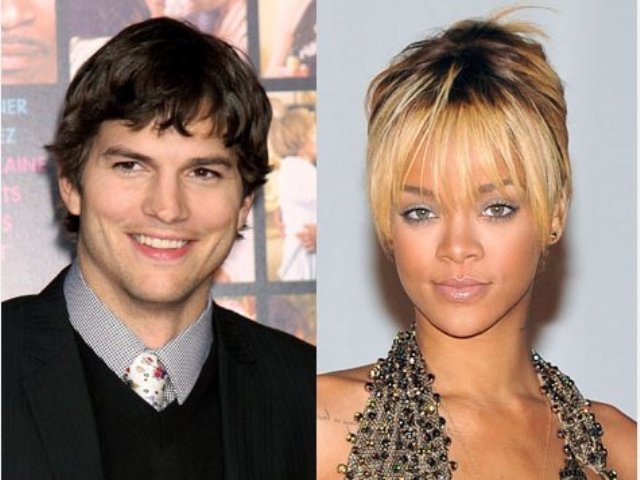
Demi Moore’s friends have said the actress is “sick to her stomach” over claims Rihanna “hooked up” with her estranged husband Ashton Kutcher, after the singer was seen leaving the actor’s house at 4:00 a.m.
According to a source, the story of Rihanna and Ashton Kutcher’s romance has “sent Demi spiralling”, leaving her friends concerned for the wellbeing of the actress, who only left rehab last month.
The source told Grazia magazine: “Demi is constantly keeping tabs on Ashton so when these pictures came up she was understandably devastated. Demi’s convinced something happened between them and said she felt <<sick to her stomach>>.”
Although Ashton Kutcher has been seeing other girls, none of them have been high profile, so the thought of him hooking up with someone as famous as Rihanna left Demi Moore reeling.
“Demi’s been acting crazy ever since, trying to find out information about the pair,” said the source.
“Demi is in such a fragile state, even the idea of them together has affected her quite badly. She’s in a terrible way but, at the end of the day, Ashton is a single man and free to do whatever he likes.”
The story of Rihanna and Ashton Kutcher's romance has “sent Demi Moore spiralling”, leaving her friends concerned for the wellbeing of the actress
Another source said that Demi Moore has been left “humiliated” because Ashton Kutcher appears to have moved on so quickly after her time in rehab following their marriage split.
The source told Closer magazine: “Demi can’t believe Ashton would do this.
“She’s really hurt by the rumors and feels humiliated he’s being linked to other celebrities just a few weeks after she got out of rehab.
“She feels it cheapens their marriage even further.”
The claims surrounding Rihanna and Ashton Kutcher’s relationship come as the singer was seen keeping her head down while boarding a flight at LAX.
Rihanna, 24, wore an all-black ensemble, a leather jacket and a grey hooded jumper, teamed with a BOY London baseball cap and black Adidas trainers.
The pop star has so far remained tight-lipped on reports that she and Ashton Kutcher have in fact been seeing each other for eight weeks.
Rihanna has reportedly been enjoying late-night trysts with Ashton Kutcher after hitting it off with him at a friend’s party in December.
She is apparently so besotted with him, that she’s asked about joining his Kabbalah group.
Rihanna was spotted by a photographer as she drove up to Ashton Kutcher’s property with her security team around midnight on evening last week.
The snapper confirmed to TMZ that Rihanna arrived almost bang on midnight, and didn’t leave until roughly 4:00 a.m.
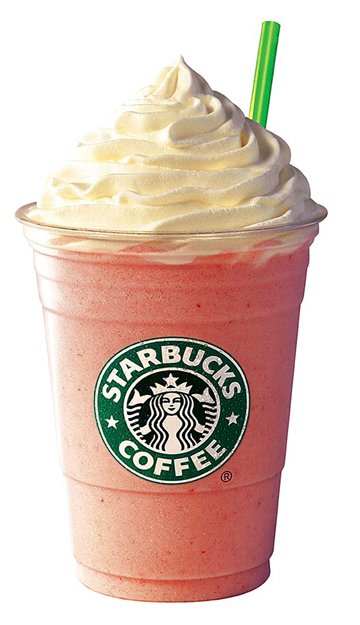
The pink color of Starbucks’ Strawberry Frappucino is thanks to crushed up insects, according to new information provided by the coffee chain giant.
In a statement released by Starbucks, the company has revealed that they use cochineal extract, which is the ground-up bodies of insects, as a dye for the popular rose-colored beverage.
Bugs from mainly Mexico and South America are dried out before they are ground and used in the milky-based Frappuccino drink.
As stomach-turning as it may sound, the ingredient is in fact harmless. Commonly used to help liven up the dull hues of jams, meats, cheese, baked goods, alcoholic drinks and more, cochineal extract has been used as a coloring agent in food and drinks for centuries.
It has been deemed safe by the US Food and Drug Administration.
The pink color of Starbucks’ Strawberry Frappucino is thanks to crushed up insects
Starbucks said it had decided to use cochineal extract to help limit the use of artificial ingredients in its products.
“At Starbucks, we strive to carry products that meet a variety of dietary lifestyles and needs,” the statement read.
“While the strawberry base isn’t a vegan product, it helps us move away from artificial dyes.”
But the all-natural matter is not entirely free of health risks.
The World Health Organization has found that cochineal extract may cause asthma in some people. Others may see an allergic reaction.
Vegan fans may not be happy with its inclusion either. ThisDishIsVegetarian.com, an animal rights and eco-friendly news site, labels the extract non-vegan.
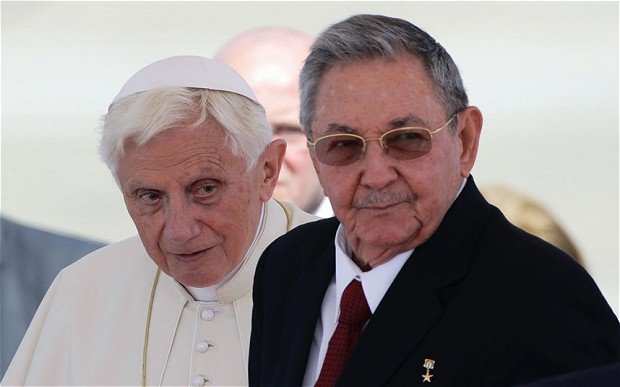
Pope Benedict XVI has arrived in Cuba for a three-day visit – the first papal visit to the communist-run island in 14 years.
The Pontiff, who flew in from Mexico, was welcomed to the eastern city of Santiago by President Raul Castro.
Pope Benedict XVI said he had come as a pilgrim of charity, and would pray for peace, liberty and reconciliation.
The Pope also expressed sympathy for the “just aspirations” of all Cuban people, wherever they were.
Pope Benedict then celebrated Mass before an estimated crowd of some 200,000 in Santiago’s Revolution Square.
He appealed to the audience to reinvigorate their faith “that you may strive to build a renewed and open society, a better society, one more worthy of humanity”.
Before the mass, one man was arrested after shouting: “Down with communism”. Others in the audience booed him for spoiling the atmosphere and shouted “Cuba, Cuba, Cuba”.
President Raul Castro was among those attending the service.
In his speech at the airport, President Raul Castro said socialist Cuba allowed full freedom of religion and enjoyed good relations with the Catholic Church.
President Raul Castro said Cuba shared the Pope Benedict's concerns over global poverty, inequality and environmental destruction
Raul Castro said Cuba shared the Pope’s concerns over global poverty, inequality and environmental destruction.
And he stressed that Cuba was determined to defend its independence in the face of the US embargo.
Both leaders looked back to the visit by the late Pope John Paul II 14 years ago, which Pope Benedict said “was like a gentle breeze that gave new strength to the Church in Cuba”.
Ahead of his visit, Pope Benedict had suggested Cuba’s Marxist structure “no longer corresponds to reality” and called for the adoption of a “new model”.
But on his arrival, he recognized Cuba’s efforts to “renew and broaden its horizons”.
Observers say relations between Church and state have warmed in Cuba in recent years.
Raul Castro has accepted the Church’s mediation on issues such as political prisoners, recognizing its position as the most influential organization outside the communist government.
The Pope’s visit is seen as an effort to further improve relations and increase the role of the Church in Cuban society at a time of rapid change.
Pope Benedict’s visit to Santiago coincides with the 400th anniversary of the discovery of the icon that is Cuba’s patron saint, the Virgin of Charity of El Cobre, which he cited as the main reason for his trip to the island.
Found floating in a bay in 1612 by fishermen, the icon was revered by Cuba’s independence heroes and sits in the foothills of the Sierra Maestra mountains from which Fidel Castro and Ernesto “Che” Guevara staged the 1959 Cuban revolution.
The Pope is expected to make a private visit to the sanctuary where the icon is housed before travelling to Havana later this week for private talks with President Castro.
Church officials have said there is no time in his schedule to meet dissidents.
Opposition groups say dozens of dissidents were detained ahead of the visit, and others were prevented from attending the service in Santiago.
Pope Benedict’s trip to Cuba follows a visit to Mexico, where he celebrated a huge open-air Mass at the Christ the King monument in the central city of Silao.
He urged the 500,000 Catholics gathered for the sermon to look to their faith in response to poverty and crime and to reject violence and revenge.
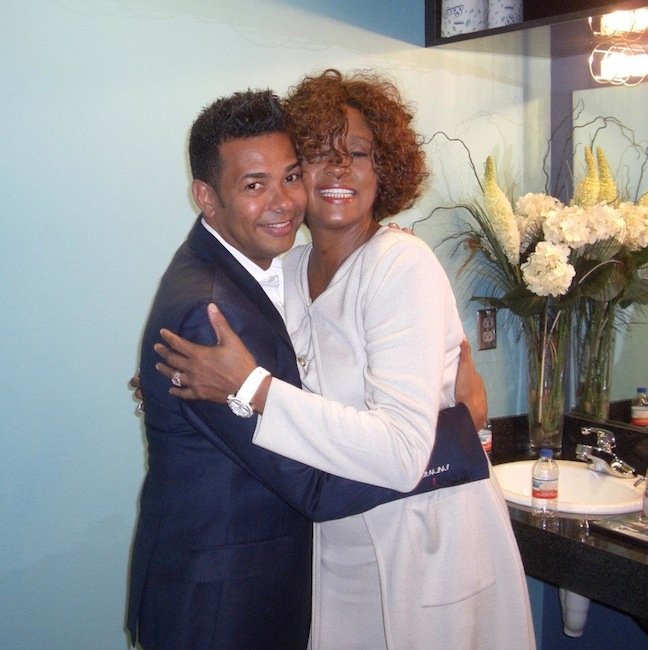
Raffles van Exel is the person who leaked the casket photo of Whitney Houston, personnel at Whigham Funeral Home claimed.
Raffles van Exel isn’t anyone famous or important in the industry, he was just part of various celebrities entourages the UrbanDaily reports.
According to reports on Forbes.com, Riffles van Exel was at two private casket viewings at the funeral home. Employees of Whigham Funeral Home noticed Raffles van Exel as soon as he walked in because he was the only non-family member allowed in the private viewing. It is said he also traveled with the family from Los Angeles to New Jersey on a private jet. He was even provided with his own bodyguard.
Whigham Funeral Home personnel alerted Whitney Houston’s family of Raffles van Exel when the National Enquirer ran the leaked photo on their cover. A source said the Houstons didn’t do anything about Raffles van Exel once they learned of the funeral home’s suspicions. Some of the Whigham employees believe the family is protecting him.
Raffles van Exel is the person who leaked the casket photo of Whitney Houston, personnel at Whigham Funeral Home claimed
Despite the shock of Whitney Houston’s death, Raffles van Exel still made it downstairs to Clive Davis’s party. He was dressed in formal wear, had Whitney Houston’s tickets in his hand, and intended to sit at her table. Just inside the ballroom he was comforted by celebrities to whom he related his story: “I found Whitney.”
Gayle King hugged him. Quincy Jones listened patiently to his story. A security guard said later: “Well, he was up there.” He was also hanging around with Whitney Houston all week prior to her death. On Tuesday when she emerged from a nightclub, looking disheveled, Raffles van Exel appears in a photograph on TMZ like a deer in headlights. He is standing right behind Whitney Houston in a powder blue suit.
Raffles van Exel took Twitter and wrote: “STOP reading the stupid blogs.. Whitney had a great time, she looked amazing. Nothing was wrong, it was just DAMN hot in that club.”
But who is Raffles van Exel?
Raffles van Exel is one of Hollywood’s mysteries. He was first seen in 2005 hanging around the Jackson family during Michael Jackson’s child molestation trial.
After Michael Jackson went abroad, Raffles van Exel was often seen with Michael’s father, Joseph Jackson. He trades on being an “insider” when there’s a scandal. No one really knows him, but he’s always where there’s action and celebrities.
On the internet, Raffles van Exel claims to own a number of companies including Raffles Entertainment.
He was also been sued a couple of times, once by a partner in something called Max Records, Inc., and once by a private aviation company in Los Angeles.
On Twitter Raffles van Exel claims to be managing Chaka Khan. There are plenty of pictures of him on the internet with celebrities.
Raffles van Exel can be seen with everyone from Magic Johnson to Sandra Bullock.
Raffles van Exel came forward, claiming that he wiped Whitney Houston’s hotel room clean of any evidence that would lead to suspicion of illegal activity, Celebuzz reported.
According to a translation of Dutch newspaper The Telegraph, Raffles van Exel came forward four days after Whitney Houston’s death, admitting that he cleaned her hotel room, although he has not revealed what exactly he removed from the scene.
“The room had to be emptied,” Raffles Van Exel, who calls himself a “highly respected entertainment consultant,” told The Telegraph.
“Someone had to do it,” Raffles van Exel told the newspaper.
Raffles Van Exel stopped short of telling The Telegraph what exactly he removed from the suite.
Last week, the Los Angeles County Coroner’s Office declared whitney Houston, 48, died from an accidental drowning in a hotel bathtub with the “effects of atherosclerotic heart disease and cocaine use.”
Sources tell Celebuzz that Beverly Hills police are still investigating how Whitney Houston acquired the drugs that contributed to her death and whether they were hidden from police and first responders.
Raffles van Exel came forward four days after Whitney Houston's death, admitting that he cleaned her hotel room, although he has not revealed what exactly he removed from the scene
No cocaine or drug paraphernalia were found in the suite at the Beverly Hilton Hotel in Beverly Hills.
However, Whitney Houston’s cocaine use appeared to have occurred “in the time period just immediately prior to her collapse in the bathtub at the hotel,” Chief Coroner Craig Harvey said when he announced the findings of his report, last week.
“[Houston’s case] is still an open investigation for us… I can’t disclose any details about the investigation,” BHPD Lt. Mark Rosen told People on March 23.
In various media released, Raffles Van Exel, a Dutch national, touts himself as a “highly respected entertainment consultant” who has “guided some of the world’s most acclaimed executives and celebrities.”
Whitney Houston’s bodyguard found the singer unresponsive in her hotel bathtub on Feb. 11. Since her passing, the headlines have focused on Whitney Houston’s daughter, Bobbi Kristina Brown, who is rumored to be carrying on a romantic relationship with unofficially adopted brother, Nick Gordon.
Whitney Houston’s ex-husband Bobby Brown has also been at the center of much media scrutiny, most recently he was arrested and released later for an alleged DUI in Los Angeles on Monday.
Bobby Brown has been released from jail on $5,000 bail after being arrested on suspicion of driving under the influence in Los Angeles.
According to the booking sheet, Bobby Brown, 43, was pulled over Reseda, California at 12:20 PM PST.
While the police documents simply list the crime as a misdemeanor, TMZ reports that Bobby Brown’s blood alcohol level was over 0.08 and he was arrested for driving under the influence of alcohol.
After being arrested Bobby Brown was taken to Van Nuys jail when he was booked in at 1:22 PM PST.
The singer was later released on bail after the $5,000 was paid.
Bobby Brown is said to have been drunk at the time of his arrest, with a blood alcohol level of .08 or higher.
“We observed intoxication once Mr. Brown was pulled over,” Officer Tiana Reed told RadarOnline.com.
“We put him through four sobriety tests, none of which he passed. He was arrested at 12:20 p.m. and booked into the Van Nuys jail.”
Bobby Brown already has a DUI conviction, being arrested in Georgia back in 1996
The late Whitney Houston’s ex-husband already has a DUI conviction.
Bobby Brown was arrested in Georgia back in 1996.
He eventually pleaded guilty to DUI and served eight days in jail.
This new incident comes amidst reports that Bobby Brown and Whitney Houston were planning to remarry.
A source close to the couple, Derrick Handspike told the National Enquirer: “Bobby told me, <<The world may have thought we were history, but the reality is we were never really apart. We’ve never stopped loving each other.>>”
Derrick Handspike also said that Bobby Brown, who is engaged to Alicia Etheridge, told him: “I could have saved her! If I had been with Whitney, she never would have died in that hotel bathtub. I would have never left her alone!”
It’s claimed that Bobby Brown father’s death drew the estranged couple back together, and they were pictured enjoying dinner together in LA with their 18-year-old daughter Bobbi Kristina with daughter just a couple of nights before Whitney Houston’s death.
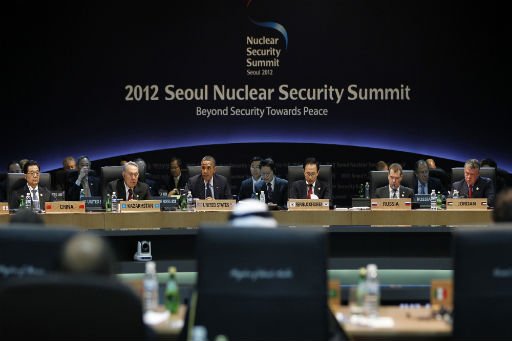
Almost 60 leaders from around the world attending 2012 Seoul Nuclear Security Summit have called for closer co-operation to tackle the threat of nuclear terrorism.
South Korean President Lee Myung-Bak said nuclear terrorism remained a “grave threat”, while US President Barack Obama said action was key.
Chinese President Hu Jintao urged the group to work together on the issue.
The meeting has so far been dominated by North Korea’s plan to launch a rocket next month.
North Korea says the long-range rocket will carry a satellite. The US says any launch would violate UN resolutions and constitute a missile test.
Iran’s nuclear programme was also on the minds of the summit participants, with Barack Obama pledging to meet the leaders of Russia and China on the sidelines to work towards a resolution.
Almost 60 leaders from around the world attending 2012 Seoul Nuclear Security Summit have called for closer co-operation to tackle the threat of nuclear terrorism
At the summit, world leaders are discussing measures to fight the threat of nuclear terrorism, including the protection of nuclear materials and facilities, as well as the prevention of trafficking of nuclear materials.
There are currently no binding international agreements on how to protect nuclear material stored peacefully inside its home country. An amendment seeking to do that is still unratified after seven years.
Addressing the summit, Barack Obama warned there were still “too many bad actors” who were threatening to stockpile and use ”dangerous” nuclear material.
“It would not take much, just a handful or so of these materials, to kill hundreds of thousands of innocent people and that’s not an exaggeration, that’s the reality that we face,” Barack Obama said.
“The security of the world depends on the actions that we take.”
Hu Jintao called for “an international environment conducive to boosting nuclear security” to be created and Lee Myung-Bak called for concrete action to tackle a threat that posed “a grave challenge” to peace.
The summit, attending by almost 60 leaders from around the world, is due to issue a communiqué later in the day.
Meetings on Monday were overshadowed by North Korea’s planned launch, scheduled to take place between 12 and 16 April.
Pyongyang says it is intended to mark the 100th anniversary of the birth of North Korea’s founding leader Kim Il-Sung.
On Tuesday, a North Korean foreign ministry spokesman said that the launch will go ahead as planned and criticized Barack Obama’s stance as ”confrontational”.
North Korea ”will never give up the launch of a satellite for peaceful purposes”’, the spokesman said in a statement in the official KCNA news agency.
A report by the KCNA also described the ”weather satellite” Pyongyang planned to launch as useful for ”the study of weather forecast needed for agriculture and other economic fields”.
Japanese Prime Minister Yoshihiko Noda, speaking at the summit, called on Pyongyang to cancel the rocket launch, saying that it would violate UN Security Council resolutions.
“As such, the international community strongly urges North Korea to exercise restraint and cancel the launch,” Yoshihiko Noda said.
The resolutions were passed after a similar launch in April 2009. Japan is particularly concerned as that rocket was launched over the country three years ago.
The US and Chinese presidents met on Monday on the sidelines of the summit and agreed to co-ordinate their response to any “potential provocation” if Pyongyang went ahead with the launch.
South Korea and the US say North Korea risks further sanctions and isolation if it does not cancel its plans. Seoul has also warned it will shoot down the rocket if it strays over South Korean territory.
Addressing Iran, Barack Obama said on Monday that there was still time to resolve the impasse over its nuclear programme through diplomacy.
“But time is short,” Barack Obama warned.
”Iran must act with the seriousness and sense of urgency that this moment demands.”
Iran insists there is no military element to its programme but Western powers fear it is constructing nuclear weapons.
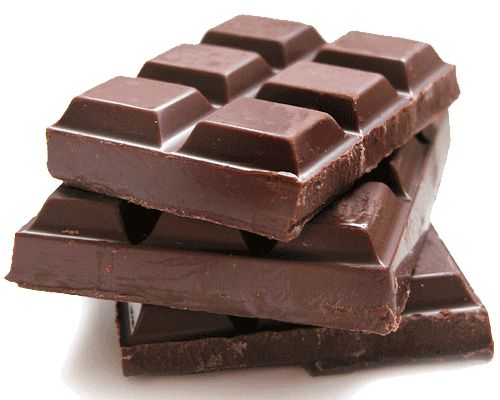
A new US research found that people who eat chocolate regularly tend to be thinner.
The findings come from a study of nearly 1,000 US people that looked at diet, calorie intake and body mass index (BMI) – a measure of obesity.
The study found those who ate chocolate a few times a week were, on average, slimmer than those who ate it occasionally.
Even though chocolate is loaded with calories, it contains ingredients that may favor weight loss rather than fat synthesis, scientists believe.
Despite boosting calorie intake, regular chocolate consumption was related to lower BMI in the study, which is published in Archives of Internal Medicine.
The link remained even when other factors, like how much exercise individuals did, were taken into account.
And it appears it is how often you eat chocolate that is important, rather than how much of it you eat. The study found no link with quantity consumed.
According to the researchers, there is only one chance in a hundred that their findings could be explained by chance alone.
Lead author Dr. Beatrice Golomb, from the University of California at San Diego, said: “Our findings appear to add to a body of information suggesting that the composition of calories, not just the number of them, matters for determining their ultimate impact on weight.”
This is not the first time scientists have suggested that chocolate may be healthy for us.
Other studies have claimed chocolate may be good for the heart.
A new US research found that people who eat chocolate regularly tend to be thinner
Consumption of certain types of chocolate has been linked to some favorable changes in blood pressure, insulin sensitivity and cholesterol level.
And chocolate, particularly dark chocolate, does contain antioxidants which can help to mop up harmful free radicals – unstable chemicals that can damage our cells.
Dr. Beatrice Golomb and her team believe that antioxidant compounds, called catechins, can improve lean muscle mass and reduce weight – at least studies in rodents would suggest this might be so.
Mice fed for 15 days with epicatechin (present in dark chocolate) had improved exercise performance and observable changes to their muscle composition.
They say clinical trials are now needed in humans to see if this is the case.
But before you reach for a chocolate bar, there are still lots of unanswered questions. And in the absence of conclusive evidence, experts advise caution.
While there’s no harm in allowing yourself a treat like chocolate now and again, eating too much might be harmful because it often contains a lot of sugar and fat too.
And if you are looking to change your diet, you are likely to benefit most from eating more fresh fruits and vegetables.
A disturbing video of the Toulouse shootings was sent to Al-Jazeera office in Paris, but the Arabic TV network has said it will not air the footage.
The video appeared to have been recorded during Mohamed Merah’s deadly attacks on soldiers and a Jewish school earlier this month.
The station’s decision not to broadcast the video, which was sent on a USB memory stick along with a letter, came after French president Nicolas Sarkozy and family of the victims had asked for it not to be shown.
The video has been edited into a “montage” accompanied by an Islamic war songs, and was sent in a package post-dated March 21 – the day before 23-year-old Mohamed Merah was killed by French special forces in his home city.
Investigators have already confirmed that Mohamed Merah had a small video camera strapped to his chest when he murdered a Rabbi and his two children, as well as a teenage pupil, at a Jewish school in Toulouse a week ago.
The week before, the self-confessed “Jihad warrior” also filmed his murders of three French soldiers who had fought in Afghanistan.
A video recorded during Mohamed Merah's deadly attacks on soldiers and a Jewish school earlier this month was sent to Al-Jazeera in Paris
Both Al-Jazeera and Le Parisien newspaper confirmed that the video footage had been seen in Paris.
An unnamed source in Le Parisien, Paris’s daily newspaper, said: “Investigators are trying to find out whether the letter was posted Tuesday night by Mohamed Merah himself or by an accomplice on Wednesday morning.”
The existence of an accomplice would end theories that Mohamed Merah was a “lone wolf” assassin who acted out of his hatred for the “enemies” of Islam, and especially Jews.
On Sunday his brother, Abdelkader Merah, 29, appeared before an anti-terrorist judge in Paris and was formally charged with “complicity in murder”.
Abdelkader Merah was remanded in custody, and taken to a high-security prison in Paris, where he is likely to remain until his trial.
He has already told police interrogators that he was “very proud” of what Mohamed Merah did, and admitted to dinning with him just before the attack on the Ozar Hatorah school in Toulouse.
“Signals from Abdelkader’s mobile phone were emitted close to the school at the time of the murders,” said an investigating source.
Among numerous questions Abedelkader Merah is facing is why traces of explosive were found in his car, and how much he knew about the arsenal of weapons his brother was storing.
It is also believed that Abdekkader Merah also helped his brother buy the Yamaha T-Max motorbike used in all the attacks, and to respray the vehicle and to try and remove its tracking device.
Paris security sources believe that both Merah brothers were involved in two local Islamist organizations, Forsane Alizza (The Knights of Pride) and a more militant jihadist network known as the Toulouse group, or Jund al-Khalifah.
Jund al-Khalifah, an Al-Qaeda splinter group, has already admitted to working with a “Youssef the Frenchman”- who is believed to be Mohamed Merah.
The French authorities are facing growing criticism that Mohamed Merah, a known fundamentalist who was on the U.S. no-fly list and had attended an al-Qaeda training camp, was left alone to carry out his crimes.
Jessica Simpson has revealed to Hello! magazine that she has put on a bountiful 40 pounds during her pregnancy.
Jessica Simpson, 31, told Hello! magazine in their latest issue that she has been pleased to take time off dieting.
“I had a great pregnancy. Eating and not having to worry too much about it has been fun,” Jessica Simpson said.
“Taking a break from working out has definitely been fun. But I’m ready for it to be over. I’m ready to have my body back!”
Jessica Simpson, who appears to have been pregnant for much longer than her three trimesters, told the magazine that she can’t wait to deliver her unborn son or daughter.
“I feel like I could pop at any second,” Jessica Simpson said.
Jessica Simpson has revealed to Hello! magazine that she has put on a bountiful 40 pounds during her pregnancy
Jessica Simpson recently celebrated her impending motherhood with a baby shower at her Los Angeles home.
She told Hello! magazine that the bash, which was attended by the likes of Jessica Alba and her sister Ashlee Simpson, had a Charlotte’s Web theme.
The E.B. White book was Jessica Simpson’s favorite fictional story growing up.
During the celebrations, the woman played games and enjoyed several activities including guessing the size of Jessica Simpson’s bump and knitting lessons.
The get together wasn’t just for adults only: the guest list also had the who’s who of celebrity offsprings.
Jessica Alba brought her daughter, Haven, seven months, and Ashlee Simpson brought her son Bronx, three.
Following the party, Jessica Simpson opened her lavish gifts with fiancé Eric Johnson.
“Eric is going to be an unbelievable dad,” Jessica Simpson told Hello!.
“I can’t wait to see if he can master ponytails and braids!”
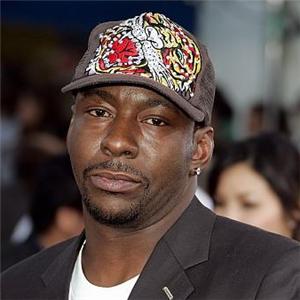
Bobby Brown has been arrested on suspicion of driving under the influence in Los Angeles a couple of hours ago.
Law enforcement sources told TMZ that Bobby Brown was pulled over in Reseda, CA, at 12:20 p.m. PST for allegedly driving while talking on a cell phone.
Bobby Brown, 43, is currently in custody in Van Nuys jail. It’s unclear what substance cops believe Bobby Brown had been using before he got behind the wheel.
Bobby Brown has been arrested on suspicion of DUI in Los Angeles
Whitney Houston’s ex-husband already has a DUI conviction on his record stemming from an arrest in Georgia in 1996. Bobby Brown eventually pled guilty to DUI and served 8 days in jail.
Bobby Brown has been back in the news ever since Whitney Houston died in a Beverly Hills hotel room on February 11. Bobby Brown was turned away from the death scene and left the funeral service early after a disagreement with Whitney Houston’s family.
Few hours after his arrest, sources close to Bobby Brown told TMZ that his “people” are en route to the jail to bail him out.
BMW has decided to recall about 1.3 million of its cars worldwide because of potential battery problems that could, in extreme cases, result in a fire.
The cars involved are 5 and 6 Series models built between 2003 and 2010.
BMW said it had received nine reports of the defect, but was not aware of any injuries resulting from the fault.
Owners should take the vehicles to authorized dealers for repair.
The company said the battery cable cover may be incorrectly mounted.
BMW has decided to recall about 1.3 million of its cars worldwide because of potential battery problems
A company statement said: “In order to carry out a quality measure, BMW is recalling all BMW 5 and 6 Series models of the previous generation, built between 2003 and 2010 and still on the market, for repair at authorized dealers.
“This can result in the electrical system malfunctioning, the vehicle failing to start and, in some cases, to charring or fire.”
The statement said the company would write to all owners and that checks would take about 30 minutes and be free of charge.
Earlier this month, BMW reported record profit margins in its core car business for 2011.
BMW profits jumped by 51% last year to 4.9 billion Euros ($6.43 billion) compared with 3.24 billion Euros from 2010. Sales rose 14% to 68.82 billion Euros.
Dr. Pierre Dukan, the founder of the controversial Dukan Diet, faces an ethics hearing after suggesting children could pass a new exam by staying thin.
The French College of Physicians says Dr. Pierre Dukan breached medical guidelines that say doctors must consider the impact of their comments on the public.
Pierre Dukan faces a disciplinary hearing within six months, and could be struck off.
His diet, said to be followed by some celebrities, recommends avoiding starch and carbohydrates.
Some nutritionists say it can be dangerous.
In January, Dr. Pierre Dukan sparked controversy in France when he said the Baccalaureate exam should include a new anti-obesity option, which 17-year-old children would pass just by staying within recommended weight guidelines.
Dr. Pierre Dukan, the founder of the controversial Dukan Diet, faces an ethics hearing after suggesting children could pass a new exam by staying thin
The College of Physicians said this could have a negative impact on young girls who are already overweight or anorexic.
The College said in a second complaint that Dr. Pierre Dukan was focused more on commerce than medicine, in breach of a part of its code that says medicine must not be practiced like a business.
And the body also said his best-selling diet books meant he was neglecting medicine.
If he is found guilty at his ethics hearing, the punishments he could face range from a reprimand to being struck off the medical register.
Dieting is a major issue in France which like many European countries has seen an increase in obesity. In 2009 the ministry of health said one in six people was obese.
Dr. Pierre Dukan has sold more than seven million copies of his dieting books.
In July last year, Dr. Pierre Dukan lost a libel case against a fellow nutritionist who described the Dukan diet as dangerous.
Dr. Jean-Michel Cohen said the protein-rich diet could cause heart disease and breast cancer.
A new study shows that during medieval times the whole of our planet heated up without the aid of human CO2 emissions.
Earth then cooled down naturally and there was even a “mini ice age”.
A team of scientists led by geochemist Zunli Lu from Syracuse University in New York state, has found that contrary to the “consensus”, the “Medieval Warm Period” approximately 500 to 1,000 years ago wasn’t just confined to Europe.
In fact, it extended all the way down to Antarctica – which means that the Earth has already experience global warming without the aid of human CO2 emissions.
At present the Intergovernmental Panel on Climate Change (IPCC) argues that the Medieval Warm Period was confined to Europe – therefore that the warming we’re experiencing now is a man-made phenomenon.
However, Prof. Zunli Lu has shown that this isn’t true – and the evidence lies with a rare mineral called ikaite, which forms in cold waters.
“Ikaite is an icy version of limestone,” said Prof. Zunli Lu.
“The crystals are only stable under cold conditions and actually melt at room temperature.”
It turns out the water that holds the crystal structure together – called the hydration water – traps information about temperatures present when the crystals formed.
This finding by Prof. Zunli Lu’s research team establishes, for the first time, ikaite as a reliable way to study past climate conditions.
The scientists studied ikaite crystals from sediment cores drilled off the coast of Antarctica. The sediment layers were deposited over 2,000 years.
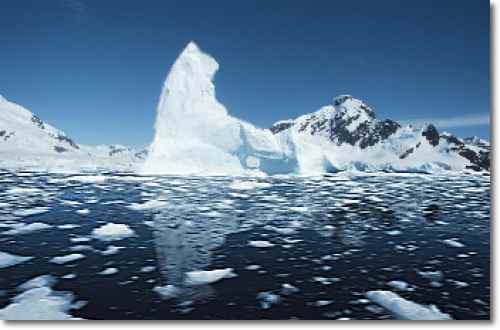
The Medieval Warm Period extended all the way down to Antarctica, which means that the Earth has already experience global warming without the aid of human CO2 emissions
The scientists were particularly interested in crystals found in layers deposited during the “Little Ice Age”, approximately 300 to 500 years ago, and during the Medieval Warm Period before it.
Both climate events have been documented in Northern Europe, but studies have been inconclusive as to whether the conditions in Northern Europe extended to Antarctica.
Prof. Zunli Lu’s team found that in fact, they did.
They were able to deduce this by studying the amount of heavy oxygen isotopes found in the crystals.
During cool periods there are lots, during warm periods there aren’t.
“We showed that the Northern European climate events influenced climate conditions in Antarctica,” Prof. Zunli Lu says.
“More importantly, we are extremely happy to figure out how to get a climate signal out of this peculiar mineral. A new proxy is always welcome when studying past climate changes.”
The research was recently published online in the journal Earth And Planetary Science Letters and will appear in print on April 1.
A genetic flaw may explain why some people get more ill with flu than others, say scientists.
Published in Nature, the research found that a variant of the IFITM3 gene was much more common in people hospitalized for flu than in the general population.
It controls a malformed protein, which makes cells more susceptible to viral infection.
Experts said those with the flaw could be given the flu jab, like other at-risk groups.
Researchers removed the gene from mice. They found that when they developed flu, their symptoms were much worse than those seen in mice with the gene.
Evidence from genetic databases covering thousands of people showed the flawed version of the gene is present in around one in 400 people.
The scientists, who came from the UK and US, then sequenced the IFITM3 genes of 53 patients who were in hospital with flu.
Three were found to have the variant – a rate of one in 20.
The researchers say these findings now need to be replicated in bigger studies. And they add it is probably only part of the genetic jigsaw that determines a person’s response to flu.
A genetic flaw may explain why some people get more ill with flu than others, say scientists
Professor Paul Kellam of the Wellcome Trust Sanger Institute, who co-led the research, said: “At the moment, if someone is in a more vulnerable group because of co-morbidity [another health problem], they would be offered the flu vaccine.
“This is the idea here.”
But he said having this variant would not make any difference to how people were treated.
Prof. Paul Kellam added: “Our research is important for people who have this variant as we predict their immune defences could be weakened to some virus infections.
“Ultimately as we learn more about the genetics of susceptibility to viruses, then people can take informed precautions, such as vaccination to prevent infection.”
Professor Peter Openshaw, director of the Centre for Respiratory Infection at Imperial College London, said: “This new discovery is the first clue from our detailed study of the devastating effects of flu in hospitalized patients.
“It vindicates our conviction that there is something unusual about these patients.”
Sir Mark Walport, director of the Wellcome Trust, said: “During the recent swine flu pandemic, many people found it remarkable that the same virus could provoke only mild symptoms in most people, while, more rarely, threatening the lives of others.
“This discovery points to a piece of the explanation: genetic variations affect the way in which different people respond to infection.
“This important research adds to a growing scientific understanding that genetic factors affect the course of disease in more than one way. Genetic variations in a virus can increase its virulence, but genetic variations in that virus’s host – us – matter greatly as well.”
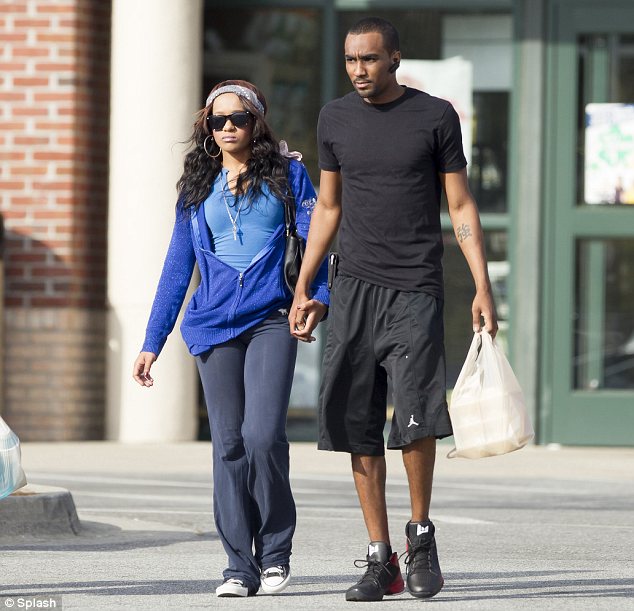
Bobbi Kristina Brown was spotted looking understandably forlorn after Whitney Houston’s cause of death was revealed last week.
Bobbi Kristina Brown, 19, stepped out in Atlanta with her boyfriend Nick Gordon, who appeared to comfort her.
The teenager appeared subdued as she visited a supermarket and kept close to Nick Gordon.
The couple held hands and Nick Gordon, who moved in to Whitney Houston’s home ten years ago, was also seen putting his arm around Bobbi Kristina’s shoulder comforting her.
Bobbi Kristina Brown and Nick Gordon held hands as they stepped out to visit a supermarket in Atlanta
Last week, the LA County Coroner released details on the cause of Whitney Houston’s death.
The pop icon had cocaine in her system when she drowned in a hotel bathtub on February 11, according to the official report.
Whitney Houston sunk into the bathwater after suffering a massive heart attack caused in part by her prolonged drug abuse.
Following the news, Whitney Houston’s family released a statement that says: “We are saddened to learn of the toxicology results, although we are glad to now have closure.”
And her mother Cissy Houston is reported to be “shocked” to learn that her daughter was still using drugs at the time of her death.
According to TMZ, Cissy Houston believes her daughter began taking drugs again due to stress over her comeback, but thought Whitney to be sober as she filmed the movie Sparkle.