The Roman Catholic Church in the Australian state of Victoria has confirmed that more than 600 children have been sexually abused by its priests since the 1930s.
The Archbishop of Melbourne, Denis Hart, described the figures as “horrific and shameful”.
They were released in a submission to a state parliamentary inquiry into the handling of abuse cases.
Campaigners say the true number of abuse victims could be up to 10,000.
Australian Roman Catholic Church has confirmed that more than 600 children have been sexually abused by its priests since the 1930s
In its submission, the church said the 620 cases went back 80 years with the majority taking place between the 1960s and the 1980s.
It says it is still investigating a further 45 cases.
In a statement, Archbishop Denis Hart said it was important to be open “about the horrific abuse that has occurred in Victoria and elsewhere”.
“We look to this inquiry to assist the healing of those who have been abused, to examine the broad context of the church’s response, especially over the last 16 years, and to make recommendations to enhance the care for victims and preventative measures that are now in place,” the statement said.
Campaign groups say that many cases of abuse have gone unreported, and they believe the true number of victims is closer to 10,000 in Victoria alone.
Abuse of children by Roman Catholic priests has been a major issue in Australia recent years.
During a visit to Australia in July 2008, Pope Benedict XVI met some of the victims and made a public apology for the abuse.
Republican presidential candidate Mitt Romney has released his much-anticipated 2011 tax return, which shows he paid a rate of 14.1%.
Mitt Romney paid $1.9 million in taxes in 2011, on $13.7 million of income.
The private equity tycoon has already released his 2010 tax return, for which he paid about $3 million, a 13.9% rate.
The top rate of income tax in the US is 35%, but Mitt Romney lives mainly on income derived from his investments, for which only 15% tax is payable.
Critics, including President Barack Obama, whom Mitt Romney will challenge for the White House in November, have called on him to release more tax returns.
Mitt Romney has released his much-anticipated 2011 tax return
Mitt Romney’s 2011 tax rate of 14.1% compares with a previous estimate of 15.4% for the year by his aides. The Romneys filed their 2011 return with the Internal Revenue Service on Friday after applying for an extension earlier in the year.
The campaign also released a letter from his accountants with a summary of his returns from 1990-2009, which said he paid an effective average of 20.2% over the period, with the lowest return at 13.66%.
The move came amid attempts by the Romney campaign to shift the focus of recent days away from remarks he made at a private donor dinner.
In the video secretly recorded earlier this year, he disparages Barack Obama voters, saying they pay no income tax.
Mitt Romney’s critics say he should follow the example of his father, former Michigan Governor George Romney, who released a dozen years of tax returns during his own unsuccessful run for president in 1968.
But the former Massachusetts governor has said he is following 2008 Republican White House candidate John McCain’s example of releasing two years of taxes.
Barack Obama’s 2011 tax return showed he paid an effective rate of 20.5%, on an income of $789,674.
On average, US middle-income families, those making from $50,000 to $75,000 a year, pay 12.8%, according to congressional research.
As he released his 2010 return in January this year, Mitt Romney said he had paid “all the taxes that are legally required and not a dollar more”.
But according to Brad Malt, the trustee that controls Mitt Romney’s wealth as he runs for president, the Romneys donated $4 million to charity in 2011, claiming $2.25 million of it as a deduction.
“The Romneys thus limited their deduction of charitable contributions to conform to the Governor’s statement in August, based upon the January estimate of income, that he paid at least 13% in income taxes in each of the last 10 years,” Brad Malt said.
The campaign has stressed that the blind trust run by Brad Malt means that the candidate is making no decisions on how his money is invested.
Tax law experts say the release of the 2011 return – and the summary of the past 20 years – will do little to silence questions about Mitt Romney’s past tax liability, including the source of a $100 million retirement account and the tax advantages of his offshore investments.
A discovery about how cells die could lead to ways to protect fertility in women having cancer treatment, researchers suggest.
Australian scientists found two specific proteins caused the death of early egg cells in the ovaries.
Blocking them meant cells survived the effects of radiotherapy, according to the study published in the journal Molecular Cell.
The researchers from the Walter and Eliza Hall Institute, Monash University and Prince Henry’s Institute of Medical Research looked at egg cells called primordial follicle oocytes, which provide each woman’s lifetime supply of eggs.
A discovery about how cells die could lead to ways to protect fertility in women having cancer treatment
They found that, when the DNA of cells is damaged through chemotherapy or radiotherapy, two proteins called Puma and Noxa cause the eggs to die.
This causes many female cancer patients to become infertile.
Low numbers of egg cells can also lead to a woman going through an early menopause.
When these cells were manipulated so they did not have the Puma protein, they did not die after being exposed to radiation therapy.
Prof. Jeff Kerr, from Monash University, who worked on the study said: “This might ordinarily be cause for concern because you want damaged egg cells to die so as not to produce abnormal offspring.”
But he added: “To our great surprise we found that not only did the cells survive being irradiated, they were able to repair the DNA damage they had sustained and could be ovulated and fertilized, producing healthy offspring.
“When the cells were also missing the Noxa protein, there was even better protection against radiation.”
Prof. Clare Scott, from the Walter and Eliza Hall Institute of Medical Research, who also worked on the lab and animal research, added: “It means that in the future, medications that block the function of Puma could be used to stop the death of egg cells in patients undergoing chemotherapy or radiotherapy.
“Our results suggest that this could maintain the fertility of these patients.”
The researchers said that the discovery could also mean it would be possible to slow the loss of egg cells from the ovaries, thereby delaying early menopause.
Afghanistan has blocked the entry of all newspapers from Pakistan, saying they serve Taliban militants.
In its order, the interior ministry said the newspapers “are a propaganda resource of the Taliban spokesmen” and has ordered police forces in east Afghanistan to confiscate all copies.
The latest move comes amid increasing tension between the two countries.
Afghanistan has blocked the entry of all newspapers from Pakistan, saying they serve Taliban militants
Afghanistan has urged Pakistan to immediately stop shelling in the border province of Kunar.
The Afghan interior ministry order focuses specifically on blocking entry of the papers at Torkham, a busy border crossing.
It authorizes police to impound Pakistani newspapers in the three eastern provinces of Nangarhar, Kunar and Nuristan.
Referring to the reasons for the move, the ministry said news in the Pakistani newspapers “is not based in reality and it is creating concerns for our countrymen in the eastern provinces of Afghanistan”.
Correspondents say that cross-border violence has become a highly sensitive issue in Afghanistan, where many are wary of Pakistan’s historic ties to the Taliban.
At a UN Security Council meeting on Thursday, Afghan Foreign Minister Zalmai Rassoul said the attacks had killed dozens of civilians.
The UN says around 4,000 people have been displaced due to cross-border shelling.
Last month, Afghan President Hamid Karzai and his Pakistani counterpart, Asif Ali Zardari, agreed to send a joint military delegation to examine the shelling across their border.
Islamabad says that the violence is being carried out by Pakistani Taliban fighters sheltering in Afghanistan, who have infiltrated the border to resume attacks on its security forces.
Pakistan says it is only targeting militants who flee from their territory and try to seek a safe haven in Afghanistan.
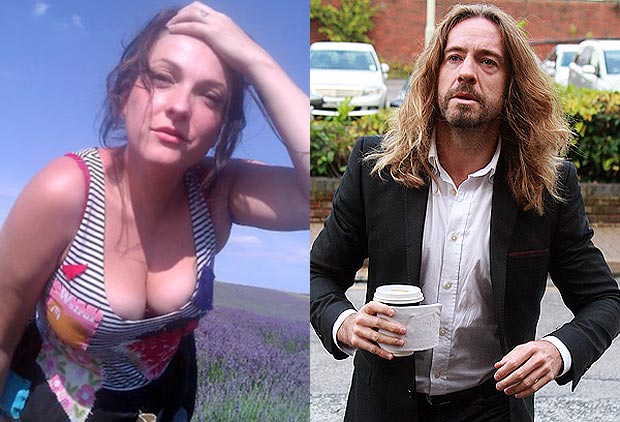
A warrant has been issued for the arrest of South African politician Julius Malema, his lawyer says.
South Africa’s elite Hawks unit has been investigating corruption claims against Julius Malema for months, but the details of the charges are not known.
The authorities have refused to comment on reports about the arrest warrant, but lawyer Nicqui Galaktiou says they have confirmed its existence to her.
Julius Malema, 31, once a close ally of President Jacob Zuma, is now a fierce critic.
He strongly denies allegations he profited from government contracts in his home province of Limpopo.
A warrant has been issued for the arrest of South African politician Julius Malema
According to the weekly City Press newspaper, he will be charged with fraud, corruption and money-laundering.
Nicqui Galaktiou told Reuters news agency Julius Malema would appear in court next week and would not be jailed or arrested before then.
“We don’t have a confirmed date yet. We have not seen the warrant of arrest. We don’t know what the charges are,” she said.
Julius Malema on Friday afternoon said he was not aware of the reported charges and was trying to find out if the warrant had been issued.
He has become well known in South Africa for his opulent lifestyle, wearing expensive watches and living in an upmarket district of Johannesburg.
When asked where the money comes from, he says his friends gave it to him.
Asked whether he has ever been involved in any corruption, Julius Malema said: “I’ve never been involved in any corrupt activity but I wouldn’t argue with the Hawks, if they say they’ve got a case for me to answer. I will wait for them the day they come to speak to me,” he responded with confidence during a packed media conference.
Julius Malema, known for his fiery rhetoric, was expelled as head of the Youth League of the governing African National Congress (ANC) in April but has recently held several rallies in the Rustenburg area, scene of a violent mining dispute.
He has been calling for a national strike and has accused Jacob Zuma of ignoring the plight of poor black South Africans.
On Monday, Julius Malema was banned by police from addressing striking workers from the Marikana mine. The miners agreed to a pay offer the next day and have returned to work.
“Not even the president can stop me. Not even death can stop me. My ideas are out there. Even if I am no more, people will continue those ideas,” Reuters quotes him as saying at a news conference on Tuesday.
Julius Malema’s supporters will see the reported charges as a political witch-hunt, our correspondent says.
But he points out that the investigation began long before the recent strikes.
The ANC is due to meet in December to decide whether Jacob Zuma will remain as party leader going into elections due in 2014.
Julius Malema and others are campaigning for him to be replaced.
Who is Julius Malema?
• Born 3 March 1981 in Limpopo province
• Mother was domestic worker and single parent
• Joined African National Congress (ANC) aged nine
• Elected leader of its youth wing in April 2008
• Convicted of hate speech in March 2010 and September 2011
• Expelled from ANC in April 2012 for sowing divisions in party
• Toured mines following the shooting of 34 miners in Marikana by police in August 2012, urging workers to make the sector “ungovernable”
British scientists have identified a gene flaw linked to disc problems that are a common cause of lower back pain.
The study, published in the Annals of Rheumatic Diseases, looked at 4,600 people and found the PARK2 gene was linked to age-related disc problems.
A third of middle-aged women have problems with at least one spinal disc – and the condition is known to be inherited in up to 80% of patients.
Experts said finding the gene could lead to new treatments being developed.
Back pain costs the UK about £7 billion ($11 billion) a year in sickness leave and treatment costs, but the causes of the condition are not fully understood.
In lumbar disc degeneration (LDD), discs become dehydrated and lose height, and the vertebrae next to them develop bony growths called osteophytes, leading to lower back pain.
The King’s College London researchers carried out MRI scans of all those in the study and looked at differences in their genetic make-up.
They found variants of the PARK2 gene appeared to have an effect in people with degenerate discs and influence the speed at which their condition deteriorated.
Scientists have identified a gene flaw linked to disc problems that are a common cause of lower back pain
The researchers, funded by the Wellcome Trust and Arthritis Research UK, say more research is now needed to find out how the gene influences the condition.
But they suggest it could be switched off in people with LDD.
And they say it could be that environmental factors – such as diet and lifestyle – could make what are known as epigenetic changes to the gene.
The researchers say that once the mechanism is fully understood, their finding could lead to the development of new treatments of lower back pain.
Dr. Frances Williams, of the department of twin research and genetic epidemiology at King’s College London, who worked on the study, said: “We know that people whose discs wear out are at increased risk of episodes of lower back pain, but normal human discs are hard to get hold of to study so until now our knowledge of normal human biology was incomplete.
“Further work by disc researchers to define the role of the PARK2 gene will, we hope, shed light on one of most important causes of lower back pain.
“It is feasible that if we can build on this finding and improve our knowledge of the condition, we may one day be able to develop new, more effective treatments for back pain caused by this common condition.”
Prof. Alan Silman, medical director at Arthritis Research UK, said: “Lumbar disc degeneration is a common cause of lower back pain, and it’s known that up to 80% of cases have a genetic basis, but this is the first time a gene has been identified as linked to this often painful and disabling condition.
“It’s a promising start and provides us with the first clue to the genetic basis of this condition, and with further research, may potentially lead to the development of more effective treatments.”
Facebook has decided to suspend the facial-recognition tool that suggests when registered users could be tagged in photographs uploaded to its website.
The move follows a review of Facebook’s efforts to implement changes recommended by the Data Protection Commissioner of Ireland last year.
Billy Hawkes, who did not request the tool’s total removal, said he was encouraged by the decision to switch it off for users in Europe by 15 October.
It is already unavailable to new users.
Facebook has decided to suspend the facial-recognition tool
Billy Hawkes said Facebook “is sending a clear signal of its wish to demonstrate its commitment to best practice in data protection compliance”.
Richard Allan, Facebook director of policy for Europe, Middle East and Africa, said: “The EU has looked at the issue of securing consent for this kind of technology and issued new guidance.
“Our intention is to reinstate the tag-suggest feature, but consistent with new guidelines. The service will need a different form of notice and consent.”
The facial-recognition tool was not part of the company’s commercial activities and did not generate many user complaints, he added.
In December 2011 the Data Protection Commissioner (DPC) gave Facebook six months to comply with its recommendations.
They included more transparency about how data is used and individuals are targeted by advertisers and more user control over privacy settings.
On Friday, Richard Allan said: “When you think of the very wide ranging investigation the DPC carried out into Facebook, they looked at every aspect of our service, and our overall scorecard is very good.
“In the vast majority of areas the DPC looked into, they found we are behaving in a way that’s not just compliant but a reasonable model for good practice.”
Also on Friday, the DPC said there were still some areas where more work was required, and it has asked for another update from Facebook in these areas in four weeks’ time.
Deputy Commissioner Gary Davis said the DPC remained concerned about whether photos marked for deletion were actually being deleted within 40 days as required under Irish Data Protection law.
“We also want some clarity about inactive and deactivated accounts – we think Facebook should contact those users after a period of time and see whether they want to come back,” he said.
Many people did return to the website after long periods away, Gary Davis said, but users with inactive accounts should be contacted within two years of their last log-in.
Gary Davis also said he would like Facebook to do more to educate existing users about its privacy policies.
“We would also like more information in relation to advertising – there is the potential for the use of terms that could be sensitive – such as ethnicity, trade union membership, political affiliation – to be used by advertisers to target others based on those words,” he said.
But he added: “The discussions and negotiations that have taken place, while often robust on both sides, were at all times constructive with a collective goal of compliance with data protection requirements.”
At least 15 people have been killed during violent protests which erupted on the streets of Pakistan’s main cities in anger at anti-Islam film Innocence of Muslims made in the US.
Ten people were killed in the port city of Karachi and a further five died in the north-western city of Peshawar, hospital officials said.
Protesters also breached the diplomatic enclave in the capital, Islamabad, near the US embassy.
There has been widespread unrest over the amateur film, Innocence of Muslims.
Dozens of people have been reported wounded and some were in a critical condition.
Protests have already left several people dead around the world, including Pakistan, where the government had appealed in advance for peaceful protests, declaring a holiday and “day of love” for the Prophet Muhammad.
At least 15 people have been killed during violent anti-film protests which erupted on the streets of Pakistani main cities
Although US targets have borne the brunt of protests against the film, anti-Western sentiment has been stoked further by caricatures of the Prophet Muhammad published this week in the satirical French magazine, Charlie Hebdo.
France shut embassies and other missions in around 20 countries across the Muslim world on Friday.
Protests were banned in France itself and in Tunisia, where France is the former colonial power, but there were widespread demonstrations elsewhere:
• A peaceful protest took place outside the US embassy in the Malaysian capital, Kuala Lumpur
• Some 3,000 people marched in the southern Iraqi city of Basra
• Thousands burned US and French flags in the Bangladeshi capital, Dhaka
• Crowds rallied in Baalbek in southern Lebanon in a protest organized by the Shia militant group, Hezbollah, burning US and Israeli flags
• There were fears of violence in the Libyan city of Benghazi where the US ambassador and three other American officials were killed in an attack on the US consulate in the city on 11 September
But it was in Pakistan’s major cities that protesters took to the streets in big numbers and tried to march on US diplomatic missions.
The worst of the violence took place in the country’s biggest city, Karachi, and the north-western city of Peshawar, close to Pakistan’s lawless tribal belt.
Police in Karachi fired live bullets in the air to disperse the crowds and one of those killed was a policeman. Health officials said 10 bodies were taken to two hospitals.
Several cinemas and banks were set on fire and there were reports of looting.
In Peshawar, protesters ransacked cinemas and a driver for Pakistan’s ARY TV was killed when police opened fire on the crowd.
In the capital, Islamabad, which saw its first clashes between protesters and security forces on Thursday, a police checkpost was burned as demonstrators breached the “red zone” where the main embassies and government offices are based.
Police used live rounds and tear gas as the crowd swelled to thousands of people.
The focal point of people’s anger was the US embassy and he had seen more people injured in one hour than all of Thursday.
The low-budget film that has prompted the unrest was made in the US and is said to insult the Prophet Muhammad.
Its exact origins are unclear and the alleged producer for the trailer of the film, Nakoula Basseley Nakoula, is in hiding.
Anti-US sentiment grew after a trailer for the film dubbed into Arabic was released on YouTube earlier this month.
US citizens have been urged not to travel to Pakistan and the US embassy has paid for adverts on Pakistani TV showing President Barack Obama and Secretary of State Hillary Clinton condemning the film.
Good Morning America co-anchor Robin Roberts underwent her bone marrow transplant yesterday, surrounded by her closest friends and family.
The procedure, which saw donor stem cells from her sister Sally Ann injected into her body, took just five minutes, after which the group broke into a rendition of Ain’t No Mountain High Enough.
Robin Roberts, 51, who was diagnosed with myelodysplastic syndrome, or MDS, earlier this year – a disease which attacks blood cells and bone – told GMA afterwards: “I will now wait and anxiously watch and see what happens.
“In the next seven to 10 days my counts will continue to go up and we’ll be on to phase three, which will be get out of here. Get out of here. Go home. It’s a journey.”
Robin Roberts underwent her bone marrow transplant yesterday, surrounded by her closest friends and family
The atmosphere beforehand was informal, with her sister by her side and a visit from her pastor to lead the group in prayer.
On arrival, surgeon Sergio Giralt was greeted with applause. He acknowledged the volume of people in the small room, joking: “What part of <<Let’s not have crowds did we not understand?>>”
ABC News co-workers Diane Sawyer and Sam Champion were among the intimate group present.
Sam Champion told GMA this morning: “It was emotional, scary but at the same time it was exhilarating. I don’t think I’ll ever forget the power and the love that was in that room.”
Though it is expected to be at least ten days before Robin Roberts starts to feel any improvement, her doctors say that she is in good spirits and recovering well.
Oncologist Dr. Gail Roboz revealed: “This morning [Robin] sounds energized and she wants to be out of bed and the end of the email was <<I want to go home>> with an exclamation point.”
The GMA host will be closely monitored by doctors over the next few days, as they wait to see if the new donor stem cells will take hold.
It is also crucial that they protect Robin Roberts from any possible germs or infection, as her immune system has been wiped out in preparation for the new cells, and she is vulnerable until they take hold.
Robin Roberts released a video to fans early yesterday morning, in which she thanked them for their love.
She looked frail in the film, most likely recorded the day prior, after eight days of intensive chemotherapy.
The treatment appeared to have taken its toll and Robin Roberts had clearly lost a significant amount of weight as she addressed the camera.
After raising a staggering £1,917 ($3,000) the first time it appeared at auction, another piece of cake from the iconic wedding of the Duke and Duchess of Cambridge is set to go under the hammer.
The boxed fruit cake, supplied to online auction house PFC Auctions by an anonymous seller, was among 650 pieces of wedding cake given to guests at the afternoon reception of the royal wedding held at Buckingham Palace last April.
The cake, designed by Fiona Cairnes, comes in a presentation tin commissioned and designed by Peter Windett and Sally Mangum.
Three other slices of royal wedding cake are also set to be sold that the same auction – a piece of the Royal wedding cake from the 1981 marriage of Prince Charles and Lady Diana Spencer, one from the wedding of Prince Andrew and Sarah Ferguson in 1986 and a slice of the original wedding cake from the marriage of Princess Anne and Captain Mark Phillips on 14 November 1973.
Kate and William wedding cake was designed by Fiona Cairnes
All pieces of cake are reported to be incredibly well preserved.
“These slices of cake are some of the most personal items of royal memorabilia on the market.
“They offer collectors and Royal enthusiasts the chance to own a highly exclusive item from some of the most celebrated weddings in history.”
“There is a vast community of Royal collectors not just in the UK, but around the globe and as such we anticipate worldwide interest in the cake,” said a spokesperson for PFC Auctions.
The demand for Royal memorabilia is reflected in the prices these items tend to bring at auction.
The last piece of Charles & Diana’s cake sold at PFC Auctions of £1,756 ($2,750) in May 2012.
It surpassed the previous record of £1,000 ($1,570), set in August 2008 – corresponding to a 16.20 pa increase.
And it’s not just the cakes that are performing well.
According to the auction house, signed photos of Princess Diana increased in value by 616% between 2000 and 2012.
Salma Hayek has admitted that she achieves her skin perfection by never washing her face when she wakes up in the morning.
Salma Hayek, 46, looks much younger than her age, and she attributes her less than hygienic regime as the secret behind her skin perfection.
Speaking to Kate Garraway on ITV’1 Lorraine, Salma Hayek said: “OK, one tip – always wash your face at night. Clean it.
“You don’t have to wash it, but you have to clean it really, really well at night.”
Salma Hayek has admitted that she achieves her skin perfection by never washing her face when she wakes up in the morning
The actress said: “One strange tip – don’t wash it in the morning, at all, never. Because at night your skin is rebuilding some of the oils that you need to keep your skin young, and it balances the PH.
“So in the morning if you take them off – you can splash it with water, do something mild – but you don’t want to get rid of that. And if your skin is dirty in the morning, it means you didn’t clean well at night.”
With one secret out the bag, Salma Hayek was happy to share even more of her knowledge on maintaining a youthful appearance.
The mother-of-one developed her own range of beauty products that she uses all the time and only sells in one store over in America.
Salma Hayek said: “I’m not very trim, but I don’t have as many wrinkles as probably I should. But I do use, I use my products but you don’t sell them, I just sell them in only one drug store in the States.
“And I do a lot of that for 10 years, and I’ve been using that stuff even since before, so I use creams, it’s creams.”
The Mexican born actor stars in new Oliver Stone movie Savages, alongside John Travolta, Benicio Del Toro and Taylor Kitsch.
The big budget thriller tells the tale of warring drug cartels and the violence that the narcotics business contributes to society.
Salma Hayek said of her role in the film: “I am the queen of the most important drug cartel in Mexico.
“I think it’s important people see that for people who consume drugs and they think, ‘There’s nothing wrong with just a little bit, I’m not going to die from it’, you might not die from it, but you buying it – for that to get to you, a lot of people died.
“So the people that use drugs somehow contribute to this violence and this business.”
From London to New York and to Sydney, fans have camped outside Apple stores as the iPhone 5 went on sale around the world today.
As Apple opened the doors of its stores around the world, staff greeted the first customers with high fives and cheers.
The dozens of die-hard Apple fans had swollen into huge queues of hundreds by the early hours of Friday morning, as excitement reached fever pitch hours before the release of the updated handset.
From London to New York and to Sydney, fans have camped outside Apple stores as the iPhone 5 went on sale around the world
The latest Apple gadget became available from 8:00 a.m., as hundreds were cheered into the brand’s store in Covent Garden, central London.
Apple store workers dressed in blue T-shirts formed a passageway and high-fived customers who had been waiting outside the shop for up to a week.
The phone is already guaranteed to be a best-seller, with the company reporting pre-orders around the world of two million in just 24 hours and many customers not expected to receive theirs until October.
IT businessman Ryan Williams was the first person in the queue and said the atmosphere as he picked up the phone was “crazy”.
Ryan Williams, 22, from Swanley in Kent, had been camping out in Covent Garden for a week with his friend Peter King.
The frontrunners for the gadget had been queuing for days and despite a cold snap last night, said the enjoyed sitting with their mates knowing they are going to make “more than a weeks wages” for their troubles.
In the UK the iPhone 5 went on sale at 8:00 a.m. for between £529 ($830) and £699 ($1,100).
Richard Wheatcroft, 30, owner of crowdfuelledcauses.com, said when they get the phones, they will probably sell them on eBay if they cannot get an offer on their spaces.
While industry experts have suggested that android phones like the Samsung S3 now match the iPhone, Apple fans in the queue at 1:00 a.m. on Friday morning still had faith in the iconic product.
French top legal authority Constitutional Council has rejected a plea from animal rights campaigners to ban bullfighting.
The campaigners wanted the fights categorized as cruelty to animals.
But the judges said the “traditional” fights, held in areas of southern France, “do not harm people’s protected constitutional rights”.
More than 1,000 bulls are killed annually in French bullfights, the AFP news agency reports.
French top legal authority Constitutional Council has rejected a plea from animal rights campaigners to ban bullfighting
Although bullfighting originated in neighboring Spain, it took root in France a century and a half ago. Fights – known as corridas in Spain – are especially popular in the Nimes and Arles areas.
A ban on bullfighting came into force in Spain’s Catalonia region this year, after lawmakers voted for it last year – the first such ban in the country’s mainland.
A recent opinion poll in France suggested 48% support for a ban, although earlier polls suggested as many as two-thirds of the French electorate would back a ban.
France’s Interior Minister Manuel Valls, born in Barcelona, spoke in favor of bullfighting earlier this month.
Bullfights are banned in some parts of France. Animal rights groups are now considering taking the issue to the European Court of Human Rights.
New protests are under way in Muslim countries against anti-Islam film Innocence of Muslims made in the US.
In Pakistan, a government-declared “special day of love” for the Prophet Muhammad has seen violent clashes and at least one death in the northern city of Peshawar, and clashes elsewhere.
The US has paid for adverts on Pakistani TV that show President Barack Obama condemning the film.
There has been widespread unrest over the amateur film, Innocence of Muslims.
The protests have already claimed several lives around the world.
New protests are under way in Muslim countries against anti-Islam film Innocence of Muslims made in the US
Although the US has borne the brunt of protests, anti-Western sentiment has been stoked further by caricatures of the Prophet Muhammad published in satirical French magazine Charlie Hebdo.
In Peshawar, protesters attacked and ransacked two cinema buildings. A driver for a Pakistani TV station was killed when police opened fire to disperse protesters, seven of whom were reported wounded.
Clashes between police and protesters are also being reported from the cities of Rawalpindi, Lahore and Karachi.
In the capital Islamabad, which saw fierce clashes between protesters and security forces on Thursday, the security forces have effectively sealed off large parts of the city. Rubber bullets were fired by police during skirmishes at one of the entrances to the city.
Dozens of protests against the film had already been held across Pakistan over the past week – killing at least two people – but Thursday was the first time violence had erupted in the capital.
All major political parties and religious organizations have announced protests for Friday, along with trade and transport groups.
The Pakistani authorities have urged people to demonstrate peacefully, with mobile phone services cut across the country to reduce security risks.
Meanwhile, the US charge d’affaires Richard Hoagland was summoned to the Pakistani Foreign Office and an official protest was lodged with him. He is reported to have responded that the US government had nothing to do with the film.
The US state department has issued a warning against any non-essential travel to Pakistan.
France has closed its embassies and other official offices in about 20 countries across the Muslim world on Friday after French magazine Charlie Hebdo published cartoons of the Prophet Muhammad, including two drawings showing him naked.
French Muslim leaders condemned the magazine and said an appeal for calm would be read in mosques across the country on Friday.
Charlie Hebdo sold out on Wednesday but is publishing another 70,000 copies, to coincide with Friday prayers.
In Tunisia – where France is the former colonial power – the government has banned Friday protests.
Calls to protest against the caricatures have turned up in Tunisian social media. Interior Minister Ali Larayedh said it was believed that some groups were planning violent protests after Friday prayers.
There are also fears of violence in the Libyan city of Benghazi after rival groups said they would take to the streets.
One group intends to denounce extremism and urge militias to disband, following an attack on the US consulate in the city on 11 September that killed the US ambassador and three other American officials.
Throughout the week, Benghazi residents have left wreaths and placards condemning the attack outside the US mission.
Meanwhile, Ansar al-Sharia, the jihadist militia blamed by some local people for the attack, called for protests “in defence of the Prophet Muhammad”. Both protests are scheduled for the same time.
In the Malaysian capital, Kuala Lumpur, more than 2,000 people protested peacefully in front of the US embassy.
Some protesters were holding signs insisting that insulting religion was not freedom of speech.
In Cairo, where the protests against the film began, Egyptian security forces are patrolling the streets around the US embassy.
Radical Islamists have clashed with security forces there in recent days, although President Mohamed Mursi’s Muslim Brotherhood has stayed away from the unrest, only condemning the film and calling for peaceful demonstrations.
The low-budget film that sparked the controversy was made in the US and is said to insult the Prophet Muhammad.
Its exact origins are unclear and the alleged producer for the trailer of the film, Nakoula Basseley Nakoula, is in hiding.
Anti-US sentiment grew after a trailer for the film dubbed into Arabic was released on YouTube earlier this month.
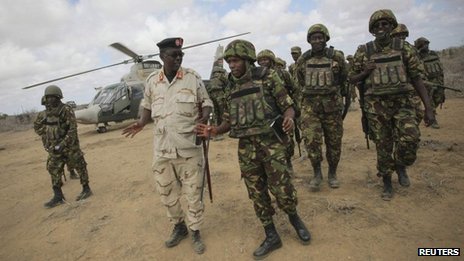
The South Korean navy has fired warning shots at North Korean fishing boats that crossed disputed borders in the Yellow Sea, reports say.
No shots hit the vessels which retreated, said an Associated Press report citing an unnamed official with South Korea’s Joint Chiefs of Staff.
The official also said that no North Korean navy ships were involved.
The South Korean navy has fired warning shots at North Korean fishing boats that crossed disputed borders in the Yellow Sea
Skirmishes are common in the area claimed by both sides on the Korean peninsula.
A South Korean defence ministry spokesman told AFP news that there were six North Korean boats.
“Our naval patrol boats twice fired machine gun rounds at the fishing vessels. Afterwards the North Korean vessels retreated to their territory,” the unnamed official said.
Reports say this was the latest in a recent series of incidents involving North Korean fishing vessels entering South Korean waters across the disputed border.
A senior South Korean military official was quoted as saying that the military will ”promptly and sternly respond, without hesitation” if the boats continue to cross the border, in a Yonhap news agency report.
A British-American team that came up with an equation to predict the shape of a ponytail has earned itself an Ig Nobel.
Patrick Warren, Raymond Goldstein, Robin Ball and Joe Keller picked up their prestigious award at a sellout gala ceremony at Harvard University.
The Ig Nobel Prizes are an American parody of the Nobel Prizes and are given each year, usually in early October, for ten unusual or trivial achievements in scientific research.
Other 2012 winners included teams that studied how chimps could recognize each other from their behinds and why coffee will spill out of a moving mug.
But although some of this celebrated research might sound daft, much of it is intended to tackle real-world problems and gets published in peer-reviewed, scholarly journals.
Dr. Patrick Warren, who is a researcher for Unilever in the UK, said he was thrilled to pick up his Ig.
“I’m amazed that a piece of work I’ve done has attracted so much attention,” he said.
“My field, statistical physics, is not something that many will have heard of, so I’m really pleased we’ve done something that’s caught the imagination.”
His and his co-workers’ research produced what has become known as the “Ponytail Shape Equation”.
It takes into account the stiffness of the hair fibres on the head, the effects of gravity and the presence of the random curliness or waviness that is ubiquitous in human hair to model how a ponytail is likely to behave.
The Ig Nobel Prizes are an American parody of the Nobel Prizes and are given each year for ten unusual or trivial achievements in scientific research
Together with a new quantity the team calls the Rapunzel Number, the equation can be used to predict the shape that hair will take when it is drawn behind the head and tied together.
“I’ve been working on this for a long time,” said Dr. Patrick Warren.
“At Unilever, as you can imagine, there is a lot of interest because we sell a lot of haircare products. But there are wider applications where you have a lot of fibres coming together, such as in fabrics.
“I’ve also wondered if we can contribute something to the whole area of computer animation. Hair, for example, is something that is very hard to make look natural in animated movies.”
Thursday’s Ig Nobel ceremony at Harvard’s Sanders Theatre was the 22nd since the American science humor magazine, Annals of Improbable Research, started the event.
The gala is always attended by real Nobel Laureates, who are tasked with handing out the prizes. Recipients get 60 seconds to make an acceptance speech. If they run over, a young girl will start to shout “boring”. Another tradition is for everyone in the theatre to throw paper planes.
The full list of 2012 Ig Nobel winners:
Psychology Prize: Anita Eerland and Rolf Zwaan (Netherlands) and Tulio Guadalupe (Peru/Russia/Netherlands) for their study Leaning to the Left Makes the Eiffel Tower Seem Smaller.
Peace Prize: The SKN Company (Russia) for converting old Russian ammunition into new diamonds.
Acoustics Prize: Kazutaka Kurihara and Koji Tsukada (Japan) for creating the SpeechJammer – a machine that disrupts a person’s speech by making them hear their own spoken words at a very slight delay.
Neuroscience Prize: Craig Bennett, Abigail Baird, Michael Miller, and George Wolford (US) for demonstrating that brain researchers, by using complicated instruments and simple statistics, can see meaningful brain activity anywhere – even in a dead salmon.
Chemistry Prize: Johan Pettersson (Sweden/Rwanada) for solving the puzzle of why, in certain houses in the town of Anderslöv, Sweden, people’s hair turned green.
Literature Prize: The US Government General Accountability Office for issuing a report about reports about reports that recommends the preparation of a report about the report about reports about reports.
Physics Prize: Joseph Keller (US), Raymond Goldstein (US/UK), Patrick Warren and Robin Ball (UK) for calculating the balance of forces that shape and move the hair in a human ponytail. Prof Keller was additionally given an Ig for work he contributed to on non-drip teapots in 1999 but for which he had been wrongly overlooked at the time.
Fluid Dynamics Prize: Rouslan Krechetnikov (US/Russia/Canada) and Hans Mayer (US) for studying the dynamics of liquid-sloshing, to learn what happens when a person walks while carrying a cup of coffee.
Anatomy Prize: Frans de Waal (Netherlands/US) and Jennifer Pokorny (US) for discovering that chimpanzees can identify other chimpanzees individually from seeing photographs of their rear ends.
Medicine Prize: Emmanuel Ben-Soussan and Michel Antonietti (France) for advising doctors who perform colonoscopies how to minimize the chance that their patients will explode.
Lady Gaga has been showing off a more curvaceous figure lately during her Born This Way tour.
And Lady Gaga has now said that there is a very simple explanation for her newly fuller figure – her father’s delicious food.
The 26-year-old singer’s dad Joe Germanotta owns a New York restaurant, and his superstar daughter says that after gaining 25lbs, she will be steering clear of the eatery.
Lady Gaga has been looking sexy since putting on some pounds but admits while she doesn’t feel “bad” about her new shape, she wants to be more conscious of what she is eating.
Lady Gaga has been showing off a more curvaceous figure lately during her Born This Way tour
She told radio host Elvis Duran: “I love eating pasta and pizza. I’m a New York Italian girl. That’s why I have been staying out of New York. My father opened a restaurant. It’s so amazing.
“It’s so freaking delicious, but I’m telling you I gain five pounds every time I go in there. So my dad wants me to eat at the restaurant, and I’m, like, I’ve got to go where I can drink green juice.”
Lady Gaga added: “I really don’t feel bad about it, not even for a second. I have to be on such a strict diet constantly. It’s hard because it’s a quite vigorous show, so I tend to bulk up, get muscular, and I really don’t like that. So I’m trying to find a new balance.”
The star made headlines after she revealed her new look after taking to the stage on Tuesday night in Amsterdam.
Lady Gaga said she gained 25 lbs after nutritionist Majid Ali, who has not treated the singer, told RadarOnline: “Gaga appears to have gained at least 30 pounds.”
But it wasn’t Lady Gaga’s figure that was grabbing people’s attention as she took to the stage in the Dutch capital.
The singer was seen mid-show lighting a big joint of marijuana and inhaling it during a break.
Praising the “wondrous” drug, the singer told fans she had cut down on drinking alcohol because she prefers smoking the substance.
Lady Gaga was quoted as telling The Sun newspaper: “I want you to know it has totally changed my life and I’ve really cut down on drinking.
“It has been a totally spiritual experience for me with my music. It’s like saying everybody needs to take a breath and it’s going to be OK.”
Lady Gaga has been open about how hard she usually works to maintain her trim physique, and caused controversy earlier this year by revealing her diet habits.
Writing on her Twitter page, she said: “Just killed back to back spin classes. Eating a salad dreaming of a cheeseburger #PopSingersDontEat #IWasBornThisWay.”
However, Lady Gaga has previously talked about how she can’t resist hearty Italian food.
She said: “The rumors I am a dab hand in the kitchen are completely true.
“I come from an Italian family – what more can I say? I love to cook. I am really good at Italian food. So I make great meatballs, pasta and all sorts. I love it.”
A new study out of the University of California, Riverside, has found that commercial charbroilers – like the ones used in the country’s fast food restaurants, are doing more harm to the air quality than an 18-wheeler truck.
Researchers claim that the charbroilers send a staggering quantity of particulate matter into the ecosystem, more than any truck or factory smokestack.
Bill Welch, principal development engineer for the study at UC Riverside’s Center for Environmental Research and Technology (CE-Cert) said in a statement: “Emissions from commercial charbroilers are a very significant uncontrolled source of particulate matter…more than twice the contribution by all of the heavy-duty diesel trucks.”
A new study has found that commercial charbroilers used in the fast food restaurants are doing more air pollution than a truck
He added: “For comparison, an 18-wheeler diesel-engine truck would have to drive 143 miles on the freeway to put out the same mass of particles as a single charbroiled hamburger patty.”
Residents in a South Boston community believe those claims, and insist that they’re being smoked out of their own homes thanks to a new burger place in the neighborhood.
Marie Madden, who lives across the street from the new Tasty Burger restaurant, told the Boston Globe: “It’s just horrible. The smoke was just pouring out of the stack Saturday.”
At a community meeting on Monday, restaurant owner David DuBois pledged to set up a high-tech air-scrubbing system that will block the smoke, according to the Globe.
He told the paper: “It [the system] takes out the particulate and from what I understand it will take the odor out and most of the smoke, if not all of it.
“At the end of the day I believe this solution will solve the problem in a big way.”
The US is lifting its ban on New Zealand naval ships in its ports.
The move was announced by Defence Secretary Leon Panetta, who is in New Zealand to discuss ways of improving military co-operation.
Leon Panetta is the first Pentagon chief to visit since New Zealand banned nuclear weapons from its territory in 1985.
Since then, US warships have been unable to use its ports. Washington suspended its defence treaty with New Zealand in 1986.
Leon Panetta told reporters: “While we acknowledge that our countries continue to have differences of opinion in some limited areas, today we have affirmed that we are embarking on a new course in our relationship that will not let those differences stand in the way of greater engagement on security issues.”
The US is lifting its ban on New Zealand naval ships in its ports
The ”policy change”, Leon Panetta said, would make it easier for the military of both countries to ”engage in discussions on security issues and to hold co-operative engagements”.
He was speaking in Auckland at a joint news conference with New Zealand Defence Minister Jonathan Coleman.
Earlier, Jonathan Coleman said his country welcomed stronger ties, although he said New Zealand’s anti-nuclear position remained unchanged.
The relationship between the two countries began thawing after New Zealand sent troops to Afghanistan in 2003.
Leon Panetta also visited Tokyo and Beijing this week as part of a regional tour.
The trip, one of several to the region this year, is seen as central to the US effort to rebalance its forces to the Asia Pacific area as part of a new military strategy.
Hailemariam Desalegn, Ethiopia’s new leader, has been sworn in after the death of long-time leader Meles Zenawi in August.
“I am very happy to take the responsibility of being prime minister,” said Hailemariam Desalegn, 47, as lawmakers banged on their desks in support, AFP news agency reports.
Hailemariam Desalegn, Ethiopia's new leader, has been sworn in after the death of long-time leader Meles Zenawi in August
Hailemariam Desalegn had been deputy prime minister and foreign minister.
Meles Zenawi died last month in Brussels after 21 years in power.
Princess Hajah Hafizah Sururul Bolkiah, daughter of the Sultan of Brunei, one of the world’s wealthiest men, wed groom Pengiran Haji Muhammad Ruzaini today in a dazzling ceremony at the monarch’s 1,700-room palace.
Princess Hafizah, 32, the fifth child of the Sultan and his wife, Queen Saleha, and her groom Pengiran Haji Muhammad Ruzaini, 29, exchanged their vows this afternoon in front of scores of gathered family and friends, royals and international dignitaries.
Both the bride and groom work in Governmental roles as employees of the Sultan of Brunei, with Hafizah, who has a degree in business administration, working as an officer in the finance ministry, and Ruzaini a civil servant in the Prime Minister’s office.
The Sultan is Prime Minister of the small oil-rich Muslim sultanate that has been governed for 600 years by the same royal family, and also holds the roles of finance and defence minister.
Princess Hafizah and her groom Pengiran Haji Muhammad Ruzaini exchanged their vows this afternoon in front of scores of gathered family and friends, royals and international dignitaries
The sultan has 12 children, five sons and seven daughters, from his three marriages, and the wedding is the first involving one of the sultan’s children since 2007.
Sultan Haji Hassanal Bolkiah of Brunei prepared to give his daughter away in a lavish ceremony yesterday, which saw the family attend a service at the Throne Hall of Istana Nurul Iman palace in Brunei yesterday.
The couple then exchanged their vows in front of some the most powerful people in the region including Prime Minister Najib Razak of neighboring Malaysia.
The couple will now be officially presented to the royal court in an elaborate ceremony on Sunday that marks the climax of more than a week of wedding-related festivities.
Southeast Asian leaders and foreign royalty are expected to be among the guests at a lavish royal banquet in honor of the newlyweds in the Islamic sultanate on Sunday night, hosted by the bride’s father, Sultan Hassanal Bolkiah, 66.
This week’s festivities have included nightly vigils at the palace to bless the couple, but the monarchy will forgo a traditional public procession through the capital in the royal family’s gilded Rolls Royce.
Such weddings are typically a rare source of excitement in Brunei, which is known for its slow pace of life and lack of nightlife.
The wedding of Crown Prince Al-Muhtadee Billah in 2004 attracted large crowds in the capital, Bandar Seri Begawan, and a guest list of over 2,000 people including members of the royal families of Japan, Jordan, Britain and Malaysia.
Pakistani TV channels are airing an advert showing news clips of President Barack Obama condemning anti-Islam film Innocence of Muslims made in the US.
The advert also features a statement from Secretary of State Hillary Clinton at a press conference rejecting the amateur film’s message.
Unrest over the film, Innocence of Muslims, has claimed several lives.
Also on Thursday, a protest against the film outside the US embassy which had turned violent ended peacefully.
The adverts seek to emphasize the message reiterated by US officials throughout the crisis: that the “disgusting” film was not made by the US government, but that there is never any justification for violence.
The embassy described the advert as a “public service announcement” and repeated the statements from Barack Obama and Hillary Clinton on its Twitter feed.
Protest against anti-Islam film Innocence of Muslims in Pakistan
A caption on the advert, which ends with the seal of the US embassy in Islamabad, reads “Paid Content,” the Associated Press reports.
State department spokeswoman Victoria Nuland confirmed the US spent $70,000 to air the 30-second clip on seven Pakistani TV stations.
She said the US embassy in Pakistan wanted to run the ads because they determined those messages were not reaching enough of the Pakistani public through regular news reporting.
“As you know, after the video came out, there was concern in lots of bodies politic, including Pakistan, as to whether this represented the views of the US government,” Victoria Nuland said.
She said the television spots were the “best way” to reach as many as 90 million Pakistanis.
The low-budget film that sparked the controversy was made in the US and is said to insult the Prophet Muhammad.
Its exact origins are unclear and the alleged producer for the trailer of the film, Nakoula Basseley Nakoula, is in hiding.
The Pakistani authorities had earlier called on the army as police struggled to contain the crowd of thousands outside the US embassy in Islamabad with tear gas and live rounds.
Some protesters had said they would not leave the diplomatic enclave until the US embassy was on fire.
Streets leading to the enclave, where most of the embassies are housed, were earlier blocked off with shipping containers in an effort to increase security.
Television pictures showed chaotic scenes as police tried to gain control of the situation.
Protesters burned an effigy of President Obama and threw missiles at the police.
The US state department earlier issued a warning against any non-essential travel to Pakistan.
It also “strongly urged” US citizens in Pakistan to avoid protests and large gatherings.
Anti-US sentiment has been growing since people became aware of the amateur film earlier this month.
The US Ambassador to Libya was killed in an attack on the US consulate in Benghazi on 11 September.
The US secretary of state announced on Thursday that she would appoint an independent panel, chaired by a retired diplomat, to investigate the incident.
White House spokesman Jay Carney said earlier in the day, in a statement read to reporters on Air Force One, that it had been “a terrorist attack”.
Protests in countries around the world have since taken place, with tensions further inflamed by the publication by a French magazine of obscene cartoons of the Prophet Muhammad on Wednesday.
The Pakistani government has called a national holiday on Friday to enable people to demonstrate peacefully.
Indian opposition parties and trade unions are staging a day-long strike over plans to open the country’s retail sector to global supermarket chains.
Calcutta and Bangalore were virtually shut down, but the response in other parts of the country was mixed.
The reforms, which ministers say are needed to revive the economy, were formally introduced on Thursday.
But small shops fear they will be put out of business and many people are angry at recent fuel price rises.
Earlier in the week a key ally left the ruling coalition in protest, although its majority in parliament is not at immediate risk.
The Congress-led government attempted to introduce the retail reforms last year, but backed down in the face of opposition.
Indian opposition parties and trade unions are staging a day-long strike over plans to open the country's retail sector to global supermarket chains
Thursday’s nationwide strike, called by the main opposition Bharatiya Janata Party (BJP), its allies and Communist parties, has shut down schools, businesses and public transport in many cities.
TV channels showed protests taking place in the cities of Patna, Allahabad and Varanasi in northern India.
Most businesses were shut in the eastern city of Calcutta and public transport was disrupted, reports said, with workers also blocking railways in Uttar Pradesh and Bihar states.
The southern state of Karnataka, which is governed by the BJP, was shut down in response to the strike call, with buses off the roads and schools, hotels and businesses closed. The state capital, Bangalore – home to hundreds of IT companies including multinationals like IBM and Microsoft – was completely shut down.
“We have asked our employees to stay back at home. We will instead work on Saturday,” an official of Infosys, one of India’s leading software companies, said.
“The fear factor is the reason for the closure,” a spokesperson for another multinational company said.
Much of the capital was operating normally on Thursday. There was a similar picture in the financial capital, Mumbai.
This may well signal that politically-led mass protests over a single issue no longer have the ability to shut down the entire nation.
It could also reflect the fact that the merits and demerits of such retail reforms are distant from ordinary members of the public.
The government’s plan is aimed at reviving a flagging economy, as well as avoiding the threat of a downgrade in India’s credit rating.
But many small shops fear for the future. Delhi-based trader, Deepak Sethi, said shopkeepers would lose business if foreign supermarkets were allowed into India.
“Multinational companies will destroy the economic and social fabric of the country and will adversely impact traders, transporters, farmers and other sections of retail trade,” Praveen Khandelwal, the head of the group, was quoted as saying by AFP news agency.
“These big companies can attract customers by selling at cost prices. That means people here are going to lose jobs. Shops like ours will be hit the most.”
The Trinamool Congress party, a key ally of the ruling coalition, has said it will pull out of the government and withdraw support in parliament. Its six ministers are to resign on Friday.
The government also announced a 14% rise in the price of diesel, which is heavily subsidized in India. That move has also prompted great anger across the country.
Under the government’s proposal, global firms – such as Walmart and Tesco – will be able to buy up to a 51% stake in multi-brand retailers in India.
Multinational retailers already have outlets in India, but at present they can sell only to smaller retailers. This decision allows them to sell directly to Indian consumers.
Indian Prime Minister Manmohan Singh has said the reforms would “help strengthen our growth process and generate employment in these difficult times”.
A warplane has attacked a petrol station in the north-east of Syria, killing at least 30 people, opposition activists say.
A rebel group said people had been queuing for petrol and diesel near Ain Issa at the time.
The village is some 20 miles (32 km) from the Tal al-Abyad border post, seized by rebels on Wednesday after a lengthy battle with government forces.
The number of casualties was expected to rise, reports said.
Unverified footage posted online showed several charred vehicles and one activist group said 70 wounded people had been taken to hospital in the nearby town of Raqqa.
A warplane has attacked a petrol station in the north-east of Syria, killing at least 30 people
One activist told AFP news agency that the filling station was the only one still operating in the area and had been crowded at the time of the explosion.
A barrel of explosives was dropped on the petrol station, opposition activists said, causing a huge explosion and fire.
Syria’s armed forces have exploited their air power in recent weeks.
The use of hugely destructive but crude bombs involving a barrel packed with explosives has become increasingly common.
It is often impossible to verify the circumstances and the extent of casualties involved in attacks in Syria because reporters are unable to travel around the country.
But the burned-out pick-up trucks and a smouldering tractor seen in the video indicated a recent attack.
A day after the Tal al-Abyad border post was seized by Free Syrian Army rebels, opposition groups reported that fierce clashes between government and rebel forces were still going on for control of security buildings in the town.
The crossing-point is on the main road between Raqqa and the Turkish town of Sanliurfa and Turkish officials told AFP news agency that pro-Assad forces were shelling the area in an attempt to recapture the post.
Turkish media showed images of the rebel flag flying at the crossing alongside the Turkish flag.
Local schools in the Turkish border town of Akcakale were closed because of the danger of stray bullets and AFP reported that three Turkish civilians had been wounded.
There were conflicting reports earlier when a military helicopter was said to have crashed in the suburb of Douma, north-east of the capital, Damascus.
Syrian state media reported that the helicopter’s rotor had clipped the tail of a Syrian Arab Airlines plane carrying 200 passengers. The plane was then said to have landed safely at Damascus airport.
All passengers on board the plane were unharmed, reports said.
Initially, opposition activist group the Syrian Observatory for Human Rights said rebels had shot down the helicopter but that claim was not repeated elsewhere.
The government has increasingly used helicopters and planes in its fight against the rebels and activists reported clashes in the Douma area at the time.
Last month, rebels said they shot down a helicopter on the outskirts of Damascus.
Clashes were reported on Thursday across Syria, including Damascus and the second city, Aleppo.
Government forces were said to have overrun several districts in the south of Damascus where rebels have been holding out.
Syrian state TV said at least 100 “terrorists” were detained in the densely populated Yarmouk area, an unofficial Palestinian refugee settlement.
In the Dutch political capital, The Hague, a group of financial experts, foreign diplomats and Syrian defectors was meeting to look for new economic ways of weakening Syrian President Bashar al-Assad’s grip on power.
The group, called the Friends of Syria, was discussing how to make sanctions on the Syrian government more effective and how to track down the Assad government’s hidden financial assets.
Dutch Foreign Minister Uri Rosenthal at the meeting said that one of the problems was that not all countries implemented sanctions on Syria.
Abdo Husameddin, a former Syrian oil minister who defected from the regime in March, said President Bashar al-Assad’s extended family may have billions of dollars hidden abroad.
“They are talking about probably more than $10 billion. And there are some other faces in fact hidden beside the regime itself. So all of this money is not directly under the name of Assad himself, but by other names.”
On Wednesday, the foreign minister of Iran, Syria’s close regional ally, held talks with President Bashar al-Assad, who told him that the attack his country was facing was not just against Syria, but also against its alliance with Iran and Hezbollah.
The UN estimates that the conflict has left at least 20,000 people dead.
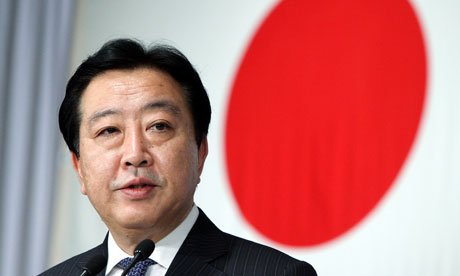
Japan will seek compensation from China for damages to its diplomatic missions there during protests over disputed islands, Chief Cabinet Secretary Osamu Fujimura has said.
Osamu Fujimura told reporters in Tokyo that “this was an issue between the governments”.
It comes as China expressed regret over protesters attacking the US ambassador’s car in Beijing on Tuesday.
Chinese dissident and artist Ai Weiwei filmed the attack, a copy of which was uploaded on YouTube.
Japan will seek compensation from China for damages to its diplomatic missions there during protests over disputed islands
Tensions have been high between Japan and China after Japan purchased three of the disputed islands, known as Senkaku in Japan and Diaoyu in China, from a private owner.
Both Japan and China, as well as Taiwan, claim the uninhabited but resource-rich islands that are controlled by Japan.
Over the last week anti-Japanese protests in China have forced Japanese businesses to close or scale down operations.
In some cities on Tuesday, Japanese shops were attacked and vandalized on the anniversary of an incident in 1931 which led to Japan’s invasion of north-east China. The protests appeared to have diminished on Wednesday.
“Regarding damage to our embassies and consulates, we plan to demand compensation [from China] as it is an issue between the governments,” Osamu Fujimura is quoted as saying in Tokyo.
He added that any damage to Japanese property in China should be handled under local laws.
Osamu Fujimura also said that the Japanese prime minister is planning to send a special envoy to China as part of efforts “to resolve the issue cool-headedly through various diplomatic routes”.
When asked whether China would pay for damages related to the protests, Chinese Foreign Ministry spokesman Hong Lei said that relevant cases would be handled appropriately, state-run news agency Xinhua reports.
Meanwhile, China has expressed regret over the incident involving protesters that attacked US Ambassador Gary Locke’s car in Beijing on Tuesday, the US State Department said.
Its spokeswoman, Victoria Nuland, said that the US had registered its concern with China over the incident in Washington and Beijing.
Protesters chanted anti-American slogans and said that the disputed islands were part of Chinese territory as they tried to prevent the car from entering the embassy.
Ai Weiwei said he was able to shoot video footage of the attack from a friend’s place nearby.
Hong Lei said that the incident was an “individual case”, and that they were investigating it.
The US, which is an ally of Japan, has said that it would remain neutral on the islands dispute.