California drivers had been long warned and now Carmageddon, the sequel, is hours underway.
Ten miles of the world’s busiest freeways have been shut down in Los Angeles since midnight launching a frenzied weekend construction zone transportation officials hope will end as successfully as last year’s first edition.
For weeks drivers have been warned to stay away from the segment of Interstate 405 that will be shuttered through the Sepulveda Pass on LA’s west side for a bridge’s completion planned before Monday morning’s traffic crunch.
If drivers don’t avoid the area, officials warn, a city-wide traffic jam could result prompting city officials to encourage Southern Californians to get out and enjoy their own neighborhoods on foot, on bikes or via short drives on surface streets instead.
During a similar closure last year commuters stayed away from the freeway in droves, the shutdown was considered a success, and crews finished the first phase of the work early.
This time, the contractor faces a hefty penalty if the work isn’t done in 53 hours: $6,000 per lane of freeway every 10 minutes that goes beyond its completion time.
“The penalty is $6,000 per lane of freeway, per 10 minutes. Let’s assume the entire freeway isn’t reopened, that’s $60,000 every 10 minutes,” Los Angeles County Metropolitan Transportation Authority spokesman Dave Sotero told KCBS-TV.
Meanwhile, TV news crews have a plan to avoid a traffic jam in the sky as they cover the shutdown.
Residents complained of low-flying, noisy helicopters hovering nonstop over the region last year.
“It was constant,” Richard Close, president of the Sherman Oaks Homeowners Association, whose members live in many of the homes closest to the freeway, recently told The Associated Press.
“It was a combination of the news media paparazzi and tour operators taking people who wanted to get a picture of the 405.”
Although the area gets its share of paparazzi helicopters because of Charlie Sheen and other celebrities who live in the area, Richard Close said they usually go away when the sun sets.
During Carmageddon, however, the area is brightly illuminated overnight so construction workers can safely do their jobs.
This time, local television news directors have plans to pool coverage by using video from a single helicopter making limited flights over the freeway, according to Rick Terrell, executive director of the Radio & Television News Association of Southern California.
The participating stations include major broadcasters including KABC-TV, KCBS-TV and KTTV-TV.
Interviewers make all sorts of snap judgments about a candidate’s character based solely on their grooming regime, according to a survey of British bosses.
One in four said that chipped nail varnish quickly takes the shine off an applicant’s chances, as it makes them appear nervous or unprepared.
A fifth of managers see split ends as a sign of laziness, and one in six said smudged mascara made them fear hiring a “party animal” who would be quick to escape the office for the bar.
A deep tan leads bosses to the conclusion that a candidate would gladly abandon their duties for the pleasures of a beach break, while bright red lipstick, heavily pencilled eyebrows and overpowering perfume are considered indicative of an overconfident and cocky personality.
The common scenario of lipstick smudged on to teeth apparently suggests carelessness, while foundation that hasn’t been blended properly is seen to highlight a lack of attention to detail.
Even going for a natural look isn’t without risks, as certain bosses believe an absence of mascara indicates an emotional wreck who worries that it would all be cried off within hours.
But it seems women cannot win – with an immaculately made-up face making some recruiters fear this candidate means business and will be snapping at their heels for the next promotion.
Sara Stern of Debenhams, which carried out the survey of 2,000 executives, said: “Clearly the application of make-up and fragrance is just as important as making sure your outfit is clean and ironed ahead of an interview.
“It seems a more natural-looking middle ground is the way to go for sure-fire success.”
Fox News has apologized for showing a man fatally shooting himself in the head on live television.
Fox News on Friday was covering a high-speed chase that began in Phoenix, Arizona, using a live helicopter shot.
After driving for dozens of miles into the desert, the motorist stopped and ran on to a dirt road. He then put a handgun to his head and fired.
TV anchor Shepard Smith later apologized to viewers for not cutting away.
“We really messed up,” he said.
Phoenix police say the chase may have started with a car-jacking.
Fox News on Friday was covering a high-speed chase that began in Phoenix, Arizona, using a live helicopter shot
Police spokesman Sgt. Tommy Thompson said the man was alleged to have stolen the car from a couple at gunpoint outside a restaurant just before 11:00 local time.
Police tracked down the car and began pursuit. The driver fired several shots at the police car, but no officers were hurt.
The car travelled west on Interstate highway 10, before turning on to a dirt road about 70 miles (113 km) to 80 miles from the state border with California.
“He got out of the car and shot himself,” Sgt. Tommy Thompson said.
“Efforts to revive him were not successful and he was dead at the scene. We don’t have an ID yet.”
“We’re all very sorry,” said Shepard Smith after the incident.
“That didn’t belong on TV.”
Michael Clemente, executive vice-president of news editorial at Fox News, said the channel had taken pains to avoid distressing viewers but had failed.
“We took every precaution to avoid any such live incident by putting the helicopter pictures on a five-second delay,” he said.
“Unfortunately, this mistake was the result of a severe human error and we apologize for what viewers ultimately saw on the screen.”
Fox News Channel has a reputation for picking up car chases from its local affiliates and airing them live.
Making for gripping television, such footage often provides a short-term ratings boost as viewers tune in to see how they end, the Associated Press news agency notes.
It is not the first time that a suicide has been inadvertently broadcast live on American television.
Christine Chubbuck shot herself dead on Florida’s WXLT-TV channel (now WWSB) in 1974 while presenting a news programme.
It is common practice for broadcasters to delay live material by a few seconds as a control mechanism.
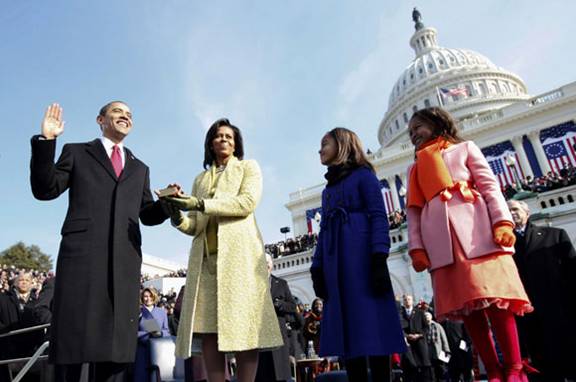
US President Barack Obama and his family cost the taxpayer $1.4 billion per year, according to a recently published book.
By contrast, the British Royal Family costs less than $60 million each year.
Two of the principal costs of the Obama presidency – and any other presidency – are staffing and security, according to Robert Keith Gray’s book Presidential Perks Gone Royal.
When it comes to keeping the First Family safe, few would dispute that it is worth paying a high price to keep the President safe from harm.
This means paying for hundreds of Secret Service agents, travel in the secure space of Air Force and funding a team of doctors to follow Barack Obama around.
But even this essential expense can be exploited to political ends, according to Robert Keith Gray, a former staffer for Dwight Eisenhower, Richard Nixon, Ronald Reagan and George H.W. Bush.
President Barack Obama and his family cost the taxpayer $1.4 billion per year
When the President travels around the country on campaign, he is obliged to take Air Force One.
His party reimburses the taxpayer with the cost of a first-class air ticket per passenger – but this is far from the full cost to taxpayers.
It also provides a President running for re-election with a national transport network which is unavailable to his challenger.
Moreover, much of the money spent on Barack Obama’s family goes to perks such as entertainment and household expenses.
For example, the White House contains a movie theatre which is manned by projectionists 24 hours a day in case one of the family feels like a trip to the cinema.
And even the Obamas’ dog Bo costs the taxpayer thousands of dollars – his handler is reportedly paid over $100,000 a year.
Another huge presidential outgoing, according to Robert Keith Gray, comes in the form of staff members who can be appointed by the commander-in-chief at his own personal discretion.
226 members of Barack Obama’s staff are apparently paid over $100,000 – and the President can increase their salaries at any time.
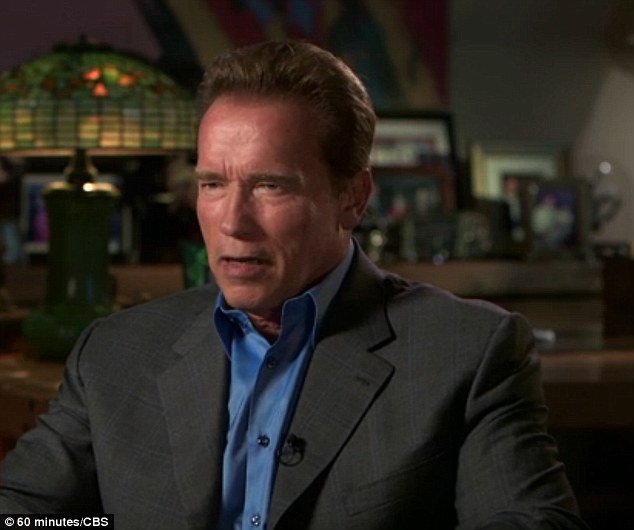
Arnold Schwarzenegger has revealed he regrets having an affair with his maid Mildred Beana, declaring it as “the stupidest thing” and admitting he “inflicted tremendous pain” onto his wife and children.
Arnold Schwarzenegger, 65, opened up in a pre-recorded chat with 60 Minutes – his first televised interview since the scandal broke in May 2011 – to broadcast on Sunday.
The actor married television journalist Maria Shriver in April 1986, going on to have four children together – Katherine, 22, Christina, 21, Patrick, 19, and 15-year-old Christopher.
However, in May of last year, the couple separated after 25 years due to his infidelities.
Had it simply been an extra-marital affair, there may have been a chance to save the marriage, but Arnold Schwarzenegger fathered a child with maid Mildred Beana, who gave birth to their son Joseph 14 years ago.
Arnold Schwarzenegger has revealed he regrets having an affair with his maid Mildred Beana
During the interview, Arnold Schwarzenegger said: “I think it was the stupidest thing I’ve done in the whole relationship. It was terrible. I inflicted tremendous pain on Maria and unbelievable pain on the kids.”
The Terminator icon is currently promoting his autobiography, Total Recall: My Unbelievably True Life Story, and though he says Maria Shriver hasn’t read the tell-all tale, she does wish him the best.
The former Governor of California added: “I think that Maria is wishing me well in everything I do.”
Interestingly, despite his acknowledgment of the affair, Arnold Schwarzenegger fails to actually say sorry.
When interviewer Lesley Stahl probes him, asking: “She gave up her television career for you. I mean, wow, was this the most unbelievable act of betrayal to Maria?”
Arnold Schwarzenegger deflects the answer, simply elaborating about it being the “stupidest” thing he did.
Despite the scandal that threatened to topple him from his He-Man cave, Arnie continues to work.
He went on to reprise his role as Trench in The Expendables 2, and signed up to a further five titles.
Action film The Last Stand and thriller The Tomb are currently in post-production, while he is about to embark on fantasy Unknown Soldier and DEA drama Breacher.
It has also recently been announced he will reunite with Danny DeVito to star in Triplets – a sequel to Twins, where the unlikely brothers discover they have a third sibling.
Poached, scrambled, boiled or fried. We all have our preference for how to cook an egg.
But the choice reveals more than just our culinary tastes – it also highlights our personalities and reveals secrets about social class and even sex drive.
Scientists quizzed 1,010 adults and found that poached egg eaters are outgoing, boiled egg lovers are disorganized, fried egg fans have a high sex drive, scrambled egg aficionados are guarded and omelette eaters are self-disciplined.
The study for the British Egg Industry Council was carried out by Mindlab International, which researches the psychology of consumer choice.
Fried egg fans have a high sex drive and are usually from the skilled working class
It found that the average poached egg-eater is likely to be happier than most.
Boiled egg-eaters run the greatest risk of getting divorced.
Fried egg fans are usually from the skilled working class and scrambled eggs are favored by those without children.
Andrew Joret, of the British Egg Industry Council, said: “It’s amazing to think that just by knowing someone’s favorite way of eating eggs, it’s possible to gauge a large amount about who they are and what they are like. But it doesn’t matter how you eat your eggs – they’re still nutritious, versatile and great value.”
Doubts had been raised over whether Demi Moore and Ashton Kutcher had ever really been man and wife, but a legal document has emerged that proves they were in fact legally married.
Ashton Kutcher and Demi Moore had sparked speculation they never truly tied the know after failing to lodge divorce documents almost a year after splitting.
But they are named as spouses in a new uncovered quitclaim deed, which is a legal instrument by which the owner of a piece of real property, called the grantor, transfers his or her interest to a recipient, called the grantee.
The paper, obtained by InTouch, shows that Demi Moore, 49, gave up her claim to a piece of property in Los Angeles, a move that no doubt put a smile on wealthy Ashton Kutcher’s face.
Ashton Kutcher and Demi Moore had sparked speculation they never truly tied the know after failing to lodge divorce documents almost a year after splitting
Demi Moore signed the document in March, suggesting the pair may be finding their own way of divvying up their rich portfolio of assets.
She announced she was ending their marriage in November amid a slew of cheating claims, and Ashton Kutcher has now moved onto younger pastures with new love Mila Kunis.
Sources had told Radar Online that the former couple’s Kabbalah wedding was merely a ‘symbolic ceremony and not a legal marriage’.
The couple wed in September 2005 in a ceremony attended by 150 guests, including Demi Moore’s ex-husband Bruce Willis.
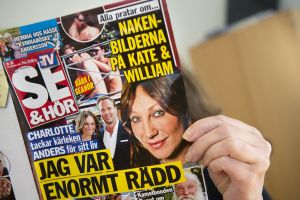
Danish magazine Se Og Hor has published photographs of Kate Middleton changing her bikini bottom, reigniting the privacy scandal surrounding the Royal couple.
Celebrity magazine Se Og Hor (See And Hear) has gone further than any other publication and printed a 16-page special of photographs, including three of the Duchess of Cambridge changing her bikini bottoms – taken from the front.
The photos appear to be from the same set of shots originally taken while Prince William and his wife were holidaying in the South of France.
There are thought to be up to 200 photos taken of Kate and William when they were sunbathing at a secluded chateau.
The most revealing photograph in Se Og Hor, which appears on the front page of the magazine, shows the Duchess changing into a pair of blue bikini bottoms.
Danish magazine Se Og Hor has published photographs of Kate Middleton changing her bikini bottom
Kim Henningsen, Se Og Hor’s editor in chief, was unabashed by the threat of legal action and declined to say who sold the photographs or how much was paid for them.
He said: “It’s a set of unique photos from an A-class celebrity. It is my job to publish them.”
Kate Middleton and Prince William won a landmark injunction in France to stop further publication of the images by Closer magazine, under the threat of a €100,000 fine.
They have also handed over all files containing the images to representatives of the couple on the orders of the judge, after they were ruled a “brutal” invasion of privacy.
The court made no ruling for the magazine to name the photographer, however, and it has the right to protect his or identity under France’s laws on protection of journalistic sources.
But the release of the unseen pictures of Kate confirms fears that the injunction will do little to halt the worldwide spread of the pictures.
The revealing photographs of the Royal couple relaxing on a private balcony were first published in French magazine Closer, before a 26-page special was published in Italy’s Chi and Ireland’s Irish Daily Star.
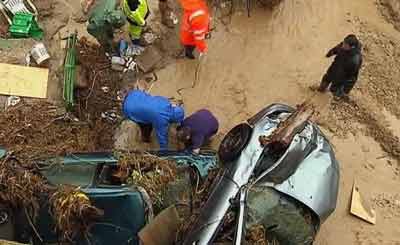
At least seven people have died after heavy rains triggered flash floods in southern Spain, officials have said.
Among the victims were an elderly woman and a young girl.
The strength of the floods overturned cars, closed roads, damaged homes and forced hundreds to leave their properties.
The hardest hit areas were the provinces of Malaga and Almeria, and Murcia region.
At least seven people have died after heavy rains triggered flash floods in southern Spain
At least 600 people had to be evacuated from their homes in Andalucia region, which contains Malaga and Almeria, officials said.
Spain’s weather agency said that up to 245 litres (65 gallons) of water per square metre had fallen on Friday morning alone.
An elderly woman died when a river broke its banks and floodwater hit her home in Alora, north of Malaga, AFP reports.
Two other adults died in Andalucia, while three others, including a 10-year old girl were killed in neighboring Murcia.
“In Malaga province there are 800 staff working to return things to normal as quickly as possible. The rains are decreasing and seem to be shifting towards Granada and Almeria,” a regional government spokesperson told AFP.
However, torrential rain and violent thunderstorms are predicted to continue in the south of the country during the weekend.
The heavy rains in parts of the south follow months of drought and high temperatures across Spain which triggered dozens of wildfires.
Paolo Gabriele, Pope Benedict XVI’s former butler, is set to go on trial in the Vatican on charges of aggravated theft.
Paolo Gabriele, 46, has admitted taking confidential documents and leaking them to the Italian media – although no guilty plea has been entered.
He has told investigators that he was hoping to expose “evil and corruption” within the Church.
While technically he faces up to four years in prison if found guilty, Paolo Gabriele could be pardoned by the Pope.
If he is jailed, he will serve his sentence in an Italian prison as Vatican City has no long-term detention facilities on its territory.
Paolo Gabriele, Pope Benedict XVI’s former butler, is set to go on trial in the Vatican on charges of aggravated theft
Paolo Gabriele is standing trial along with Vatican computer technician Claudio Sciarpelletti, who is accused of aiding and abetting a crime.
He was the Pope’s trusted servant for years and held the keys to the papal apartments.
Many of the letters and other documents he took from the pontiff’s desk were published in a book by an Italian investigative journalist in May.
The so-called “Vatileaks” scandal has sparked allegations of corruption and internal conflicts at the Holy See.
It has been one of the most difficult crises of Pope Benedict’s seven-year papacy.
No TV cameras or recorders are being allowed inside the courtroom for the most high-profile case to be held in the Vatican since the Holy See was established as a sovereign state in 1929.
The Vatican was arrested in May, accused of passing papal correspondence to journalist Gianluigi Nuzzi, whose book His Holiness: The secret papers of Pope Benedict XVI was published that month.
Some of the most sensational letters were written to the Pope by Archbishop Carlo Maria Vigano, currently the Vatican’s ambassador to Washington, who was deputy governor of Vatican City at the time.
In one letter, Archbishop Vigano complains that when he took office in 2009, he discovered corruption, nepotism and cronyism linked to the awarding of contracts to outside companies at inflated prices.
He later writes about a smear campaign against him by other Vatican officials upset at his actions to clean up purchasing procedures.
The archbishop begs in vain not to be moved away from the Vatican as a punishment for exposing the alleged corruption.
Correspondents say the revelations seem aimed primarily at discrediting the Vatican’s powerful Secretary of State, Cardinal Tarcisio Bertone, who has been in his post since 2006.
Prosecutors quoted Paolo Gabriele as saying during his interrogation that he knew taking the documents was wrong but he felt the Holy Spirit was inspiring him to shed light on the problems he saw around him.
He said he felt the Pope was being kept in the dark or misinformed by his collaborators.
“Seeing evil and corruption everywhere in the Church… I was sure that a shock, even a media one, would have been healthy to bring the church back on the right track,” he was quoted as saying in June.
Pope Benedict said after his former butler’s arrest that the news had “brought sadness in my heart”.
Psychologists were summoned by the Vatican to determine whether Paolo Gabriele could be held responsible for his actions.
The results were conflicting.
One report concluded that while he could be held accountable for his actions, he was socially dangerous, easily influenced and could “commit acts that could endanger himself or others”.
This report described Paolo Gabriele as subject to ideas of “grandiosity”, as attention-seeking and as a simple man with a “fragile personality with paranoid tendencies covering profound personal insecurity”.
Another report cited in the indictment concluded that the defendant, a 46-year-old father of three, had shown no signs of major psychological disorder or of being dangerous.
A man armed with a replica pistol has fired at Czech President Vaclav Klaus at close range while he was opening a bridge in the north of the country.
Footage of the incident from Czech channel TV Prima shows Vaclav Klaus recoiling slightly but carrying on with the visit apparently unhurt.
Vaclav Klaus was taken to hospital but suffered only minor bruising.
His security detail has come in for harsh criticism for allowing the man to get so close to Vaclav Klaus.
It is also unclear why Vaclav Klaus’ bodyguards failed to react when a gun was pulled on him.
A man armed with a replica pistol has fired at Czech President Vaclav Klaus at close range while he was opening a bridge in the north of the country
Vaclav Klaus himself rebuked them for failing to handle the situation well, according to the Nova TV station.
He later said the incident happened so quickly he did not have time to be afraid, our correspondent adds.
The attacker, who was dressed in camouflage clothing, pushed his way through a crowd in the town of Chrastava before firing the weapon at Vaclav Klaus.
The weapon was of the sort that is used in “airsoft” gaming.
The man was briefly interviewed by Czech media and said he was a 26-year-old communist sympathizer.
He said he had carried out the attack because the government was deaf to the concerns of ordinary people.
The man was arrested by police shortly afterwards.
Vaclav Klaus has been in the largely ceremonial post of president since 2003 and previously served as prime minister in the 1990s.
He is known for pushing through reforms to the Czech Republic’s economy after the fall of Communism and is a staunch opponent of EU integration.
Brooke Shields once boasted that her mother’s open-minded attitude had kept her away from drugs.
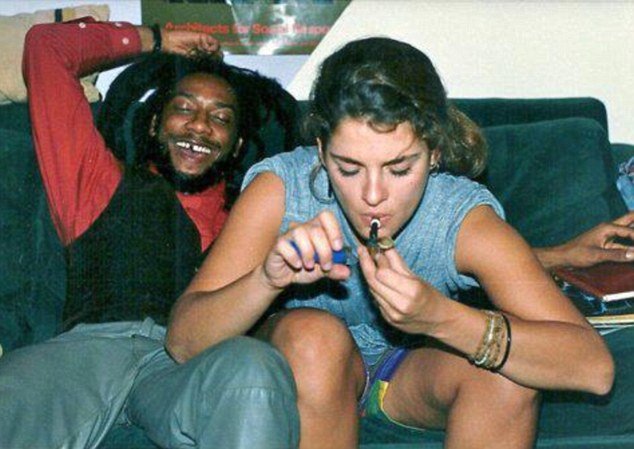
So it seemed an unlikely story when someone claimed they had an image of Brooke Shields smoking a “marijuana pipe” and leaked on the internet.
Brooke Shields, now 47, was purportedly snapped several decades ago inhaling from the implement while sitting on a couch with H.R, vocalist of hardcore punk band Bad Brains.
The image was leaked when a Twitter user shared the picture on Wednesday, and it immediately made headlines in news outlets including on RadarOnline.com.
Alongside the image David Hill wrote: “Here is a photo of Brooke Shields smoking pot with H.R.”
However, a spokesperson for the actress has vehemently denied that it is her.
Brooke Shields was purportedly snapped several decades ago inhaling from the implement while sitting on a couch with HR
Brooke Shields would have been in her late teens or early twenties in the photo, with the singer sitting with his arm around her and his head thrown back in laughter as she takes a draw.
H.R, who is now 56-years-old, is a Rastafarian, and many who follow the religion sees the smoking of cannabis as a sacred rite.
The image would have flown in the face of claims she made in 2000, where she said her mother Teri’s permissive attitude actually put her off the idea of using drugs.
Brooke Shields said: “I don’t know if it’s reverse psychology, but my mom would say, <<You wanna do drugs? Fine. Do them. Just do me a favor. Let me do ’em with you>>.
“<<I’ll get you the best stuff. This way I know you’re not going to die. And the whole thing was so unappealing to me>>.”
Brooke Shields said: “A mom who offers you drugs? <<I’m lucky I didn’t grow up crazy./
“I don’t know how I didn’t become a statistic, because… at times you do feel like you’re going a little nuts. And my mom was the Bohemian kind of wild child.”
The leak is more bad news for Brooke Shields, who was photographed looking a lurid orange when she attended an event at New York Fashion Week.
Brooke Shields exhibited what looked like a tan gone wrong at the premiere of the documentary, Diana Vreeland: The Eye Has to Travel.
The orangey tan may have come out of a bottle, but Brooke Shields’ outfit was stunning.
She wore a black dress with cut out on one shoulder and a wide black bow on the other, pairing it with classic black heels and bracelets.
Brooke Shields’ long brown hair was loose and untidy, as if she hadn’t had time to brush before rushing off to the airport.
The Blue Lagoon star will next appear in The Hot Flashes, which is still in post production and has no release date set yet.
The film also stars Daryl Hannah and Virginia Madsen, and it’s about a group of middle-aged Texas women and former high-school champions in an all-female basketball team.
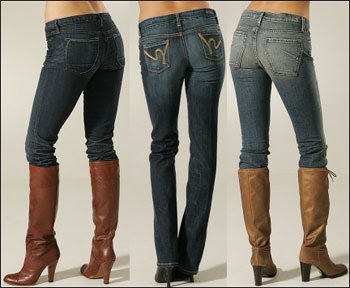
Skinny jeans, leggings and blazers have replaced denim jackets, polo necks and thick black tights as wardrobe staples over the last 25 years, a study has revealed.
From leather leggings to denim hot pants, trends come and go as fashion evolves every season.
But it seems that some trends are here to stay.
Nude tights, ballet pumps, a maxi dress and a black or nude clutch bag are also among the modern must-haves every women should own.
But while they might have been staple items in the 1980s, straight-leg jeans and simply knee length skirts are no longer considered as classic clothes.
It wasn’t all change though, as black trousers, cardigans, a simple white blouse or shirt and the little black dress have remained constant must-haves through the decades.
Skinny jeans have replaced thick black tights as wardrobe staples over the last 25 years
Black or brown boots, black court shoes, a pencil skirt and a smart black coat have also stood the test of time and are still considered staple items.
A spokesman for F&F at Tesco in UK, which commissioned the research said: “Everyone has a section of their wardrobe which is reserved for staple items.
“And while many have remained the same, there are some that have changed as the trends and fashion has evolved over the past twenty years or so.
“Good-quality staple items can really help to save costs when it comes to a new season or trend.
“If you’ve got a few trusty items of clothing that you can rely on, all you need is one or two pieces from a new trend and you have an up-to-date and fashionable outfit for a fraction of the cost.
“So it’s worth making sure the staple items you do buy are good quality so you can be sure they will stand the test of time for years to come.”
The study found that 81% make sure their wardrobe is always full of staple or classic items, with another 83% believing there are items that every woman should own.
And the average woman estimates that almost half of their closet is taken up with classic clothes which they can wear year after year – compared to just a quarter which is reserved for trend items each season.
Almost three quarters of the women polled also said they are happy to splash more money than usual on staple items knowing they will get plenty of wear from it.
A third of women even own items of clothing that has been such a wardrobe staple, it has been passed on to them from older friends and relatives.
More than one in ten even have some timeless clothes which they have been wearing for 20 years or more now.
Researchers also found that 57% of people say the majority of the staple items in their wardrobe is black, followed by beige, brown, white and grey.
According to the study, in an average month, women spend £22.01 ($34.55) adding to their staple items, with quality and the look or appearance the most important factors when shopping for wardrobe essentials.
But the study found that it’s not all about staple items with 46% of women saying they like to go shopping and stock up on some fashion items to complement their basics.
Seventy-seven per cent even admitted they have kept certain items of clothing in the hope they will someday become trendy and fashionable again.
A spokesman for F&F at Tesco, added: “The secret to a good wardrobe is mixing your staple items with a few key fashion pieces each season.
“Buying good quality staple items alongside some more trendy, one-off clothes means you get to keep up with the latest fashion, without breaking the bank.”
According an independent audit, Spain’s banks will need an injection of 59.3 billion euros ($76.3 billion) to survive a serious downturn.
The amount is broadly in line with market expectations of 60 billion euros, and follows so-called stress tests of 14 Spanish lenders.
Much of the money is expected to come from the eurozone rescue funds, the current EFSF and the future ESM.
Spain said in July that it would request eurozone support for its banks.
The Spanish banking sector has been in difficulty since the global financial crisis of 2008, and the subsequent bursting of the country’s property bubble and deep recession.
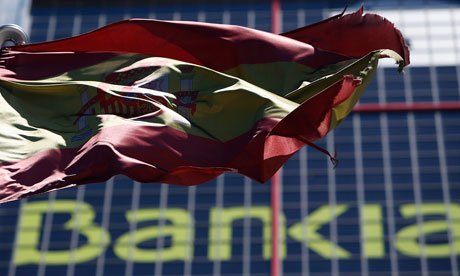
Spain’s banks will need an injection of 59.3 billion euros to survive a serious downturn
The European Commission welcomed the announcement, saying in a statement that it “is a major step in implementing the financial-assistance programme and towards strengthening the viability of, and confidence in, the Spanish banking sector”.
It added: “The necessary state aid provided to Spanish banks will be determined in the coming months.”
The Commission also said that it expected the first Spanish banks to start receiving the loans “by November.”
Christine Lagarde, managing director of the International Monetary Fund, praised the independent valuation of Spain’s banks, saying it had been “thorough and transparent”.
She added: “Public funding of the banks’ actual capital needs, which are expected to be lower than the amounts identified in the stress tests, can be financed comfortably under the recapitalization programme supported by Spain’s European partners.”
The audit calculation that Spain’s banks will need 59.3 billion euros is a worst-case scenario, and does not take into account any future plans by the lenders themselves to raise their own capital.
The country’s economy minister Fernando Jimenez Latorre indicated that it may need to borrow about 40 billion from the eurozone rescue funds.
Bankia was found to be the bank most in need of additional capital, requiring 24.7 billion euros. It was followed by Catalunya Bank (10.8 billion euros), Novagalicia (7.2 billion euros), Banco de Valencia (3.5 billion euros), Banco Popular (3.2 billion euros), Banco Mare Nostrum (2.2 billion euros), and Ibercaja-Liberbank-Caja (2.1 billion euros).
Seven Spanish banks have no need for extra capital – Santander, BBVA, Caixabank, Kutxabank, Sabadell, Bankinter, and Unicaja.
The audit was also based on a number of assumptions, including that Spain’s economy will contract by 6.5% between 2012 and 2014.
The Open Europe think tank suggested many of these were overly optimistic, however.
“These tests do look to be more intense than the previous ones but ultimately the optimistic assumptions do instantly raise questions over their credibility,” the group said.
“The prediction that unemployment will peak at 27.2% seems optimistic given that there is plenty more austerity and internal devaluation to come while the structural labor market reforms are yet to take effect.”
It added that a worsening economic situation would also increase the number of loans which are defaulted on and hit the value of the foreclosed properties which banks own.
The bigger question remains whether the Spanish government will have to follow Greece, Portugal and the Republic of Ireland and request a full international bailout, involving loans that have to be paid off by the state, as well as close monitoring of its economy by its international creditors.
While Madrid continues to publicly deny this, the markets consider it only a matter of time.
On Thursday, the Spanish government announced its latest austerity budget. Against a backdrop of violent protests, it outlined new spending cuts, but protected pensions.
Spain is struggling with a shrinking economy and 25% unemployment.
Comments from its central bank earlier this week indicated that the country’s recession deepened in the past three months.
As tax revenues fall and benefits payments rise in a recession, this will make it even harder for Spain to get its finances under control.
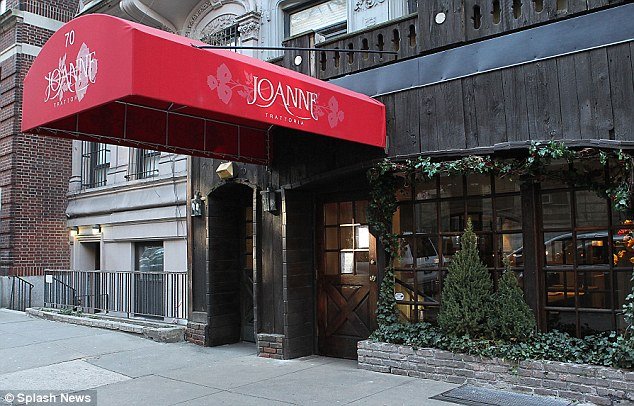
Joanne Trattoria, the Italian restaurant owned by the parents of Lady Gaga, has been slammed once again, this time by the New York Daily News, which called it “worse than herpes”.
But after Lady Gaga blamed her family’s Upper West Side restaurant for her recent 25 lbs weight gain, can the simple family establishment, owned by Joseph and Cynthia Germanotta, be that bad?
Lady Gaga told radio host Elvis Duran: “I’m dieting right now, because I gained, like, 25 pounds… My father opened a restaurant. It’s so amazing… it’s so freaking delicious, but I’m telling you I gain five pounds every time I go in there.”
While paying diners appear to agree with Lady Gaga since the spot opened its doors in February, it has received only scathing verdicts – the latest published on Wednesday in the New York Daily News.
After the New York Post’s surly Steve Cuozzo popped in for what he called “a 2 1/2-hour meal that seemed like as many days”, and described the interior as a “brick-walled affair of the sort considered cozy in certain Brooklyn neighborhoods, but which in these parts registers as plain cramped (and loud as an avalanche)”, it seemed the only way the restaurant could go is up.
But despite the trattoria’s celebrity connection (Lady Gaga isn’t involved in the restaurant), and the kitchen boasting Art Smith, who for years was Oprah Winfrey’s personal chef, reviews continued to take a nose dive.
Joanne Trattoria, the Italian restaurant owned by the parents of Lady Gaga, has been slammed once again
The New Yorker, which waited five months to put its own palette to the test, was similarly unimpressed.
Leo Carey, the magazine’s senior editor, described a homemade focaccia as “good in the same way that the garlic bread at Domino’s is good”.
He continued in the July write-up: “The squid in the grilled-calamari salad, though bearing the browned marks of grilling, has none of the charcoal richness you might expect – indeed, it has almost no flavor at all.”
While he throws the restaurant a bone, calling a few staples “creditable”, like the lasagna, “an overwhelming paving-stone slab of meat and ricotta with micro-greens on top”, he labels the more “ambitious dishes” as going “uniformly awry”.
“Osso buco is more or less just osso, and such bone marrow as there seems to be is oddly chewy,” he notes.
Finally, Michael Kaminer, one of two dining-out critics at the New York Daily News, called the Italian spot now frequented by Katie Holmes and Suri Cruise, “an incomprehensible imitation of a restaurant”.
“I came with an open mind, despite the fact that most of my colleagues have portrayed Joanne as the worst thing since herpes,” he admits.
Mostly taking offense at the restaurant’s fine dining prices, which lack the fine dining experience, he says: “A dry lemon chicken [$28] did have a discernible taste, but only in its zesty skin.
“The meat itself came closer to those supermarket birds in foil bags. And people: That $28 doesn’t include sides. The only adornment is a shriveled lemon segment perched atop the meat. Sauteed spinach or rosemary fingerling potatoes will set you back $9.”
Michael Kaminer calls the servers “sweet, solicitous and patient”, however, adding that “they genuinely seem to enjoy sharing the stories behind Joanne’s recipes, like the Sunday gravy Joe cooks for family”.
This goodwill is short-lived however. He continues: “[The] <<Expresso>> – yes, with an <<x>> – for $5 on Joanne’s menu… is more like concentrated Sanka, but you’ll need it to avoid choking on a tiramisu cake [$14] whose desiccated base holds gelatinous cream tasting vaguely of plastic.”
Diners appear to have formed a very different opinion however.
One local, who works in the food industry, said: “I have eaten in the restaurant and I know for a fact that the portrayal in the Daily News was inaccurate and seemed to be more about selling a sensational story than giving an unbiased restaurant review.
“What they have failed to mention is the warm, inviting atmosphere the staff happens to create for all of their customers, regular and otherwise…
“They also failed to taste the best item on the menu, the meatballs.”
Restaurant critic Gael Greene also had reservations about the pricing, however, writing for The Insatiable Critic: “Aside from the fine focaccia, a lush lasagna (too small, too pricey) and my $38 veal osso bucco, much needs to be reconsidered. Okay, the meatballs and spaghetti were fine – but $23?”
Yet rave reviews on Yelp! and Zagat praise the food, the servers’ attention to detail and the cozy atmosphere.
One Zagat reviewer wrote: “Met the owner, Cynthia, who was lovely and engaged. Food is amazing. Service is quick. Decor is very friendly. Traditional Italian fare with a twist. Comfortable ambiance. If you can get in..worth it.”
And a Yelp! visitor, possibly one the many groups of young girls chaperoned by their mothers, excitedly tweeting about Lady Gaga, commented: “Came here for lunch and this place is adorable!”
However, these seemingly misguided appraisals are scattered in between even more disturbing quips from unhappy customers.
One restaurant go-er wrote: “ATROCIOUS! An insult to Italian cooking. This place makes Olive Garden a viable option.”
While a neighborhood local said: “Okay. They are passionate. They are trying. They are re-staffing. BUT…they are just not doing it to it…yet. I’ll give them a few more tries (because I live next door…and that’s the only reason).”
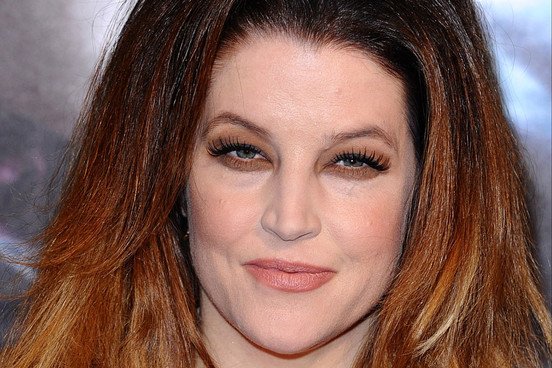
Lisa Marie Presley, daughter of late music legend Elvis Presley, has been hiding a secret former job… selling fish and chips from a mobile van in East Sussex, UK.
Since Lisa Marie Presley, 44, moved into a $14 million home in the village of Rotherfield back in 2010, it’s fair to say she has fully immersed herself into local life.
And she was so keen to learn about the British way of life that she swapped Hollywood for haddock and spent a day serving up fish and chips to locals.
Kim Scales, owner of Mr. Chippy and landlady of village pub The King’s Arms, said: “It was when she first moved to the village about two years ago. She is really interested in who people are and wanted to know all about our lives and how we live.
“We own the pub and a mobile fish and chip van, but she said she’d never heard of anything like it, and said she wanted to work on it.
“She got on there with her son, but we were all laughing because not one of the locals realized who it was. She served one local double fishcake and chips and he didn’t have a clue that she was Elvis Presley’s daughter.”
Lisa Marie Presley has been hiding a secret former job selling fish and chips from a mobile van in East Sussex
Lisa Marie Presley is said to be a huge fan of traditional English food, and loves nothing more than fish and chips and a pint of Guinness in The King’s Arms.
Kim Scales added: “She loves fish and chips and drinks and eats in the pub all the time. She’s partial to a pint of Guinness, too!
“It was nice for her to have that normal experience. She’d have never been able to do that in LA. She doesn’t come down here all glammed up, she’s just herself and always mingles with the locals in the pub.”
Bo Xilai has been expelled from the Communist Party and will face justice, Chinese state media say.
Bo Xilai, the ex-Communist Party leader in the city of Chongqing, is accused of abuse of power and corruption.
His wife, Gu Kailai, was given a suspended death sentence in August for murdering British businessman Neil Heywood.
The scandal has overshadowed the party congress that will oversee China’s change of leadership. It will begin on 8 November, state media have announced.
Bo Xilai has been expelled from the Communist Party and will face justice
The Bo Xilai announcement ends months of speculation over the fate of a man who was once one of China’s most powerful politicians.
It is clear China’s leaders wanted to try to end the damaging revelations, with the once-in-a-decade leadership change looming.
Bo Xilai’s career is over and he will almost certainly spend time in jail.
He has not been seen in public since mid-March, shortly after the scandal erupted and it was announced he was under investigation. He was suspended from his party posts in April.
Reporting an official statement from a party leaders’ meeting, the state news agency, Xinhua, said Bo Xilai stood accused of corruption, abuse of power, bribe-taking and improper relations with women.
The statement carried by Xinhua said Bo Xilai “took advantage of his office to seek profits for others and received huge bribes personally and through his family”.
It added: “Bo’s behavior brought serious consequences, badly undermined the reputation of the party and the country, created very negative impact at home and abroad and significantly damaged the cause of the party and people.”
The statement urged “party organizations at all levels” to take heed of the “negative example” of the Bo Xilai case.
Xinhua said the violations included Bo Xilai’s time as an official in Dalian and Liaoning provinces, and as minister of commerce.
“Bo had affairs and maintained improper sexual relationships with a number of women,” the statement added.
Xinhua said Bo Xilai had been expelled from the party and the elite decision-making Politburo and Central Committee as he had “abused his power, made severe mistakes and bore major responsibility in the Wang Lijun incident and the intentional homicide case of [Gu Kailai]”.
Wang Lijun was Chongqing’s former police chief who was sentenced to 15 years in jail for ”bending the law, defection, abuse of power and bribetaking” in the Neil Heywood case.
The severity of the accusations against Bo Xilai surprised some observers, who had thought he might escape criminal prosecution.
“The party is very anxious to settle this contentious issue before the opening of the party congress,” Prof. Willy Lam of the Chinese University of Hong Kong told the Associated Press.
“So I think even though there are still powerful supporters and patrons of Bo Xilai, they have agreed to this stiff penalty to be meted out against Bo. And having settled this contentious issue, the party leadership is in a position to start the party congress with a facade of unity.”
There had been no formal word on the congress date until now, but many observers expected it in October. Prof. Willy Lam suggested that any delay had been because of “intensive competition among the various factions”.
There was speedy reaction to the latest news on China’s social media sites.
On Sina Weibo, Shenjing Jihua posted that Bo Xilai had “finally met his end”, adding: “So justice will prevail, and there is still hope for China.”
Although there were some postings in support of Bo Xilai, others broadened the affair into a critique of Chinese corruption.
Huaju Yanyuan on QQ.com said: “The case of Bo Xilai tells us that one overlooked event led to a series of troubles, and that there isn’t any clean official in China.”
The news came on the eve of a national holiday, raising suspicions the authorities wanted to bury the announcement, some observers note.
Xinhua has also announced that the party congress, which will herald the change of China’s leadership, will begin on 8 November.
The Bo Xilai scandal has been China’s biggest in decades and has cast a long shadow over the run-up to the congress, which is expected to see Xi Jinping replace Hu Jintao as president.
Bo Xilai, 63, had been a prime candidate for a top post before the scandal broke.
It started when Wang Lijun fled to a US consulate in February, alleging that Gu Kailai had poisoned Neil Heywood to death in November 2011.
Gu Kailai was convicted of killing Neil Heywood after a multi-million dollar business deal turned sour. Bo Xilai’s supporters have claimed from the start that he is being framed by his political enemies, correspondents say.
Dance Moms TV personality Abbey Lee Miller has ripped into Honey Boo Boo, saying she needs to lose weight.
Abbey Lee Miller made the controversial comments today – saying the youngster needs to get fit if she wants to win pageants.
The tough-talking choreographer spoke to TMZ, admitting she wasn’t happy with her own weight issues.
But she then went on to blast Honey Boo Boo, saying: “[She] needs to get in shape. She needs to be at a dance studio.
“She needs to be training. She needs to work on her turnout.”
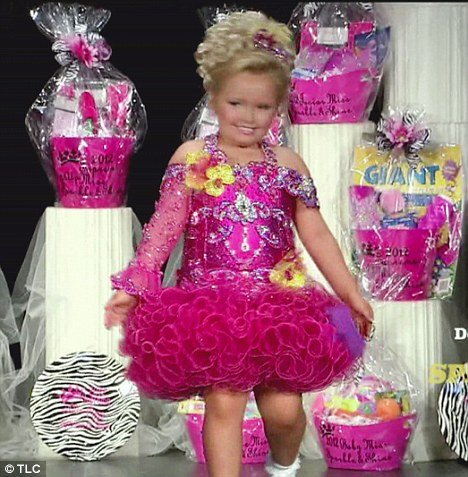
Honey Boo Boo at Georgia’s Miss Sparkle and Shine Pageant
Wednesday night saw the season finale of Here Comes Honey Boo Boo aired on TLC.
During the episode the youngster – real name Alana Thompson – had to be coaxed on stage by her mother June Shannon at Georgia’s Miss Sparkle and Shine Pageant.
“Mama, I think I’m a little chunky today,” Honey Boo Boo said to her mother at the show.
Her mother replied: “You have to stay away from those chicken nuggets,” as they both became concerned the velcro on her pink could come undone.
Prior to her on-stage turn, one of Honey Boo Boo’s sisters described how the junk food-loving seven-year-old was bigger than most of the other pageant contestants.
“Alana’s not your average pageant person. Most of the girls are like twigs. She’s more of a log… or a boulder.”
Honey Boo Boo managed to muster the confidence to get on stage, though, and show off her dress.
“Once she gets into pageant mode she becomes a different child,” her mother June Shannon said from the audience.
Honey Boo Boo missed out on the grand title, but was awarded People’s Choice prize.
Jennifer Hudson, Celine Dion and Usher are among the stars who have been confirmed for a Whitney Houston tribute concert.
They will join other famous faces to honor Whitney Houston, who passed away in February this year.
The one-hour We Will Always Love You: A Grammy Salute To Whitney Houston concert will be taped in Los Angeles on October 11th and will also feature interviews and footage with the late singer, as well as artists sharing their memories of her.
The televised special will coincide with the November 13th release of a compilation album, I Will Always Love You – The Best of Whitney Houston, featuring 16 of her best-known hits and two previously unreleased songs, including a new duet of I Look To You with R. Kelly, her record label RCA said.
Whitney Houston tribute concert will be taped in Los Angeles on October 11th
In addition to the concert, it was announced yesterday that Lifetime television network would be airing a new series called The Houstons: On Our Own.
The series, to start on October 17th, documents Whitney Houston’s 19-year-old daughter Bobbi Kristina Brown, sister-in-law and former manager Pat Houston and mother Cissy, as they deal with life after the singer’s death.
The concert won’t be the first time that Jennifer Hudson has paid tribute to Whitney Houston.
She also performed a heartfelt song at the Grammy Awards shortly after Whitney Houston’s tragic passing.
And speaking previously about her love for Whitney Houston, Jennifer Hudson said: “I admired her style, her look, and above all else, her voice and technique.”
Meanwhile, Celine Dion used Whitney Houston’s death as a warning to other young music stars in a recent interviews.
She told W magazine: “I’ve always been scared of the industry. Why?
“Because I think it’s a place here anything is possible. It’s a <<yes>> place. Especially if you have success.
“I was just in shock when Whitney’s life had been taken because of drugs.
France’s Prime Minister Jean-Marc Ayrault has said that 9 out of 10 citizens will not see their income taxes rise in the new budget.
He has confirmed that there is to be a new 75% tax rate for people earning more than 1 million euros ($1.3 million) a year.
Jean-Marc Ayrault has not yet detailed how much taxes will rise for the rest of the top 10%.
It is one of the key policies in what he called “a courageous, responsible budget – a budget of conquest”.
France’s Prime Minister Jean-Marc Ayrault has said that 9 out of 10 citizens will not see their income taxes rise in the new budget
The government’s priorities were young people, training and cutting 10 billion euros from its spending, he said. This would demand an effort but would be fair, he added.
Official figures on Friday showed that French public debt had hit 91% of GDP between April and June this year.
It was 89.3% at the end of March, which was still well above the eurozone limit of 60%.
Jean-Marc Ayrault pointed out that debt had grown by 30% of GDP in the past five years and that the debt threatened future generations.
He also said that the budget would encourage small and medium businesses and that taking risks would also be encouraged.
In its first budget, the Socialist government repeated its promise to cut the annual deficit to the eurozone limit of 3% of GDP next year.
The deficit this year is expected to be 83.6 billion euros, which is 4.5% of GDP.
Jean-Marc Ayrault said that France was strong when it set itself ambitious targets.
But some analysts said that the targets were too ambitious because they assumed too much growth for the coming years.
They said that tax increases and spending cuts would make it difficult to achieve the 0.8% growth in 2013 and 2.0% growth in 2014 that are predicted by the budget.
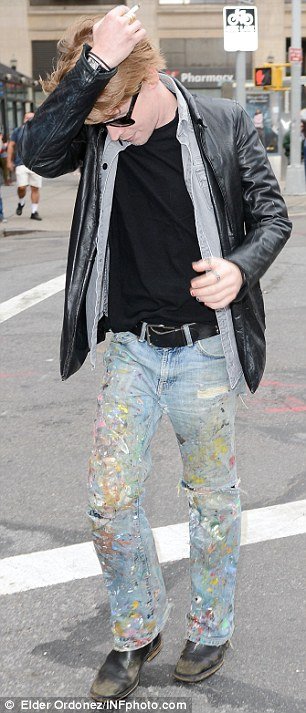
Macaulay Culkin was quite the walking canvas on Thursday – as he wandered around New York in jeans slathered in paint.
The actor-turned-artist looked a little dazed as he ambled around with his head down, before jumping into a cab.
Macaulay Culkin, 32, teamed his look with a leather jacket and dirty boots, complete with shades.
He has recently turned his $2 million New York apartment into a painting studio – which might explain the state of his jeans.
Macaulay Culkin was quite the walking canvas on Thursday as he wandered around New York in jeans slathered in paint
Macaulay Culkin recently released a video promoting new art exhibition Leisure Inferno, which runs from September 13 to December 15 at New York’s Le Poisson Rouge gallery.
The former star, who is worth a reported $15 million, created Three Men and a Baby (3MB), an art collective with friends Adam Green and Toby Goodshank.
Explaining how he turned his home into a painting studio, Macaulay Culkin said in the video: “We cleared out everything, laid down plastic and went a little nuts at the art supply store.”
As for the group’s shared vision for their first Greenwich Village gallery show, Macaulay Culkin said: “The sillier and funner, the better.”
Back in February – the same month the trio formed – many speculated the former child star had a drug habit or a terrible illness when he stepped out sipping a Red Bull looking emaciated.
Macaulay Culkin’s last acting job was on the TV series Kings back in 2009 and his last film was the dark comedy Sex and Breakfast back in 2007.
At the height of his fame he was regarded as the most successful child actor since Shirley Temple.
Macaulay Culkin once quipped: “I’d made enough money by the time I was 12 to never have to work again.”
Reese Witherspoon and her husband Jim Toth welcomed their first child together on Wednesday.
Reese Witherspoon’s representative confirmed the happy news to People magazine.
The couple has named their son Tennessee James.
“Reese Witherspoon and husband Jim Toth welcomed Tennessee James into their family today,” her rep told People magazine.
“Both mom and baby are healthy and the entire family is thrilled.”
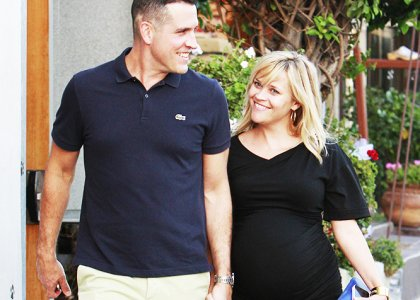
Reese Witherspoon and her husband Jim Toth welcomed their first child together on Wednesday
Tennessee James is Reese Witherspoon’s third child – she also has two other children with ex-husband Ryan Phillippe, 37, including daughter Ava, 12, and son Deacon, 8.
The former couple and Cruel Intentions co-stars split in 2006 after seven years of marriage.
Reese Witherspoon, now 36, then went on to marry Jim Toth, who is an agent with CAA, in March 2011, during a romantic ceremony at her ranch in Ojai, California.
Last month, the Legally Blonde actress spent a couple of days in a Los Angeles medical facility after it was feared she was going into early labor.
After being discharged, doctors told her to take it easy at home and get plenty of rest.
Reese Witherspoon recently admitted she was planning a career break to raise her baby.
In June, she said: “I’m feeling very round tonight. After I finish [filming] <<The Devil’s Knot>>, I’m going to take a little time off – and go have a baby!”
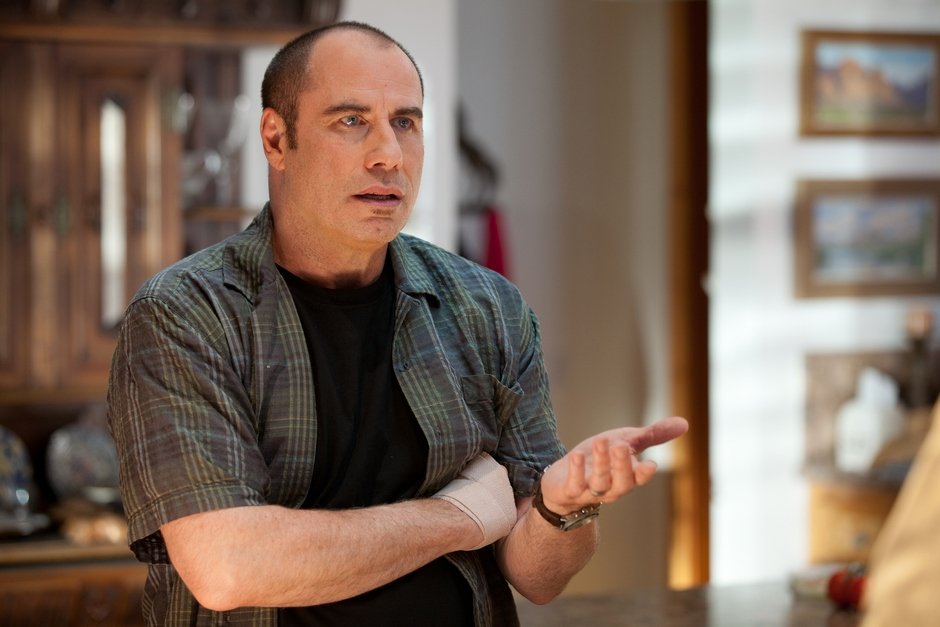
John Travolta has won the legal battle against Robert Randolph, the author of a book who claims the actor frequented gay bathhouses.
Robert Randolph, author of You’ll Never Spa in This Town Again, has unsuccessfully sued John Travolta for libel.
The author claimed John Travolta and his lawyer conspired to discredit him and his book by spreading lies about his mental health.
A letter fired off and allegedly leaked by John Travolta’s lawyer Marty Singer also stated Robert Randolph’s book was packed with lies.
Subsequently the judge overseeing the case dismissed it yesterday, agreeing with John Travolta and Marty Singer’s lawyer Lynda Goldman.
The judge ruled the letter was a legitimate part of the legal dispute over the book, and therefore protected by the First Amendment.
This means essentially that John Travolta and Marty Singer cannot be sued over the letter. Meanwhile, John Travolta has faced a barrage of gay claims.
John Travolta has won the legal battle against Robert Randolph
Compounded with allegations by a slew of characters citing his inappropriate same sex advances.
In recent months, John Travolta’s sexuality became a hot topic again when he was accused by several men of sexually harassing them.
John Travolta has long remained mum about his sexuality and though he has denied the accusations.
The actor has also yet to speak openly about the allegations of sexual impropriety.
In May, three months after the aforementioned tell-all book was released, two masseurs filed lawsuits.
They claimed he had inappropriately touched them in incidents in Beverly Hills and Atlanta.
Both men whose identities were withheld in court documents dropped their lawsuits later that month.
Now, two more claims have surfaced.
One was from a man who filed an assault-and-battery claim against John Travolta in U.S. District Court on June 21 for an incident he alleges occurred on a cruise ship in 2009.
Fabian Zanzi, a cruise-ship employee, claims John Travolta made unwanted sexual advances toward him and is asking for a jury trial to determine compensation.
The next day, Robert Randolph filed his lawsuit against the actor and his lawyer for libel in Los Angeles Superior Court.
Fabio Jose Silva Coelho, president of Google operations in Brazil, has said the company will take down a controversial YouTube video that led to his brief detention on Wednesday.
In a statement, Fabio Jose Silva Coelho said he was left with no choice after losing a final legal appeal.
A regional judge had ruled that the material slandered a candidate running for mayor next month.
One of the videos has already been withdrawn by the user who posted it.
Fabio Jose Silva Coelho has said that Google will take down the controversial YouTube video that led to his brief detention
Fabio Coelho says the decision, taken by a user who remains anonymous, shows “just what a chilling effect these episodes can have on free speech”.
He was released on Wednesday night after being interviewed by detectives in the city of Sao Paulo.
Police had already made it clear that he would not remain in custody because the offence of which he is accused has “low potential to offend”.
Fabio Coelho argues that Google has no responsibility for the content of videos posted on its site.
But he stresses that the company will follow its guidelines and the legislation of each country.
“If a video is illegal in a particular country, we will restrict access to it, after receiving a valid court order or government complaint,” he said in the statement.
“Because we are deeply committed to free expression, we often push back on requests that we do not believe are valid.”
The videos in question suggest Alcides Bernal – a mayoral candidate in the western city of Campo Grande – is guilty of committing crimes.
Judge Flavio Peren, who sits at a regional electoral court in Mato Grosso do Sul state, ruled the videos violated local election laws.
His order for the videos to be removed was ignored and on Monday he ordered Fabio Coelho’s arrest.
“Late last night [Wednesday], we learned that our final appeal had been denied and so now we have no choice but to block the video in Brazil,” says Fabio Coelho in a statement posted on Google.
“On an even more fundamental level, there is the matter of how money is created in the modern world. If the reference is to the statistics of the Federal Reserve, money held by commercial banks, by the Federal Reserve Banks, or by the U.S. Treasury is not counted in the aggregates; in that sense, money is not manufactured, merely because coins are stamped and paper notes are printed.
Nor does the Federal Reserve System alone create money. Rather, it provides the basis on which the commercial banks (and, now, near-banks as well) are permitted to create money, and applies, through fractional reserve requirements, a limit to the quantity of money that the financial system is permitted to create.
Within that limit, it is the private banking institutions that are overwhelmingly the creators of money.
Money is created when loans are issued and debts incurred;money is extinguished when loans are repaid.
A loan from a bank creates a deposit which the borrower may draw upon for the payment of obligations; the payee is the new holder of new money.
Some existing money in circulation must be acquired by the borrower to repay the capital of the loan; when that is returned to the bank it is withdrawn from circulation.”
[…]
Let me explain to you exactly what I mean. Tomorrow, you go down to your local bank and borrow $10,000. As we’ve already seen, there is actually no money in the bank, except for a few miscellaneous savings accounts and CDs plus whatever balances exist at any given moment in the banking system’s checking accounts. So to complete your transaction, the bank creates $10,000 and credits it to your checking account (Author’s note: It is allowed to do this by statute, not by Law. Actually illegal or not, this action is totally immoral. And it is a little more brazen than what I am portraying. The bank really steals the “note” you sign at the bank and converts it to the bank’s asset).
In return for the creation of this so-called money, you execute a note for $10,000 at 10% interest, due in one year and present it to the bank. The bank creates the $10,000 by a stroke of a pen and puts it in your account, basing the $10,000 on the promissory note you turned over to the bank, which is actually the only legal tender in this transaction (Author’s note: The bank actually takes your created money, the promissory note, and loans it back to you!) Did you ever wonder why banks required you to have an account? It is the only way they can create the money! In one year to the day, you return to the bank and pay them the $10,000 back. This completes the bookkeeping on the original creation of $10,000. It was created one year ago, and it is destroyed by your return of the funds.