For math enthusiasts around the world, March 14 (3-14) is Pi Day, honoring the number pi, which is the ratio of circumference to diameter of a circle.
Pi number (3.14159265358979323846264338327950288…) has captivated imaginations for thousands of years.
Approximately 3.14, pi number has its own holiday on March 14, which also happens to be Albert Einstein’s birthday.
You won’t get off school for Pi Day, but you might be doing something special in school on Friday (the last weekday before Pi Day).
Mathematicians, teachers, museum directors, math students of all ages and other aficionados celebrate the number with pi recitations, pie-baking, pie-eating contests and math-related activities.
March 14 is Pi Day, honoring the number pi
Pi Day has gained popularity worldwide every year during the last decade as enthusiasm has spread on the Web, said David Blatner, author of The Joy of Pi.
One of the oldest, if not the first, established Pi Day celebrations is at the Exploratorium in San Francisco, California, which boasts 22 years of pi mayhem. The day is even recognized by the U.S. government: Last March, the U.S. House of Representatives passed a resolution supporting Pi Day and encouraging schools to teach children about the number.
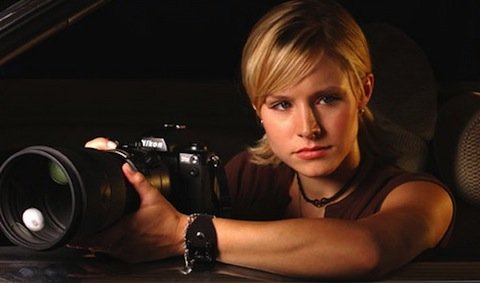
Fans of cancelled TV series Veronica Mars have raised $2 million to help bring the show about a young private investigator to the big screen.
More than 30,000 people donated money within 24 hours of a “crowd-sourcing” campaign being launched.
“The more money we raise, the cooler movie we can make,” series creator Rob Thomas wrote in his appeal to fans.
Veronica Mars show, starring Kristen Bell as a young sleuth, ended its three-season run in 2007.
The movie project is the fastest to reach $1 million on the Kickstarter site, reaching the figure in four hours and 24 minutes.
According to a spokesman for the website, the project is the most successful so far to have obtained funding through via crowd-sourcing – the practice of raising ideas, services or money via the internet.
Others to have benefited from similar campaigns include animated films The Goon, which raised $442,000, and Charlie Kaufman’s Anomalisa, for which $406,000 was pledged by fans.
Rob Thomas said he had struck a deal with Warner Bros to make a movie, provided he could raise $2 million by April 12 through the online campaign.
He said the studio had given the project its blessing, having previously declined to fund it after the original TV show was cancelled.
“Their reaction was, if you can show there’s enough fan interest to warrant a movie, we’re on board,” Rob Thomas wrote on the film’s donation page.
Fans of cancelled TV series Veronica Mars have raised $2 million to help bring the show to the big screen
Kristen Bell and other cast members will begin production in the summer ahead of a likely limited release in 2014.
“You have banded together like the sassy little honey badgers you are and made this possibility happen,” said Kristen Bell in her own online message, promising fans the “sleuthiest, snarkiest” movie possible.
First broadcast in 2004, Veronica Mars told of a high-school student who moves on to college while moonlighting as a private investigator.
The show averaged between 2.2 million and 2.5 million viewers when it aired on the UPN channel, now defunct, and the CW network.
Backers of the film will receive a variety of rewards for pledging cash, including a copy of the script, to be sent on the day the film is released, and naming rights to a character.
A contributor who donated $10,000 snapped up the opportunity to appear in the film.
Crowd-sourcing has become a way for film-makers, video-game developers and other “creatives” to get funding for projects that can be hard to obtain.
At last month’s Academy Awards, documentary short Inocente, which received $52,000 from 300 contributors, became the first Kickstarter-funded film to win an Oscar.
Pope Francis I is the first non-European Catholic Church leader for over 1,200 years.
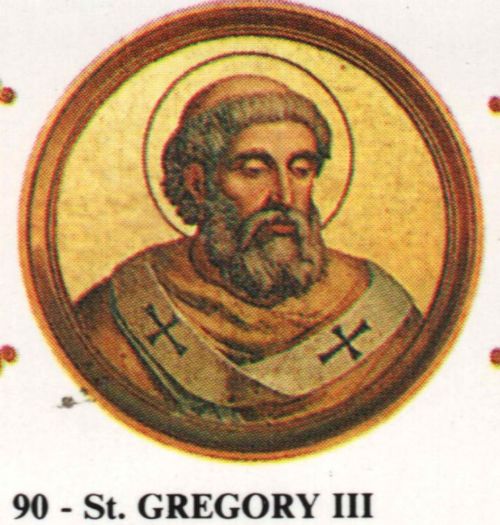
The last non-European Pope before Francis I was Gregory III.
Pope Saint Gregory III led the Catholic Church from 11 February 731 to 28 November 741, when he died.
He was the last Pope to be born outside Europe until the election of Pope Francis I on 13 March 2013.
Gregory, the son of a Syrian named John, was elected pope by popular acclamation on 11 February 731, but was not formally consecrated as Bishop of Rome until 18 March, after having received the approval of the Byzantine exarch in Ravenna.
Pope Gregory III was the last pope to seek the exarch’s ratification of a papal election.
Gregory III was the last Pope to be born outside Europe until the election of Pope Francis I on 13 March 2013
Pope Francis I, like most of his countrymen, is of Italian descent, so he bridges the Italian-dominated Church administration with Latin America, which accounts for 40% of all the world’s Catholics. Culturally always part of Western Europe, Argentina is also rather secular, with over 11% of people “indifferent towards religion”, compared to figures of under 2% in predominantly non-European Peru, Paraguay and Colombia.
Several of the early popes were Syrian, and just as the centre of Christianity in its early years shifted from the Middle East to Europe, so now it is moving across the seas. The twilight of Middle Eastern Christianity is the great tragedy of our times, Syria also being the birthplace of Christian music, among other things. But the decline of European Catholicism is also sad, because what makes Catholicism so beautiful, aesthetically, it is Italian-ness, which during that country’s long cultural dominance of Europe inspired such art and devotion.
A new EU summit is getting under way in Brussels with issues of jobs and growth expected to dominate its agenda.
The eurozone as a whole has been in recession for more than a year and unemployment is now just under 12%.
France and some other countries want more flexibility in the budget targets set by the EU Commission, as austerity has provoked widespread protests.
France and Spain, hit hard by the debt crisis, expect to miss their budget deficit targets this year.
But Germany’s Chancellor Angela Merkel remains determined to keep Europe focused on budget discipline, to prevent any resurgence of market jitters about eurozone stability.
Cyprus, whose major banks are crippled by debts, wants to secure an international bailout of up to 17 billion euros ($22 billion). There is unlikely to be a deal on that at the Brussels summit, as EU finance ministers are still working on the details.
A eurozone summit will follow the main EU summit late on Thursday. Foreign policy issues, including relations with Russia, will be the focus on Friday.
Proposals to deepen eurozone integration will dominate an EU summit in June. The first “building block” of that will be a banking union, which will give the European Central Bank (ECB) far-reaching supervisory powers.
A new EU summit is getting under way in Brussels with issues of jobs and growth expected to dominate its agenda
There is a big debate in the EU about whether austerity is making the prospects for recovery worse.
The debate has been given new impetus by last month’s Italian election, where an anti-austerity protest movement led by the comedian Beppe Grillo performed very strongly.
This is expected to be the last EU summit for outgoing Italian PM Mario Monti, an unelected technocrat who had firm backing from Brussels but got just 10% in the election.
Some economists argue that in current circumstances austerity can actually make government borrowing rise, partly because of the impact that declining production has on tax revenue and welfare spending.
There is a drive in the EU to pursue tax evaders, including some big corporations who exploit the complexity of commercial law to reduce their tax bill.
Google has decided to shut down its Reader service starting from July 2013, as usage has declined.
A petition to save the service, which aggregates news content from web feeds, had 25,000 signatures in a few hours.
Experts say shutting Reader is part of Google’s plan to migrate more people to its social media service, Google+.
Google said in its official blog: “There are two simple reasons for this – usage of Google Reader has declined, and as a company we are pouring all of our energy into fewer products.”
It added users and developers who wanted to use alternatives could export their data, including their subscriptions over the next four months, using its Google Takeout service.
Google Reader was launched in 2005, when Really Simple Syndication (RSS) feeds were a new way to keep tabs on favorite websites and blogs.
The news of its demise has led to a debate about the service on Twitter. Some said its launch had effectively destroyed other RSS competitors.
Security consultant @cortesi tweeted: “Google – a destroyer of ecosystems.”
In his blog, he added: “Google destroyed the RSS feed-reader ecosystem with a subsidised product, stifling its competitors and killing innovation.
“It then neglected Google Reader itself for years, after it had effectively become the only player.”
Google has decided to shut down its Reader service starting from July 2013, as usage has declined
Adam Leach, a principal analyst at research firm Ovum, said Google’s business model was to offer free services in order to draw people into its other offerings.
Now, he said, Google wanted people to experience their favorite websites in a more social way and was seeking to migrate its aggregation platforms to its social media service.
“This has been on the cards for a while. It is part of Google’s strategy to shift people to Google + and other social tools,” he said.
Adam Leach added he would personally miss the service.
“I use Google Reader every day,” he said.
“It is one of those tools that sits in the background and allows you to keep pace with what is going on.”
But Chris Wetherell, one of Reader’s chief engineers, told tech news site GigaOm it had been “doomed to fail from the very beginning” because Google “never really believed in the project”.
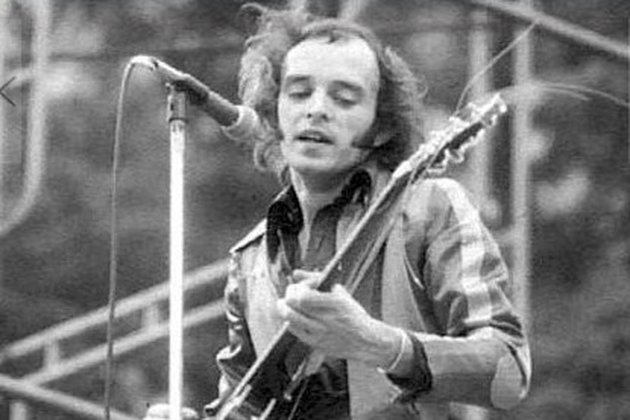
British musician Peter Banks, who was the original guitarist of progressive rock band Yes, has died aged 65.
Peter Banks played on two albums with the group before pursuing his own band Flash, and a solo career which included a guest spot on Lionel Richie’s hit Hello.
Peter Banks was found dead at his London home on March 8 after not turning up to a recording studio.
He died from heart failure.
Peter was working on a live Flash album called Flash – In Public.
A post on his official website read: “It’s with great sadness to have to report the death of Peter Banks. He died in his London home on March 8, 2013. Thanks for all the music Peter!”
Peter Banks was in Yes for just a couple of years.
Peter Banks was found dead at his London home on March 8 after not turning up to a recording studio
In 1969, Yes recorded their eponymous debut album, to be followed by Time And A Word, on which his band mates Jon Anderson and Chris Squire wanted the backing of an orchestra.
It caused some eruptions within the group and after the record came out, he was asked to leave, along with keyboardist Tony Kaye, while there was less for them to do.
During his career, Peter Banks released three albums with Flash between 1972-73, recorded with Empire, contributed to all star tributes to Supertramp and The Who and worked with later Yes member Rick Wakeman’s son Oliver.
Former Yes member Billy Sherwood has paid tribute.
“I loved working with Peter on the many records I have produced over the years,” he said.
“He always delivered amazing stuff, creative, inspired and always with that classic original Yes flavor that came with his playing. He will be missed by me and many, many other fans of his music and playing.”
The idea for Glitzy Girl came about during Isabella Barrett’s pageant days.
Every time she won a beauty contest, Isabella Barrett and her mother would get the title printed on a charm bracelet, “so she could brag about her accomplishments”, as explained her mother.
Since fans loved the look of her charms, Isabella Barrett and her mother took advantage of her popularity and launched the line.
To manage her daughter’s huge earnings, the mother has set up a trust fund that Isabella Barrett won’t be able to access until she turns 18.
“I’m just trying to raise a happy, healthy little girl,” the mother said.
Toddlers and Tiaras star Isabella Barrett has earned more than $1 million from her jewellery and make-up line in 2012
However, she seems to have no qualms about cashing in on her daughter’s fame.
She even told In Touch that she thinks Honey Boo Boo, Isabella’s former Toddlers and Tiaras co-star, should take advantage of her stardom, too.
“I know her mom, June, wants to keep her grounded,” she said.
“But… it’s time to jump on the money train.”
Isabella Barrett’s mother explained that she and her daughter have always planned to use beauty pageants as a stepping stone for other projects.
“It helped us pave the path to where we are now,” she explained.
During an appearance on The View last June, Isabella Barrett’s mother controversially slammed Toddlers and Tiaras for bringing “nothing but negativity to Isabella”, who was in just one episode of the TLC series.
Though the show was no doubt the catalyst of her newfound fame, the mother criticized it for its “completely wrong” portrayal of child beauty stars.
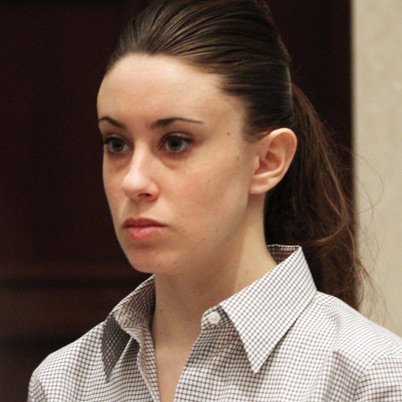
The US most hated mother, Casey Anthony, is allegedly telling close friends that she is expecting again.
Casey Anthony is pregnant with another child and is thrilled at the chance to “prove” that she is a good mother even after she was acquitted of killing her first daughter Caylee.
According to the National Enquirer, which published a story based on the claims of multiple unidentified sources, the infamous mother is pregnant.
“She just said that she fell in love with a very wealthy man while she’s been in hiding. Casey said he’s taking care of her financially and he’s so obsessed with her that he’ll do anything for her,” an unnamed insider told the tabloid.
Casey Anthony, a former murder suspect, was in hiding since the July 2011 trial when she was found not guilty of killing her 2-year-old daughter Caylee, only appearing in public last week to declare bankruptcy.
According to the National Enquirer, however, claims that her rock bottom finances are not the only news of note in the 26-year-old’s life at the moment.
They allege that Casey Anthony is bragging to close friends that she is more than a month pregnant.
Her loose-fitting clothing at the March 4 court appearance gave nothing away about her condition, so the rumor mill is left to run rampant about the state of her would-be pregnancy.
“Her eyes lit up when she told me that she was expecting, but she wouldn’t tell me who the baby’s father is,” the source told The Enquirer.
The National Enquirer also claims that there is a group of concerned citizens who have created a petition to force Casey Anthony to be sterilized, and should she have another baby, they will apparently argue that the child should be turned over to social services. Neither the name of the group- nor the names of any participants- were not listed in the article.
Casey Anthony is allegedly telling close friends that she is expecting again
If Casey Anthony continues to keep the identity of her partner a secret, it will be the second time that the identity of her child’s father is kept a secret, though she apparently does know the man in this case.
One of the many shocking revelations related to her first daughter Caylee’s murder trial was that a psychiatrist reported that Casey Anthony was impregnated when she was passed out at a party at the age of 18-years-old and discovered a while later that she was with child.
Though there is no hint as to who is the mystery man who apparently impregnated Casey Anthony recently, her supposed claims that he is wealthy will undoubtedly come in handy.
Casey Anthony is not receiving any money in book and TV deals, and is living on the kindness of her former lawyer and strangers.
She bemoaned the fact that she’s unemployed and has not received any income in the months since her acquittal in the murder of her daughter Caylee, who was found dead in 2008.
Instead, she’s been getting by on unsolicited gift cards and donations, and funds given to her by her former attorney, Jose Baez.
After the meeting, Casey Anthony was escorted out of the courthouse by a U.S. Marshal.
Upon her arrival on March 4, Casey Anthony was joined by attorney Cheney Mason, who shielded her from the crowd of reporters and photographers that swarmed her as she emerged from an SUV.
Casey Anthony filed for bankruptcy in January, claiming she was $792,000 in debt and had assets of just $1,000.
Court documents show that Casey Anthony is currently unemployed and has no income to speak of.
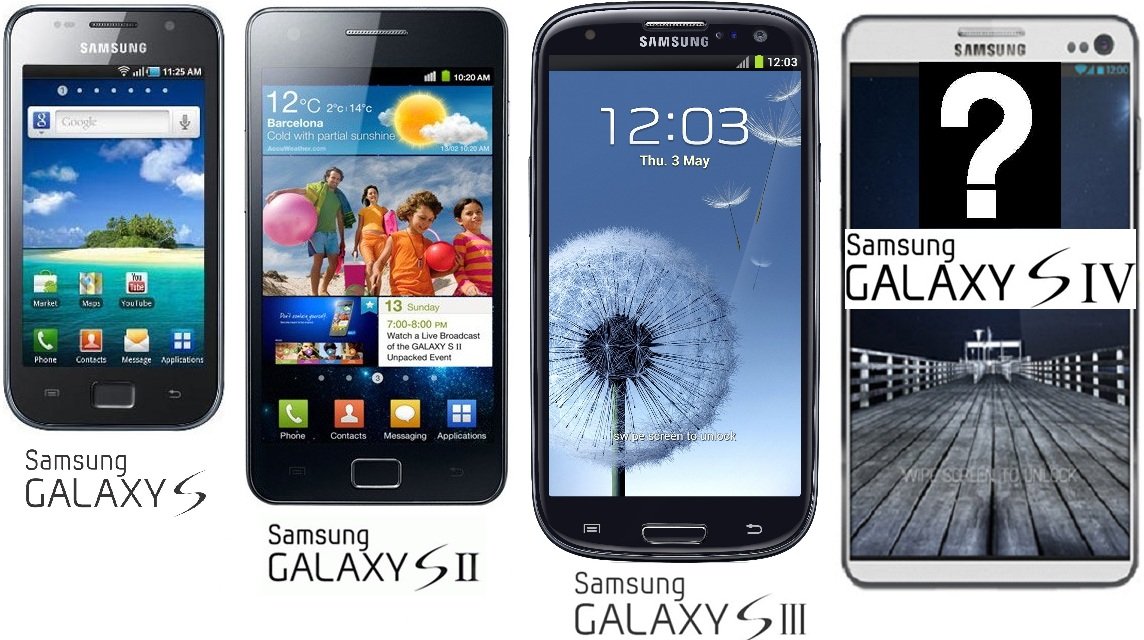
Samsung is set to launch Galaxy S4, a device included its flagship premium smartphone range.
Galaxy S4 follows the S3, a handset that has sold more than 40 million units. The Galaxy handsets are seen as the closest competitor to Apple’s iPhone.
Analysts predict software that tracks where users are looking and automatically scrolls down the page as it is read, without it being touched.
There is also expected to be a souped-up camera and processor.
But crucial to Samsung’s future success, analysts say, is how the South Korean company plans to turn its strong position in the smartphone market into greater success with other devices such as tablets.
Prior to Thursday’s launch in New York, Samsung has unleashed a huge advertising campaign, including a series of videos involving a small boy tasked with looking after a “top secret” box.
Like the S3, Galaxy S4 is expected to run on Google’s Android operating system – but analysts are predicting some heavy customization from Samsung in order to give the device a more distinctive feel and, crucially, set it apart from its competitors’ Android-based handsets.
This is important, says Gartner analyst Roberta Cozza, if Samsung is to gain a higher level of loyalty to its device range.
Unlike with Apple, where a large number of iPhone owners gravitate towards the iPad when they decide to purchase a tablet, the same cannot be said of other brands, where customers more likely to mix and match.
“We will see more of a step towards more ‘stickiness’ towards the brand,” Roberta Cozza says.
“Already the Galaxy S3 can be seen as an alternative to the iPhone, [but] the integration that Apple offers with iPad is still not matched. Samsung is not there.”
The expectation Galaxy S4 will feature eye-tracking capability has been heightened by existing technology in the Galaxy S3 – the phone’s Smart Stay function stops the screen from dimming when somebody is looking at it.
Samsung is set to launch Galaxy S4, a device included its flagship premium smartphone range
Furthermore, the New York Times notes that Samsung filed for a couple of trademarks this year named “Eye Scroll” and “Eye Pause”.
Analysts also predict the standard array of upgrades – faster processor, better camera – and Roberta Cozza predicts we will see something of a small leap in a major area of Samsung’s expertise.
“I would think they will leverage some strength in display,” she says.
“Providing something on the display side that is different.”
Supposed leaked images of the phone show a device that is slightly bigger than Galaxy S3, but largely the same in appearance.
Another company relying on Galaxy S4 to follow successfully in the S3’s footsteps is Google.
Its Android software is used by more smartphone users than Apple’s iOS – but makes less money from apps and other related products.
Of the Android crowd, Samsung is streets ahead in market share, making more than 60% of all Android smartphones sold.
Some analysts believe this dominance could lead to Samsung looking at how it can assert far more control over the operating system – perhaps in a way similar to Amazon which, with its Kindle tablets, launched its own curated app store for its users to buy from instead of Google’s default shop.
As well as cutting out Google’s share of the app sale – a curated store also allows for applications designed specifically for a certain device, rather than the largely one-size-fits-all situation in the Google Play store.
Ovum’s principal device analyst, Tony Cripps, says Samsung needs to take these steps if it is to fend off the threat from other hardware manufacturers such as Chinese firm Huawei.
“While Samsung continues to grow its shipments impressively, the company undermines its own position in the broader ecosystem by providing Google a huge mobile platform from which to influence consumers, application developers and advertisers,” he says.
“It is very difficult for Samsung to achieve that level of influence itself while it depends on Google to supply device software and key applications and services through Android.
“Lacking a powerful ecosystem of its own clearly positions the company lower down in the value chain than either Google or Apple.”
With Apple suffering from a dipped share price, and a few recent missteps with product launches, the time is perhaps ripe for Samsung to pile pressure on the iPhone-maker.
“It is an important device for them because they have got to a point where they are competing head-to-head with Apple, creating a lot of expectation,” says Roberta Cozza.
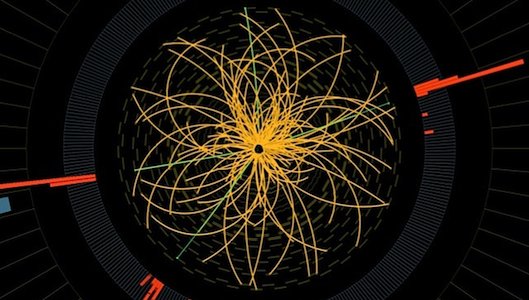
Large Hadron Collider (LHC) scientists have announced that the particle outlined in July 2012 looks increasingly to be a Higgs boson.
Higgs boson, long theorized as the means by which particles get their mass, had been the subject of a decades-long hunt at the world’s particle accelerators.
Yet there is still some uncertainty as to whether the particle is indeed a Higgs boson, and if so, what type it is.
Results at the Moriond meeting in Italy suggest strongly that the particle’s “spin” is consistent with a Higgs.
Teams from the two Higgs-hunting experiments, Atlas and CMS, analyzed two-and-a-half times more data than were available in July in an effort to pin down not only the particle’s existence, but also something about its character.
All that is conclusively established is that the particle is in the family of bosons, but researchers had been careful since July to describe it as “Higgs-like”.
The zoo of subatomic particles are characterized by properties including their “spin” and “parity” – and the precise establishment of these properties for the new particle will determine if it is beyond doubt the long-sought Higgs.
What is more, theories predict that a number of different types of Higgs may exist.
The simplest form – that which fits neatly into the existing Standard Model of particle physics – would surely shore up the theory, but the possible existence of more “exotic” versions of the particle would open exciting new vistas in science.
LHC scientists have announced that the particle outlined in July 2012 looks increasingly to be a Higgs boson
“This is the start of a new story of physics,” said Tony Weidberg, Oxford University physicist and a collaborator on the Atlas experiment.
“Physics has changed since July the 4th – the vague question we had before was to see if there was anything there,” he said.
“Now we’ve got more precise questions: is this particle a Higgs boson, and if so, is it one compatible with the Standard Model?”
The results reported at the conference – based on the entire data sets from 2011 and 2012 – much more strongly suggest that the new particle’s “spin” is zero – consistent with any of the theoretical varieties of Higgs boson.
“The preliminary results with the full 2012 data set are magnificent and to me it is clear that we are dealing with a Higgs boson, though we still have a long way to go to know what kind of Higgs boson it is,” said CMS spokesperson Joe Incandela.
As is often the case in particle physics, a fuller analysis of data will be required to establish beyond doubt that the particle is a Higgs of any kind.
However, Dr. Tony Weidberg said that even these early hints were compelling.
“This is very exciting because if the spin-zero determination is confirmed, it would be the first elementary particle to have zero spin,” he said.
“So this is really different to anything we have seen before.”
Even more data will be required to explore the question of more “exotic” Higgs particles.
A popular but as-yet unsubstantiated theory called supersymmetry suggests there should be as many as five Higgs particles – a notion that will have to remain speculative at least until new data are acquired after the LHC’s two-year shutdown for refurbishment.
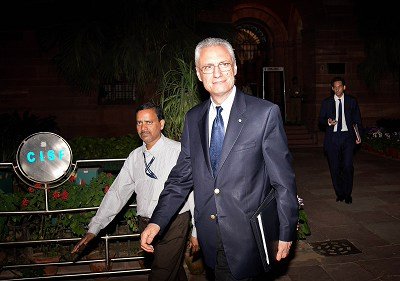
Daniele Mancini, Italy’s ambassador to India, has been ordered not to leave the country after Rome’s refusal to return two marines charged with the murder of two fishermen in Kerala last year.
The Indian court had allowed the marines to go home to vote in last month’s elections.
Ambassador Daniele Mancini had personally assured the court the marines would return by March 22.
On Wednesday, Indian PM Manmohan Singh warned that “there will be consequences” unless Italy returned the marines.
In unusually strong language, Manmohan Singh said that Italy’s refusal to send back the marines was “unacceptable”.
Rome’s decision has come as a major embarrassment for the Indian government and opposition parties have been demanding their immediate return.
On Thursday morning, the court headed by Chief Justice Altamas Kabir issued a notice to the Italian ambassador, restraining him from leaving without its permission.
Daniele Mancini has been asked to respond to the notice by March 18.
Daniele Mancini, Italy’s ambassador to India, has been ordered not to leave the country after Rome’s refusal to return two marines charged with the murder of two fishermen in Kerala last year
India’s Attorney General GE Vahanvati told the judges that Rome’s failure to return the two marines “is a breach of undertaking given to the highest court of the land and the government is extremely concerned about it”.
In February, the Supreme Court allowed Massimilian Latorre and Salvatore Girone to go home to vote in the Italian elections. They were ordered to return within four weeks.
But on Monday, Italy informed India that the marines would not be coming back, prompting a diplomatic row.
The marines are accused of shooting the fishermen in February 2012. They said they mistook them for pirates.
Italy argues that because the case is now the subject of international maritime law, it has been decided that the pair will not return to India “on the expiration of the permission granted to them”.
Rome says that it wants its nationals to be tried in Italy. Because the incident took place in international waters, Italy believes India has no jurisdiction in the case.
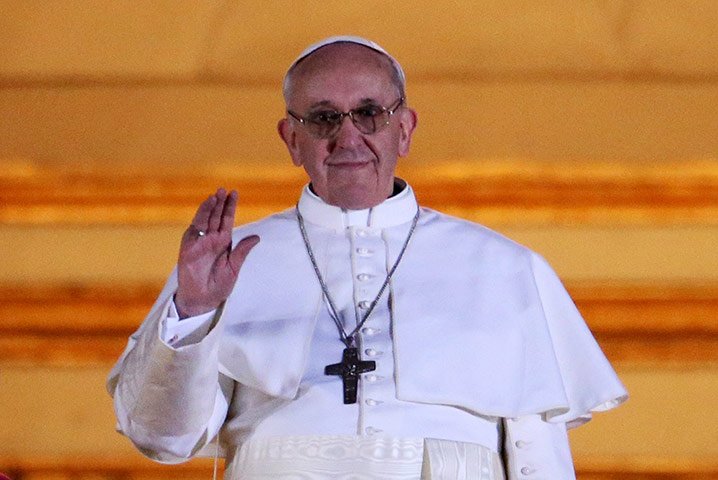
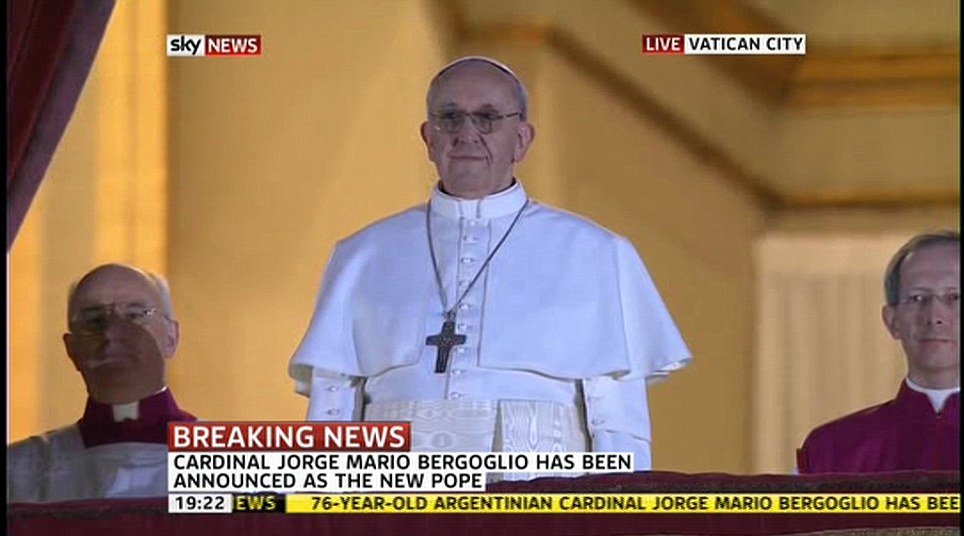
Pope Francis I has begun his first day at the helm of the Catholic Church, attempting to set out his vision for his papacy amid a testing schedule.
The Pope will lead cardinals in his first Mass, begin appointing senior Vatican staff and may visit his predecessor, Benedict XVI, Pope Emeritus.
Pope Francis I is the first Latin American and Jesuit pope and has received a flood of goodwill messages from around the world.
He also faces a series of tough challenges.
The Church has been dogged by infighting and scandals over clerical sex abuse and alleged corruption.
Thursday morning saw Pope Francis I beginning the day with a visit to Rome’s main basilica dedicated to the Virgin Mary, Santa Maria Maggiore, for a private prayer.
“He spoke to us cordially like a father,” Reuters news agency quoted Father Ludovico Melo, a priest who prayed with the Pope, as saying.
“We were given 10 minutes’ advance notice that the Pope was coming.”
The election of Cardinal Jorge Mario Bergoglio, Archbishop of Buenos Aires shocked many onlookers when it was revealed on Wednesday.
Although he reportedly came second to Pope Benedict XVI during the 2005 conclave, few had predicted the election of the first pope from outside Europe in 1,300 years.
Pope Francis I will return to the Sistine Chapel on Thursday afternoon, scene of his election, to celebrate Mass with the cardinals.
Over the weekend, he will meet the world’s media at a special papal audience, an opportunity perhaps to set out some of his global vision.
Pope Francis I has begun his first day at the helm of the Catholic Church, attempting to set out his vision for his papacy amid a testing schedule
Pope Francis I had been greeted by crowds roaring their approval when he appeared at the balcony overlooking St Peter’s Square on Wednesday evening, about an hour after white smoke rose from the chimney of the Sistine Chapel to announce to the world that a new pontiff had been elected.
“It seems that my brother cardinals have gone to the ends of the earth [to find a pope],” Francis said wryly, referring to his native Argentina.
“Now, we take up this journey… A journey of fraternity, of love, of trust among us,” he said.
Pope Francis I endeared himself to the crowds – and underlined his reputation for humility – when he asked them to bless him before blessing them in return.
Later, according to the New York Archbishop Cardinal Timothy Dolan, Pope Francis I shunned a special car and security detail provided to take him to the Vatican – “I’ll just go with the guys [cardinals] on the bus,” Cardinal Dolan quoted him as saying.
At the dinner itself, Cardinal Timothy Dolan said the Pope had made the cardinals laugh when he referred to the seven days of meetings that led to his election, saying: “I am going to sleep well tonight and something tells me you are too.”
The 76-year-old from Buenos Aires is the first pope to take the name of Francis – reminiscent of Francis of Assisi, the 13th Century Italian reformer and patron saint of animals, who lived in poverty.
He faces a gruelling schedule over coming days, with a visit to his predecessor Benedict XVI at his retreat at Castel Gandolfo outside Rome reportedly planned, as well as audiences with his cardinals, the media and the faithful.
The visit to Benedict is important, correspondents say, as the existence of a living retired pope has prompted fears of a possible rival power.
The Pope will be installed officially in an inauguration Mass on Tuesday, March 19, the Vatican said.
His election was met with thunderous applause at the cathedral in Buenos Aires and with delight and surprise elsewhere in Latin America – home to 40% of the world’s 1.2 billion Catholics.
Guillermo Lopez Mirau from Salta, Argentina, said he was delighted with Cardinal Jorge Mario Bergoglio’s election.
“People here are overjoyed. You can hear sirens and church bells ringing in the air.”
President Barack Obama sent “warm wishes” on behalf of the American people to the newly elected pontiff, hailing the Argentine as “the first pope from the Americas”.
The new leader of the world’s Anglicans, Archbishop of Canterbury Justin Welby, said he was looking forward to “walking and working together”.
And Argentine President Cristina Fernandez de Kirchner – who is said to have clashed with the Argentine archbishop in the past over issues including gay marriage – wished the pontiff a “fruitful pastoral mission”.
Pope Francis I takes the helm at a difficult time for the Catholic Church, facing an array of challenges which include the role of women, interfaith tensions and dwindling congregations in some parts of the world.
Cardinal Jorge Mario Bergoglio, who was not among the frontrunners before the election, is regarded as a doctrinal conservative.
But he is also seen as a potential force for reform of the Vatican bureaucracy, which may have won the support of reforming cardinals.
Pope Francis I will come under strong pressure to reform the Curia, the governing body of the Church.
Pope Francis I’s next schedule:
Thursday, March 14: Pope celebrates Mass with cardinals in Sistine Chapel – closed to public but televised
Friday, March 15: Pope meets all cardinals, including those over 80 who did not take part in conclave
Saturday, March 16: Papal audience with media
Sunday, March 17: Pope recites Angelus with faithful in St Peter’s Square
Tuesday, March 19: Pope formally installed at Mass in St Peter’s Square
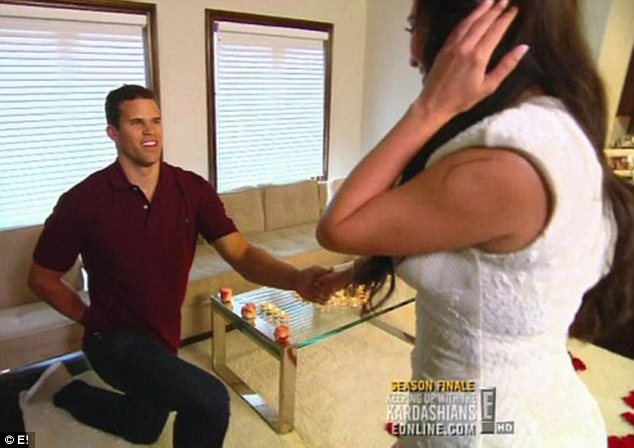
New court documents have emerged revealing Kris Humphries proposal to Kim Kardashian was reshot for her reality show and conversations about her marriage concerns were filmed after she’d already filed for divorce.
Kim Kardashian and Kris Humphries are currently embroiled in a bitter divorce battle as Kris attempts to prove that Kim married him for publicity.
Keeping Up With The Kardashians executive producer Russell Jay took part in a deposition last month and a transcript of his testimony has emerged.
In the exchange, Russell Jay also suggested Kim Kardashian has used a tear stick in crying scenes filmed for the show.
Life & Styleobtained court documents from the deposition as part of Kris Humphries’ fraud case against Kim Kardashian.
Russell Jay revealed Kim Kardashian didn’t like her reaction during Kris Humphries’ proposal so asked for the scene to be reshot.
“I remember, like, Kim – she didn’t know he was going to propose at that moment,” he said.
“And she came in and she was completely surprised, and I think she had a bad reaction or something and she was embarrassed.
“So she said can we just, like, have me come back in one more time and be, like, really surprised. Because she had no idea it was going to happen. It was in her bedroom.”
New court documents have emerged revealing Kris Humphries proposal to Kim Kardashian was reshot for her reality show
In addition, Russell Jay revealed that some scenes on the show were created entirely for entertainment purposes.
Russell Jay admitted that the scene in which Kim Kardashian confessed to mother Kris Jenner that she was struggling to make her marriage work was in fact filmed after Kim filed for divorce.
Life&Style reports that Kris Humphries “feels vindicated” by the revelations, quoting as source as saying: “It’s obvious they were trying to tarnish his reputation. This will prove how fake Kim and the show are.”
However, according to TMZ, Kim Kardashian was “completely surprised” by his proposal, which wouldn’t help Kris Humphries prove she fraudulently induced him to marry her.
Kim Kardashian is currently pregnant with Kanye West’s baby and had been hoping to have her divorce finalized before her early July due date.
On May 6 Kim Kardashian will appear in court to defend herself as the feud continues.
It comes after it was revealed that Kris Humphries’ lawyer Marshall Waller quit, blaming an “irremediable breakdown of the attorney-client relationship”.
Kris Humphries still has an out-of-state lawyer – Lee Hutton – but needs another California lawyer for the divorce case reports TMZ.
Kim Kardashian filed for divorce from Kris Humphries on October 21, 2011, after just 72 days of marriage.
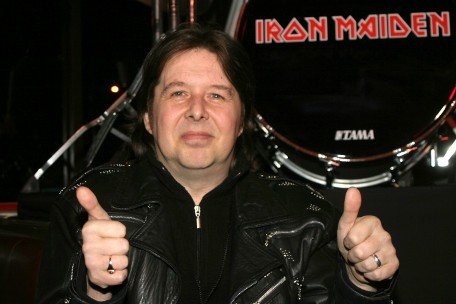
Former Iron Maiden drummer Clive Burr has died at the age of 56 after suffering from multiple sclerosis.
Steve Harris, Iron Maiden’s founder and bass player, said it was “terribly sad news” in an announcement on the group’s website.
“He was a wonderful person and an amazing drummer who made a valuable contribution to Maiden in the early days when we were starting out.”
Clive Burr joined Iron Maiden in 1979 and played on their first three albums.
Lead singer Bruce Dickinson also paid tribute, saying: “Even during the darkest days of his MS, Clive never lost his sense of humor or irreverence.”
Clive Burr played on the band’s debut album Iron Maiden (1980), Killers (1981) and their number one 1982 album The Number of the Beast.
Megadeath bassist David Ellefson, who left his tribute on Facebook, said: “He was one of my all time favourite Metal drummers.”
“So sad,” said Brian Slagal, CEO of Metal Blade Records, on Twitter.
“Clive was a great guy.”
“Always remember CLIVE for eternity,” said Iron Maiden tribute band Coverslave in their own Twitter tribute.
Former Iron Maiden drummer Clive Burr has died at the age of 56 after suffering from multiple sclerosis
Born in 1957 in east London, Clive Burr was a member of British metal band Samson before joining Iron Maiden.
“I first met Clive when he was leaving Samson and joining Iron Maiden,” said Bruce Dickinson.
“He was a great guy and a man who really lived his life to the full.”
Clive Burr left the band in December 1982, just as they were about to become a global stadium headliner.
When he was diagnosed with multiple sclerosis in 2001, his former Maiden bandmates formed the Clive Burr MS Trust Fund to help raise money for his living costs.
They performed a number of concerts in his honor when he struggled to keep up payments on his house.
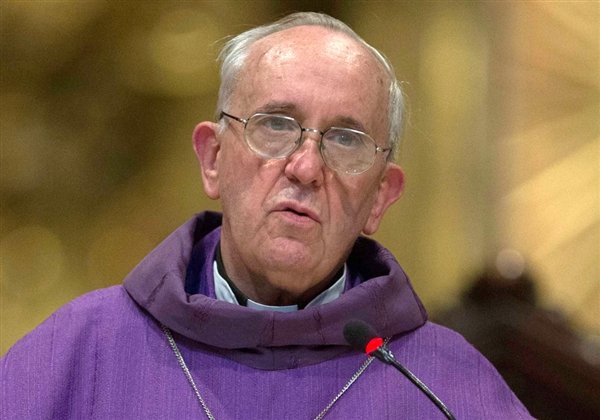
Pope Francis I, born Jorge Mario Bergoglio on 17 December 1936, is the 266th and current Pope of the Catholic Church, elected on 13 March 2013.
He is the first Pope born in the Americas, and the first Pope from the Southern Hemisphere.
Cardinal Jorge Mario Bergoglio, Archbishop of Buenos Aires has been mooted as a possible successor ever since John Paul II died.
Jorge Mario Bergoglio, 76, a trained chemist and son of a railway worker, has been a cardinal since 2001 and is widely seen as being open and compassionate.
He stands out for his humility, living in a modest apartment, rather than his luxury official residence.
“In favor of Bergoglio is his pastoral attitude, as they say in the Church – his relationship with the people,” said in 2005 Leandro Pastor, a philosophy professor at the University of Buenos Aires, who has known Cardinal Bergoglio for more than 30 years.
“He’s a very simple man. He’s very austere. And also, I think he’s an intelligent man and someone who is very good at communicating.”
Pope Francis I, born Jorge Mario Bergoglio, is the 266th and current Pope of the Catholic Church
Jorge Mario Bergoglio impressed fellow prelates in 2001 when he skilfully helped to manage a synod of bishops in Rome.
Buenos Aires’ cardinal is also a strong advocate for the poor. And, as a Latin American, he comes from a region which is home to around half the world’s billion or so Catholics.
He speaks Italian – the official language of the Church – and that he traces his ancestry back to Italy.
In the event that cardinals struggle to decide whether to maintain a non-Italian papacy or to return to its traditional roots, Jorge Mario Bergoglio could emerge as a choice of compromise.
For the past 28 years, Jorge Mario Bergoglio has lived with only one functioning lung, although he is said to be in good shape.
And then there is the fact that he is a Jesuit.
This order of the Church has never produced a Pope before.
Jorge Mario Bergoglio, the archbishop of Buenos Aires, has been elected the 266th Roman Catholic Church’s new Pope.
The Argentine cardinal is the first Latin American to be Pope.
He will call himself Francis I.
An hour earlier, white smoke billowing from the Sistine Chapel chimney announced to the world that cardinals gathered inside had made their choice.
Jorge Mario Bergoglio replaces Benedict XVI, who resigned last month saying he was not strong enough to lead the Church.
The 115 cardinals have been in isolation since Tuesday afternoon, and held four inconclusive votes.
Jorge Mario Bergoglio, the archbishop of Buenos Aires, has been elected the 266th Roman Catholic Church’s new Pope
At least 77 of them, or two-thirds, would have had to vote for a single candidate for him to be elected Pope.
Before the conclave began, there was no clear frontrunner to replace Benedict.
Crowds with umbrellas massed in the square flying flags from around the world.
The Catholic News Agency said people were running through the streets of Rome, hoping to reach St Peter’s Square in time for the appearance of the new Pope.
Twinkies could be back on sale in stores by the summer after manufacturer Hostess was bought in a $410 million deal.
The snacks, along with other Hostess products including Wonder bread, have not been produced since November when the company filed for liquidation following strike action by the Bakery Workers union.
The company announced to the bankruptcy court on Monday that a winning bid for Hostess had been tabled by private equity firms Apollo Global Management and Metropoulos & Co.
The winning bid also secured five of the company’s closed bakeries as part of the bid.
Hostess had forewarned the bankruptcy court in December that it was narrowing down the bids it received for its brands and expected to sell off its snack cakes and bread to separate buyers.
The company said then that a likely suitor had emerged for the brand, which includes Twinkies, Ding Dongs and Ho Hos, along with Dolly Madison cakes, which includes Coffee Cakes and Zingers, said Joshua Scherer of Perella Weinberg Partners.
They said at the time that another viable bid had been made for Drake’s cakes, which includes Devil Dogs, Funny Bones and Yodels. That bidder was also said to want to buy the Drake’s plant in Wayne, N.J., which Joshua Scherer said is the country’s only kosher bakery plant.
It had been predicted that the auctions could be very active for some of the brands, given the number of parties that had expressed interest.
About 30 plants were also likely to be sold with the brands with six plants, several warehouses and a fleet of trucks likely to be closed or scrapped.
Twinkies could be back on sale in stores by the summer after manufacturer Hostess was bought in a $410 million deal
Hostess hired a firm Hilco to act as a sales agent for those additional assets; the firm also gave Hostess a $30 million loan to maintain operations during its liquidation, which was expected to take about a year.
Hostess, based in Irving, Texas, had said potential buyers included major packaged food companies and national retailers, such as big-box retailers and supermarkets.
The company stressed it needs to move quickly in the sale process to capitalize on the outpouring of nostalgia sparked by its bankruptcy.
To begin winding down its operations in November, Hostess had said it would retain about 3,000 workers to shutter plants and perform other tasks.
The following month, an attorney for Hostess said in court that figure was down to about 1,100 employees.
The liquidation of Hostess ultimately means the loss of about 18,000 jobs, not including those shed in the years leading to the company’s failure.
The company’s demise came after years of management turmoil and turnover, with workers saying the company failed to invest in updating its snack cakes and breads.
Hostess filed for its second Chapter 11 bankruptcy in less than a decade last January, citing steep costs associated with its unionized workforce.
The company was able to reach a new contract agreement with its largest union, the Teamsters, but the bakers union rejected the terms and went on strike in early November. A week later, Hostess announced its plans to liquidate, saying the strike crippled its ability to maintain normal production.
Although Hostess sales have been declining over the years, they had still been clocking in at between $2.3 billion and $2.4 billion a year.
White smoke pouring from the Sistine Chapel chimney has announced to the world that cardinals gathered inside have elected a new Pope to head the Catholic Church.
Crowds in St Peter’s Square cheered and bells rang out as the smoke appeared.
The name of the new Pope is expected to be announced shortly.
The Catholic News Agency said people were running through the streets of Rome, hoping to reach St Peter’s Square in time for the appearance of the new Pope.
A troupe of Swiss Guards in silver helmets and full regalia marched to the Basilica in preparation for the announcement, as military bands played for the onlookers.
After his name is read out, the new Pope will emerge from the loggia overlooking the square to deliver his first speech.
He will have already accepted an invitation to become Pope and the cardinals will have sworn allegiance to him, after which he will have gone to pray alone.
White smoke pouring from the Sistine Chapel chimney has announced to the world that cardinals gathered inside have elected a new Pope to head the Catholic Church
New treatments that use extremely cold temperatures are the hottest beauty trend.
From reducing wrinkles and boosting radiance to firming the skin, exposing the body to plummeting temperatures can have multiple benefits, say the experts behind these procedures.
“Therapies that use cold temperature can stimulate circulation,” says Dr. Preema Vig, medical director of Beyond MediSpa at Harvey Nichols, UK.
“When used in the right way through the correct technology and methods, it’s possible to see benefits in fat reduction and skin toning.”
We’ve all heard of Botox, but a new technique set to become widely available this summer has earned the nickname “Frotox”.
Iovera – a toxin-free alternative to Botox – uses a technique called cryoneuromodulation to banish fine lines.
The 20-minute procedure involves placing a device filled with liquid nitrogen next to the nerves that control the muscles that cause wrinkles.
“The liquid nitrogen freezes the targeted nerves on the forehead and between the brows,” says Harley Street plastic surgeon Dr. Yannis Alexandrides, who has been trialing and refining the procedure developed by California-based lab Myoscience Inc. for more than a year.
“This puts the nerves into temporary hibernation, so muscles relax and wrinkles disappear.
“Unlike Botox, which takes four days to work, the effects can be seen immediately and last for up to four months. And as nitrogen occurs naturally in the body – unlike Botox – you aren’t putting a foreign substance in to your system.”
From reducing wrinkles and boosting radiance to firming the skin, exposing the body to plummeting temperatures can have multiple benefits
Cold therapy is also being used in a new generation of super-powered facials. The Cryoderm facial costs about $800, but practitioners say the price tag reflects the cutting-edge technologies used in the treatment.
The 75-minute session combines cold therapy with exfoliating microdermabrasion, lymphatic-drainage massage and collagen-boosting radio frequency.
“The cold causes the blood vessels to contract and then dilate, which improves the oxygen and nutrient supply to the skin’s surface, making it appear more radiant,” says facialist Rani Mirza, who has performed the treatment on celebrities including Anna Friel, Natalie Imbruglia and Erin O’Connor.
“My clients like it because it gives their skin a taut and more defined look,” she adds.
A more affordable option comes from Parisian brand Anne Semonin. Cheryl Cole is said to be keen on the “Ice” Cryotherapy Super Facial, which includes a cleanse and exfoliation followed by a puff-reducing massage using ice cubes made with marine spring water, moisturizing red algae and evening primrose oil.
Cold therapy is also being used to shift fat and cellulite. Jennifer Aniston and Jessica Alba are said to be fans of the Bioslimming Body Wrap.
Despite the trend, not everyone is warming to the idea of cold therapy.
“Some of these treatments can break down fat and tighten skin, but results are unpredictable,” says cosmetic doctor Mervyn Patterson.
“Treatments such as Frotox are at very early stages and we know little about its long-term safety and effectiveness.
“Low temperatures can be soothing after surgical procedures and temporarily rejuvenating, but there is no evidence to support claims that this type of therapy has lasting anti-ageing benefits.”
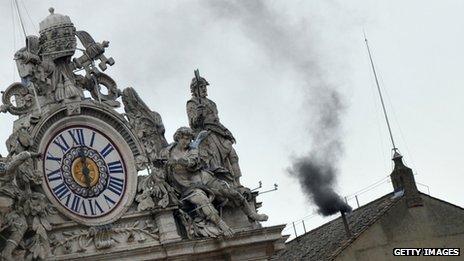
Black smoke has poured from Sistine Chapel chimney, signaling that the second and third votes in the Papal election have been inconclusive.
Cardinals have been meeting for a second day to choose a successor to Pope Benedict XVI, who resigned last month.
The 115 electors are shut off in Vatican’s Sistine Chapel and a nearby residence until two-thirds agree on a leader for the world’s 1.2 billion Catholics.
Further votes will be held this afternoon.
Starting with today, the cardinals will vote four times daily until a single candidate garners a two-thirds majority, at which point the smoke coming from the Sistine Chapel chimney will be white.
Before the conclave began there was no clear frontrunner to replace Pope Benedict.
Black smoke has poured from Sistine Chapel chimney, signaling that the second and third votes in the Papal election have been inconclusive
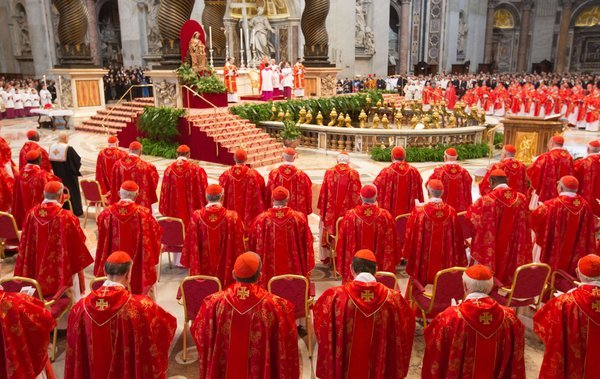
More than 100 cardinals of the Roman Catholic Church have gathered to Vatican for a new pope election. At some point, white smoke billowing from the Sistine Chapel will show that a decision has been made.
What goes on behind the closed doors before the smoke appears?
Here are 10 lesser-known facts about the papal conclave.
1. It’s a lock-in. Conclave comes from the Latin “cum-clave” meaning literally “with key” – the cardinal-electors will be locked in the Sistine Chapel each day until Benedict XVI’s successor is chosen. The tradition dates back to 1268, when after nearly three years of deliberation the cardinals had still not agreed on a new pope, prompting the people of Rome to hurry things up by locking them up and cutting their rations. Duly elected, the new pope, Gregory X, ruled that in future cardinals should be sequestered from the start of the conclave.
2. Spying is tricky. During the conclave they are allowed no contact with the outside the world – no papers, no TV, no phones, no Twitter. And the world is allowed no contact with them. The threat of excommunication hangs over any cardinal who breaks the rules.
Before the conclave starts, the Sistine Chapel is swept for recording equipment and hidden cameras. It is a myth that a fake floor is laid to cater for anti-bugging devices… Anti-bugging devices are used, and the floor is raised, but only to protect the marble mosaic floor.
3. Portable loos play an essential role. Until 2005, the cardinals endured Spartan conditions in makeshift “cells” close to the Sistine Chapel. They slept on hard beds and were issued with chamber pots. Pope John Paul II changed that with the construction of a five-storey 130-room guest house near St Peter’s – Domus Sanctae Marthae (St Martha’s House). But cardinals still have to rough it while voting. In an interview with the Catholic News Service last week, Antonio Paolucci, the director of the Vatican Museum said: “I believe they may be installing portable chemical toilets inside the chapel.”
4. An “interregnum” is ending. The pontificate used to be known as a “reign” – hence the period between two popes being called an interregnum (“between reigns”). Many of the regal trappings of the papacy were set aside by Pope Paul VI, who began his pontificate in 1963 with a coronation, but never wore the beehive-shaped papal tiara again.
More than 100 cardinals of the Roman Catholic Church have gathered to Vatican for a new pope election
5. Counted votes are sewn up. The cardinals hold one vote on day one and then two each morning and afternoon until a candidate wins a two-thirds majority. Each writes his choice on a slip of paper, in disguised handwriting, and folds it in half. Cardinals then process to the altar one by one and place the ballots in an urn. The papers are mixed, counted, opened and scrutinized by three cardinals, the third of whom passes a needle and thread through the counted votes. At the end of each morning and afternoon session the papers are burned.
6. Chemicals color the smoke. Those 115 ballot papers produce an unusual amount of smoke… which pours out of a chimney specially installed on the roof of the Sistine Chapel. A chemical is mixed with the paper to produce black smoke when voting is inconclusive, or white smoke when a pope has been elected. But even the white smoke looks dark against a bright sky, so to avoid any possible confusion, white smoke is accompanied by the pealing of bells. In 2005, though, the official responsible for authorizing the bells was temporarily occupied with other duties, so there was a period of confusion while white smoke billowed out, and the bells of St Peter’s remained silent.
7. Robes are prepared in S, M and L. The Pope has to look the part when he is presented to the faithful from a balcony overlooking St Peter’s Square. So papal tailors Gammarelli prepare three sets of vestments – in small, medium and large sizes. These will include a white cassock, a white silk sash, a white zucchetto (skullcap), red leather shoes and a red velvet mozzetta or capelet with ermine trim – a style revived by Benedict XVI. The Pope dresses by himself, donning a gold-corded pectoral cross and a red embroidered stole. (Popes traditionally wore red, but in 1566 St Pius V, a Dominican, decided to continue wearing his white robes. Only the Pope’s red mozzetta, capelet and shoes remain from the pre-1566 days.)
8. Huge bets are laid. Experts suggest more than $15 million will be wagered as people guess which cardinal will get the nod – making this the world’s most bet-upon non-sporting event. It’s not a new phenomenon. In 1503 betting on the pope was already referred to as “an old practice”. Pope Gregory XIV was so cheesed off that in 1591 he threatened punters with excommunication, but the gambling continues unabated. Prominent Italian and Latin American names currently lead the field.
9. Just say yes. Technically, an elected Pope can refuse to take up the position, but it’s not really done to turn down the Holy Spirit. That said, few relish the prospect of leading the world’s largest Church, beset as it is at the moment with falling congregation numbers, sex abuse scandals and internal wrangling. So many new popes are overcome with emotion after their election that the first room they enter, to dress for the balcony scene, is commonly known as the Room of Tears.
10. There is no gender test. Chairs with a large hole cut in the seat are sometimes thought to have been used to check the sex of a new Pope. The story goes that the aim of the checks was to prevent a repeat of the scandal of “Pope Joan”, a legendary female cardinal supposedly elected pope in the 14th Century. Most historians agree that the Joan story is nonsense. Examples of the chairs, the sedes stercoraria, are apparently held in museums, but their purpose is unclear. One unconfirmed theory is that they were used to check that the new pope had not been castrated.
After everyone assumed that Tiger Woods and Elin Nordegren had patched things up and revived their romance, a Tuesday piece by ShowBizSpy (SBS) refutes all previous reports.
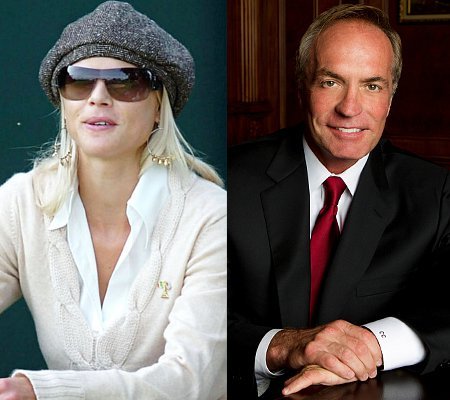
According to SBS, Elin Nordegren, 33, is not back to Tiger Woods like everyone suspects, and is in fact dating 54-year-old billionaire Chris Cline.
Coal magnate Chris Cline and the former Swedish model live in Florida’s exclusive North Palm Beach oceanfront community of Seminole Landing, which is where they reportedly met.
“Elin and Chris have been dating since the holidays,” said a source.
Born in Beckley, West Virginia, Christopher Cline is a coal-mining entrepreneur and a philanthropist. He’s the owner of Foresight Reserves LP and is regarded as the “New King Coal.”
According to Forbes, Chris Cline is worth an estimated $1.2 billion, which makes him the magazine’s billionaire #1175, #377 in United States, and #360 in Forbes 400.
Chris Cline has been married twice, with his most recent one ending in 2000, and is the proud father of four: two sons and two daughters.
Chris Cline currently resides in his 33-thousand-square-foot home in Palm Beach, Florida, which happens to be just around the corner from Elin Nordegren’s rebuilt mansion.
It appears that Elin Nordegren is not back to Tiger Woods like everyone suspects, and is in fact dating 54-year-old billionaire Chris Cline
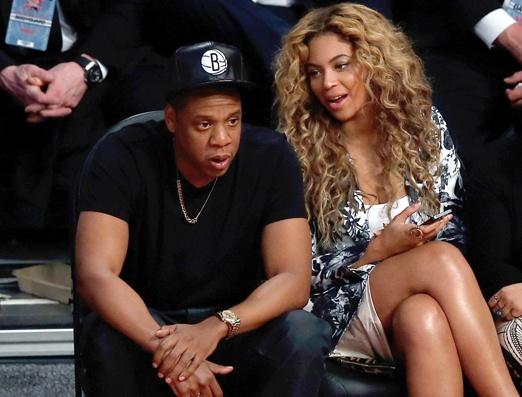
Celebrities including Beyonce and Jay-Z have had private details of their finances posted online.
Hackers have also put up information, but not credit reports, about US Vice-President Joe Biden and former Secretary of State Hillary Clinton.
Los Angeles police say they are investigating how a police chief’s private details, including his address and a credit report, ended up online.
Police Cmdr. Andrew Smith described the site as “creepy”.
He said: “People get mad at us, go on the Internet and try to find information about us, and post it all on one site.
“The best word I can use to describe it is creepy.”
Andrew Smith also confirmed that police would be investigating the posting of information about any celebrities living in Los Angeles.
Other affected people include Paris Hilton and Kim Kardashian.
Celebrities including Beyonce and Jay-Z have had private details of their finances posted online
Some of the private financial information posted includes social security numbers, which could allow fraudsters to commit identity theft.
Actors Mel Gibson and Ashton Kutcher are also reported to have been targeted on the site.
Information about FBI Director Robert Mueller is thought to have been uploaded. The bureau says it is aware of the site but has not revealed whether they will be investigating.
More names were added throughout Monday, including Britney Spears and former presidential candidate Sarah Palin.
The website uses an internet suffix assigned to the Soviet Union and includes some unflattering pictures of the people who are mentioned.
It did not state how it sourced the information but did include an anti-police message written in Russian.
One of the site’s pages also made reference to the former police officer Christopher Dorner who apparently committed suicide during a large scale manhunt, after he killed four people.
So far representatives for each person targeted either declined to comment on the accuracy of the information that was posted, or they did not return messages seeking comment.
A Save the Children report has revealed that an increasing number of children in Syria are being recruited by armed groups on both sides of the conflict.
Children are being used as porters, guards, informers and fighters and, in some cases, as human shields, the charity said in Childhood Under Fire.
Some two million children are in need of assistance in Syria, Save the Children estimates.
It says the two-year conflict has affected all aspects of their lives.
Researchers from Turkey found that three in every four Syrian children they interviewed had lost a loved one because of the fighting, the report says.
Many have lost access to healthcare and are living in unsanitary conditions where the risk of disease is high. Their families are struggling for food as shortages send prices beyond the reach of poorer families.
Their education has been disrupted as some 2,000 schools have either been damaged by the fighting or become temporary shelters for displaced people.
Syria’s children are the conflict’s “forgotten victims – facing death, trauma and suffering, and deprived of basic humanitarian aid”, the report said.
A Save the Children report has revealed that an increasing number of children in Syria are being recruited by armed groups on both sides of the conflict
Save the Children has appealed for international help, but said: “The only way to stop their suffering is to bring an end to the war.”
The report said it had found a growing pattern of children under the age of 18 being used by armed groups on both sides in the conflict.
For many children and their families, it is seen as a source of pride, the report says, but some children are being forcibly recruited into military activities.
In some cases, children as young as eight have been used as human shields, the report says.
One group affiliated to the opposition has documented the deaths of at least 17 children associated with armed groups since the start of the conflict; many others have been severely injured and in some cases permanently disabled, the report also says.
The research team at Bahcesehir University in Turkey found that not only had three in every four children they spoke to had lost a loved one, but one in every three children had been hit, kicked or shot at in the course of the conflict.
“I don’t think there is a single child untouched by this war,” the report quotes a child called Safa as saying.
“Everyone has seen death, everyone has lost someone. I know no one who has not suffered as we have. It is on such a scale.”
The Save the Children report echoes similar findings made public by the UN children’s agency Unicef on Tuesday.
Unicef warned of a lost generation in Syria, saying children under the age of 18 were growing up knowing nothing but violence, were being deprived of a right to an education and were suffering traumas that could scar them for life.
As many as 70,000 people have died in the two-year conflict, the UN believes.
More than a million Syrians have now been registered as refugees by the UN in neighboring countries.
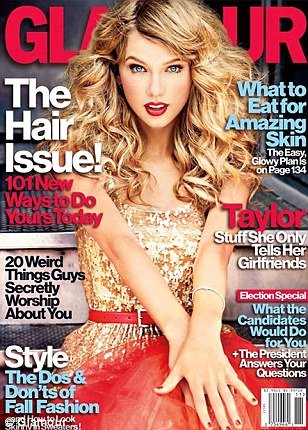
According to a report by Women’s Wear Daily (WWD), the magazines featuring Taylor Swift on the cover in 2012 sold less than those displaying less well known celebrities such as Lauren Conrad and Zooey Deschanel.
Taylor Swift cut a glamorous sight on the covers of Vogue, Glamour and Harper’s Bazaar last year, following the October release of her hugely successful album Red.
The report, by the Alliance for Audited Media, examined sales of the high end women’s monthly magazines in 2012.
Taylor Swift’s Vogue cover in February 2012 sold a solid 329,371 – a little over the magazine’s six month average – but the star was outsold to a large degree by Lady Gaga whose cover appearance moved almost double – shifting 602,000 copies.
However, Lady Gaga’s appearance in a pink gown and hair raising wig featured on the magazine’s September issue, which traditionally sells more.
Adele’s March cover also beat Taylor Swift, selling 410,343, and providing Vogue with its second best seller in 2012.
Although Taylor Swift performed acceptably for Glamour‘s November issue, selling 443,000 copies, she failed to beat Lauren Conrad who proved the year’s “runaway best seller” for the brand with a little over 500,000, while Victoria Beckham’s September edition moved an impressive 482,000.
According to a report by Women’s Wear Daily, the magazines featuring Taylor Swift on the cover in 2012 sold less than those displaying less well known celebrities
Glamour editor-in-chief Cindi Leive told WWD that she believed Taylor Swift’s relationship troubles with One Direction star Harry Styles could have caused her low sales.
“There may have been a little hiccup for her right around the 1-D relationship,” she said.
“But it’s nothing a pro can’t come back from. I’d put money on her for the long run.”
Taylor Swift was also Cosmopolitan magazine’s worst seller of the entire year, with her December cover selling 20% below the six-month average for the magazine.
Scarlett Johansson was Cosmopolitan‘s top performing star, with 1.5 million readers interested in an interview with the Lost in Translation star, with Scarlett discussing what she finds attractive in a man.
Even Ashley Greene outsold Taylor Swift, with the Twilight actress ranking second in the year’s sales.
All this despite Taylor Swift, who appeared on the cover of Harper’s Bazaar in December and Elle magazine in February 2013, usually giving good value in interviews.
She made headlines for her Vanity Fair interview for April in which she appears on the cover, where she criticizes Golden Globe hosts Tina Fey and Amy Poehler.
Gwen Stefani also beat Taylor Swift’s Harper’s Bazaar total of 138,412 copies, despite the No Doubt singer having a poor year in record sales.
Celebrities who performed well for the magazines in general include Katy Perry who sold best for Elle and Jennifer Aniston for In Style.
Kate Middleton’s cover was the top selling issue for Vanity Fair, with model Kate Moss also scoring well for Harper’s Bazaar and W magazine.