Friday, January 16, 2026
Home Blog Page 87

Coronavirus: US Federal Social Distancing Guidelines To Be Extended Until April 30

0
Image source Wikipedia

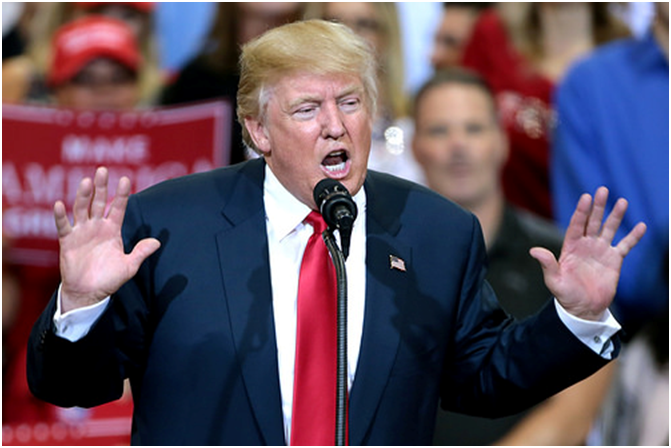
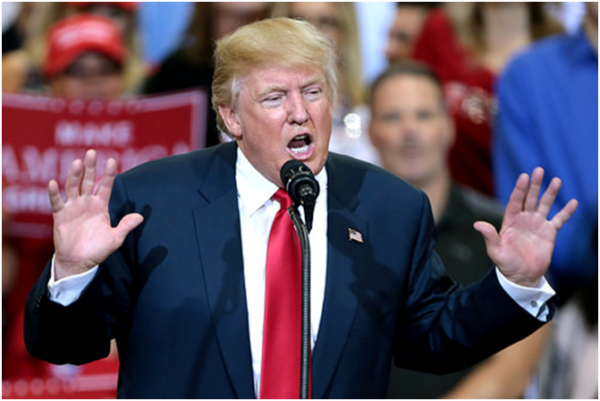
Federal coronavirus guidelines such as social distancing will be extended across the US until at least April 30, President Donald Trump has said.

The president had previously suggested that restrictions could be relaxed as early as Easter, which falls in mid-April.

He said: “The highest point of the death rate is likely to hit in two weeks.”

President Trump appeared to be referring to peak infection rates that experts fear could overwhelm hospitals.

White House medical adviser Dr. Anthony Fauci had earlier warned that the virus could kill up to 200,000 Americans.

He said that it was “entirely conceivable” that millions of Americans could eventually be infected.

The US now has more than 155,000 confirmed cases.

As of March 29, 2,493 deaths had been recorded in the country in relation to Covid-19, according to figures collated by Johns Hopkins University.

Coronavirus: President Trump’s U-Turn on New York Quarantine

Coronavirus: President Trump Signs Largest-Ever US Financial Stimulus Package

Coronavirus: US Has Now More Confirmed Cases than Any Other Country

The US last week became the country with the most reported cases, ahead of Italy and China.

Speaking during the latest Coronavirus Task Force press briefing at the White House on March 29, President Trump said that measures such as social distancing were “the way you win”, adding that the US “will be well on our way to recovery” by June.

Suggesting that the “peak” of death rates in the US was likely to hit in two weeks, President Trump said that “nothing would be worse than declaring victory before victory is won – that would be the greatest loss of all”.

Analysts suggest that when President Trump referred to a peak in the “death rate”, he probably meant the total number of recorded infections.

North Korea Tests “Super Large” Multiple Rocket Launchers amid Global Coronavirus Outbreak

0
Image source Wikimedia

North Korea hailed a test of “super large” multiple rocket launchers after two short-range missiles had been fired, the latest in a flurry of tests this month.

Just hours before, South Korea condemned the North as “inappropriate” for pursing tests amid the global coronavirus outbreak.

North Korea generally ramps up missile tests in the spring and the global virus outbreak has not deterred it.

The country has reported no virus cases, but experts have cast doubt on this.

North Korea Fires Two Short-Range Ballistic Missiles Into Sea of Japan

Samjiyon: North Korea Unveils Newly-Reconstructed “Utopia” Town

North Korea’s Food Shortages Exacerbated by Worse than Usual Harvest

The March 29 test was of two short-range ballistic missiles fired from the eastern city of Wonsan. They flew for 255 miles with a maximum altitude of around 30 miles before falling into the sea, the South Korean military said.

On March 30, North Korean state media outlet KCNA reported that it had successfully tested “super large” multiple rocket launchers.

By then South Korea had already condemned the North’s actions in a harshly-worded statement.
South Korea’s Joint Chiefs of Staff said: “In a situation where the entire world is experiencing difficulties due to Covid-19, this kind of military act by North Korea is very inappropriate and we call for an immediate halt.”

According to Reuters, the latest test marked the eighth and ninth missiles launched in four rounds of tests this month.

North Korea had earlier announced it would be holding a session of the Supreme People’s Assembly, the country’s parliament, on April 10. Analysts say the meeting will involve almost 700 of North Korea’s leaders in one spot.

Coronavirus: President Trump’s U-Turn on New York Quarantine

0
Image source Wikipedia

President Trump backs down after saying he is considering a quarantine on New York and two other states.

He has said quarantining New York “will not be necessary”, after Governor Andrew Cuomo said doing so would be “preposterous”.

The president said the latest decision was taken on the recommendation of the White House Coronavirus Task Force.

Donald Trump had earlier said he might impose a quarantine on New York, and parts of New Jersey and Connecticut, to slow the spread of Covid-19.

There are more than 52,000 cases in New York.

New York has about half of the total confirmed Covid-19 cases in the entire US.

Coronavirus: President Trump Signs Largest-Ever US Financial Stimulus Package

Coronavirus: US Has Now More Confirmed Cases than Any Other Country

President Trump tweeted that instead of quarantine, a “strong travel advisory” would be issued to New York, New Jersey and Connecticut by the CDC.

The CDC then published a statement urging residents of those three states to “refrain” from all non-essential domestic travel for 14 days.

It said the advisory did not apply to “critical infrastructure” service providers, including healthcare professionals and food suppliers.

Speaking to reporters on March 28 about the situation in New York, President Trump said: “We’d like to see [it] quarantined because it’s a hotspot… I’m thinking about that.”

He said it would be aimed at slowing the spread of the virus to other parts of the US.

He said: “They’re having problems down in Florida. A lot of New Yorkers are going down. We don’t want that.”

Governor Andrew Cuomo responded by saying that quarantining the state of New York would be “preposterous” and “anti-American”.

“If you said we were geographically restricted from leaving, that would be a lockdown.”

The governor said New York had already implemented “quarantine” measures, such as banning major gatherings and ordering people to remain at home, but that he would oppose any “lockdown” efforts.

Andrew Cuomo told CNN: “Then we would be Wuhan, China, and that wouldn’t make any sense.”

He added that this would cause the stock market to crash in a way that would make it impossible for the US economy to “recover for months, if not years”.

“You would paralyze the financial sector,” he said.

Governor Cuomo added later: “I don’t know how that can be legally enforceable. And from a medical point of view, I don’t know what you would be accomplishing.

“But I can tell you, I don’t even like the sound of it.”

He also said he would sue nearby Rhode Island if the authorities there continued targeting New Yorkers and threatening to punish them for failing to quarantine.

On March 27, Rhode Island Governor Gina Raimondo deployed National Guard troops to stop cars with a New York license plate, to remind them of their state’s advice that they quarantine.

Soldiers are going door-to-door in coastal vacation communities to ask if any residents have recently visited New York City.

Coronavirus: Wuhan Partially Re-Opens After Two Months of Isolation

0
Image source: Wikimedia Commons

Wuhan, the Chinese city where the coronavirus pandemic began, has partially re-opened after more than two months of isolation.

Crowds of passengers were pictured arriving at Wuhan train station on March 28.

According to reports, people are being allowed to enter but not leave.

Wuhan, the capital of Hubei province, saw more than 50,000 coronavirus cases. At least 3,000 people in the province died from the disease.

However, numbers have fallen dramatically, according to China’s figures. On March 28, the state reported 54 new cases emerging the previous day – which it said were all imported.

Coronavirus: Russia Declares Non-Working Week

Coronavirus: Russia Postpones Vote on Vladimir Putin Staying in Power

Coronavirus: President Trump Signs Largest-Ever US Financial Stimulus Package

As it battles to control cases coming from abroad, China has announced a temporary ban on all foreign visitors, even if they have visas or residence permits. It is also limiting Chinese and foreign airlines to one flight per week, and flights must not be more than 75% full.

The new coronavirus is thought to have originated in a seafood market in Wuhan that “conducted illegal transactions of wild animals”.

Wuhan’s 11 million residents have been shut off from the rest of the world since the middle of January, with roadblocks around the outskirts and drastic restrictions on daily life.

However, roads reopened to incoming traffic late on March 27, according to Reuters.

State media said the subway was open from March 28 and trains would be able to arrive at the city’s 17 railway stations.

All arrivals in Wuhan have to show a green code on a mobile app to prove that they are healthy.

Officials say restrictions on people leaving Wuhan will be lifted on April 8, when domestic flights are also expected to restart.

The new coronavirus emerged in China in December 2019 and more than 3,300 people there have died from the infection – but both Italy and Spain now have higher death tolls.

It is now battling to control a wave of imported cases as infections soar abroad.

This so-called “second wave” of imported infections is also affecting countries like South Korea and Singapore, which had been successful in stopping the spread of disease in recent weeks.

Meanwhile, the virus continues to spread rapidly in other countries around the world.

Nearly 600,000 infections have been confirmed globally and almost 28,000 deaths, according to figures collated by Johns Hopkins University.

Coronavirus: Russia Declares Non-Working Week

As a measure to stop the spread of the new coronavirus, Russia is beginning what President Vladimir Putin called a “non-working week”.

The Russian government is urging people to stay at home, though mixed messaging has left many people confused.

According to officials, the new restrictions could be extended beyond April 5, depending on the health situation.

The number of Russians infected with Covid-19 passed 1,000 on March 27, with most cases detected in Moscow.

Based on that figure, the Kremlin spokesman has stressed that there is “de facto no epidemic” here, comparing Russia’s position favorably with the crisis in Europe.

Whilst state TV’s rolling news channel has changed its name to We’re Staying Home – broadcasting from presenters’ living rooms – many people are struggling to adjust after its previous insistence that Covid-19 was a “foreign threat”.

Coronavirus: Russia Postpones Vote on Vladimir Putin Staying in Power

Coronavirus: President Trump Signs Largest-Ever US Financial Stimulus Package

When President Putin announced a paid week off work for all, there was a rush to book holidays.

The governor of Krasnodar region, which includes the Black Sea resort of Sochi, had to order the closure of all shopping centers, parks and restaurants – and limit flights – after hotel reservations sky-rocketed.

Many Moscow residents have already headed out of town to their dachas, or summer houses.

In the Russian capital, there has been a noticeable increase in people in facemasks on the streets since President Putin’s national address.

Supermarket staff have begun wearing them and there are bottles of hand sanitizer in coffee shops.

Food stores will remain open, as well as other essential services, but from this weekend cafes and restaurants can offer takeaway only.

Coronavirus: President Trump Signs Largest-Ever US Financial Stimulus Package

President Trump has signed into law the largest-ever US financial stimulus package, worth $2 trillion, as the country grapples with the coronavirus pandemic.

The House of Representatives passed the cross-party bill two days after the Senate debated its provisions.

On March 25, the number of Americans filing for unemployment surged to a record high of 3.3 million people.

As of March 27, the US has more confirmed cases of coronavirus than any other country, with more than 100,000 positive tests.

No Democratic lawmakers were invited to the historic signing ceremony, which was held at the White House, though the president thanked both parties “for coming together, setting aside their differences and putting America first”.

President Trump said the package was “twice as large” as any prior relief bill.

He said: “This will deliver urgently needed relief to our nation’s families, workers and businesses.”

Just before signing the act into law, President Trump invoked the Defense Production Act (DPA), which gives the president the power to force private industries to create items required for national defense.

Coronavirus: US Has Now More Confirmed Cases than Any Other Country

Coronavirus: Russia Postpones Vote on Vladimir Putin Staying in Power

Coronavirus: Prince Charles Tests Positive for Virus

President Trump said the order will compel General Motors (GM) to manufacture much-needed medical ventilators for the federal government.

Earlier in the day, President Trump tweeted that GM had promised to “give us 40,000 much needed Ventilators, very quickly “.

“Now they are saying it will only be 6,000, in late April, and they want top dollar,” he said, threatening to invoke the DPA.

During the bill signing, President Trump said that “tremendous [medical] supplies” would be coming soon, adding: “We’ve had great results on just about everything we’re talking about.”

On March 27, New York Governor Andrew Cuomo announced eight temporary hospitals to meet an expected surge in cases.

He said 519 people had died in the state – the worst-hit in the US – and there were 44,635 confirmed cases.

Democrats and Republicans in the Democratic-led House approved the stimulus package by voice vote on March 27 following a three-hour debate.

House Speaker Nancy Pelosi said: “Our nation faces an economic and health emergency of historic proportions due to the coronavirus pandemic, the worst pandemic in over 100 years.”

Members of the House had been ready to conduct the vote at their homes but were forced to return to Washington at the last minute after a Republican representative from Kentucky demanded a quorum of half the chamber be present.

Thomas Massie – who objected to the stimulus package saying it contained too much spending – also sought to delay proceedings by demanding a formal recorded vote, as opposed to a voice vote, but was overruled.

President Trump vented his fury at Thomas Massie on Twitter, calling him a “third-rate grandstander” and demanding he be thrown out of the Republican party.

The new law enables direct payments to individuals and companies whose livelihoods and businesses have been affected by the pandemic.

It seeks to deliver $1,200 to every American earning less than $75,000 per year and $500 to the parents of every child.

The law also gives money directly to state governments, and bolsters the unemployment benefits program.

Under the law, jobless benefits will be extended to those not normally covered, such as freelancers and workers in the gig economy.

It also offers loans and tax breaks to companies that face going out of business, as one in every four Americans is ordered to remain at home and only go outside for essential needs.

Officials across the US have closed restaurants, bars, cinemas, hotels and gyms in an effort to slow the spread of the virus.

Auto companies have halted production and air travel has fallen dramatically. According to economists, a fifth of the US workforce is on some form of lockdown.

With almost 1,500 virus-related fatalities, the US death toll remains lower than those in Italy and China. But there are virus hotspots in New York, New Orleans and Detroit.

Coronavirus: UK’s PM Boris Johnson Tests Positive For Virus

UK’s Prime Minister Boris Johnson and Health Secretary Matt Hancock both tested positive for coronavirus, which causes the Covid-19 disease.
It comes after the UK government’s chief medical officer Professor Chris Whitty has said he is self-isolating after experiencing symptoms of coronavirus last night.

Prof. Chris Whitty has led the UK’s medical response and appears in the government’s public information films. Known symptoms of the virus include a persistent dry cough and a raised temperature.

PM Boris Johnson has tested positive for coronavirus after displaying “mild” symptoms.

He is continuing to work in his Downing Street office although he will not be taking part in March 27 daily government briefing.

Boris Johnson’s fiancée, Carrie Symonds, who is several months pregnant, is self-isolating elsewhere.

Coronavirus: Prince Charles Tests Positive for Virus

Harvey Weinstein Tests Positive for Coronavirus

A total of 759 people have now died of the coronavirus in the UK, while 14,579 have tested positive.

The death toll jumped by 181 on March 27 – a rise of 31% – making it the biggest rise in deaths that the country has seen so far, surpassing March 26’s record of 115.

In England, patients were aged between 29 and 98 years old.

According to health officials, all but four patients, aged between 82 and 91 years old, had underlying health conditions.

The UK has the seventh highest number of recorded deaths in the world after Italy, Spain, China, Iran, France and the US.

Coronavirus: US Has Now More Confirmed Cases than Any Other Country

0
Image source Wikipedia

The number of confirmed cases of coronavirus in the US has surpassed any other affected country’s on March 26.

With more than 86,000 positive tests, the US has overtaken China (81,782 cases) and Italy (80,589), according to the latest figures collated by Johns Hopkins University.

However, with almost 1,300 Covid-19-related fatalities, the US death toll lags behind China (3,291) and Italy (8,215).

The grim milestone came as President Donald Trump predicted the nation would get back to work “pretty quickly”.

Asked about the latest figures at a White House briefing on March 26, President Trump said it was “a tribute to the amount of testing that we’re doing”.

VP Mike Pence said coronavirus tests were now available in all 50 states and more than 552,000 tests had been conducted nationwide.

President Trump also cast doubt on the figures coming out of Beijing, telling reporters: “You don’t know what the numbers are in China.”

Coronavirus: Russia Postpones Vote on Vladimir Putin Staying in Power

Coronavirus: Prince Charles Tests Positive for Virus

Coronavirus: Spain’s Deaths Surpass China’s Official Figures

Later, the president tweeted that he had had a “very good conversation” with China’s President Xi Jinping.

He said: “China has been through much & has developed a strong understanding of the Virus. We are working closely together. Much respect!”

President Trump has set a much-criticized goal of Easter Sunday, 12 April, for reopening the country. That plan seemed to gather impetus on March 26 as it emerged an unprecedented 3.3 million Americans have been laid off because of the virus.

At March 26 briefing, he said: “They [the American people] have to go back to work, our country has to go back, our country is based on that and I think it’s going to happen pretty quickly.

“We may take sections of our country, we may take large sections of our country that aren’t so seriously affected and we may do it that way.”

He added: “A lot of people misinterpret when I say go back – they’re going to be practicing as much as you can social distancing, and washing your hands and not shaking hands and all of the things we talked about.”

President Trump promised more details next week.

In a letter to state governors on March 26, President Trump said his team plans to release federal social distancing guidelines that may advise some regions to loosen restrictions.

He wrote of a “long battle ahead” and said “robust” testing protocols might allow some counties to lift their safeguards against the coronavirus.

President Trump said the “new guidelines” would create low, medium and high risk zones that would allow the government to advise on “maintaining, increasing, or relaxing social distancing and other mitigation measures they have put in place”.

On March 26, President Trump phoned in to Fox News host Sean Hannity’s program and said he believed Iowa, Idaho, Nebraska and parts of Texas could reopen earlier than other states.

The plan emerged as new research on March 26 estimated Covid-19-related deaths in the US could top 80,000 over the coming four months – even if people observe strict social distancing.

According to the study from the Institute for Health Metrics and Evaluation at the University of Washington’s School of Medicine, as many as 2,300 patients could be dying every day by April.

https://www.youtube.com/watch?v=PmU_76Yz5pk

Coronavirus: Russia Postpones Vote on Vladimir Putin Staying in Power

Image source Wikimedia

Russia has postponed a vote on constitutional change that would allow President Vladimir Putin to stay in power, because of coronavirus concerns.

President Putin said the public vote – previously due to be held on April 22 – would be delayed until a “later date”.

The proposed changes include scrapping a ban on allowing Vladimir Putin to run for office again.

The changes have already been approved by parliament and Russia’s constitutional court.

They would give Vladimir Putin – who is serving his fourth presidential term and has dominated Russian politics for two decades – the right to serve two more consecutive terms.

Coronavirus: Prince Charles Tests Positive for Virus

Coronavirus: Spain’s Deaths Surpass China’s Official Figures

Coronavirus: US Senate and White House Agree on $1.8TN Stimulus Package

Later on March 25, Russia confirmed the deaths of two people who had been diagnosed with the new coronavirus. According to Ria Novosti, the 88- and 73-year-olds had pre-existing conditions. Russia has a total of 658 cases.

President Putin said: “The absolute priority for us is the health, life and safety of people. Therefore I believe that the vote should be postponed until a later date.”

He also announced that Russians would not work next week “to slow the speed” of the infection.

However, the Russian leader warned that it was impossible to prevent any spread of the virus at all in Russia because of the country’s size.

The Russian economy was also under serious pressure because of the virus, he said.

During their week off, employees would continue to be paid and key services would continue, Vladimir Putin said.

The president also announced extended welfare support, including for families with children and those who had lost jobs.

Russia has already taken measures such as 14-day quarantine for people arriving from abroad, school closures and warning for elderly people in Moscow to self-isolate.

It has also stopped cultural and sporting events and closed gyms, theaters and nightclubs, although cafes and restaurants have been allowed to stay open.

Russia has so far stopped short of imposing the kind of lockdown seen in some European countries.

There have been more than 435,000 confirmed cases worldwide. Europe is now the center of the global outbreak.

Coronavirus: Prince Charles Tests Positive for Virus

Prince Charles has tested positive for coronavirus, Clarence House has announced.

The 71-year-old is displaying mild symptoms “but otherwise remains in good health”, a spokesman said, adding that the 72-year-old Duchess of Cornwall has been tested but does not have the virus.

Prince Charles and his wife are now self-isolating at Balmoral.

According to Buckingham Palace, Queen Elizabeth II last saw her son, the heir to the throne, on March 12, but was “in good health”.

The palace added that Prince Philip was not present at that meeting, and that the Queen was now “following all the appropriate advice with regard to her welfare”.

A Clarence House statement read: “In accordance with government and medical advice, the prince and the duchess are now self-isolating at home in Scotland.

“The tests were carried out by the NHS in Aberdeenshire, where they met the criteria required for testing.

“It is not possible to ascertain from whom the prince caught the virus owing to the high number of engagements he carried out in his public role during recent weeks.”

Prince Harry and Meghan Markle Will Step Back as Senior Royals and Work to Become Financially Independent

Harvey Weinstein Tests Positive for Coronavirus

Prince Charles’s last public engagement was on March 12 – the same day he last saw the Queen – when he attended a dinner in aid of the Australian bushfire relief and recovery effort.

However, the prince has also been working from home over the last few days, and has held a number of private meetings with Highgrove and Duchy of Cornwall individuals, all of whom have been made aware.

A number of household staff at Birkhall – Prince Charles’s residence on the Balmoral estate – are now self-isolating at their own homes.

A palace source said Prince Charles has spoken to both the Queen and his sons – Prince William and Prince Harry – and is in good spirits.

Coronavirus: US Senate and White House Agree on $1.8TN Stimulus Package

Senate leaders and the White House have agreed on a stimulus package worth more than $1.8 trillion to ease the impact of coronavirus.

The stimulus reportedly includes payments of $1,200 to most American adults and aid to help small businesses pay workers.

Full details of the deal, which Congress is expected to pass, are not known.

Financial markets around the world rose on news of the deal.

President Donald Trump has said he hopes the US will shake off coronavirus within less than three weeks.

However, the top US infectious disease expert, Anthony Fauci, warned that “you have to be very flexible” about a timeframe for ending the crisis.

Meanwhile, New York Governor Andrew Cuomo warned the illness was spreading faster than “a bullet train” in his state, which is at the centre of the pandemic in the US.

After 802 deaths and 55,225 confirmed infections, the US is more than midway through a 15-day attempt to slow the spread of the virus through social distancing.

Around 19,000 people have died with coronavirus across the planet since it emerged in China’s Wuhan province in January, and more than 425,000 infections have been confirmed.

Southern Europe is now at the centre of the pandemic, with Italy and Spain recording hundreds of new deaths every day.

Governments around the world have responded by locking down societies in the hope of slowing the spread of the virus.

The stimulus agreement announced by Democratic and Republican senator leaders at 01:30EDT on March 25 includes tax rebates, loans, money for hospitals and rescue packages.

According to media, individuals who earn $75,000 or less would get direct payments of $1,200 each, with married couples earning up to $150,000 receiving $2,400 and an additional $500 per each child.

Coronavirus: California Puts 40 Million Residents Under Lockdown
Coronavirus: Two US Congressmen Test Positive for Covid-19

Senate Majority Leader Mitch McConnell described the package as a “wartime level of investment” in the US nation.

If passed, it would be the largest government economic stimulus in US history.

The agreement must still be voted through the House of Representatives and the Senate before President Trump signs it off but it enjoys cross-party support.

One factor that may delay its passage is the question of how voting will be conducted, given that some members of Congress are off with coronavirus or are self-isolating having come into contact with infected people.

New York Governor Cuomo dismissed the plan as “terrible for the state” and called the proposed $3.8 billion “a drop in the bucket, as to need”.

He said New York was facing a $15 billion revenue shortfall, and estimated that $1 billion has already been spent on the coronavirus response.

The details of the stimulus bill have not yet gone to the House, making some lawmakers wary of signaling their early approval.

If any member objects to unanimous consent, lawmakers will be asked to return to Washington and vote over the course of an entire day, in order to limit how many people are present on the House floor at one time.

President Trump said he hoped America could get back to normal by Easter, which falls on April 12 this year.

He told Fox News: “We’re going to be opening relatively soon…

“I would love to have the country opened up and just rearing to go by Easter.”

However, the president later sounded more cautious, saying: “We’ll only do it if it’s good.”

President Trump added that re-opening could be limited to “sections” of the country such as “the farm belt”.

Coronavirus: Spain’s Deaths Surpass China’s Official Figures

Image source: Wikipedia

Spain’s deaths number from the coronavirus has surpassed the official figure from China, becoming the second highest in the world.

The death toll has risen by 738 in just 24 hours to a total of 3,434 – a record spike for Spain.

In comparison, China has officially reported 3,285 deaths, while Italy – the worst affected country – has 6,820.

Spain’s PM Pedro Sánchez will later ask lawmakers to extend his country’s state of emergency for another two weeks.

Lawmakers are expected to agree to the prime minister’s request for lockdown measures to stay in place until April 11. Under the rules, people are banned from leaving home except for buying essential supplies and medicines, or for work.

According to data compiled by Johns Hopkins University, globally there are nearly 440,000 cases of the virus, with deaths approaching 20,000 and more than 100,000 people having recovered.

Coronavirus: South Korea’s New Cases at Lowest Level Since February Peak

Coronavirus: Australia in Nationwide Shutdown

Coronavirus: Italy’s Worst-Affected Region of Lombardy Imposes Stricter Measures

On March 25, the UN said the virus was “threatening the whole of humanity” as it launched a $2 billion appeal for the world’s poorest people.

UN Secretary-General AntĂłnio Guterres said: “Global action and solidarity are crucial. Individual country responses are not going to be enough.”

On March 25, figures released by the health ministry show that in just 24 hours, Spain’s national death toll rose by 738. The country’s number of cases soared by 7,973.

These are the highest figures for Spain in a single day. Spain now has 47,610 confirmed cases. Catalonia accounts for close to 10,000 of those, while the Basque Country and Andalusia both have more than 3,000 cases. However, the worst affected region is the area around the capital Madrid, which has recorded 14,597 cases.

How to Survive a Recession While Freelancing

Image by Gerd Altmann from Pixabay

No one knows exactly when the next recession will hit. It could be five years from now, five months from now, or it could take shape as a result of the recent coronavirus scare. One thing’s for sure, though. A financial downturn will happen eventually and another recession is on the way. Unlike previous recessions, though, many current professionals operate as freelancers. Working as a freelancer provides a number of advantages, but it can also be quite challenging in some ways as well. Here, we’ll explain everything that freelancers need to know to manage their finances during a recession:

Start Saving Now

It’s never too early –– or too late –– to start saving up for the future. While “traditional” nine-to-five employees may benefit from employer-supported 401ks and health insurance, freelancers have no such safety net. That’s why it’s crucial to build up a substantial savings fund now. Living paycheck-to-paycheck might work out if you can rely on a steady stream of income. But if a recession affects your ability to generate personal revenue, then it’s imperative to have enough capital saved up to cover essential expenses.

Lean on Relationships

The best freelancers don’t wait around to find work. During a recession, it’s unlikely that many companies will actively search for extra support. And jobs that do get posted on sites like Upwork will probably go quickly. As such, it’s a smart play for freelancers to develop positive working relationships with business leaders in their field. This will allow them to check in and get the inside track on projects or assignments during lean periods. In business, who you know matters almost as much as what you know.  

Expand Your Skill Set

Working in a niche field can be a solid way to start your career as a freelancer. However, if you want to improve your viability, you’ll have to expand your skill set so that you can take on new jobs as they hit the market. This could include almost anything –– from learning about the RFP process to enhancing your writing abilities. Don’t hesitate to learn new things because they could come in handy one day!

Talk to an Expert

Unless you’ve spent years studying economics, you may not understand everything there is to know about managing resources during a recession. Indeed, it is possible to not only survive a recession, but to thrive under such conditions. You just have to have a plan in place and know how to execute it. It makes a lot of sense for freelancers to enlist the help of a financial planner. They can create contingency strategies and explain how to create an effective investment portfolio regardless of the state of the market.

Bottom line: don’t be afraid to reach out for help if you need it!

Coronavirus: India in Total Lockdown for 21 Days

0
Image source: indiatvnews.com

India’s PM Narendra Modi has announced that a nationwide lockdown will be imposed on March 24 in an attempt to slow the spread of the coronavirus.

The restrictions will apply from midnight local time and will be enforced for 21 days.

The prime minister said in a TV address: “There will be a total ban on venturing out of your homes.”

India – which has a population of 1.3 billion – joins a growing list of countries that have imposed similar measures.

Nearly 400,000 people have tested positive for the virus worldwide, and around 17,000 have died.

The new measures in India follow a sharp increase in cases in recent days. There have been 519 confirmed cases in the country and 10 reported deaths.

PM Narendra Modi said: “The entire country will be in lockdown, total lockdown.”

He added: “To save India, to save its every citizen, you, your family… every street, every neighborhood is being put under lockdown.”

Narendra Modi warned that if India does not “handle these 21 days well, then our country… will go backwards by 21 years”.

“This is a curfew,” he said.

“We will have to pay the economic cost of this but [it] is the responsibility of everyone.”

Under the new measures, all non-essential businesses will be closed but hospitals and other medical facilities will continue to function as normal.

Schools and universities will remain shut and almost all public gatherings will be banned.

Coronavirus: India Observes 14-Hour Janata Curfew to Combat Pandemic

Coronavirus: California Puts 40 Million Residents Under Lockdown

Coronavirus: Mount Athos Closes for Pilgrims and Visitors until March 30

In his address, PM Modi also stressed that the 21 day lockdown was “very necessary to break the chain of coronavirus”. He emphasized the seriousness of the situation and said that even developed countries had faced problems in combating it. He also said that “social distancing was the only way to stop” the virus spreading.

The prime minister announced that nearly $2 billion would be made available to boost India’s health infrastructure.

He called on people not to “spread rumors” and to follow instructions.

The prime minister’s announcement came after several Indian states introduced measures of their own, such as travel restrictions and the closure of non-essential services.

India has already issued a ban on international arrivals and grounded domestic flights. The country’s rail network has also suspended most passenger services.

Coronavirus: Tokyo 2020 Olympics Postponed Until 2021

Image source: Wikimedia Commons

The Tokyo 2020 Olympic and Paralympic Games have been postponed until 2021 because of the worldwide coronavirus pandemic.

The Olympics, due to begin on July 24, will now take place “no later than summer 2021”.

Japan’s PM Shinzo Abe: “I proposed to postpone for a year and [IOC] president Thomas Bach responded with 100% agreement.”

The event will still be called Tokyo 2020 despite taking place in 2021.

In a joint statement, the event’s organizers and the IOC said: “The unprecedented and unpredictable spread of the outbreak has seen the situation in the rest of the world deteriorating.

“On Monday, the director general of the World Health Organization, Tedros Adhanom Ghebreyesus, said that the Covid-19 pandemic is ‘accelerating’.

“There are more than 375,000 cases now recorded worldwide and in nearly every country, and their number is growing by the hour.

“In the present circumstances and based on the information provided by the WHO today [Tuesday], the IOC president and the prime minister of Japan have concluded that the Games of the XXXII Olympiad in Tokyo must be rescheduled to a date beyond 2020 but not later than summer 2021, to safeguard the health of the athletes, everybody involved in the Olympic Games and the international community.”

The IOC had given itself a deadline of four weeks to consider delaying the Games but there had been mounting pressure from a host of Olympic committees and athletes demanding a quicker decision.

On March 22, Canada became the first major country to withdraw from both events, while USA Track and Field, athletics’ US governing body, had also called for a postponement.

International Paralympic Committee president Andrew Parsons said the postponement was “the only logical option”.

Andrew Parsons added: “The health and wellbeing of human life must always be our number-one priority and staging a sporting event of any kind during this pandemic is simply not possible.

“Sport is not the most important thing right now, preserving human life is. It is essential, therefore, that all steps are taken to try to limit the spread of this disease.

“By taking this decision now, everyone involved in the Paralympic movement, including all Para-athletes, can fully focus on their own health and wellbeing and staying safe during this unprecedented and difficult time.”

The Olympics have never been delayed in their 124-year modern history, though they were canceled altogether in 1916, 1940 and 1944 during World War One and World War Two.

Major Cold War boycotts disrupted the Moscow and Los Angeles summer Games in 1980 and 1984.

The Tokyo 2020-IOC joint statement continued: “The leaders agreed that the Olympic Games in Tokyo could stand as a beacon of hope to the world during these troubled times and that the Olympic flame could become the light at the end of the tunnel in which the world finds itself at present.

“Therefore, it was agreed that the Olympic flame will stay in Japan. It was also agreed that the Games will keep the name Olympic and Paralympic Games Tokyo 2020.”

Coronavirus: South Korea’s New Cases at Lowest Level Since February Peak

Image source: Wikimedia Commons

South Korea has reported the lowest number of new coronavirus cases since infection rates peaked one month ago, fuelling hope Asia’s worst outbreak outside China may be abating.

Sixty four new cases of Covid-19 have been reported in the last 24 hours, taking the total to 8,961 with 111 deaths.

However, health officials warn against complacency, saying South Korea still faces a long war against the infection.

Europe is currently at the center of the pandemic.

On March 22, Italy reported 651 new deaths, bringing the total there to 5,476, while Spain added another 462 deaths in the past 24 hours for a total of 2,182.

Coronavirus: Australia in Nationwide Shutdown

Coronavirus: Italy’s Worst-Affected Region of Lombardy Imposes Stricter Measures

Coronavirus: India Observes 14-Hour Janata Curfew to Combat Pandemic

The expectation that the battle against the virus will be a long one was reinforced by news from Japan that its prime minister has admitted for the first time that the 2020 Tokyo Olympics could be postponed.

Nearly 20,000 people are tested every day for coronavirus in South Korea, more people per capita than anywhere else in the world.

South Korea has created a network of public and private laboratories and provides dozens of drive-through centers where people with symptoms can check their health status.

The country developed its approach after an outbreak of Middle East Respiratory Syndrome (MERS) in 2015, when 36 people died in South Korea, which had the second-largest number of MERS cases after Saudi Arabia.

MERS forced South Korea to reassess its approach to infectious diseases and its Centers for Disease Control set up a special department to prepare for the worst, a move which appears to have paid off.

Laws on managing and publicly sharing information on patients with infectious diseases changed significantly after MERS and could be seen in action this year when the government used phone alerts to tell people if they were in the vicinity of a patient.

This weekend, the South Korean government stepped up preventative action by sending out emergency alerts urging people to stay away from places which encourage mass gatherings such as churches, karaoke rooms, nightclubs and gyms.

The government also asked religious leaders to check the temperature of followers and keep them at least 6ft apart during any services they deemed necessary.

A number of churches in South Korea are now facing legal action after violating the guidelines.

South Korea has seen two waves of infections, Yonhap news agency reports, the first beginning on January 20 with the first confirmed case, and the second with mass infections among a religious group.

Now there are fears that imported cases could fuel a third wave.

The government plans to install around 20 phone booth-style test facilities inside Incheon Airport to speed up the process of testing all arrivals from Europe.

The new entry procedures started on March 22. So far, 152 people have arrived in South Korea showing symptoms of the virus and they are awaiting their test results.

Harvey Weinstein Tests Positive for Coronavirus

Image source Wikimedia

Harvey Weinstein has tested positive for coronavirus while in prison, according to Michael Powers, president of the New York State Correctional Officers and Police Benevolent Association.

The former Hollywood producer is now in isolation.

Harvey Weinstein was found guilty of rape and assault last month and sentenced to 23 years in prison.

His lawyers have vowed to appeal against his conviction.

Harvey Weinstein is being held at Wende Correctional Facility near Buffalo in upstate New York. Two prisoners at the facility tested positive for the virus on March 22, an officer who did not wish to give his name told Reuters.

Coronavirus: Two US Congressmen Test Positive for Covid-19

Harvey Weinstein Sentenced to 23 Years in Jail in New York Rape Trial

Harvey Weinstein Found Guilty of Rape

Michael Powers told Reuters that several members of staff had been quarantined. He expressed concern for corrections officers who he claims lack proper protective equipment.

A lawyer for Harvey Weinstein said his legal team had not been informed of the coronavirus diagnosis.

Imran Ansari said: “Given Mr. Weinstein’s state of health, we are of course concerned, if this is the case, and we are vigilantly monitoring the situation.”

Before arriving at Wende, Harvey Weinstein had spent time at Rikers Island, a prison in New York City and a hospital where he was treated for heart problems and chest pains.

The former Hollywood mogul was found guilty of committing a first-degree criminal sexual act against production assistant Miriam Haley in 2006 and of the third-degree rape of aspiring actress Jessica Mann in 2013.

New York jurors acquitted him of the most serious charges, of predatory sexual assault, which could have seen him given an even longer jail term.

Dozens of women have come forward with allegations of misconduct, including rape, against Harvey Weinstein since October 2017.

Coronavirus: NYC at Risk of Medical Supplies Shortage, Says Mayor Bill de Blasio

0
Image source: Wikimedia Commons

NYC Mayor Bill de Blasio has said that the coronavirus outbreak in the city will get worse, with damage accelerated by shortages of key medical supplies.

He said on March 22: “We’re about 10 days away from seeing widespread shortages.

“If we don’t get more ventilators people will die.”

New York state has become the epicenter of the coronavirus outbreak in the US and accounts for almost half of the US cases.

There are now 31,057 confirmed cases in the US, with 390 deaths.

On March New York Governor Andrew Cuomo said 15,168 people had tested positive for the virus, an increase of more than 4,000 from the previous day.

“All Americans deserve the blunt truth,” Mayor de Blasio told NBC News.

“It’s only getting worse, and in fact April and May are going to be a lot worse.”

New York now accounts for roughly 5% of Covid-19 cases worldwide.

On March 20, President Donald Trump approved a major disaster declaration for the state which gave it access to billions of dollars of federal aid.

However, Bill de Blasio has continued to criticize the Trump administration for what he views as an inadequate response.

He said: “I cannot be blunt enough: if the president doesn’t act, people will die who could have lived otherwise.”

“This is going to be the greatest crisis, domestically, since the Great Depression,” Bill de Blasio added, referring to the economic crisis of the 1930s.

Speaking at a news conference at the White House on March 22, President Trump said he had also approved a major disaster declaration for Washington state and would approve a similar measure for California.

He said: “This is a challenging time for all Americans. We’re enduring a great national trial.”

The president also said a number of medical supplies were being sent to locations nationwide, as well as emergency medical stations for New York, Washington and California, the worst-hit states.

Doctors across New York have reported depleted medical supplies and a lack of protective gear for healthcare workers on the frontlines of the outbreak.

Coronavirus: California Puts 40 Million Residents Under Lockdown

Coronavirus: Two US Congressmen Test Positive for Covid-19

Coronavirus: Mount Athos Closes for Pilgrims and Visitors until March 30

Warnings of such shortages have reverberated across the US as other state governors have pleaded with the federal government to make more supplies available.

In California, officials instructed hospitals to restrict coronavirus testing. Meanwhile, a hospital in Washington state – once the center of the US outbreak – said it could run out of ventilators by April.

On March 22, Illinois Governor JB Pritzker said states were “competing against each other” for virus supplies.

He said: “We need millions of masks and hundreds of thousands of gowns and gloves.

“We’re getting just a fraction of that. So, we’re out on the open market competing for these items that we so badly need.”

An almost $1.4 trillion emergency stimulus bill intended to blunt the punishing economic impact of the pandemic failed to pass the US Senate on March 22.

The bill got 47 votes, falling short of the 60 needed in the 100-member chamber.

Democrats raised objections to the bill with Senate minority leader Chuck Schumer saying it had “many, many problems”. Democrats accused Republicans of wanting to bail out big businesses.

Coronavirus: Germany Bans Public Gatherings Of More Than Two People

Germany has extended its restrictions on social interactions to try to contain the coronavirus outbreak, banning public gatherings of more than two people.

People will not be allowed to form groups of three or more in public unless they live together in the same household, or the gathering is work-related. Police will monitor and punish anyone infringing the new rules.

In a TV address, German Chancellor Angela Merkel said “our own behavior” was the “most effective way” of slowing the rate of infection.

The measures included closing hair, beauty and massage studios. Other non-essential shops had already been shut.

Restaurants will now only be allowed to open for takeaway service. All restrictions apply to every German state, and will be in place for at least the next two weeks.

Coronavirus: Australia in Nationwide Shutdown

Coronavirus: Italy’s Worst-Affected Region of Lombardy Imposes Stricter Measures

Coronavirus: India Observes 14-Hour Janata Curfew to Combat Pandemic

Shortly afterwards, Chancellor Merkel’s office said she would quarantine herself.

A doctor who vaccinated Angela Merkel on March 20 against pneumococcus, a pneumonia-causing bacteria, had tested positive for coronavirus.

The 65-year-old chancellor will be tested regularly in the next few days and work from home, her spokesman said.

Germany, Europe’s largest economy, has so far confirmed 18,610 cases and 55 deaths from Covid-19, the disease caused by the virus.

Chancellor Merkel urged citizens to keep contact outside their own household to an absolute minimum and to ensure a distance of at least 1.5m (5ft) from another person when in public.

She said: “The great aim is to gain time in the fight against the virus.”

Coronavirus: Australia in Nationwide Shutdown

0

Australia has announces a nationwide shutting down for non-essential services as coronavirus cases rise rapidly in the country.

Clubs, pubs, gyms, theaters and places of worship will be shut from midday on March 23, while restaurants and cafes will have to switch to takeaway only.

PM Scott Morrison announced the restrictions after a national cabinet meeting.

The number of cases in Australia has risen sharply in recent days, reaching 1,315.

New South Wales (NSW), home to Sydney, is the worst-affected state with 533 confirmed cases. Victoria, of which Melbourne is the capital, has 296 cases, while Queensland has 259.

The new measures will see many businesses close but supermarkets, oil stations, pharmacies and home delivery services will continue running.

PM Morrison said he wanted to keep schools open but parents would be able to keep their children at home if they wished to do so.

He said: “I don’t want to see our children lose an entire year of their education.”

Coronavirus: Italy’s Worst-Affected Region of Lombardy Imposes Stricter Measures

Coronavirus: India Observes 14-Hour Janata Curfew to Combat Pandemic

Coronavirus: California Puts 40 Million Residents Under Lockdown

Some states, including Victoria, have signaled that they want to close schools.

Seven people have died across Australia so far from Covid-19.

The new restrictions come after large crowds gathered on Sydney’s beaches including Bondi on March 21, flouting social distancing advice.

PM Morrison said that the federal and state governments had decided to act because Australians were not obeying guidelines.

However, the prime minister added: “We are not putting in place lockdowns that put people in and confine them to their homes.

“That is not a measure that has been contemplated at this point.”

Chief Medical Officer Brendan Murphy said people, especially the young, had to realize that they needed to live “very differently” and stop going out in order to control the virus.

PM Morrison also announced new stimulus measures to boost the country’s economy.

South Australia, Western Australia and the Northern Territory will close their borders from Tuesday. Under the new rules, anyone arriving will be forced to self-isolate for 14 days.

Tasmania, an island state, has already imposed similar travel restrictions.

The Australian Football League suspended its 2020 season, with no fixtures until at least May 31. The women’s league has also been halted. In contrast, the National Rugby League says it will carry on with matches as planned.

Coronavirus: Italy’s Worst-Affected Region of Lombardy Imposes Stricter Measures

Image by Fritz_the_Cat from Pixabay

Italy’s worst-hit region of Lombardy has introduced stricter measures in a bid to tackle the spread of coronavirus.

Under the new rules announced on March 21, sport and physical activity outside, even individually, is banned. Using vending machines is forbidden.

The move comes as Italy reported nearly 800 coronavirus deaths on March 21 and saw its toll for the past month reach 4,825, the highest in the world.

Lombardy is the worst-affected region in the country with 3,095 deaths.

The region’s President Attilio Fontana announced the new measures in a statement.

Businesses have been asked to close all operations excluding “essential” supply chains. Work on building sites will be stopped apart from those working on hospitals, roads and railways.

All open-air weekly markets have been suspended.

Coronavirus: India Observes 14-Hour Janata Curfew to Combat Pandemic

Coronavirus: California Puts 40 Million Residents Under Lockdown

Coronavirus: Global Death Toll Exceeds 10,000

Across Italy there have been 53,578 total cases to date, with about 6,000 people having recovered.

The region of Lombardy has been under a lockdown since March 8 and the government had hoped to see results there first.

On March 21, Italian PM Giuseppe Conte ordered the closure of all “non-essential” businesses in the country. However, the prime minister did not specify which businesses would be considered essential.

Supermarkets, pharmacies, post offices and banks will remain open and public transport will continue to run.

During a TV address to the nation, PM Conte said: “We will slow down the country’s productive engine, but we will not stop it.”

He described the situation as “the most difficult crisis in our post-war period”.

Despite the measures introduced so far, the number of new cases and deaths in Italy has continued to grow.

Meanwhile, Spain’s health ministry has reported a 32% spike in new deaths from Covid-19 with 1,326 confirmed deaths, the second highest in Europe after Italy.

In a news conference on March 21, PM Pedro Sánchez warned “the worst is yet to come” and that “very difficult days lay ahead”.

The Spanish government has issued a lockdown for some 46 million people who are only allowed to leave their homes for essential work, food shopping, medical reasons or to walk the dog.

Global cases pass 300,000 with more than 13,000 deaths around the world; 92,000 people have recovered.

Coronavirus: India Observes 14-Hour Janata Curfew to Combat Pandemic

0
Image source: indiatvnews.com

India is observing a 14-hour long curfew to try to combat the coronavirus pandemic.

PM Narendra Modi announced the Janata curfew last week, telling citizens that it would be a test in order to assess the country’s ability to fight the virus.

The prime minister urged citizens to stay indoors from 07:00 until 21:00 on March 22.

India has so far recorded 315 cases.

Narendra Modi tweet: “Let us all be a part of this curfew, which will add tremendous strength to the fight against Covid-19 menace. The steps we take now will help in the times to come.”

Coronavirus: California Puts 40 Million Residents Under Lockdown

Coronavirus: Global Death Toll Exceeds 10,000

Coronavirus: Mount Athos Closes for Pilgrims and Visitors until March 30

According to NDTV, transport across India has been affected by the curfew. No long-distance or suburban trains are running; however, those already running before the curfew will not be stopped.

Images from various cities in India show roads and towns mainly empty.

In Delhi, all stores were closed apart from those selling essentials, and pharmacies. Religious places canceled activities as part of the curfew.

PM Modi has asked people at 17:00 on March 22 to stand at balconies or near windows and clap or ring bells to show their appreciation for medical professionals and sanitation workers.

Some parts of India have already enforced shutdowns.

Rajasthan ordered a shutdown until March 31. Four cities in the state of Gujarat have introduced similar measures until March 25.

India has barred entry to everyone, including citizens, flying from certain countries, including most European nations. It has also canceled most entry visas for people flying in from other countries.

Popular Indian monuments – such as the 16th Century Red Fort in Delhi – have been shut to visitors to prevent large gatherings.

The Taj Mahal, India’s most iconic monument, closed its doors on March 17, along with more than 140 other monuments and museums.

North Korea Fires Two Short-Range Ballistic Missiles Into Sea of Japan

0

According to South Korea’s military, North Korea has fired two projectiles into the Sea of Japan.

The projectiles appeared to be short-range ballistic missiles.

They were launched early on March 21 from Pyongan province towards the East Sea, also known as the Sea of Japan.

North Korea launched multiple missiles as part of firing drills earlier this month. The US and China have called on North Korea to return to talks on ending its nuclear and missile programs.

On March 21, South Korea’s Joint Chief of Staff said it was monitoring the situation in case there are additional launches.

It described the actions as “extremely inappropriate” at a time when the world was dealing with the Covid-19 pandemic.

Samjiyon: North Korea Unveils Newly-Reconstructed “Utopia” Town

North Korea’s Food Shortages Exacerbated by Worse than Usual Harvest

Kim Jong-un Climbs Mount Paektu on Horseback

The projectiles flew for 255 miles with a maximum altitude of around 30 miles, the South Korean military said.

Japan’s coast guard confirmed a missile had landed outside the waters of its exclusive economic zone.

It comes as North Korea announced it would be holding a session of the Supreme People’s Assembly, the country’s parliament, on April 19. Analysts say the meeting will involve almost 700 of North Korea’s leaders in one spot.

There have been no reported cases of coronavirus in North Korea, though some experts have cast doubt on this.

North Korea borders China, where the virus emerged, and South Korea, where there has been a major outbreak.

A top US military official said last week he was “fairly certain” there were infections in North Korea.

However, North Korea quarantined around 380 foreigners – mostly diplomats and staff in Pyongyang – in their compounds for at least 30 days. The restrictions were lifted at the beginning of March. Around 80 foreigners, mainly diplomats, were flown out of Pyongyang on March 9.

Kenny Rogers Dies Aged 81

Image source: Wikimedia Commons

Country music legend Kenny Rogers has died at the age of 81.

He “passed away peacefully at home from natural causes”, a family representative said.

Kenny Rogers topped pop and country charts during the 1970s and 1980s, and won three Grammy awards.

Known for his husky voice and ballads including Lucille, The Gambler, and Coward Of The County, his career spanned more than six decades.

Kenny Rogers once summed up his popularity by explaining that he believed his songs “say what every man wants to say and that every woman wants to hear”.

After growing up in poverty on a federal housing estate in Houston, Texas, Kenny Rogers began recording with a string of bands before launching his solo career in 1976.

Kenny Rogers was never a favorite of music critics, but became one of the most successful pop-country crossover acts of all time, and the 10th best-selling male artist in US history in terms of album sales.

The musician collaborated with other country music legends during his career, including Dolly Parton and Willie Nelson.

Country Star Don Williams Dies Aged 78

In 2007, Kenny Rogers unexpectedly found himself back in the limelight in the UK when The Gambler became the unofficial World Cup anthem of England’s Rugby Team.

That same year, Kenny Rogers was inducted into the Country Music Hall of Fame and received a Lifetime Achievement Award from the Country Music Association.

A keen businessman, the singer led several ventures over the years, mainly in property and the restaurant sector.

Kenny Rogers also acted in several movies and TV shows, including starring as a race car driver in the 1982 movie Six Pack.

The country music legend was married five times and had five children.

What are the Current Hot Topics in Economics?

Image source: The Blue Diamond Gallery

Equal Pay

Women make up almost half of the workforce. In many instances, they are the sole or co-breadwinner in half of the American families with children. They receive more college and graduate degrees than men. Yet, on average, women continue to earn considerably less than men. Women, on average, earn less than men in nearly every single occupation for which there is sufficient earnings data for both men and women to calculate an earnings ratio.

Minimum Wage

The federal minimum wage is currently $7.25 an hour. There are 21 states and many cities that have a minimum wage higher than the federal level. Washington state has the highest at $9.32 and Oregon trails second at $9.10. Economic research firms have long argued that higher minimum wages cause firms to reduce employment, especially of low-wage workers, and thus they inflict damage on the U.S. economy. But two new papers provide powerful evidence that higher minimum wages in fact boost the conditions of workers—especially the least skilled and lowest paid among them—without doing broad economic harm.

Welfare Drug Testing

The goal of governments who provide these resources is to remove as much fraud as possible from the system. Then there is the eventual goal to help everyone find a meaningful job so that eventually the individual or household can be self-supportive.

Paid Sick Leave

A paid time off (PTO) policy combines vacation, sick time and personal time into a single bank of days for employees to use when they take paid time off from work. A PTO policy creates a pool of days that an employee may use at his or her discretion. At the height of the summer season, companies’ vacation plans are often put to the test. If your company experiences frequent issues when trying to handle the mass influx of requests that come in over the summer months, it may be time to consider a paid time off the bank as an alternative to a traditional vacation plan.

Welfare

In essence, welfare programs are a government subsidy that is paid directly to people with a qualifying income. In the United States, qualification requires a household income falls below a specific percentage of the poverty level. For several generations, benefits have been given out to people so they can have basic services, such as food access, without charge. The pros and cons of welfare show that it can be useful to help those who are in need, but there must be controls in place to limit abuse. There will always be a debate about who deserves to receive welfare benefits.