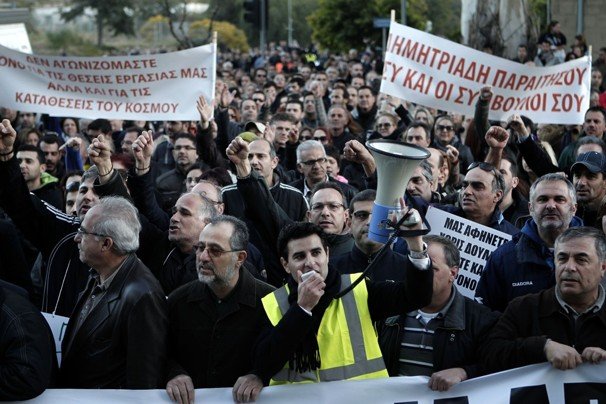
According to a draft document prepared by Cyprus’ creditors, the cost of the bailout for the country has increased to 23 billion euros ($30 billion).
The original cost of Cyprus bailout was put at 17.5 billion euros.
The new total, disclosed in a document seen by news agencies, means Cyprus will have to find 13 billion euros to secure 10 billion euros from the EU and the IMF.
Previously it was thought that Cyprus would have to raise 7.5 billion euros.
A draft document prepared by Cyprus’ creditors shows that the country’s bailout cost has increased to 23 billion euros
Government spokesman Christos Stylianides said: “It’s a fact the memorandum of November talked about 17.5 billion [euros] in financing needs. And it has emerged this figure has become 23 billion.”
“Who is responsible for this? How did we get here? It was the fear of responsibility and indecision of the previous government,” he added.
Analysts are now questioning if Cyprus can raise such a sum.
The winding up of one Cypriot bank, Laiki (Popular), and the writing-off of a large portion of secured debt and uninsured deposits in the largest bank, Bank of Cyprus, should raise a total of 10.6 billion euros.
Cyprus is also set to sell off a large portion of its gold reserves, in a move that will raise another 400 million euros.
“The sheer size of the increase has underlined the extent of the enormous challenges facing Cyprus itself,” said Jonathan Loynes of Capital Economics in an analyst note.
The Cypriot economy is only worth about 18 billion euros and accounts for less than 0.2% of the eurozone total. Several analysts now think the Cypriot economy may shrink by more than 10% this year alone.
“If everything goes according to plan, the growth figures might at least be in a realistic range, if too optimistic,” said Christoph Weil of Germany’s Commerzbank.
“If there are any problems, and there are significant downside risks, then it could be much worse, and a combined contraction of 20% is within the range of the possible.”
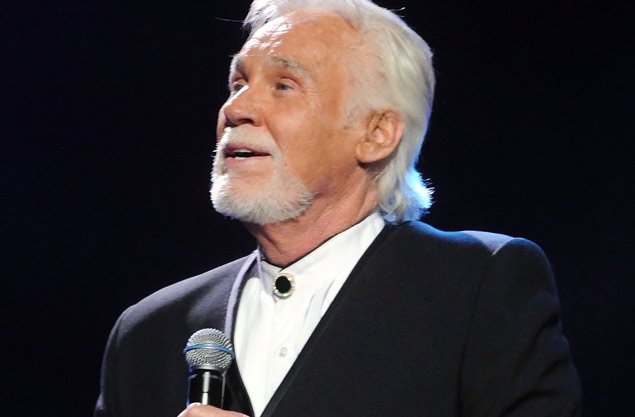
Kenny Rogers has announced fans he is “very excited” to learn he is to be inducted into the Country Music Hall of Fame in Nashville.
“I think it’s so cool,” Kenny Rogers said in a personal message posted on video sharing site YouTube.
“I’m glad it happened before I died.”
“Everything pales in comparison to this,” the veteran country singer told reporters later.
Singer Bobby Bare and producer “Cowboy” Jack Clement will also be inducted at a ceremony later this year.
Kenny Rogers is to be inducted into the Country Music Hall of Fame in Nashville
The new inductees will bring the membership of the Country Music Hall of Fame, founded in 1961, to 121.
Already among that number is singer Dolly Parton, with whom Kenny Rogers, now 74, performed on the 1983 duet Islands in the Stream.
Houston-born Kenny Rogers is also known for such country standards as The Gambler and Ruby,Don’t Take Your Love To Town.
Last month it was announced he would perform on the main Pyramid stage at this year’s Glastonbury festival.
Bobby Bare, 78, said it was “real huge” to be recognized for a career that has spanned six decades, calling his induction “the culmination of a 19-year-old boy’s dream”.
Jack Clement, 82, played a key role in the careers of Johnny Cash and Jerry Lee Lewis and later produced tracks for U2’s Rattle and Hum album.
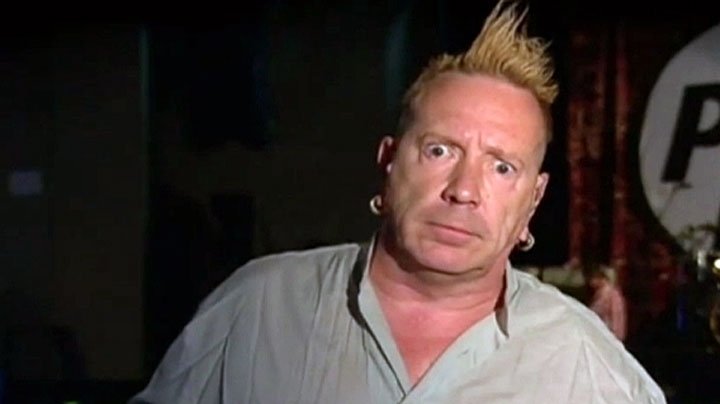
John Lydon, famously known as Johnny Rotten when he was the singer in Punk icons The Sex Pistols back in the 1970s, says those now celebrating Margaret Thatcher’s death are “loathsome”.
Jonny Rotten, who knew the fame when Margaret Thatcher was rising to power, added: “I’m not going to dance on her grave.”
The former Sex Pistol said: “I was her enemy in her life but I will not be her enemy in her death.”
John Lydon, famously known as Sex Pistol Johnny Rotten, says those now celebrating Margaret Thatcher’s death are loathsome
Johnny Rotten also denied being a misogynist and a Nazi following a controversial appearance this week on Australian TV show, The Project.
During the interview John Lydon told presenter Carrie Bickmore: “Shut up. Shut up. Shut up. Now listen, when a man is talking do not interrupt.”
The singer also gave a wave during the interview, which has been misinterpreted by some in the Australian media as a Nazi salute.
John Lydon, 57, spoke about Margaret Thatcher’s death when he arrived at Sydney’s domestic airport on Wednesday from Brisbane ahead of his band Public Image Limited’s performance in the city that night.
He said: “I’m not happy about the boo boo parties. “When someone dies, give them respect. Enemy or not. I can’t be listening to folk who do that.
“What kind of politics are they offering me? You dance on another person’s grave? That’s loathsome.”
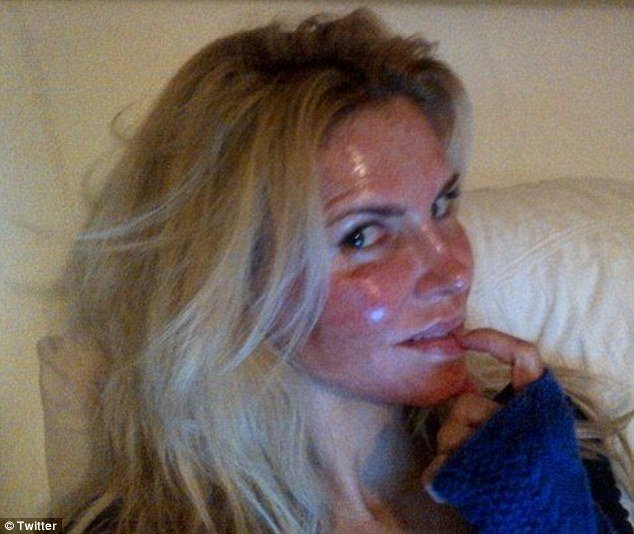
Brandi Glanville has shared a shocking photo to her Twitter fans revealing her red raw face.
Brandi Glanville, 40, posted the image on Wednesday, explaining that she underwent laser treatment to treat Melasma, a discoloration of the skin.
Brandi Glanville has shared a shocking photo to her Twitter fans revealing her red raw face
The Real Housewives Of Beverly Hills star explained that she opted for the procedure to treat the condition, but didn’t realize how harsh it would be on her skin.
“Doctor said he could get rid of my melasma,” Brandi Glanville explained.
“It was too hard for my skin. Still healing, it’s been depressing #skinobsessed.”
The tweet, which has since been deleted from her account, came after Brandi Glanville was caught with no make-up while heading out with her sons Mason, 9, and Jake, 5, in Los Angeles on Tuesday.
During the outing, Brandi Glanville appeared to be still recovering from the treatment and was slightly red in the face.
Brandi Glanville, who is single, has admitted to having Botox and fillers in her face along with a boob job and $12,000 vagina rejuvenation surgery.
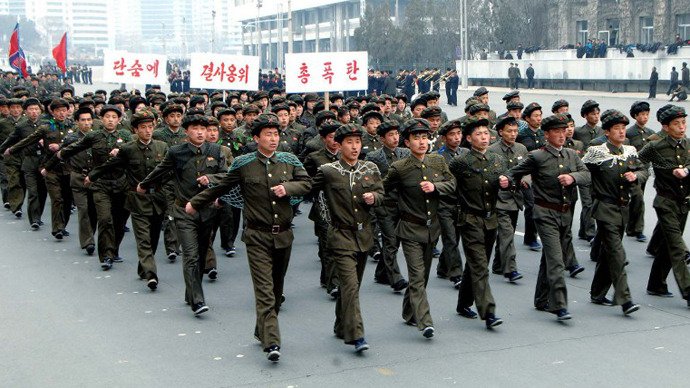
North Korea’s nuclear weapons and ballistic missile programmes have been condemned by the G8 foreign ministers in the “strongest possible terms”.
Tensions have risen on the Korean peninsula in recent weeks.
In a communiqué, the ministers also expressed their “deep concern” at the toll of the conflict in Syria.
They also endorsed what they called a historic pledge on preventing sexual violence in conflict.
The G8 nations comprises the US, Britain, France, Germany, Italy, Japan, Canada and Russia.
North Korea’s nuclear weapons and ballistic missile programmes have been condemned by the G8 foreign ministers
Britain currently holds the rotating chairmanship of the G8 and the talks in London are a prelude to the annual G8 summit later this year in Northern Ireland.
Correspondents say Japan, present at the talks, had been looking for a strong statement of solidarity over Korea.
North Korea has been making bellicose threats against South Korea, Japan and US bases in the region.
The G8 ministers reportedly pledged to work to end violence in conflict, calling for urgent action to address “comprehensively” the “culture of impunity” in conflict zones.
“There is no disagreement with the United States over North Korea,” Russian Foreign Minister Sergei Lavrov said at a meeting with US Secretary of State John Kerry in London on Wednesday.
South Korea has raised its alert level amid indications that the North is preparing for a missile test.
Pyongyang has moved two Musudan missiles to its east coast. Estimates of the ballistic missile’s range vary, but some suggest it could be as high as 2,500 miles.
A missile therefore has the potential of hitting US bases on Guam, although it is not known whether the Musudan has been tested before.
There is also no evidence North Korea has miniaturized a nuclear weapon sufficiently to be used on a ballistic missile.
Correspondents point to Monday – the birthday of North Korea’s founder Kim Il-sung – as a potential launch date.
North Korea has increased its fiery rhetoric following fresh UN sanctions imposed after its third nuclear test and joint military manoeuvres by the US and South Korea.
Key North Korean anniversaries:
11 April – Kim Jong-un elected first secretary of the Workers’ Party and late father Kim Jong-il named General Secretary for Eternity in 2012
13 April – Kim Jong-un appointed first chairman of the National Defence Commission in 2012
15 April – Birthday of state founder Kim Il-sung (1912-1994)
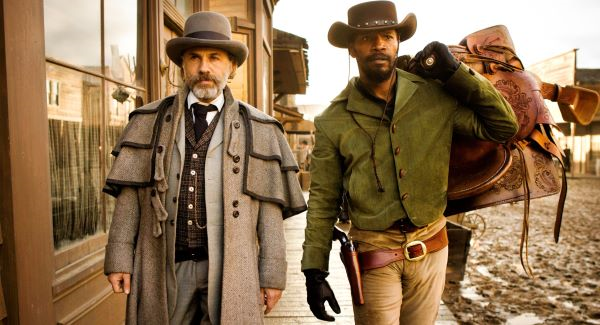
Django Unchained, Quentin Tarantino’s Oscar-winning movie, has been cancelled in cinemas across China on its opening day due to “technical reasons”.
A suspension order by importer China Film Group Corporation was confirmed by cinema employees.
It has led to speculation Django Unchained had not met the censorship regulations required by Chinese cultural authorities.
Distributor Sony Pictures said Quentin Tarantino had agreed to “slight adjustments” to reduce the violence.
Django Unchained, Quentin Tarantino’s Oscar-winning movie, has been cancelled in cinemas across China on its opening day
Cinema manager Tian Zaixing said he could not recall any other imported film being halted on the opening day.
TianZaixing said the cinema had received a call at 10:00 local time to cancel the film.
“We had high expectations for this film’s box office,” he added.
“They didn’t tell us when the film would be shown again,” an official at a Shanghai cinema told Reuters.
Sony Pictures executive Zhang Miao said the changes to the film included “tuning the blood to a darker color” and “lowering the height of the splatter of blood” in an interview with China’s Southern Metropolis Daily.
Quentin Tarantino viewed the changes as “progress rather than a compromise” according to Zhang Miao.
Sony Pictures and China’s State Administration of Radio, Film, and Television (SARFT), which is responsible for movie censorship, have not commented on the cancellation.
“After watching it for about a minute, it stopped!” said microblogger Xue Yi Dao on the Twitter-like Sina Weibo website.
“Staff then came in and said SARFT…had called to say it had to be delayed!! Can someone tell me what’s happening!!” he added.
Django Unchained is Quentin Tarantino’s first film to be released in China, where cultural authorities restrict the number of foreign films in cinemas each year.
Chinese regulators often request changes to films to remove explicit scenes, violence and other topics deemed inappropriate for the audience in China – which is now the second-biggest movie market in the world.
Oscar-winning Skyfall, Cloud Atlas and the remake of Red Dawn, have all recently made changes to appease the regulators.
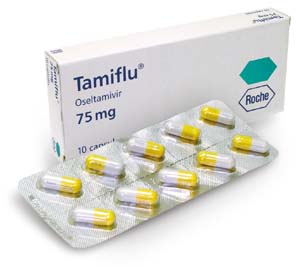
Swiss pharmaceutical company Roche has reported a 5% rise in sales for the first quarter of 2013, boosted by strong demand for its flu treatment, Tamiflu.
Total sales hit 11.6 billionn Swiss francs ($12.4 billion) in the first three months of 2013.
Roche has reported a 5 percent rise in sales for the first quarter of 2013, boosted by strong demand for Tamiflu
Tamiflu sales rose during a heavy flu season in the US, and there was also strong demand for Roche’s cancer drugs.
“We got off to a very good start in 2013 due to strong organic growth,” said Roche chief executive Severin Schwan.
During the first quarter of 2013, the Basel-based company launched two new drugs to fight breast cancer, Kadcyla in the US and Perjeta in Europe.
Roche expects its full-year total sales to grow at much the same rate as 2012, when they rose by 7%. Roche also said it expected to increase its share dividend this year.
“Based on the first quarter results, I am confident we will meet our full-year targets,” Severin Schwan said.
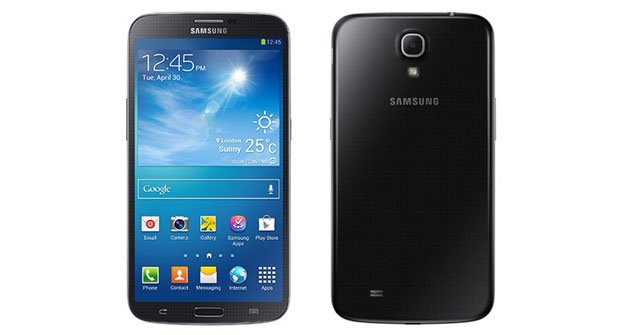
Samsung has launched the Galaxy Mega – the biggest smartphone to date – which features a 6.3 in (16 cm) screen.
Samsung suggested Galaxy Mega’s size made it ideal for watching videos or running two apps alongside each other.
The South Korean company helped popularize the so-called “phablet” category – in which phones approach tablet dimensions – with its original 5.3 in Galaxy Note in 2011.
That proved more popular than many expected, but one analyst suggested the latest device might be a step too far.
Samsung has launched the Galaxy Mega, the biggest smartphone to date, which features a 6.3 in screen
Samsung is marketing the Android-powered handset as having a high-definition screen – however, a spokesman was unable to confirm whether it supported 720p or the “full HD” 1080p resolution.
Another South Korean firm, Pantech, currently lays claim to offering the biggest “full HD” smartphone with its 5.9 in Vega No 6 which was announced in January.
China’s Huawei had previously boasted having the biggest largest-screened 720p smartphone with its 6.1 in Ascend Mate.
Samsung suggested that, despite its dimensions, the Galaxy Mega was still small and light enough – at 199 g (0.44 lb) – to fit into users’ pockets and be used with one hand.
However, Samsung is hedging its bets by offering a smaller 5.8 in-screened version as an alternative.
Both will go on sale in May, with Europe and Russia the first regions to be offered the devices.
Tech consultancy Davies Murphy Group said that within the Android market there had been a notable shift towards people wanting to buy a single device rather than both a smartphone and tablet.
However, its principal technology analyst, Chris Green, suggested that at 6.3 in it would be a “folly” for most users to swap their current handsets for the larger of the two Galaxy Megas.
“There is genuine demand for larger smartphones – the problem is at what point does a smartphone turn into a tablet,” he said.
“When you’ve got this up against your head you’d have to argue you’re using a tablet and not a smartphone – it’s definitely going to compromise its functionality because it’s simply too big and too cumbersome to use as a traditional telephone device.
“But ignoring the phone functionality, as far as the rest of the smart device goes it looks quite phenomenal.”
Samsung was the most popular smartphone maker in 2012 accounting for 30.3% of all shipments, according to analysts at IDC.
Its rival Apple – whose largest handset has a 4 in screen – came in second with a 19.1% market share.
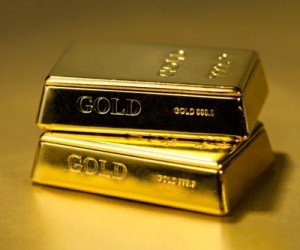
Cyprus has decided to sell off much of its gold reserves to help finance part of its bailout.
An assessment by the European Commission says Cyprus must sell about 400 million euros worth of gold.
Cyprus has already been forced to wind down one of its largest banks in order to qualify for a 10 billion euro lifeline from international lenders.
Even with that bailout, it is predicted that the Cypriot economy will shrink by 8.7% this year.
Cyprus’s total bullion reserves stood at 13.9 tonnes at the end of February, according to data from the World Gold Council.
Cyprus has decided to sell off much of its gold reserves to help finance part of its bailout
At current prices, 400 million euros’ worth of gold amounts to about 10.36 tonnes of metal.
The sale will be the biggest bullion sale by a eurozone central bank since France sold 17.4 tonnes in the first half of 2009.
European finance ministers meet in Dublin on Friday to discuss the Cyprus bailout.
Analysts say it is very unlikely that other EU states will become big sellers of the precious metal.
Portugal holds 382.5 tonnes of gold, worth some 14.76 billion euros at current prices, in its reserves, while Spain’s holdings stand at 281.6 tonnes, worth 10.8 billion euros.
Italy is the world’s fourth-largest gold holder, with 2,451.8 tonnes, worth 94.6 billion euros.
Harmful levels of lead, far higher than regulations suggest are safe, have been revealed following an analysis of the commercially available rice imported into the US.
Some samples exceeded the “provisional total tolerable intake” (PTTI) set by the Food and Drug Administration (FDA) by a factor of 120.
The report at the American Chemical Society Meeting adds to the already well-known issue of arsenic in rice.
Lead is known to be harmful to many organs and the central nervous system.
It is a particular risk for young children, who suffer significant developmental problems if exposed to elevated lead levels.
Because rice is grown in heavily irrigated conditions, it is more susceptible than other staple crops to environmental pollutants in irrigation water.
Harmful levels of lead have been revealed following an analysis of commercially available rice imported into the US
Recent studies have highlighted the presence of arsenic in rice – prompting consumption advice from the UK’s Food Standards Agency and more recently from the FDA.
However, other heavy metals represent a risk as well.
Dr. Tsanangurayi Tongesayi of Monmouth University in New Jersey, and his team have tested a number of imported brands of rice bought from local shops.
The US imports about 7% of its rice, and the team sampled packaged rice from Bhutan, Italy, China, Taiwan, India, Israel, the Czech Republic and Thailand – which accounts for 65% of US imports.
The team measured the lead levels in each country-category and calculated the lead intake on the basis of daily consumption. The results will be published in the Journal of Environmental Science and Health (Part B).
“When we compared them, we realised that the daily exposure levels are much higher than those PTTIs,” said Dr. Tsanangurayi Tongesayi.
“According to the FDA, they have to be more than 10 times the PTTI levels [to cause a health concern], and our values were two to 12 times higher than those 10 times,” he said.
“So we can only conclude that they can potentially cause harmful effects.”
That factor of 120 is for Asian children, who are most susceptible by virtue of age and comparatively high rice intake on average.
For non-Asian adults the excesses above the PTTI ranged from 20 to 40.
Rice from China and Taiwan had the highest lead levels, but Dr. Tsanangurayi Tongesayi stressed that all of the samples significantly exceeded the PTTIs.
He has also worked on quantifying arsenic contamination – and is in effect working his way through the heavy metals one by one to determine their prevalence.
The problem, he said, is the range of agricultural practices around the world.
“If you look through the scientific literature, especially on India and China, they irrigate their crops with raw sewage effluent and untreated industrial effluent,” he explained.
“Research has been done in those countries, and concerns have been raised because of those practices, but it’s still ongoing.”
Dr. Tsanangurayi Tongesayi also said that the increasing practice of sending electronic waste to developing countries – and the pollution it leads to – exacerbates the problem.
“With a globalised food market, we eat food from every corner of the world, but pollution conditions are… different from region to region, agricultural practices are different from region to region, but we ignore that.
“Maybe we need international regulations that will govern production and distribution of food.”
So far, such international oversight exists informally in the form of the Codex Alimentarius, a collection of food-safety standards first set out by the UN.
FDA spokesman Noah Bartolucci said the “FDA plans to review the new research on lead levels in imported rice released today”.
“As part of an ongoing and proactive effort to monitor and address contaminants in food traded internationally, FDA chairs an international working group to review current international standards for lead in selected commodities, including rice, and to revise, if necessary, maximum lead levels under the… Codex Alimentarius,” he said.
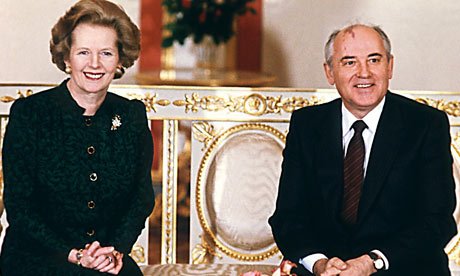
Margaret Thatcher’s funeral will not be attended by former Soviet leader Mikhail Gorbachev due to health problems, his spokesman has announced.
Mikhail Gorbachev, 82, with whom the former British prime minister worked closely at the end of the Cold War, was expected to be one of a number of global figures attending.
Downing Street said consultation over the funeral guest list was continuing.
It has confirmed that Argentine President Cristina Fernandez de Kirchner will not be invited.
Queen Elizabeth II and Prince Philip are already confirmed for next Wednesday’s ceremony at St Paul’s Cathedral, London.
Margaret Thatcher’s funeral will not be attended by former Soviet leader Mikhail Gorbachev due to health problems
During her time in power Margaret Thatcher struck up an unlikely alliance with Mikhail Gorbachev, the reforming Soviet president who oversaw the end of the Soviet Union in 1991.
Following her death on Monday, Mikhail Gorbachev paid tribute to Baroness Thatcher as a “heavyweight politician and a striking person”.
On Wednesday, British MPs were recalled from their Easter break for a seven-hour Commons debate about Lady Thatcher.
British PM David Cameron said Margaret Thatcher “overcame the great challenges of her age”. Labour’s Ed Miliband paid tribute but said he disagreed “with much of what she did”.
Conservative MPs queued up in the Commons to pay their respects to Margaret Thatcher, who was prime minister from 1979 to 1990, but about half of Labour’s 256 MPs stayed away.
The Lords also held a debate on the former prime minister, with her former Cabinet ministers Lord Fowler and Lord Tebbit among those paying tribute.
The Guardian has reported that Commons Speaker John Bercow was taken aback by David Cameron’s request to recall Parliament because he thought tributes could be paid on Monday, when MPs were due to return.
The paper reports that a lengthy wrangle ensued, with David Cameron enlisting the support of Ed Miliband to overcome opposition to the move.
Responding to the report, a Downing Street spokesman said: “Only government ministers can request the recall of the House, which the Speaker then decides on.
“The prime minister felt given the strength of feeling following Lady Thatcher’s death it was appropriate to give the House an early opportunity to pay its respects.”
Discussions between PM David Cameron and the Speaker are ongoing about whether Prime Minister’s Questions, usually held at midday, will be cancelled next Wednesday to allow MPs to attend the funeral.
Speaker John Bercow could require MPs to attend the session later in the afternoon, rather than cancel it.
Meanwhile, the Foreign Office has said “an administrative error” led to inaccurate guidance being issued to diplomatic staff in embassies around the world after it was reported they had been told to wear mourning clothes on the day of the funeral.
They were later told it was unnecessary.
Guests who have said they will be attending Margaret Thatcher’s funeral include ex-Labour PM’s Tony Blair and Gordon Brown, as well as FW de Klerk, the last president of apartheid South Africa.
The Queen has not attended the funeral of a British politician since that of Sir Winston Churchill in 1965.
More than 700 armed forces personnel will line the route of the procession from Westminster to St Paul’s, including three bands whose drums will be covered in black cloth.
A gun salute will be fired from the Tower of London and the coffin will be carried into St Paul’s by service personnel from regiments and ships closely associated with the Falklands campaign.
The Metropolitan Police said it was working to ensure the day passed off safely, amid concerns that some people may use it as an opportunity to protest.
On the day of Margaret Thatcher’s death, there were small gatherings in various parts of the UK, notably in Glasgow, Bristol and London, with those taking part saying they were celebrating her death.
Met Commander Christine Jones urged anyone wishing to demonstrate to at the funeral to talk to the police.
“The right to protest is one that must be upheld,” she said.
“However, we will work to do that whilst balancing the rights of those who wish to pay their respects and those who wish to travel about London as usual.”
Margaret Thatcher’s family is meeting an unspecified amount of the expense of the funeral, thought to cover transport, flowers and the cremation, with the government funding the rest, including security.
Downing Street said the cost of the funeral would not be released until after the event.
Margaret Thatcher, who won three successive general elections, died “peacefully” on Monday after suffering a stroke while staying at the Ritz hotel in central London.
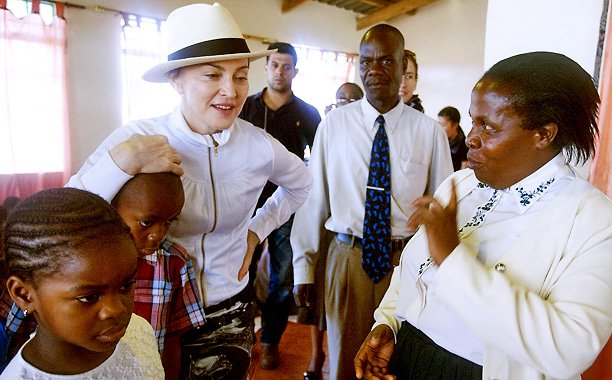
Malawi is accusing Madonna of “bullying state officials” after the singer reportedly complained about her treatment on a recent visit to the country.
Madonna – who has adopted two Malawian-born children – recently visited 10 primary schools funded by her charity.
Malawi’s government accused Madonna of exaggerating her contribution to the country and demanding VIP treatment.
Malawi is accusing Madonna of bullying state officials after she complained about her treatment on a recent visit to the country
The singer’s manager accused Malawi’s government of having a “grudge” against her charity, Raising Malawi.
Trevor Neilson also accused the government of financial mismanagement of school project funds, and of “harassing organizations that Raising Malawi has donated to”.
Madonna was said to have been angered that she and her entourage were stripped of their VIP status on their way out of the country, the Daily Telegraphreported.
They had to line up with other passengers at the airport and were frisked by security officials, the report said.
The change in status was said to be the result of a public spat about her charitable work in Malawi.
A harshly-worded statement issued by the office of President Joyce Banda on Wednesday accused Madonna of wanting Malawi “to be forever chained to the obligation of gratitude”.
“Granted, Madonna is a famed international musician. But that does not impose an injunction of obligation on any government under whose territory Madonna finds herself, including Malawi, to give her state treatment. Such treatment, even if she deserved it, is discretionary not obligatory,” said the statement.
The statement accused Madonna of being “a musician who desperately thinks she must generate recognition by bullying state officials instead of playing decent music on the stage”.
It added: “Among the many things that Madonna needs to learn as a matter of urgency is the decency of telling the truth.
“For her to tell the whole world that she is building schools in Malawi when she has actually only contributed to the construction of classrooms is not compatible with manners of someone who thinks she deserves to be revered with state grandeur.”
Trevor Neilson said buildOn, the non-profit group that partnered with Raising Malawi to construct the schools, was “mystified” by the claims about school buildings.
“They went through every step of every process required to build a school in Malawi, and the schools were built in the model of schools all across the country,” he said.
Adding: “Madonna is the largest individual philanthropist in Malawi. We will continue to fund programmes that support children in Malawi.”
Top four Japanese carmakers are recalling 3.4 million cars globally over a defect in passenger airbags.
Toyota, which is recalling 1.73 million cars, said the vehicles had a defective part which “could cause the airbag inflator to rupture and deploy the airbag abnormally in a crash”.
Honda Motors is recalling 1.13 million cars, while 480,000 of Nissan’s and 45,000 Mazda cars are affected.
Top four Japanese carmakers are recalling 3.4 million cars globally over a defect in passenger airbags
The cars were sold between 2000 and 2004.
The firms said the defective part was supplied by parts maker Takata Corp.
Shares in Takata fell 9% to 1,819 yen on the Tokyo Stock Exchange on Thursday.
Ryo Sakai, a spokesperson for Toyota, said the firm had received reports of five separate incidents of the airbag inflator being ruptured.
Two of these incidents took place in Japan and three in the US, Ryo Sakai said.
However, he added that there had been no injuries as a result of the incidents.
Meanwhile, Honda, Nissan and Mazda said that there had been no incidents involving their cars.
All four carmakers have said that they will replace the defective parts for free.
“We are conducting a voluntary safety recall to address this issue and replace the front passenger bag inflator,” said a spokesperson for Nissan.
“We plan to notify the customers over the next 30 days,” he added.
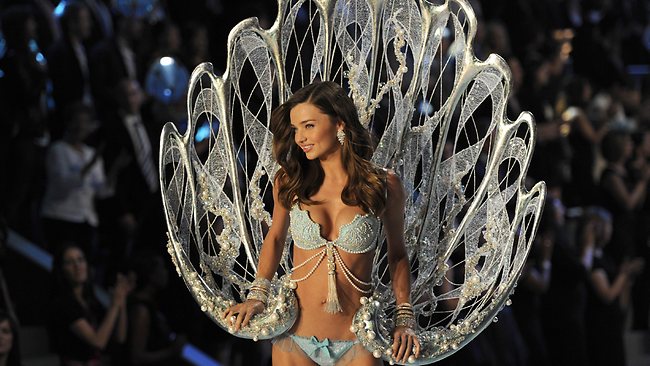
Australian supermodel Miranda Kerr has been reportedly dropped as a Victoria’s Secret Angel because of her “difficult reputation”.
Miranda Kerr, 29, who is married to British actor Orlando Bloom with whom she shares 2-year-old son Flynn, has been let go as one of the main faces of Victoria’s Secrets after her $1 million, three year-contract “was not renewed”.
Miranda Kerr has been reportedly dropped as a Victoria’s Secret Angel because of her difficult reputation
A source told Us Weekly that Miranda Kerr “has a difficult reputation” and suggested it was the main reason she will no longer walk the lingerie brand’s star-studded annual catwalk show wearing a prestigious pair of angel’s wings, an honor reserved for just a handful of the brand’s top faces.
Another source suggested Miranda Kerr is “not a big seller for VS”, compared to its other Angels like Alessandra Ambrosio, 31, Candice Swanepoel, 24, and Adriana Lima, 31.
She will reportedly still walk in the Victoria’s Secrets’ runway show later this year and will also appear in its catalogue.
The source said: “They can still use her for catalogue, where she will get a day rate, but she doesn’t have to be an Angel to do that.”
Another source told People magazine Miranda Kerr is known in the industry as a diva, adding: “She can be difficult at shoots and appearances. She’s not very timely. She’s standoffish with the rest of the girls.”
But one source added: “If Miranda and Victoria’s Secret part ways it’s not because of her behavior. It’s purely contractual. She’ll be coming back for the show but it’s unclear if she’ll be in future campaigns. But she is definitely one of the most popular models and in high demand.”
Executives from Victoria’s Secret did not deny that Miranda Kerr’s contract has not been renewed, but chief marketing officer Ed Razek insisted he has already invited her to walk in the 2013 runway show in New York in November.
Ed Razek said: “Miranda Kerr is one of the best models in the history of the business – and easily one of the most popular. She is also a consummate professional.”
“Any rumors to the contrary are simply untrue. While her international commitments have kept her away from us more than we’d like over the past few years, she will always be an Angel to me … In fact, I’ve already invited her to walk the runway in this year’s fashion show and, happily, she’s agreed.”
Other Victoria’s Secret Angels include Lily Aldridge, 27, Karlie Kloss, 20, Doutzen Kroes, 28, and Erin Heatherton 24.
President Barack Obama has unveiled a $3.77 trillion budget plan that includes new taxes on the wealthy along with cuts to benefit programmes.
The White House is offering to cut pensions and healthcare costs, but only in return for $700 billion in new revenue.
However, Barack Obama’s plan is viewed as having no chance of being fully enacted by the deadlocked Congress.
Republican Senate leader Mitch McConnell branded the budget a “left-wing wish list”.
The Democratic president will host a dinner for senior Republicans on Wednesday evening to sell his proposals.
Conservatives have refused to agree to new revenue after passing tax rises on earnings over $400,000 in January.
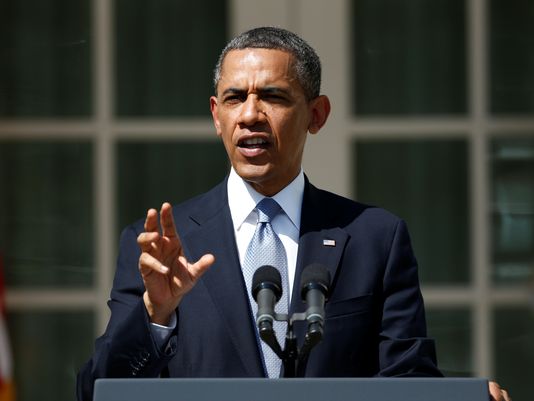
Barack Obama has unveiled a $3.77 trillion budget plan that includes new taxes on the wealthy along with cuts to benefit programmes
Congressional Democrats, meanwhile, have balked at Barack Obama’s compromise offer to cut Social Security pension payments.
The Obama budget aims to reduce the US deficit by an additional $1.8 trillion over 10 years, bringing total potential reductions to $4.3 trillion, according to administration estimates.
Cuts in the plan include about $400 billion to government health spending, and about $130 billion from Social Security, by changing the way cost-of-living adjustments are calculated.
Elderly and disabled recipients with the lowest incomes would be shielded from the changes.
The cost-of-living adjustments would also raise $100 billion in revenue over 10 years through changes to tax brackets.
Additional cuts would include $100 billion each from military and domestic programmes as well as reductions in farm subsidies and federal employee pension programmes.
President Barack Obama proposes raising revenue by eliminating income deductions for the top 2% of earnings and includes the president’s oft-repeated Buffett Rule, requiring households with incomes of more than $1 million to pay at least 30% in taxes.
The plan also includes some new spending aimed at improving the US economy, including $50 billion in infrastructure and $1 billion for 15 manufacturing institutes across the country.
Barack Obama has previously cited infrastructure spending as the best possible investment to propel an economic recovery.
The president’s blueprint would replace automatic, across-the-board cuts – known as sequestration – to both military and domestic programmes that began on March 1st.
Those cuts took effect after Democrats and Republicans failed to agree to another plan to cut spending and reduce the US budget deficit.
Negotiations over the next US budget are expected to run into the summer, but the White House says the document released on Wednesday is not an opening offer.
“I have already met Republicans more than half way,” Barack Obama said in the White House Rose Garden.
“So in the coming days and weeks I hope that Republicans will come forward and demonstrate that they’re really as serious about the deficit and debt as they claim to be.”
But House of Representatives budget committee Chairman Paul Ryan argued that Republicans had made enough concessions.
“It goes over old ground. It takes more from families to spend more in Washington,” said the Wisconsin congressman, who was the Republican vice-presidential candidate last year.
Paul Ryan’s budget proposal, already passed in the Republican-controlled House, sets out $4.6 trillion in deficit reduction.
Most of the savings would be realized through reductions in healthcare spending and other domestic programmes, without additional tax revenue.
Miley Cyrus and Liam Hemsworth have decided to postpone their summer wedding.
Miley Cyrus’ relationship with Australian actor Liam Hemsworth has been on the rocks recently amid allegations of cheating and wild partying.
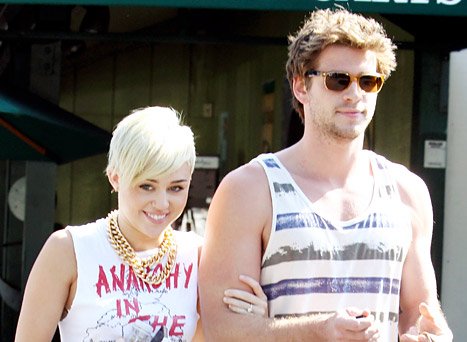
Miley Cyrus and Liam Hemsworth have decided to postpone their summer wedding
A source toldLife & Stylemagazine: “They were supposed to get married in June.
“But there have been so many problems with them, they thought it was best to work out their issues before making such a big commitment.
“They aren’t ready. Their families are both concerned. They don’t want to see Miley and Liam get married and then get divorced. They’re very young to be getting married.”
Liam Hemsworth’s sister-in-law Elsa Pataky, who is married to his brother Chris, 29, confirmed on Monday that she is not sure if their wedding in still on.
Elsa Pataky said: “I don’t know. If they get married it would be nice to go.”
But the 23-year-old’s other brother Luke, 31, recently praised Miley Cyrus, 20, and said she is already part of their family.
Luke Hemsworth told Entertainment Weekly magazine: “She’s great. She loves our kids, and our kids absolutely love her. She won our hearts.
“I find her really interesting. I find her very articulate, and years in maturity above her age.
“But at the same time, she’s very much like Liam.
“I think a lot of people don’t realize that they are really, really in love. They actually are a perfect match in a lot of ways.”
Dutch authorities have found that 50,000 tonnes of meat supplied by two local trading companies and sold as beef across Europe since January 2011 may have contained horsemeat.
The meat is being recalled where possible, the Dutch authorities say.
According to Netherlands Food and Consumer Product Safety Authority, there was no evidence that the meat was a threat to human health.
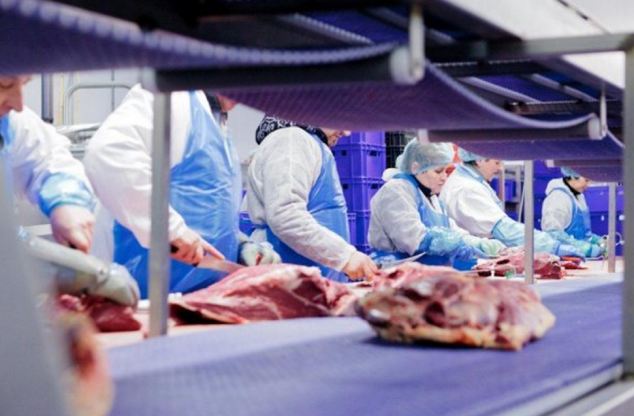
Dutch authorities have found that 50,000 tonnes of meat supplied by two local trading companies and sold as beef across Europe since January 2011 may have contained horsemeat
In total, 132 companies in the Netherlands and some 370 more around Europe are affected by the discovery.
The suspect meat was supplied by Wiljo Import en Export BV and Vleesgroothandel Willy Selten.
Both companies are owned by one man who has already previously been investigated by food safety officials.
The latest find was made as part of EU-wide tests to trace horse DNA in processed beef foods and to detect a veterinary drug used on horses.
The results of the rest of the tests conducted across the EU will be made public next week – giving consumers a better idea of how widespread the scandal has been.
The authorities decided to release their results early because of the magnitude of what they had discovered.
The recall covers meat dating back to 1 January 2011 up until 15 February 2013, the Dutch food authority said on Wednesday.
Due to the lapse of time, a lot of the meat “may already have been consumed”, it added.
Inspectors examining the records of the Dutch trading companies found that the origin of the supplied meat was unclear. As a result it was not possible to confirm whether slaughterhouses had respected procedures.
Some of the suspect meat was also exported to Germany, France and Spain, where authorities have been alerted.
“It might contain traces of horsemeat, but we don’t know for certain at the moment if this is the case,” said Esther Filon, a spokeswoman for the Dutch food authority.
“The buyers have probably already processed the meat and sold it on. They, in turn, are obliged to inform their own customers.”
All EU member states have been informed of the Dutch discovery, said EU spokesman Frederic Vincent.
They have been urged to check whether or not processed meat products coming from the plants in question were still on the market, he added.
“The Dutch announcement is a consequence of the investigations which were launched by EU member states a few weeks ago,” the EU spokesman said.
“Given the size of the fraud, the Dutch decided to go public with their discovery.”
Traces of horsemeat have been found in numerous processed beef frozen meals across Europe.
In February, Dutch officials raided a meat processing plant suspected of mislabelling beef and ordered the withdrawal of suspicious products from supermarket shelves.
Other countries affected included the UK, the Republic of Ireland, France, Switzerland, Sweden and Germany.
The EU is set to adopt an Animal and Plant Health legislative proposal in the coming weeks, which includes clauses designed to tackle food fraud.
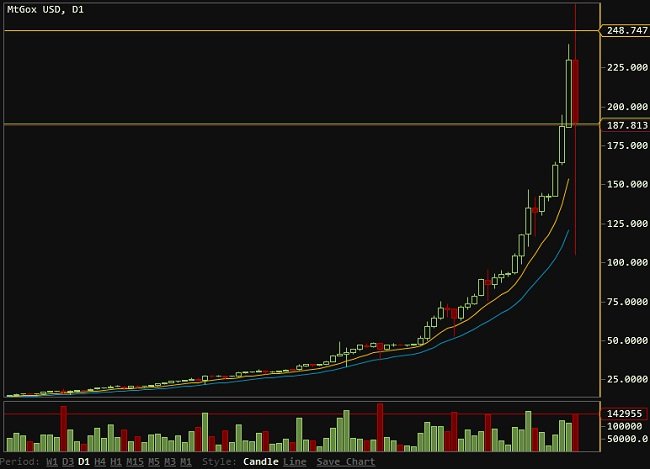
More and more people are buying Bitcoin and the biggest exchange is the target of concerted attacks of criminal organizations interested in destabilizing Bitcoin. They can’t attack the network itself, so they try to hit the easiest target.
Last year, Mt.Gox saw an average of 9,000 to 10,000 new accounts created every month. This number doubled in January, tripled in February, and sextupled in March. In this month alone, over 57,000 new accounts were created!, said Mt.Gox
Here is an explanation from Mt.Gox (the biggest exchange) for the problems that they’re having:
[…]we are continuing to experience a DDoS attack like we have never seen. While we are being protected by companies like Prolexic, the sheer volume of this DDoS left us scrambling to fine-tune the system every few hours to make sure that things don’t go beyond a few 502 error pages and trading lag.
Why has Mt.Gox become the target of a DDoS attack?
It is not yet clear who is behind this DDoS and we may never know, but these actions seem to have two major purposes:
1. Destabilize Bitcoin in general.
It is not a secret Mt.Gox is the largest Bitcoin exchange with more than 80% of all USD trades and more than 70% of all currencies. Mt.Gox is an easy target for anyone that wants to hurt Bitcoin in general.
2. Abuse the system for profit.
Attackers wait until the price of Bitcoins reaches a certain value, sell, destabilize the exchange, wait for everybody to panic-sell their Bitcoins, wait for the price to drop to a certain amount, then stop the attack and start buying as much as they can. Repeat this two or three times like we saw over the past few days and they profit.
Luxembourg has announced it would ease the secrecy surrounding its banks by implementing rules on the automatic exchange of bank account information with its European Union partners from 2015.
PM Jean-Claude Juncker said Luxembourg would introduce the reforms in two years, in line with the EU Savings Directive.
The rules of the Directive are aimed at creating greater transparency and minimizing tax evasion.
Luxembourg would ease bank secrecy by implementing EU rules on the automatic exchange of bank account information from 2015
Calls for a crackdown on bank secrecy have been increasing, as governments seek to raise more taxes to support their finances.
“We can introduce [the rules] without any danger from January 2015,” Jean-Claude Juncker said.
Luxembourg is a country of only 500,000 people, but its banks and other financial institutions have assets worth more than 20 times the country’s economic output.
Luxembourg’s foreign minister, Luc Frieden, said at the weekend that he wanted to “strengthen co-operation with foreign tax authorities”.
Last week, Germany signed a tax evasion treaty with Switzerland – another European banking centre known for its secrecy.
The treaty is designed to give the German tax authorities the ability to claw back taxes from their citizens who may be hiding money in Swiss banks.
Luxembourg’s announcement leaves Austria as the only European Union country not signed up to the EU Savings Directive.
Austria’s finance minister, Maria Fekter, said recently that she would “fight like a lion” to defend the country’s banking secrecy regime.
However, Austrian Chancellor Werner Faymann indicated on Tuesday that change may have to come.
Ellen Kardashian, widow of Kim Kardashian’s late father, Robert, isn’t letting the family’s lawsuit stop her from moving forward with more sensational allegations about the family.
Days after it was revealed Kris Jenner and Kardashian siblings had filed a lawsuit against Ellen Kardashian for copyright infringement new details allegedly taken from the late lawyer’s personal diary have emerged.
Robert Kardashian accused Kris Jenner of passing out drunk, having an affair and abandoning their children
In Touch magazine has reportedly put together a “Collector’s Special”, including painful notes in which Robert Kardashian accuses Kris Jenner of passing out drunk, having an affair and abandoning their children.
The New York Postreports the collection documents in further detail Kris Jenner’s alleged affair with former soccer star Todd Waterman.
In diary entries Ellen Kardashian claims were penned by her late husband between 1989 and 1990, he writes that Kris Jenner “slept on floor b/c she was so drunk” and later that he “kicked her out”.
“Caught K at Todd’s apt,” he reportedly continued.
“Told her I wanted a divorce.”
Other notes include: “11th anniv. – what a joke,” and, “Kris slept out again – never home at all. Kids don’t even ask where she is.”
Also included in 100-page publication are family photos of Kim, Kourtney, Khloe and Rob Kardashian.
The reality stars filed a lawsuit in Federal Court in Los Angeles last Thursday against Ellen Kardashian.
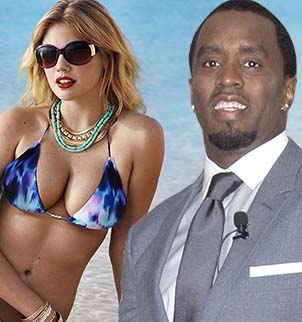
Kate Upton was apparently spotted kissing P Diddy at Miami Beach nightspot Club LIV late last month, where they partied in the VIP section at a bash being held by the rapper.
The Sports Illustrated Swimsuit Issue model confirmed she had split from Detroit Tigers pitcher Justin Verlander in February.
A source told the New York Daily News: “They were kissing, they weren’t hiding it.”
Kate Upton was apparently spotted kissing P Diddy at Miami Beach nightspot Club LIV
The kiss was reportedly followed by a night out in New York last Thursday, with the 43-year-old rapper sharing an intimate meal with the 20-year-old model at Gemma in the Bowery Hotel.
An onlooker said: “They were having dinner together.”
P Diddy, real name Sean Combs, was most recently romantically linked with singer Cassie, and though they were seen house-hunting together in Beverly Hills in January, it is believed they are no longer together.
The rapper previously dated Jennifer Lopez and was rumored to have spent time with Cameron Diaz last year.
A spokesperson for Kate Upton insisted the model and P Diddy are not romantically involved, saying: “They met once a year ago and there’s no further relationship at this point.”
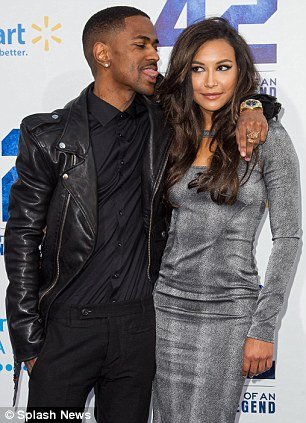
Glee star Naya Rivera and her new boyfriend Big Sean made their official debut as a couple at the premiere of new movie 42 in Los Angeles on Tuesday night.
Naya Rivera and Big Sean strolled onto the red carpet hand-in-hand, before posing up with their arms around each other.
Naya Rivera and her new boyfriend Big Sean made their official debut as a couple at the premiere of new movie 42 in Los Angeles
While they had been spotted together on various occasion over the past few months, Naya Rivera and Big Sean looked thrilled to finally be making their romance official as they attended the event at the TCL Chinese Theatre.
Naya Rivera, 26, smoldered for the waiting photographers, showing off her slim figure in a grey snakeskin dress and white pointed heels, leaving her dark brown hair loose in tumbling curls for the occasion.
Big Sean, 25, meanwhile, appeared to find the red carpet event slightly more amusing – grinning with delight he joked around pulling faces and funny poses behind his girlfriend’s back.
They first sparked romance rumors when Naya Rivera was see at the rapper’s surprise 25th birthday party in Las Vegas earlier this month.
Big Sean, whose real name is Sean Michael Anderson, tweeted at the time: “@nayarivera was in on it too, lookin good… I really had no idea about this…”
Naya Rivera then tweeted a picture of them together at the celebration, writing: “Such a good picture from last night. Best surprise ever!”
Prior to her romance with Big Sean, Naya Rivera has been linked to stars including Douglas Booth, as well as her Glee co-stars Mark Salling and Kevin McHale.
The Louvre Museum in Paris did not open on Wednesday due to a strike organized by staff protesting over pickpockets.
Staff at one of the world’s most visited museums said thieves, some of them children, were targeting both employees and tourists.
Two hundred workers took part in a strike organized by the SUD union, according to AFP news agency.
The Louvre Museum in Paris did not open on Wednesday due to a strike organized by staff protesting over pickpockets
The museum’s management said it had already asked for more assistance from police to deal with the problem.
A spokesman said that “business meetings” would take place to try to find a solution, according to French news website The Local.
About 100 employees gathered in front of Paris’ Ministry of Culture at lunchtime where a delegation from the museum was received.
Christelle Guyader of SUD told AFP that staff were coming to work “afraid”.
“They find themselves confronted with organized groups of pickpockets who are increasingly aggressive and who include children.”
Christelle Guyader added that many of the thieves were getting into the museum, which is home to the Mona Lisa, for free and would return even after being questioned by police.
The Louvre claims to be the most visited art museum in the world with almost 10 million visitors in 2012.
“There have always been pickpockets at the Louvre and in tourist locations in Paris, but for the last year-and-a-half the gangs have become increasingly violent,” said museum supervisor Sophie Aguirre.
“Their modus operandi has become more complex. Nothing can stop them.”
Officials have been unable to say when the museum will reopen.
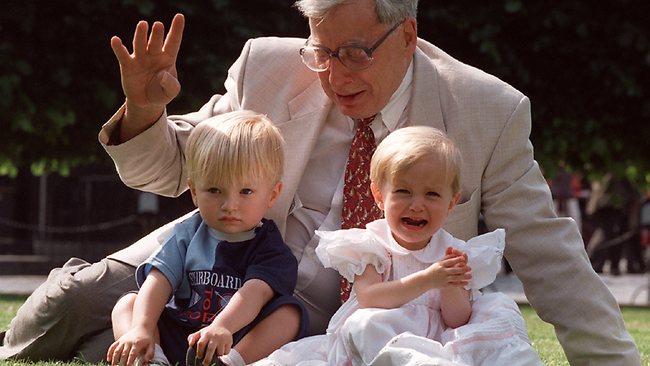
Prof. Sir Robert Edwards, the pioneer of IVF, has died in his sleep after a long illness at the age of 87.
Robert Edwards was knighted in 2011, five decades after he began experimenting with IVF.
IVF is used worldwide and has resulted in more than five million babies.
His work led to the birth of world’s first test-tube baby Louise Brown at Oldham General Hospital in 1978.
Robert Edwards was knighted in 2011, five decades after he began experimenting with IVF
Paying tribute to Prof. Robert Edwards, Louise Brown said he had brought “happiness and joy” to millions of people.
She said: “I have always regarded Robert Edwards as like a grandfather to me.
“His work, along with Patrick Steptoe, has brought happiness and joy to millions of people all over the world by enabling them to have children.
“I am glad that he lived long enough to be recognized with a Nobel prize for his work, and his legacy will live on with all the IVF work being carried out throughout the world.”
The University of Cambridge, where Prof. Robert Edwards was a fellow, said his work “had an immense impact”.
Born in Yorkshire in 1925 into a working-class family, Robert Edwards served in the British army during World War II before returning home to study first agricultural sciences and then animal genetics.
Building on earlier research, which showed that egg cells from rabbits could be fertilized in test tubes when sperm was added, Robert Edwards developed the same technique for humans.
In a laboratory at Cambridge in 1968, Robert Edwards first saw life created outside the womb in the form of a human blastocyst, an embryo that has developed for five to six days after fertilization.
“I’ll never forget the day I looked down the microscope and saw something funny in the cultures,” he once recalled.
“I looked down the microscope and what I saw was a human blastocyst gazing up at me. I thought, <<We’ve done it>>.”
“Bob Edwards is one of our greatest scientists,” said Mike Macnamee, chief executive of Bourn Hall, the IVF clinic founded by Prof. Robert Edwards with his fellow IVF pioneer Patrick Steptoe, a gynaecological surgeon.
Robert Edwards was too frail to pick up his Nobel prize in Stockholm in 2010, leaving that job to his wife Ruth, with whom he had five daughters.
He remained a fellow of Churchill College, Cambridge, until his death.
Robert Edwards’ work was motivated by his belief, as he once described it, that “the most important thing in life is having a child.”
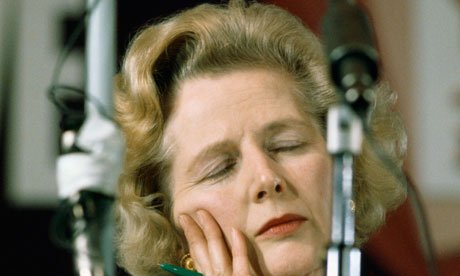
It isn’t easy to ascertain when Margaret Thatcher first referred to her minimal sleep schedule, but the figure of four hours has passed into lore
Part of Margaret Thatcher’s fearsome reputation came from how little she slept; she could get by on four hours a night, it has often been said.
Former British PM Margaret Thatcher would keep her officials up working on a speech until two or three in the morning and then be up by five in time to listen to Farming Today (a BBC Radio 4 programme running every day from 5.45 a.m.).
“She slept four hours a night on weekdays,” said Sir Bernard Ingham, her Downing Street press secretary.
“I wasn’t with her at weekends. I guess she got a bit more then.”
It isn’t easy to ascertain when Margaret Thatcher first referred to her minimal sleep schedule, but the figure of four hours has passed into lore.
People use it as a benchmark of endurance, often jokingly referring to those who need much more.
Margaret Thatcher’s close friend and former Conservative Party treasurer Lord McAlpine stayed with her at Chequers during the holidays.
“She worked right through Christmas. When everyone else went off to bed she went off to work.”
Baroness Thatcher’s biographer John Campbell, author of The Iron Lady, said her late-to-bed, early-to-rise routine made her the “best informed person in the room”. Occasionally husband Denis Thatcher would snap. “Woman – bed!” he is reputed to have shouted on one occasion.
Margaret Thatcher’s frugal sleep pattern created a problem for her successor John Major.
“He found it difficult coming after her because the civil service had got used to a prime minister who never slept, and he used to sleep eight hours a night,” John Campbell said.
Sleep comes to be seen as part of a leader’s character. When Napoleon Bonaparte was asked how many hours sleep people need, he is said to have replied: “Six for a man, seven for a woman, eight for a fool.”
For the Iron Lady four hours was a badge of almost superhuman strength.
Winston Churchill survived on four hours a night during the war. But what is less often noted is that he had regular afternoon naps in his pyjamas.
Margaret Thatcher was not one for these afternoon sleeps.
“No, she wasn’t a napper,” Bernard Ingham said.
But is the four-hour measure something ordinary people should aspire to?
In the world of business it is certainly something people strive for. High-profile chief executives from Marissa Mayer at Yahoo! to Pepsi’s Indra Nooyi get by on four hours a night, while Donald Trump claims to survive on three.
Geraint Anderson, author of City Boy, who worked as an analyst and stockbroker for 12 years, recognizes the phenomenon.
“There was a real macho competition in the City about sleep. One of the ways of getting respect was bragging about how little you got.”
The hours were long – from 6.30 in the morning to seven at night. Socializing might mean staying out till three in the morning. And this was just the analysts. The corporate financiers were the real hard workers.
“They’d work into the early hours, get a couple of hours’ kip at the office and start again.”
To admit needing sleep was a sign of weakness: “After the Christmas or summer party you’d make sure you stayed the latest and came in a little earlier than normal the next morning.”
Lady Thatcher was not the cause but her name was regularly invoked by his bosses.
“They’d say she can get by on four hours to run the country. And she’s an old lady.”
As well as business, there have been military leaders who eschewed the eight hours and opted for the Spartan Thatcher credo.
General David Petraeus ate one meal a day and slept only four hours a night, it was reported.
There’s no correct amount of sleep, said Prof. Kevin Morgan, of Loughborough University’s sleep research centre.
The only rule is to sleep long enough to feel refreshed when you wake up.
For about 1% of people – probably including Margaret Thatcher – this will be as little as four hours a night, said Kevin Morgan.
“You can’t just suddenly become someone who sleeps this little,” he argued. It’s likely to have been a pattern common to her life before becoming prime minister.
It is a big advantage for visionary or creative people to be part of this so-called sleep elite. And for a statesman attending all-night summits it might be a huge advantage.
“The people around you are flagging. When people get tired the quality of their decision-making is compromised.”
Prof. James Horne, also at Loughborough’s sleep research centre, says that mood is critical. Soldiers high on adrenalin can function on little sleep: “It all depends if one gets a buzz out of what one’s doing. If you’re despondent, you tend to sleep more; if you’re excited you need less. Margaret Thatcher was someone who felt on top of things.”
The average adult sleeps seven hours a night but many sleep considerably less than this, especially people over 50. So it’s possible that Margaret Thatcher fell within the range of normality rather than the 1%, James Horne argued.
“She may have sometimes slept four hours and made up for her deficit by sleeping a little longer on other nights.
“You tend to attribute great things to great people, that they need no sleep or no food and have superhuman qualities.”
Matthew Parris, who was a fellow Conservative MP of Margaret Thatcher’s during the 1970s and 1980s, says it was probably more like four to five hours rather than the three to four that some have suggested. It took its toll and may have led to poor decisions, he believes.
Despite her toughness, Margaret Thatcher was often tired out, he remembers.
“When we were jammed into the lobby I would be looking at her from six inches away. I would often see the eyes of an exhausted woman.”
Recently there has been a move away from ostentatious sleeplessness. Burning the midnight oil in Gordon Brown’s case was perceived as evidence of obsessive worrying and weakness.
The work-life balance has arrived, even in Number 10. Tony Blair slept longer than Margaret Thatcher and Gordon Brown but made an exception to get up at night for baby Leo. George W. Bush was in bed by 10, unlike his predecessor Bill Clinton, who worked late and got by on four or five hours.
For artists, sleep deprivation carries a whiff of creative drive and raucous hedonism. Keith Richards, the Rolling Stones guitarist, once stayed awake for nine days – when he fell asleep, he fell down so quickly that he broke his nose.