Germany is using three pop concerts to enable scientists to investigate the risks of such mass indoor events during the pandemic.
Some 4,000 healthy volunteers aged between 18 and 50 were urged to sign up for August 22 study in Leipzig, carried out by Halle University.
Singer-songwriter Tim Bendzko agreed to perform at all three successive gigs.
The study came as Germany recorded its highest number of Covid-19 infections since the end of April.
More than 2,000 cases were recorded in Germany in the last 24 hours, bringing the total number of cases to 232,082, the Robert Koch Institute reported.
The concert study, called Restart-19, was created “to investigate the conditions under which such events can be carried out despite the pandemic”, researchers said.
Scientists planned to run three different scenarios with some 4,000 visitors at the Quarterback Immobilien Arena in Leipzig during the course of August 22.
The first aims to simulate an event before the pandemic; the second with greater hygiene and some social distancing; and the third with half the numbers and with each person standing 1.5 meter apart.
Each staged scenario involves arrivals and departures from the stadium and performances by Tim Bendzko “in order to depict spectator behavior as realistically as possible.”
All participants are being tested for Covid-19, and given face masks and tracking devices to measure their distancing. Exactly how many volunteers came forward to participate remains unclear.
German researchers are reportedly using fluorescent disinfectants to track what surfaces audience members touch the most.
The project received 990,000 euros ($1.17 million) funding from the states of Saxony-Anhalt and Saxony with the aim of helping to pave the way for the resumption of major indoor sporting and music events by ascertaining realistic levels of risk.
Saxony-Anhalt’s Minister of Economics and Science, Prof. Armin Willingmann, said before the event: “The corona pandemic is paralyzing the event industry.
“As long as there is a risk of infection, major concerts, trade fairs and sporting events cannot take place. This is why it is so important to find out which technical and organizational conditions can effectively minimize the risks.”
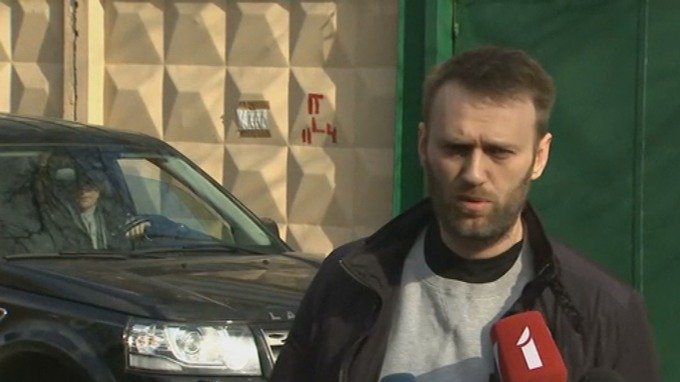
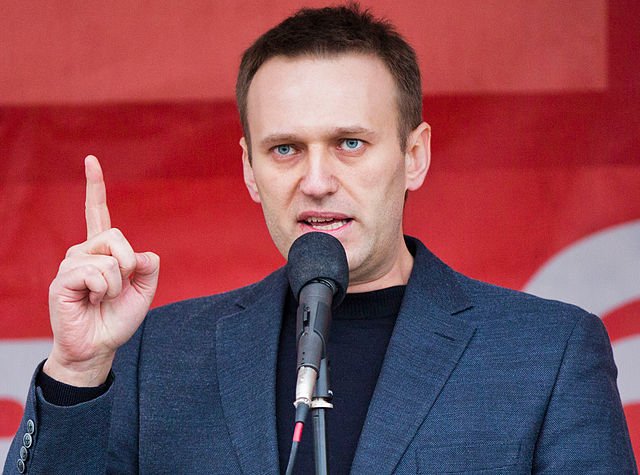
Russian opposition leader Alexei Navalny has been moved to Germany from Siberia for medical treatment.
The prominent critic of President Vladimir Putin is in a coma after drinking what his supporters suspect was poisoned tea; they accuse the authorities of trying to conceal a crime.
Doctors treating Alexei Navalny in Omsk had insisted on August 21 that he was too ill to be moved.
However, they later said his condition was stable enough for the flight. His wife Yulia Navalnaya is traveling with him.
On August 22, Alexei Navalny’s medical evacuation flight – paid for by the German non-governmental organization Cinema for Peace – landed at Tegel airport in Berlin. He is being treated at the Charité hospital in the German capital.
The founder of the Cinema for Peace Foundation, activist and filmmaker Jaka Bizilj, told reporters outside the hospital that Alexei Navalny’s condition was “very worrying”.
“It’s not only about the question if he will survive this,” Jaka Bizilj said.
“It’s a question what kind of damage there is, if he will survive this and come back to normal fully.”
Alexei Navalny’s personal doctor, Anastasia Vasilieva, was not allowed to see him while he was in hospital in Russia. But she said she was hopeful he could recover now that he was in Germany.
She said: “I’m sure that they can treat him and do everything to eliminate this toxic agent from his body.”
Medical staff treating Alexei Navalny at the hospital in Omsk said before his flight that his life was not in immediate danger.
His spokeswoman, Kira Yarmysh, earlier tweeted: “Massive thanks to everyone for their support. The struggle for Alexei’s life and health is just beginning.”
Kira Yarmysh said it was a pity that doctors had taken so long to approve his flight as the plane and the right documents had been ready since August 21.
Alexei Navalny fell ill during a flight from Tomsk to Moscow on August 20, and his plane made an emergency landing in Omsk.
A photograph on social media appeared to show the Russian opposition leader drinking from a cup at a Tomsk airport cafe before the flight. His team suspects a poisonous substance was put in his tea.
Disturbing video appeared to show a stricken Alexei Navalny howling in agony on the flight.
The head doctor at the hospital where Navalny was being treated in Omsk, Alexander Murakhovsky, warned late on August 21 that doctors did not recommend flying “but his wife insists on her husband being transferred to a German clinic”.
“The patient’s condition is stable,” deputy chief doctor Anatoly Kalinichenko was quoted as saying by the Interfax news agency.
“As we’re in possession of a request from relatives to permit him to be transported somewhere, we have now taken the decision that we do not object to his transfer to another in-patient facility,” he added.
Doctors said earlier that no poison had been found in Alexei Navalny’s body, suggesting his condition might be the result of a “metabolic disorder” caused by low blood sugar.
Health officials then indicated that traces of an industrial chemical had been found on his skin and hair. The local interior ministry told the Rapsi legal news agency that the chemical was usually included in polymers to improve their elasticity, but its concentration was impossible to establish.
Alexei Navalny has consistently exposed official corruption in Russia. He has served multiple jail terms.
Foreign leaders including German Chancellor Angela Merkel and France’s President Emmanuel Macron have expressed concern for him.
In the US, Democratic presidential candidate Joe Biden has described the incident as “unacceptable” and vowed that, if elected, he would “stand up to autocrats like Putin”.
Even in the wake of the massive Texas Tech University women’s basketball scandal, TTU’s Senior Associate General Counsel Ronny Wall continues to fight to keep some of the ugly truth a secret.
Ronny Wall is now stalling the release of the personnel file of former Texas Tech women’s basketball strength and conditioning coach Ralph Petrella.
Ralph Petrella resigned at the end of the basketball season and is now accused of harassing five players on the women’s basketball team.
In her response to Ronny Wall’s ongoing abuse of the Texas Public Information Act, Dolcefino Consulting Director of Operations Kelsey Galbraith questioned Wall via e-mail, asking: “Are you just ignoring the purpose and spirit of the Texas Public Information Act like Texas Tech ignored the Marlene Stollings issue?”
Ronny Wall fought for a year to keep the exit interviews of the basketball players from the public. It was those interviews that blew the scandal wide open a few weeks ago. They are an ugly review of what was allowed to go on in Lubbock for two years.
RonnyWall has been busted twice for overcharging for public records in the Dolcefino Consulting legal battle. Tech has been trying to block the planned sworn testimony of Ronny Wall on the subject of who destroyed records relating to the firing of former head football coach Mike Leach.
In both cases public records were released accidentally. The records accidently released in the Dolcefino Consulting case expose the shoddy investigation, the manipulation of sworn testimony, and the conspiracy to cheat Leach out of $2.5 million dollars.
The legal fight over the Leach records has been going on for two and a half years and Dolcefino Consulting has already spent a quarter of a million dollars to expose the unfair firing of Coach Leach. Austin Judge Paul Davis is set to rule next month on a request to punish Tech for refusing to let us put Ronny Wall under oath.
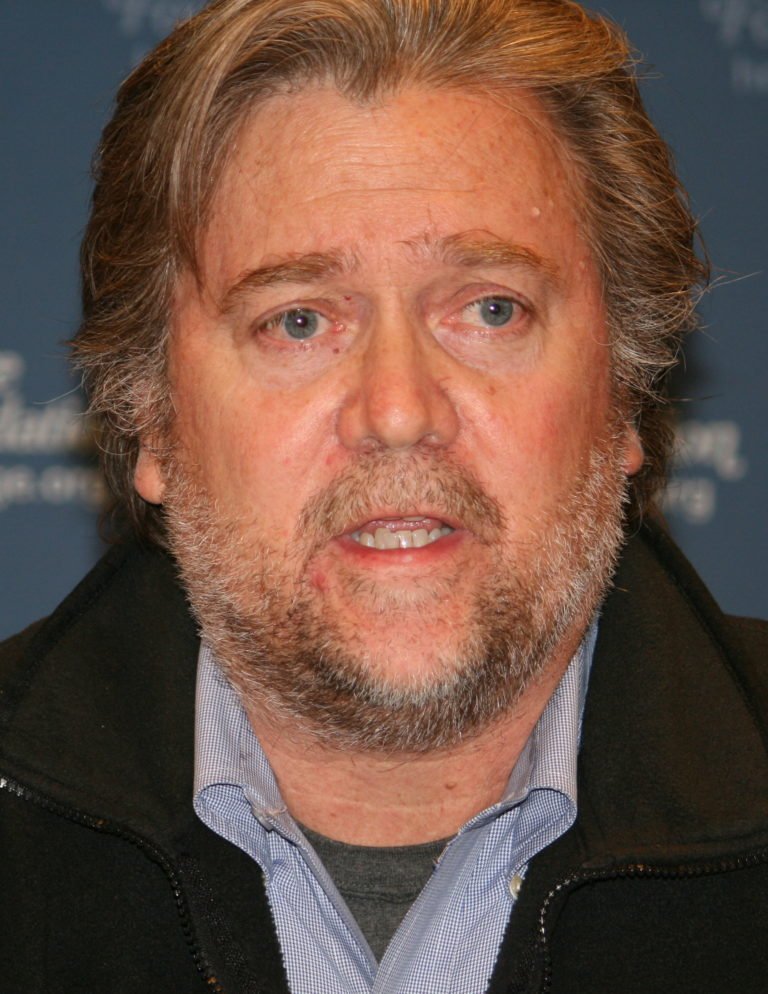
Former White House’s chief strategist Steve Bannon has been arrested and charged with fraud over a fundraising campaign to build a wall on the US-Mexico border.
Steve Bannon and three others defrauded hundreds of thousands of donors in connection with the “We Build the Wall” campaign, which raised $25 million, the DoJ said.
He received more than $1 million, at least some of which he used to cover personal expenses, it alleged.
Steve Bannon, 66, is due to appear in court later.
He was a key architect of Donald Trump’s 2016 presidential election victory. His right-wing anti-immigration ideology fuelled Donald Trump’s “America First” campaign.
Steve Bannon was reportedly arrested on a 150-foot yacht in Connecticut by agents from the US Postal Inspection Service, which investigates fraud cases.
Responding to Steve Bannon’s arrest, President Trump said he felt “very badly” about it. He also said he had had no involvement with “We Build the Wall”.
“I said, ‘This is for government; this isn’t for private people’ – and it sounded to me like showboating and I think I let my opinion be very strongly stated at the time,” the president said.
The “We Build the Wall” campaign pledged to use donations to build segments of the border barrier – whose construction was a key Trump promise during the 2016 election – on private land.
However, Audrey Strauss, the acting Attorney for the Southern District of New York (SDNY), said Steve Bannon, Brian Kolfage, Andrew Badolato and Timothy Shea had “defrauded hundreds of thousands of donors, capitalizing on their interest in funding a border wall to raise millions of dollars, under the false pretence that all of that money would be spent on construction”.
Steve Bannon had received more than $1 million through a non-profit organization he controlled, at least some of which he used to cover “hundreds of thousands of dollars in his personal expenses”, the DoJ said.
Meanwhile, Brian Kolfage – founder of “We Build the Wall” – covertly took $350,000 for his personal use, the statement said.
“While repeatedly assuring donors that Brian Kolfage, the founder and public face of We Build the Wall, would not be paid a cent, the defendants secretly schemed to pass hundreds of thousands of dollars to Kolfage, which he used to fund his lavish lifestyle,” Audrey Strauss said.
SDNY Inspector-in-Charge Philip R. Bartlett said the four created “sham invoices and accounts to launder donations and cover up their crimes, showing no regard for the law or the truth”.
“This case should serve as a warning to other fraudsters that no one is above the law, not even a disabled war veteran or a millionaire political strategist,” he said.
Steve Bannon and the three others launched the scheme in December 2018, the DoJ said, and during the campaign Brian Kolfage said that all of the money donated would go towards construction while Bannon publicly said: “We’re a volunteer organization.”
All four defendants are charged with one count of conspiracy to commit wire fraud and one count of conspiracy to commit money laundering, each of which carries a maximum penalty of 20 years in prison.
Steve Bannon will appear in court in the SDNY. Brian Kolfage and Andrew Badolato will appear in separate courts in Florida and Timothy Shea will appear in Colorado.
Steve Bannon is the sixth former senior aide to Donald Trump to face criminal charges – after ex-Trump campaign chairman Paul Manafort, veteran political operator Roger Stone, ex-Trump lawyer Michael Cohen, ex-deputy campaign manager Rick Gates and ex-National Security Adviser Michael Flynn.
Russian opposition leader Alexei Navalny has been hospitalized and is now unconscious suffering from suspected poisoning, his spokeswoman has said.
Alexei Navalny fell ill during a flight and the plane made an emergency landing in Omsk, where doctors said he was in a coma and they were trying to save his life.
The anti-corruption campaigner’s team suspects something was put in his tea at an airport cafe.
The Kremlin said that it wished Alexei Navalny a “speedy recovery”.
Alexei Navalny, 44, has for years been among President Vladimir Putin’s staunchest critics.
In June, the opposition leader described a vote on constitutional reforms as a “coup” and a “violation of the constitution”. The reforms allow President Putin to serve another two terms in office, after the four terms he has already had.
Kira Yarmysh, the press secretary for the Anti-Corruption Foundation, which Mr Navalny founded in 2011, tweeted: “This morning Navalny was returning to Moscow from Tomsk.
“During the flight, he felt ill. The plane made an urgent landing in Omsk. Alexei has toxic poisoning.”
She added: “We suspect that Alexei was poisoned by something mixed into [his] tea. It was the only thing he drank since morning.
“Doctors are saying that the toxic agent absorbed faster through the hot liquid. Right now Alexei is unconscious.”
Kira Yarmysh said later that Alexei Navalny was on a ventilator and in a coma, and that the hospital was now full of police officers. All of his belongings were being confiscated, she added.
She also said that doctors were initially ready to share any information but then they later claimed the toxicology tests had been delayed and were “clearly playing for time, and not saying what they know”.
Diagnosis would be “towards evening”, Kira Yarmysh was told.
BothAlexei Navalny’s wife, Yulia Navalnaya, and doctor, Anastasia Vasilyeva, have arrived at the hospital.
Yulia Navalnaya was initially denied access to her husband because authorities said the patient had not agreed to the visit, Kira Yarmysh said, although she was later allowed on to the ward.
Dr. Anastasia Vasilyeva said they were seeking to transfer the opposition leader to a specialist poison control center in Europe, but hospital doctors were refusing to provide records of his condition.
The Tass news agency quoted one source at the Omsk Emergency Hospital as saying: “Alexei Anatolyevich Navalny, born in 1976. Poisoning intensive care.”
However, the deputy head physician of the hospital later told media that it was not certain Alexei Navalny had been poisoned, although poisoning was “naturally” one of the diagnoses being considered.
Anatoly Kalinichenko said that doctors were “genuinely trying to save [Alexei Navalny’s] life”.
Kremlin spokesman Dmitry Peskov later said it wished the critic a speedy recovery – as it would all citizens in such circumstances – and that the authorities would consider approving treatment abroad if it were requested.
Video footage on social media shows Alexei Navalny being taken on a stretcher to an ambulance on the airport runway.
Other disturbing video appears to show a stricken Navalny in pain on the flight.
Another photograph on social media purports to show him drinking from a cup at a Tomsk airport cafe.
The Interfax agency said the cafe owners were checking CCTV to see if it could provide any evidence.
Alexei Navalny made a name for himself by exposing official corruption, labeling Vladimir Putin’s United Russia as “the party of crooks and thieves”, and has served several jail terms.
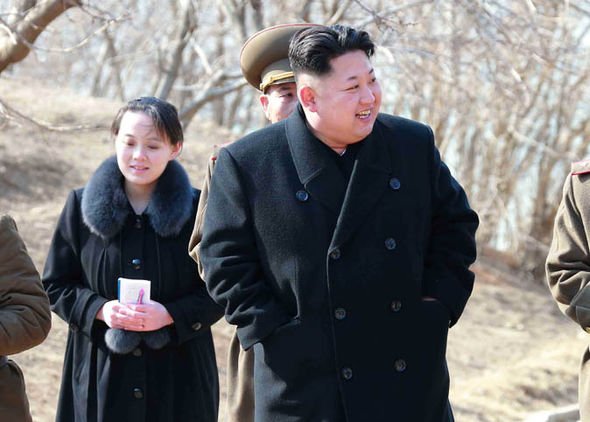
Kim Yo-jong, the younger sister of North Korean leader Kim Jong-un, has received more responsibilities in the government, South Korea’s spy agency claims.
Kim Jong-un still maintains “absolute authority”, but handed various policy areas to others to reduce his stress levels, the spy agency reportedly said.
Kim Yo-jong is now “steering overall state affairs”, the National Intelligence Service added.
However, South Korea’s spy agency has been wrong about North Korea in the past.
The claims were reportedly made during a closed-door briefing on August 20 to South Korea’s National Assembly.
Lawmakers then discussed the assessment with journalists.
The agency was quoted as saying: “Kim Jong-un is still maintaining his absolute authority, but some of it has been handed over little by little.”
Kim Yo-jong now has responsibility for Pyongyang’s policy towards the US and South Korea, among other policy issues, and is “the de-facto number two leader,” it added, although it stressed that Kim Jong-un had “not selected a successor.”
The North Korean leader’s decision to delegate was in part to “relieve stress from his reign and avert culpability in the event of policy failure,” it said.
However, some analysts have been skeptical of the intelligence, with website NKNews noting that Kim Yo-jong appeared to have missed two important meetings this month, leading to speculation from some observers that she may have been demoted.
Kim Yo-jong is the younger sister of Kim Jong-un and the only one of his siblings considered a close and powerful ally.
Born in 1987, she is four years younger than Kim Jong-un. The two of them lived and studied in Bern, Switzerland, at the same time.
Kim Yo-jong first gained international attention in 2018, when she was the first member of the Kim dynasty to visit South Korea.
She was part of the delegation to the Winter Olympics, where North and South competed as a joint team.
Kim Yo-jong also worked alongside her brother at international summits, including his meetings with South Korean President Moon Jae-in, China’s Xi Jinping and President Donald Trump.
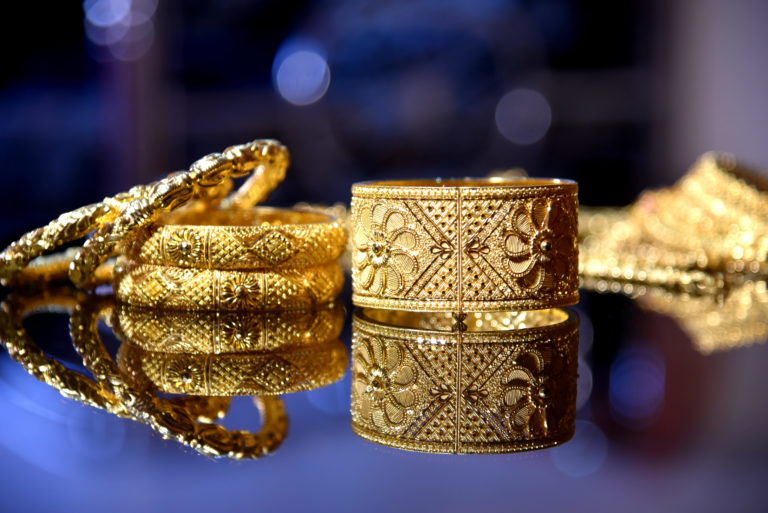
Whatever your personality is, silver bangles are one of the best ways to express who you are. With several styles to choose from, every woman is sure to find a piece that suits them. Bangles, unlike bracelets, are solid pieces with no flexibility that can be easily stacked on the arm to achieve a chic yet classy look. Most women will shy away from wearing silver bangles for fear that they will not pull it off, but with these simple tips, any woman can look stylish in silver bangles:-
Variety
Before any other tip, every woman should have a variety of bangles in their jewelry boxes. Given that bangles are cheaper compared to other jewelry, money should not be an excuse for not owning several pieces in different styles. Pick up different designs, colors, sizes, and materials which will allow you to play around and change your style over time.
The Bigger the Better
Silver bangles for women come in different sizes and designs. While you may want to play it safe by picking tiny minimal pieces, larger and chunkier sizes show a chic and bold woman. The piece may look larger than your wrist which makes it look delicate and sleek especially when worn on short or sleeveless tops. If you choose to go bold and pick the chunky silver bangle, consider how big it is before pairing it up with more pieces which could end up making it look messy and overdone.
Stack Up
Show off your charming spirit by stacking up several silver bangle pieces. You do not have to reach for other types of bangles or jewelry if you have a variety of silver bangles for women to play around with. Simply stack several identical pieces as you would with bracelets or mix up several sizes and styles with balance as you see fit for your look.
Mix and Match
Once again, investing in variety turns out to be a great idea. In this case, mix up your silver bangles with other metal designs such as gold and bronze or pick up pieces that have other colors or gems in them. If you are looking to appear mysteriously interesting, this should be on top of your styling hacks. Keep in mind the rules of color and temperature when playing mix and match with your silver bangles to pull off a perfect look. For example, while gold may look appealing when matched with red, silver bangles will look better if matched with pieces that are cooler such as pale pastel.
Consider the Occasion
Like other fashion choices, wearing silver bangles for women is highly influenced by the occasion. While your beautiful clanking stack of silver bangles may look very stylish at a party, the noise from your pieces will only draw scowls from your colleagues at work or in a meeting. On the other hand, one chunky piece will keep your feminine bold style intact at a formal event. To keep true to your love for silver bangles for women, invest in a variety to suit every occasion with ease and decorum.
Less is more
This might be confusing given the earlier tip to go big or even choose stacks. But you might need to keep this in mind if you are going to be a flawlessly stylish silver bangle queen. With unique designs, stacking too many silver bangles will definitely look too busy and overdone, taking away the essence from your pieces and do little in communicating what your style is. So, as much as you love all your pieces, keep it moderately chic.
What Next?
You now have all the top tips on how to style silver bangles for women to help you showing off your elegance. All that is left to do is build your collection with a variety, keep it moderate, bold and stylish regardless of the occasion.
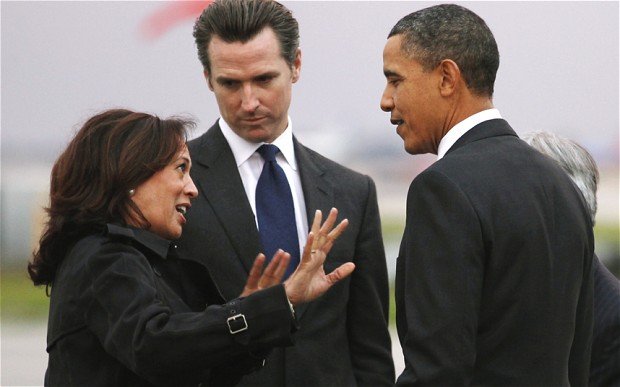
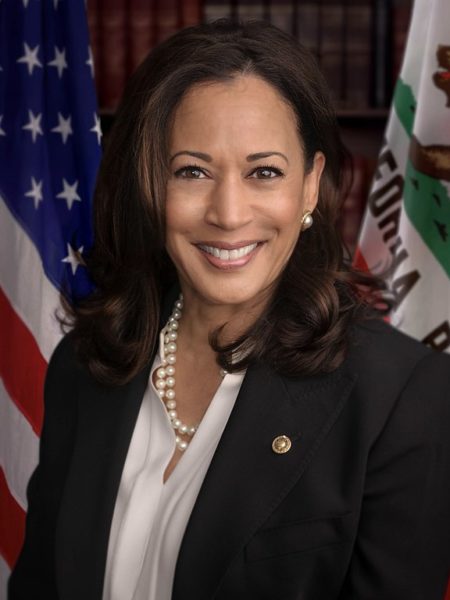
On the third day of the Democratic National Convention, Kamala Harris has accepted her historic nomination as her party’s vice-presidential candidate, running with Joe Biden for the White House.
In her speech, Kamala Harris, the first US woman of color on a major-party ticket, assailed President Donald Trump’s “failure of leadership”.
She pledged to speak “truths” to the American public.
Joe Biden and Kamala Harris will challenge President Trump and his VP Mike Pence in the election on November 3.
The coronavirus pandemic has forced Democrats to abandon the cheering throngs, fanfare and razzmatazz of the typical party convention in favor of a virtual event of pre-recorded and live speeches.
The grand finale of the four-night conference will see Joe Biden, the Democratic presidential nominee, deliver a speech on August 20.
“We’re at an inflection point,” the California senator said, speaking live from a largely empty hotel ballroom in Joe Biden’s hometown of Wilmington, Delaware.
Attacking President Trump, Kamala Harris continued: “The constant chaos leaves us adrift. The incompetence makes us feel afraid. The callousness makes us feel alone. It’s a lot.
“And here’s the thing: We can do better and deserve so much more.
“We must elect a president who will bring something different, something better, and do the important work.”
Kamala Harris – the child of immigrants from India and Jamaica – pledged that she and Joe Biden would revive a country fractured by the coronavirus pandemic and racial tension.
“There is no vaccine for racism,” she said.
“We’ve got to do the work.”
She continued: “Donald Trump’s failure has cost lives and livelihoods.”
“Right now, we have a president who turns our tragedies into political weapons,” Kamala Harris added.
President Trump swiftly hit back, tweeting about Kamala Harris’ previous attack on Joe Biden over his record on race issues, while they were both rivals for the Democratic White House nomination.
He tweeted: “BUT DIDN’T SHE CALL HIM A RACIST??? DIDN’T SHE SAY HE WAS INCOMPETENT???”
The moment came during a live TV debate last year, though Kamala Harris prefaced those remarks by telling Joe Biden: “I do not believe you are a racist.”
Also on August 19, former President Barack Obama launched his most withering direct attack yet on Donald Trump, accusing his Republican successor of treating the White House like “one more reality show”.
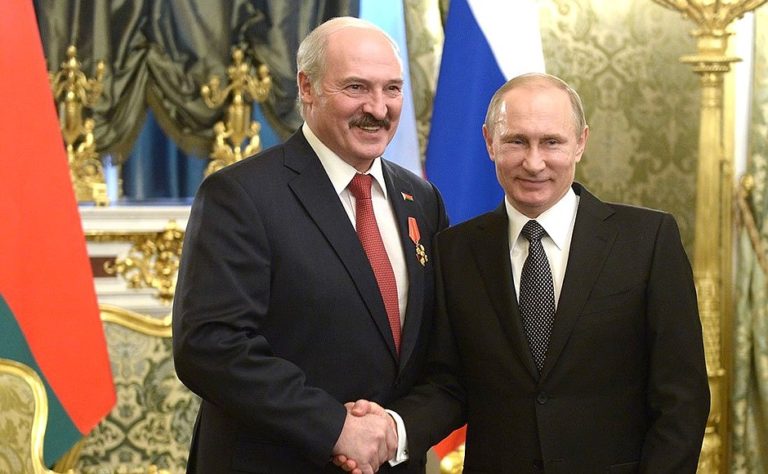
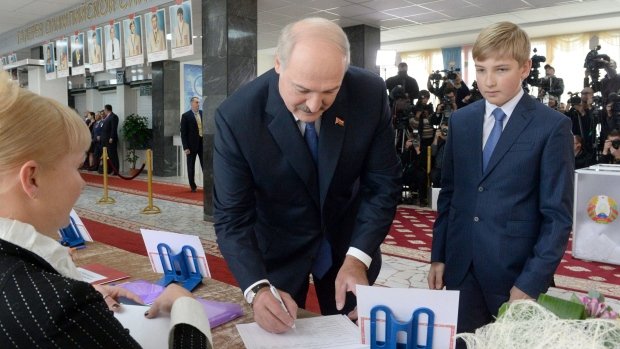
Belarusian President Alexander Lukashenko announces he has given orders to end the unrest in the capital Minsk triggered by disputed elections.
The official result gave him 80% of the vote but the opposition has denounced the poll as fraudulent.
The move signaled an escalation just as EU leaders agreed to impose sanctions at a virtual summit.
The President of the European Council, Charles Michel, made clear that the EU did not recognize the result of the election and called on President Lukashenko to release hundreds of protesters who have been imprisoned.
On August 19 Wednesday, President Lukashenko approved a cabinet that would see Roman Golovchenko retain his role as prime minister, with many other key members of the previous government reappointed, the Tut.by news network reported.
Among those on the list to remain in place was Interior Minister Yuri Karayev, whose responsibilities include policing and public security.
The proposed government is subject to further consent by the lower house of parliament.
Alexander Lukashekno, who has led Belarus since 1994, said he had ordered police to quell protests in Minsk.
“There should no longer be any disorder in Minsk of any kind,” he told his security council.
“People are tired. People demand peace and quiet,” he added.
President Lukashenko said he had ordered border controls to be tightened to prevent an influx of “fighters and arms”.
He also warned that workers at state media who had gone on strike in protest at the election and the subsequent crackdown on protests that they would not get their jobs back. Russian replacements have reportedly been brought in.
Alexander Lukashenko also accused those picketing outside factories of harassing workers.
He had earlier accused the opposition of “an attempt to seize power”.
His remarks came shortly after the exiled leader of the opposition, Svetlana Tikhanovskaya, had urged EU leaders to reject the election.
Svetlana Tikhanovskaya, 37, who left for Lithuania after being detained for hours following the vote, released a video statement on August 19.
She said President Lukashenko had “lost all legitimacy in the eyes of our nation and the world” and urged the EU to back what she called the “awakening of Belarus”.
Svetlana Tikhanovskaya added: “People who went out to defend their vote in the streets of their cities all across Belarus were brutally beaten, imprisoned and tortured by the regime desperately clinging on to power. This is taking place right now in the middle of Europe.”
She has formed a “co-ordination council” with plans for “new, fair and democratic presidential elections with international supervision”.
After a three-hour video conference, EU Leaders agreed unanimously to take three actions over Belarus.
Firstly, to impose sanctions including asset freezes for an as yet undisclosed number of officials involved in alleged election-rigging, brutality and imprisonment of protesters. The exact sanctions are still being worked out.
Secondly, leaders agreed to a joint form of words making clear that the EU stands with the people on the streets, and does not recognize the result. But it does not go as far as stating they do not recognize President Lukashenko’s authority, as some EU officials wanted.
Thirdly, leaders offered help in trying to mediate dialogue between the government and the opposition, to find a way for the president to stand down and peacefully transfer power.
In addition, €53 million ($63 million) of financial support from the EU to Belarus is being re-assigned away from the state to non-governmental organizations, with some money assigned to help the victims of violence, as well setting up alternatives to government-backed media organizations.
German Chancellor Angela Merkel said Belarus election had been neither free nor fair.
EU leaders, she added, condemned “the brutal violence against demonstrators as well as the imprisonment and use of violence against thousands of Belarusians” which followed in the wake of the disputed election.
Angela Merkel and European Commission President Ursula von der Leyen stressed the need for a dialogue between the authorities and the opposition in Belarus.
Apple has become the first US company to be valued at $2 trillion on the stock market.
The tech giant reached the milestone just two years after becoming the world’s first trillion-dollar company in 2018.
Apple’s share price hit $467.77 in mid-morning trading on August 19 to push it over the $2tn mark.
The only other company to reach the $2tn level was state-backed Saudi Aramco after it listed its shares in December 2019.
However, the oil giant’s value has slipped back to $1.8tn since then and Apple surpassed it to become the world’s most valuable traded company at the end of July.
Apple’s shares have leapt more than 50% in 2020, despite the coronavirus crisis forcing it to shut retail stores and political pressure over its links China.
In fact, the iPhone maker’s share price has doubled since its low point in March, when panic about the coronavirus pandemic swept the markets.
Tech companies, which have been viewed as winners despite lockdowns, have seen their stock surge in recent weeks, even though the US is in recession.
Apple posted strong Q3 figures towards the end of July, including $59.7 billion of revenue and double-digit growth in its products and services segments.
The next most valuable US company is Amazon which is worth around $1.7tn.
The widening scandal in the Texas Tech women’s basketball program is highlighting the significance of the two-and-a-half-year legal fight over Coach Mike Leach records.
The Houston based investigative media firm Dolcefino Consulting has now asked an Austin judge to hold Texas Tech in contempt for fighting the sworn testimony of University lawyer Ronny Wall.
Tech has fought Ronny Wall’s testimony since it was ordered in January, and he faces tough questions about the destruction of records in the Leach case and the overcharging of public records.
One of the journalists who broke the Tech women’s basketball scandal fought for a year to get Ronny Wall to release public records exposing the scandal.
“The only reason why they fired Marlene Stollings was our story came out,” says Daniel Libit of the Intercollegiate news website.
“It is a culture of retrenchment (at Texas Tech) where you protect at all costs and circle the wagons at all costs.”
While Associate General Counsel Ronny Wall refused to turn over the records, female players continued to complain of abuse and fear of retaliation.
“How much alleged suffering could have mitigated?” Daniel Libit complained in a recent blog on the Tech scandal.
That is exactly what Mike Leach has been fighting to expose at Tech for ten years. In his case, it was the contrived firing of the winningest coach in school history after a shoddy investigation that included lies to donors and fans.
“My records aren’t the only ones that Texas Tech is covering up, they’re covering up any records that they feel like covering up which has nothing to do with democracy, the constitution or the legislation around open records, and so no, all those records should be revealed,” Mike Leach said.
Austin Judge Paul Davis has set a hearing for September 11 to deal with the motion for sanctions against the University as well as a motion to disqualify the Texas attorney general.
Ronny Wall has been busted twice for overcharging Dolcefino Consulting for public records. The administrative judge in West Texas has failed to appoint a special prosecutor to investigate the illegal withholding of some regents’ phone records.
“It is time for someone to expose how ridiculous this game of hide and seek is,” says Dolcefino.
“We are supposed to complain to the Texas attorney general when a state university hides public records but in this case they are the school’s lawyers. This is the most ridiculous conflict of interest and it is past time for the attorney general to get out of the way in this fight, because they certainly have no interest in helping the public right to know.”
“I feel like there’s something clearly endemic going on a Texas Tech at just the level of what happened with Marlene Stollings and some of the other things,” Daniel Libit said.
“There does seem to be like an issue there, a cancer.”
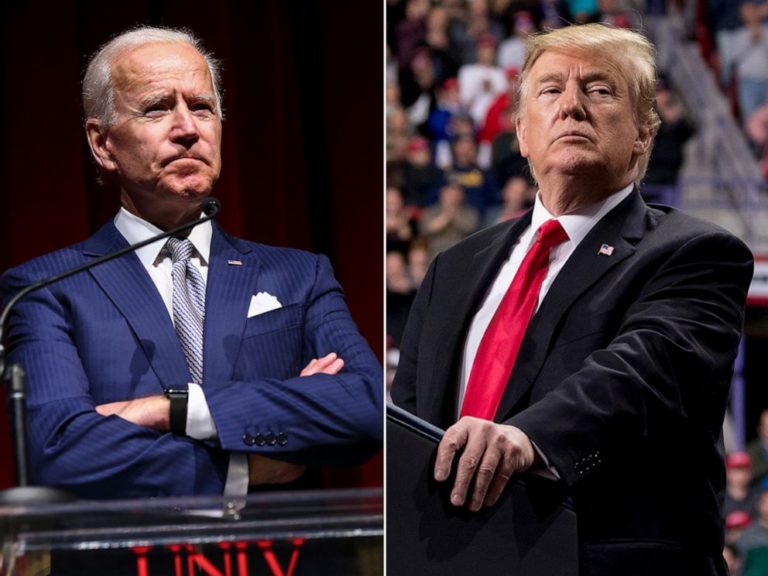
Joe Biden has been officially crowned as the Democratic presidential candidate at the party’s convention.
He was endorsed by two Democratic former presidents, Bill Clinton and Jimmy Carter, and former Secretary of State Colin Powell, a Republican.
Bill Clinton said President Donald Trump had brought “chaos” to the Oval Office.
President Trump trails Joe Biden in opinion polls ahead of November’s election.
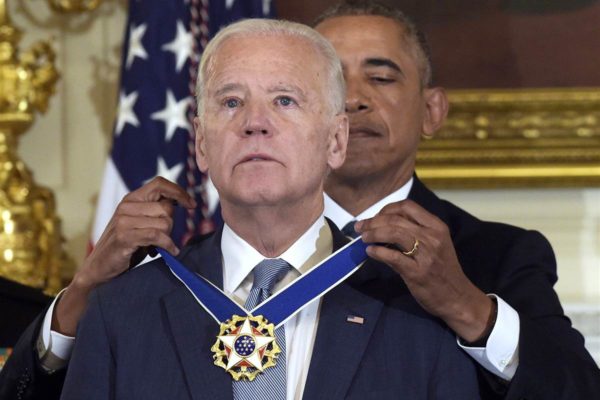
Joe Biden, the former vice-president under President Barack Obama, became the Democratic Party’s nominee on Tuesday night in a pre-recorded roll call vote from delegates in all 50 states.
This is Joe Biden’s third White House bid, having formerly run in 1988 and 2008. The 77-year-old’s campaign appeared to be in danger of collapse back in February this year.
On the second night of the party convention on August 18, with the theme “leadership matters,” Bill Clinton delivered the key address.
“Donald Trump says we’re leading the world,” Bill Clinton said in his five-minute message pre-recorded from his home in Chappaqua, New York.
“Well, we are the only major industrial economy to have its unemployment rate triple.
“At a time like this, the Oval Office should be a command centre. Instead, it’s a storm centre. There’s only chaos.”
Following addresses from former First Lady Michelle Obama and Senator Bernie Sanders on August 17, the next day’s speeches aimed to persuade voters the Democratic party is the best suited to repair problems at home and abroad.
Colin Powell said Joe Biden shared “the values I learned growing up in the south Bronx and serving in uniform”.
The decorated four-star general said he supported him for president because “we need to restore those values to the White House”.
In June, Colin Powell – who served under President George W Bush and has appeared at multiple Republican conventions in previous years – called President Trump a liar and endorsed Joe Biden.
Colin Powell joins several Republicans who have endorsed Joe Biden, including former Ohio Governor John Kasich during the first night of the convention.
Cindy McCain, the widow of Republican Senator John McCain, also spoke about the friendship between her late husband and Joe Biden, though she stopped short of a formal endorsement.
Former Secretary of State John Kerry addressed the convention virtually to assail President Trump’s leadership.
He said: “When this president goes overseas, it isn’t a goodwill mission, it’s a blooper reel.
“He breaks up with our allies and writes love letters to dictators. America deserves a president who is looked up to, not laughed at.”
The freshly minted Democratic nominee’s wife, Jill Biden, potentially the next first lady, delivered the night’s headline address, standing in an empty classroom at the Delaware high school where she taught English in the 1990s.
Urging everyone to vote for her husband, who joined her, Jill Biden said: “The burdens we carry are heavy, and we need someone with strong shoulders.
“I know that if we entrust this nation to Joe, he will do for your family what he did for ours: bring us together and make us whole.”
The DNC is largely virtual, amid the coronavirus pandemic, and it is unclear whether a format of pre-recorded speeches and no live audience will generate the same levels of enthusiasm as the traditional party gatherings. Next week’s Republican convention will also be mostly online.
The opening night drew 28% fewer viewers than in 2016, according to ratings from Nielsen, a global measurement and data analytics company. Democrats said an additional 10 million watched online, which if confirmed would put its audience at slightly above levels that year.
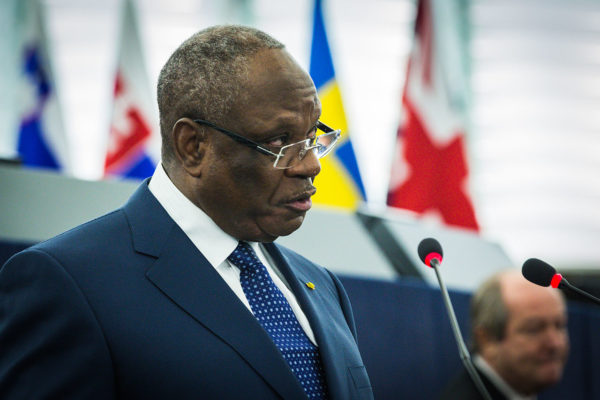
Mali’s President Ibrahim Boubacar Keïta has stepped down, after being detained by soldiers on August 18.
In a TV address, Ibrahim Boubacar Keïta said he was also dissolving the government and parliament, adding: “I want no blood to be spilled to keep me in power.”
The president and PM Boubou Cissé were taken to a military camp near the capital Bamako, drawing international condemnation.
A spokesman for the soldiers called for “a civil political transition leading to credible general elections”.
Ibrahim Boubacar Keïta won a second term in elections in 2018, but there has been anger over corruption, the mismanagement of the economy and a dispute over legislative elections. It has prompted several large protests in recent months.
There has also been anger among troops about pay and over a continuing conflict with jihadists.
Wearing a surgical mask amid the coronavirus pandemic, President Keïta resigned in a brief address on state TV.
“If today, certain elements of our armed forces want this to end through their intervention, do I really have a choice?” he asked.
“I hold no hatred towards anyone, my love of my country does not allow me to,” he added.
“May God save us.”
A televised statement was read out early on August 19 on behalf of the National Committee for the Salvation of the People.
Air force deputy chief of staff Col-Major Ismaël Wagué said: “Civil society and political social movements are invited to join us to create together the best conditions for a civil political transition leading to credible general elections for the exercise of democracy through a roadmap that will lay the foundations for a new Mali.”
He added: “As of today, all air and land borders are closed until further notice. A curfew is in place from 09:00 to 17:00 until further notice.”
Flanked by soldiers, Col. Wagué said: “Our country is sinking into chaos, anarchy and insecurity mostly due to the fault of the people who are in charge of its destiny.”
It remains unclear who began the mutiny, how many soldiers took part or who will now take charge.
It appears to have started when mutinying soldiers took control of the Kati camp, where the president and PM were later taken.
After taking over the camp, about 9 miles from Bamako, the mutineers marched on the capital, where they were cheered by crowds who had gathered to demand President Keïta’s resignation.
On August 18, they stormed his residence and arrested the president and his prime minister – who were both there.
The president’s son, the speaker of the National Assembly, the foreign and finance ministers were reported to be among the other officials detained.
Kati camp was the focus of a mutiny in 2012, also by mid-ranking soldiers, who were angry at the inability of the senior commanders to stop jihadists and Tuareg rebels taking control of northern Mali.
When news first broke of the mutiny, the UN and African Union both called for the release of those held by the soldiers.
The Economic Community of West African States (Ecowas), a regional body, also said its 15 member states had agreed to close their borders with Mali, suspend all financial flows to the country, and eject Mali from all Ecowas decision-making bodies. In recent months, Ecowas has been trying to mediate between President Keïta’s government and opposition groups.
The UN Security Council is to meet on August 19 to discuss the latest developments in Mali.
Mali’s former colonial ruler, France, was also quick to condemn the president’s detention, and Foreign Minister Jean Yves Le Drian urged the soldiers to return to barracks.
Mali is a key base for French troops fighting Islamist insurgents across the Sahel region.
Louis DeJoy, a former Republican donor, also said overtime pay would continue to be approved to ensure deliveries arrive on time.
He said in a statement: “To avoid even the appearance of any impact on election mail, I am suspending these initiatives until after the election is concluded.”
The development comes as the row over the politicization of the most popular US government agency has become a top issue in the 2020 presidential campaign.
Over the weekend, former President Barack Obama – in what was regarded as his most high-profile criticism of President Donald Trump to date – accused his successor of trying to “actively kneecap” the postal service.
Defenders of the changes said they were necessary to help the USPS get out of financial debt. Its budget shortfall has risen to $160 billion amid a decade-long decline in mail volume.
However, Mark Dimondstein, the president of the American Postal Workers Union which represents more than 200,000 postal employees, told Fox News on August 18 that the changes “are truly slowing down mail, the customers see it… the postal workers see it – mail is getting all backed up”.
On August 19, Nancy Pelosi, the Speaker of the House, cheered the postmaster’s volte-face, telling reporters: “They felt the heat and that’s what we were trying to do, make it too hot to handle.”
On August 16, Nancy Pelosi had recalled the House from a recess in order to investigate the USPS policies.
Louis DeJoy, a major political donor who was appointed by President Trump to lead the USPS in May, is due to testify to a Republican-led Senate committee on August 21, and then to a Democrat-led House committee on August 24.
Last week, President Trump said he rejected a funding boost for the USPS to shore up a predicted influx mail-in voting, claiming without evidence that it would lead to voter fraud and help Democrats.
He has also suggested delaying the election, which he does not have the power to do, to stop postal ballots leading to “inaccurate and fraudulent” results.
Voting by mail is not new to the US. According to Reuters, approximately one in every four voters cast ballots by mail in 2016.
Critics say people could vote more than once via absentee ballots and then again in person, though numerous nationwide and state-level studies over the years have found no evidence of widespread fraud.
However, these are rare incidents, and the rate of voting fraud overall in the US is between 0.00004% and 0.0009%, a 2017 study by the Brennan Center for Justice said.
2020 has become a year of radical change, shifts in perspective, and the sobering reminder that all of us are mortal, prone to disease and ailments that can, and sometimes will end our lives. From wildfires engulfing en entire continent to political scandals, a biblical plague, and everything in between, the term “dumpster fire” doesn’t even begin to cover the year 2020.
Most of us take a few major events per year in stride. That’s just how it goes, right? Things happen, people die, and the world keeps turning. So, why are you feeling extra emotional this year? Could it be that there’s more to it? Perhaps these new changes are more traumatic than we might have thought. Why am I so emotional? Let’s look closer at some of the reasons you might be feeling more emotional than usual.
1. Can You Say…COVID?
COVID-19 came sweeping out of the east with a fury no one saw coming (except everyone did, just not the US). If you’re in the United States, you’re probably still feeling terrified of the virus, which has claimed more than 160,000 peoples’ lives and continues to spread, despite areas of the world being in recovery.
With five million confirmed cases and counting, the end of the COVID crisis is nowhere in sight for the United States, and experts are suggesting that we may experience a resurgence as winter approaches. How can one not feel emotional under these circumstances? We feel neglected by our leaders, uncertain of the future, and afraid to even visit a grocery store for fear of catching the virus.
The hierarchy of needs comes into play here. Maslow suggests that all people have a hierarchy of needs, and until the basic needs are met, you can’t be creative, happy, or fulfilled. These basic needs are physiological needs (food, air, water, etc.), safety needs (personal security, employment, resources, health), and then love and belonging, esteem, and self-actualization.
Notice how safety and things like food and air come before everything else. If your most basic needs aren’t met, it’s incredibly difficult to feel safe or satisfied; and lets’ be honest, none of us are feeling very safe during the COVID-19 pandemic.
2. Social Media
The unfortunate truth about our favorite way to connect with friends, family, and our favorite brands is that it may not be a healthy habit to engage in. Studies have shown that people who spend a lot of time on social media tend to suffer from lower self-esteem, a sense of sadness or even depression, and increased social withdrawal. That’s a bit alarming, no doubt, but there’s a good chance your social media usage has increased during quarantine.
Social media can be a stressful place. Not only are you seeing doctored versions of everyone else’s lives (that always seem to look “better”), but you’re also getting a ton of misinformation on things like COVID restrictions. How can anyone feel good getting bombarded with conflicting information, political opinions, and Jane’s constant posting about how amazing her life is?
Cutting down on social media might actually help improve your mental health and help you through this year without having a major breakdown. We all miss our friends and family, but there are plenty of other ways to stay connected until we can meet in-person once more.
3. Life Brought Into Perspective
Major traumatic events often have the effect of bringing life into sharp focus. When mortality comes knocking, and the threat of illness and potential death lingers in the air like a foul stench, we tend to look back on our lives and take measure of what we’ve done; and everything we haven’t. For some, this means facing mistakes or decisions that have potentially led to happiness or unfulfillment. For others, this means getting their act together and finally deciding to get that degree, ask that girl out, or just do better for themselves.
There’s no guarantee that we’ll have a future. Even tomorrow isn’t something we can be sure of, but if COVID has taught us anything, it’s that life is short. Too short to waste on petty quarrels, pointless scrolling online, and other trifles. If reflecting on your life has caused you to feel sad, unfulfilled, or generally unhappy with where you’re at, now’s the time to make some important choices to ensure the rest of your life is exactly what you want.
4. The News
Fear-based media; what is it? To properly explain it, we’d need an entire article. Luckily, this article explains the concept in-depth. The basic premise is that fear sells papers, column inches, and keeps people coming back for more. If you’ve ever watched the news, you’ll notice it’s riddled with fear-based headlines, commentary, and a general focus on the negative. Why? Because it preys on the anxieties we all have.
This year has been a treasure trove of fear for the mainstream media. If you’ve been watching the news consistently, you’re probably starting to feel the effects of this fear-mongering, to the detriment of your mental health. Yes, you should still keep yourself informed, but where you get your information is just as important as the information itself.
Former First Lady Michelle Obama has launched a stinging attack on President Donald Trump as Democrats prepared to crown Joe Biden as their White House challenger.
“Donald Trump is the wrong president for our country,” Michelle Obama in an emotional recorded message to the Democratic convention.
Disaffected members of President Trump’s Republican Party also piled in on him at the Democratic National Convention.
This year’s election takes place on Tuesday, November 3.
Because of the coronavirus outbreak, Democrats scrapped plans for a crowded party extravaganza with balloon drops and all the other political razzmatazz in Milwaukee, Wisconsin.
However, it is unclear whether the largely virtual schedule of pre-recorded speeches with no live audience can generate the same level of enthusiasm as pre-pandemic gatherings of the party faithful.
Republicans will face the same challenge as they make their case for four more years in the White House at a drastically scaled-down convention next week.
Michelle Obama, who recorded her keynote address before Joe Biden announced his running mate, Senator Kamala Harris, six days ago, launched a blistering attack on President Trump.
“You simply cannot fake your way through this job,” she said in remarks that closed the first night of the convention on August 17.
The former first lady added: “Our economy is in shambles because of a virus that this president downplayed for too long.”
“Stating the simple fact that a black life matters is still met with derision from the nation’s highest office,” Michelle Obama continued.
“Because whenever we look to this White House for some leadership, or consolation or any semblance of steadiness, what we get instead is chaos, division and a total and utter lack of empathy.”
Michelle Obama said the last four years had been difficult to explain to America’s children.
“They see our leaders labeling fellow citizens enemies of the state, while emboldening torch-bearing white supremacists.
“They watch in horror as children are torn from their families and thrown into cages and pepper spray and rubber bullets are used on peaceful protests for a photo op,” she said.
Michelle Obama continued: “Donald Trump is the wrong president for our country. He has had more than enough time to prove that he can do the job, but he is clearly in over his head.
“He simply cannot be who we need him to be for us. It is what it is.”
Barack Obama’s wife described Joe Biden as a “profoundly decent man”, touting the Democratic White House candidate’s experience as vice-president under her husband.
“We have got to vote for Joe Biden like our lives depend on it,” Michelle Obama said, wearing a necklace that said “Vote”.
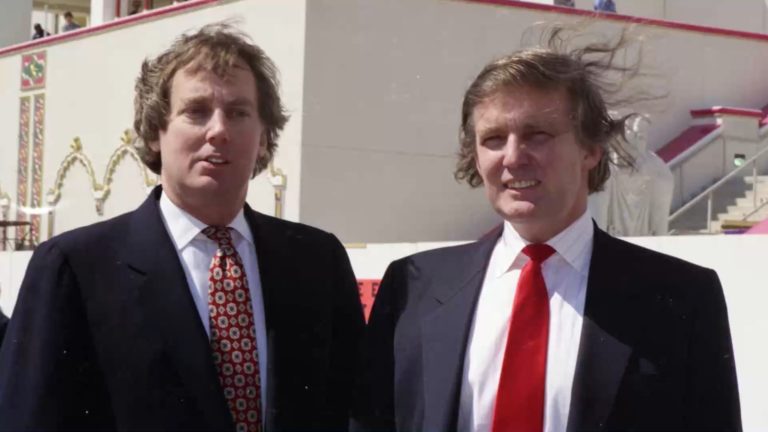
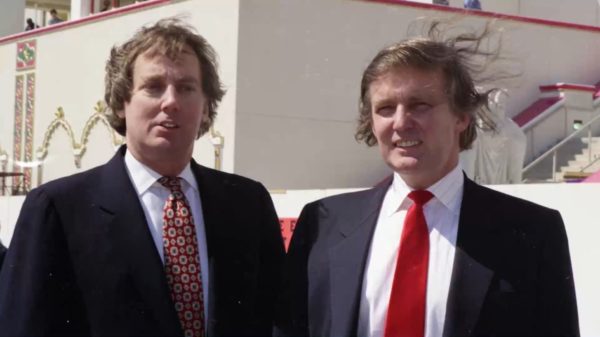
Robert Trump, President Trump’s brother and Trump Organization executive, has died at the age of 71.
President Donald Trump has paid tribute to his “best friend” and youngest brother, saying in a statement on August 15: “It is with [a] heavy heart I share that my wonderful brother, Robert, peacefully passed away tonight.”
Donald Trump had visited his brother in hospital in New York the day before his death, telling reporters: “He’s having a hard time.”
It is unclear what caused Robert Trump’s death.
A number of media reports suggested Robert Trump had been seriously ill.
President Trump said in a statement on August 15: “He was not just my brother, he was my best friend.
“His memory will live on in my heart forever.”
Donald Trump’s son Eric described his uncle as an “incredible man – strong, kind and loyal to the core”.
“He will be deeply missed by our entire family,” Eric Trump wrote on Twitter.
Robert was the youngest of Fred and Mary Anne Trump’s five children, and was born two years after his brother Donald.
The eldest of the children, Fred Jr., died in 1981.
Robert Trump spent much of his career with the family real-estate firm, becoming a top executive. Unlike his brother, however, he was said not to court publicity and lived semi-retired in New York state.
He recently went to court in a failed bid to stop publication of his niece Mary Trump’s tell-all book about President Trump, How My Family Created the World’s Most Dangerous Man.
According to the New York Post, Robert Trump spent more than a week in the intensive-care unit of Manhattan’s Mount Sinai Hospital in June.
Robert Trump, President Trump’s brother and Trump Organization executive, has died at the age of 71.
President Donald Trump has paid tribute to his “best friend” and youngest brother, saying in a statement on August 15: “It is with [a] heavy heart I share that my wonderful brother, Robert, peacefully passed away tonight.”
Donald Trump had visited his brother in hospital in New York the day before his death, telling reporters: “He’s having a hard time.”
It is unclear what caused Robert Trump’s death.
A number of media reports suggested Robert Trump had been seriously ill.
President Trump said in a statement on August 15: “He was not just my brother, he was my best friend.
“His memory will live on in my heart forever.”
Donald Trump’s son Eric described his uncle as an “incredible man – strong, kind and loyal to the core”.
“He will be deeply missed by our entire family,” Eric Trump wrote on Twitter.
Robert was the youngest of Fred and Mary Anne Trump’s five children, and was born two years after his brother Donald.
The eldest of the children, Fred Jr., died in 1981.
Robert Trump spent much of his career with the family real-estate firm, becoming a top executive. Unlike his brother, however, he was said not to court publicity and lived semi-retired in New York state.
He recently went to court in a failed bid to stop publication of his niece Mary Trump’s tell-all book about President Trump, How My Family Created the World’s Most Dangerous Man.
According to the New York Post, Robert Trump spent more than a week in the intensive-care unit of Manhattan’s Mount Sinai Hospital in June.
Russia has agreed to offer security assistance to Belarus in the case of external military threats, President Alexander Lukashenko has said.
President Lukashenko also voiced concerns over NATO military exercises taking place in neighboring Poland and Lithuania.
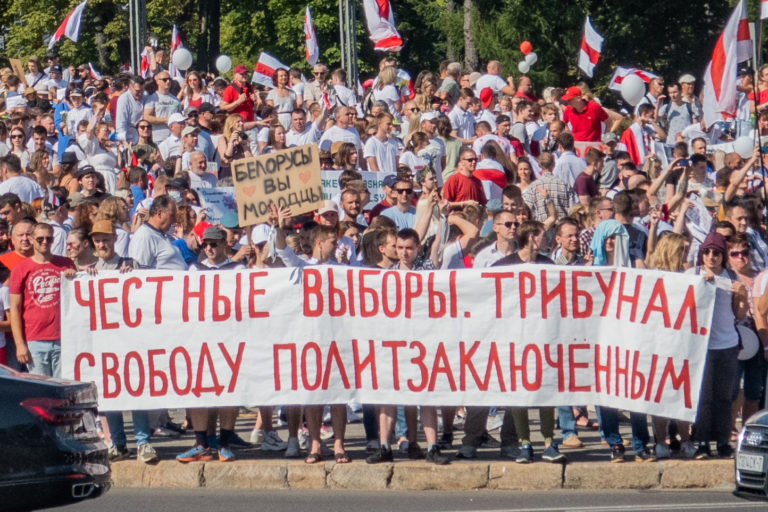
The news comes as the embattled Belarusian president faces mass protests over the disputed August 9 election.
Thousands of Belarusians gathered outside state television on August 15, demanding full coverage of the demonstrations.
The unrest erupted after Alexander Lukashenko claimed a landslide victory in last week’s election, the result of which has been condemned amid widespread allegations of vote-rigging.
The Central Election Commission says Alexander Lukashenko, who has been in power since 1994, won 80.1% of the vote and the main opposition candidate Svetlana Tikhanovskaya 10.12%.
However, Svetlana Tikhanovskaya insists that where votes were properly counted, she won support ranging from 60% to 70%.
As the unrest continued on August 15, President Lukashenko sought help from Russian President Vladimir Putin.
President Lukashenko said President Putin had promised to provide what he called comprehensive assistance in the event of external military threats to Belarus.
The announcement came the day after EU foreign ministers agreed to prepare new sanctions against Belarusian officials responsible for “falsification”. The US has also condemned the election as “not free and fair”.
In a joint statement on August 15, the prime ministers of three Baltic republics – Latvia, Lithuania and Estonia – “expressed deep concern at the violent crackdown… and the political repression of the opposition by the authorities”.
Latvia and Lithuania have previously said they are prepared to mediate in Belarus, provided the authorities stopped violence against protesters and formed a national council with members of civil society. They warned that the alternative was sanctions.
The Baltic leaders said the Belarusian presidential election was “neither free nor fair” and called for a “transparent” vote “with the participation of international observers”.
“The prime ministers urge the Belarusian authorities to refrain from violence against peaceful demonstrators [and to] release all political prisoners and those that have been detained,” the statement added.
Svetlana Tikhanovskaya left for Lithuania following the election after she publicly denounced the results. She had sent her children to Lithuania for safety before the vote.
Some 6,700 people were arrested in the wake of the election, and many have spoken of torture at the hands of the security services.
Amnesty International said accounts from released detainees suggested “widespread torture”.
Demonstrations have continued following Svetlana Tikhanovskaya’s call for further peaceful rallies on August 14.
Some 100 staff came out of the state television building to join August 15 protests, saying they planned a strike on August 17, AFP reports. Others have signed a letter in support of a strike.
On election day, Belarusian state channels aired the voices of Lukashenko supporters and did not cover the demonstrations. State TV later showed footage of violence to blame protesters and warn people not to participate.
Several journalists have resigned over the coverage.
A “March for Freedom” is also planned in the center of Minsk on August 16, a week after the contested election.
Joe Biden’s campaign team has issued a scathing response after President Donald Trump amplified a conspiracy theory about Biden’s running mate Kamala Harris.
President Trump said he had “heard” that Kamala Harris – a US-born citizen whose parents were immigrants – “doesn’t qualify” to serve as vice-president.
The fringe theory has been dismissed by constitutional experts.
The Biden campaign called the comments “abhorrent” and “pathetic”.
They noted that President Trump spent years promoting a false “birther” theory that ex-President Barack Obama was not born in the US.
On August 11, Kamala Harris, a senator from California, became the first black woman and the first Asian-American to be named as a running mate on a main-party presidential ticket.
A Biden campaign spokesman said in an email: “Donald Trump was the national leader of the grotesque, racist birther movement with respect to President Obama and has sought to fuel racism and tear our nation apart on every single day of his presidency.
“So it’s unsurprising, but no less abhorrent, that as Trump makes a fool of himself straining to distract the American people from the horrific toll of his failed coronavirus response that his campaign and their allies would resort to wretched, demonstrably false lies in their pathetic desperation.”
Kamala Harris was born to a Jamaican father and Indian mother in Oakland, California, on October 20, 1964. As such, she is eligible to serve as president or vice-president.
Constitutional scholars have dismissed the fringe legal theory that President Trump was referring to.
To be vice-president or president, Kamala Harris “has to be a natural-born citizen, at least 35 years old, and a resident in the United States for at least 14 years”, Juliet Sorensen, a law professor at Northwestern University, told the Associated Press.
“She is. That’s really the end of the inquiry.”
Anyone born in the US and subject to its jurisdiction is a natural born citizen, regardless of the citizenship of their parents, says the Cornell Legal Information Institute.
After a conservative law professor questioned Kamala Harris’ eligibility based on her parents’ immigration status at the time of her birth, President Trump was asked about the argument at a press conference on August 13.
President Trump said: “I just heard it today that she doesn’t meet the requirements and by the way the lawyer that wrote that piece is a very highly qualified, very talented lawyer.
“I have no idea if that’s right. I would have assumed the Democrats would have checked that out before she gets chosen to run for vice-president.
“But that’s a very serious, you’re saying that, they’re saying that she doesn’t qualify because she wasn’t born in this country.”
The reporter replied there was no question that Kamala Harris was born in the US, simply that her parents might not have been permanent US residents at the time.
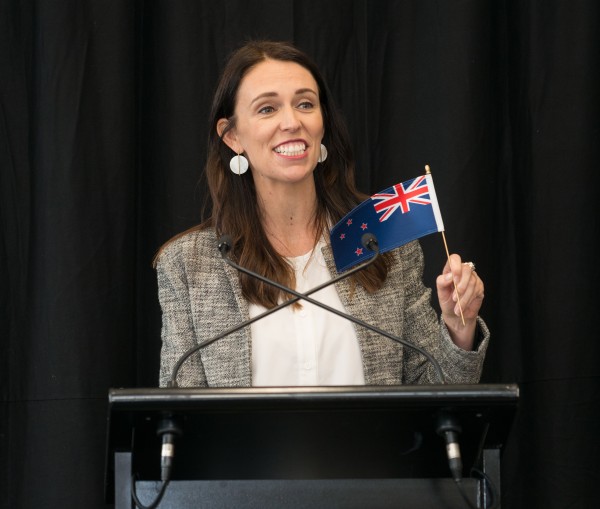
A 12-day extension of Auckland’s Covid-19 restrictions has been announced by New Zealand’s PM Jacinda Ardern, after a cluster of cases grew to 29.
Four people tested positive on August 11 in Auckland. A three-day lockdown was brought in the following day, now extended by 12 days.
There are four “alert levels” in the country, and Auckland has been on Level 3 since August 12.
The rest of the country is on Level 2, and PM Ardern said both would be extended.
New Zealand has had success containing coronavirus, and went 102 days without a community transmission.
The origin of the cluster in Auckland – New Zealand’s largest city with a population of 1.5 million – is still being investigated.
Jacinda Ardern said the decision to extend the restrictions was “in keeping with our cautionary approach and New Zealand’s philosophy of going hard and going early”.
She said that, in 12 days’ time, she thought “the cluster will be identified, will be isolated, and we can move to Level 2 in Auckland with confidence”.
All 29 cases “remain linked to one cluster centered in Auckland”, PM Ardern said, adding that 38 people are in government quarantine.
However, she said that, although the first cases of the new outbreak were confirmed in Auckland on August 11, contact-tracing had uncovered an earlier case, involving a shop worker in the Mt Wellington district of Auckland who became sick on July 31.
“In terms of the ongoing investigation to identify where the virus originated from, there are still no clear connections at this point,” she said.
However, the prime minister said genomic testing and contact-tracing suggested the current outbreak was not linked to border entry points or New Zealand’s previous outbreak in March.
New Zealand could expect to see more cases from the cluster, PM Ardern said, adding: “It will grow before it slows.
“And it may continue to be linked to schools, churches and social gatherings, as it has done to date. We also know, based on overseas experience and our own, that it is possible to contain a cluster or outbreak without ever being able to identify its origin.”
Under Level 3, which is now in place in Auckland, all public places – such as libraries, museums, cinemas, food courts, and playgrounds – must be closed.
People must work from home where possible, and children are encouraged to “learn from home”. Residents have been told to stay in their “household bubbles” when not at work or school if they have to attend.
Supermarkets and petrol stations can open, but other “close contact” businesses must shut.
Level 2 – which applies to the rest of the country – is less severe.
People can still go to workplaces and schools, but they must keep their distance and wear a mask if possible. Gatherings of more than 100 are banned.
Aside from the lockdown measures, the outbreak also prompted Ms Ardern to postpone until Monday the dissolution of parliament so that September’s election can take place. In her latest address, she said no decision had been taken on the election 19 September date yet – she would decide in the next 48 hours.
Before August 11, New Zealand was one of only a handful of countries to go so long without recording a locally transmitted case of Covid-19.
All 22 active cases of the virus before August 11 announcement were among returning travelers quarantined in isolation facilities.
Have you been trying to apply for a small business loan without any glimpse of success? If so, then you should know that thousands of others are undergoing similar experience across the globe. Actually, research shows that 74% of small business loan applications are rejected by many lending institutions especially the banks and some alternative small business loans lenders. This might be a high figure but not surprising at all. This is because, a couple of reasons exists to justify the reluctance of lending institutions to give loans to small businesses. Therefore, if you want to increase the odds of approval, you ought to familiarize with these reasons and how to lessen the risks.
Your business lacks a significant history
Lenders usually feel comfortable when extending loans to those enterprises which have been operating for a relatively long period. This way, the lender is able to assess the credit worthiness of a business as well as its ability to repay back. Therefore, for a new company, it is difficult to convince a lender with a word of mouth or a mere business plan without a compelling operation history. However, this should not discourage new entrepreneurs as they can seek funding from other sources which usually don’t dwell much on operation history. Some of such lenders include the Venture Capitalist Investors, crowdfunding, and many others.
2. Your business is in a high-risk industry
Traditional lending institutions have got strict rules which they usually prioritize while gauging the qualifications of loan applicants. One of such rules is the assessment of a business failure rate. This is whereby a bank will determine whether the business to be funded is likely to thrive or fail in future depending on various micro and macro economy factors as determined by the lender. Therefore, once a bank has considered your business to have high failure rate, the chances of receiving funding is almost zero. The solution to this is seeking alternative lenders and also seeking for recommendation from other entrepreneurs in the same industry.
3. Weak cash flow
When your business lacks a solid and strong cash flow, chances of having your loan approved are very minimal. The reason for this is that lenders will question the ability of your business to service the loan on full and also on time. Therefore, prior to delivering the application, make it your priority to assess the financial statements of your business and come up with a plan on how you will be repaying the loan on monthly basis. To boost the financial flow of your business, make sure all the goods or services delivered are paid on time if not promptly.
4. Poor Credit score
Lenders usually check the personal or business credit score to determine the worthiness of extending a loan. If the business is new, some lenders will go for the personal credit score especially if the business has no long history. Therefore, if the score happens to be below a certain acceptable threshold, then the chances of having loan approved is very low. To address this, usually check both personal and your business credit reports and ensure any existing anomaly is fixed before applying for a loan.
5. Lack of Plan
While applying for a small business loan, it is prudent to build a strong case which will remove doubts from a lender on your capability to repay. One of such ways of building a solid case is having a candid plan on how to use the loan as well as the repayment plan. If this plan lacks, or is not strong enough to convince the lender, then chances of approval are very low. Therefore, always develop a solid plan and perhaps let a friend have a look at it before you go for the loan.
6. Applying for very low amount
I know you are wondering how asking for too little will affect your chances of securing a loan. Well, it depends from where you are sourcing the loan. Usually, commercial banks prefer issuing large loans since they obtain more profits from them as opposed to the small ones. Since the resources and efforts required to service both the small and large loans are the same, banks will often be reluctant to offer a loan of less than $250,000. However, applying for a very large amount without a solid plan on how to repay will also get you rejected. Therefore, always purpose to understand the standard amount which you can get from the bank by perhaps asking friends.
Being aware of the above reasons why a small business loan application might fail is the first step towards securing a successful funding. Therefore, keep note of the above points and they will surely help you in your future small business loan application.
The City of Houston wants to keep critical safety information about the coronavirus pandemic a secret. Wait till you find out one of the reasons why.
Dolcefino Consulting asked for records on any events or locations where contract tracers found community spread. It was part of our investigation into any real evidence Houston bars had been linked to coronavirus outbreaks. We didn’t ask for patient information, just locations, like the huge protest rallies downtown and other large gatherings.
The City of Houston Legal Department and the City Attorney are now refusing to tell you where coronavirus outbreaks have happened. Why? One reason, according to the City, is Homeland Security.
“The release of this information could alert a criminal or terrorist to potential vulnerabilities in the Cities emergency response plan to COVID-19,” said City Attorney Rebekah Wendt. Wendt went on to claim that the release of certain information could “allow a criminal or terrorist to have intimate details concerning the City’s evolving plans to mitigate the spread of COVID-19 and allow them to exacerbate COVID-19 and future disasters.”
Harris County Judge Lina Hidalgo is also keeping the contact tracing results a secret, even though the taxpayers are the people footing the bill. In the span of just two hours, the County Health Department claimed they had no records of congregate settings related to the coronavirus. An hour and a half later, the County Health Department did admit that they had records but claimed that they were too busy with the spread of the coronavirus to tell us where the coronavirus was spreading.
“On one hand we have a statewide order and a local order telling us that we have to wear masks to wear masks to control the spread of the coronavirus and we are spending millions of dollars to try to keep people safe but meanwhile our local government won’t tell us which places we need to avoid,” says Wayne Dolcefino, President of Dolcefino Consulting.
“The public has every right to evaluate how the government is handling this pandemic and the City of Houston and Harris County Health Department should be ashamed of themselves.”
Kamala Harris has been named as Democratic presidential candidate Joe Biden’s running mate.
The California senator of Indian-Jamaican heritage is the first black woman and South Asian American in the role.
Once a rival for the top job, Kamala Harris had long been considered the front-runner for the vice-president.
The former California attorney general has been urging police reform amid nationwide anti-racism protests.
Joe Biden will face President Donald Trump in the election on November 3.
After August 11 announcement, Kamala Harris tweeted that Joe Biden “can unify the American people because he’s spent his life fighting for us. And as president, he’ll build an America that lives up to our ideals”.
“I’m honored to join him as our party’s nominee for Vice President, and do what it takes to make him our Commander-in-Chief.”
On August 12, Joe Biden and Kamala Harris will deliver remarks in Wilmington, Delaware, on “working together to restore the soul of the nation and fight for working families to move the country forward”, the Biden campaign said.
At a White House news conference on August 11, President Donald Trump, a Republican, said he was pleased with Joe Biden’s choice, adding that Kamala Harris did “very, very poorly” in her effort to become the Democratic nominee.
Kamala Harris will take part in a debate with President Trump’s running mate, Vice-President Mike Pence, on October 7 in Salt Lake City, Utah.
In last year’s race to be the Democratic nominee, Kamala Harris showed herself to be a forceful speaker, launching blistering attacks on Donald Trump.
The role of a vice-presidential running mate isn’t always clearly defined.
One of the traditional roles is to go on the offensive in exposing the opposition’s weaknesses, while the presidential nominee focuses on communicating the party’s message.
Constitutionally, the vice-president steps in to the top job should the president die or leave office during his or her term.
Joe Biden will turn 78 in November, meaning should he be elected he will be the oldest US president in history (Ronald Reagan was 77 when he left office).
His age means Joe Biden’s vice-presidential choice may come under extra scrutiny.
Kamala Harris, 55, dropped out of the presidential race in December after failing to make headway in her bid to win the Democratic nomination.
She repeatedly clashed with Joe Biden during the primary election debates, most notably criticizing his praise for the “civil” working relationship he had with former senators who favored racial segregation.
Kamala Harris was born in Oakland, California, to two immigrant parents: an Indian-born mother and Jamaican-born father.
She went on to attend Howard University, one of the nation’s preeminent historically black colleges and universities. She has described her time there as among the most formative experiences of her life.
Kamala Harris says she’s always been comfortable with her identity and simply describes herself as “an American”.
Only two other women have been nominated as vice-presidential candidates for a major party – Sarah Palin by the Republican party in 2008 and Geraldine Ferraro by the Democrats in 1984. Neither were on the winning ticket.
A woman of color has never been appointed to a presidential ticket by either of the two main American political parties. No woman has won the US presidency either.
Joe Biden tweeted that he had “the great honor” to name Kamala Harris as his number two.
He described her as “a fearless fighter for the little guy, and one of the country’s finest public servants”.
Joe Biden pledged in March to name a woman on the ticket. He had faced mounting calls to pick a black woman in recent months as the nation has been convulsed by social unrest over police brutality against African Americans, a key voting bloc for the Democratic Party.
According to Belarus’s election officials, Alexander Lukashenko won 80.23% of the vote in August 9 presidential election, with his main challenger, Svetlana Tikhanovskaya, receiving 9.9%.
Svetlana Tikhanovskaya entered the election in place of her jailed husband and went on to lead large opposition rallies.
Alexander Lukashenko, 65, has been in power since 1994.
Svetlana Tikhanovskaya has refused to accept the autocratic president won 80% of the vote.
“I consider myself the winner of this election,” she said on August 10.
Police and demonstrators have clashed for a second night in the capital Minsk and other cities.
A lack of scrutiny – no observers were present – has led to allegations of widespread vote-rigging in the poll.
Protests continued across Belarus on August 10. In Minsk, officers reportedly used tear gas against the demonstrators and arrested 30 people. One witness said they saw officers with truncheons beat protesters.
Polish-based broadcaster Belsat TV said several metro stations in the capital had been closed and the internet was still mostly unavailable.
It comes after the state security agency said it had thwarted an attempt on Svetlana Tikhanovskaya’s life. It gave no further details.
The election was held amid growing frustration at Alexander Lukashenko’s leadership, with opposition rallies attracting large crowds.
President Lukashenko has described opposition supporters as “sheep” controlled from abroad, and vowed not to allow the country to be torn apart.
Svetlana Tikhanovskaya said that the election results published on August 10 “completely contradict common sense” and the authorities should think about how to peacefully hand over power.
“We have seen that the authorities are trying to hold on to their positions by force,” she said.
“No matter how much we asked authorities not to turn on their own people, we were not listened to.”
Svetlana Tikhanovskaya’s campaign said it would challenge “numerous falsifications” in the vote.
Alexander Lukashenko poured scorn on Svetlana Tikhanovskaya’s comments.
“So Lukashenko, who is at the top of the power structure and at the head of the state, after getting 80% of the vote must voluntarily hand over power to them,” the president said.
The death toll of August 4 devastating explosion in the Lebanese capital, Beirut, has exceeded 200, according to officials.
Beirut Governor Marwan Abboud said dozens were still missing, many of them foreign workers.
On August 9, there was a second night of violence in Beirut, as police clashed with protesters angry with the government’s response to the disaster.
The resignation of three members of the cabinet, including the justice minister on August 10, has not quelled the fury.
Fresh protests have been called for August 10 when PM Hassan Diab is due to chair a cabinet meeting.
PM Diab has said the blast was the result of the detonation of 2,750 tonnes of ammonium nitrate that had been stored unsafely at Beirut’s port for six years.
The decision to keep so much hazardous material in a warehouse near the city center has been met with disbelief by many Lebanese, who have long accused the political elite of corruption, neglect and mismanagement.
Marwan Abboud was quoted by the al-Marsad Online news website as saying the death toll from the explosion had risen to 220, and that 110 people remained missing.
The governor told the Al Jadeed TV channel that many foreign workers and lorry drivers were among the missing, which he said had made identifying them more difficult.
The Lebanese army, meanwhile, said it was calling off the rescue phase of the search operation at the port because no survivors had been found.
Elsewhere in Beirut, hundreds of thousands of people are living in severely damaged homes, many without windows or doors.
Officials have estimated that the explosion caused more than $3 billion of damage and that Lebanon’s collective economic losses may amount to $15 billion.
Lebanon was already suffering a major economic downturn before the explosion, with families pushed into poverty and hunger, and UN agencies have warned of a humanitarian crisis unless food and medical aid are delivered swiftly.
International donors pledged $297 million in aid for Lebanon at a virtual summit on August 9 hosted by French President Emmanuel Macron.
A joint statement underscored their concerns about corruption, saying that the assistance should be “directly delivered to the Lebanese population, with utmost efficiency and transparency”.
The donors said further assistance was dependent on Lebanese authorities fully committing to “timely measures and reforms expected by the Lebanese people”.