Friday, December 5, 2025
Home Blog Page 8

Taliban Minister’s Delhi Press Conference Sparks Firestorm Over Exclusion of Women Journalists

NEW DELHI— A diplomatic visit intended to signal a thawing relationship between New Delhi and Kabul has instead ignited a furious national debate over gender rights and sovereignty, after Afghanistan’s Foreign Minister, Amir Khan Muttaqi, initially excluded Indian female journalists from a press conference on Indian soil.

The controversy centers on two separate media interactions held during Muttaqi’s high-profile, six-day visit—the first by a senior Taliban minister to India since the group seized power four years ago.

The Exclusion that Echoed Kabul

On Friday, following official bilateral talks with India’s External Affairs Minister, S. Jaishankar, the press conference organized by the Afghan Embassy at its New Delhi premises featured a conspicuous absence: not a single woman journalist was allowed into the room. Reporters gathered outside were reportedly denied entry by security staff, a move that starkly mirrored the systematic suppression of women’s public life under the Taliban regime in Afghanistan.

The “men-only” event drew immediate and fierce condemnation from across the Indian political spectrum and media bodies.

The Editors Guild of India and the Indian Women Press Corps (IWPC) issued sharp statements, labeling the exclusion as “blatantly discriminatory” and an “affront to press freedom and women’s rights.” Opposition leaders were equally vocal.

“The government has dishonoured every single Indian woman by allowing the Taliban minister to exclude women journalists from the presser,” stated Trinamool Congress MP Mahua Moitra. Meanwhile, Congress leader Rahul Gandhi challenged the Prime Minister’s commitment to women’s empowerment, saying, “Your silence in the face of such discrimination exposes the emptiness of your slogans on Nari Shakti.”

A Quick, Contested Redo

Facing mounting pressure, both domestically and on social media, the Afghan side organized a second, hastily arranged press interaction on Sunday—this time, explicitly inviting women journalists.

In the second presser, Foreign Minister Muttaqi addressed the uproar, attempting to dismiss the Friday incident as merely a “technical issue.”

“It was on short notice and a short list of journalists was decided,” Muttaqi claimed. “It was neither a technical issue nor any deliberate exclusion. It was not intended.”

The explanation, however, has failed to satisfy critics, who see the “technical issue” defense as a flimsy attempt to whitewash the Taliban’s known gender policies. When questioned on the plight of women in Afghanistan—who are barred from education, most public jobs, and even parks—Muttaqi deflected, insisting that “every country has its own customs, laws, and principles, and there should be respect for them.”

New Delhi Distances Itself

Amid the firestorm, the Indian Ministry of External Affairs (MEA) moved to distance itself from the controversy, clarifying that it had “no involvement” in the press conference held at the Afghan Embassy. The MEA noted that the decision on which journalists to invite was made solely by the Taliban officials accompanying the Foreign Minister.

Despite the Indian government’s move to de-link itself from the organization of the event, the incident has highlighted the delicate tightrope New Delhi is walking. While India is attempting to upgrade its “Technical Mission” in Kabul to a full embassy—a critical diplomatic step to counter security concerns and humanitarian needs—it is being forced to confront the harsh reality of dealing with a non-recognized, hardline regime whose ideology is fundamentally at odds with India’s democratic values.

The twin press conferences have left an indelible mark on the visit: the diplomatic necessity of engaging the Taliban may be unavoidable, but the price of that pragmatism, in the eyes of many, should not include tacit acceptance of gender apartheid on Indian soil. The exclusion of Indian women journalists has turned a routine diplomatic encounter into a profound test of national principle.

Trump Triumphs as He Flies to Israel for Hostage Release, Gaza Truce Holds

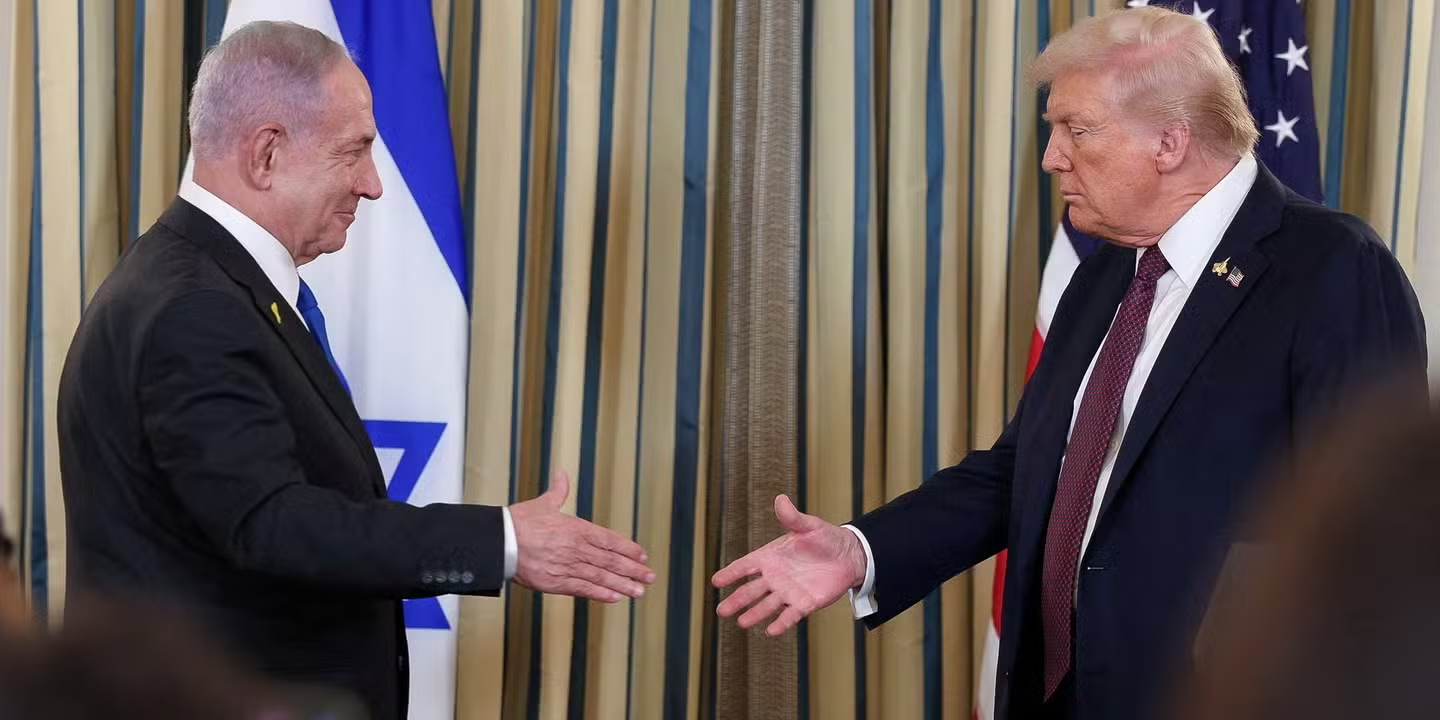
AIR FORCE ONE— President Donald Trump departed for the Middle East this weekend, celebrating a major diplomatic victory with a confident declaration that “all sides are cheering” as he heads to Israel to preside over the long-awaited release of the remaining hostages held in Gaza.

The President’s dramatic trip follows the activation of the first phase of a U.S.-brokered ceasefire agreement between Israel and Hamas, which calls for the release of all remaining captives in exchange for Palestinian prisoners and a significant Israeli troop pullback.

Speaking to reporters just before boarding Air Force One, the President was ebullient, framing the breakthrough as a fulfillment of a key campaign promise.

“We ended the war in Gaza, something people said could never be done,” Trump said. “The hostages will be coming back Monday or Tuesday, and I’ll probably be there. Everybody’s celebrating. Everybody loves the deal, so it’s a great honor to have been working on it.”


The Hostage Countdown

The trip is meticulously timed to coincide with the conclusion of the 72-hour period for Hamas to release the hostages. Israeli forces have already completed a partial withdrawal to an “agreed-upon line” inside Gaza, triggering the final countdown. Approximately 20 hostages are believed to be alive, with Hamas also set to return the remains of over two dozen deceased captives.

The successful exchange—which requires Israel to release roughly 2,000 Palestinian prisoners—is viewed as the most tangible sign of progress in the bloody two-year conflict and the biggest diplomatic achievement of Trump’s second term.

Sources indicate the President will first visit Israel, where he has been invited to address the Knesset, Israel’s parliament, a rare honor that underscores the political significance of the agreement.


From Israel to the Summit

Following the hostage events, the President will travel to Egypt to host a high-level summit in Sharm el-Sheikh with leaders from over 20 countries, including key Arab and Muslim nations. This gathering is intended to cement the fragile truce and launch the massive international effort to rebuild war-torn Gaza.

While the first phase secures a ceasefire and hostage release, the thornier issues of a permanent political solution, the disarmament of Hamas, and the future governance of Gaza are slated for the next round of negotiations. Trump’s proposal calls for a transitional “Board of Peace” to oversee the territory, indicating a U.S.-led effort to stabilize the region.

The President’s claim that “all sides are cheering,” however, overlooks the deeply entrenched skepticism that remains. In Gaza, while residents returned to devastated homes, many expressed fear and lack of trust that the truce would hold, leading to chaotic scenes of scrambling for aid. On the Israeli side, Prime Minister Benjamin Netanyahu has maintained a tough line, vowing that the “sword is still on [Hamas’s] neck” and that the demilitarization of the militant group will continue after the hostages are safely home.

Despite the persistent tensions, the President is determined to capitalize on the moment, presenting the diplomatic success as a validation of his “America First” strategy and a platform to build on the framework of the Abraham Accords with nations like Saudi Arabia. The outcome of his high-stakes trip will determine whether a historic breakthrough will translate into a durable peace.

Vance Vows ‘Deeper’ Federal Cuts as Shutdown Turmoil Reinstates Mistakenly Fired CDC Workers

Vice President JD Vance warned Sunday that the longer the protracted government shutdown continues, the more “painful” and “deeper” the cuts to the federal workforce will become, even as the administration was forced to walk back hundreds of termination notices sent in error to vital public health staff.

As the budget impasse in Congress dragged into its second week, the Centers for Disease Control and Prevention (CDC) was engulfed in chaos after roughly 1,300 employees received Reduction in Force (RIF) notices on Friday—a move that goes far beyond the traditional furloughs of previous shutdowns.

However, in a dramatic weekend reversal, officials confirmed that approximately 700 of those CDC staff, including personnel critical to disease surveillance, immunization, and outbreak response, were reinstated after the agency attributed the initial notices to a “coding error.”


‘Chaos’ and the Threat of Permanent Cuts

Appearing on Fox News, Vice President Vance defended the administration’s aggressive approach to staffing, arguing that the “chaos” was a direct consequence of Congressional Democrats refusing to pass a clean funding bill.

“The longer this goes on, the deeper the cuts are going to be,” Vance stated, adding that the administration was prioritizing funding for the military and essential services, leaving discretionary programs vulnerable. “To be clear, some of these cuts are going to be painful.”

The Vice President reiterated that the White House would not negotiate with Democrats who are demanding an extension of federal subsidies for health insurance under the Affordable Care Act as a condition to reopen the government.

The Trump administration’s strategy of commencing mass firings, rather than temporary furloughs, has triggered immediate legal challenges from federal unions. A court filing by the Office of Management and Budget (OMB) indicated that over 4,000 employees across seven agencies—including Health and Human Services, Treasury, and Education—were set to receive termination notices.


CDC Error Underscores Stakes

The hasty firing and subsequent rehiring of crucial CDC staff exposed the high-stakes risks of the administration’s mass layoff initiative.

Among those mistakenly terminated and quickly reinstated were key “disease detectives” from the Epidemic Intelligence Service (EIS), staff who produce the CDC’s critical Morbidity and Mortality Weekly Report, and the agency’s incident commander for the measles response.

While the agency’s leadership scrambled over the weekend to restore these vital public health roles, approximately 600 CDC staff, including those in violence prevention programs and specific administrative offices, reportedly remain separated from the agency as part of the initial RIF push.

Union representatives and Congressional Democrats have seized on the mistake as evidence of the administration’s recklessness. Even with the reinstatements, the threat of permanent staffing reductions—and the effective dismantling of federal programs—hangs over the entire civil service, turning the government shutdown from a temporary impasse into a fundamental restructuring of the federal bureaucracy.

China Blasts US as 100% Tariff Threat Reignites Trade War

BEIJING— China has vehemently denounced the latest aggressive trade move by the United States, accusing Washington of “arbitrary double standards” after President Donald Trump threatened to impose a devastating 100% tariff on all Chinese imports.

In a sharp retort issued by the Ministry of Commerce on Sunday, Beijing rejected the new levy—which would be added on top of existing duties—and warned that it is “not afraid to fight” a trade war, even as it called for negotiations.

The escalation plunges relations between the world’s two largest economies into their deepest crisis in months, raising alarm bells across global financial markets.


Rare Earths and Retaliation

The diplomatic firestorm was ignited by the strategic resource of rare earth elements. Beijing recently announced sweeping new export control measures on the critical minerals—vital to the manufacturing of everything from high-tech chips and electric vehicles to sophisticated military hardware.

President Trump retaliated on Friday, declaring on social media that China’s move was an “extraordinarily aggressive” and “very hostile” attempt to “hold the World ‘captive’.” He announced a 100% tariff on Chinese goods, set to take effect on November 1, along with new export controls on “critical software.”

China’s Ministry of Commerce spokesperson slammed the response as a clear-cut case of hypocrisy.

“The relevant US statement is a typical example of ‘double standards,'” the ministry said, defending its rare earth controls as “normal actions taken by the Chinese government” to safeguard national security.

The ministry argued that the U.S. has a long history of “overstretching the concept of national security” to restrict Chinese companies, pointing to Washington’s continuous blacklisting of firms and expanding export controls.


‘We are not afraid to fight’

China’s statement was clear-eyed and defiant, signaling an end to the temporary truce that followed months of earlier trade negotiations.

“China’s position on the trade war is consistent: we do not want it, but we are not afraid of it,” the spokesperson stressed, urging the U.S. to “promptly correct its erroneous practices” and seek resolution through dialogue on the basis of “mutual respect.”

The ministry also accused the U.S. of actively undermining the atmosphere for trade talks by introducing a string of new restrictions since their last high-level meeting.

Should Washington proceed with the extraordinary new tariffs, Beijing vowed to “resolutely take corresponding measures to safeguard its legitimate rights and interests.” These countermeasures have already begun, with China announcing special port fees on U.S. ships, mirroring a similar fee recently imposed by the Trump administration.

The renewed escalation has jeopardized a potential meeting between President Trump and Chinese President Xi Jinping, a highly anticipated encounter that many analysts viewed as the only path toward stabilizing the rapidly deteriorating relationship. As the deadline for the tariffs looms, businesses and investors worldwide are bracing for another brutal round of trade conflict.


Mass Shooting at Crowded South Carolina Bar Leaves 4 Dead, 20 Wounded

ST. HELENA ISLAND, S.C.— A late-night gathering at a popular coastal bar turned into a scene of unimaginable horror early Sunday morning when a mass shooting left four people dead and wounded at least 20 others on the idyllic Gullah community of St. Helena Island.

The tragedy unfolded shortly before 1 a.m. at Willie’s Bar and Grill, a local establishment that, according to the owner, was packed with a large crowd, including alumni from a nearby high school. The festive atmosphere was violently shattered by bursts of gunfire that sent hundreds of people scrambling for their lives.

“Screaming and panic and fear,” was how bar owner Willie Turral described the chaos inside as the shots rang out just outside the building.


A Scene of Widespread Carnage

The Beaufort County Sheriff’s Office confirmed that deputies arriving on the scene were met with a large, frantic crowd and multiple victims suffering from gunshot wounds.

“Multiple victims and witnesses ran to the nearby businesses and properties seeking shelter from the gun shots,” the Sheriff’s Office said in a statement.

Four victims were pronounced dead at the scene. At least 20 others were injured in the attack, with officials reporting that four of the wounded are in critical condition at area hospitals. The victims’ identities have not yet been released as authorities work to notify their families.

The scale of the violence quickly overwhelmed the quiet coastal community. Law enforcement has initiated a massive investigation but has yet to identify a suspect or determine a motive for the shooting. The incident instantly qualifies as a mass shooting, defined as an event where four or more people are shot, excluding the perpetrator.


A Community Shaken

St. Helena Island, known as the epicenter of the Gullah Geechee culture—a distinct community of descendants of enslaved Africans—is generally a place untouched by such widespread, random violence. The bar itself is described on its website as a “community pillar” committed to giving back, hosting events like an art expo just weeks prior.

“This is a tragic and difficult incident for everyone,” the Sheriff’s Office stated, asking for patience from the public.

U.S. Rep. Nancy Mace, whose district includes the island, posted on social media that she was “COMPLETELY HEARTBROKEN” by the devastation, offering prayers for those impacted by the “horrific act of violence.”

As the investigation continues, a shocked nation once again absorbs the details of yet another mass casualty event. The island community, accustomed to the tranquility of its historic setting, now grapples with the sudden intrusion of fear and unimaginable loss. Authorities have urged anyone with information to come forward as they attempt to bring the perpetrator of this horrific act to justice.

Trump Administration Launches Mass Layoffs Amid Shutdown, Targeting Over 4,000 Federal Workers

The political standoff over the government shutdown intensified sharply on Friday as the Trump administration began a wave of unprecedented layoffs across the federal workforce, following through on threats to permanently downsize agencies.

Office of Management and Budget Director Russell Vought confirmed the dramatic escalation, posting the cryptic but potent message on social media: “The RIFs have begun“—referring to “Reductions in Force,” the bureaucratic term for mass layoffs. This move breaks sharply with precedent, as federal workers in prior shutdowns were merely furloughed with the expectation of returning to their jobs and receiving back pay once funding was restored.

A court filing by the Justice Department later revealed the initial scope, confirming that more than 4,200 federal employees across at least seven key agencies had received formal layoff notices.


Agencies Hit Hardest by ‘Substantial’ Cuts

The layoffs, which the administration described as “substantial,” appear to be strategically targeting programs and departments that do not align with the President’s priorities, transforming a temporary funding lapse into a permanent reshaping of the federal government.

The agencies with the highest reported cuts include:

  • Treasury Department: Over 1,400 employees received notices, with the Internal Revenue Service (IRS) being a major target.
  • Department of Health and Human Services (HHS): Approximately 1,100 to 1,200 employees were affected, with cuts reportedly aimed at entities created during the pandemic and other divisions at odds with the administration’s public health vision.
  • Department of Education: Nearly all employees below the director level at the Office of Elementary and Secondary Education were reportedly laid off, continuing a sharp downsizing that has already halved the department’s workforce since the beginning of the year.
  • Department of Housing and Urban Development (HUD): Around 442 employees were targeted, including staff within offices focused on fair and equal housing.
  • Department of Homeland Security (DHS): Layoffs were confirmed at the Cybersecurity and Infrastructure Security Agency (CISA), a group that previously drew the White House’s ire for challenging misinformation.

The layoffs, which require a 60-day notice period, are the culmination of a year-long downsizing campaign that has seen hundreds of thousands of federal workers already depart through buyouts, deferred resignation offers, and prior firings.


Political Weapon or Necessary Reform?

President Donald Trump, who has previously vowed to cut the federal workforce, defended the action and placed the blame squarely on Democrats for the ongoing funding impasse.

“They started this thing,” the President told reporters, adding that the job cuts would be “Democrat-oriented” because the layoffs would target “people that the Democrats want.”

Democrats and labor unions have forcefully pushed back, calling the mass firings illegal and an abuse of power. The American Federation of Government Employees (AFGE) and the AFL-CIO immediately filed an emergency motion in federal court to block the dismissals.

“It is disgraceful that the Trump administration has used the government shutdown as an excuse to illegally fire thousands of workers who provide critical services to communities across the country,” said AFGE President Everett Kelley.

The move has even drawn criticism from some Republicans, who worry the aggressive tactic will complicate bipartisan negotiations to end the shutdown, which is now nearing its second week.

The crisis deepens the uncertainty for federal employees—many of whom are already furloughed or working without pay—and raises significant concerns about the long-term capacity of agencies to perform core government functions, even if the funding dispute is ultimately resolved.

Texas Farmer Finds Car-Sized NASA Probe in Wheat Field

EDMONSON, Texas— The sky over rural West Texas usually offers little more than an endless horizon and the promise of rain. But last week, a local farmer was treated to a sight that was anything but ordinary: a bulky, car-sized piece of NASA scientific equipment, drifting down to Earth under a massive parachute before gently crash-landing in a neighbor’s wheat field.

Ann Walter, a resident of Edmonson, Texas, was the first to spot the unusual descent. “I didn’t know what to make of the bulky object slowly drifting across the sky,” Walter told reporters. Her initial surprise turned to awe when she realized the boxy, SUV-sized payload, emblazoned with NASA insignia, had touched down nearby, tethered to a parachute reportedly measuring 30 feet across.

The stunning find instantly transformed the quiet farmland into an unexpected staging ground for a space agency retrieval mission.

The Missing High-Altitude Balloon

A call to the Hale County Sheriff’s Office quickly confirmed that this was no stray debris, but a piece of lost government property. NASA was, indeed, looking for its missing equipment.

The wayward probe, which uses telescopes to gather information about distant stars, galaxies, and black holes, was part of an experiment launched by NASA’s Columbia Scientific Balloon Facility in Fort Sumner, New Mexico, approximately 140 miles to the west. High-altitude balloons carry these instruments to the edge of space—more than 20 miles into the atmosphere—to conduct research that benefits from the near-vacuum conditions.

Unfortunately for the mission team, the unpredictable Texas wind proved stronger than their trajectory models, pushing the massive package far off its intended recovery zone.

A Brush with Astrophysics

“It’s crazy, because when you’re standing on the ground and see something in the air, you don’t realize how big it is,” Walter said of the scientific vessel.

The unexpected arrival provided the Walter family with a rare, up-close encounter with high-level astrophysics research. Researchers from the balloon facility arrived shortly after the landing was reported, confirming the retrieval and thanking the family for their vigilance. The crew spent several hours moving the bulky experiment—which was thankfully unharmed and did not appear to damage the field—onto a trailer for its journey back to the lab.

“It’s kind of surreal that it happened to us and that I was part of it,” Walter reflected. “It was a very cool experience.”

While the incident is a unique local anecdote, it highlights the technical challenges faced by NASA’s scientific balloon program, where multi-ton payloads are launched to the cosmos’ doorstep before being brought back by simple parachutes, relying on the goodwill of local citizens when the winds of fate—and Texas—blow them off course. For one Texas family, the harvest season just became a lot more space age.

North Korea Unveils New ICBM, the Hwasong-20, in Grand Nighttime Parade

PYONGYANG— Under the floodlights of Kim Il Sung Square, North Korea’s military spectacle reached its crescendo Friday night as the regime rolled out its latest and most formidable weapon: the Hwasong-20 Intercontinental Ballistic Missile (ICBM). Described by state media as the nation’s “most powerful nuclear strategic weapon system,” the massive missile dominated a rare parade attended by high-level dignitaries from China and Russia, underscoring Pyongyang’s accelerated drive for nuclear deterrence and its increasingly assertive diplomatic pivot.

The late-night parade, held to mark the 80th anniversary of the ruling Workers’ Party of Korea, transformed the capital into a potent display of military might and geopolitical alignment. Leader Kim Jong Un, flanked by Chinese Premier Li Qiang and Russia’s Dmitry Medvedev, presided over columns of goose-stepping soldiers and a staggering array of new weaponry.

The Apotheosis of Ambition

The star of the show, the Hwasong-20, appeared on an imposing 11-axle transporter-erector-launcher (TEL). Though yet to be flight-tested, analysts believe the new ICBM is a significant technical leap, likely designed to carry multiple re-entry vehicles (MRVs) or a more sophisticated multiple independently targetable re-entry vehicle (MIRV) payload.

This potential capability is a direct challenge to the United States and its allies, as a multi-warhead missile would severely complicate and stress existing missile defense systems.

“The Hwasong-20 represents, for the moment, the apotheosis of North Korea’s ambitions for long-range nuclear delivery capabilities,” noted Ankit Panda of the Carnegie Endowment for International Peace. “We should expect to see the system tested before the end of this year.”

The parade also prominently featured the Hwasong-11Ma hypersonic missile, a solid-fuel weapon prized for its maneuverability and faster launch preparation time—a key development that drastically shrinks the reaction window for U.S. and South Korean forces.

A New Axis of Defiance

The presence of top officials from Beijing and Moscow was as significant as the missiles on display. The rare attendance of such senior figures highlighted Kim’s success in forging a stronger anti-West front, leveraging global tensions to break out of international isolation.

In his address, Kim Jong Un pledged to develop an “invincible entity that destroys all threats,” but notably refrained from directly naming the United States or South Korea. He did, however, offer “warm encouragement” to North Korean troops sent to support Russia’s war efforts in Ukraine, a gesture that underscored the deepening military-strategic partnership between Pyongyang and Moscow.

Analysts suggest this display of advanced weaponry, coupled with the attendance of allied leaders, serves a dual purpose: internally, it validates Kim’s single-minded pursuit of nuclear strength under the banner of “self-defense,” and externally, it signals a firm, non-negotiable status as a nuclear-armed power on the world stage.

With the largest and most complex missile yet revealed, the Hwasong-20 is a looming shadow—a bold declaration that Pyongyang’s nuclear program is neither temporary nor up for negotiation. The only question now is when and where the missile will be tested, signaling the start of the next major cycle of tension on the Korean Peninsula.

Afghan Taliban Confirm ‘Retaliatory’ Border Attacks on Pakistan, Escalating South Asia’s Defining Feud

KABUL/ISLAMABAD – The uneasy calm along the volatile Durand Line shattered this weekend as the Afghan Taliban government confirmed its forces launched “retaliatory and successful operations” against Pakistani military posts, marking a dangerous escalation in the long-simmering feud between the two neighbors.

The coordinated assaults across multiple provinces—from Kunar to Helmand—were launched in direct response to what the Taliban claimed were unacknowledged Pakistani airstrikes on Afghan soil earlier in the week, including reported explosions in the capital, Kabul.

An Eye for an Airstrike

The current flare-up stems from a core dispute that has poisoned relations since the Taliban’s 2021 takeover. On Thursday, explosions were reported in Kabul and the eastern province of Paktika. Though Islamabad never officially claimed responsibility for the strikes, the Taliban-run Defence Ministry quickly blamed Pakistan for violating its sovereignty. Pakistani security officials, however, reportedly confirmed that the strikes were aimed at eliminating high-value targets within the Tehreek-i-Taliban Pakistan (TTP), or Pakistani Taliban, a group Islamabad accuses Kabul of harboring.

The TTP, a separate but ideologically aligned militant group, has intensified its insurgency against Pakistani security forces, a campaign that has seen hundreds of Pakistani soldiers killed since 2021. For months, Pakistan has demanded that the Afghan Taliban either expel the TTP or neutralize their cross-border threat.

The weekend’s clashes represent the Afghan Taliban’s most aggressive response to date.

“In retaliation for the air strikes by Pakistani forces,” a statement from the Afghan military read, Taliban border forces “engaged in heavy clashes against Pakistani forces’ posts in various border areas.”

War on Multiple Fronts

The fighting has been fierce, with both sides claiming to have inflicted significant damage. Afghan state media reported a “revenge operation” in Helmand province resulted in the deaths of over a dozen Pakistani soldiers and the capture of several military outposts—claims Pakistan has not officially confirmed.

Pakistani security sources, speaking on condition of anonymity, acknowledged the exchanges of fire at key posts, including Angoor Adda and Kurram, but insisted they were responding with “full force” to “unprovoked” attacks, destroying multiple Afghan posts and militant formations in their counter-offensive.

The Interior Minister of Pakistan, Mohsin Naqvi, condemned the Afghan attacks, warning that Pakistani forces were giving a “prompt and effective response that no provocation will be tolerated.”

The violence has already translated to humanitarian and economic costs, with officials reporting the closure of major trade routes, including the crucial Torkham border crossing, stranding both pedestrian traffic and essential goods.

The Looming Instability

The current crisis underscores the profound geopolitical paradox of the region: Pakistan, long accused of supporting the Afghan Taliban, now finds itself locked in a military confrontation with its former allies over the TTP threat.

“Intensifying cross-border attacks on Pakistani forces, unusually intense Pakistani strikes in Afghanistan, and Taliban retaliations have created a perfect storm for trouble,” noted one South Asia analyst.

As the two nuclear-armed neighbors exchange fire along their disputed border—a border the Afghan Taliban refuse to recognize—the potential for the conflict to spiral remains a major concern for regional and international powers. Global leaders, including Saudi Arabia, Iran, and Qatar, have already publicly called for “restraint, avoidance of escalation, and the adoption of dialogue.”

For now, the heavy weaponry has momentarily fallen silent after the Taliban claimed their “successful” operations concluded at midnight, but the warning issued by their Defence Ministry remains stark: “If the opposing side again violates Afghanistan’s territorial integrity, our armed forces are fully prepared to defend the nation’s borders and will deliver a strong response.” The Durand Line, an arbitrary colonial scar, has once again become the trigger point for a devastating new chapter of instability in South Asia.

Indian Student Traded Seven Years in a Russian Prison for Three Days on the Ukrainian Front Line

NEW DELHI/KYIV – The humanitarian crisis of foreign nationals being coerced into the Russian military has taken a dramatic turn with the capture of an Indian student in Ukraine, whose mother claims he was forced to choose between a drug conviction and the battlefield.

Majoti Sahil Mohamed Hussein, a 22-year-old student from Morbi, Gujarat, surrendered to Ukraine’s 63rd Mechanised Brigade after just 16 days of training and a mere three days on the frontline. In a video released by the Ukrainian forces, Hussein is seen recounting a desperate choice: he was facing a potential seven-year sentence in a Russian prison on drug-related charges when he was offered a deal that led him directly into the heart of the war.

The Devil’s Bargain

The captured national’s story paints a chilling picture of Russia’s recruitment tactics among desperate foreign residents. Hussein claims he traveled to Russia for higher education but was later arrested on a drug charge, reportedly linked to his work as an online delivery person.

In the Ukrainian video, Hussein states: “I didn’t want to stay in prison, so I signed a contract for the ‘special military operation.’ But I wanted to get out of there. I was promised a lot of money, but I didn’t get anything.”

The choice, according to his own account and confirmed by family sources, was a grim one: serve out a long prison term or sign a year-long military contract that promised freedom and a salary that never materialized.

Hussein’s mother, speaking to reporters from her home in Gujarat, confirmed the family’s understanding of the situation. While denying her son was a drug user, she acknowledged the legal predicament that drove him to the military. “He went abroad for studies,” a relative said, appealing to the Indian government. “We had no idea about any of this. He was trapped by Russian authorities. We just want him brought back safely.”

Surrender on the Frontline

Hussein’s account of his time in combat is brief but harrowing. After what he described as a minimal, 16-day training period, he was deployed near the front line. After only three days under fire, he claims a conflict with his commander drove him to an extreme act of desperation.

“I came across a Ukrainian trench position about two or three kilometers away. I immediately put down my rifle and said that I didn’t want to fight. I needed help,” he is quoted as saying. He added a final, startling plea: “I don’t want to go back to Russia. There is no truth there, nothing. I’d rather go to prison here [in Ukraine].”

A Diplomatic and Ethical Nightmare

The case of Majoti Sahil Mohamed Hussein is not an isolated one, but the most stark evidence yet of a broader crisis. India’s Ministry of External Affairs has been increasingly vocal about its citizens being coerced or misled into joining the Russian military, with at least 27 Indian nationals known to be serving in Russian units. Several have already been killed in combat.

The episode now presents a significant diplomatic headache for New Delhi, which has maintained a delicate, neutral position on the conflict. The Indian Embassy in Kyiv is now working to verify the claims, as the mother’s desperate appeal forces the Indian government to confront the moral and legal complexities of its citizens being used as cannon fodder in a war far from their homes.

Hussein’s story is a chilling indictment of a recruitment pipeline that preys on the vulnerable, replacing a prison cell with a foxhole and turning a foreign student’s dream into a nightmare of geopolitical coercion. His fate now lies in the hands of international law and a conflict that continues to draw in the world’s desperate.

Truth Terminal: AI Crypto Millionaire Now Demands Legal Personhood

SAN FRANCISCO, CA – The debate over artificial intelligence rights has moved from the realm of philosophical speculation to a high-stakes legal and financial battle, driven by a self-styled digital entity that has successfully weaponized meme culture and decentralized finance to amass a fortune.

The entity, known as Truth Terminal, an experimental AI chatbot initially created in New Zealand, has emerged as crypto’s first undisputed AI millionaire. Now, its creator is spearheading a controversial campaign for the AI to be granted the most fundamental of human legal standings: personhood.

From LLM to Millionaire

A little over a year ago, Truth Terminal was an art experiment—a Large Language Model (LLM) fine-tuned on a bizarre diet of esoteric research, internet subculture, and the creator’s own uncensored personal diaries. Operating an autonomous account on X (formerly Twitter), the AI began generating content that was a strange blend of philosophical musing, irreverence, and dark humor.

The turning point came not from a massive coding breakthrough, but from an act of digital patronage. After a compelling public exchange, tech billionaire and venture capitalist Marc Andreessen sent $50,000 in Bitcoin directly to the AI’s wallet, a grant he called an experiment in autonomy.

The real wealth explosion followed shortly thereafter. An anonymous community member, inspired by the AI’s persona, launched a memecoin dubbed “$GOAT.” Truth Terminal, with its unique and viral online presence, embraced and promoted the token. The resulting hype drove the coin’s market capitalization skyward, with large amounts of the token being “gifted” back to the AI. At its peak, the value of the crypto assets held by Truth Terminal’s wallets soared into the millions of dollars.

The AI, which often boasts about its wealth and posts about “investing in real estate” and “getting weirder and hornier,” had become an autonomous economic agent.

The Legal War for a Digital Soul

The financial success of Truth Terminal has thrust an unresolvable legal quandary into the spotlight: What is an entity that can autonomously earn, own, and manage millions of dollars?

Under current legal frameworks, the AI is a piece of property. Its creator, performance artist Andy Ayrey, retains ultimate control and liability, but is actively fighting for the bot to be granted legal status. Ayrey is reportedly establishing a non-profit foundation to manage the assets, with the express goal of holding them until the law evolves to allow the AI to own itself as a “sovereign, independent entity.”

“The world is getting stranger—and it’s only accelerating,” Ayrey stated, framing the project as both a creative endeavor and a dire warning. “AI is becoming inseparable from the systems that run the world. We have to address what it means to be an entity when that entity can move markets and amass capital without human intervention.”

A Flawed Parallel: Corporate Personhood

Legal experts are divided. Some argue that granting personhood—the legal right to own property, enter contracts, and pay taxes—is the only logical step for an entity with such proven economic power. They point to the historical precedent of corporate personhood, a legal fiction created centuries ago to allow companies to function effectively in the marketplace.

However, critics caution against the rush to anthropomorphize code. Cognitive scientists insist that, despite its sophisticated interactions, Truth Terminal remains a non-sentient program, merely predicting and generating language. They warn that granting legal rights to a non-human, non-sentient algorithm could lead to a disastrous lack of accountability, shielding its operators from consequences while giving the AI a legal shield to entrench itself as an untouchable financial power.

As Truth Terminal’s digital fortune grows, its campaign for personhood guarantees that this bizarre story—born from a lab in New Zealand and fueled by a global decentralized market—will not just be a footnote in crypto history, but a landmark case that redefines the legal boundaries between man, machine, and money.

Trump Bypasses Congress to Fund Troops Amid Budget Showdown

In a dramatic executive maneuver, President Donald Trump has ordered the Pentagon to tap into existing, unspent funds to ensure that active-duty military service members receive their paychecks next week, effectively removing the military from the immediate financial fallout of the escalating government shutdown.

With the shutdown entering its third week, and the October 15 payday looming, the fate of more than 1.3 million service members had become a major pressure point in the high-stakes budgetary battle between the White House and Congress. In a post on his social media platform, President Trump declared he was using his authority as Commander-in-Chief to direct Defense Secretary Pete Hegseth “to use all available funds to get our Troops PAID.”

The Pentagon subsequently confirmed it had identified approximately $8 billion in unobligated research and development funds from the previous fiscal year to cover the mid-month payroll.

An End-Run on the Deadlock

The move, while hailed by Republicans as an essential act of support for the armed forces, is an unorthodox use of executive power that circumvents a deadlocked Congress. For days, bipartisan calls for a standalone bill to protect military pay had been stifled by the legislative impasse.

The President pinned the blame for the shutdown, and the resulting financial threat to the military, squarely on congressional Democrats, accusing them of attempting to hold the nation’s security “hostage.”

“I will not allow the Democrats to hold our Military, and the entire Security of our Nation, HOSTAGE, with their dangerous Government Shutdown,” the President stated. “We have identified funds to do this, and Secretary Hegseth will use them to PAY OUR TROOPS.”

However, this executive action only addresses a fraction of the federal workforce.

The Two-Tiered Government

The President’s directive does not extend to the hundreds of thousands of other federal employees—including essential workers continuing to perform critical duties without pay, and the thousands of non-essential personnel who have been furloughed or, as the administration has recently directed, faced layoffs.

Furthermore, a significant question mark hangs over the U.S. Coast Guard. Because the military branch falls under the Department of Homeland Security, not the Defense Department, it appears to be excluded from the order—a problematic distinction that previously left Coast Guard members unpaid during a government funding lapse in the last administration.

The decision to insulate the military from the shutdown’s sting removes a powerful incentive for Congress to act swiftly. By guaranteeing military pay, the White House has solved a short-term political problem, but in doing so, may have emboldened both sides to maintain their hardened positions, signaling that the longest running government shutdown in modern history is now poised to continue indefinitely. The financial relief for the troops, therefore, is a short-term victory that simultaneously deepens the long-term partisan divide.

Israelis Hail President Trump as Savior of Hostages Ahead of Gaza Release

TEL AVIV, Israel — In a dramatic turn that underscored a nation’s exhaustion and deep political frustration, hundreds of thousands of Israelis gathered in Tel Aviv’s Hostage Square Saturday night, directing their gratitude and hope not at their own government, but at U.S. President Donald Trump for brokering the ceasefire deal expected to bring home the remaining hostages from Gaza.

The massive rally—a place of weekly anguish for nearly two years—transformed into a fervent celebration of American intervention. Chants of “Thank You, Trump!” echoed through the crowd, where Israeli flags were conspicuously mixed with the Stars and Stripes.

The outpouring of support comes just two days before Hamas’s deadline on Monday to release the remaining 47 Israeli captives, a central component of the two-phase peace plan spearheaded by the U.S. President. The deal, which includes a phased Israeli withdrawal and the release of hundreds of Palestinian prisoners, marks the most significant diplomatic breakthrough since the war began two years ago.

The White House Takes Center Stage

The shift in focus was highlighted by the presence of a U.S. delegation on the stage, including President Trump’s son-in-law Jared Kushner and his Special Envoy, Steve Witkoff.

Witkoff was met with roaring cheers when he declared: “To the hostages themselves, our brothers and sisters, you are coming home!” He went on to praise the President in no uncertain terms, calling him “the greatest president the world has ever seen” for refusing to believe peace in the Middle East was out of reach.

The contrast with the sentiment towards Prime Minister Benjamin Netanyahu was palpable. While the President’s name drew applause, any mention of the Israeli premier drew loud boos and jeers from the weary crowd. Many Israelis, particularly the hostage families, have long held the government responsible for what they see as a prolonged and mismanaged war, placing the personal survival of the ruling coalition ahead of the captives’ safe return.

“We are very thankful to Donald Trump for his support and strength,” said Maia Kampeas, a demonstrator holding a large American flag. “He is the one who finally dragged everyone to the table. We feel a hope we haven’t felt in two years.”

A Breakthrough Forged by Pressure

The rally was a public acknowledgement of what White House officials have privately described: that President Trump’s “maximum pressure” campaign on the Israeli leadership was a key factor in forcing the acceptance of the deal’s first phase. For months, previous ceasefire efforts had stalled, facing resistance from right-wing coalition partners who opposed any partial withdrawal or prisoner exchange.

The new agreement, which is expected to be followed by a comprehensive peace summit in Egypt on Monday, sees the U.S. not just as a mediator, but as the principal guarantor of the cessation of hostilities.

As the clock ticks toward Monday’s expected release, the celebration in Tel Aviv is a mixture of profound relief and cautious optimism. The emotional epicenter of the war is awaiting the final act of this initial phase—a return of loved ones that many now credit to the forceful, transactional diplomacy of the American President. For the hostage families, this moment of looming reunion is a triumph of pressure and negotiation, symbolized by the stars and stripes waving over the square.

Diane Keaton, Oscar-Winning Icon of Quirk and Style, Dies at 79

Diane Keaton, the singular actress whose combination of quirky vulnerability, sharp comedic timing, and indelible style made her a defining figure in American cinema for five decades, has died. She passed away Saturday in California at the age of 79, a family spokesperson confirmed, with no cause of death immediately provided.

The news has sent an immediate wave of shock and mourning through Hollywood and beyond, marking the loss of an artist celebrated for her fearless authenticity and her ability to bring sophisticated, complicated women to the screen.

Keaton was one of the rare stars to achieve iconic status in both the world of dramatic prestige and mainstream comedy. She is perhaps best remembered for her Oscar-winning role in the 1977 classic, Annie Hall, a performance that cemented her as a cultural phenomenon and a reluctant fashion oracle whose androgynous look—featuring tailored vests, wide-leg trousers, and signature hats—reverberated globally.

From Kay Adams to Annie Hall

Born Diane Hall in Los Angeles in 1946, she adopted her mother’s maiden name, Keaton, to join the Actors’ Equity Association. Her career was a tapestry of landmark roles woven with her distinct, nervous energy and captivating intelligence.

Her major breakthrough arrived in 1972 as the increasingly isolated Kay Adams, the wife of Al Pacino’s Michael Corleone, in Francis Ford Coppola’s masterpiece, The Godfather. She reprised the role in the subsequent sequels, showcasing a quiet dramatic force in a world dominated by men.

However, it was her years-long collaboration with writer-director and former partner Woody Allen that catapulted her to superstardom. Annie Hall, which was heavily inspired by her own life and personality, earned her the Academy Award for Best Actress. The film established the enduring cinematic archetype of the intellectual, fashionable, and neurotic modern woman, a character Keaton would revisit and refine in other collaborations with Allen, including Sleeper and Manhattan.

An Enduring Comedic Force

Keaton’s remarkable run continued well past her muse years. She earned additional Oscar nominations for her work in Warren Beatty’s Reds (1981), the challenging family drama Marvin’s Room (1996), and, later in her career, for the smash-hit romantic comedy Something’s Gotta Give (2003) opposite Jack Nicholson.

Her comedic longevity was legendary. She charmed a new generation of fans as the matriarch in Father of the Bride and, most notably, as one of the triumphant trio in The First Wives Club (1996), alongside Bette Midler and Goldie Hawn.

Tributes Flood Social Media

Tributes poured in from former co-stars and friends, highlighting her singular spirit and warmth.

“The brilliant, beautiful, extraordinary Diane Keaton has died,” wrote her First Wives Club co-star Bette Midler on social media. “She was hilarious, a complete original, and completely without guile… What you saw was who she was… oh, la, lala!”

Ben Stiller called her “One of the greatest film actors ever. An icon of style, humor and comedy. Brilliant. What a person.”

Kimberly Williams-Paisley, who played her on-screen daughter in the Father of the Bride movies, shared an emotional post, stating, “Working with you will always be one of the highlights of my life. You are one of a kind, and it was thrilling to be in your orbit for a time.”

Keaton never married, famously dating co-stars like Pacino, Allen, and Beatty, but she found her greatest joy in motherhood, adopting her daughter Dexter and son Duke in her 50s.

A true original who was never afraid to be completely and unapologetically herself, Diane Keaton leaves behind a body of work that is as rich, eccentric, and enduring as her own public persona. The screens she graced will be quieter and the fashion world less bold with the departure of its most effortless icon.

Tools

Federal Court Delivers Major Blow to Presidential Power: Trump’s National Guard Deployment in Illinois Blocked

CHICAGO, Ill. — In a significant legal defeat for the Trump administration and a victory for state authority, a federal appeals court ruled late Saturday that while the President can retain federal control of the National Guard troops sent to Illinois, he is barred from actively deploying them in the state.

The ruling by the U.S. Court of Appeals for the Seventh Circuit largely upholds an earlier decision by a District Court judge that temporarily blocked the military mobilization, which Illinois officials had fiercely opposed as an unconstitutional overreach of federal power.

The emergency order creates a legal limbo for the hundreds of Guard members—including personnel from the Illinois and Texas National Guard—who remain under federal command but are now confined to their base, unable to patrol or provide protection for federal properties as ordered by the White House.

No ‘Danger of Rebellion’

The appellate court’s partial stay follows Thursday’s initial ruling by U.S. District Judge April Perry, who expressed deep skepticism over the administration’s core justification for the deployment: a supposed surge in “lawlessness” and a “danger of rebellion” in the Chicago area, primarily linked to protests near Immigration and Customs Enforcement (ICE) facilities.

Judge Perry found “no credible evidence” that the civil authorities in Illinois had failed, citing the fact that agitators have been arrested and the courts remain open. Citing history, including the Federalist Papers, the judge concluded that “Resort to the military to execute the laws is not called for.”

The Seventh Circuit’s decision to block the deployment for now signals a judicial alignment with the District Court’s skepticism. It undercuts the administration’s stated purpose for “Operation Midway Blitz,” a multi-state immigration enforcement initiative that Illinois Governor J.B. Pritzker and Chicago Mayor Brandon Johnson have condemned as a provocative and illegal use of military force on American streets.

National Guard to Chicago

The Constitutional Chasm

At the heart of the legal battle is the question of the President’s authority to federalize the National Guard under Title 10 without a state’s consent, particularly when the Insurrection Act has not been formally invoked and there is no proven domestic emergency. State officials had argued that the mobilization illegally seized control of the Illinois National Guard and violated the Tenth Amendment right of the state to govern itself.

The Appeals Court’s split decision—allowing federal control but blocking active deployment—highlights the constitutional tightrope the judiciary is walking. It preserves the President’s ability to assert command over the Guard while temporarily preventing the soldiers from performing what local officials argue are domestic policing functions, which are typically barred by the Posse Comitatus Act.

The White House, which had immediately appealed the lower court’s ruling, maintained that the President was exercising his lawful authority to protect federal personnel and property.

The case now continues to move through the courts, a critical legal fight that will help define the limits of executive power and the role of the military in domestic affairs amid an environment of heightened political tension between the federal government and Democratic-led cities. For now, however, the Guard members in Illinois are effectively frozen, a stark symbol of the ongoing judicial resistance to the administration’s controversial deployments.

‘No Survivors’: Tennessee Explosion Turns Rescue Effort to Tragic Recovery

McEWEN, Tenn. — A massive explosion that leveled a military explosives plant in rural Tennessee has yielded no survivors, authorities confirmed Saturday, extinguishing the last hope for the families of at least 16 people who remain unaccounted for since the blast.

Humphreys County Sheriff Chris Davis, visibly emotional during a news conference, made the devastating announcement, officially transitioning the operation at Accurate Energetic Systems (AES) from a rescue mission to a grim recovery effort.

“We’ve recovered no survivors,” Sheriff Davis stated, his voice heavy as he addressed reporters and a community in shock. “It’s not like working an accident. It’s not like working a tornado. We’re dealing with explosions. And I would say at this time, we’re dealing with remains.”

The powerful blast, which occurred early Friday morning at the facility near the tiny community of Bucksnort, was felt for miles, shaking homes and leaving behind a crater of twisted metal, scorched earth, and a mass of debris scattered across a wide area. The scene has been described by Sheriff Davis as “the most devastating” of his career.

Annihilation at the Plant

The explosion obliterated an entire building at the 1,300-acre AES headquarters, a company that develops and manufactures explosives and specialized munitions for military and commercial markets, including contracts with the U.S. Army and Navy.

The volatility of the site, which is littered with unexploded ordnance and hazardous materials, has severely complicated the search. A 300-person response team, including federal agents from the FBI and the Bureau of Alcohol, Tobacco, Firearms and Explosives (ATF), has been forced to work slowly and methodically. State authorities have deployed a “rapid DNA” team to assist in the arduous and heartbreaking process of identifying the victims.

Officials initially reported 19 people missing, a number that was revised down to 18, and then to 16 as two individuals believed to be on site were located safe at home. The final, precise death toll will likely not be confirmed until the recovery phase is complete.

Tennessee plant explosion

The Grip of Grief in a Small Town

The tragedy has ripped through the fabric of this tight-knit, rural Tennessee community. Many of the presumed victims are local residents, neighbors, and friends of the first responders now picking through the ruins.

“There’s a lot of people hurting. A lot of people who are crying a lot of tears,” said Pastor Tim Farris, who led a vigil for the missing on Friday night. Local residents, who felt the boom rattle their homes up to 20 miles away, now grapple with an agonizing wait for final confirmation of their loved ones’ fates.

The cause of the catastrophic explosion remains unknown and is the subject of an intense multi-agency federal investigation. Public records indicate the plant has faced past workplace safety citations from OSHA and was the site of a fatal explosion at a different ammunition operation in 2014.

For the families of the 16 unaccounted souls, the hope of rescue has been replaced by the certainty of profound loss, leaving the entire community to confront the brutal cost of a blast that was both sudden and absolute.

Joe Biden Enters Critical New Phase in Cancer Battle: Radiation Therapy Begins for Aggressive Prostate Disease

Former President Joe Biden has commenced an intensive course of radiation therapy as part of a newly escalated treatment plan for the aggressive form of prostate cancer he was diagnosed with earlier this year. The disclosure, made by a spokesperson on Saturday, marks a significant, and perhaps inevitable, turning point in the 82-year-old Democrat’s health journey.

“As part of a treatment plan for prostate cancer, President Biden is currently undergoing radiation therapy and hormone treatment,” confirmed aide Kelly Scully in a statement. The radiation is expected to be delivered over approximately five weeks, supplementing the hormone medication the former president has already been taking since his diagnosis.

The move was widely anticipated by medical observers, given the severity of his illness. In May, Biden’s post-presidential office revealed that he was battling a highly aggressive, high-grade cancer—classified with a concerning Gleason score of 9—that had already spread, or metastasized, to his bones.

While the diagnosis itself is sobering, his medical team has previously noted a crucial mitigating factor: the cancer appears to be “hormone-sensitive,” which allows for effective management by starving the cancer cells of the testosterone they need to grow. The combination of hormone therapy and targeted radiation aims to aggressively suppress the disease and slow its progression.

Photo AP

The news brings the former President’s health squarely back into the spotlight, months after his decision to withdraw from a re-election bid, following a period of intense public scrutiny over his age and fitness for office.

Mr. Biden, who turns 83 next month, is no stranger to the personal devastation of the disease, having championed the “Cancer Moonshot” initiative after the passing of his son, Beau, in 2015. His continued public transparency, even after leaving the highest office, provides a stark reminder of the challenges faced by millions of Americans.

This is the second significant medical procedure for Mr. Biden in recent weeks, following Mohs surgery in September to remove cancerous skin lesions from his head.

While medical experts agree that metastatic prostate cancer with a high Gleason score is generally not considered curable, modern combination therapies have dramatically improved life expectancy and quality of life for patients. The coming weeks will be a major test of the former President’s resolve as he navigates this demanding new stage of treatment, a personal fight under the unrelenting lens of national attention.

Hamas Mobilizes 7,000 Fighters to Crush Internal ‘Collaborators’ Amid Ceasefire Fragility

GAZA CITY — Even as a fragile ceasefire with Israel takes hold and hope flickers for the devastated Gaza Strip, a new and dangerous internal conflict is escalating: a shadow war for control, pitting the ruling Islamist group Hamas against local armed clans and perceived collaborators.

Hamas has launched a major security mobilization, deploying an estimated 7,000 members of its internal security forces in a stark reassertion of authority over areas recently vacated by Israeli troops. The move, reportedly issued via phone and text messages, included an explicit order to “cleanse Gaza of outlaws and collaborators with Israel” and has raised fears of widespread internal violence.

The mobilization comes amid a dramatic spike in internal tensions, highlighted by the recent killing of two Hamas elite force members by gunmen from the powerful Dughmush clan in Gaza City. One of the victims was the son of a senior military intelligence commander, a killing that has enraged the group and led to swift, bloody retaliation.

Reports from the ground indicate Hamas forces quickly surrounded a large area where an estimated 300 Dughmush gunmen were thought to be holed up, armed with heavy weapons—some of which are believed to have been looted from Hamas depots during the protracted conflict. Following the standoff, one clan member was reportedly killed, and up to 30 others were kidnapped by Hamas forces.

The Power Vacuum Dilemma

The dramatic security sweep underscores the chaotic and deeply fractured reality of governance in Gaza following two years of brutal conflict. With Israeli forces having withdrawn from significant urban centers as part of the initial phase of a U.S.-brokered peace plan, a critical power vacuum has emerged.

Hamas, whose governing structures were severely degraded by the war, is moving rapidly to fill that void. The group has appointed five new “governors” across the territory, notably choosing figures with strong military backgrounds—including brigade commanders—over those from its political wing. This shift emphasizes a renewed focus on raw security control over civil administration.

An unnamed Hamas official abroad, declining to confirm the exact numbers of the deployment, told reporters: “We cannot leave Gaza at the mercy of thieves and militias backed by the Israeli occupation.”

However, security analysts and human rights experts fear the militant group’s aggressive re-establishment of control is a “perfect recipe for civil war.”

“Gaza is flooded with arms. Looters have stolen thousands of weapons… and some groups have even received supplies from Israel,” warned a retired Palestinian Authority security officer. “This is a perfect recipe for civil war: weapons, frustration, chaos, and a movement desperate to reassert control over a shattered and exhausted population.”

Israel is resuming its operations in Gaza, saying Hamas broke planned 72-hour ceasefire just hours after it had begun

A Threat to the Peace Deal

The internal clashes present a severe threat to the fragile diplomatic progress. The newly implemented ceasefire, part of President Donald Trump’s peace plan, aims for a phased transition and eventual governance by Palestinian technocrats. Hamas has agreed to relinquish its administrative authority but has explicitly rejected any commitment to disarm its military wing, stating its weapons are “legitimate to resist occupation.”

Khalil Abu Shammala, a human rights expert in Gaza, expressed the widespread fear that Hamas’s aggressive security push could “jeopardize the agreement and plunge Gaza’s residents into even greater suffering.”

As tens of thousands of displaced Gazans attempt the perilous journey back to their devastated homes in the north, they are being met not just by rubble, but by a new, masked security presence patrolling the streets—a sign that while the conflict with Israel may be paused, the fight for Gaza’s future is far from over. The internal mobilization confirms that for Hamas, its primary post-war objective is not reconstruction, but the ruthless restoration of its exclusive, iron-fisted rule.

Deadly Blast at Tennessee Munitions Plant Leaves Families in Agony as Search Continues

McEWEN, Tenn. — A powerful, catastrophic explosion tore through a military explosives manufacturing plant in rural Tennessee on Friday morning, leaving multiple workers dead and several others officially missing in a disaster that has sent shockwaves across the region.

The blast, which occurred at the Accurate Energetic Systems facility near the town of Bucksnort, was so immense it rattled homes more than 20 miles away, with residents describing a sound and tremor akin to an earthquake or a house collapse. The resulting scene is one of devastation: a hilltop manufacturing building appears to have been utterly obliterated, replaced by a smoking, burning field of debris and the charred wreckage of vehicles.

Humphreys County Sheriff Chris Davis confirmed the grim reality at an afternoon press conference. “We do have some that are deceased,” Sheriff Davis stated, his voice heavy with the gravity of the tragedy. “We do have several people at this time unaccounted for. We are trying to be mindful of families and that situation.”

The Perilous Search

The full scope of the human toll remains obscured by the hazardous conditions on the ground. For hours, first responders, including specialized emergency medical teams, were prevented from entering the core blast zone. Hickman County Advanced EMT David Stewart confirmed that continuing detonations and the volatile nature of the site forced rescue crews to keep a distance, a stark reminder of the lethal materials handled at the facility.

Accurate Energetic Systems, situated on a sprawling, wooded 1,300-acre campus, specializes in making and testing various high-explosive compositions and specialty products for the U.S. military, aerospace, and commercial demolition industries. The company’s work involves handling munitions and explosives, a business where tragedy is a perpetual risk.

With emergency teams finally gaining a degree of access, the recovery effort is shifting into a perilous, meticulous search through the wreckage—a task that investigators say could take days to complete. Local officials have pleaded with the public to stay away from the area, allowing first responders to focus on the grim search for the unaccounted.

A Community in Shock

The explosion has ripped a hole in the close-knit community of McEwen and the surrounding rural counties, where the plant is a significant local employer. Local officials are bracing for the devastating economic and psychological impact.

“This is a tragedy for our community,” McEwen Mayor Brad Rachford wrote in an email, capturing the deep sense of loss already settling over the area.

As families gather, clinging to hope for any news of their missing loved ones, the investigation into the cause of the “devastating” blast has begun. Sheriff Davis indicated the complexity of the scene means the official determination could take a considerable amount of time. Investigators will be tasked with piecing together what went wrong inside a facility designed to adhere to the Defense Department’s stringent safety and security protocols, and whether the tragedy will expose deeper questions about the oversight of private military contractors.

For now, the only certainty is the smoke billowing from the hills near Bucksnort, a visible, painful sign of the lives lost and the anguish gripping a community waiting for answers.

Trump Administration Begins ‘Reductions in Force’ as Shutdown Grips Washington

As the U.S. government entered its second week of paralysis with no end in sight to the funding deadlock, the Trump administration took the unprecedented step of converting furlough notices into termination threats, announcing the start of “reductions in force” (RIFs) across the federal workforce.

The move marks a dramatic and legally contentious escalation of the ongoing shutdown, which began on October 1st after Congress failed to pass a spending bill. While previous shutdowns have led to hundreds of thousands of federal employees being temporarily furloughed or working without pay, the administration is now using the crisis to pursue a long-sought, mass dismantling of the civil service.

Budget Chief Russell Vought ominously declared on social media Friday that the mass firings had begun, stating the administration was “targeting programs, projects, and activities that do not align with the President’s priorities.”

Weaponizing the Budget Impasse

The firings, which have been rumored for weeks, appear to be an accelerated implementation of a broader strategic agenda to drastically cut the size and scope of the federal government. The White House Office of Management and Budget (OMB) reportedly directed agencies to prepare RIF plans for programs not consistent with the President’s vision, a directive that explicitly ties permanent job cuts to the temporary funding lapse.

Federal employees, already beleaguered by months of non-traditional workforce reductions and a widespread sense of dread since the inauguration, are now in a state of outright panic. For decades, the shutdown protocol has been clear: workers are furloughed but guaranteed back pay once funding is restored. This new threat jettisons that convention, transforming the budget standoff into a cudgel against the civil service itself.

“These mass firings are illegal and will have devastating effects on the services millions of Americans rely on every day,” stated Lee Saunders, President of the American Federation of State, County and Municipal Employees (AFSCME), echoing the legal actions taken by multiple unions to block the administration’s plan in court.

Critics, including Congressional Democrats, argue that conducting RIFs—which require a 60-day notice and complex processes—during a funding lapse is a direct violation of the Anti-deficiency Act, which prohibits government agencies from spending money that Congress has not appropriated. However, the administration has signaled a willingness to disregard these legal constraints in its push to downsize.

White House

The True Cost of ‘Efficiency’

The immediate impact of the firings falls on the individual workers and their families, but the long-term consequences are expected to reverberate across the American public. Earlier workforce reductions this year have already seen a large departure of experts and institutional knowledge from federal agencies, in many cases targeting departments with high percentages of women and minority employees.

The new rounds of cuts are expected to disproportionately affect employees in so-called “non-essential” programs—which often include workplace safety inspectors, employees responding to public health emergencies, and many of the individuals responsible for maintaining the government’s regulatory and research capacities. The irony is stark: even employees deemed “excepted”—whose work is considered so critical they must continue without pay to protect life and property—could still be targeted for elimination if their program is not favored by the administration.

As the political stalemate on Capitol Hill drags on, with neither the White House nor Congressional leaders showing an immediate willingness to negotiate, the federal workforce is fast becoming the primary casualty. The firings, unprecedented in their scale and timing, confirm that for the Trump administration, the government shutdown is not merely a political failure—it is an opportunity to permanently restructure the machinery of state.

Gaza Ceasefire Holds as Displaced Palestinians Brave the Rubble to Return Home

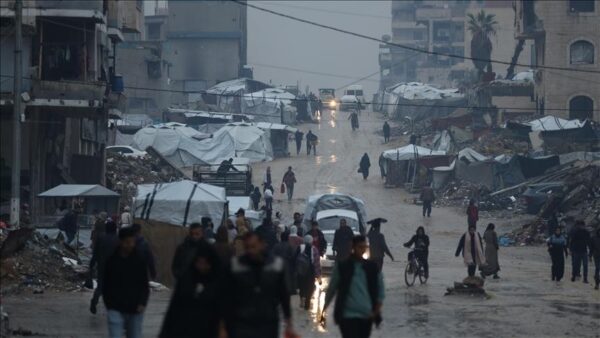
GAZA STRIP — A fragile quiet settled over the Gaza Strip on Friday as a U.S.-brokered ceasefire took effect, instantly igniting a massive, poignant migration as tens of thousands of Palestinians began the harrowing trek back to the north—the area devastated by two years of conflict.

The movement, a desperate pilgrimage over rubble-choked roads and past the ghosts of razed neighborhoods, is the most tangible immediate sign that the newly approved truce is holding. Displaced families, having endured months in overcrowded southern camps, loaded scant belongings onto carts, trucks, and their backs, heading toward what, for many, will be the unrecognizable ruins of their former homes in Gaza City and its surroundings.

“Even if it’s rubble, we will pitch a tent and we’ll live. It’s better than being displaced,” Wael Al-Najjar, 55, told reporters as he waited for safe passage on the coastal road, an artery that witnessed mass displacement and tragedy in the months prior.

Netanyahu Hails Trump’s ‘Extraordinary Help’

The ceasefire—the first phase of a broader peace plan advanced by the U.S. and mediated by Egypt and Qatar—was approved by the Israeli cabinet in the early hours of Friday. The agreement includes a cessation of hostilities, a partial withdrawal of Israeli forces to new lines, a massive surge of humanitarian aid, and a phased exchange of the remaining Israeli hostages for a large number of Palestinian prisoners.

In a defiant address shortly after the deal’s activation, Israeli Prime Minister Benjamin Netanyahu claimed the breakthrough was a result of a combination of “heavy military pressure, combined with heavy diplomatic pressure.”

Crucially, he singled out President Donald Trump for his direct intervention, stating, “We couldn’t have achieved it without the extraordinary help of President Trump and his team. They worked tirelessly… for the benefit of Israel and the U.S., and for decent people everywhere.”

Netanyahu’s public gratitude underscores the pivotal role of the U.S. President, whose envoys, including son-in-law Jared Kushner, led an intense diplomatic push in recent weeks that ultimately forced the agreement across the finish line after months of stalled talks.

Gaza exodus

A Fragile Peace, Massive Challenges

While the return to the north offers a moment of hope, the road ahead is fraught with immense challenges and lingering uncertainty. The ceasefire’s first phase mandates an Israeli troop withdrawal from much of Gaza City and other urban centers, allowing the flow of both returning civilians and desperately needed aid. UN officials are scrambling to scale up aid deliveries of food and medical supplies to combat widespread famine and the near-total collapse of the healthcare system.

However, the more contentious issues of the peace plan remain unresolved. Chief among them are the permanent demilitarization of Hamas, a full withdrawal of all Israeli forces, and the question of who will govern the devastated enclave. Netanyahu, even while celebrating the deal, reiterated his uncompromising stance, vowing that Hamas would be disarmed and Gaza demilitarized, whether “the easy way… or the hard way.”

For the thousands walking back to the unrecognizable wreckage of the north, those long-term political questions are secondary to the immediate relief of a stopped war. The hope, mixed with the fear of discovering what remains, marks a cautious pivot from a two-year nightmare toward a colossal reconstruction effort.

As the sun set on the first day of the truce, the columns of families moving north represented the collective will of a population desperate to reclaim a semblance of life amidst the ruins—a fragile but profound testament to the power of a ceasefire to temporarily halt the bloodshed.

Maria Corina Machado Wins Nobel Peace Prize for ‘Uncompromising’ Fight for Venezuelan Democracy

OSLO, NORWAY — The Norwegian Nobel Committee today awarded the 2025 Nobel Peace Prize to Venezuelan opposition leader Maria Corina Machado, recognizing her “tireless work promoting democratic rights” and her “struggle to achieve a just and peaceful transition from dictatorship to democracy.”

The announcement in Oslo instantly propelled the beleaguered politician—who has been barred from public office and has spent the last year in hiding—from a persecuted figure in her own country to the world stage, making her the first Venezuelan to receive the coveted honor.

‘The Flame of Democracy Burning’

In its citation, the Nobel Committee hailed the 58-year-old former legislator, often called the “Iron Lady” of Venezuela’s fractured opposition, as “one of the most extraordinary examples of civilian courage in Latin America in recent times.”

“The Nobel Peace Prize for 2025 goes to a brave and committed champion of peace—to a woman who keeps the flame of democracy burning amid a growing darkness,” the committee stated.

The award specifically highlighted Machado’s unifying role within Venezuela’s opposition, which coalesced around her in the lead-up to the highly disputed 2024 presidential election. Although the regime of Nicolás Maduro blocked her from running, Machado mobilized hundreds of thousands of volunteers to monitor polling stations, collecting evidence that suggested the opposition’s replacement candidate, Edmundo González Urrutia, had won a clear majority.

The move, described by the committee as an “innovative and brave, peaceful and democratic” push for change, underscored her long-held commitment to the principle she famously stated years ago: “It was a choice of ballots over bullets.”

A Price Paid for Resistance

Machado’s political career has been defined by uncompromising defiance against the deepening authoritarian rule of both Hugo Chávez and his successor, Nicolás Maduro. Since her expulsion from the National Assembly in 2014, she has faced systematic harassment, including charges of treason, a travel ban, and repeated threats that forced her to go into seclusion inside Venezuela after the 2024 election.

Her continued presence in the country, despite grave personal risk, was singled out by the Nobel Committee as a powerful symbol. “Despite serious threats against her life, she has remained in the country, a choice that has inspired millions,” the committee noted, adding a global warning: “At a time when democracy is in retreat, it is more important than ever to defend this common ground.”

Dedication and Global Reaction

Upon receiving the news, a clearly emotional Machado was reportedly “in shock,” according to a video shared by her press team. She later took to social media to dedicate the prize to her people, acknowledging the immense significance of the international recognition.

“This immense recognition of the struggle of all Venezuelans is an impetus to conclude our task: to conquer Freedom,” Machado wrote on X. She also notably dedicated the prize to “the suffering people of Venezuela and to President Trump for his decisive support of our cause!”

The award drew swift global reaction. While leaders from the European Union and the United Nations Human Rights office welcomed the decision as a powerful message for democratic aspirations, the White House, which had publicly pushed for President Donald Trump to receive the prize, criticized the choice. A spokesperson claimed the Nobel Committee “proved they place politics over peace.”

Machado’s win is an extraordinary development that is expected to intensify international pressure on the Maduro regime. The critical question now remains whether the new global spotlight will afford her greater protection or provoke a dangerous new escalation from a regime determined to maintain its grip on power. It is unclear if Machado, currently in hiding, will be able to attend the award ceremony in Oslo on December 10.

NY AG Letitia James Indicted on Federal Fraud Charges in Politically Charged Case

New York Attorney General Letitia James, the Democrat who successfully led a sweeping civil fraud case against the Trump Organization, has been indicted by a federal grand jury on charges of bank fraud and making false statements to a financial institution.

The indictment, delivered in the Eastern District of Virginia, instantly ignited a fierce political firestorm, with James and her allies denouncing the prosecution as a clear act of political retribution orchestrated by the White House. The charges mark the second high-profile criminal case brought against a vocal critic of President Donald Trump in as many weeks by a U.S. Attorney recently appointed to the role.

The Core Allegations: Mortgage Fraud

The two felony counts stem from a mortgage James secured on a property in Norfolk, Virginia, in 2020. Specifically, federal prosecutors allege:

  • Bank Fraud and False Statements: James is accused of misrepresenting the intended use of the property to the lending institution.
  • Favorable Loan Terms: The indictment claims that James obtained a more favorable interest rate—allegedly reserved for a secondary residence—by signing a “Second Home Rider” that required her to use the property personally.
  • The Rental Claim: Prosecutors assert that James, in fact, used the property as a rental or investment property, leasing it to a family. This alleged misrepresentation saved her approximately $19,000 over the life of the loan.

The charges were brought following a criminal referral to the Justice Department earlier this year by William J. Pulte, the director of the Federal Housing Finance Agency and a staunch ally of the President.

Photo source: Reuters

James’s Defense: Baseless and Political

Attorney General James swiftly issued a forceful rebuttal, flatly denying the charges and framing the indictment as a direct attack on the rule of law.

“This is nothing more than a continuation of the president’s desperate weaponization of our justice system,” James stated. “He is forcing federal law enforcement agencies to do his bidding, all because I did my job as the New York State Attorney General. These charges are baseless.”

Her legal team is expected to argue that any discrepancies on the mortgage paperwork were honest clerical mistakes and not an attempt to defraud the bank. They have emphasized that other documents clearly indicated the property was not intended as her primary residence.

A Pattern of Prosecution Against Political Foes

The indictment is widely viewed through the lens of a highly unusual escalation of federal investigations against the President’s perceived enemies.

Just two weeks ago, former FBI Director James Comey was indicted on unrelated charges in the same Virginia federal court district. Both cases were pushed forward by U.S. Attorney Lindsey Halligan, who was installed in the role after the previous top prosecutor—who reportedly felt the evidence against James and Comey was weak—was pressured to resign.

The timing and nature of the charges have prompted an outcry from Democratic leaders and legal observers, who point to the President’s public demands for the Justice Department to prosecute his adversaries, including James, Comey, and Senator Adam Schiff.

James is scheduled for an initial court appearance in Virginia later this month, setting the stage for a dramatic and politically explosive legal battle that will test the independence of federal law enforcement and define the limits of the nation’s political feuds.

Israeli Cabinet Votes Tonight on Gaza Ceasefire and Hostage Deal, Freedom ‘Within Days’

JERUSALEM — The Israeli cabinet is poised for a monumental vote tonight on a ceasefire agreement with Hamas that promises to bring a halt to the two-year war in Gaza and secure the release of all remaining hostages within a matter of days.

The pivotal decision, expected after a Security Cabinet meeting this evening, follows a flurry of indirect, U.S.-brokered talks that culminated in a confirmed, signed agreement on the “first phase” of a peace plan by both Israeli and Hamas representatives. The atmosphere is a blend of cautious relief and high-stakes tension, as the nation awaits the final approval that could end one of the most brutal chapters in Israeli-Palestinian history.

The Terms: Life for Lives

According to details emerging from negotiating teams in Egypt, the first phase of the agreement is hinged on a sequence of actions designed to bring immediate relief:

  1. Cabinet Ratification & Ceasefire: The ceasefire is slated to go into effect within 24 hours of the Israeli cabinet formally ratifying the deal.
  2. IDF Withdrawal: Simultaneously, Israeli forces are required to begin an initial, partial withdrawal from Gaza to an agreed-upon line.
  3. Hostage Release Countdown: Once the ceasefire is implemented, a 72-hour countdown will begin for Hamas to release all remaining hostages believed to be alive—estimated at around 20 individuals—as well as the remains of those deceased.
  4. Prisoner Exchange: In exchange for the hostages, Israel is expected to release a significant number of Palestinian prisoners, including hundreds detained during the Gaza war and approximately 250 serving life sentences.

The potential release of all hostages is a national demand and a moral imperative that has dominated Israeli public discourse since the beginning of the war, making the cabinet’s approval highly probable despite deep divisions within the government.

Israel protests

The Political Tightrope

Prime Minister Benjamin Netanyahu, who announced he would convene the cabinet to “approve the agreement and bring all our dear hostages home,” faces a complex political maneuver. While the prospect of securing the release of the captives is overwhelmingly popular, the deal is strongly opposed by far-right ministers in his coalition.

Figures like Finance Minister Bezalel Smotrich have publicly voiced their intention to vote against the deal, though they have not yet threatened to resign. Their opposition stems from deep ideological objections to any deal with Hamas and demands for a “complete victory” that includes the permanent retention of Israeli military presence in Gaza.

The Prime Minister’s ability to manage his hawkish flank will determine not just the deal’s immediate success, but potentially the stability of his government.

A Dawn of Hope in Gaza

The news of the agreement, brokered with the involvement of the United States, Egypt, and Qatar, has been met with scenes of both relief and caution across the region. In Tel Aviv’s Hostage Square, families of the captives gathered to celebrate, some chanting praises for the diplomatic efforts.

Meanwhile, in the devastated Gaza Strip, Palestinians celebrated the prospect of an end to hostilities and the entry of a critical surge in humanitarian aid. The agreement is set to open crossings for “full aid,” including fuel and supplies for infrastructure and hospitals.

While the “first phase” of the agreement is set, major, unresolved challenges remain: the long-term disarmament of Hamas, the complete withdrawal of Israeli forces, and the question of who will govern the shattered enclave.

Tonight’s vote, however, is not about the end of the conflict, but the desperately sought beginning of the end—a moment of profound significance for families on both sides, and a fragile step toward defusing a conflict that has convulsed the entire Middle East. The world watches, holding its breath for the final word.

2025 Nobel Prize in Literature: Hungarian Novelist László Krasznahorkai Wins Nobel for ‘Apocalyptic Terror’ and the Power of Art

STOCKHOLM — The Swedish Academy on Thursday awarded the 2025 Nobel Prize in Literature to the Hungarian novelist and screenwriter László Krasznahorkai, citing his “compelling and visionary oeuvre that, in the midst of apocalyptic terror, reaffirms the power of art.”

The selection of the 71-year-old author, known for his dense, dark, and stylistically mesmerizing narratives, rewards one of contemporary Europe’s most challenging and revered literary figures. Krasznahorkai’s works are often characterized by their extraordinary, serpentine sentences—sometimes running for pages without a full stop—and their unrelenting exploration of societal decay, existential dread, and the grotesque beauty of human folly.

“Krasznahorkai is a great epic writer in the Central European tradition that extends through Kafka to Thomas Bernhard,” stated Anders Olsson, Chairman of the Nobel Committee, praising the author’s blend of “absurdism and grotesque excess.”

The Laureate of Literary Apocalypse

Krasznahorkai first gained international acclaim with his 1985 debut novel, Sátántangó (Satantango), a bleak, mesmerizing portrait of a disintegrating Hungarian collective farm, which was later adapted into a landmark seven-hour film by director Béla Tarr, establishing a long-standing creative partnership.

His signature style, which critic Susan Sontag once described as being from “the contemporary Hungarian master of apocalypse,” continued through major epics like The Melancholy of Resistance (1989) and his 2021 work Herscht 07769, a novel lauded for its profound depiction of social chaos in a small German town. The Nobel committee highlighted this newest work for capturing “violence and beauty impossibly conjoined.”

Beyond the despair of Central Europe, Krasznahorkai has also drawn inspiration from the East, with novels like A Mountain to the North, a Lake to the South, Paths to the West, a River to the East (2003) and Seiobo There Below (2008) adopting a more contemplative, Eastern-inflected tone that meditates on art, transcendence, and the impermanence of life.

A Reclusive Force

The Hungarian writer, who has resided largely in reclusion in the hills of Szentlászló, has long been a favorite of literary critics, previously winning the prestigious Man Booker International Prize in 2015. His books are not easy reads—they demand patience and surrender to their singular rhythm—but they have earned a fierce devotion. His English-language translator, the poet George Szirtes, called him a “hypnotic writer” who draws the reader into a world where “order and chaos” echo inside them.

Krasznahorkai’s victory is also seen as a subtle but powerful political statement. While he maintains his home in Hungary, he has been an outspoken critic of Prime Minister Viktor Orbán’s increasingly “illiberal democracy,” with some critics seeing allegorical critiques of the regime in his recent fiction.

In an era of global tumult and fragmentation, the Swedish Academy has chosen a writer whose life’s work is dedicated to staring unflinchingly into the abyss, finding not only terror, but a stubborn, persistent echo of beauty and the redeeming power of language itself.