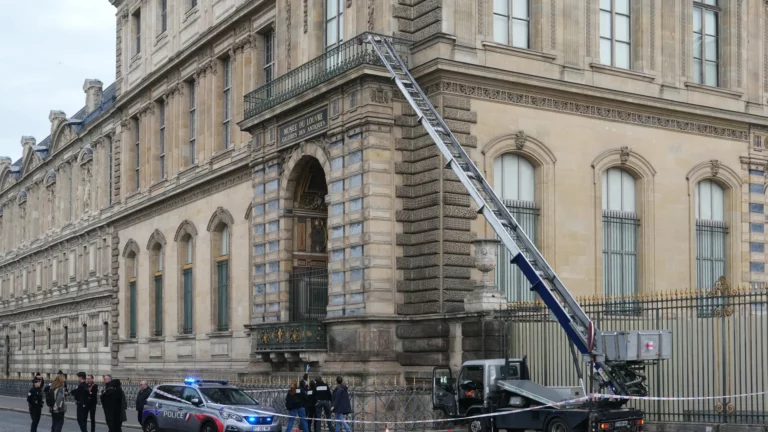
PARIS, FRANCE—The judicial dragnet is tightening around the audacious, daylight theft of $102 million (€88 million) worth of French Crown Jewels from the Louvre Museum, with prosecutors confirming that two more suspects—a man and a woman—have been formally charged and placed in pre-trial detention.
The charges, filed late Saturday, bring the total number of individuals charged in connection with the spectacular robbery to four, signaling a major breakthrough for the over 100 investigators mobilized to solve the “heist of the decade.”
The New Charges and Denials
The latest two suspects were among a group of five individuals arrested earlier this week in coordinated police sweeps across Paris and its northern suburbs, particularly Seine-Saint-Denis.
- The Man: A 37-year-old, known to judicial authorities for previous theft offenses, has been charged with organized theft and criminal conspiracy with a view to preparing a crime.
- The Woman: A 38-year-old resident of the northern suburb of La Courneuve, was charged with complicity in organized theft and criminal conspiracy.
Both individuals were brought before a magistrate and remanded in custody. Despite the charges, the Paris Prosecutor, Laure Beccuau, confirmed that both the newly charged man and woman “denied any involvement in the events.” Lawyers for the woman argued that placing her in detention was a “spectacular” decision, given her presumption of innocence.
The magistrate justified the detention, citing a “risk of collusion” and a “disturbance of public order” given the notoriety of the crime. The other three individuals arrested this week were released without charge.
The Expanding Network of the Heist
The new charges build on the foundation laid last week when two other men—aged 34 and 39, and both with prior criminal records—were arrested and subsequently charged with theft and criminal conspiracy.
These first two suspects were believed to be the pair who actually broke into the Louvre’s Galerie d’Apollon on October 19. They had “partially admitted” their involvement, one having been identified via DNA traces left on a scooter used in the getaway, and the other on a glass display case inside the gallery.
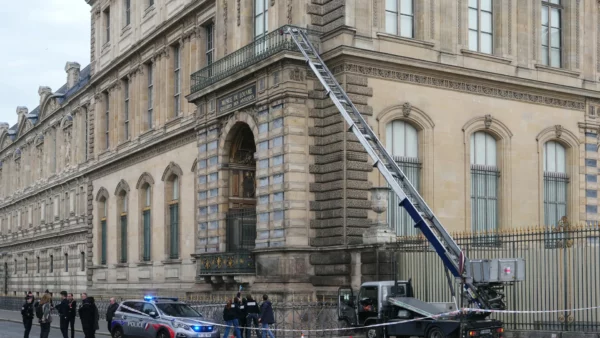
The stunning robbery saw a four-man team use a furniture removal truck fitted with a lift to scale the museum’s façade, smash a first-floor window, cut into two display cases with power tools, and make off with eight richly gem-encrusted royal treasures—including pieces belonging to Empress Eugénie and Queen Marie-Amélie—all in a brazen, less-than-seven-minute strike.
Jewels Still Missing: A Race Against Time
While the arrests are a diplomatic triumph for French law enforcement, the most critical pieces of evidence—the stolen jewels themselves—remain missing.
The prosecutor’s office reiterated that there is still “small hope” of recovering the jewels before they can be dismantled or melted down, a fate experts fear is highly likely given their immense collective value and distinct historical profile, which makes them unsaleable on the legitimate market.
The investigation continues to analyze more than 150 pieces of forensic evidence, as the focus shifts from identifying the core thieves to tracking the escape network and the ultimate destination of the priceless national heritage.