Kelli Lynne Groves and her two daughters have been rescued from their car, which was teetering perilously on a California freeway bridge after a gravel truck rear-ended their car and plunged into a creek.
The truck hit the back of Kelli Lynne Groves’ BMW Thursday afternoon as she was travelling north on Highway 101 in southern California, causing the car to strike the bridge railing.
Kelli Lynne Groves, 36, and her two young daughters, aged 10 years and 10 months, dangled over the bridge awaiting rescue.
The impact from the accident caused Kelli Lynne Groves’ car to land on the centre of the concrete guard rail, KVEC Radio reports.
The big-rig truck, meanwhile, ploughed through the guardrail, falling into Nojoqui Creek and immediately bursting into flames.
The 48-year-old truck driver, whose name has not yet been released, died at the scene.
navy seabees, big rig truck, freeway bridge, san juan capistrano, mother and two daughters, california freeway, highway 101,
The terrified family waited for an hour for rescue crews to extricate them from the wreckage, and received help in the meantime from a group of Navy Seabees who were stuck in southbound traffic.
The Seabees used a forklift they were transporting to stop the BMW from going over the bridge, KTLA reports.
Photos capture 10-year-old Sage Groves looking terrified as rescue workers fight to bring her to safety, and her mother, wearing a red top, crying as firefighters help pull her from the wreck.
The accident, which is currently under investigation, occurred along U.S. Route 101 in rural Buellton, about 25 miles north of Santa Barbara.
Because of the accident, the highway was closed in both directions.
The San Juan Capistrano family was taken to nearby Cottage Hospital with moderate injuries, 920kvec.com reports.
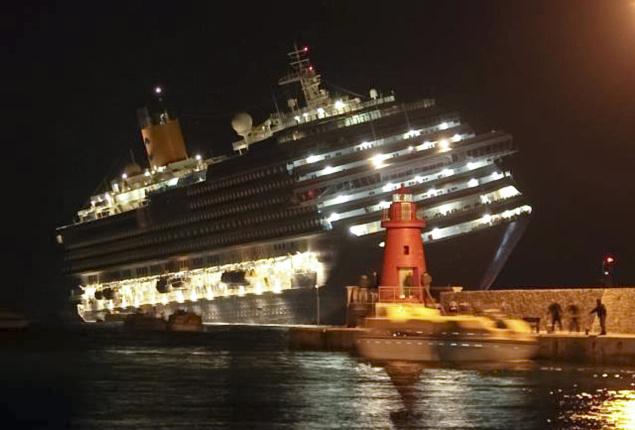
At least three people died after Costa Concordia cruise ship carrying more than 4,000 people ran aground off Italy.
The luxury Costa Concordia cruise ship hit a sandbar on Friday evening near the island of Giglio and listed about 20 degrees, after which people tried to reach land in lifeboats or by swimming.
Rescue teams have been going from cabin to cabin, searching for survivors.
Italians, Germans, French and British were among the 3,200 passengers. There were also 1,000 crew on board.
Helicopters evacuated the last 50 people on the deck who were in a “worsening” situation.
Three people were confirmed dead, Italian coast guard officials said on Saturday morning – fewer than the six or eight deaths reported by Italian media earlier.
The Costa Concordia had sailed earlier on Friday from Civitavecchia port near Rome for a Mediterranean cruise, due to dock in Marseille after calling at ports in Sicily, Sardinia and Spain.
1,000 passengers were Italian, with 500 Germans and 160 French.
A few dozen British passengers are believed to have been on board, said the UK Foreign Office, which is sending a team to the scene.
Passengers were eating dinner on Friday evening, when they heard a loud bang, and were told that the ship had suffered electrical problems, one passenger told Italy’s Ansa news agency.
“We were having supper when the lights suddenly went out, we heard a boom and a groaning noise, and allthe cutlery fell on the floor,” said Luciano Castro.
The luxury Costa Concordia cruise ship hit a sandbar on Friday evening near the island of Giglio and listed about 20 degrees
Passenger Mara Parmegiani told Italian media there were “scenes of panic”.
“We were very scared and freezing because it happened while we were at dinner so everyone was in evening wear. We definitely didn’t have time to get anything else. They gave us blankets but there weren’t enough,” she said.
The 290-metre (950 ft) vessel ran aground, starting taking in water and listing by 20 degrees, the local coast guard said.
Orders were given to abandon ship, said Deodato Ordona, a cabin steward on the Costa Concordia.
“We announced a general emergency and took passengers to muster stations,” he said.
“But it is hard to launch the lifeboats, so they moved to the right side of the ship, and they could launch.”
Elderly passengers were crying, said Deodato Ordona, adding that he and some others jumped into the sea and swam roughly 400 metres to reach land.
Rescued passengers are being accommodated in hotels, schools and a church on Giglio, a resort island 25km (18 miles) off Italy’s western coast.
Searches are still going on for “possible missing people”, regional official Giuseppe Linardi told the Italian broadcaster RAI.
Coast guard official Francesco Paolillo, a local coast guard official, told the AFP news agency there was a a 30m hole in the ship but that it was too early to say what exactly had happened.
“We think this happened as a result of sailing too close to an obstacle like a reef,” he said.
Costa Crociera, the company which owns the ship, said it could not yet say what had caused the accident.
“The gradual listing of the ship made the evacuation extremely difficult,” a statement said. “The position of the ship, which is worsening, is making more difficult the last part of the evacuation.
“We’d like to express our deepest gratitude to the coastguard and other emergency services, including the authorities and citizens of the island of Giglio, who did their best in saving and helping the passengers and crew.”
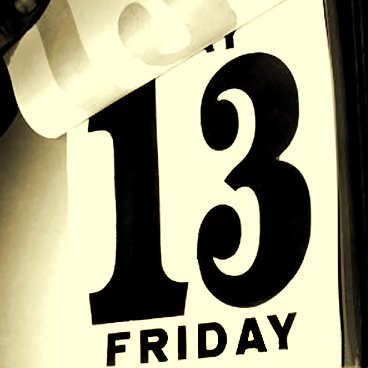
Friday the 13th is a particularly inauspicious day for those of a superstitious inclination. Moreover, they may be unhappy to learn that 2012 will be an especially unlucky year.
January 13, 2012, is the first of an unusual three Friday the 13ths – the fear of which has its roots in Christian tradition – that will fall in 2012.
However, the good news is that they only have to get through this year and the phenomenon will not strike again until 2026.
And while they may spend the day cowering under the duvet in case any ill might befall them if they leave the house – and avoiding walking under ladders or over three drains at a time if they are forced to venture outside – they can take some comfort in knowing they are not alone.
More than 60 million people worldwide are claimed to suffer from fear of the day – known as paraskevidekatriaphobia, from the Greek.
It is believed that superstitions over Friday the 13th stem from two separate fears – the fear of the number 13 and the fear of Fridays, which both have their roots in Christian theology.
Thirteen is the number of people who were present at the Last Supper and Judas, who betrayed Jesus, was the 13th member of the party to arrive.
And Friday was the day on which Jesus was crucified.
Others say it has its roots in anti-paganism.
But whatever the cause, the fear is so deeply ingrained that many people will refuse to leave their homes for fear of an accident or some other misfortune such as losing money.
Dr. Donald Dossey, of the Stress Management Center/Phobia Institute in Asheville, North Carolina, estimates this costs as much as $900 million to the US economy alone.
The other Friday the 13ths this year will come in April and July.
While some may find it hard to believe that any day of a year could be more unlucky than other a 1993 study found that on the day “the risk of hospital admission as a result of a transport accident may be increased by as much as 52%”.
The article “Is Friday 13th bad for your health?” published in the British Medical Journal concluded the date was actually unlucky for some and that it might be safer to stay at home.
Separate research in 2003 suggested people who thought they were unlucky were more likely to believe in superstitions linked to bad luck which could, in turn, actually lead to bad luck.
Psychologist Professor Richard Wiseman, of the University of Hertfordshire, said Friday the 13th could make some people anxious and more accident-prone.
Though with many preferring to stay at home on some an inauspicious day, it has been reported that the number of road accidents can fall on Friday the 13th.
Research in the housing industry suggests that superstitious people in UK are more likely to refuse to buy a house with a number 13 on the door – helping to knock more than $10,000 off its asking price.
And Friday the 13th also sees fewer property deals signed off as a result of new buyers and sellers worrying about it being unlucky.
The fear of the number 13 can be a financial burden to those trying to sell, but helps to pick up a bargain for buyers, said website FindaProperty.com.
The company reduces the selling price by an average of 4% – around $10,000 – compared with homes with other numbers on the door.
An analysis of transactions over a decade of sales found 144,789 homes with the number 13 were sold compared to 239,716 number 12s – a 33% gap.
Similarly there have been 222,127 number 14s. And the superstition does not stop there, said FindaProperty. There are fewer homes sold on the 13th of the month than any other day, around 32% fewer than an average day.
Samantha Baden of FindaProperty.com, said: “The fact that buyers avoid the number 13 is a trend that has been evident for the past 10 years.
“Many people believe Friday 13th to be one of the most unlucky days of the year and as a nation of superstitious buyers, we expect it will one of the quietest for property.”
Samantha Baden added: “What this research shows is that it’s not just the bricks and mortar that effect a property’s sale price – there are so many other less tangible things to consider and this is a prime example.
“Whether or not a potential buyer warms to a property can have a huge impact on its saleability and for some people, superstitions can play a big role in this.”
There are a wide range of reasons given for the fear, and in some cases it seems that the theories have been sought to later justify the belief.
Some theologians even claim that Adam and Eve ate from the forbidden fruit on a Friday, and that the Great Flood began on a Friday.
Other historians suggest the Christian distrust of Fridays is actually linked to the early Catholic Church’s overall suppression of pagan religions and women.
In the Roman calendar, Friday was devoted to Venus, the goddess of love. When Norsemen adapted the calendar, they named the day after Freya, the Norse goddess of sexuality.
Both of these strong female figures once posed a threat to male-dominated Christianity, the theory goes, so the Christian church vilified their day.
A separate Christian legend holds that 13 is unholy because it signifies the gathering of 12 witches and the devil.
But some trace the infamy of the number 13 back to ancient Norse culture.
In Norse mythology, the beloved hero Balder was killed at a banquet by the mischievous god Loki, who crashed the party of twelve, bringing the group to 13.
This story, as well as the story of the Last Supper, led to one of the most entrenched 13-related beliefs – that having thirteen people seated at a table will result in the death of one of the diners.
Sailors were particularly superstitious with regards to Friday, often refusing to ship out on that day of the week, believing that to start a trip on a Friday mean you would meet misfortune.
One urban legend tells of the ship the HMS Friday, commissioned by the British Navy in the 1800s to combat the superstition.
The navy selected the crew on a Friday, so the myth goes, launched the ship on a Friday and even selected a man named James Friday as the ship’s captain.
Then, one Friday morning, the ship set off on its maiden voyage and disappeared forever. Sadly there is no record of such a ship ever having existed.
It is also said that 13 turns make a traditional hangman’s noose – anything less would fail to snap a neck.
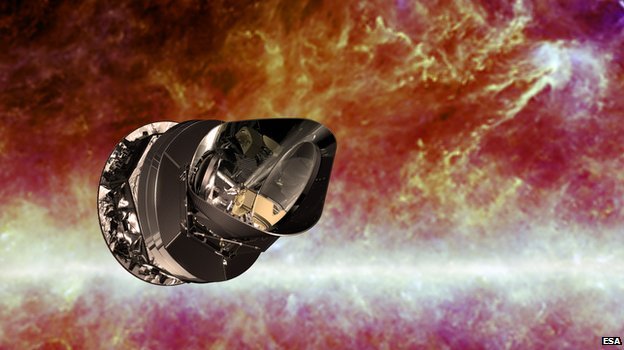
One of Europe’s great astronomical ventures is coming to a close after the Planck telescope, which was put in space to map the oldest light in the Universe, has run out of the helium coolant that keeps it in full working order.
Engineers expect the observatory’s systems to start to warm from their ultra-frigid state in the coming days, blinding one of its two instruments.
Nonetheless, Planck has gathered more than enough data since its launch in 2009 to complete its mission goals.
“We have had a flood of data – much more data than originally anticipated, and now we are in the frantic phase,” revealed Jan Tauber, the European Space Agency’s (ESA) Planck project scientist.
“In a year’s time we have promised to deliver our maps and scientific papers, so we are feeling some pressure,” Jan Tauber said.
Planck was launched on the same rocket as ESA's other flagship space telescope, Herschel, on 14 May 2009
Planck’s quest has been to survey the Cosmic Microwave Background (CMB) – the “first light” to sweep out across space once a post-Big-Bang Universe had cooled sufficiently to permit the formation of hydrogen atoms.
Before that time, scientists say, the cosmos would have been so hot that matter and radiation would have been “coupled” – the Universe would have been opaque.
The CMB pervades the entire sky, and scientists can measure tiny temperature variations in it to glean information about the age, contents and shape of the cosmos.
Two American satellites have already done this, but Planck is much more sensitive and can make much more detailed maps, with higher resolution.
To do this, some of its light detectors have had to operate at the astonishingly low temperature of minus 273.05C – just a tenth of a degree above “absolute zero”, the lowest temperature theoretically possible in the Universe.
A layered system of coolers was used to get down to this temperature, exploiting an unusual effect of mixing two isotopes of helium (helium-3 and helium-4) to achieve the deepest chill.
But Planck’s store of the helium-3 refrigerant has now run dry and engineers have informed Planck’s science team that they will soon lose the use of the observatory’s High Frequency Instrument (HFI).
Without it, the CMB cannot be seen across all its frequency range.
This is expected to happen as soon as the weekend. A more formal statement on the status of Planck will then be released by ESA. This may come on Monday.
“We always knew we would eventually lose HFI and the helium has run down exactly when we thought it would – on the dot,” explained Dr. Jan Tauber.
Planck still has use of its Low Frequency Instrument, which can operate at slightly higher temperatures (-269.15C), and this will continue gathering data for another six to nine months.
This information will be used to further refine the CMB maps, the first of which should be made public in January 2013.
The mission has far exceeded its minimum requirements. These called for the CMB to be scanned across the full sky at least twice.
Thanks to uninterrupted science operations since the August of 2009, Plank has now acquired five scans of the full sky.
“I think we lost just one day,” Dr. Jan Tauber said.
“Planck has been perfect; we’ve never had a serious issue with the satellite or the instruments.”
The larger scientific community is eagerly awaiting Planck’s CMB analysis.
Past pioneers in the study of the Cosmic Microwave Background have earned a clutch of Nobel Prizes, and there is great optimism that the super-sensitivity of Planck will advance the field considerably.
One hope is that Planck could find firm evidence of “inflation”, the faster-than-light expansion that cosmologists believe the Universe experienced in its first, fleeting moments.
Theory predicts this event ought to have left its imprint on the way the ancient light is polarized. Establishing the presence of this signature, though, will be painstaking work and no definitive statements are likely to come from the Planck team on this issue before 2014.
“It’s a bittersweet moment; the prime phase of Planck’s observing will very soon be over, which is of course sad,” said Prof. Mark McCaughrean, head of ESA’s Research & Scientific Support Department.
“But we have far more data in the bag than expected and it’s excellent stuff. People analyzing it are really excited about what we’re going to learn about the early Universe, soon after the Big Bang.”
Planck was launched on the same rocket as ESA’s other flagship space telescope, Herschel, on 14 May 2009.
Father Andreas, a German Catholic priest has admitted 280 counts of sexual abuse involving three boys in the past decade, saying he did not think he was doing harm.
Priest Andreas L., 46, told a court in Braunschweig that he had first abused the 9-year-old son of a widowed woman parishioner.
After being banned by his diocese from making further contact with the boy, the priest abused two brothers, aged 9 and 13.
Thousands of Germans have left the Church over revelations of abuse.
About 180,000 renounced their Catholicism in 2010, up 40% from the previous year, the German broadcaster Deutsche Welle reports.
Pope Benedict XVI, a German by birth, briefly met victims of sexual abuse by priests when he visited his native land in September, expressing “deep compassion and regret” at their suffering.
The priest on trial in Braunschweig faces a minimum prison sentence of between six and six and a half years.
He was arrested during the summer, after the mother of his earlier victim reported him to the authorities.
The mother acted after her son, now aged 17, revealed to her the abuse he had undergone for two years.
Sexual assaults were made on the three boys in various settings: at the priest’s house, on skiing holidays, in a parental home, on a trip to Disneyland Paris and at a church shortly before Mass.
The priest, who covered his face with a ring binder as he went into court on Thursday, said that while working in Braunschweig in 2004, he had begun a close relationship with the widow.
When Father Andreas was moved to Salzgitter, her son often spent weekends with him, and the two would go off on short trips.
He would give the boy presents such as a camera and a mobile phone.
Abuse would often occur three times a weekend.
The priest said it had not been his intention to get close to the boy sexually, and that it had never occurred to him that he was doing harm.
When the mother began to suspect her son’s relations with the priest were inappropriately close, she approached the diocese of Hildesheim, the priest’s employer, which forbade further contact with the boy.
The abuse of the two brothers then began under similar circumstances, the court heard.
After contact with these victims was also forbidden, the priest approached his first victim again, writing him a letter.
It was then that the truth about the abuse emerged.
“It was never my impression that the children did not consent,” the priest was quoted as saying at the trial.
When asked in court if he was a paedophile, the priest replied, according to local newspaper Braunschweiger Zeitung: “It would be wrong to say No but to say Yes would also fall short of the truth.”
When a prosecutor asked him in court if he thought a “father would do this to his children”, he was silent.
About 2,800 pornographic images were found on the priest’s computer, including several of his victims.
Correspondents say members of the public who were in the courtroom watched the trial with faces rigid from shock.
They included parishioners from St. Joseph’s Church in Salzgitter, where Father Andreas had once been a respected priest, according to Germany’s Spiegel magazine.
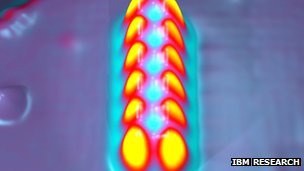
IBM researchers have successfully stored a single data bit in only 12 atoms, as currently it takes about a million atoms to store a bit on a modern hard-disk.
The researchers believe this is the world’s smallest magnetic memory bit.
The new technique opens up the possibility of producing much denser forms of magnetic computer memory than today’s hard disk drives and solid state memory chips.
“Roughly every two years hard drives become denser,” research lead author Sebastian Loth said.
“The obvious question to ask is how long can we keep going. And the fundamental physical limit is the world of atoms.
“The approach that we used is to jump to the very end, check if we can store information in one atom, and if not one atom, how many do we need?”
IBM researchers have successfully stored a single data bit in only 12 atoms
Below 12 atoms the researchers found that the bits randomly lost information, owing to quantum effects.
A bit can have a value of 0 or 1 and is the most basic form of information in computation.
“We kept building larger structures until we emerged out of the quantum mechanical into the classical data storage regime and we reached this limit at 12 atoms.”
The groups of atoms, which were kept at a very low temperature, were arranged using a scanning tunnelling microscope. Researchers were subsequently able to form a byte made of eight of the 12-atom bits.
Central to the research has been the use of materials with different magnetic properties.
The magnetic fields of bits made from conventional ferromagnetic materials can affect neighbouring bits if they are packed too closely together.
“In conventional magnetic data storage the information is stored in ferromagnetic material,” said Dr. Sebastian Loth, who is now based at the Center for Free-Electron Laser Science in Germany.
“That adds up to a big magnetic field that can interfere with neighbours. That’s a big problem for further miniaturization.”
Other scientists thought that was an interesting result.
“Current magnetic memory architectures are fundamentally limited in how small they can go,” said Dr. Will Branford, of Imperial College London.
“This work shows that in principle data can be stored much more densely using antiferromagnetic bits.”
But the move from the lab to the production may be some time away.
“Even though I as a scientist would totally dig having a scanning tunnelling microscope in every household, I agree it’s a very experimental tool,” Dr. Sebastian Loth said.
Dr. Sebastian Loth believes that by increasing the number of atoms to between 150 to 200 the bits can be made stable at room temperature. That opens up the possibility of more practical applications.
“This is now a technological challenge to find out about new manufacturing techniques,” he said.
Stephen Beatty posted messages about his new relationship on Twitter, revealing he received a home-made pair of socks for his recent birthday from his beau.
It is unclear whether his father Warren Beatty approves, although he reportedly toasted his “brave son” at a special family dinner in Hollywood last month.
Warren Beatty is trying to solidify his relationship with Stephen, who was previously called Kathlyn, according to the National Enquirer.
Stephen Beatty, 20, who is a blogger and transgender activist, made the revelation about his sexuality on December 22.
He said: “Haha, yeah, I’m trans and gay. Double the fun!”
Stephen Beatty posted messages about his new relationship on Twitter, revealing he received a home-made pair of socks for his recent birthday from his beau
Stephen Beatty, who has turned 20 on Sunday, also told his followers he had been given a special gift from his new man.
“I’m terrified of socks. My boyfriend has made me some though!
“They’re my birthday present and are coming in the mail.”
Yesterday Stephen Beatty also said: “I miss my boyfriend.”
No doubt many will be wondering just who has captured the heart of Stephen Beatty, who decided to switch genders in 2009.
But it seems he is still interested in other men too, as he recently tweeted about his attraction to a uniquely featured individual.
Stephen Beatty said: “Oh man I was actually super into the Nazi guy with the weird forehead.”
He frequently tweets his thoughts about sex, gender, philosophy and politics.
But according to the National Enquirer Stephen Beatty’s posts have become racier since 74-year-old Warren “publicly backed” his son at a family dinner at Italian restaurant il Covo.
A source said: “The dinner was an unofficial public display that he’s proud of his family, especially Stephen, for having the courage to be who he truly is.
“It wasn’t easy for Warren. But he learned a lot about the transgender community over the past year.
“Warren even made an emotional toast to Stephen during the dinner and said he was proud to have such a brave son.”
However in a recent blog post Stephen Beatty blasted the story, claiming it was simply a fabrication.
He said: “If you’re me, which not many people are, there are suddenly paparazzi following you around, doing really dehumanizing things.
“For example, recently my family and I went out to dinner and a paparazzo got all up on us as we were walking to our car.
“The next morning an article came out purporting to know what we’d talked about at dinner.
“Some reporter literally made up an account of our dinner conversation. Out of whole cloth.”
Stephen Beatty added he was particularly unhappy as he was photographed looking far from his best.
He said: “There was also a picture of me really needing a haircut and looking shellshocked.
“So yeah. Queer Christmas: stressful, especially if people are trying to take your picture because they are interested in the confluence of your gender identity and your parentage.”
Stephen is one of four children Warren Beatty has with his wife of the last 19-years Annette Bening.
They have another two daughters, Isabel and Ella, and a son Ben.
Angelina Jolie’s transition from actress to director was not so smooth, as she had a “complete meltdown” while making her directorial debut with wartime film In the Land of Blood and Honey.
Angelina Jolie had to be comforted by partner Brad Pitt after collapsing in the shower in tears.
The 36-year-old star told fans on a live video web chat: “I had a complete emotional breakdown in the shower and Brad found me crying.
“I felt this huge responsibility and I felt very small and, who am I to take this on?”
Angelina Jolie added: “I had a complete meltdown.”
The actress took on the daunting project of writing and directing the love story, which is set in the Bosnian war.
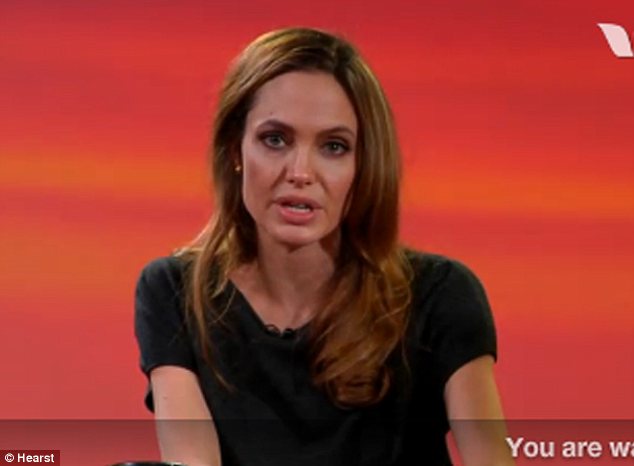
Angelina Jolie told fans on a live video web chat that she had a complete emotional breakdown and cried after her directorial debut with wartime film In the Land of Blood and Honey
While Angelina Jolie is determined to tell the tale in order to raise awareness, she is unsure as to whether she will return to her behind the scenes role.
Angelina Jolie said: “I didn’t plan to become a director, and I still have trouble saying I’m a director.
“I just wanted to tell this story and I ended up by default being the director.
“It was a pleasure but I wonder if it would be a pleasure with another cast and crew, and a subject matter that wasn’t so special.”
Angelina Jolie was captivated by hearing heart-wrenching stories of people’s experiences living through the Bosnian war, but says at the time it happened, when she was aged 17, she was unaware of its seriousness.
The actress said: “I knew very little, like most Americans.
“I was 17 so I wasn’t very focussed. I was my own form of self-destructive, and it was a bad time.”
Angelina Jolie later came back to the subject and added: “I was a punk… you don’t imagine you could ever be a role model.”
She has clearly proven her directorial ability as the movie, which is released in Europe in February, has been nominated for an award at the Golden Globes.
The subject matter, which is close to her heart, has helped her to realize the importance of teaching her children certain values.
When asked by a fan what lessons she wished to pass onto her children, Angelina Jolie said “compassion and respect”.
She said: “I want my children to be aware of the world around them and have respect for all people around the world.”
Angelina Jolie added: “From the nature of the make-up of my family, they learn a lot abot each other. They dont see this divide which is dangerous.”
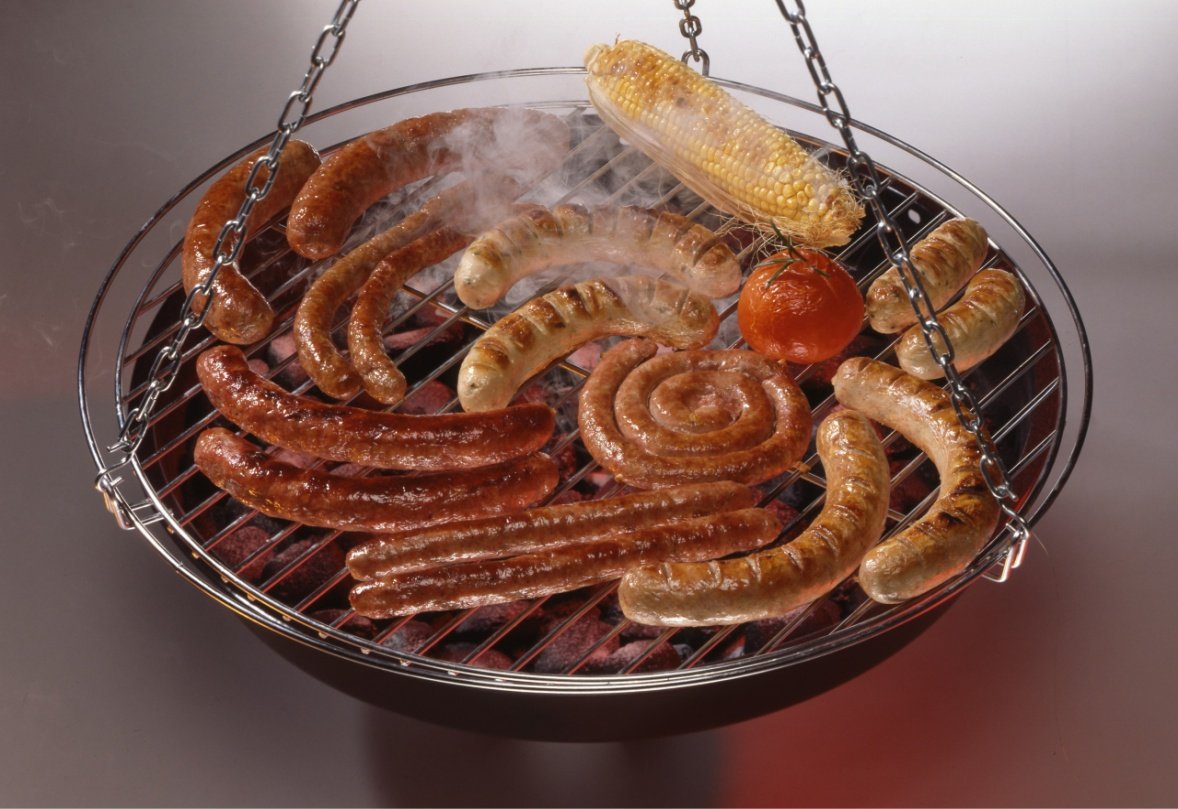
Swedish researchers at Karolinska Institute suggest there is a link between eating processed meat, such as bacon or sausages, and pancreatic cancer.
Researchers said eating an extra 50g of processed meat, approximately one sausage, every day would increase a person’s risk by 19%.
But the chance of developing the rare cancer remains low.
The World Cancer Research Fund suggested the link may be down to obesity.
Eating red and processed meat has already been linked to bowel cancer. As a result the UK government recommended in 2011 that people eat no more than 70g a day.
Prof. Susanna Larsson, who conducted the study at the Karolinska Institute, said that links to other cancers were “quite controversial”.
She added: “It is known that eating meat increases the risk of colorectal cancer, it’s not so much known about other cancers.”
Swedish researchers at Karolinska Institute suggest there is a link between eating processed meat, such as bacon or sausages, and pancreatic cancer
The study, published in the British Journal of Cancer, analyzed data from 11 trials and 6,643 patients with pancreatic cancer.
It found that eating processed meat increased the risk of pancreatic cancer. The risk increased by 19% for every 50g someone added to their daily diet. Having an extra 100g would increase the risk by 38%.
Prof. Susanna Larsson said: “Pancreatic cancer has poor survival rates. So as well as diagnosing it early, it’s important to understand what can increase the risk of this disease.”
She recommended that people eat less red meat.
Cancer Research UK said the risk of developing pancreatic cancer in a lifetime was “comparatively small” – one in 77 for men and one in 79 for women.
Sara Hiom, the charity’s information director, said: “The jury is still out as to whether meat is a definite risk factor for pancreatic cancer and more large studies are needed to confirm this, but this new analysis suggests processed meat may be playing a role.”
However, she pointed out that smoking was a much greater risk factor.
The World Cancer Research Fund has advised people to completely avoid processed meat.
Dr. Rachel Thompson, the fund’s deputy head of science, said: “We will be re-examining the factors behind pancreatic cancer later this year as part of our Continuous Update Project, which should tell us more about the relationship between cancer of the pancreas and processed meat.
“There is strong evidence that being overweight or obese increases the risk of pancreatic cancer and this study may be an early indication of another factor behind the disease.
“Regardless of this latest research, we have already established a strong link between eating red and processed meat and your chances of developing bowel cancer, which is why WCRF recommends limiting intake of red meat to 500g cooked weight a week and avoid processed meat altogether.”
A preliminary research suggests that web addiction is reflected in brain changes similar to those hooked on drugs or alcohol addiction.
Experts in China scanned the brains of 17 young web addicts and found disruption in the way their brains were wired up.
The researchers say the discovery, published in Plos One, could lead to new treatments for addictive behaviour.
Internet addiction is a clinical disorder marked by out-of-control internet use.
The research team led by Dr. Hao Lei of the Chinese Academy of Sciences in Wuhan carried out brain scans of 35 men and women aged between 14 and 21.
Seventeen of them were classed as having internet addiction disorder (IAD) on the basis of answering yes to questions such as, “Have you repeatedly made unsuccessful efforts to control, cut back or stop Internet use?”
Specialized MRI brain scans showed changes in the white matter of the brain – the part that contains nerve fibres – in those classed as being web addicts, compared with non-addicts.
There was evidence of disruption to connections in nerve fibres linking brain areas involved in emotions, decision making, and self-control.
Dr. Hao Lei and colleagues write in Plos One: “Overall, our findings indicate that IAD has abnormal white matter integrity in brain regions involving emotional generation and processing, executive attention, decision making and cognitive control.
“The results also suggest that IAD may share psychological and neural mechanisms with other types of substance addiction and impulse control disorders.”
Prof. Gunter Schumann, chair in biological psychiatry at the Institute of Psychiatry at King’s College, London, said similar findings have been found in video game addicts.
He said: “For the first time two studies show changes in the neuronal connections between brain areas as well as changes in brain function in people who are frequently using the internet or video games.”
Commenting on the Chinese study, Dr. Henrietta Bowden-Jones, consultant psychiatrist and honorary senior lecturer at Imperial College London, said the research was “groundbreaking”.
She added: “We are finally being told what clinicians suspected for some time now, that white matter abnormalities in the orbito-frontal cortex and other truly significant brain areas are present not only in addictions where substances are involved but also in behavioural ones such as internet addiction.”
Dr. Henrietta Bowden-Jones said further studies with larger numbers of subjects were needed to confirm the findings.
Apple has decided to halt the sale of all iPhone models from its stores in China, after large crowds disrupted the launch of the iPhone 4S.
An Apple store, in the Sanlitun area of Beijing, did not open on Friday after a large crowd gathered outside in anticipation of the launch.
The crowd became unruly, throwing eggs. Scuffles broke out with police.
Apple has decided to halt the sale of all iPhone models from its stores in China, after large crowds disrupted the launch of the iPhone 4S
China is the world’s largest mobile phone market, and Apple’s second-biggest market.
The iPhone 4S, which has voice-activated functions, was being introduced through official Apple stores in China for the first time.
Apple said in a statement that it decided not to open its store at Sanlitun “due to the large crowd, and to ensure the safety of our customers and employees”.
The company also said that it was halting the sale of iPhones at all retail stores in Beijing and Shanghai “for the time being”.
However, Apple said Chinese customers can still purchase the phones either through the Apple online store or at China Unicom and other authorized sellers.
The decision came despite the fact that other stores in Beijing and Shanghai opened without incident and reported rapid sales.
Apple said all iPhone 4Ss were now sold out in stores in China.
Crowds began gathering outside of Apple stores overnight and in the early morning. Police were deployed to a number of stores to help control the crowds.
Eggs were thrown at Apple’s Sanlitun store in Beijing after it failed to open on Friday at 07:00 local time as advertised.
When it was announced that the store would not be opening, there were shouts of “open the door” and “liar”.
Customers at the Sanlitun store said they were disappointed not to be walking away with any purchases.
“I’ve been waiting here since yesterday afternoon, then this morning they say they won’t sell,” a man in his 20s told Reuters TV.
“They broke customers’ hearts.”
By about 10:00 local time in Beijing, the crowds had cleared the area in front of Apple store.
A case study reports that a man with two hearts – one his own, one a donor heart- was resuscitated via a defibrillator when both organs developed irregular heart rhythms.
The case study was published online recently in the journal Annals of Emergency Medicine and explains how the life-saving measures used in 2010 saved a 71-year-old who received the donor heart in 2003. The patient had also received a pacemaker in 2001. The heart was implanted in a heterotopic procedure, which means the patient keeps his heart and receives a donor heart.
The new heart is connected to the original organ to create a double heart, which offers some advantages: it offers the old heart a chance to recover, and if the donor heart is rejected and fails, it can be removed. The procedure, which dates back to the 1970s, is typically done when the original heart is too weak to work by itself or the donor heart is a different size than the patient’s original heart. It’s done less frequently nowadays, due to new surgical techniques and better immunosuppressive drugs.
The man came to the emergency room with shortness of breath, low blood pressure and a rapid heart beat. He was treated with medications but his blood pressure dropped even further and he was sent to the intensive care unit.
The abnormal heart rhythm in the original heart eventually started affecting the donor heart, and the patient became unconscious, stopped breathing, and had no pulse. At that point defibrillators were used and the patient recovered. The patient was transferred to a cardiac unit, his pacemaker was upgraded and he was eventually discharged. The report noted that the man is doing well, with no further irregular heart beats.
The authors noted that the case points out the importance of immediate treatment.
Actress Heather Locklear was rushed to hospital yesterday in the afternoon after taking a combination of prescription drugs and alcohol, according to reports.
Heather Locklear’s sister called 911 earlier today to report the “medical emergency”, TMZ reported.
According to TMZ law enforcement sources confirmed that Heather Locklear, 50, was examined by paramedics when they arrived and decided she needed to be hospitalized.
The Dynasty star is currently being treated and is recovering in the Los Robles Hospital and Medical Centre in California.
According to a hospital spokesperson who told TMZ, Heather Locklear was “awake and responsive” upon her arrival.
Heather Locklear’s parents, who are also by her side in the medical facility, have released a statement through the hospital.
“She is in no danger and she’s going to be just fine,” Bill and Diane Locklear said.
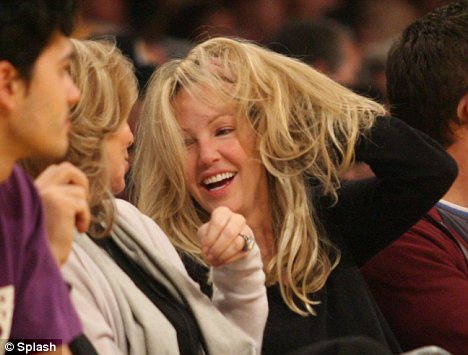
On Tuesday night Heather Locklear attended a Lakers basketball game at the Staples Centre, where she was seen laughing and joking with friends and appeared to be in good spirits
Heather Locklear is expected to be released tomorrow.
This is not the first time the former Melrose Place star has been rushed to hospital and in 2008 a 911 call was made by her doctor who said she had tried to “commit suicide”, however it was later denied that this was the case.
In June 2008, Heather Locklear checked into a medical facility to see treatment for anxiety and depression.
Three months later she was arrested for driving under the influence of prescription drugs and she had to be helped from her police car.
Alcohol was ruled out after tests but Heather Locklear was charged with driving under the influence of prescription medication and released on $4,500 bail.
On Tuesday night Heather Locklear attended a Lakers basketball game at the Staples Centre, where she was seen laughing and joking with friends and appeared to be in good spirits.
Two of four US Marines shown in a video appearing to urinate on Taliban corpses have been identified, a Marine Corps official said.
The video, which was posted online, purports to show four US Marines standing over the bodies of several Taliban fighters, at least one of whom is covered in blood.
The Marines have begun a criminal investigation and an internal inquiry.
US officials and Afghan officials have condemned the video as “deplorable”.
The origin of the video is not known, but it was originally posted to YouTube.
The official would not confirm the Marines’ whereabouts, but reports suggested the unit involved was based at Camp Lejeune, North Carolina – a major military base.
US media reported that the unit belonged to the 3rd Battalion, 2nd Marine Regiment.
That battalion has been deployed to a wide range of combat a peacekeeping situations, from Iraq, Afghanistan and Guantanamo Bay to fighting wildfires in Idaho.
The unit deployed to Afghanistan in early 2011 and returned in September or October, CNN reported.
A US Marines spokesman, Lt. Col. Joseph Plenzler, told the AFP news agency that “we cannot release the name of the unit at this time since the incident is being investigated.”
Earlier, US Defence Secretary Leon Panetta condemned the acts shown in the video and vowed that a full investigation would be carried out by the Marines and the Kabul-based International Security Assistance Force (Isaf).
“This conduct is entirely inappropriate for members of the United States military,” Leon Panetta said in a statement.
The US defence secretary said he had seen the footage, and the Pentagon confirmed that he had spoken by telephone with Afghan President Hamid Karzai.
Hamid Karzai condemned the attacks in strong terms.
“I find the behaviour depicted in it utterly deplorable. This conduct is entirely inappropriate for members of the United States military,” Hamid Karzai said.
In a separate news conference, Secretary of State Hillary Clinton expressed her “total dismay” at the video.
Hillary Clinton said she shared Leon Panetta’s view that such behaviour was inconsistent with the standards “that [the] vast, vast majority of our personnel – particularly our marines – hold themselves to”.
“The video did not change the nature of US efforts to secure Afghanistan,” Hillary Clinton said. She also said the US continued to support security and reconciliation efforts that were “Afghan-led and Afghan-owned”.
The Taliban are known for applying a ruthless brand of Islamic Sharia law in areas they control and have carried out many suicide bombings and attacks which have killed civilians.
A legal document that emerged today shows Robert Kardashian declared Khloe was his biological daughter.
The document have come to light amid claims from two of Robert Kardashian’s former wives – Jan Ashley and Ellen Pierson – that he told them Khloe was not his.
Radar is reporting today that Ellen Pierson is standing firmly by her story – despite strenuous denials from the Kardashians.
Robert Kardashian submitted a document to a judge in 1999 stating he had four biological children – Kourtney, Kim, Khloe and Rob with former wife Kris.
The businessman filed the declaration when he was trying to get his marriage annulled to second wife Jan Ashley saying he didn’t want to have any children with her.
In the declaration, Robert Kardashian says: “I decided that since I already had four biological children, I did not wish to have any more.”
Yesterday, a furious Khloe Kardashian refuted the claims made by Jan Ashley and Ellen Pierson, branding them “disgusting”.
Today, Khloe’s mother, Kris Jenner – who has admitted to having affairs during her marriage to Robert Kardashian – appeared on Good Morning America to refute claims her daughter was fathered by another man.
Kris Jenner said: “It just gets weirder and weirder. I have never heard such c**p in my life.
“I mean, I was there! I gave birth, I know who the dad was.”
The mother went on: “Everything’s good. We’re all good – don’t worry about it,” before adding that Khloe Kardashian’s lighter hair in comparison to her sisters has been a long-running “family joke” regarding her paternity.
Meanwhile, Ellen Pierson has stood by her claims and spoke to Star magazine again to reiterate her side of the story.
Ellen Pierson insisted she had had many conversations with Robert Kardashian – who she married two months before his death aged 59 in 2003 – and claims he told her he was not Khloe’s biological father.
Jan Ashley – who married Robert Kardashian following his divorce from Kris – told this week’s Star magazine: “Khloe is not his kid – he told me that after we got married.
“He just kind of looked at me and said [it] like it was a matter of fact. He said, <<Well, you know that Khloe’s not really a Kardashian, don’t you?>>”
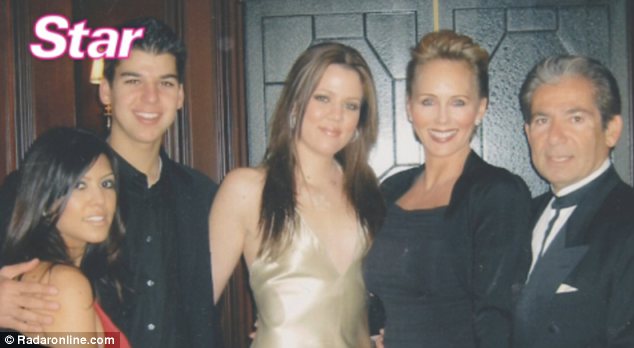
Khloe Kardashian pictured next to Ellen Pierson with her brother Rob, her sister Kourtney and her father Robert
Yesterday, Khloe Kardashian took to Twitter to respond to the claims by Jan Ashley and Ellen Pierson, posting: “The audacity you have to mention my father’s name like this! Should be ashamed of urself! I let a lot of things slide but this one is really low… YOU ARE DISGUSTING! (yes you know who YOU are).”
While Khloe Kardashian has slammed the allegation she has herself questioned if she was adopted on the family’s reality TV show.
Viewers of Keeping Up With The Kardashians did see her question who her parents were in an episode in 2009.
Khloe Kardashian wanted to prove she was not adopted and tested the maternity of her mother Kris Jenner.
While she proved she was Kris Jenner’s daughter she did not compare her DNA with her siblings to prove conclusively that Robert Kardashian is her biological father.
Parabens, chemicals widely used as a preservative in cosmetics, food products and pharmaceuticals has been found in tissue samples from 40 women with breast cancer.
A number of studies since 1998 have raised concerns about the potential role of parabens in breast cancer as they possess oestrogenic properties.
Oestrogen is known to play a central role in the development, growth and progression of breast cancer.
Parabens are a chemical compound found in everyday toiletry products including moisturizers, make-up, shaving foam, tanning lotions and toothpaste.
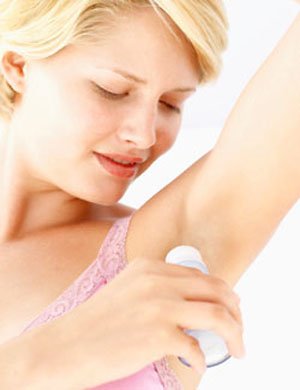
The chemicals are also found in numerous brands of underarm deodorant. However, a causal link has never been found between them and breast cancer.
Parabens are also present in processed meats such as sausages, pies and pastries along with other savory snacks.
The research team led by Dr. Philippa Darbre from the University of Reading in UK studied tissue samples from 40 women undergoing mastectomies between 2005 and 2008 for first primary breast cancer in England.
In total, 160 samples were collected, 4 from each woman. They found 99% of the tissue samples contained at least one paraben and 60% of the samples had five.
The research team found women who didn’t use underarm deodorants still had measurable parabens in their tissue, suggesting they must enter the breast from other sources.
Parabens are a chemical compound found in everyday toiletry products including moisturizers, make-up, shaving foam, tanning lotions and toothpaste
Co-author Lester Barr from the University Hospital of South Manchester, UK, said: “Our study appears to confirm the view that there is no simple cause and effect relationship between parabens in underarm products and breast cancer.
“The intriguing discovery that parabens are present even in women who have never used underarm products raises the question: where have these chemicals come from?”
Dr. Philippa Darbre added: “The fact that parabens were detected in the majority of the breast tissue samples cannot be taken to imply that they actually caused breast cancer in the 40 women studied.
“However, the fact that parabens were present in so many of the breast tissue samples does justify further investigation.”
Responding to research, Catherine Priestley, Clinical Nurse Specialist at Breast Cancer Care said: “The debate about the link between parabens and breast cancer is not a new one, and this report serves to highlight the need for further research.
“There is currently no conclusive evidence to suggest that the use of products containing parabens is directly linked to the development of breast cancer.
“Whilst there are a number of factors that may slightly increase the risk of a person developing breast cancer, increasing age, gender (being female) and a significant family history are the three main risk factors.
“It is important that people should have access to information on this issue and about their risk factors for breast cancer so that they can make informed lifestyle choices.”
Beyonce’s VIP hospital suite, where baby Blue Ivy Carter came into the world, looks like the penthouse in a five-star hotel, having four flat-screen TVs, a kitchenette and posh furniture.
Exclusive images of the luxury New York hospital room which is reportedly where Beyoncé gave birth to her first child with rapper Jay Z have just emerged via showbiz news website TMZ.com .
Apparently the newly constructed VIP suite at Lenox Hill Hospital in New York wasn’t built especially for Beyonce and Jay-Z- contrary to previous reports that alleged the couple paid to have the area customized for their use.
Beyonce just happened to be the first to use the set of rooms intended for high profile guests, according to TMZ.com
The posh interior includes a living room area complete with a plush cream, three-piece suite, a coffee table and matching lamp.
The room also features a kitchenette with a sink, a microwave and a shelf-full of coffee cups, meaning that the singer and her family could make themselves quick hot snacks.
Beyonce’s VIP hospital suite, where baby Blue Ivy Carter came into the world, looks like the penthouse in a five-star hotel, having four flat-screen TVs, a kitchenette and posh furniture
There is also a single bed especially for the father-to-be or another family member to rest while waiting for the baby to arrive.
Like everything else connected with the birth of baby Blue Ivy Carter, this is yet more proof that the birth of the hip-hop princess was a lavish affair.
Earlier this week Blue Ivy was spirited out of the hospital in a customized Mercedes van.
Beyonce, Jay-Z and baby Blue Ivy were said to have been followed by a cavalcade of cars through the darkness.
Beyonce bought the van a couple of months ago, apparently in readiness for the birth, swapping her luxurious Maybach for the souped up motor.
In true superstar style the 30-year-old has pimped her ride to the max and spent a whopping $1 million kitting out the Mercedes vehicle.
It has an engine big enough to power a large lorry – but has the soft drive of a limousine.
Beyonce requested hand stitched Italian leather seats be installed in cream with chestnut lining.
To make sure she doesn’t ever have to stop at a service station Beyoncé has a full bathroom with a shower, sink and toilet.
No doubt the couple was being transported to their luxurious Tribeca penthouse apartment in New York so they could settle into her new home.
Beyonce has had a luxury nursery built which includes a $20,000 cot as its centrepiece. The Posh Tots Carriage Fantasy Crib is made of solid cedar and birch and comes complete with a rear luggage rack which doubles as a changing table.
Their departure from hospital – following Saturday’s birth – comes as it had emerged that the A-list couple allegedly infuriated other new parents by enforcing a lockdown at the hospital where they had their first child together.
They also had their own private security force working an area alongside hospital security already at Lenox Hill Hospital.
The extraordinary lengths for privacy led to other parents bitterly complaining that the intense measures had made other new parents miss out on precious moments with their own newborns.
The world’s smallest frog has been discovered in Papua New Guinea by a US-based team.
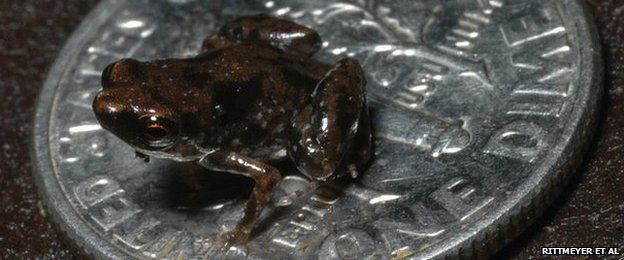
At 7 mm (0.27 inches) long, Paedophryne amauensis may be the world’s smallest vertebrate – the group that includes mammals, fish, birds and amphibians.
The researchers also found a slightly larger relative, Paedophryne swiftorum.
Presenting the new species in PLoS One journal, the researchers suggest the frogs’ tiny scale is linked to their habitat, in leaf litter on the forest floor
Finding the frogs was not an easy assignment.
The world’s smallest frog is pictured on a US dime, whose diameter is 18mm
The frogs are well camouflaged among leaves on the forest floor, and have evolved calls resembling those of insects, making them hard to spot.
“The New Guinea forests are incredibly loud at night; and we were trying to record frog calls in the forest, and we were curious as to what these other sounds were,” said research leader Chris Austin from Louisiana State University in Baton Rouge, US.
“So we triangulated to where these calls were coming from, and looked through the leaf litter.
“It was night, these things are incredibly small; so what we did after several frustrating attempts was to grab a whole handful of leaf litter and throw it inside a clear plastic bag.
“When we did so, we saw these incredibly tiny frogs hopping around,” he said.
The Paedophryne genus was identified only recently, and consists of a number of tiny species found at various points in the eastern forests of Papua New Guinea.
“They’re occupying the relatively thick leaf litter of tropical forest in low-lying parts of the island, eating incredibly small insects that typically are much smaller than insects that frogs eat,” said Professor Chris Austin.
“And they’re probably prey for a large number of relatively small invertebrates that don’t usually prey on frogs.”
Predators may well include scorpions.
Intriguingly, other places in the world that also feature dense, moist leaf litter tend to possess such small frog species, indicating that amphibians are well placed to occupy this ecological niche.
Before the Paedophrynes were found, the title of “world’s smallest frog” was bestowed on the Brazilian gold frog (Brachycephalus didactylus) and its slightly larger Cuban relative, the Monte Iberia Eleuth (Eleutherodactylus iberia). They both measure less than 1 cm long.
The smallest vertebrates have until now been fish.
Adult Paedocypris progenetica, which dwells in Indonesian swamps and streams, measures 7.9-10.3 mm long.
Male anglerfish of the species Photocorynus spiniceps are just over 6 mm long. But they spend their lives fused to the much larger (50 mm long) females, so whether they should count in this contest would be disputed.
Paedophryne amaunensis adults average 7.7 mm, which is why its discoverers believe it how holds the crown.
The remote expanses of Papua New Guinea rank alongside those of Madagascar as places where hitherto undiscovered amphibian species are expected to turn up, as they are largely undeveloped and not well explored.
A $10 million prize was launched at the Consumer Electronics Show in Las Vegas for whoever can create a Star Trek-like medical “tricorder”.
The Qualcomm Tricorder X Prize has challenged researchers to build a tool capable of capturing “key health metrics and diagnosing a set of 15 diseases”.
It needs to be light enough for would-be Dr. McCoys to carry – a maximum weight of 5lb (2.2kg).
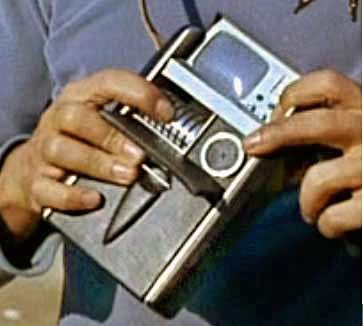
According to the official Star Trek technical manual, a tricorder is a portable “sensing, computing and data communications device”.
The kit captured the imagination of the show’s millions of viewers when it was first used in the cult series’ first broadcast in 1966.
In the show, which was set in the 23rd Century, the crew’s doctor was able to use the tricorder to diagnose an illness simply by scanning a person’s body.
According to the official Star Trek technical manual, a tricorder is a portable "sensing, computing and data communications device"
The award organizers hope the huge prize may inspire a present-day engineer to figure out the sci-fi gadget’s secret, and “make 23rd Century science fiction a 21st Century medical reality”.
“I’m probably the first guy who’s here in Vegas who would be happy to lose $10 million,” said X Prize Foundation chairman Peter Diamandis.
While the tricorder is obviously the stuff of science fiction, other X Prizes have become science fact.
In 2004, the Ansari X Prize for a privately funded reusable spacecraft was awarded to the team behind SpaceShipOne.
Much of the technology they developed was subsequently utilized by Virgin Galactic.
Prof. Jeremy Nicholson, head of the department of surgery and cancer at Imperial College London, told the BBC there are already medical devices which detect chemical signs of illness to assist diagnosis.
However, he warned that bringing this technology together into one tricorder-sized piece of equipment would be a very daunting challenge.
“The most likely sort of technology would be something that detects metabolites,” Prof. Jeremy Nicholson said.
“What we use in our laboratory is big – the size of a Mini. The challenge is sticking it all into one device.”
Prof. Jeremy Nicholson thought “grand challenges” like the tricorder prize helped stimulate innovation, and are “good fun”.
But he doubted the Qualcomm Foundation would be awarding the prize any time soon.
“The challenges are: What is it you detect, what are the samples you can get and how do you put it all together in one gizmo?
“I don’t think there’ll be many people getting that prize in the near future.”
Even if the device could be made, he continued, testing and obtaining approval for medical use might take much longer.
However, for Peter Diamandis the mere fact the prize exists could transform healthcare.
“It’s not a single point solution. What we’re looking for is to launch a new industry,” he said.
“The tricorder that was used by Spock and Bones inspires a vision of what healthcare will be like in the future.
“It will be wireless, mobile and minimally- or non-invasive.
“It may use digital imaging, it may be sequencing your DNA on the spot to tell you if you are allergic to something you just ate.”
That may seem like an impossibly ambitious set of goals, but fortunately, for those trying to win the prize, one feature of the Star Trek tricorder is not needed.
“We don’t have a requirement that it makes the same noise,” Peter Diamandis said.
Astronomers wanted to find out how Milky Way galaxy looked from the outside – a difficult task given the Earth is inside it.
A comparison of star types in other galaxies gives perhaps an unsurprising result: white. But not just any white – specifically, like spring snow at an hour after sunrise or before sunset.
The finding was announced at the 219th American Astronomical Society meeting.
“For astronomers, one of the most important parameters is actually the colour of the galaxy,” said Jeffrey Newman of the University of Pittsburgh.
“That tells us basically how old the stars in the galaxy are, how recently it’s been forming stars – are they forming today or did its stars form billions and billions of years ago?”
Prof. Jeffrey Newman told the meeting: “But it’s worse than that; not only are we looking at the Milky Way from the inside, but our view is blocked by dust.”
“We can only see about one or two thousand light years in any direction.”
Astronomers wanted to find out how Milky Way galaxy looked from the outside
Prof. Jeffrey Newman and his student Tim Licquia went about putting the Milky Way on the map of other galaxies that we can see from outside.
They gathered data from the Sloan Digital Sky Survey, with information on about a million galaxies.
They compared those data with what they knew about the total mass in the Milky Way, as well as the rate of star formation, looking for near matches among other galaxies.
For those most nearly matched to our own galactic home, the team took an average and came up with a precise measure of what colour it must be.
“The best description I can give would be that if you looked at new spring snow, which has a fine grain size, about an hour after dawn or an hour before sunset, you’d see the same spectrum of light that an alien astronomer in another galaxy would see looking at the Milky Way,” Prof. Jeffrey Newman said.
This “colour temperature” is somewhere between that of an old-fashioned incandescent lightbulb and noon-time sunlight; both whites, but subtly different.
And what does the colour tell us about our Milky Way’s development – is it a cosmic newcomer or past its prime?
“It appears our Milky Way is on the road between those two stages – based on the colour we find, the rate of formation of stars has been declining over time,” Prof. Jeffrey Newman said.
“The Milky way is in a very interesting evolutionary state right now.”
A hundred years after Titanic sank, expeditions to the ship, in depths of the Atlantic Ocean, are coming to close to allow the ship to rest in peace.
Rob McCallum, who works for the deep-sea exploration company that took 150 people down there, describes what they saw.
“As the craft glides through the freezing depths of the ocean, more than two miles below the surface, I stare out through the thick glass window into the abyss.
From the external lights of our vessel, I can see across the ancient terrain, which looks almost like a lunar landscape. Occasionally strange aquatic creatures dart across my vision, adding to the alien atmosphere.
Then suddenly, there it is, the sight I shall never forget. Rising before my eyes is the prow of the most famous ship in the world.
I am peering at the wreckage of the RMS Titanic, which plunged to this watery, icy grave almost a century ago in April 1912.
Even in the darkness of the ocean floor, the front part of the mighty vessel still looks magnificent, the encrusted railings and sweep of her hull instantly recognizable.
Our submersible continues its journey over the remains of the mighty ship, and I look bewitched at the famous grand staircase and the promenade deck where once the wealthy passengers briefly reveled in all their glorious opulence before the iceberg was struck.
Further along, about a mile from the prow, we find the rear part of the ship, more badly damaged than the prow, with great sheets of metal ripped from its sides.
But even in her broken, decaying state, this ghostly relic exudes an epic sense of majesty. For what was so striking about the wreckage is its colossal size.
The two key sections of the ship make vast monuments on the ocean bed.
Even one of the main three-bladed propellers, built of solid bronze and remarkably well preserved, is more than twice as heavy as our 18-ton submersible — a submarine which allows detailed exploration of the sea bed.”
A hundred years after it sank, expeditions to Titanic, in depths of the Atlantic Ocean, are coming to close to allow the ship to rest in peace
“The Titanic was the largest ship of its time, and one of the most beautiful ever created. But even now, all these years after the tragedy, the wreck of this leviathan still has the ability to inspire and humble.
My chance to view the wreckage arose because of my position with the Isle of Man-based company, Deep Ocean Expeditions, which specialises in deep-sea research and exploration, mainly for scientific, film-making and investigative purposes.
For our expeditions, we work with the PP Shirshov Institute of Oceanology, part of the Russian Academy of Science. They are the owners of the twin Mir submersibles, each capable of depths of 20,000ft. By working together, we are able to assist the Institute’s science work, as well as making a contribution to the Mirs’ operating costs.
One of our most popular trips is to see the remains of the German battleship the Bismark, which was sunk by the Royal Navy in 1941 about 350 miles off the south-western Irish coast.
The other, more notorious trip is to the wreck of the Titanic, which was discovered in 1986 by the renowned American oceanographer Dr Robert Ballard, who, incidentally, also found the Bismark in 1989.
Over the past decade, nearly 200 Titanic dives by the company have taken 150 individuals down to see it, and – despite the $59,000 cost – the expeditions have never been more over-subscribed than for this year – the 100th anniversary of the disaster.
The clients have included bankers, teachers, pilots, doctors, historical experts and sometimes the descendants of survivors or those who perished in the tragedy.
But, after 13 years, 2012 is also the last time we will be running such trips to the Titanic.
It has been a wonderful adventure, but with the centenary approaching, now is the proper moment to draw these expeditions to a close and allow this tragic ship to rest in peace.
There are only five submersibles in the world – made of high-tech metals – that can withstand the immense pressure of the conditions around the wreck, about 12,500 ft below the surface.
Expeditions begin with passengers boarding a larger ship in Newfoundland, which carries them and the submersible out to the spot where the Titanic sank.
The passengers are generally given a day to familiarize themselves with the craft and have a briefing about the forthcoming trip; they then attend lectures in Titanic history, oceanography and deep-sea operations.
The dive begins the next morning, taking roughly two hours to reach the ocean bed.
At a depth of about 800ft, the submersible descends into darkness, for this is the maximum depth to which the sun’s rays can penetrate. As we travel further down, the enveloping blackness is broken only by the sub’s own lights.
Once the vessel reaches the bottom, it manoeuvres its way around the two main sections of the ship for between four to eight hours, as well as looking at the other debris strewn across the sea bed.
The sights are truly remarkable — far more astonishing than any photograph can convey. Though the stern of the ship was badly damaged because it hit the ocean bed so hard — having travelled through the water at an estimated speed of 30 knots (the marine equivalent of 35mph) after the Titanic broke up — it is fascinating to see the vast engine rooms down there, full of massive machinery.
Equally arresting are the three immense propellers, between them weighing more than 100 tons and the two biggest of which were 23ft in diameter. Thanks to their sturdiness, they have survived well.
There is, however, no sign of the four enormous funnels, which would have been ripped off as the Titanic began her descent. Their fragments would have scattered over a wide area.
It is also possible to glimpse the interiors of some of the cabins, especially where the outer steel sheets of the hull were ripped away. Although the woodwork and fabrics have long gone, the metal walls and bronze and brass fittings remain.
Particularly poignant are the quarters of Captain Smith, who, in true heroic naval traditions, went down with his ship.
Of his three rooms, his bathroom is most clearly visible — his porcelain bathtub still in remarkably good condition.
Perhaps even more astonishing are all the artefacts strewn on the ground around the two main sections. Everywhere you look there are bottles, crockery, cutlery, even suitcases and shoes.
No clothes, carpets or other such material survives, as all that would have long rotted or been eaten by living organisms.
But anything leather has generally stayed in good condition and is only covered in a layer of silt.
Indeed, the number of shoes is surprising. This is because the ship went down just before midnight, at a time when many passengers would have retired to their cabins, undressed and put their shoes outside the door, ready to be cleaned by the staff.
Though sights like this are a poignant reminder of the human cost of the tragedy, there is nothing remotely macabre or ghoulish about visiting the wreckage.
There are no remains from any of the 1,514 victims who perished in the disaster. Their bodies would have been cast over a huge area, since many of them drowned or died of hypothermia in the freezing ocean. Other corpses, dragged down with the ship, would eventually have drifted away or been obliterated by the sea life that lurks in these depths.
In fact, the existence of other animal life so deep in the ocean is one of the most compelling features of a visit to the Titanic.
As you travel down below 10,000ft, it almost seems impossible that any organism could survive in such a hostile environment. Yet even in the icy blackness, nature flourishes.
On my trips to the wreckage, I have been astounded at the range of strange beings, such as six-inch rat-tailed fish, white-bodied crabs and creatures that give off light: blue, green and white flashes as they attract mates, or lure prey.
Even so, nothing can beat the awesome image of the Titanic itself.
The tragedy was a turning-point in history, the moment when man realised that nature could not always be tamed by technology, that no ship could ever be unsinkable.
Whenever I gaze in wonder at the wreckage, I sense that I am looking at an important part of mankind’s rich, sometimes distressing narrative; the same feeling I experience when visiting memorial cemeteries to the heroes who fell in the bloodstained fields of northern Europe during World War I.
We come to these places to remember – and to learn from those who have passed before us.
It will be an honour to see the Titanic, in all her ruined glory, one last time.”
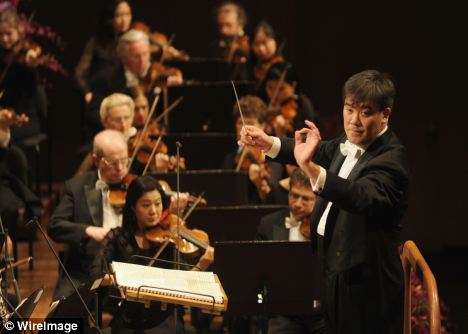
Alan Gilbert, the New York Philharmonic orchestra music director, stopped the orchestra in its tracks when a mobile phone went off during a performance.
Alan Gilbert was so appalled by the continuing distraction during one of the most poignant parts of the performance that he brought the musicians to a standstill.
The phone’s Marimba ring-tone went off from a front row seat of New York’s Avery Fisher Hall during Tuesday night’s performance, according to eyewitnesses.
The untimely interruption happened during the final and most moving bars of the Mahler Ninth symphony, just 13 bars before the beginning of the last page of the score, blogger Michael Jo reported.
Michael Jo wrote on his blog thousandfold echo: “As Alan Gilbert turned to the first violins and the sound grew ever more hushed and veiled, the unmistakable chimes of the iPhone Marimba ringtone resounded loud and clear.”
In an almost unprecedented measure, an obviously annoyed Alan Gilbert cut the orchestra.
Alan Gilbert, the New York Philharmonic orchestra music director, stopped the orchestra in its tracks when a mobile phone went off during a performance
The conductor then turned around on the podium to face the offender, music student Kyra Sims, told the superconductor blog.
During a pause of several minutes the music director asked: “Are you finished?” When the culprit didn’t reply Alan Gilbert said: “Fine, we’ll wait.”
Some furious members of the audience called out for punishment: “Thousand dollar fine, Get out!” and “Kick him out! were all heard”
When the ringing eventually stopped Alan Gilbert asked the man if he had turned off the phone. The man indicated that it wouldn’t go off again.
Addressing the audience the conductor said: “I apologize. Usually, when there’s a disturbance like this, it is best to ignore it, because addressing it is sometimes worse than the disturbance itself. But this was so egregious that I could not allow it.”
“We’ll start again.”
Mahler Ninth is the composer’s final completed symphony, the last movement of which is a measured contemplation on death that ultimately falls silent.
The composer’s work has special meaning to the New York Philharmonic which Mahler conducted during the final years of his life.
Scientists have discovered that drinking alcohol releases feel-good chemicals in an area of the human brain often referred to as the “pleasure centre”.
The rush of chemicals released in specific brain locations after drinking produce feelings of pleasure and reward.
Previously scientists had deduced from animal studies that the pleasurable effects of alcohol come from the release of endorphins in the brain.
A new research used scanning technology to “light up” the brain regions of drinkers, showing where it has the biggest impact.
A study from the Ernest Gallo Clinic and Research Centre at the University of California marks the first time that endorphin release in two regions of the brain, the nucleus accumbens and orbitofrontal cortex, in response to drinking alcohol has been directly observed in humans.
Research leader Jennifer Mitchell, assistant professor of neurology, said: “This is something that we’ve speculated about for 30 years, based on animal studies, but haven’t observed in humans until now.
“It provides the first direct evidence of how alcohol makes people feel good.”
The researchers used PET imaging (positron emission tomography) to observe the immediate effects of alcohol in the brains of 13 heavy drinkers and 12 matched “control” subjects who were not heavy drinkers.
Scientists have discovered that drinking alcohol releases feel-good chemicals in an area of the human brain often referred to as the “pleasure centre”
According to researchers, drinking led to a release of endorphins in all those taking part. The more endorphins released in the nucleus accumbens, the greater the feelings of pleasure reported by each drinker.
However, as levels of endorphins released in the orbitofrontal cortex went up, heavy drinkers felt more intoxicated – but not those in the control group.
Prof. Jennifer Mitchell said: “This indicates that the brains of heavy or problem drinkers are changed in a way that makes them more likely to find alcohol pleasant, and may be a clue to how problem drinking develops in the first place.
“That greater feeling of reward might cause them to drink too much.”
Before drinking, the volunteers were given injections of radioactively tagged carfentanil, an opiate-like drug that binds to sites in the brain called opioid receptors, where endorphins also bind.
This allowed researchers to map what happened in the brain as the receptor sites “lit up” on PET scans, says a report in the journal Science Translational Medicine.
Volunteers were then each given a drink of alcohol, followed by a second injection of radioactive carfentanil, and scanned again with PET imaging. As the natural endorphins released by drinking were bound to the opioid receptor sites, they prevented the carfentanil from being bound.
By comparing areas of radioactivity in the first and second PET images, the researchers were able to map the exact locations – areas of lower radioactivity – where endorphins were released in response to drinking.
The researchers found endorphins released after drinking bind to a specific type of opioid receptor, the Mu receptor, which they claim could be a target for developing drugs to treat or prevent alcohol addiction.
Senior study author Howard Fields said the result suggests a possible way to improve on existing medication.
Although it is effective, the drug naltrexone – which prevents binding at several opioid receptor sites – is not widely accepted as a treatment for alcohol dependence since it can make people feel depressed.
Howard Fields said: “Some people stop taking it because they don’t like the way it makes them feel.
“Naltrexone blocks more than one opioid receptor, and we need to know which blocking action reduces drinking and which causes the unwanted side effects.
“If we better understand how endorphins control drinking, we will have a better chance of creating more targeted therapies for substance addiction.”
Scientists say low to moderate doses of alcohol release feel-good chemicals, while high doses appear to fail to release them and may stimulate other systems in the brain leading to anxiety and depression.
Bruce Jenner, the Kardashians girls’step-father, has a penchant for dressing up in women’s clothing, it was revealed recently.
The claims come from Ellen Pierson, who married Kris Jenner’s ex-husband Robert Kardashian shortly before his death in 2003.
Ellen Pierson claims Bruce Jenner’s first wife Chrystie Crownover – who he was married to for eight years between 1972 and 1980 – made the revelation to her over drinks.
Chrystie Crownover told Ellen Pierson how former track and field athlete Bruce Jenner was a secret cross-dresser and had a penchant for women’s clothing, shoes and lingerie, according to Star magazine.
“Of course Bruce was every woman’s heartthrob when he was that age, right?” Ellen Pierson told the Star.
“But Chrystie said: <<Yeah, until I went on a trip and I came back and he had gone through all my clothes. And I found my bras… He’d clip them together and wear them>>.”
Bruce Jenner, the Kardashians girls’step-father, has a penchant for dressing up in women's clothing, it was revealed recently
Chrystie Crownover went on to divorce Bruce Jenner. They had two children together.
Bruce Jenner went on to wed Linda Thompson and they had two sons together during their four year marriage – Brandon and Brody.
Kris Jenner, his third wife, apparently has no qualms about Bruce’s penchant for cross-dressing, according to Ellen Pierson.
Ellen Pierson claims Kris Jenner was unfazed by his odd habit and that he continued to cross-dress for years after their 1991 wedding.
But apparently the Kardashian girls were not as accepting.
“Khloe called her dad and she was very upset, crying and screaming about it,” Ellen Pierson said.
The full story appears in this week’s issue of Star magazine.
Though she is less than a week old, baby Blue Ivy Carter, the newborn daughter of Beyonce and Jay-Z becomes already the youngest person ever to be featured on the Billboard charts.
Beyonce and Jay-Z’s firstborn appears on dad’s newest song, Glory.
Blue Ivy’s cries can be heard at the end of the track.
She was also named as a contributor, her famous father credits B.I.C. at the end of the song.
Jay-Z released Glory online on Monday, the same day he and his wife announced baby Blue Ivy's birth
Jay-Z, 42, released the track online on Monday, the same day he and his wife announced baby Blue Ivy’s birth.
Glory, naturally, immediately became a viral sensation.
The song will enter Billboard’s famous music chart next week at number 74.
It’s only fitting that baby Blue Ivy should already appear in the spotlight given her parents’ award-winning track record.
Jay-Z has won a plethora of trophies, including 15 Grammy Awards.
Beyonce, 30, has won 16 Grammy Awards and a star on the Hollywood Walk of Fame, amongst other accolades.
Blue Ivy and her famous parents made quite the exit on Tuesday morning when they left New York City’s Lenox Hill Hospital followed by a cavalcade of cars.