Scientist listed 25 words that every toddler should use by the age of two.
The words and phrases, which cover toys, food, animals and, of course, include “mummy” and “daddy” and “bye bye” are designed to detect youngsters who could struggle with words for years come.
Being slow to talk can also be a sign of deeper problems from deafness to autism.
The 25 “must have” words are part of a much larger list of 310 words that should be in a toddler’s vocabulary and designed to be ticked off in 10 minutes by parents.
The average child will know 150 of the words in the Language Development Survey but scores of 75 to 225 are normal.
Alarm bells should start ringing if a toddler uses just 50 of the words or less, the American Association for the Advancement of Science’s annual conference heard.
Scientist listed 25 words that every toddler should use by the age of two
The 25 words listed here are among the most common and the first acquired when learning to speak.
Professor Leslie Rescorla, who designed both versions of the test, said: “If children don’t use most of these words by 24 months, they may be late talkers.”
Many late-talkers are simply late bloomers, so the professor says that if a child is otherwise developing normally, parents shouldn’t panic.
But if the child is still struggling for words by two and a half, they should consider help such as speech therapy, and certainly not put this off past the age of three.
The Vancouver conference heard that up to 20% of all two-year-olds are behind their peers in speech.
Of these, half to a three-quarters are likely to be late-bloomers, who will more or less catch up over time.
But in other cases, the child will have lasting problems with speech.
A small vocabulary at the age of two can also be a sign of other problems, from deafness to autism and dyslexia.
Even those who do catch up may always be slightly behind.
Prof. Leslie Rescorla, of Bryn Mawr College in Pennsylvania, tracked the fortunes of 78 two-year-olds for 15 years.
Half had been slow to start talking but didn’t have any other problems.
By the time they reached 17, their vocabulary was classed as at least as good as average – but still wasn’t as good as those who were better talkers as toddlers.
The late-talkers fared particularly poorly in tasks that involved “verbal memory”, or listening to words, sentences, or numbers and being able to repeat them back
The conference also heard that TV and videos, also known as “overheard speech”, are no substitute for parental attention.
Real interaction with the child is particularly crucial when the child is trying to “crack the code” of speech.
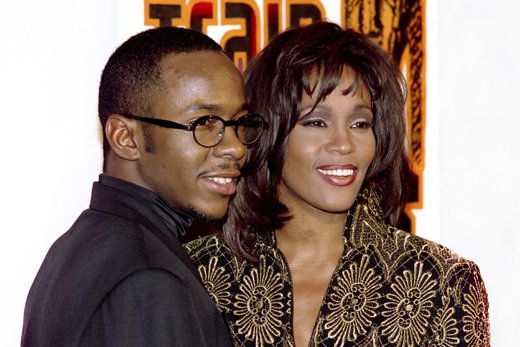
Whitney Houston and Bobby Brown had a notoriously turbulent relationship that was riddled with drug use and marital problems.
Whitney Houston admitted that she and Bobby Brown took cocaine and marijuana together through their 14 years of marriage.
During this tumultuous time, Bobby Brown was arrested for drugs and alcohol and Whitney Houston entered drug rehabilitation programs twice.
They wed in July 1992 and eventually separated in September 2006, before their divorce was finalized in April 2007.
Timelines of Whitney Houston’s and Bobby Brown’s relationship:
July 18, 1992 – Bobby Brown and Whitney Houston marry.
1993 – Bobby Brown is cited in Augusta, GA for simulating a sex act with a female member of his group in front of an underage audience (per Atlanta Journal-Consitution). They report he was arrested for a similar act in Columbus, GA in 1989.
March 1993 – Their child, Bobbi Kristina, is born. (Bobby Brown already had three other children from previous relationships – Landon, Laprincia, and Bobby Jr.)
August 1996 – Bobby Brown crashed Whitney Houston’s black Porsche on a residential street in Hollywood, FL.
1997 – The couple separate briefly. In a 1998 interview with Ebony, Whitney Houston responds to reports that they had divorced: “Nope. We separated for a minute, and it’s good sometimes to just get away.” Ebony reports they separated for one month.
1998 – Bobby Brown is arrested on suspicion of misdemeanor sexual battery. (The sexual battery case was dropped due to insufficient evidence. The singer was arrested June 21 at the Beverly Hills Hotel for allegedly slapping a teen on the behind.) (USA Today)
June 2002 – Bobby Brown is hospitalized for treatment of an infection, according to a spokesperson. He fell ill while traveling with his wife on a tour bus. The spokeswoman said that Bobby Brown had a fever, but declined to specify the nature of the infection. (AP)
Whitney Houston and Bobby Brown had a notoriously turbulent relationship that was riddled with drug use and marital problems
December 10, 2003 – Bobby Brown is charged with battery after a weekend domestic dispute with his wife, leaving her with facial injuries. Bobby Brown was accompanied by his wife as he turned himself in to authorities. This is when she started singing “(You make Me Feel Like A) Natural Woman” in the car on the way out. Bobby Brown was released after receiving a copy of the charge.
March 26, 2004 – Bobby Brown was released from the county jail after spending a night behind bars for failing to pay $63,500 in child support. He paid up, and said the whole thing was a misunderstanding
January 7, 2004 – Bobby Brown is scheduled to be in court for a preliminary hearing regarding the December 2003 battery incident.
May 5, 2004 – bobby Brown is scheduled to appear in a Fulton County, GA court to face misdemeanor battery charges after he allegedly hit his wife, leaving her with a bruised cheek and a cut lip. A judge ordered there was enough evidence for Bobby Brown to stand trial on misdemeanor battery charges for allegedly hitting Whitney Houston in the face at their home near Alpharetta, a suburb north of Atlanta.
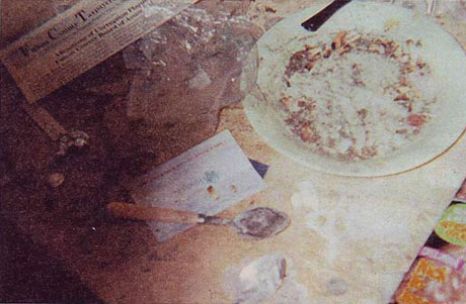
April 10, 2006 – The National Enquirer published pictures of a bathroom, allegedly Whitney Houston’s, littered with drug paraphernalia. These pictures were taken and reportedly provided to the enquirer by Tina Brown, Bobby Brown’s sister. According to the Enquirer, Tina Brown has further alleged that Whitney Houston has had lesbian affairs. Tina Brown also said there was holes drilled in the walls so Whitney Houston could see if anyone was entering her apartment, but the pictures do not show this.
August 21, 2006 – Osama Bin Laden reportedly has a crush on Whitney Houston
August, 2006 – Bobby Brown fuels infidelity rumors when he allegedly has an affair with Karrine Steffans. Bobby Brown has never responded to the allegation.
September, 2006 – After years of controversy and turmoil, Whitney Houston separated from Bobby Brown
October, 2006 – Whitney Houston filed for divorce.
April 24, 2007 – The divorce was finalized, with Whitney Houston granted custody of Bobbi Kristina
May 4, 2007 – Whitney Houston sold the suburban Atlanta home featured in Being Bobby Brown for $1.19 million. A few days later, Bobby Brown sued Whitney Houston in Orange County, California court in an attempt to change the terms of their custody agreement. Bobby Brown also sought child and spousal support from Whitney Houston. In the lawsuit, Bobby Brown claimed that financial and emotional problems prevented him from properly responding to Whitney Houston’s divorce petition. Bobby Brown lost at his court hearing as the judge dismissed his appeal to overrule the custody terms, leaving Whitney Houston with full custody and Brown with no spousal support.
Robyn Crawford met Whitney Houston when they were 16 at a summer job in East Orange, New Jersey, and they soon became inseparable.
Robyn Crawford was the Gayle King to Whitney’s Oprah; whether or not the relationship was a platonic one is uncertain, but they had the closest of friendships. Robyn Crawford worked for many years as Whitney Houston’s assistant, an experience she talked about right after Whitney’s death.
Robyn Crawford says this is the first time she talked about her relationship with Whitney Houston, but she only discusses their professional entanglements, not the personal ones.
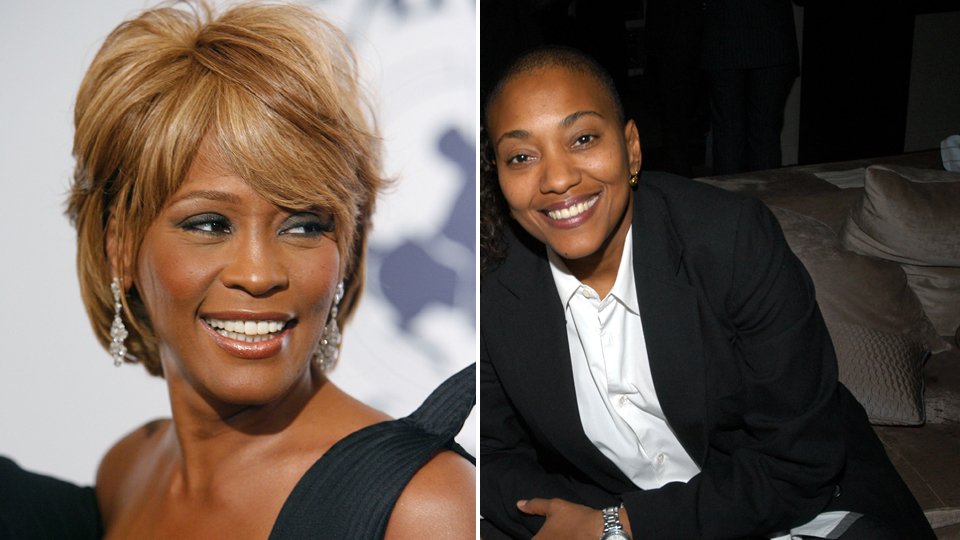
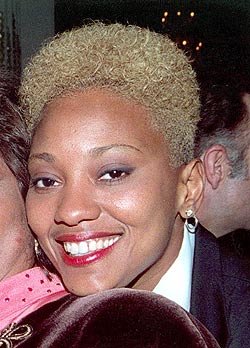
Robyn Crawford (right) talked about her relationship with Whitney Houston, but she only discusses their professional entanglements, not the personal ones
However, Whitney Houston’s obituary includes this cryptic passage:
“When people left her or were told to leave, they could never believe that Whitney would never call them – but she never did. She was working hard to keep herself together, and I think she felt that if she admitted any feeling of sadness or weakness she would crumble.”
That certainly sounds like Robyn Crawford knows more about Whitney Houston than she’s willing to say publicly so until she writes a tell-all or shows up on 20/20.
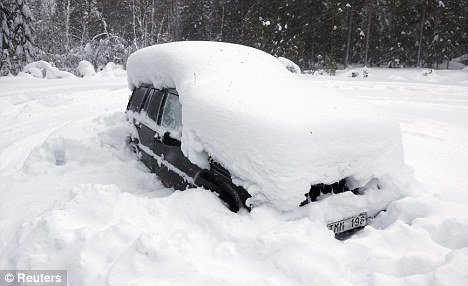
Pictures from inside the car of Peter Skyllberg, the Swedish man who survived in his snow-covered car on nothing but snow for two months in sub-zero temperatures, have been emerged to press.
Peter Skyllberg, 44, had eaten nothing but handfuls of snow since December 19 when his car became bogged down in drifts near the town of Umea in northern Sweden.
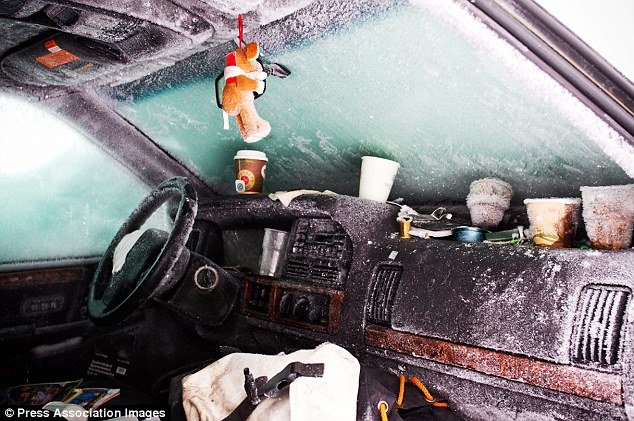
The images show the dashboard and seats covered in ice after temperatures plunged to -30C.
Experts think he went into a kind of human hibernation which slowed down his metabolism and pulled him through the ordeal in what they have described as the “case of a lifetime”.
Peter Skyllberg had driven off the main road on to forest tracks where his car became stuck fast.
On Friday a passing man on a snowmobile stopped to scrape snow from the windscreen of the vehicle and saw movement inside.
As Peter Skyllberg recovered in a hospital today, details emerged of depression and debts piling up on him and it is thought he might have been trying to take his own life.
Police initially thought the man was a nature lover who had become trapped in the snow while on an expedition to photograph elk.
But now it emerges there was a court judgment against him in December because of debts totaling $235,000.
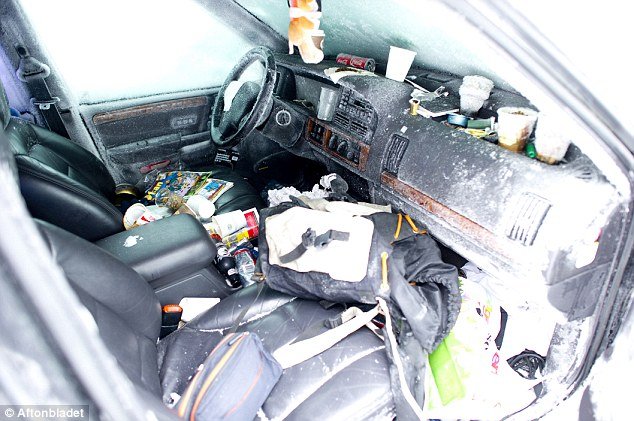
The images from inside Peter Skyllberg’s car show the dashboard and seats covered in ice after temperatures plunged to -30C
Peter Skyllberg’s neighbors in the town of Orebro in central Sweden said he had also broken up with his girlfriend and had lost contact with his father and other family members 20 years ago.
“We now have to wait until he is better to try to find out what really was in his mind,” said police officer Ebbe Nyberg.
Peter Skyllberg survived by taking handfuls of snow from the roof of the car.
The only other things found with him were cigarettes and comic books.
“Absolutely incredible that he is alive, in part considering that he hasn’t had any food, but also bearing in mind that it was really cold for a while there after Christmas,” said a member of the emergency services team deployed to rescue him.
Peter Skyllberg was emaciated, barely able to move and could barely speak.
“He was at the end of his tether,” said a police spokesman.
“It was doubtful he could have survived one or two more days.”
Peter Skyllberg was found wrapped up in a sleeping bag in the car and he had no other warmth
Peter Skyllberg was wrapped up in a sleeping bag in the car but he had no other warmth; the fuel had run out long ago as he kept the heater running to try to survive as the thermometer plunged on some nights to -30C.
Pictures also show food wrappers and drink cartons , which suggests he may have had supplies with him for at least some of the time.
Peter Skyllberg is recovering in the intensive care ward at Umea University Hospital where he is being fed liquid proteins.
He has hypothermia and is severely malnourished. He was never registered as missing, for which there is currently no explanation.
Policeman Ebbe Nyberg added: “He was in a very poor state when we found him.
“He could not speak, just a few broken sentences and the words snow…eat. And he managed to say he hadn’t eaten anything since December.”
The miracle survival of Peter Skyllberg: igloo effect or bear-like hibernation?
The case of Peter Skyllberg is so extraordinary doctors and medical experts are still trying to establish exactly how the 44-year-old survived in such extreme circumstances.
One theory being put forward by Dr. Stefan Branth, from Uppsala University, is that Peter Skyllberg’s metabolism may have slowed down “like a bear that hibernates”, making it easier to go without food.
But Ulf Segerberg, the chief medical officer at Umea University Hospital, said it was more likely because of the insulation provided by his vehicle.
“It is not possible for humans to hibernate like a bear,” he said.
“In the car, he had very warm clothes, he had a warm sleeping bag, and as the car was snowed under, that would have made it more like an igloo.”
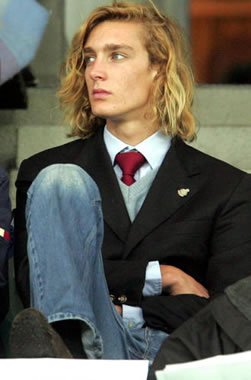
Monaco’s Prince Pierre Casiraghi, son of Princess Carolina, has been hospitalized after a vicious nightclub brawl in Manhattan, it has emerged.
The brawl broke out at the trendy Double Seven nightclub in Manhattan on Saturday.
It is believed the fight started following a late-night confrontation between Prince Pierre Casiraghi, 24, and his friends and former Manhattan club owner Adam Hock.
One witness told the New York Post: “Pierre’s face looked broken, with deep cuts and blood everywhere.”
According to the New York Post, Adam Hock, 47, was partying with his friends – which included a number of supermodels – when the young prince walked up to their table at about 2:30 a.m.
Prince Pierre Casiraghi was joined by Paris Hilton’s ex boyfriend Stavros Niarchos III and two other men.
According to members of Adam Hock’s group, the prince and his friends began insulting the models and started drinking from a $500 bottle of vodka on their table.
Monaco’s Prince Pierre Casiraghi, son of Princess Carolina, has been hospitalized after a vicious nightclub brawl in Manhattan
Witnesses allege that Adam Hock then punched the prince.
One onlooker told the New York Post that the force of the punch resulted in Prince Pierre Casiraghi flying across the room and landing on a table on the other side.
Adam Hock also allegedly punched Stavros Niarchos, 26, as well as two other men.
The prince was taken to the New York Presbyterian/Weill Cornell Medical Center with his injuries but was released later on Saturday.
Adam Hock has been charged by police with four counts of third-degree assault for the alleged attacks on Prince Pierre Casiraghi, Stavros Niarchos and the two other men.
During a court hearing in Manhattan yesterday, Adam Hock said he was the victim.
According to the New York Post, Adam Hock said: “I was defending myself and others. Why aren’t [Casiraghi and his pals] handcuffed?”
However, friends of the prince said Adam Hock started the fight.
Adam Hock’s lawyer, Salvatore Strazzullo, accused the prince and his friends of being jealous because his client was with a group of beautiful women.
Salvatore Strazzullo added: “These four guys are trust-fund babies who think the world is owed to them. They are like spoiled brats.”
Richard Golub, representing Prince Pierre Casiraghi and his friends, said: “It was entirely unprovoked.”
Adam Hock was released but is due back in court next month.
Robyn Crawford, Whitney Houston’s former executive assistant and oldest around-the-way Newark, NJ friend, reveals the complex evolution of the legendary star not only as a performer, but as a person and a friend in a touching open letter.
Having met as teenagers, Robyn Crawford and Whitney Houston would quickly become comrades, growing closer as the fledgling superstar’s fame took off. Even as a young woman, Whitney Houston still had a special something about her that immediately told Robyn Crawford that she was destined for much more than singing in Newark.
Published by Esquire, the emotional open letter of Robyn Crawford wrote:
“I met her when she was 16. It was at a summer job. I was working at a community center in East Orange, New Jersey, and she was working just like the rest of us. She was there to work. She introduced herself as “Whitney Elizabeth Houston,” and I knew right away she was special. Not a lot of people introduced themselves with their middle names back then. She had peachy colored skin and she didn’t look like anyone I’d ever met in East Orange, New Jersey.
She was nothing like the Whitney Houston she became but at the same time she was already there. She knew, and so did everyone around her. She was doing shows in Manhattan with her mother, and she’d change her clothes in the car and get on stage and do her thing. She hadn’t signed her contract yet. But she was modeling for Wilhelmina because she was discovered on the street. She was walking in front of Carnegie Hall and someone walked up to her and said, “There’s a modeling agency upstairs that’s looking for someone just like you.” She walked upstairs and they signed her. That’s what it was like, that’s what she gave off. She looked like an angel. When my mother first met her, she laughed and said, “You look like an angel, but I know you’re not.” And she wasn’t. But she looked like one.
She chose the life she lived, and she chose it from the beginning. She knew the life better than anyone. Her mother was Cissy Houston, and she had been on the road with Dionne Warwick. She got her chops singing in church, and her mother said to her, “You know, you can always sing for free. You can always sing in church. You don’t have to choose the professional life.” But she chose because she’d been chosen. Some people sing just because. She was never like that. She had to put on her gear. She knew it was going to be a job and that’s how she treated it. Once she committed to something, she finished it. Not long after I met her, she said, “Stick with me, and I’ll take you around the world.” She always knew where she was headed.
And we went around the world. I was her assistant and then her executive assistant and then her creative director. I was her point person for the day-to-day. I traveled all around the world first-class and anyone who ever worked for her will tell you her checks never bounced. You knew she was going to take care of you. She wasn’t going to be in a five-star hotel while you were in a two. I flew the Concorde the way some people ride the bus. She shared the fruits, and she changed a lot of lives. The record company, the band members, her family, her friends, me — she fed everybody. Deep down inside that’s what made her tired.”
Robyn Crawford, Whitney Houston’s former executive assistant and friend, describes their relationship in a touching open letter
“It was never easy. She never left anything undone. But it was hard. The Bodyguard was great when it was done, but it was a lot of work. She did the movie, she did the music, she did everything — and when she was done, she was done. She nailed it. The music supervisor brought her Linda Ronstadt’s version of “I Will Always Love You” way before Kevin Costner brought Dolly Parton’s version — and she always knew what she could do with it. So when Kevin came in and played it for her and told her he wanted her to sing it for the movie, she said, “Fine.” She wasn’t much for showing off what she had, except when she had to.
I always compare her performance of that song with a great athlete hitting his peak — with Michael Jordan in the playoffs. It was the absolute pinnacle of what she could do, of what anyone could do — and then she had to keep on doing it. Everybody wanted to hear her sing that song, and so she sang it. It didn’t matter whether she had a cold, or wasn’t in good voice; she had to deliver it, and she had it arranged so she could deliver every last note. And even if the note wasn’t there, the feeling was. A lot of her songs were like that. They were a lot to deliver, but she delivered them every note, every time.
It’s so strange that she died when she did. February was her month. Her first album was released on Valentine’s Day, right around the time of the Grammys, right around the time of Clive Davis’s party. It was an orchestrated thing. She was Clive’s girl, his great discovery. And she died right before Valentine’s Day, right before the Grammys, right before Clive’s party. Of course, she was going. I don’t know if she was singing, I don’t know what kind of pressure she was putting on herself. But she was going, that’s for damned sure.
People thought they had to protect her. She hated that. And that’s what people don’t understand: She was always the one doing the driving. Someone just called and told me that the family kept Whitney from seeing her. Nobody kept Whitney from doing anything. She did what she wanted to do. When people left her or were told to leave, they could never believe that Whitney would never call them — but she never did. She was working hard to keep herself together, and I think she felt that if she admitted any feeling of sadness or weakness she would crumble. One time, back when we were young, we were out, we were partying, and I said, “Listen, I have to go. I’m tired. I can’t make it.” And she looked at me with her eyes wide and said, “I’ve got to make it.”
And that was Whitney. She could not pick up the phone, and that meant it was too painful. I have never spoken about her until now. And she knew I wouldn’t. She was a loyal friend, and she knew I was never going to be disloyal to her. I was never going to betray her. Now I can’t believe that I’m never going to hug her or hear her laughter again. I loved her laughter, and that’s what I miss most, that’s what I miss already.
I’m trying not to think of the end. I’m trying not to listen to all the reports. All these people talking about drugs — well, a lot of people take drugs, and they’re still around. Whitney isn’t, because you never know the way the wind blows. I just hope that she wasn’t in pain and that she hadn’t lost hope. She gave so much to so many people; I hope that she felt loved in return. She was the action, for such a long time. She’s out of the action now. I hope she can finally rest.”
Tina Brown, Whitney Houston’s ex-sister-in-law, back in 2006, alleged that the singer was addicted to crack cocaine and was living in squalor.
Tina Brown, Bobby Brown’ sister claimed that she knew this because she used crack cocaine with Whitney Houston.
The British tabloid, The Sun, had reportedly received photographs of Whitney Houston, depicting drug paraphernalia including a crack pipe, rolling papers and cocaine-covered spoons in the singer’s bathroom.
Tina Brown was quoted by The Sun as saying: “The truth needs to come out. Whitney won’t stay off the drugs. It’s every single day. It’s so ugly. Everyone is so scared she is going to overdose.”
The addiction was reported to had become so bad, Whitney Houston hallucinated. Sky Showbiz reported at the time that: “Tina claims drugs have made Whitney so paranoid that she sees demons everywhere and once made a hole in the bathroom wall as a spy hole.”
Elaboration came from a quote on The Sun from Tina Brown, who said: “She’ll point to the floor and say, ‘See that demon. I’m telling you somebody’s messing with Bobby’. She always thinks it’s something to do with Bobby. But it’s her, hitting herself.”
Tina Brown had reportedly revealed photographs of Whitney Houston’s bathroom, depicting drug paraphernalia including a crack pipe, rolling papers and cocaine-covered spoons
The reports also claimed that Whitney Houston was completely ignoring her own personal hygiene, was using copious amounts of crack cocaine at a time, and was using sex toys to pleasure herself.
Whitney Houston was reported to have used an entire 8-ball (1/8 of an ounce) of crack at once, by emptying out a cigar, and filling it with the crack rock and marijuana. Habitual users will regularly break an 8-ball into several smaller pieces, using smaller doses at a time.
Reports also claimed that Whitney Houston’s mother, Cissy, had forced her to go to rehab clinics in March of 2004. It’s reported that Whitney Houston used crack in the car en route to the rehab session. Once at the clinic, she would do her best to dodge drug tests.
The New York Daily News said she would tell workers at the clinic: “I’m not giving you no pee today. I don’t have none right now.”
The New York Daily News also reported: ” Whitney allegedly loses her $6,000 set of false teeth when she’s high and once appeared toothless, scaring the kids at her niece’s school.”
As well: “In 2004, a drug dealer called Bobby Brown and ordered him to remove the paranoid and out-of-control Whitney from his crack house. <<Come get your wife. I’m sick of this b****>>, the dealer reportedly complained.”
Other instances of how Whitney Houston’s addiction was ruining her life include The Sun’s report of how: “Whitney was also rushed to hospital in 2003 with blood gushing from her nose – and emerged with a bizarre bandage on it.”
At the time, a source said: “Everyone wondered what happened to Whitney’s nose.”
It was rumored that the money Whitney Houston made from selling 100 million plus albums has most been squandered to her drug habit.
Having apparently forgotten about her Diane Sawyer interview on ABC, where Whitney Houston had stated: “Crack is Whack!”, concern for her well-being was the motivating factor behind the publicizing of her addiction, explained Tina Brown.
At the end of the interview, Tina Brown said: “I understand what she is going through. Addiction is a disease. Maybe this interview will help save her life.”
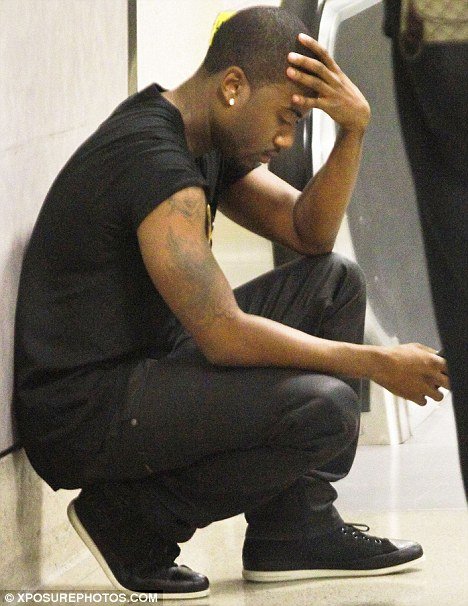
Ray J, Whitney Houston’s on-off lover, was seen overcome with emotion as he arrived back at Los Angeles’ LAX airport yesterday following the singer’s funeral.
Ray J, 31, was seen looking grief-stricken and distraught as he crouched down on the floor in the airport with his head in his hands.
Wearing an all-black outfit, the singer looked deep in his own thoughts as he took some time to himself before heading home.
Ray J was also seen being hugged by his bodyguard as he made his way through the airport.
He was left devastated by the death of his one-time girlfriend Whitney Houston earlier this month.
Ray J, Whitney Houston’s on-off lover, was seen overcome with emotion as he arrived back at Los Angeles' LAX airport yesterday following the singer's funeral
And at Whitney Houston’s funeral on Saturday, Ray J was reduced to tears as he watched her coffin being carried out of the church.
At the time of Whitney Houston’s death, Ray J released a statement which read: “Over the past few days I’ve tried to process the emptiness that I am experiencing.
“What my heart feels cannot be expressed in words. The world lost an icon, but I lost my close friend. Nippy, I miss you so much!
“You were so happy and full of love. Your smile will live in my heart forever.”
Whitney Houston and Ray-J were first romantically linked back in 2010, and were said to have been in an on-off relationship until as recently as February 3rd, when they were apparently seen having dinner together in Los Angeles.
Shortly after Whitney Houston’s tragic death, Ray J was seen at the Beverly Hilton Hotel, but was turned away by police when he arrived.
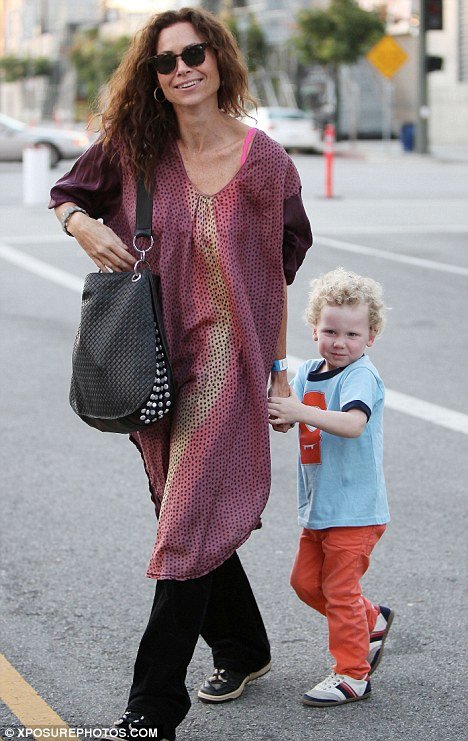
Minnie Driver has always been incredibly secretive about the identity of her son’s father, but now she has come forward to reveal that three-year-old Henry’s dad was a writer on her former television show The Riches.
Minnie Driver, 42, said the reason she had decided to disclose the man’s identity was because she doesn’t “need to protect him any more”.
The actress added to The Observer magazine: “He can fend for himself. He’s a grown-up.
“We weren’t together and he wasn’t directly in the business so I chose to protect him and not have a rain of publicity.
“He’s not famous. There’s no big story.”
Earlier reports claimed that the father was a TV writer, who ended his relationship with Minnie Driver when she found out she was pregnant.
However, Minnie Driver admitted that the man, who she still refused to name outright, has now increased his involvement in their son’s life.
Minnie Driver revealed that three-year-old Henry's dad was a writer on her former television show The Riches
The actress said: “Is he a good dad? Sort of. He’s figuring it out… I mean, he hasn’t been that involved, his choice. But he is now.”
The Conviction star had previously admitted she would like to have more children, but doesn’t think she could cope raising two kids on her own.
Minnie Driver said previously: “Henry’s dad and I probably wouldn’t have any more together, but I would love to have more.”
However, Minnie Driver admitted to The Observer: “I couldn’t do another one without a partner; I couldn’t do two as a single mum, I really couldn’t. It would be too much.”
Speaking about how she coped during her pregnancy, Minnie Driver, who was one of two children born out of an affair – millionaire father Ron Driver, already had a wife and daughter who knew nothing of his other family – said: “I had good friends around me, so it was sort of hilarious.
“I was making a film at the time and the paparazzi would shout: <<Who’s the sperm donor?>> at me. Oh, it was an awful film [Motherhood] and I wouldn’t do that again, but I was heavily pregnant and I just wanted to take my mind off it.”
Minnie Driver admitted that motherhood has left its mark on her, and while she is admittedly involved in a “very selfish business”- she said: “I’ve started to enjoy my job more because I take it less seriously.”
Now that her son has got older, Minnie Driver has renewed her career ambitions. Her latest film, Hunky Dory, a small British indie from Jon Finn, the producer of Billy Elliot, is a high-school musical set in Wales during the heatwave of 1976.
And she has set her sights on a return to the small screen – again for less than selfish reasons.
“I still want an Oscar, and to work with Danny Boyle and Martin Scorsese – of course I want all of that.
“But what I really, really want to do is another US TV series… I want a regular pay cheque. And I want to be able to know when I can pick up Henry from school.”
Solar Dynamics Observatory, a NASA satellite, captured amazing pictures of a gigantic tornado moving across the sun.
The tornado is larger than it might look – in fact, it is probably bigger than the Earth, and could extend hundreds of thousands of miles out into space.
And while its progress over the sun’s surface seems almost stately, it is moving at 300,000 miles per hour.
The extraordinary phenomenon – which cannot yet be fully explained by scientists – was filmed by NASA’s Solar Dynamics Observatory (SDO) over a 30-hour period earlier this month.
That satellite, known as the SDO, is in the middle of a five-year mission to monitor how solar activity affects the Earth, particularly changes in the sun’s magnetic field.
Solar Dynamics Observatory, a NASA satellite, captured amazing pictures of a gigantic tornado moving across the sun
While the tornado – called a “solar prominence” by scientists – looks very similar to twisters here on Earth, its origins are completely different.
Rather than being the result of atmospheric pressure, the solar activity comes from fluctuations in the sun’s magnetism.
However, researchers cannot explain much more than that – NASA’s Terry Kucera told Fox News that she and her colleagues were “still looking to understand what’s happening with these things”.
The tornado, at 15,000 degrees Fahrenheit (8,000 C), is much cooler than its surroundings, which are around 2 million degrees.
The phenomenon was not caught on camera until 1996.
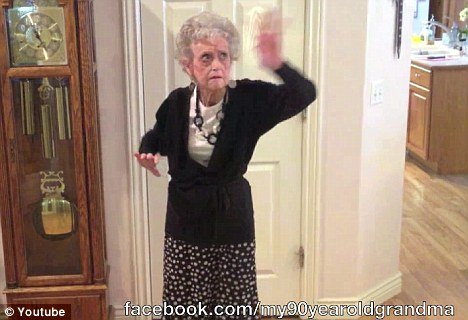
Jeanne, a 90-year-old grandmother pays emotional tribute to the iconic Whitney Houston at the start of her YouTube video.
Close to tears Jeanne tells the camera: “I’m doing this in honor of the late Whitney Houston. It’s very hard to think of her being gone.”
“She was one of a kind. Wonderful. I just enjoyed her singing, no matter what she was singing.”
Whitney Houston was found dead in a bathtub at the Beverly Hilton hotel in California on February 11.
In Whitney Houston's honor, the 90-year-old granny Jeanne, who suffers from severe macular degeneration, dances her heart out to the late singer's hit song “I wanna dance with somebody”
In Whitney Houston’s honor, Jeanne, who suffers from severe macular degeneration making her legally blind and hard of hearing, then dances her heart out to the late singer’s hit song “I wanna dance with somebody”.
The YouTube footage has received over 280,000 hits since it was posted earlier this week.
Jeanne’s grandson, who posted the video and can be seen dancing with her, writes: “One of the few things that makes her happy is dancing!”
Zelboraf (vemurafenib) has received approval from the European Commission to be used as monotherapy for the treatment of adult patients with BRAFV600 mutation-positive inoperable or metastatic melanoma.
Its companion diagnostic, the cobas 4800 BRAF V600 Mutation Test is CE marked and commercially available in Europe.
“The approval of Zelboraf by the European Commission marks a significant advancement for European patients with metastatic melanoma who historically have had very limited treatment options. We are very pleased that our strategy to co-develop Zelboraf along with a companion diagnostic helped accelerate the availability of this personalized medicine for these patients,” said K. Peter Hirth, Ph.D., chief executive officer of Plexxikon.
Vemurafenib selectively inhibits the BRAF mutation that appears in around 50% of cases of melanoma and it is not recommended for use in melanoma patients without the BRAFV600 mutation.
“Today’s approval is important news for people with BRAF mutation-positive metastatic melanoma as Zelboraf significantly improves patient survival and exemplifies the benefits that Roche’s personalized approach to medicine can provide for patients, physicians and society,” said Hal Barron, M.D., Chief Medical Officer and Head, Global Product Development.
According to the American Cancer Society, melanoma is one of the deadliest cancers, with a five-year survival rate of 15-20% for people with advanced (Stage IV) melanoma. Every year, over 160,000 people worldwide and more than 75,000 people in the United States are diagnosed with melanoma.
Multiple clinically atypical moles or dysplastic nevi, fair skin and sun exposure, prior melanoma, inherited genetic mutations, a positive family history of melanoma are the risk factors.
The BRAF gene is essential in normal cell growth and survival. BRAF mutations may lead to uncontrolled cell growth. These mutations can be found in around 50% of melanoma and in 8% of solid tumors.
After receiving the FDA approval in August 2011, Zelboraf was approved by the European Commission for the treatment of inoperable or metastatic melanoma.
Zelboraf has proven to be effective in BRIM3, a global, randomized, open-label, controlled, multicenter, Phase 3 study.
The study enrolled 675 patients with untreated BRAFV600E mutation-positive, unresectable (inoperable) or metastatic melanoma.
Zelboraf was compared to dacarbazine (chemotherapy) and an interim analysis showed the risk of death was reduced by 63% for patients who received Zelboraf.
In January 2011, the data safety monitoring board for BRIM3 recommended termination of the BRIM3 study due to compelling efficacy data, and further recommended that study patients receiving chemotherapy have the option to cross over to the vemurafenib treatment arm.
In a later analysis of BRIM3 data, including cross-over of patients from the chemotherapy treatment arm to the Zelboraf treatment arm, median overall survival was 13.2 months for Zelboraf, the risk of death was reduced by 38%. Median overall survival was 9.6 months for chemotherapy. Patients with metastatic melanoma have had a median survival of six to ten months.
At 12 months, in the Zelboraf treatment arm 55% of patients were alive and in the chemotherapy treatment arm 43%.
More information about ongoing vemurafenib studies is available at www.clinicaltrials.gov (in the U.S.) or www.clinicaltrialregister.eu or on the Roche Clinical Trials Registry at www.roche-trials.com (in the EU). Genentech can also be contacted by calling the company’s clinical trial call center at 1-888-662-6728 or emailing [email protected].
Vemurafenib along with its companion diagnostic test was approved by the Food and Drugs Administration in August 2011 and is being marketed in the United States as Zelboraf for the treatment of patients with BRAFV600E mutation-positive inoperable or metastatic melanoma.
The cobas 4800 BRAF V600 Mutation Test, a DNA, polymerase chain reaction-based companion diagnostic, it is used to identify patients whose tumors carry the BRAF mutation.
The drug also has been approved by the European Commission, and in Switzerland, Israel, Brazil, New Zealand and Canada.
Marketing authorization submissions for Zelboraf are currently under review by health authorities in Australia, India, Mexico and other countries worldwide.
Zelboraf is being co-promoted by Daiichi Sankyo, Inc. and Genentech, a member of the Roche Group. Roche promotes Zelboraf outside of the United States.
Important Safety Information about Zelboraf (vemurafenib)
This information does not take the place of the patient talking to his or her doctor about their medical condition or their treatment with Zelboraf.
Zelboraf is a prescription medicine used to treat a type of skin cancer called melanoma that has spread to other parts of the body or cannot be removed by surgery, and has a certain type of abnormal “BRAF” gene.
Zelboraf may cause a type of skin cancer called cutaneous squamous cell carcinoma (cuSCC), that usually does not spread to other parts of the body. Patients should check their skin and tell their doctor about skin changes including a new wart, a skin sore or reddish bump that bleeds or does not heal, or a mole that changes size or color.
While taking Zelboraf, patients should avoid going out in the sun. When patients go outside, they should wear clothes that protect their skin, including head, face, hands, arms and legs. They should use lip balm and a broad-spectrum UVA/UVB sunscreen with SPF 30 or higher.
Possible serious side effects of Zelboraf include severe allergic reactions; severe skin reactions; changes in the electrical activity of the heart called QT prolongation, which can potentially be life-threatening; abnormal liver function tests; eye problems; or new melanoma lesions.
Common side effects of Zelboraf include joint pain, rash, hair loss, tiredness, sunburn or sun sensitivity, nausea, itching or warts.
These are not all of the possible side effects of Zelboraf. Patients must tell their doctor if they have any side effect that bothers them or does not go away. For more information about side effects, patients should ask their doctor or pharmacist.
Patients should call their doctor for medical advice about any side effects. Patients or their caregivers are encouraged to report negative side effects of prescription drugs to the FDA at 1-800-FDA-1088 or at www.fda.gov/medwatch. They may also report side effects to Genentech at 1-888-835-2555.
Patients should read the Zelboraf full Prescribing Information and Medication Guide for additional important safety information at www.zelboraf.com.
Dutch scientists have created strips of muscle tissue using stem cells with the aim of producing the first lab-grown hamburger later this year.
The aim of the research is to develop a more efficient way of producing meat than rearing animals.
Prof. Mark Post said at a major science meeting in Canada that synthetic meat could reduce the environmental footprint of meat by up to 60%.
“We would gain a tremendous amount in terms of resources,” Prof. Mark Post said.
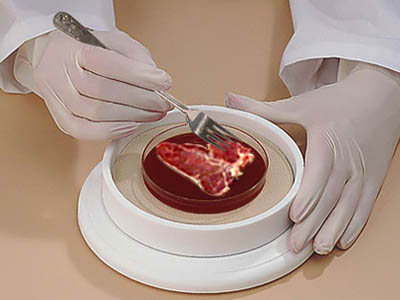
His group at Maastricht University in the Netherlands has grown small pieces of muscle about 2 cm long, 1cm wide and about 1 mm thick.
They are off-white and resemble strips of calamari in appearance. These strips will be mixed with blood and artificially grown fat to produce a hamburger by the autumn.
Dutch scientists have created strips of muscle tissue using stem cells with the aim of producing the first lab-grown hamburger later this year
The cost of producing the hamburger will be $300,000, but Prof. Mark Post says that once the principle has been demonstrated, production techniques will be improved and costs will come down.
“The reason we are doing this is not to show a viable product but to show that in reality we can do this,” he said.
“From then on, we need to spend a whole lot of work and money to make the process efficient and then cost effective.”
So why use such high tech methods to produce meat when livestock production methods have done the job effectively for thousands of years?
It is because most food scientists believe that current methods of food production are unsustainable.
Some estimate that food production will have to double within the next 50 years to meet the requirements of a growing population. During this period, climate change, water shortages and greater urbanization will make it more difficult to produce food.
Prof. Sean Smukler from the University of British Columbia said keeping pace with demand for meat from Asia and Africa will be particularly hard as demand from these regions will shoot up as living standards rise. He thinks that lab grown meat could be a good solution.
“It will help reduce land pressures,” he said.
“Anything that stops more wild land being converted to agricultural land is a good thing. We’re already reaching a critical point in availability of arable land,” he said.
Lab-grown meat could eventually become more efficient than producing meat the old fashioned way, according to Prof. Mark Post. Currently, 100g of vegetable protein has to be fed to pigs or cows to produce 15 g of animal protein, an efficiency of 15%. He believes that synthetic meat could be produced with an equivalent energy efficiency of 50%.
So what is the synthetic burger likely to taste like?
“In the beginning it will taste bland,” says Prof. Mark Post.
“I think we will need to work on the flavor separately by trying to figure out which components of the meat actually produce the taste and analyze what the composition of the strip is and whether we can change that.”
Prof. Mark Post also said that if the technology took off, it would reduce the number of animals that were factory farmed and slaughtered.
But Dr. David Steele, who is president of Earthsave Canada, said that the same benefits could be achieved if people ate less meat.
“While I do think that there are definite environmental and animal welfare advantages of this high-tech approach over factory farming, especially, it is pretty clear to me that plant-based alternatives… have substantial environmental and probably animal welfare advantages over synthetic meat,” he said.
Dr. David Steele, who is also a molecular biologist, said he was also concerned that unhealthily high levels of antibiotics and antifungal chemicals would be needed to stop the synthetic meat from rotting.
The animated comedy The Simpsons has reached a major television milestone with the broadcast of its 500th episode on Sunday.
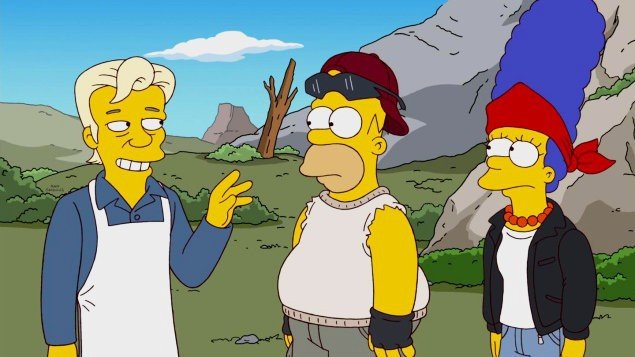
It saw the cartoon family exiled to a community of outsiders where they met Wikileaks founder Julian Assange.
Fox TV said Julian Assange recorded his lines from the UK, where he is fighting extradition to Sweden over alleged sex offences – charges he denies.
The animated comedy is in its 23rd season, making it the longest-running prime-time scripted programme on TV.
The Simpsons show is contracted to run for another two seasons.
In the 500th episode, entitled At Long Last Leave, the Simpsons are shown sneaking into a secret town hall meeting where they hear they are about to be thrown out of town.
They subsequently find a welcome in “The Outlands”, where Julian Assange is their neighbor.
The 500th episode saw the Simpsons exiled to a community of outsiders where they met Wikileaks founder Julian Assange
Previous guest voices on the programme include former Prime Minister Tony Blair, graffiti artist Banksy and novelist Thomas Pynchon.
Once the show’s 25th season has been completed, the number of episodes made will stand at 559.
Creator Matt Groening said the writers still had stories to tell, mostly involving “characters we’ve never dealt with”.
“We have a character we call Squeaky-Voiced Teen,” Matt Groening told the Los Angeles Times.
“I’d like to know a little bit more about that guy.”
The 42-year-old Jennifer Lopez looked like a giddy teenager as she and the 24-year-old Casper Smart got playful in Santa Barbara, California earlier this week.
Jennifer Lopez and Casper Smart celebrated the Valentine’s Day holiday on Tuesday by exploring their childish sides.
J Lo looked carefree and happy as she and Casper Smart played on a swing set by the ocean.
Casper Smart certainly looked his age in a pair of white and black board shorts with a complementary black hooded sweatshirt.
Jennifer Lopez still managed to look impossibly chic in a cream dress and long grey cable knit sweater as she joined her lover on the playground.
J Lo looked happy and in love as she hopped on the swing with Casper Smart for a full embrace and couldn’t resist giggling with glee.
After getting frisky on the swings, the pair took a walk on the beach to play in the surf.
They sat a distance apart on a large rock before moving on for a romantic hand-in-hand stroll.
Later, they carved a large heart in the sand with sticks which read “Jennifer + Casper.”
The couple showed off an additional romantic Valentine’s Day moment when Jennifer Lopez tweeted a black and white photograph of the two cozying up to one another.
Her eyes are closed in the snap while the shirtless backup dancer planted a kiss on her forehead.
However, Jennifer Lopez appears to have since erased the photo.
J Lo also spared some love for her fans on February 14, posting: “HAPPY VALENTINES DAY #JLOVE?RS!! I wish U ALL lots of love today and always! I l appreciate and love you all. #sweettweet.”
Jennifer Lopez and Casper Smart are now in Rio De Janeiro, Brazil, together, where they plan on attending the world famous Carnival festival.
They were seen today hanging out on the balcony of their hotel, waving to fans and taking pictures of Ipanema beach.
This time, they were on the same page fashion-wise.
Jennifer Lopez wore tight black skinny jeans, a black sweater and a cream and black plaid scarf looped around her neck .
Casper Smart was in black shorts, a striped black vest and a straw fedora.
They were also captured with Jennifer Lopez’s manager, Benny Medina, who posed for pictures with the diva that Casper Smart took.
Jennifer Lopez and her manager, Benny Medina, in Rio de Janeiro posing for pictures that Casper Smart took
Jennifer Lopez and Casper Smart have been dating since November, and though they seem happy together, there’s no chance Jennifer is rushing to remarry.
J Lo told Today show host Matt Lauer recently that she wasn’t planning on tying the knot again in the near future.
She said: “It’s not time to think about that yet. It’s still fresh.”
Jennifer Lopez has had more time to fully get over ex-husband Marc Anthony, with whom she recently shared a good humored appearance on the Ellen DeGeneres show.
She playfully “slapped” the father of her children during the interview, prompting him to joke: “That was assault on camera.”
Jennifer Lopez and Marc Anthony ended their seven-year marriage in July.
Bobbi Kristina Brown, Whitney Houston’s daughter, was allegedly found doing drugs yesterday, hours after her mother’s funeral.
Bobbi Kristina, 18, apparently slipped away from friends and family after the emotional four-hour home going service in New Jersey.
Instead of joining them at a restaurant in Newark, Bobbi Kristina went off to be alone and even caused panic this morning as Whitney Houston’s coffin was being transported to the Fairview Cemetery to be buried.
“Everyone was freaking out and calling Bobbi Kristina’s cell,” a family friend told The Daily Beast.
“It was so much commotion and activity after the funeral that Bobbi Kristina just slipped away. Ms. Cissy [Houston] was beside herself.”
The teenager was understandably left devastated when her 48-year-old superstar mother was found dead in a bathtub at the Beverly Hilton hotel on February 11.
Bobbi Kristina Brown, Whitney Houston’s daughter, was allegedly found doing drugs yesterday, hours after her mother’s funeral
Bobbi Kristina Brown was apparently found “getting high” after she received the news her mother had passed away and there were conflicts between family members on whether she should be taken to rehab straight away or left to mourn with her family.
“It’s a horrible situation for everybody” the family friend said.
“They tried to save Whitney, and it didn’t work. Now with Bobbi Kristina, they fear the same thing is happening again and they wont’ be able to stop it either.”
“Bobbi Kristina is all Ms. Cissy has left of Whitney. She’s so tired, but she’s ready to fight again to save her grandbaby.”
Bobbi Kristina had apparently grown up seeing her mother doing drugs and her family is concerned that she may follow in Whitney Houston’s footsteps in the more negative aspects of her life.
Although an associate of the Houston family told The Daily Beast that Bobbi Kristina went to rehab last year, the family would not be drawn on the matter.
“Bobbi Kristina had the people she loved and love her the most around,” the source said in the days before the funeral.
“Ms. Cissy was holding on tight and watching her every move.”
But Bobbi Kristina was apparently left devastated after her father Bobby Brown walked out of the funeral yesterday with the nine guests he brought with him after he claimed he was asked to move by security three times.
“That was just too much for Bobbi Kristina to handle,” the source added.
“All that drama, and Cissy finally asked him to come in and stay, but Bobby wouldn’t.
“Cissy only did that to help Bobbi Kristina, because Cissy cannot stand Bobby.
“She just didn’t want a big drama with him on that day of all days.”
Bobbi Kristina is also apparently upset following her parents’ divorce in 2007 and how quickly Bobby Brown moved on.
Bobby Brown has become engaged and has a two-year-old little boy with fiancé Alicia Etheredge.
“There was some confusion about Bobbi Kristina’s whereabouts last night for a short time, but she’s OK,” a family spokesperson told The Daily Beast.
“She needed some time alone.”
The Houston family rep denied that Bobbi Kristina was on just and said that she was just going through a “very hard time as you can expect”.
Nature photographers wait at Yosemite National Park until the moment when the sun and earth align to create a fleeting phenomenon, the firefall.
This marvel of celestial configuration happens in a flash at sunset in mid-February – if the winter weather cooperates.
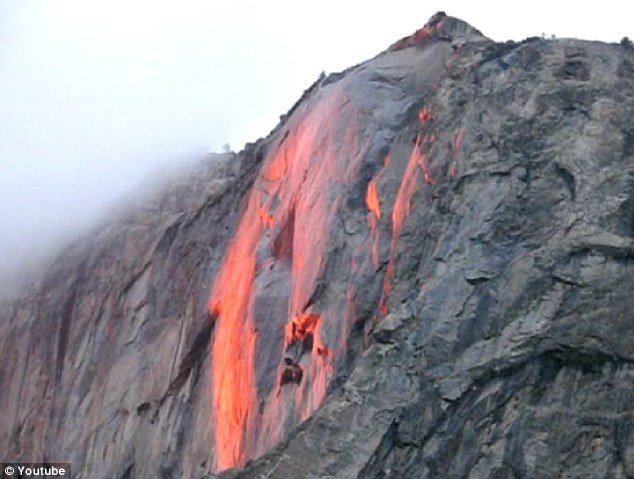
On those days the setting sun illuminates one of the park’s lesser-known waterfalls so precisely that it resembles molten lava as it flows over the sheer granite face of the imposing El Capitan.
Every year growing numbers of photographers converge on the park, their necks craned toward the ephemeral Horsetail Fall, hoping the sky will be clear so they can duplicate the spectacle first recorded in color in 1973 by the late renowned outdoors photographer Galen Rowell.
“Horsetail is so uniquely situated that I don’t know of any other waterfall on earth that gets that kind of light,” said Michael Frye, who wrote the book “The Photographer’s Guide to Yosemite”.
“How many are perched on a high open cliff? Most are in an alcove or canyon and won’t get the sun setting behind it. Yosemite’s special geography makes this fall distinctive,” Michael Frye said.
Four decades ago, photographers had only to point and shoot to capture another famous Yosemite firefall – a man-made cascade of embers pushed from a bonfire on summer nights from Glacier Point.
In late February, the Horsetail Fall in Yosemite National Park is lit by the sunlight near dusk and displays a rich color like fire
But photographing Horsetail is a lesson in astronomy, physics and geometry as hopefuls consider the azimuth degrees and minutes of the earth’s orbit relative to the sun to determine the optimal day to experience it.
They are looking for the lowest angle of light that will paint Horsetail the colors of an iridescent sunset as rays reflect off granite behind the water. It materializes in varying degrees of intensity for the same two weeks every year.
“If you hit it at just the right time, it turns this amazing color of gold or red-orange,” said Michael Frye, a photo instructor with the Ansel Adams Gallery in the park.
Ansel Adams photographed the fall, but his iconic black and white images do not capture its fiery quality, and it’s unclear whether he ever noted it.
To be successful in photographing the watery firefall, it takes luck and timing, and the cooperation of nature. Horsetail Fall drains a small area on the eastern summit of El Capitan and flows only in the winter and spring in years with adequate rain and snow, which is scarce this year. Experts say it doesn’t take a lot of water for the fall to light up.
Most important, the southwestern horizon must be clear, and February is the time of year when storm clouds often obscure the setting sun.
When conditions come together, the scrawny Horsetail Fall is the shining star of a park famed for its other waterfalls raging Yosemite Fall and Bridalveil Fall. But Horsetail is the longest free-falling one, with a drop of 1,500 feet before it hits granite and spills another 500.
The fire lights up around dusk and lasts for about two minutes. The best views are east of El Capitan along the main roads into and out of Yosemite Valley. Most photographers gather at the El Capitan picnic area, a small pullout marked only by a sign with a table etched on it. But park officials say the inexperienced can look for the hordes of tripods and cameras to find a vantage point.
Recent storms and snowfall mean the finicky fall is flowing again, and park officials are hopeful it will last through February 24, which is generally the last day of the year it can be seen. Once an obscure event, park officials say that Internet discussions have made it more popular in recent years.
The popularity is reminiscent of an actual fiery fall that entertained guests in the park from 1930 to 1968. Each summer evening as the sun set, employees of the park concessionaire would build a huge red fir bark fire atop Glacier Point. At 9 p.m., as the fire burned down to embers and the Indian Love Song waned, someone would yell, “Let the fire fall!”.
With long rakes men pushed glowing coals over the 3,200-foot cliff.
Had visitors looked in the opposite direction at a different time of year they would have seen the watery fire-fall of nature.
“There’s no comparison, and I’ve seen both,” said park spokesman Scott Gediman.
“The natural activities and occurrences in Yosemite are far more amazing and more valuable than the human-made ones – everything from a sunset to wildlife to rainbows at Vernal Fall. There are a lot of amazing things, and they’re here year after year.”
At least 38 inmates have died in Apodaca prison riot in northern Mexico.
Security officials said the inmates had either forced or bribed a number of guards to open the doors between two separate wings of the jail.
A fight broke out between the prisoners, in which the killings occurred.
Deadly prison fights between rival gangs are not uncommon in Mexico: last month 31 inmates were killed in similar circumstances in Tamaulipas state.
Nuevo Leon state security spokesman Jorge Domene said inmates at the Apodaca prison had also set fire to mattresses and other flammable objects.
“Until now, we have counted 38 dead,” he said.
At least 38 inmates have died in Apodaca prison riot in northern Mexico
Jorge Domene said investigations were under way to establish the causes behind the fight, but that so far the evidence pointed towards a confrontation between rival gangs.
He said the security forces were now in control of the situation.
Relatives of the prisoners have gathered outside the prison, north of the city of Monterrey, to find out news about who has been killed and injured.
Jorge Domene asked them to be patient.
“We have more than 3,000 inmates in this jail and we have to account for all of them first,” he said.
Mexican jails are notorious for overcrowding, corruption and rioting.
In January, 31 inmates were killed at a prison in Altamira, in Tamaulipas state, when rival gangs confronted each other with homemade weapons and knives.
Ryan Marquiss is the first child in the world to survive being born with his heart outside of his body.
Having the heart outside the body, ectopia cordis, is an incredibly rare condition and usually babies are stillborn or die within three days.
Ryan Marquiss’ heart also hadn’t developed and so he only had half a heart – a combination of defects which is so rare that the boy is the only one of his kind in the world.
Doctors advised his devastated parents to terminate the pregnancy when Ryan Marquiss’ mother was just 12 weeks pregnant, but they bravely refused.
And it is a gamble that has paid off, as the boy is just about to celebrate his third birthday.
His mother, Leighann Marquiss, 34, said: “We wanted to let nature take its course, so we refused to have the termination.
“We knew it would be a miracle if he survived the birth but we were unwilling to take matters into our own hands.
“The doctors told us that no baby with Ryan’s combination of defects had ever survived, so the fact that he is here with us today, is just amazing. He really has astounded everyone.”
Doctors discovered the problem at 12 weeks into his mother’s pregnancy.
Ryan Marquiss is the first child in the world to survive being born with his heart outside of his body
The incredibly rare defect, ectopia cordis, affects only 8 in every million births and 90% of these are stillborn or die within three days.
And adding to that Ryan was also suffering from hypoplastic right heart syndrome, where only the left side of the heart has developed properly.
Leighann Marquiss, who lives with husband Henry, 34, and their other children Natalie, 7, and Ainsley, 5, in Pennsylvania, USA, said: “All the odds were stacked against him. We knew that it was a miracle that he had been born alive with his heart outside his body, but then to have another life-threatening condition of only having half a heart meant that everything was against him surviving.”
Doctors advised Ryan Marquiss’ parents to terminate the pregnancy when his mother was just 12 weeks pregnant, but they bravely refused and the boy the boy is just about to celebrate his third birthday
Doctors at the Children’s National Medical Centre in Washington delivered him at the end of February 2009 by caesarian, helped by a team of 30 medical professionals.
Dr. Mary Donofrio, Director of the fetal heart programme at the Children’s National Medical Centre said: “If he survived the birth his exposed heart likely would become infected and kill him. Even if infection didn’t happen his heart had one working ventricle and he would require open heart surgery to rewire the blood flow through it.
“I told the family right from the start that if he survived, it was a miracle.”
Leighann Marquiss said: “His heart was protruding out of his chest cavity. The heart was only covered by a thin membrane.
“But he was alive and we just had to pray that he would carry on fighting.”
Ryan Marquiss had to have an operation at just two weeks old to have a central shunt placed in his heart to ensure proper blood flow.
Then he underwent more than a dozen operations over the next two years. He had operations to replumb his heart so that the half a heart would do the job of a full size heart. Doctors also put tissue expanders under his skin to produce more skin so they could use it to cover his exposed heart.
Mrs Marquiss said: “He has done amazingly well. He has been so brave throughout it, and his sisters have kept him going too. They have been to see him in hospital and made recordings of themselves at home, so Ryan could hear them.
“He just kept on fighting. He refused to die, and he kept on proving everyone wrong.
“He will need some sort of chest protection operation in the future but it may be overcome by just wearing some sort of protective padding when he plays sport. He won’t be a competition athlete, but we are hoping he can run around on the playground and climb trees like any other child.”
Ryan Marquiss’ case has now been reported in a medical journal. Doctors believe that his survival offers hope for other babies with serious heart defects.
In the future he may require a heart transplant, but at the moment, he is progressing well.
His mother said: “He really is a medical miracle. When I look at him running around the playground and playing on the climbing wall, I praise God. Every day with Ryan is one we were told we wouldn’t have. So we cherish each moment.”
A Swedish man survived for two months in his snow-covered car on nothing but snow after he was trapped in sub-zero temperatures.
The man, 44, had eaten nothing but handfuls of snow since December 19 when he became bogged down in drifts near the town of Umea in southern Sweden.
Experts think the man went into a kind of human hibernation which slowed down his metabolism and pulled him through the ordeal.
The man had driven off the main road on to forest tracks when his car became stuck fast. On Friday a passing man on a snowmobile stopped to scrape snow from the windscreen of the vehicle and saw movement inside.
As he recovered in a hospital today details emerged of depression and debts piling up on him and it is thought he might have been trying to take his own life.
Police initially thought the man was a nature lover who had become trapped in the snow while on an expedition to photograph elk.
But now it emerges there was a court judgement against him in December because of debts totaling $235,000.
A Swedish man survived for two months in his snow-covered car on nothing but snow after he was trapped in sub-zero temperatures
Neighbours of the man in the town of Orebro in central Sweden said he had also broken up with his girlfriend and had lost contact with his father and other family members 20 years ago.
“We now have to wait until he is better to try to find out what really was in his mind,” said police officer Ebbe Nyberg.
The man survived by taking handfuls of snow from the roof of the car. The only other things found with him were cigarettes and comic books.
“Absolutely incredible that he is alive, in part considering that he hasn’t had any food, but also bearing in mind that it was really cold for a while there after Christmas,” said a member of the emergency services team deployed to rescue him.
The man was emaciated, barely able to move and could barely speak.
“He was at the end of his tether,” said a police spokesman.
“It was doubtful he could have survived one or two more days.”
The man was wrapped up in a sleeping bag in the car but he had no other warmth; the fuel had run out long ago as he kept the heater running to try to survive as the thermometer plunged on some nights to minus 30 degrees C.
He is recovering in the intensive care ward at Umea University Hospital where he is being fed liquid proteins.
The man has hypothermia and is severely malnourished. He was never registered as missing.
Policeman Ebbe Nyberg added: “He was in a very poor state when we found him. He could not speak, just a few broken sentences and the words snow…eat. And he managed to say he hadn’t eaten anything since December.”
After a very public funeral attended by thousands yesterday, Whitney Houston is laid to rest surrounded by just a select few in New Jersey today.
Whitney Houston is to be buried in a private ceremony at the Fairview Cemetery in Westfield where her father, John Russell Houston Jr., was interred in 2003.
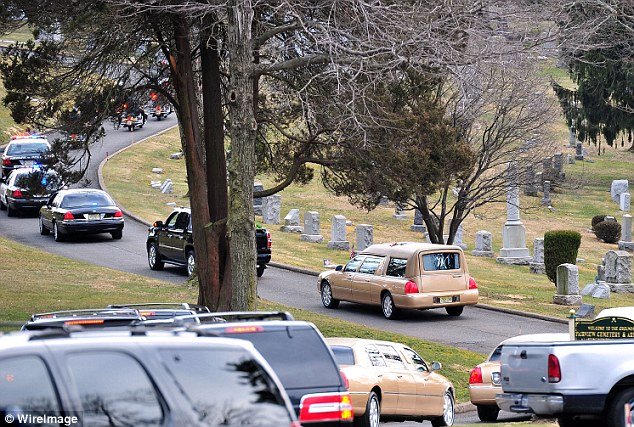
The late singer’s silver casket was transported to the cemetery in a gold-painted hearse on Sunday morning, closely following a black truck brimming with purple roses, pink carnations and white lilies.
Whitney Houston’s casket was reportedly watched over by 10 security guards after it left the invitation-only service attended by some of the music world’s biggest stars yesterday.
Authorities said the tight security has continued during the burial, with a heavy officer presence in and around the ceremony in anticipation of fans flocking to the site to say their final goodbyes.
Fans carrying banners, flowers and photographs of the late star were gathered along the route to the cemetery as police escorted the hearse. It arrived at the cemetery just before 11:45 a.m.
Whitney Houston is to be buried in a private ceremony at the Fairview Cemetery in Westfield where her father, John Russell Houston Jr., was interred in 2003
The driver appeared to be crying as she played the singer’s greatest hit I Will Always Love You, the New Jersey Star-Ledger reported.
The burial comes a day after the singer was mourned at the funeral – called her “going home” by her family – held in the New Hope Baptist Church in Newark where she sang in the choir as a child.
High-profile friends of Whitney Houston, including Stevie Wonder, Alicia Keys, music mogul Clive Davis and her The Bodyguard co-star Kevin Costner, spoke or performed at the highly-charged service.
The ceremony, which closed with Whitney Houston’s song I Will Always Love You, was also attended by her mother Cissy Houston, who wailed “My baby!” as the casket was carried out.
Whitney Houston’s on-off boyfriend Ray J – who reached out for the casket as it passed – and her teenage daughter Bobbi Kristina also attended the service.
The star’s distraught ex-husband Bobby Brown caused a ruckus when he bickered with security about the number of guests accompanying him. He was told he could bring two but arrived with nine.
Bobby Brown stormed out of the service after security tried to move him, but later returned.
The service came a week after Whitney Houston was found dead in a bathtub at the Beverly Hilton hotel in California.
Questions remains about what caused Whitney Houston’s death and investigators are examining prescription drugs found in her hotel room.
Coroners have deferred city a cause on her death certificate as they are waiting for the outcome of toxicology tests.
It was believed the family would be able to see Whitney Houston’s body once more before she is buried, TMZ reported.
Iran has stopped oil sales to UK and France, the nation’s oil ministry has announced.
A spokesman was reported as saying on the ministry’s website that Iran would “sell our oil to new customers”.
European Union member states had earlier agreed to stop importing Iranian crude from 1 July.
The move is intended to pressure Tehran to stop enriching uranium, which can be used for civilian nuclear purposes but also to build warheads.
Iran insists its nuclear programme is peaceful, but the UN’s International Atomic Energy Agency says it has information suggesting Iran has carried out tests “relevant to the development of a nuclear explosive device”.
Sunday’s statement on the oil ministry website was attributed to spokesman Ali Reza Nikzad Rahbar.
The French news agency AFP says the decision is not expected to have a big impact. Last year France bought only 3% of its oil – 58,000 barrels per day (b/d) – from Iran and the UK imported even less Iranian oil. A UK government official said there would be “no impact on UK energy security”.
Iran decided to stop oil sales to UK and France
Some Iranian media had announced on Wednesday that Iran had stopped oil exports to the Netherlands, Greece, France, Portugal, Spain and Italy in retaliation for the EU’s oil embargo, but this was later denied by the oil ministry.
The EU oil embargo, agreed last month, was phased so member states that were relatively dependent on Iranian crude – notably Greece, Spain and Italy – had enough time to find alternative sources.
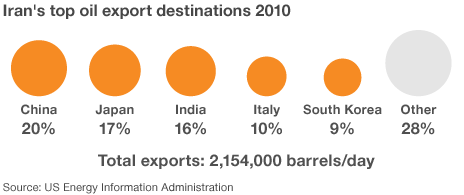
The bloc currently buys about 20% of Iran’s oil exports, which account for a majority of government revenue.
However, Iran’s Oil Minister Rostam Qasemi said that a cut in exports to Europe would not hurt Tehran.
Oil industry sources quoted by Reuters news agency say Iran’s top oil buyers in Europe have already started reducing purchases of Iranian crude.
Last year Iran supplied more than 700,000 barrels per day (b/d) to the EU and Turkey, but by the start of this year that had dropped to about 650,000 b/d, Reuters reported on Thursday.
France’s energy giant Total has stopped buying Iranian crude and Royal Dutch Shell, one of the biggest purchasers of Iranian oil, has cut back sharply, market sources told Reuters.
According to Reuters estimates, Tupras of Turkey was the biggest European customer for Iranian oil in 2011, taking about 200,000 b/d, followed by Total (100,000 b/d), Shell (100,000 b/d), Hellenic of Greece (80,000 b/d) and Cepsa of Spain (70,000 b/d).
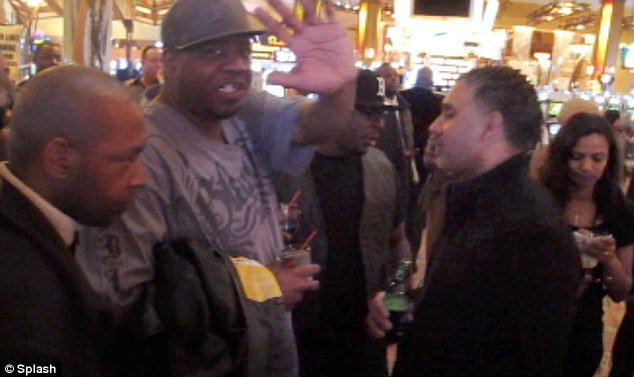
Bobby Brown hit the Mohegan Sun Casino in Connecticut at 2:00 a.m. this morning, after his show with New Edition ended at 10:00 p.m.
Bobby Brown, 43, had earlier stormed out of his ex-wife Whitney Houston’s funeral following a reported dispute over seating arrangements and not being allowed to be with his daughter Bobbi Kristina.
At the casino, he had reportedly been chatting with some unknown female strangers and was followed up an escalator by friends and fans.
Bobby Brown’s large entourage together with the surrounding cameramen apparently made for a considerable crowd, and an on duty Connecticut police officer was called over when his people objected to being followed by the photographers.
Bobby Brown hit the Mohegan Sun Casino in Connecticut at 2.00 am, just hours after Whitney Houston’s funeral
Just hours after Whitney Houston’s funeral, Bobby Brown appeared upbeat as he performed onstage with his New Edition bandmates to a 7,000-strong sellout crowd at Mohegan Sun Arena in Uncasville, Connecticut.
The former rapper was seen onstage wearing a white tuxedo jacket, matching white shirt underneath a black satin vest, and black trousers.
His outfit was a far-cry different from the all-black mourning attire he had worn to attend Whitney Houston’s funeral hours earlier.
Bobby Brown appeared in good spirits as he sang to the crowd, smiling at times and pulling quirky expressions.
He also did several energetic dance moves alongside his fellow New Edition members.
Bobby Brown arrived onstage a reported 10 minutes late after his band already started the performance, according to USA Today.
During the fourth track, Bobby Brown was said to have strode up to the stage to cheers from the audience and addressed the crowd.
“I want to give blessings to my ex-wife, Whitney Houston, I love you. I want to give blessings to my kids, my fiancée (Alicia Etheridge), my brothers, and each of you,” he said.
Before launching into his track Hit Me Off, Bobby Brown added: “And if you didn’t already know, I go by the name of bad a** Bobby Brown.”
US scientists found that starvation on alternate days can make people live longer by boosting brain power and shedding weight.
The research team said that fasting on and off can boost brain power and help to lose weight at the same time.
The National Institutes for Aging said their research was based on giving animals the bare minimum of calories required to keep them alive and results showed they lived up to twice as long.
The diet has since been tested on humans and appears to protect the heart, circulatory system and brain against age-related diseases like Alzheimer’s.
“Dietery energy restriction extends lifespan and protects the brain and cardiovascular system against age-related disease,” said Mark Mattson, head of the laboratory of neurosciences at the NIA and professor of neuroscience at John Hopkins University in Baltimore.
“We have found that dietary energy restriction, particularly when administered in intermittent bouts of major caloric restriction, such as alternative day fasting, activates cellular stress response pathways in neurones,” Prof. Mark Mattson said to the Sunday Times.
In one set of experiments, a group of mice were only fed on alternate days while others were allowed to eat daily.
Both groups were given unlimited access to food on the days they were allowed to eat and eventually consumed the same amount of calories.
Prof. Mark Mattson said he found the mice fed on alternate days were more sensitive to insulin and needed to produce less of it.
High levels of the hormone, which is produced to control sugar levels after a meal or snack, are usually associated with lower brain power and are at a higher risk of diabetes.
The brains from both sets of rodents were then examined and Prof. Mark Mattson said he found the calorie restricted diets appeared to improve the function of brain synapses.
These are the junctions between brain cells which promote the generation of new cells and make them more resistant to stress.
Previous research has found that starving yourself for a few days can help in the fight against cancer.
Scientists found that depriving healthy cells of the food they need sends them into a survival mode, making them highly resistant to stress and damage caused from chemotherapy.
Experts have described the behavior similar to animals waiting out the winter by hibernating.
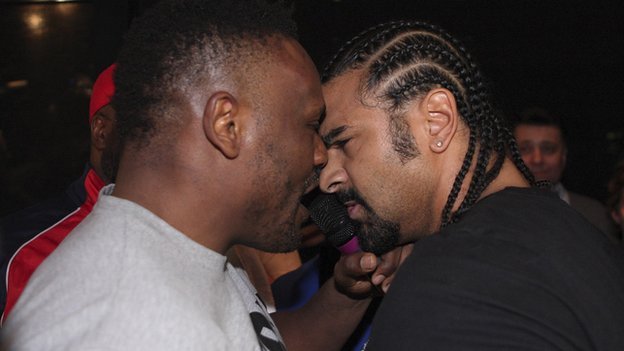
British boxer Dereck Chisora has been arrested by German police after a brawl with fellow boxer David Haye in Munich at the post-fight news conference after Chisora was defeated by Vitali Klitschko.
Dereck Chisora and his trainer, Don Charles, were taken from Munich airport by police as part of the investigation.
David Haye and Dereck Chisora clashed at the post-fight press conference after Chisora was beaten on points by defending WBC champion Vitali Klitschko.
Police are still searching for David Haye, who was not present at the hotel when sought for questioning.
David Haye showed up at the news conference to confront Vitali Klitschko, who he believes changed his mind on a potential fight between the pair.
However, that sparked a verbal exchange with Dereck Chisora and the pair squared up to each other before a brawl ensued.
Dereck Chisora accused David Haye of “glassing him”, before saying at least four times that he would shoot the former WBA heavyweight champion.
He added: “If David doesn’t fight me, I am going to physically burn him.”
Dereck Chisora arrived at the airport to return home, but was stopped by police, who have detained him at their Munich headquarters.
A Munich Criminal Police spokesman said: “Police picked up Mr. Chisora at the airport at approximately 10:30 a.m. [German time] and are bringing him in for the investigation.
“They also picked up Mr. Chisora’s trainer for questioning. The police went to the hotel to speak to them but we had been informed they had just checked out.”
The spokesperson added: “At present we do not know where Mr. Haye is.
“We are currently looking for him. He was not at the hotel this morning and we have not seen him at the airport.”
British boxer Dereck Chisora has been arrested by German police after a brawl with fellow boxer David Haye in Munich
Dereck Chisora has had part of his fight purse withheld by the World Boxing Council after he slapped Vitali Klitschko at the pre-fight weigh-in on Friday.
He appeared to spit water towards Vitali Klitschko’s brother, Wladimir, moments before Saturday night’s bout began.
More controversy followed when Dereck Chisora exchanged words with the Klitschko’s after the result was announced.
The British Boxing Board of Control has said it will review the incident.
Dereck Chisora – David Haye brawl full transcript
Bernd Boente, manager of Vitali and Wladimir Klitschko: With the bad experience we’ve had with British fighters, we will now look for other countries. Contrary to David Haye, Dereck Chisora really went for it. He really tried.
David Haye (from rear of the room): You don’t want to fight David Haye, no?
Boente: You had an offer. You didn’t accept it. Now you are out. You are out. Out, out, out. You cannot talk yourself back into the fight; you have no belts. Chisora showed heart, contrary to you. You showed your toe [referring to Haye’s toe injury].
Haye: I accepted your offer in December.
Dereck Chisora: We’ll get it on in London – be quiet. David Haye is an embarrassment, Sky Sports don’t do Box Office any more because of David Haye. He messed it up for all those young fighters coming through. I’m going to give you two slaps for that. If Haye is a fighter, he should fight me.
Haye: You’ve lost three fights in a row (actually three of his last four).
Chisora: Let’s fight.
Chisora’s promoter Frank Warren: I’ve got a great idea. If Dereck fights David, the winner fights Vitali.
Boente: Sounds like the perfect plan.
Haye: Vitali said he could knock me out, do you think you can knock me out?
Chisora’s trainer Don Charles: Be quiet, can security get him out of here?
Haye: Vitali said after his last fight, ‘I want to fight David Haye’. Where is he now? He said he wanted to fight me, I agreed the money, I agreed everything in December.
Chisora: How’s your toe? How’s your toe? How’s your toe?
Haye: You’ve lost your last three fights, you lost to Tyson Fury. You’re a loser.
Chisora: Tell that to my face. I’m coming down, tell that to my face.
Chisora leaves his seat and approaches Haye at the back of the room, where a melee ensues. Haye at one point picks up a video camera tripod and swings it.
The two are eventually pulled apart before Chisora returns to the front of the room.
Chisora: (Shouting and indicating towards Haye). He glassed me. I swear to God, David, I am going to shoot you. I am going to shoot you. I am going to physically shoot David Haye. He glassed me. He glassed me. He glassed me. I’m not having it. He glassed me.
Haye’s trainer Adam Booth approaches Chisora, his head bleeding.
Chisora: (Referring to Booth’s cut) I’m sorry about that. Adam, your fighter glassed me.
Booth: I want to know who glassed me.
Chisora: As you were trying to hold your fighter away, he [Haye] probably glassed you by mistake.
Booth: You hit me with a bottle.
Chisora: David had a bottle in his hand.
Booth: No, no, David didn’t hit me with a bottle. I want to know who glassed me. Someone hit me with a bottle.
The two are separated before Booth addresses Vitali Klitschko.
Booth: Vitali, you are a great fighter but your manager is an embarrassment to the sport. Congratulations for winning.
Chisora: (Addressing Booth) Either we do it in the ring or outside of the ring. Because I want him. If David don’t fight me, Adam, I am telling you the God’s honest truth, I am going to physically burn him. So you tell him I said that. I am going to find him.