Jessica Simpson is due to give birth any day now and she has taken to her Twitter page to announce she has been dreaming about her trip to the hospital.
Jessica Simpson, 31, still won’t be putting style on the backburner as she hopes that when the time comes, she’ll be dressed to impress.
She tweeted yesterday: “I just woke up from a dream that I wore a leopard caftan in the hospital. Fabulous!! Now I need to find one!”
Last week it was claimed that Jessica Simpson had already given birth but Jessica used the microblogging site to slam the rumors.
The star wrote: “To everyone who keeps congratulating me on the birth of my baby girl…I’m still pregnant!! Don’t believe what you read ladies and gents.”
Jessica Simpson still won’t be putting style on the backburner as she hopes that when the time comes, she’ll be dressed to impress
Jessica Simpson and her very large bump are frequently spotted out and about with fiancé Eric Johnson.
She has been upfront about her pregnancy and the cravings it’s brought about.
Jessica Simpson has revealed in a series of interviews that she is indulging in her favorite childhood foods.
Unlike some expectant mothers, she says she is not concerned about watching what she eats and is happy to “give into my cravings”.
Jessica Simpson is said to have put a grand baby weight loss plan in place after giving birth and has cited mother-of-two Jessica Alba as her post-baby inspiration.
She is rumored to be the next face of Weight Watchers for the slim down plan following the birth.
Canadian researchers, who examined the impact of the medications on the whole body, say common anti-depressants could be doing patients more harm than good.
Researchers at McMaster University examined previous patient studies into the effects of anti-depressants and determined that the benefits of most anti-depressants compare poorly to the risks, which include premature death in elderly patients.
“We need to be much more cautious about the widespread use of these drugs,” said study leader and evolutionary biologist Paul Andrews.
“It’s important because millions of people are prescribed anti-depressants each year, and the conventional wisdom about these drugs is that they’re safe and effective.”
Anti-depressants are designed to relieve the symptoms of depression by increasing the levels of serotonin in the brain, where it regulates mood.
The vast majority of serotonin that the body produces, though, is used for other purposes, including digestion, forming blood clots at wound sites, reproduction and development.
The researchers, whose study was published in the online journal Frontiers in Psychology, found that anti-depressants had negative health effects on all processes normally regulated by serotonin.
This included a higher risk of developmental problems in infants, problems with sexual function, digestive problems and abnormal bleeding and stroke in the elderly.
The authors reviewed three recent studies showing that elderly anti-depressant users are more likely to die than non-users, even after taking other important variables into account. The higher death rates indicate that the overall effect of these drugs on the body is more harmful than beneficial.
The higher death rates among anti-depressants users indicate that the overall effect of these drugs on the body is more harmful than beneficial
“Serotonin is an ancient chemical. It’s intimately regulating many different processes, and when you interfere with these things you can expect, from an evolutionary perspective, that it’s going to cause some harm,” Paul Andrews said.
Millions of people are prescribed anti-depressants every year, and while the conclusions may seem surprising, Paul Andrews says much of the evidence has long been apparent and available.
“The thing that’s been missing in the debates about anti-depressants is an overall assessment of all these negative effects relative to their potential beneficial effects,” he says.
“Most of this evidence has been out there for years and nobody has been looking at this basic issue.”
In previous research, Paul Andrews and his colleagues had questioned the effectiveness of anti-depressants even for relieving depression. They found patients were more likely to suffer relapse after going off their medications as their brains worked to re-establish equilibrium.
Paul Andrews says it is important to look critically at their continuing use.
“It could change the way we think about such major pharmaceutical drugs,” he said.
“You’ve got a minimal benefit, a laundry list of negative effects – some small, some rare and some not so rare. The issue is: does the list of negative effects outweigh the minimal benefit?”
Locals in Hradok, Slovakia, are currently living in a fear of this tiny tearaway – whose fearsome fighting skills have seen it dubbed the Kung Fu Guinea Pig.
The pint-sized ninja terrified dog walker Marta Domotorova when it attacked her Hungarian pointer dogs during a stroll on heathland near her Hradok home.
With a series of spinning kicks and leaps the fearless rodent saw off both the hapless hounds as they tried to play with it.
Marta Domotorova said: “Bona started barking and Meggie wanted to sniff it. I guess it got pretty scared although both dogs are harmless and just wanted to play.
“But then they got pretty scared when the guinea pig started its Kung Fu chops.”
The pint-sized ninja terrified two Hungarian pointer dogs during a stroll in Hradok
Local wildlife experts think the furious furball is an escaped household pet.
One said: “It’s not the first time we’ve heard of this. These creatures are usually docile family pets but when threatened they will fight for their lives like any animal that thinks it’s been cornered.”
Others have questioned whether the guinea pig is actually a hamster and some cynics – believe it or not – have suggested the little critter’s flight may have had some digital assistance.
The Office for National Statistics in UK has announced that the country’s economy has returned to recession, after shrinking by 0.2% in the first three months of 2012.
A sharp fall in construction output was behind the surprise contraction, the Office for National Statistics (ONS) said.
A recession is defined as two consecutive quarters of contraction. The economy shrank by 0.3% in the fourth quarter of 2011.
Wednesday’s figure is an early estimate and is subject to at least two further revisions in the coming months. It is compiled using 40% of the data gathered for later revisions.
The UK economy was last in recession in 2009.
Prime Minister David Cameron said the figures were “very, very disappointing”.
“I don’t seek to excuse them, I don’t seek to try to explain them away,” he said at Prime Minister’s Questions.
“There is no complacency at all in this government in dealing with what is a very tough situation, which frankly has just got tougher.”
David Cameron said it was “painstaking, difficult” work, but the government would stick with its plans and do “everything we can” to generate growth.
Labour leader Ed Miliband said the figures were “catastrophic” and asked David Cameron what his excuse was.
“This is a recession made by him and the chancellor in Downing Street. It is his catastrophic economic policy that has landed us back in recession,” Ed Miliband said.
UK economy returns to recession after three years
The ONS said output of the production industries decreased by 0.4%, construction decreased by 3%. Output of the services sector, which includes retail, increased by 0.1%, after falling a month earlier.
It added that a fall in government spending had contributed to the particularly large fall in the construction sector.
“The huge cuts to public spending – 25% in public sector housing and 24% in public non-housing and with a further 10% cuts to both anticipated for 2013 – have left a hole too big for other sectors to fill,” said Judy Lowe, deputy chairman of industry body CITB-ConstructionSkills, said.
Some have questioned the validity of the ONS’s figures, particularly on the construction industry, which has been particularly volatile in recent quarters.
But Joe Grice, chief economic adviser to the ONS, said the construction data was based on a survey of 8,000 companies and had been carefully checked and double checked.
The latest figures supported the view that the economy had been “flattish” in the past few quarters, he added.
Over the last year and a half, the economy has fluctuated between quarters of growth and contraction.
Bank of England governor Sir Mervyn King has previously warned that the economy will continue to “zig zag” this year.
He had forecast growth in the first quarter but then a contraction in the second quarter, when the extra bank holiday for the Queen’s Diamond Jubilee is expected to reduce output.
“It is clearly not good news, the missing link in the economy has been confidence,” said Graeme Leach, chief economist at the Institute of Directors.
“These are relatively small falls, so we shouldn’t be too alarmist.
“[But] regardless of the figures, it is the message that comes out to business – to be cautious – exactly when we want them to be a little more aggressive in terms of recruitment and investment.”
However, some pointed to other recent business surveys, which painted a more positive picture of the economy.
“These figures are at odds with the experiences of many UK businesses, which continue to operate with guarded optimism,” said David Kern, chief economist at the British Chambers of Commerce.
He added that he expected the preliminary estimate to be revised upwards when more information became available.
The estimate for construction output is based on published data for the first two months of the quarter, and an estimation for the third month.
But the ONS pointed out that, while there was “a tendency for upward revisions” to construction, March would need to be “exceptionally strong” in the construction sector to produce growth in the quarter.
The first estimate of GDP for the last three months of 2011 showed a contraction of 0.2%, which was later revised to a contraction of 0.3%.
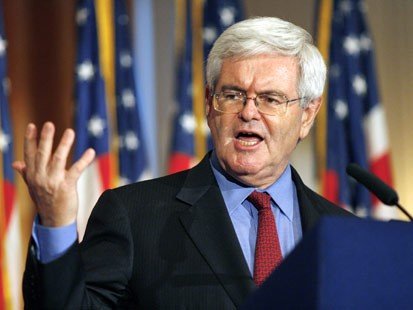
US media report that Republican presidential candidate Newt Gingrich is expected to suspend his campaign next week.
Newt Gingrich said on Wednesday that he expected Mitt Romney, who won five primaries on Tuesday, to be the Republican nominee.
The former House Speaker’s campaign had said it would reassess its future if he did not win the contest in Delaware.
Newt Gingrich has won only two primaries – South Carolina and Georgia – since the election season began in January.
He will reportedly hold his last campaign event on 1 May in Washington DC.
During a campaign stop in North Carolina on Wednesday, Newt Gingrich all but conceded.
“You have to at some point be honest about what’s happening in the real world as opposed to what you would like to have happened,” Newt Gingrich told supporters.
Republican presidential candidate Newt Gingrich is expected to suspend his campaign next week
Newt Gingrich added that Mitt Romney “had a very good day yesterday. You have to give him some credit.”
He said he would continue to campaign for the next week as a “citizen”, adding he would discuss economic issues, such as high unemployment.
“We are going to stay very, very active and we are working out the details of our transition,” Newt Gingrich said.
“But I am committed to this party. I am committed to defeating Obama.”
Newt Gingrich was expected to go ahead with several scheduled campaign stops across North Carolina.
The former House Speaker had campaigned heavily in Delaware ahead of Tuesday’s primary, a state that Mitt Romney all but ignored.
But Newt Gingrich still lost the state’s vote by 30%.
Bob Walker, a Gingrich adviser and former US representative, said on Tuesday: “I don’t think we can lose by 30 points in Delaware and feel good about it.”
In December, Newt Gingrich confidently predicted he would become the Republican nominee, and for a time enjoyed high poll ratings.
Although he won his home state of Georgia and nearby South Carolina, Newt Gingrich racked up heavy losses as the primary season continued.
He had vowed to fight on, even as Rick Santorum, Mitt Romney’s main Republican challenger, suspended his own campaign earlier in April.
Following Tuesday’s wins, the Romney campaign will begin formally integrating with the Republican National Committee.
RNC chairman Reince Priebus said on Wednesday he had directed its staff to start communicating with Mitt Romney advisers.
Former Massachusetts Governor Romney’s delegate lead means it is impossible for any other candidate to capture the 1,144 delegates needed to secure the nomination at the Republican convention in August.
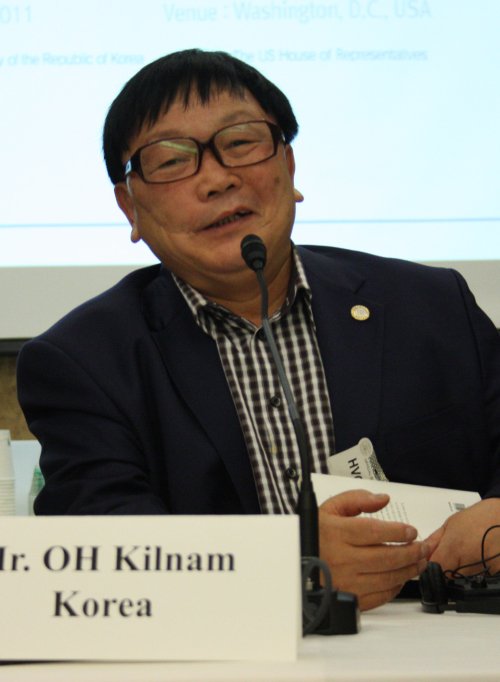
Oh Kil-nam, a retired South Korean economist, says his life was ruined by his decision to defect to North Korea.
Oh Kil-nam, 70, still does not know the fate of his wife and daughters – either dead or imprisoned in a labor camp.
In 1985, North Korean agents approached Oh Kil-nam and suggested he defect.
The agents offered him an important job working as an economist for the North Korean government and promised to provide free treatment for his wife’s hepatitis.
Oh Kil-nam took the offer seriously. He had just completed his PhD in Germany on a Marxist economist. Back at home in South Korea, Oh Kil-nam had been active in left-wing groups opposed to the country’s authoritarian regime.
His wife Shin Suk-ja was horrified by the idea of going to the North and opposed it from the start.
“Do you know what kind of place it is?” she asked.
“You have not even been there once. How can you make such a reckless decision?”
But Oh Kil-nam replied that the Northerners were Koreans too – they “cannot be that brutal”, he told her.
So at the end of November 1985, Oh Kil-nam, his wife and two young daughters travelled via East Berlin and Moscow to Pyongyang.
When they arrived at Pyongyang airport, Oh Kil-nam began to see he had made a mistake in coming. Communist party officials and children clutching flowers were there to meet them. But despite the cold of a North Korean December, the children were not wearing socks and their traditional clothes were so thin that they shivered.
“When I saw this I was really surprised and my wife even started to cry,” he said.
Communist party officials drove Oh Kil-nam and his family to what they described as a guest house. The building was inside a camp in the mountains and guarded by soldiers. There was no treatment for Shin Suk-ja’s hepatitis and no job for Oh Kil-nam as an economist. Instead, for several months, North Koreans indoctrinated them in the teachings of The Great Leader Kim Il-sung, the founder of the current regime.
Oh Kil-nam and his wife began working for a North Korean radio station.
“My wife began as a broadcaster but she was not able to carry on for long. Her health had deteriorated and at the same time she was quite critical of the North.”
Oh Kil-nam was less independent. “I began to read scripts based on party directives – in the end, I was like a parrot.”
Oh Kil-nam, now 70, still does not know the fate of his wife and daughters after more than 20 years
While he was there Oh Kil-nam came across South Koreans who had been abducted, including two air stewardesses and two passengers from a Korean Air Lines flight that had been hijacked by North Koreans in 1969.
Oh Kil-nam was approached to go on a mission abroad. He was to be based in the North Korean embassy in Copenhagen, from where he could do what had been done to him – lure South Korean students in Germany to the North Korean embassy.
When Shin Suk-ja heard about the plan she was furious.
“I remember the two of us talking about it softly under the blanket. I told my wife that by fulfilling this mission, we would preserve our livelihood in North Korea. But she slapped me in the face.”
His wife said they would have to pay the price for his mistakes – he could not entrap others.
“She told me I had to find a way to escape when I got to Europe, that there would be a way to rescue the family.”
On arriving at Copenhagen airport, Oh Kil-nam managed to escape from North Korean control. “I approached the immigration desk. I had a little piece of paper on which I had written: HELP ME. I explained that the passport they were seeing was not my real passport, that my real name was Oh Kil-nam, and that my real passport had been confiscated in North Korea.”
After two months in jail in Denmark, the Danish authorities sent Oh Kil-nam to Germany. There he tried to free his family, but with no luck.
“My biggest mistake was not to approach the German Foreign Ministry directly.”
Oh Kil-nam’s wife, Shin Suk-ja, and their daughters, Hye Won and Gyu Won
For Shin Suk-ja and her two daughters, Oh Kil-nam’s defection was catastrophic. They were taken to Yodok concentration camp, where the North Korean government imprisons its enemies. The conditions in this slave labor camp are reportedly as bad as anything in Nazi Germany or Stalin’s Gulag.
For a time, Oh Kil-nam heard nothing about the fate of his family. Then in February 1991 he managed to get six photographs of his wife and daughters and a tape cassette with a message from them.
“On the tape my daughters were telling me how much they missed me and my wife was saying that perhaps it would be OK for me to come back now.”
Oh Kil-nam suspected a trap. “North Korea was trying to stop me from heading back to South Korea because I had experience of working in its propaganda division. I knew a lot of its secrets, including the fact that many people from South Korea, who were kidnapped and taken to the North, were working there.”
But nonetheless the realization that he could not get back in touch with his family was devastating.
“By that time I had completely given up. My whole body was just broken down.”
In 1992, Oh Kil-nam returned to South Korea. “I felt that my death was not far away. I just wanted to be close to my brother and my sister on my death bed.”
Oh Kil-nam did not die but nor has he ever heard from his wife and daughters again. He does not know whether they are alive or whether they died in the prison camp.
“I do feel that I may be able to meet my family again, but it is just a hope, a glimmer of hope inside a dark tunnel.
“I hope there will come a day when I can meet my family again, hug them and embrace them, and cry tears of happiness. If it does happen it will be the happiest day of my life.”
The 2012 International German Beard and Moustache Championships have been held in Bad Schussenried.
Beards from around the world have travelled to Bad Schussenried and took part in 18 categories, including Imperial Moustaches, Dali Moustaches and Chin Beard Freestyle.
A total of 163 of the world’s most interestingly decorated faces paraded through the town before the competition got under way.
Beards from around the world have travelled to Bad Schussenried and took part in 18 categories, including Imperial Moustaches, Dali Moustaches and Chin Beard Freestyle
A panel of seven judges marked each individual competitor and decided who would be crowned king in each category.
German-born Arner Bielefeldt proved to be a cut above the rest in the Full Beard Freestyle category.
Arner Bielefeldt said it was his reward for four months of “training” in his adopted home in California, USA.
The Full Beard category was the keenest contested, with 23 competitors keeping their chins up.
Although it was a close shave Herbert Dobner of Isny, Germany eventually won by a hairs breadth.
A confused driver has ended up trapping his car on the steps of Chaussee d’Antin-La Fayette metro station in Paris, after mistaking it for the entrance to an underground car park.
“There’s a sign saying <<Haussmann Parking>> right in front… I made a mistake,” the driver – identified only as Johan – told the AFP news agency.
Johan, 26, managed to brake in time to stop the vehicle, leaving the back wheels sticking out.
No-one was hurt in the incident, which immediately drew a crowd of onlookers.
The confused driver has ended up trapping his car on the steps of Chaussee d'Antin-La Fayette metro station in Paris
Many took pictures of the car – a Dacia Duster – stranded on the stairs at the Chaussee d’Antin-La Fayette metro station.
The driver was later asked by French police to do an alcohol test, which he passed.
A member of staff at a local restaurant was quoted by AFP as saying that a similar incident took place at the site about five years ago.
A British-Indian team of scientists have announced the discovery of a new species of limbless amphibian.
The animal was identified by accident in the Western Ghats area in the state of Kerala, South India.
The specimens were found inside moist soil after digging the shrub-covered bank of a mountain stream.
The creature – about 168 mm in length and pink in color – belongs to an enigmatic, limbless group of amphibians known as the caecilians.
Ramachandran Kotharambath, lead author of the report, said the animal was identified as a new species following extensive comparisons with other, similar examples from this amphibian group.
According to the researchers, specimens of the novel caecilian – named Gegeneophis primus – were collected during field works in two consecutive monsoons, first in October 2010 and then in August 2011.
They were discovered at a valley on a plantation in the Wynad district of Kerala.
The creature, about 168 mm in length and pink in color, belongs to an enigmatic, limbless group of amphibians known as the caecilians
The new finding was made as part of a longstanding research collaboration between the department of zoology at the University of Kerala and London’s Natural History Museum. The Central University at Kasargod in Kerala also contributed to the discovery.
The finding has been reported in the latest edition of the academic journal Zootaxa.
The wider distribution, natural history and habitat preferences of the species are yet to be determined.
The discovery of this species indicates that the caecilian amphibians might have great diversity all along the Western Ghats area said Ramachandran Kotharambath.
“The discovery on a plantation points out that these elusive animals are very vulnerable to anthropogenic activities and are living silently right under our feet,” he explained.
The new species do not face any immediate threat as long as the habitat structure is maintained, according to the scientists.
They also say that they need to know how far and wide this species is distributed and what are the habitat requirements.
Though these tiny amphibians are at least safe now, any major modification in the plantation structure could dangerously affect the species survival, said Ramachandran Kotharambath.
Co-author Dr. Oommen says the discovery was significant since the finding ended a hiatus of almost half-a-century.
“It highlights the fact that the knowledge of caecilian amphibians of the Western Ghats remains incomplete and in need of further study.”
Are you looking for the best vacation spots in the world? New York City and The Hamptons; Paris and Dublin; Australia and Japan are just a few of great places to vacation, but take a peek at the following 5 locations for families, couples and friends vacations.
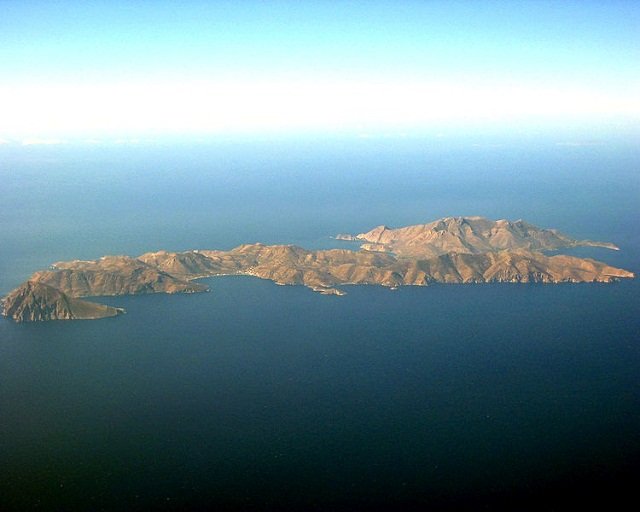
Tilos, Greece
Photo by commons.wikimedia.org user Chrischerf
Tilos is one of the most beautiful yet overlooked islands off the coast of Greece. Their strict no hunting laws and lush greenery make it one of the most eco-friendly spots on earth. The city center is a vision by the sea, boasting cobblestone streets, quaint shops and vendors and amazing dining venues. Livadia’s Red Beach and Agio’s Pandelimonas, a festival held in an abandoned monastery, are two of the island’s biggest attractions.
Nautilos Restaurant and Omonia are excellent dining venues near the city center. Dream Island and Hotel Eleni Beach are also outstanding accommodations. Both are located on the beach, overlooking a stunning Tilos harbor. There is perhaps no view more beautiful than the one that these hotels offer.
Washington D.C., USA
Washington D.C. is the seat of democracy for the United States. It is often passed over in favor of flashy resorts or beachside hotels, but it is one of the most interesting and exciting places to visit in the world. Lincoln’s Memorial and the White House are just two of the amazing attractions to visit.
Looking for a great place to eat? Check out Zaytinya in downtown D.C. It’s great for all ages. The Oval Room is an elegant restaurant that is located near the White House. It’s a stunning D.C. dining experience. Two of the nicest hotels to lodge are the Four Seasons Washington D.C. and Palomar Washington D.C (A Kimpton Hotel).
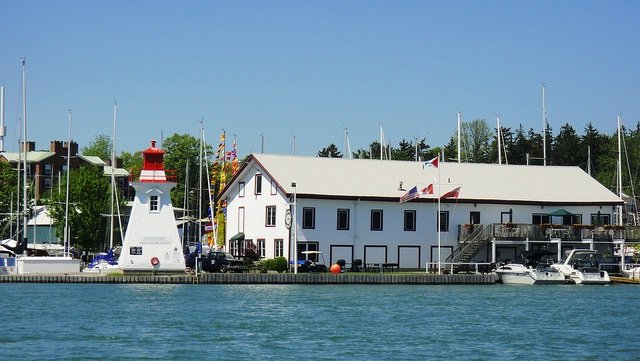
Niagara-On-The-Lake, Canada
Photo by flickr user Ken Doerr
One of the lesser-known villages in Canada is Niagara-On-The-Lake. Located in Ontario, it is only a few minutes away from Niagara Falls. It provides stunning views of the lake and offers attractions like the Caroline Cellars Winery and the Horseshoe side of the falls. The weather is also very balmy and reminiscent of seaside temperatures.
La Toscani di Carlotta is a charming dining venue complete with horse and buggy. Visitors will enjoy wonderful service and great food. Cecile’s House is a restaurant that specializes in making French-style breakfasts. For stellar lodging, visitors should check out the Harbour House Hotel or the White Oaks Conference Resort and Spa. Niagara-On-The-lake is a beautiful location that you or your family will never forget.
Devon, England
Photo by flickr user PhillipC
Its name originates from the term, ‘Devonshire.’ Birthed during the early days of England, Devon today retains much of its quaint village-style traditions and ambience. One of their most popular attractions is the Dartmoor Zoo, which was actually turned into a movie idea by Matt Damon. The Woolacombe Beach is also popular with both locals and tourists.
The Galley in Topsham and The Orange Tree Restaurant in Torquay are two of the most wonderful places to dine during your visit. Both specialize in traditional European food. The Elmdene in Torquay and The Old Rectory Hotel in Marinhoe are also two of the finest hotels in the Devon region.
Hunstville, Canada
Hunstville is the perfect place to relish the fun of braving the wilderness. Arrowhead Provincial Park is downright beautiful. It is an outstanding area for camping. North Ridge Ranch also offers dog sledding. Rock Ridge Resort offers fun activities for children.
Spencer’s Tall Trees Restaurant and The Little Place by the Lights are two amazing eateries for locals and tourists to enjoy. The former specializes in comfy lumberjack food while the latter serves up great Italian fare. For lodging; check out the Tulip Inn or the Walker Lake Resort. Both are quaint and beautiful mountain-based resorts.
Taking a daily dose of aspirin could cut bowel cancer patients’ chance of dying from the disease by about a third, say experts.
The study published in the British Journal of Cancer looked at 4,500 bowel cancer patients living in The Netherlands.
All of the patients on aspirin were taking a low dose – 80 mg or less a day – something already recommended for people with heart disease.
But experts say it is too soon to start routinely offering it for bowel cancer.
A wealth of evidence already suggests aspirin might prevent certain cancers from developing in the first place. And more recent work suggests it might also work as a cancer therapy – slowing down or preventing a cancer’s spread.
But the drug can also have unpleasant and dangerous side effects, causing irritation of the stomach lining and internal bleeds in a very small minority of patients.
In the study, which spanned nearly a decade, a quarter of the patients did not use aspirin, a quarter only took aspirin after being diagnosed with bowel cancer, and the remaining half took aspirin both before and after their diagnosis.
Most of the patients on aspirin had been taking it to prevent cardiovascular disease-related problems like stroke or heart attack.
Taking a daily dose of aspirin could cut bowel cancer patients’ chance of dying from the disease by about a third
Taking aspirin for any length of time after diagnosis cut the chance of dying from bowel cancer by 23%.
The patients who took a daily dose of aspirin for at least nine months after their diagnosis cut their chance of dying from the disease by 30%.
Taking aspirin only after bowel cancer had been detected had a bigger impact on reducing mortality compared with when aspirin was taken before and after diagnosis – reducing death risk by 12%.
This may be because those who took aspirin and still got bowel cancer had a particularly aggressive form of tumor that did not respond as well to aspirin, say the researchers.
Lead researcher Dr. Gerrit-Jan Liefers, of the Leiden University Medical Centre, said: “Our work adds to growing evidence that aspirin not only can prevent cancer from occurring but if it is there it can help prevent it spreading.”
He said aspirin should not be seen as an alternative to other treatments, such as chemotherapy, but could be a useful additional treatment.
“It’s possible that some older people may have other health problems which mean that they are not well enough to have chemotherapy. Bowel cancer is more common in older people so these results could be a big advance in treatment of the disease, particularly in this group. But we need further research to confirm this.”
Dr. Gerrit-Jan Liefers said they now planned to hold a randomized controlled trial – the “gold standard” in medical research – to look at how well aspirin fared against a dummy drug in people aged over 70 with bowel cancer.
Aspirin
• Active ingredient is acetylsalicylic acid
• Used for many years as a painkiller
• Has an anti-inflammatory action
• Low-dose (75 mg) is already recommended for people with known cardiovascular disease to prevent stroke and heart attack
• Benefits for healthy people are still unclear
• Can cause fatal internal bleeding, although this is relatively rare
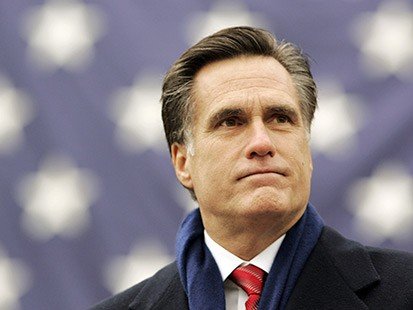
Mitt Romney, the presumptive Republican nominee for the presidential elections in US, has vowed to take the White House from President Barack Obama and end four years of “disappointments”.
Speaking while racking up a series of primary night victories, Mitt Romney said a “new campaign” was beginning, heralding the start of the road to November’s vote.
“Hold on a little longer. A better America begins tonight,” Mitt Romney said.
Mitt Romney easily won primaries in Connecticut, Delaware, New York, Pennsylvania and Rhode Island.
His claim to the Republican nomination is now unrivalled, with no serious challengers remaining in the contest.
With 14 primaries remaining, Mitt Romney has amassed an unbeatable lead in the race for the delegates who will formally crown him the Republican nominee at the party’s convention in late August.
Without competition in the remaining contests he is expected to cruise past the 1,144 delegates he needs to take the nomination.
Mitt Romney has vowed to take the White House from President Barack Obama and end four years of "disappointments"
Among the states still to vote are California and Texas, both heavily populated states with large hauls of delegates.
Just Newt Gingrich and Ron Paul actively remain in the contest.
Newt Gingrich, a former speaker of the House of Representatives, spoke in North Carolina as Tuesday’s results came in but gave few clues as to his future in the contest.
He had pinned his hopes on a strong showing in Delaware, but instead polled less than half of Mitt Romney’s total.
As the results began to come in on a night with the most electoral delegates at stake since Super Tuesday, Mitt Romney took the stage in New Hampshire, the site of his first primary win of the year.
He focused on the forthcoming general election campaign, saying America needed a new direction and a renewal of its greatness.
“Tonight is the start of a new campaign to unite every American who knows in their heart that we can do better,” Mitt Romney said.
“The last few years have been the best that Barack Obama can do, but it’s not the best America can do.
“Tonight is the beginning of the end of the disappointments of the Obama years and the start of a new and better chapter that we will write together.”
Mitt Romney accused the president of failing to deliver on his promises of “hope and change” made during his 2008 election campaign.
The average American is still feeling the pain of the economic collapse, Mitt Romney said. “It’s still about the economy… and we’re not stupid.”
Shortly after Mitt Romney’s remarks, Barack Obama took to the stage in Colorado, a state his strategists see as part of a potential route to re-election.
Barack Obama is making a three-state tour of campuses in Colorado, North Carolina and Iowa – all swing states set to feature heavily in November.
The trip is an effort to highlight the growing cost of higher education and, analysts say, revitalize his support among young voters who may have become disillusioned with the president since 2008.
Barack Obama stressed his humble background and said that the election in November would be about making education, and the nation as a whole, affordable for ordinary people.
His spokesman Ben LaBolt said in a statement that the choice between the two men was clear.
“The title for Governor Romney’s speech tonight should have been Back to the Future, because he has proposed a return to the same policies that got us into the economic crisis in the first place,” he said.
“Mitt Romney has spent the past year out on the campaign trail tearing down the president with a negative message that even Republicans who have endorsed him have criticized.
“This marks the end of that monologue. Now he must put his record and his agenda next to the president’s.”
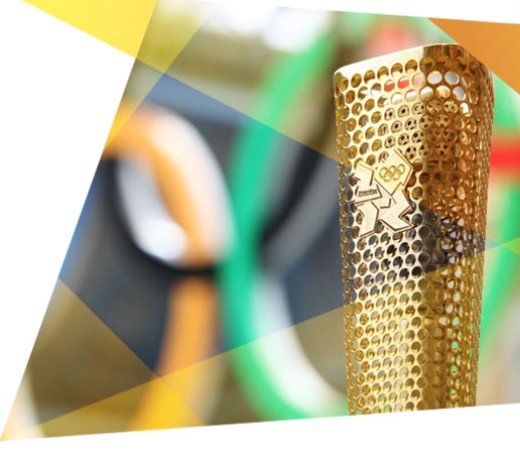
Barber Osgerby, the British creative team behind the London Olympic torch, has won the prestigious Design of the Year award 2012.
The aluminum torch is perforated with 8,000 holes, each representing one of the torchbearers.
The winner was chosen from 89 entries and was presented at an awards ceremony at London’s Design Museum, which organizes the annual event.
Another Olympic design triumphed in the architecture category – the Velodrome.
Barber Osgerby, the British creative team behind the London Olympic torch, has won the prestigious Design of the Year award 2012
The Olympic torch relay will run for 70 days ahead of the London 2012 Olympics.
It will journey across the UK, taking in places such as Wells Cathedral, Cardiff Castle, Giant’s Causeway, Forth Rail Bridge, York Minster, Blackpool Tower and Windsor Castle.
Design Museum director Deyan Sudjic said the torch was “a triumph of symbolism and beauty”.
He added that it “demonstrates how design can celebrate traditional qualities in a modern manner”.
However the design has split critics and the public.
Times columnist Carol Midgeley defended the design: “I think it’s rather elegant, actually.”
But the Daily Telegraph asked readers to vote on whether it most resembled a torch, cheese grater, cigarette holder or wastepaper bin.
The fashion award went to Issey Miyake’s 132.5 collection.
Recent RCA graduate Kihyun Kim won the furniture prize for his balsa wood 1.3 Chair.
The 2012 Olympic Torch, along with the other shortlisted designs, is on display at the Design Museum until 4 July.
On the Design Awards jury were newspaper proprietor Evgeny Lebedev, Wallpaper editor Henrietta Thompson, Dutch designer Hella Jongerious and chairman of the Canary Wharf group, Sir George Iacobescu.
Self-proclaimed Painter of Light Thomas Kinkade left behind some warring women when he died nearly three weeks ago.
Though Thomas Kinkade had separated from his wife about two years ago, they were still in the process of getting divorced when he died of natural causes at 54.
New reports allege that Thomas Kinkade had planned to marry his live-in girlfriend, Amy Pinto-Walsh, as soon as he was finally divorced from his first wife Nanette, with whom he had four daughters.
Thomas Kinkade and Amy Pinto-Walsh had been dating for about 18 months at the time of his death.
“Amy was already part of his circle of friends and that really enraged Nanette,” an unnamed source told Radar Online.
“Nanette was furious and humiliated that he not only cheated on her, but moved on so quickly and publicly with her.”
Nanette Kinkade didn’t make any attempt to hide her frustration either, as she filed a restraining order against his mistress shortly after his death.
She wants to stop Amy Pinto-Walsh from breaching a confidentiality agreement she signed more than a year ago.
Thomas Kinkade had planned to marry his live-in girlfriend, Amy Pinto-Walsh, as soon as he was finally divorced from his first wife Nanette
Nanette Kinkade fears Amy Pinto-Walsh will attempt to sell her story and could release private family photographs.
Thomas Kinkade was one of the most successful artists in the U.S., but he struggled with alcoholism before his death at the age of 54, and split from his wife Nanette in 2010.
He used to estimate that around one out of every 20 homes in America.
Thomas Kinkade’s estate – of which Nanette Kinkade is the principal trustee – has filed documents with a Santa Clara court seeking an injunction against Amy Pinto-Walsh, according to Los Gatos Patch.
Its attorneys argue that the painter’s mistress, who is still living in his mansion in Monte Sereno, California, is planning to disclose information which would breach a confidentiality agreement signed in February 2011.
The restraining order would ban Amy Pinto-Walsh from saying or doing anything which would make Thomas Kinkade, his wife or his business “appear in a negative light or false light”.
Amy Pinto-Walsh would also be prevented from writing or contributing to any sort of book, article or other publication about the late artist.
In particular, the lawsuit seeks to stop her divulging personal information which she found out “as a personal assistant and companion to Thomas Kinkade”.
While it is not clear what exactly prompted the legal battle, the suit alleges that Amy Pinto-Walsh told a family friend that she intended to sell the story of her relationship with Thomas Kinkade and release unseen photographs of the painter.
The suit continues: “The release of these items would be personally devastating not only for Mrs. Kinkade, but also for the family’s four daughters, who are grieving the sudden loss of their father.”
The family also fears that Amy Pinto-Walsh could jeopardize Thomas Kinkade’s business empire, which relied on the production of prints and reproductions as much as original paintings.
They say she had access to “trade secrets” such as the artist’s painting techniques and computer programmes, and could try to sell them on to others.
Amy Pinto-Walsh, who had been in a relationship with Thomas Kinkade for 18 months before his death, told Los Gatos Patch at the time that the painter “had a heart condition”.
Nanette Kinkade’s lawsuit cites this revelation of a “non-public health condition” as one breach of Amy Pinto-Walsh’s confidentiality agreement.
The suit also says that Thomas Kinkade died on the night of April 5, which contradicts previous reports that he was found dead the next morning.
While the artist was phenomenally successful and extremely wealthy, Thomas Kinkade apparently suffered from a drinking problem throughout much of his life, and in June 2010 was arrested for DUI.
Thomas Kinkade was also saddened by constant attacks on the quality of his work by art critics, and devastated by his divorce from Nanette.
William Shakespeare’s All’s Well That Ends Well has a co-author, according to a research from Oxford University academics.
Thomas Middleton has been revealed as the most likely co-author, according to in-depth analysis of the play’s vocabulary, rhyming, style and grammar.
Professor Laurie Maguire says the latest literary research shows groups of writers working together on plays.
“The picture that’s emerging is of much more collaboration,” said Prof. Laurie Maguire.
“We need to think of it more as a film studio with teams of writers.”
This major study of All’s Well That Ends Well says that the most likely and logical explanation for differences in style and inconsistencies in the text is that it is the work of two authors.
Prof. Laurie Maguire says that a majority of plays written in this era had more than one writer – but the iconic status of Shakespeare has meant a reluctance to consider his work in this way.
She says she is “very confident” that there is “a second hand” in the authorship of the play.
The research by Prof. Laurie Maguire and Dr. Emma Smith, from Oxford University’s English faculty, suggests that the playwright Thomas Middleton, a contemporary of Shakespeare’s, appears to be the likely candidate.
Writers have their own distinctive literary “fingerprints” – a kind of stylistic DNA – and a highly-detailed analysis of the language in the play shows “markers” strongly linked to Thomas Middleton.
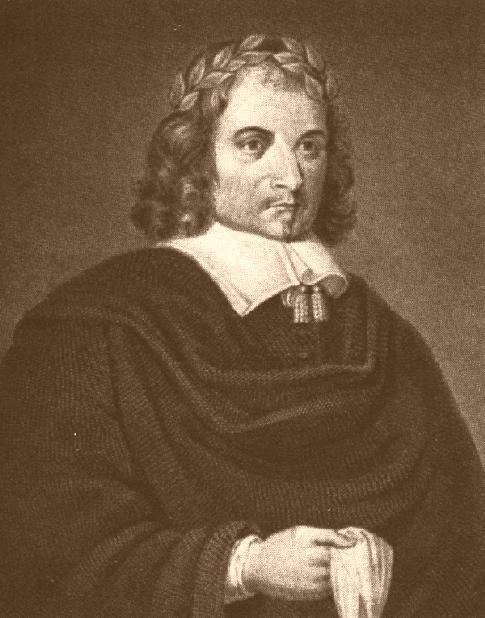
Thomas Middleton has been revealed as the most likely co-author of Shakespeare’s All’s Well That Ends Well by Oxford University academics
The rhyming and rhythms of sections of the play, the phrasing, spelling and even individual words suggest the involvement of Thomas Middleton.
As an example, the word “ruttish” appears in the play, meaning lustful – and its only other usage at that time is in a work by Thomas Middleton.
The distinctive way that stage directions are used in places is much closer to Thomas Middleton’s style than to William Shakespeare, says the study.
There cannot be any definite conclusion to this kind of literary detective work – and the academics say there could be other candidates such as John Fletcher – but Prof. Laurie Maguire says there is an “arresting” stylistic match with Thomas Middleton.
Thomas Middleton, who lived between 1580 and 1627, was a Londoner, younger than William Shakespeare, and Prof. Laurie Maguire says his more modern grammar can be detected in the text.
Thomas Middleton became a celebrated writer – remembered for works such as The Changeling and Women Beware Women.
But Dr. Emma Smith says that his collaboration with William Shakespeare in about 1607 could be likened to an established musician working with a rising star.
The question of the authorship of Shakespeare’s plays has been a continued source of speculation and conspiracy.
Prof. Laurie Maguire says that there is no serious scholarship which challenges the idea that Shakespeare wrote the plays attributed to him.
But she says the latest research suggests a much more collaborative approach to writing plays for the Elizabethan and Jacobean stage.
Plays were written quickly and for a commercial audience – and there were often stables of writers who worked together to produce a play.
Writers within these teams had specialized roles, she says, such as people who were particularly good at writing plots.
Prof. Laurie Maguire says the cultural reverence for Shakespeare – so-called “bardolatry” – has helped to support the idea of the playwright as a creative genius, producing his works in isolation.
While much of Shakespeare’s writing is his work alone, she says that in All’s Well That Ends Well there is another writer – so much so that in places one author seems to be handing over to the other.
The play itself recognizes the mixing and matching of life.
“The web of our life is of a mingled yarn, good and ill together.”
Or else, as it says later: “It is like a barber’s chair that fits all buttocks.”
Bo Guagua, the son of disgraced Chinese politician Bo Xilai, has defended his lifestyle in an open letter to his university.
In the letter to the Harvard Crimson, Bo Guagua said he was “deeply concerned” about his family.
Bo Guagua, 24, denied he was a bad student, citing his grades, and set out how his education had been funded.
The whereabouts of his father are unknown and his mother is being investigated in connection with the death of British national Neil Heywood.
The removal of Bo Xilai, who was once tipped for China’s highest office, has become the country’s biggest political scandal in years.
Since Chinese authorities announced he had been sacked from his political positions earlier this month a stream of reports concerning him and his family have emerged.
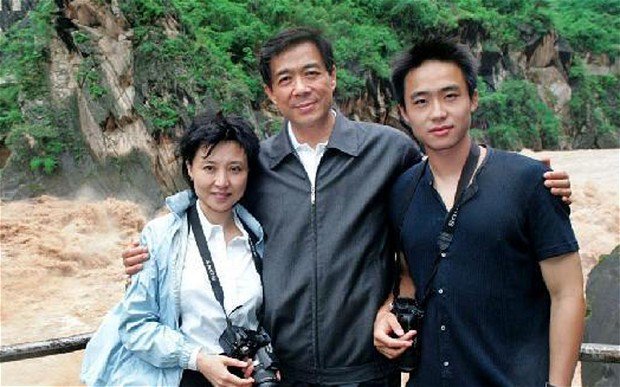
Bo Guagua pictured with his father Bo Xilai and his mother Gu Kailai
Some reports have focused on the reportedly extravagant and well-funded lifestyle of his son, Bo Guagua, who is currently studying at Harvard University after completing his degree at Oxford.
Since the allegations against his family emerged, Bo Guagua has kept a low profile. But in the letter published on Tuesday on the Harvard Crimson website, he said he wanted to address recent media reports.
“I am deeply concerned about the events surrounding my family, but I have no comments to make regarding the ongoing investigation,” Bo Guagua wrote.
“It is impossible to address all of the rumors and allegations about myself, but I will state the facts regarding some of the most pertinent claims.”
His education, Bo Guagua said, had been funded by scholarships and his mother’s earnings as a lawyer. His grades, which he cited, had earned him his university places.
While at Oxford University he had taken part in social events and extra-curricular activities – but these were a “regular feature of social life” at university.
In China, Bo Guagua said, he had never participated in a for-profit business. And he did not drive a Ferrari, he said, addressing a specific claim.
The Wall Street Journal reported last year that Bo Guagua had arrived at then US ambassador to China Jon Huntsman’s residence to pick up his daughter in a red Ferrari.
“I understand that at the present, the public interest in my life has not diminished,” Bo Guagua said.
“However, I wholeheartedly request that members of the press kindly refrain from intruding into the lives of my teachers, friends and classmates.”
Benjamin Samuels, president of Harvard Crimson, said the statement came from Bo Guagua’s Harvard’s Kennedy School e-mail address, and that the team had then spoken to him via telephone to verify the statement was his.
Allegations against his parents emerged earlier this year after Chongqing’s police chief, Wang Lijun, fled to the US consulate in an apparent bid to seek asylum.
Chinese state media said Wang Lijun, who was once Bo Xilai’s right-hand man, had information concerning the death of British businessman Neil Heywood, who died in a Chongqing hotel in November 2011.
Bo Xilai’s wife, Gu Kailai, is now being investigated in connection with the case, amid unconfirmed media reports that Neil Heywood was poisoned.
Bo Xilai has not been seen since his sacking was announced. It comes with China due to begin its once-in-a-decade leadership change in October.
Mila Kunis has denied that she is dating Ashton Kutcher, but she has been spending a considerable amount of time with the actor – in fact the pair spent some alone time last weekend.
Mila Kunis and Ashton Kutcher enjoyed a three-day getaway to the coastal town of Carpinteria, which sits just south of Santa Barbara.
During their weekend away the pair was seen popping out to pick up sunflowers and fruit.
Mila Kunis was dressed down in a pair of tight sweat pants and a long-sleeved T-shirt while Ashton Kutcher donned a check shirt over a white T-shirt.
According to People magazine, Mila Kunis and Ashton Kutcher enjoyed an intimate sushi lunch but spent plenty of time hidden away together.
The pair returned to Los Angeles on Saturday and later that evening.
Mila Kunis and Ashton Kutcher enjoyed a three-day getaway to the coastal town of Carpinteria
A source told People magazine: “He was so in love with her for a while when they worked together. He thought she was a goddess, was always talking about how beautiful she is.
“But she was with Macaulay [Culkin] for a lot of that time and also just generally gave off a not interested vibe.”
Last week the pair were spotting heading out together and were also said to be shopping for furniture.
While Mila Kunis and Ashton Kutcher are both currently single – they have yet to confirm they are dating, in fact she has denied the claims.
Mila Kunis has been dating Home Alone actor Macaulay Culkin for the past eight years; they split in January.
Meanwhile, Demi Moore announced that she had ended her six-year marriage to Ashton Kutcher last November after he was reportedly caught cheating.
Ashton Kutcher has been linked to pop star Rihanna as well as screenwriter Lorene Scafaria since splitting from Demi Moore.
Ironically, Mila Kunis and Ashton Kutcher both starred in 2011 blockbusters about friends that become lovers.
Ashton Kutcher appeared in the romantic comedy No Strings Attached while she starred in the similar feature Friends With Benefits.
It would be a Hollywood ending for the two, who played a couple on the Fox sitcom That ’70s Show from 1998 to 2006.
However, a source has since told Us Weekly that Mila Kunis and Ashton Kutcher are just friends.
“No! They’re so not dating,” a friend of Mila Kunis told the website, adding that they recently reunited to film a That ’70s Show reunion episode.
“They’ve been friends for years. But she would never ever,” the source said.
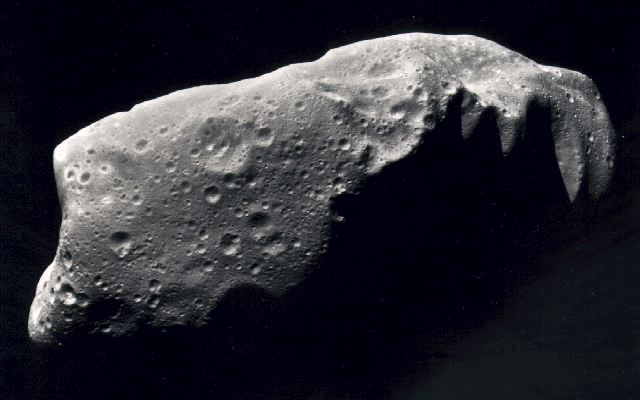
A group of billionaire entrepreneurs set up prospecting company Planetary Resources and plans to mine asteroids for their resources.
The multi-million-dollar plan would use robotic spacecraft to squeeze chemical components of fuel and minerals such as platinum and gold out of the rocks.
The founders include film director and explorer James Cameron as well as Google’s chief executive Larry Page and its executive chairman Eric Schmidt.
They even aim to create a fuel depot in space by 2020.
However, several scientists have responded with skepticism, calling the plan daring, difficult and highly expensive.
They struggle to see how it could be cost-effective, even with platinum and gold worth nearly $1,600 an ounce. An upcoming NASA mission to return just 60g (two ounces) of material from an asteroid to Earth will cost about $1billion.
The inaugural step, to be achieved in the next 18 to 24 months, would be launching the first in a series of private telescopes that would search for asteroid targets rich in resources. The intention will be to open deep-space exploration to private industry.
Within five to 10 years, however, the company expects to progress from selling observation platforms in orbit around Earth to prospecting services. It plans to tap some of the thousands of asteroids that pass relatively close to Earth and extract their raw materials.
A group of billionaire entrepreneurs set up prospecting company Planetary Resources and plans to mine asteroids for their resources
Planetary Resources, is also backed by space tourism pioneer Eric Anderson, X-Prize founder Peter Diamandis, former US presidential candidate Ross Perot and veteran NASA astronaut Tom Jones.
The founders of the venture are to give further details in a press conference on Tuesday.
“We have a long view. We’re not expecting this company to be an overnight financial home run. This is going to take time,” Eric Anderson told the Reuters news agency.
The billionaires are hoping that the real financial returns, which are decades away, will come from mining asteroids for platinum group metals and rare minerals.
“If you look back historically at what has caused humanity to make its largest investments in exploration and in transportation, it has been going after resources, whether it’s the Europeans going after the spice routes or the American settlers looking toward the west for gold, oil, timber or land,” Peter Diamandis explained.
Water from asteroids could be broken down in space to liquid oxygen and liquid hydrogen for rocket fuel. Water is very expensive to get off the ground so the plan is to take it from an asteroid to a spot in space where it can be converted into fuel.
From there, it could be shipped to Earth orbit for refueling commercial satellites or spacecraft.
“A depot within a decade seems incredible. I hope there will be someone to use it,” Dr. Andrew Cheng, a planetary scientist at Johns Hopkins University’s Applied Physics Laboratory told the Associated Press.
“And I have high hopes that commercial uses of space will become profitable beyond Earth orbit. Maybe the time has come.”
Prof. Jay Melosh from Purdue University said that the costs were just too high, calling space exploration “a sport that only wealthy nations, and those wishing to demonstrate their technical prowess, can afford to indulge.”
Eric Anderson, who co-founded the space tourism firm Space Adventures, said he was used to skeptics.
“Before we started launching people into space as private citizens, people thought that was a pie-in-the-sky idea,” he said.
“We’re in this for decades. But it’s not a charity. And we’ll make money from the beginning.”
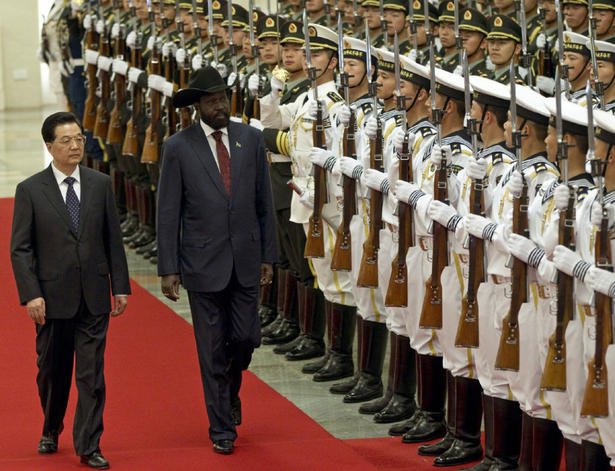
South Sudanese President Salva Kiir says Sudan has “declared war” on his country, following weeks of fighting along their common border.
President Salva Kiir was speaking in China, which is a major buyer of oil from both countries, but has long been an ally of Sudan’s President Omar al-Bashir.
Meanwhile, Sudanese warplanes conducted multiple bombing raids against Southern border regions in the early morning.
The raids followed a fatal bombing near the border town of Bentiu on Monday.
UN Secretary General Ban Ki-moon condemned the attack, in which a market was bombed, killing at least one person and injuring many others.
The latest attacks hit the towns of Panakwatch and Lalop, and the Teshwin border post, the AFP news agency reported.
South Sudan became independent last year, following decades of conflict.
There have been tense relations since then, primarily over the division of oil reserves and the full definition of borders.
Salva Kiir was speaking as he met Chinese counterpart Hu Jintao in Beijing, after arriving there on Monday for a five-day visit.
South Sudanese president said his visit came “at a very critical moment for the Republic of South Sudan because our neighbor in Khartoum has declared war on the Republic of South Sudan”.
South Sudanese President Salva Kiir says Sudan has "declared war" on his country, following weeks of fighting along their common border
Salva Kiir called China one of his country’s “economic and strategic partners”.
Chinese state television quoted Hu Jintao as urging calm and restraint on both Sudans.
Sudan has made no formal declaration of war, but analysts say Salva Kiir is clearly escalating the war of words.
Beijing has urged an end to the recent hostilities, during which Southern forces occupied Sudan’s most important oil field, in the Heglig area, saying it belonged to the South.
South Sudan says its forces withdrew from Heglig after two weeks, but Sudan says it expelled them, killing 1,000 soldiers.
Omar al-Bashir says he will not negotiate with the South and has vowed to continue military action until all Southern troops and their allies are out of Sudan.
On Monday, Ban Ki-moon called on Omar al-Bashir and Salva Kiir “to stop the slide toward further confrontation and… to return to dialogue as a matter of urgency”.
US President Barack Obama has said both countries “must have the courage” to return to the negotiating table and resolve their differences peacefully.
China’s foreign ministry spokesman Liu Weimin said on Tuesday that oil was “the economic lifeline for both countries”.
Liu Weimin added: “To maintain the stability and sustainability of the oil cooperation is consistent with the fundamental interests of both countries. It is also consistent with the interests of Chinese enterprises and their partners.
“We hope the oil negotiation between Sudan and South Sudan will make progress and [the two countries] will find a solution that both of them and other sides involved can accept.”
In January, South Sudan shut down oil production, which provides 98% of its revenue, after Khartoum impounded South Sudanese oil shipments amid a dispute over transit fees.
South Sudan took most of the former united Sudan’s oil reserves when it became independent but relies on pipelines to seaports in Sudan to export it.
South Sudan voted overwhelmingly in favor of secession in a January 2011 referendum, leading to independence six months later.
Google is expected to shortly launch Google Drive, a major new consumer service offering cloud-based storage for photos and other online content.
Google Drive is likely to offer 5 GB (gigabytes) of free storage with more available for a monthly fee.
It would challenge services including Dropbox and Microsoft’s SkyDrive.
Experts suggest it could also force rival Facebook to enter the cloud market.
Cloud services have become hugely popular as people seek to access content from a variety of places and devices.
Reports suggest that Google Drive will work with sophisticated image search technology to let consumers sift through a wide variety of document types, including PDF files and photographs.
Google Drive is likely to offer 5 GB of free storage with more available for a monthly fee
Richard Edwards, principal analyst at research firm Ovum, thinks that it may act as a wake-up call to others.
“Facebook doesn’t have a cloud service but this may prompt it into an acquisition,” Richard Edwards said.
“If Facebook was to buy Dropbox that would be a game-changer.”
Google was “very late to the market” he added.
“I would see this as an extension to its Google Docs offering and it could provide value to its social network Google+, allowing the sharing of files that are too big to email.”
The most important aspect of Google Drive would be how it worked with the myriad of devices people carried, he suggested.
“I will be looking to see how I can synchronize content stored in the cloud to all my devices to access as and when I want.”
In anticipation of Google’s announcement, rivals have updated their own services.
Dropbox now allows users to give non-members access to files via emailed links. Until now it had required both parties to have signed up to its service and have shared folders.
Microsoft has also improved its SkyDrive service.
Among other features, it has integrated the drive into Windows Explorer and Apple’s Finder so that it works as an extension of the desktop.
It also added capability to access files stored on the drive from an iPad as well as the iPhone and Windows Phone-based handsets.
Sinead O’Connor announces she has cancelled the remaining dates of her world tour, saying she is still recovering from a “very serious breakdown”.
In a statement on her official website, Sinead O’Connor, 45, said she had scrapped all concerts this year due to her bipolar disorder.
Sinead Connor’s website has now been deleted along with her Twitter account.
A spokesman said: “We have had nothing confirmed yet but are working on the assumption that the statement on her website is correct.”
Sinead O'Connor cancels the remaining dates of her world tour, saying she is still recovering from a "very serious breakdown"
In the statement, Sinead O’Connor, 45, said she was very “unwell” and it was with “enormous regret” that she had to make the decision.
Sinead O’Connor wrote: “As you all know I had a very serious breakdown between December and March and I had been advised by my doctor not to go on tour but didn’t want to <<fail>> or let anyone down as the tour was already booked to coincide with album release.
“So very stupidly I ignored his advice to my great detriment, attempting to be stronger than I actually am. I apologize sincerely for any difficulties this may cause.”
Sinead O’Connor released her new critically acclaimed album How About I Be Me (And You Be You)? in February.
Last December, Sinead O’Connor announced she had split from her therapist husband Barry Herridge after 16 days of marriage.
Sinead O’Connor also said she was still hoping to appear at the Curtis Mayfield tribute concert at The Lincoln Center in New York in July.
Cryosat, the European radar spacecraft launched in 2010 to monitor changes in the thickness and shape of polar ice, is now watching the ebb and flow of Arctic sea ice with high precision.
Scientists have spent the past two years getting to grips with its data.
And on Tuesday, they reported that Cryosat was now delivering an unprecedented view of the seasonal growth and retreat of sea ice spanning the entire Arctic basin.
The researchers also released a map showing the difference in height across the Greenland ice sheet.
“The message is that Cryosat is working extremely well. Its data are very reliable and the measurements we have match reality,” said Prof. Volker Liebig, the director of Earth Observation at the European Space Agency (ESA).
“We now have a very powerful tool to monitor the changes taking place at the poles,” he said.
The ESA director delivered an update on the mission at London’s Royal Society. The information was also being released here at the European Geosciences Union (EGU) meeting in Vienna, Austria.
Several satellites have already detailed the recent and rapid erosion of summer sea ice extent as the Arctic has warmed.
But Crysosat’s innovation has been to provide a means to get at a figure for ice volume – a far more significant number in terms of understanding the long-term viability of the ice.
To do this, the satellite carries one of the highest resolution synthetic aperture radars ever put in orbit.
The instrument sends down pulses of microwave energy which bounce off both the top of the ice and the water in the cracks, or leads, which separate the floes.
Cryosat was launched in 2010 to monitor changes in the thickness and shape of polar ice
By measuring the difference in height between these two surfaces, scientists can, using a relatively simple calculation, work out the overall volume of the marine cover.
The Cryosat team, led from University College London, has spent the period since launch working through the satellite’s measurements, validating and calibrating them against a number of independent observations.
These include data from plane-borne instruments, from direct on-the-ice assessments, and even from scientific sea-floor moorings that profile the ice floes as they pass overhead.
“We can now say with good confidence that Cryosat’s maps of ice thickness are correct to within 10-20 cm,” said Dr. Seymour Laxon, from UCL’s Centre for Polar Observation and Modelling (CPOM).
Tuesday’s release shows a complete seasonal cycle, from October 2010, when the Arctic Ocean was beginning to freeze up following the summer melt, right through to March 2011, when the sea ice was approaching peak thickness. Cryosat found the volume (area multiplied by thickness) of sea ice in the central Arctic in March 2011 to have been 14,500 cubic kilometres.
This figure is very similar to that suggested by PIOMAS (Panarctic Ice Ocean Modeling and Assimilation System), an influential computer model that has been used to estimate Arctic sea ice volume, and which has been the basis for several predictions about when summer sea ice in the north might disappear completely.
In addition to the announcement on sea ice, the Cryosat team also published a digital elevation model (DEM) of Greenland.
The big island, too, has experienced some rapid changes of late and is losing tens of billions of tons of its ice cover to the ocean annually.
The DEM is a map of varying height, and the visualization on this page incorporates a year’s worth of data.
For Cryosat, it is another illustration of its capability. Radar satellites have traditionally struggled to discern the detail in the steep slopes and ridges that mark the edges of ice sheets, but the ESA spacecraft can recover far more information thanks to a special interferometric observing mode that uses two antennas.
“This is really the first demonstration of the interferometer in action,” said Prof. Andrew Shepherd from Leeds University.
“The DEM contains about 7.5 million data points, and we’re pretty confident this will be the best elevation model for Greenland, by some margin. Our next step is to compare it to previous data to see how Greenland has changed.”
Cryosat’s principal investigator, Prof. Duncan Wingham – formerly of UCL but now chief executive of the UK’s National Environment Research Council – summed up: “We have years of data to come, but I think it’s quite clear that we will provide synoptic, accurate, Arctic-wide thickness; and that we will be able to determine the accuracy of the predictions of when the Arctic will be ice-free in Summer.
“And I think it’s also clear we can now sustain coverage of [ice sheets on Antarctica and Greenland] right down to the coast.”
The Cryosat update was timed to coincide with this week’s 50th anniversary of UK activity in orbit.
April 1962 was the month Britain became a space-faring nation with the launch of its first satellite, Ariel-1.
Steven Thorpe, a British teenager who was declared brain dead by four doctors, made a “miracle” recovery after his parents begged medics for a second opinion – moments before his life support was to be switched off.
Doctors described Steven Thorpe as “truly a unique case” after he awoke from a two-week coma following a multiple car crash that left another man dead.
Steven Thorpe was 17 years old when he suffered horrific injuries after the smash which left another man dead.
The teenager was placed in a chemically-induced coma and doctors said he would never recover – they even asked his devastated parents to consider donating his organs.
But Steven Thorpe’s father begged doctors to reconsider and even enlisted private GP Julia Piper to examine him again after being convinced that their son could recover.
Doctors at University Hospital in Coventry, West Midlands, UK, agreed to let a neurologist re-examine him and, astonishingly, he detected faint brain waves indicating Steven Thorpe had a slim chance of making a recovery.
NHS chiefs agreed to bring Steven Thorpe out of his coma to see if he could survive on his own and he stunned medics by making an almost full recovery.
Incredibly, just five weeks later Steven Thorpe was discharged from hospital.
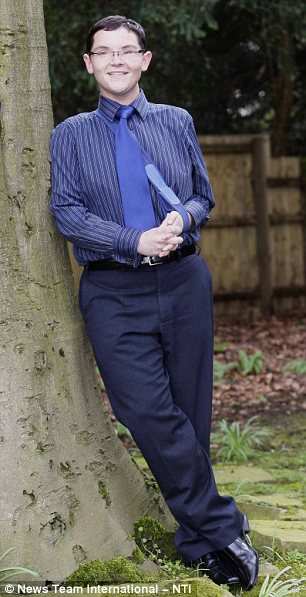
Steven Thorpe, who was declared brain dead by four doctors, made a “miracle” recovery after his parents begged medics for a second opinion
Speaking about his amazing recovery for the first time, Steven Thorpe, now aged 21 and a trainee accountant, said: “My father believed I was still there.
“He expressed his views to Julia Piper and I think she listened very closely to what my dad had said.
“My impression is maybe the hospital weren’t very happy that my father wanted a second opinion.
“I think the doctors wanted to give me three days on the life support machine and the following day they said they wanted to turn it off.
“The words they used to my parents were <<you need to start thinking about organ donations>>.
“I think that’s what gave my dad energy, he thought <<no way>>.
“I think if my dad would’ve agreed with them then it would’ve been off in seconds.
“If my parents hadn’t asked for the second opinion, and if Julia hadn’t been there, I wouldn’t be here today.”
Steven Thorpe, from Kenilworth, Warkwickshire, was travelling home from nearby Leamington Spa in February 2008 when the vehicle he was in was involved in a collision with two other cars and a horse that had run loose.
The crash left one man dead and the horse was also fatally injured.
Steven Thorpe added: “As far as I am concerned, living is a full recovery. From how I was to how I am now, I think it’s a miracle.
“I drive to work every day, I don’t think anything is holding me back. There’s no point dwelling on it, I just pull my socks up and get on with it.
“Hopefully it can help people see that you should never give up. I’ve had so much positive feedback about it.
“If you believe it then follow it, that’s the motto. My father believed I was alive – and he was correct.
“It’s hard for me to even ask my parents about what happened.
“They do cooperate with me because they want me to understand it all but they don’t want to be reminded about it.”
Dr. Julia Piper, who runs a private practice in Leicester, said: “They had doctors saying he wasn’t going to live but the parents felt there was flickers of response and it wasn’t just wishful thinking.
“I had this strong feeling that this wasn’t right and then eventually I got someone else to look at him and of course it proved to have been the right thing to have done.
“It’s an inspirational story about never giving up.
“He’s a remarkable young man and his recovery has been astonishing.”
Since leaving hospital four years ago, Steven Thorpe has had four operations to reconstruct his mangled face – including having his nose rebuilt and an artificial eye socket made.
He also has physiotherapy session to improve the movement in his left arm – which was badly injured in the road smash.
In a statement, University Hospitals Coventry and Warwickshire NHS Trust said: “The injury to Steven’s brain was extremely critical and several CT scans of the head showed almost irreversible damage.
“It is extremely rare that a patient having suffered such extensive trauma to the brain should survive.
“However, critical care and other specialist teams continued to support his systems through his critical period and we were delighted to see Steven recover and make progress against all the odds.
French turnout in the first round of the presidential election was more than 80%, one of the highest in the world.
It’s a measure of the Gallic fervor for election campaigning that the candidate who went on to earn fourth place in Sunday’s vote was able to draw crowds in their tens of thousands.
Jean-Luc Melenchon, the Left Front leader, invoked France’s revolutionary past while addressing packed street rallies ahead of the poll, in which he just about reached double figures.
But perhaps a more accurate reflection of the strength of political engagement came at the ballot box, where four out of five registered French voters cast a vote.
Turnout was slightly down on the 84% who voted in the last presidential election in 2007, but given the poor showings in the regional and European elections in the last few years, there had been fears it would be a lot lower.
And 80% far outstrips the turnout in the most recent national elections held in many of France’s neighbors, including Germany (71%), the UK (66%) and Switzerland (47%).
Turnout in France was surprisingly high, says Damien Philippot, research executive at the French Institute of Public Opinion in Paris.
“The polls last week ago showed that around 24% of people didn’t want to vote, and the week before it was 30%.
“So people have decided to vote at the last minute, young people and low-paid workers who are angry about unemployment and wanted to vote against the incumbent. Traditionally the older people and middle class vote anyway.”
Presidential elections always provide a “big moment” in the political life of France, Damien Philippot says.
“And in the last five years, a new generation of politicians has helped to attract younger people.
“Many people have also understood that the economic situation is very complicated and it’s important for them to give their opinion about it.”
French turnout in the first round of the presidential election was more than 80 percent, one of the highest in the world
Timing may play a part. The French vote was on a Sunday, while the British usually hold their general election on a Thursday, which is a working day for many.
But there’s also a different political culture in France to the UK, says Helen Drake, author of Contemporary France (2011) and a lecturer in French and European studies at Loughborough University in Leicestershire.
“In some ways French politics is anchored to the past and the notion that French politics is exceptional, and that exceptionalism is linked to the French Revolution of the late 1700s – that dramatic transformation in the French system from monarchy to republic.
“It didn’t overnight inculcate the republic in France but the idea of a French republic as a form of government is in their DNA and is characterized by a style of politics.”
There is an unmediated relationship between the leader and the people, at least symbolically, she says. The president is perceived to be able to change things – even if the reality often disappoints – so his election matters.
A written constitution with grand ideas of equality and fraternity takes French politics beyond the prosaic, she says, and this filters down to the street, to the cafes and to the rallies.
“There is a willingness to be seen, to be counted and to make a noise.”
But why is there such variation between comparable nations?
There are certain factors driving high turnouts in any well-established democracy, says Andrew Ellis of the Institute for Democracy and Electoral Assistance, based in Stockholm.
“Elections that look as if they will be close – either nationally or at district level – will attract high turnouts.
“Elections where there is a real choice, and the result matters, attract high turnouts.
“And elections conducted under electoral systems where people think that their vote counts and is likely to have an impact, generate high turnouts.”
France’s first round was closely fought and there was a real choice, he says, with a genuine sense among voters that a new president matters, in personality, leadership and policy terms.
By contrast, in Switzerland, general election turnout is very low because for many years it was often the same coalition governing.
Another boost to turnout in countries like France is the proportional-style system which means fringe parties are represented, says Andrew Ellis.
In the UK, turnout peaked in 1951, when the country gave Winston Churchill his second stint in Downing Street, and has been falling since, despite the odd spike.
“That brings into play another effect established in long-standing democracies, which is that the people get in to a habit of voting or not in about the first three national elections after they become old enough to vote,” says Andrew Ellis.
So the danger is that what’s happened in the UK and US, which also has low turnouts, means many people have been put off voting for life.