
Tuesday, December 23, 2025
Home Blog Page 1119

Hunter Moore, IsAnyoneUp.com owner, is the internet’s most hated man

26-year-old Hunter Moore’s business plan was simple: he got rich by publishing indecent pictures of men and women without their permission.

He would encourage visitors to his site to “submit noodz” (nudes) of their former girlfriends and boyfriends, as well as details about who the subject was and why they deserved to be featured.

This information would be posted up in full on his site, IsAnyoneUp.com.

As well as the person’s full name and location, links to social networks, usually Facebook, would also be included.

Below each post appeared a stream of comments from visitors critiquing – to put it lightly – the victim’s looks and body.

If anyone complained, they were ridiculed. If they threatened legal action, Hunter Moore ignored it. As many of the site’s victims soon discovered, they were largely powerless to do anything about it.

It was enough for many to dub Hunter Moore the “most hated man on the internet”.

“I love the attention,” Hunter Moore said ahead of the site’s surprise closure.

“People think I’m completely evil and what I’m doing is completely immoral, but at the end of the day I feel like I’m just educating people on technology.

“As sad as it is, hurting or ruining people’s lives as people say, is entertainment for some.”

In what has been seen as an uncharacteristic flicker of conscience, Hunter Moore announced handing the domain to Bullyville – an anti-bullying social network.

It means, after weeks of worry, people like Lucy (not her real name), a 22-year-old British woman, can now begin to get over their experiences.

A selection of pictures, taken by her and sent to her then-boyfriend, were published alongside a link to her Twitter account.

It didn’t take long before the messages and friend requests started to flood in.

“I burst into tears knowing that everyone would see these pictures and I would be a laughing stock,” she said.

“My friends, family and current boyfriend have all seen the images and it’s been made extremely embarrassing to go back to work or attend university.”

Lucy emailed Hunter Moore several times to ask for the pictures to be removed. All her requests were ignored.

She turned to her local police force.

“They [did] nothing at all to help with this situation besides saying contact the website, which I have done and still nothing has happened,” she said.
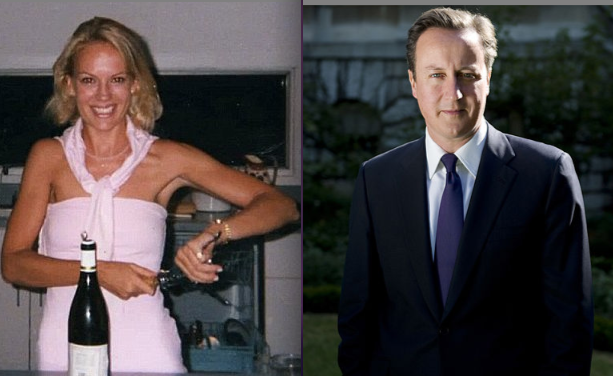
In the US, the FBI’s internet crime department said it was not investigating the site.

IsAnyoneUp was set up at the end of 2010 – originally as a way for Hunter Moore to write stories about his own experiences with women, as well as post pictures.

A year on, Hunter Moore said IsAnyoneUp was getting over 300,000 hits a day, and was raking in about $20,000 a month in advertising revenue – a large portion of which was being spent on web hosting costs.

IsAnyoneUp was set up at the end of 2010, originally as a way for Hunter Moore to write stories about his own experiences with women, as well as post pictures

There were very few subjects off limits for Hunter Moore. Most popular, he said, were posts showing teachers.

“People obviously want it, and I’m going to give the people what they want.

“That could definitely affect someone’s livelihood,” he admitted.

“I didn’t use to post teachers, and then I realized that’s where all the traffic is. I have to pay my bills.

“I’m just a businessman.

“I just monetize people’s mistakes that they made and it’s kind of a shady business. But if it wasn’t me, somebody else was going to do it. All I did was really perfected the way to monetize people’s naked pictures.”

As the site’s notoriety grew, so too did the media coverage and, Hunter Moore claimed, threats to his safety.

“I’ve had people climb over the fence, come to my parties, try and fight me, just to serve me with papers, just to get stuff removed.

“I’ve never had anyone successfully do anything. I’d be interested to see what route people would take just because I’m so bored with my life and reading all these stupid emails from people trying to sue me for millions of dollars, but no – I haven’t had anything happen yet.”

The site’s fans – of which there were many – continued to support it, despite increased media scrutiny, setting up online campaigns to save it.

“They were like, <<Oh yeah, Hunter’s awesome>>,” Hunter Moore said.

Evan Brown, a lawyer in the US, had advised several people on how to deal with IsAnyoneUp. He was able to have one woman’s pictures removed. Hunter Moore acknowledged it as the only successful claim.

The lawyer utilized a law intended to help copyright holders remove content from the likes of YouTube. As the picture was a self-portrait, copyright belonged automatically to the woman in question.

A removal request was sent; not to Hunter Moore, but to the host of his website. It worked – but Hunter Moore adapted, Evan Brown said.

“Since then, it appears he has moved the site to another server to make it more difficult to ascertain where it is that it’s hosted, and who to send that notice to.”

Hunter Moore said he has had over 40 different hosts for the website.

Until its closure, IsAnyoneUp.com was hosted with BlackLotus, an LA-based company which specializes in handling security threats such as distributed denial of service (DDoS) attacks, a common tactic used by hackers to knock websites offline.

BlackLotus president Jeffrey Lyon confirmed its business with Hunter Moore, adding that he did not make moral judgements on the actions of its clients.

Jeffrey Lyon said he took a “neutral” view of Hunter Moore’s activities.

Evan Brown said it was very difficult to accuse Hunter Moore of breaking any other laws in relation to IsAnyoneUp, and the relative low profile of the victims helped offer an added layer of protection.

“That this site has been able to persist for over a year now is a testament to the fact of how expensive litigation is, how difficult the processes are to discover who is responsible for positing these images,” Evan Brown said.

He also cited a web phenomena known as the “Streisand effect”, the theory that attempting to take legal action over an issue only serves to inflate it further.

“There’s any number of reasons why people don’t want to magnify this problem. That certainly is an impediment because of the ridicule they could subject themselves to,” Evan Brown said.

“I’ve consulted with a couple of college athletes who didn’t want their coach to find out.”

Hunter Moore detailed several plans for the website – including a social network and even a spin-off TV show planned with a “major US network” – a week before IsAnyoneUp’s closure.

“I have a lot of stuff in the works, and I have a lot of people working with me behind bigger things.”

In his closure statement, Hunter Moore claimed he could no longer deal with the “drama” caused when under-age content was submitted.

He said this posed the biggest problem for the site – particularly when it came to submissions originating from the UK.

“A lot of under-age content comes out of your end of the world,” he said.

“We almost had to black out the UK from accessing the site at one point because we were getting so much under-age content. We usually just flag it and try and report it.”

It is as yet unclear what caused Hunter Moore’s sudden change of tack.

In his note posted on Bullyville.com – which is where visitors to IsAnyoneUp.com are redirected – he said he wanted to “stand up” for victims of bullying.

That statement stands in stark contrast to his previous comments: “It’s anonymous to me. I don’t know the people – it’s just a little picture on a screen.

“If you’re just crying over some [picture] you sent to some boy you just met, no I’m not going to take it down, and no I don’t really care.”


Anders Breivik Trial Day 5: mass killer describes Utoeya rampage

In the fifth day of his trial, Anders Behring Breivik has described how he shot people who were “begging for their lives” during Utoeya island rampage in which 69 people died last July.

Testifying before an Oslo court, Anders Breivik described seeing people curled up and “completely paralyzed” as he reloaded his weapon and shot them in the head.

Earlier Anders Breivik, 33, said he was normally a nice person but had shut off his emotions to carry out the attacks.

The main aim of the trial is to decide whether he is sane or insane.

On 22 July 2011, Anders Breivik set off a car bomb near government buildings in Oslo, killing eight, and then massacred 69 participants in a Labour Party youth camp on the nearby island of Utoeya.

In Friday’s testimony, Anders Breivik said he had arrived on the island dressed as a policeman, and told security officials at the camp he had been posted there following the bombings in the capital.

Anders Breivik then described in chilling detail how he killed people.

Before shooting his first victims, Anders Breivik said he had “100 voices” in his head telling him not to do it.

But after that moment of hesitation, he said he pulled the trigger, shot two people in the head and moved on.

Displaying no emotion, Anders Breivik went on to say he had entered a cafe where several people were hiding.

“Some of them are completely paralyzed. They cannot run,” he said.

“Two people were curled up.”

In the fifth day of his trial, Anders Behring Breivik has described how he shot people during Utoeya island rampage

Anders Breivik said he reloaded after running out of ammunition.

“People were begging for their lives. I just shot them in the head.”

Others pretended to be dead, he added, but he knew they had not been wounded and shot them too.

Anders Breivik continued his rampage around the island, luring youths from hiding places by telling them he was a police officer who was there to protect them.

When they came out, he said: “I shot towards many of them aiming at their heads.”

The stunned silence in the courtroom was replaced with tears.

Anders Breivik admits killing all 77 victims but denies criminal responsibility, saying he was defending Norway from multiculturalism.

He said he had envisaged the most important attack as being the Oslo bombing, but Utoeya “became the most important attack when the government building did not collapse” as planned.

Depending on whether he is found sane or not, he faces either prison or committal to a psychiatric institution.

Anders Breivik himself maintains he is sane but a practitioner of political extremism.

Earlier on Friday, he insisted he was “under normal circumstances a very nice person, very caring about those around me”.

He said he “absolutely” understood why his testimony was horrifying to others.

But said he had embarked on a deliberate programme of “dehumanization” in 2006 to prepare to carry out killings.

Anders Breivik added that empathy was not possible, as he would “break down mentally” if he tried to comprehend what he had done.

Asked if he could feel sadness, Anders Breivik said “yes”, saying the funeral of a friend’s brother had been his “saddest day”.

In additional points, Anders Breivik:

• claimed he had not wished to kill “civilians” when he had targeted the government buildings in Oslo, only “government targets”, but it was impossible to exclude “civilian” deaths entirely

• said that from 2006 he had studied the weaknesses and strengths of organizations from the IRA to al-Qaeda, concluding that the most successful was al-Qaeda, because they “embrace martyrdom” – “and that is key to the successful resistance fight”.

• said it was impossible for “cultural conservatives” like him to get any of their ideas published in the media or in books, due to an alleged project to protect liberal beliefs

• said he believed Japan and South Korea were ideal states, as they had “taken a stand against multiculturalism and Marxism in the 1970s”

In Thursday’s testimony, Anders Breivik said he hoped his car bomb in Oslo would kill the whole government, and had also hoped to kill all those on Utoeya – more than 500 in all.

Anders Breivik’s evidence is scheduled to last five days, concluding on Monday. The entire proceedings are expected to last 10 weeks.

 [youtube moj6gKjmXZA]

YouTube lost court battle over video clips in Germany

A German court in Hamburg ruled that YouTube is responsible for the content that users post to the video sharing site and it could face a huge bill for royalties after it lost the court battle.

The court wants YouTube to install filters that spot when users try to post music clips whose rights are held by royalty collection group, Gema.

The German industry group said in court that YouTube had not done enough to stop copyrighted clips being posted.

YouTube said it took no responsibility for what users did, but responded when told of copyright violations.

“Today’s ruling confirms that YouTube as a hosting platform cannot be obliged to control the content of all videos uploaded to the site,” said a spokesperson for YouTube.

“We remain committed to finding a solution to the music licensing issue in Germany that will benefit artists, composers, authors, publishers and record labels, as well as the wider YouTube community,” they added.

YouTube could face a huge bill for royalties after it lost the court battle over video clips in Germany

Gema’s court case was based on 12 separate music clips posted to the website. The ruling concerns seven of the 12 clips.

If YouTube is forced to pay royalties for all the clips used on the site it will face a huge bill.

Gema represents about 60,000 German song writers and musicians.

If enforced, the ruling could also slow the rate at which video is posted to the site as any music clip would have to be cleared for copyright before being used.

Currently, it is estimated that about 60 hours of video is uploaded to YouTube worldwide every minute.

YouTube owner Google has yet to comment on the ruling.

The court case began in 2010 and came after talks between YouTube and Gema about royalties broke down. In 2009, the stalemate meant that videos from German recording firms were briefly blocked on the site.

Gema has rung up several victories against sites it has claimed are using music without paying royalties.

In 2009, file-sharing site Rapidshare was told to start filtering songs users were uploading following action by Gema. In March, 2012 a second judgement told Rapidshare to be more proactive when hunting down content pirated by users.

Music streaming site Grooveshark pulled out of Germany claiming licensing rates set by Gema made it impossible to run a profitable business in the country.


Persian invaders perished in tsunami during Greece siege

German geologists from Aachen University found evidence that a tsunami recorded by the ancient historian Herodotus did indeed protect a Greek village from Persian invaders.

The geologists say they have found evidence in northern Greece that the event in 479 saved the village of Potidaea.

Herodotus recorded that huge waves had killed hundreds of Persian soldiers during the siege of the village.

The scientists warn the area may experience another massive marine event.

They say that northern coastal regions should be included among the Greek regions prone to tsunamis.

It is usually the southern coast of Greece which is identified as a risk area.

A tsunami recorded by the ancient historian Herodotus did indeed protect a Greek village from Persian invaders, say geologists

Greek geophysicists say earthquakes pose a much greater threat to the country than tsunamis.

“We have found several historic tsunamis on the coast,” Aachen’s Professor Klaus Reicherter told Germany’s DPA news agency.

“That means there is a certain risk for the coastal areas.”

Sediment on the northern Greek peninsula where Potidaea and the modern town of Nea Poteidaia are located shows signs of massive marine events, such as large waves, the Aachen study found.

Excavations in the suburbs of the nearby ancient city of Mende uncovered sea shells likely to have been lifted from the ocean bed and tossed about during a tsunami.

The findings were presented at the annual conference of the Seismological Society of America in San Diego, California.

Herodotus records: “Then there came upon them [the Persians] a great flood-tide of the sea, higher than ever before, as the natives of the place say, though high tides come often.

“So those of them who could not swim perished, and those who could were slain by the men of Potidaia who put out to them in boats.”


Social Marketing Automation News: Marketo Acquires Crowd Factory

San Mateo, Calif.– Marketo announced on April 18, 2012 that it has redefined marketing automation with the acquisition of Crowd Factory, Inc., a leading social campaign management platform. With its first acquisition, Marketo breaks social marketing from its usual silo, making it an integrated and integral part of every online marketing initiative. With social marketing a mandate for every company – large and small, business-to-consumer (B2C) and business-to-business (B2B) – this combined solution enables marketers to amplify and measure social-enabled campaigns to deliver more customers and gain an immediate competitive edge.


“Social marketing campaigns and marketing automation have been like the proverbial two ships passing in the night, with most social marketing tools sitting in silos disconnected from mainstream marketing processes. Today we have changed that game,” said Phil Fernandez, president and CEO of Marketo. “By combining Crowd Factory with Marketo, marketing professionals can finally use integrated social campaigns to boost the reach and impact of every marketing initiative they undertake – at every step in the customer lifecycle. Since releasing our first products four years ago, Marketo’s innovation has repeatedly reset the standard for marketing solutions, and we’re thrilled to do it again with this revolutionary development in social marketing automation.”


Crowd Factory is a complete social campaign management platform that helps marketers accelerate social and word-of-mouth marketing, grow their marketing databases with unique social profiles and attract new customers. The platform allows marketers to add social applications and messages quickly to every channel – Facebook Pages, Twitter and LinkedIn feeds, landing pages, websites, banner ads and emails. These applications encourage social sharing, supercharging the results of every multi-channel marketing campaign. Then, Crowd Factory automatically tracks the reach and impact of this social sharing, providing direct feedback on the return on investment (ROI) of social marketing. Companies of all sizes, including Molson Coors, Sony Music, Jive Software, Quickoffice and British Telecom use Crowd Factory’s social marketing software to drive real business results every day.


Now, marketers have a breakthrough solution that unifies Marketo’s broad platform for marketing automation, sales effectiveness, and analytical reporting with Crowd Factory’s platform for rapidly creating and deploying social campaigns like customer referrals or sweepstakes.

 Sanjay Dholakia, CEO of Crowd Factory commented the following:

“Crowd Factory pioneered the idea of Social ROI by empowering marketers to push viral campaigns throughout the social web, and then track that valuable social activity back to individual influencers and conversions, this fits perfectly into the vision of marketing automation that Marketo has led: that all marketing activity matters and can be measured against the bottom line. We are excited to join the Marketo team and help companies of any size in any market segment generate more campaigns, more leads and, ultimately, more customers.”


“I like this combination a lot,” said Paul Greenberg, president of The 56 Group, LLC, a customer strategy consulting firm. “A 21st-century multichannel marketing strategy has to incorporate social channels as well as traditional or it’s going to fail. To succeed at that, there needs to be a technological underpinning that can handle all channels in conjunction with the increasingly demanding requirements from customers. The combination of Marketo and Crowd Factory is as close to the complete package for this as you’ll see for a long while.”


“The prospect of combining Crowd Factory’s social capabilities and platform with Marketo’s marketing automation platform – especially lead scoring – is a really exciting and innovative development,” said Christine Poirier, Manager, Digital and Relationship Marketing at Molson Coors. “Our reach with email campaigns is limited to the consumers in our database. However, with Crowd Factory we are able to easily give our consumers a way to share our brands and our content with their friends, in an authentic way. This helps us amplify our reach, while also giving our consumers a fun way to engage with our brands and with their social networks.”


“As a customer of both companies, this is terrific news – it’s all about reducing friction in the marketing funnel and scaling our ability to effectively reach, educate and nurture our target customers,” said David Karel, VP of Marketing at Bizo. “Our revenue growth is accelerating and Marketo has played a big role as we’ve ramped our marketing effort from ‘zero to 100 mph’ these past couple of years; in fact, our marketing programs contributed almost as much business in Q1 as they did all of last year. We just signed up with Crowd Factory to continue our growth by giving a social lift to all of our content and campaigns. Integrating this power with Marketo will help us drive better results at each stage of the sales and marketing funnel.”


Marketo will continue to support and invest in all current products and customers of both companies. And with combined innovation from both companies, Marketo expects to introduce an exciting new unified product family soon, one in which social campaign management comes to life, where every marketing campaign is a social-enabled marketing campaign. Customers will get an inside view at the Marketo User Summit, May 22-24 at the Hilton San Francisco Union Square.


About Marketo


Marketo is the fastest growing provider in Revenue Performance Management. Marketo’s powerful yet easy-to-use marketing automation and sales effectiveness solutions transform how marketing and sales teams of all sizes work — and work together — to drive dramatically increased revenue performance and fuel business growth. The company’s proven technology, comprehensive services and expert guidance are helping more than 1,800 enterprise and mid-market companies around the world to turn marketing from a cost center to a business-building revenue driver. Marketo also offers Spark by Marketo™, a new brand of marketing automation tailored specifically for small businesses – the fastest-growing and largest segment of today’s economy.


Marketo, Spark by Marketo and the respective logos are trademarks of Marketo, Inc.


All other trademarks are the property of their respective owners.

Rihanna reveals she has not been offered the role of Whitney Houston

Rihanna has revealed she has not been offered the role of Whitney Houston in a planned biopic of the late singer.

However, Rihanna, 24, admits she would love to play the role.

Rihanna says she would love to play Whitney Houston in a biopic, following her recent big screen debut in action movie Battleship.

Rihanna has revealed she has not been offered the role of Whitney Houston in a planned biopic of the late singer

“I haven’t heard anything about that. If I was going to do a biopic, it would have to be someone I admire and she is definitely one of those. I’ve heard all the rumors but that’s it,” showbizspy.com quoted Rihanna as saying.

Rihanna reveals she also wants to experiment with different genres in the cinema world.

“I would love to try comedy. That is something I would really like to have a go at,” the singer said.


Kelley Lynch, Leonard Cohen’s former manager, jailed for harassing the star

Kelley Lynch, Leonard Cohen’s former manager and partner, has been jailed for 18 months for harassing the singer-songwriter.

Kelley Lynch, 55, was found guilty by a Los Angeles court last week, after a sending a torrent of expletive-strewn emails and letters to Leonard Cohen.

She was also sentenced to five months probation and ordered to attend anger-management courses.

Leonard Cohen, 77, thanked the court for the “even-handed and elegant manner in which these proceedings have unfolded”.

“It was a privilege and education to testify in this courtroom,” he told an LA county superior court judge.

Kelley Lynch is not likely to spend her full sentence behind bars due to prison overcrowding in California.

She served as Leonard Cohen’s manager for 17 years, and the pair had a brief relationship.

Leonard Cohen fired, and then sued, Kelley Lynch in 2004 over the theft of millions of dollars from his personal fortune

But Leonard Cohen fired, and then sued, Kelley Lynch in 2004 over the theft of millions of dollars from his personal fortune.

A judge ordered Kelley Lynch to pay $9.5 million in damages, but her lawyers claimed she was unreachable and the money was never repaid.

Leonard Cohen, whose best-known songs include Hallelujah and Suzanne, later came out of retirement, in part to rebuild his finances.

Kelley Lynch’s campaign of harassment started soon after she was fired.

The court was shown binders of emails Kelley Lynch had sent Leonard Cohen, some of which ran to 50 pages.

In a statement made before the sentencing, Kelley Lynch accused prosecutors of carrying out a “vicious attack” on her.

However, she added: “I do believe that I have engaged in excessive and unauthorized rambling.”

“It gives me no pleasure to see my onetime friend shackled to a chair in a court of law,” said Leonard Cohen, “her considerable gifts bent to the service of darkness, deceit and revenge.”


Prince Salman of Bahrain backs Formula 1 Grand Prix despite protests

Crown Prince Salman bin Hamad Al Khalifa of Bahrain says the weekend’s Formula 1 Grand Prix will go ahead despite protests.

“Cancelling the race just powers extremists. Having it allows us to build bridges and celebrate our nation as an idea that’s positive,” Prince Salman said.

Unrest in the Gulf state has led to calls for the race to be cancelled for the second year running.

On Friday, thousands attended a protest in Budaiya, demanding an end to the crackdown on dissent.

Riot police initially showed restraint, but when a group of about 100 protesters broke away and attempted to reach the site of the former Pearl Roundabout – the focus of last year’s pro-democracy demonstrations – they fired stun grenades and tear gas.

The overnight demonstrations called for the “overthrow of the regime” and the release of the human rights and political activist, Abdulhadi al-Khawaja, who has been on hunger strike in prison for more than 70 days in protest at the life sentence he received from a military tribunal in June.

Crown Prince Salman bin Hamad Al Khalifa of Bahrain says the weekend's Formula 1 Grand Prix will go ahead despite protests

Earlier in the day, the Force India team missed Friday’s second practice session because they wanted to return to their hotel before dark.

Four of their mechanics narrowly avoided being hit by petrol bombs during a clash between protesters and police on Wednesday.

On Thursday, a bus containing 12 mechanics from the Sauber team took to the hard shoulder after encountering a burning bottle in the road and seeing masked men running towards their lane. No-one was hurt in either incident.

Several British politicians have called for the race to be cancelled while Amnesty International said “not much has changed” in Bahrain since last year’s protests led to the deaths of more than 50 anti-government demonstrators.

Prime Minister David Cameron said it was a matter for Formula 1, but Labour leader Ed Milliband insisted it would send out the wrong signal if the grand prix went ahead at a time of protests over human rights abuses.

However, Prince Salman said he thought the race could be “a force for good”.

“I think this race should continue because it is indeed a very big event for this country, important economically, socially,” he said.

“It was only a few politicians who made those comments and it certainly doesn’t represent the entire British political system.”

Prince Salman, flanked by F1 chief Bernie Ecclestone, gave a media briefing at the track.

Bernie Ecclestone said: “We came here because this race asked to be put on the calendar. We’re happy and delighted it was.

“What happens in this country is nothing to do with us. This race has given the protesters an incredible platform for all you guys to talk to them.

“They say they talk about democracy, which is freedom of speech. They’ve had all the freedom in the world to talk.”

Ferrari boss Stefano Domenicali said teams had been given assurances about their safety.

“With regard to security, we have received all the guarantees from the federation and the organiser and so far everything is under control. I don’t feel we as teams are the target of the protesters and that is really important,” he said.

“I would say there are two points. One there is the race, a sporting event, where we have to be focused as a team here in the paddock.

“Secondly, there is a political issue that is not really on our side to comment.”

 [youtube a1L_KvB3gFc]

[youtube TcY03HZI9R4]

[youtube ISEuonBoIYw]

Bhoja Air Boeing 737 carying 127 people crashes in a residential area near Islamabad

A Bhoja Air jet carrying up to 127 people has crashed in a residential area near Islamabad international airport in Pakistan.

Aviation officials said the plane, flight BHO-213, was flying from Karachi to Islamabad when it crashed in bad weather minutes from landing.

Emergency teams are at the crash site, reported to be at Hussain Abad village near Bahria town.

There are no reports of survivors. Rescue teams are trying to assess if there are any casualties on the ground.

Reports suggest the plane, believed to be a Boeing 737 carrying 118 passengers and 9 crew members, was making its final approach to the airport when the crash happened.

The Bhoja Air plane, believed to be a Boeing 737 carrying 118 passengers and 9 crew members, was making its final approach to the airport when the crash happened

Even though rescue services were at the site, some people were searching the wreckage using light from their mobile phones, he added.

Witness Samab Ahmad SAID: “I’m working on a construction site not far from the landing strip and I saw it with my own eyes. I saw the plane crash land and then suddenly catch fire.

“It crashed on top of some sort of building, which could be residential. I can still see the fire from the distance. It’s a terrible, terrible scene. I heard the emergency services going to the scene too, including a helicopter.”

Saifur Rehman, from a police rescue team, told Geo TV: “Fire erupted after the crash. The wreckage is on fire, the plane is completely destroyed.”

A police official at the crash site, Fazle Akbar, told AFP news agency the plane had been totally destroyed and it would be a miracle if there were any survivors.

The jet left Karachi at around 17:00 local time and had been due to arrive at 18:50.

There were reports of rainstorms in the area at the time, but it is likely to take investigators weeks to determine the cause of the crash.

There have conflicting reports about the exact numbers of passengers and crew on board.

Bhoja Air is a small new commercial airline which was started about 10 years ago but closed because of financial difficulties. It recently re-opened.

Last July, an Airbus A321 crashed as it was about to land in Islamabad, killing all 152 people on board.

Although Pakistan’s air industry has been booming, critics say standards have not always kept pace with the increase in services.

 [youtube AEwDD24Su-U]

[youtube azyC9AU4-F4]

Sarkophobia: Why French people dislike President Nicolas Sarkozy?

From the moment Nicolas Sarkozy took office in 2007, no French president in modern times has been the object of such blatant dislike.

It is an animosity quite distinct from opposition to his actual policies.

All leaders expect hostility for the things they do. Few get it in such measure for the things they are.

“There is an irrational hatred of Nicolas Sarkozy among much of the public, and it is playing a major part in this election,” says Jean-Sebastien Ferjou who edits the news website Atlantico.

“I say <<irrational>> because that is what it is. Polls show that if you ask people about this or that policy of Sarkozy’s – but don’t mention his name – they will tend to support it.

“But they’re still not going to vote for him.”

For Jean-Sebastien Ferjou, the main reason for the hostility is that Nicolas Sarkozy was the first French leader to declare himself unashamedly on the political right.

“It is ironic because in fact he is ideologically totally unstructured. His talent is for energy and movement, and it is impossible to say what sort of intellectual history he comes from,” says Jean-Sebastien Ferjou.

“But he sent out a message very clearly that he was not embarrassed about saying he was on the right – and this set off a huge backlash of hostility.

“You have to understand that for years the right in France has totally abandoned the intellectual debate to the left.

“For so-called <<right-wing>> parties, the only argument they put forward was that they were better managers than the left. They could run things better. But they had surrendered in the battle of ideas and values.

“Sarkozy ended that complicity, and people hated him for it.”

From the moment Nicolas Sarkozy took office in 2007, no French president in modern times has been the object of such blatant dislike

The tone for this “Sarkophobia” is set in the cafes and cultural salons of bourgeois Paris, where the president is routinely viewed as vulgar, money-obsessed, semi-racist and dangerous.

Recently the film director Mathieu Kassowitz said that if the president made it to round two of the election, it would show that France was a “neo-fascist collaborationist” country.

The entertainer Christophe Aleveque said in an interview that Nicolas Sarkozy is “dangerous… from another planet… a fool who believes his own lies… psychologically not normal”.

“If he loves money so much that is fine, but it is his problem, so may I suggest he get a job in a bank or something. And leave us alone!” he said.

Five years after Nicolas Sarkozy celebrated his 2007 election victory at the pricey Champs-Elysees restaurant Le Fouquet’s, this is still held up as a symbol of his supposed jet-set lifestyle.

However, as his supporters grow tired of pointing out, senior Socialists are regularly seen dining in expensive Paris eateries. President Francois Mitterrand had no shortage of wealthy friends.

In 2002, the wife of the Socialist candidate Lionel Jospin told a magazine profiler how she did her shopping at Le Bon Marche – the Paris equivalent of Harrod’s food hall.

But being a sophisticated display of wealth,that was considered acceptable.

For the right-wing lawyer and polemicist Gilles-William Goldnadel, the roots of the anti-Sarkozism lie in a public culture still in thrall to the allure of the left.

“It is that old tradition – revolutionary, romantic – which will attack anything that smacks of money or privilege,” he says.

“And it’s allied to a journalistic profession that is overwhelmingly on the left.

“Polls show that 80 to 95% of journalists are on the left or far-left, and with their obsessive focus on the so-called vices of Nicolas Sarkozy, they are pushing the same agenda.”

Another interpretation of Sarkophobia is offered by writer Andre Bercoff, author of La Chasse au Sarko (The Sarko Hunt).

He says the real reason people dislike the president is not “Fouquet’s or bling-bling or all that nonsense. It’s because he broke the rules of how to be president.

“When de Gaulle set up the Fifth Republic, he created a presidency that was very like a monarchy. And since then all presidents, of left and right, have been happy to go along with that.

“But then along came Sarkozy who said, <<I don’t want to be a king – I want to be a politician. I want to be like a football coach>>. And the people really resent him for it.”

For Andre Bercoff, the other reason why the president is loathed is that he has told the French some inconvenient truths.

“The French were happy as long as they were ruled by a Mitterrand or Chirac, leaders who nurtured their post-Revolutionary belief that the French are a kind of chosen people for whom the normal rules of economics don’t apply,” he says.

“There is still a widespread feeling in France that we should set the path to a new way of being. Look at the success of (far-left candidate) Jean-Luc Melenchon.

“But Sarkozy punctured that illusion – and again people hate him for it.”

Jean-Sebastien Ferjou, Gilles-William Goldnadel and Andre Bercoff all believe that Nicolas Sarkozy has already lost the election, and that the prevailing anti-Sarkozism is a major cause.

But at Sorbonne University, sociology professor Michel Maffesoli is not so sure.

He agrees that Nicolas Sarkozy is the butt of an official culture whose exponents in the media, universities and the arts are overwhelmingly hostile.

But he draws a distinction between published opinion – the views of the intelligentsia – and public opinion.

And with the mass of the population, he argues, the president has far more of a rapport than is ever acknowledged.

“French public life has been dominated for two or three centuries by the rationalist ideas of the Enlightenment.

“But these ideas, which we might describe as those that have shaped ‘modernity’, are now giving way to the ideas and values of <<post-modernity>>,” he says.

“Post-modernity, which is the condition our societies are moving into, is far more anchored around the emotional than the rational or intellectual.

“And Sarkozy seems to have grasped this instinctively. He is far more in phase with ordinary people than are the intellectuals who govern public life.”

Michel Maffesoli does not believe in opinion polls, because he says people know what they are expected to say, and so underplay their support for Nicolas Sarkozy.

“But in the voting-booth it is different. The booth is like a womb where people reconnect with the purely emotional. It means going with their gut rather than their brains.

“That’s why I think Sarkozy can still do it.”

It seems a bit of a long shot. Whatever Michel Maffesoli thinks of them, the opinion polls are pretty categoric.

But as Jean-Sebastien Ferjou also points out: “More than 60% of people voting for Hollande say they are going to do it purely to get rid of Sarkozy.”

Perhaps not the most positive way to embark on a new political era.


Heidi Klum unrecognizable in her first photo shoot

Supermodel Heidi Klum has tweeted one of her earliest modeling snaps and she looks completely different to her appearance now.

In the picture, taken in 1992, when Heidi Klum was just 19-years-old, the German model is seen in a prom dress posing on a bed with dolls and stuffed animals surrounding her.

Yesterday, Heidi Klum, 38, posted the snap and told fans: “Wow! Check out this picture from 1992. One of my very first photo shoots. This is my original hair color!”

Heidi Klum has tweeted one of her earliest modeling snaps and she looks completely different to her appearance now

Heidi Klum won a national contest out of 25,000 contestants called Model 92 which kick started her modeling career.

She received a contract with Thomas Zeumer, CEP of Metropolitan Models New York but it wasn’t until she landed a Victoria’s Secret job that her profile soared.

While Heidi Klum, now a mother-of-four, looks dramatically different compared to in the early years of her career she says she hasn’t and wouldn’t have any plastic surgery.

The supermodel told Allure magazine: “I’m proud to be able to say, in this day and age, I haven’t done anything. Everyone has a view of what’s not pretty and [plastic surgery] just doesn’t look pretty to me. Especially when I see it on really young girls.”

Heidi Klum also opened up about her split from singer Seal, describing the end of her marriage as a “curveball”.


Nestle reports rising sales after having a challenging 2012

0

Nestle, the world’s biggest food group, has reported rising sales but says it is having a “challenging year”.

The Swiss company said its sales in the first three months of 2012 were 21.4 billion Swiss francs ($23.4 billion), up 5.6% from the same period last year.

The group behind KitKat and Nespresso said that the trading environment had been subdued in many developed markets.

But it added that in most emerging markets “conditions remain dynamic and rich in growth opportunities”.

Nestle, the world's biggest food group has reported rising sales but says it is having a "challenging year"

Nestle struggled in 2011 with the strength of the Swiss franc, which cut its earnings by 13.4% in the full year.

But in the past six months the Swiss central bank has been intervening to weaken its currency and support the country’s exporters.

Nestle said an expected “improved raw material environment” in the second half of the year together with rising prices meant it could maintain its forecast of improved earnings and profit margins for the full year.

It did not comment on the deal it is expected to finalize this month to buy Pfizer’s infant nutrition business for about $9 billion.


Synthetic DNA and RNA molecules give hints about evolution and heredity

Researchers from UK Medical Research Council’s Laboratory of Molecular Biology have succeeded in mimicking the chemistry of life in synthetic versions of DNA and RNA molecules.

The work shows that DNA and its chemical cousin RNA are not unique in their ability to encode information and to pass it on through heredity.

The work, reported in Science, is promising for future “synthetic biology” and biotechnology efforts.

It also hints at the idea that if life exists elsewhere, it could be bound by evolution but not by similar chemistry.

In fact, one reason to mimic the functions of DNA and RNA – which helps cells to manufacture proteins – is to determine how they came about at the dawn of life on Earth; many scientists believe that RNA arose first but was preceded by a simpler molecule that performed the same function.

However, it has remained unclear if any other molecule can participate in the same unzipping and copying processes that give DNA and RNA their ability to pass on the information they carry in the sequences of their nucleobases – the five letters from which the genetic code is written.

The classic double-helix structure of DNA is like a twisted ladder, where the steps are made from paired nucleobases (RNA is typically a single helix).

Researchers have succeeded in mimicking the chemistry of life in synthetic versions of DNA and RNA molecules

Philipp Holliger and a team of colleagues created six different DNA- and RNA-like molecules – xeno-nucleic acids, or XNAs – by replacing not the nucleobases but the sugar groups that make up the sides of the ladder.

“There’s a lot of chemistry that seeks to build alternative nucleic acids, and people have been modifying the bases, the sugars and the backbone, but what we were focusing on was the type of nucleic acid or polymers that would retain the ability to communicate with the natural DNA,” Dr. Philipp Holliger explained in an interview for the Science podcast.

Because the nucleobases themselves were the same as those of DNA and RNA, the resulting molecules were able to join with their natural counterparts.

The effect is similar to work recently published in Nature Chemistry, showing that another sugar-substituted DNA analogue could be made to pair up with DNA itself.

But the crucial point in creating a full “synthetic genetics” is a set of nucleic acids like DNA and RNA that can not only carry genetic information, but would also allow it to be changed and passed on – evolution and heredity.

That requires a set of helper molecules called polymerases, which, once DNA or RNA “unzip” and expose their genetic information, help create new DNA molecules from those instructions.

Dr. Philipp Holliger and his colleagues have developed polymerases that efficiently transcribe the code of their synthetic DNA to natural DNA and then from that back to another synthetic DNA.

The process of evolution was encouraged in the lab; one of their DNA analogues was designed to cling to a particular protein or RNA target, those that failed to do so were washed away.

As successive copies of those that stuck were made, variations in the genetic code – and the resulting structure the molecules took on – led to ever more tightly attached XNAs.

“We’ve been able to show that both heredity – information storage and propagation – and evolution, which are really two hallmarks of life, can be reproduced and implemented in alternative polymers other than DNA and RNA,” Dr. Philipp Holliger explained.

“There is nothing <<Goldilocks>> about DNA and RNA – there is no overwhelming functional imperative for genetic systems or biology to be based on these two nucleic acids.”

In an accompanying article in Science, Gerald Joyce of the Scripps Research Institute wrote that “the work heralds the era of synthetic genetics, with implications for exobiology [life elsewhere in the Universe], biotechnology, and understanding of life itself”.

But the work does not yet represent a full synthetic genetics platform, he pointed out. For that, a self-replicating system that does not require the DNA intermediary must be developed.

With that in hand, “construction of genetic systems based on alternative chemical platforms may ultimately lead to the synthesis of novel forms of life”.


Mary Pinchot Meyer, JFK’s mistress, was killed by CIA as she knew too much about his assassination

1

The suspicious death of Mary Pinchot Meyer, one of President John F. Kennedy’s mistresses, just months after his death, has sparked numerous conspiracy theories.

A new book claims that socialite Mary Pinchot Meyer, a beautiful divorcee who was close friends with the Kennedys and is widely known for having a lengthy affair with the playboy President, was shot in a cover-up operation by the CIA.

Mary’s Mosaic: The CIA Conspiracy to Murder John F. Kennedy. Mary Pinchot Meyer, and Their Vision of World Peace by Peter Janney alleges that, in her preoccupation with her lover’s assassination and ensuing personal investigation, Mary Pinchot Meyer may have gotten so close to the “truth” that the CIA found her to be a threat.

As a result, CIA operatives staged a shooting to make it look like Mary Pinchot Meyer died due to a sexual assault that turned violent.

Whether or not the theory is true, there are a number of questionable components to the story of the months leading up to Mary Pinchot Meyer’s death on October 12, 1964.

Mary's Mosaic: The CIA Conspiracy to Murder John F. Kennedy. Mary Pinchot Meyer, and Their Vision of World Peace by Peter Janney

Her ex-husband, Cord Meyer, was a CIA agent himself and the couple were card-carrying members of Georgetown’s starry social set, which included then-Senator John F. Kennedy and his wife Jacqueline.

The couples became close friends, along with Mary Pinchot Meyer’s sister Antoinette (who went by Tony) and her husband Ben Bradlee, who was a bureau chief for Newsweek but later went on to be the managing editor of The Washington Post.

Another couple that they spent time with was Mary Pinchot Meyer’s Vassar classmate Cicely d’Autremont and her husband James Angleton, who was the chief of the counter surveillance for the CIA.

Mary Pinchot Meyer, widely known for having a lengthy affair with JFK, was shot in a cover-up operation by the CIA

In the book, the author claims that Mary Pinchot Meyer would often bring marijuana and LSD to her trysts with the President.

During their conversations while on these hallucinogens, Mary Pinchot Meyer reportedly tried to appeal to JFK’s pacifist nature and urged him to seek peaceful solutions to such worldwide crises like the Cold War and the Cuban missile crisis.

At the time, LSD was not illegal, and many, including Harvard professor Timothy Leary, advocated its use because they believed it helped people expand their knowledge base.

Peter Janney’s book is not the first to draw conclusions between Mary Pinchot Meyer’s friendship with Timothy Leary and her intentions with her relationship with JFK.

He goes on to say that Mary Pinchot Meyer was later murdered by the CIA, who he believes organized JFK’s assassination in an effort to stop him from preventing violent escalation that they wanted in the Cold War.

Though The Huffington Post thought that the book rested largely on substantial assumptions, these theories have been in existence for some time.

One question lies in the existence- and retrieval- of Mary Pinchot Meyer’s diary that included writings about her affair with JFK.

Within a day of her murder, Ben Bradlee went over to her home to find the diary and, though the door was locked, he found James Angleton.

The CIA spymaster said that he also was looking for the diary but claimed that it was because his wife – Mary Pinchot Meyer’s friend – had asked him to.

The whereabouts of the diary today are uncertain.

Another clue erring on the side of the conspiracy is that while Mary Pinchot Meyer’s ex-husband included a statement of support for the police investigation of her murder, his assistant supposedly said that it was a lie and he did truly believe it to be a standard “in house rub out”.

In an interview shortly before his death in 2001, Cord Meyer said that “the same sons of b****es that killed John F. Kennedy” killed his ex-wife.

Police arrested Robert Crump, a man who was found near the scene of the crime, but had no connection to the murder weapon, which was never found, or any prior history with Cord Meyer.


Neil Heywood case: Chinese police “covered-up” the murder not to be linked to Bo Xilai

According to a senior Chinese journalist, police knew British businessman Neil Heywood had been murdered in Chongqing last November and that a cover-up began immediately.

Police panicked when they realized the case could be linked to top politician Bo Xilai and his wife, Gu Kailai.

It was only this month that authorities named Gu Kailai as a suspect and promised an investigation.

Bo Xilai has been sacked, amid China’s biggest political scandal in decades.

Neil Heywood was found dead in a hotel in Chongqing on 15 November 2011. Local officials initially said he died of excessive drinking.

Chinese police panicked when they realized Neil Heywood case could be linked to top politician Bo Xilai

Police who arrived at the hotel immediately knew he was killed, and panicked after they realized the case was linked to Bo Xilai, said the journalist.

Three of the investigators asked to resign out of fear. It was at this point that ex-police chief Wang Lijun became involved, the source said.

In January, Wang Lijun told his boss Bo Xilai about the case. He was sacked and subsequently sought refuge at the American consulate in Chengdu, where he reportedly told US officials about the murder and sought to defect.

That sparked the biggest political scandal in China in years, ahead of a leadership change in Beijing due to get under way in October.

State media have reported that Gu Kailai and Zhang Xiaojun, an orderly at Bo Xilai’s home, have been arrested. Bo Xilai is also under investigation for ”serious discipline violations”.


Princess Cruises apologizes for ignoring a Panama fishing boat adrift in the Pacific Ocean

American company Princess Cruises says it deeply regrets that one of its ships failed to stop to help a fishing boat adrift in the Pacific Ocean.

Two of the three Panamanians on board the disabled vessel later died.

Princess Cruises said that although passengers on the cruise ship had spotted the castaways and alerted staff, the captain had not been told.

The one surviving fisherman – Adrian Vasquez, 18 – was later rescued after 28 days at sea.

Adrian Vasquez had reported that – after 16 days adrift – he and his companions saw a cruise ship sailing past, despite desperate attempts to flag it down.

Three birdwatchers on board the cruise ship – the Star Princess – said they had spotted the fishermen waving for help and told ship staff, but had been unable to persuade them to change course.

Princess Cruises says it deeply regrets that Star Princess ship failed to stop to help a fishing boat adrift in the Pacific Ocean

In a statement, Princess Cruises said a preliminary investigation had found that there appeared to have been a “breakdown in communication” in relaying the passengers’ concern.

It said Captain Edward Perrin and the officer of the watch were not notified.

“Understandably, Captain Perrin is devastated that he is being accused of knowingly turning his back on people in distress,” the statement said.

“Had the captain received this information, he would have had the opportunity to respond.”

Princess Cruises added that it understood its responsibility under the law of the sea to help any vessel in distress, and said its ships had been involved in more than 30 rescues over the past decade.

It said the investigation was continuing.

Adrian Vasquez was eventually rescued 1,000 km (620 miles) off the mainland, near the Galapagos Islands.

He said he survived after his friends died thanks to a sudden rainstorm that replenished his drinking water supplies.

Adrian Vasquez told the Associated Press he still felt anger at the ship he saw sail past two weeks before his rescue.

“I said <<God will not forgive them>>,” he said.


Africa is sitting on a vast reservoir of groundwater

The notoriously dry continent of Africa is sitting on a vast reservoir of groundwater, say scientists who have mapped in detail the amount and potential yield of this groundwater resource across the continent.

They argue that the total volume of water in aquifers underground is 100 times the amount found on the surface.

The team have produced the most detailed map yet of the scale and potential of this hidden resource.

Writing in the journal Environmental Research Letters, they stress that large scale drilling might not be the best way of increasing water supplies.

Across Africa more than 300 million people are said not to have access to safe drinking water.

Demand for water is set to grow markedly in coming decades due to population growth and the need for irrigation to grow crops.

Freshwater rivers and lakes are subject to seasonal floods and droughts that can limit their availability for people and for agriculture. At present only 5% of arable land is irrigated.

Now scientists have for the first time been able to carry out a continent-wide analysis of the water that is hidden under the surface in aquifers. Researchers from the British Geological Survey (BGS) and University College London (UCL) have mapped in detail the amount and potential yield of this groundwater resource across the continent.

Scientists have mapped in detail the amount and potential yield of this groundwater resource across Africa

Helen Bonsor is from the BGS is one of the authors of the paper. She says that up until now groundwater was out of sight and out of mind. She hopes the new maps will open people’s eyes to the potential.

“Where there’s greatest ground water storage is in northern Africa, in the large sedimentary basins, in Libya, Algeria and Chad,” she said.

“The amount of storage in those basins is equivalent to 75 m thickness of water across that area – it’s a huge amount.”

Due to changes in climate that have turned the Sahara into a desert over centuries many of the aquifers underneath were last filled with water over 5,000 years ago.

The scientists collated their information from existing hydro-geological maps from national governments as well as 283 aquifer studies.

The researchers say their new maps indicate that many countries currently designated as “water scarce” have substantial groundwater reserves.

However, the scientists are cautious about the best way of accessing these hidden resources. They suggest that widespread drilling of large boreholes might not work.

Dr. Alan MacDonald, lead author of the study, said: “High yielding boreholes should not be developed without a thorough understanding of the local groundwater conditions.

“Appropriately sited and developed boreholes for low yielding rural water supply and hand pumps are likely to be successful.”

With many aquifers not being filled due to a lack of rain, the scientists are worried that large-scale borehole developments could rapidly deplete the resource.

According to Helen Bonsor, sometimes the slower means of extraction can be more efficient.

“Much lower storage aquifers are present across much of sub-Saharan Africa,” she explained.

“However, our work shows that with careful exploring and construction, there is sufficient groundwater under Africa to support low yielding water supplies for drinking and community irrigation.”

The scientists say that there are sufficient reserves to be able to cope with the vagaries of climate change.

“Even in the lowest storage aquifers in semi arid areas with currently very little rainfall, ground water is indicated to have a residence time in the ground of 20 to 70 years.” Dr. Helen Bonsor said.

“So at present extraction rates for drinking and small scale irrigation for agriculture groundwater will provide and will continue to provide a buffer to climate variability.”


Levon Helm, singer and drummer for The Band, dies at 71

US folk-rock musician Levon Helm, singer and drummer for The Band, has died of cancer at the age of 71, his manager said.

Levon Helm died at a hospital in New York City surrounded by family, friends and band mates, said manager Barbara O’Brien in a statement.

His family had said on Tuesday that Levon Helm was in the final stages of his battle with throat cancer, which he was diagnosed with in 1998.

The Band debuted in 1968 with the album Music From the Big Pink.

They reached the height of their popularity in the 1970s, and had several big hits, including Rag Mama Rag and The Night They Drove Old Dixie Down.

Levon Helm, singer and drummer for The Band, has died of cancer at the age of 71

Their last live performance was filmed by Martin Scorsese in 1976 for the film The Last Waltz.

They briefly reunited in the 1980s, and were inducted into the Rock and Roll Hall of Fame in 1994.

Levon Helm also toured with Ringo Starr’s All Starr band in the 1980s and won a Grammy Award in 2011 for a live recording in Nashville, Tennessee.

 [youtube 3DjUO5FRops]

XOLO X900, the first Intel-powered smartphone, goes on sale in India

Intel confirms details of the first smartphone to be powered by one of its processors.

The XOLO X900, made by the Indian manufacturer Lava, will go on sale on 23 April priced at about 22,000 rupees ($420).

Lava has teamed up with Indian retail chain Croma to distribute the device across the country.

The move follows Intel’s previous failed attempt to break into the smartphone market.

A tie-up with manufacturer LG in 2010 fell flat, with no models going into production.

Meanwhile, chips designed by British-based ARM and the American firm Qualcomm now dominate the market.

XOLO X900, made by the Indian manufacturer Lava, will go on sale on 23 April priced at about 22,000 rupees ($420)

Details of Intel-powered smartphones made by Motorola Mobility and Lenovo are expected soon.

The chip maker announced the partnerships at the Consumer Electronics Show in Barcelona in January.

Intel’s tie-up with Motorola Mobility is seen as most significant as the company is in the process of being purchased by Google.

The Atom-based chip promises more efficient battery consumption, as well as Intel’s own “hyper threading technology” allowing for enhanced multi-tasking.

The XOLO X900 – which features an 8-megapixel camera – will run initially on Android Gingerbread, Google’s smartphone operating system.

This will later be upgraded, Intel said, to the next incarnation of Android, Ice Cream Sandwich.

Lava has emerged as one of India’s fastest-growing companies since being founded two-and-a-half years ago.

“After our success in feature phones, with over 10 million happy customers in under three years, XOLO will be a differentiated player in the fast-growing smartphone segment,” Lava’s co-founder and director Vishal Sehgal said in a statement.


Titanic Memorial Cruise: Balmoral arrives in New York after completing its journey to mark disaster centenary

Titanic Memorial Cruise is finished as Balmoral ship has arrived in New York, after completing its journey to mark the centenary of the Titanic disaster.

The ship left Southampton on 8 April, and traced the route of Titanic’s tragic maiden voyage.

The MS Balmoral held a ceremony above the wreck on 15 April, exactly 100 years after the Titanic sank.

Many of those on board the memorial cruise had connections to the 1,500 people who lost their lives on Titanic.

Paying passengers from 28 countries had booked tickets for the cruise, many years in advance.

Balmoral cruise ship has arrived in New York after completing its journey to mark the centenary of the Titanic disaster

The organizers had tried to recreate many aspects of the famous ship’s original journey.

This included a stop at the Irish port of Cobh, which was known as Queenstown when Titanic called there in April 1912.

Some of the passengers dressed up in period costume during their 12-day journey, and the MS Balmoral’s menu included dishes inspired by those served on board the Titanic


David Merkur used spreadsheet to keep track his online dates and even showed it to one of them

0

David Merkur, an investment banker from New York and member of Match.com, has used a spreadsheet to make sure he was able to distinguish between each of the eight women he was dating.

David Merkur, 28, used the Microsoft Excel tool to record details of each of the women’s characteristics as well as progress reports on how his dates with them went.

He told Jezebel.com he emailed the spreadsheet to Arielle, a woman he had dated, after their April 4 meeting because she “worked with spreadsheets a lot too”. Arielle then forwarded the document to a group of her friends two days later which helped turn the document viral.

David Merkur, who works for real-estate finance firm Ladder Capital, wrote to Arielle: “Well, this could be a mistake, but what the hell… figured I might as well give you the whole thing. I hope this email doesn’t backfire, because I really had a great time and hope to hang again soon :)”

Perhaps most concerning was that David Merkur passed on the information without removing the girls’ telephone numbers, email addresses, full names or details about their dates, such as how he scored their appearances.

Arielle then emailed her friends: “Wanted to pass this on to you for some monday morning entertainment. I went on a date with this guy last wednesday.

“On the date, he tells me that he has a spreadsheet for tracking all of the people from Match that are <<in process>>. Naturally, I tease him and ask him to send me the spreadsheet. For some strange reason, he actually does. See below/attached. Just when I thought I had seen it all…”

The spreadsheet was split into various categories including “Monitor closely” and “Monitor casually” columns. It detailed sent text messages and email exchanges as well as the venues in which Dave and his date met.

The document detailed his thoughts on the women’s physical appearances, giving each a score out of ten, with some being awarded a 7.0 or 7.5 for their “mixed bag of pictures” on the website.

David Merkur has used a spreadsheet to make sure he was able to distinguish between each of the eight women he was dating

Arranged in alphabetical order, Arielle, the woman he sent the email to, is top of the list. Not concerned with playing it cool, he failed to remove his thoughts on her including: “Hope to see again soon.”

But judging by her message as she forwarded the spreadsheet to her friends, it now seems unlikely.

And even though David Merkur hoped to see her again, he did not think to remove flattering details about his other dates including top scores for appearances, and the fact he’d “hooked up” with one of the girls at a party.

One entry read: “OK girl, but very jappy”, a slang word for “Jewish American princess”.

And for a man who treats women so well David Merkur deems it appropriate to make a spreadsheet just to remember their names, home towns and first dates, it is perhaps unsurprising that he wrote how one stood him up, claiming a friend was in hospital.

In a second page, David Merkur lists the women he has met through friends, rather than the dating website. With these women, he had the forethought to remove their identities.

David Merkur added in the email to Arielle: “I only deleted the non-match people’s names (at the bottom) since some I’ve known for a long time.”

He told Jezebel.com he now regrets making the spreadsheet, labeling it “an extraordinarily dumb decision”.

David Merkur then explained his thought process.

He said: “I work with spreadsheets a lot… it’s a great additional tool. I work long days, go to the gym, go out on a couple of midweek dates or what not, get home late… how am I going to remember them? I’m not.

“So I made the spreadsheet. My comments aren’t malicious or mean. This was an honest attempt to stay organized.”

David Merkur told The New York Post that he was sorry for making the document.

“I sincerely regret my serious lapse in judgment in this matter and apologise to everyone,” he said.

“I am deeply remorseful.”

Jezebel.com also spoke to the woman who had been described as “jappy”.

She said he was “fidgety” when the pair met, adding: “He got up to readjust himself a few times in the middle of our conversation, which was bizarre. He kept taking his glasses off and then putting them on again.”

In reference to the tag, she said she thought it was funny he had called her that, despite being shocked he had kept a spreadsheet in the first place.

She recalled David Merkur correctly identifying her designer handbag during their date, which probably led to the tag.

“He said his mom had it,” she said.

Speaking with the Post, David Merkur added: “Suffice it to say, I will never do anything like this again.”


Study of mobile phone calls shows that romantic relationships are driven by women

A British study of mobile phone calls suggests that women call their spouse more than any other person.

The situation changes as their daughters become old enough to have children, after which they become the most important person in their lives.

The study has been published in the journal Scientific Reports.

It also shows that men call their spouse most often for the first seven years of their relationship. They then shift their focus to other friends.

The results come from an analysis of the texts of mobile phone calls of three million people.

According to the study’s co-author, Professor Robin Dunbar of Oxford University, UK, the investigation shows that pair-bonding is much more important to women than men.

“It’s the first really strong evidence that romantic relationships are driven by women,” Prof. Robin Dunbar.

“It’s they who make the decision and once they have made their mind up, they just go for the poor bloke until he keels over and gives in!”

The study of mobile phone calls suggests that women call their spouse more than any other person

But the data shows that women start to switch the preference of their best friend from about the mid-30s, and by the age of 45 a woman of a generation younger becomes the “new best friend”, according to Prof. Robin Dunbar.

“What seems to happen is that women push the <<old man>> out to become their second best friend, and he gets called much less often and all her attention is focused on her daughters just at the point at which you are likely to see grandchildren arriving,” he says.

Prof. Robin Dunbar also claims that the findings suggest that human societies are moving away from a patriarchy back to a matriarchy.

The aim of the project was to find out how close, intimate relationships vary over a lifetime.

This kind of anthropological study is normally very difficult to do because it is hard for researchers to get such a big picture of people’s lives.

But by looking at an at an extremely large mobile phone database, they were able to track these changes extremely accurately.

They had access to the age and sex of the callers, who between them made three billion calls and half a billion texts over a period of seven months.

The team wanted to find out how the gender preference of best friends, as defined by the frequency of the calling, changed over the course of a lifetime and differed between men and women.

They found that men tend to choose a woman the same age as themselves – which the researchers presumed to be their girlfriend or wife – as a best friend much later in life than women do, and for a much shorter time. This occurs when they are in their early-30s, possibly during courtship, and stops after seven years or so.

Women, however, choose a man of a similar age to be their best friend from the age of 20. He remains for about 15 years, after which time he’s replaced by a daughter.

The researchers say that a woman’s social world is intensely focused on one individual and will shift as a result of reproductive interests from being the mate to children and grandchildren.

According to Prof. Robin Dunbar, the data suggests that “at root the important relationships are those between women and not those between men”.

“Men’s relationships are too casual. They often function at a high level in a political sense, of course; but at the end of the day, the structure of society is driven by women, which is exactly what we see in primates,” he explains.

Many anthropologists argue that most human societies are patriarchal on the basis that in most communities men stay where they are born whereas the wives move.

But Prof. Robin Dunbar and his colleagues are arguing that this only occurs in agriculturally based societies.

“If you look at hunter-gatherers and you look at modern humans in modern post-industrial societies, we are much more matriarchal. It’s almost as if the pendulum between the two sexes, power-wise, is swinging (back) as we move away from agriculture toward a knowledge-based economy,” he says.


Anne Hathaway after drastic weight loss for Les Miserables

Anne Hathaway has been on a strict diet in a bit to lose weight to play the role of dying prostitute Fantine in the movie adaptation of Les Miserables.

Anne Hathaway, 29, displayed the results of the regime, which saw her consuming just 500 calories a day – significantly less than the recommended daily allowance of 2,000 calories a day – as she shot scenes for the movie alongside Hugh Jackman in London.

The actress was seen wearing a pale lilac short-sleeved dress as she shot the scenes on the balcony location, standing next to Hugh Jackman – who sported unruly grey hair for his part.

Anne Hathaway’ once-lustrous long brown hair had also been replaced by a blunt crop, necessary for the role of the hungry, dying prostitute.

It is believed that Anne Hathaway has lost around 16 lbs in just three weeks in preparation for the beginning of shooting.

Anne Hathaway displayed the results of the regime, which saw her consuming just 500 calories a day, as she shot scenes for Les Miserables alongside Hugh Jackman

A source told the Daily Mirror earlier this month: “Anne is playing a destitute factory worker-come-lady of the night.

“Unfortunately, she only has 15 to 20 days to lose as much weight as possible – up to a stone-and-a-half – because she’s been filming the scenes showing her fit and healthy, almost slightly chubby.

“It’s not ideal but, as with any high-budget movie, there are strict time constraints.

“Producers have assigned her a personal trainer and she is literally eating nothing more than a couple of apples a day, and some protein – mainly in the form of a shake.”

However, producers are said to be making sure doctors keep a close eye on the actress during the short-term diet.

Meanwhile, in the movie Hugh Jackman is playing Jean Valjean, a poor man on the run from the police after he was released from prison after a 19 year stretch for stealing bread for his family.

The character is being pursued by Russell Crowe’s Inspector Javert, who released Valjean on parole, but then later decided to dedicate his life to imprisoning him again.

The film also stars Irish tenor Colm Wilkinson, who appears as the Bishop of Digne and was the original Jean Valjean in the West End and Broadway musical productions.

And it has quite the stellar cast as well as Hugh Jackman and Russell Crowe, with Eddie Redmayne as Marius Pontmercy, Amanda Seyfried as Cosette, Sacha Baron Cohen as Thénardier, and Helena Bonham Carter as Madame Thénardier.


Blackmagic Cinema Camera wins IABM Game Changer Award

Unveiled this week at the NAB 2012, Blackmagic Cinema Camera is one of the five winners of the inaugural IABM Game-Changer Awards.

The International Association of Broadcasting Manufacturers (IABM) has established five awards to reward five products considered to have the greatest potential to revolutionize the industry. A group of experts from across the world, none of them IABM member, has reviewed products and solutions during the first two days of the NAB 2012 and has chosen the winners. NAB 2012 (National Association of Broadcasters convention) has taken place from April 14 to April 19, 2012 in Las Vegas.

This is the first year when the awards are granted and the winners are: Blackmagic Design – Cinema Camera, CAST Group – BlackTrax 6D, Dolby Laboratories – 3D, Quantel – revolutionQ, and Sony – HDC-2500.

Once again, the 2012 NAB Show has proved to be a critical event for the launch of innovative broadcast products and solutions. Our judging panel had an exciting field from which to select winners for the IABM Game-Changer Awards, and we are confident that the products and companies we’ve honored today will be among those that fuel the continued success of our industry,” said Peter White, IABM General Director.

Blackmagic Cinema Camera promises high-quality at an attainable cost for commercials, independent film, TV production.

This is one of the most exciting products we have ever created and its been a work in progress for a very long time. Ever since I was a telecine engineer back in the 1990′s I have wished that video cameras would include features that allowed them to perform creatively similar to film. However current digital cameras are too heavy, way too expensive and need costly accessories to work. We felt there was a need for a camera that delivered these features in a design that’s optimized for professional video shoots, as well as being a compact, elegant design that’s easily affordable. We think we have achieved that!” said Grant Petty, CEO, Blackmagic Design.


Blackmagic cinema camera
Blackmagic Cinema Camera promises high-quality at an attainable cost.


Blackmagic Cinema Camera Key Features

High resolution 2.5K sensor allows improved anti aliasing and re-framing shots.

Super wide 13 stops of dynamic range allows capture of increased details for feature film look.

Built in SSD allows high bandwidth recording of RAW video and long duration compressed video.

Open file formats compatible with popular NLE software such as CinemaDNG 12 bit RAW, Apple ProRes and Avid DNxHD. No custom file formats.

Includes no custom connections. Standard jack mic/line audio in, BNC 3 Gb/s SDI out, headphone, high-speed Thunderbolt I/O technology, LANC remote control and standard DC 12-30V power connection.

Capacitive touch screen LCD for camera settings and “slate” metadata entry.

Compatible with extremely high quality Canon EF and Zeiss ZF lenses.

Supports 2.5K and 1080HD resolution capture in 24, 25, 29.97 and 30 fps.

Thunderbolt connection allows direct camera capture via included Media Express software and supports live waveform monitoring via the included Blackmagic UltraScope software.

Includes a full copy of DaVinci Resolve 9.0 color grading software.

Blackmagic Cinema Camera will be available from July 2012 for US$2,995 from Blackmagic Design resellers worldwide.


An intestinal gel shows promising results in Parkinson’s disease

The treatment of advanced Parkinson’s disease may be improved by a gel form of two common Parkinson’s medicines, levodopa-carbidopa, delivered through a tube inserted into the small intestine.

The study will be presented on April 25 as part of the Emerging Science program (formerly known as Late-Breaking Science) at the American Academy of Neurology’s 64th Annual Meeting in New Orleans April 21 to April 28, 2012.

The phase three randomized, double-blind, double-dummy clinical trial, showed that a levodopa-carbidopa intestinal gel (LCIG) (Duodopa, Abbott) had better results than levodopa-carbidopa immediate-release (IR) tablets. The study was supported by Abbott Laboratories, the company developing the new intestinal gel.

Parkinson’s disease is a brain degenerative disorder that affects around one million persons in the United States.

Most cases appear after the age of 50 and the symptoms include shaking, rigidity, slowness of movement and difficulty with walking in the early stages. In the advanced stages cognitive and behavioral problems may appear, including dementia. Other symptoms include sensory, sleep and emotional problems. Dopaminergic cells, brain cells that produce dopamine, a substance involved in controlling muscle movement, are slowly destroyed, and dopamine level drops dramatically.


Parkinson's
Levodopa-Carbidopa Intestinal Gel showed promising results in reducing "off-time" periods in Parkinson's disease.


Pills with levodopa-carbidopa, or dopaminergic medications, are used to replace dopamine. After a period of time, a substantial number of patients develop fluctuations in the response to dopaminergic medications. This will lead to shorter intervals during which symptoms remain adequately controlled, the effects of medication will start to “wear off‘ in between medication doses. Side effects include spontaneous and involuntary movements (dyskinesias) or “off” times. “Off-time” refers to periods of the day when the medication is not working well, causing worsening of Parkinson’s disease symptoms.

The study found that the continuous LCIG reduced “off-time” by an average of nearly two extra hours per day and improved “on-time” without troublesome movements by an average of two hours per day compared to people taking standard levodopa-carbidopa.

Pills have a shorter half-life, but delivering the medication via gel allows for more continuous delivery and repairs the brain levels in a more normal way. “Off” time was reduced because the infusion of LCIG helps to deliver levodopa-carbidopa continuously, thereby avoiding the fluctuating levels that occur with standard oral levodopa-carbidopa therapy and that are thought to contribute to the development of wearing off,” said study author, Dr. C. Warren Olanow, Professor of Neurology and Neuroscience at the Mount Sinai School of Medicine in New York.

In the three-month double-blind trial, 71 patients were randomized to receive either the continuous infusion of LCIG and placebo pills or a placebo intestinal gel and pills that contained levodopa and carbidopa. At the start of the study, the average person had Parkinson’s disease for about 11 years and experienced 6.6 hours of “off-time” per day. A total of 93 percent of participants completed the study. The intestinal gel was infused through a portable pump connected to a tube implanted into the intestine (intrajejunal), similar to a feeding tube.

It’s very similar to a feeding tube. The portable pump connected to the tube is discreet. It’s not like you’re running around with a big machine attached to you,” said Dr. C. Warren Olanow.

The results showed the intestinal gel offered significant improvements. Mean “off-time” decreased by 4.0 hours per day in patients receiving LCIG, an average of 1.91 fewer hours compared with the time in those taking the levodopa tablets. As well, mean “on-time” improved by 4.1 hours with LCIG, an average of 1.86 more hours compared with the time for the tablets. There was no significant change in “on-time” time with troublesome dyskinesia.

Less “off-time” for people with Parkinson’s means more time during the day in which they can enjoy the benefits of levodopa-carbidopa therapy and experience improved quality of life,” said Dr. C. Warren Olanow.

The most common side effects associated with LCIG treatment involved complications due to inserting the device, abdominal pain, pain during the procedure and nausea.

Adverse events occurred in 35 (95%) patients receiving LCIG compared with 34 (100%) in the placebo group. The most common events were complications of device insertion (51%), abdominal pain (42%), procedural pain (32%), and nausea (25%). Other side effects included constipation (21%), orthostatic hypotension (18%), postoperative wound infection (17%), and incision site erythema (16%).

Treatment-related serious adverse events were reported in 5 patients (14%) in the LCIG group and in 7 patients (21%) in the levodopa-carbidopa IR tablets group.

Using LCIG procedure may avoid the need for brain surgery.

We believe that benefits observed with this method of treatment compare favorably with other methods for treatment, such as deep brain stimulation, and avoid the need for an intracranial neurosurgical procedure,” said Dr. C. Warren Olanow.

Patients who have an anatomic impairment, are cognitively impaired, or prefer a gastrointestinal procedure over a brain operation are not good candidates for deep brain stimulation. In the same time, patients who don’t respond to levodopa are not good candidates for LCIG.

In Germany, LCIG, deep brain stimulation and apomorphine infusion, are the three treatment options used in Parkinson’s disease when conventional oral drug therapy fails to control motor fluctuations or dyskinesia, Dr. Jens Volkmann, Professor of neurology, University Clinic of Würzburg, Germany, told Medscape Medical News.

This study on levodopa-carbidopa intestinal gel was requested by the U.S. Food and Drug Administration to support an application for approval in the United States.