The Associated Press has apologized for sacking Ed Kennedy, a war reporter who broke the news that World War II had ended one day before the agreed embargo.
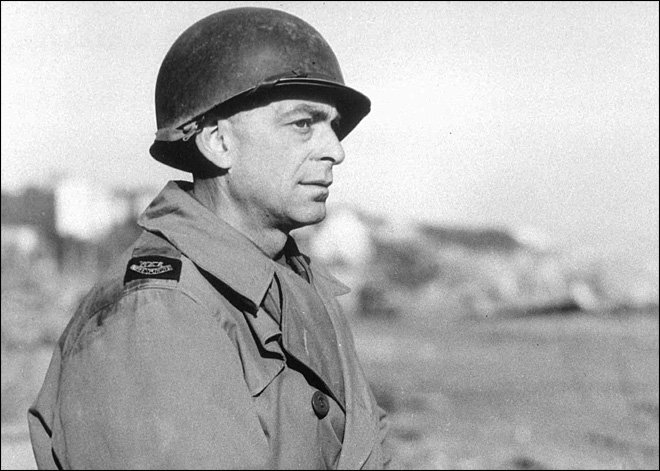
Ed Kennedy defied the military censors to report the Nazi surrender on the night of 7 May 1945 in France.
The US and the UK had agreed to suppress the announcement for a day so that Russia could stage a second surrender ceremony in Berlin.
AP has now said Ed Kennedy did the right thing in breaking the embargo.
“It was a terrible day for the AP. It was handled in the worst possible way,” said president and CEO Tom Curley.
Ed Kennedy defied the military censors to report the Nazi surrender on the night of 7 May 1945 in France
Ed Kennedy was one of 17 reporters taken to witness the formal surrender of German troops to the Allies at 02:41 on 7 May 1945.
The group was sworn to secrecy by US military commanders, told not to report the news until 15:00 on the 8th – a full 36 hours later.
But when Ed Kennedy heard that German radio had announced the surrender at 14:41 on the 7th, he went ahead and published his story an hour later – a day ahead of the competition.
Ed Kennedy was one of 17 reporters taken to witness the formal surrender of German troops to the Allies at 02.41 on 7 May 1945
For this, Ed Kennedy was first rebuked by AP, then fired.
“The absurdity of attempting to bottle up news of such magnitude was too apparent,” he would later write.
Ed Kennedy died in a traffic accident in the US in 1963, at the age of 58.
His daughter, Julia Kennedy Cochran, told AP she was “overjoyed” by the apology.
“I think it would have meant a lot to him,” Julia Kennedy Cochran said.
Tom Curley, who retires later this year, has co-written an introduction to Ed Kennedy’s newly published memoir, Ed Kennedy’s War: V-E Day, Censorship & The Associated Press.
He now says the reporter should have been commended rather than sacked.
“Once the war is over, you can’t hold back information like that. The world needed to know.”
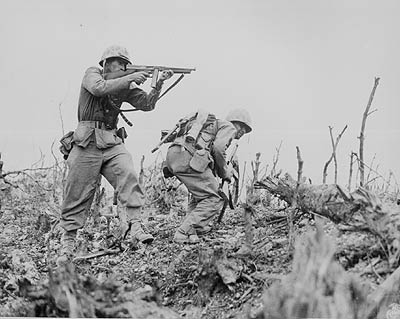
Sixty-seven years ago, in May 1945, the Nazi regime collapsed being squeezed ever more tightly between two fronts – the Soviet Union on one side and the Western Allies on the other.
But which of these fronts was the most important?
Throughout the Cold War, and ever since, each side has tended to see its own contribution as decisive.
“In the West, for some time… public opinion has taken the view that the Soviet Union played a secondary role,” said the Russian historian Valentin Falin.
On the other hand, opinion polls show that two-thirds of Russians think the Soviet Union could have defeated Hitler without the Allies’ help, and half think the West underestimates the Soviet contribution.
Richard Overy, professor of contemporary history at King’s College London, noted that after the war, Adolf Hitler’s foreign minister Joachim von Ribbentrop listed three main reasons for Germany’s defeat:
• Unexpectedly stubborn resistance from the Soviet Union
• The large-scale supply of arms and equipment from the US to the Soviet Union, under the lend-lease agreement
• The success of the Western Allies in the struggle for air supremacy.
Opinion polls show that two-thirds of Russians think the Soviet Union could have defeated Hitler without the Allies' help, and half think the West underestimates the Soviet contribution
Richard Overy said that for decades Soviet historians underplayed the significance of US and UK lend-lease in the Soviet Union’s success, but that Russia has recently shown just appreciation.
Valentin Falin, however, says Russians never forgot the help they received from their allies.
“You ask any Soviet person, whether he remembers what a Dodge or a Willis is!” he said.
“The Americans supplied us with 450,000 lorries. Of course, in the final stages of the war this significantly increased our armed forces’ mobility, decreased our losses and brought us, perhaps, greater success than if we had not such help.”
Richard Overy accepts that the Western powers played a smaller role on the battlefield itself than the Soviet forces but says their bombing campaigns made a huge contribution.
“Bombing diverted a lot of manpower and military equipment from the front in Russia, while it restricted the expansion of the German war economy,” he said.
He also agreed that the West still only has a weak understanding of the Soviet Union’s role.
“Because Britain and the US had to invade Europe by sea [Italy in 1943, and France in 1944] they have more of a sense of <<liberating>> a German-conquered Europe,” he said.
Valentin Falin, meanwhile, argued that the war could have been brought to an end more quickly if the second front, in France, had been opened before 1944.
“How many millions of people would have remained alive?” he asks.
“Many death camps reached full power precisely in the second half of 1943 and in 1944.”
Richard Overy said that the West has a view of the war as a global conflict, because of its fight against Japan, for example, whereas the Soviet view is of a “national crusade to repel the invader”.
Valentin Falin cited figures suggesting that German forces suffered 93% of their casualties on the Soviet front and argued that this shows the Soviet contribution was decisive.
But he added that every single US, UK, Canadian or other Allied soldier who died “made a big, important and necessary contribution to the victory, which was a shared victory”.
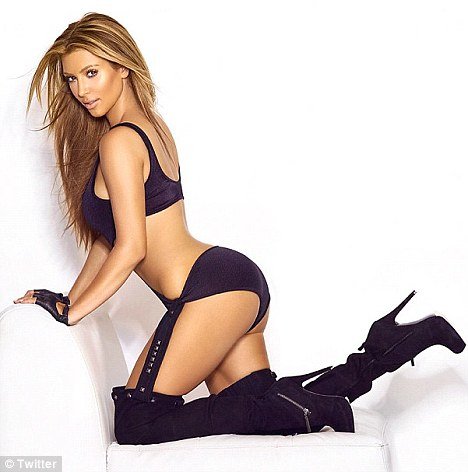
Kim Kardashian decided to tweet past sexy photos of herself when she was a blonde.
Kim Kardashian, 31, wrote on her Twitter page: “I’m bored. Oh hiiiiii!” along with a recent photograph of herself.
“Oh hiiiii” was a frequent catchphrase as Kim Kardashian posted photo after photo after photo.
The reality star tweeted two photographs of herself as a blonde back in 2009.
Kim Kardashian resembled Jennifer Lopez with her honey-toned highlights.
Kim Kardashian tweeted photographs of herself as a blonde back in 2009
In one shot she poses in seductive bondage-style gear, while in another she didn’t appear to be wearing any trousers.
It’s hard not to admit that Kim Kardashian, who posted the caption “Gluten free is the way to be” did look amazing in her stiletto boots and black bikini.
The now-brunette beauty also added a snap of herself with sister Kourtney Kardashian.
She looked lovely in a royal blue jumpsuit, while her older sibling donned an embellished top.
Kim Kardashian wrote: “Can u spot who is wearing Kardashian Kollection & who is wearing KDash???”
Though bored, Kim Kardashian doesn’t look as upset as one might assume she should given that her lawyer believes ex-husband Kris Humphries is deliberately delaying their divorce proceedings.
Laura Wasser told a Los Angeles judge yesterday that she believes Kris Humphries’ “personal feelings and maybe some media drive is keeping the case alive”.
She added: “Certainly they’ve been separated longer than they’ve been married.”
In other family-related news, stepfather Bruce Jenner just admitted how clueless he is on national television.
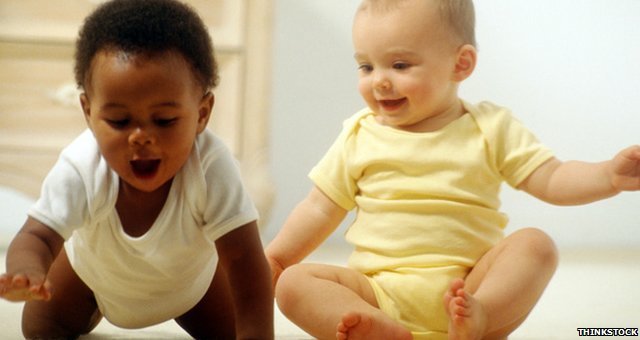
According to a study in facial recognition, white babies aged just nine-months-old show signs of racial bias.
Researchers at the University of Massachusetts in Amherst found that by the young age the babies were already discriminating against those of different races in their ability to recognize faces and emotional expressions.
They analyzed 48 Caucasian babies with little to no experience of African-American or black individuals.
Split into a group of five-months-olds and another of babies aged nine months, they were tasked with differentiating between faces of their people within own race and then of those belonged to another, unfamiliar, race.
Babies from the five-month-old group were far more adept at distinguishing faces from different races, while the nine-month-olds were able to tell apart two faces within their own race with greater ease.
In a second experiment the babies’ brain activity was detected using sensors.
They were shown images of faces of Caucasian or African-American races expressing emotions that either matched or did not match sounds they heard, such as laughing and crying.
Brain-activity measurements showed the nine-month-olds processed emotional expressions among Caucasian faces differently than those of African-American faces, while the 5-month-olds did not.
The shift in recognition ability was not a cultural thing, rather a result of physical development.
Researchers at the University of Massachusetts in Amherst found that by the young age the babies were already discriminating against those of different races in their ability to recognize faces and emotional expressions
Researchers found that the processing of facial emotions moved from the front of the brain to regions in the back of the brain in the older age group.
“These results suggest that biases in face recognition and perception begin in preverbal infants, well before concepts about race are formed,” said study leader Lisa Scott in a statement.
“It is important for us to understand the nature of these biases in order to reduce or eliminate [the biases].”
This is similar to how babies learn language, medicalxpress.com reported. Early in infancy babies do not know yet which sounds are meaningful in their native language, so they treat all sounds similarly.
As they learn the language spoken around them, their ability to tell apart sounds within other languages declines and their ability to differentiate sounds within their native language improves.
The results further earlier research which found that adults have more difficulty recognizing faces that belong to people of another race, indicating that the disparity begins sooner than previously realized.
The report is published in the May issue of the journal Development Science.
Vogue magazine has been the world’s fashion bible for decades, its pages adorned with beautiful clothes – all too often modeled by painfully thin women.
Now, in a groundbreaking move, Vogue has pledged it will no longer use photographs of dangerously underweight models.
In a statement published across all of its 19 international editions on Thursday, Vogue’s editors promised not to picture models under the age of 16 or those who they believe have an eating disorder.
Vogue’s editors said the six-point pact, called The Health Initiative, aims to encourage a healthier approach to body image within the fashion industry, which has been lambasted for promoting anorexia.
Alexandra Shulman, editor of British Vogue, said: “As one of the fashion industry’s most powerful voices, Vogue has a unique opportunity to engage with relevant issues where we feel we can make a difference.”
Vogue also promised to take more measures to look after models, including protecting their privacy and giving them healthy food and drinks backstage at shoots and fashion shows.
In a statement published across all of its 19 international editions on Thursday, Vogue’s editors promised not to picture models under the age of 16 or those who they believe have an eating disorder
Editors agreed to be “ambassadors” for a healthy image and “not knowingly work with models under the age of 16 or who appear to have an eating disorder”.
They added: “We will work with models who, in our view, are healthy and help to promote a healthy body image.”
Girls under the age of 16 have already been banned from catwalks in London and the US, but this is the first time a magazine has issued its own standards.
In 2009, Alexandra Shulman spoke out against the practice of designers providing tiny sample sizes.
She sent a strongly worded letter to fashion houses saying she had been forced to hire girls “with jutting bones and no breasts or hips” so they could get into the clothes.
The letter also revealed Vogue regularly re-touched pictures to make models look healthier.
And in their statement, Vogue editors said they would encourage designers “to consider the consequences of unrealistically small sample sizes of their clothing, which limits the range of women who can be photographed in their clothes, and encourages the use of extremely thin models”.
Vogue will also ask modelling agencies not to send underage girls, and for them to check models’ ages when they are photographed for shoots.
The health of catwalk models was brought into the spotlight five years ago, when two young South American models died from what appeared to be complications related to eating disorders.
Their deaths lead to the British Fashion Council banning the use of models under 16, but they are still used in magazines.
Proposals for medical checks were shelved because they were seen as too intrusive.
And Britain has not gone as far as countries including Italy and Spain, which ban catwalk models whose body mass index is below a certain level.
Sara Ziff, 29, a former teen model and the founder of The Model Alliance, a US union which aims to improve working conditions in the fashion industry, welcomed the move.
She said: “Most editions of Vogue regularly hire models who are minors, so for Vogue to commit to no longer using models under the age of 16 marks an evolution in the industry.”
In a survey, Sara Ziff found more than half of models start working between the ages of 13 and 16.
Jonathan Newhouse, chairman of Vogue’s publisher, Condé Nast International, said: “Vogue believes that good health is beautiful.
“Vogue editors around the world want the magazines to reflect their commitment to the health of the models who appear on the pages and the wellbeing of their readers.”
In addition to agreeing not to knowingly work with models under 16 or with eating disorders, the Vogue pact says the magazines will help “structure mentoring programmes” for younger models and raise awareness of the problem of model health.
The publisher of Vogue, Conde Nast, is also responsible for several other magazines, including Glamour and Allure, but a spokesperson said there are no current plans for these guidelines to be adopted across the company.
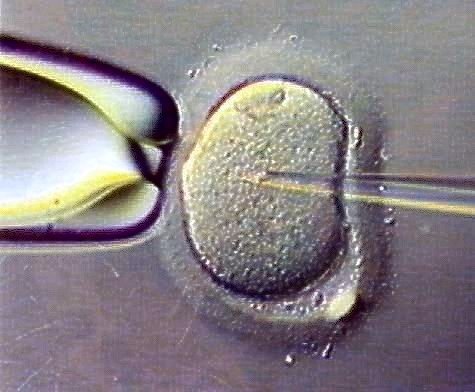
A new Australian study has found that fertility treatment used to help infertile men become fathers can raise the risk of birth defects in babies.
Research on more than 300,000 babies found those born using Intracytoplasmic sperm injection (ICSI) had a significantly higher risk of developing abnormalities than those conceived naturally.
Researchers linked a census of more than 6,100 births that occurred as a result of fertility treatment in South Australia to a registry of more than 300,000 births and 18,000 birth defects.
The report by the University of Adelaide published in the New England Journal of Medicine shows that on average defects were present in 8.3% of pregnancies that involved fertility treatment compared to 5.8% of those conceived naturally.
According to the study, in vitro fertilisation (IVF) posed the least risk to women opting for assisted conception, with defects occurring in only 7.2% of pregnancies.
ICSI is primarily used for male fertility problems and this risk is decreased using frozen eggs, according to the study’s lead author, Associate Professor Michael Davies.
“I don’t want to scare people,” he said because the majority of babies were born healthy.
“But this may be due to developmentally compromised embryos failing to survive the freeze/thaw process,” he said.
“While assisted reproductive technologies are associated with an increased risk of major birth defects overall, we found significant differences in risk between available treatments.”
Research on more than 300,000 babies found those born using Intracytoplasmic sperm injection (ICSI) had a significantly higher risk of developing abnormalities than those conceived naturally
More than 3.7 million babies are born each year through assisted reproduction.
Methods include everything from drugs to coax the ovaries to make eggs to artificial insemination and IVF. Fertility treatments account for about 4% of births in Australia and as many as 8% of them in Denmark, where costs are widely covered, Michael Davies said.
In the United States, more than 60,000 babies were born in 2009 from 146,000 IVF attempts. About three-quarters of them used ICSI, or intracytoplasmic sperm injection.
ICSI was developed because of male infertility. But half the time, it was not done for that reason but to improve the odds that at least some embryos will be created from an IVF attempt.
In 2005, the last year for which data was available, 5,935 babies were born as a result of IVF treatment compared to 5,265 babies born with the help of ICSI.
One surprising find within the research was a tripling of risk among women who used the drug clomiphene citrate to stimulate ovary production, though this was among a small group within the study.
The drug is cheap and easily available through the internet, raising the possibility of abuse, but it is known to cause foetal abnormalities if the woman taking is not aware she is already pregnant.
The drug is prescribed after a mandatory pregnancy test in a clinical setting, but this can be avoided in self-medication.
Associate Professor Michael Davies said: “While confined to a small group in our study, this is of particular concern as clomiphene citrate is now very widely available at low cost, and may easily be used contrary to manufacturers’ very specific instructions to avoid use if pregnant, as it may cause fetal malformations.
“This aspect of the study will need additional confirmation from future research.
“A history of infertility, either with or without assisted conception, was also significantly associated with birth defects.
“While factors associated with the causes of infertility explained the excess risk associated with IVF, the increased risk for a number of other treatments could not readily be explained by patient factors.
“ICSI, for instance, had a 57% increase in the odds of major defect, although the absolute size of the risk remained relatively small.”
Supermoon – the nickname for a perigee full moon, closer to the Earth than usual – could cause tides to rise around the world as the moon’s close “fly past” exerts 42% more tidal force.
The moon will appear bigger and brighter tonight – sky-watchers promise this supermoon will be 16% brighter than most when it begins today at 3:35 p.m. GMT, 11:35 a.m. EDT.
At 11:34 p.m., the moon will be about 221,802 miles from Earth – about 15,300 miles closer than average.
Full Moons vary in size because of the oval shape of the Moon’s orbit. It is an ellipse with one side (perigee) about 50,000 km closer to Earth than the other (apogee).
Nearby perigee moons are about 14% bigger and 30% brighter than lesser moons that occur on the apogee side of the Moon’s orbit.
Supermoon, the nickname for a perigee full moon, closer to the Earth than usual, could cause tides to rise around the world
A perigee full Moon brings with it extra-high “perigean tides”, but this is nothing to worry about, according to America’s NOAA space-weather predicting agency.
In most places, lunar gravity at perigee pulls tide waters only a few centimeters (an inch or so) higher than usual.
“To view this weekend’s supermoon to best effect, look for it just after it rises or before it sets, when it is close to the horizon. There, you can catch a view of the moon behind buildings or trees, an effect which produces an optical illusion, making the moon seem even larger than it really is,” said Space.com, which reported the phenomenon.
Local geography can amplify the effect to about 15 cm (six inches) – not exactly a great flood.
The Moon looks extra-big when it is beaming through foreground objects – a.k.a. “the Moon illusion”.
Indeed, contrary to some reports circulating the Internet, perigee Moons do not trigger natural disasters. The “super moon” of March 1983, for instance, passed without incident. And an almost-super Moon in December 2008 also proved harmless.
The Moon is bigger than usual, but can we really tell the difference? It’s tricky. There are no rulers floating in the sky to measure lunar diameters. Hanging high overhead with no reference points to provide a sense of scale, one full Moon can seem much like any other.
The best time to look is when the Moon is near the horizon. That is when illusion mixes with reality to produce a truly stunning view.
For reasons not fully understood by astronomers or psychologists, low-hanging Moons look unnaturally large when they beam through trees, buildings and other foreground objects.
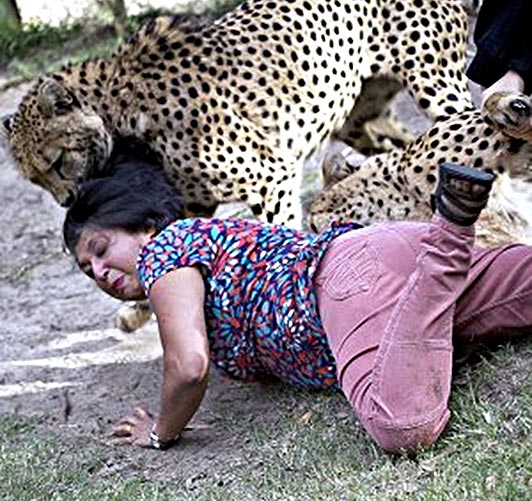
Violet D’Mello, a British tourist who tried to protect a girl being mauled by captive cheetahs, has told of how the animals then turned on her.
Violet D’Mello, 60, from Aberdeen, said she survived by “playing dead” at the Kragga Kamma Game Park in Port Elizabeth, South Africa last weekend.
She and another family had entered the enclosure for a photo next to the cats when the child was attacked.
She stressed that the animals were not being “vicious” when they attacked her.
“It was, I think, a playful attack. I just remember something biting my head and dragging me down.
“But even then I was just thinking of the children [in the enclosure]. We were told they would never attack adults, it was the children we were concerned about.”
Earlier, Violet D’Mello told the Port Elizabeth Herald the incident was a “nightmare”.
She had intervened when one of the cheetahs grabbed the girl from the family.
“They weren’t being vicious,” she told the newspaper.
“You could tell they were just excited, but it became serious very quickly.
“It all happened so fast. After his sister was free, another boy tried to make a run for it.
“As I stopped him, something jumped me from behind.”
Violet D'Mello said she survived by "playing dead" at the Kragga Kamma Game Park in Port Elizabeth, South Africa last weekend
A park guide pulled the cheetah off but another cat then attacked the 60-year-old.
Other people on the scene managed to get both cats off and everyone escaped the enclosure.
Violet D’Mello suffered injuries to her head, stomach and legs during the incident, which happened during a holiday with her husband Archie.
She added: “Something inside me just said, <<Don’t move. Don’t move at all. Don’t react, just play dead>>.”
“This was meant to be a holiday, but it’s really turned into a nightmare.”
Violet D’Mello’s husband, Archie, took photos of her ordeal and he said the park’s guide seemed to be caught unawares by the attack.
“I was about five to 10 feet away. We didn’t expect anything to happen like this. I don’t think even the guide knew what to do. She didn’t have any weapons, or stick or Taser, until somebody from the outside gave us a stick and the guide used it on the cheetah’s head to release the hold on my wife.”
He also said his wife has “multiple bite injuries”.
He added: “She has had a lot of stitches to both her eyes. Her scalp itself was the worst because the tooth had penetrated between the skull and the scalp [which] was peeled backwards. She lost a lot of blood from the head. She had to spend the first 48 hours in bed.
“The worst bit was her left eye. There was a claw mark on it. Her eyelid was bruised and bleeding and completely closed up but [the tooth] hadn’t penetrated the eyelid.
“She was very lucky in that respect. No major arteries were damaged. The animals themselves seemed playful, they did a lot of damage.”
The enclosure at the park has been closed while the incident is investigated.
Park manager Mike Cantor said the hand-reared cheetahs, brothers Mark and Monty, were “tame”.
He said: “It’s not something we’ve ever really experienced. It’s obviously very unfortunate, and we’re looking into what may have startled or riled up the cheetahs.
“We’ve had these animals for four years, dozens of people have come through here and seen them and fallen in love with them, so it pains us to hear about something like this.
“From what we’ve been told, there was a lot of commotion at the scene, which, unfortunately, most likely aggravated them somewhat. We’re also considering the possibility that a female in heat in one of the neighboring enclosures might have played a role here, but we can’t be sure at this stage.”
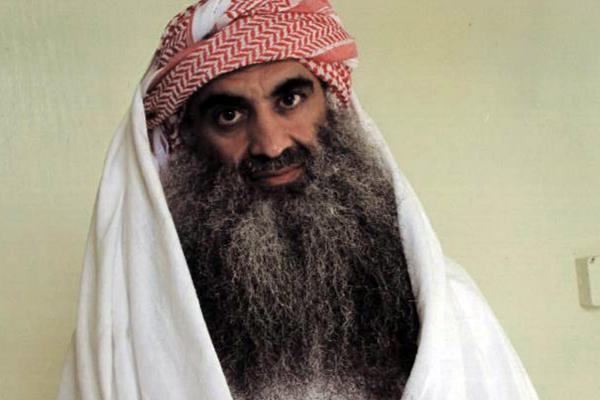
9/11 “mastermind” Khalid Sheikh Mohammed and four other men accused of plotting the 2001 attacks are appearing before a US military tribunal at Guantanamo Bay to be formally charged.
An earlier attempt to try the four in a civilian US court was halted in 2009.
New rules for Guantanamo trials have been since introduced, including a ban on evidence obtained under torture.
However, defense lawyers still say the system lacks legitimacy, because of restricted access to their clients.
President Barack Obama tried to shut Guantanamo at the beginning of his term. But his efforts to hold Khalid Sheikh Mohammed’s trial in New York foundered in the face of political and public opposition.
A small number of victims’ relatives are attending Saturday’s hearing at the military complex.
Self-proclaimed 9/11 “mastermind” Khalid Sheikh Mohammed is being tried with four others – Waleed bin Attash, Ramzi Binalshibh, Ali Abd al-Aziz Ali and Mustafa Ahmad al-Hawsawi.
They are accused of planning and executing the terror attacks of 11 September 2001, which saw hijacked planes strike New York, Washington and Shanksville, Pennsylvania and left a total of 2,976 people dead.
Khalid Sheikh Mohammed and other four men are accused of planning and executing the terror attacks of 11 September 2001, which left a total of 2,976 people dead
At Saturday’s arraignment, they face charges including terrorism, hijacking, conspiracy, murder and destruction of property.
Waleed bin Attash appeared in court while restrained in his chair. His lawyer asked for the restraints to be removed.
But when asked if the suspect would “behave” if unrestrained, the lawyer said he could not give that assurance.
The five are expected to be asked to enter a plea for the first time. The charges can carry the death penalty.
Ahead of the hearing, Jim Harrington, the civilian lawyer for Ramzi Binalshibh, told Associated Press that although his client had previously said he was “proud” of his role in the attacks he had “no intention of pleading guilty”.
“I don’t think anyone is going to plead guilty,” he added.
The decision to hold a military rather than a civilian trial remains controversial and follows a lengthy legal wrangle over where the five men would face justice.
Another of the defendants’ lawyers, James Connell, predicted the trial would take years to complete.
Khalid Sheikh Mohammed, who is of Pakistani origin but was born in Kuwait, was captured in Pakistan in 2003 and transferred to the Guantanamo base in Cuba in 2006.
During an earlier, controversial attempt to try him before a military tribunal in 2008, he said he intended to plead guilty and would welcome martyrdom.
In 2009 the Obama administration tried to move their trial into US civilian courts, but reversed its decision in 2011 after widespread opposition.
The five were eventually charged in June 2011 with offences similar to those they were accused of by the Bush administration.
The Pentagon has previously said Khalid Sheikh Mohammed admitted he was responsible “from A to Z” for the 9/11 attacks.
US prosecutors allege that he was involved with a host of other terrorist activities.
These include the 2002 nightclub bombing in Bali, Indonesia, the 1993 World Trade Center bombing, the murder of American journalist Daniel Pearl and a failed 2001 attempt to blow up an airliner using a shoe bomb.
Khalid Sheikh Mohammed has alleged that he was repeatedly tortured during his detention in Cuba.
CIA documents confirm that he was subjected to simulated drowning, known as waterboarding, 183 times.
Japan has decided to switch off its last working nuclear reactor, as part of the safety drive since the March 2011 tsunami triggered a meltdown at the Fukushima plant.
The third reactor at the Tomari plant, in Hokkaido prefecture, is shutting down for routine maintenance.
The move leaves Japan without energy from atomic power for the first time for more than 40 years.
Until last year, Japan got 30% of its power from nuclear energy.
Hundreds of people marched through Tokyo, waving banners to celebrate what they hope will be the end of nuclear power in Japan.
Since the Fukushima disaster, all Japan’s reactors have been shut down for routine maintenance. They must withstand tests against earthquakes and tsunamis, and local authorities must give their consent in order for plants to restart.
So far, none have.
The third reactor at the Tomari plant, in Hokkaido prefecture, is shutting down for routine maintenance
Two reactors at the Ohi plant in western Japan have been declared safe. The government says they should be restarted to combat looming shortages.
However, regional authorities would still have to give their approval.
Ministers have warned Japan faces a summer of power shortages.
The government could force the issue, but so far has been reluctant to move against public opinion.
Organizers of the anti-nuclear march in the capital estimated turnout at 5,500.
Demonstrators carried banners shaped as giant fish. The “Koinobori” banners, traditionally the symbol of Children’s Day, have been adopted by the anti-nuclear movement.
“There are so many nuclear plants, but not a single one will be up and running today, and that’s because of our efforts,” campaigner Masashi Ishikawa told the crowd.
Engineers began the process of shutting down the final Tomari reactor, inserting control rods to bring the fission process to an end.
All operations at the plant will have stopped by 14:00 GMT, a spokesman told Associated Press.
Japan will then be without nuclear power for the first time since 1970.
Businesses have warned of severe consequences for manufacturing if no nuclear plants are allowed to re-start.
In the meantime, Japan has increased its fossil fuel imports, with electricity companies pressing old power plants into service.
If the country can get through the steamy summer without blackouts, calls to make the nuclear shutdown permanent will get louder.
The six-reactor Fukushima Daiichi nuclear plant was badly damaged by the March 2011 earthquake and tsunami.
Blasts occurred at four of the reactors after the cooling systems went offline, triggering radiation leaks and forcing the evacuation of thousands of people.
A 20 km (12 miles) exclusion zone remains in place around the plant.
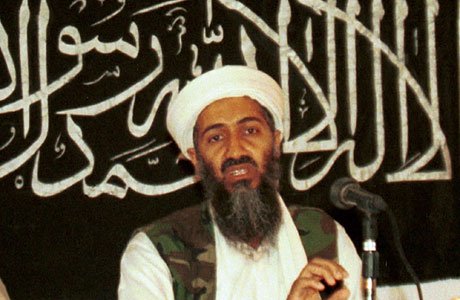
Osama Bin Laden’s documents released on Thursday provide an insight into the workings of the mind of the slain al-Qaeda chief, but they reveal precious little about his family life during the years in hiding in Pakistan.
According to other sources, during their 10-year stay in Pakistan Osama Bin Laden and his family travelled all across the country, had access to medical and maternity services, and were in constant communication with the outside world.
Nearly two dozen women and children were recovered from the compound in Abbottabad where the world’s most wanted man was killed in the raid by US Navy Seals a year ago.
After being held by the Pakistani intelligence services for more than nine months in secret confinement, some of them were tried for illegally residing in Pakistan. Then last week, all the members of Osama Bin Laden’s family – some 14 of them, including three wives – were deported to Saudi Arabia.
But there were others living in the compound too.
Osama Bin Laden’s son, Khalid, was killed in the raid as were his Pakistani host and trusted courier, Ibrar alias Arshad Khan alias Abu Ahmed al-Kuwaiti, and Khan’s wife, and his brother, Ibrahim alias Tariq Khan. Other members of his family survived, their present location being a closely guarded secret.
Osama Bin Laden spent six years in a house which CNN’s Peter Bergen – the only journalist to have been given a tour of the compound in Abbottabad – describes as a squalid, “long-term but makeshift camping site”.
He was surrounded by cooped-up children, only rarely allowed out to play cricket, and possibly bickering wives.
The youngest wife, Amal Abdal Fattah, a Yemeni citizen, gave a sketch of her life with Osama Bin Laden to Pakistani interrogators.
In their report, recently leaked to the media, Amal Abdal Fattah is quoted as saying that she married the al-Qaeda chief in the Afghan city of Kandahar in 2000, and lived there with his two other wives until the 9/11 attacks.
At that point, the family split and she went to Karachi, where she stayed with her baby daughter until the middle of 2002, when she rejoined Osama Bin Laden.
During their 10-year stay in Pakistan Osama Bin Laden and his family travelled all across the country, had access to medical and maternity services, and were in constant communication with the outside world
Brigadier Shaukat Qadir, an ex-army officer who conducted an investigation into the Bin Laden killing, writes that in 2002 the couple spent some time in a village south of Peshawar.
Osama Bin Laden was treated there for a medical condition, Amal Abdal Fattah told investigators, and received a visit from Khalid Sheikh Mohammed, the Kuwait-born Pakistani now on trial in the US for masterminding the 9/11 attacks.
Osama Bin Laden, Amal Abdal Fattah and Amal’s children appear to have moved to Shangla, near Swat, some time in late 2003 or early 2004. Then, in the summer of 2004, they moved to Haripur, before finally settling at the Abbottabad compound in late 2005 or early 2006.
Amal Abdal Fattah told her interrogators that between 2003 and 2008 she gave birth to four more children – all delivered at government-owned hospitals.
Less is known about the travels of Osama Bin Laden’s two other wives, after the family split up in 2001.
According to Brigadier Shaukat Qadir, Shareeja Seeham, a Saudi citizen, and her three children, joined Osama Bin Laden and Amal in Haripur in 2004, and stayed with them until Bin Laden’s death.
She was the mother of Khalid, aged 24 when he was killed along with Osama Bin Laden in the raid on 2 May last year.
Brigadier Shaukat Qadir writes that she is a teacher by profession, and stayed with the family to “ensure that children were not denied education, since they were not going to enter any educational institution”.
Osama Bin Laden’s eldest wife, Khaeriah Sahaba, also a Saudi citizen, appears to have drifted into Iran along with her five sons when the family split up in the wake of 9/11, and was taken into custody in 2003 or 2004.
She was released in September 2010 as part of a prisoner swap involving an Iranian diplomat, Hashmatullah Atherzadeh, who had been kidnapped by militants in Peshawar in 2008.
While her sons dispersed to unknown locations, she made her way to Osama Bin Laden’s top lieutenant, Attiya Abdur Rahman, in the Waziristan region of Pakistan. She then joined Osama Bin Laden in Abbottabad in early 2011.
According to Brigadier Shaukat Qadir, she was known to be extremely jealous of the youngest wife, Amal.
“OBL, by this time, was bedding [sleeping with] only Amal,” he writes.
“Why therefore should Khaeriah choose to brave another hazard to rejoin a husband she had been separated from for many years and no longer had any relationship with?”
He suspects that she might have played a role in leading the Americans to Osama Bin Laden’s lair.
It seems Pakistani investigators may have found it hard to get any useful information from her, though. Shaukat Qadir quotes one ISI investigator as saying: “She is so aggressive that she borders on being intimidating. Short of torturing her, we cannot get her to admit to anything.”
Osama Bin Laden was able to leave the crowded Abbottabad compound at least once, as he strove to assert authority over an increasingly unwieldy organization with wayward affiliates.
In May 2010, he even ventured out to the Waziristan region. This was at a time when drones were raining missiles there and several operations by the Pakistani military were under way.
He apparently went to touch base with his operational commanders and assess the situation first-hand. He then penned an assessment of the region in a long memo to Attiya Abdur Rahman, advising him to shift operatives to a safer location.
The memo, written in October 2010, is among the documents declassified by the US military on Thursday.
These documents also suggest that Osama Bin Laden was wary of the Pakistani intelligence services, and advised extreme caution when Khaeria made that possibly fateful trip from Waziristan to the compound in Abbottabad.
One of the more bizarre anecdotes about Whitney Houston’s life is recounted by Karrine Steffans, a former girlfriend of singer’s ex-husband Bobby Brown.
Karrine Steffans describes a confrontation between Bobby Brown and Whitney Houston’s toy boy beau Ray J back in 2006.
In a Vanity Fair article, entitled The Devils in the Diva, Karrine Steffans recalls a phone call from Ray J following Whitney Houston’s split with Bobby Brown.
“He said, <<Is Bob (Bobby Brown) still staying with you?>>” remembers Karrine Steffans.
“I said, <<Yeah, he’s right here>>. And Ray said, <<Tell him I f***ed both of his chicks, you and now his wife>>.”
Karrine Steffans describes a confrontation between Bobby Brown and Whitney Houston's toy boy beau Ray J back in 2006
Echoing Bobby Brown’s interview with The Today Show this week where he denied introducing Whitney Houston to drugs, Karrine Steffans says: “Bob’s big thing was everyone blamed him for her downfall, but when he met her she was already using drugs.
“He always felt very angry about that. He told me, <<What everybody saw wasn’t the real Whitney>>. He always said her private persona – which you saw on [reality show] Being Bobby Brown – was who she really was.”
Being Bobby Brown aired on U.S. network Bravo back in 2005 and documented Whitney Houston’s marriage to the singer, which ended in divorce in 2007.
Ray J was regularly seen with Whitney Houston the week before she died, with the last photograph of the star taken two days prior to her death.
Whitney Houston’s premature death at 48 in Beverly Hilton Hotel triggered a slew of media speculation and rumors about her alleged drug use and troubled personal relationships.
Now, a Vanity Fair article has shed new light on Whitney Houston’s personal life and last days in Los Angeles, three months after she was found drowned in a hotel bathtub.
One of the more bizarre anecdotes is recounted byKarrine Steffans, a former girlfriend of Whitney Houston’s ex-husband Bobby Brown, in which she describes a confrontation between the New Edition star and the singer’s toy boy beau Ray J back in 2006.
In the Vanity Fair article, entitled The Devils in the Diva, Karrine Steffans recalls a phone call from Ray J following Whitney Houston’s split with Bobby Brown.
“He said, <<Is Bob (Bobby Brown) still staying with you?>>” remembers Karrine Steffans.
“I said, <<Yeah, he’s right here>>. And Ray said, <<Tell him I f***ed both of his chicks, you and now his wife>>.”
Echoing Bobby Brown’s interview with The Today Show this week where he denied introducing Whitney Houston to drugs, Karrine Steffans says: “Bob’s big thing was everyone blamed him for her downfall, but when he met her she was already using drugs.
“He always felt very angry about that. He told me, <<What everybody saw wasn’t the real Whitney>>. He always said her private persona – which you saw on [reality show] Being Bobby Brown – was who she really was.”
Vanity Fair article has shed new light on Whitney Houston's personal life and last days in Los Angeles
Being Bobby Brown aired on U.S. network Bravo back in 2005 and documented Whitney Houston’s marriage to the singer, which ended in divorce in 2007.
Ray J was regularly seen with Whitney Houston the week before she died, with the last photograph of the star taken two days prior to her death.
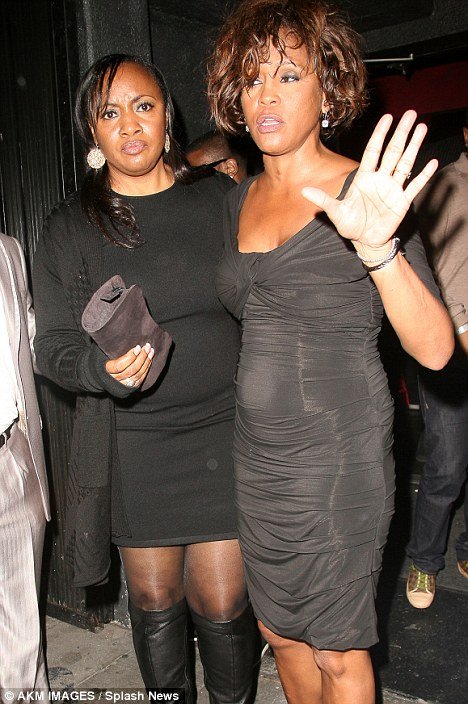
Those pictures of Whitney Houston showed her looking sweaty and disheveled as she emerged from the Thru nightclub in Hollywood with a small entourage.
Her hairdresser Tiffanie Dixon remembers that night, telling Vanity Fair that Whitney Houston returned to the hotel where they both read the Bible together. “Her glasses were broken but she read by holding the little single lens,” she says.
On the day she died, Whitney Houston breakfasted with three strangers – men she had encountered the day before.
One of the men told the magazine: “Whitney came walking by, either coming from or into the spa, in black sweats, grey sweater and a cap and sunglasses. She smelled of alcohol.
“She sat with us for ten minutes, had a bowl of fruit, gave us a hug and left.”
Hoping for a comeback, the publication also claims that Whitney Houston had been planning on having a face lift.
However, the Beverly Hills plastic surgeon engaged to perform the surgery is reported to have refused after the star “failed the routine physical which indicates the condition of the patient’s heart, liver and lungs”.
The magazine article also discusses the rumors circulating about Whitney Houston’s sexuality and the nature of the singer’s friendship with her former creative director, Robyn Crawford.
Contributing editor Mark Seal says a package he sent Robyn Crawford in the hope of speaking with her was returned with “Refused by R. Crawford; does not want” written across the front.
Both Whitney Houston and Robyn Crawford have always denied rumors of a gay relationship.
An autopsy report into Whitney Houston’s death showed her death was an accident, but that she suffered from heart disease and had cocaine, marijuana, as well as other prescription medicines in her system.
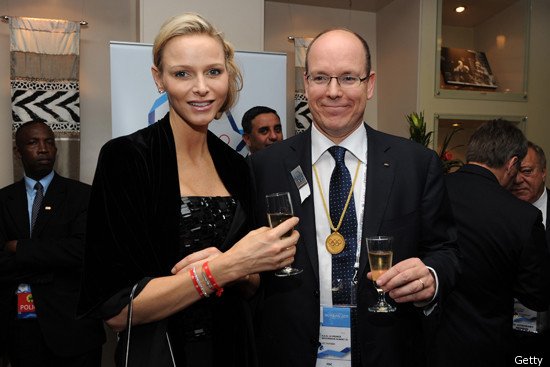
Princess Charlene, the wife of Prince Albert of Monaco, has become “depressed” at her failure to provide her husband with a legitimate heir, it was claimed yesterday.
Charlene Wittstock, 33, is said to have struck a “deal” with the principality’s playboy ruler to bear him a child after she tried to flee before their wedding last summer.
The South African is now unable to get pregnant, France’s Voici magazine reported.
Prince Albert has already fathered two love-children, but neither can succeed him as they were both born out of wedlock.
Voici magazine said: “Charlene has made the subject of pregnancy a taboo topic around the Royal palace.
“She might have a smile on her face at official functions, but inside she is stressed and frustrated.
“This subject is weighing more and more heavily on her shoulders.”
Rumors of a rift and a “pregnancy pact” erupted even before the couple married in a lavish state wedding ten months ago.
Princess Charlene, the wife of Prince Albert of Monaco, has become “depressed” at her failure to provide her husband with a legitimate heir
Charlene Wittstock was said to have bolted for Nice airport two days before their wedding after hearing Albert had had a third love-child during their relationship.
Monaco officials were said to have coaxed her back by brokering a deal between the Prince and his reluctant bride that she provide him with a legitimate heir.
After that Princess Charlene would be free to leave of her own free will, it was reported last July.
One source said at the time: “Charlene will provide an heir, then if things don’t go well, she will receive a generous divorce settlement once she’s served a decent amount of time.”
Prince Albert of Monaco, 54, has one seven-year-old son Alexandre with Togolese air hostess Nicole Coste. He has another daughter Jazmin, 20, born after a brief affair with American estate agent Tamara Rotola.
Charlene Wittstock last year called suggestions that she was reluctant to marry “hilarious” on the Today show.
“Why would we go to all this effort, to have this fantastic couple of days, and have our most intimate and dearest friends come and join us, for us to be reluctant,” she said.
Prince Albert suggested the rumors might have been triggered by jealousy from people who “did not like the fact that we were finally together and married”.
He was apparently told on the day of his wedding that he would have to take a paternity test to determine whether he was the father of the third illegitimate child.
Charlene Wittstock, who was accused of trying to run away three times before she married, claimed the rumors were purely generated to sell magazines.
But she spoke earlier this year about her “loneliness” in Monaco, and added: “I only have two people I consider friends here.”
Before he met Charlene Wittstock four years ago, Prince Albert dated dozens of the world’s most famous and beautiful women, including Angie Everhart, Brooke Shields, and supermodel Claudia Schiffer. He also battled persistent rumors he was gay.
A Monaco government spokesman insisted that once he met Charlene Wittstock, Prince Albert knew he had finally found the woman he wanted to provide an heir.
The spokesman told France’s high society Point de Vue magazine last year: “Charlene has beauty and style, and we are all praying that she will ensure the royal succession in our principality.
“Albert has never settled down in the past, but knows that the time is now right to produce the next ruler of Monaco.”
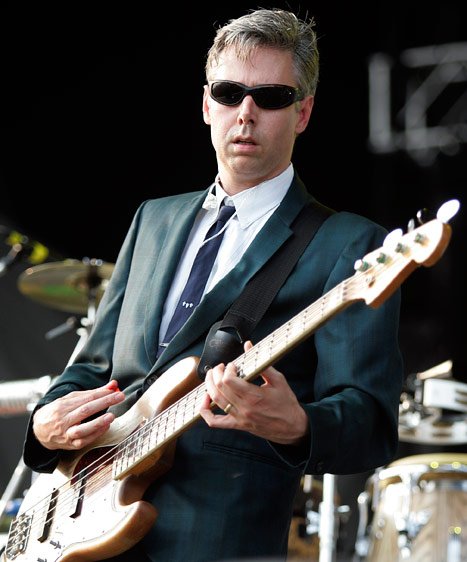
Rapper Adam Yauch, the star of Beastie Boys band, has died at the age of 47, his publicist has confirmed.
The musician, director and Tibet activist was diagnosed with salivary gland cancer in 2009.
Adam Yauch underwent surgery and radiation therapy but said in 2011 reports he was totally cancer-free were “exaggerated”.
Under the alias MCA, he formed part of the band that eventually became the Beastie Boys, selling 40 million albums worldwide with Mike D and Ad Roc.
Tributes have already been paid to the star on Twitter, with the likes of De La Soul, Ice T, Joe Satriani and Common passing on their condolences.
Rapper Biz Markie, who collaborated with the Beastie Boys on their Ill Communication album, wrote: “My brother, you are truly going to be missed. My heart is heavy.”
Fellow New Yorker Moby added: “I’m very, very sad to hear of Adam Yauch’s passing. He was a wonderful, generous, remarkable, and inspiring man and friend.”
In a nod to the scope of the group’s fame, New York Senator Chuck Schumer also tweeted his condolences: “Born and Bred in Brooklyn, U.S.A., they call him Adam Yauch, but he’s M.C.A. RIP Adam.”
Justin Timberlake said he was “crushed” by the news, while Nirvana’s bassist Krist Novoselic thanked Adam Yauch for his “Sabotage bass riff and many other great grooves”.
Adam Yauch, the star of Beastie Boys band, has died at 47 after being diagnosed with salivary gland cancer in 2009
The Beastie Boys started out as a hardcore punk outfit called The Young Aborigines in 1979 but switched to hip hop in 1984.
Two years later they launched their critically-acclaimed debut album Licensed To Ill, which spawned the hit singles (You Gotta) Fight For Your Right (To Party) and No Sleep Till Brooklyn.
Fusing rock guitars with lo-fi hip-hop beats, Licensed To Ill was one of the first rap records to cross over to a mainstream audience – and the first to top the US charts.
But the band became equally well-known for their bratty, bad-boy personas.
They were lambasted in the British press for their stage show, which featured giant inflatable phalluses and cage dancers.
And, when they began to wear the Volkswagen emblem on chains around their necks, it reportedly led to a rise in vandalized cars.
Their obnoxious behavior undoubtedly started as an in-joke but became something of a self-fulfilling prophecy as their fame increased.
Over the years, however, the Beastie Boys rehabilitated their image.
Their second album, Paul’s Boutique, was retrospectively considered a masterpiece, its genre-bending sound collages paving the way for the likes of Beck and The Avalanches.
Later records saw them play their own instruments and expand their horizons beyond hip-hop.
In 1996, they released The In Sound From Way Out! – a collection of jazz and funk instrumentals, while the group collaborated with reggae legend Lee “Scratch” Perry on 1998’s Hello Nasty.
But they are best remembered for their hardcore rap tracks – Sure Shot, Sabotage and the crossover hit Intergalactic.
Adam Yauch was the band’s filmographer, directing several of their videos under the pseudonym Nathaniel Hornblower.
He also directed the band’s concert movie Awesome… I Shot That, which stitched together footage from dozens of audience-members.
The rapper grew up in Brooklyn, and was fascinated by electronics and explosives at a young age, building small home-made bombs from fireworks he had hoarded at home.
Aged 14, Adam Yauch removed himself from a Quaker school to join a public high school in New York.
“I felt I was leading too much of a sheltered life,” he told Rolling Stone in 1998.
There he taught himself bass guitar, after discovering punk through The Clash’s debut album.
His new schoolfriends also introduced him to his future bandmates for the first time.
In addition to his rap career, Adam Yauch was heavily involved in the Free Tibet movement, and co-organized several fundraising concerts in the 1990s.
“I think that movies and CDs… they affect the way people think,” he told PBS in 1997.
“I know they’ve radically affected the way I think.”
He revealed he had cancer in a salivary gland in his neck in July 2009, which led to the scrapping of a tour and an album – Hot Sauce Committee, Pt 1.
In an email to fans later that year, Adam Yauch said the tumor had been removed and he was feeling “healthy, strong and hopeful”.
Adam Yauch travelled to a Tibetan community in Dharamsala in India after surgery.
He told fans: “I’m taking Tibetan medicine and at the recommendation of the Tibetan doctors I’ve been eating a vegan/organic diet.”
But in January 2010, Adam Yauch was forced to deny press reports that he was fully recovered.
“I’m continuing treatment, staying optimistic and hoping to be cancer free in the near future,” he said in a statement.
The Beastie Boys were inducted into the Rock and Roll Hall of Fame last month, but Adam Yauch was not able to attend. On the night, The Red Hot Chili Peppers dedicated their performance to Adam Yauch.
Adam Yauch is survived by his wife, Dechen Wangdu, and their daughter, Tenzin Losel, as well as his parents Frances and Noel Yauch.
An extraordinary building has gradually taken shape on a thickly wooded mountainside overlooking Russia’s Black Sea coast near the village of Praskoveevka.
The building is alleged to be a palace built for the personal use of President Vladimir Putin, with massive and illegal use of state funds.
Originally conceived, it is said, as a modest holiday house with a swimming pool, it now boasts a magnificent columned facade reminiscent of the country palaces Russian tsars built in the 18th Century.
The massive wrought-iron gates into the courtyard are topped with a golden imperial eagle. Outside are formal gardens, a private theatre, a landing pad with bays for three helicopters, and accommodation for security guards.
All this and more is revealed by satellite images of the area and photographs on the internet, some of which you see here, which campaigners say were leaked by workers at the site.
The mystery of why the palace was built and who provided the enormous sums of money required to pay for it is much harder to uncover.
Now, with Vladimir Putin about to be sworn in for a third term as Russia’s president, one of his former business associates has spoken out, giving more detail than ever before about how he says the mansion was built to the leader’s specifications for his personal use.
Sergei Kolesnikov, who now works in the Estonian capital Tallinn having fled Russia, was for several years one of those responsible for building the palace.
He is the first insider from Vladimir Putin’s business circle to blow the whistle on what he says is the high-level corruption threatening to destroy the country’s economy.
Sergei Kolesnikov says he was involved with two of Vladimir Putin’s friends – Nikolai Shamalov and Dmitri Gorelov – in a venture, proposed by Putin himself, to provide Russian hospitals with new equipment.
Several Russian oligarchs, including Chelsea Football Club owner Roman Abramovich, donated millions of dollars to help upgrade Russia’s hospitals.
Sergei Kolesnikov imported the medical equipment, and he says his company was able to get big discounts on the supplies.
Some of the donors deny that was possible. But Sergei Kolesnikov says millions of dollars were saved in this way, and at Vladimir Putin’s suggestion much of that money was put into offshore companies – without the donors’ knowledge – for use in other investment projects.
These included ailing industries such as shipbuilding – projects Sergei Kolesnikov says he discussed directly with Vladimir Putin – but an ever-greater proportion of the extra funds, he says, went into “Project South” – the Black Sea palace near the village of Praskoveevka.
The building is alleged to be a palace built for the personal use of President Vladimir Putin, with massive and illegal use of state funds
Sergei Kolesnikov said he was at a meeting with Vladimir Putin at his country house outside Moscow when the issue of the Black Sea palace was raised directly.
He says Vladimir Putin ordered his powerful deputy prime minister, Igor Sechin, to deal with it. Shortly afterwards, Sergei Kolesnikov says, Igor Sechin summoned him to discuss details.
He also says he had many other meetings at the palace itself where Vladimir Putin’s instructions for fittings and furnishings were discussed with a senior officer in the Federal Security Service, which guards the president and prime minister.
More usually, he says, Vladimir Putin passed on his instructions for the building through his friend, and Sergei Kolesnikov’s partner, Nikolai Shamalov.
“He didn’t seek to justify it,” Sergei Kolesnikov says.
“He considered that whatever the tsar decided, it wasn’t our business to discuss.
“There was a tsar – and there were slaves, who didn’t have their own opinion,” he says.
But the whistleblower says he eventually became disgusted by the sums being spent on the palace, and fell out with his partner Nikolai Shamalov.
“I hadn’t worked 15 hours a day for 10 years to build a palace,” he says.
“That didn’t interest me.”
In December 2010, Sergei Kolesnikov wrote an open letter to President Dmitry Medvedev detailing the involvement of himself and others in the project and outlining his allegations against Vladimir Putin, then prime minister.
Vladimir Putin’s spokesman has denied Sergei Kolesnikov’s allegations, along with other claims about the Russian leader’s personal assets.
Officially the palace belonged, until recently, to a company partly owned by Nikolai Shamalov.
Now it is owned by another businessman who is not directly connected to Vladimir Putin.
But documents obtained by one of Russia’s few opposition newspapers, Novaya Gazeta, suggest that the Kremlin lied when it said it had no involvement in the building of the palace.
An agreement to build the mansion on state-owned land was signed by the head of the Department for Presidential Affairs, Vladimir Kozhin, who subsequently denied knowing anything about the site.
The documents do not prove that the palace was meant for Vladimir Putin himself, or that he was personally involved in its construction.
But mystery still surrounds it.
When anti-corruption campaigners managed to get through to the front of the palace last year, they were met not only by private security guards, but also by uniformed members of the official Kremlin guard service.
Later the private security company claimed its employees had simply bought the uniforms – and Kremlin identity cards – in a shop.
But for the campaigners, and for Sergei Kolesnikov, the Kremlin guards’ presence and the elaborate infrastructure indicate the true purpose of the building, and what they say is the massive illegal use of state funds.
“It’s the building of a road direct to the palace on government money,” Sergei Kolesnikov says.
“A high-power electric line, direct to the palace. The government spent tens of millions of dollars on these.
“If it was just for Putin’s friend Shamalov, why would the Federal Guard Service commission and monitor the building of the palace? Why would he need three helipads?
“A private person doesn’t need these. But for a president they’re essential.”
Jennifer Lopez presents her new video for her single Follow The Leader, a collaboration with Puerto Rican reggaeton duo Wisin & Yandel.
The new video clip – which was released on Twitter – sees Jennifer Lopez waking up topless in a plush apartment in Acapulco Mexico, when she receives a message saying “Wanna play?” from Wisin.
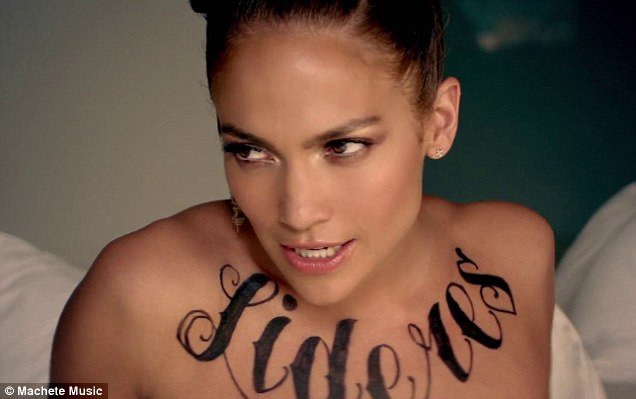
She shows off two pretty impressive new “tattoos” on her back and chest as she sits topless on the bed.
The fake tattoo shown on J-Lo’s chest as she sits up spells “Lideres”, meaning “leader” in Spanish.
JLo stretches, then puts on a black top and tight trousers, and starts an epic chase around the city with the Winsen and , leaping across the streets and through buildings, offering a Crouching Tuger Hidden Dragon-style tour.
These scenes are interspersed with shots of JLo dancing on a rooftop in plastic black trousers and a gold and black top.
Jennifer Lopez presents her new video for her single Follow The Leader, a collaboration with Puerto Rican reggaeton duo Wisin & Yandel
At 42 Jennifer Lopez still boasts the same incredible figure, and moves that dancers in their twenties would envy.
Wearing her favorite bronze make-up, with pretty pink lips for a pretty, fresh look, JLo could easily pass for a woman ten years younger.
Of course there was never any question of her stunning looks and talents not stealing the show, considering her boyfriend Casper Smart, 25, directed the shoot.
JLo’ song lyrics certainly show no sign of getting less steamy, including lines such as: “Baby, the way that I’m working my body, Can tell that you already like it, I make you lose your cabeza.”
The superstar is already gearing up for her forthcoming MEGA 2012 Tour tour- and this time she’s bringing her four-year-old twins Max and Emme along with her.
The tour, which will be a joint venture with Enrique Iglesias, will kick off in Montreal, Canada, on July 14 and continue across North America, including stops in Washington, Los Angeles and Miami.
Adlene Hicheur, a French physicist at the prestigious CERN laboratory has been sentenced to five years in prison for plotting terrorist attacks.
Adlene Hicheur was arrested in 2009 after police intercepted his emails to an alleged contact in al-Qaeda.
The emails suggested Algerian-born Adlene Hicheur was willing to be part of an “active terrorist unit”, attacking targets in France.
Defense lawyers argued that their client had never been part of a plot.
Adlene Hicheur, who is a particle physicist, worked as a researcher studying the origins of the universe at CERN.
His father embraced him in the Paris courtroom before he was taken away to prison.
Adlene Hicheur, 35, has already spent two and a half years in jail while awaiting trial.
He came under suspicion when threatening messages were sent to President Nicolas Sarkozy in early 2008.
The security services uncovered a series of email exchanges between Adlene Hicheur and an alleged al-Qaeda member called Mustapha Debchi.
After his arrest in 2009 police found a large quantity of Islamist literature at his parents’ home.
At the start of his trial the scientist admitted that he had been going through a psychologically “turbulent” time in his life when he wrote the emails.
Adlene Hicheur had suffered a serious back injury, for which he had been taking morphine.
But he always denied he intended to carry out any attacks.
His lawyer, Patrick Baudouin, described the verdict as “scandalous”.
“Everything has been done to demonize him,” he said.
Adlene Hicheur has not yet decided whether or not to appeal.
If he decides not to, with time off for good behavior, he should be released soon, Patrick Baudouin said.
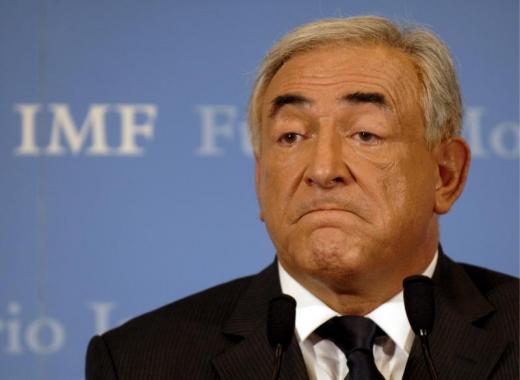
French magistrates have asked for a new investigation into alleged rape involving former IMF chief Dominique Strauss-Kahn.
The magistrates in Lille are already investigating DSK over his suspected role in a prostitution ring.
A Belgian prostitute has alleged that Dominique Strauss-Kahn and three of his associates gang-raped her in Washington DC in December 2010, French media report.
Prosecutors are now considering whether to expand the current investigation.
French magistrates have asked for a new investigation into alleged rape involving former IMF chief Dominique Strauss-Kahn
A second Belgian prostitute has partially confirmed the witness statement alleging gang rape in Washington, but neither has sought to press charges.
Last year DSK abandoned plans to run as the Socialist candidate for the French presidency after he was accused of attempted rape in New York.
Although the criminal case against him was dropped, the affair sank his hopes of becoming president and forced him to resign as head of the International Monetary Fund (IMF).
In March 2012, DSK was also placed under formal investigation in France over alleged involvement in a prostitution ring.
DSK has admitted attending parties where the authorities believe prostitutes were provided by a gang, but denies knowing that they were prostitutes.
The three associates named in the Lille investigation along with DSK are businessmen Fabrice Paszkowski and David Roquet and policeman Jean-Christophe Lagarde.
The alleged Washington incident also concerns all four.
There has been no comment yet from Dominique Strauss-Kahn or his lawyers about the latest allegation.
A prosecutor can either dismiss the allegation or order a preliminary inquiry to establish if there is enough prima facie evidence to expand the original investigation, the AFP news agency reports.
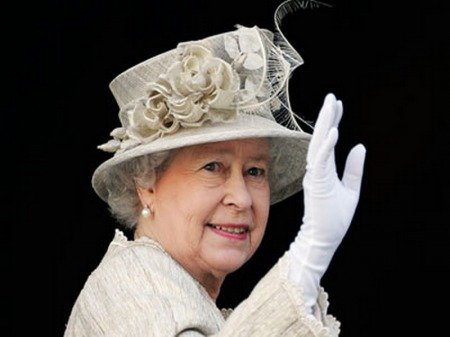
Queen Elizabeth II, one of the most travelled monarchs ever, has been to 116 countries on official state visits as Queen, but not Greece.
Queen Elizabeth II has travelled from the tiny island nation of Tuvalu in the Pacific, to Russia, China, Chile, Ghana, Australia and almost everywhere in between.
So it may seem surprising that the Queen has never made the relatively short hop over to the birthplace of her husband, Prince Philip, the Duke of Edinburgh.
Prince Philip is a “Greek prince,” says royal historian Hugo Vickers, so it is an “interesting” omission.
The reason, Hugo Vickers believes, is because of the fraught history of the monarchy in Greece, which affected Prince Philip’s immediate family.
“Prince Philip doesn’t like Greece, because they put his father [Prince Andrew] on trial, and he might have been executed,” says Hugo Vickers.
“In 1922, they all had to flee.”
Prince Philip was a baby at the time and rarely returned.
It is not completely true that the Queen has never been to Greece – she did go there at the invitation of King Paul, Prince Philip’s cousin, in 1950, but that was before she became Queen Elizabeth II.
In 1963 King Paul also came to Britain on a state visit but it was “hugely controversial” says Hugo Vickers, because Greece held a number of political prisoners at the time.
Soon after that visit, King Paul died. His successor, King Constantine – Prince Philip’s first cousin once removed – was ousted when the monarchy was abolished in 1973.
King Constantine lives in London, still considers himself king, and has a close personal relationship with the Queen, according to Michael Binyon, foreign affairs specialist at The Times newspaper.
Queen Elizabeth II, one of the most travelled monarchs ever, has been to 116 countries on official state visits as Queen, but not Greece
All of this has “made things difficult” says Hugo Vickers. But he also suspects the Queen may have never been invited by the Greek president to make a state visit.
Prince Philip did go to Athens to visit his mother before she moved to London in the 1960s – but he would travel on his own, says Hugo Vickers.
Israel is another notable omission from Queen Elizabeth’s list of state visits.
Security is a major factor in this case, but, says Michael Binyon, the biggest problem is diplomatic sensitivity over visiting Jerusalem. Israel regards Jerusalem as the capital, but it is not recognized as such by Western nations, who base their embassies in Tel Aviv instead.
“It would create tremendous, intractable problems and the Queen doesn’t want to be included in those,” he says.
Egypt is a surprise omission from the Queen’s travel itinerary, Michael Binyon adds, given its influence in the region, and its potential for business with Britain.
As things stand, Latin America is something of a black spot. The Queen has only been to two countries there – Brazil and Chile.
But the British government has made it clear it wants to boost ties in the region, so that number may go up, with Peru one possible candidate for a future visit, believes Michael Binyon.
Argentina, on the other hand, would be “out of the question” because of the tensions created by the Falklands War 30 years ago, says Michael Binyon.
Prince Philip has, however, visited the country (in 1962). He has also been, without the Queen, to countless other nations around the world, often in his work for the World Wide Fund for Nature (WWF).
Prince Philip also often attends foreign funerals on the Queen’s behalf.
In many ways, the map of the Queen’s state visits reflects the state of British diplomatic relations with the rest of the world.
“They [state visits] are always done on government advice. They are always done for a reason,” says Hugo Vickers.
Indeed the Foreign and Commonwealth Office has a panel which approves all state visits, called the Royal Visits Committee.
“There are always more requests for visits than can be accommodated,” says a spokesperson at the FCO, and a trip’s foreign policy benefit is a key factor when choosing a location.
A state visit by the Queen can sometimes pave the way for politicians and business to move in afterwards. In the 1970s, Queen Elizabeth II went to countries like Saudi Arabia and Brunei. At that time “it was all about oil, money and investments,” says Hugo Vickers.
But more often it works the other way around, with a state visit by the Queen acting as a kind of marker that things have reached a more stable point – for example the Queen’s trip to Ireland last year.
The Queen has made it to every single nation in the Commonwealth, except two of the more recent entrants, Rwanda and Cameroon.
When she had the Royal Yacht Britannia, it was easier for her to get around, especially to far-flung places like the Pacific Islands. Its decommissioning in 1997 has made a tangible difference, says Hugo Vickers.
Age will surely become an increasing consideration. The Queen, though going strong, is 86 years old.
But aside from her state visits, does the Queen ever travel somewhere just on holiday – just to relax?
“The Queen doesn’t really do that sort of thing. She doesn’t have holidays – she goes to Balmoral,” says Hugo Vickers.
But, he says, there is one exception. She loves horses, and has been known to travel to France and the US for the races.
Protocol for a state visit
• The Queen must receive an official invitation, and this comes via the Foreign and Commonwealth Office
• The choice of location for a visit is always on the advice of the FCO
• On average, there are two outgoing state visits and two incoming visits per year
• There have been no state visits announced for the Queen this year so far, because of her heavy Jubilee schedule
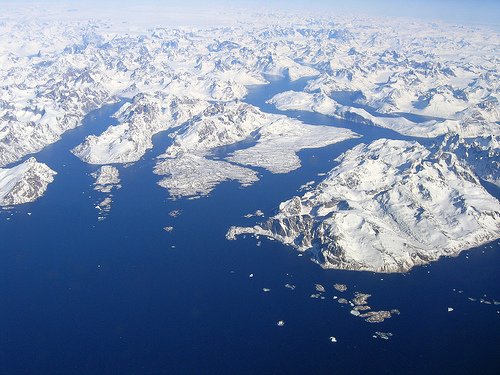
Researchers at the University of Washington have found that Greenland’s glaciers are losing less ice than scientists once feared.
The loss of ice from the glaciers that cover the island is still about 30% faster than it was a decade ago, said researchers the University of Washington.
That means Greenland’s contribution to future sea level rise would be about 4 inches by the year 2100 if ice loss does not speed up much more, a study author said.
That may not sound like much, but when other causes of sea rise around the globe are added, the total could still be about three feet by the end of the century, researchers said.
“<<Glacial pace>> is not slow anymore,” said study author Twila Moon, a glacier researcher at the University of Washington.
Researchers at the University of Washington have found that Greenland's glaciers are losing less ice than scientists once feared
At the same time, “some of the worst-case possibilities that we had imagined are not coming true at this point” Twila Moon said.
“So it’s not good news, but it’s not bad news.”
The scientists relied on a comprehensive satellite-based survey of about 200 glaciers to make their calculations. Their research was published yesterday in the journal Science.
Compared to some past research the findings are somewhat reassuring. A 2008 study had suggested a worst-case scenario that indicated Greenland’s glaciers might contribute up to 19 inches of sea rise by the end of the century.
The glaciers have been melting under warmer summer temperatures in Greenland that on average are up by about two degrees Fahrenheit (one degree Celsius) over the last decade, study authors said.
One famous glacier on northwestern Greenland called Jakobshavn is now losing ice at a particularly fast pace of seven miles (11.3 km) per year. That means an ice loss of nearly 3 feet (one metre) of ice every hour. If you stare at the glacier for about 20 minutes you can notice it move, said University of California Irvine glacier expert Eric Rignot.
Even so, that pace does not match the predictions laid out in the worst-case laid out in the 2008 study, research that caused alarm about the effects of increasing greenhouse gas emissions that warm the earth.
“We’re not seeing kind of runaway effects,” said study co-author, Ian Joughin.
Eric Rignot said it is unfair to compare this recent study to the more alarming 2008 one, which he said was not designed to be overly realistic. However, he noted that the findings of this new study still exceed computer models and projections by the Nobel Prize-winning Intergovernmental Panel on Climate Change.
NASA Chief Scientist Waleed Abdalati, an ice scientist, called the new work a “valuable study that advances our understanding of a very complex wild card of sea level rise”.
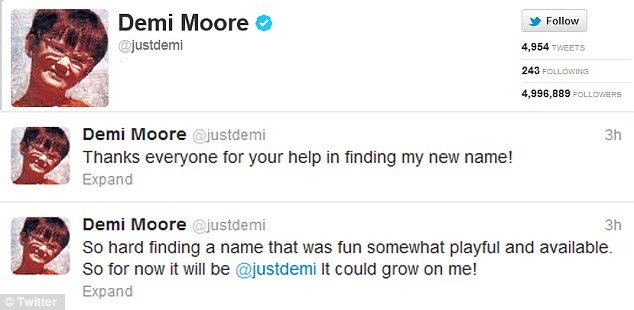
Demi Moore has finally dropped Ashton Kutcher’s name on Twitter as she changed Mrs. Kutcher to @justdemi.
Demi Moore, 49, and Ashton Kutcher, 34,who often used the micro-blogging site to post pictures of themselves and proclaim their love for one another, announced the end of their marriage in November.
In April, Demi Moore asked her followers on the site for suggestions for a new Twitter handle.
TV personality Piers Morgan suggested: “How about (at)mrsmorgan?”
Demi Moore said she would “have to get clever” because so many names on the popular site have already been claimed.
The actress wrote yesterday: “So hard finding a name that was fun somewhat playful and available. So for now it will be @justdemi It could grow on me!”
Demi Moore has finally dropped Ashton Kutcher's name on Twitter as she changed Mrs. Kutcher to @justdemi
Demi Moore also thanked fans for helping her find a new name.
“Thanks everyone for your help in finding my new name!” she wrote.
The star has nearly 5 million followers on Twitter.
Demi Moore announced her intention to divorce from Ashton Kutcher last November – although proceedings are yet to be executed by either party.
It followed claims Ashton Kutcher had cheated on her with partygirl Sara Leal during a seedy night in San Diego.
Demi Moore checked out of Utah’s Cirque Lodge in March, where she was allegedly treated for eating disorder issues, exhaustion and substance abuse.
Last month the actress returned to Twitter after a spell away from the social networking site she once so regularly frequented.
Demi Moore uploaded a bizarre picture of herself from an elevated angle with the caption: “Testing….”
She was seen lying on her bed with her shoes on and the snap shows her glasses, nose and chin and her legs.
Meanwhile her estranged husband Ashton Kutcher has been linked to his former That ’70s Show co-star Mila Kunis.
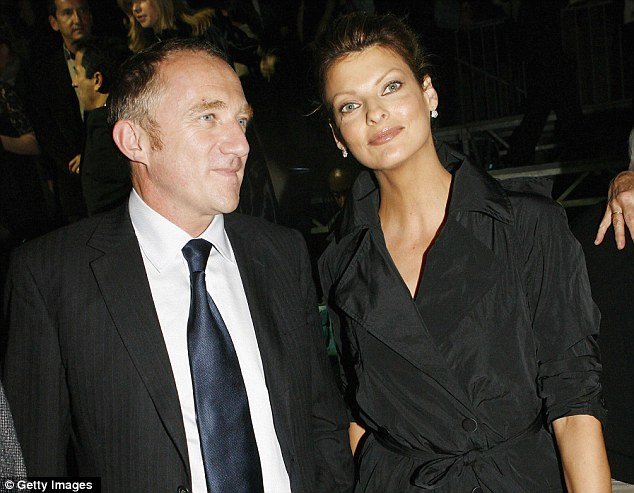
François-Henri Pinault, the billionaire father of Linda Evangelista’s baby, wanted her to abort their son, her lawyer has claimed as the supermodel meets her former boyfriend in court over childcare support.
Taking the stand, François-Henri Pinault admitted he had broken up with Linda Evangelista after discovering she was pregnant four months into their relationship.
“I didn’t even know her,” he said.
The bitter trial, which kicked off on Thursday and is expected to last four days, is set to spell out the childcare obligations of François-Henri Pinault, who is now married to Hollywood actress Salma Hayek.
Linda Evangelista gave birth to their son Augie, now 5, after her short relationship with François-Henri Pinault, and has claimed in the run-up to the trial that she wants a staggering $46,000 a month for his care.
The supermodel claimed the vast sum is to cover the youngster’s around-the-clock nanny, at a cost of $7,000 a month, and armed drivers, costing as much as $16,000 a month, the New York Post reported.
François-Henri Pinault had criticized Linda Evangelista for her outlandish demands, suggesting the money was in fact for “mom support”.
The supermodel maintained she was modeling or working on her image at all hours of the day.
In a move that shows they are readying for a bitter feud, Linda Evangelista’s lawyer William Beslow recounted a conversation the former couple shared in January 2006.
“After some initial happiness, he told her he wished she would terminate the pregnancy,” William Beslow told a support magistrate.
Linda Evangelista, who was then in her early 40s, told François-Henri Pinault she would keep the baby, the Post reported.
“She would support the child herself, since he had made it perfectly clear to her that he had no interest in doing so. And she did.”
Arriving at court, Linda Evangelista, 46, looked ready for business, dressed in a smart floral-print shirt, knee-length black skirt and sunglasses, with her hair cut into a sleek bob.
François-Henri Pinault, the billionaire father of Linda Evangelista's baby, wanted her to abort their son, her lawyer has claimed
François-Henri Pinault, who began dating Salma Hayak while Linda Evangelista was pregnant, watched his former girlfriend with a bemused smile, the Post reported.
As he took the witness stand, François-Henri Pinault said he found out she was pregnant in early 2006 and admitted he broke up with her on hearing the news.
“She was so happy to be pregnant,” he said.
“But it was not planned. I decided to stop the relationship at that point.”
François-Henri Pinault added: “We were dating four months and I didn’t even know her very much.”
He went on to say he believed she had intentionally become pregnant and that he had no part in deciding whether she should keep the baby or not.
He added: “I told her I would recognize the baby, which I did. I would take my responsibility and I did.”
Asked why he didn’t pay Linda Evangelista anything in child support for the first years of Augie’s life, François-Henri Pinault answered: “She didn’t ask and I didn’t offer.”
François-Henri Pinault, 49, is chief executive of PPR, the conglomerate that owns Yves Saint Laurent, Gucci and Bottega Veneta. He has an annual income as he is heir to an $11.5 billion family estate.
In opening statements on Thursday, William Beslow insisted Linda Evangelista is not hoping to improve her station in life but that she has paid all of his expenses without a single cent from François-Henri Pinault.
“Ms. Evangelista is not looking to piggyback on the lifestyle of Mr. Pinault,” William Beslow added.
“She is looking for a continuation of the reasonable lifestyle of Augie.”
François-Henri Pinault’s lawyer, David Aronson, argued that his client had repeatedly reach out to Linda Evangelista’s prior lawyers about child support payments, only to be met with silence.
David Aronson added: “Most of the expenses do not relate to Augie but they relate to Ms. Evangelista.”
He continued: “These people have more money than a lot of people. But our position is that what we understand is being asked for is just ridiculous.”
Linda Evangelista is due to testify in the trial tomorrow. If she is granted the $46,000 of her demands, it will shatter records for childcare payouts.
“I need to protect him,” Linda Evangelista told Love magazine in February.
Last year a judge questioned the model’s need for full-time nannies, asking how often she worked.
“When I work, it can be a 16-hour day,” the supermodel said.
“On days when I do not work, I am working on my image. I have to hit the gym. I have beauty appointments. I have to work toward my next job and maintaining my image, just like an athlete.”
Linda Evangelista, herself worth $8 million, is also demanding François-Henri Pinault give her son a home similar to the $13 million California mansion he put in a trust for his and Salma Hayek’s four-year-old daughter, Valentina.
François-Henri Pinault’s family estate includes the Christie’s auction house, the Château-Latour vineyard in Bordeaux and the French Premiere League football team Stade Rennais, the Daily News reported.
Earlier this week, Manhattan divorce lawyer Raoul Felder said the eye-watering payout – which comes to $1,500 a day – was unlikely.
He pointed out that judges consider how much it costs to care for a child, rather than the wealth of the parents.
“She’s in for a big surprise. I wouldn’t be counting the money yet,” Raoul Felder told the New York Daily News.
Linda Evangelista is worth $8 million and owns a penthouse in the desirable Chelsea, New York and an apartment near her son’s school on the upper East Side.
The supermodel broke up with billionaire and Hard Rock Cafe co-founder Peter Morton last year and filed her case against François-Henri Pinault shortly after the break up.
Since, François-Henri Pinault has been paying child support – although the amount has not been disclosed.
The couple dated from September 2005 until January 2006, and she was pregnant with Augie when François-Henri Pinault began dating Salma Hayek in April 2006.
François-Henri Pinault and Salma Hayek married in 2009.
Linda Evangelista had kept the name of Augie’s father secret until it was written in court papers filed in August.
A new study found that men and women who drank a daily glass of pomegranate juice for at least two weeks experienced a surge in the hormone testosterone, which increases sexual desire in both genders.
The latest achievement claimed for pomegranates, which are already acclaimed as a superfood, will be welcome among those who would prefer a natural aphrodisiac.
The study, by researchers from Queen Margaret University in Edinburgh, UK, involved 58 volunteers aged between 21 and 64.
By the end of the fortnight both sexes had seen “significantly increased” testosterone levels.
Pomegranates, which are already acclaimed as a superfood, will be welcome among those who would prefer a natural aphrodisiac
For men this affects traits such as facial hair, a deep voice and greater sexual urges.
It is also produced in female adrenal glands and ovaries, raising a woman’s sex drive and strengthening bones and muscles.
As a side effect, increased testosterone can help raise mood and memory and even relieve stress such as “pre-match nerves” or stage fright, said the study.
Previous research on pomegranate juice has found it full of antioxidants which can help ward off heart diseases and help blood circulation.
The superfood’s ingredients also help fight various forms of cancer, alleviate the symptoms of osteoarthritis and cure stomach upsets and even conjunctivitis.
The Edinburgh research measured testosterone levels, blood pressure and, using a scientific scale, levels of 11 emotions including fear, sadness, guilt, shyness and self-assurance.
Testosterone levels increased between 16% and 30% among the subjects, while blood pressure plummeted.
Positive emotions rose and negative feelings fell.
China says activist Chen Guangcheng can apply to study abroad, potentially indicating a way out of the diplomatic crisis with the US over him.
A Chinese foreign ministry statement said Chen Guangcheng could “apply through normal channels in accordance with the law”.
The blind dissident fled house arrest last month and spent six days inside the US embassy. He left the embassy but now says he wants to go to the US with his family.
His case has overshadowed high-level US-China talks taking place in Beijing.
“If he wishes to study overseas, as a Chinese citizen, he can, like any other Chinese citizens, process relevant procedures with relevant departments through normal channels in accordance to the law,” Xinhua news agency quoted spokesman Liu Weimin as saying
Earlier, China had demanded an apology from the US for sheltering Chen Guangcheng in its embassy.
Despite the apparent change of heart from the government, one human rights lawyer told the Reuters news agency that Chen Guangcheng could still be delayed or prevented from leaving the country.
“This notice from the Ministry of Foreign Affairs is positive news, but how it will play out we don’t know,” Tang Jitian told Reuters.
“For instance, getting the approval for the paperwork to go – there are many potential pitfalls. We can’t be 100% optimistic.”
China says activist Chen Guangcheng can apply to study abroad, potentially indicating a way out of the diplomatic crisis with the US over him
Chen Guangcheng is currently in a Beijing hospital, sealed off by Chinese police. US officials have so far failed to see him.
The deputy head of mission at the US embassy to Beijing was seen arriving at the hospital carrying gifts. He met Chen Guangcheng’s wife Yuan Weijing but was prevented from meeting the dissident himself.
He has been trying to gain access to Chen Guangcheng’s room. The building was ringed by police who prevented as well as lawyers and diplomats, from seeing the dissident.
On Thursday, Chen Guangcheng telephoned a US Congressional hearing in Washington DC, saying he feared for the safety of his family and wanted to meet visiting US Secretary of State Hillary Clinton face to face.
Speaking ahead of a meeting on Friday with President Hu Jintao, Hillary Clinton said the relationship was “stronger than it’s ever been”.
“We have developed a very open and honest relationship where we can discuss our differences, and we remain committed to bridging those differences whenever and wherever possible,” she said.
A joint US-China news conference is expected later in the day.
Chen Guangcheng said he had changed his mind about staying in China because he believed Beijing had reneged on an agreement to guarantee his safety.
There is no official confirmation of any such agreement, but media reports from the US suggest that Chen Guangcheng had been promised safety in a university town in China.
Chen Guangcheng, 40, is a lawyer who has campaigned against forced abortions and sterilizations of women under China’s policy of one child per family.
He told the Associated Press news agency his phone calls to American officials “keep getting cut off after two sentences”.
The activist also told AP his wife was being followed and filmed by unidentified men whenever she was allowed to leave the hospital. And he said one of his friends was taken away by state agents and beaten after he tried to visit Chen Guangcheng.
The case has increasing political resonance in the US, where Republican presidential candidate Mitt Romney criticized the administration of President Barack Obama.
Mitt Romney said that if reports that US officials had persuaded Chen Guangcheng to leave the embassy were true, “this is a dark day for freedom and it’s a day of shame for the Obama administration”.
The Beijing Daily, one of China’s main official newspapers, said Chen Guangcheng was an American pawn and criticized US ambassador Gary Locke as a “backpack-wearing, Starbucks-sipping troublemaker”.
Gary Locke caused a stir in China last year when he was seen carrying his own backpack and ordering his own coffee at Seattle airport, in contrast to Chinese officials who usually travel with an entourage.