Thursday, December 25, 2025
Home Blog Page 1098

Turkey: deadly suicide bomb attack outside police station in Pinarbasi

A policeman has been killed and 17 people have been injured in a suspected suicide bomb attack outside a police station in the central Turkish province of Kayseri.

The two attackers, who also died, tried to ram a car into the building in the town of Pinarbasi, Interior Minister Idris Naim Sahin said.

A bomb in the vehicle went off shortly after clashes with security guards.

Sixteen civilians and another police officer were also injured, some seriously, reports said.

Some of the people who were hurt were the children of officers staying in nearby police lodgings, Idris Naim Sahin said.

The condition of the second police officer was unclear but Hurriyet newspaper said that he had been revived in hospital.

A policeman has been killed and 17 people have been injured in a suspected suicide bomb attack outside Pinarbasi police station in the central Turkish province of Kayseri

The interior minister described how the car had earlier sped through a police check point 90 km (55 miles) away in neighboring Kahramanmaras province, ignoring police calls to stop.

The attackers had driven into Pinarbasi after abandoning plans to strike another, unidentified target, reports said.

Television footage showed frantic scenes outside the police station, with fire engines and ambulances on site. Local media described an exchange of gunfire just before the bomb exploded.

“I heard a gun being fired and saw a policeman fall to the ground and suddenly there was an explosion. Shattered glass cut my hands, and I ran inside,” eyewitness Bahattin Ekinci said.

It is not clear if the device was detonated deliberately or as a result of the shooting.

Hasan Gumus, a civil servant who was working near the scene, said he and his colleagues had heard a “huge blast”.

“We saw a big cloud of smoke rising,” he told Reuters news agency.

Kayseri province is in the centre of Turkey, about 325 km from the capital, Ankara.

Nobody has so far said they carried out the bombing. But in an apparent reference to the separatist Kurdish PKK movement, Idris Naim Sahin said: “The crazy attacks of the terrorist organisation are continuing.”

Clashes between the PKK and the Turkish armed forces have increased in south-eastern Turkey over the past year, and the PKK has in the past carried out bombings in other parts of the country.

In September a powerful bomb in Ankara killed three people and wounded 15. That blast was blamed on the PKK.


SKA mega-telescope, the world’s most powerful telescope, jointly host by South Africa, Australia and New Zealand

Australia, New Zealand and South Africa will host the biggest radio telescope ever built.

The nations belonging to the Square Kilometre Array (SKA) organization took the decision at a meeting on Friday.

The 1.5 billion-Euro SKA’s huge fields of antennas will sweep the sky for answers to the major outstanding questions in astronomy.

They will probe the early Universe, test Einstein’s theory of gravity and even search for alien intelligent life.

The project aims to produce a radio telescope with a collecting area of one million square metres – equivalent to about 200 football pitches.

To do this, it will have to combine the signals received by thousands of small antennas spread over thousands of kilometres.

The 1.5 billion-Euro SKA's huge fields of antennas will sweep the sky for answers to the major outstanding questions in astronomy

South Africa and Australasia had put forward separate, competing bids, and the early indications had been that there would be one outright winner.

But the SKA organization decided both proposals should contribute something to the final design of the telescope.

“We have decided on a dual site approach,” said SKA board chairman John Womersley.

He was speaking at a press conference held at Amsterdam’s Schiphol Airport following a meeting of the organization’s members in the Dutch capital.

The SKA’s targets will be radio sources in the sky that radiate at centimetre to metre wavelengths.

These include the clouds of hydrogen gas in the infant Universe that collapsed to form the very first stars and galaxies.

The SKA will map precisely the positions of the nearest billion galaxies. The structure they trace on the cosmos should reveal new details about “dark energy”, the mysterious negative pressure that appears to be pushing the Universe apart at an ever increasing speed.

The telescope will also detail the influence of magnetic fields on the development of stars and galaxies. And it will zoom in on pulsars, the dead stars that emit beams of radio waves that sweep across the Earth like super-accurate time signals.

Astronomers believe these super-dense objects may hold the key to a more complete theory of gravity than that proposed by Einstein.

The Australasian bid was centred on a site at Boolardy Station, about 500 km (310 miles) north of Perth in Western Australia. For South Africa, the central location put forward was in the Karoo in the Northern Cape, about 95 km from Carnarvon.

Both have exceptional conditions for radio astronomy in that, being remote territories, they experience very little stray interference from cellular phone networks and TV broadcasts.

Both Australia and South Africa had even started building precursor facilities which they hoped would enhance their bids’ attractiveness.

The SKA’s designers will now have to work out how these smaller radio telescope systems can be incorporated into the final network.

The SKA’s members include the UK, Netherlands, Italy, China, Canada, Australia, New Zealand and South Africa. India has associate member status.

There will be major industrial return for all members. The next project engineering phase is worth about 90 million Euros. Phase 1 of the project, due to start in 2015/16, was valued at around 360 million Euros. The cost of the last phase was always uncertain and depended on knowing exactly where the SKA would be built and the final design it would take; but a sum of 1.2 billion Euros was considered a likely figure.

The decision to dual-site will undoubtedly increase the cost and complexity of the SKA.

 [youtube Z0QiuRHtlnY]

Aishwarya Rai Bachchan looked nothing short of dazzling at the AmfAR Cinema Against AIDS gala in Cannes

Aishwarya Rai Bachchan may have been criticized in her native India for not losing her baby weight fast enough, but she looked nothing short of dazzling at the AmfAR Cinema Against AIDS gala in Cannes last night.

The Bollywood actress, 38, lived up to her title of “the world’s most beautiful woman” in a gold embroidered sari and coordinating tailored jacket with Mandarin collar.

Aishwarya Rai Bachchan’s hair was piled high on her head and adorned with a slender gold band, while her make-up was understated save the dark eyeliner around her eyes.

The former Miss World, who is married to Abhishek Bachchan, the son of one of India’s best-loved stars, gave birth to her first child, a daughter, in November last year.

Aishwarya Rai Bachchan found international fame in the Hollywood film Bride and Prejudice, and Julia Roberts billed her as the world’s most beautiful woman.

An unfortunate recent photograph that captured Aishwarya Rai Bachchan with a double chin, sparked a flurry of cruel criticism, with some suggesting that she has a “duty” to her fans to regain her pre-pregnancy figure.

One website posted a video of Aishwarya Rai Bachchan looking less than her usual svelte self, flicking between photographs of her pre-birth, and photos now.

Called “Aishwarya Rai’s shocking weight gain”, the clip, which came accompanied by elephant sound effects, has been seen more than 500,000 times.

Aishwarya Rai Bachchan lived up to her title of “the world’s most beautiful woman” at the AmfAR Cinema Against AIDS gala in Cannes last night

Dozens more videos in a similar vein have been posted, each with viewing figures in the tens or hundreds of thousands.

Comments left after the video prove that many of those watching have little sympathy for the star.

“She is a Bollywood actress and it is her duty to look good and fit,” one said.

Another added: “She needs to learn from people like Victoria Beckham who are back to size zero weeks after their delivery.”

Aishwarya Rai Bachchan has commendably remained cool-headed about the criticism, and has been open about the fact that she is in no hurry to lose the few extra pounds she gained during her pregnancy.

She has said that she simply wants to “enjoy motherhood”.

Indeed, if last night’s appearance at Cannes is anything to go by, Aishwarya Rai Bachchan has little to worry about.

Nor is she short of support in her goal to prioritize her new daughter.

Though there is certainly more critique than praise, many have come out in defense of the star, saying that she, like any new mother, should be focusing on her infant, not her diet.

One wrote: “She is a real women looking after a baby. We should be concern [sic] for her health and happiness especially if she is nursing the baby.”

Another said. “Kudos to you Aish for keeping it real and letting your baby have all the bonding and attention she needs with you. Enjoy your life.”

Media commentators in India have said that expectations placed on the country’s most famous stars are impossibly high.

Cinema professor Shohini Ghosh told the New York Daily News: “There is a glorification of motherhood in India and Indian cinema.

“But people are confused because they don’t know whether to glorify Aishwarya in her new motherhood or lament that she is not looking like a runway model.”

Showbusiness columnist Shobhaa Dé added: “She is held up as the ideal of beauty and so there is an expectation on her to look perfect at all times.”


Bankia shares trading suspended amid bailout request

Trading in shares in Bankia, Spain’s fourth-largest bank, has been suspended in Madrid.

Bankia asked them to be suspended ahead of a board meeting this afternoon to reformulate its accounts for 2011 and submit a plan to shore up its finances.

The bank is reported to be due to ask the government for a bailout of more than 15 billion Euros ($19 billion).

Bankia, which is Spain’s fourth-largest bank, was part-nationalized two weeks ago because of its problems with bad property debt.

Bankia, which is Spain's fourth-largest bank, was part-nationalized two weeks ago because of its problems with bad property debt

Any extra government money would be on top of the 4.5 billion Euros in state loans that the government converted into shares in the group in the part-nationalization process.

Shares in Bankia’s parent company Banco Financiero y de Ahorros (BFA) have also been suspended.

Bankia had to reassure its savers last week that their money was safe after a Spanish newspaper reported a run on the bank.

Bankia was created in 2010 from the merger of seven struggling regional savings banks. It holds 32 billion Euros in distressed property assets.

Spain’s economy minister Luis de Guindos said on Wednesday that the government would pump at least 9 billion Euros into Bankia but that more would be available if it was needed.

There have been four attempts by Spanish governments to shore up the banking system since the global banking crisis of 2008.

As part of the latest plan, lenders are having to make 30 billion Euros of extra provisions to cover potential losses on property loans, which comes on top of 54 billion Euros they were ordered to set aside in February.

The health of Spain’s banking system is key to whether the country eventually needs to seek a bailout itself from the eurozone and the International Monetary Fund.

But Professor Santiago Carbo Valverde of the University of Grenada, said he thinks Spain’s other large banks are not in as difficult a situation as Bankia.

“Bankia has huge exposure to real estate and bad loans, much larger than other banks.

“Other banks may have trouble as the government is demanding more capital, but I don’t think we will have another big case like Bankia.

“The three largest ones are in better shape as they have lower exposure to bad loans and they are more internationally diversified.”

Spain’s credit rating was downgraded by Standard & Poor’s last month on the basis that it would probably have to take on more debt to support its banks.

Its shares fell 7.4% on Thursday to close at 1.57 Euros, which is 58% down from their listing price in July 2011.

Bankia history

• Formed in December 2010 from merger of seven troubled banks

• Most toxic assets moved into holding company BFA

• Listed on the Madrid stock exchange in July 2011

• Chairman Rodrigo Rato resigned earlier in the month before Bankia was part-nationalized


Google has been asked to remove more than 500,000 links to pirated Microsoft software

Google has been asked by Microsoft to remove more than 500,000 links from its index in the last month, figures show.

The vast majority of the links in question were ones which took people to sites connecting to pirated Microsoft software.

Google shared the statistics as part of its efforts to be more transparent about what influences search results.

Microsoft’s requests dwarf those of the British Phonographic Institute, which represents record labels.

It asked for 160,000 links to be removed, again because they gave people access to pirated content.

In a blog post explaining its decision to share the figures, Google said it had done so because it believed there should be transparency when “something gets in the way of the free flow of information.”

Google has been asked by Microsoft to remove more than 500,000 links from its index in the last month

In the past it had shared information about official requests from government to get results removed from its search results and revealed when traffic to its services had been disrupted.

Now it has decided to broaden the range of information it shares to include requests from copyright owners.

“We remove more search results for copyright reasons than for any other reason,” a Google spokesman told the AFP agency.

The statistics shared on the copyright section of the Google Transparency Report show the number of requests to remove links has grown sharply.

In July 2011, the point at which its statistics start, Google was getting requests to remove 129,063 links per week. In May 2012 this figure had risen to 284,850. In the past month, more than 1.2 million links on 24,000 separate sites were removed. Requests to de-list links came from 1,296 separate copyright holders.

Google said it granted about 97% of requests to remove links and it usually took about 11 hours for any request to have an effect on search results.

Just under half of the requests for removals, which would mean that anyone searching for a particular term would not see blue links to those pages, came from Microsoft.

The BPI and media firm NBC Universal made the second and third largest number of requests in the last month.

“This data shows that placing all of the burden on copyright owners to deal with infringement is unworkable,” said BPI boss Geoff Taylor.

“It’s wrong for Google to be willfully blind to the clear data it has that particular sites are massive copyright infringers.”

“When Google has been told 100,000 times that sites like The Pirate Bay and beemp3 distribute music illegally, why do they come top – above Amazon and iTunes – when I search for ‘download music’?” he asked.

“It’s irresponsible, it misleads consumers and if Google won’t sort it out voluntarily, Government should get on with doing something about it.”


Kayaker Rafael Rafa Ortiz survives a trip over Palouse Falls that is higher than Niagara Falls

0

Rafael “Rafa” Ortiz is the second person to kayak over a Washington waterfall, which is higher than Niagara Falls.

Kayaker Rafael “Rafa” Ortiz, 24, took the plunge at Palouse Falls in Washington State, and paddled himself down the 189-foot fall.

The Mexican extreme kayaker followed in the footsteps, or wake, of the original record breaker, Tyler Bradt, who pulled off the stunt in 2009.

On his Facebook page, Rafa Ortiz recounted the harrowing hurdle after he completed it on April 25.

“It was sooooooo big. U get to the lip, loo down… and then its just a trip. Longest freefall of your life,” he wrote.

“Impact was good. Then the turbulence started pulling me out, one hand in the paddle other hand trying to hold me in my boat. Finally came out.”

Kayaker Rafael “Rafa” Ortiz took the plunge at Palouse Falls in Washington State, and paddled himself down the 189-foot fall

He was not injured at all during the stunt, and the only problem came when he was ripped from his kayak after hitting the water at the bottom of the fall.

According to the Red Bull extreme sports website, that detractor means that it disqualifies Rafa Ortiz from actually being held at the same

His light-hearted retelling of the move shows that he was not too shaken up by the ordeal, but is “glad its over hahaha”.

While this is certainly his highest accomplishment to date, Rafael Ortiz has a number of other credits to his name.

He was the first Mexican to participate in the World Freestyle kayaking championships and has recently taken on the sport of expedition paddling.

The waterfall is part of the Snake River which runs through the south east corner of Washington State.

Niagara Falls, arguably the most famous American waterfall, is only 167 feet high.

Earlier this week, a man tried to commit suicide by jumping over Niagara Falls but was the third person to survive such an act.


Ronald Reagan blood auction cancelled

0

The vial said to contain a sample of the late President Ronald Reagan’s blood has been withdrawn from sale by an online auction house.

The Ronald Reagan Presidential Foundation had expressed outrage over the auction, in which bidding had reached over $30,000.

Guernsey-based PFC Auctions said in a statement that the vial would now be donated to the Reagan foundation.

The foundation said it was pleased the blood would stay “out of public hands”.

The vial said to contain a sample of the late President Ronald Reagan's blood has been withdrawn from sale by an online auction house

PFC Auctions, based on Guernsey in the British Channel Islands, said in a statement that the seller they were representing had bought the blood at a public auction in the US in February 2012 for $3,500.

The seller had now agreed for the item to be withdrawn from sale and donated to the foundation in “a considerable financial gesture”, it said.

According to the auctioneers, the seller is a “serious collector of presidential memorabilia” who did not think the Reagan foundation had any interest in the blood that he had bought.

The re-auction had “highlighted the importance of this historical artefact” the anonymous seller told them.

“I would personally be delighted to see this important artefact put on public display by the foundation,” the seller said.

The lot included a letter of provenance from the original seller who said their late mother worked at the laboratory which carried out blood testing for George Washington University Hospital after Ronald Reagan was shot in 1981.

Ronald Reagan, who went on to serve two terms as president, died at the age of 93 in 2004.


Deep-sea explorers warned over spreading sea creatures around the world during exploration

Experts urge deep-sea explorers to take care not to spread deep-sea creatures around the world during exploration of the remote ocean floor.

Scientists using the famous Alvin sub say the vehicle picked up limpets from a depth of almost 3,000m and inadvertently transferred them alive to another location more than 600 km away.

It is surprising because the animals had to cope with huge pressure changes as Alvin conducted its dives.

The researchers report the event in the journal Conservation Biology.

Spreading organisms artificially beyond their range in this way could have damaging effects on marine ecosystems, they warn, either by introducing competitors or even disease.

The team urges other deep-sea explorers to exercise extreme caution, and to assume hardy stowaways could be hanging on to their vehicles.

The curious case of the limpets is described by Janet Voight, from the Field Museum of Natural History in Chicago.

Janet Voight and colleagues were studying lifeforms living around hydrothermal vents off the north-west coast of the United States.

Such vents are among the key study targets of modern oceanographic science – places where amazing collections of animals and other organisms thrive in mineral-rich, hot waters that gush up from volcanic cracks in the seabed.

Indeed, it was Alvin that first discovered these ecosystems in 1977.

On one dive to a depth of 2.7 km on the Gorda Ridge, the team gathered various specimens with the submersible’s sampling tools.

The group then climbed back up the water column and moved Alvin, via its support ship, to a new dive location 600 km to the north, on the Juan De Fuca Ridge, to take yet more specimens.

When the scientists examined their haul back in the lab, they found examples of a limpet (Lepetodrilus gordensis) thought to live only on the Gorda Ridge existing also on the Juan De Fuca Ridge

When the scientists examined their haul back in the lab, they found examples of a limpet (Lepetodrilus gordensis) thought to live only on the Gorda Ridge existing also on the Juan De Fuca Ridge. The team thought it had discovered an entirely new population.

But doubts started to creep in when the researchers realized conditions at the second site could not have met the limpets’ nutritional requirements.

Chemical analysis then confirmed the two populations were in fact one – Alvin, despite being cleaned en route to the second dive, had carried stowaways in its sampling gear.

“It remains a mystery, but we suspect we didn’t fully clean the suction sampler,” said Dr. Janet Voight.

“Perhaps they were in a little crack somewhere. The hose on the suction sampler looks much like the hose on your vacuum cleaner, and perhaps they were hiding in the corrugations. We were late coming up from the dive and it was a bit dark – maybe they just weren’t seen.

“Lepetodrilus are incredibly tough, but there are others animals also from the deep sea that seem to do well when brought up to sea-level pressure – at least for a few days.”

Invasive species are one of the biggest problems in conservation today; introducing something new to an ecosystem can have devastating consequences.

So, for the team to discover it was responsible for the contamination is a matter of some embarrassment. But Dr. Janet Voight says the experience is a wake-up call to everyone working in the deep ocean.

“Hydrothermal vents are the most extreme, specialized habitats you can get – they spew out acidic, metal-rich fluids. And we could be messing with them without even knowing about it,” Dr. Janet Voight said.

“We were a biology cruise and so we should have been the most sensitive to this, but there are geology-focused cruises out there who might not even be aware of this potential.

“By publishing this – although it’s painful to admit errors – we want to make the point that this is something that needs to be taken seriously.”


Elton John rushed to hospital with serious respiratory infection

Elton John has been hospitalized with a serious respiratory infection.

Elton John, 65, was taken to Cedars-Sinai Hospital in Los Angeles around 6:00 a.m. yesterday morning, according to TMZ.

Doctors ordered the star to rest for seven days, forcing him to cancel four concerts of his Million Dollar Piano residency at Las Vegas’ Caesars Palace scheduled for the weekend.

Elton John has been hospitalized with a serious respiratory infection

Elton John was told he needed “complete rest and antibiotic treatment to prevent damage”.

After undergoing a series of tests, he is said to have been released from hospital.

Sir Elton John tells TMZ: “It feels strange not to be able to perform these Million Dollar Piano concerts at the Colosseum.

“I love performing the show and I will be thrilled when we return to the Colosseum in October to complete the 11 concerts.”

The singer added: “All I can say to the fans is <<sorry I can’t be with you>>.”

Elton John was previously forced to cancel two concerts in February, after he came down with food poisoning.

In October 2011, Elton John celebrated performing his 3000th show in Las Vegas, after which he celebrated with the audience and a large cake with EJ3K written on it.

Elton John’s Million Dollar Piano shows are named after the piano he uses, which was especially built for him by manufacturer Yamaha over four years and cost a reported $1 million to produce.


Gina Rinehart becomes the world’s richest woman

Gina Rinehart, an Australian mining magnate, has become the world’s richest woman, according to the country’s respected business magazine BRW.

The magazine says Gina Rinehart, 58, is now worth A$29 billion ($28 billion), having increased her wealth by nearly A$20 billion in a year.

It is now possible that she could become the world’s first $100 billion person, the magazine says.

It says the heiress to an iron-ore prospecting empire earns A$52 million a day, A$1 million every half hour or A$ 600 a second.

Gina Rinehart, 58, is now worth A$29 billion ($28 billion), having increased her wealth by nearly A$20 billion in a year

“The increase in her wealth is unparalleled. It is a product of foreign investment in new projects, increased production and a recovery in the iron-ore price over the past six months,” BRW wrote.

Gina Rinehart’s rise in wealth means she now surpasses the $25 billion of Christy Walton, the widow of the founder of America’s Wal-Mart retail chain.

However, Gina Rinehart has caused controversy by campaigning against government attempts to tax mining companies.

Gina Rinehart has also been involved in a nasty fight with three of her four children over control of the family trust.


Which country works the longest hours?

An overview of the average annual hours worked per person in selected countries puts South Korea top with a whopping 2,193 hours, followed by Chile on 2,068.

Workers in UK clock up 1,647 hours and Germans 1,408 – putting them at the bottom of the table, above only the Netherlands.

Greek workers have had a bad press recently but they work longer hours than any other Europeans. Their average of 2,017 hours a year puts them third in the international ranking, based on figures compiled by the Organisation for Economic Co-operation and Development (OECD).

It’s worth mentioning that the OECD has only 34 members – most of them developed countries – and some very important countries, such as India, China and Brazil, are not among them.

The OECD data includes full and part-time salaried workers and the self-employed. It includes all the hours they work, including overtime.

While figures are available for some other parts of the world, they are not directly comparable to the OECD data because they are collated very differently or they are out of date, so we are focusing only on the OECD nations.
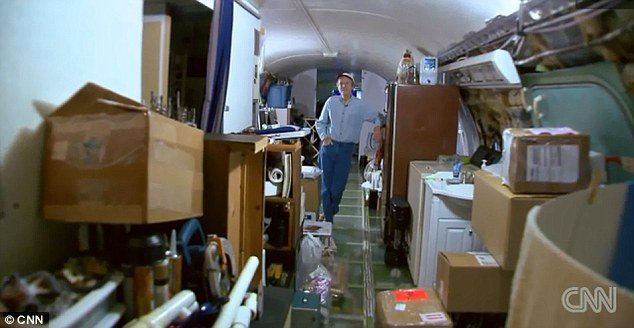
But by looking at data from the OECD and the International Labour Organization (ILO) we can see some broad and interesting trends.

“Asian countries tend to work the longest [hours], they also have the highest proportion of workers that are working excessively long hours of more than 48 hours a week,” says Jon Messenger, an ILO expert on working hours.

“Korea sticks out because it’s a developed country that’s working long hours,” he says.

“Normally it’s developing countries like Bangladesh, Malaysia, Thailand, Sri Lanka – countries like this that are working long hours.”

An overview of the average annual hours worked per person in selected countries puts South Korea top with a whopping 2,193 hours, followed by Chile on 2,068

But working longer doesn’t necessarily mean working better.

“Generally speaking, long working hours are associated with lower productivity per hour. Workers are working very long hours to achieve a minimum level of output or to achieve some minimum level of wages because frankly they’re not very productive,” Jon Messenger says.

The picture is very different in the developed world, where working hours have been falling.

“Over the last century, you’ve seen a reduction from very long working hours – nearly 3,000 a year at the beginning of the 1900s – to the turn of the 21st Century when most developing countries were under 1,800 hours,” says Jon Messenger.

“And indeed some of the most productive countries were even lower than that.”

The drop in working hours is in part a reflection of the greater number of part-time workers in the developed world. A large number of part-time workers brings down a country’s average – in the case of Japan, for example, a high proportion of people work excessive hours, but many also work part-time, leaving the country in the middle of the table, with 1,700 hours.

“You have more and more people working part-time hours,” says Jon Messenger.

“They’re quite capable of supporting themselves, quite capable of producing what they need to produce, so it’s just not necessary to work longer than that.”

Tighter labor laws in developed countries, particularly in Europe, have also reduced working hours. The differences between the most developed nations are small but leave entitlement makes a difference.

Jon Messenger says the average Briton works 150 fewer hours than an American.

“The difference is really driven by the fact that the US is the only developed country that has no legal or contractual or collective requirement to provide any minimum amount of annual leave,” he says.

The UK, in contrast, is subject to the European working time directive, which requires at least four weeks of paid annual leave for every employee.

Some European countries have a higher statutory level of paid leave – 25 days in Austria, Denmark, France, Italy, Luxembourg and Sweden in 2010, according to the European Industrial Relations Observatory (EIRO). And some employers provide more paid leave than the statutory minimum.

Paid public holidays, which come on top of that, averaged between nine and 10 in the European Union in 2010.

“The combined total of agreed annual leave and public holidays varied in the EU from 40 days in Germany and Denmark to 27 days in Romania – a difference of around 48% or 2.5 working weeks,” EIRO said in a report published last year.

When comparing hours worked, however, there’s one more thing which must be acknowledged.

Each country collects its own data, and their methods may be not always be perfectly comparable.


Men prefer dumb-looking women but not for marriage

A new study has found that when it comes to finding a mate, men may not be looking for charm and intelligence, but rather a woman who looks dumb and sleepy enough for a one-night-stand.

In an article soon to be published in the journal Evolution and Human Behavior, University of Texas at Austin graduate student Cari Goetz and her team focused on the so-called sexual exploitability hypothesis, which is based on the different ways in which men and women approach reproduction.

According to the researchers, early women took a chance by getting involved with emotionally unattached men who had no clear intention of raising children with them.

Men, however, had little concern for the consequences of casual trysts, given that their bodies produce somewhere around 85 million sperm cells every day — per testicle, according to Slate.

Cari Goetz began with the assumption that the brain of modern women is still sensitive to the pregnancy-related consequences of casual sex, making them more reluctant to engage in it than men.

The goal of the study was to test out the hypothesis that a woman who appears silly or inert, or in other words more “sexually exploitable”, is a turn-on for the average straight man.

In the evolutionary psychology sense, the word “exploitable” simply indicates that a woman is willing or can be more easily pressured into having sex, even if she is a prostitute or a nymphomaniac.

A new study has found that when it comes to finding a mate, men may not be looking for charm and intelligence, but rather a woman who looks dumb and sleepy enough for a one-night-stand

The researchers began testing their model by asking a large group of undergraduate students to nominate some specific actions, body postures, attitudes and personality traits that might signal vulnerability, such as exhaustion, intoxication, or low intelligence.

In the end, the participants of the study had produced a list of 88 signs that a woman might by especially receptive to a man’s advances.

Among the chosen red flags were: lip lick/bite; over-the-shoulder look; sleepy; intoxicated; tight clothing; fat; short; unintelligent; punk; attention-seeking and touching breast.

Next, Cari Goetz and her colleagues scoured the Internet for publicly available images of women displaying each of these 88 cues.

Once they had pictures of women licking their lips, partying, wearing sexy clothing, etc., the researchers cross-checked them with a separate group of students who presumed that the photos indeed matched the cues.

The researchers then invited a fresh group of 76 male students and presented them with the images of presumably “ripe-for-the-picking” women, asking them what they thought of each woman’s overall attractiveness, how easy it would be to “exploit” her using anything from a pickup line to physical force, and her appeal to them as either a short-term or a long-term partner.

The study has revealed that the images of fat or short women had no effect. The participants of the study did not view them as either easy to bed or appealing as partners.

But when it came to reading the more psychological and contextual cues -pictures of silly or childish-looking women, or of women who looked sleepy or drunk, men rated them as being easy to ‘score’ with.

More importantly, the dumb-looking and inert women were also perceived as being more attractive than their more lucid or intelligent-looking peers, but only when it came to short-term relationships.

When the men were asked to judge the same liquored-up, silly-looking women in the photos as potential girlfriends and wives, they had entirely lost their appeal on them.

In a follow-up study, the authors tried to add some nuance to their sexual exploitability hypothesis.

Graduate student David Lewis led a project to zero in on the specific type of man who would be most aware to the sort of ‘exploitability’ cues.

David Lewis and his colleagues asked 72 straight men to evaluate the same photos as before.

But this time, the researchers also measured some key personality traits in the men themselves, as well as the extent to which they desired and pursued no-strings-attached sex.

This follow-up study has found that the more promiscuous men who happened also to have deficiencies in personal empathy and warmth were the ones most attuned to female “exploitability” cues, which seems to indicate that not all men are sleazy when it comes to pursuing sex.


Morgan Stanley will pay back investors ripped off by Facebook trades

Amid a flurry of lawsuits over Facebook’s IPO, Morgan Stanley, the company’s top underwriter, says it’s prepared to pay back investors who were burned when they bought shares.

Morgan Stanley announced in a memo on Wednesday that it is reviewing Facebook trades and would adjust prices for some retail customers who overpaid.

The IPO mishaps have sparked numerous lawsuits against Morgan Stanley, the NASDAQ stock exchange and Facebook itself by shareholders who claimed they hid the social networking company’s weakened growth forecasts just before it went public.

The allegations raised questions about whether top investors profited at the expense of smaller buyers.

Meanwhile, Facebook is in talks with the New York Stock Exchange to move its stock from the NASDAQ Stock Market after the botched IPO on Friday, according to a person familiar with the matter.

The person spoke on the condition of anonymity because they were not authorized to speak publicly.

Facebook’s much-anticipated IPO was delayed by a half-hour on Friday because of technical glitches on the NASDAQ.

Morgan Stanley announced in a memo on Wednesday that it is reviewing Facebook trades and would adjust prices for some retail customers who overpaid

After pricing at $38, Facebook’s stock closed up 23 cents on Friday and has been down since. On Wednesday, it closed up $1, at $32, still down nearly 16% from the IPO price.

NYSE declined to comment.

The news comes as even Facebook CEO Mark Zuckerberg dumped his own shares in the company, making $1.13 billion as the stock nosedived, according to company filings.

On Wednesday, shareholders filed a lawsuit against Facebook and the banks behind the company’s stock, Morgan Stanley and Goldman Sachs.

Additionally, both the Securities and Exchange Commission and the Financial Industry Regulatory Authority have begun looking into the matter.

The U.S. Senate Banking Committee has also launched an inquiry and the state of Massachusetts has subpenaed Morgan Stanley, demanding answers.

The House Financial Services Committee said that it was also gathering information for their own review.

Facebook stock rose 3.3% in trading on Wednesday, rising to $32 a share.

However, a new analysis said the stock could fall to as low as $9.59.

That’s a far cry from the $37.58 that Zuckerberg fetched for 30.2 million shares he unloaded on Friday.

By the end of trading on Tuesday however the price had dropped to $31 meaning Zuckerberg saved himself a cool $174 million by getting out early.

Mark Zuckerberg, 28, still holds a vast amount of Facebook stock but his decision to sell off so much will leave investors wondering about his confidence in the company.

The drop is based around the realization that Facebook might not be growing as quickly as initially thought. And the company’s second-quarter growth will likely fall short of expectations as fewer new users join the social networking giant.

Shareholders filed a lawsuit on Wednesday, alleging that Mark Zuckerberg, Facebook and the banks that backed the Initial Public Offering, Morgan Stanley and Goldman Sachs, knew this information, but weren’t forthcoming with it.

On Tuesday, Reuters revealed that the banks’ analysts downgraded their estimates about the future earnings of the company while they were rolling out the IPO.

Business Insider called the move “unprecedented”.

Furthermore, the website reported that the banks revealed to privileged major investors that the share price was likely to tank, but left smaller stock buyers in the dark about this information.

The Securities and Exchange commission is investigating these allegations and the state of Massachusetts has filed a subpoena demanding Morgan Stanley release information about the IPO.


Ichthyostega, one of the first creatures to step on land, could not have walked on four legs, say scientists

British scientists have discovered that Ichthyostega, one of the first creatures to step on land, could not have walked on four legs as 3D computer models show.

Textbook pictures of the 360-million-year-old animal moving like a salamander are incorrect, say scientists.

Instead, it would have hauled itself from the water using its front limbs as crutches, research in Nature suggests.

The move from living in water to life on land – a pivotal moment in evolution – must have been a gradual one.

Ichthyostega is something of an icon in the fossil world. Living during the Upper Devonian period, it was dubbed a “fishapod”, with its mixture of fish-like and amphibious features.

British scientists have discovered that Ichthyostega, one of the first creatures to step on land, could not have walked on four legs as 3D computer models show

Although it probably spent much of its time under water, at times it was thought to have crawled halfway up onto land on limb-like flippers.

Exactly how it moved on land has been a matter of much debate, however.

Now, a team from The Royal Veterinary College, London and the University of Cambridge, has spent three years reconstructing the first 3D computer model of Ichthyostega from fossils.

It enabled them to study how ancient vertebrates made the “monumental transition” from swimming to walking.

Study author Dr. Stephanie Pierce, of The Royal Veterinary College, said the 3D skeleton allowed them to calculate the range of movement in the joints of its limbs for the first time.

The research suggests the animal shuffled on land using hind limb movements similar to that seen in seals rather than moving its limbs in the familiar walking pattern seen today.

Dr. Stephanie Pierce said: “We’re almost bringing the animal back to life by doing this.

“What we’ve discovered is that some early tetrapods definitely did not have the ability to walk on land. We at this stage are not actually sure which animals – or group of animals – were the first to do this.”

Co-author Prof. Jenny Clack from the University of Cambridge added: “Our reconstruction demonstrates that the old idea, often seen in popular books and museum displays, of Ichthyostega looking and walking like a large salamander, with four sturdy legs, is incorrect.”

The research, reported in a paper in Nature, was funded by the Natural Environment Research Council in UK.


Hewlett-Packard plans to cut 27,000 jobs by the end of 2014

Hewlett-Packard, the world’s largest maker of personal computers, is planning to cut 27,000 jobs by end of 2014.

Hewlett-Packard said the cuts – about 8% of its workforce – will reduce costs by up to $3.5 billion a year.

The company said in a statement that the money would be reinvested.

The move was part of a “productivity initiative designed to simplify business processes” and comes as rival products such as the iPad tablet computer eat into HP’s sales.

As part of the changes, the head of HP’s Autonomy division, Mike Lynch, is being replaced by Bill Veghte, HP’s chief strategy officer. Mike Lynch will leave after what HP called a “transition period”.

Hewlett-Packard, the world's largest maker of personal computers, is planning to cut 27,000 jobs by end of 2014

Mike Lynch founded software company Autonomy as a small start-up and turned into one of the UK’s largest technology companies.

It was bought by HP last year for more than $10 billion.

HP employs about 350,000 people worldwide and about 20,000 in the UK. A spokesman said it was too early to say exactly where the job cuts would hit, but no part of the business would escape some losses.

“We have not yet announced specific plans with regards to specific locations. We do expect the workforce reduction to impact just about every business and region,” the spokesman said.
News of the job losses overshadowed the release on Wednesday of HP’s latest quarterly results. The company’s profits and revenues were both better than analysts had estimated.

California-based HP reported a 31% fall in profits in the second quarter to $1.6 billion. Revenue in the period fell 3% on a year ago to $30.7 billion.

Meg Whitman, HP’s chief executive, said: “This quarter we exceeded our previously provided outlook and are executing against our strategy, but we still have a lot of work to do.”

The former chief executive of eBay joined HP in September, vowing to turn around the company after a series of problems including a failed tablet computer and an announcement that it was considering an exit from the PC business.

Her predecessor, Leo Apotheker, was ousted after just 11 months on the job.

HP’s shares, which fell as much as 5% on Wednesday and closed 3% down, were up 6.6% in after-hours trading on Wall Street.


Phillip Phillips wins American Idol talent show

Guitar player and singer Phillip Phillips has won the American Idol talent show, with viewers casting a record number of 132 million votes.

Phillip Phillips, 21, a shop worker from Leesburg, Georgia, was overcome with emotion as he ended the show with his first single, Home.

Runner-up was Jessica Sanchez, 16, a southern Californian of Filipino and Latino descent.

The contest remains one of the most-watched shows on US television.

Guitar player and singer Phillip Phillips has won the American Idol talent show, with viewers casting a record number of 132 million votes

In the final round, viewers cast a record 132 million votes.

“All the fans out there, thank y’all for voting for us,” said Phillip Phillips before host Ryan Seacrest announced the result.

Phillip Phillips was the fifth male American Idol winner in a row.

The two-hour finale featured a host of guest stars including Rihanna, Neil Diamond, Reba McEntire, Chaka Khan and John Fogarty.

Judges Steven Tyler, with his band Aerosmith, and Jennifer Lopez also performed.

[youtube Uv8pXN5TLps]


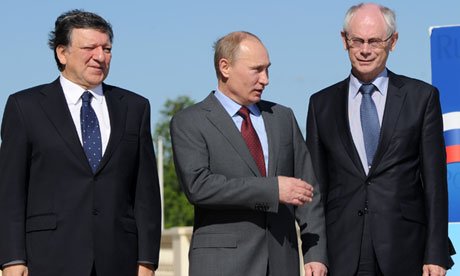
EU leaders want Greece to remain in the eurozone but to respect its commitments

European Council President Herman Van Rompuy has announced that EU leaders want Greece to remain in the eurozone but to “respect its commitments”.

Herman Van Rompuy, speaking at an informal EU summit, said continuing “vital reforms” were essential for Greece to overcome its economic problems.

The eurozone crisis has overshadowed the talks, amid fears that Greece may have to exit the single currency.

The eurozone is said to be preparing for such a scenario.

“We want Greece to remain in the euro area while respecting its commitments,” Herman Van Rompuy told a news conference in Brussels.

“We are fully aware of the significant efforts already made by the Greek citizens.

“The eurozone has shown considerable solidarity having already disbursed, together with the IMF (International Monetary Fund) nearly 150 billion Euros in support of Greece since 2010.”

European Council President Herman Van Rompuy has announced that EU leaders want Greece to remain in the eurozone but to "respect its commitments"

He said the EU would take action to return Greece to economic growth and job creation.

But Herman Van Rompuy said “continuing vital reforms” were “the best guarantee for a more prosperous future in the euro area”.

Referring to Greece’s forthcoming elections in June he said: “We expect that after the elections the new Greek government will make that choice.”

On Wednesday, European stock markets fell about 2% amid anxiety that Greece might have to exit the euro.

herman Van Rompuy said talks had been “focused and frank”.

He said there was agreement on the need for economic growth as well as measures to restore financial stability, which he described as “two sides of the same coin”.

UK Prime Minister David Cameron emphasized the agreements that EU leaders had reached on Wednesday.

“It was a good meeting in that there was complete agreement that dealing with deficits and getting growth are not alternatives, they go together. You need to do one in order to get the other,” David Cameron said.

Greece’s caretaker Prime Minister Panagiotis Pikrammenos said he had “had the support from almost every country member”.

EU leaders began the summit with Germany resisting pressure to launch eurobonds as a way to ease the eurozone crisis.

German Chancellor Angela Merkel said the bonds, pooling eurozone debt, would violate EU treaties and would “not contribute to kick-starting growth”.

France’s President Francois Hollande said that he wanted discussion of eurobonds and Irish PM Enda Kenny said the idea would be on the table.

Earlier, Angela Merkel said talks would not result in decisions but would influence formal summit talks in late June.

The leaders would look at ways to deepen the EU internal market, boost mobility in Europe’s labor market and better target European Investment Bank funding for projects. Such measures could help stimulate growth, she said.

The summit has been the first opportunity for President Francois Hollande to shift the emphasis from austerity to growth – a key message he gave to French voters, who elected him on 6 May.

The French Socialist leader’s victory is seen as a challenge to the prevailing austerity drive in the EU, which is favored by Germany.


Calcium supplements could increase risk of heart attack

0

German researchers have found that people who take calcium supplements could be increasing their risk of having a heart attack.

Calcium is often taken by older people to strengthen bones and prevent fractures.

But the study, published in the journal Heart, said the supplements “should be taken with caution”.

Experts say promoting a balanced diet including calcium would be a better strategy.

German researchers have found that people who take calcium supplements could be increasing their risk of having a heart attack

The researchers at the German Cancer Research Centre, in Heidelberg, followed 23,980 people for more than a decade.

They compared the number of heart attacks in people who were taking calcium supplements with those who did not.

There were 851 heart attacks among the 15,959 people who did not take any supplements at all. However, people taking calcium supplements were 86% more likely to have had a heart attack during the study.

The researchers said that heart attacks “might be substantially increased by taking calcium supplements” and that they “should be taken with caution”.

Ian Reid and Mark Bolland, researchers at the University of Auckland in New Zealand, said: “The evidence is also becoming steadily stronger that it is not safe, nor is it particularly effective.

“Therefore, the administration of this micro nutrient should not be encouraged; rather people should be advised to obtain their calcium intake from an appropriately balanced diet.

“We should return to seeing calcium as an important component of a balanced diet and not as a low cost panacea to the universal problem of postmenopausal bone loss.”


C-section linked to child obesity, found researchers

A US research suggests that babies who are delivered through Caesarean section are twice as likely to become obese than those born traditionally.

Researchers from Boston Children’s Hospital in Massachusetts found a doubling in the odds of obesity by the time the child was three years old.

The team said birth by C-section might affect bacteria in the gut, which in turn affects the way food is digested.

The study looked at 1,255 pairs of mothers and children from 1999 to 2002.

The mothers joined the study – published in the Archives of Disease in Childhood – before 22 weeks of pregnancy.

A US research suggests that babies who are delivered through Caesarean section are twice as likely to become obese than those born traditionally

Their babies were measured and weighed at birth and this was repeated at the age of three.

About one in four of the deliveries were C-section births and the remainder were vaginal deliveries.

The team found a link between body mass, skin thickness and how a child was born.

They also found that mothers who delivered by C-section tended to weigh more than those delivering traditionally – something which is known to influence obesity.

But the researchers said another possible explanation was the difference in the composition of gut bacteria acquired at birth between the two delivery methods.

They suggested expectant mothers who choose a C-section should be made aware of the obesity risk to their babies.


Egyptians are voting for the second day in country’s first free presidential elections

Egyptians are voting for the second day in the country’s first free presidential elections – 15 months after Hosni Mubarak was ousted.

Queues are being reported at some polling stations.
The election pits Islamists against secularists, and revolutionaries against Mubarak-era ministers. In all, 13 candidates are running.

The military council which assumed presidential power in February 2011 has promised a fair vote and civilian rule.

On Wednesday, there were large queues in many places, and voting passed off calmly for the most part.

However, protesters in Cairo threw shoes and stones at a convoy of candidate Ahmed Shafiq, who was Hosni Mubarak’s last prime minister.

There were also reports that a group of female voters has been denied access to a polling station in the capital because they were wearing a full face veil.

The US hailed the election, with State Department spokeswoman Victoria Nuland describing it as a “very important milestone” in Egypt’s transition to democracy.

Fifty million people are eligible to vote, and preliminary results are expected over the weekend.

Egyptians are voting for the second day in the country's first free presidential elections

The frontrunners are:

Ahmed Shafiq, a former commander of the air force and briefly prime minister during February 2011 protests

Amr Moussa, who has served as foreign minister and head of the Arab League

Mohammed Mursi, who heads Muslim Brotherhood’s Freedom and Justice Party

Abdul Moneim Aboul Fotouh, an independent Islamist candidate

Until a new constitution is approved it is unclear what powers the president will have, prompting fears of friction with a military which seems determined to retain its powerful position.

Voting across the country resumed at 08:00 local time. The authorities have declared Thursday a holiday, partly to allow public sector employees time to cast their ballots.

Some Egyptians may have been waiting for a second day of voting to avoid crowds.

On Wednesday, voting was extended by an hour to 21:00 to cater for queues at a number of polling stations.
NGOs and rights groups monitoring the election reported some complaints.
Egypt’s National Council for Human Rights (NCHR) said they received 50 complaints on electoral violations ranging from delay in opening voting booths, to campaigning for candidates outside polling stations during voting.
There was a heavy police and military presence outside the 13,000 polling sub-stations, and the atmosphere was mostly calm, with people waiting patiently for their turn to vote.

Mohammed Mursi was originally the Muslim Brotherhood’s reserve candidate, but he was thrust into the limelight after its first choice, Khairat al-Shater, was disqualified by the Higher Presidential Electoral Commission (HPEC) over an unresolved conviction.

He told reporters: “Today the world is witnessing the birth of a new Egypt. I am proud and cherish my membership of this people. I assure them that tomorrow will be better than today and better than yesterday.”

A run-off vote is scheduled for 16 and 17 June if there is no candidate manages to get more that 50% of the votes.

The Supreme Council of the Armed Forces (SCAF), worried about potential post-election unrest, has sought to reassure Egyptians that it will be the voters themselves who decide who will be the next president.

The 15 months since Hosni Mubarak was forced from power have been turbulent, with continued violent protests and a deteriorating economy.

Foreign direct investment has reversed from $6.4 billion flowing into the country in 2010 to $500 million leaving it last year.

Tourism, a major revenue generator for Egypt, has also dropped by a third.

The new president will have to reform the police to deal with the rash of crime that followed the uprising.

As many as a third of voters were reported to be undecided about which candidate to choose.

The Arab Spring began last year in Tunisia, inspiring pro-democracy activists across the Arab world.

Hosni Mubarak, who was in power for three decades, resigned on 11 February 2011 after 18 days of protests in Cairo and other cities.

He is on trial for his alleged role in the deaths of protesters. A verdict is expected in June.


Olympics 2020: Istanbul, Madrid and Tokyo on the shortlist for hosting the games

Istanbul, Madrid and Tokyo will compete to host the 2020 Olympics and Paralympics after Qatar’s Doha and Azerbaijan’s Baku were cut from the list on Wednesday.

The shortlist was announced at the International Olympic Committee’s executive meeting in Quebec City.

Doha and Baku were rejected for a second time in a row after failing to make the final list for the 2016 Games.

The winning host city will be named on 7 September 2013 in Buenos Aires.

The 15-member executive board, headed by IOC president Jacques Rogge, chose the finalists after examining a technical evaluation report compiled by a panel of Olympic experts.

Istanbul, Madrid and Tokyo will compete to host the 2020 Olympics and Paralympics after Qatar's Doha and Azerbaijan's Baku were cut from the list

Japan’s Tokyo hosted the Olympics in 1964, while neither Istanbul in Turkey nor Spain’s Madrid has held the Games. Madrid is bidding for a third consecutive time, Tokyo a second time in a row and Istanbul a fifth time overall.

Doha, which was proposing to hold the 2020 Olympics in October rather than the usual July/August schedule to avoid the Gulf Arab state’s searing summer heat, is already hosting the 2022 World Cup football tournament.

“This is a great disappointment for the Doha team,” said Noora Al Mannai, chief executive of Doha 2020.

“With so many sports venues already in place and budgeted for, we felt that we offered the IOC great certainty and a low cost Games plan as well as an exciting legacy vision, especially around developing women’s sport in the Middle East.

“However for Doha, it will always be a question of when not if.”

Rome pulled out of the running in February because of the country’s efforts to head off a debt crisis.

London will host the 2012 Summer Games from 27 July – 12 August, while the Brazilian city of Rio de Janeiro will stage the 2016 Olympics.


Jacob Zuma painting case is going to court in South Africa

South Africa’s ruling party is going to court to have the controversial painting of President Jacob Zuma removed from public view.

The actual painting that was on show at the Goodman Gallery in Johannesburg was vandalized by protesters on Tuesday.

The African National Congress said it was “rude, crude and disrespectful” and wanted all images of the painting online and elsewhere taken down.

Its challenge is expected to be heard by judges shortly.

The South Gauteng High Court is due to deal with the case against the gallery and the City Press website.

The Spear, a $14,000 acrylic painting by Brett Murray, an artist known for his political and provocative work, has already been sold.

The case is seen as a choice between freedom of expression and the right to dignity, both of which are protected in South Africa’s constitution.

South Africa's ruling party is going to court to have the controversial painting of President Jacob Zuma with his genitals exposed removed from public view
South Africa’s ruling party is going to court to have the controversial painting of President Jacob Zuma removed from public view

The ANC is supporting President Jacob Zuma’s bid to have the painting removed from public view, whether in real or virtual form.

It called on people backing the president to go to the court and show their support.

Party spokesman Jackson Mthembu told the Sapa news agency: “A lot of people are coming to defend the image of the ANC and Msholozi [Zuma].

“Millions and millions are offended, and those millions are not necessarily black people only. They find it insulting.”

On Tuesday, two men went into the gallery and defaced the painting, daubing a red cross on it and smearing it with black paint.

Barend la Grange and Louis Mabokela appeared in court briefly on Wednesday, along with George Moyo who is accused of trying to spray-paint the word “respect” on a gallery wall.

In an affidavit served on the City Press newspaper, Jacob Zuma said he was shocked by the work saying: “The portrait depicts me in a manner that suggests I am a philanderer, a womanizer and one with no respect. It is an undignified depiction of my personality and seeks to create doubt about my personality in the eyes of fellow citizens, family and children.”

President Jacob Zuma, who has four wives, has sued local media companies 11 times for defamation. Some cases have been settled, others dropped, but most are outstanding.

The best-known case is a 2008 suit against one of the country’s most high-profile artists, Zapiro, after he depicted Jacob Zuma about to rape a female figure representing justice – this is due to be heard in October.

Jacob Zuma was cleared of raping a family friend in 2006.


Mark Zuckerberg and leading Facebook investors cashed out million of shares before the price dropped off

Mark Zuckerberg, Facebook founder and CEO, and leading investors in the company cashed out millions of shares before the price dropped off, according to company filings.

It was also revealed that a company executive issued a warning days before the Initial Public Offering (IPO) that Facebook’s revenues are lower than expected, information that would have likely dropped the opening price of the stock.

The new reports are already raising questions about whether top investors profited from the IPO at the expense of smaller buyers.

On Wednesday shareholders filed a lawsuit against Facebook and the banks behind the company’s stock, Morgan Stanley and Goldman Sachs.

Additionally, both the Securities and Exchange Commission and the Financial Industry Regulatory Authority have begun looking into the matter.

The US Senate Banking Committee has also launched an inquiry and the state of Massachusetts has subpoenaed Morgan Stanley, demanding answers.

Facebook stock rose 3.3% in trading on Wednesday, rising to $32 a share.

However, a new analysis said the stock could fall to as low as $9.59.

That’s a far cry from the $37.58 that Mark Zuckerberg fetched for 30.2 million shares he unloaded on Friday. The founder of the social networking website made $1.13 billion on the sale.

By the end of trading on Tuesday however the price had dropped to $31 meaning Mark Zuckerberg saved himself a cool $174 million by getting out early.

Mark Zuckerberg, 28, still holds a vast amount of Facebook stock but his decision to sell off so much will leave investors wondering about his confidence in the company.

The drop is based around the realization that Facebook might not be growing as quickly as initially thought. And the company’s second-quarter growth will likely fall short of expectations as fewer new users join the social networking giant.

Shareholders filed a lawsuit on Wednesday, alleging that Mark Zuckerberg, Facebook and the banks that backed the Initial Public Offering, Morgan Stanley and Goldman Sachs, knew this information, but weren’t forthcoming with it.

On Tuesday, Reuters revealed that the banks’ analysts downgraded their estimates about the future earnings of the company while they were rolling out the IPO.

Mark Zuckerberg and Facebook leading investors cashed out millions of shares before the price dropped off

Business Insider called the move “unprecedented”.

Furthermore, the website reported that the banks revealed to privileged major investors that the share price was likely to tank, but left smaller stock buyers in the dark about this information.

The Securities and Exchange commission is investigating these allegations and the state of Massachusetts has filed a subpoena demanding Morgan Stanley release information about the IPO.

Mark Zuckerberg’s plans to sell were revealed in documents filed in advance of the IPO on Friday, but the problems that have happened since cast them in a new light.

Venture capitalist Peter Thiel also announced his plans early too but his return was beyond anything he could have hoped for.

He wrote Mark Zuckerberg a cheque for $500,000 in 2004 but has offloaded 16.8 million shares for the tidy profit of $633 million.

Among the others to cash out was Mark Pincus, the chief executive of online gaming company Zynga.

Eight years ago he gave Facebook a cheque for $40,000 but now has sold $38 million worth of stock.

Venture capitalists Accel Partners, which handed over $12.7 million back in 2005, sold $1.9 billion of stock but retained $5.8 billion.

Whilst the big players were making a fortune however, small investors have seen their attempts to get in on the Facebook bubble fall flat.

As of close of trading on Tuesday shares were a staggering 18 per cent below what they had been at the opening on Friday.

At one point they had slumped 31% from the $45 peak hit shortly after they started trading.

But according to analysts StarMine this could not be the end of it and the slide could carry on until stocks are just $9.59 each.

It has examined estimates from Wall Street experts and concluded that Facebook is currently vastly overpriced, though its forecasts do tend to be gloomier than others.

Eddy Elfenbein, editor at finance website Crossing Wall Street, said: “Facebook right now is going for far more than what it’s worth, it’s like buying $1 for $1.98, it just doesn’t make sense at this price.

“Just from basic modelling the stock should be around $17 to $20, and that is with a lot of variables.

“I would call that an ideal price. I would be interested in buying and I think that is a good deal for investors.”

Among those who did not cash out on Friday when Facebook shares were trading at $38 each was the company’s former president Sean Parker.

His stock is still worth over $2 billion but the price slump meant his fortune decreased by a staggering $300 million.

In a sign of how feeling is changing against Facebook, some commentators have begun comparing its activities to the most reckless behavior of Wall Street banks.

They have also coined the word “Zucked”, which means to get shafted on the sale of Facebook shares.

In a withering article in Time magazine Sam Gustin wrote: “Facebook’s highly-vaunted IPO – which was supposed to be a shining moment for the social network, as well as its lead banker Morgan Stanley and the NASDAQ exchange – has morphed into a debacle that’s reinforced some of the worst stereotypes about Wall Street: that corporate executives and their bankers engineer IPOs to maximize profits at the public’s expense; that Wall Street’s own systems have become too complex for its personnel to handle; and that the entire game is a hype-fueled casino, rigged for the house with a sucker played by the average investor.”

These major sell-offs comes as new allegations are emerging the over-hyped Facebook stock sale may have been rigged against small, every-day buyers.

Two separates lawsuits have been filed against the company and the banks that organized the IPO, Morgan Stanley and Goldman Sachs, alleging the executives knew second-quarter revenue would not meet expectations as Facebook’s growth slows.

Business Insider says this information was shared with the banks by a Facebook insider. As Mark Zuckerberg went on his pre-IPO roadshow, touting his company, the banks downgraded their revenue projections for Facebook.

This information could have reduced the value of Facebook’s initial stock offering. In turn, this could have decreased the amount of money Mark Zuckerberg and his early investors made when they dumped tens of millions of Facebook shares on Friday as trading opened.

However, the banks failed to widely disclose the downgrade, the lawsuits say.

Business Insider says they told only large, institutional investors so they would know to stay away from Facebook stock on the first day of trading.

Facebook denies the allegations in the lawsuit and said it will “vigorously defense itself”.

Morgan Stanley says it followed the same procedure it would for any IPO.


Facebook’s big winners cashed in early before shares price tumbled

Here is a list of the early investors in Facebook who made a bundle by cashing in portions of their stock Friday before share prices tumbled. Value is estimated at $38 a share. Also included is how much money each saved by getting out Friday, before shares sunk to $31.

Mark Zuckerberg

Shares sold: 30.2 million

Value: $1.13 billion

Saved: $174 million

Accel Partners, venture capital investor

Year invested in Facebook: 2005 for $12.7 million

Shares sold: 49 million

Value: $1.86 billion

Saved: $341 million

Peter Thiel, PayPal co-founder

Year invested in Facebook: 2004 for $500,000

Shares sold: 16.8 million

Value: $640 million

Saved: $119 million

DST Global Ltd, investment firm based in London and founded by Russian oligarch

Year invested in Facebook: 2009 and late 2010 for $200 million

Shares sold: 45.7 million

Value: $1.74 billion

Saved: $323 million

Goldman Sachs, investment bank

Year invested in Facebook: 2011 for $450 million

Shares sold: 28.7 million

Value: $1.09 billion

Saved: $200 million

Elevation Partners, private equity firm with Bono as spokesman

Shares sold: 4.6 million

Value: $176 million

Saved: $3.3 million

Greylock Partners, venture capital investor

Year invested in Facebook: 2006 for $27.5 million

Shares sold: 7.6 million

Value: $289 million

Saved: 53.4 million


Dry shampoo sales rocket as celebrities “big hair” look trigger the trend

Sales of dry shampoo have rocketed in the past 12 months and this year are set to reach £17 million ($27 million) in UK.

Experts believe that the “big hair” look seen on celebrities such as Cheryl Cole and stars of The Only Way is Essex is responsible for the growing trend of using dry shampoo.

According to new research by Mintel almost one in four women (23%) now rely on the quick-fix to achieve a bouffant bounce.

A spokesperson from the market analyst firm Mintel said: “In addition to cleansing hair, dry shampoo may also be used as a styling product as it creates volume, texture and hold, which allows hair to be moulded more easily into shape.

“The dry shampoo category has been reaping the rewards of delivering on the lifestyle factor of time pressure.”

A new research by Mintel shows that almost one in four women (23 percent) now rely on dry shampoo to achieve a bouffant bounce

In 2011 year-on-year sales of dry shampoo grew 140% – outpacing normal shampoo market.

Research showed it is most popular among young women, with nearly 40% of adults aged 16 to 24 using it, compared to 10% of the over-55s.

While it is often used to give that just-washed look, it can also be used to style hair as it creates volume, texture and hold, one reason for its success among younger women.

While dry shampoo still only accounts for 4% o shampoo sales, it is now regularly used by about one in five women.

Mintel said the Batiste range of dry shampoos, which pioneered this area of the market, now boasts 16 variants catering for all hair types.

The spokesperson added: “The market has been boosted by its popularity among young consumers on holiday, at festivals and during nights out clubbing.”


Barack Obama may have got worse high school grades than George W. Bush, as SAT scores reveal

It appears Barack Obama may have got worse high school grades than George W. Bush after new evidence showed the current president was among a college class with poor average SAT scores.

Doubts about the supposedly superior intellect of Barack Obama were first raised after he refused to release his academic record.

Barack Obama has also made some factual errors during his time in the job – although he is still a very long way behind his gaff-prone predecessor.

But now it has emerged that Barack Obama was among a 1981 intake of transfers to New York’s Columbia University that was at the time branded one of the worst ever.

The president, who moved from Occidental Community College in Los Angeles, was among 67 students whose average combined math and verbal score on the Scholastic Aptitude Test is a 1,100, according to a report obtained by Breitbart News.

By comparison, George W. Bush – who earned a history degree from Yale in 1968 – got 1206 out of a possible 1600 points in the same test he took at Andover boarding school in Massachusetts.

If Barack Obama, who majored in political science at Columbia, were near the average of that year, it would mean he had worse high school grades than a president derided by many as the dumbest in history.

Barack Obama may have got worse high school grades than George W. Bush after new evidence showed the current president was among a college class with poor average SAT scores

Of course, Barack Obama went on to distinguish himself by going on to earn the second highest honor in a graduate law degree at Harvard .

And he became the first black president of the prestigious legal journal, the Harvard Law Review.

Barack Obama also taught at the University of Chicago for twelve years – with eight years spent as senior lecturer in constitutional law.

But, the possibility that Barack Obama got lower high school scores than George W. Bush, would take some of the shine off his image as an intellectual heavyweight.

In his autobiography, Dreams From My Father, Barack Obama describes himself as an unfocused high school student whose mother criticized him for being a “loafer”.

Barack Obama also describes his attitude toward his studies at Occidental as ‘indifferent’ and called himself a “bum” who was notorious for partying.

However, despite his apparent lack of focus, he was able to win a place at Columbia.

Of the 450 students applied to transfer to the Ivy League university in 1981, only 67 were admitted, according to the Columbia Spectator.

This compared to 650 applicants just four years before, signifying that those who wanted to study there has lower grades.

A November 18, 1981 article in the Columbia Spectator revealed the SAT average for the transfer intake that year.

It stated: “On paper at least, the quality of the students accepted [as transfers] has declined along with the number of applicants, the officials say.”

In that story, Robert Boatti, the then Assistant Dean of Admissions, also attributed the drop in transfer application to the College’s policy of requiring transfer students to take courses in its core curriculum and to the limited availability of financial aid for them.

“He had said that many come from community colleges, rather than the nation’s top schools.

“Even the unhappiest people don’t transfer from Harvard,” Robert Boatti added.