Hisham Ikhtiar, Syria’s national security chief, has died from injuries he received in a bomb attack in Damascus on Wednesday, state TV has announced.
Hisham Ikhtiar is the fourth regime insider to die as a result of the attack at the national security bureau.
The army has fought off an assault by rebels in the Midan area of Damascus.
Meanwhile, Russia’s envoy to France has sparked a row with Damascus after suggesting President Bashar al-Assad was ready to step down.
Alexander Orlov said Bashar al-Assad had, in effect, agreed to step down last month at a conference in Geneva which had planned for a democratic transition.
Hisham Ikhtiar, Syria's national security chief, has died from injuries he received in a bomb attack in Damascus on Wednesday
“Assad nominated his representative to lead the negotiations with the opposition for this transition. That means he accepted to leave, but in a civilized way,” said Alexander Orlov.
His comments triggered an angry response from Syria, where the information ministry said the claims were completely baseless.
The announcement of Hisham Ikhtiar’s death came as the other victims of the bomb attack were buried.
The other three high-profile victims were the defense minister, his deputy who is also Bashar al-Assad’s brother-in-law, and a former defense minister.
The bombing of the National Security Bureau came shortly after rebels declared an all-out assault on the capital, calling it Operation Damascus Volcano.
Eruptions of violence have been seen across the city since Sunday.
In the latest fighting, state media announced the area of Midan had been “cleaned” of “terrorists”.
Rebels said they had withdrawn from Midan after coming under bombardment.
But elsewhere in the country rebel fighters have managed to seize control of several border posts, both on the southern frontier with Iraq and the northern border with Turkey.
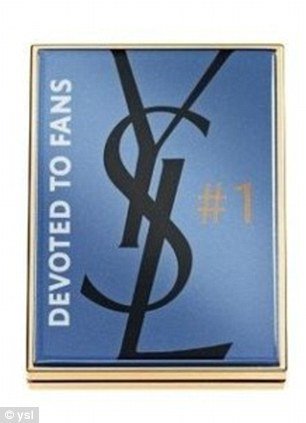
Yves Saint Laurent has launched a limited edition Facebook-inspired eyeshadow palette on July 19.
Popular culture often inspires beauty collaborations; Betty Boop for Lancôme and Miss Piggy for MAC are just some recent examples.
Now, as a “declaration of love” to its fans, YSL Fragrances & Beauty has gone one step further. Inspired by Facebook as a whole, the French brand has designed a palette which includes the “now highly identifiable Facebook blue with the luxurious Yves Saint Laurent design”.
The palette includes four shades inspired by Facebook: royal blue, violet, white and black.
Yves Saint Laurent has launched a limited edition Facebook-inspired eyeshadow palette on July 19
According to Kiss and Makeup, only 1,650 of the Pure Chromatics Devoted To Fans palettes were produced, which will be available on the brand’s Facebook page as well in U.S. stores at $60.
And any Facebook fan who buys the new palette will receive special “privileges”, such as exclusive information, perks and services through YSL Facebook feed and in store.
Damien Vincent, commercial director of Facebook France, emphasized the significance of the launch, saying: “We are honored that a prestigious brand such as Yves Saint Laurent resumes Facebook color codes to launch a unique product destined for his fans.”
The new digital marketing strategy comes amid reports that the French fashion house will introduce new branding in the coming months, most likely to coincide with Hedi Slimane’s first designs for the label’s Spring 2013 collection.
Yves Saint Laurent is reportedly dropping the Yves from its name, changing the iconic label to simply, Saint Laurent Paris.
However, it is expected that the YSL logo, which has long been one of the most well-recognized symbols of French luxury, will remain.
Lingerie giant Triumph has built an outstanding reputation for comfortable and perfectly fitting women’s underwear.
From beautiful sets and stylish separates, to seductive silhouettes and practical everyday wear, Triumph creates appealing essentials for women all over the world.
Launched in 1886, the German brand has come a long way, from vintage-inspired corsets to bras and knickers that celebrate the nipped-in waists and high-waisted styling of the past.
Fast forward 125 years, and much has changed.
This month, Triumph International launches a brand new Body Make-Up line.
The capsule collection features a range of nude, cream and violet slips, body dresses, bras and pants and is designed to truly feel like a second skin.
Triumph Body Make-Up line features a range of nude, cream and violet slips, body dresses, bras and pants and is designed to truly feel like a second skin
This Triumph series made of smooth, cosy and weightless fabrics. Bras feature an innovative spacer fabric, while the panties use bonded technology for a seamless finish to ensure optimal wearing comfort.
“The collection, designed to feel like a second skin, provides the foundation from which everyday female fashion can propel itself,” the firm said.
The brand’s latest collection is a far cry from the 1886 effort – a rigid wire cage that held the breasts in place, prosaically named the Bust Improver. The only concession to vanity was the addition of two bows tied onto each cup.
A history of the family-run business
More than century ago in 1886, merchant Michael Braun and corset-maker Johann Gottfried Spiesshofer went down in history after becoming the first firm in the world to make a bra commercially available to women.
Never could they have known back then that the tiny corset factory they had set up in southern Germany would one day become the world’s leading lingerie firm.
125 years on, the business that started out with just six sewing machines and six employees has gone global, with 37,500 employees working in over 120 countries – and it is still in the hands of the families of its founders.
The first foreign subsidiary was established in Zurzach, Switzerland which has become the company’s headquarters. The multinational manufacturing and marketing organization is one of the leading underwear producers in the world and in 2010 had an annual turnover of 2.2 billion Swiss francs.
Fears are growing for the health of country star Glen Campbell after he was forced to cancel his tour to Australia and New Zealand.
The veteran star, who admitted last year he was diagnosed with Alzheimer’s disease, is unable to complete the long flight from the US.
Glen Campbell, 76, was due to star with Kenny Rogers but his spokesman said he cannot cope with the strains of travel.
“Glen is able to comfortably deal with the travel and the shows themselves,” the spokesman said.
“However, as August approaches Glen realizes that due to his Alzheimer’s condition, he cannot handle the extremely long plane trip from Los Angeles to New Zealand and Australia.”
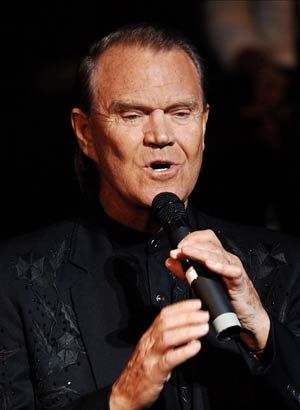
Fears are growing for the health of country star Glen Campbell after he was forced to cancel his tour to Australia and New Zealand
The Australia and New Zealand jaunt would have been the last international run on Glen Campbell’s Goodbye Tour.
He is taking part in one last concert tour before retiring for good from live performances.
Glen Campbell, who won five Grammys during his recording career, was given a Grammy Lifetime Achievement Award this year.
He also performed in the live Grammys telecast in February.
Glen Campbell’s hits include Wichita Lineman, Galveston a year later, and he starred in the John Wayne western True Grit in 1969.
In announcing he was suffering from Alzheimer’s, Glen Campbell said he often forgets the words to his most memorable songs.
His spokesman said Glen Campbell was “very disappointed that he is unable to perform for his New Zealand and Australian fans one last time”.
Al Capone’s Palm Beach mansion is due to be put on sale for a wealthy history buff who enjoys the sun.
The mansion has changed hands several times since Scarface died there in 1947, and the latest owner dedicated a significant amount of cash to restore the property to its former glory – or notoriety.
The palatial estate has a number of quintessentially Palm Beach touches, such as the clean lines and arched porticos lining up against the manicured green lawn.
Al Capone's Palm Beach mansion to be put on sale for nearly $10 million
If a passer-by did not know that the prime estate was previously owned by Al Capone, it would be easy to see a titan of any industry – though not necessarily a criminal mob – walking around the property, cigar in hand.
That may well be the case after the house officially hits the open market.
Current owner Peter Corsell, a founder of an energy company, bought the waterfront home for $5.65 million and spent the past year restoring it to it’s former grandeur.
The cost of that time and labour is that the listing will be set at $9.95 million.
The nearly-$10million price-point is a far cry from Al Capone’s heyday.
The true American gangster bought the property for just $40,000 in 1928, when he was reaching the pinnacle of his power during the height of the prohibition.
The home, which boasts the address 93 Palm Avenue on ultra-exclusive Palm Island, sits on a football field-sized lot on the edge of Biscayne Bay.
The New York Daily News reports that ornate plasterwork is seen throughout, and though the color of the awnings above each window has changed, they still remain as ray-stoppers.
And in case the new owner has a need to resort to the criminal ways of his predecessors, there is a private getaway dock for use.
At least 14 people have been killed in a shooting at Batman film The Dark Knight Rises premiere in Denver, Colorado, police say.
About 50 people have been injured in the incident, police say.
Witnesses say a gunman wearing a gas mask opened fire at the cinema complex in Aurora, at a midnight showing of The Dark Knight Rises.
There are reports the gunman released a smoke bomb during the incident. Police say they have one suspect in custody. Many ambulances are at the scene.
A gunman wearing a gas mask opened fire at the cinema complex in Aurora, at a midnight showing of The Dark Knight Rises
The Swedish Medical Center, not the area’s main hospital, said it had received three gunshot victims.
A witness told 9News that during a shooting scene in the film he heard loud bangs and a lot of smoke and initially thought they were live special effects put on by the cinema.
Projectiles came through the wall from the neighbouring theatre screening, the witness said.
CNN quoted one witness saying: “A guy slowly making his way up the stairs and firing – picking random people.”
Microsoft has made the first quarterly loss in its history after it wrote off some of the value of its online advertising business.
The loss came after it wrote down the value of Aquantive by $6.2 billion (5 billion Euros), which failed to bring the profits expected by Microsoft.
That led to a $492 million loss in the three months to the end of June, compared with a profit of $5.9 billion a year ago.
The computing giant company has not made a loss since it joined the stock market in 1986.
It took over Aquantive in 2007 but it struggled to compete with rival Google.
Microsoft has made the first quarterly loss in its history after it wrote off some of the value of its online advertising business
Microsoft paid $6.3 billion for Aquantive.
Microsoft is doing well in other areas, despite the decline in popularity of its Windows operating system, which dominated the personal computer market for years.
Revenue for the three months to June rose by 4% to $18.06 billion.
Excluding the adjustment for the asset write-down, and the holding back of some income related to the launch of its Windows 8 system, Microsoft profits beat those expected by investors.
Shares were up 1.6% after the results were announced.
Microsoft says the update of the Windows systems is the most important redesign in more than 10 years.
Windows 8, which will launch in October, will feature a new look that will present applications in a mosaic of tiles.
Importantly, it will also enable the operating system to work on tablet computers, which along with smartphones are the fastest-growing sector of the computing market.
Microsoft is also planning to release its own tablet, the Surface.
Earlier this week, Microsoft previewed its next version of the Office system, which is expected to be released next year.
Artist and dissident Ai Weiwei’s appeal against a tax evasion fine has been rejected by a Chinese court, his lawyer says.
Police barred Ai Weiwei from attending court in Beijing’s Chaoyang district to hear the verdict delivered.
Tax authorities imposed a 15 million yuan ($2.4 million) fine on Ai Weiwei’s firm for tax evasion in 2011.
Supporters say the fine is politically motivated and Ai Weiwei wanted the court to overrule the penalty.
”We will keep appealing, until the day comes when we have nothing to lose,” Ai Weiwei said via Twitter.
His lawyer Pu Zhiqiang, who was in court for the verdict, told reporters that the ruling was ”totally without reason”.
Ai Weiwei’s appeal against a tax evasion fine has been rejected by a Chinese court
The artist, a outspoken critic of the government, was detained for almost three months without charge last year.
After he was released, he was accused of tax evasion and the fine imposed.
The Chinese authorities maintain that the firm, called Fake Cultural Development, owes them money and it must be paid back.
While Ai weiwei is a designer for Fake Cultural Development, his wife is the legal representative of his company.
The artist said earlier that police, stationed outside his home, had barred him from attending the court hearing.
”If I can’t even appear in court, what more does this country have to do with me?” he said over Twitter.
Security was tight at the court with reports of both uniformed and plainclothes police in the area and people, including journalists and diplomats, being turned away.
Ai Weiwei, 55, has said that the tax bill is pay-back for his activism and challenged it on the grounds that proper procedure had not been followed.
The Beijing court agreed to hear the case, in a surprise move.
“The entire judiciary is shrouded in darkness,” he said from his home in northeast Beijing after the verdict.
Born in 1957 in Beijing, Ai Weiwei, the son of one of China’s most famous poets, Ai Qing, has played a key role in contemporary Chinese art over the last two decades.
His involvement in the design of Beijing’s “Bird’s Nest” Olympic stadium brought him international prominence.
But he fell out of favor with authorities with his outspoken criticism over the Olympics and the devastating May 2008 Sichuan earthquake.
In December 2010, he was among a group of activists and critics banned from travelling. A month later, his studio in Shanghai was demolished after officials said he had failed to obtain planning permission for the building.
He was then detained in April 2011 at Beijing airport.
Syrian rebels have captured a number of positions on the country’s borders with Iraq and Turkey.
A senior Iraqi official said all the crossings on Syria’s eastern frontier had been seized. At one point, two Turkish posts were also in rebel hands.
The push came a day after a bomb claimed the lives of three senior defence officials in Damascus.
At the UN, negotiations are under way on extending the mandate of the observer mission in Syria,
The mandate for the mission is due to expire on Friday.
There are almost 300 UN observers in Syria, but the mission suspended most of its monitoring activity in June, because of the risk from increasing violence.
Syrian rebels have captured a number of positions on the country's borders with Iraq and Turkey
The US says it might consider a final brief extension of the monitors work, but warned that it could not pin its policy on an unarmed mission.
The UK is proposing an extension for 30 days, and then the mission would continue only if the regime had removed heavy weapons from cities and sent troops back to their barracks.
The major Abu Kamal crossing on the Euphrates river in the east was captured after a clash with government forces, opposition activists said.
More than 20 Syrian soldiers and their commander were killed when a remote army outpost in the far north-east was attacked, Associated Press news agency reported.
Iraq’s government, seen as sympathetic to President Bashar al-Assad, has threatened to shut its side of the border and one official told Reuters news agency that it was closing the Abu Kamal crossing.
On the frontier with Turkey, too, rebels were said to have taken control of two posts, at Bab al-Hawa and Jarablus.
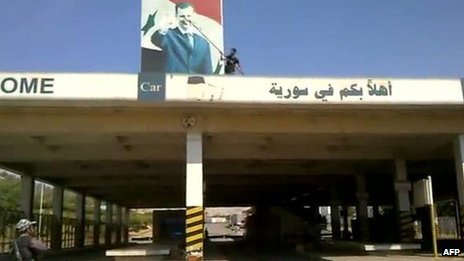
Video from the Bab al-Hawa crossing in Idlib province soon emerged of rebels defacing a portrait of President Assad, but they later reportedly withdrew from the position.
The regime’s grip on outlying areas may be slipping, which is hardly surprising given the fighting in Damascus.
State TV has been reporting on violence across the capital, showing footage of troops in the Midan area where it said 20 terrorists had been killed.
Analysts point out that the regime shows no signs of collapsing, and the military is still heavily armed, loyal and able to defend key institutions.
Violence broke out in the capital on Sunday, and two days later the rebels declared an all-out assault, calling it “Damascus volcano”.
The explosion on Wednesday that killed three top security officials led to a mobilization of government troops in an attempt to drive the rebels out of the city.
The president’s brother-in-law, the defence minister and head of the government’s crisis team were killed by a bomb as they attended a meeting at the national security headquarters.
The first images of President Bashar al-Assad since the attack have appeared, largely ending rumours he might have been hurt.
The footage appeared to show Gen Fahd Jassim al-Furayj, chief of staff of the armed forces, being sworn into his new post as defence minister.
Tanks and armored vehicles were reported to have moved into Qaboun on Thursday, close to the centre of Damascus.
There were heavy casualties, activists said, as a result of an army bombardment of Zamalka in the eastern outskirts of Damascus.
The London-based Syrian Observatory for Human Rights put the number of fatalities across the country on Thursday at 250.
The pace of events in Syria was in marked contrast to the diplomatic stalemate at the UN Security Council, where Russia and China vetoed a Western resolution calling for tougher sanctions on Damascus.
Under the Western-backed plan, the Damascus government would have been threatened with non-military sanctions under Chapter Seven of the UN Charter if it failed to move troops and heavy weapons from populated areas.
But the use of Chapter Seven paved the way for “external military involvement in Syrian domestic affairs”, Russia’s UN ambassador Vitaly Churkin argued.
Yesterday Victoria Beckham, a mother-of-four, took her Twitter account to share some vital parental advice on how to remove stubborn stains from clothing.
Victoria Beckham, 38, who has over four million followers tweeted: “Mummy tip….Baby Dreft and Vanish stain remover, use together to remove HUGE strawberry stains!!! X vb”
Super slim Victoria Beckham, who has been enjoying a break with her family in the UK, had previously taken her children to enjoy the quintessential British past time of strawberry picking.
Posting a picture of two juicy looking punnets she wrote: “Fun day strawberry picking in the rain with the boys and Harper. Love being in London! X”
Victoria Beckham took her Twitter account to share how to remove stubborn stains from clothing
It seems that Victoria Beckham, who is mother to baby girl Harper, one, and three sons: 13-year-old Brooklyn, Romeo, nine, and Cruz, six, doesn’t mind getting her perfectly manicured hands dirty.
With a combined estimated fortune, alongside footballer husband David Beckham of around £190 million ($300 million), Victoria Beckham could easily afford to have every item of her children’s clothing dry cleaned.
But proving she is still a down to earth at heart, the former Spice Girl opts for a bottle of Baby Dreft combined with a humble bottle of vanish stain remover.
Earlier this week Victoria Beckham delighted her Irish fans when she arrived in Dublin for a special presentation at department store Brown Thomas who were one of the first in the world to stock her clothing line when it first launched.
Police in Spain have fired rubber bullets to clear demonstrators in Madrid as a day of nationwide protests against spending cuts ended in unrest.
Protesters set alight rubbish bins as riot police charged them in the city centre, near the parliament building.
Seven people were arrested and at least six injured, officials said.
Earlier, tens of thousands of people held largely peaceful protests across Spain against the latest government austerity measures.
Public sector workers crowded the streets of Madrid, Barcelona and several other cities, chanting slogans against government “robbery”.
Tens of thousands of people held largely peaceful protests across Spain against the latest government austerity measures (Photo: Reuters)
Among those protesting were firefighters and police officers, as well as health and education workers.
“We have lived through bad times, but this takes the biscuit,” fireman Francisco Vaquero, 58, told the Reuters news agency.
The new 65 billion-euro ($80 billion) package of public sector wage cuts and tax rises were announced last week by Prime Minister Mariano Rajoy.
He said it was part of a deal with eurozone leaders to help rescue Spain’s troubled banks. Parliament ratified the measures on Thursday.
Earlier in the day, Germany’s parliament voted in favor of the 100 billion-euro bailout for Spain’s debt-laden banking sector.
Government austerity measures aimed at cutting Spain’s large deficit have prompted frequent protests, including one by miners against subsidy cuts last week.
At a debt auction on Thursday, Spain managed to raise 2.98 billion euros on the financial markets, but at the cost of sharply higher interest rates compared to an auction last month.
Thousands of UK border staff (Home Office) will strike the day before London Olympics open, the Public and Commercial Services (PCS) union has said.
PCS members will strike for 24 hours next Thursday – when many thousands of visitors are due to arrive in the UK.
Home Secretary Theresa May said the action was “shameful” as it threatens disruption to people travelling to London for the Games.
Immigration minister Damian Green said contingency plans were in place.
East Midlands Trains staff has also voted to strike during the Olympics.
PCS union members will take other forms of action from July 27 to August 20, including working-to-rule and an overtime ban.
The PCS said 57.2% of those who voted backed strike action – the turnout was 20%.
The action will involve staff across the Home Office, including the UK Border Agency, the Identity and Passport Service and Criminal Records Bureau.
Thousands of UK border staff will strike the day before London Olympics open
PCS general secretary Mark Serwotka said: “I think the government is whipping up hysteria about the Olympics, there’ll be no disruption to the Olympics, this is a 24-hour strike before the Olympics actually takes place.”
He said he was prepared to meet the culture secretary and home secretary any time in the next week to avert a strike but if they kept their “heads in the sand” the strike would continue.
London Mayor Boris Johnson has said he does not think the union will succeed in disrupting the Olympics and the majority of PCS members want to put on a great Games.
In other developments as the UK prepares for the start of the Olympics on Friday 27 July:
• An additional 1,200 troops have been put on standby to provide security at Olympic sites following G4S’s problems deploying enough staff
• The Duchess of Cambridge has met the London 2012 Olympic torch relay’s oldest bearer at the opening of a new exhibition in London
• Olympic medallist Steve Backley and artist Tracey Emin are among those carrying the Olympic torch as it travels from Deal to Maidstone, in Kent
• Great Britain’s women’s basketball team are beaten 88-63 by USA despite a spirited performance in a Games preparation match in Manchester
• Drivers on East Midlands Trains will strike from 6-8 August, union Aslef says, threatening disruption to spectators travelling to the Games
• Certain ministers, including the prime minister, chancellor, culture secretary and foreign secretary will be allowed to use the priority car lanes
Immigration minister Damian Green said: “If this strike goes ahead it will be a selfish and irresponsible act by the union leadership, they have got no authority for this, only about a fifth of the membership voted in the ballot, and of that small minority only just over half want to go on strike.”
Damian Green said he was confident disruption at immigration desks could be minimized because extra staff from the Home Office and other departments had been trained to provide cover.
Theresa May condemned the action saying: “I think that is shameful, frankly. They are holding a strike on what is one of the key days for people coming in for the Olympic Games.
“We will of course put contingency arrangements in place to ensure we can deal with people coming through the border as smoothly as possible.”
John Cridland, director general of the Confederation of British Industries, said: “For PCS to go on strike on this key day beggars belief. For it to happen because of a vote by 11% of staff is simply outrageous.”
But Labour MP John McDonnell, who chairs the PCS Parliamentary Group, said: “The government has brought this dispute on its own head.”
East Midlands Trains drivers from the union Aslef plan to strike on 6-8 August in a row over pensions. But South West Trains staff has voted not to strike over the Olympics.
Prime Minister David Cameron insisted the Olympics would be safe and secure.
Speaking at a press conference in Afghanistan, he said: “I do not believe it will be right, I do not believe it will be justified.”
Labour leader Ed Miliband also condemned the strike.
The PCS is in dispute with the Home Office on plans to cut 8,500 jobs and the threat of compulsory redundancies in the passport office in Newport, South Wales.
There are also disagreements over pay rises capped at 1% following a two-year wage freeze, privatization of services, and alleged victimization of union reps.
This week the National Audit Office said the UK Border Agency had laid off 1,000 more staff than intended and was having to hire extra people and increase overtime to meet its workload.
The PCS is one of the largest unions in the UK with around 250,000 public sector members.
PCS members at the Department for Transport have been taking industrial action over the past few weeks, while staff in other departments, including the ministries of defence and justice, are set to vote shortly on how to campaign against cuts.
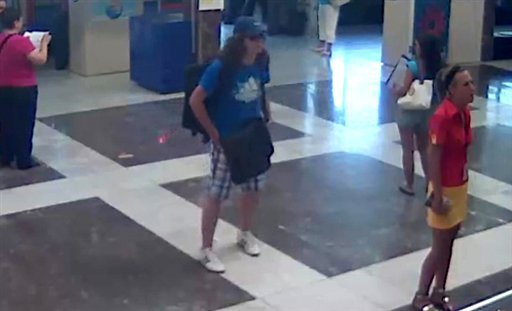
Bulgarian authorities has released CCTV footage of the man suspected of carrying out the deadly suicide bombing of a bus carrying Israeli tourists at Burgas airport.
A white man with long hair and a backpack is seen walking around the terminal and leaving before the blast.
The Bulgarian authorities say the man – believed to be 36 years old – had a fake US driving licence.
Israel blames Lebanese Hezbollah and Iran for Wednesday’s blast which killed five Israelis and a Bulgarian driver.
The suspected bomber also died in the explosion in the eastern Bulgarian city by the Black Sea.
At least 30 people were injured, some seriously.
In response to Israel’s accusations, an Iranian foreign ministry spokesman said on Thursday that Tehran strongly condemned “all terrorist acts”.
Bulgarian authorities has released CCTV footage of the man suspected of carrying out the deadly suicide bombing of a bus carrying Israeli tourists at Burgas airport
Hezbollah – a Shia militant group – has not publicly commented on the issue.
The attack could be part of a covert but violent war between Israel and Iran, and there is a view among some analysts that this attack could be a response to a series of recent attacks on Iranian nuclear scientists.
The Bulgarian authorities released the security camera footage of the suspect on Thursday.
Bulgarian Interior Minister Tsvetan Tsvetanov said the man is believed to have been in the country up to seven days before the attack.
“We cannot exclude the possibility that he had logistical support on Bulgarian territory,” Tsvetan Tsvetanov said, without providing further details.
The authorities are now trying to identify the man from DNA samples.
On Thursday, Israeli Prime Minister Benjamin Netanyahu said that the attack “was perpetrated by Hezbollah, Iran’s leading terrorist proxy”.
Benjamin Netanyahu said it was part of “a global campaign of terror carried out by Iran and Hezbollah”.
On Wednesday, the prime minister warned that “Israel will respond forcefully to Iranian terror”.
Israeli officials also stressed that the bombing resembled several recent attempted attacks on Israeli targets in India, Thailand, Azerbaijan, Kenya and Cyprus.
Passengers arriving on a charter flight from Tel Aviv boarded the bus at Burgas airport shortly after 17:00 local time on Wednesday.
“I was on the bus and we had just sat down when after a few seconds we heard a really loud explosion,” Gal Malka told Israel’s army radio.
“The whole bus went up in flames,” she said, adding that the explosion took place near the front of the bus.
Bulgarian journalist Dobromir Doskacharov, who arrived at the scene about 30 minutes after the blast, said: “I saw three buses completely burnt out – just the metal bars were left.”
“There were crowds of people around, very distressed. One man said he saw decapitated heads. Others spoke of body parts flying through the air,” Dobromir Dovkacharov said.
Israeli officials say the identification of the five Israeli victims has now been completed and they will be flown home later on Thursday.
Bulgaria is a popular tourist destination for Israelis.
However, in January there were reports that Israel had asked Bulgaria to tighten security for Israeli tourists travelling by bus.
This followed a reported discovery of a suspicious package found on a bus with Israeli tourists travelling from Turkey to Bulgaria.
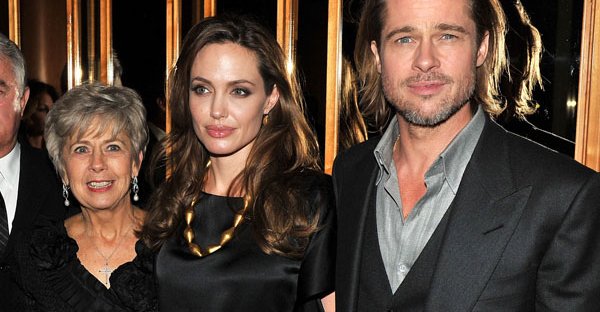
Actress Angelina Jolie has reportedly been left furious after her boyfriend Brad Pitt’s mother Jane insisted on buying girly clothes for her notoriously tomboyish granddaughter Shiloh.
Despite Shiloh Jolie-Pitt and her five siblings being allowed to choose their own clothes by their famous parents, Jane Pitt is said to have purchased a series of feminine outfits for the six-year-old.
According to the Evening Standard, Angelina Jolie found Jane Pitt’s move “disrespectful” for her to buy such clothes for Shiloh, considering it is well known that she likes to dress in similar style to her brothers.
A source told the newspaper: “It’s well documented that Shiloh likes to dress like a boy.
“But Jane still insists on buying her fairy costumes and princess dresses, which Angelina finds very disrespectful.”
Angelina Jolie found Jane Pitt's move “disrespectful” for her to buy girly clothes for Shiloh
It is the second time this year that Angelina Jolie has been left angry by Jane Pitt, after Brad’s mother wrote a letter to a local newspaper in the United States urging Americans to vote against President Barack Obama in the upcoming elections because of his support for gay marriage.
In a letter to the Springfield News-Leader in Missouri urging support for Republican candidate Mitt Romney, Jane Pitt wrote: “Any Christian should spend much time in prayer before refusing to vote for a family man with high morals, business experience, who is against abortion, and shares Christian conviction concerning homosexuality just because he is a Mormon.”
Angelina Jolie and Brad Pitt, who are prominent supporters of gay marriage and President Barack Obama, were said to be appalled by the letter.
They once said they would not marry until same-sex marriage was legalized in the US, but became engaged after pressure from their six children.
The source said: “Brad and Angelina were devastated by Jane’s actions. They have worked hard campaigning for equality, working closely with Barack Obama.
“Angelina called Jane and told her she believes she’s setting a bad example for the kids.”
A source told Star magazine at the time of the letter: “Jane has never wanted to talk politics with Angelina.
“She knew it would cause greater issues for them, and she wanted to try to have a relationship with the mother of her grandkids. She never thought her letter would be such a big deal.”
Brad Pitt once said of his mother’s outspoken views: “She’s very loving, very open, genuine, and it’s hilarious because she always gets painted as a she-devil.”
There were once rumors that Jane Pitt and husband Bill did not get along with their son’s long-term partner, favoring his ex-wife Jennifer Aniston instead.
But such myths were dispelled when they stepped out together in December last year to support Angelina Jolie at the premiere of her first venture in the director’s chair, In the Land of Blood and Honey.
A new report from China Internet Network Information Center (CINIC) found that mobile phones are now the most common way for people to connect to the internet in China.
For the first time, desktop computers are no longer the leading method for the country’s 538 million connected citizens to get online.
The CINIC report said over 50% of the year’s new internet users were from rural areas.
A fall in smartphone costs has been the key cause of growth, experts said.
“Mobile phones are a cheaper and more convenient way to access the internet for [residents in] China’s vast rural areas and for the enormous migrant population,” said the report from the state-linked CINIC.
China Internet Network Information Center found that mobile phones are now the most common way for people to connect to the internet in China
Mobile internet users now number 388 million, up almost 10% since the start of the year.
“Mobile phone prices continued to drop,” the report said.
“The emergence of smartphones under 1,000 yuan [$157] sharply lowered the threshold for using the devices and encouraged average mobile phone users to become mobile web surfers.”
The total number of those online has risen 5% since the end of last year, many of whom are very active in cyberspace.
Over half of the connected population frequently use microblogging sites like Sina Weibo, a service similar to Twitter which is banned in the country.
The popularity of these services has prompted the government to force users to sign up using their real names.
Internet use in China has had a rocky history. The country has been on the end of sharp criticism from human rights groups for blocking large amounts of content from its citizens – a system which has been dubbed the Great Firewall of China.
Bill Dutton, professor of internet studies at the University of Oxford, said the trend followed similar growth in other parts of the world.
“We’re moving to what we call next-generation users,” he said.
“They’re likely to have three or four devices in their homes, therefore they’re able to integrate computing into their lives wherever they are.”
He added that the rapid adoption of mobile among the rural community was one of necessity over desire.
“There’s a wave of people coming online that would not otherwise be able to afford to be there.”
With a face full of make-up, Isabella Rossellini has proved a picture-perfect fit for luxury goods and jewellery brand Bulgari.
The past model, who served as the face of beauty giant Lancome for 14 years, has appeared in an ad campaign for her new line of namesake handbags for the brand, titled the Isabella Rossellini collection.
Isabella Rossellini, the beautiful daughter of the late Italian film director Roberto Rossellini and Swedish actress Ingrid Bergman was photographed by Annie Leibovitz for the line’s ad campaign, which is yet to be released entirely.
In the one released image, Isabella Rossellini, 60, is perched upon a plush couch, wearing a navy frock and carrying a red calf-leather tote handbag from the forthcoming collection.
With a face full of make-up, Isabella Rossellini has proved a picture-perfect fit for luxury goods and jewellery brand Bulgari
The product features a rock crystal twist lock and is no doubt bound to become the It bag of the Autumn/Winter season.
The elegant look is spiced up by a pair of lipstick-red pumps that sit on her feet up on the couch also.
One of the gown’s straps has been allowed to fall off her shoulder, revealing a peep of her bust.
Isabella Rossellini lunching with friends in Sicily last week
Interestingly, the fallen strap is intended to pay homage to a past portrait of the actress in which also stars director David Lynch, who directed Isabella Rossellini in the iconic 1986 film Blue Velvet.
In the original shot, also taken by Annie Leibovitz, her dress strap is also snapped falling off her shoulder.
The film itself, which also starred Dennis Hopper, helped cement Isabella Rossellini’s work as a actress in her own right, and not just the famous daughter of an A-list couple.
The new promotional image was shot in the photographer’s studio in New York.
It was inspired by the work of British painter Meredith Frampton, according to WWD.
The artist was renowned for his somewhat surrealist works and still life paintings, which might explain the incredible stillness that exudes from the image.
The full collection of ads are wrapped up in an exclusive deal with Vanity Fair magazine and will appear in the title’s September issue.
The outspoken actress has attracted further attention recently after appearing in the HBO documentary titled About Face.
In the film, which has been critically acclaimed and is scheduled to screen at Sundance Film Festival in January of next year, the actress is seen talking about plastic surgery as well as the realities of the fashion and beauty industries.
She also touches on her path to fame.
Isabella Rossellini is seen telling the camera that it is ‘essential not to depend on fathers and husbands’ while working in the showbiz industry.
The actress was famously dumped by Lancome in the mid-Nineties for allegedly being too old to be a model.
An FBI operation in Miami has recovered a painting which is believed to be a Matisse stolen from a Venezuelan museum more than 10 years ago.
A man and a woman allegedly tried to sell Matisse’s Odalisque A La Culotte Rouge to undercover FBI agents.
Pedro Antonio Marcuello Guzman, 46, and Maria Martha Elisa Ornelas Lazo, 50, have been arrested and charged with possession of stolen goods.
The 1925 painting has been valued at approximately $3 million.
The painting depicts a bare-chested woman sitting cross-legged on the floor wearing a pair of scarlet trousers.
It was stolen approximately a decade ago from the Caracas Museum of Contemporary Art – formerly known as the Sofia Imber Contemporary Art Museum, or MACCSI.
A man and a woman allegedly tried to sell Matisse's Odalisque A La Culotte Rouge to undercover FBI agents
In 2003 the museum discovered the original artwork had been replaced with a forgery after an art collector reported it was being offered for sale in New York.
A press release from the Department of Justice on Wednesday claimed Pedro Antonio Marcuello Guzman had agreed to sell the painting for $740,000 after admitting it was stolen.
“Marcuello allegedly admitted to the undercover agents during a meeting that he knew the painting was stolen and offered to sell [it],” the statement said.
The artwork was then brought into the US – from Mexico – by a courier identified as Maria Ornelas.
“Upon inspection by the undercover agents, the painting appeared consistent with the original Henri Matisse painting reported stolen from the MACCSI museum,” the statement said.
According to Reuters, the FBI’s National Stolen Art File database lists five other missing Matisse works, including a collection of 62 sketches.
His 1906 Pastoral was one of five paintings stolen from the Museum of Modern Art in Paris in 2010.
Earlier this year a Matisse floral still life, titled The Peonies, fetched $19 million at an auction in New York.
Grum, a botnet which experts believe sent out 18% of the world’s spam email, has been shut down, a security firm said.
Grum’s control servers were mainly based in Panama, Russia and Ukraine.
Security company FireEye and spam-tracking service SpamHaus worked with local internet service providers (ISPs) to shut down the illegal network.
A botnet is a network of computers that has been hijacked by cybercriminals, usually by using malware.
“Grum’s takedown resulted from the efforts of many individuals,” wrote Atif Mushtaq, a security researcher with FireEye.
“This collaboration is sending a strong message to all the spammers: Stop sending us spam. We don’t need your cheap Viagra or fake Rolex.”
Atif Mushtaq wrote that on Monday he learned that a Dutch server involved in Grum had been shut down. He said it “at least made a dent” in the botnet.
Grum botnet is believed to send out 18 percent of the world's spam email
On Tuesday, the command and control servers (CnCs) in Panama had been shut down.
“This good news was soon followed by some bad news,” he explained.
“After seeing that the Panamanian server had been shut down, the bot herders moved quickly and started pointing the rest of the CnCs to new secondary servers in Ukraine.
“So at one point, I was thinking that all we needed was to take down one Russian server, but right in front of my eyes, the bot herders started pointing their botnet to new destinations.”
He noted that in the past Ukraine has been something of a “safe haven” for bot herders.
“Shutting down any servers there has never been easy.”
Disabling Grum is just one of many high-profile efforts to neutralise botnets worldwide.
Russian Georgiy Avanesov was in May sentenced to four years in jail for being behind the Bredolab botnet which was believed to have been generating more than £80,000 a month in revenue.
Microsoft has been working to disrupt Zeus, another huge network responsible for, researchers said, millions of pounds in theft.
FireEye collaborated with other experts in the worldwide security industry to apply pressure to local ISPs to suspend the illegal operation.
Atif Mushtaq said more than 20,000 computers were still part of the botnet, but that without the active CnCs they would soon be rendered ineffective.
Grum’s closure was an encouraging development in clamping down on botnets across the world, he said.
“When the appropriate channels are used, even ISPs within Russia and Ukraine can be pressured to end their cooperation with bot herders.
“There are no longer any safe havens. Most of the spam botnets that used to keep their CnCs in the USA and Europe have moved to countries like Panama, Russia, and Ukraine thinking that no one can touch them in these comfort zones.
“We have proven them wrong this time. Keep on dreaming of a junk-free inbox.”
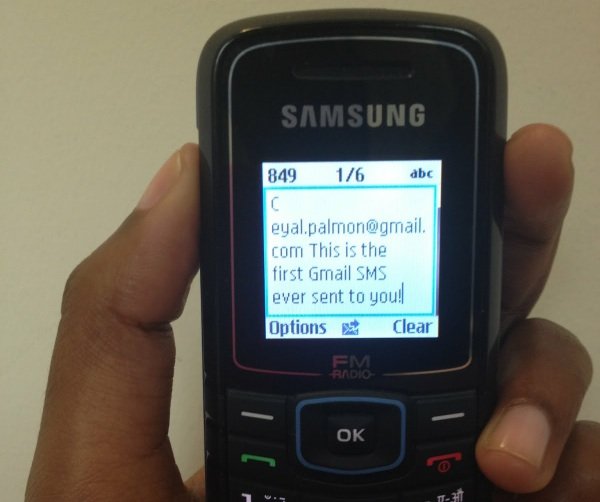
Google has launched Gmail SMS, a text message-based version of its email service, in some of the African countries.
Gmail SMS can run on so-called “dumb phones” which only have very basic features and no access to the internet.
The service has so far been made available in Ghana, Nigeria and Kenya.
Gmail SMS is the latest in a line of Google products aimed at the African market – the company is also running educational programmes in the region.
Gmail SMS can run on so-called "dumb phones" which only have very basic features and no access to the internet
Google describes its efforts in improving computer science training as “an important goal for Google in 2012”.
It recently offered grants to 17 universities to expand its Computer Science for High School project.
However lack of access to affordable hardware is still seen as a critical barrier to technology adoption across the continent.
Geva Rechav, Google’s product manager for emerging markets, explained in a blog post how Gmail SMS was adapted to work by using simple text commands.
“Gmail SMS works on any phone, even the most basic ones which only support voice and SMS,” he wrote.
“Gmail SMS automatically forwards your emails as SMS text messages to your phone and you can respond by replying directly to the SMS.
“You can control the emails received by replying with commands such as MORE, PAUSE and RESUME.
“Additionally, compose a new email as an SMS and send to any email address recipient – who will find your message in the right email conversation thread!”
It will be free to receive messages from the system, but any sent texts will be subject to standard network rates.
Across Africa, adoption of mobile services has been swift and widespread.
Mobile commerce offerings like microfinancing tool M-Pesa have in excess of 15 million users.
An exhibit celebrating Whitney Houston will be on display at Los Angeles’ Grammy Museum starting with August 15.
The Whitney! exhibit will be on display two days before the superstar’s last movie, Sparkle, bows nationwide.
Whitney! Celebrating the Musical Legacy of Whitney Houston received full cooperation from the Houston family and will concentrate on the six-time Grammy winner’s life on and off stage.
An exhibit celebrating Whitney Houston will be on display at Los Angeles’ Grammy Museum starting with August 15
Whitney Houston died on February 11 in her Beverly Hilton Hotel room.
The Whitney! exhibit will include stage costumes worn by Houston, including the white, beaded gown she wore when awards the 1992 Grammy for album of the year; album and career scrapbooks from the early days of her career; concert posters and tour booklets, rare photographs of Whitney Houston, and her personal Bible.
There will also be interviews with a number of musicians and artists who worked with or were influenced by Whitney Houston.
Sparkle movie will premiere on August 17.
The Whitney! exhibit will be on display at the Grammy Museum until February 2013.
YouTube unveiled yesterday a way for users to automatically blur human faces in videos they upload, a feature that would help protect the identities of political dissidents, parent company Google Inc said.
Once known more as a repository for fuzzy, home-made cat videos, YouTube has become a growing destination for slick, highly produced entertainment and serious news content.
Earlier this week, a study by the Pew Research Center’s Project for Excellence in Journalism said amateur “citizen journalism” footage from events such as the 2011 tsunami in Japan were some of the most-watched clips on YouTube.
In recent months YouTube has hosted dozens of videos from the rebellion in Syria, often uploaded by rebels seeking to publicize their struggle. But the videos have also revealed the identity of rebel fighters.
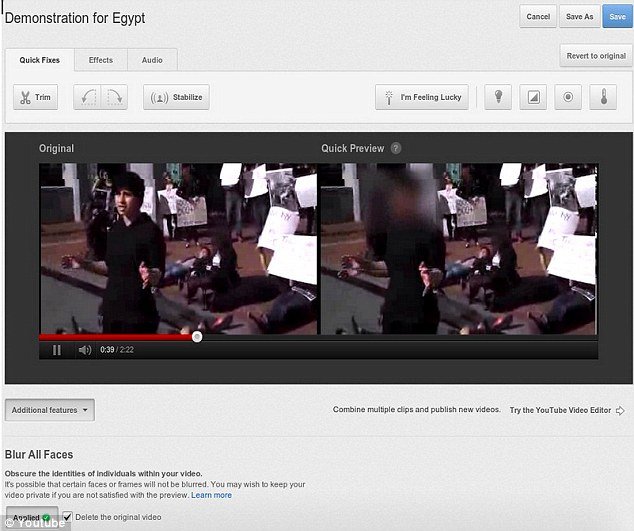
“Whether you want to share sensitive protest footage without exposing the faces of the activists involved, or share the winning point in your 8-year-old’s basketball game without broadcasting the children’s faces to the world, our face blurring technology is a first step towards providing visual anonymity for video on YouTube,” YouTube said in a blog post Wednesday.
Image of a demonstrator in Egypt as an example of a potential use for YouTube facial blurring feature
The feature also allows for the original copy of the uploaded video to be deleted. Videos may also be kept private.
“YouTube is proud to be a destination where people worldwide come to share their stories, including activists,” YouTube said.
As a new feature they warn of it potentially missing some faces depending on the lighting, angle, video quality and obstructions.
“Before you publish, you will see a preview of what your video will look like with faces blurred. When you save the changes to your video, a new copy is created with the blurred faces. You will then be given the option to delete the original video,” the blog posted by Amanda Conway, policy associate at YouTube reads.
She uses an image of a demonstrator in Egypt as an example of a potential use for the feature.
According to YouTube, 60 hours of video are uploaded to their site every minute collecting more than 3 billion views a day.
The international human rights organization WITNESS reports that “no video-sharing site or hardware manufacturer currently offers users the option to blue faces or protect identity.”
US researchers claim that omelettes, meringues and pasta could one-day be back on the menu for some people with egg allergies after they are treated with the food they are allergic to.
The only option for patients is to completely avoid foods containing egg.
A study on 55 children showed some were able to eat egg after minuscule amounts were gradually added to their diets.
However, the treatment is still experimental and doctors say it should not be tried at home.
Egg allergies are one of the most common allergies and are thought to affect up to 2.5% of children.
Egg allergies are one of the most common allergies and are thought to affect up to 2.5 percent of children
Gradually introducing the food which causes an allergic reaction has been successful in other foods such as such as peanuts.
Parents were given powdered egg to mix into their children’s food, building up to about a third of an egg every day.
The findings, presented in the New England Journal of Medicine, report that after 22 months of egg therapy, 75% of the children were able to eat the equivalent of two eggs without reacting.
The children were tested again after at least a month of no longer having the daily egg treatment. Of these, 28% could still eat egg without reacting and were considered allergy-free.
One of the researchers Dr. Wesley Burks, from the University of North Carolina School of Medicine, said: “This study gives us hope that we’re closer to developing a treatment.
“Almost a third of the children had a permanent change and were no longer egg-allergic.”
Dr. Stacie Jones, from University of Arkansas, said: “Reducing these kids’ allergic response to egg also lessened parental anxiety over how their children might react if accidentally exposed to egg at school or at someone else’s house.”
However, about 15% of children did not finish the treatment, mostly due to allergic reactions.
Fresh fighting in many parts of Syria throughout the night has followed the deaths on Wednesday of three top regime figures in a suspected suicide attack.
Syrian government and opposition both said large numbers of people died, in one of the bloodiest days of the conflict.
Activists said artillery and helicopters were used in the worst attack, on a funeral south of Damascus.
The president’s brother-in-law, defence minister and head of Bashar al-Assad’s crisis team died in yesterday’s bombing.
Rebel groups said the bomb had been planted the day before the meeting at national security headquarters where it was detonated. They predicted the government’s imminent fall.
The army has pledged to rid Syria of “criminal and murder gangs”.
The London-based Syrian Observatory for Human Rights said on Thursday that more than 150 people had died across the country on Wednesday, in one of the worst days of a 16-month revolt.
Video of one attack posted on the internet showed scenes of pandemonium after what activists said was a helicopter gunship attack on a funeral procession at Sitt Zeinab, south of the capital. They said at least 60 people were killed in this incident alone.
In Damascus, state media said, security forces launched operations in many areas which have been clashes in recent days, mainly in the south-west and north-east, killing many “terrorists”.
Activists reported more tanks moving towards the capital from the west.
Following Wednesday’s bombing, the government has vowed to root out ruthlessly what it describes as armed terrorists backed by outside powers.
The rebels are on the offensive too, warning state TV and radio to evacuate their personnel before its headquarters comes under attack.
In contrast with earlier explosions in Damascus, there were no photos or video from the scene of Wednesday’s blast at the security headquarters.
Among the victims were:
• Defence Minister and ex-chief of staff Gen Daoud Rajiha
• Deputy Defence Minister Assef Shawkat, married to Bashar al-Assad’s sister Bushra
• Assistant to the vice-president and head of crisis management office Gen Hassan Turkomani
• Two other senior officials – interior minister Mohammad Ibrahim al-Shaar and National Security Bureau chief Hisham Ikhtiar- were wounded
The US said the killings were a major blow to the regime.
“I think the incident today makes clear that Assad is losing control,” White House spokesman Jay Carney told reporters.
“All of our partners internationally need to come together to support a transition.”
In Lebanon, Hezbollah leader Hassan Nasrallah condemned what he termed a targeted killing: “We are going to miss them and we offer our condolences to the Syrian leadership and the Syrian army.”
Russia said some countries had incited the opposition rather than calming it down.
The attack prompted the UN Security Council to delay until Thursday a vote on a Western-sponsored resolution calling for tougher sanctions on Damascus.
UN Secretary General Ban Ki-moon said the Security Council must “shoulder its responsibility and take collective and effective action.
“Time is of the essence. The Syrian people have suffered for too long. The bloodshed must end now,” Ban Ki-moon said.
The mandate for the UN’s observer mission runs out on Friday. The resolution before the Security Council would extend the mission and place international envoy Kofi Annan’s peace plan under Chapter 7 of the UN Charter, which could ultimately authorize force.
But Russia is firmly against harsher measures. In a telephone conversation between President Barack Obama and President Vladimir Putin on Wednesday, the two leaders were said to be divided in their approaches to ending the bloodshed.
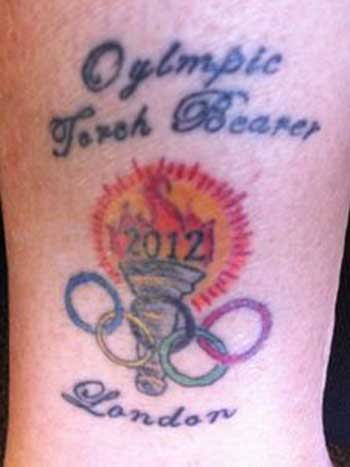
Jerri Peterson from Atlanta in the US, who got a new tattoo to celebrate her role in the Olympic torch relay, was shocked to discover it had been spelt incorrectly.
Jerri Peterson carried the torch through Derby on 30 June after being nominated by the hotel chain she worked for.
When she arrived back in the US, she decided to spend $10 on a tattoo to mark the occasion.
It was only hours later she spotted it featured the mis-spelling “Oylmpic”.
Jerri Peterson was shocked to discover that her Olympic tattoo had been spelt incorrectly
Jerri Peterson was one of 70 international employees selected by her firm to take part in the relay as a thank you for her years of charity work.
She said: “I always wanted to have a tattoo but I never quite felt passionate about any one thing to have it put on my body permanently.
“So when I was selected for this wonderful honor, I thought <<that’s it – I’m ready to have my tattoo>>.”
She booked a session with a “really good” tattoo artist in her home state of Georgia, and took a friend along for moral support.
Initially she was delighted with how it looked and it was only when she sent a photo of the tattoo to a friend that the spelling mistake was pointed out.
She said: “I looked at it and I was so disappointed. I called my husband and he giggled a little bit.
“Then I started laughing about it and I’ve laughed ever since.”
Jerri Peterson pointed out the mistake to the tattoo artist responsible but declined his offer to correct it.
She said: “He felt so bad when he found out.
“He wanted to fix it but I decided I want to keep it. It’s fine.