Samsung has admitted it made a mistake in releasing a software update that removed the search function from international versions of its Galaxy S3 smartphone.
The “stability update” disabled the Galaxy S3’s ability to search the web, contacts, apps and other on-device material through a single interface.
The move had been thought to be linked to Apple’s claim that the innovation infringed one of its US patents.
Samsung said a fix was imminent.
“The most recent software upgrade for the Galaxy S3 in the UK included the inadvertent removal of the universal search function,” it said in a statement.
“Samsung will provide the correct software upgrade within the next few days.”
The "stability update" disabled the Galaxy S3's ability to search the web, contacts, apps and other on-device material through a single interface
Users who downloaded the update had not been warned that it would remove the advanced search function when the software was installed on GT-i9300 (S3) models available in the UK and other places outside the US.
It appears the firm meant only to prevent some US models from being able to use a Google-powered search tool to show information sourced from within the phone’s memory in its results.
Apple has claimed the technology infringed its patent to a unified search interface which it uses in its Siri app to collate results from a range of sources.
The iPhone maker has launched a lawsuit over the matter in the US and had briefly secured a sales ban of another Samsung handset – the Galaxy Nexus – on the basis that the inclusion of the feature threatened “irreparable harm”.
A Washington-based court will review the case on 20 August.
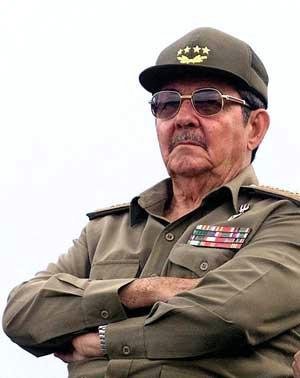
Cuba’s President Raul Castro has made a seemingly impromptu address at a Revolution Day ceremony and said he is willing to hold talks with the US.
Raul Castro, who had not spoken at the event for the past two years, grabbed the microphone to address the crowd in the eastern province of Guantanamo.
The president said he would hold talks with the US, as long as it was “a conversation between equals”.
The two countries have not had diplomatic relations for five decades.
Raul Castro said the offer had already been made through diplomatic channels and that no topic was off limits.
“Any day they want, the table is set,” Raul Castro said.
Cuba’s President Raul Castro has made a seemingly impromptu address at a Revolution Day ceremony and said he is willing to hold talks with the US
He said he was prepared to discuss “the problems of democracy, human rights etc. But on equal terms because we are no-one’s colony”.
Cuba would remain independent and free, he said, and nothing like the uprisings in Libya or Syria, backed by foreign forces, would happen in the country.
If the US wanted confrontation, he quipped, then it should be in baseball or some other sport.
“Preferably baseball when sometimes they win, sometimes we do,” he said.
Turning to internal matters, he said that social and economic reforms within Cuba would go on “little by little”.
The annual ceremony marks the 59th anniversary of the failed storming of the Moncada military barracks, often considered the beginning of the revolution led by his brother Fidel Castro.
Fidel Castro frequently used Revolution Day addresses to make major policy announcements.
This year’s main celebration began at dawn with music and speeches.
First Vice President Jose Ramon Machado Ventura said in a keynote address that Havana would continue efforts to shut down the US naval base there.
“We will continue to fight such a flagrant violation… we will never stop trying to recover that piece of ground,” he said.
Gabe Newell, Valve Software’s boss, has said that OS Windows 8 will be a “catastrophe” for PC game makers.
Speaking at the Casual Connect game conference in Seattle, Gabe Newell said the next version of Windows could mean big changes to the PC market.
Many took his comment as a criticism of the changed user interface in Windows 8 as well as its built-in Windows Store.
The Windows Store could dent the success of Valve’s own online market, Steam, through which players buy games.
Gabe Newell, who worked for Microsoft for 13 years on Windows, said his company had embraced the open-source software Linux as a “hedging strategy” designed to offset some of the damage Windows 8 was likely to do.
“We want to make it as easy as possible for the 2,500 games on Steam to run on Linux as well,” said Gabe Newell.
“Windows 8 is a catastrophe for everyone in the PC space.”
Gabe Newell, Valve Software's boss, has said that OS Windows 8 will be a "catastrophe" for PC game makers
The arrival of Windows 8 would be likely to drive some PC makers and others out of the business because it put so much pressure on their sales margins, Gabe Newell added.
He said the success of Valve, known for its Half Life, Left4Dead and Portal titles, had been down to the open nature of the PC.
“We’ve been a free rider, and we’ve been able to benefit from everything that went into PCs and the internet,” he told the conference.
“And we have to continue to figure out how there will be open platforms.”
However, he added, the openness that helped Valve as well as firms such as Google and Zynga could disappear with Windows 8.
“There’s a strong temptation to close the platform because they look at what they can accomplish when they limit the competitors’ access to the platform, and they say, <<That’s really exciting>>.”
This is seen by commentators to be a reference to the inclusion of a Windows Store in the Microsoft operating system.
This is a shop through which users will be able to buy apps for their Windows 8 device.
On some versions of Windows 8, it will be the only way to get downloadable software such as games.
Microsoft takes a cut, up to 30%, of every sale made through this store.
This could be a significant threat to the massively successful Steam online game store that Valve runs and which gives it a commission on every title sold through the online market.
A Windows Store closed to everyone but Microsoft might reduce the range of games available for sale through Steam.
Windows 8’s links with Microsoft’s Xbox Live online game service could also dent the appeal of Steam for many people.
Gabe Newell said Valve was preparing for the future in other ways. In particular, he said, it was trying to make tools and services that players could use to make games and gaming more fun for everyone.
“We think the future is very different [from] successes we’ve had in the past,” he said.
“When you are playing a game, you are trying to think about creating value for other players, so the line between content player and creator is really fuzzy.”
One harbinger of this future was perhaps found, he said, in the success of one Team Fortress player in Kansas who was earning $150,000 a year making virtual hats.
“This isn’t about video games,” he said.
“It’s about thinking about goods and services in a digital world.”
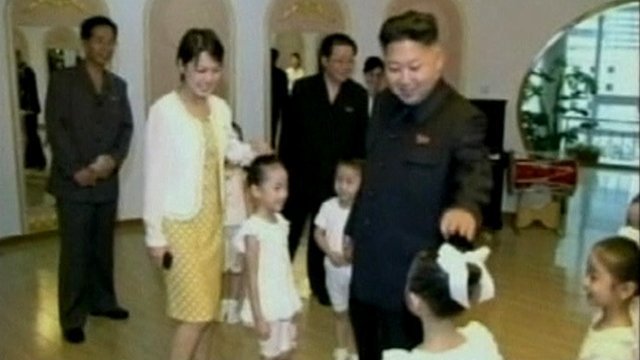
More details are emerging in South Korea about Ri Sol-Ju, the woman identified as the wife of North Korean leader Kim Jong-Un.
A lawmaker, quoting intelligence officials, said they believed Ri Sol-Ju had visited South Korea in 2005 and had studied singing in China.
Other news reports suggest that Kim Jong-Un may have spotted her at a musical performance.
North Korea has not given any details beyond saying she was Kim Jong-Un’s wife.
There had been speculation about Kim Jong-Un, who took over as leader of the country after the death of his father Kim Jong-Il last year, after he was seen with a woman on various occasions since June.
State media confirmed for the first time on Wednesday that leader Kim Jong-Un was married.
A lawmaker, quoting intelligence officials, said they believed Ri Sol-Ju had visited South Korea in 2005 and had studied singing in China
An eight-minute report on North Korean radio mentioning Ri Sol-Ju’s name was broadcast at 20:00 local time on Wednesday.
South Korean lawmaker Jung Chung-Rai told reporters following a briefing by intelligence agents that Ri Sol-Ju was from an ordinary family in Pyongyang.
Ri Sol-Ju may have visited South Korea in 2005 as part of the North’s cheerleading team for the Asian Athletics Championships, Jung Chung-Rai said.
The cheerleaders are seen wearing red baseball caps, twirling umbrellas and dancing in the stands with tambourines, television footage of the event shows.
Ri Sol-Ju is also likely to have “participated in several inter-Korean exchange programmes”, reports South Korean news ageny Yonhap.
The paper cited three separate events between 2003-2005 attended by someone from North Korea with the same name as Ri Sol-Ju, including the championships.
It remains unclear when the couple got married. Most South Korean reports suggest that Ri Sol-Ju may have been a singer who caught Kim Jong-Un’s attention during a performance.
A source told The Choson Ilbo newspaper that a singer with the same name as Ri Sol-Ju had performed with the Eunhasu Orchestra until last year.
At least two newspapers, including the Choson Ilbo, say that Ri Sol-Ju has been groomed as the first lady, possibly studying at Kim Il-Sung University.
Ri Sol-Ju’s Western-style dress and short cropped hair have led to speculation over whether Kim Jong-Un has a less traditional, more international outlook than his father.
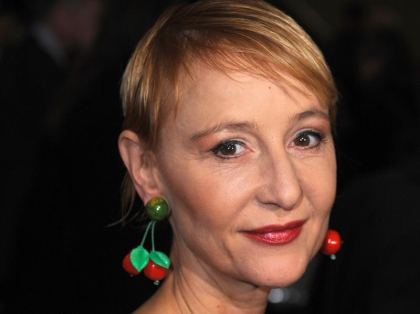
Susanne Lothar, one of German best-known film actresses with roles in such international hits as The Reader and The White Ribbon, has died aged 51.
A lawyer for Susanne Lothar’s family announced the actress had passed away on Wednesday, without specifying the cause of death.
Many associate her with the dark films of Austrian director Michael Haneke, such as Funny Games and The Piano Teacher, as well as The White Ribbon.
Susanne Lothar’s late husband, Ulrich Muehe, starred in The Lives of Others.
In a press statement, lawyer Christian Schetz said the family would give no details of the actress’s death “for understandable reasons”.
Susanne Lothar, one of German best-known film actresses with roles in such international hits as The Reader and The White Ribbon, has died aged 51
The Hamburg-born actress was one of the most celebrated German character actors of her generation, according to The Hollywood Reporter.
At the German Film Awards, the country’s equivalent of the Oscars, Susanne Lothar received four best actress nominations, and won once, in 1983, for her debut performance in Tankred Dorst’s film Eisenhans.
The White Ribbon (2009) garnered the Palme d’Or and Stephen Daldry’s The Reader (2008) won an Oscar.
On stage, Susanne Lothar acted at the Deutsches Schauspielhaus in Hamburg for many years.
A tribute in Germany’s Der Spiegel magazine by journalist Matthias Matussek, who knew her, describes her as “an actress who sought extremes both on stage and in front of the camera”.
“The theatre and cinema will be at a loss to know to whom they can now confide internal conflict, bravura, infinite vulnerability…” Matthias Matussek added.
Susanne Lothar and her husband Ulrich Muehe, who died in 2007 just a year after the release of the Oscar-winning Lives of Others, had two children.
Gu Kailai, the wife of disgraced Chinese political leader Bo Xilai, has been charged with murder, state news agency Xinhua has reported.
Gu Kailai and Zhang Xiaojun, employed at Bo Xilai’s home, were “recently” prosecuted by a Chinese court, Xinhua said, without giving further details.
She has been questioned over the suspected murder of British businessman Neil Heywood.
Gu Kailai, the wife of disgraced Chinese political leader Bo Xilai, has been charged with murder
Neil Heywood was found dead in a hotel in Chongqing on 15 November 2011.
Local officials initially said he died of excessive drinking, but the government announced in April it was investigating Bo Xilai’s wife in connection with the case.
The two are accused of poisoning Neil Heywood, Chinese media report.
Bo Xilai, the former high-flying leader of the south-western Chinese mega-city of Chongqing, was sacked in March and is under investigation for allegedly flouting Communist Party rules.
Bo Xilai’s downfall was triggered when his police chief, Wang Lijun, fled to the US consulate, reportedly to seek asylum after falling out with Bo over his investigation into the death of Neil Heywood.
Karl Lagerfeld, Chanel creative head, last night joined in with the countdown to London Games as he launched a new collection at Selfridges with a glittering bash.
He unveiled three collections under the Karl Lagerfeld brand: Karl and the premium line Karl Lagerfeld Paris, and a pop-up store selling unique designs created especially for Selfridges customers in honor of the Olympics under the moniker Team Karl.
But despite opening a store in time for the Games, Karl Lagerfeld said he would not be one of the billions from around the world tuning in to the event when it kicks off this week.
“I like the idea, I like the people, but the performances, they are something of a little unhuman now,” he said last night.
“I like the image and the idea better than to watch it.”
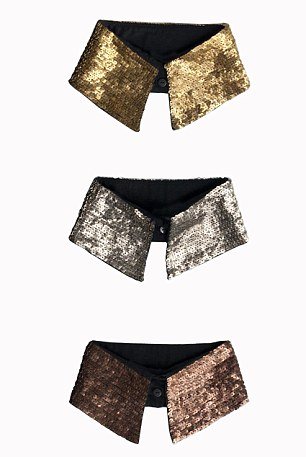
Highlights of the collection include gold, silver and bronze logos on T-shirts with Karl Lagerfeld's name on them, sunglasses in medal hues, and metallic trims in the form of glittering gold collars
The logo for the Team Karl range shows the designer standing in the traditional discus pose – an arm swung back about to throw the disc – but still wearing his trademark suit and powdered hair.
Highlights of the collection include gold, silver and bronze logos on T-shirts with Karl Lagerfeld’s name on them, sunglasses in medal hues, and metallic trims in the form of glittering gold collars.
“It’s a collection of today,” he said.
“So it’s the mood the way I see things, with a touch of humor and lightness in it.”
Dozens of tourists who shelled out $350 for an exclusive African safari at Walt Disney World in Orlando were sickened with a debilitating stomach virus that left them vomiting for days.
Health officials in Orlando, Florida, are working to track down the source of the mysterious bug, but they have not been able to determine what has made so many people ill.
The tourists were on the Wild Africa Trek, a VIP tour of Disney’s Animal Kingdom wildlife park that allows VIP guests to see hippopotamuses, crocodiles and other exotic animals up close as they sample food from Africa.
Disney has responded to the outbreak by making sure its employees are washing their hands more often and giving the tour a “deep clean” – scrubbing down any surfaces guests are likely to touch. The park is also encouraging them to wash their hands and use hand sanitizer, the Orlando Sentinel reports.
The Wild Africa Trek is a pricy tour Disney added 18 months ago to give some guests the opportunity to have a more personalized view of the Animal Kingdom
The Wild Africa Trek is a pricy tour Disney added 18 months ago to give some guests the opportunity to have a more personalized view of the Animal Kingdom.
Groups are no larger than 12 and tours last three hours.
A ticket to the safari costs up to $250, the Sentinel reports. That’s on top of the $100 ticket price just to enter Walt Disney World.
“The expedition is a true encounter with African creatures in their native habitat,” Disney touts on its website.
It includes a jaunt over a rickety rope bridge that crosses a river filled with crocodiles. Tour members are also suspended on an overhead track that gives them an aerial view of several of the sights in the park.
Some of the sickened customers said stomach cramps and vomiting for up to a week. A few said they had to be admitted to the emergency room to treat the horrible pain and nausea.
Most of the sickened tourists, though, said the virus passed within a few days and they thought little of it at the time.
Investigators with the health department are still trying to track down the source, though some of the tourists have said they were zeroing in on an infected pair of binoculars the tour members shared on the trip.
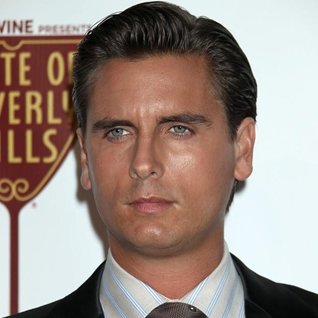
New revelations about a seedy, criminal past of Scott Disick could see him sent from the flock for good.
It’s being alleged that Scott Disick videotaped girls he had sex with when he was a teenager, and that he would also steal from them.
Model Brittany Reichek told Star magazine: “It’s true that Scott began videotaping himself having sex with girls when he was in his late teens, and then he’d steal from them!”
Brittany Reichek is a former friend of Scott Disick, who dated one of his closest friends for five years, she claims they were in the same social group.
It's being alleged that Scott Disick videotaped girls he had sex with when he was a teenager
“Scott and one of his buddies had a system,” Brittany Reichek, 29, told the magazine.
”They would pass themselves off as wealthy stockbrokers, pick up girls in the clubs in the Hamptons, get drunk with them, then take them back to their parents’ homes and claim the houses were their own.”
“When the time was right, Scott and his friend would go through their handbags and steal just about anything they could get their hands on,” including cell phones, camera, cash and even credit cards, she alleged.
Star continues to add that a representative for Scott Disick, 29, denies the claims but Brittany Reichek says that Scott and his friend “videotaped girls and stole from them more than 50 times in the years I was around him”.
She added: “I think Scott got as good a high just from the actual things he stole.”
It’s a terrible time for the accusation, as Scott Disick and Kourtney Kardashian are struggling to make their relationship work despite their daughter Penelope’s birth on July 8.
Two weeks after his second child’s birth Scott Disick enjoyed party weekend that included models not the mother of his children.
On Saturday July 21 Scott Disick started off in Malibu with a party for Camacho Cigars Beach House and the next day headed off to Miami where he spent the day with bikini clad girls in a VIP poolside cabana at the Delano Hotel.
Scott Disick was spotted drinking at the Setai bar then partying at nightclub LIV with friends and models until 4:00 a.m.
Katherine Jackson, Michael Jackson’s mother, has broken her silence after “deserting” her grandchildren for ten days – to claim she “wasn’t kidnapped” and “just needed a rest”.
Following days of escalating tensions amongst her feuding family Katherine Jackson, 82, was filmed by ABC News claiming: “There are rumors going around about me that I have been kidnapped… I am here today to let everybody to know that I am good and fine.
“My children would never do anything to me like that. It’s stupid.”
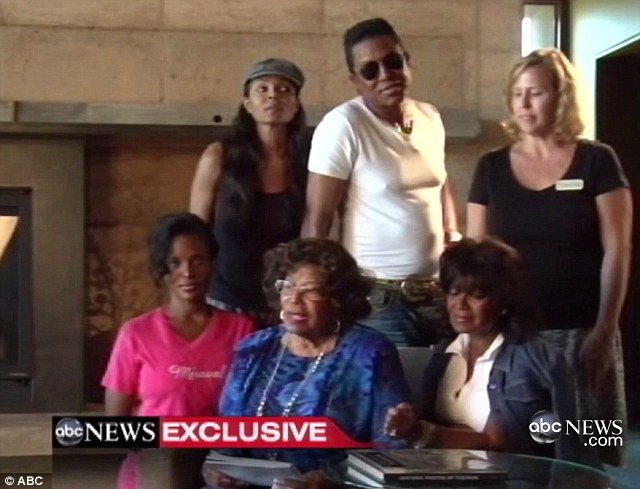
In a bizarre show of unity her children Jermaine, Janet and Rebbie stood close around an anxious Katherine Jackson as she read out a prepared statement at the luxury resort where she has been staying.
Katherine Jackson seemed confused at times, calling grandson Prince “my nephew”.
Earlier Katherine Jackson had lost custody of her late son Michael’s three children after a judge awarded temporary guardianship of the trio to their cousin Tito Jackson Jr., also known as TJ.
Michael Jackson’s children, Prince, 15, Paris, 14, and Blanket, 10, will be cared for by their 34-year-old cousin who had been staying with them in their grandmother’s absence.
Katherine Jackson said: “I am devastated that while I’ve been away, my grandchildren have been taken away from me and I’m coming home.”
And she claimed the move was “based on a bunch of lies”.
But Katherine Jackson failed to explain why she hadn’t notified her three wards of her intention to take a “short vacation and rest”.
“One reason I didn’t call is I just gave up my phone and I didn’t want to have any phone calls while I was here,” Katherine Jackson said.
She also confirmed that she had left her grandson TJ in charge.
The film crew was told they were not to ask Katherine Jackson any questions as she read the statement.
At one stage Janet and Jermaine Jackson exchanged glances and whispered.
Katherine Jackson also explained that her assistant had been in contact with her grandson Prince.
“He said everything was going fine back home,” she said.
“Still I think about the children… worry about them but they’re fine.”
Katherine Jackson then confirmed reports that she had spoken to her grandchildren after ten days without contact.
“I told them I would come home today and they’re waiting for me to come,” she said.
Bizarrely Katherine Jackson also repeatedly thanked the resort where she had been staying, adding: “I had a very good time here – and if anyone wants to rest I think they should come here.”
The latest feud between the Jacksons is said to have been stemmed from a dispute over Michael Jackson’s $500 million will.
Michael Jackson died in June 2009 at age 50 and left his estate to care for his mother and three children. He left nothing to his father or siblings, who have repeatedly tried to intervene in the estate.
Several have expressed doubts about the validity of his will, although the courts have rejected this.
Following yesterday’s ruling TJ, the son of Michael’s brother Tito, will now get access to funds from the estate in order to care for the children, who are said to be in favor of him being their temporary guardian.
Jermaine, Janet and Rebbie stood close around an anxious Katherine Jackson as she read out a prepared statement at the luxury resort where she has been staying
Katherine Jackson’s statement to ABC News
On the “kidnapping”:
“There are rumors going around about me that I have been kidnapped and held against my will.
“I am here today to let everybody know that I am fine and I am here with my children, and my children would never do a thing to me like that, holding me against my will.
“It’s very stupid for people to think that.”
On the loss of custody of her grandchildren:
“I am devastated that while I’ve been away, that my children, my grandchildren, have been taken away from me, and I’m coming home to see about that, also.”
Who was looking after her grandchildren?
“Before I left I put everything in order with the appropriate people to take care of my children for me and it’s really bad to hear that what’s going on at home, and the children have been taken away – but I know that… I’ll get there in time to get them back.
“And after I finish this, I will be on my way home.”
Where did she go?
“I am grateful for my children that they saw that I needed rest and they wanted to take me away for a while, just a short vacation and rest up.
“They have taken good care of me and have made sure that I got the rest that I needed.”
Why didn’t she call?
“One reason I haven’t called is I just gave up my phone and I didn’t want to have any phone calls while I was here.”
The $500 million fight for Michael Jackson’s fortune:
What’s at stake:
A recent financial summary showed that Michael Jackson’s estate has earned almost $500 million in gross profits since his death, and many of his major debts have either been resolved or are no longer delinquent.
Key players:
Katherine Jackson
• Beneficiary of Michael’s Jackson’s estate and legal guardian of his three children. She was reported missing over the weekend but later found to be with her daughter Rebbie and other relatives in Arizona.
• Her lawyer claims a plan has been in place for the last three years to remove Katherine Jackson from her home and her beloved grandchildren. Last reported whereabouts – an Arizona spa.
Prince Michael, Paris and Blanket
• Michael Jackson’s three children are set to inherit his $500 million estate when Katherine Jackson dies. None of Michael Jackson’s eight siblings were named in will. Michael Jackson’s kids are seeking contact with their grandmother Katherine, who they have not spoken to in nine days.
• Targeted in an “ambush” by uncles and aunt (Janet, Jermaine and Randy) last night.
Janet, Randy, Rebbie and Jermaine Jackson
• Claim that the King of Pop’s will was a fake and that the executors of his lucrative estate should step down.
• Pressuring Katherine Jackson to seek permission from a judge to investigate the will’s validity.
• Letter penned by siblings on July 17 claims Katherine Jackson was being manipulated by the executors, John Branca and John McClain, her health had been affected, and she suffered a mini-stroke.
• Randy and Jermaine had both previously asked their brother Michael Jackson’s estate to pay their child support, hinting at financial motives behind plot. The request was denied.
Tito Jackson
• He also signed the July 17 letter but has today backed out of plot and says he’s renounced any intention to challenge validity of his brother’s will.
Marlon Jackson
• Not part of plot to challenge brother’s will. Claims he has been cut off from contacting Katherine Jackson and in an interview with The Insider today he declared: “I’m going to get to the bottom of this.”
On the fence
• Michael Jackson’s father Joe Jackson and remaining siblings La Toya and Jackie Jackson have not made their allegiances clear. Although sources say Jackie is “furious” at his squabbling siblings
Tito Junior, son of Michael Jackson’s brother Tito
• Tito Jr., also known as TJ, has been awarded temporary custody of Prince Michael, Paris and Blanket while Katherine Jackson is away. The 34-year-old is married and used to date Kim Kardashian.
Trent Jackson, Joe Jackson’s nephew
• He has sided with his young cousins Paris, Blanket and Prince Michael. Involved in alleged physical altercation with Jermaine and Randy at Calabasas compound last night.
European Commission President Jose Manuel Barroso is heading to Athens for talks on Thursday amid concern over whether Greece has done enough to get its next tranche of bailout loans.
It is his first visit for three years and he is expected to say the EU wants Greece to stay in the eurozone.
But there will be tough talking behind the scenes, analysts say.
Greece’s international lenders are also in Athens in an attempt to get deficit cutting measures “back on track”.
After months of political deadlock and two general elections earlier this year, Greece is struggling to meet the economic targets it has accepted as a condition of its bailouts.
Jose Manuel Barroso is heading to Athens for talks on Thursday amid concern over whether Greece has done enough to get its next tranche of bailout loans
Inspectors from the EU and the IMF are trying to work out whether or not Greece has done enough to receive its next tranche of loan money.
The European Commission says the country’s financing needs will be met in August, but a decision on further payments will have to be made in early September.
Without sufficient progress, it may not receive the final part of its bailout worth 31.5 billion Euros ($38 billion).
Earlier in the week, Prime Minister Antonis Samaras said Greece would suffer a much deeper recession than thought this year.
He expects the economy to shrink by 7%, greater than the 5% forecast by the crisis-hit country’s central bank.
Antonis Samaras said Greece would not return to growth until 2014.
He is expected to ask for more time to repay its loans.
Jose Manuel Barroso’s visit is overdue as Greeks often complain about European political leaders who spend plenty of time talking about them, and not much talking to them.
The Commission president is unlikely to be out and about shaking hands, but at least he will be in Athens to speak directly to the Greek people.
Jose Manuel Barroso’s spokesman said the purpose of his visit was “to meet Antonis Samaras and discuss the overall economic situation in Europe and in particular in Greece”.
He said it was “a regular meeting” and that the preparation for the talks had been “under discussion for some time”.
A new research has contradicted the idea that exercise is more important than diet in the fight against obesity.
A study of the Hadza tribe, who still exist as hunter gatherers, suggests the amount of calories we need is a fixed human characteristic.
This suggests Westerners are growing obese through over-eating rather than having inactive lifestyles, say scientists.
One in 10 people will be obese by 2015.
And, nearly one in three of the worldwide population is expected to be overweight, according to figures from the World Health Organization.
The Western lifestyle is thought to be largely to blame for the obesity “epidemic”.
Various factors are involved, including processed foods high in sugar and fat, large portion sizes, and a sedentary lifestyle where cars and machines do most of the daily physical work.
A study of the Hadza tribe, who still exist as hunter gatherers, suggests the amount of calories we need is a fixed human characteristic
The relative balance of overeating to lack of exercise is a matter of debate, however.
Some experts have proposed that our need for calories has dropped drastically since the industrial revolution, and this is a bigger risk factor for obesity than changes in diet.
The study, published in the PLoS ONE journal, tested the theory, by looking at energy expenditure in the Hadza tribe of Tanzania.
The Hadza people, who still live as hunter gatherers, were used as a model of the ancient human lifestyle.
Members of the 1,000-strong population hunt animals and forage for berries, roots and fruit on foot, using bows, small axes, and digging sticks. They don’t use modern tools or guns.
A team of scientists from the US, Tanzania and the UK, measured energy expenditure in 30 Hadza men and women aged between 18 and 75.
They found physical activity levels were much higher in the Hadza men and women, but when corrected for size and weight, their metabolic rate was no different to that of Westerners.
Dr. Herman Pontzer of the department of anthropology at Hunter College, New York, said everyone had assumed that hunter gatherers would burn hundreds more calories a day than adults in the US and Europe.
The data came as a surprise, he said, highlighting the complexity of energy expenditure.
But he stressed that physical exercise is nonetheless important for maintaining good health.
“This to me says that the big reason that Westerners are getting fat is because we eat too much – it’s not because we exercise too little,” said Dr. Herman Pontzer.
“Being active is really important to your health but it won’t keep you thin – we need to eat less to do that.
“Daily energy expenditure might be an evolved trait that has been shaped by evolution and is common among all people and not some simple reflection of our diverse lifestyles.”
Mary Tamm, Doctor Who star, who played companion Romana alongside Tom Baker, has died aged 62.
Mary Tamm, who was born in Bradford, West Yorkshire, fought a long battle with cancer and died in hospital in London.
Agent Barry Langford, who confirmed the news, said the actress had a “zest for life”.
Mary Tamm’s stage and screen career also included films The Odessa File and The Likely Lads, as well as recurring roles in EastEnders and Brookside.
Mary Tamm, Doctor Who star, who played companion Romana alongside Tom Baker, has died aged 62
“She was a fantastic actress,” said Barry Langford, who was her agent for 22 years.
“She played stage parts of such range, parts that would take your breath away. She could play any role, and do so wonderfully.”
Mary Tamm, who lived in London, had been suffering from cancer for 18 months.
She trained at Rada and after starting out at the Birmingham Repertory Theatre, alongside Derek Jacobi, Joan Sims and Ronnie Barker, she then moved on to television work and film.
Mary Tamm’s first feature film was Tales That Witness Madness with Kim Novak, and she recently starred in Wire in the Blood, Paradise Heights and Jonathan Creek on TV.
Her stage work included the role of Amanda in Private Lives and Beverley in Abigail’s Party.
Mary Tamm leaves behind husband Marcus Ringrose, daughter Lauren and seven-year-old grandson Max.
Her agent Barry Langford revealed that Mary Tamm had been saddened by the recent deaths of contemporaries Elisabeth Sladen, who played Sarah Jane Smith in Doctor Who, and Angharad Rees, who died last weekend.
Barry Langford said: “All of these people who she knew were going.”
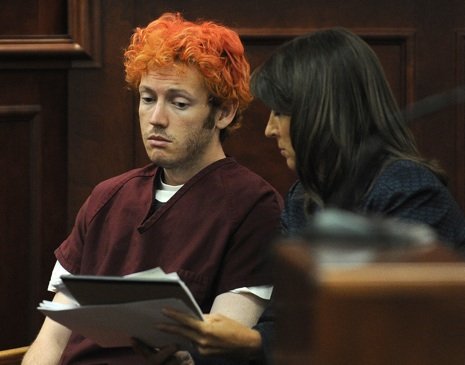
James Holmes, the man suspected of shooting 12 people dead at a Colorado cinema last week, sent a notebook describing a massacre to a psychiatrist at his university, according to US media reports.
It contained crude drawings of stick figures and descriptions of an upcoming attack, US news outlets say.
The University of Colorado, Denver, has confirmed that it received a suspicious package that it has handed to police.
James Holmes, 24, is being held over the massacre at the cinema in Aurora.
The reports emerged as the first funeral of the 12 victims was held.
James Holmes sent a notebook describing a massacre to a psychiatrist at his university
Gordon Cowden, 51, was the oldest of those killed. His teenage children were also in the theatre during the shootings but emerged uninjured.
Fox News, citing an unnamed law enforcement source, was first to report that the suspect had allegedly posted the notebook.
According to the network, it contained “full details about how he was going to kill people, drawings of what he was going to do in it, and drawings and illustrations of the massacre”.
Other outlets also quoted unnamed sources as saying that James Holmes, who was preparing to quit his studies, had sent a package to the university.
But the college itself appeared to contradict media reports that the package had been sent before the massacre, and that it had remained unopened for days.
Officials at the university’s Anschutz Medical Campus said it had received a suspicious package on Monday that was immediately investigated and turned over to authorities within hours of its delivery.
The FBI refused to comment on the record about the reports, a day after a judge issued a gagging order limiting what officials can say about the case.
James Holmes was a neuroscience PhD student at the college until he took steps last month to leave the programme.
Many remain in hospital after the shootings, with several in critical condition.
Denver-area hospitals that are treating survivors said on Wednesday they would eliminate or limit medical bills for the casualties, some of whom had no medical insurance and faced huge costs.
A court in Los Angeles has decided to give temporary guardianship of Michael Jackson’s three children to their cousin, Tito Jackson Jr.
The children’s grandmother Katherine Jackson has been their guardian since the singer’s death in 2009.
However, Judge Mitchell Beckloff made the decision after concerns were raised over Katherine Jackson’s absence from the family home.
Reports of a rift in the Jackson family have emerged in recent days.
Police were called to Katherine Jackson’s home on Monday as a result of a “minor scuffle” reportedly involving two members of the Jackson family.
A court in Los Angeles has decided to give temporary guardianship of Michael Jackson's three children to their cousin, Tito Jackson Jr
Three of Michael Jackson’s siblings and his children, Paris, 14, Prince Michael, 15, and 10-year-old Prince Michael II (also called Blanket) were present at the time.
That came days after Katherine Jackson was reported as missing. On Tuesday, Paris Jackson tweeted that she hadn’t seen her grandmother for nine days.
There have been conflicting claims about her wellbeing and whereabouts, with pictures emerging of her later with relatives in Arizona.
Questions were raised at the Los Angeles hearing about whether Katherine Jackson was being held against her will, with Tito Jackson Jr. telling the court he had had a conversation with his grandmother in which she used strange phrases and her words were “slurred”.
In addition to the change of guardian, Judge Beckloff also ordered that the children not be removed from the state of California.
However, he said there was no evidence that Katherine Jackson had done anything wrong and that he would restore her as the children’s guardian on her return, the Associated Press reports.
Michael Jackson died aged 50 of an overdose of the anaesthetic, propofol, in June 2009.
London Olympic organizers have apologized to the North Korean women’s football team after their images were shown on a screen beside a South Korean flag.
Kick-off at Glasgow’s Hampden Park on the first day of the Games’ sporting action was delayed for about an hour.
The men’s football competition gets under way with eight games later, including Britain v Senegal at Old Trafford at 20:00 BST.
The penultimate day of the torch relay sees the flame visit Buckingham Palace.
The flag mix-up at Hampden Park had been an “embarrassing mistake” and not the start Games organizers would have wanted, but “no great harm was done”.
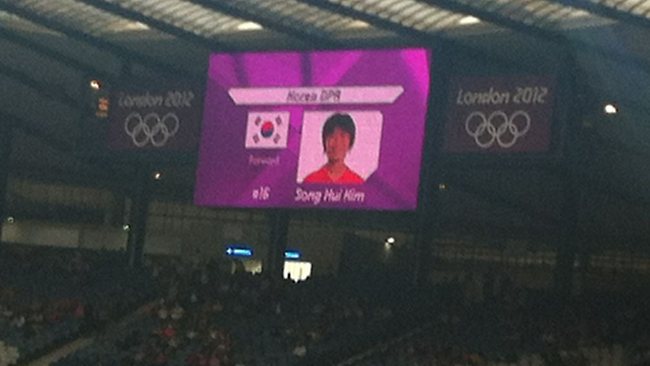
As the North Korean players were being introduced before the match against Colombia, South Korean flags were mistakenly displayed in the video package.
London Olympic organizers have apologized to the North Korean women's football team after their images were shown on a screen beside a South Korean flag
The squad walked off and could only be persuaded to return when the teams were announced again with each player’s face displayed next to the North Korean flag.
Relations between the two Koreas are tense – they remain technically at war following the 1950-53 Korean conflict, which ended in an armistice.
Speaking after the match, North Korea’s coach Sin Ui Gun said: “Our team was not going to participate unless the problem was solved properly…
“Unfortunately it took some time later for the broadcast to be done again properly and we made the decision to go on with the match.”
It was not immediately clear who had produced the video shown in the stadium.
A statement released by London 2012 organizers said: “We will apologize to the team and the National Olympic Committee and steps will be taken to ensure this does not happen again.”
London 2012 spokesman Andy Mitchell said: “The South Korean flag was shown in the video package on the screen before the kick-off and the North Koreans were naturally very upset about that…
“A genuine mistake was made for which we apologize.”
The opening match in the men’s football gets under way at 12:00 BST at Hampden Park when Honduras take on Morocco, followed by Spain v Japan.
Matches are also taking place at St James’ Park in Newcastle, Cardiff’s Millennium Stadium and the City of Coventry Stadium.
In other Olympics news:
• In the first event of the Games, Britain’s women footballers beat New Zealand 1-0 at the Millennium Stadium in Cardiff. This was one of six women’s football matches played on Wednesday
• Prince Charles and the Duchess of Cornwall visited the torch relay in Tottenham, north London, on Wednesday. On the torch relay’s penultimate outing – day 69, which can be followed live here – the flame will pass through Downing Street and be greeted at Buckingham Palace by Princes William and Harry, and the Duchess of Cambridge
• A global investment conference being held in London on Thursday will kick off a series of business summits intended to showcase the UK and attract investment during
Two more senior Syrian diplomats have defected amid mounting pressure on the regime of President Bashar al-Assad, the US has confirmed.
Syria’s representatives in the United Arab Emirates and Cyprus – who are husband and wife – are reported to have fled to Qatar.
It comes amid intensifying clashes in the key city of Aleppo, where troops are trying to halt a rebel advance.
UN members have traded more accusations of blame amid the diplomatic impasse.
Earlier, UN Secretary General Ban Ki-moon urged the world to “act now to stop the slaughter”, but Security Council members remain deadlocked over what action it should take.
The Syrian government has rushed troops and tanks to Aleppo, Syria’s second city and commercial centre, parts of which were seized by rebels.
The heightening of the crisis is causing regional concern, say correspondents, amid a growing exodus of refugees and fears the fighting could draw in Syria’s neighbours.
Syrian diplomats’ defection comes amid intensifying clashes in the key city of Aleppo
“We can confirm the defections of Syrian ambassadors to both the UAE and Cyprus,” White House spokesman Jay Carney told reporters aboard Air Force One.
Jay Carney said the move showed that “senior officials around the Assad inner circle are fleeing the government because of the heinous actions taken by Assad against his own people, and the recognition that Bashar al-Assad’s days are numbered”.
The diplomats in question are Lamia al-Hariri, Syria’s charge d’affaires in Cyprus, and her husband Abdelatif al-Dabbagh, ambassador to the UAE.
A military attaché at the Syrian embassy in Oman – Mohammed Tahseen al-Faqir – is also reported to have defected.
Earlier this month, Nawaf Fares, Syria’s ambassador to Iraq, left for Qatar.
A senior state department official told AFP news agency: “These defections serve as a reminder that the bottom is starting to fall out of the regime. It is crumbling and losing its grip on power.”
Aleppo is now the focus of a battle which neither regime nor opposition forces can afford to lose.
He says restive neighbourhoods are being pounded by artillery, mortars and helicopter gunfire, and there are multiple reports of reinforcements heading to the city.
One activist based in the city, Mohammed Saeed, told Associated Press news agency they were expecting a big assault to try to reassert government control.
Adrien Jaulmes, of French newspaper Le Figaro, said that many people had fled Aleppo and others remained off the streets and in their homes.
“All afternoon, helicopters and Syrian jet fighters have been circling above the city, with the Free Syrian Army fighters firing at them with all the weapons they have,” he said, adding that the situation remained fluid and difficult to assess.
The fighting has caused renewed regional concern, with Turkey tightening its border controls with Syria, though it says it will allow refugees to get through.
Thousands of refugees have already sought shelter in Turkey, Lebanon, Jordan and Iraq.
Meanwhile, AP reported Israelis were rushing to get government-issue gas masks on Wednesday, following a Syrian threat on Monday that it would employ chemical weapons against external attackers.
On Wednesday, the UN’s Ban Ki-moon urged world leaders to halt the slaughter in Syria.
But further bitter accusations of blame followed within the UN Security Council, which has seen three resolutions blocked by Russia and China.
“The Syrian people will pay the price for this failure [to act],” Germany’s UN ambassador Peter Wittig told a Security Council debate on the Middle East on Wednesday.
But Russia envoy Vitaly Churkin retorted that pledges by some Western powers to take steps to support the Syrian opposition outside the council “contributes and leads to an escalation of confrontation”.
Greek Olympian triple jumper Voula Papachristou has been expelled from her country’s Olympic team over comments she posted on Twitter which were deemed racist.
Voula Papachristou was due to compete in the London 2012 Games, which officially start this Friday.
But the Hellenic Olympic Committee said her posts mocking African immigrants and expressing support for a far-right party went against the Olympic spirit.
Voula Papachristou has apologized for the “unfortunate and tasteless joke”.
As well as the comment on Sunday referring to the West Nile virus and Africans living in Greece, Voula Papachristou had also reposted a tweet by Ilias Kasidiaris, a politician with the far-right Golden Dawn party, criticizing Prime Minister Antonis Samaras’s stance on immigration.
She had previously retweeted several links to videos promoting the views of Golden Dawn, which won 7% of the vote in Greece’s recent elections, and had directly communicated online with Ilias Kasidiaris.
Ilias Kasidiaris gained notoriety for slapping one left-wing woman politician and throwing water over another, during a heated debate on a television show.
Triple jumper Voula Papachristou has been expelled from Greek's Olympic team over racist comments she posted on Twitter
Voula Papachristou tweeted him on his name day last week: “Many happy years, be always strong and true!!!”
The athlete’s remarks had prompted calls from the public and within the Greek government for her to be thrown out of the team.
The head of the Greek committee, Isidoros Kouvelos, said the 23-year-old had “showed no respect for the basic Olympian value”.
“She made a mistake and in life we pay for our mistakes,” he told Skai TV.
Earlier in the week, Voula Papachristou had responded online, saying “that’s how I am” and that she was not like a stuck CD: “If I make mistakes, I don’t press the replay! I press Play and move on!”
But in a statement on her Facebook page and Twitter on Wednesday, Voula Papachristou said she was “very sorry and ashamed for the negative responses I triggered, since I never wanted to offend anyone, or to encroach human rights”.
She apologized to her friends, family, fellow athletes and the national team, but said it would not have been possible for her to compete if she did not support the values of the Games.
“Therefore, I could never believe in discrimination between human beings and races.”
The Greek committee said she had been “placed outside the Olympic team for statements contrary to the values and ideas of the Olympic movement”.
However, her coach George Pomaski said the punishment had been too harsh and she had already apologized.
“This is a big disappointment not only for her but for her family and for myself, and anyone involved in the Greek team,” he said.
George Pomaski said he had been unable to contact Voula Papachristou for several hours.
Greece is experiencing a sharp rise in racism, with the popularity of right-wing parties such as Golden Dawn soaring.
The government has come under pressure to crack down on racism in all domains, including sport.
The Olympic Charter
The Olympic Charter, established by Baron Pierre de Coubertin the founder of the modern competition, states that: “The practice of sport is a human right.”
Everyone should be able to play sport “without discrimination of any kind and in the Olympic spirit, which requires mutual understanding with a spirit of friendship, solidarity and fair play.”
The spirit of the games is about the power of sport over politics, where perseverance and hard work are paid off with medals; where ordinary people can become national heroes.
This ideology has been expanded over the years. In the words of the London2012 official education programme, Get Set: “The Olympic and Paralympic Games are about much more than sporting excellence.”
Madonna has spoken about an image used during her current MDNA tour which showed a swastika imposed onto the face of French politician Marine Le Pen.
The controversial symbol was included in a video accompanying the song Nobody Knows Me, as she performed in Paris.
It showed the face of Marine Le Pen, the leader of France’s National Front party, with a swastika on her forehead.
Interviewed for a Brazilian TV channel, Madonna said all images used were chosen “purposefully”.
“That film that was created is about the intolerance that we human beings have for one another and how much we judge people before knowing them,” she said.
Madonna has spoken about an image used during her current MDNA tour which showed a swastika imposed onto the face of French politician Marine Le Pen
France’s National Front party (FN) said it planned to sue the US singer following the use of the image at her concert in the Stade de France on 14 July.
The video had already appeared earlier in Madonna’s 30-nation MDNA world tour, sparking a warning from Marine Le Pen that she was considering legal action.
FN vice-president Florian Philippot said the party could not accept “such an odious comparison”.
But Madonna refused to edit the video and, speaking before her concert in Brazil, the singer said “all images in the video were chosen purposefully”.
“There seems to be a growing intolerance around the world. In Greece, France, everywhere people are trying to kick out all the immigrants, make people cover up and not show what their religious affiliation is.”
“Think about what’s going on in Russia towards the gay community,” she said.
“I’m calling attention to that intolerance and asking people to pay attention, to wake up to see how we are just creating more chaos in the world.”
Displaying the swastika image has not been the only controversy on Madonna’s MDNA tour.
During her show in Edinburgh on 21 July, Madonna defied warnings not to brandish a gun during her performance following the recent shootings at a cinema screening of Batman in Colorado.
Madonna said she believed it is an artist’s responsibility to call attention to world events “and to help bring people together”.
“Art is there to track what’s going on in the world, to make social commentary,” she said.
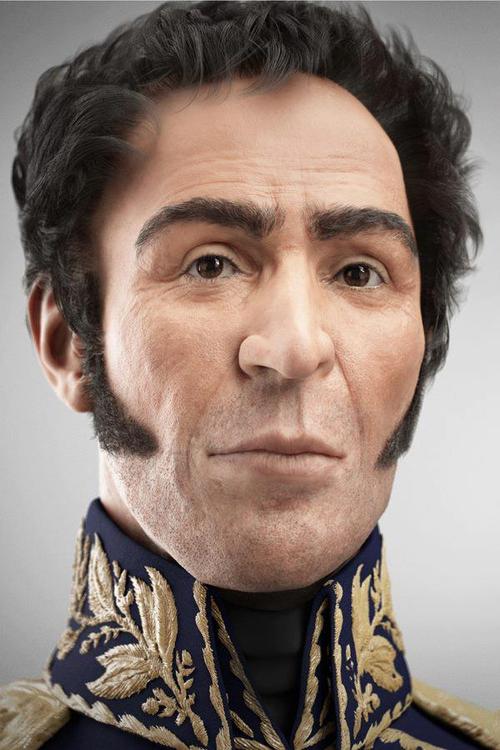
Venezuela’s President Hugo Chavez has unveiled a 3-D reconstruction of the face of Simon Bolivar, who died in 1830 after leading the fight against Spanish colonial rule in the region.
The computer-generated image was created by artists studying Simon Bolivar’s remains.
It looks remarkably like known portraits of the South American liberation hero.
Two years ago Hugo Chavez ordered that the remains should be exhumed.
Simon Bolivar was widely thought to have died from tuberculosis aged 47.
But Hugo Chavez had a theory that Simon Bolivar had been poisoned in revenge for his fight against the Spanish empire.
Forensic tests were inconclusive.
Hugo Chavez has unveiled a 3-D reconstruction of the face of Simon Bolivar
The 3-D image was unveiled at Miraflores presidential palace in the capital, Caracas, on the 229th anniversary of Simon Bolivar’s birth.
“Bolivar is the fight that does not end, he is born every day in ourselves, in his people, in the children, in the fight for life and for social justice,” said Hugo Chavez, a big admirer of the Venezuelan-born national hero.
“He was, is and will be one of the greats of humanity, a true giant of the human cause.”
Simon Bolivar’s remains will reside in a new mausoleum built in central Caracas. It was built with marble imported from South Africa and cost around $78 million.
Many cities in South America have monuments honoring the man known as The Liberator.
He began his fight against the Spanish empire in the early 1800s and after independence became the president of Gran Colombia, which covers much of modern Colombia, Panama, Venezuela, Ecuador and northern Peru.
A few years later, the Republic of Bolivia was created. Simon Bolivar became one of the few men to have a country named after h
President Hugo Chavez’s fascination with Simon Bolivar has been evident throughout his presidency.
In 1999, within a year of taking power he changed the country’s name from plain “Venezuela” to “the Bolivarian Republic of Venezuela”.
Hugo Chavez claims to be a political successor to Simon Bolivar, who fought for the establishment of a democratic state for people in South America.
President Hugo Chavez says his form of socialism is a continuation of these principles.
He may not be too impressed by the news that his opponent in this year’s elections, Henrique Capriles, is allegedly related to Simon Bolivar.
A Venezuelan genealogist claims Henrique Capriles is the descendent of Simon Bolivar’s illegitimate brother Juan Agustin.
Samsung has disabled Google local search function in an update to the international version of its flagship Galaxy S3 smartphone, following a patent dispute with Apple.
Once the software is installed the phones no longer search contacts, apps and other on-device material using software developed by Google.
Android Central, which revealed the news, noted that users were not told the update would disable the service.
It follows a similar move in the US.
Apple claims the innovation infringes its patent to a single search interface which it uses in its Siri app to collate results from a range of sources.
Apple had already managed to enforce a brief sales ban on another Samsung handset – the Galaxy Nexus – in the US because of the patent.
Samsung disables Galaxy S3 Google local search function following patent dispute with Apple
That dispute will be considered again by a Washington-based court on 20 August – but whatever the ruling, it would not have applied to the GT-i9300 (S3) model sold in the UK and other places outside the US.
A spokeswoman for Samsung was unable to provide more detail.
“Samsung may be doing this as a precautionary measure to prevent it having to pay damages on devices sold outside the US in case Apple prevails in the States and then pursues a similar suit elsewhere,” said Simon Clark, head of intellectual property at law firm Berwin Leighton Paisner.
“Generally speaking a multinational company like Apple will have patent protection in all its key countries, and the wording will be very similar in each area. Although patent law can vary across territories it’s quite likely that a ruling in one country will lead to similar decisions in others.”
The move marks the latest development in a long string of lawsuits between the two firms over the technologies and designs of their mobile devices.
Apple was defeated in a London court earlier this month when it tried to have Samsung’s Galaxy Tab tablets banned in the UK after it failed to convince a judge that the South Korean firm had copied the look of its iPad.
The California-based company was ordered to publish the fact that its competitor had not infringed its registered design on its website and in magazines as a consequence.
However, it was more successful in Germany on Tuesday when an appeals court in Dusseldorf extended a preliminary injunction against Samsung’s Galaxy Tab 7.7 across the EU because of a related claim.
The two firms are set to clash again in the US on Monday when a jury will hear patent infringement suits filed by both companies against the other.
According to a court filing posted on the Foss Patents blog, Apple is seeking $2.5 billion in lost profits and royalty fees but is offering a fraction of that amount – half a cent in damages for each handset it has sold that uses its rival’s technologies – to settle Samsung’s countersuit.
Samsung later responded with its own filing, alleging that Apple was trying “to stifle legitimate competition and limit consumer choice to maintain its historically exorbitant profits”.
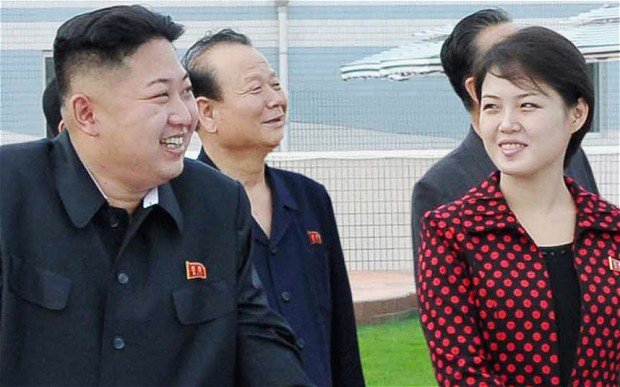
North Korean leader Kim Jong-Un is married, state media have confirmed for the first time.
Reports referred to Kim Jong-Un attending the opening of an amusement park with his wife, “Comrade Ri Sol-Ju”.
There had been much speculation Kim Jong-Un’s private life in recent weeks when an unidentified woman was pictured attending events with him.
Kim Jong-Un took over as leader of the country after the death of his father Kim Jong-Il in December last year.
The eight minute report on North Korean radio which mentioned Ri Sol-Ju was broadcast at 20:00 local time on Wednesday.
North Korean media reports referred to Kim Jong-Un attending the opening of an amusement park with his wife, "Comrade Ri Sol-Ju”
Analysts have been watching Kim Jong-Un and his inner circle for clues as to the direction in which they will take the isolated state.
Last week authorities performed a military reshuffle widely interpreted by analysts as an attempt to stamp the authority of the new leader on North Korea’s powerful army.
There is a North Korean singer by the name of Ri Sol-Ju but it has not been confirmed whether Kim Jong-Un’s wife is the same woman.
Ri Sol-Ju is thought to be the same “mystery woman” who accompanied Kim Jong-Un to several events in recent weeks and whose Western dress and hairstyle led some to speculate on the influence of Kim Jong-Ju’s brief European education.
South Korean media had previously speculated that the woman was another North Korean singer, Hyon Song-Wol.
The focus on Kim Jong-Un’s personal life has been intense – within minutes of the news breaking, Ri Sol-Ju’s name was trending on micro-blogging site Twitter.
Apple has announced that OS X Mountain Lion, the latest version of its Mac operation system, will be released on Wednesday.
OS X Mountain Lion makes it easier to share material to social networks and also introduces a notification panel similar to that found on many smartphones.
The news was revealed in the company’s third quarter earnings release.
Mac sales were 2% up on the year, but the results fell short of many analysts’ forecasts.
Apple’s shares dropped about 5% in after hours trading on Wall Street.
Apple has announced that OS X Mountain Lion, the latest version of its Mac operation system, will be released on Wednesday
Apple first announced the latest update to its operating system in February. The update continues a trend to introduce features to its desktop and laptop families that have already been implemented on its iPad and iPhone mobile devices.
These include the ability to upload and synchronize material with its iCloud internet storage service; the introduction of the iMessage service allowing text message-like chats between the firm’s computers and handsets; the ability to easily share material to Twitter; and an application to compare the user’s video game scores against those of their friends.
Apple has also taken steps to aid its expansion in China including the adoption of Baidu as a search service built into its web browser’s toolbar, and buttons to make it easy to share material to the Sina Weibo microblog, and the video sites Youku and Tudou.
However, the firm’s decision to keep its Mac system distinct from iOS for mobile devices is set to be challenged by October’s Windows 8 release by Microsoft.
Microsoft is offering users the chance to run the same system on both their tablets and desktop computers, making it easier to share software between them.
Windows 8 – and its touchscreen Metro apps – have been described by Microsoft as the biggest revision to its interface in over a decade. But one analyst said Mountain Lion was more of an incremental step forward.
“While there are a lots of new features this is not a major upgrade like the last version Lion was,” said Brian Blau, research director at tech research firm Gartner.
“But Apple has also been improving its Office-like software and creation applications along the way, so maybe it didn’t need such a big revision. And you have to bear in mind it is only charging $20 for the change.”
By contrast Microsoft is charging $39.99 for a Windows 8 upgrade, while Linux-based systems, such as Ubuntu and Debian, can be downloaded for free.
An 11-year-old boy from UK boarded a plane from Manchester to Rome on his own without a passport, tickets or boarding pass.
The boy got through a security screen by mingling with families going through Terminal 1 on Tuesday afternoon.
He was discovered while the Jet2 plane was in mid-air after passengers became suspicious.
A Manchester Airport spokesman said a number of airline staff had been suspended. The transport secretary said it was “incredibly concerning”.
The airport spokesman said the boy passed through security checks but was not asked to show any documentation.
The boy went straight to the nearest aircraft that was boarding – the flight to Rome – where he was also missed during a head-count on board the plane.
An 11-year-old boy from UK boarded a plane from Manchester to Rome on his own without a passport, tickets or boarding pass
The spokesman said: “It is clear that documentation has not been checked correctly at security and the boarding gate.
“The boy went through full security screening, so the safety of passengers and the aircraft was never compromised.”
Transport Secretary Justine Greening said: “I treat security breaches very, very seriously indeed, so we are now reviewing urgently with Manchester Airport, and indeed the airline, exactly what happened.”
A spokesperson for Jet2.com said: “On Tuesday an 11-year-old boy cleared security at Manchester Airport, without the necessary paperwork but had been through a full security search.
“The boy then boarded our flight bound for Rome.
“We have launched a full investigation into what is a serious incident, and the staff involved has been suspended pending the outcome.
“The boy has been returned safely to his family.”
It is believed the boy had earlier run away from home.
He stayed on board the plane when it landed at Rome Fiumicino Airport and was flown back to Manchester when the plane returned on Tuesday evening.