
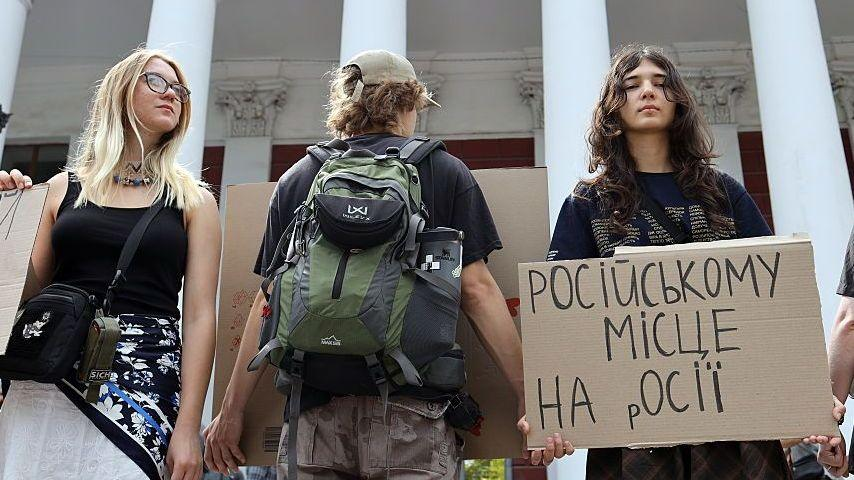
ODESA, Ukraine — In this legendary Black Sea port city, where the salty breeze has carried the melodies of Russian-language poetry and song for centuries, a profound and painful cultural fracture is reaching its zenith.
This week, Odesa’s city council will vote on a highly controversial proposal: a blanket ban on the Russian language across all public-facing artistic and cultural spheres. If passed, the measure will systematically erase Russian-language music, literature, theatrical performances, and public displays from streets, parks, libraries, and state-run entertainment venues. Crucially, it would also formally recommend that private businesses—including cafes, independent theaters, and galleries—enforce the same restrictions.
The stakes could not be higher or more deeply personal. Odesa remains a fundamentally, historically Russian-speaking city. For millions of Ukrainians, including a significant portion of the frontline soldiers currently bleeding to defend the country against Vladimir Putin’s forces, Russian is their first language. Yet, as Russian drones and missiles strike Odesa on a near-daily basis, the push to purge the language of the occupier is transitioning from a national legislative agenda into a localized cultural war.
“A Weapon of Russia” vs. “The Freedom to Speak”
Proponents view the ban as essential psychological self-defense, arguing that Russian culture is deployed to deconstruct Ukrainian identity, especially among the youth. Local activists and lawmakers characterize the language as an active Russian weapon, aligning the decolonization of public spaces directly with national security.
Conversely, prominent local artists warn that a sweeping ban benefits only the adversary by fracturing internal unity. Cultural commentators argue that the debate is fundamentally about liberty rather than linguistics, questioning the democratic values being defended if punitive measures take root against a city’s own population.
Erasing the Soundtrack of the Street
While existing national regulations target music produced inside the Russian Federation, Odesa’s proposed ordinance would go much further. It aims to ban local Russian-language street performances, historical maritime folk tunes, and public library displays. Implementing this hardline approach in a city historically shaped by prominent Russian-language literary figures presents a unique cultural challenge compared to other regions in western Ukraine.
A Polite Transition or a Forced Purge?
Linguistic habits remain stubborn amid the conflict; surveys show that even as classrooms transition entirely to Ukrainian, students often revert to Russian outside school walls. On Odesa’s streets, the native usage of Ukrainian remains low despite the ongoing war.
Educators and local thinkers advocate for a gradual, organic transition rather than punitive enforcement, arguing that making Ukrainian attractive to speak is far more effective than forcing a sudden silence. As Odesa approaches its crucial council vote, the decision represents a critical test of how a society balances wartime cultural identity with the democratic freedoms it claims to fight for.