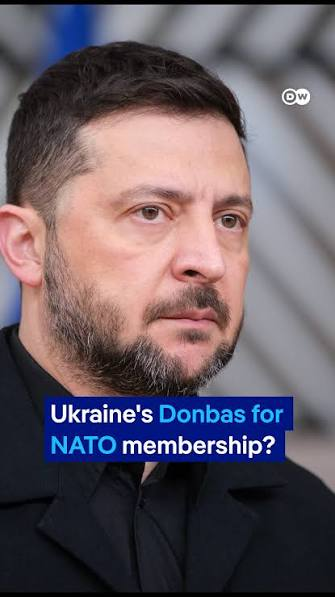
KYIV — In a startling disclosure that underscores the high-stakes diplomatic maneuvering surrounding the Russia-Ukraine war, Ukrainian President Volodymyr Zelenskyy revealed that American negotiators have floated the unprecedented idea of Kyiv withdrawing its remaining troops from the eastern Donbas region in exchange for NATO membership.
The revelation, released in remarks by Zelenskyy’s office on Saturday, November 14, 2026, follows a flurry of closed-door peace talks in Abu Dhabi and Dublin led by U.S. President Donald Trump’s special envoys—his son-in-law Jared Kushner and Middle East envoy Steve Witkoff. While Washington has not formally confirmed the offer, the proposal marks the first time U.S. officials have directly linked Ukraine’s long-sought entry into the Western military alliance with territorial concessions.
A Transactional Shift in Diplomatic Strategy
According to Zelenskyy, the hypothetical trade was pitched directly to him after Kushner and Witkoff returned from consultations in Moscow.
“The Americans raised a question: ‘What if Ukraine joins NATO? Would Ukraine withdraw from Donbas?'” Zelenskyy told reporters. “That is why I believe NATO is back on the agenda. But you have also heard Russian President Vladimir Putin’s signals, and this is an extremely difficult conversation.”
The concept represents a radical departure from NATO’s longstanding “open-door” policy and years of American resistance to admitting Ukraine while an active conflict rages. Currently, Russian forces occupy roughly one-fifth of Ukraine, including most of the industrial Donetsk and Luhansk regions that form the Donbas. Moscow has consistently refused to agree to a ceasefire unless Kyiv surrenders the remaining, heavily fortified portions of the Donbas that Russian troops have failed to capture on the battlefield.
For Zelenskyy, the prospect of trading sovereign soil to redraw European borders carries immense danger, warning that rewarding aggression with territory sets a precedent that invites future wars. He also flatly rejected Moscow’s demand that Ukraine enshrine permanent neutrality into its constitution.
Putting the Question to the People
While reiterating that Kyiv has no intention of surrendering its land or legally recognizing Russian occupation, Zelenskyy carefully left the door cracked open for a broader diplomatic bargain—provided Washington and its allies put ironclad commitments on the table.
The Ukrainian leader outlined specific conditions that would be required before he would even consider presenting such a compromise to his country:
- Binding Security Guarantees: Formal, legally binding defense commitments from the United States, NATO, and the European Union to prevent another wave of Russian aggression.
- Military Strength and Reconstruction: Guaranteed long-term financing to maintain a large, well-funded Ukrainian military alongside a comprehensive economic recovery package.
- A National Referendum: Zelenskyy stressed that he has no constitutional or moral right to cede territory unilaterally. If Washington and NATO formally confirm the membership offer and security package, he stated he would put the question directly to Ukrainian society in a public vote.
Skepticism in Moscow and Caution in Washington
Despite the headline-grabbing nature of the American probe, geopolitical analysts and diplomats remain deeply skeptical that the Kremlin would accept the trade. Putin launched the full-scale invasion in February 2022 citing Ukraine’s westward drift toward NATO as an existential red line. Having poured hundreds of thousands of troops and vast state resources into preventing NATO expansion on Russia’s border, Moscow is widely viewed as unlikely to accept Ukraine joining the alliance in exchange for territory it has already largely seized.
In Washington, administration officials kept their distance from Zelenskyy’s characterization of the talks. A U.S. official noted only that “many ideas continue to be discussed,” emphasizing that any final settlement must be mutually agreed upon by both Kyiv and Moscow. Kushner echoed that sentiment on social media, stating that while both sides continue to hold “maximalist positions,” serious work is underway to explore new frameworks.
Crucially, Zelenskyy confirmed that future rounds of negotiations will no longer sideline Ukraine’s closest continental backers. Following discussions at the European Political Community summit in Ireland, all sides agreed to bring a formal European delegation—comprising Britain, France, Germany, Italy, Poland, and EU officials—directly to the negotiating table. As winter approaches and Russian airstrikes continue to batter Ukraine’s energy grid, the diplomatic chessboard has shifted, forcing Kyiv to weigh an agonizing choice between its sovereign territory and its ultimate security.