
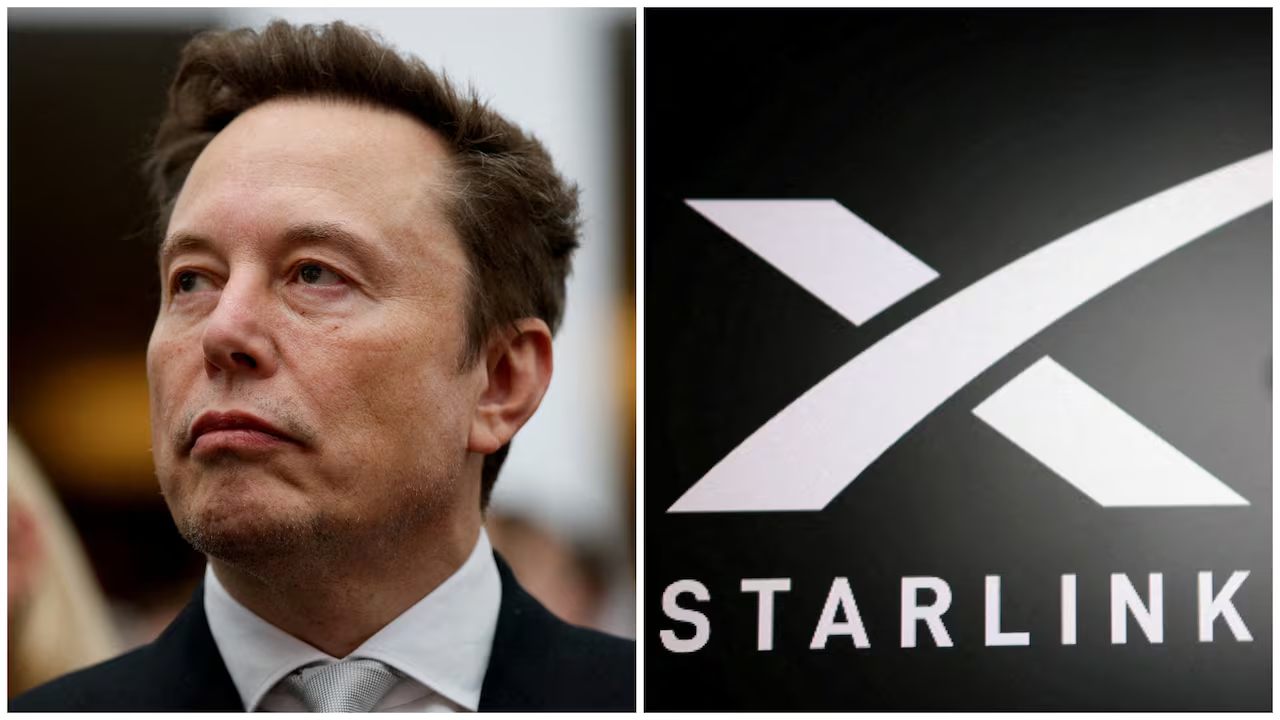
KYIV — On Saturday, October 24, 2026, tech billionaire Elon Musk acknowledged that his aerospace company, SpaceX, deliberately restricted Ukraine’s Starlink satellite internet service. The high-stakes admission came immediately after Ukrainian President Volodymyr Zelenskyy announced that front-line connectivity speeds had finally been restored after more than a week of devastating battlefield disruptions.
The revelation ends days of finger-pointing between Washington and Kyiv over who ordered the sudden restrictions. The connectivity limits severely degraded the logistics and defenses of the Ukrainian military against Russian jet-powered Shahed drones.
Closing the ‘Loophole’
Taking to his social media platform X, Musk claimed that the decision to throttle the network was triggered by Ukraine violating commercial terms of service. He asserted that the civilian satellite network was being improperly leveraged to execute lethal operations deep within Russian territory.
“Using Starlink, a civilian commercial service, for offensive drone strikes to kill people has never been allowed, nor should it be,” Musk stated. “Ukraine military violated Starlink terms of service and used it for offensive drone strikes to kill people. That loophole was closed last week.”
The disruption began on October 14, 2026, when Ukrainian drone units noticed a catastrophic drop in connectivity. Front-line commanders reported that any terminal or drone moving faster than 161 kilometers per hour (100 mph) instantly lost its satellite connection mid-flight, rendering high-speed interceptor drones useless.
While Musk took full responsibility for throttling the commercial Starlink network, he carefully distanced himself from the military-grade counterpart, Starshield. He maintained that the U.S. government exercises ultimate authority over Starshield’s operational parameters.
The Trump-Zelensky Crossfire
The satellite blackout occurred amid intensifying diplomatic friction between Kyiv and Washington. Tensions escalated following a controversial executive order signed by U.S. President Donald Trump that eased certain sanctions on Russia, allowing Moscow to resume international diesel sales.
Ukrainian officials viewed the policy shift as a betrayal that directly funds the Kremlin’s war chest. Simultaneously, the Trump administration had been pressuring Ukraine to cease its targeted drone strikes against Russian oil refineries.
Media reports indicated that Trump personally called Musk to address the digital gridlock. Trump publicly announced that he had instructed the tech mogul to lift the speed caps.
By Saturday morning, Ukrainian Defense Minister Evgeniy Khmara confirmed that combat units had successfully tested equipment at speeds exceeding 400 kilometers per hour, verifying that normal, stable operations had been restored.
The Fragility of Privatized Warfare
Ukrainian presidential adviser Serhiy Beskrestnov described Musk’s defense of the blackout as “very strange,” noting that the restrictions were handed down entirely without warning during active military operations.
The incident highlights a critical vulnerability for Ukraine, which remains profoundly dependent on a single private American corporation to sustain its wartime communications infrastructure. Musk heavily defended his company’s track record, pointing out that SpaceX has done far more to safeguard Ukrainian sovereignty than any other private enterprise.
However, Musk paired his defense with a sobering reality check regarding the power dynamics of the conflict:
“Starlink remains critical to the defense of Ukraine,” Musk warned. “Were Starlink to be turned off, the Ukrainian front line would collapse immediately. This is NOT a threat, it is simply a statement of fact.”
As a local ceasefire took hold around the severely damaged, Russian-occupied town of Oleshky—brokered in part by First Lady Melania Trump—and with trilateral peace talks between Washington, Kyiv, and Moscow scheduled for next month, the brief digital blackout serves as a stark reminder: in modern warfare, a single billionaire’s terms of service can instantly alter the frontline balance of power.