
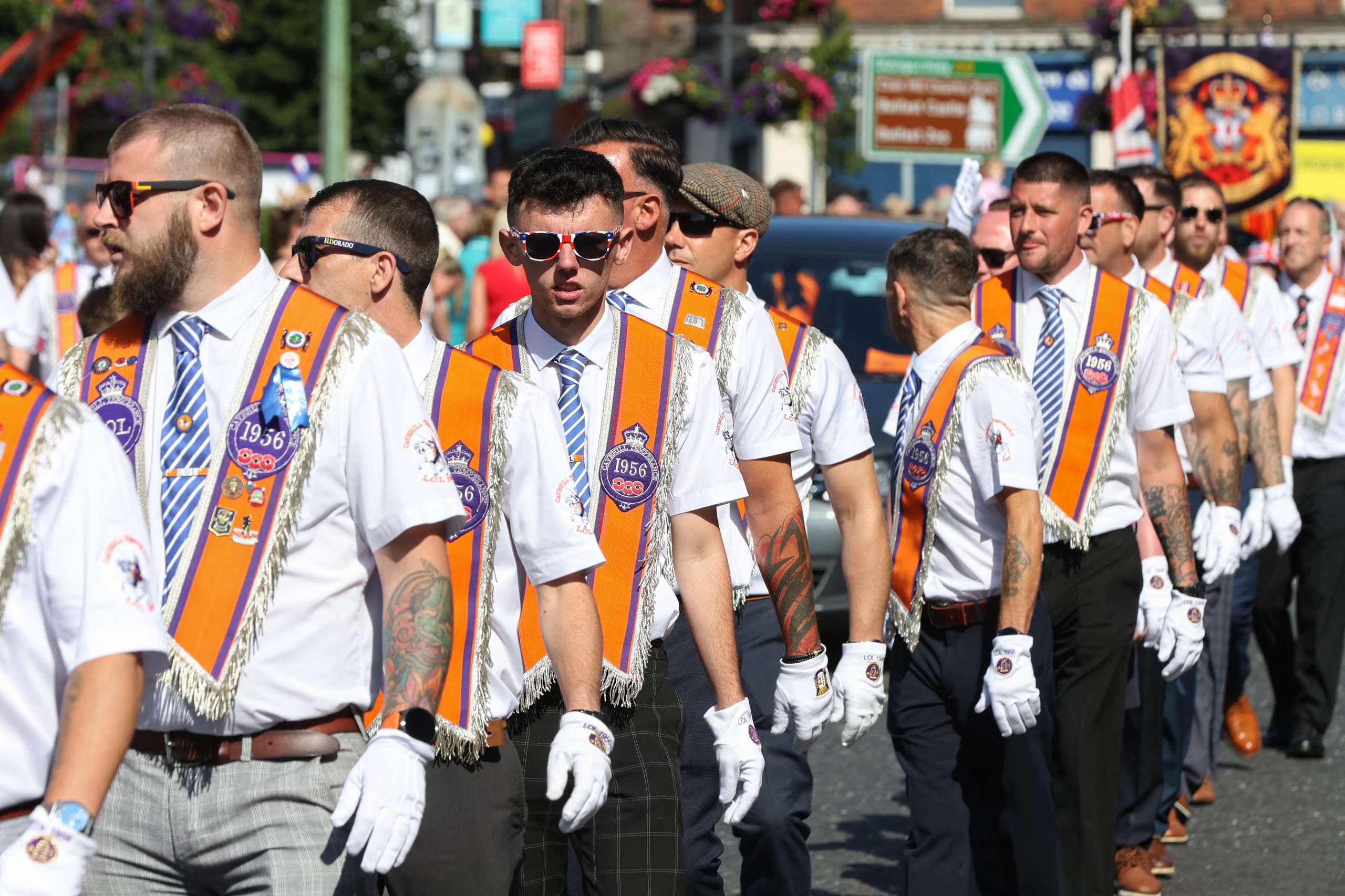
The Police Service of Northern Ireland (PSNI) has announced it cannot facilitate the highly contentious Drumcree parade, as nationalist protesters formed a human blockade on the Garvaghy Road to stop the procession. Hours after an unprecedented, 2:15 AM High Court ruling upheld permission for the Orange Order to march down the nationalist thoroughfare for the first time in nearly 30 years, the town of Portadown was plunged back into a familiar, high-stakes sectarian deadlock.
The Parades Commission had initially shocked the region on Friday by granting the Protestant fraternal organization permission to complete its traditional morning route. The decision broke an impasse that has stood uninterrupted since 1998. However, as Orangemen lined up outside Drumcree Church on Sunday morning, hundreds of Catholic residents sat down on the tarmac, forcing police officers to issue formal warnings to the crowd and bringing the historic march to an immediate standstill.
The Midnight Legal Drama
The return of the Drumcree march triggered 24 hours of intense legal maneuvering that stretched deep into the early hours of Sunday morning. Following the Parades Commission’s unexpected green light, the Garvaghy Road Residents Coalition (GRRC) launched an emergency appeal to block the procession.
In a time-limited, late-night sitting that legal teams described as completely unprecedented, Justice Michael Humphreys of the Belfast High Court officially dismissed the residents’ challenge at 2:15 AM. The court ruled that the commission’s initial determination had to be legally respected, giving loyalists the judicial clearance they had sought for three decades.
Unionist political leaders, including Democratic Unionist Party (DUP) MP Carla Lockhart, hailed the ruling outside the courthouse as a long-overdue victory for civil rights and traditional expression. Conversely, nationalist representatives warned that forcing the march through a community scarred by the violence of the 1990s was a recipe for systemic instability.
Stringent Conditions on a Historic Flashpoint
Recognizing the explosive history of the route, the Parades Commission attached severe restrictions to the parade in an effort to defuse local anxieties:
- Strict Capacity Limits: The parade was strictly capped at a maximum of 35 participants, including five named marshals.
- A Total Music Ban: No marching bands, drums, or musical instruments were permitted to accompany the walkers.
- No Triumphalist Displays: The commission explicitly banned the carrying of any traditional banners, flags, or organizational emblems.
- Time Restrictions: The entire walk from Drumcree Church to the Carleton Street Orange Hall was ordered to wrap up within a rigid 90-minute window.
During the height of the Troubles in the mid-1990s, disputes over the Drumcree parade sparked some of the most destructive rioting, roadblocks, and sectarian murders in Northern Ireland’s modern history. The annual standoffs almost derailed the fragile peace process, ultimately forcing the British government to create the Parades Commission in 1998 specifically to adjudicate contested routes.
A Broken Perimeter
The strict regulatory compromise failed to prevent a physical confrontation on the ground. Despite heavy rain and a massive deployment of armored police vehicles throughout Portadown, nationalist residents successfully mobilized to shut down the entry points to the Garvaghy Road before the 8:00 AM start time.
With the street completely obstructed by protesters, senior PSNI officers read out an official warning over loudspeakers, informing the crowd that participating in an unnotified counter-demonstration is a criminal offense. However, citing immediate public safety risks and the lack of a clear path, police leadership ultimately informed the Orange Order that the march could not safely proceed down the street.
Faced with the physical barrier, the participating Orangemen retreated back into the Drumcree Church hall to deliberate their next move. Decades after the army erected steel and concrete barricades to separate the two factions, the sudden collapse of Sunday’s march proves that while the courts can rewrite legal boundaries overnight, the deep-seated territorial and historical wounds of the borderlands remain entirely unresolved.