
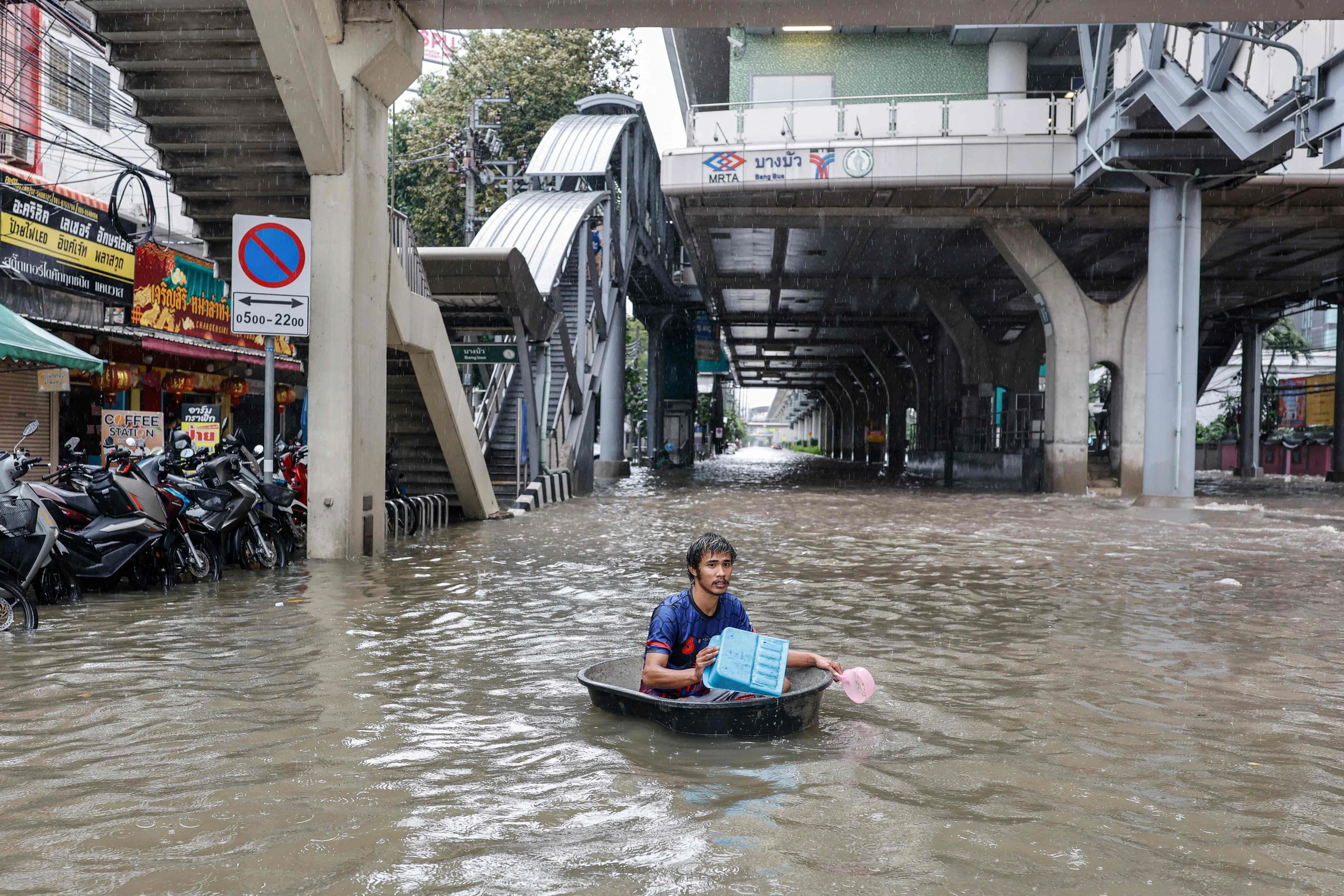
A catastrophic deluge has paralyzed Thailand’s capital, forcing municipal authorities to declare a flood emergency disaster across all 50 districts of Bangkok. After nearly three days of relentless, nonstop torrential rainfall that overwhelmed the city’s complex drainage systems, major transit arteries have been transformed into flowing rivers, submerging vehicles and trapping thousands of residents inside their homes.
Between Thursday afternoon and Sunday morning, parts of the metropolis were battered by more than 330 millimeters (13 inches) of rain—an extreme atmospheric event that quickly outpaced the city’s network of canals. Bangkok Governor Chadchart Sittipunt warned that the crisis poses an immediate threat to human life and public infrastructure, triggering an aggressive, multi-agency evacuation effort across the capital.
A Capital Submerged
The sheer velocity of the water has effectively split the famously congested city into isolated pockets. Floodwaters blocked main road traffic in dozens of critical locations, stalling public transit networks, delaying commercial flights, and bringing the local economy to a grinding halt.
In multiple hard-hit neighborhoods, residents awoke to find muddy canal water spilling over retaining walls and filling ground-floor living rooms, shops, and restaurants.
- Mass Evacuations: The Bangkok Metropolitan Administration reported that nearly 4,900 people have been urgently evacuated from their homes and moved into temporary emergency shelters.
- Widespread Displacement: An estimated 52,000 households within the city limits have been directly affected by the high waters.
- Stranded Comms: Emergency workers have been forced to deploy boats and high-clearance military vehicles to wade through waist-deep water to reach vulnerable residents.
“Our house was completely under water,” one resident told reporters after being rescued from a flooded alleyway. Around the city, essential supply lines faced immense pressure as supermarkets and convenience stores were heavily emptied by citizens bracing for prolonged isolation.
The Blueprint for Rescue
By extending the disaster zone declaration from a handful of vulnerable eastern suburbs to the entire municipal area, the city administration unlocked emergency funds and granted district offices special powers to bypass standard bureaucracy.
The Royal Thai Army has been deployed alongside municipal workers to establish makeshift field kitchens, distribute clean drinking water, and coordinate medical triage centers. Dozens of local schools that remain safely above the water line have been rapidly refitted to house displaced families.
The national crisis is unfolding far beyond the capital. Thai Prime Minister Anutin Charnvirakul abruptly cut short an international trip to return to Bangkok to oversee the emergency response. Nationwide, the Department of Disaster Prevention and Mitigation reported that more than 84,000 people across 21 provinces have been heavily impacted by the wider monsoon system.
A Slow, Agonizing Recess
While weather agencies noted that the heaviest downpours began to subside on Sunday morning, municipal engineers warned that the danger is far from over. The city’s canals remain at critical levels, severely limiting the ability of industrial pumps to flush the standing water back out toward the Gulf of Thailand.
The Bangkok Metropolitan Administration estimated that even if the weather holds, it will take at least two to three days of continuous pumping just to clear the main roads. With the threat of afternoon thunderstorms looming over the weekend, Governor Chadchart has urged citizens to remain indoors and instructed anyone living near the waterways to proactively move their belongings to upper floors. For a mega-city long warned to be highly vulnerable to rising sea levels and intensifying tropical monsoons, this weekend’s drowning streets offer a stark preview of an increasingly unstable climate reality.