Friday, January 30, 2026
Home Blog Page 6

Four Killed, Ten Wounded in ‘Targeted’ Shooting at Child’s Birthday Party in California

STOCKTON, CALIFORNIA—A child’s birthday celebration in Stockton, California, turned into a scene of unspeakable tragedy Saturday evening when gunfire erupted inside a banquet hall, leaving four people dead and at least ten others wounded, according to the San Joaquin County Sheriff’s Office.

Authorities are now scrambling to find the perpetrator of the mass shooting, which they have classified as a “targeted incident,” shocking a community already struggling with gun violence and leaving families devastated by the brutal interruption of a joyous occasion.


The Assault on a Family Gathering

The incident occurred shortly before 6 p.m. PT at a banquet hall on the 1900 block of Lucile Avenue. Sheriff’s Office spokesperson Heather Brent confirmed that 14 individuals in total were struck by gunfire. The victims included both juveniles and adults.

  • The Scene: Stockton Vice Mayor Jason Lee confirmed on social media that the gunfire occurred during a child’s birthday party, a detail that underscores the horrific nature of the violence.
  • Casualties: Four victims were confirmed deceased at the scene, and ten others were rushed to local hospitals, with at least one juvenile reported to be in fair condition, according to hospital officials.
  • Targeted Violence: “Early indications suggest this may be a targeted incident, and investigators are exploring all possibilities,” the Sheriff’s Office said in a statement. However, officials have not yet released details on the motive, the number of shooters involved, or the identities of the deceased.

The Community’s Grief

The tragedy has prompted an outpouring of grief and anger from local officials, who decried the violence striking a family celebration.

Stockton Mayor Christina Fugazi expressed her devastation, stating, “Tonight, heaven is a little bigger with the individuals—children and adults—that unfortunately did not make it. Families should be together instead of at the hospital, standing next to their loved one, praying that they survive.”

Vice Mayor Jason Lee echoed the sentiment, writing, “Tonight, my heart is heavy in a way that’s hard to put into words… A birthday party should never be a place where families fear for their lives.”

Hunt for the Suspect

As of Sunday morning, no arrests have been announced, and the suspected shooter remains at large, prompting a public plea from District Attorney Ron Freitas.

“If you have any information as to this individual, reach out immediately. If you are this individual, turn yourself in immediately,” Freitas urged.

The San Joaquin County Sheriff’s Office is calling on the public to assist in the investigation, stressing that community assistance and any video footage from the area are “vital” to identifying those responsible and bringing justice to the victims. California Governor Gavin Newsom has been briefed on the “horrific shooting” and is following the evolving situation closely.

The incident marks another grim addition to the rising toll of mass violence in the United States, tragically turning a moment of celebration into one of collective mourning for the city of Stockton.

Gaza Health Ministry Reports Death Toll Surpasses 70,000

DEIR AL-BALAH, GAZA STRIP—The Palestinian death toll in the Israeli offensive has officially surpassed the grim milestone of 70,000 fatalities, the Hamas-run Ministry of Health in the Gaza Strip announced on Saturday. The figure marks an unprecedented loss of life in the history of the conflict and underscores the catastrophic human cost of the sustained military campaign that began in October 2023.

The Health Ministry, which has recorded 70,100 deaths since the war began, stated that the tally continues to climb despite a recent ceasefire, as bodies from earlier periods of intense bombardment are systematically recovered from the vast amounts of rubble across the devastated enclave.


The Scale of the Loss

The updated total of 70,100 deaths covers a period of just over two years of conflict, making it one of the deadliest military campaigns of the 21st century.

  • Reliability: The Ministry of Health in Gaza, though operating under the Hamas-run government, is staffed by medical professionals and maintains detailed casualty records. These records have historically been cited by international organizations, including the United Nations, as generally reliable figures in the chaotic war zone.
  • Methodology Caveats: It is important to note that the Ministry’s tally does not differentiate between civilians and combatants. Israel has repeatedly questioned the overall accuracy of the figures and claims that thousands of those killed are Hamas fighters, though it has not provided its own detailed, verifiable estimate of overall casualties.
  • Bodies Under Rubble: In the later stages of the war, the total reported death count slowed as health authorities struggled with access and infrastructure failure. However, since the latest ceasefire took effect in October, the toll has risen steadily as medical and civil defense teams gain access to previously inaccessible areas, identifying and registering victims whose remains were buried in the wreckage of destroyed buildings.

Continuing Casualties Despite Truce

The announcement of the surging death toll comes as Israeli forces continue to conduct strikes that they claim are in response to violations of the fragile truce.

On Saturday, staff at Nasser Hospital in southern Gaza reported that Israeli fire killed two Palestinian children, ages 8 and 11, in the town of Beni Suhaila. The children reportedly died when a drone struck close to a school sheltering displaced people. The Israeli military confirmed they had killed two people who had “conducted suspicious activities” in an Israeli-controlled area but did not mention children.

The United Nations has warned that the war has led to unparalleled destruction, with research suggesting that the indirect death toll—from famine, disease, and lack of medical care—could be even higher, a tragedy compounded by an ongoing blockade that has exacerbated food insecurity.

The immense scale of the reported fatalities will intensify international scrutiny on the conduct of the war and the humanitarian crisis in the Gaza Strip, which has left the vast majority of the territory’s 2.3 million residents displaced and in dire need of aid.

Venezuela Denounces Trump’s Order to Close Its Entire Airspace

CARACAS, VENEZUELA—The government of President Nicolás Maduro has fiercely condemned President Donald Trump’s latest escalation in the ongoing geopolitical standoff, denouncing his declaration that the airspace above and surrounding Venezuela should be considered “closed in its entirety” as a “colonialist threat” and a gross violation of international law.

The crisis, which has already seen Venezuela ban six major airlines and the U.S. unilaterally suspend migrant repatriation flights, intensified dramatically after President Trump issued the statement on his social media platform late Saturday, providing no immediate details on how or why the order would be enforced.


The Presidential Decree: ‘Closed in its Entirety’

In a move that caught even some U.S. defense officials off guard, President Trump posted a blunt, unambiguous message to his followers:

“To all Airlines, Pilots, Drug Dealers, and Human Traffickers, please consider THE AIRSPACE ABOVE AND SURROUNDING VENEZUELA TO BE CLOSED IN ITS ENTIRETY.”

The declaration follows weeks of mounting tension, fueled by a major U.S. military buildup in the Caribbean—including the deployment of a large aircraft carrier strike group—and repeated U.S. strikes on suspected drug-smuggling vessels in the region. The Trump administration has consistently framed its actions as necessary to combat the alleged role of the Maduro government in international drug trafficking, a charge Caracas vehemently denies.

Caracas Slams ‘Hostile, Illegal’ Aggression

Venezuela’s Foreign Ministry responded within hours, releasing a defiant statement that rejected the U.S. directive and demanded “unrestricted respect” for its sovereignty.

  • Condemnation: The statement read: “Venezuela denounces and condemns the colonialist threat that seeks to affect the sovereignty of its airspace, constituting yet another extravagant, illegal, and unjustified aggression against the Venezuelan people.”
  • Violation of Law: The Maduro government called the U.S. declaration a “hostile, unilateral, and arbitrary act, incompatible with the most basic principles of International Law.”

The ministry also confirmed that the U.S. government has already “unilaterally suspended” biweekly migrant deportation flights to Venezuela in the wake of the President’s post, adding another layer of disruption to the fraught diplomatic relationship.

Trump Maduro

Escalation Follows FAA Warning

The highly irregular presidential declaration comes just over a week after the U.S. Federal Aviation Administration (FAA) issued an official advisory, or NOTAM, warning airlines to “exercise caution” when flying over Venezuela due to a “worsening security situation and heightened military activity.”

That FAA advisory led several major international carriers to suspend flights to Caracas, which in turn prompted Venezuela’s National Institute of Civil Aeronautics (INAC) to revoke the operating permits of those airlines, accusing them of “joining the actions of state terrorism” promoted by the U.S.

While some U.S. experts question the feasibility of enforcing a complete airspace closure without a massive, complex military operation, the declaration sends the clearest signal yet of the administration’s willingness to use all means available to apply pressure on the Maduro regime.

The people of Caracas are feeling the impact, with residents expressing fear and anxiety over the accelerating military and diplomatic confrontation. “We’re confined, here in Caracas, in Venezuela,” said one resident to Reuters. “Of course, it affects us.”

Cyclone Senyar: Death Toll Tops 600 as Historic Floods and Cyclone Batter Southeast Asia

JAKARTA, INDONESIA—A catastrophic convergence of monsoon rains and a rare tropical cyclone has triggered some of the worst flooding in years across Southeast Asia, leaving a trail of devastation that has claimed at least 600 lives across four nations.

As search-and-rescue operations desperately claw through mud and wreckage, authorities warn that the final death toll is certain to rise, with hundreds more individuals still missing across vast, inaccessible swathes of Indonesia, Thailand, Malaysia, and Sri Lanka.


The Cyclone and The Surge

The disaster was intensified by Cyclone Senyar, an exceptionally rare tropical storm that formed near the Malacca Strait, directing a torrent of water onto land already saturated by continuous monsoon downpours.

  • Indonesia Bears the Brunt: The island of Sumatra has been hit particularly hard. Indonesia’s National Disaster Management Agency confirmed more than 300 fatalities, primarily in the provinces of Aceh and North Sumatra. Floodwaters, which rose with terrifying speed, swallowed homes, forcing thousands to flee to higher ground. Officials estimate nearly 300 people remain missing.”The current was very fast; in a matter of seconds, it reached the streets and entered the houses,” recounted one resident of Aceh Province, whose home was completely submerged.
  • Thailand’s Emergency: In southern Thailand, the situation deteriorated into a humanitarian emergency, with at least 160 deaths confirmed. In Songkhla province, water levels reached three meters (nearly 10 feet), and the city of Hat Yai recorded its heaviest single-day rainfall in three centuries. The massive influx of casualties overwhelmed local facilities, forcing a hospital to bring in refrigerated trucks to store bodies.
  • Sri Lanka’s Crisis: Battered by the cyclone, the island nation of Sri Lanka has recorded over 130 deaths and approximately 170 people missing. The severe flooding and landslides have destroyed over 15,000 homes, displacing 78,000 residents, and plunging nearly a third of the country into darkness without power or running water.

Search and Rescue: A Race Against Time

The scale of the destruction has paralyzed regional infrastructure. Key highways are impassable due to landslides, and communication links remain severed in many of the worst-hit areas of Sumatra, compounding the difficulties faced by emergency teams.

Tens of thousands of people have been evacuated, but many hundreds remain stranded on rooftops or cut off in isolated villages, waiting for aid and rescue that is hampered by continuing bad weather.

Meteorologists suggest that the extreme weather patterns are a signature of climate change, interacting with local weather systems to create increasingly violent and unpredictable storms. The region, which often contends with heavy annual monsoon rains, is now grappling with what officials call one of its most destructive weather events in recent history.

As the floodwaters slowly begin to recede in some areas, the focus is shifting from rescue to a massive recovery effort, with governments facing the devastating task of identifying the dead, feeding the displaced, and rebuilding communities that have been physically wiped off the map.

Pope Leo XIV Makes Historic Visit to Istanbul’s Blue Mosque

ISTANBUL, TURKEY—In a powerful and carefully managed gesture of interfaith outreach, Pope Leo XIV, on the third day of his inaugural apostolic journey, visited the iconic Sultan Ahmed Mosque, universally known as the Blue Mosque, in Istanbul on Saturday.

The Pontiff, the first American to hold the office, walked barefoot across the ancient carpet of one of the Islamic world’s most significant places of worship, following in the footsteps of his immediate predecessors, Benedict XVI and Francis, in a clear attempt to forge stronger ties between Christianity and the Muslim world.


A Contemplative Silence

Pope Leo XIV, accompanied by Turkish Culture and Tourism Minister Mehmet Nuri Ersoy and local mosque officials, entered the soaring 17th-century structure around 9:10 a.m. local time. In accordance with Islamic custom, he removed his shoes, walking in his white socks beneath the massive dome adorned with more than 21,000 celestial blue İznik tiles.

  • Departure from Precedent: Unlike Pope Benedict XVI and Pope Francis, who paused for a moment of silent prayer facing Mecca, Pope Leo opted for a different approach. He merely toured the vast space.
  • The Vatican’s Clarification: The Holy See later issued a statement clarifying the moment: the Pope experienced his visit “in silence, in a spirit of contemplation and listening, with deep respect for the place and the faith of those who gather there in prayer.”

The mosque’s muezzin, Askin Musa Tunca, who guided the Pope, told reporters that he had invited Leo to pray, emphasizing that the mosque was “the house of Allah,” but the Pope declined, saying he “wanted to see the mosque” and “feel the atmosphere.”

Unity: The Twin Focus of the Trip

The visit to the Blue Mosque is a cornerstone of Pope Leo’s mission on his six-day journey, which also includes stops in Iznik and Lebanon. His itinerary has a dual focus:

  1. Christian Unity: The primary stated reason for the trip was to mark the 1,700th anniversary of the First Council of Nicaea in Iznik, where the Pontiff prayed alongside Ecumenical Patriarch Bartholomew I, the spiritual leader of the world’s Orthodox Christians. The goal is to overcome the millennium-old division between the Western and Eastern Churches.
  2. Interreligious Dialogue: The mosque visit served as the highest-profile act of engaging Turkey’s overwhelming Muslim majority, a vital message in a global climate often defined by religious and geopolitical conflict.

In a speech earlier in the trip, Pope Leo had described Turkey as a “crossroads of sensibilities” and urged Catholics in the country to “walk together by appreciating what unites us, breaking down the walls of prejudice and mistrust.”
Notably, Pope Leo did not visit the nearby Hagia Sophia—the ancient basilica that was converted back into a mosque in 2020—avoiding a potential diplomatic friction point and keeping the focus squarely on the theme of dialogue and mutual respect at the Blue Mosque.

The message is clear: the first American Pope is using his first international trip to promote unity—both among Christians and between the world’s major faiths—starting with a solemn and silent nod to history in Istanbul.

Andriy Yermak: Zelensky’s Chief of Staff Resigns Amid Corruption Raids

KYIV, UKRAINE—In the most significant wartime political shake-up since the 2022 invasion, Andriy Yermak, the powerful head of President Volodymyr Zelensky’s office and his closest confidant, has submitted his resignation. The abrupt departure on Friday came hours after Ukraine’s National Anti-Corruption Bureau (NABU) raided his home as part of a sweeping graft investigation.

The fall of the man often described as Ukraine’s “Second President” forces a major “reboot” of the presidential administration, according to Zelensky, but it raises critical questions: Does this signal a genuine commitment to cleaning up corruption to appease Western allies, or is it a catastrophic loss of a lead negotiator at the most sensitive moment of the war?


The Raid and The Reckoning

Yermak, a former film producer and intellectual property lawyer who had been Zelensky’s gatekeeper and shadow foreign minister since 2020, was central to every major decision in the war effort. His resignation follows an intensifying investigation into a multi-million-dollar kickback scheme involving Ukraine’s critical energy sector, a scandal that has already seen ministers and a former business partner of the President flee the country.

  • The Catalyst: While Yermak has not been formally accused of wrongdoing, the Friday morning searches by NABU—confirmed by Yermak himself as fully cooperated with—were enough to force the issue. The optics of the nation’s most powerful non-elected official under anti-graft investigation proved untenable.
  • Zelensky’s Rationale: President Zelensky accepted the resignation, stating in a video address that he was resetting the presidential office because he wants “there to be no questions about Ukraine” and “no reason to be distracted by anything other than the defense of Ukraine.”
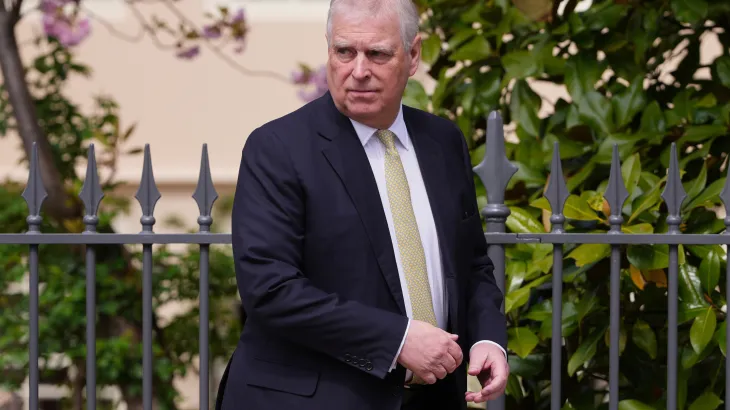
  • A Contentious Figure: For years, Yermak was a source of domestic controversy, accused of consolidating too much power and running foreign policy through the presidential office, often sidelining the Foreign Ministry and Parliament. His departure resolves a domestic political crisis that many lawmakers had warned could split Zelensky’s party.

A Vulnerable Moment for Peace Talks

The timing of the resignation could not be worse for Ukraine’s delicate foreign relations. Yermak had just returned from Geneva, where he was the lead negotiator pushing back against the latest U.S.-backed peace proposal, which Kyiv fears heavily favors Moscow’s territorial demands.

  • Diplomatic Gap: Yermak was intimately familiar with the intricacies of the U.S. position and the sensitivities of Washington’s current political climate. His abrupt exit leaves a sudden leadership vacuum in Ukraine’s diplomatic corps just as a major U.S. delegation prepares for pivotal talks with Russia next week.
  • Western Scrutiny: The swift action against corruption will undoubtedly be welcomed in Washington and Brussels, which have long insisted on robust anti-graft measures as a precondition for billions in financial aid and eventual EU membership. The resignation may temporarily reassure Western partners that the aid is being properly stewarded.

Analysts are divided on the immediate impact. While the move may restore internal confidence and strengthen Zelensky’s moral authority in the long run, the loss of his most trusted and experienced wartime manager could hamper Ukraine’s ability to coordinate foreign aid, military strategy, and complex negotiations in the short term. The President is now tasked with finding a loyal, yet uncompromised, successor who can instantly command trust both at home and abroad.

Putin Demands Full Ukrainian Surrender of Claimed Territory Ahead of Moscow Talks

BISHKEK, KYRGYZSTAN—Just days before a high-stakes American delegation is due to arrive in Moscow for renewed peace talks, Russian President Vladimir Putin has dramatically doubled down on his most extreme demands, declaring that Russia will only cease hostilities if Ukrainian troops immediately and unconditionally withdraw from all territory claimed by Moscow.

Speaking to reporters on Thursday at the conclusion of a trip to Kyrgyzstan, Putin firmly rejected any notion of a simple ceasefire or a negotiated compromise on the issue of occupied lands, setting a maximalist benchmark that Kyiv has already ruled out as a prerequisite for any talks.


The Ultimatum: Withdraw or Face Force

President Putin’s hardline stance threatens to immediately derail the fragile diplomatic momentum created by the Trump administration’s recent unveiling of a new peace proposal, which has seen intense negotiations among U.S., Ukrainian, and European officials in Geneva.

  • The Core Demand: Putin stated that any end to the war is contingent on Ukraine ceding the southern Crimean peninsula (annexed in 2014), the entire eastern Donbas region (Luhansk and Donetsk oblasts), and the southern regions of Zaporizhzhia and Kherson—including areas within those oblasts that Russia currently does not fully occupy.
  • The Threat: “If Ukrainian troops withdraw from the territories they occupy, hostilities will cease. If they don’t withdraw, we will achieve this through military force,” the Russian leader warned.
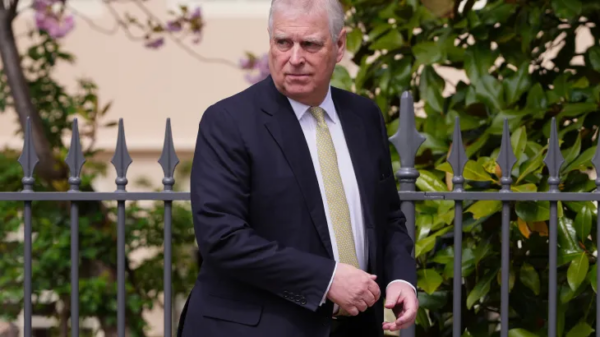
This demand for full surrender of territory goes far beyond the contested military frontlines and is a clear non-starter for Kyiv, which views the relinquishing of any sovereign land as rewarding Russian aggression.

Image source: Wikimedia Commons

US Envoy Heads to Moscow

Despite the chilling ultimatum, the diplomatic track remains open. President Putin confirmed that a U.S. delegation, led by special envoy Steve Witkoff, is expected to arrive in Moscow early next week to discuss the U.S.-backed peace plan.

  • The Plan’s Reception: The President confirmed that Russia has now been shown the latest draft of the U.S. plan—an original version of which was heavily skewed towards Moscow’s demands—and conceded that it could become the “basis” for a future agreement, but stressed that it requires “further discussion.”
  • The Sticking Point: Putin confirmed that the central point of contention in upcoming talks with his American counterparts is the “recognition of Russian rule over Crimea and Donbas,” noting that even a discussion about de facto versus legal recognition of Russian control is still on the table.

European leaders, who feel sidelined by the U.S.-led push, continue to express deep skepticism. EU Foreign Policy Chief Kaja Kallas cautioned that “Putin cannot achieve his goals on the battlefield so he will try to negotiate his way there,” warning against any deal that involves the “unilateral carving up of a sovereign European nation.”

In Kyiv, President Volodymyr Zelensky scorned Putin’s remarks, stating that Russia has “scorned” all efforts “to truly end the war.” The stark difference between the two leaders’ positions—one demanding total territorial concession and the other demanding territorial integrity and binding security guarantees—shows that despite the recent flurry of talks, the two sides remain fundamentally locked in an existential conflict.

Trump Administration Orders ‘Rigorous Reexamination’ of Green Card Holders from 19 ‘Countries of Concern’

In a sweeping and immediate response to the shooting of two National Guard members this week, the Trump administration has directed an “unprecedented, full-scale, rigorous reexamination” of the permanent residency status for every immigrant who holds a Green Card from 19 specific countries deemed “of concern” for security and vetting failures.

The order, issued by U.S. Citizenship and Immigration Services (USCIS) Director Joseph Edlow, applies to hundreds of thousands of immigrants who have already secured Lawful Permanent Resident status, including many who were granted refugee or asylum status under the previous administration.


The Catalyst: An Attack and a Global List

The policy shift was directly prompted by the shooting of two National Guard personnel in Washington, D.C. The suspect, identified as an Afghan national, had entered the U.S. in 2021 through the Operation Allies Welcome program.

Director Edlow stated that the case exposed unacceptable vulnerabilities in the U.S. immigration screening process, necessitating a dramatic escalation of security measures.

  • The Target List: The new policy focuses on individuals who came from 19 countries identified in a previous Presidential Proclamation as having either high rates of visa overstays, weak vetting systems, or security concerns, including terrorism threats.
  • Key Countries of Concern: While the full list of 19 is extensive, officials confirmed it includes: Afghanistan, Cuba, Haiti, Iran, Libya, Somalia, Sudan, Yemen, and Venezuela.

The USCIS guidance states that officers will now consider “negative, country-specific factors” when adjudicating any immigration benefit for aliens from these 19 nations, allowing for a much stricter interpretation of background checks and eligibility requirements.

A Freeze on Refugee Green Card Applications

The directive follows a parallel order issued earlier this week that created a review and rescreening of all refugees admitted to the U.S. during the Biden administration (from January 2021 to February 2025), a group estimated to include over 200,000 people.

Crucially, that order also placed an indefinite hold on all pending applications for Green Cards filed by refugees within that time frame.

  • Stripping Status: Under the policy, if an individual refugee who has already received a Green Card is later deemed ineligible following the new review, their status could be revoked, and they could be placed in deportation proceedings. Furthermore, if the “principal” refugee’s case is rejected, the status of their accompanying family members would also be denied.
  • Focus on Asylum: The Department of Homeland Security (DHS) confirmed that it is also now reviewing all asylum cases approved during the same period, further broadening the scope of the unprecedented government scrutiny.

Political Backlash and Humanitarian Alarm

The policy has drawn immediate and fierce condemnation from humanitarian organizations and civil rights groups, who warn the move will destabilize and “re-traumatize” hundreds of thousands of families who were promised permanent safety in the U.S.

“This unprecedented action marks a dramatic departure from U.S. law and longstanding humanitarian commitments,” stated the Refugee Council USA. “It is cruel and fundamentally undermines the promise of a permanent home given to people who fled persecution, conflict, or violence.”

The administration, however, remains resolute, arguing that it is fulfilling a campaign promise to end “expediency and quantity over quality interviews and detailed screening and vetting” to ensure national security. The legal battle over the validity and scope of this sweeping review is expected to reach federal courts quickly.

Mohammed Ibrahim: Palestinian-US Teen Freed After Nine Months in Israeli Detention

RAMALLAH, OCCUPIED WEST BANK—After nine months of detention that became a lightning rod for criticism of Israel’s military justice system, Palestinian-American teenager Mohammed Ibrahim was released from an Israeli prison on Thursday, finally returning to his family just in time for the Thanksgiving holiday in the United States.

The 16-year-old from Florida, who was arrested in a nighttime raid on his family’s West Bank home in February, walked free following a sustained pressure campaign by U.S. lawmakers and human rights organizations who argued his prolonged detention and alleged mistreatment violated his rights as an American citizen.


The Nine-Month Ordeal

Mohammed Ibrahim was just 15 when he was taken by Israeli forces from the village of al-Mazraa ash-Sharqiya near Ramallah. The Israeli military charged him with two counts of throwing objects at moving vehicles—a charge he denied—and detained him without a consistent right to family visitation.

  • Deteriorating Health: Throughout his detention, reports from his family and U.S. officials indicated a severe decline in his physical health. Relatives said the teen was severely underweight, having lost a quarter of his body weight, and was suffering from a debilitating case of scabies contracted in the prison.
  • Allegations of Abuse: Family and civil rights groups, including the Council on American-Islamic Relations (CAIR), alleged that Ibrahim was subjected to abuse, including beatings, being starved, and being denied adequate medical care.
  • Diplomatic Pressure: His case drew the attention of Washington, D.C., where a bipartisan coalition of over 100 human rights organizations and, separately, 27 Democratic members of Congress—including Senators Bernie Sanders and Elizabeth Warren—wrote to the Secretary of State demanding the administration intervene to secure the Florida-born teenager’s release.

“Words can’t describe the immense relief we have as a family right now, to have Mohammed in his parents’ arms,” said Zeyad Kadur, Mohammed’s uncle, in a statement released upon his release. He noted the family’s immediate focus is securing medical care after “Israel’s abuse and inhumane conditions for months.”

The Broader Context of Abuse Claims

While his release is a personal victory for the Ibrahim family, advocates quickly pointed to the hundreds of other Palestinian children currently held in Israeli military detention, which remains the world’s only legal system that systematically prosecutes minors.

“Mohammed’s homecoming is a blessing, but it does not erase the torture and suffering he endured,” stated a CAIR official, urging the U.S. government to formally investigate the documented abuse of an American child.

The teenager’s case gained further prominence after his cousin, Sayfollah Musallet, a 20-year-old American-Palestinian, was allegedly beaten to death by Israeli settlers in the West Bank in July, tragically underscoring the dangers faced by dual citizens in the occupied territories.

Following his release, Ibrahim was immediately taken to a hospital for intravenous therapy and blood work. His family says their first order of business is celebrating his 16th birthday, which he was forced to spend unjustly imprisoned and separated from his loved ones.

D.C. Shooting Suspect Identified as Afghan National Who Worked with CIA-Backed Unit

The Afghan national accused of launching a brazen, ambush-style attack on two National Guard members this week was a former member of a CIA-backed military unit during the U.S. war in Afghanistan, the Central Intelligence Agency confirmed Thursday.

The revelation adds a volatile and complex international dimension to the shooting that left two young Guardsmen in critical condition, transforming the tragic event near the White House into a national security flashpoint that is already fueling intense political debate over U.S. immigration and vetting procedures.


The Suspect and His Past Ties

The suspected gunman, identified by federal authorities as Rahmanullah Lakanwal, 29, was taken into custody after the attack on Wednesday afternoon in downtown Washington, D.C. U.S. Attorney Jeanine Pirro confirmed the suspect drove nearly 2,700 miles from his home in Bellingham, Washington, with the premeditated plan to conduct a “brazen and targeted” assault in the nation’s capital.

  • CIA Confirmation: CIA Director John Ratcliffe confirmed to media outlets that Lakanwal “previously worked with the U.S. government, including CIA, as a member of a partner force in Kandahar” that operated during the war.
  • Elite Unit: Sources familiar with the situation told The Washington Post that Lakanwal served in one of the so-called “Zero Units”—Afghan paramilitary groups that were trained, supplied, and operated by the CIA alongside U.S. Special Forces in high-intensity counterterrorism missions.
  • U.S. Entry: Lakanwal entered the United States in September 2021 under the Operation Allies Welcome program, a humanitarian effort to evacuate and resettle tens of thousands of Afghans who had worked with the U.S. government following the Taliban takeover. He was granted asylum in April 2025.

Political Fallout and Terrorism Probe

The shooting has instantly intensified the country’s acrimonious immigration debate, with the White House and former officials trading sharp accusations over vetting failures.

  • Security Lapse Debate: CIA Director Ratcliffe stated that the prior administration was responsible for bringing the alleged shooter to the U.S. “due to his prior work,” but blamed the subsequent administration for a “failure to vet” the individual. This claim, however, is complicated by the fact that Lakanwal was granted asylum in 2025 during the current administration. U.S. Citizenship and Immigration Services has since announced it has paused all immigration processing for Afghan nationals pending a security review.
  • Terrorism Investigation: FBI Director Kash Patel announced that the agency is officially investigating the shooting as an “act of terrorism.” The investigation is now a “coast-to-coast” effort, with agents executing search warrants at the suspect’s home in Washington state and other locations.

The two wounded National Guard members, identified as Specialist Sarah Beckstrom, 20, and Staff Sgt. Andrew Wolfe, 24, both of the West Virginia National Guard, remain in critical condition following surgery. Their unit had been deployed to D.C. as part of the administration’s crackdown on crime.

The attack, carried out by a former ally on U.S. soil against military personnel, represents a devastating and tragic culmination of the chaos that followed the U.S. withdrawal from Afghanistan.

Macy’s 99th Thanksgiving Parade Defies Gusts to Usher in the Holiday Season

The unofficial start to the American holiday season kicked off in spectacular fashion on Thursday as the 99th annual Macy’s Thanksgiving Day Parade marched through Manhattan, delivering a three-and-a-half-hour spectacle of colossal balloons, star-studded floats, and spirited bands, all while navigating a tense battle against brisk winds.

Millions lined the streets and over 50 million watched from home as the iconic procession forged ahead, celebrating nearly a century of tradition and providing a much-needed splash of color and cheer to a blustery New York morning.


The Sky Battle: Keeping the Giants Grounded

The greatest drama of the day centered on the weather. In the hours leading up to the 8:30 a.m. start, city officials and parade organizers watched the forecast closely, as sustained winds reaching the legal limit of 23 mph could have grounded the giant, helium-filled balloons—a restriction only enforced once in the parade’s long history.

While gusts approached the limit, the 34 immense balloons were successfully cleared for takeoff, requiring hundreds of handlers to grip the tethers tightly as they guided the famous figures between the skyscrapers along Central Park West and Sixth Avenue.

  • New Faces in the Fleet: This year’s lineup featured several highly anticipated debut balloons, including:
    • Buzz Lightyear, making a return to the skies to celebrate a major Disney anniversary.
    • Nintendo’s fan-favorite plumber, Mario.
    • The classic arcade icon PAC-MAN.
    • Shrek’s Onion Carriage, featuring multiple characters on one massive balloon.

Performances and Pop Culture Power

Beyond the massive inflatables, the 99th parade was a showcase of pop culture, Broadway, and top-tier musical talent.

  • Musical Highlights: The grand procession featured performances from a diverse list of artists, including the Wicked star Cynthia Erivo, Busta Rhymes, country star Lainey Wilson, and the breakout K-Pop act HUNTR/X from the hit Netflix animated series, KPop Demon Hunters.
  • The Big Finale: As is tradition, the parade concluded at Macy’s Herald Square flagship store with the arrival of Santa Claus, officially marking the transition from Thanksgiving celebration to the Christmas shopping season.

Mayor Eric Adams and NYPD Commissioner Jessica Tisch emphasized that the parade took place under “unprecedented security measures,” ensuring the millions of attendees felt safe along the 2.5-mile route.

In a city seeking a moment of collective joy, the 99th Macy’s Thanksgiving Day Parade delivered, showcasing the resilience of a cherished American tradition against both the elements and the strains of the modern world.

Venezuela Bans Six Global Carriers, Accusing Them of ‘State Terrorism’ Amid US Military Tensions

CARACAS, VENEZUELA—The government of President Nicolás Maduro has dramatically escalated its geopolitical standoff with the United States, revoking the operating permits of six major international airlines and accusing them of “joining the actions of state terrorism” promoted by Washington.

The unprecedented ban, announced late Wednesday by Venezuela’s National Institute of Civil Aeronautics (INAC), targets carriers who had temporarily suspended flights to the capital, Caracas, following a safety warning issued by the U.S. Federal Aviation Administration (FAA) last week.


The Ultimatum and The Ban

The move is a direct response to a U.S. safety advisory and the mounting U.S. military presence in the Caribbean, which Caracas views as an imminent threat of foreign intervention.

  • The FAA Warning: The FAA issued a Notice to Airmen (NOTAM) on November 21, urging civilian aircraft to “exercise extreme caution” when operating in Venezuelan airspace due to a “worsening security situation and heightened military activity.” The advisory followed reports of the U.S. deploying an aircraft carrier strike group and over 15,000 troops near Venezuelan waters, officially for an anti-narcotics operation.
  • The Airline Decision: Heeding the FAA warning, six major airlines—including key carriers providing vital air links to Europe and South America—suspended their services to Simón Bolívar International Airport (CCS) in Caracas.
  • The Deadline: Angered by the compliance with the U.S. advisory, the Venezuelan Ministry of Transport issued a 48-hour ultimatum on Monday, demanding the carriers immediately resume operations or risk losing their traffic rights.

When the deadline expired at noon on Wednesday with no flights resumed, INAC executed the ban against: Iberia (Spain), TAP Air Portugal (Portugal), Avianca (Colombia), LATAM (Chile/Brazil), Gol (Brazil), and Turkish Airlines (Turkey).

Accusations of ‘State Terrorism’

The official Venezuelan statement framed the airline suspensions not as a safety precaution, but as a deliberate political act.

“For joining the actions of state terrorism promoted by the United States government and unilaterally suspending commercial air operations… [the airlines’] operating permits are revoked,” INAC announced.

The immediate grounding of these carriers has already disrupted travel for an estimated 8,000 passengers and severed vital air connections for Venezuelan citizens, many of whom rely on these airlines for regional travel and links to Europe.

Portuguese Foreign Minister Paulo Rangel quickly condemned the action as “totally disproportionate,” noting that TAP Air Portugal’s suspension was based purely on safety concerns and that his government had “no intention of canceling our routes to Venezuela” once conditions improved.

The crisis on the tarmac reflects the dangerous military escalation at sea, where President Maduro continues to denounce the U.S. military build-up as a clear attempt to overthrow his government. The action against the airlines confirms Caracas’s willingness to use its airspace as a political weapon, further isolating the nation from global commerce.

Thanksgiving 2025: President Trump Pardons Gobble and Waddle in Time-Honored Tradition

In the most lighthearted ritual of the political calendar, President Donald Trump officially pardoned two North Carolina-bred turkeys, Gobble and Waddle, on Tuesday, sparing the hefty birds from the Thanksgiving dinner table and granting them clemency in the White House Rose Garden.

The annual ceremony, marking the first of President Trump’s second term, saw the Commander-in-Chief deliver a short address full of holiday humor before bestowing the official “Presidential pardon” upon the National Thanksgiving Turkey, Gobble, and its alternate, Waddle.


The Turkeys’ Big Day Out

The two 50-plus pound toms, named through an online vote involving North Carolina students, arrived in the nation’s capital earlier this week, receiving the traditional “luxurious stay” at the Willard InterContinental Hotel ahead of their White House debut.

  • Gobble’s Moment: Taking center stage in the Rose Garden, Gobble was the official focus of the event, though President Trump was quick to ensure the alternate bird, Waddle, was also granted reprieve. The pardons ensure both birds will live out the remainder of their natural lives.
  • The Destination: Following the ceremony, both birds were scheduled to be flown back to Raleigh, North Carolina, where they will retire to the Prestage Department of Poultry Science at North Carolina State University. There, they will receive daily care and serve an educational role.

The President’s remarks focused on the spirit of the holiday, offering thanks to the troops and highlighting the country’s economic strength, while managing to weave in the traditional, self-deprecating presidential joke about the birds’ fate.

A Tradition Forged in Politics

While the ceremony is a jovial holiday photo-op, the tradition has a surprisingly complex history. Although the practice of a President sparing a turkey can be traced back to Abraham Lincoln in 1863, the annual, official “pardon” as we know it today is a much more recent development.

  • The Turkey Federation: The presentation of a National Thanksgiving Turkey to the President by the National Turkey Federation began in 1947 under President Harry S. Truman, though records indicate those turkeys were often destined for the dinner table.
  • The Official Pardon: The notion of a formal “pardon” was first joked about by Ronald Reagan in 1987. It was officially formalized as an annual tradition by President George H.W. Bush in 1989, making the act of saving the birds a permanent fixture of the holiday season.

The pardoning of Gobble and Waddle offers a brief, lighthearted interlude during a turbulent political period, allowing the White House to focus on a unifying American ritual before the President departs for his private Florida resort to celebrate Thanksgiving.

Kyiv Pushes for Emergency Trump-Zelensky Meeting in Washington This Week

KYIV, UKRAINE—With the conflict escalating and crucial U.S. military aid stalled, the government of Ukraine has issued an urgent and highly public call for a face-to-face meeting between U.S. President Donald Trump and Ukrainian President Volodymyr Zelensky in Washington, D.C., possibly as early as this week.

The desperate diplomatic push comes as Ukraine battles a massive new Russian offensive and sees its already depleted stockpiles of ammunition and air defense missiles reach critically low levels. Kyiv is attempting to bypass legislative hurdles and appeal directly to the U.S. President to unlock military assistance before the Russian advances become irreversible.


The Stakes: War Funding and Air Defense

The request was formally lodged by Ukrainian Ambassador to the U.S. Oksana Markarova on Tuesday, who confirmed that Kyiv believes an emergency summit is necessary to clearly communicate the “reality of the front lines” to the American executive branch.

  • Immediate Aid Crisis: At the heart of the urgency is the $60 billion military and financial aid package for Ukraine, which remains tied up in complex domestic political negotiations in the U.S. Congress. Without this funding, Ukraine’s military units are reporting they are rationed to just a handful of artillery shells per day.
  • Air Defense Failures: Kyiv is also struggling to repel increasing Russian aerial attacks. Critical infrastructure, including energy facilities, has been successfully targeted with devastating effect, a failure directly attributable to the depletion of U.S.-supplied air defense munitions. Zelensky’s officials believe that only a personal appeal can secure an executive order or immediate funding release for air defense systems.

The proposed meeting would be a highly unusual diplomatic maneuver, given that President Trump rarely conducts unscheduled meetings with foreign leaders, especially during congressional negotiations.

Image source: UKRAINIAN PRESIDENTIAL PRESS SERVICE/AFP via Getty Images

Navigating the Washington Divide

The idea of a meeting has quickly exposed the deep political divides in Washington regarding the Ukraine conflict.

  • Republican Pushback: Many conservative voices in the U.S. Congress oppose granting further aid without major policy concessions from Ukraine, and a meeting now could be seen as an unnecessary provocation. However, some Republican members of the Senate, who support the aid, are privately pushing the White House to agree to the meeting to better educate the executive branch on the gravity of the military situation.
  • The White House Stance: The White House has not yet formally responded to the request. A senior White House official, speaking on condition of anonymity, indicated that while the President is sympathetic to Ukraine’s position, his focus remains on securing a comprehensive long-term aid solution through Congress rather than piecemeal executive action.

For President Zelensky, an in-person meeting is seen as the last, best chance to stabilize U.S. support and secure the weapons his forces need to survive the next several months of fighting. With Russian troops making steady gains on the eastern front, the diplomatic clock is running out.

Not an Adult Until 32: Landmark Study Re-Maps Human Brain’s Five Major Ages

Neuroscientists have upended the traditional understanding of the human lifespan, reporting in a landmark study that the period of adolescence does not end with the teenage years or even in the mid-twenties, but rather continues until the average age of 32.

The research, conducted by the University of Cambridge and published today in Nature Communications, identifies four major “turning points” in neurological development, fundamentally rewriting the timeline for mental maturity and revealing that the human brain moves through five distinct, chronological epochs of wiring.


Image source: easy-peasy.ai

The New Neural Timeline: Five Epochs

The scientists analyzed the brain scans of nearly 4,000 individuals, aged zero to 90, mapping the structural organization and efficiency of their neural networks. They found that the brain’s architecture doesn’t change gradually, but rather in dramatic, swift shifts occurring around specific ages.

The study pinpoints the four major turning points and the five resulting brain phases:

EpochAge RangeDefining Characteristics
ChildhoodBirth to Age 9Network Consolidation; rapid growth of grey and white matter; “pruning” of unnecessary connections.
AdolescenceAge 9 to 32Increasing Efficiency of communication networks; White Matter continues to grow; period of highest risk for mental health disorders.
AdulthoodAge 32 to 66Stability and slow compartmentalization; the longest and most stable phase; plateau in intelligence and personality.
Early AgingAge 66 to 83Gradual network reorganization; reduced connectivity; increased risk of age-related conditions like hypertension.
Late AgingAge 83 onwardsFurther decline in connectivity; increased reliance on specialized regional networks.

The Biggest Shift at 32

Lead researcher Dr. Alexa Mousley noted that while puberty offers a clear start to adolescence, its end has always been scientifically murky. The new data, based purely on brain structure, puts the line in the sand at 32.

“Around the age of 32, we see the most directional changes in wiring and the largest overall shift in trajectory, compared to all the other turning points,” said Dr. Mousley. “Based purely on neural architecture, we found that adolescent-like changes in brain structure end around the early thirties.”

This finding aligns with other behavioral studies that suggest cognitive performance and efficiency peak in the early thirties. During this extended adolescent period, the brain’s white matter—the pathways that transmit information—is continuously refined, making communication networks more streamlined and robust.

Implications for Health and Policy

The findings hold significant implications beyond academic curiosity, particularly for understanding mental health and age-related vulnerability.

  • Mental Health Risk: The adolescent phase (9 to 32) is identified as the period of highest instability in brain wiring, corresponding with the typical onset of many serious mental health disorders, such as schizophrenia and anxiety disorders.
  • Peak Performance: The transition to the adult brain at age 32, which ushers in three decades of stable architecture, aligns with a plateau in intelligence and personality, suggesting this long epoch is the brain’s period of greatest consistency.

Experts believe that pinpointing these precise turning points will help scientists identify when and how the brain’s wiring is most vulnerable to disruption, offering new context for researching childhood learning difficulties and later-life conditions like dementia.

The message is clear: the journey to becoming a fully neurologically mature adult is far longer than previously assumed, giving everyone in their 20s and early 30s a new scientific explanation for why they might still occasionally feel like a teenager.

Thai Woman Awakes in Coffin Moments Before Cremation Ceremony

NONTHABURI, THAILAND—In a miraculous and deeply unsettling incident that stunned a Buddhist temple community, a 65-year-old Thai woman, believed to have been dead for two days, was discovered alive inside her coffin just moments before her body was due to be placed in the crematorium oven.

The shocking discovery was made at the Wat Rat Prakhong Tham temple on the outskirts of Bangkok after temple staff, preparing for the service, heard faint but distinct knocking sounds emanating from the closed casket.


The 500-Kilometer Journey of the ‘Deceased’

The woman, identified as Chonthirat Sakulkoo, had been transported over 500 kilometers (300 miles) from her home in Phitsanulok province by her brother, Mongkol Sakulkoo.

According to Pairat Soodthoop, the temple’s general and financial affairs manager, the brother explained that Chonthirat had been bedridden for two years and had become unresponsive two days prior, appearing to have stopped breathing. Believing she had passed away, he had placed her in the coffin.

  • Failed Organ Donation: The brother first drove the body to a hospital in Bangkok, hoping to fulfill his sister’s wish to donate her organs. However, the hospital refused to accept the body because the family did not possess an official death certificate.
  • The Cremation Request: He then approached the temple, which offers a free cremation service. Temple staff also initially refused to proceed due to the lack of official paperwork.

It was while Mr. Soodthoop was explaining the bureaucratic procedure for obtaining a death certificate that the silence of the temple grounds was pierced by the sound of a desperate tapping.

‘Everyone Was Startled’

“I was a bit surprised, so I asked them to open the coffin, and everyone was startled,” Mr. Soodthoop told the Associated Press. “I saw her opening her eyes slightly and knocking on the side of the coffin. She must have been knocking for quite some time.”

A video later shared by the temple on its official social media page showed the woman, lying in a white coffin in the back of a pickup truck, visibly moving her arms and head as bewildered staff looked on.

Temple officials immediately suspended the scheduled cremation. An ambulance was called, and the woman was rushed to a nearby hospital in Nonthaburi province.

Doctors there determined that Chonthirat Sakulkoo had not suffered cardiac arrest or respiratory failure. Instead, they diagnosed her with a severe case of hypoglycemia—critically low blood sugar—which likely induced a deep, coma-like state that mimicked death.

The temple’s abbot has since ordered that the temple will cover all of the woman’s medical expenses. The incident serves as a harrowing reminder of the dangers of delayed medical intervention and the urgent need for proper certification before the rites of death are finalized.

Federal Judge Tosses Cases Against James Comey and Letitia James, Citing ‘Unlawful’ Prosecutor Appointment

A federal judge has delivered a stunning legal rebuke to the Trump administration, ordering the immediate dismissal of criminal charges against former FBI Director James Comey and New York Attorney General Letitia James. The judge ruled that the prosecutor who secured the indictments was unlawfully appointed by the Justice Department, rendering the charges invalid.

The ruling on Monday from U.S. District Judge Cameron McGowan Currie puts an abrupt halt to two politically charged prosecutions that targeted two of President Donald Trump’s most visible and persistent political opponents.


The Grounds for Dismissal: A Defective Appointment

The judge’s decision did not address the substance of the allegations against Comey (who was charged with making false statements and obstructing Congress) or James (who faced charges of bank fraud). Instead, the dismissal rested entirely on the legal mechanism used to install the interim U.S. attorney for the Eastern District of Virginia, Lindsey Halligan.

  • The Conflict: The Trump administration had pushed out the previous interim U.S. Attorney, Erik Siebert, and replaced him with Halligan—a former White House aide with no prior prosecutorial experience—in September 2025. This move came amid immense public pressure from the President to charge his political foes.
  • The Judge’s Finding: Judge Currie concluded that the Attorney General’s attempt to install Halligan was invalid because the legal window for the Attorney General to make such an interim appointment had already expired. She ruled that the power to appoint a temporary U.S. Attorney had shifted to the federal court of the district itself.
  • The Ruling’s Scope: “All actions flowing from Ms. Halligan’s defective appointment, including securing and signing [the] indictment, were unlawful exercises of executive power and are hereby set aside,” Judge Currie wrote in her opinion. She stressed that accepting the government’s argument would essentially allow the administration to bypass the Senate confirmation process indefinitely.

Vindication and Retribution

The ruling was immediately hailed as a major victory for both defendants, who have consistently argued that the cases were a thinly veiled effort by the Trump administration to punish them for their political opposition.

  • James’s Response: New York Attorney General Letitia James stated she was “heartened by today’s victory” and vowed to remain “fearless in the face of these baseless charges as I continue fighting for New Yorkers every single day.”
  • Comey’s Reaction: James Comey, who was a key figure in the investigation into the 2016 Trump campaign, released a video saying, “A message has to be sent that the president of the United States cannot use the Department of Justice to target his political enemies.”

The Next Move: Appeal and Statute of Limitations

Judge Currie dismissed the cases without prejudice, meaning the Justice Department theoretically has the right to refile the charges under a lawfully appointed prosecutor. However, this is complicated by two major factors:

  1. Statute of Limitations: Lawyers for Comey immediately argued that the five-year deadline to bring charges against him had already expired just days after he was indicted in September. Since the original indictment was ruled invalid, it did not pause the running of the clock.
  2. Immediate Appeal: Attorney General Pam Bondi vowed to pursue “all available legal action, including an immediate appeal” of the ruling, indicating that the administration is determined to press the charges against the two high-profile critics.

The decision is the most sweeping legal repudiation yet of the Trump administration’s aggressive efforts to place political loyalists in top prosecutorial positions and deploy the Justice Department as a tool against its perceived adversaries.

JFK’s Granddaughter, Tatiana Schlossberg, Reveals Terminal Cancer Diagnosis

In a poignant and deeply personal essay published Saturday, Tatiana Schlossberg, the 35-year-old environmental journalist and granddaughter of President John F. Kennedy, disclosed that she has been diagnosed with terminal cancer and given a prognosis of less than a year to live.

The news adds another chapter of heartbreak to the storied, yet often tragic, history of the Kennedy family. Schlossberg, the daughter of former U.S. Ambassador Caroline Kennedy and designer Edwin Schlossberg, revealed in The New Yorker that she is battling Acute Myeloid Leukemia (AML) with a rare mutation, an illness discovered just hours after she gave birth to her second child in May 2024.


The Sudden Onset and Harrowing Treatments

Schlossberg’s diagnosis was a shock, contradicting her self-perception as one of the healthiest people she knew. She detailed in her essay, titled “A Battle With My Blood,” how a routine check of her white blood cell count just minutes after delivering her daughter revealed a severe abnormality.

“I did not—could not—believe that they were talking about me. I had swum a mile in the pool the day before, nine months pregnant. I wasn’t sick. I didn’t feel sick.”

Since the diagnosis, Schlossberg has endured a grueling year and a half of treatment, including multiple rounds of chemotherapy, two bone-marrow transplants—the first from her sister, the second from an unrelated donor—and participation in experimental clinical trials. During her latest trial, she received the devastating prognosis.

She recounted the immense physical toll, including developing a life-threatening complication where her new cells attacked her old ones, and the struggle to regain the strength to walk again and hold her two young children, aged three and one.

The Political Dimension: A Family Feud Made Public

The essay quickly drew national attention not only for its candid personal account of facing death but also for its scathing criticism of her cousin, Robert F. Kennedy Jr., the current Secretary of Health and Human Services.

Schlossberg accused her cousin’s policies of directly jeopardizing the nation’s medical research infrastructure and her own access to life-saving treatment.

  • Research Cuts: She wrote that she watched as her cousin “cut nearly a half billion dollars for research into mRNA vaccines, technology that could be used against certain cancers” and “slashed billions in funding from the National Institutes of Health.”
  • Healthcare Strain: She detailed her fear that the health system she relied on felt “strained, shaky” after the administration temporarily withdrew federal funding from her hospital, NewYork-Presbyterian/Columbia University Irving Medical Center.

Schlossberg revealed that her mother, Caroline Kennedy, had previously written to the Senate urging them to reject her cousin’s confirmation, highlighting the deep rift the political appointment has caused within the family.

A Mother’s Grief and the Kennedy Legacy

The diagnosis comes on the 62nd anniversary of her grandfather, President Kennedy’s assassination, an eerie coincidence that underscored the family’s long history of public tragedy.

In a heartbreaking reflection, Schlossberg wrote of the guilt she feels for adding to her mother’s burden of grief. “For my whole life, I have tried to be good… Now I have added a new tragedy to her life, to our family’s life, and there’s nothing I can do to stop it,” she confessed.

Schlossberg concluded her essay by focusing on her final months, dedicating her remaining time to creating memories with her husband and young children, acknowledging the painful certainty that she will not be there to watch them grow up.

“Mostly, I try to live and be with them now,” she wrote. “I will keep trying to remember.”

Mexico’s Fátima Bosch Wins Miss Universe Weeks After Walkout Drama

BANGKOK, THAILAND—In a dramatic finale that capped off the most controversial staging of the pageant in years, Fátima Bosch Fernández of Mexico was crowned Miss Universe 2025 on Friday. The victory is a potent symbol of vindication for the 25-year-old, who captured global attention weeks ago by walking out of a pre-pageant event after being publicly berated by a local organizer.

Bosch’s win marks the fourth time Mexico has claimed the Miss Universe title, but this victory transcends national pride—it has been hailed as a powerful moment for female dignity and a clear rebuke of bullying within the highly scrutinized world of pageantry.


The Confrontation: ‘Not Respecting Me as a Woman’

The drama unfolded in early November during a live-streamed sashing ceremony in Bangkok. Nawat Itsaragrisil, the Thai national director and a senior executive of the organization, publicly confronted Bosch in front of dozens of contestants, accusing her of failing to follow guidelines on promoting the event on social media.

When Bosch attempted to defend herself and explain her absence from a promotional shoot, the executive reportedly escalated the situation, summoning security and allegedly calling her a “dumbhead”—a claim Itsaragrisil later tearfully denied but for which he did apologize.

In a pivotal moment of defiance that went viral worldwide, Bosch stood her ground. “You are not respecting me as a woman, nor as a representative of my country,” she stated, before choosing to walk out of the room. Several other contestants, including the reigning Miss Universe, Victoria Kjær Theilvig of Denmark, immediately joined her in a dramatic show of solidarity.

Mexican President Claudia Sheinbaum publicly praised the contestant at the time, calling Bosch an “example of how we women should speak out” in the face of aggression.

Resilience Takes the Stage

The controversy hung over the remainder of the competition, which saw additional turbulence, including the resignations of two judges who raised concerns over the transparency of the selection process.

However, Bosch, who had been diagnosed with dyslexia and ADHD as a child, channeled the public scrutiny into a message of empowerment that resonated strongly with the judges and the global audience.

When asked in the final question round how she would use the Miss Universe platform to inspire and empower young girls, her answer was a direct reflection of her recent experience:

“Believe in the power of your authenticity. Your dreams matter, your heart matters. Never let anyone make you doubt your worth, because you are deserving of everything, you are powerful, and your voices must be heard.”

This message of resilience and authenticity appeared to seal her fate. As outgoing Queen Victoria Kjær Theilvig placed the crown on her head, Bosch broke down in tears, embracing the moment as both a personal and political victory.

Speaking to the media after her win, Bosch stated that she would like to be remembered as a person who “changed a little bit the prototype of what is a Miss Universe and a real person that gives the heart.”

The first runner-up was Praveenar Singh of Thailand, followed by Stephany Adriana Abasali Nasser of Venezuela. For Fátima Bosch, the crown is a testament that standing on one’s dignity, even on a global stage, can lead to the ultimate vindication.

U.S. Declares Global Diversity Policies an Infringement on Human Rights

In a radical overhaul of the U.S. approach to global human rights, the Trump administration has introduced sweeping new guidelines for its annual country reports, effectively classifying traditional Diversity, Equity, and Inclusion (DEI) and affirmative action policies worldwide as potential violations of fundamental individual rights.

The new instructions, issued by the State Department under Secretary of State Marco Rubio, mark a dramatic departure from decades of established practice, prioritizing what officials call “merit-based opportunity” and framing race- and gender-conscious policies as a form of “illegal discrimination.”


The New Yardstick: Meritocracy Over Margin

The shift is most visible in the guidance for U.S. diplomats preparing the widely cited annual Country Reports on Human Rights Practices. Moving forward, embassies and consulates are explicitly ordered to:

  • Scrutinize Affirmative Action: Diplomats must collect data on other governments’ policies that “provide preferential treatment” to job applicants or students based on race, gender, or national origin. The underlying policy, reiterated in a recent Executive Order, deems such preferences discriminatory and contrary to the U.S. legal principle of “colorblind equality.”
  • Emphasize “Creator-Endowed” Rights: The entire focus of the reports is being re-centered on “unalienable rights endowed by the Creator,” a foundation drawn from the Declaration of Independence. This shift aims to sideline internationally agreed-upon standards, such as those related to minority rights and gender equality, in favor of a narrower, U.S.-centric interpretation.
  • Flag Gender and Abortion Issues: In a further move that breaks from past reports, diplomats are instructed to extensively document state subsidization of abortions, the estimated number of abortions performed annually, and the prevalence of gender-affirming care for minors, which officials refer to as “chemical or surgical mutilation of children.”

Clash with Global Standards

The new directive places the United States at odds with global human rights norms, which often support temporary special measures (like affirmative action or DEI frameworks) to redress historical and systemic discrimination against marginalized groups.

UN human rights experts, in a rare joint statement earlier this year, expressed “deep concern” over the domestic anti-DEI policies of the administration and urged businesses and governments worldwide to “act in accordance with international human rights law and standards, regardless of government actions.” They warned that the U.S. action reverses years of progress in creating inclusive societies.

Critics, including Amnesty International USA, argue that the administration is ignoring the defined, legal purpose of the Congressional-mandated reports—which traditionally focus on abuses like torture, political killings, and the persecution of minority groups—in favor of a politically motivated, “religiously tinged view of human rights.”

Domestic Policy Gone Global

The policy reflects the President’s domestic campaign against DEI. Since taking office, Mr. Trump has issued multiple executive orders to terminate DEI programs across the entire federal government and has threatened to withhold federal funds from universities that maintain such practices, arguing that they are “illegal” and undermine merit.

By integrating this anti-DEI stance into its global human rights reporting, the administration is effectively using its diplomatic influence to promote its domestic political agenda, signaling to the world that adherence to traditional diversity policies will now be viewed through the lens of a human rights infringement by the U.S. State Department.

Trump Walks Back ‘Punishable by Death’ Post, Insists He Was ‘Not Threatening’ Democrats

President Donald Trump on Friday attempted to de-escalate a political firestorm he ignited by insisting he was “not threatening death” against Democratic lawmakers, despite having explicitly stated that their recent video to U.S. service members amounted to “SEDITIOUS BEHAVIOR, punishable by DEATH!”

The President’s clarification, made during a radio interview, came only hours after House Democratic leadership demanded he delete the social media posts and condemned his remarks as a “disgusting and dangerous death threat” that risked inciting violence.


The Video That Triggered the Threat

The controversy erupted earlier this week following the release of a 90-second video featuring six Democratic lawmakers, all of whom are U.S. military veterans or former intelligence officials.

In the video, the lawmakers—including Senator Elissa Slotkin (D-Mich.) and Senator Mark Kelly (D-Ariz.)—directly addressed active-duty personnel, telling them: “Our laws are clear: you can refuse illegal orders, you must refuse illegal orders.” They warned that threats to the Constitution were coming “from right here at home.”

The video, which appeared to allude to the President’s recent use of the military in domestic disputes, drew a furious response from the White House. On Thursday morning, President Trump published a series of posts on his social media platform, escalating the rhetoric:

  • “Each one of these traitors to our Country should be ARRESTED AND PUT ON TRIAL.”
  • “SEDITIOUS BEHAVIOR, punishable by DEATH!

The Weekend Walkback

Appearing on Fox News Radio on Friday, the President was pressed on the meaning of his inflammatory rhetoric.

“In the old days, if you said a thing like that, that was punishable by death,” Mr. Trump stated, referencing the historical penalty for sedition. “I would say they’re in serious trouble. I’m not threatening death, but I think they’re in serious trouble.

The White House Press Secretary Karoline Leavitt also scrambled to contain the political damage on Thursday, telling reporters, “No,” when asked directly if the President wished to execute members of Congress. She defended the President’s anger by calling the Democrats’ video “dangerous,” arguing that it undermined the military’s chain of command, which could “lead to people getting killed.”

Image source: Wikimedia Commons

Democrats Stand Their Ground

Democratic leaders and the lawmakers who created the video swiftly rejected the President’s attempts to characterize his words as a mere historical reference.

  • Senate Minority Leader Chuck Schumer (D-N.Y.) called the original post an “outright threat” and stated, “The President of the United States is calling for the execution of elected officials.”
  • The group of veteran lawmakers released a joint statement declaring that what was “most telling is that the President considers it punishable by death for us to restate the law.” They stated they would not be deterred by “threat, intimidation, or call for violence.”

One of the video’s participants, Representative Jason Crow (D-Colo.), a former Army Ranger, confirmed he has received an “uptick” in violent threats since the President’s posts were published, forcing Capitol Police to increase security monitoring for the lawmakers involved.

While the President insists he was merely defining a historic crime, the episode serves as a fresh reminder of the deeply polarizing power of his political rhetoric and the immediate physical security risks faced by those who publicly oppose him.

Death Toll Hits 43 as Vietnam’s Central Coast is Submerged by Historic Rains

NHA TRANG, VIETNAM—The death toll from relentless and historically severe flooding across central Vietnam has climbed to at least 43 people, with nine others missing, as a multi-week onslaught of extreme rainfall continues to devastate the region’s densely populated coastal cities and crucial coffee-growing highlands.

Emergency teams, backed by the military, are racing to pluck stranded residents from rooftops and evacuate tens of thousands of people from inundated communities, where water levels in major rivers have surpassed records set decades ago.


The Anatomy of a Crisis

The crisis, which began in late October and intensified sharply over the past week, has been fueled by significantly above-average rainfall—with some areas reporting nearly 70 inches of rain since Sunday. The flooding has impacted six provinces, with the central coastal province of Khanh Hoa and the coffee-producing highlands of Dak Lak bearing the brunt of the destruction.

  • Human Toll: As of Friday, authorities confirmed 43 fatalities, with Dak Lak and Khanh Hoa provinces accounting for the majority of deaths. More than 67,700 homes have been inundated, forcing the urgent relocation of approximately 61,000 residents. Many who could not be evacuated were forced onto their rooftops for days, waiting for rescue.
  • Economic Devastation: The agricultural sector has been crippled, with floodwaters destroying over 13,000 hectares of rice, flowers, and vegetable crops. The delay in harvesting in Dak Lak, the world’s top producer of robusta beans, risks denting the global coffee market. Preliminary economic damages are estimated at over $114 million.
  • Infrastructure Collapse: Major arteries, including sections of National Highway 1A, remain blocked due to landslides and surging waters, paralyzing transport across the region. Over half a million households and businesses have been left without power, compounding the humanitarian challenge.

Tourism Hotspots Underwater

Even popular tourist destinations have not been spared. Floodwaters have engulfed whole city blocks in the coastal resort city of Nha Trang, stranding hundreds of cars and submerging the ground floors of hotels and businesses. Reports indicate that doctors and patients at one isolated hospital survived for three days on instant noodles and water until rescuers could reach them.

The disaster’s intensity is tied to a combination of climate factors, including an active La Niña weather pattern. Experts warn that human-driven climate change is making such extreme, destructive weather events more frequent. Vietnam has been hit by at least 13 major storms this year, with total damages already exceeding $2 billion between January and October.

The government has mobilized the army and police, with Deputy Prime Minister Ho Quoc Dung ordering provincial leaders to utilize all security forces to “promptly relocate and evacuate people” to safe areas as forecasters warn that heavy rains are expected to continue through the weekend.

Trump to Host Socialist Mayor-Elect Mamdani in High-Stakes Oval Office Showdown

In a highly anticipated political summit that pits the leader of the MAGA movement against a rising democratic socialist icon, President Donald Trump is set to meet with incoming New York City Mayor Zohran Mamdani at the White House on Friday.

The meeting brings the two fierce political adversaries—who have exchanged months of blistering, personal insults—together in the Oval Office to discuss the pressing financial and safety challenges facing the nation’s largest city.


From Feud to Face-to-Face

The scheduled sit-down follows a heated campaign where the two men served as ideological antagonists. Mamdani, who won the mayoral election on November 4th on a progressive platform focusing on affordability, had vowed to be “Donald Trump’s worst nightmare.”

President Trump, in turn, repeatedly labeled the Mayor-elect a “100% Communist lunatic” and, in the run-up to the election, threatened to cut billions of dollars in federal funding to New York City if Mamdani won. He even alluded to the possibility of arresting the Uganda-born, naturalized U.S. citizen if Mamdani followed through on his campaign pledge to fight federal immigration enforcement.

Despite the animosity, both sides indicated that pragmatic concerns about the city’s welfare drove the request for the meeting.

  • The President’s Stance: Mr. Trump confirmed the meeting in a social media post, stating that the “Communist Mayor of New York City, Zohran ‘Kwame’ Mamdani, has asked for a meeting. We have agreed that this meeting will take place at the Oval Office on Friday, November 21st.” He has recently indicated that he wants New York to be successful and may “help him a little bit maybe.”
  • Mamdani’s Focus: Mayor-elect Mamdani confirmed that the meeting is customary for an incoming New York Mayor and is essential “given the mutual reliance” between the city and the federal government. He stressed that his primary goal is to “speak plainly to the president about what it means to actually stand up for New Yorkers” and address the “cost of living crisis” that resonated with voters across the political spectrum.

A Clash Over City Funding

The single most critical point of contention will be the flow of federal funds. Mamdani is scheduled to take office on January 1, 2026, inheriting a city facing soaring rents and an ongoing migrant crisis that requires substantial federal support.

Mamdani’s progressive policy platform—which includes a rent freeze on rent-stabilized housing, city-run grocery stores, and tax increases on corporations—is antithetical to the President’s pro-business, deregulation agenda. The outcome of this meeting could determine whether the city receives critical federal assistance or faces a protracted battle for funding.

The highly anticipated encounter, which brings a Queens-born real estate mogul and a socialist representative from Astoria into a room to hash out the future of the nation’s most influential city, is poised to be one of the most closely watched political interactions of the year.

Trump Signs Bill to Compel Justice Department to Release Full Jeffrey Epstein Files

President Donald Trump on Wednesday signed into law a bill directing the Justice Department to publicly release all unclassified files related to the sprawling investigation into convicted sex offender Jeffrey Epstein, ending months of political resistance and bowing to immense pressure from both Democrats and a powerful populist flank of his own Republican base.

The signing of the Epstein Files Transparency Act sets a firm 30-day countdown for Attorney General Pam Bondi to produce a massive collection of documents that could shed light on Epstein’s high-profile associates, the scope of his crimes, and the federal government’s handling of the case.


The U-Turn Under Duress

The President’s signature marks a stunning reversal of his stance. For months, Mr. Trump had dismissed the effort to force disclosure of the files as a “Democratic hoax” and resisted public pressure, despite having the authority to release the materials himself.

The political dynamics shifted rapidly this week as the measure gained overwhelming, bipartisan momentum in Congress:

  • House Revolt: The House of Representatives passed the bill by a near-unanimous vote of 427-1 on Tuesday, with many Republican loyalists—including figures like Representative Marjorie Taylor Greene—breaking ranks to support the measure.
  • Senate Clearance: The Senate swiftly followed, passing the bill by unanimous consent on Wednesday, signaling a definitive command from the legislative branch that could no longer be ignored.

Announcing the signing on social media, Mr. Trump sought to pivot the narrative, writing: “I HAVE JUST SIGNED THE BILL TO RELEASE THE EPSTEIN FILES!” He then immediately accused Democrats of using the issue to “distract from our AMAZING Victories,” reinforcing his long-standing claim that Epstein’s social circle was primarily linked to the Democratic Party.

Trump Turnberry golf

What the Bill Mandates and What it Allows

The newly signed law is far-reaching, specifically compelling the Justice Department to release records related to:

  • All Investigations: Documents and communications concerning the federal investigations into Epstein and his associate Ghislaine Maxwell.
  • Associates and Entities: Individuals named or referenced in connection with Epstein’s criminal activities, as well as entities with alleged ties to his trafficking or financial networks.
  • Internal Memos: Internal DOJ communications concerning decisions to charge, or not charge, Epstein or his associates.
  • Flight and Death Records: Flight logs, travel records, and documentation related to Epstein’s 2019 death by apparent suicide in a federal jail cell.

Crucially, the legislation explicitly states that information cannot be withheld on the basis of “embarrassment, reputational harm, or political sensitivity” to any government official, public figure, or foreign dignitary.

However, the law does provide specific carve-outs, creating a potential battleground for the scope of the release:

  1. Victim Protection: The department may redact the personally identifying information of victims.
  2. Ongoing Cases: Material can be withheld if its release would “jeopardize an active federal investigation or ongoing prosecution.”

This final exception has created considerable concern among proponents of the bill, who fear the administration might use its recently ordered investigation into Epstein’s ties to certain prominent Democrats as a shield to block the release of a significant portion of the files.

For the survivors of Epstein’s abuse, who had fiercely advocated for the bill’s passage, the signing represents a momentous step toward a transparency that has been denied to them for years. The clock is now ticking for the Justice Department to comply with the new law, with the files expected to become public on or around December 19, 2025.

Doja Cat Blasts Fans Over Complaints About Stripped-Down World Tour

AUCKLAND, NEW ZEALAND—In a fiery online exchange, global superstar Doja Cat has emphatically dismissed a wave of fan complaints regarding the opening night of her new “Ma Vie World Tour,” bluntly telling critics that her focus is on music, not theatrical production or expensive costume changes.

The rapper, known for her sharp social media presence, lashed out after her Tuesday night show in Auckland, New Zealand, drew immediate comparisons to her previous, more visually extravagant Scarlet Tour, with fans criticizing the new show’s perceived lack of elaborate visuals, cohesive storyline, and frequent wardrobe swaps.


The Complaints and The Clapback

The friction began on social media platform X (formerly Twitter) where videos and comments from the first show of the tour, which supports her latest album Vie, went viral.

  • The Criticism: Fans voiced disappointment over the “simple stage setup,” the absence of dancers, and the distinct lack of multiple outfit changes. One user wrote, “No shade the Vie tour just gives scarlet with different outfits,” while another hoped the singer would be “open to feedback.”
  • Doja’s Response: The Grammy-winning artist responded with a blistering dismissal, making it clear she intends to ignore the criticism. “I won’t and I don’t need you,” she shot back at one user. To another who questioned the lack of storyline in a tour called “My Life,” she stated: “Because I make music for people who enjoy music. I’m not a Broadway act.”

The response grew even more aggressive when addressing the wardrobe criticism. “And I’m not your fking costume monkey,” she wrote. “I move at my own pace and break my fking back out there every night so you can keep your bulls**t opinion to yourself. You are not the artist you are the watcher.”

Music First, Gimmicks Later

The singer’s stance is a firm reiteration of her artistic independence, emphasizing a desire to move away from the hyper-visual, meme-driven persona that defined her earlier albums, Hot Pink and Planet Her.

  • Vocal Focus: In addressing the complaint about limited costume changes, she wrote: “Who fking cares I’m singing my MUSIC for the people who want to hear me SING. You’re not even at the fking show.”
  • Unwavering Defiance: When a fan suggested she should at least “take the wig off halfway through or SOMETHING,” Doja responded with a short, defiant message: “Watch me not do any of these things :)”

While some fans were supportive of the stripped-back, high-energy performance, praising her sustained vocal and physical stamina throughout the hour-and-a-half set, the clash once again highlights the often-strained relationship Doja Cat has with her fan base, a relationship defined by her willingness to challenge and even openly troll her most ardent supporters.

The “Ma Vie World Tour” is scheduled to continue through South America, Europe, and the United States, suggesting that the “music-first” philosophy—and the controversy surrounding it—is likely to travel with her.